|
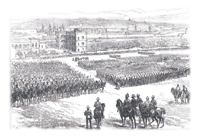
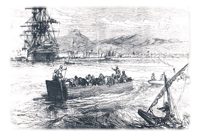
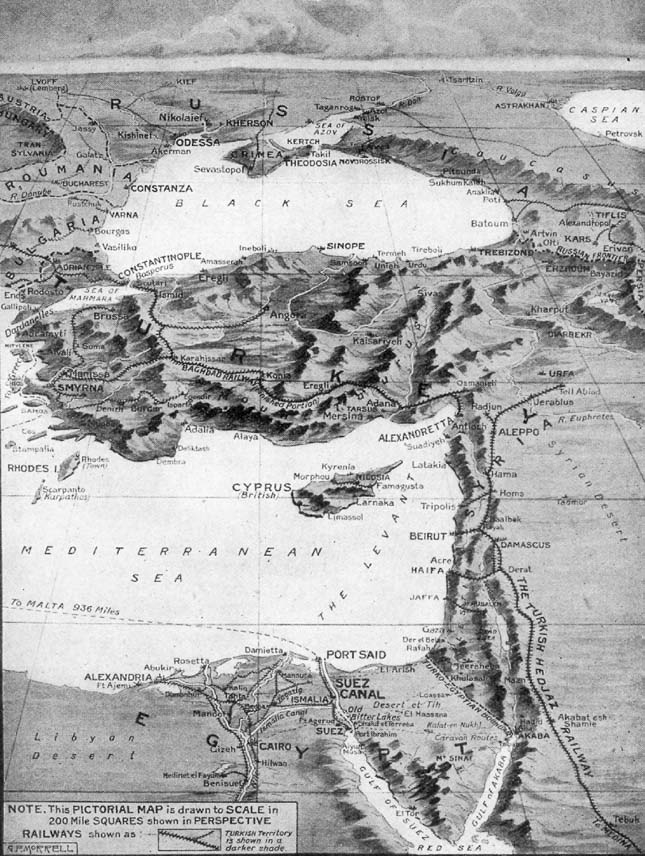
The military force under Wolseley’s command consisted of British and Indian regiments. They assembled on the island of Malta and departed from there on 18 June 1878. They arrived at Larnaca and commenced disembarkation which took a few days. The first British regiments to arrive were:
42nd Royal Highland Regt. (Black Watch)
71st Regiment (Highland Light Infantry)
101st Regiment
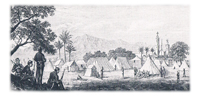
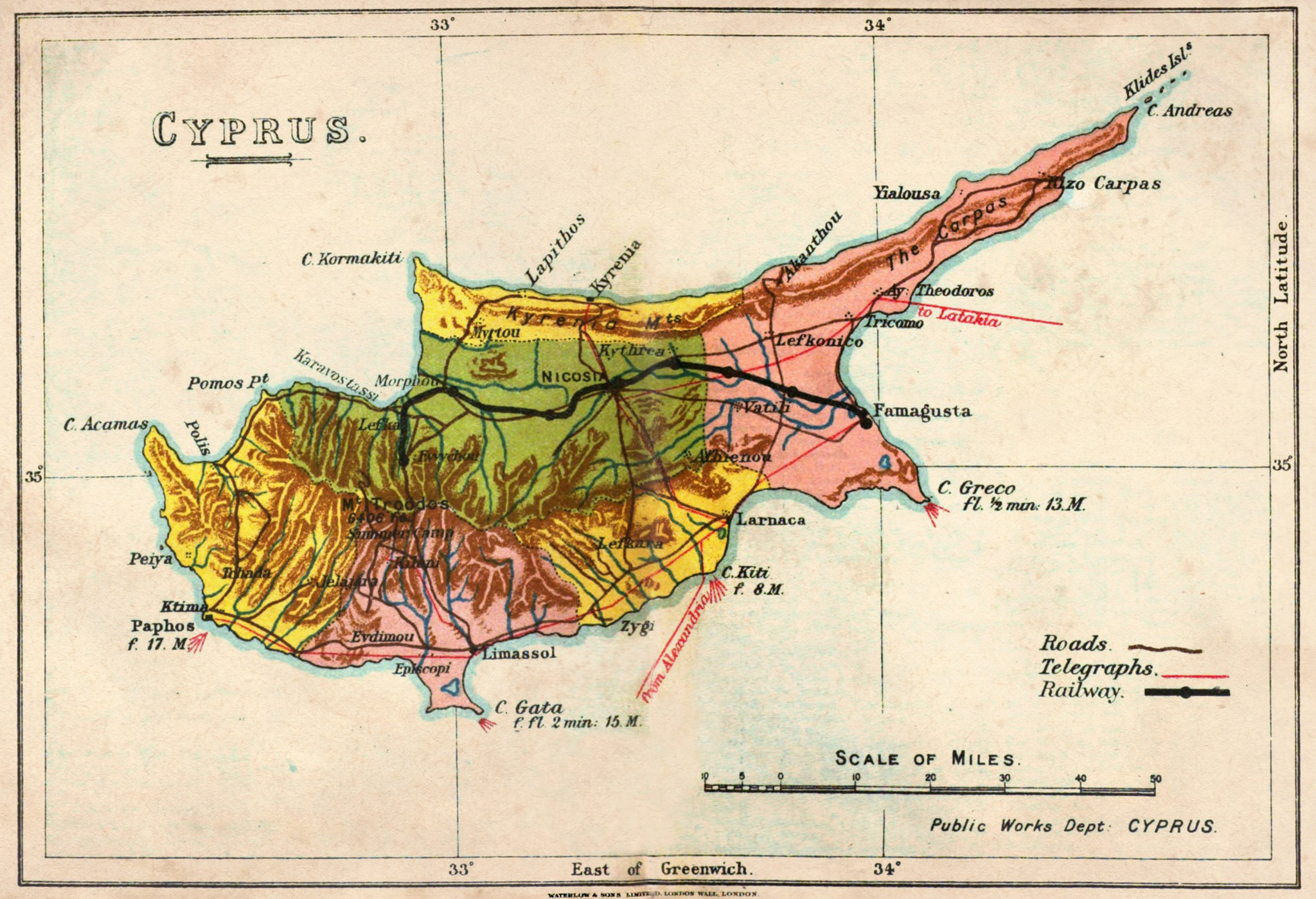
They sailed to Larnaca, but one company, F Company, Black Watch came on the SS Canara and disembarked at Kyrenia. Sergeant McGraw VC was amongst them and died of heat exhaustion on the march, on 22 July 1878. The 71st set up camp at Dali on the road to Nicosia. Five men of the 71st died in 1878, five of the 101st, and 12 men of the 42nd. Altogether the British Army lost 36 men in 1878. The 42nd stayed for only 4 months, leaving on 9 Nov. They had an establishment of 30 officers and 663 men. At one point they had 58 men and one officer sick with malaria.
In early 1879 the 20th (Lancashire Fusiliers) arrived and were stationed at Polymedia (Polemidhia) Camp. They lost only one man when Private P Gallaghan died on 7 Sep 1879, buried in the Troodos Cemetery. The regiment left Cyprus in the autumn of 1880, sailing on the Troopship Tamar on the night of 6 Oct.
The Royal Engineers were represented by the 31st Company. They constructed the Troodos Camp and the Military Road to Troodos. Four soldiers from the RE died in 1878, nine in 1879, one in 1880, one in 1881, and one in 1882. The Army Hospital Corps (MSC and RAMC) lost six medics between August 1878 and Feb 1899, three of them in 1878. The Army Service Corps lost 3 men in 1878 and one in 1890.
The ‘Tamar’ brought half a battalion of the 35th (Royal Sussex) Regiment from Malta and arrived off Limassol on 6 Oct 1880. It was the first time Limassol had been used for disembarkation, but accidents happened while unloading. The Adjutant lost his horse when the sling broke on the crane, and when the pier collapsed the armourer’s forge and several pieces of luggage fell into the sea. The regiment went under canvas at Polymedia and remained there throughout winter. Their CO, Colonel Simpson Hackett was appointed senior officer in command of HM troops in Cyprus, and was officiating Administrator in the absence of Major-General Biddulph from 11 July to 9 Sep 1881. A large draft of reinforcements for the 35th arrived on the ‘Tyne’ on 25 Oct 1881, with two officers. Three men of the battalion died between August 1881 and April 1882. The regiment left Cyprus on 9 Sep 1882 and sailed to Egypt.
From September 1882 until 1899, eight other British infantry regiments served in Cyprus. All were based at Polymedia and Troodos, and were the Garrison Force for their period of duty. Other troops were provided in a supporting role from the RE, Ordnance Store Corps, Medical Staff Corps and the Commissariat & Transport Corps. The eight infantry battalions were:
1st Bn Royal West Kents ( from 1882 until 1884)
3rd Bn King’s Royal Rifle Corps (from 1884 until 1885)
1st Bn Royal Berkshires (from 1887)
1st Bn PoWO West Yorkshire Regiment (from 1887)
2nd Bn Essex regiment (from 1889 until 1892)
2nd Bn Connaught Rangers (from 1892 until 1897)
1st Bn Cameron Highlanders (from 1897 until 1898)
1st Bn The Border Regiment (from 1898)
The graves of soldiers who died in Cyprus are a visible reminder of the service of their regiments, but many of the graves are for soldiers who were evacuated from active service in Egypt, and died from wounds. However, the above 8 regiments lost 31 men from sickness: The West Kents lost 5 men between 1882 and 84, the KRRC lost 5 men in 1884 and 85, the Berkshires lost 3 men in 1887, the Yorkshires lost 4 men in 1888/9, the Essex lost 6 men from 1890 to 92, the Connaughts lost 4 men from 1892 to 95, the Cameron Highlanders lost Private McLeod on 17 Oct 1887, and served in Egypt and the Sudan in 1898, and the Border Regiment lost 3 men in 1898.
The Indian Army Contingent in Cyprus 1878
The military force that was selected to occupy Britain’s new acquisition consisted of regiments from the Indian Army as well as British regiments, all of which were to be assembled in Malta. Although the Treaty with Turkey was not signed until June, orders for the preparation and embarkation of the Indian contingent were issued as early as April 1878. The force was designated the Malta Expeditionary Force, under the command of Major-General John Ross.
The Indian units embarked at Bombay except for one regiment, the 25th Madras NI which embarked at Cananore. They sailed to Malta on 12 steamers towing 15 sailing ships, arriving at Valletta at the end of May 1878.
M Battery RA
F Battery RA
9th Bengal Cavalry
1st Bombay Cavalry
2 Companies Q O Madras Sappers and Miners
2 Companies, Bombay Sappers and Miners
2nd PWO Gurkhas (The Sirmoor Rifles)
13th (The Shekhawattee) Bengal Native Infantry
31st Bengal Native Infantry
25th Madras Native Infantry
9th Bombay Native Infantry
26th Bombay Native Infantry
The total number of people in the Indian contingent amounted to 8,470, made up as follows:
European officers 105
Indian officers 126
European soldiers 342
Indian Army soldiers 5,557
Followers 2,340
In addition there were 1,384 horses and 526 ponies. No land transport was shipped to Cyprus, but 2,000 sets of mule pack saddles were taken in anticipation of being able to buy mules there. An advance party of Madras Sappers and Miners were the first troops to arrive, on 16 July, and the whole of their equipment was unloaded by 19 July. They were employed in the construction of landing stages in preparation for the main party which arrived on 23 July 1878. The troops were accommodated in temporary camps before marching off to provide a garrison for the main towns; Nicosia, Limassol, Paphos, Famagusta and Kyrenia. The old fort in Larnaca provided a suitable base for that garrison.
There was no opposition from the Turkish or the Greek Cypriots but police work was carried out, mostly by the mounted Indian units combating bandits in some of the more remote areas. The figures for men lost to sickness in the Indian contingent are not available but the Sappers and Miners lost two European NCOs, three ORs and three followers. The main bulk of the Indian regiments left Cyprus at the end of August, sailing back to India, so their time there was short.
Sir Garnet Wolseley’s Reluctant Duty
Sir Garnet Wolseley, having achieved fame in the Indian Mutiny, in Canada, and the Ashanti War of 1873, reached the rank of major-general on 1 Oct 1877 and within 6 months was given a brevet of lieutenant-general in time for his appointment as High Commissioner and Commander-in-Chief of Cyprus. His administration commenced in July 1878. In the autumn of that year the 2nd Afghan War was declared, and Wolseley came to regard his position in Cyprus as a confinement preventing him from gaining glory on the field of battle. The following year saw the start of the Zulu War which only increased his sense of helplessness. He wrote in his journal on 30 Nov 1878:
‘Now I see by the telegram that a strong force is to be despatched from England to the Cape, so in fact we shall have two wars on our hands, in neither of which am I to have a part….In the meantime here I am performing, I am afraid, a thankless duty, and one only congenial to me during quiet times….I have great faith in my ultimate success, and hope some day or other to die winning a great victory…'
And on 10 Dec 1878 he wrote about Frederick Roberts’ success in Afghanistan and his longing to be there:
‘Oh how I long to be with our troops in the field: I feel like an eagle that has had its wings clipped. As I lie awake at night, I sometimes imagine I hear the guns in the Afghan passes, and long to run to the”sound of the cannon”.’
Wolseley’s Thoughts on Cyprus
Sir Garnet’s journal expresses doubts about the usefulness of Cyprus as an acquisition for military purposes:
‘The place is without doubt most unhealthy, and even when the harbour is dredged out, and the marsh drained, if the latter be possible, I don’t think it will ever be a healthy locality; this is a serious matter to be considered before any large sums are expended on the place. It certainly would make a good coaling station for a fleet watching the Northern end of the Suez Canal.’
Monday, 4th November 1878
‘In the afternoon we had a conference: Stanley, Smith, Hornby & self about Famagusta: it was pronounced by Hornby to be well suited as a coaling station for a fleet watching Port Said or Alexandria. The inner harbour to be dredged out, and a pier to be run out from the mainland beyond the outer walls of that place into the outer anchorage. Hornby imagines that trade will follow after a good harbour, but my argument is that trade has all reasonable facilities at Larnaca now, & that it is already established there: the houses are good & the place comparatively healthy, whereas there are no houses at Famagusta & the place is pestiferous. However, if the marshes outside can be drained and plenty of trees planted there, the climate may have its character entirely altered.’
His entry on 5th November 1878 shows a more enthusiastic regard for Cyprus in the face of British Government negativity:
‘During the last few days I have had repeated conversations with Smith [W H Smith MP, of the famous stationery shop] & [Colonel] Stanley: they, in common with the Cabinet, feel that Cyprus does not answer the purpose for which it was acquired, namely to be a spot where a considerable Force could rendezvous & be organised for employment either in Asia Minor or in Egypt. I told them that I believed it was quite as good for that purpose as any other neighbouring locality, and that in the event of war, most certainly a large quantity of transport animals could be purchased here. Stanley said they had been very much misled by the Intelligence Department regarding Cyprus and its condition. In the course of conversation he said that the chief reason that caused his brother to leave the Cabinet was the proposal to establish ourselves at Iskanderoon or rather the mountains above it. [Iskenderun, in the Turkish Levant, near the border of Syria] He said his brother was one of the Manchester School pure and simple, who cared for nothing outside of England & who looked forward complacently to the time when we should give up India & all our foreign possessions to which he attached no importance whatever.’
The brother of Colonel Stanley referred to here could be Edward Henry Stanley, 15th Earl of Derby who was Under-Secretary of Foreign Affairs from 1874 to 1878 and Secretary of State for the Colonies from 1882 to 1885.
|
|
The following extract is from William Baird's 1901 book General Wauchope
"After a long reign of Turkish misrule it will be easily understood that Commissioner Wauchope and his colleague Lieutenant Duff did not all at once find things easy. On the contrary, they found it very hard work. The rascality of the natives was as idyllic as innocence. Murder and theft were so common that they were scarcely considered culpable, and this in what has been called an ‘enchanted island’, full of every beauty to satisfy the eye, and every fruit to satisfy the taste. Even ten years after the occupation of the British, and notwithstanding all our efforts to restore order and justice, W. H. Mallock, describing his visit to Cyprus in 1888, says that ‘he found there more crime in proportion to the population than in any other known country in the world.’ In Nicosia the prisons were full of persons, male and female, confined for murder, theft etc. ‘In the country districts,’ he says, ‘the cause of murders has generally some connection with sheep-stealing or disputes about boundaries and water rights, or matters equally simple. In the towns the Turkish murders nearly all originate in some ordinary fit of sombre but sudden passion, and the Greek murders in some half-drunken brawl. Curiously enough, a number of these last take place at weddings. Wine has flowed; quarrelling has arisen out of laughter; knives have flashed, and in a second or two one knife has been red with blood. Yet amid so much crime there exists among this degraded people a whimsical simplicity almost justifying a smile.’
It was among criminals such as these, and a population with the vaguest possible notions of morality, that Wauchope had to deal out justice. How did he accomplish this task? His friend and colleague, now Major Duff, tells us: ‘His administration of justice was a marvel, and astonished both Turks and Greeks. He would frequently sit a whole day in the Konak or court-house, dispensing even-handed justice. All the evidence had to be taken through an interpreter, involving much delay, and frequently he sat in this way under high fever. I have sometimes taken his temperature to find it at 105 degrees, but he bore all physical pain without a murmur, and no complaint ever passed his lips.’
Papho was considered the most lawless district in the island: and the administration of justice, in both civil and criminal cases, in the hands of Captain Wauchope and Lieutenant Duff, with the aid of an interpreter, involved painstaking discretion of no ordinary kind. The Cadi — a Turkish judge — had a seat on the bench along with them, and his opinion was always taken, though not always followed. One incident comes to memory relating to an execution. We had passed sentence upon a murderer, but were in a difficulty about the gallows, and did not know what to do for want of a suitable rope, but fortunately H.M.S. Raleigh unexpectedly put in an appearance in the bay, and the bluejackets readily came to our aid in rigging up a makeshift gallows. The ceremony, however, was not marked with complete success, as, at the first effort, the rope broke; but death had supervened, so that it was of no consequence, as the operation did not require to be repeated. There must have been some flaw in the rope, as it had been previously tried with a very heavy man’s weight. We never had any difficulty in the administration of justice. Wauchope’s impartial and thoroughly sound sense of judgement as between man and man, always stood him well with clients and malefactors."
|