|
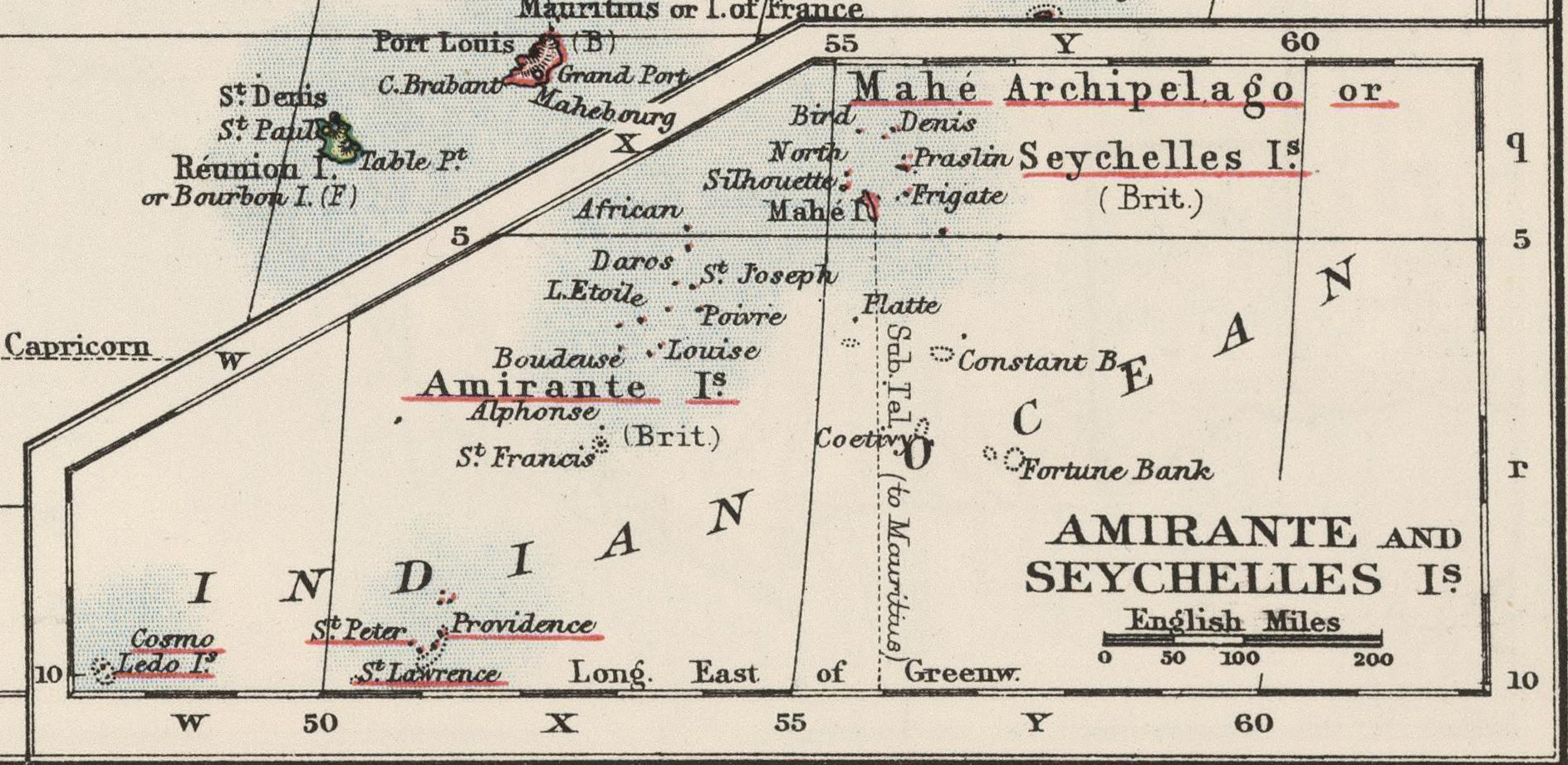
The Portuguese explorers João da Nova and Vasco da Gama charted some of the islands in 1501 and 1502. However the first person to go ashore was an Englishman in 1609 which landed at what was later named Mahé. Then for 133 years there is no documentary evidence of any further visit.
The next recorded visit was in 1742, made by Captain Lazare Picault, who, returning two years later, formally annexed the islands to France. Though then uninhabited there was a belief that the Seychelles had been used as a rendezvous for the many (mostly Arab( pirates and corsairs who infested the high seas between South Africa and India. Picault, who acted as agent of the celebrated Mah de la Bourdonnais, governor of the Ile de France (Mauritius), named the principal island Mah and the group Iles de Ia Bourdonnais, a style changed in 1756, when the islands were renamed after Moreau de Schelles, at that time controlleur des finances under Louis XV.
The first permanent settlement was made about 1768, when the town of Mah was founded. Soon afterwards Pierre Poivre, intendant of Ile de France, seeing the freedom of the Seychelles archipelago from hurricanes, encouraged spice plantations to be developed there, with the object of wresting from the Dutch the monopoly they then enjoyed of the spice trade. The existence of these plantations was kept secret, and it was with that object that they were destroyed by fire by the French on the appearance in the harbour in 1778 of a vessel flying the British flag. The ship, however, proved to be a French slaver who had hoisted the Union Jack fearing to find the British on the islands.
Mah proved very useful to French ships during the Revolutionary wars, but this led to its capture by the British in 1794. However, no troops were left to garrison the place, and the administration went on as before. In 1806 the island capitulated to the captain of another British ship, but again no garrison was left, and it was not until after the capture of Mauritius in 1810 that the Seychelles were annexed and administered from Mauritius until 1903. Seychelles gained independence in 1976.
|