
|
|
|

 |
'Second Letter to the People of Ireland' in The Speeches and Public Letters of the Liberator by Daniel O'Connell 1833 Daniel O'Connell was one of the very first Irishmen to articulate a desire for Ireland to leave the orbit of Britain. He sought to return Ireland to the status of a 'great nation' from its then position as a 'pitiful province.' He did, however, wish to maintain ties to the Crown and an association with the opportunities of the Empire. Of course, Ireland had gone further than to be merely added as a colony to the Empire, rather it had been absorbed into the Metropolitan structure itself. The status of Ireland as part of Britain, colony, province or independent nation would be bitterly disputed throughout the 19th and early 20th Centuries.
|
 |
Sharman Crawford's Federal Scheme for Ireland in 'Essays in British and Irish History in Honour of James Eadie Todd' by W. Sharman Crawford 1844 (London, 1949) Sharman Crawford was one of the first people to articulate the genesis of Home Rule through his idea of a Federalism based on the ideas being discussed for Canada. He would provide the inspiration for much of the Home Rule debate of the late Nineteenth and early Twentieth centuries.
|
 |
Leaders of Public Opinion in Ireland by W. E. H. Lecky Dublin, 1861 Many authors have highlighted the importance of the Great Famine of 1845 - 49. Lecky was one of the earliest to put it into a historical context when he pointed out: 'the great clearances and the vast un-aided emigrations, that followed the famine' constituted 'the true source of the savage hatred of England that animates great bodies of Irishmen on either side of the Atlantic.' However, being no democrat, Lecky believed that the Irish were unfit to rule themselves and so must stay within the Union.
|
 |
Home Government for Ireland, Irish Federalism: Its Meaning, Its Objects, and Its Hopes by Isaac Butt Dublin, 1870 Butt was convinced that a constitutional arrangement for more Home Rule would be preferable to the use of physical force to demand change. He suggested a devolved Irish Parliament in Dublin which would only be subordinate to Westminster on Imperial matters. In effect, he was advocating a Federal Home Rule solution. He believed that this model could also be applied to other territories and colonies leaving London to become an Imperial Parliament as a Great Council of Empire.
|
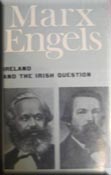 |
Ireland and the Irish Question Marx and Engels but ed. by L. I. Goldman 1843 - 1882 (London, 1971) Marx and Engels keenly followed events in Ireland as proof of exploitation by the Metropolitan area. They featured many Irish examples in a range of their writings and letters. They urged the Irish to seek self-determination and and seek economic liberation from their imperial oppressors. Their economic debate as it pertains to Ireland has been collected and collated in detail in this volume.
|
 |
The English in Ireland in the Eighteenth Century by James Froude London, 1881 Froude was a Protestant writer who believed that the Irish, and particularly the Catholic Irish, were totally incapable of ruling themselves. He believed that the troubles in Ireland were a result of too little English control and involvement in Ireland's affairs and that greater English presence was needed to alleviate Ireland's problems. He was writing at the times of the Irish Home Rule bills to demonstrate the futility of delegating more powers to the Irish.
|
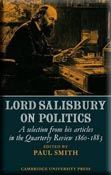 |
Disintegration in Lord Salisbury on Politics by Lord Salisbury 1883 Before he became Prime Minister, Lord Salisbury was predicting that granting Home Rule to Ireland would open the floodgates to demands for self-rule in other colonies in a Victorian version of the 'domino theory.'
|
 |
England's Case against Home Rule by Albert Dicey London, 1886 Dicey believed that Home Rule or Federalism would seriously undermine Britain's power at home and abroad through weakening the Parliamentary sovereignty that lay at its core. He insisted on preserving the 'unity of the state which is essential to the authority of England and to the maintenance of Empire.'
|
 |
My Life in Two Hemispheres by Charles Gavan Duffy London, 1898 Duffy represented an Irish settler who made good in politics down under in Victoria but who then returned to Europe to work for Irish self-government but within the context of the new cause of Imperial Federation. This framework was gathering support amongst many of the settler colonies who sought more freedoms but within the Empire.
|
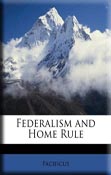 |
Federalism and Home Rule by F. S. Oliver (Pacificus) London, 1910 Oliver was writing at the time of the upheavals in the British Houses of Parliaments over Lords' reform. He recommended that Conservatives unite with the Liberals to deal with the problem of Ireland quickly as the international situation descended towards a much larger European problem. His solution was for Home Rule in a Federated Empire - but it was the speed that he felt was necessary in order to allow Britain to focus on the larger issues facing the continent.
|
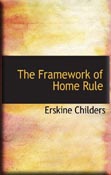 |
The Framework of Home Rule by Erskine Childers London, 1911 Childers argued not only that Home Rule was inevitable but that it needed to be granted soon in order to maintain enough goodwill so that Ireland would remain inside the Empire. He believed that a more representative government for Ireland was necessary and moral and that it would also relieve unneccessary burdens from Westminster.
|
 |
Against Home Rule: The Case for the Union by L. S. Amery (Collection of Essays edited by R. Rosenbaum) London, 1912 Amery offered a robust counter-argument to writers such as Childers and Oliver. He believed that the trend should not be towards devolved power but in the other direction. He thought that 'the fulfillment of colonial experience' was through greater Union. In short, 'the material, social and moral interests, alike of Ireland and of Great Britain, demand that they should remain members of one effective, undivided legislature and administrative organisation.' Rosenbaum's collection of essays also included pro-Union tracts from Edward Carson, Bonar Law, Balfour, Salisbury, Long, A. Chamberlain, Wydenham, Londonderry and others...
|
 |
Collected Works Volume 22 by V. I Lenin 1916 (published 1964) Lenin was particularly interested to portray the Easter Rebellion as a sign of the Class War being unleashed by the forces of the Imperialist First World War. He believed that the Irish rebellion would be copied by oppressed colonised peoples across the world as they sought to free themselves from imperial exploitation.
|
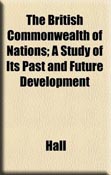 |
The British Commonwealth of Nations: A Study of its Past and Future Development by Duncan Hall London, 1920 Hall wrote a very influential document at the height of the negotiations over the future of Ireland's relationship with Britain. His writing was designed to convince the Irish of the merits of staying within the Commonwealth and playing an active role in this new body.
|
|
Cambridge History of The British Empire by J. L. Morison Cambridge, 1930 The impact of the Great Famine of 1845 - 49 was obviously a huge influence on Ireland's relationship with the Empire and the wider world and in particular North America. This Cambridge History stated that it had 'led to the most revolutionary change in Nineteenth Century imperial history. Alike in dramatic quality and far-reaching consequences, the Irish exodus occupies the central place in the history of Nineteenth Century emigration.'
|
 |
Survey of British Commonwealth Affairs by W. K. Hancock London, 1937 Hancock surveyed and analysed the debate over whether Ireland should remain as a Dominion or gain its full independence. He also put this debate into the wider context of the evolution of the other Dominions' relationship with Britain. He noted that not all Dominions were as keen as some in Ireland to speed up the full independence route.
|
 |
The New Imperial System in Cambridge History of The British Empire by Vincent T. Harlow Cambridge, 1930 Harlow provides an example of a historian who believed that Ireland's absorption into Metropolitan Britain meant that it did not merit a particular imperial examination. He stated that 'Ireland disappeared from the imperial scene in 1800 and did not emerge again until the Twentieth Century'.
|
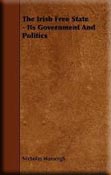 |
Irish Free State: Its Governmnent and Politics by Nicholas Mansergh London, 1934 Mansergh was a contemporary historian of Ireland and the wider Commonwealth who wrote extensively on the unfolding constitutional arrangements. Of particular interest is the comparison of what happened in the Irish Free State with events in Northern Ireland given in his Government of Northern Ireland book detailed below.
|
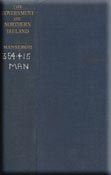 |
The Government of Northern Ireland: A Study in Devolution by Nicholas Mansergh London, 1936 Mansergh was a contemporary historian of Ireland and the wider Commonwealth who wrote extensively on the unfolding constitutional arrangements. Of particular interest is his comparison of what happened in the Irish Free State with events and the arrangements made for Northern Ireland.
|
 |
Ireland and The British Empire, 1937: Conflict or Collaboration by Henry Harrison London, 1937 Despite wishing the connections between Ireland and Britain to remain strong, Harrison examined the effects of the then recent abdication crisis and the unfolding international crisis on Anglo-Irish relations and how much the De Valera government used these incidents to gain further independence from Britain. He went on to write another book on the The Neutrality of Ireland: Why it was inevitable  in 1942.
|
 |
The Commonwealth and Nations by Nicholas Mansergh London, 1947 Mansergh was a historian who actually helped shape policy thanks to a paper entitled 'The Implications of Eire's Relationship with the British Commonwealth of Nations.' He point out Ireland's long struggle for 'external association' and that this might be desired in India and Africa in the near future too. He explained how Britain had failed to satisfy Ireland's Republican goals within the existing framework envisioned for the Commonwealth.
|
 |
Six Days to Shake an Empire by Charles Duff London, 1966 Duff explained the vital role of the Easter Rising in re-evaluating subject peoples concept of Empire and their place within it. In fact, he believed that it even managed to convince die-hard imperialists that the nature of Empire and its future had changed with the events unleashed by the 1916 event. His epilogue goes into length in analysing the transition from an Empire to a Commonwealth.
|
 |
In Time of War: Ireland, Ulster and the Price of Neutrality, 1939-45 by Robert Fisk London, 1983 Fisk examined why Eire remained neutral during the Second World War. He believed that De Valera's government was caught between competing pressure groups and that neutrality was perhaps the inevitable conclusion if Eire was to avoid returning back to a Civil War.
|
 |
Independent Ireland by Ronan Fanning Dublin, 1983 Fanning gave evidence of just how far Eire did help the British in their campaign against Hitler during the Second World War whilst still allowing itself to appear neutral both to the outside world but more importantly to nationalist elements within its own borders. He listed all the various contraventions of neutrality towards Britain's favour.
|
|
Republicans and Imperialists: Anglo-Irish Relations in the 1930s by Deirdre McMahon New Haven, 1984 McMahon examined the increasingly tense relationship between Dublin and London after the election of De Valera in 1932. She examined the controversies over the oath of allegiance, the Privy Council, Irish nationality and the increasing assertion of neutrality by Ireland in international affairs.
|
|
Partition in Ireland, India and Palestine: Theory and Practice by T. G. Fraser London, 1984 Fraser was interested in analysing the impact of the creation of the Irish Free State as an inspiration to the nationalist and independence movements in India and Palestine. He examined the hopes for the Irish Free State within the Dominion measured against the suspicion and reluctance of many in Ireland to be connected to Britain in any shape or form. He then examined various nationalists in India and Palestine and examined the lessons they learned from Ireland.
|
 |
Irish Emigration: 1801 - 1921 by D. Fitzpatrick Dundalk, 1984 Many authors have tackled the important issue of emigration to the Irish experience within the Empire and escaping from the Empire. Fitzpatrick offered an unusually wide ranging description as many of the books on the subject were specific to the colonies and localities to which they settled.
|
|
Ireland and the Crown, 1922 - 1936 by Brendan Sexton Dublin, 1989 Sexton examined fully the role of the Governor-General to Ireland and the role of Ireland during the Inter-War period.
|
|
A Diplomatic History of Ireland, 1948-49 by Ian McCabe Dublin, 1991 McCabe looked at the crucial final uncoupling of Ireland from the Commonwealth and away from any connection with Britain as it declared itself a Repubilc. He also considered the effects of a partitioned island and what it might do for Anglo-Irish relations and also how the other Dominions considered this move by Ireland.
|
 |
The Unresolved Question: The Anglo-Irish Settlement and Its Undoing 1912-72 by Nicholas Mansergh London, 1991 Mansergh provided a comprehensive overview of Ireland's experiences in the 20th Century with this postumously published book. He singled out the imperfect 1921 arrangement to turn Ireland into a Dominion in order to keep it tied to Britain in at least some form. However, he concluded that the battle between nationalist aspirations and imperial preferences was a long, at times bloody and complicated one. He believed that the the short histoy of the Irish Dominion made its wider mark on the history of the Empire and Commonwealth.
|
|
An Irish Empire? Aspects of Ireland and The British Empire by Keith Jeffery Manchester, 1996 Jeffery considered the much wider impact of the Irish contribution to the imperial experience and from a variety of angles. He contrasts seccessionists with Unionists but not just within the island of Ireland but on the wider imperial canvas. He alsom examined Irish influences on the military, business, sport and in popular culture.
|
 |
Ireland and Empire: Colonial Legacies in Irish History and Culture by Stephen Howe Oxford, 2000 Howe sought to understand the development of Ireland as it related to The British Empire, both positively and negatively. He believes that the simplistic myths of heroic Resistance or patriotic Unionism have not been fully dismantled by a generation of historians who have played into these romantic expressions of loyalty to one polity or the other. He believes that the interactions and inter-relationships were far more complex and nuanced and goes on to show the intellectual poverty of literary-critical theorizing about colonialism, especially as applied to the Irish case.
|
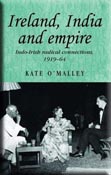 |
Ireland, India and Empire: Indo-Irish Radical Connections, 1919-64 by Kate O'Malley Manchester, 2008 O'Malley examined the relationship between the nationalist movements in Ireland and Indian and explains what they learned and borrowed from one another in terms of tactics, organisation and claims made towards the British.
|
|
|
|
|
|

|
|
|
|
|
Armed Forces | Art and Culture | Articles | Biographies | Colonies | Discussion | Glossary | Home | Library | Links | Map Room | Sources and Media | Science and Technology | Search | Student Zone | Timelines | TV & Film | Wargames

