British Empire Title

The Westcountry Walker: Hiking Through History

Poughill, Stratton and the Stories Surrounding a Cornish Battlefield


Battle of Stratton on Stamford Hill

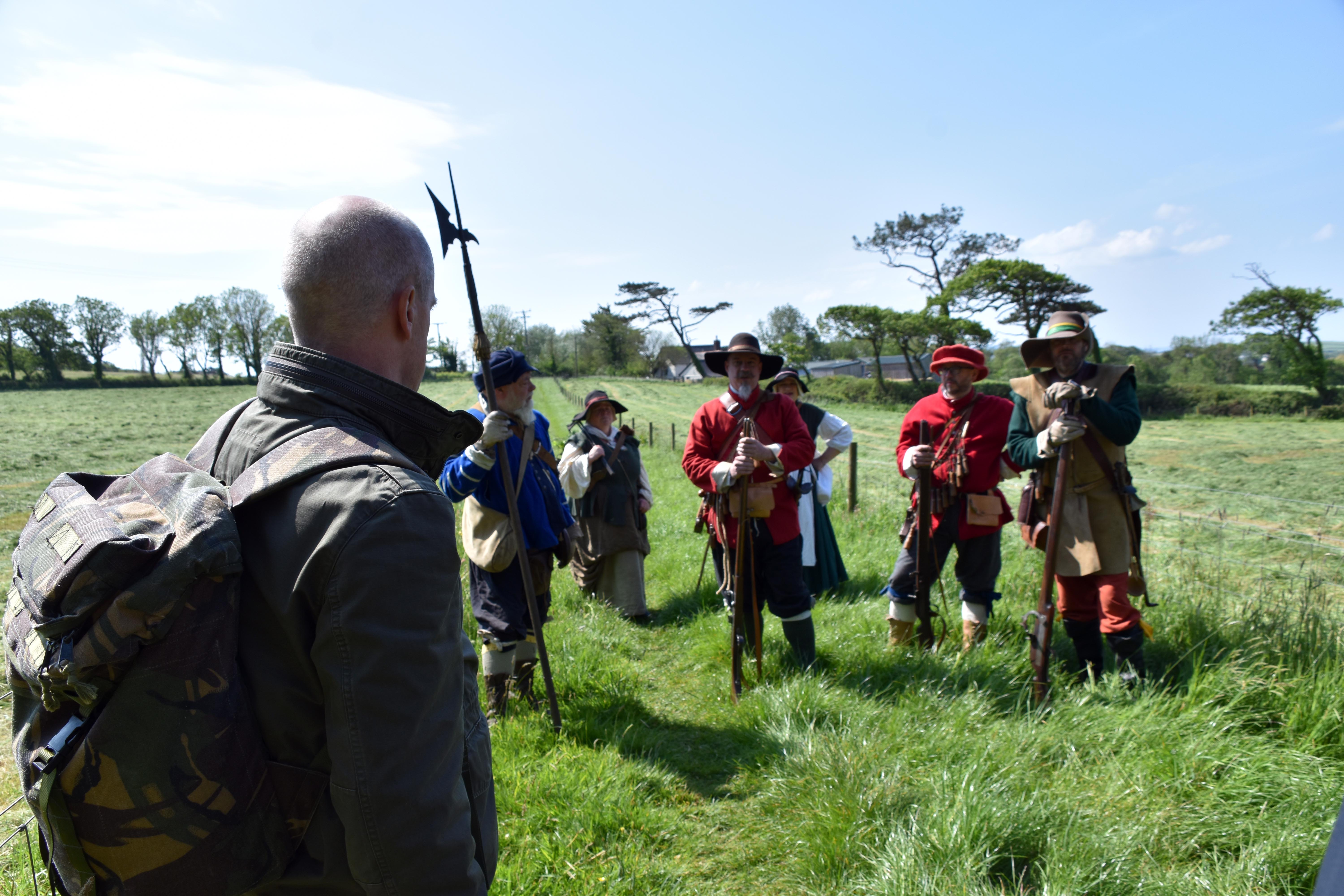
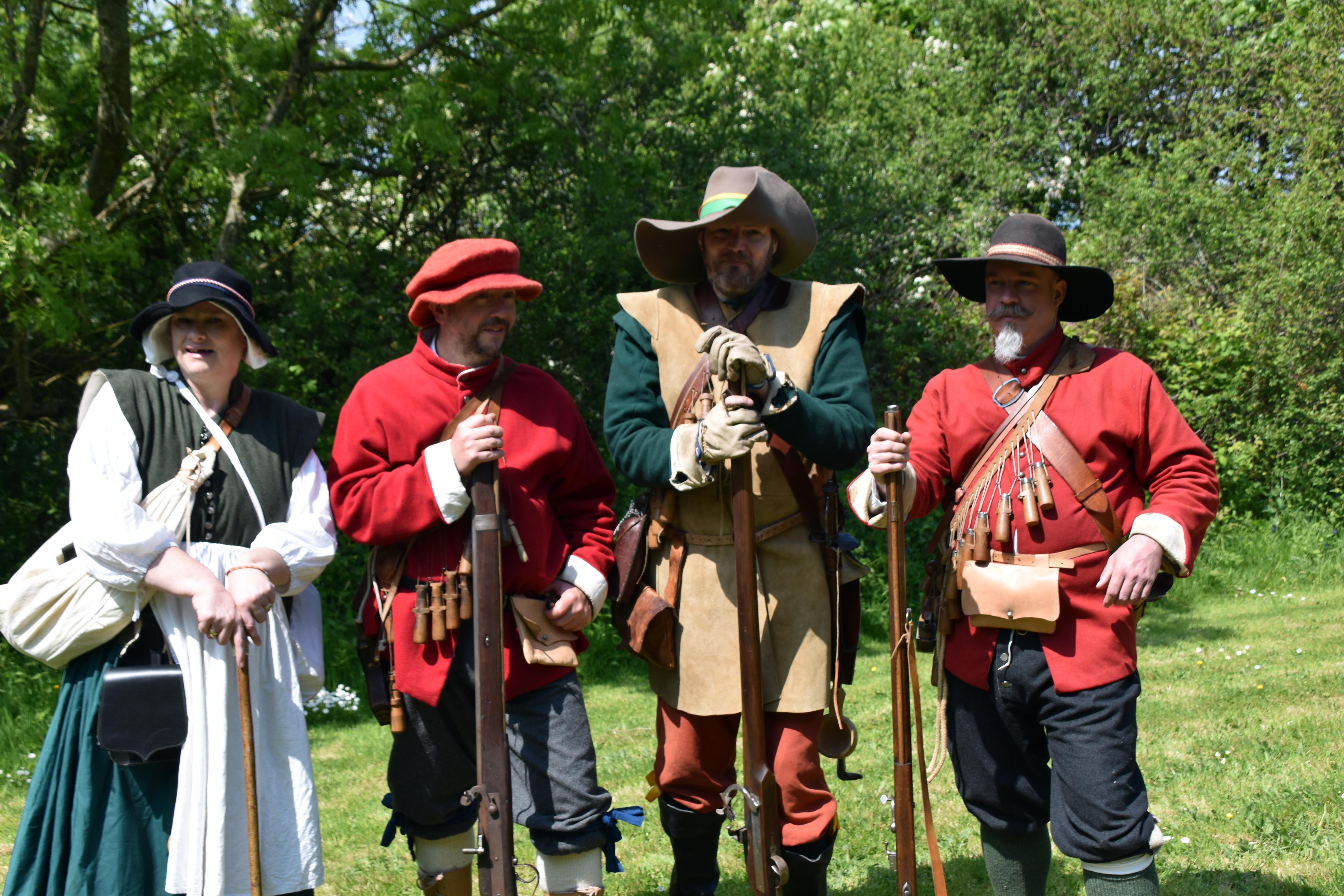
One Sunday in May Rupert and I joined a Battlefields Trust Tour of the Battle of Stratton battlefield led by Charles Cordell. Rupert and I had actually made our own tour of the battlefield the previous year, but it is always good to see it through fresh eyes, and on this occasion there were lots of very informed and knowledgeable people who could contribute interesting insights into the course of the battle, including archaeologists, historians, local council officials and, most colourful of all, reenactors in their full regalia. They really did help to bring the battlefield to life and help you to place the movements of soldiers and camp followers across what is surely one of the more picturesquely located battlefields in the country. It was also helpful that we started from Poughill this time (pronounced Puffle) rather than from Stratton as we did last time.

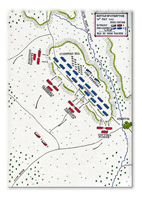
This 1643 battle pitted two of the more impressive Royalist leaders — Sir Ralph Hopton and Sir Bevil Grenville (who lived locally at Stowe House) — against one of the least impressive Parliamentary commanders, the Earl of Stamford. This may help explain why, despite outnumbering his enemy by two to one and occupying commanding heights with plenty of artillery support, the Parliamentary army was to be vanquished by a smaller but more determined attacking force of Cornishmen. Strategically, the Earl of Stamford was trying to prevent the Royalists, who had been victorious at Braddock Down, from linking up with other Royalist armies further up the country. His position overlooking Stratton and the main road out of Cornwall was a well‑placed one on paper — perhaps too good. The slope before it (which is now wooded but wasn’t then) would indeed be very challenging for any army to climb in order. It did not help that he had sent his cavalry to Bodmin to try to isolate the advancing Royalists. But it was probably the local knowledge of Sir Bevil Grenville that was the decisive factor, as he was able to manoeuvre the Royalists to attack the Parliamentarians from the far gentler slopes of the west, albeit with the sea behind them.
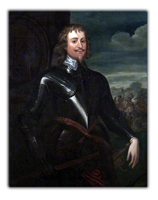
Sir Bevil Grenville

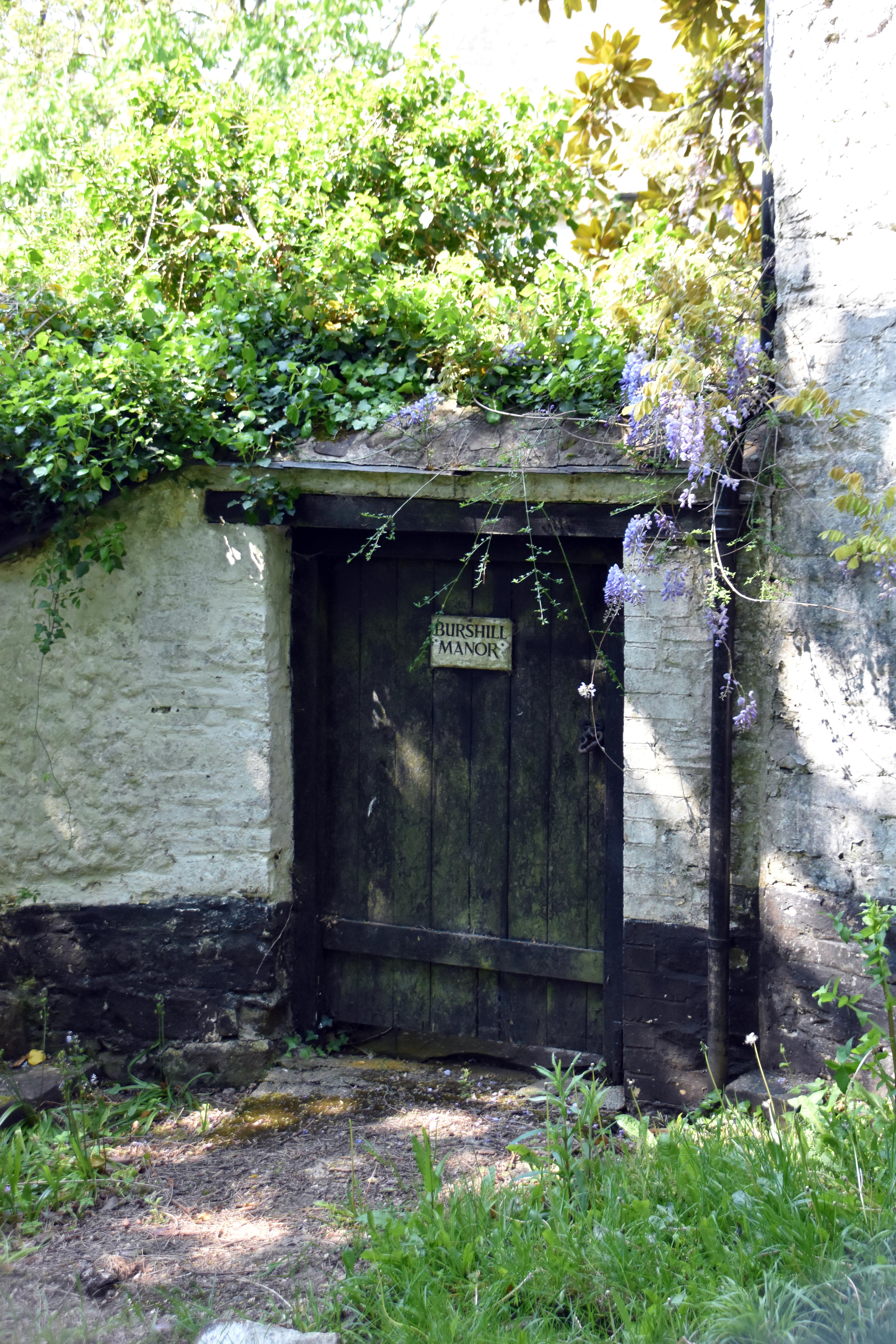
Setting off from Poughill, we followed some old pathways that the Royalists would have advanced along themselves. We saw the contemporary Burshill Manor, which would have watched the soldiers advance past it as they ascended the tracks to Stratton Hill. There would have been far fewer trees then, but the hedges and tracks would otherwise have looked very similar. Royalist pikemen led the troops up four main access roads whilst musketeers followed them and would have moved from hedge to hedge under fire from Parliamentary artillery and musketeers. The reenactors explained the practicalities and effectiveness of the weapons of the era, and although the ranges of muskets were short and their accuracy difficult to predict, the volume of fire would have been significant and the consequences of any hits were likely to be severe.

The battle lasted 10 to 12 hours, so the fighting was likely to have been ferocious. Eventually, Royalist gunpowder began to run low, a perennial problem for the poorly resourced Royalist army, and the order was given to charge up the hill. As the Royalists converged up their respective attacking fronts, the Parliamentarian frontage began to shrink. A well‑timed cavalry charge at this time may well have sealed a Parliamentary victory, but those horsemen were miles away in Bodmin chasing shadows.
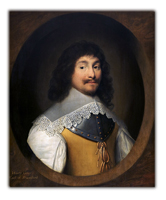
Earl of Stamford

As it was, as the Parliamentarians were pushed back, the steep banks behind them began to become an issue. No formations could keep order being pushed down these slopes. With this in mind, some of the recently raised local militia panicked and ran. And soon their commander, the Earl of Stamford, followed them. At this point, and in some disgust at the actions of his commander and of the militia, the brightest commander on the Parliamentary side, the young and dashing James Chudleigh, led a desperate sortie with a small band of infantry held in reserve. This nearly turned the tide of the battle as Sir Bevil Grenville was seen to fall at the head of his pikemen. Indeed, we travelled up that very road where he was knocked to the ground. Fortunately, he was able to escape the melee, pick himself up and resume the fight. The brave James Chudleigh now found his troops and himself isolated and surrounded. He was soon to become a prisoner of the King (and was treated extremely courteously to encourage his father, who was at the head of the cavalry at Bodmin, to lay down his arms also).

The battle was lost for Parliament. Fortunately, it was not a total defeat, as troops from London and Marines from Plymouth fought a brave rearguard action and stopped the retreat turning into an unmitigated rout. Besides, exhausted and hungry Royalists were in no mood to continue the fight. This had been a very hard‑won victory. For Parliament it was still a significant loss, with 300 Roundheads killed, 1700 captured or wounded, and barrels of fresh gunpowder, artillery pieces, muskets and even £5000 in cash all seized. Sir Ralph Hopton had once again managed to win a victory against the odds.
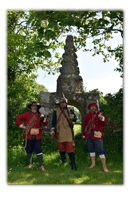
Stratton Memorial

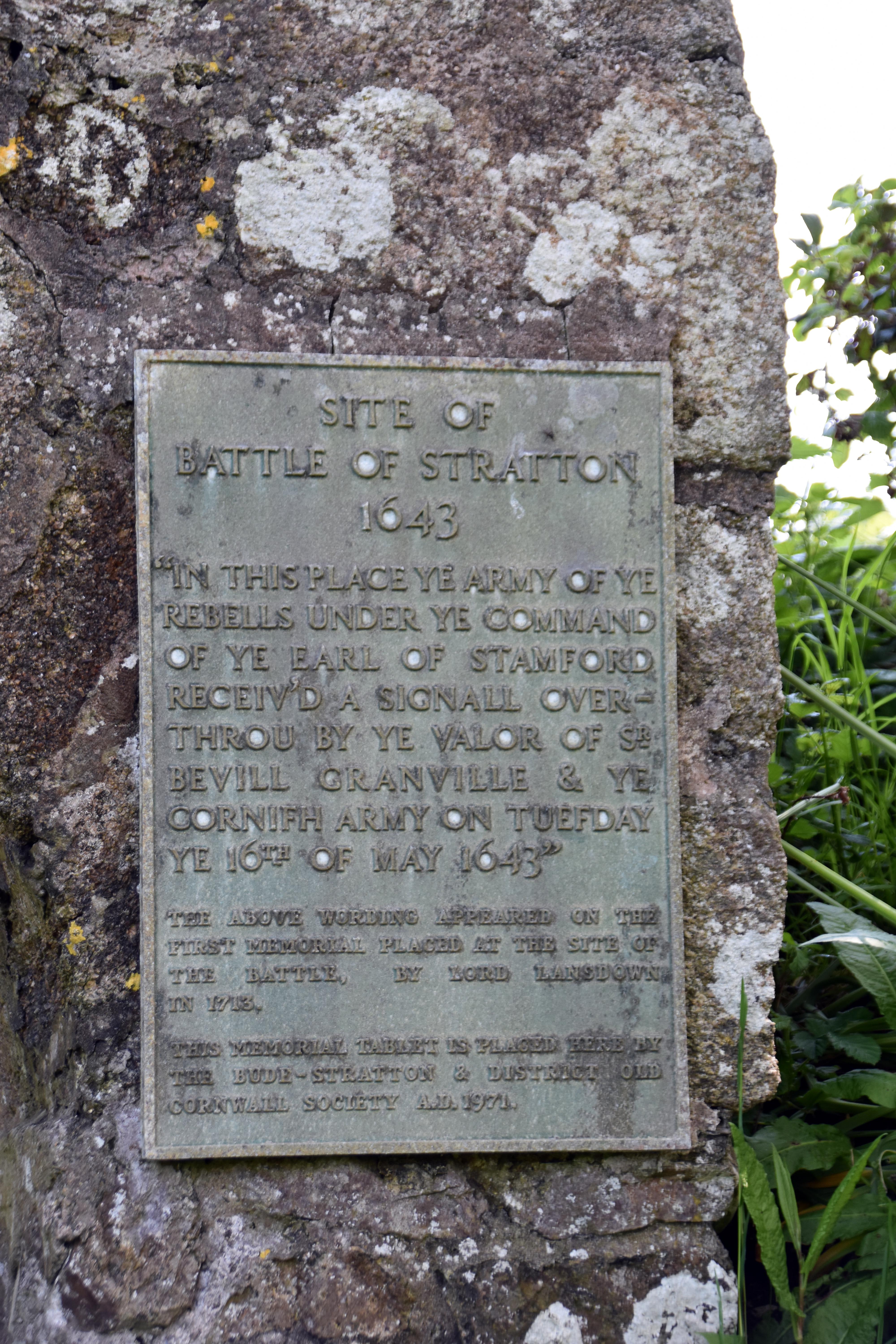
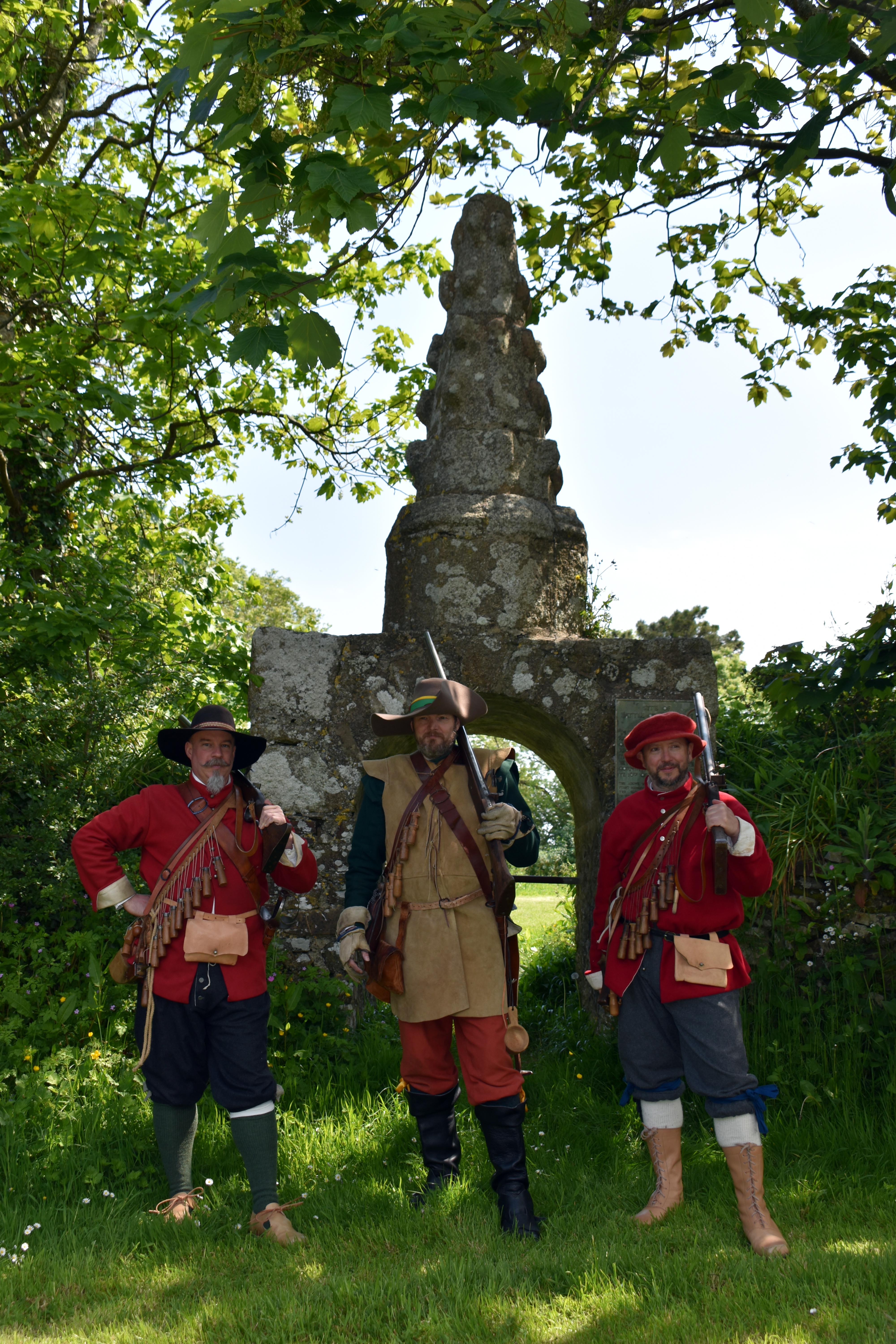
We were given permission to enter the private land next to the Iron Age fort, which had been where the Parliamentarians had centred their defences. Here you can see one of the oldest war memorials in the country, built in 1713 by a descendant of Sir Bevil Grenville, George Granville, Lord Lansdowne, who also constructed the monument to Sir Bevil Grenville at Lansdown Hill. It is a shame that this important piece of our history is normally not accessible to the public. But at least we were able to catch a glimpse of it.
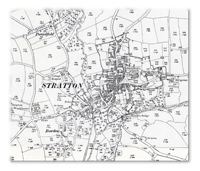
Stratton Town

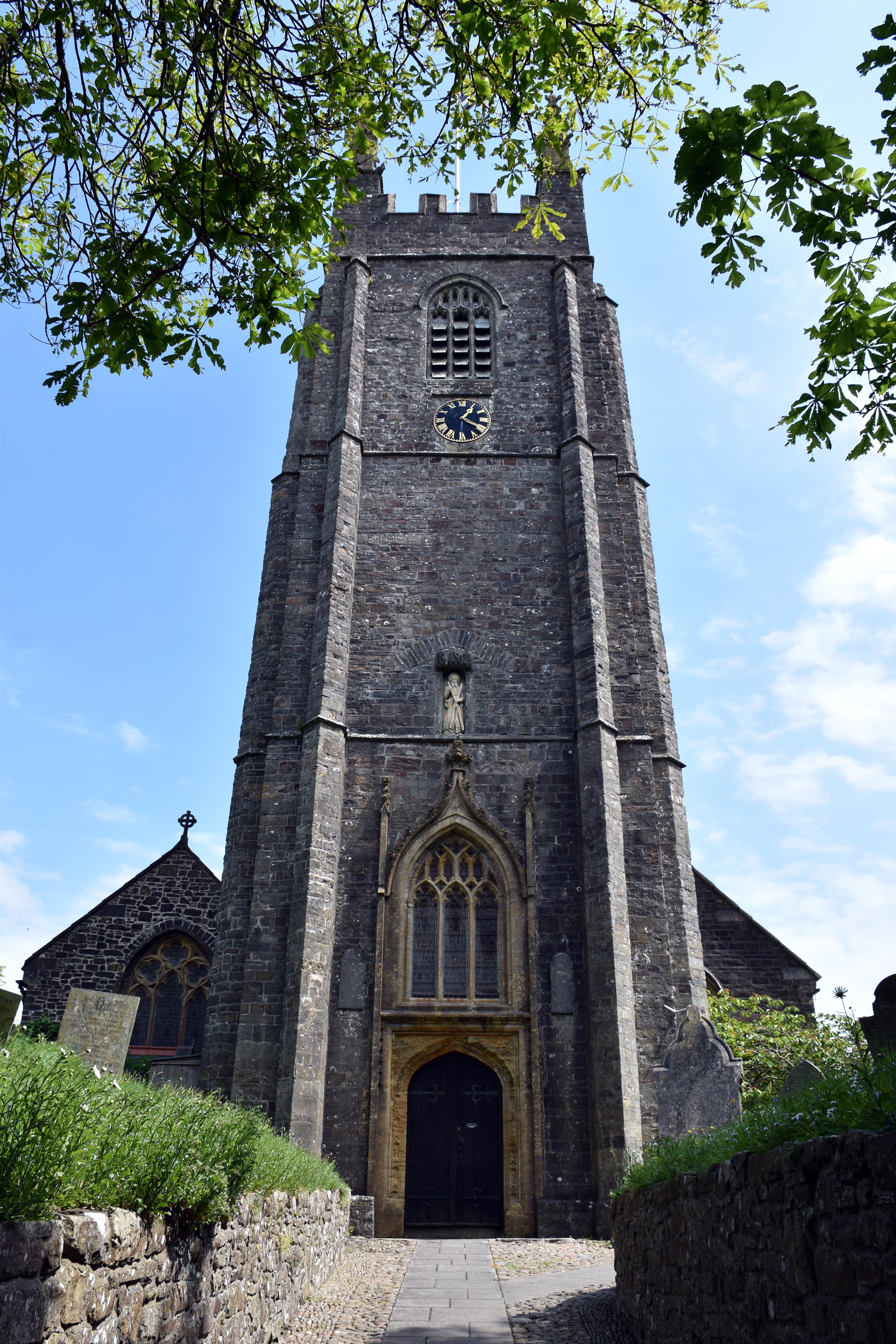
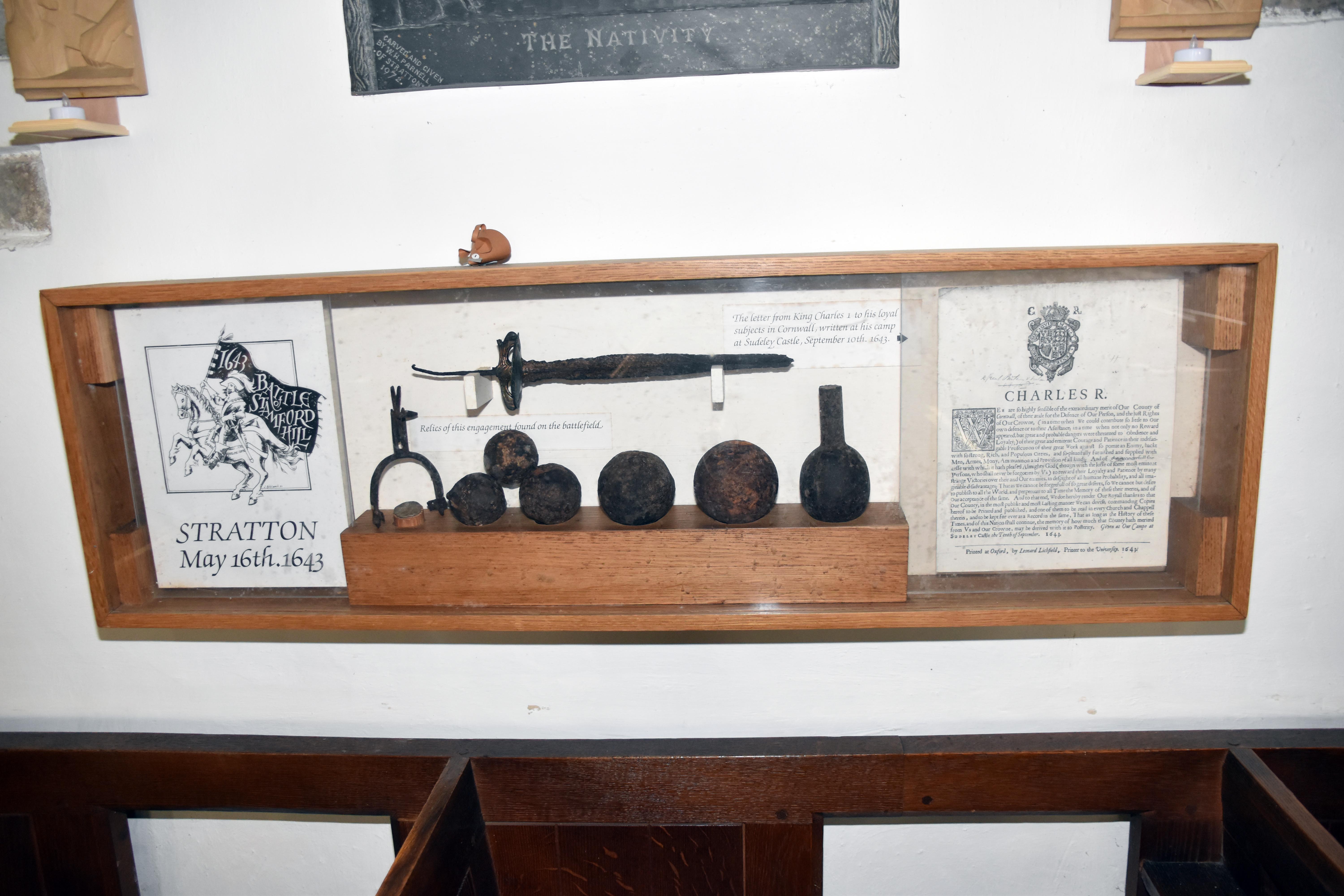
After we bid farewell to our tour guides, we descended down the back of the battlefield to see the slopes for ourselves. And yes, carrying an 18‑foot pike down there would not have been fun at all, especially with people firing muskets at you or charging down on you. We then walked into picturesque Stratton to head to the charming and fascinating St Andrew’s Church, which has some of the cannonballs and other relics of the battlefield and also a copy of King Charles’ letter thanking the people of Cornwall for their loyal support throughout the conflict. These were to be displayed in all churches in Cornwall, and the vast majority still proudly show off this letter from the King.

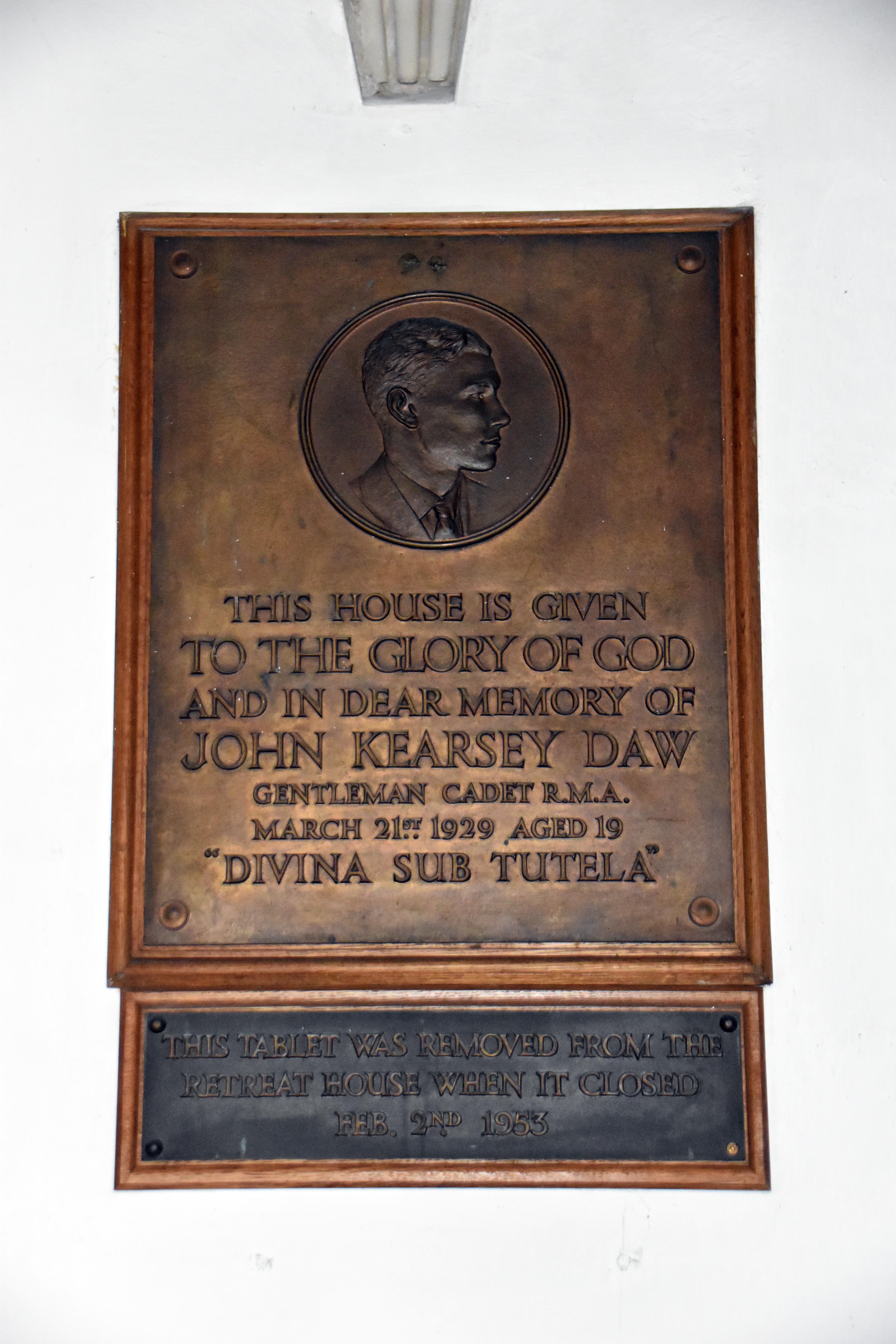
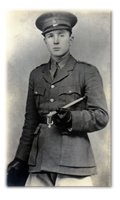
St Andrew’s is a beautiful Cornish church packed full of interesting memorials and features and a church graveyard with some fascinating graves in it. There was an interesting memorial to a young 19‑year‑old Sandhurst cadet killed in 1929 whilst in training. He died of pneumonia which, before antibiotics were developed, could indeed be a life‑and‑death condition. What makes this memorial remarkable is seeing his likeness on the brass memorial. It is like staring into history, and one can only imagine the sadness of his parents to lose their son in the prime of his life.

St Andrew's Church in Stratton

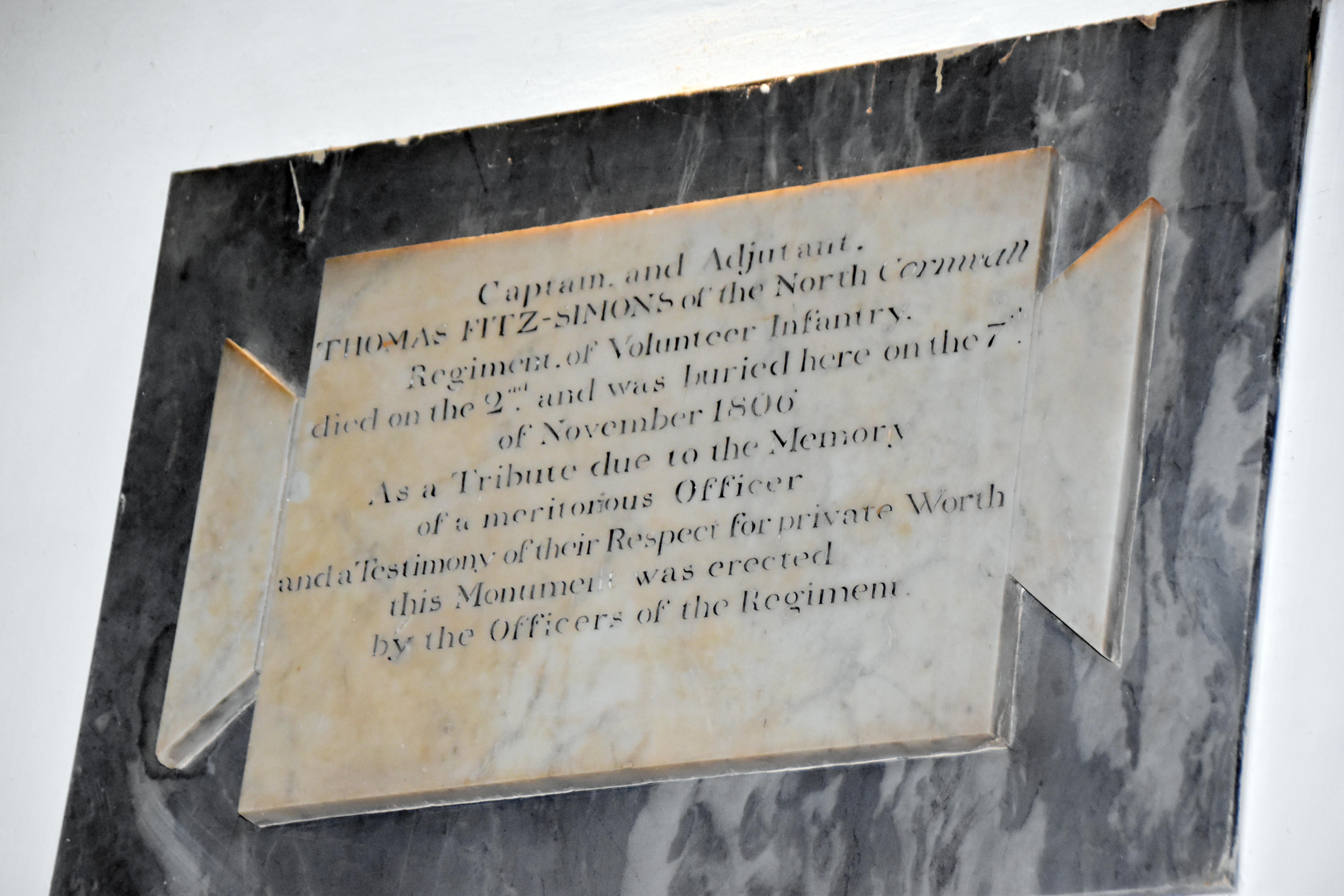
There is an even older soldier commemorated, although his memorial is hidden away up above an extension built at the back of the church. This is to Captain and Adjutant Thomas Fitz‑Simons of the North Cornwall Regiment of Volunteer Infantry, who died in 1806. The Volunteer Infantry would have been raised to deal with the threat of an invasion from Napoleon’s France, which was no idle threat. They had indeed landed over the Bristol Channel at Fishguard in 1797 and on to Ireland. The 1805 victory of Trafalgar would have relieved much of the threat, but the war was still going to last nearly a decade after that. It doesn’t say how he died unfortunately, but he is buried in the churchyard itself.

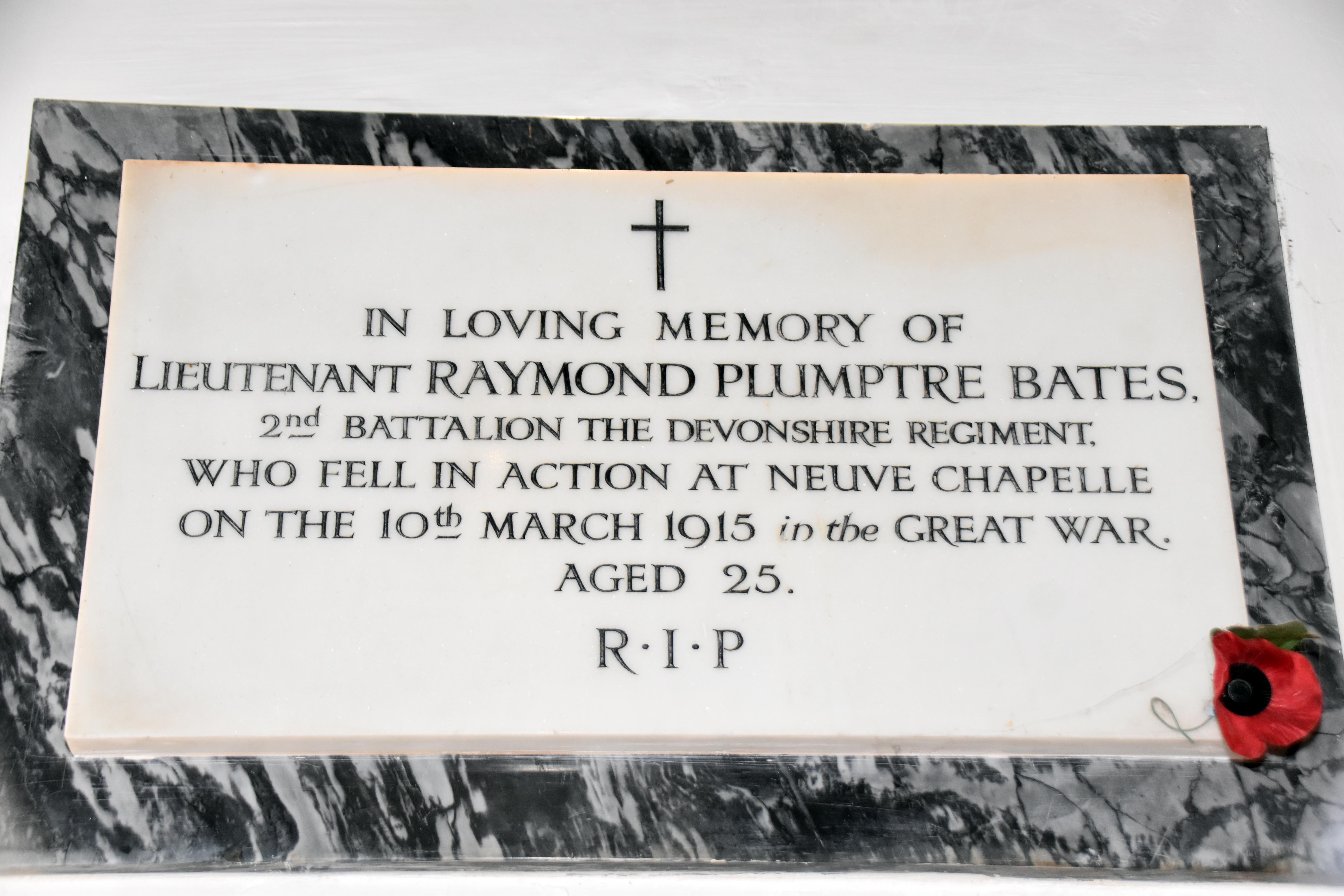
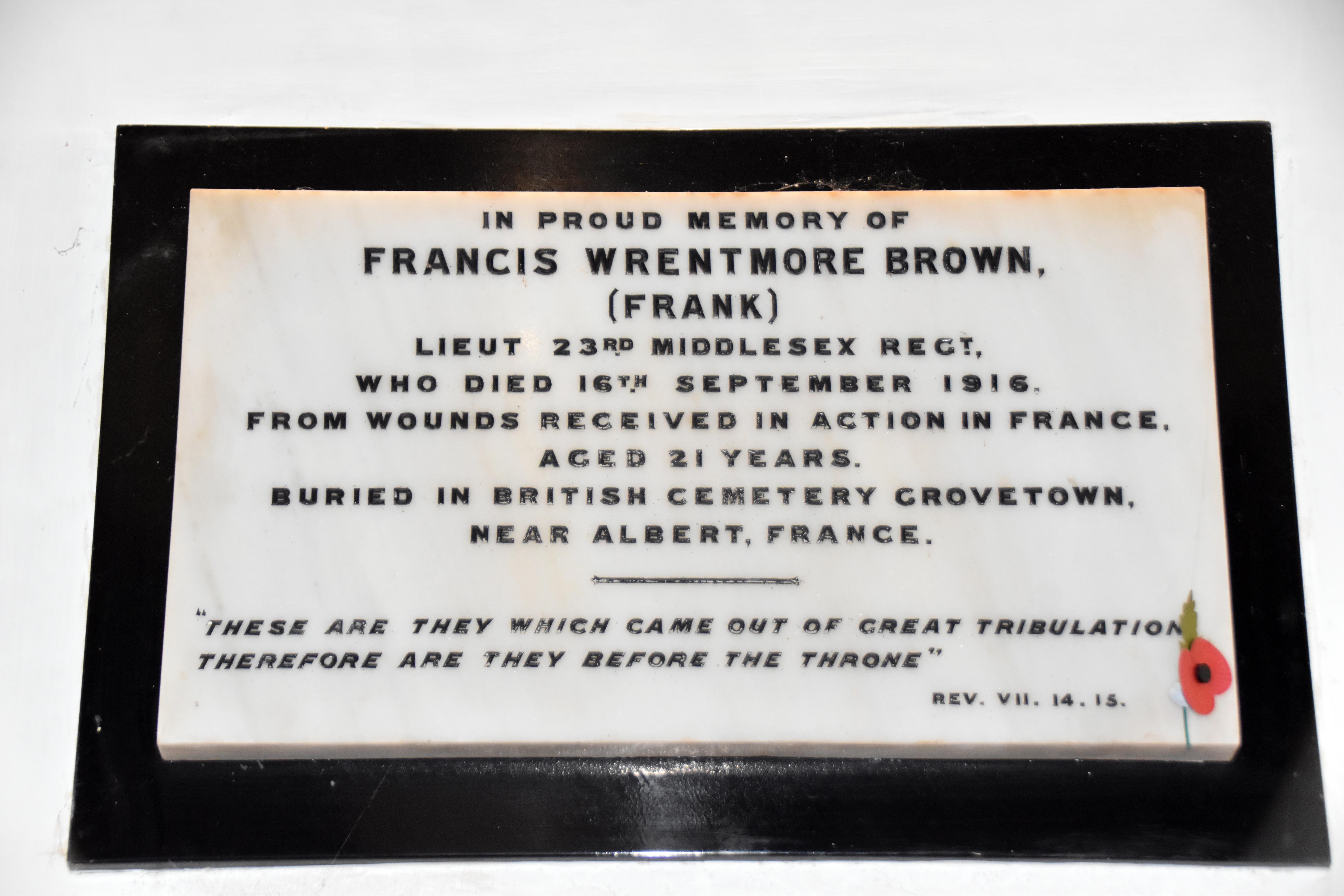
There are two World War One soldiers commemorated with their own memorials. One is to Lieutenant Raymond Plumptre Bates of the 2nd Battalion of the Devonshires, who was killed at Neuve Chapelle in March 1915. He was a keen polo player who played at a high level. His loss was commented on in polo publications of the time, lamenting the loss of their fellow sportsman. Of course, polo was a popular pastime with soldiers and especially officers to hone their martial skills. Sadly, the industrial warfare of the First World War made short shrift of these for far too many. The second one is to Lieutenant Francis Wrentmore Brown of the Middlesex Regiment, who died of his wounds during the Somme Campaign of 1916. By coincidence, he is buried in the same graveyard in Meulte near Albert as my own great‑great‑uncle, who died with the Machine Gun Corps in 1918 as they fought to recapture land lost in the German Kaiserschlacht: different battle, same cemetery.
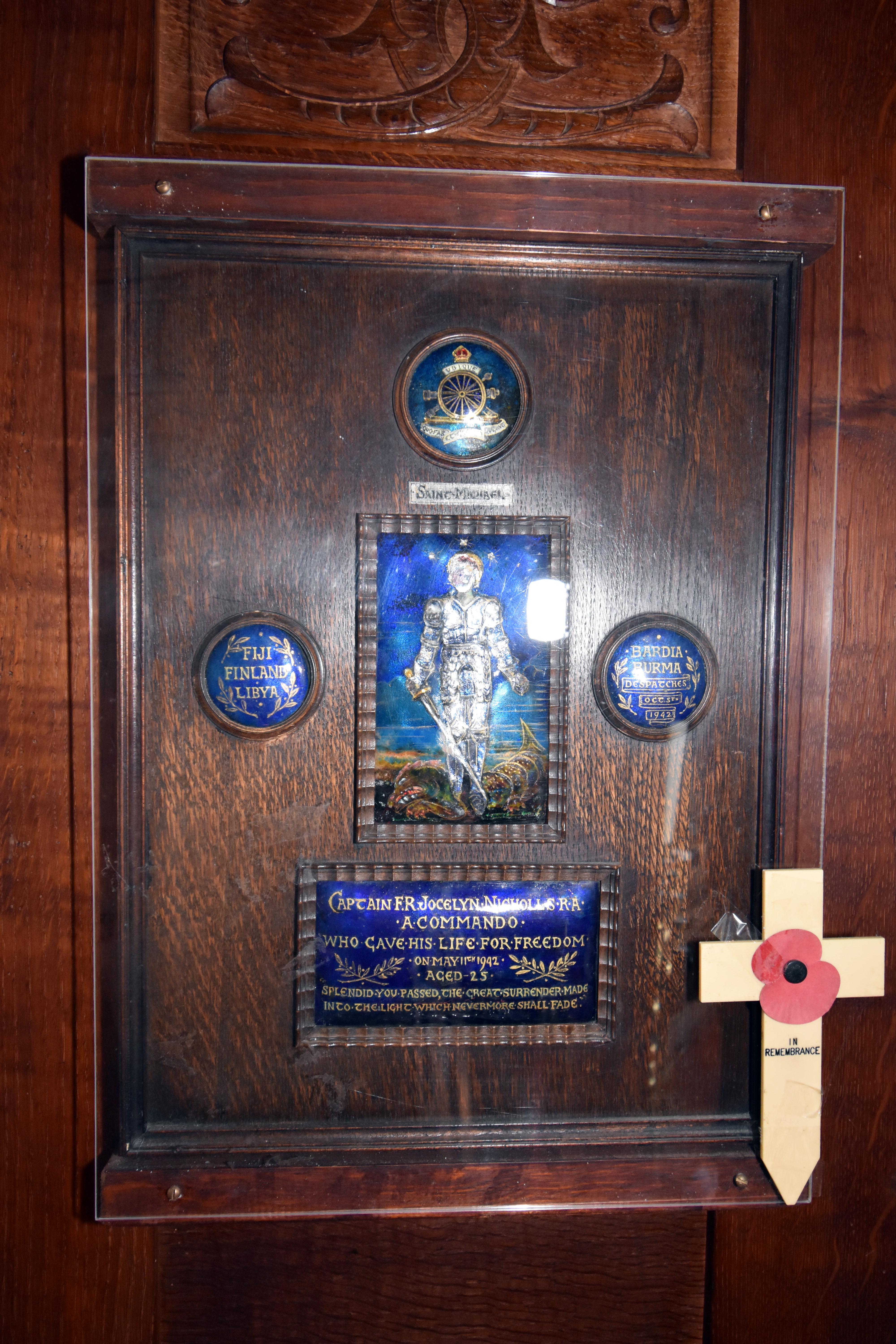
Royal Artillery Commando Gunner, Captain F. R. Jocelyn Nicholls

There is a Second World War memorial to a Royal Artillery Commando Gunner, Captain F. R. Jocelyn Nicholls. Not only does he have an interesting plaque dedicated to him, but the range of where he served was quite fascinating, including Fiji, Finland and Libya. And it appears he was mentioned in despatches for his actions in Bardia in North Africa and Burma. That is quite a geographical spread for someone who died on May 11th 1942. He happened to be stationed in Fiji as the ADC to Fiji’s Governor when war broke out, but travelled home to join the war and quickly volunteered to fight in Finland against the Russians (who of course would later be an ally of the British). He underwent arduous mountain and ski training, which must have made for something of a contrast from his time in Fiji! When Finnish resistance collapsed, he joined the Commandos and took part in the daring raid on Bardia in 1941. This wasn’t an unalloyed success but pointed to the ambition of the new formation to disrupt enemy forces. They did destroy supply dumps and coastal artillery but lost 70 men who got lost and tried to be evacuated off the wrong beach. Captain Nicholls’ men all escaped without issues. Strategically, this operation startled the Germans in North Africa, who diverted an armoured brigade to do security work and act as a fast reaction force to any future raids. Captain Nicholls then took part in the Crete action, being landed to help with the evacuation across the island. Here his soldiers and some New Zealanders were ambushed by German paratroopers, but Captain Nicholls led a bayonet charge to disrupt the German attack and frustrate the ambush. His Commando unit was disbanded after Crete after having suffered 80% casualties. Captain Nicholls, though, volunteered to join a new formation being trained in Burma to fight with the Chinese army against the Japanese. His new unit was known as Mission 204 and was a precursor to the Chindits and was designed to operate behind enemy lines working with the Chinese. But the Japanese advanced faster than anticipated, and Mission 204 began to withdraw, fighting another rearguard action as they went over the mountains into China. In this retreat Captain Nicholls was killed by a bomb dropped by a hedge‑hopping Japanese biplane. He was a very popular commander, and his loss was significant to the Commando regiment.

Churches are wonderful places for time travel, and a 13th‑century effigy of an armoured knight grasping the hilt of his sheathed sword immediately takes you back in time. It looks old and weathered now, but once upon a time not only was it pristine but it would have been painted in full colour. They are not entirely sure which member of the de Blanchminster family it portrays, but it is likely to be Sir Ralph or Sir Reginald, and the style of the armour suggests a 13th‑century knight. They probably lived at what is now Binhamy Farm on the outskirts of Stratton.
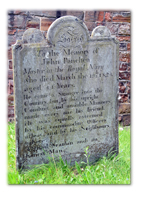
John Panchen buried in St Andrew's Church in Stratton

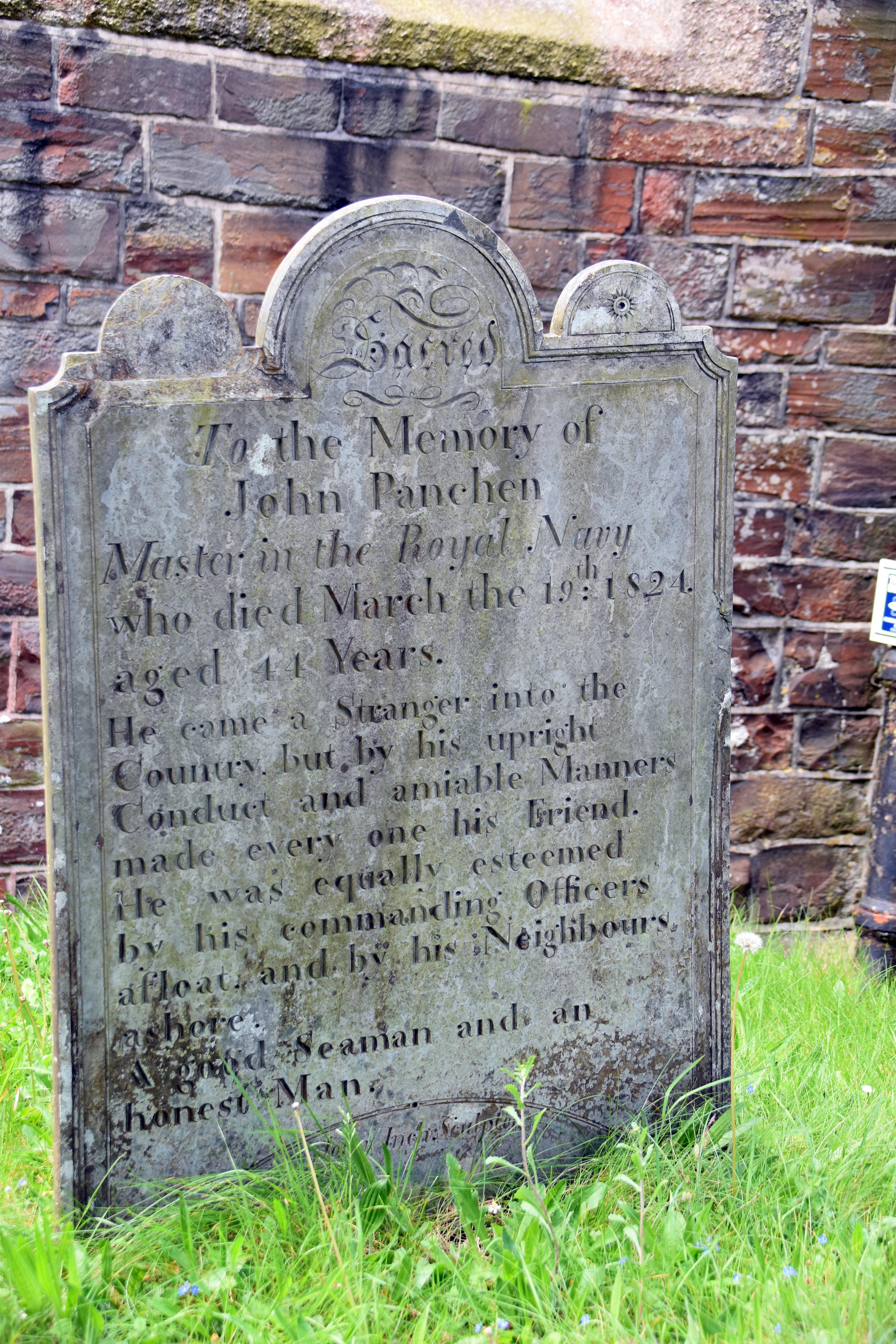
Outside we stumbled across a few fascinating graves, but one in particular really stood out with its inscription to John Panchen, which is worth mentioning in full. It says: “To the Memory of John Panchen Master in the Royal Navy who died March 19th 1824 aged 44 years. He came a Stranger into the Country but by his upright conduct and amiable manners made every one his friend. He was equally esteemed by his commanding officers afloat and by his neighbours ashore. A good seaman and an honest man.” There is a remarkable story around this ‘stranger’, but the Navy was a relatively colour‑blind institution during the Napoleonic Wars, which is when I am guessing this person entered naval service. It does not say from where he came, but to survive and thrive on a warship would have been no mean feat, and obviously he was held in high esteem. After he left the Navy after the Napoleonic Wars ended, he appears to have worked on the Bude Canal, but illness seems to have been a problem. Perhaps he was not used to this climate. He died at the relatively young age of 44, but the fact that he is buried in a prime location just outside the church shows that discrimination was not a universal vice and that people could be welcomed into Cornish communities like this one.
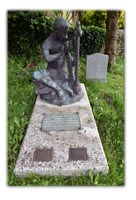
Anca Winand Van Wulfften Palthe

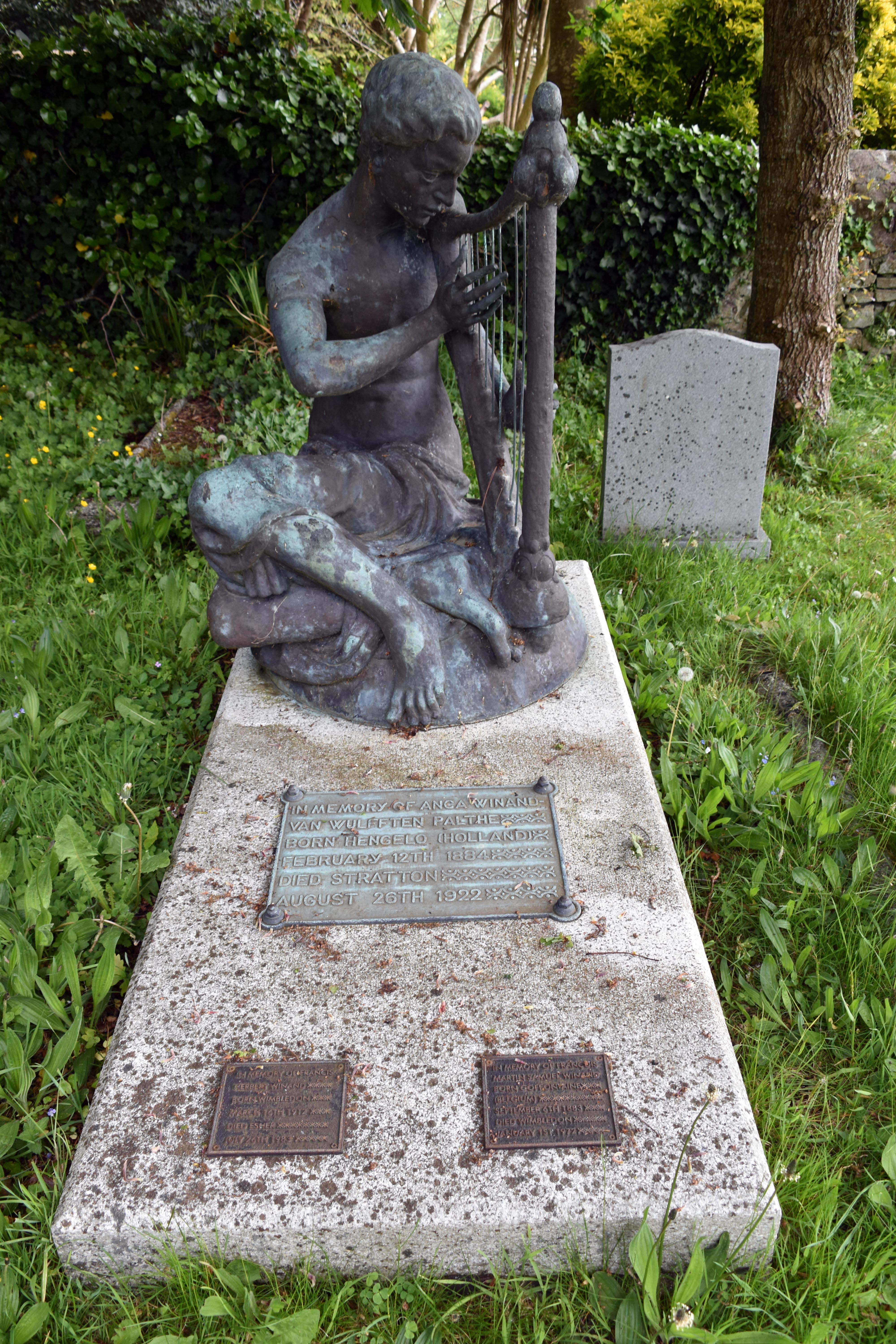
In a similar vein to a foreigner commemorated is the remarkable grave with a full mermaid statue to Anca Winand Van Wulfften Palthe, born in Hengelo in Holland in 1884 and who died in Stratton in 1922. It was sculpted by the famous Yugoslavian artist Toma Rosandić, who came to Britain from Serbia during the First World War. I would love to know the story behind this young lady who died far from her birthplace and why such a prominent artist provided this striking statue. Did she die due to influenza, which cut down so many people at this period in time?

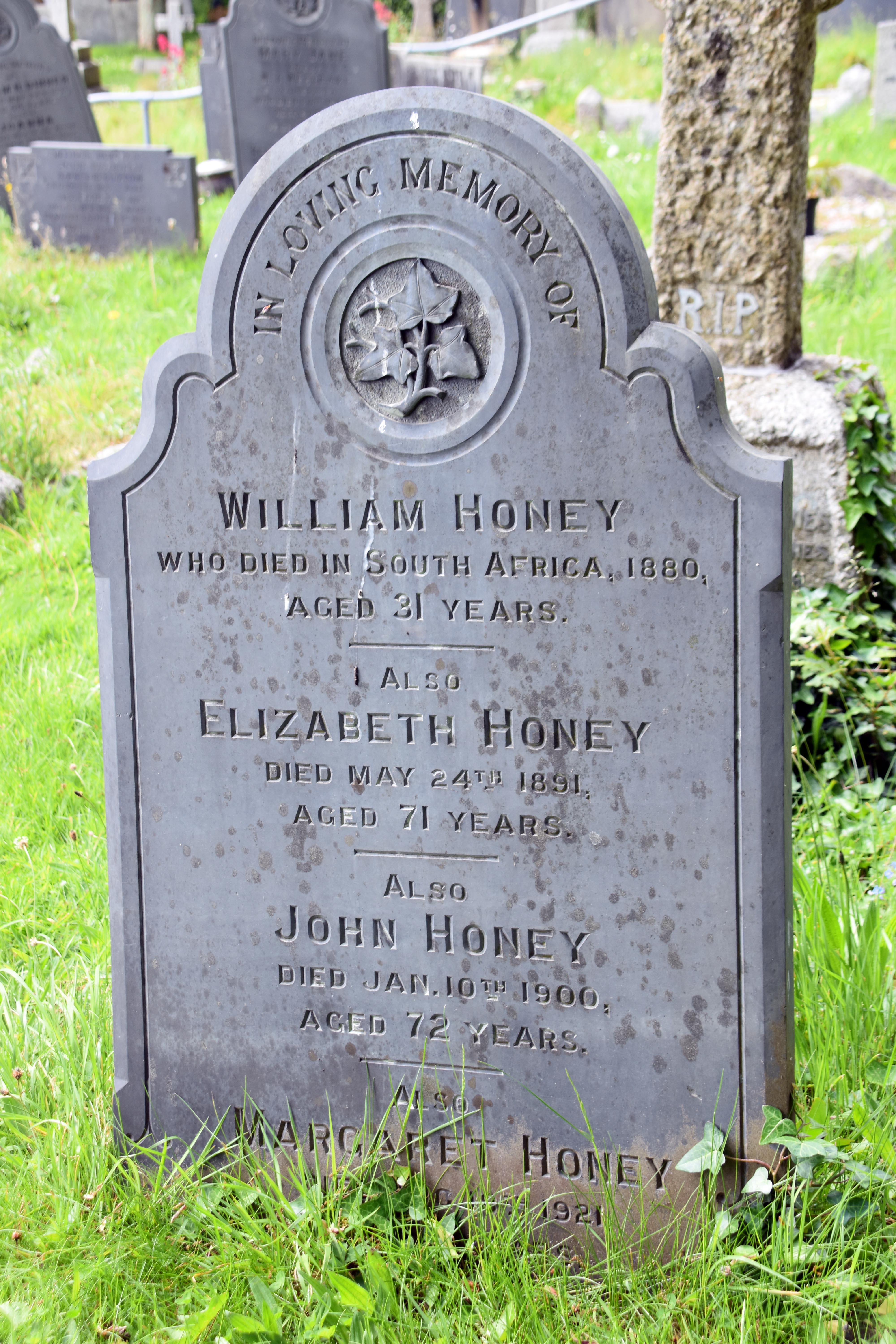
Just opposite her grave is one commemorating a Cornishman going in the opposite direction. William Honey, we are informed, died in South Africa in 1880 at the age of 31. Again, I don’t know the story behind this young man. He could have been a mariner, but he also might have been one of the many Cornishmen drawn to South Africa to try their hand in the diamond or gold mines being discovered. Cornish miners were in very high demand, but many died from accidents or from disease in the cramped camps around the mines.
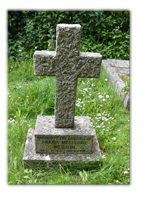
Frank Melhuish Merson buried in St Andrew's Church in Stratton

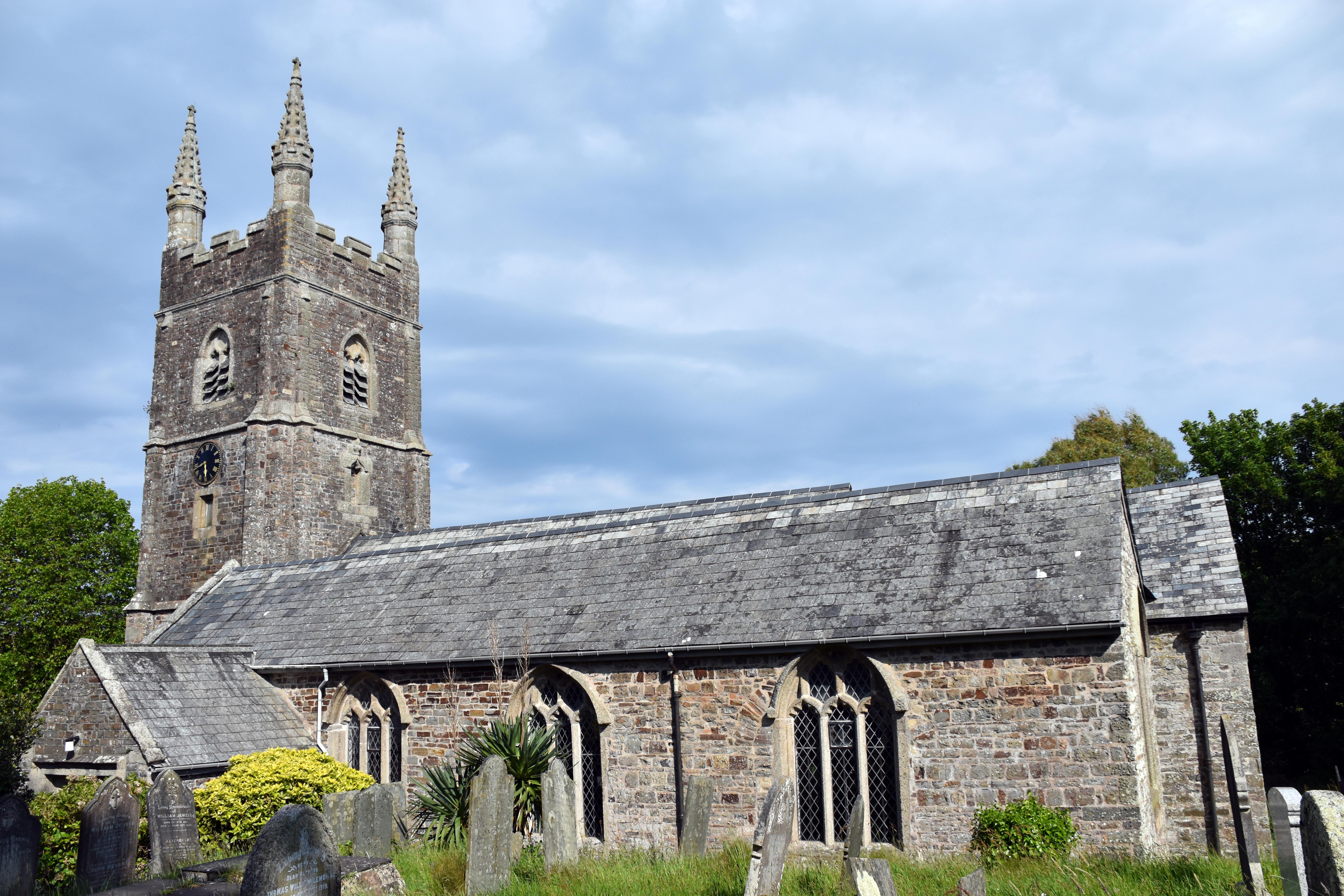
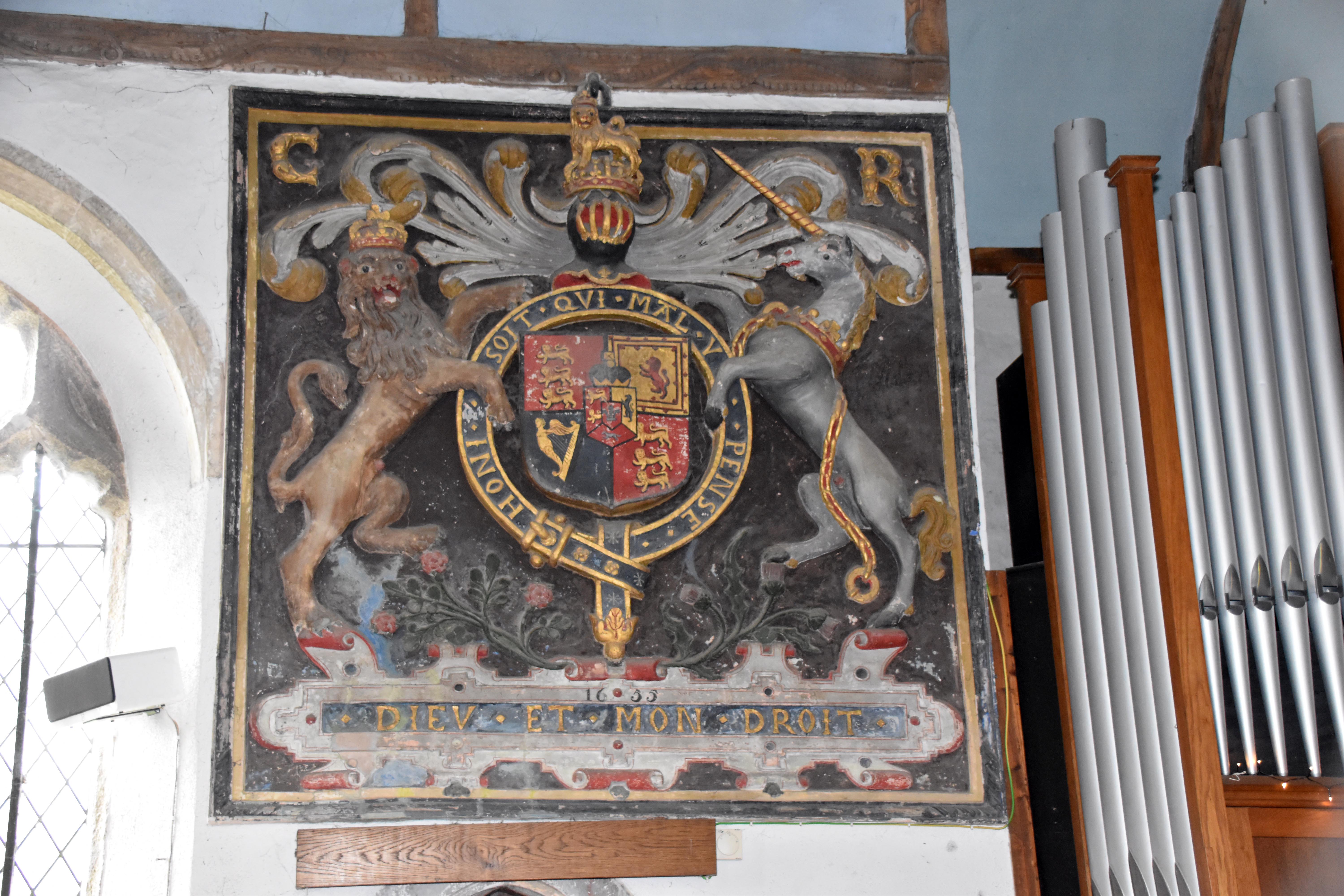
There were many more interesting graves, but we had to head back to Poughill and decided to take a circular walk through some of the footpaths to do so. We only had time for a flying visit into St Olaf’s Church there. Again, it proudly demonstrated Charles’ letter of thanks to Cornwall and indeed had a fascinating Royal Coat of Arms dedicated to the Stuarts but with the intriguing date of 1655 marked on it. This was the height of Oliver Cromwell’s Commonwealth and would have been a real sign of opposition to the rule of the Major‑Generals and demonstrates the depth of feeling in the Duchy of Cornwall towards the Royal family, having this Coat of Arms at a time when England did not even technically have a Royal Family!
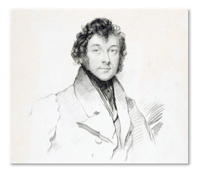
Sir Goldsworthy Gurney

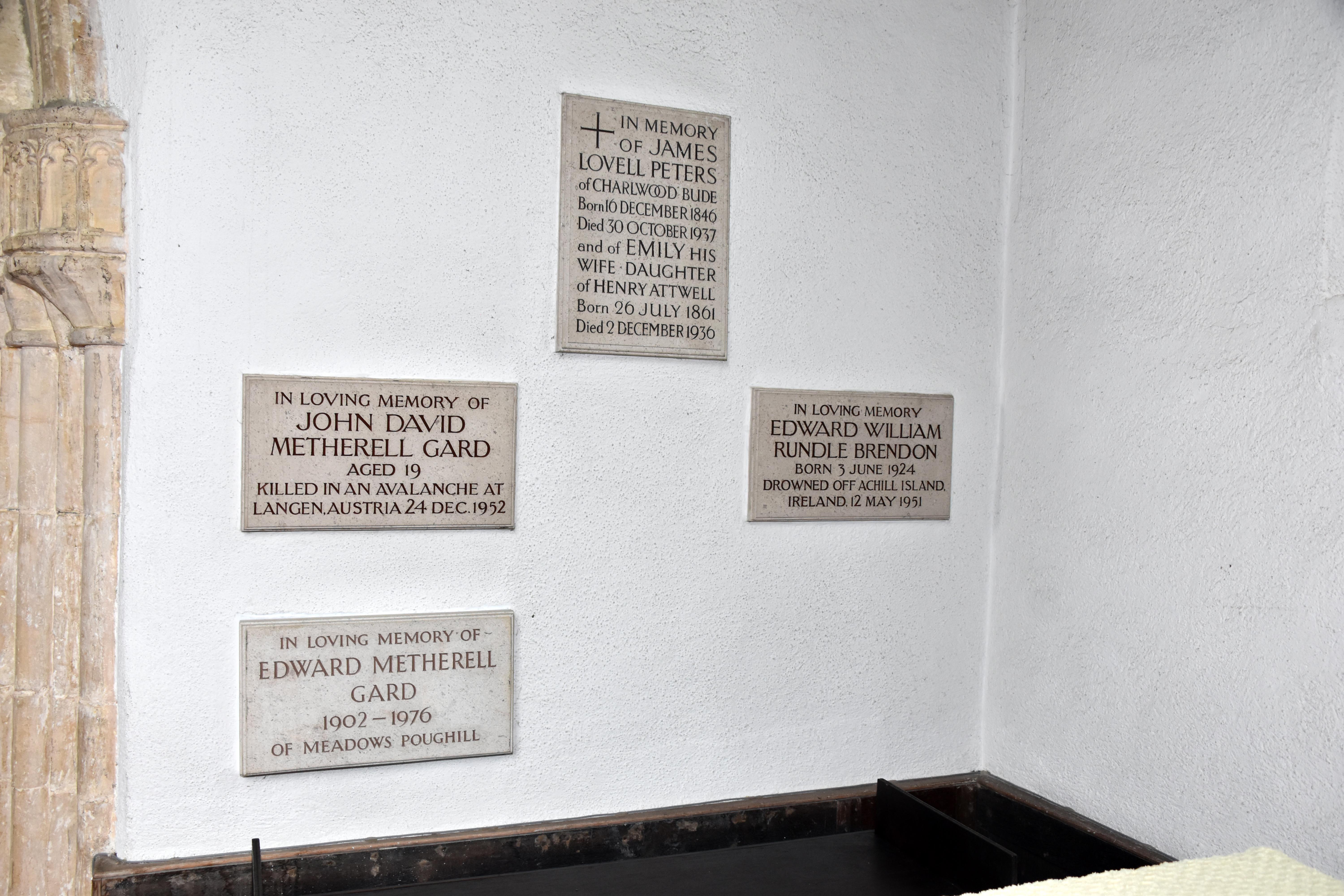
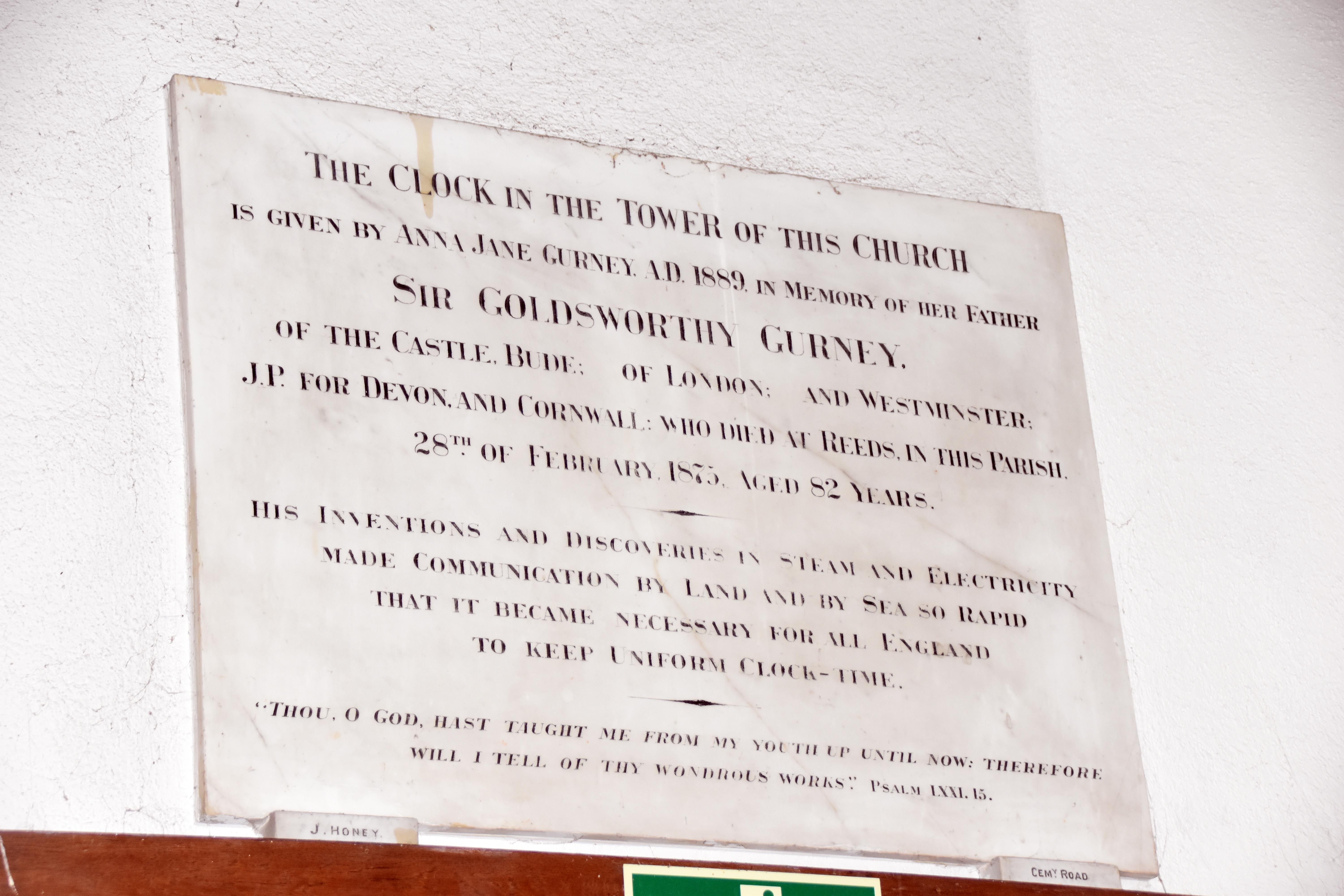
There are many fascinating memorials, including one to John David Metherell Gard, who died in an avalanche in Austria, but the stand‑out memorials here are those to the Gurney family. Sir Goldsworthy Gurney lived in ‘The Castle, Bude’, which he built himself and is now the local heritage centre for Bude. He was a scientist and inventor, including steam‑powered vehicles and innovative public lighting. His steam‑powered vehicles would struggle with the state of roads of the era, and steam locomotives on rails would become the dominant transportation of the era. Sir Goldsworthy was a little ahead of his time. He was more successful with lighting systems and ventilation systems, including for the all‑important Cornish mining industry, and these would also be used to help steam move around steam engines more effectively. His Bude Light became an early form of street lighting and even provided the lighting in the newly rebuilt Houses of Parliament. The clock in the church’s tower was given in memorial to Sir Goldsworthy, and the inscription on his memorial mentions his importance as an inventor when it says: “His inventions and discoveries in steam and electricity made communication by land and by sea so rapid that it became necessary for all England to keep Uniform Clock‑Time”. This relates to the fact that before steam locomotives began moving around the country, each town set its own time via the sun. But these could create discrepancies that were only noticed when people started moving from town to town via railways. These trains required accurate timetables, but with variable time set locally this was hard to accomplish. Eventually Greenwich Mean Time was established as train companies began to use that as a standard. Eventually in 1880 it was legally made the standard time throughout Great Britain.

Sir Henry Lovell Goldsworthy Gurney

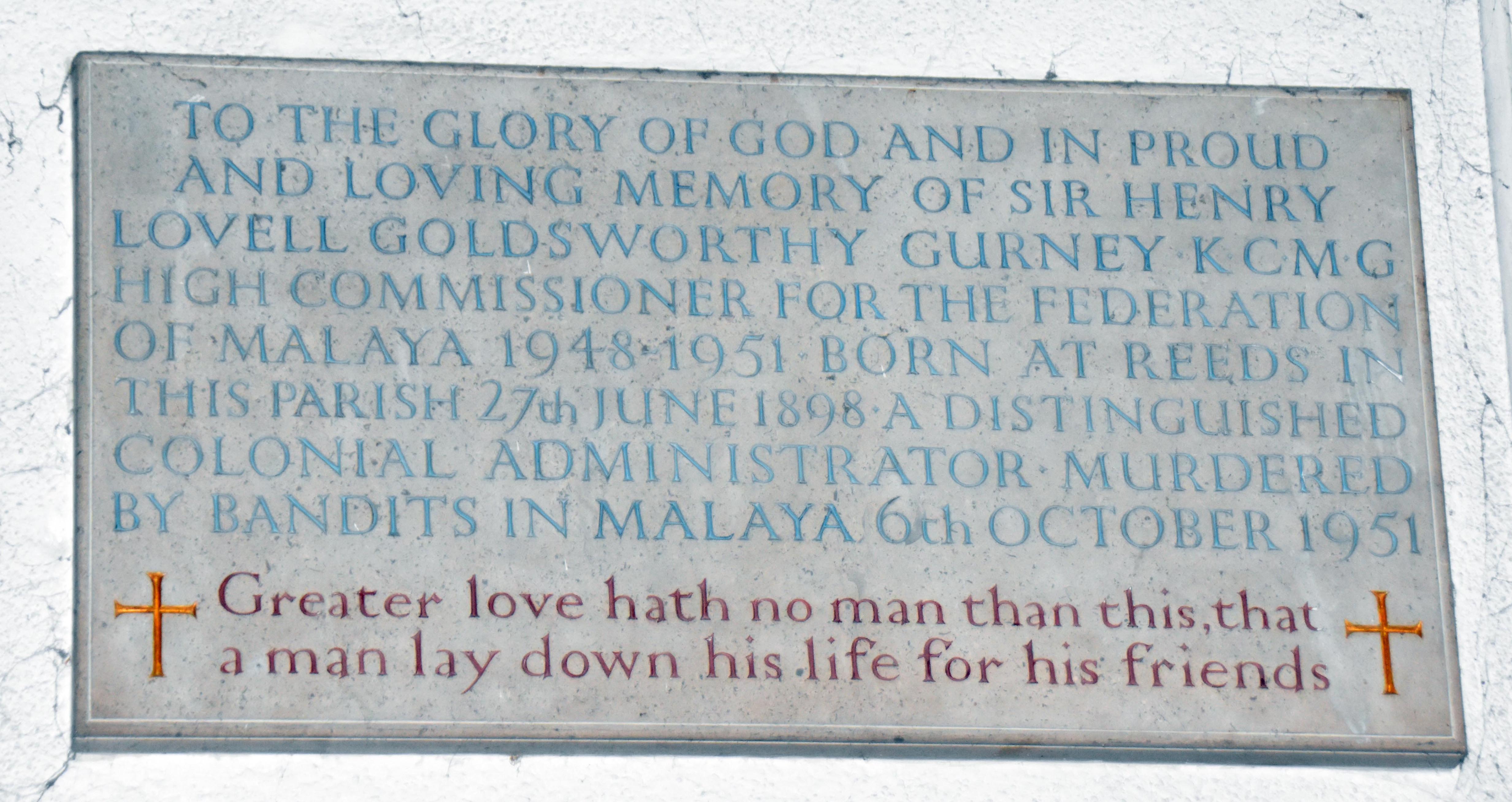
The other Gurney commemorated is equally fascinating, if for another reason completely. It is to Sir Henry Lovell Goldsworthy Gurney, who was assassinated by Chinese Communist guerrillas in Malaya in 1951. Three dozen guerrillas lay in wait, and Gurney thrust his wife, secretary and driver into the footwell when they opened up and staggered towards the ambushers so that he might save their lives. This attack sent shockwaves through the British administration and saw the authorities send out Sir Gerald Templer (descendant of the Templers of Stover and commemorated in Teigngrace). In a strange way the assassination of this high‑profile government official was to force the British authorities to act decisively and eventually would see the defeat of the Communist insurgency. But at the time, his death was a shocking event with worldwide coverage. Once again it is interesting to find so many connections not only to Cornish history but to English, British and even international history in this tiny corner of Cornwall. We came for the Battle of Stratton but discovered so much more.

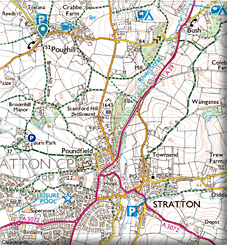
Location of Walk

Click for OS Map of Area

Links

Robert Stephen Hawker – Stratton and Stamford Hill
Background material on Hawker’s writings relating to Stratton and Stamford Hill

Friends of St Andrew’s, Stratton
Local group supporting the preservation and history of St Andrew’s Church, Stratton

Cornwall Historic Churches Trust – Stratton, St Andrew
Historical overview of St Andrew’s Church, Stratton

Historic England Listing – Church of St Andrew, Stratton
Official listing entry for the Grade I parish church

Historic England Listing – Church of St Olaf, Poughill
Official listing entry for the Grade I church at Poughill

Memorial to the Battle of Stamford Hill – Historic England
Scheduled monument entry for the 1713 Grenville memorial on Stamford Hill

Battle of Stratton – Battlefields Trust
Overview of the 1643 battle and its battlefield context

Battle of Stratton – BritishBattles.com
Detailed account of the battle, forces engaged, and the course of the action

Battle of Stratton – Battlefields Trust
Overview of the 1643 battle and its battlefield context

Charles Cordell – Battle of Stratton 1643
Detailed narrative and interpretation of the battle

The Castle, Bude
The former home of Sir Goldsworthy Gurney is now Bude's heritage centre and includes information pertaining to the Battle of Stratton and local area.

National Army Museum – The Malayan Emergency
Context for the conflict in which Sir Henry Gurney was killed

Science Museum Group – Goldsworthy Gurney
Biographical entry for Sir Goldsworthy Gurney

Commando Veterans Archive – Captain F. R. Jocelyn Nicholls
Photographs and notes relating to Captain Nicholls and Mission 204

Suggested Reading

Barratt, John – The Civil War in the South-West
Detailed account of the 1642–46 campaigns, including Hopton, Grenville and the Battle of Stratton

Bennett, Martyn – The Civil Wars Experienced
Social and military context for Parliamentarian and Royalist forces in regions like Cornwall

Clarendon, Edward Hyde – History of the Great Rebellion
Contemporary royalist narrative of the Civil War by the Earl of Clarendon

Cordell, Charles – God’s Vindictive Wrath
First novel in Cordell’s English Civil War sequence, covering the 1642–43 campaigns

Cordell, Charles – The Keys of Hell and Death
Continues the series, including West Country operations relevant to Stratton

Cordell, Charles – The Devil’s Blood
Later instalment exploring the pressures on Royalist and Parliamentarian commanders

Kent, Jeff – The Story of Bude
Local history of Bude and Stratton, covering parish development and landscape context

Payton, Philip – Cornwall: A History
Broad historical background for Stratton, Poughill and Cornish identity during the Civil War

Pevsner, Nikolaus & Beacham, Peter – The Buildings of England: Cornwall
Authoritative architectural descriptions for St Andrew’s, Stratton and St Olaf’s, Poughill

Rodger, N. A. M. – The Command of the Ocean
Naval background relevant to John Panchen and the Royal Navy of the Napoleonic era

Stratton & District Old Cornwall Society – The Churchyard of St Andrew’s, Stratton: Monumental Inscriptions
Local booklet recording the graves and inscriptions at St Andrew’s Church, Stratton

Thorn, Caroline & Frank (eds.) – Cornwall (Domesday Book: A Complete Translation)
Contains the Domesday entries for Stratton Hundred, giving early context for the parish

Tait, A. A. – Sir Goldsworthy Gurney
Biographical study of the Bude inventor whose memorial appears in St Olaf’s

Stoyle, Mark – West Britons
Essential study of Cornish identity and Royalist allegiance during the Civil War

Wills, A. J. – A History of Bude and Stratton
A dedicated local history of Stratton; covers parish, church and community

Peachey, Stuart – The Battle of Stratton
Detailed study of the 1643 battle and its context in the West Country campaign

Firth, C. H. – Cromwell’s Army
Classic study of the organisation, discipline, and character of the New Model Army

Young, Peter and Holmes, Richard – The English Civil War
Standard modern overview of the conflict, forces, and major engagements

More Walks

Walks by the Westcountry Walker

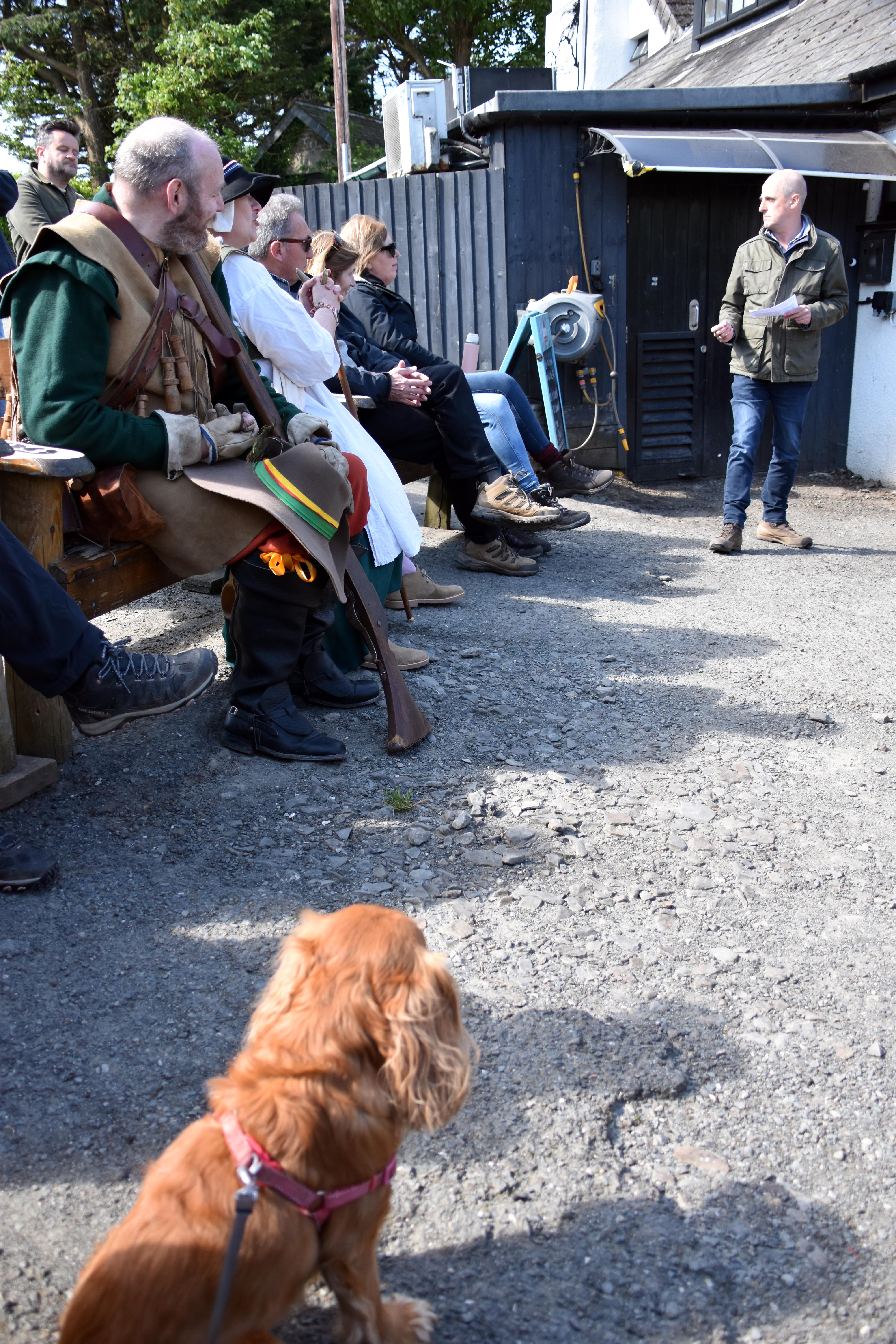
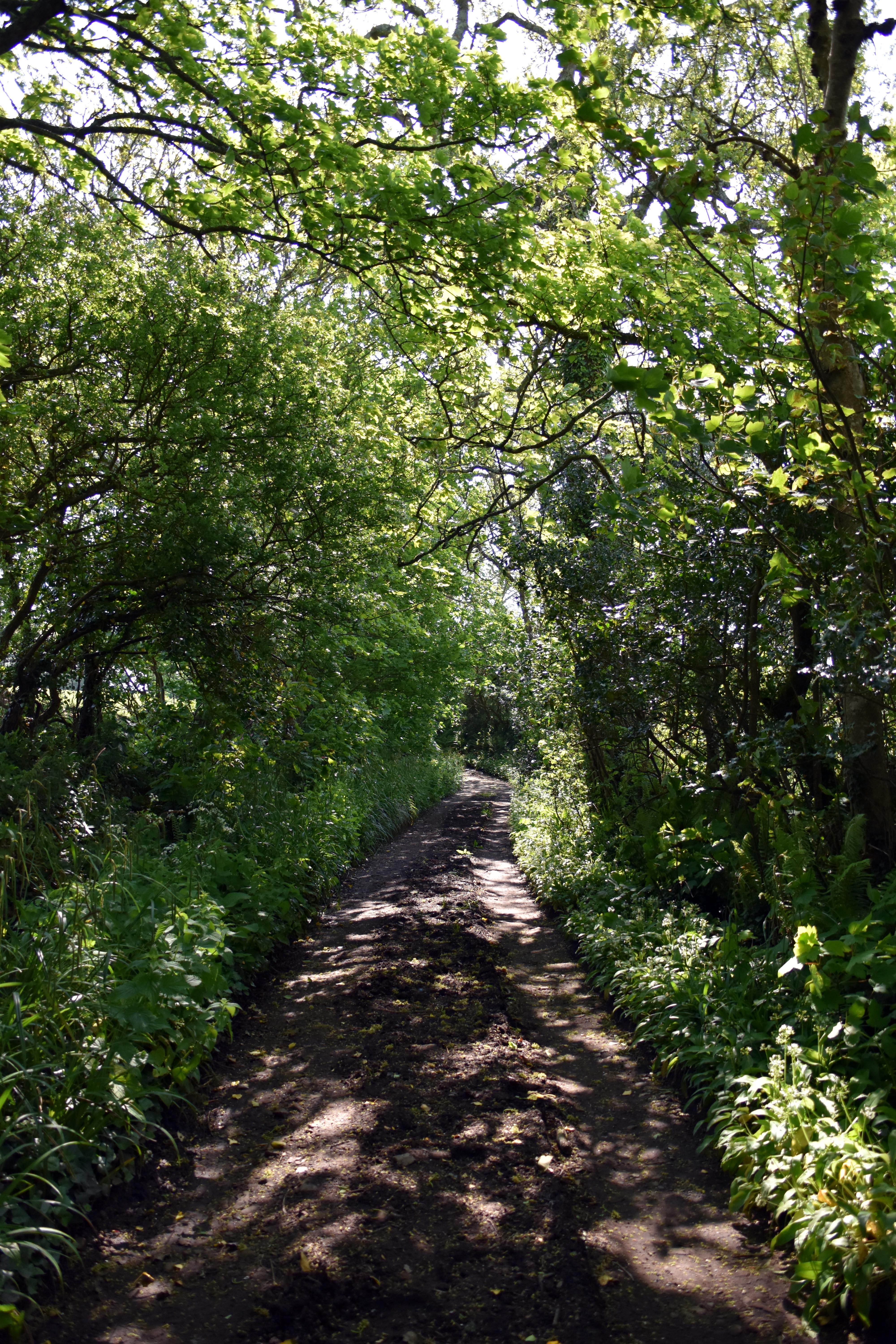
Rupert listening to Charles Cordell during the Stratton battlefield talk Burshill Manor gate surrounded by ivy and wisteria Wooded lane representing one of the Royalist approach routes up Stamford Hill Reenactors demonstrating the practicalities of fighting a seventeenth‑century battle
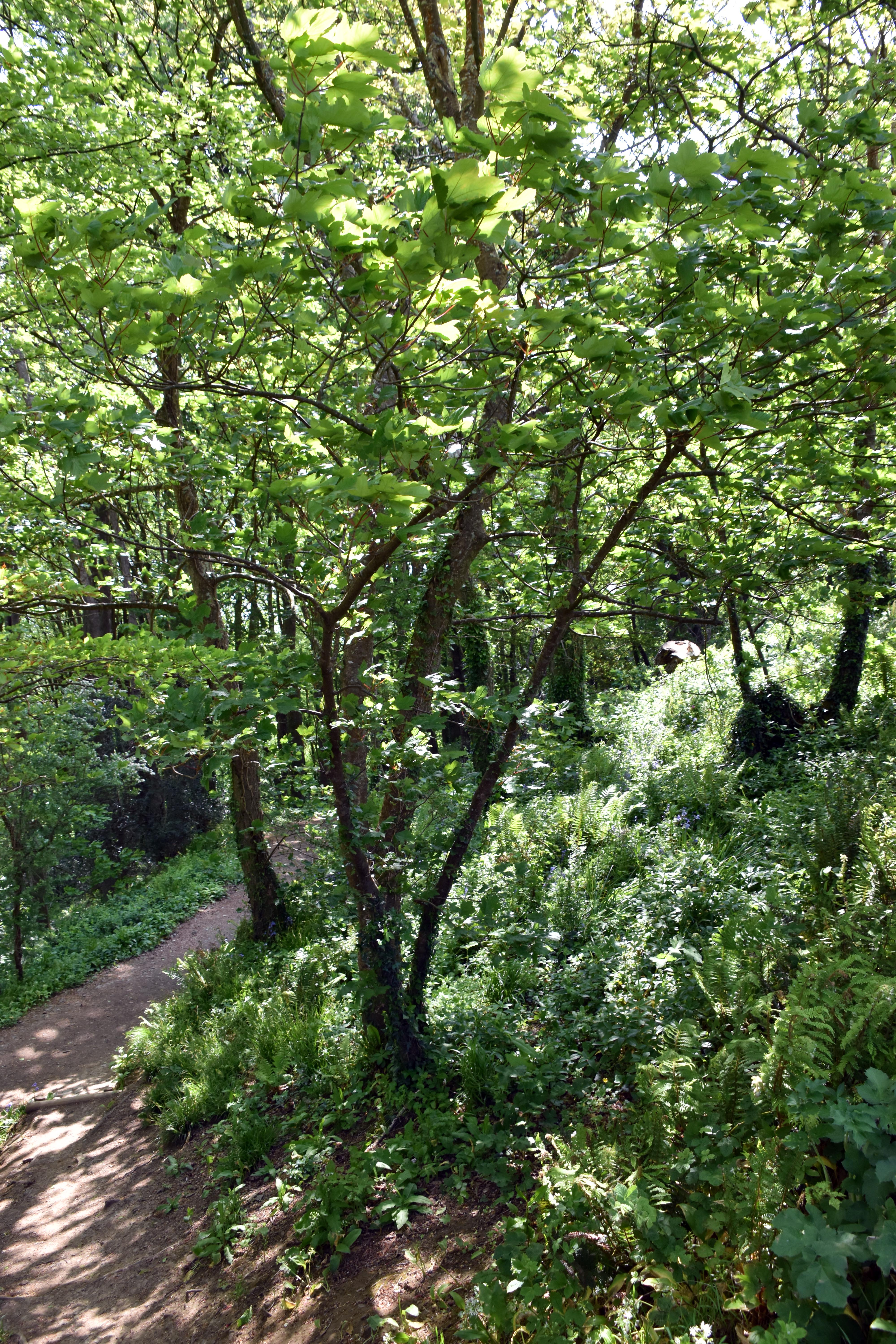
Rupert listening to Charles Cordell during the Stratton battlefield talk, held beside the pub courtyard. Burshill Manor gate draped with ivy and wisteria. Soldiers would have marched past this en route to the battle. A shaded lane showing one of the routes taken by Royalist troops as they advanced up what is now Stamford Hill. Civil War reenactors explaining the practicalities of seventeenth‑century warfare on the Stratton battlefield.
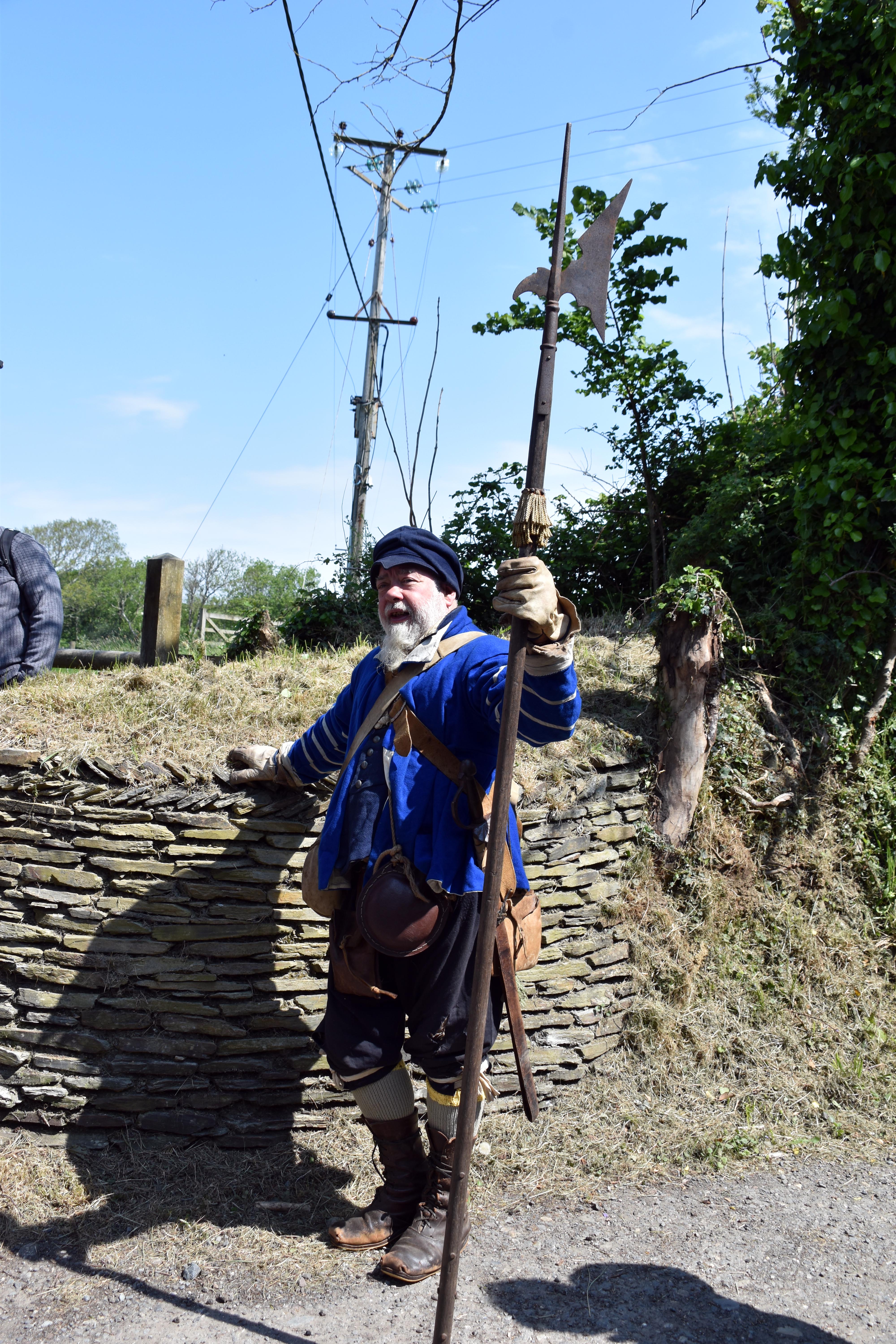
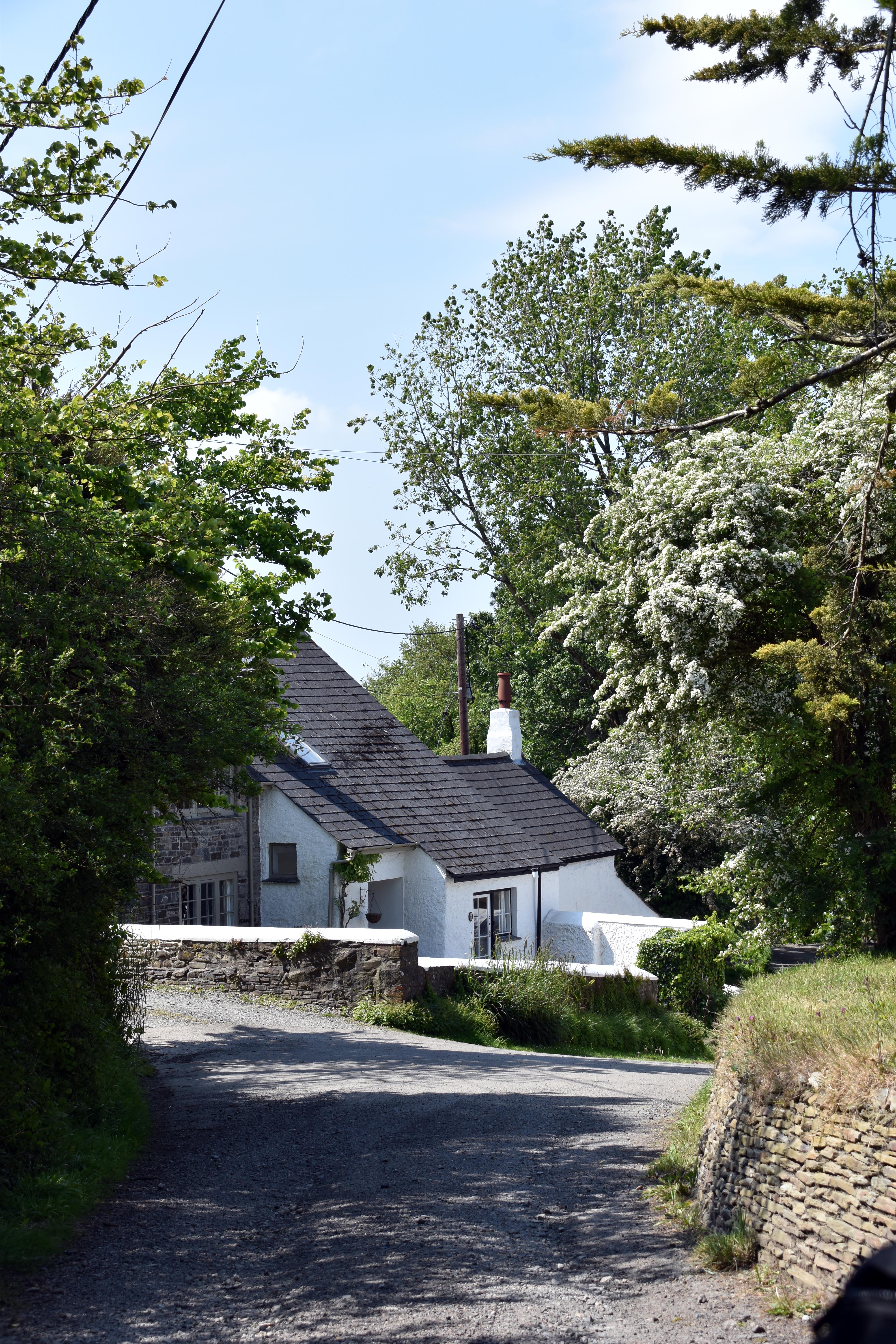
Reenactor ensign in blue coat holding a halberd beside the stone wall at Stratton White cottage near Stratton, contemporary with the 1643 battle and possibly used as a field hospital Plaque on the 1713 memorial marking the site of the Battle of Stratton Four Civil War reenactors on the summit of Stratton Hill
A reenactor ensign in blue coat holding a halberd beside the stone wall at Stratton, illustrating the arms and dress of the period. A white cottage near Stratton, contemporary with the 1643 battle and thought to have served as an improvised field hospital for the wounded. The plaque on the 1713 memorial marking the site of the Battle of Stratton, recording the victory of Sir Bevil Grenville and the Cornish army. Four Civil War reenactors on the summit of Stratton Hill, representing the troops who fought there in May 1643.
Three Civil War reenactors standing in front of the 1713 Stratton memorial with the Iron Age fort behind Two reenactors departing after the Stratton battlefield tour Summit of Stamford Hill, site of the 1643 battle Steep banks behind the Parliamentary position at Stratton
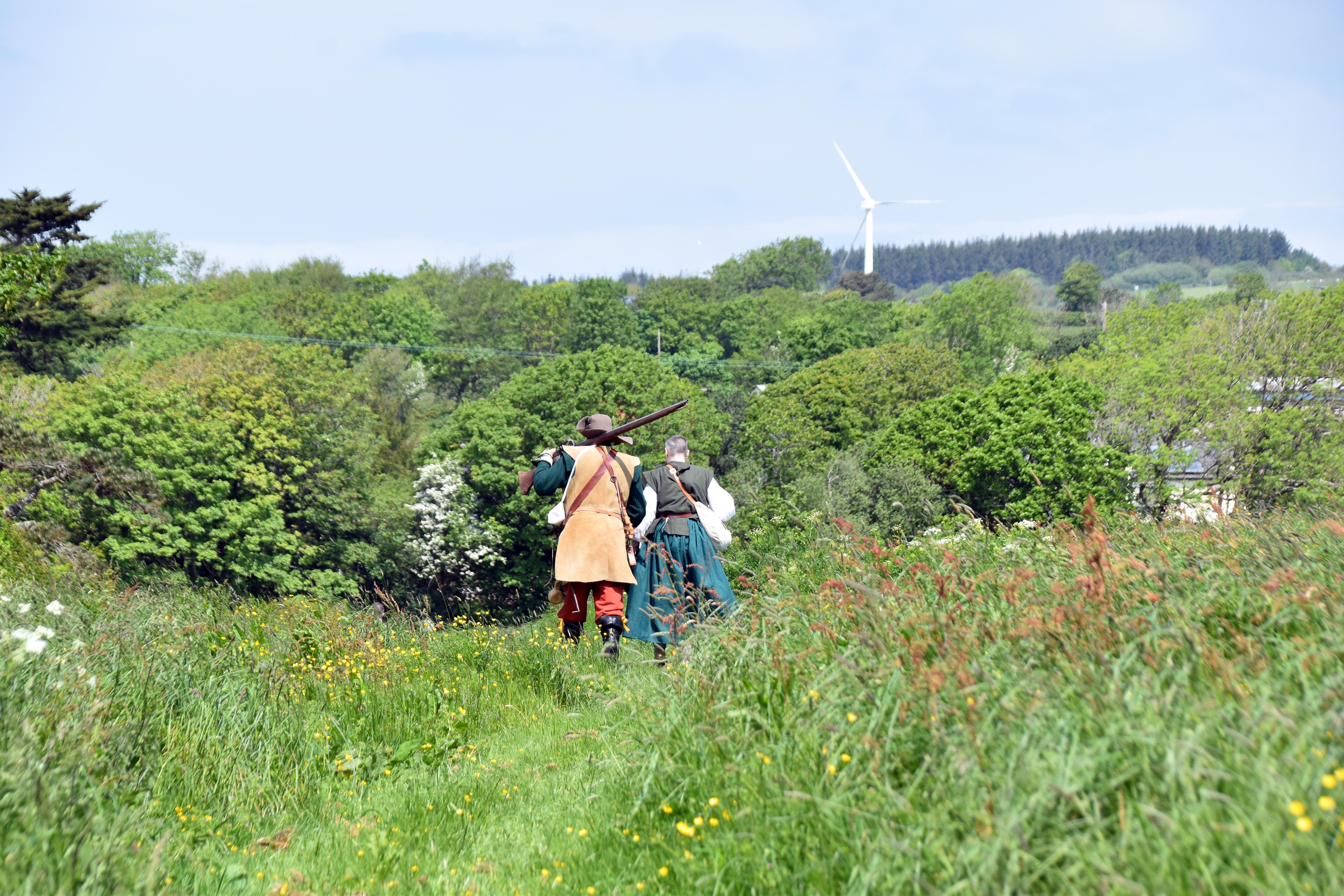
Three Civil War reenactors in front of the 1713 Stratton memorial, which stands before the Iron Age fort that formed the lynchpin of the Parliamentary defences. Two of the reenactors departing after the Stratton battlefield tour, walking down the lane from Stamford Hill. The summit of Stamford Hill, where the Royalist forces achieved their victory on 16 May 1643. The steep banks lying behind the Parliamentary position, showing the natural defensive ground used during the battle.
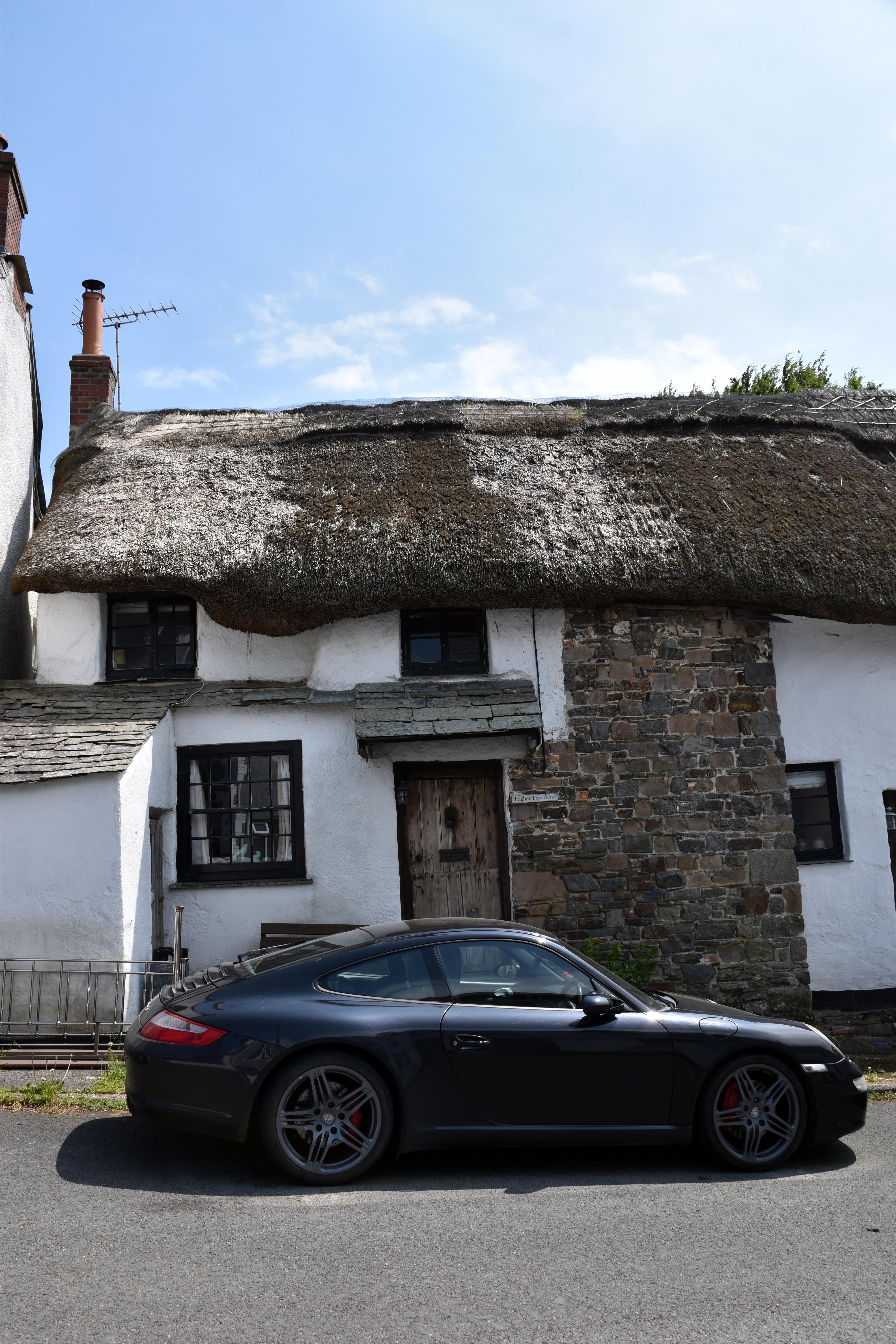
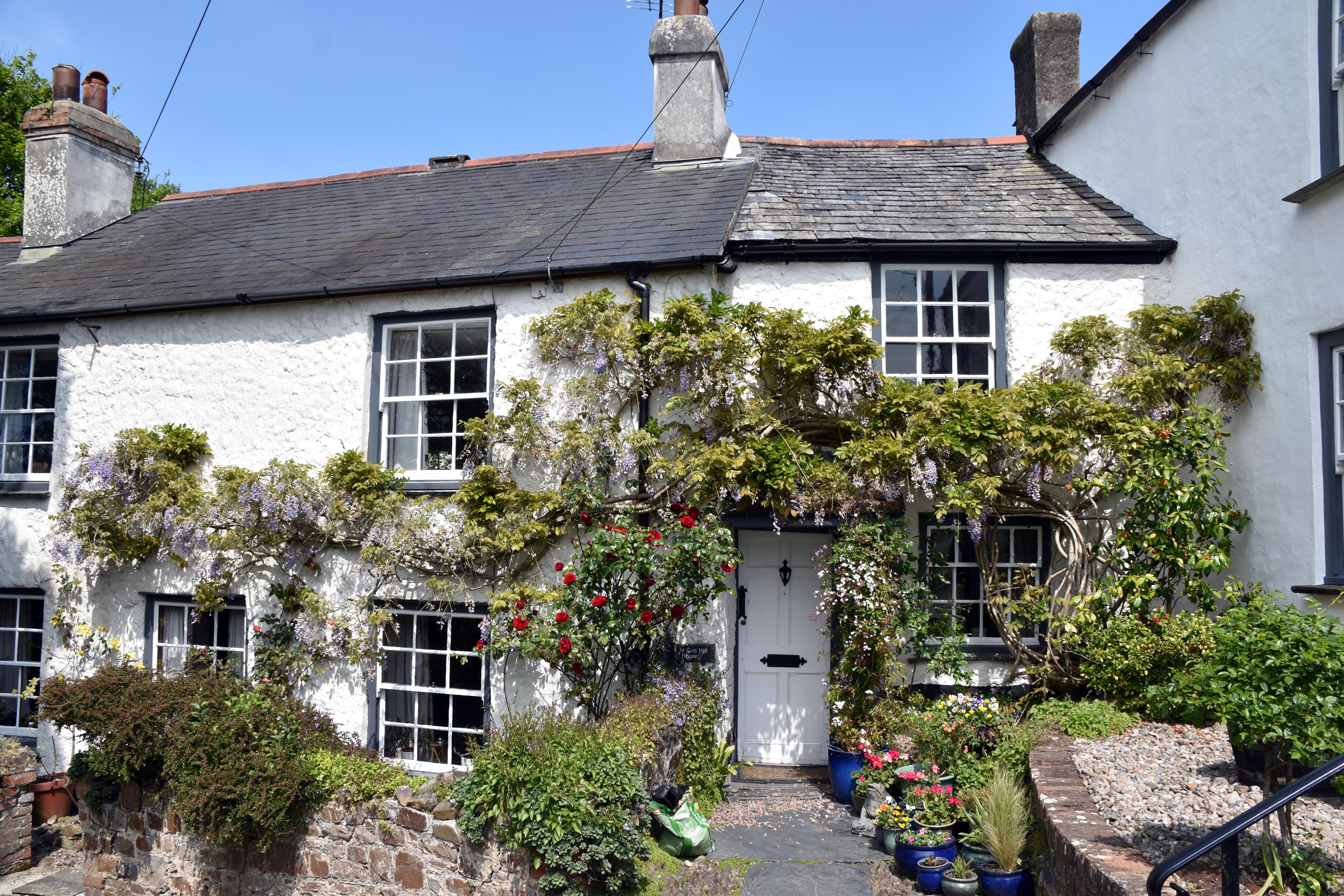
Porsche parked outside a thatched cottage in Stratton Wisteria and flowers in front of a Stratton house Tower of St Andrew’s Church, Stratton 1747 grave in the churchyard of St Andrew’s, Stratton
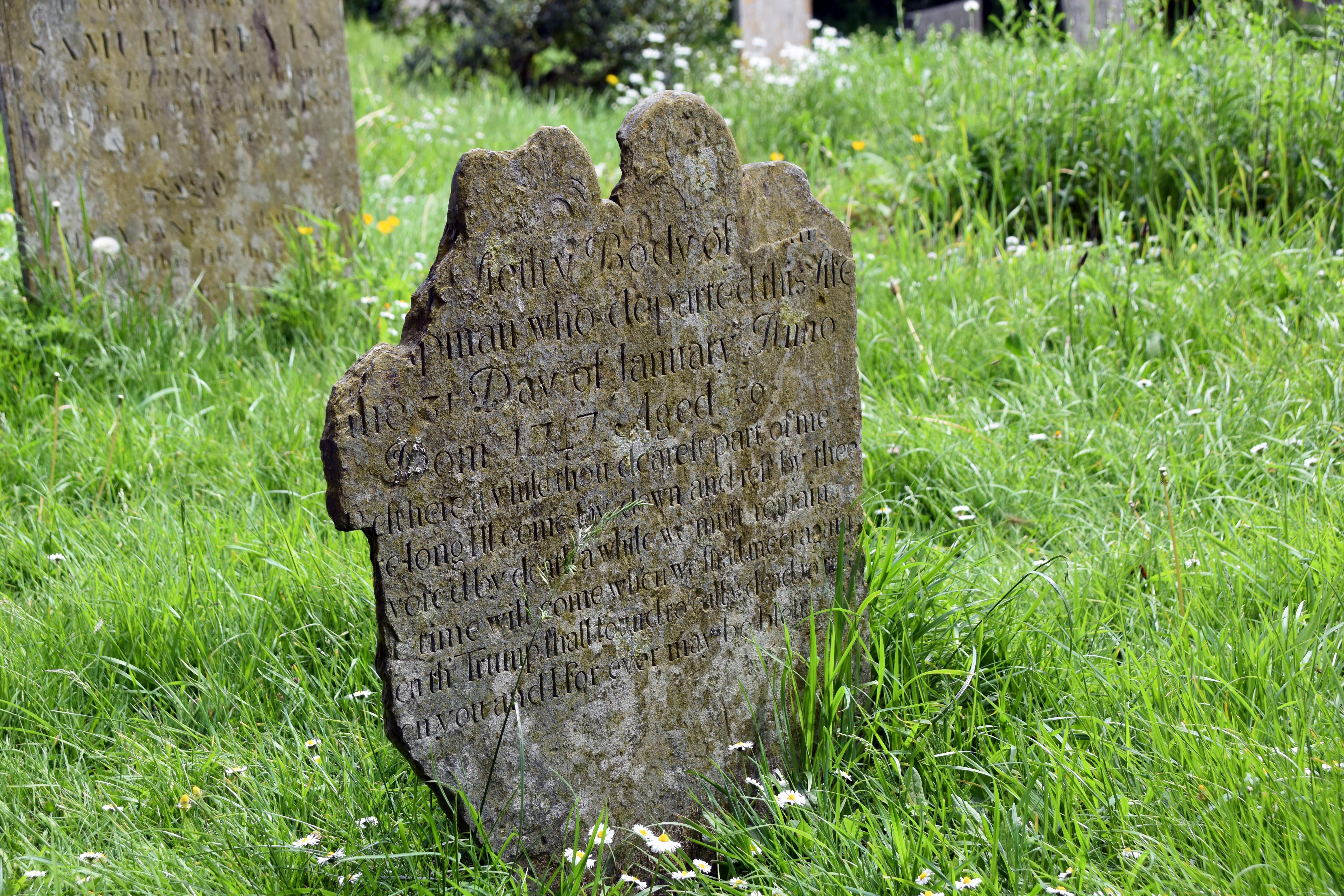
A Porsche parked outside a rustic thatched cottage in Stratton, one of the older domestic buildings in the village. Wisteria and flowers in front of a Stratton house, showing the well‑kept gardens typical of the village centre. The tower of St Andrew’s Church, Stratton, a prominent landmark overlooking the surrounding parish. A very old 1747 grave in the churchyard of St Andrew’s, Stratton, one of the earliest surviving stones on the site.
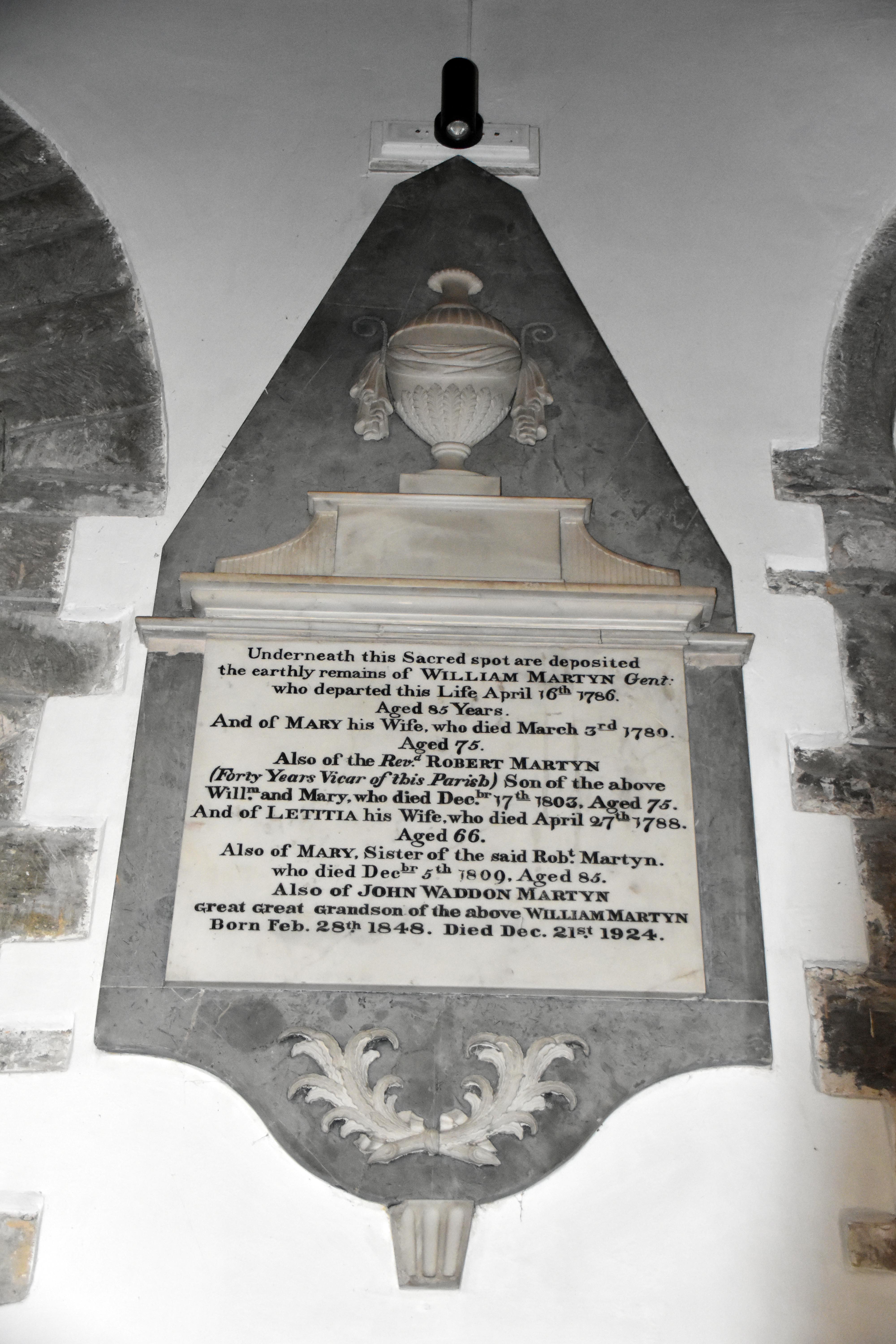
Bronze memorial plaque to John Kearsey Daw, Gentleman Cadet R.M.A., 1929 Marble wall monument to the Martyn family, including the Revd Robert Martyn Gravestone of John Panchen, Master in the Royal Navy, died 1824 Grave of Anca Winand Van Wulfften Palthe, died 1922, Stratton churchyard
Memorial to John Kearsey Daw, Gentleman Cadet of the Royal Military Academy, who died aged 19 in 1929. The plaque was moved from the Retreat House at Sandhurst. Wall monument to the Martyn family, including the Revd Robert Martyn, vicar of Stratton for forty years until 1803. The inscription records successive generations from William Martyn (1786) to John Waddon Martyn (1924). Gravestone of John Panchen, Master in the Royal Navy, who died 19 March 1824 aged 41. His epitaph praises his upright conduct and amiable manners. Grave of Anca Winand Van Wulfften Palthe (1884–1922), with bronze harp sculpture symbolising harmony and remembrance.
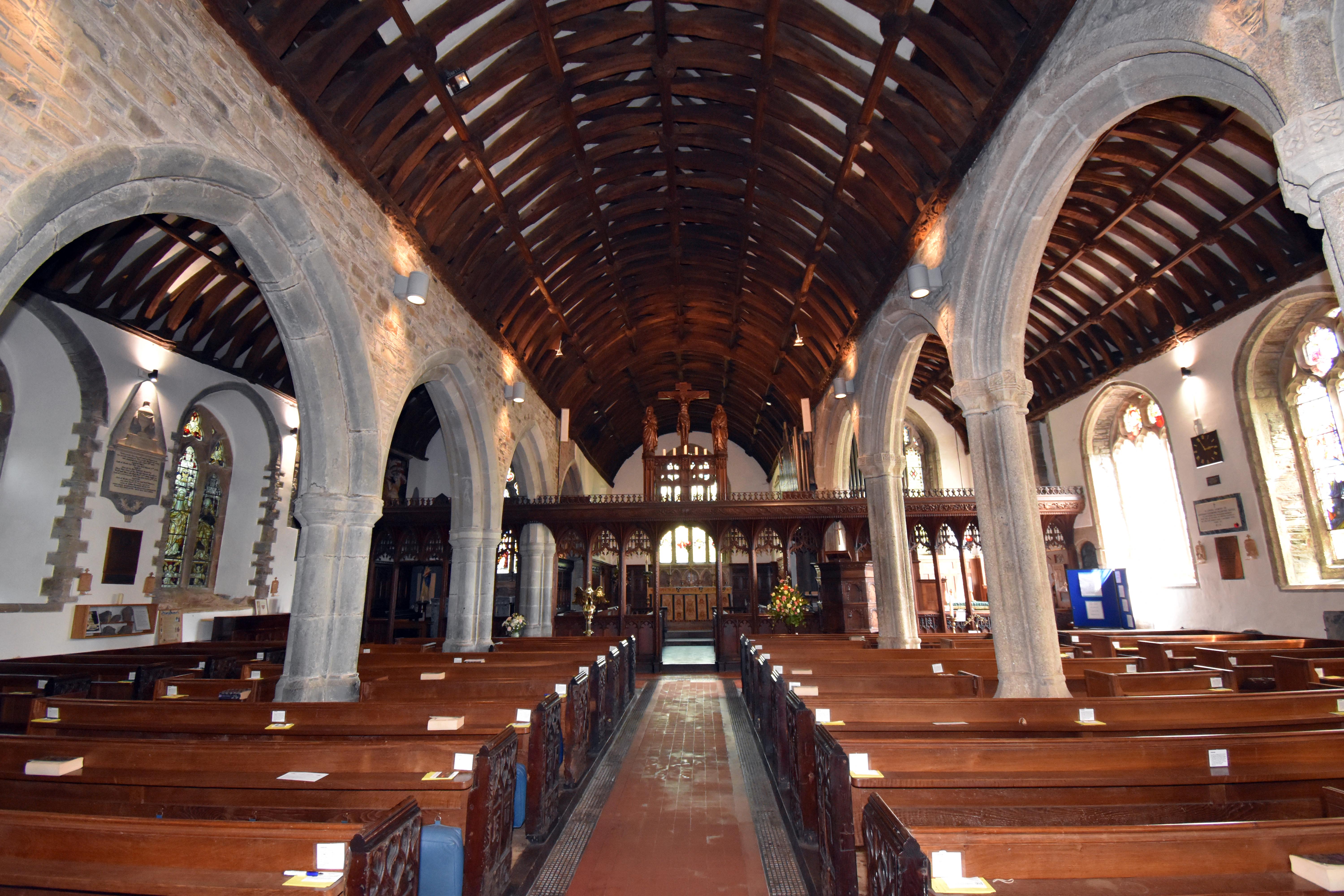
Gravestone of William Honey, died 1880, with later Honey family inscriptions Calvary cross memorial to Rev Griffith Charles de Gruchy, died 1938 Nave of St Andrew’s Church, Stratton Rupert looking into the chancel through the rood screen
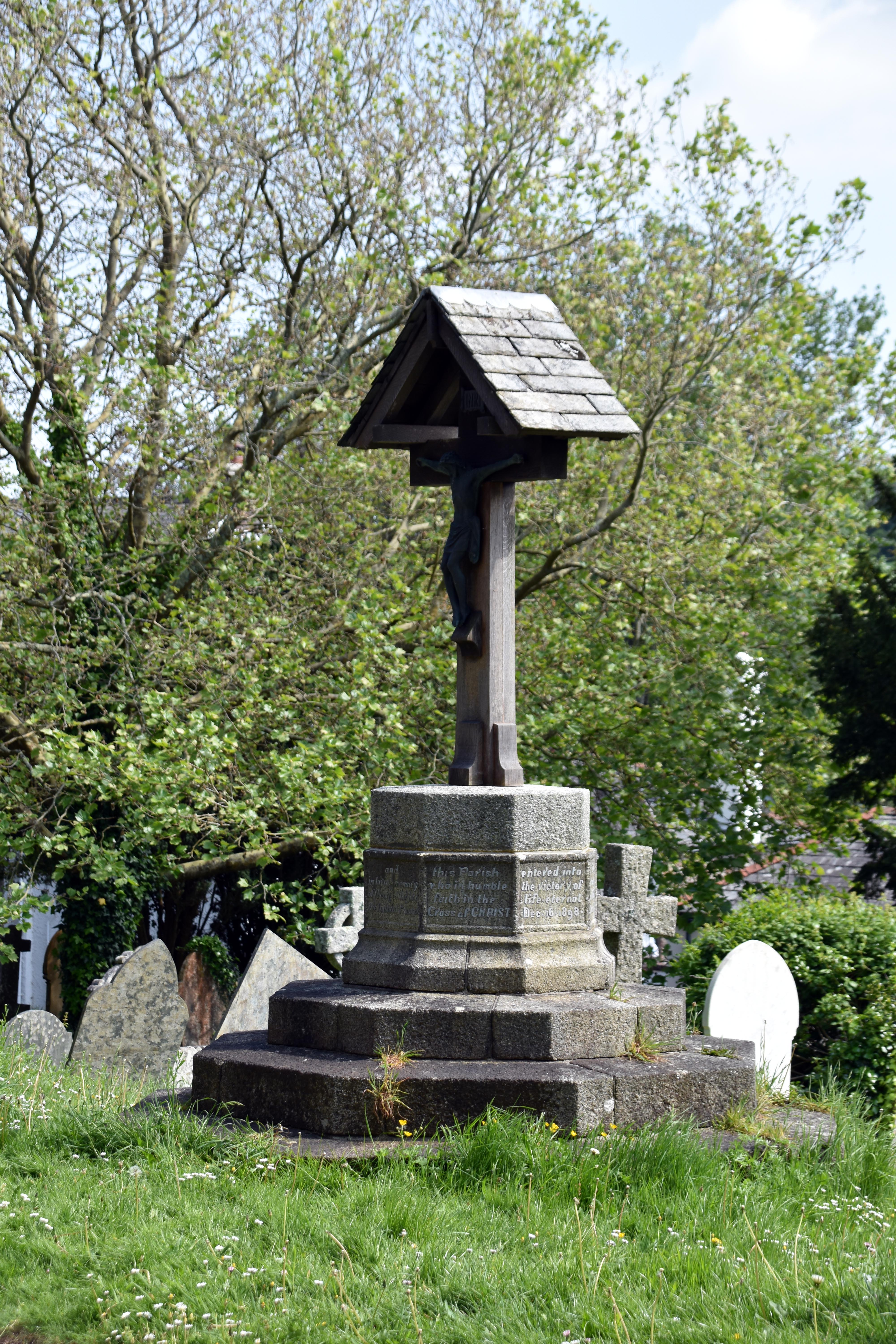
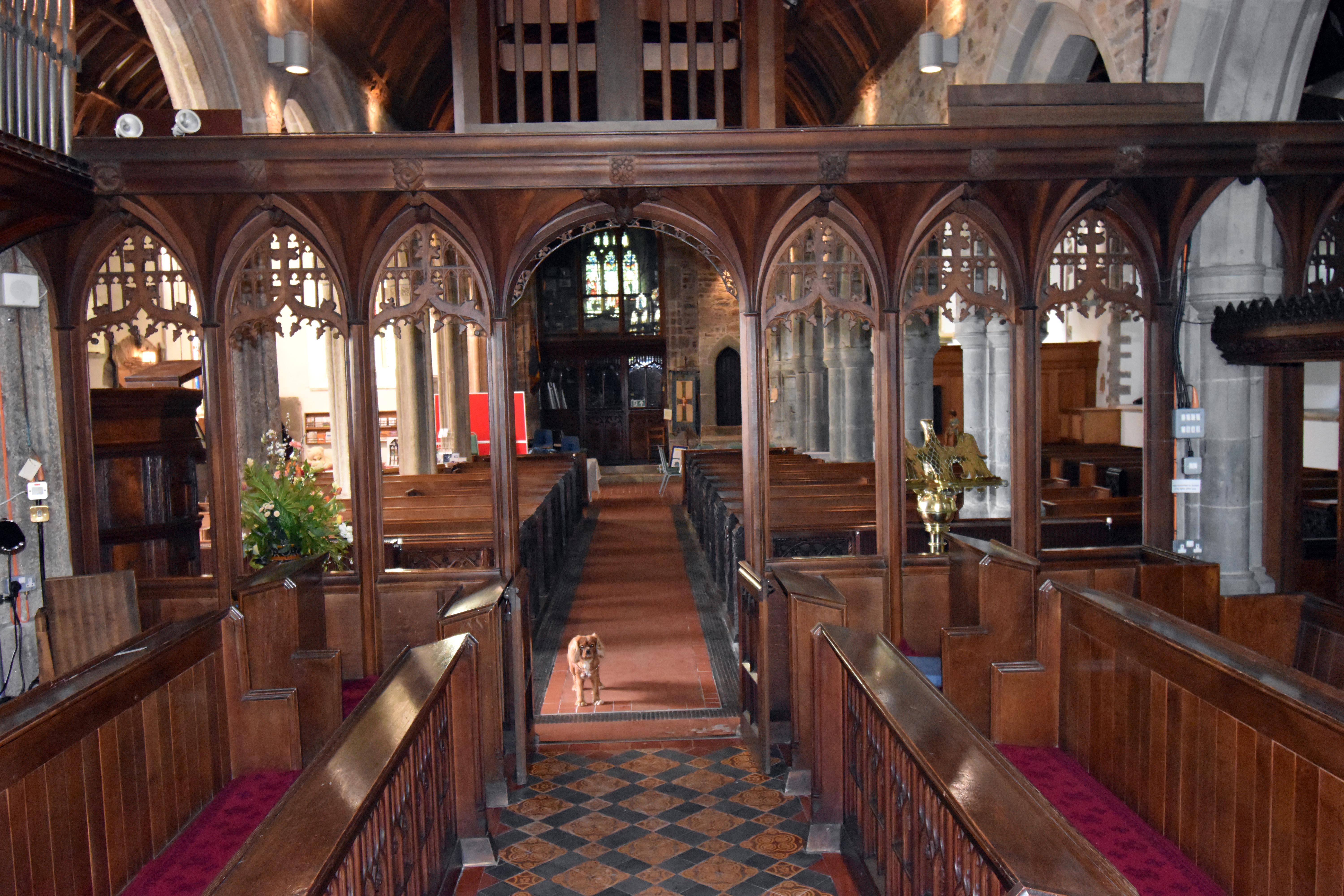
Gravestone of William Honey, died in South Africa in 1880 aged 31, with later inscriptions for Elizabeth Honey (1891), John Honey (1900) and Margaret Honey (1921). Calvary cross memorial to Rev Griffith Charles de Gruchy, priest at Stratton, died 6 June 1938. Nave of St Andrew’s Church, Stratton, showing the C14 north arcade and C15 roof. Rupert looking into the chancel as seen from the nave through the 1901 rood screen.
Memorial to Maxwell Maughan St George Johnstone, drowned at Tintagel in 1957 Memorial to Captain F. R. Jocelyn Nicholls, Royal Artillery Commando, died 1942 Memorial to Captain and Adjutant Thomas Fitz‑Simons, North Cornwall Regiment of Volunteer Infantry, died 1806 Display of artefacts from the Battle of Stratton, 1643, and letter from King Charles I
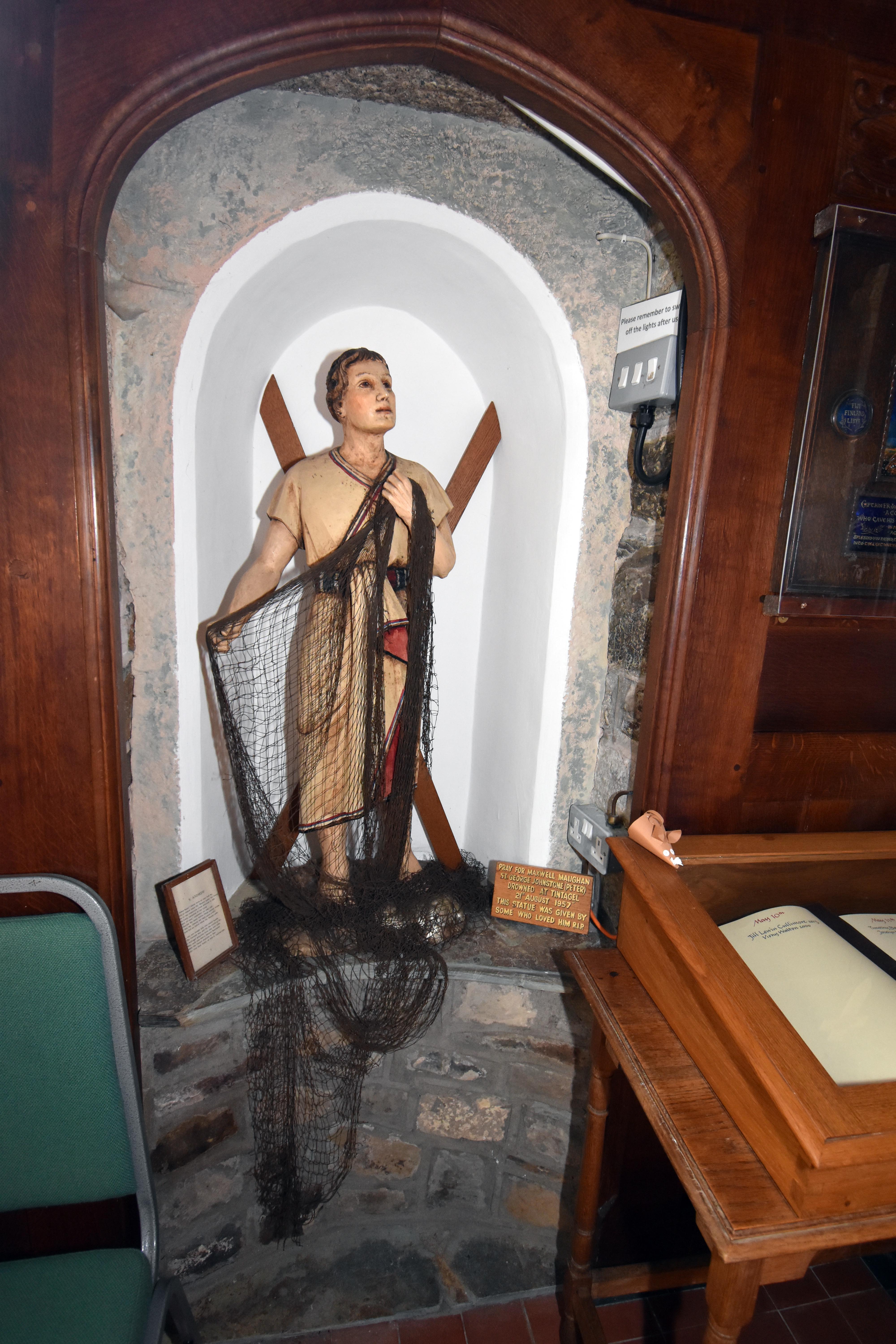
Memorial to Maxwell Maughan St George Johnstone, drowned at Tintagel in 1957, placed in St Andrew’s Church, Stratton. Memorial to Captain F. R. Jocelyn Nicholls, Royal Artillery Commando, who died on 11 May 1942 aged 23. The plaque includes emblems of his service and the inscription “Splendid you passed, the great surrender made into the light which nevermore shall fade.” Memorial to Captain and Adjutant Thomas Fitz‑Simons of the North Cornwall Regiment of Volunteer Infantry, died 2 November 1806, erected by the officers of his regiment. Display case showing artefacts from the Battle of Stratton, 16 May 1643, including cannonballs, sword fragments, and a letter from King Charles I to his loyal subjects in Cornwall dated September 1643.
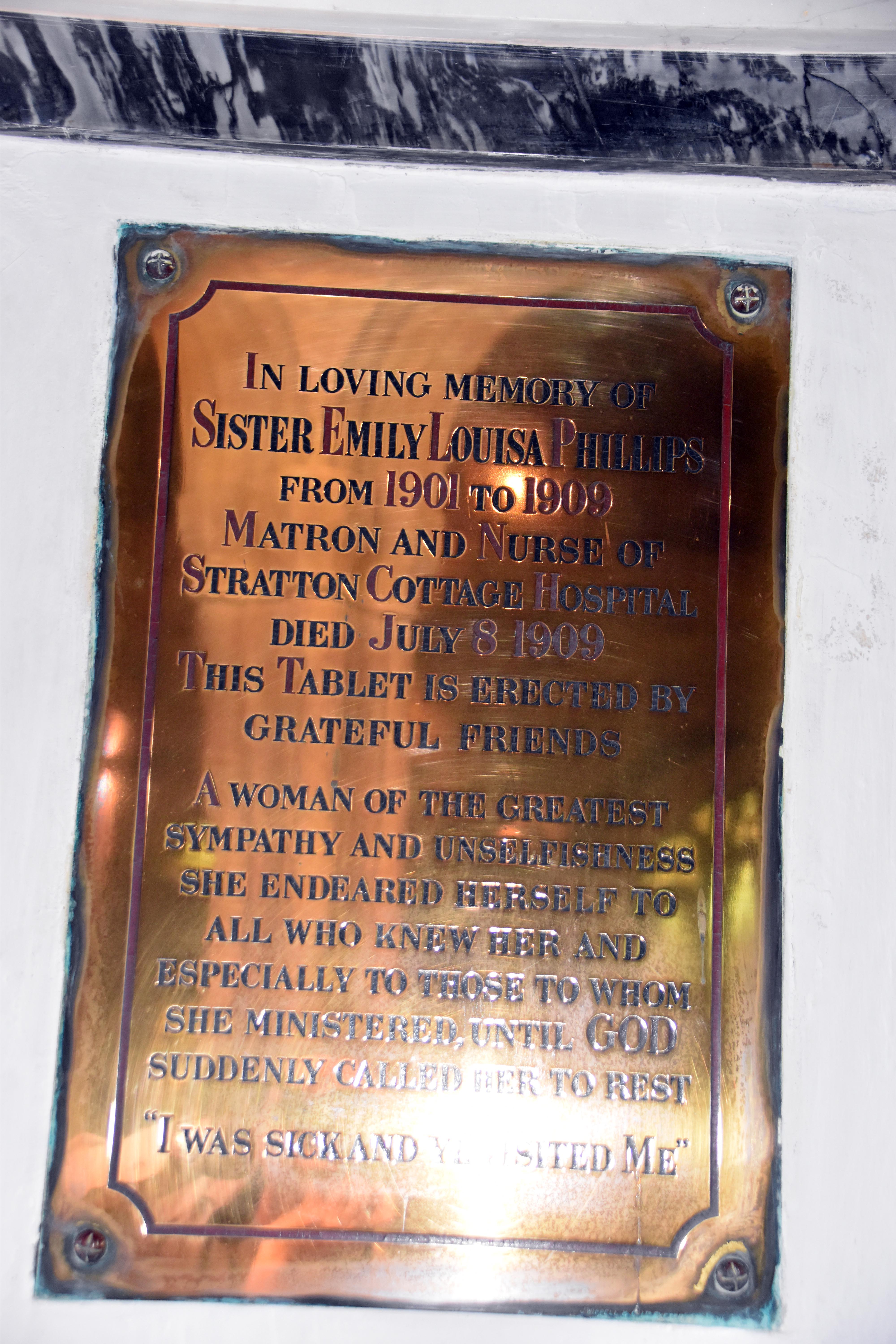
Memorial to Lieutenant Raymond Plumptre Bates, Devonshire Regiment, died 1915 Memorial to Sister Emily Louisa Phillips, Matron of Stratton Cottage Hospital, died 1909 Bench ends in St Andrew’s Church, Stratton Memorial to Lieutenant Francis Wentmore Brown, Middlesex Regiment, died 1916
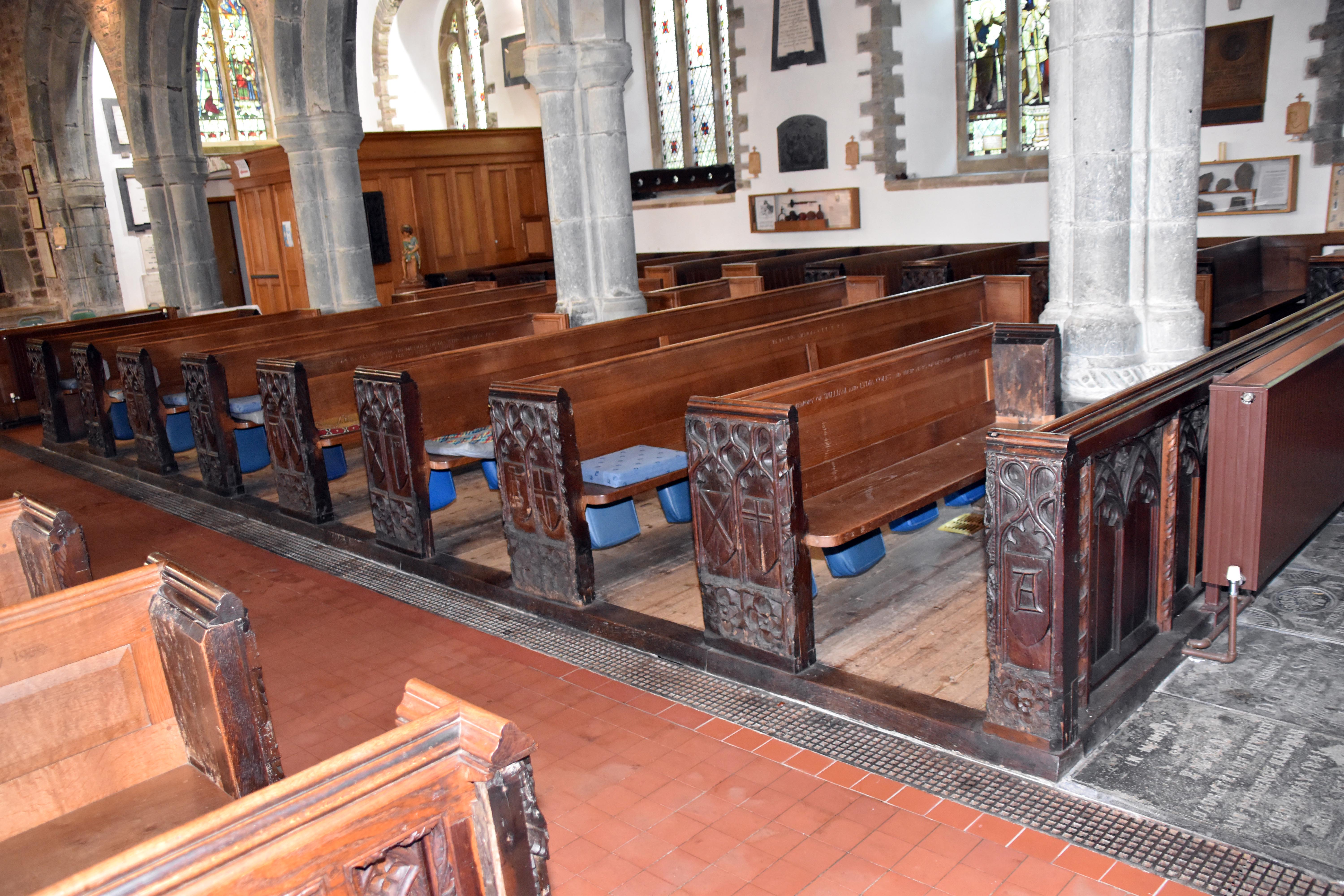
Memorial to Lieutenant Raymond Plumptre Bates, 2nd Battalion Devonshire Regiment, who fell in action at Neuve Chapelle on 10 March 1915 aged 25. Memorial to Sister Emily Louisa Phillips, Matron and Nurse of Stratton Cottage Hospital from 1901 to 1909, died 8 July 1909, erected by grateful friends. Bench ends in St Andrew’s Church, Stratton, showing carved Gothic tracery and monograms from the early sixteenth century. Memorial to Lieutenant Francis Wentmore Brown (Frank), 23rd Middlesex Regiment, died 16 September 1916 aged 21, buried at Grovetown Cemetery near Albert, France.
Memorial brass to John Sargent and Grace Peter Mellor, placed by Joan Sargent Stained glass window showing Christ with Mary and Martha Font dated 1912 in St Andrew’s Church, Stratton Brass memorial to Sir John Broun and family, Stratton Church
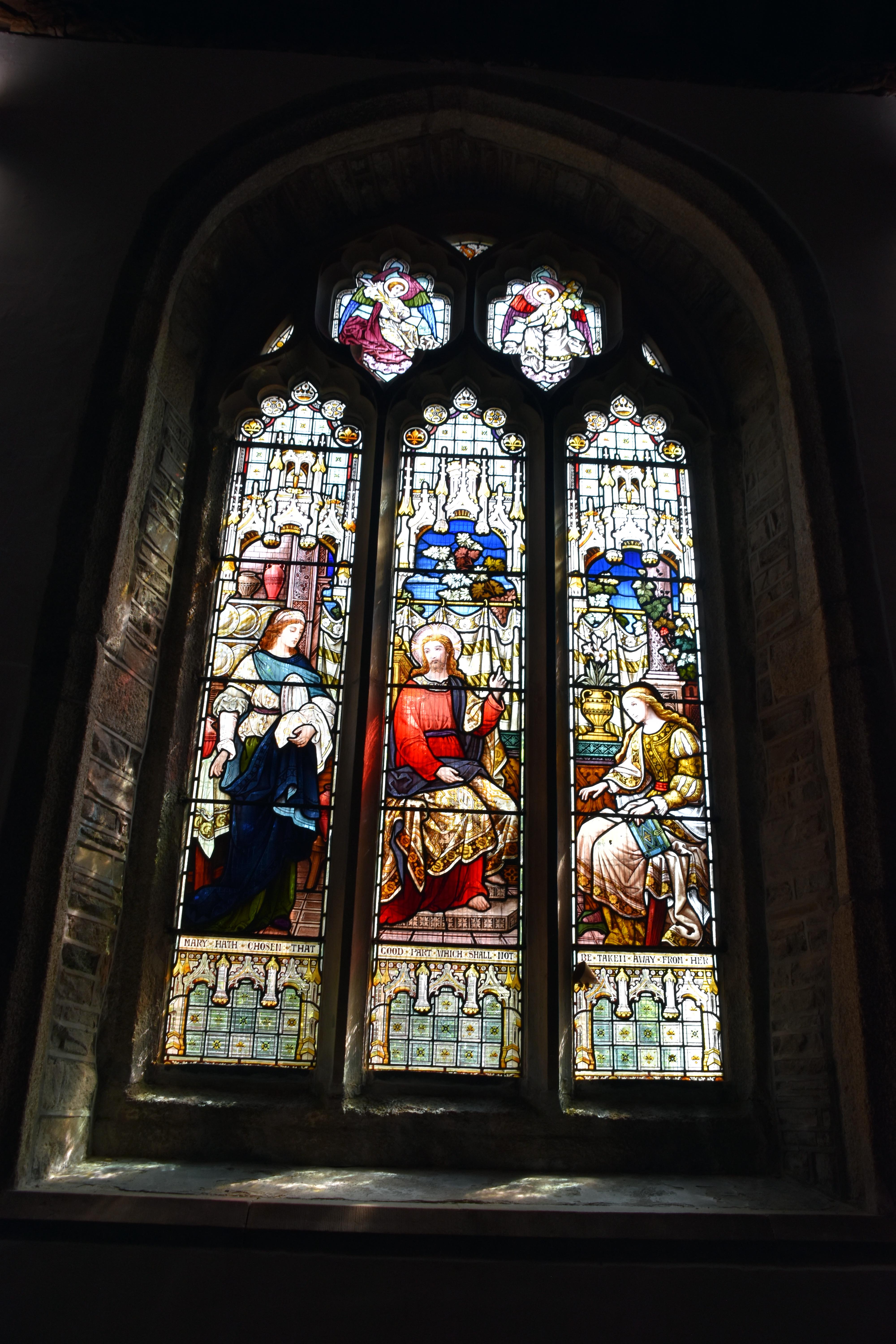
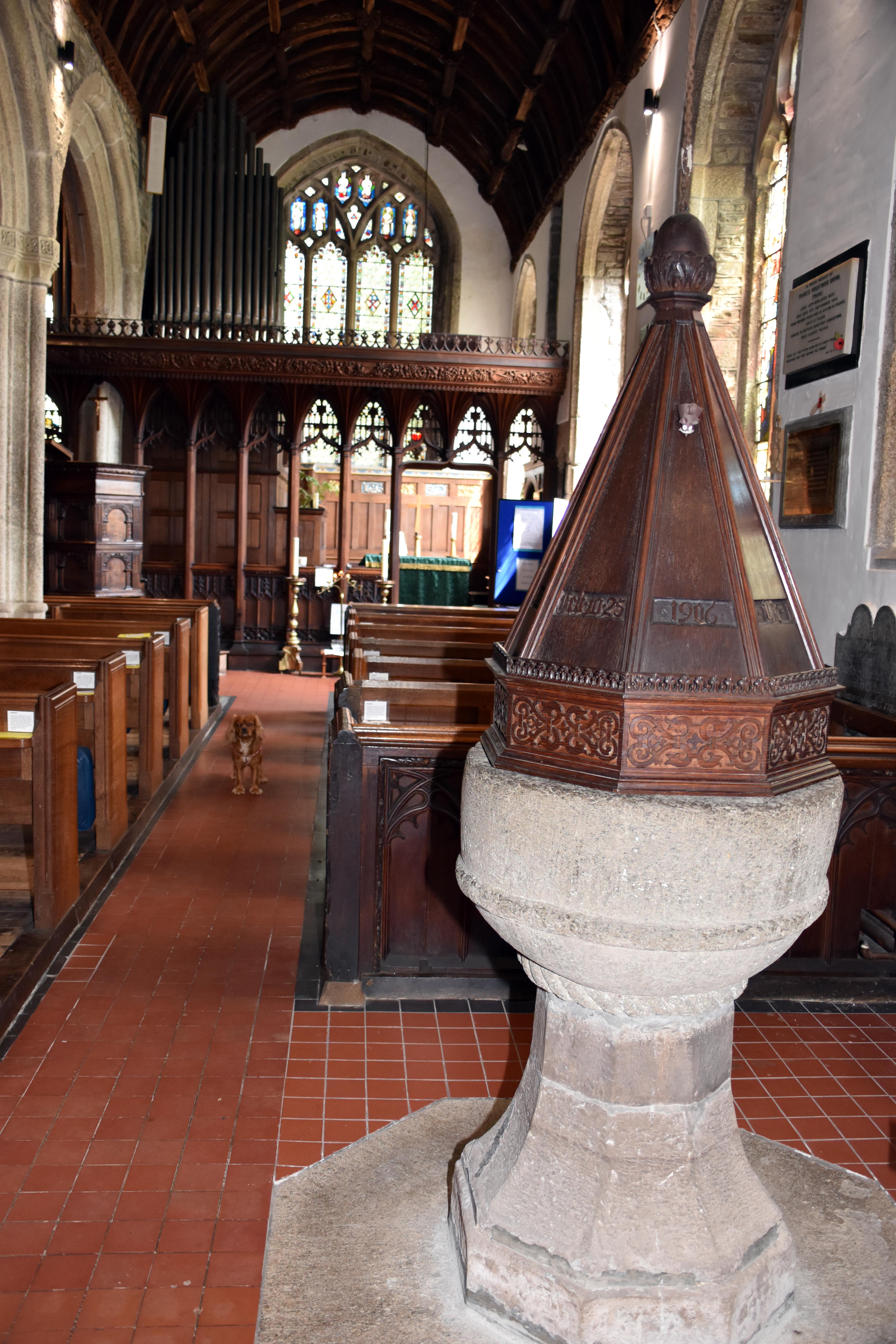
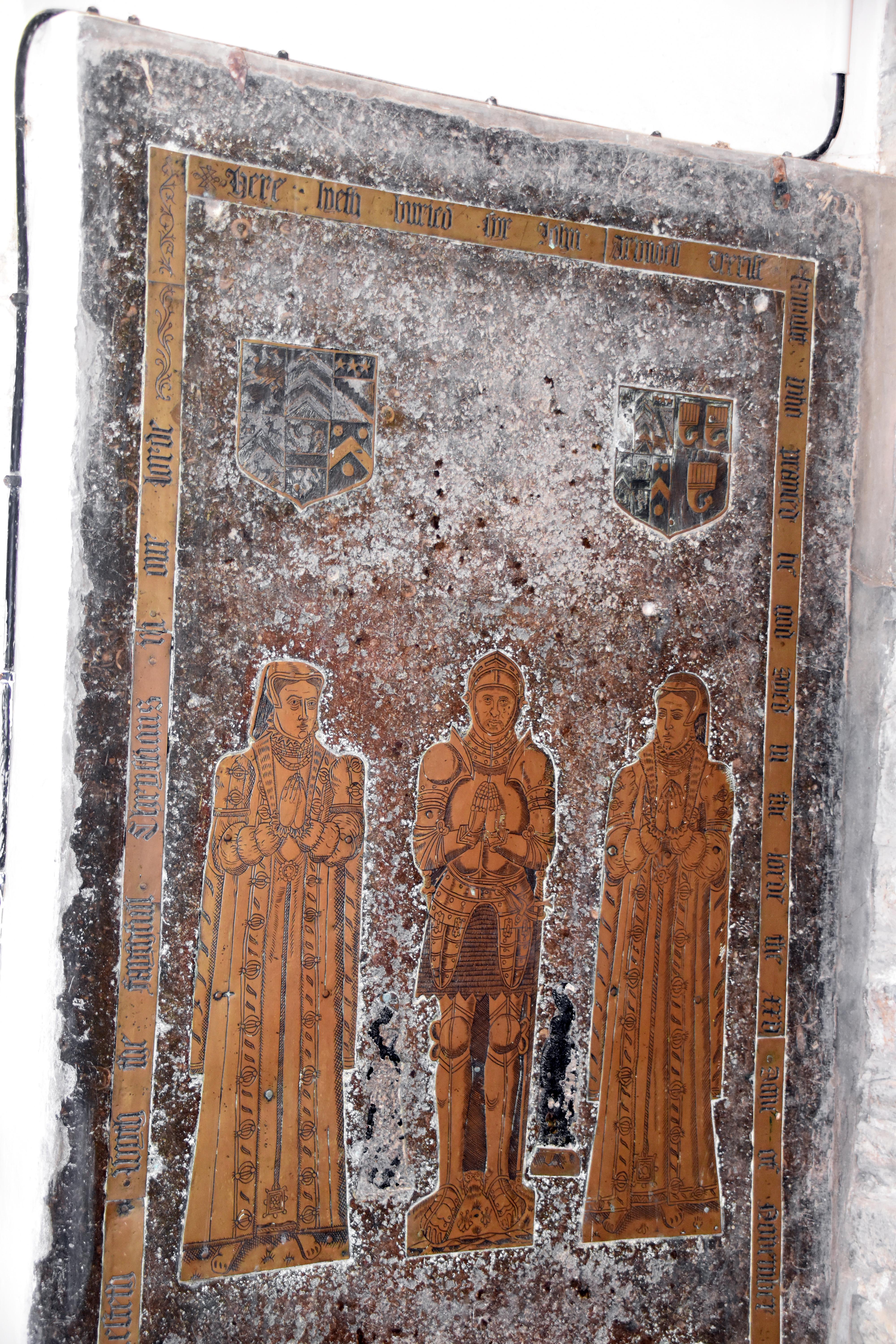
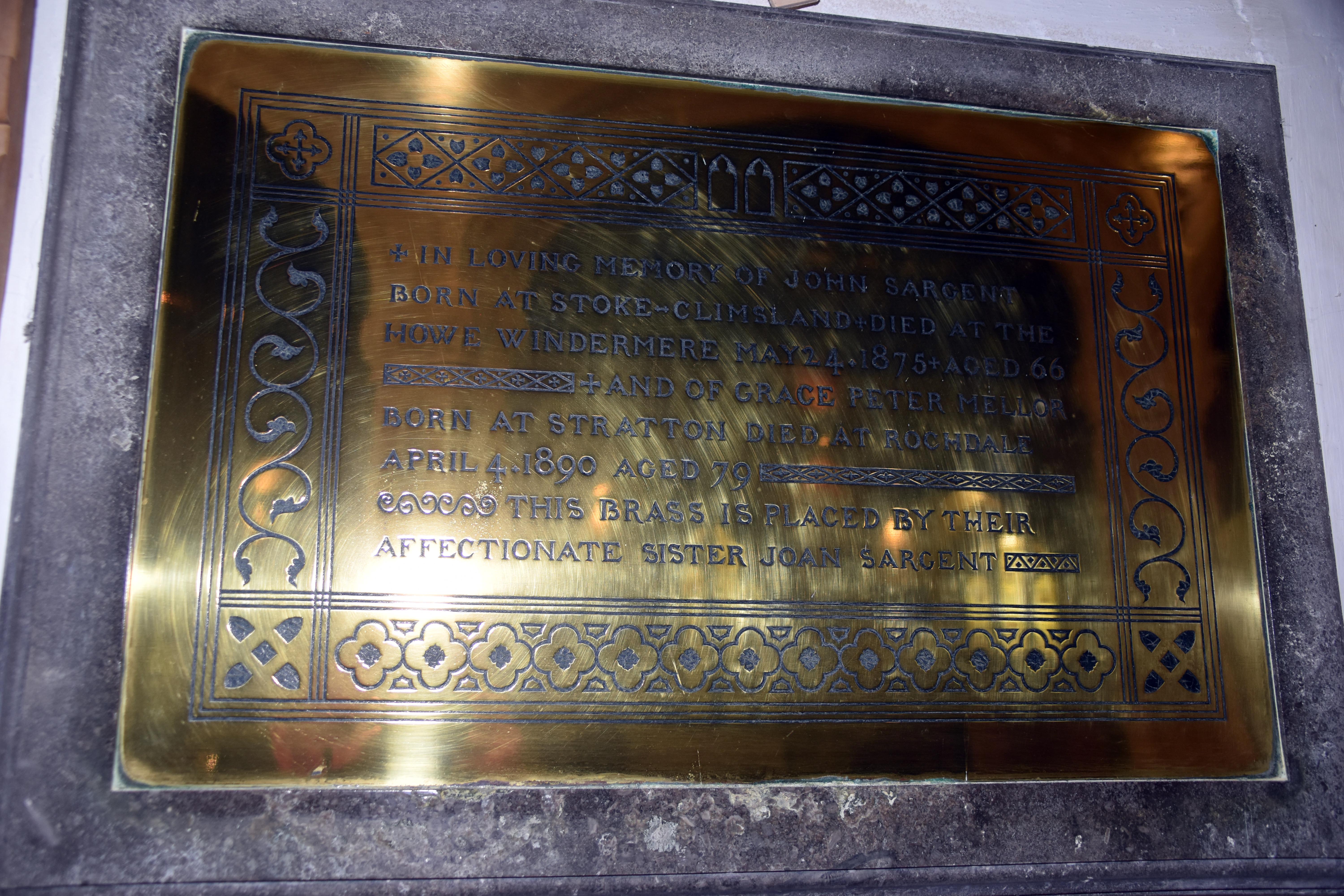
Memorial brass to John Sargent, born at Stoke Climsland, died at Howe Windermere 24 May 1875 aged 66, and Grace Peter Mellor, born at Stratton, died at Rochdale 4 April 1890 aged 79, placed by their sister Joan Sargent. Stained glass window depicting Christ with Mary and Martha, inscribed “Mary hath chosen that good part which shall not be taken away from her.” The font dated 1912 in St Andrew’s Church, Stratton, with carved wooden cover and octagonal stone base. Brass memorial to Sir John Broun and family, showing three figures in prayer with heraldic shields and Gothic inscription around the border.
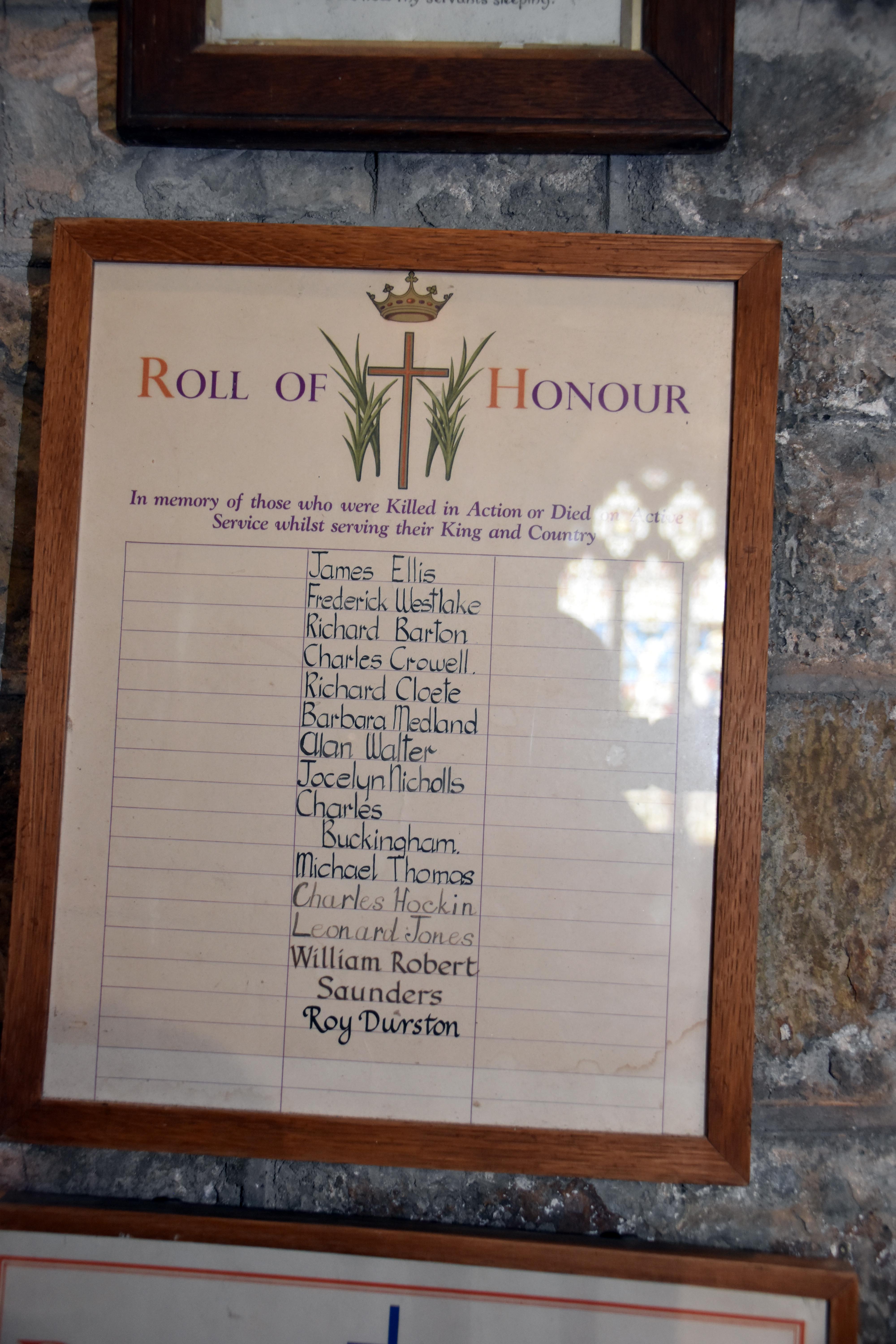
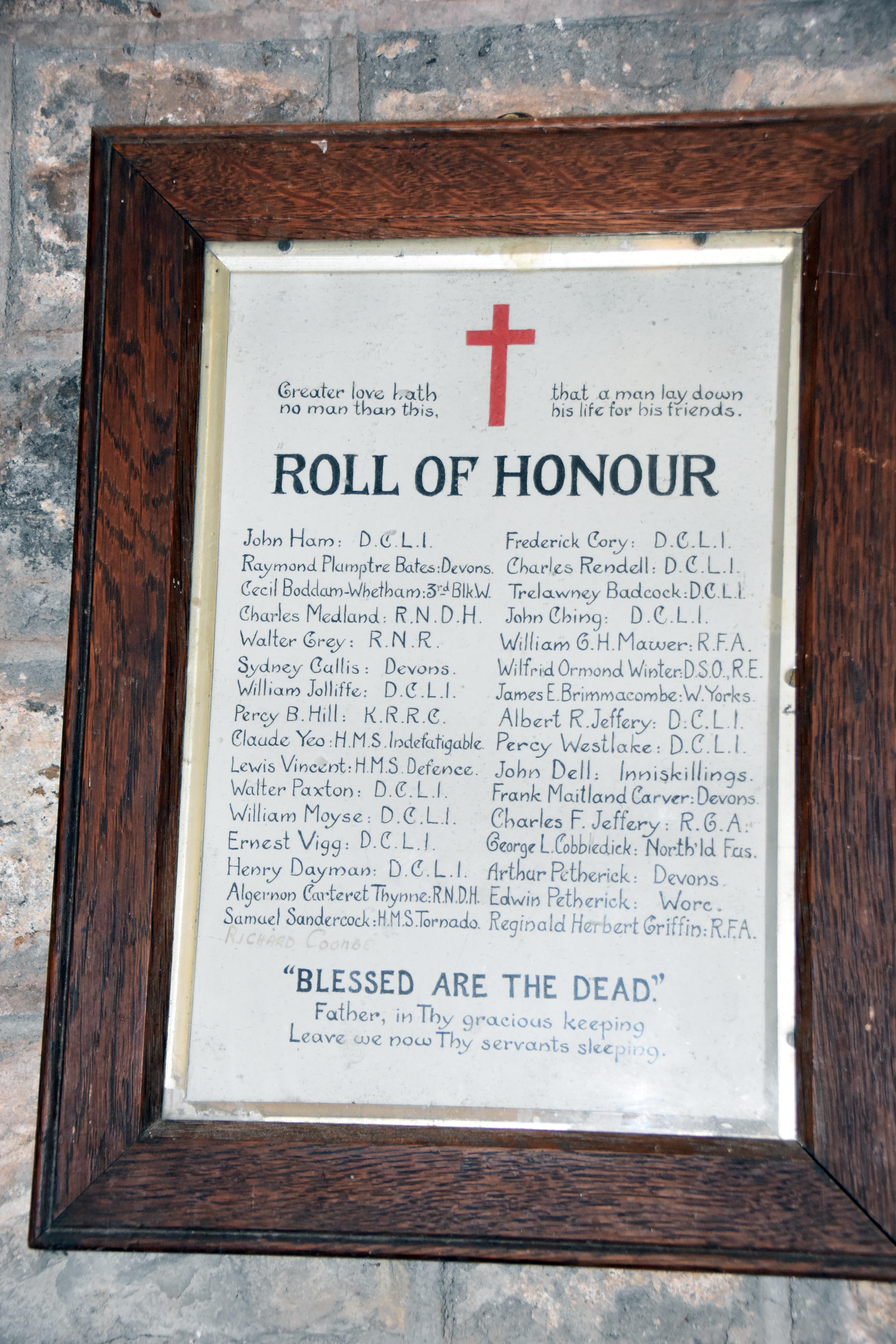
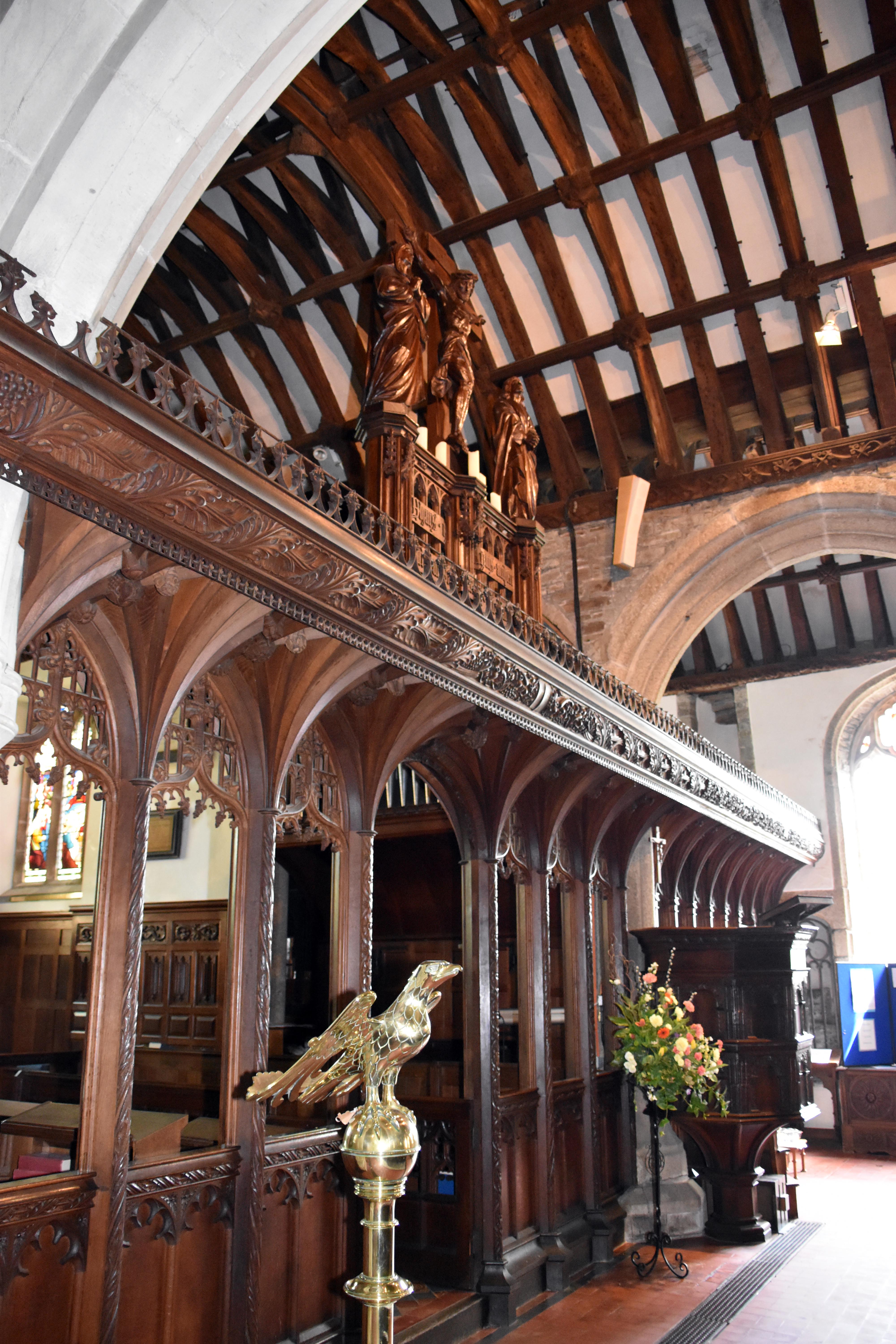
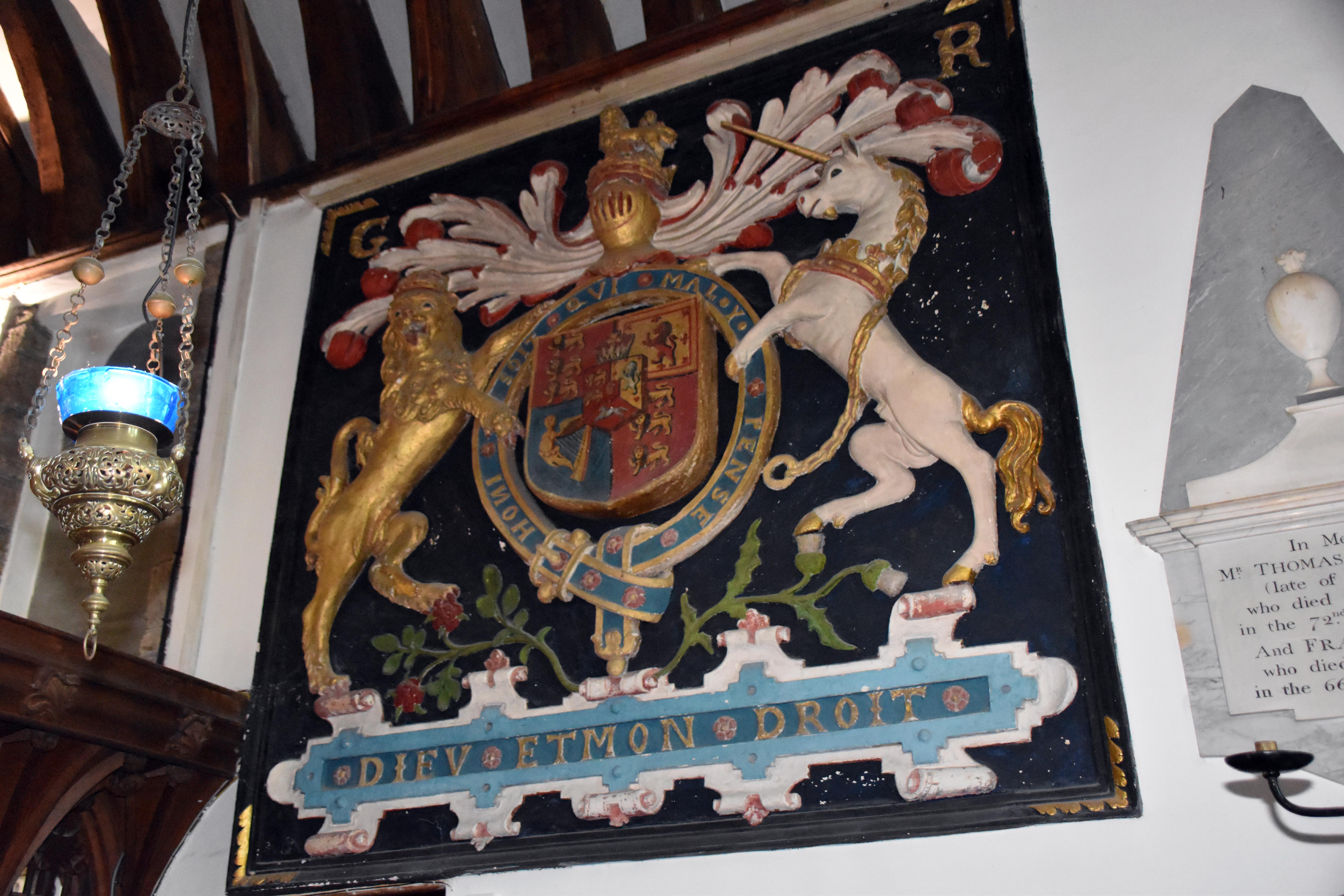
Roll of Honour listing names of those killed in action or died in service Roll of Honour with names and regiments of Stratton men who fell in war Rood screen and eagle lectern in St Andrew’s Church, Stratton Royal Arms of George III displayed in St Andrew’s Church, Stratton
Roll of Honour listing names of those killed in action or died in service while serving their King and Country, including James Ellis, Frederick Westlake, Richard Barton, Charles Crowell, Richard Cloete, Barbara Medland, Allan Walter, Jocelyn Nicholls, Charles Buckingham, Michael Thomas, Charles Hockin, Leonard Jones, William Robert Saunders, and Roy Durston. Roll of Honour recording Stratton men who fell in war, with names and regiments including John Ham, Raymond Plumptre Bates, Cecil Boddam‑Whetham, Charles Medland, Walter Grey, Sydney Callis, William Jolliffe, Percy Hill, Claude Yeo, Lewis Vincent, Walter Paxton, William Moyse, Ernest Vigg, Henry Dayman, and others. Rood screen and eagle lectern in St Andrew’s Church, Stratton, showing carved tracery, figures above the screen, and the timber roof structure. Royal Arms of George  III displayed in St Andrew’s  Church, Stratton, with lion and unicorn supporters and the motto “Dieu et mon droit.”
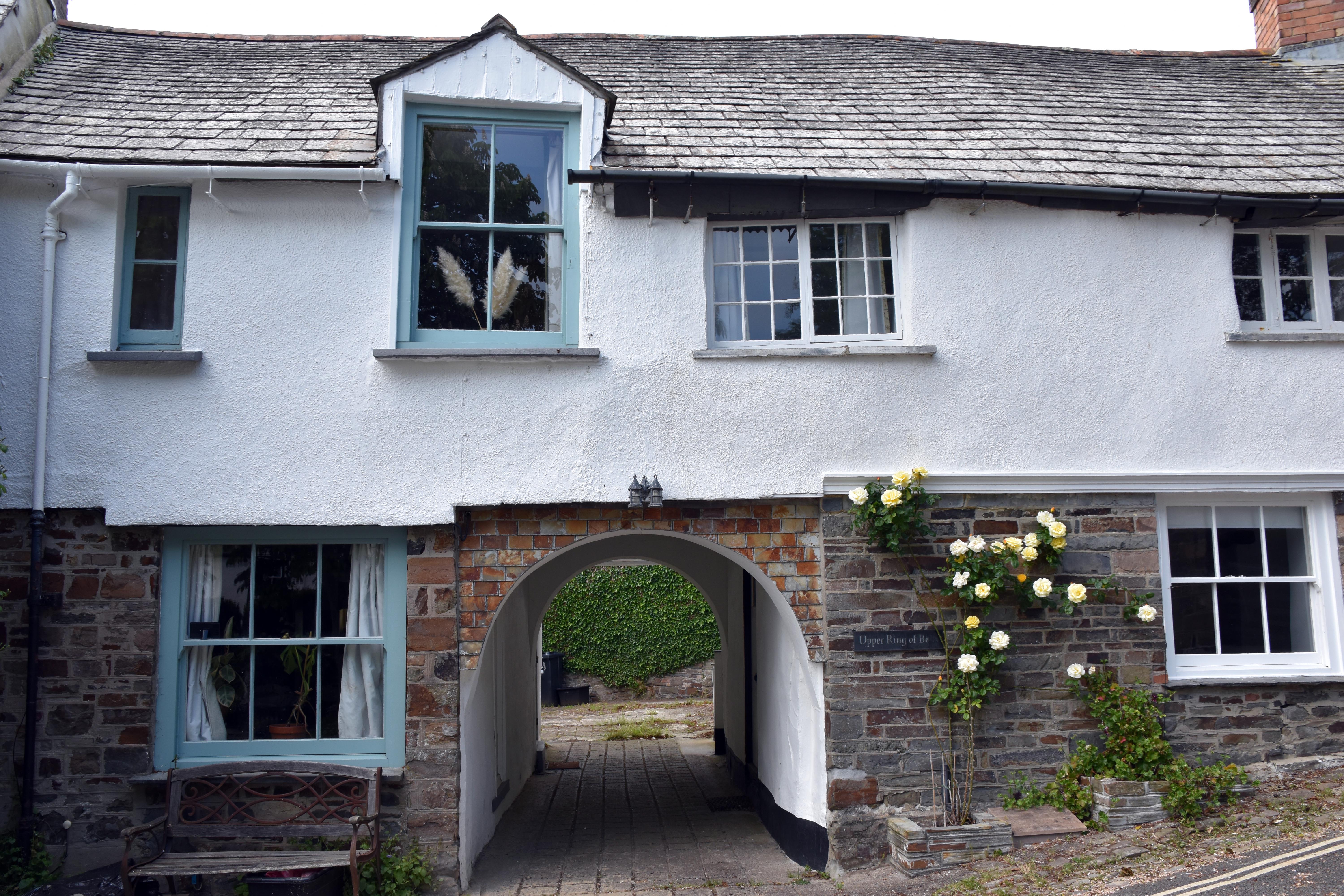
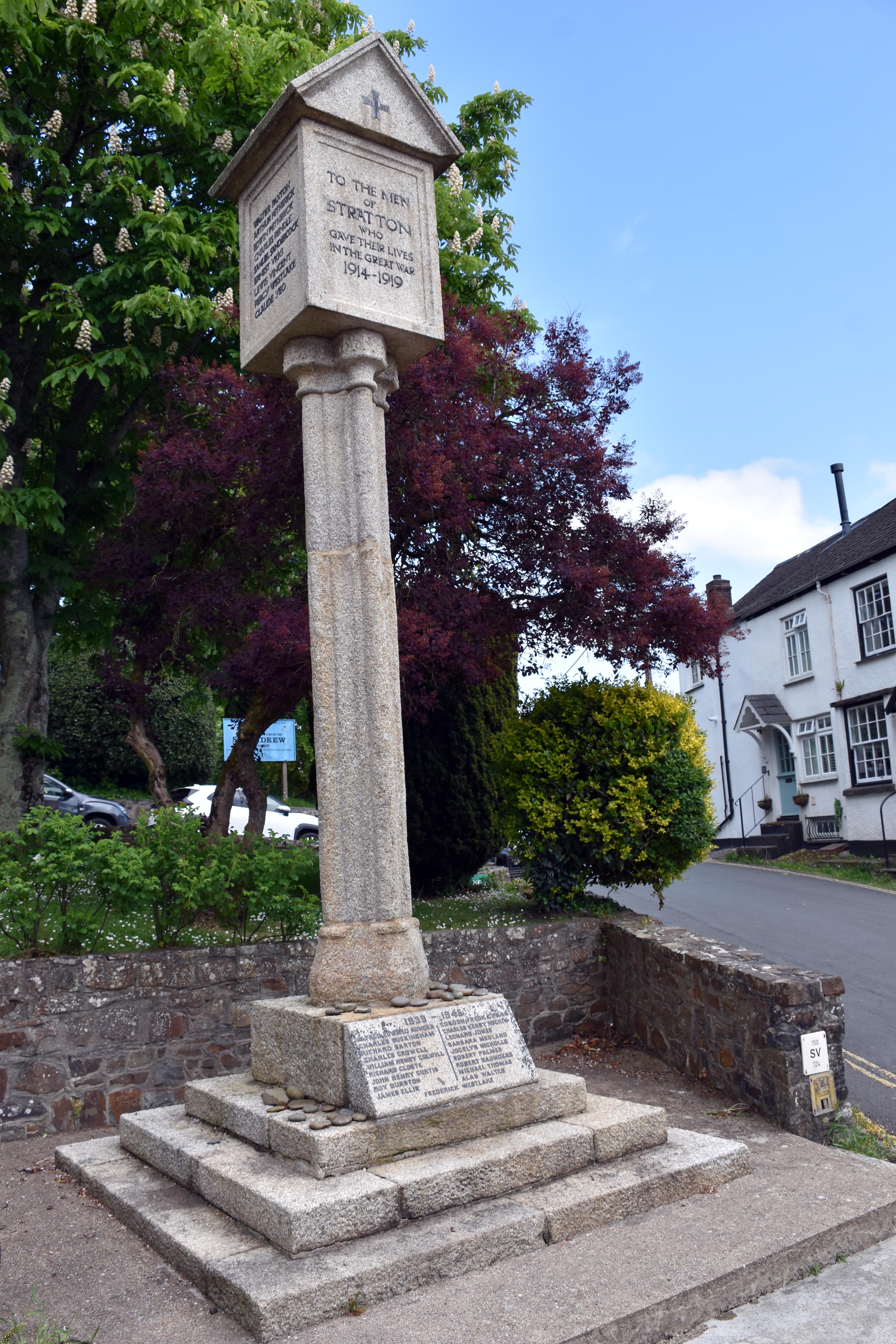
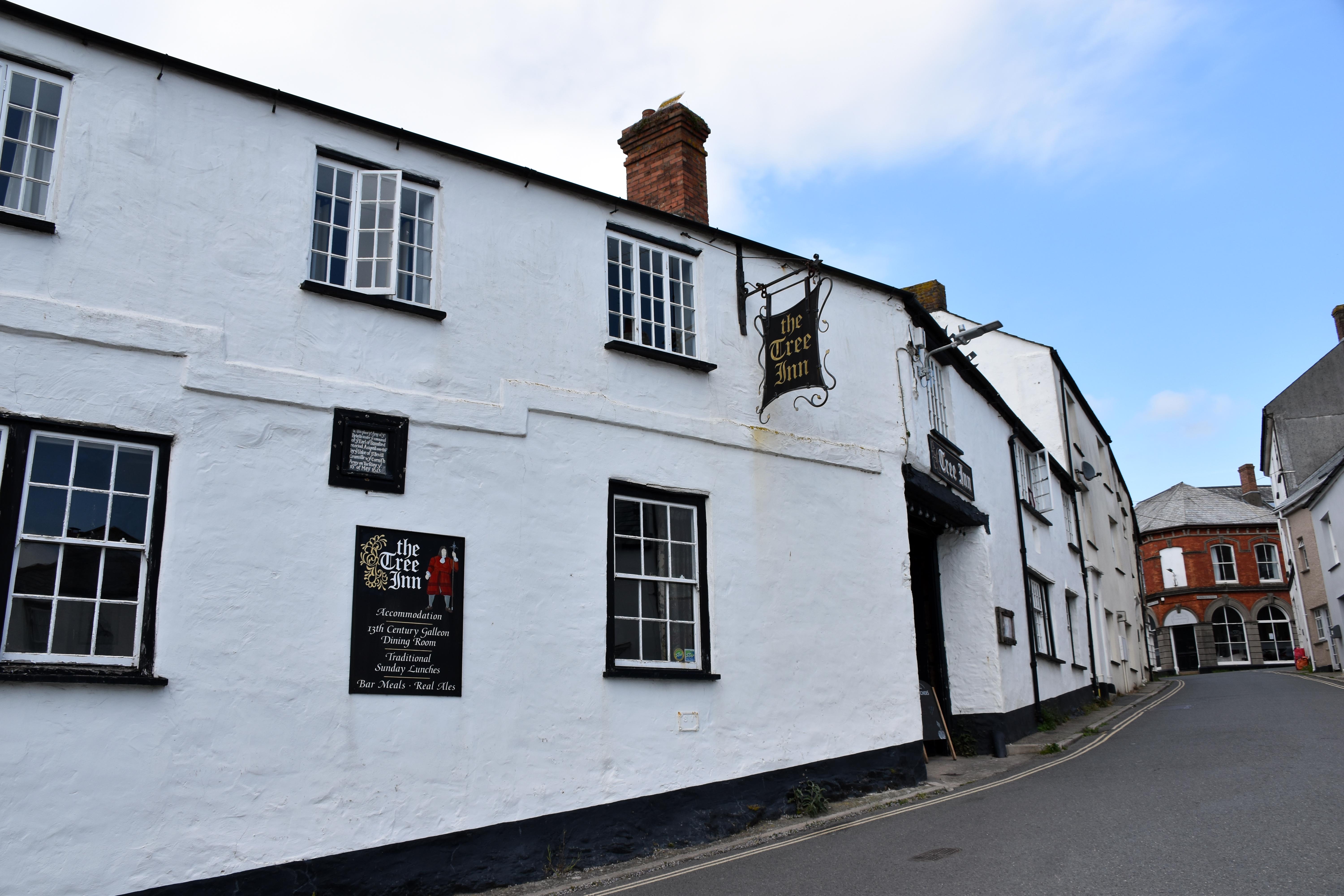
Stained glass window depicting the Crucifixion and surrounding figures, St Andrew’s Church, Stratton Upper Ring of Lee, Stratton, showing archway passage and climbing roses War memorial to the men of Stratton who gave their lives in the Great War 1914–1919 The Tree Inn, Stratton, historic building associated with the Battle of Stratton 1643
Stained glass window depicting the Crucifixion with surrounding figures, located in St Andrew’s Church, Stratton. Upper Ring of Lee, Stratton, showing the archway passage beneath the house and climbing roses on the stone wall. War memorial to the men of Stratton who gave their lives in the Great War 1914–1919, with later additions for 1939–1945. The Tree Inn, Stratton, historic building with an old memorial to the Battle of Stratton 1643 displayed.
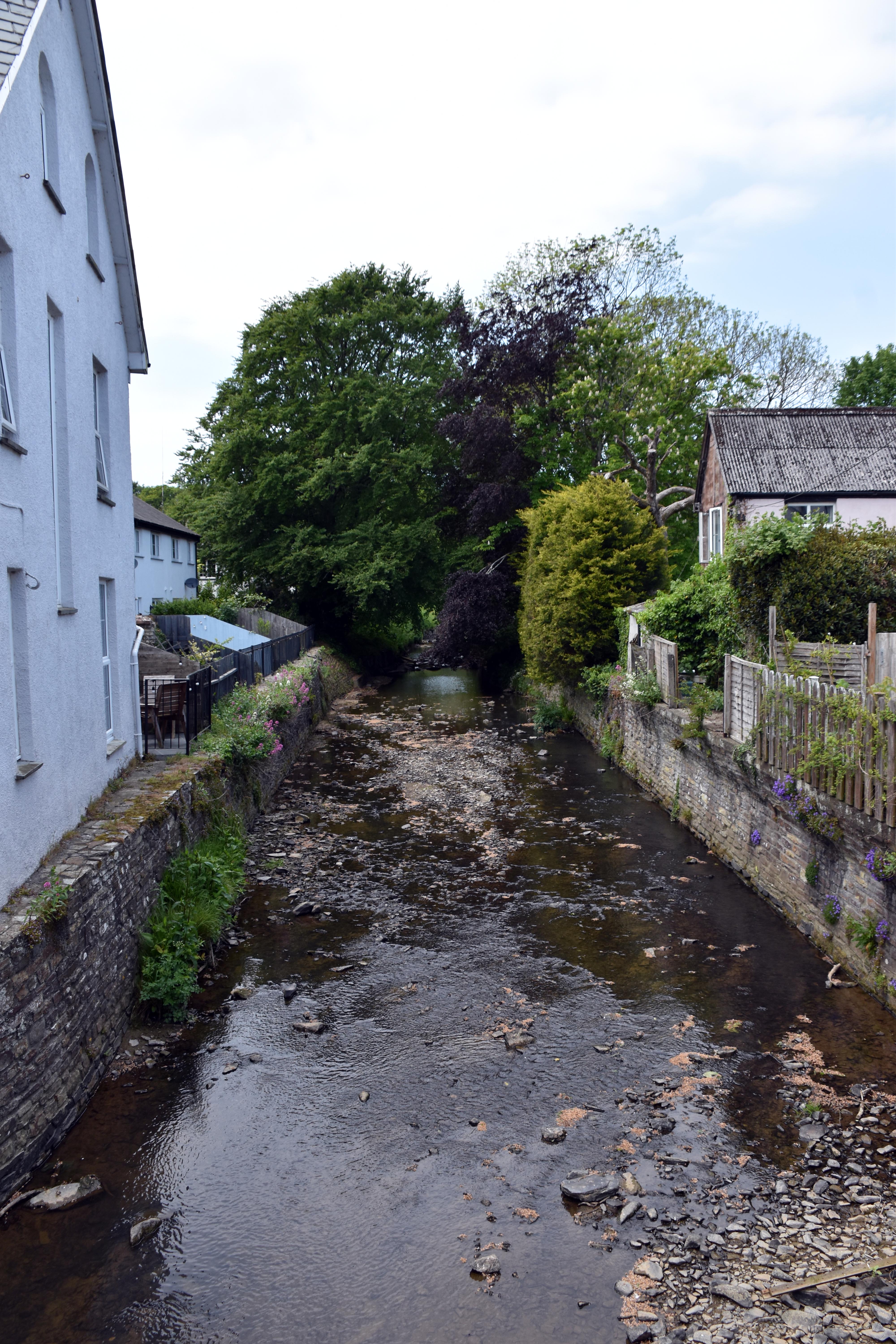
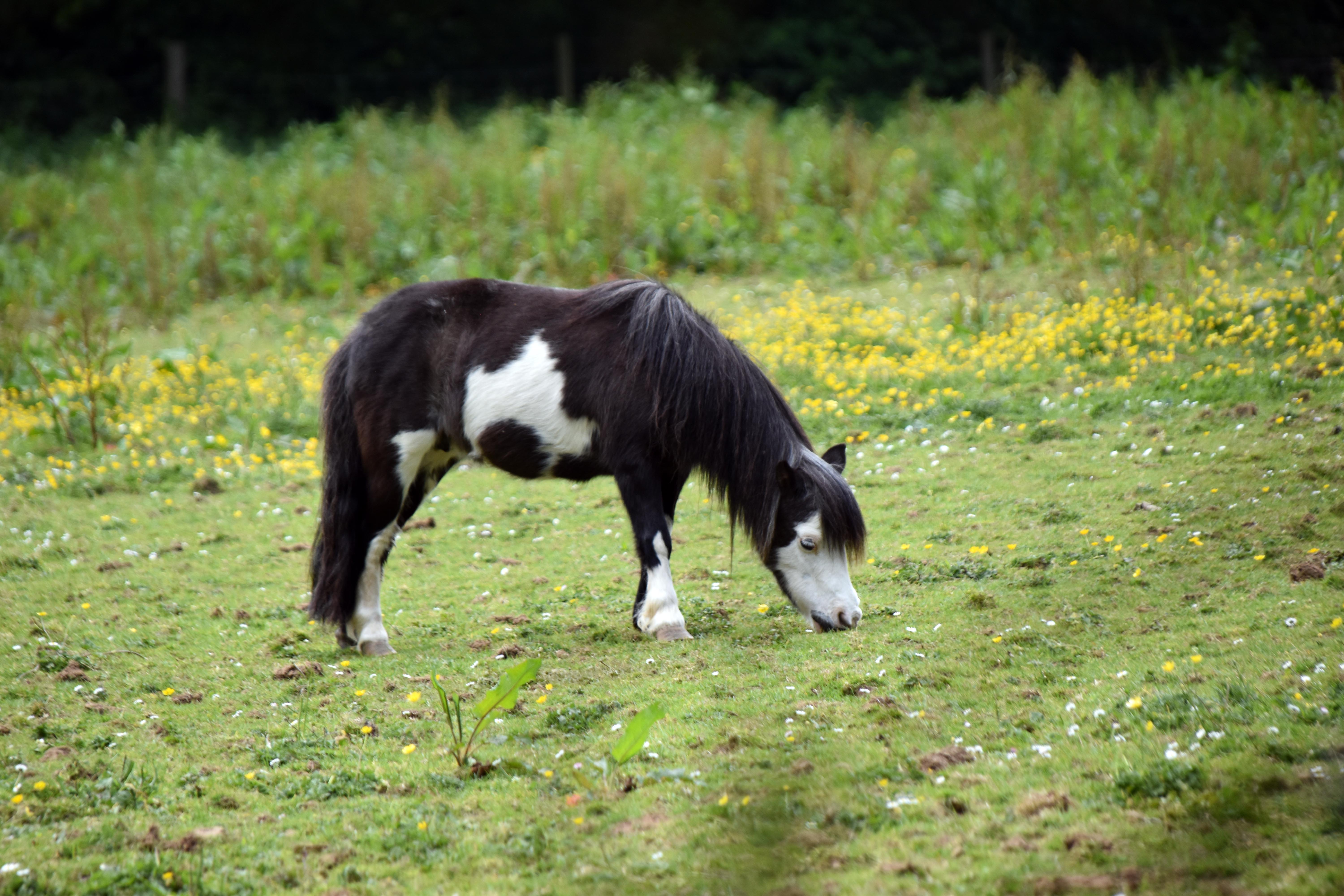
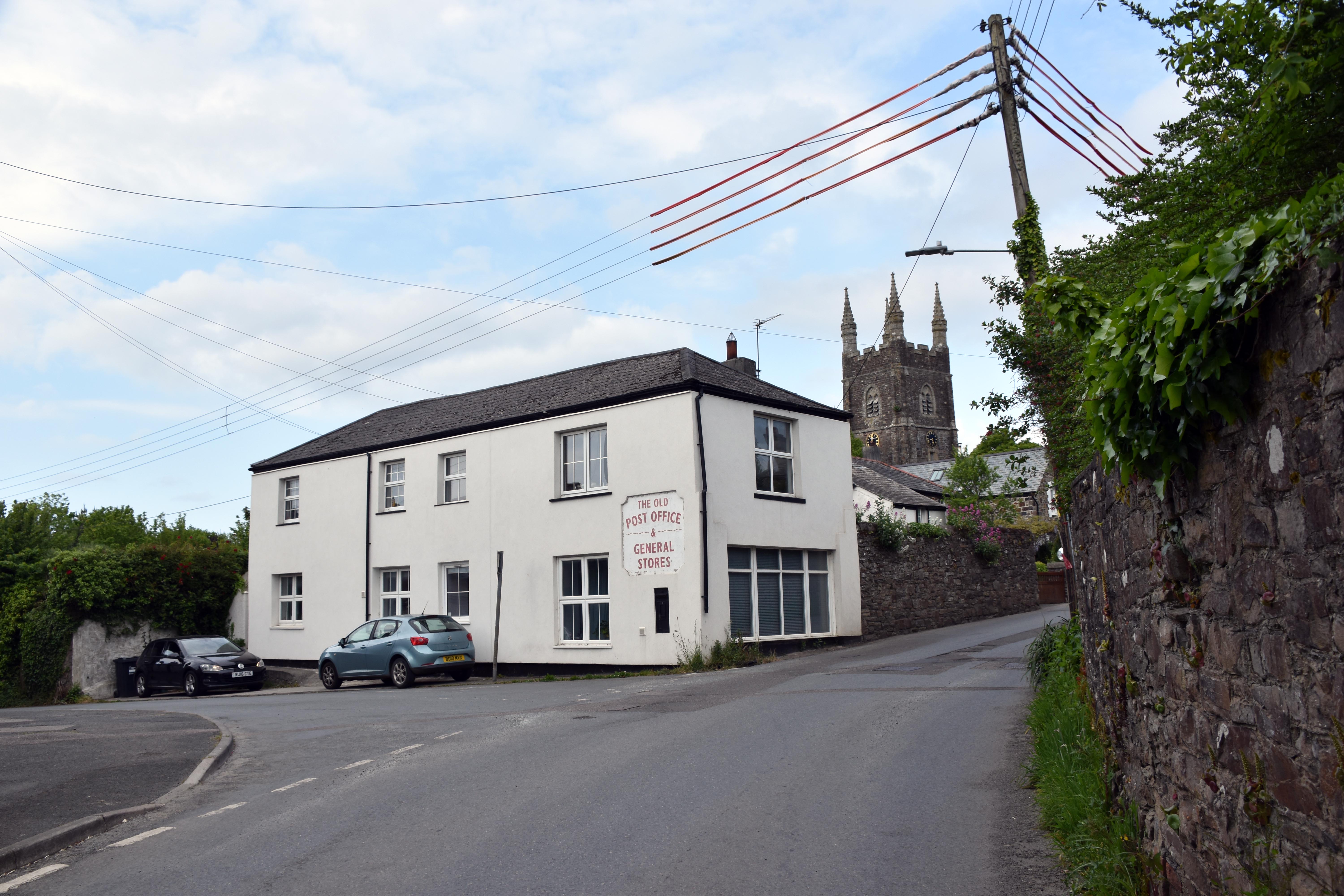
Bridge over the River Strat in Stratton town centre Small horse grazing in a field near Stratton Street view in Poughill showing the Old Post Office and St Olaf’s Church tower St Olaf’s Church, Poughill, with tower and surrounding churchyard
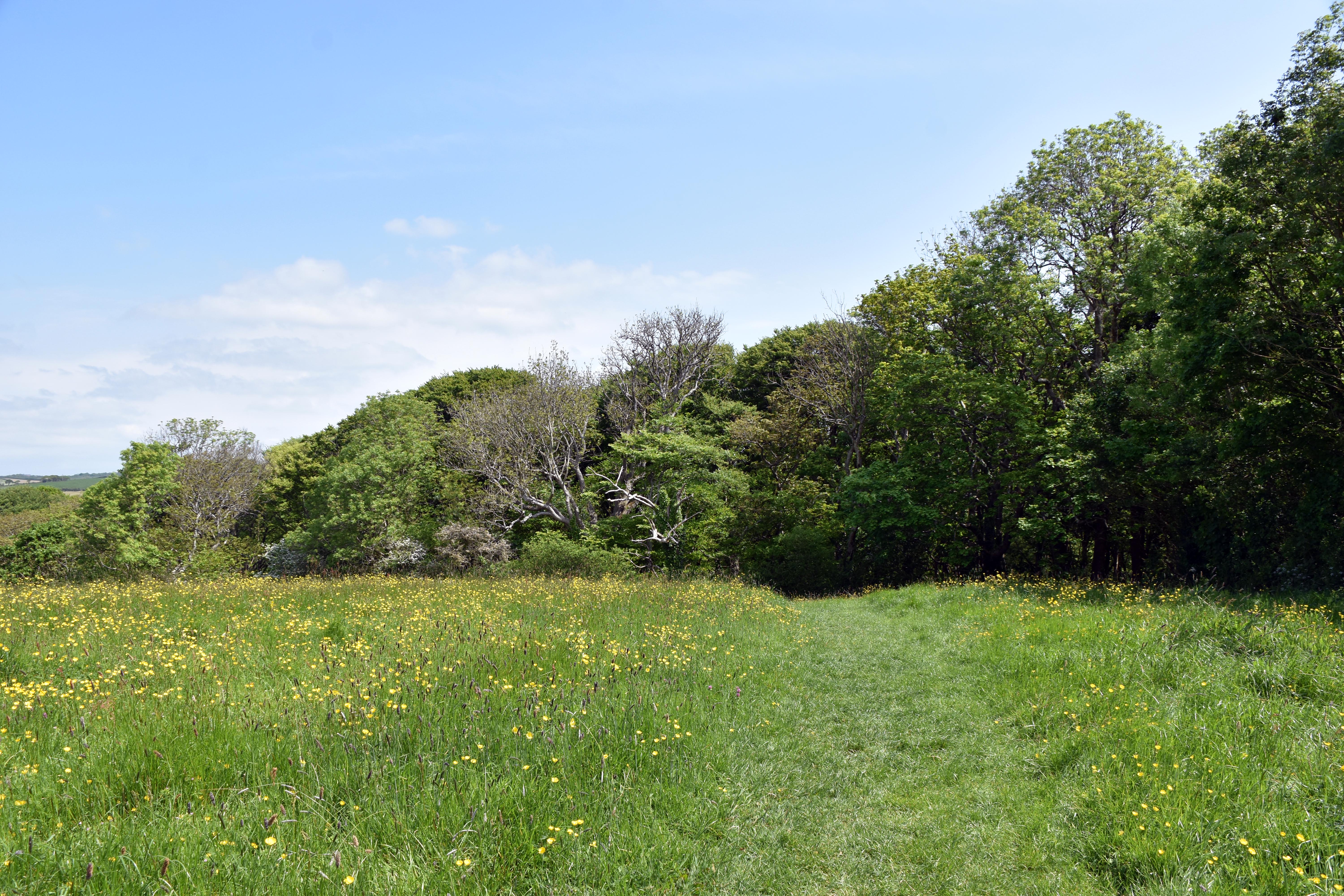
Bridge over the River Strat in Stratton town centre, showing the shallow watercourse lined with stone walls and residential buildings. Small horse grazing in a field near Stratton, surrounded by buttercups and meadow grass. Street view in Poughill showing the Old Post Office and General Stores with St Olaf’s Church tower visible behind. St Olaf’s Church, Poughill, built of local stone with a four‑pinnacled tower and adjoining graveyard.
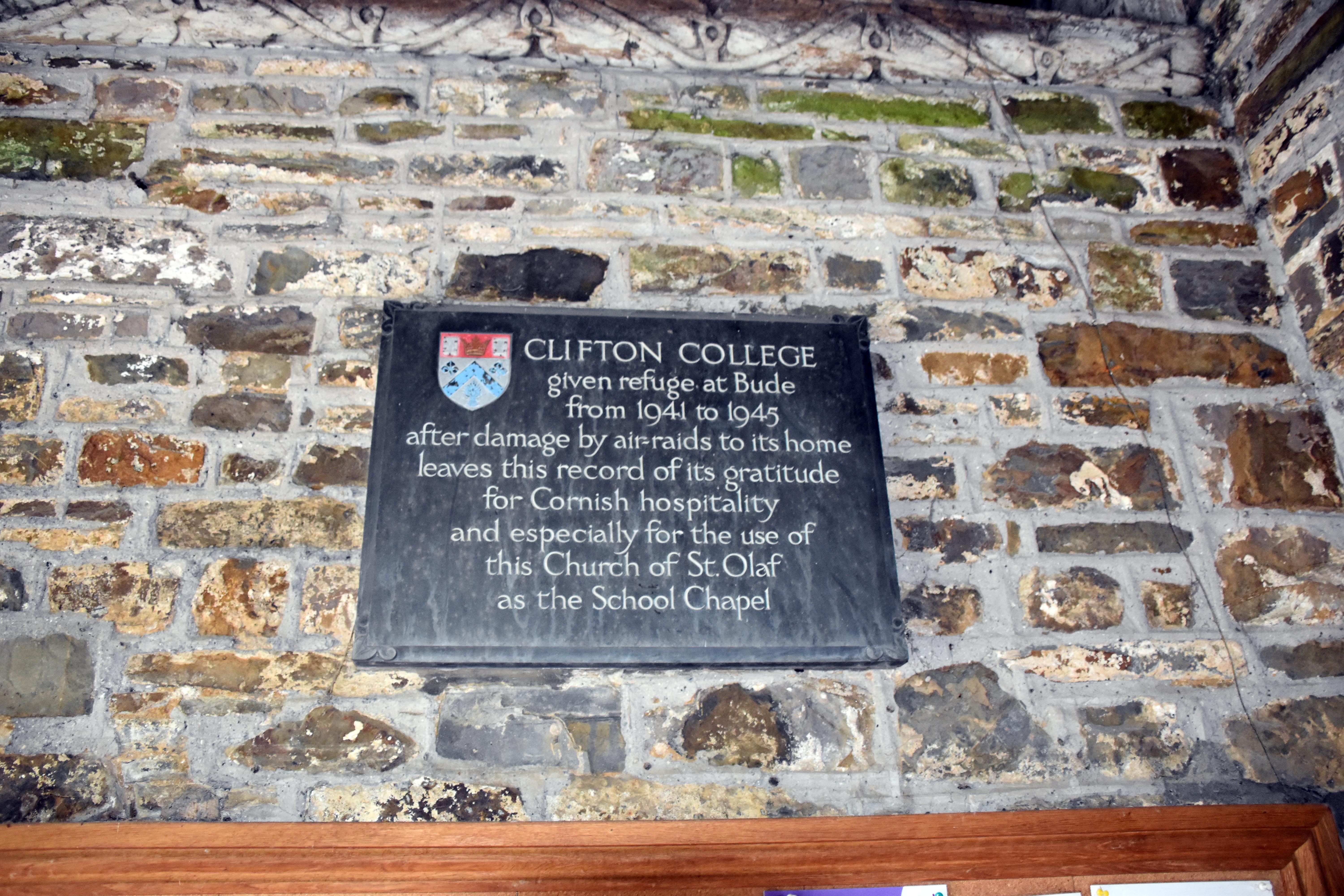
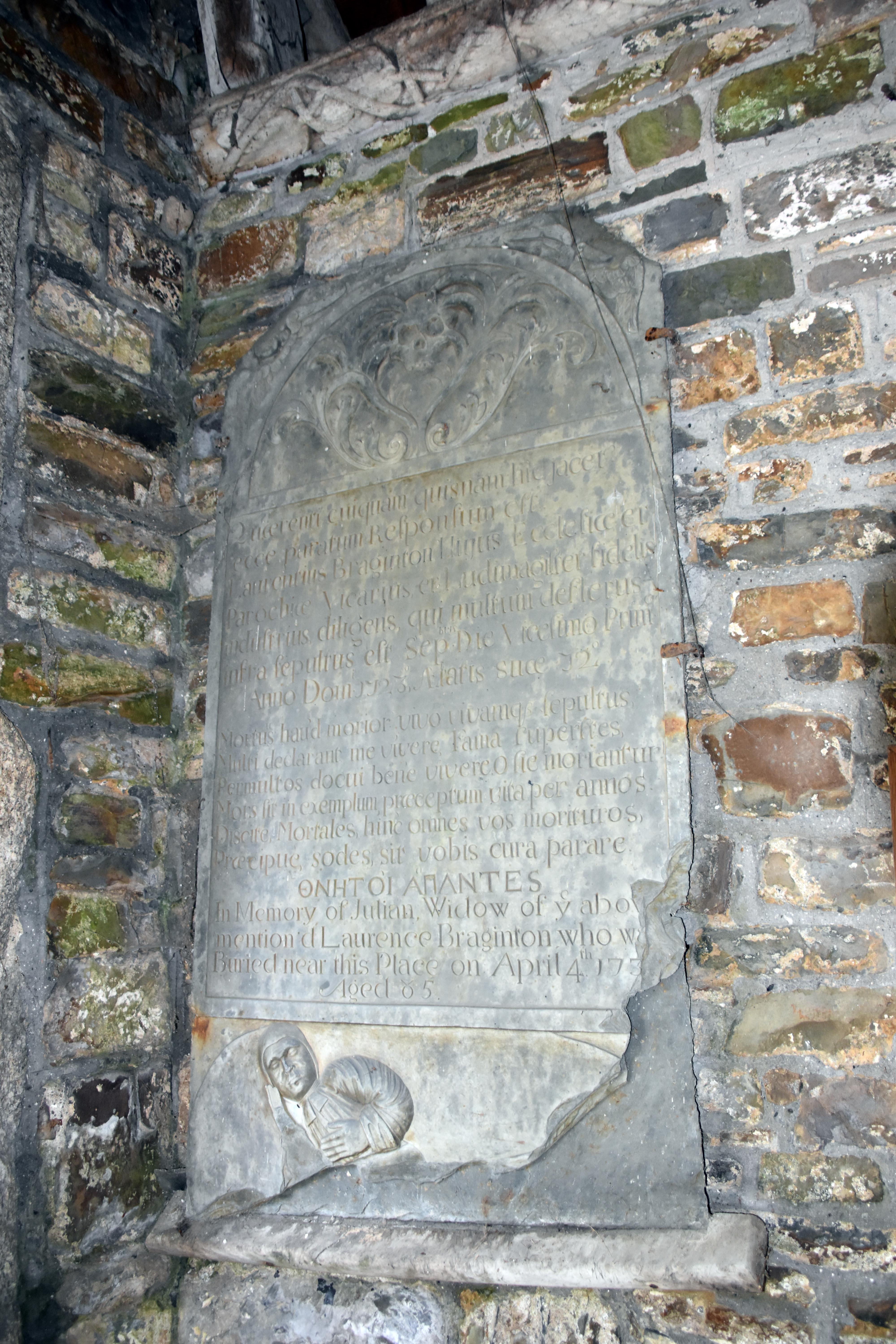
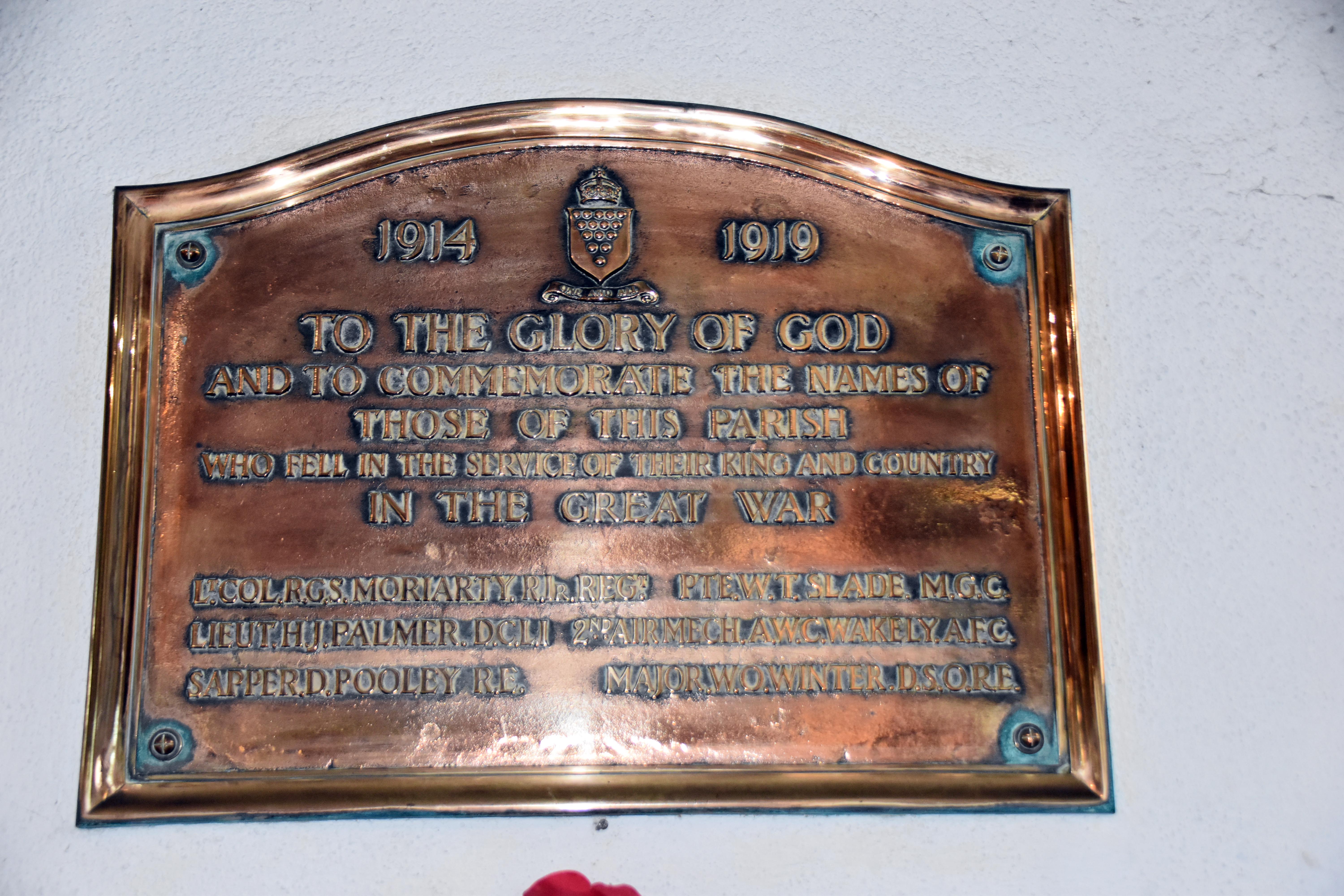
Clifton College plaque in St Olaf’s Church, Poughill Memorial to Laurence Braginton and Julian Braginton, St Olaf’s Church, Poughill Bronze Great War memorial plaque, St Olaf’s Church, Poughill Royal Arms of Charles II, St Olaf’s Church, Poughill
Clifton College plaque recording the school’s refuge at Bude from 1941 to 1945 after air‑raid damage, expressing gratitude for Cornish hospitality and the use of St Olaf’s Church as its chapel. Memorial to Laurence Braginton, Rector of Poughill, and his widow Julian, dated 1737, with Latin inscription and carved effigy at the base. Bronze plaque commemorating parishioners who fell in the Great War 1914–1919, including Lt  Col  R. G. S. Moriarty, Lt  H. J. Palmer, and Major  W. O. Winter. Royal Arms of Charles  II dated  1633, painted and gilded, showing lion and unicorn supporters with the motto “Dieu  et  mon  droit.”
Memorial plaques to the Gard, Peters, and Brendon families, St Olaf’s Church, Poughill Memorials to Avery, Granville, and Stevens families, St Olaf’s Church, Poughill Memorial plaques to James and Adeline Delmar, St Olaf’s Church, Poughill Memorial to Sir Henry Lovell Goldsworthy Gurney, St Olaf’s Church, Poughill
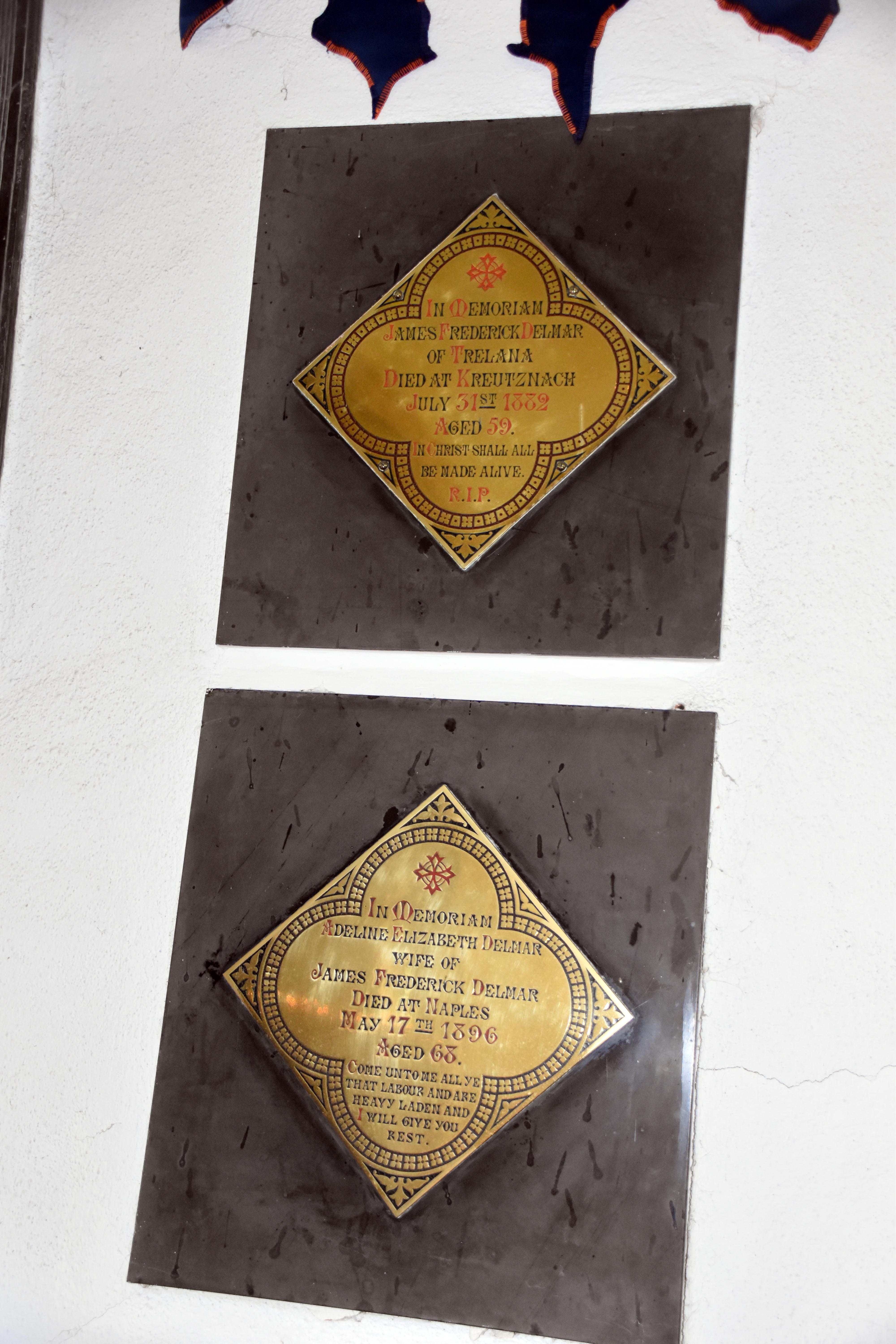
Memorial plaques to the Gard, Peters, and Brendon families, commemorating John David Metherell Gard killed in an avalanche in Austria in 1952, Edward William Rundle Brendon drowned off Achill Island in 1951, and James Lovell Peters with his wife Emily Attwell. Memorials to the Avery, Granville, and Stevens families, including Mary Avery who died in 1753 aged seventeen, Elizabeth Avery who died in 1779 aged fifty‑three, and Walter Oke Stevens of Devon and Cornwall. Memorial plaques to James Frederick Delmar of Trelana, died at Kreuznach in 1892 aged fifty‑nine, and Adeline Elizabeth Delmar, his wife, died at Naples in 1896 aged sixty‑eight. Memorial to Sir Henry Lovell Goldsworthy Gurney K.C.M.G., High Commissioner for the Federation of Malaya 1948–1951, born at Reeds in this parish, murdered by bandits in Malaya on 6  October  1951.
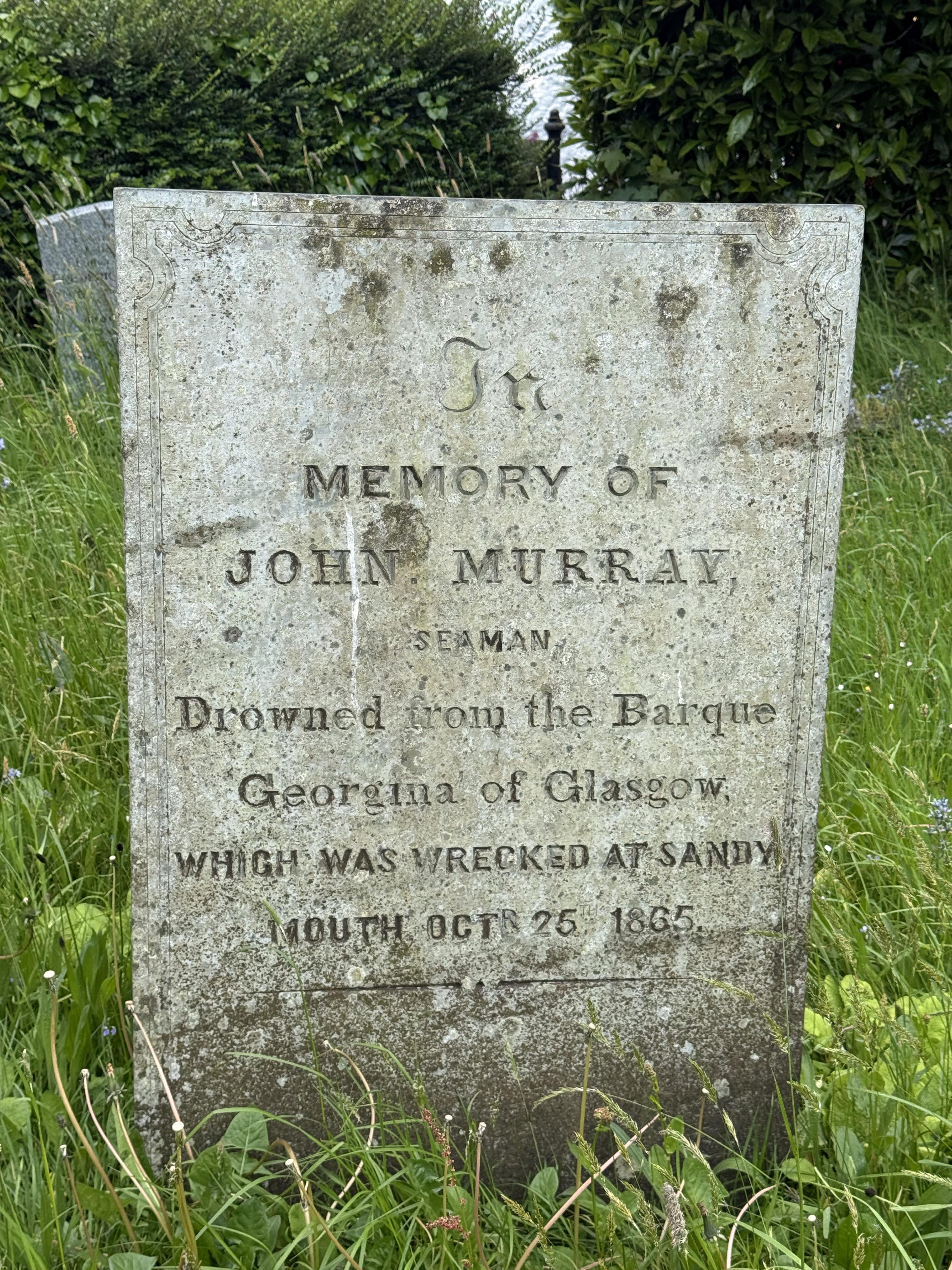
Memorial plaque to Sir Goldsworthy Gurney, St Olaf’s Church, Poughill Interior of St Olaf’s Church, Poughill, looking east toward the altar Carved bench ends and pews in St Olaf’s Church, Poughill Gravestone of John Murray, drowned from the barque Georgina of Glasgow, 1865
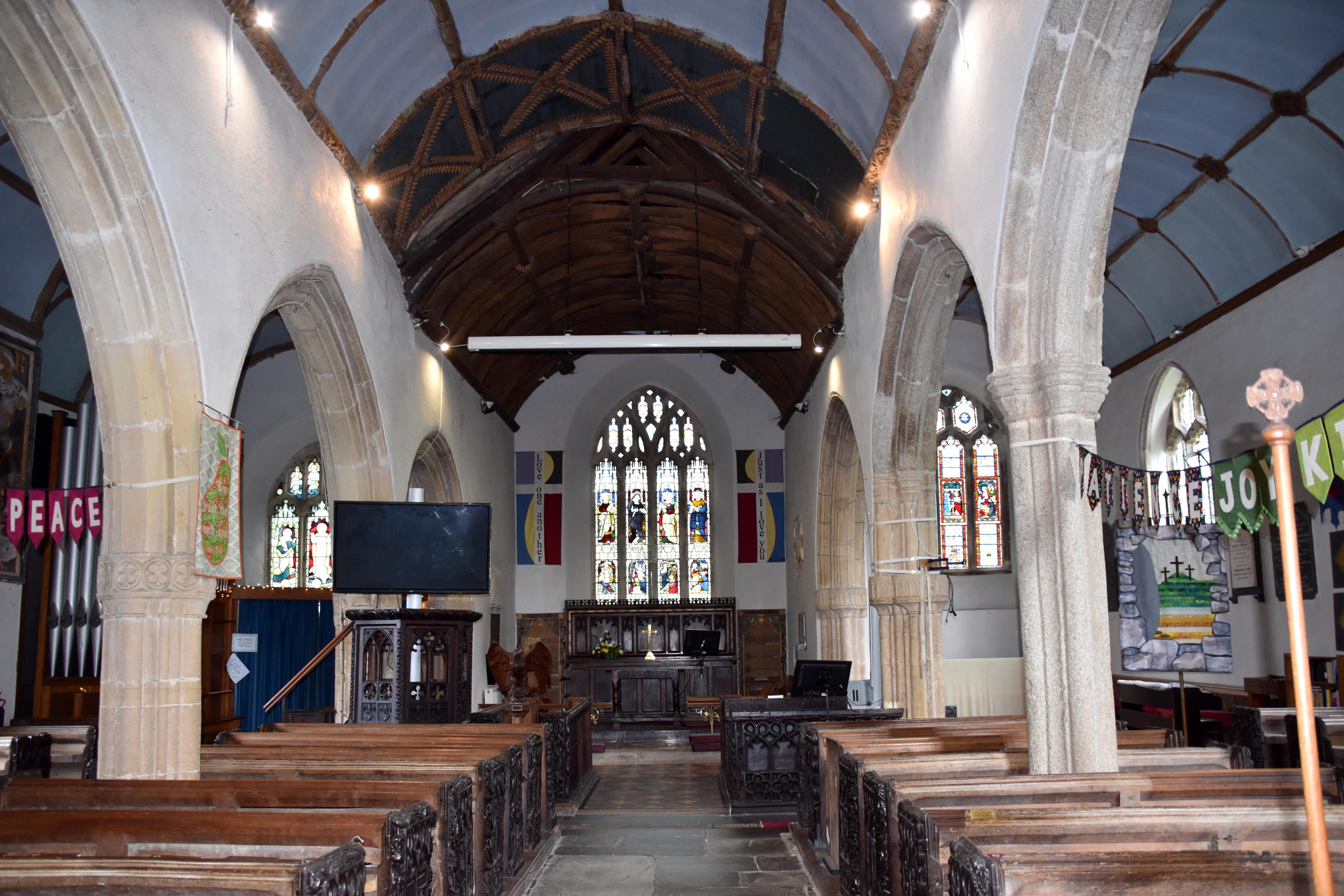
Memorial plaque to Sir Goldsworthy Gurney, inventor and engineer, commemorating his contributions to steam and electricity and the establishment of uniform clock time, given by his daughter Anna Jane Gurney in 1889. Interior of St Olaf’s Church, Poughill, looking east toward the altar, showing the stone arcades, wooden roof structure, stained glass east window, and banners hung across the nave. Carved bench ends and pews in St Olaf’s Church, Poughill, with intricate C16 designs including tracery, monograms, and symbolic motifs, each pew fitted with hymn books. Gravestone of John Murray, seaman drowned from the barque Georgina of Glasgow, wrecked at Sandy Mouth on 25 October 1865.

Walks by the Westcountry Walker
Armed Forces | Art and Culture | Articles | Biographies | Colonies | Discussion | Glossary | Hiking | Home | Library | Links | Map Room | Sources and Media | Science and Technology | Search | Student Zone | Timelines | TV and Film | Wargames
Donate by Stephen Luscombe