|
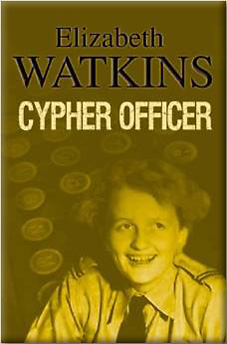
Elizabeth Watkins' delightful book will appeal to many readers. It is witty, informative
and sometimes sad - and will be dipped into many times.
The writer had a Colonial Service life as daughter and as wife. Her father was Oscar
Watkins, who served in the BEA Protectorate Administration from 1908 and is renowned
for having organised the East African Carrier Corps which underpinned the protracted
four year war in German East Africa. Her mother Olga, also strongly pro-African,
became a member of the Legislative Council in Kenya. Elizabeth Watkins has written
biographies of both her parents (Oscar from Africa and Olga in Kenya: Repressing the Irrepressible ). She herself subsequently married Oliver Knowles, of
the Kenya Administration (see Back Seat Driver). ). She herself subsequently married Oliver Knowles, of
the Kenya Administration (see Back Seat Driver).
But this book deals with a remarkable period in her own life before her marriage.
In 1939, aged 16, Elizabeth left school in England and joined her family in Kenya, taking
an ordinary sort of job until in 1942 she saw an advertisement which would change her life
dramatically. It read: 'Urgently required - women to join the RAE and serve in the Middle
East. Must be Officer material, age 25 - 35, able to type, good at figures, free of all ties'.
Along with many other applicants she was interviewed and having, with difficulty,
persuaded the Interviewing Officer she was 25, she was accepted and became a Cypher
Officer, a person who turned words into figures and subtracted them from columns of
numbers. It was close, tiring and finicky work carried out mostly underground, but
otherwise in windowless offices above ground. It was a tough demanding round-the-clock
regime: the material she de-cyphered was secret and often distressing. She served in the
Middle East, Seychelles and Madagascar for more than 2 years.
One day a circular enquired if anyone had pre-war knowledge of Northern Italy or of
the Tyrol and could interpret reconnaissance photos prior to the advance over the Brenner
Pass into Austria. Elizabeth completed the forms and took on another job. She positively
identified her grandmother's castle, Schloss Malzen, where she had spent many school
holidays and was able to give valuable information about it.
In Ismailia she decoded a message to herself: 'Father very ill'. It was months before
she could get home and father was still ill. Unwell herself, she took turns with her mother
at his bedside. He was a very well known figure in Kenya and his death was reported on
the radio. 500 people attended his funeral including scores of Africans in their brightly
coloured 'Sunday Best' clothes.
Elizabeth recovered her health and in time got a place at St Anne's, Oxford to read
Politics, Philosophy and Economics, thus achieving another ambition. A truly remarkable
Cypher Officer.
|