|
by David Forrester
|
|
In a recently published book, Lotte Hughes in Moving the Maasai - a Colonial Misadventure has made some curious assumptions based on statements by people of
the period. Her book is a strong criticism of the Government of British East Africa (later
renamed Kenya) between 1900 and 1912, for moving all sections of the Maasai tribe into
the Narok District in the south of the territory. Briefly, the Maasai tribe in the 19th
century had been made up of several groups, which were not averse to bloody
internecine fighting. In or about 1880, the Purko and the Kisongo sections entered into
an alliance to take out the Laikipiak section based on the Laikipia plateau. In this the
Purko and the Kisongo were overwhelming victors by the mid-1880s, but it seems did
not actually settle on the plateau.
Then in 1904 the Government at the urging of some of the European settlers made an
agreement with the Maasai living in the Rift Valley, for those Maasai to move to a
special Northern Reserve centred on the Laikipia plateau. Other members of the tribe
would inhabit a Reserve in the south, between the Tanganyika border and the Ngong
Hills. The European settlers could then take over the area of the Rift Valley from
Naivasha to Solai for farming. However by 1912 the Government had changed its
policies and persuaded certain leaders of the Maasai to agree to move from Laikipia to a
greatly enlarged southern section incorporating the Loita Plains.
According to some critics this was a disaster for the Maasai because, quite apart from
the methods used, the tribe lost a very productive area on Laikipia to allegedly greedy
European settlers. It is said that the Maasai should have been compensated by the British
Government for the losses that they suffered. In 1912, tribal representatives took out a
legal action against the British Government, but the case was dismissed on a legal
technicality. Having been brought up on the plateau at Rumuruti, and having a personal
knowledge of the conditions, I have to question the assumptions made at the time and
adopted by Ms Hughes in her book. There are four main areas of error.
The first assumption on page 112 is that the plateau "was totally 'charming' and
featured a 'very network of babbling brooks and streams'. Rainfall on the plateau was
estimated at 30-40 inches per annum...". These claims were apparently made by visitors
and explorers who saw the area in the wet season or, as with the administrator Hobley,
only toured the southern part along the upper reaches of the Uaso Nyiro and Uaso Narok
rivers. In reality, during the dry season, the countryside was the complete opposite.
There were only two permanent rivers - the Uaso Narok and the Uaso Nyiro. These were
supplemented by springs, mainly at 01 Pingwan, Suguta Mugie and Suguta Marmar.
If one includes the 01 Kalou valley as part of the plateau, then Lake 01 Bolossat would
have been an additional source of permanent water. But from November through to
March large tracts of the plateau were not available for grazing without dams, bores or piped water which did not exist in 1912. Further, some of the country consisted of "black
cotton" or a clay soil which provided poor grazing for cattle, and was covered in thorn
scrub. Neither has there been any mention by Ms Hughes of the lack of salt on the
plateau. To preserve their condition, all livestock had to be supplied with salt to lick
from troughs, as it was not available naturally.
 |
|
|
An uncle of mine owned a 22,000 acre ranch on the eastern side of the Uaso Narok
river where it flows through a large swamp. Rainfall records kept for the ranch showed a
large variation in rainfall from 13 to very occasionally 40 inches a year, with periods of
two or three years of drought with a poor rainfall, when supplements to feed had to be
purchased to keep the stock alive. I spent part of my holidays from school on the ranch
and also on a lease which he held during the war at the 01 Ping wan springs. These were
known as TOLs (Taken on Lease). The situation was no different there. The further
north one went, the lower was the rainfall until the country rose into the Karisia Hills to
the east of Maralal. Without development the availability of grazing was limited for all
livestock during the dry season.
In a second assumption at pages 115-116, Ms Hughes quotes from several Maasai
sources to the effect that the plateau was generally free of disease for both humans and
livestock. I twice caught malaria as a child at Rumuruti. Malaria-carrying mosquitoes
were endemic along the watercourses and in the swampy areas. As for stock diseases,
cattle were dying everywhere when Thomson visited the area west of the Uaso Nyiro
river in 1883. European ranchers were forced to regularly dip or inoculate stock against
East Coast Fever, Foot and Mouth Disease or Rinderpest. When he first started the ranch
in the early 1920s, my uncle lost nearly half his flock of sheep to what was then called
'Nairobi Sheep Disease', which persuaded him that it would be easier to concentrate on
cattle. This was far from the land of milk and honey made out by Ms Hughes and the
Maasai she interviewed.
A third assumption has been made as to the large numbers of livestock on the plateau
when moved to the southern Reserve. On page 36, Ms Hughes quotes estimates that the
cattle had escalated from 64,000 in 1906 to more than 200,000 in 1911 with 1.75 million
sheep in 1906. In a footnote to this claim it is suggested that this might have been an
over-estimate.
As for people, in her book White Man's Country in Volume 1 at page 264, Elspeth
Huxley records that a large number of the Maasai who had originally agreed to move up
to Laikipia, actually never did so. She was quoting from An administrative and political history of the Masai reserve 1919
This was supported by Chauncey Stigand when in January 1909, on an exploratory
trip north, he encountered only a sparse population of Maasai and a handful of
Wanderobo between Rumuruti and Suguta Marmar. To the northeast of Suguta Marmar
he was the first person to discover a section of the Samburu tribe living in the Operoi
valley. Accordingly the Maasai were not occupying the whole of the northern Reserve
and those that were there, were few in number.
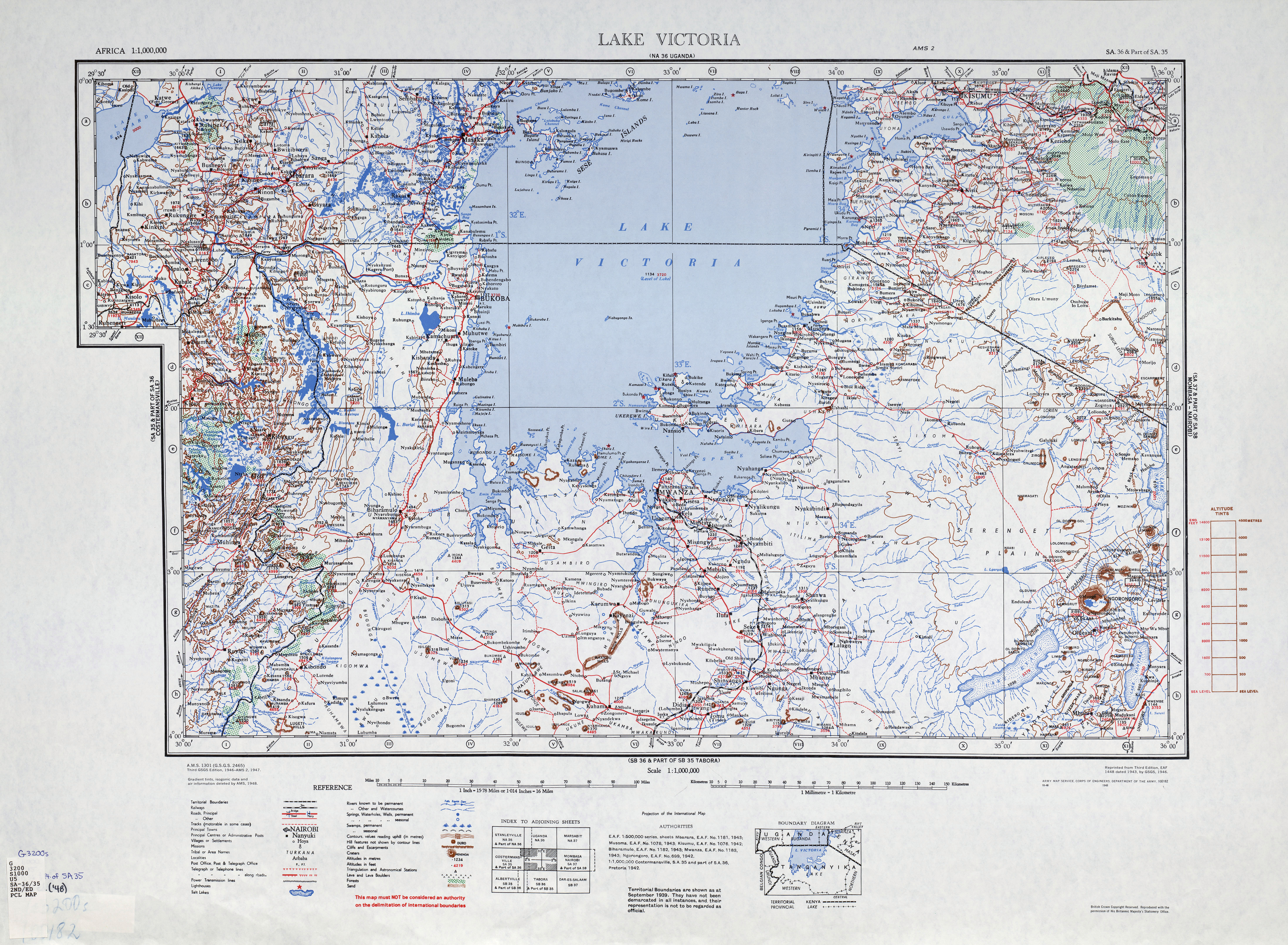
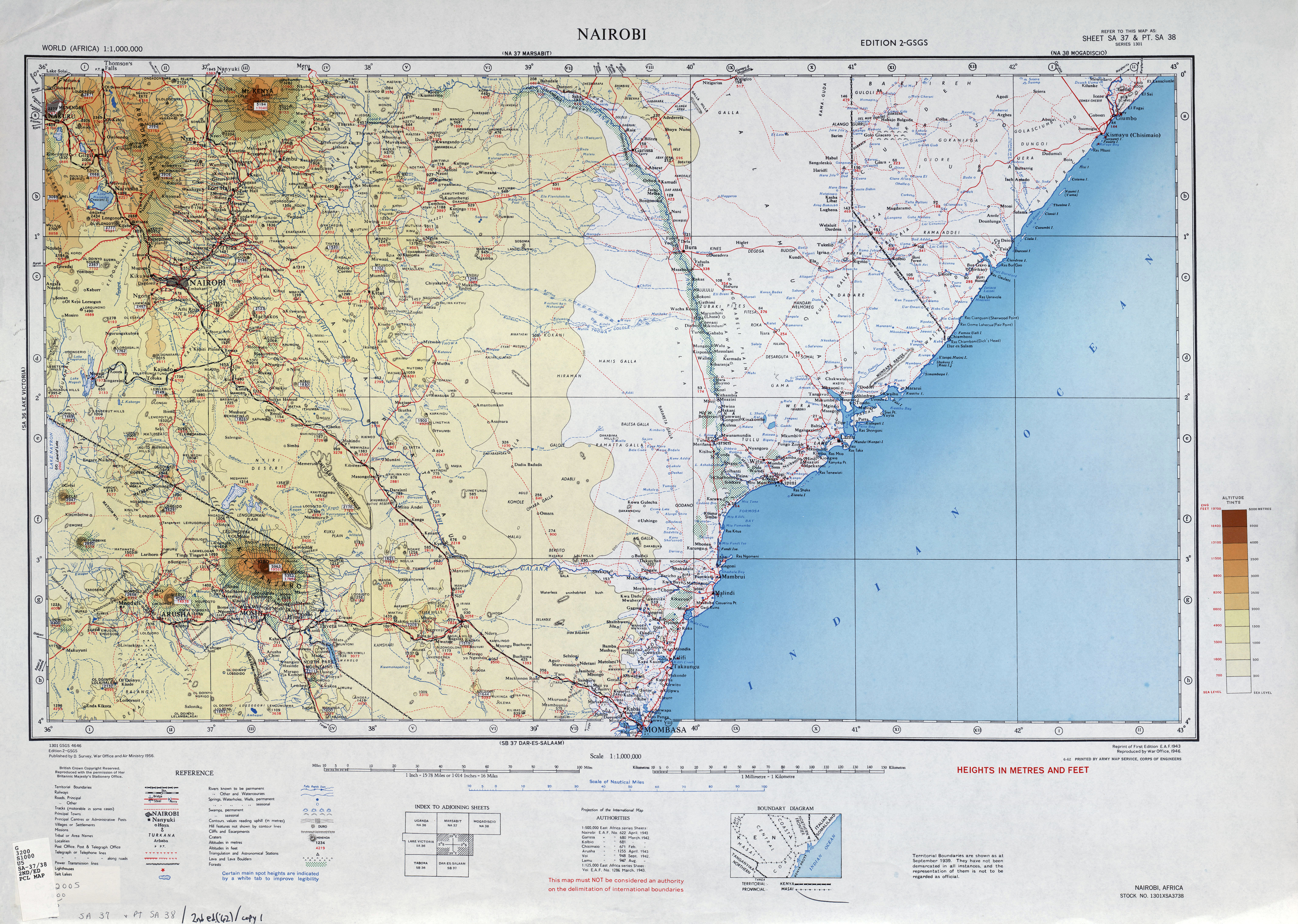
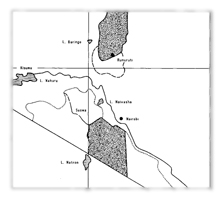
As a fourth problem, it is regrettable that no description of the boundaries of the
Reserves are given by Ms Hughes. At pages xviii and xix, there are four "mud maps",
which are not to scale and make it difficult to understand exactly what area was included
in the Reserves. However, at page 349 of Monty Brown's book Where Giants Trod, a
better map shows that the Reserve followed the provincial boundary north from the Uaso
Nyiro river, along the 37* longitude to a point somewhere adjacent to the present town
of Barsaloi and then went due west to the high ground above the Rift Valley. From there
it appeared to follow the edge of the Rift Valley generally southwards. In fact the
boundary was nothing more than a line on the map. It is impossible to establish exactly
where the southern boundary of the Northern Reserve was located except that it seemed
to take in Lake Ol Bolossat.
The area actually used by the Maasai appeared to be west of the Uaso Nyiro river and
as far north as Suguta Marmar, but certainly not further north where they would have
come into contact with the Samburu tribe in the Operoi Valley. The Maasai were
definitely not overflowing from a Reserve that was too small. They were short of grazing
in dry weather and so regularly crossing the Uaso Nyiro river to get to alternative
grazing outside the Reserve on the eastern side. It was a lack of water or salt together
with disease that were the problems, not space. The area being used by the Maasai
simply could not have supported 200,000 cattle together with over a million sheep and
goats. The more likely optimum figures are 65,000 to 75,000 head of cattle with 20,000
to 25,000 head of sheep.
In contrast to this uncertain existence on the Laikipia Plateau, Elspeth Huxley, quotes
(at page 268 op.cit) from the Blue Book as follows: "An area 4,500 square miles in
Laikipia, of which not more than 1,200 was well-watered, was to be exchanged for 6,500
square miles in the south, of which 1,500 was described as some of the best stock
country in British East Africa and through the remaining 5,000 square miles of which
flowed two perennial rivers".
It seems that the absence of experienced agricultural and veterinary officers led the
personnel actually involved to adopt some wild assumptions about conditions and
numbers of people and animals on Laikipia, when making their reports. It is not at all
surprising that the Maasai were prepared to move, once they knew what the conditions
were like in the south and could be assured they would get a better deal.
The administration may not have been the most efficient in their methods, but the Maasai
benefited in the end from the arrangements made for them.
One is left to wonder as to what are the grounds for compensation sought by the
Maasai - a case which it is said would be based on the matters raised in Ms Hughes
book! The facts are that the Maasai gained an extra 2,000 square miles of country
which was no worse than that of the Laikipia Plateau and the tribe was united instead of
being split in two. |
|
Veronica Bellers Supported David Forrester's Points:
|
|
David Forrester's review of "The Moving of the Maasai, A Colonial
Misadventure" clearly highlights the weaknesses in Dr Hughes' thesis.
My great uncle, Arthur Collyer, was the first DC at Rumuruti from c 1905 to 1911.
He was much liked by the northern Masai clans and is remembered even today. Recently
a man from Samburu, who is named after Collyer, described him as "a good Englishman."
Collyer spoke Masai and he believed that land allocations made at the beginning of
the British Administration should be as sacrosanct as freehold land in Britain. He was in
his early thirties, mortally ill with TB, and there were conflicting loyalties with which he
wrestled: his duty to the differing views of the people he administered as well as to the
Government he served.
There is little doubt that some covetous European eyes were cast on Rumuruti.
And yet I have minutes of a meeting held on 24th Lebruary 1910 when Lenana
(described as Paramount Chief of the Masai), Masikonde and Legalishu (chiefs of the
Northern Masai reserve), met with the Governor and others, including Collyer and
Lord Delamere. These minutes indicate that the northern Masai, having been able to
walk the southern extended area and air their views, made their own decision to move:
"Masikonde was now asked what he had to say, and he expressed his opinion in favor
[sic] o f moving with the other Purko from Laikipia so that the Masai should all be
together. Legalishu also expressed his opinion in favor [sic] of the move."
Family lore has it that, much as he liked the Masai, Collyer was irritated with the way
they overgrazed their land. He would take visitors to a boundary between European and
Masai land - probably at the Uaso Nyiro river - where he would show them the well-husbanded
European grazing and the paucity of grass on the Masai side. Perhaps that is
where the misunderstandings have arisen and, from what I have seen in Kenya recently,
I fear that overgrazing is still a problem today.
|
|
Lotte Hughes Responded to Both Accounts:
|
|
My friend and fellow scholar Tony Kirk-Greene kindly drew my attention to the article
about my book Moving the Maasai: A Colonial Misadventure (Palgrave Macmillan
2006) by David Forrester and the letter by Veronica Bellers. I would
like to respond to both, and correct some errors of fact and perception.
First, David Forrester refers to my "curious assumptions based on statements by people
of the period". Historians, and other scholars, try not to make assumptions. What we do is
sift and analyse a large amount of empirical evidence, and draw conclusions from it.
Sometimes we also speculate - but again, only on the basis of the evidence before us.
In this case, I trawled archival sources in the UK and Kenya, and also gathered rich oral
testimony from both Maasai and European informants, interweaving and contrasting the
two types of evidence in my text, and discussing the problems and challenges that both
present. No one had thoroughly researched these events before. The written sources are
listed in 10 pages of bibliography, the oral sources in a 3-page appendix. David Eorrester,
meanwhile, relies largely on second-hand reportage by Elspeth Huxley (1935) quoting
George Sandford - one of my primary sources. Sandford (1919) wrote the official history
of the British administration of the Maasai, and hence must be read with caution; he was an
authorised chronicler with in-built biases, whose sources were official papers. Nevertheless,
he was surprisingly frank about British administrative failings - a fact Mr Forrester chooses
not to mention. Presumably he hasn't read Sandford directly.
His first paragraph is misleading in suggesting that all sections of the Maasai were
moved; some already lived in southern 'Kenya'. The defeat of the Laikipiak by a Purko-
Kisongo alliance did not happen in the mid-1880s but a decade earlier, as I say on p.14
of my book (drawing on Sobania in Being Maasai
1993). Since the Maasai were then nomadic
transhumant pastoralists, the victors did not "settle" permanently on the plateau, but used
it and other grazing grounds seasonally. Maasai were certainly present when Joseph
Thomson visited Laikipia in 1883-4, and when the British established a protectorate in
the mid-1890s. Mr Forrester suggests few Africans lived there, hence settlers were free
to move into a vacuum. This is incorrect.
It is interesting that Mr Forrester chooses to focus upon environmental narratives
about Laikipia, his childhood home, while overlooking major questions of injustice,
human rights, official subterfuge, and abrogation of treaty promises which my book
primarily addresses. I quote senior British administrators who raised serious concerns at
the time about the likely consequences of trampling upon African land rights (this was a
protectorate, remember, ostensibly dedicated to protecting 'natives'). For example,
Charles Hobley wrote in 1904 before the first forced move of Maasai from the Rift
Valley: "Masai rights are a very real thing". Frederick Jackson wrote in a memo the same
year: "The Masai will never give us serious trouble so long as we treat them fairly, and
do not deprive them of their best and favourite grazing grounds, i.e. those in the vicinity
of Lake Naivasha".^Commissioner Sir Charles Eliot also initially opposed the idea of Maasai reserves. It was Hobley, not some left-wing agitator, who drew up plans to
compensate Maasai for the loss of their Rift Valley pastures - desirable to settlers
precisely because years of grazing had improved them.
With regard to Mr Forrester's environmental points, I answer similar criticism in a
new article. I won't repeat the arguments here; the article is freely viewable online.
May I refer readers to it for a fuller response that challenges the ahistoricity of this kind
of criticism, and discusses the role of perception, social memory, and constructions of
memory in understanding history? Briefly, one cannot compare the environment of
Laikipia today (or whenever he grew up there) with that of the late 19th or early 20th
centuries; neither can one do so re western Narok District. There have been enormous
technological and climatic changes in these areas over time, which have changed the
ways in which different communities are able to exploit their resources. Certain diseases
are rampant today that were relatively unknown in the past; I describe in some detail the
etiology of East Coast fever (ECF) - very likely introduced and spread by Laikipia
settlers (2006: 122). Before they were confined to reserves, Africans also coped with
disease challenges by moving away from certain areas. The diseases Thomson witnessed
(OP 93 p.26, para 3), which ravaged this region in the 1880s-90s, were not the ones
I primarily discuss (ECF and malaria) but rinderpest, bovine pleuro-pneumonia and
smallpox. As for water supplies, a 1904 agricultural report described Laikipia as a
"district [that] will probably never suffer from drought" (F02/839, National Archives).
Clearly, the situation has changed dramatically. Overall, one cannot compare the ways in
which commercial ranchers and transhumant pastoralists use and perceive land and
resources; they are fundamentally different. Moreover, when Maasai elders memorialise
their lost northern pastures, they are referring to the whole of their former territory, not
solely Laikipia.
As the title of my article in Conservation and Society suggests: if Laikipia was such
an unfavourable place to live, how come European settlers were so keen to move there?
Could it be that the descendants of early settlers (and other incomers) are now anxious -
in the face of reparations claims - to defend their appropriated territory, and in the
absence of any stronger argument, can only attempt to rubbish the validity of indigenous
claims by dismissing oral testimony? Incidentally, my book has nothing to do with
current claims, as Mr Forrester implies. The doctoral research on which it was based was
carried out years before there was any talk of demands for redress. But the fact that
claims have arisen should come as no surprise. Officials Jackson, Hobley, Bagge, Collyer
et al would not be surprised at all; they foresaw these problems 100 years ago.
To briefly answer other points: the boundaries of both reserves changed several
times. They were vague in parts, leading to many disputes, some of which linger to this
day. My maps, based on Sandford's (but placed by my publisher in the wrong time
sequence), show some of the changes. Publishers are reluctant to spend money on
illustrations, so it was not possible to include more or better ones. I don't follow
Mr Forrester's remarks about stock and human population figures; I simply quoted
official estimates. The 'assumptions' were not mine at all.
To turn to Veronica Bellers' letter, her own feelings appear to echo those of
Arthur Collyer: torn between admiration for the 'noble savage' (especially those who
fondly remember Collyer), and loyalty to European ideals of range management. I fear
she does her great-uncle an injustice by selecting these particular quotes. Let me cite
others, in order to present a more rounded portrait of him. In a key 'Report on the
Masai Question' (written in August 1910) he stated: "This paper is intended to discuss
the question [of the planned move from Laikipia] from the point of view of the Masai,
as distinct from the Settlers' view ... As the Masai have always behaved well, it would
be a poor reward to again move them and leave them in a worse position as regards
grazing than they are at present". This does not fit with Veronica's anecdotal account
of 'overgrazing' as being their own fault, or her implication that he sided
wholeheartedly with settlers. He said he was only in favour of the move "if the Masai
would be better off in the way of grazing than they are now, or at any rate no worse
off'. The report indicates he was not convinced of this. (The 'overgrazing' line is an
old chestnut, widely critiqued by scholars.) He also wisely cast doubt on the prophet
Olonana's motive for favouring the move: it was "purely political" because he wanted
"to have all his people under his own eye, and he himself would not be moved, nor
would his stock be likely to suffer..."
Collyer's report was not sent to London for three years because it undermined and
could have scuppered Governor Girouard's plans to move the Maasai for a second
time, without Colonial Office sanction. Hence Girouard concealed it, much to the fury
of the Secretary of State for the Colonies. The other minutes Veronica quotes should,
like Sandford, be read critically: this is an official account of a meeting, and African
'voices' were reported through the filter of translation and transcription. In no way
does it provide proof that the 'northern' Maasai were willing to move. I would advise
both David Forrester and Veronica Bellers to read historical documents more critically,
with due attention to authorship and the circumstances in which they were written.
This is not to suggest that oral testimony is any more 'true' or unbiased than written
history; it, too, must be analysed critically. But it is a valid form of history, and should be
taken very seriously. In particular, it allows us to excavate the voices and perceptions of
the colonised - in a literature previously dominated by those of the coloniser.
I would be delighted if some critic would challenge my account of these events with
counter-arguments based on solid evidence and in-depth research. With respect, settler
and other opinion masquerading as fact doesn't quite cut it.
|
|
|