

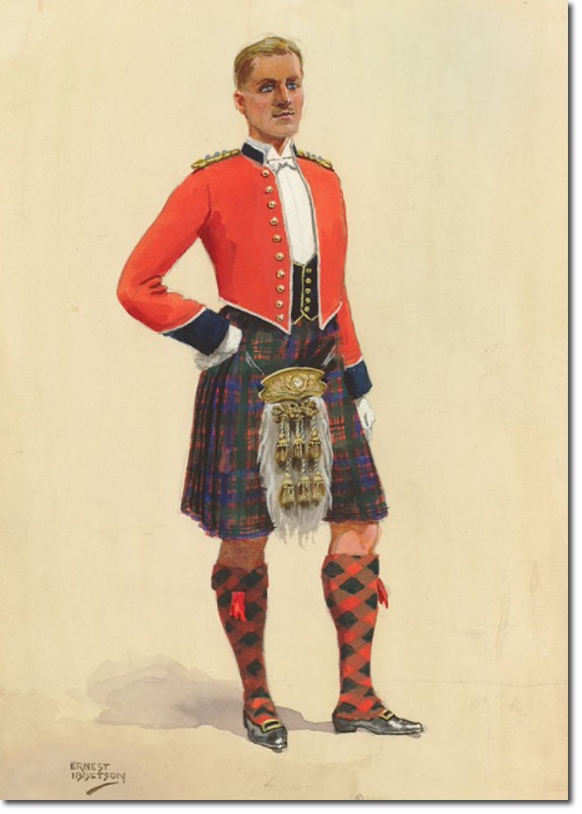
The mess uniform shown here differs from the one worn before World War One. The mess jacket is still based on the 19th century shell jacket worn in drill order but the collar is not turned down to make lapels, and the cuffs are no longer pointed. The shoulder cords are, however, as authorised in the 1900 Dress Regulations, being similar to the gold cords on the dress uniform; and the waistcoat is blue.
The wearing of the kilt and sporran conforms to other images of Highland officers in mess dress and the custom has continued into the 21st century, but the stand-up collar of the jacket has long since given way to a return to the turned-down collar and buff lapels.
This illustration by Ernest Ibbetson comes from the Brown Digital Repository and is dated 1920. According to Douglas Anderson in his book Scots in Uniform (Holmes McDougall 1972), there was ‘…a short time in the 1920s when a universally disliked mess coatee was introduced for everybody in the interests of economy.’ The jacket in this illustration does not look like a coatee, which would have tails, and it doesn’t look economical, but Ibbetson’s painting may have been put before the authorities as a proposal for a more acceptable mess uniform. It is unlikely that the painting is a portrait of a serving officer. He appears to hold the rank of captain which means that he would have fought in WW1, but there are no miniature medals worn, as would be expected so soon after the war.

