

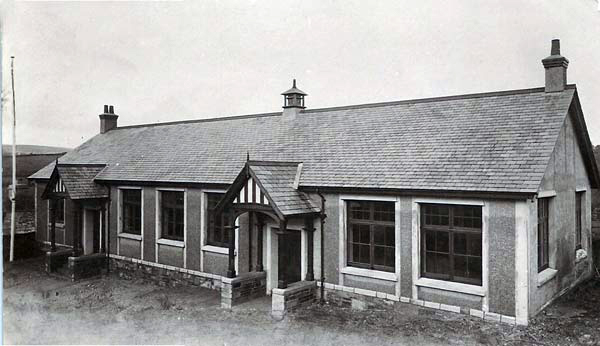
Altarnun’s Unionist Hall was opened in 1912 and served as a meeting place for the local branch of the Unionist Party, the political movement that represented Conservative and Liberal Unionist interests in the years before the First World War. The building stood behind Figsbury Cottage and was used for political gatherings, lectures, social events and parish meetings. Its construction reflects the strength of Unionist organisation in rural districts at a time when national politics was dominated by debates over Irish Home Rule, tariff reform and the constitutional struggle between the House of Lords and the Liberal government.
Unionist Halls were built across Britain in the early twentieth century as local headquarters for the party. They provided a fixed base for canvassing, voter registration, committee meetings and political education. In rural parishes such as Altarnun, where distances between settlements were considerable and transport limited, a dedicated hall gave the party a visible presence and a practical venue for organising supporters. The opening of the hall in 1912 places Altarnun within this wider pattern of Unionist activity, showing that even remote moorland communities were drawn into the national political arguments of the period.
Unionism before the First World War was defined by its opposition to Irish Home Rule. The Liberal government’s attempt to introduce Home Rule in 1912 produced a strong reaction across the country, and Unionist associations expanded rapidly. The movement combined traditional Conservative support with the Liberal Unionists who had broken with Gladstone in 1886. By 1912 the two groups were effectively unified, and local branches such as Altarnun’s operated under the broader Unionist banner. Meetings in the hall would have addressed Home Rule, the powers of the House of Lords, defence policy and the economic arguments surrounding tariff reform.
The Unionist Hall also served a social function. In many rural parishes political halls doubled as venues for concerts, lectures, whist drives and community events. Altarnun’s hall followed this pattern. It provided a space separate from the church, the school and the inns, and was used by various parish groups. The hall’s position behind Figsbury Cottage placed it close to the centre of the village, accessible from the lanes leading to the church and the bridge.
The outbreak of the First World War in 1914 changed the political landscape. National unity became the priority, and the intense pre‑war disputes over Home Rule and constitutional reform were overtaken by the demands of mobilisation. Many Unionist Halls, including Altarnun’s, were used for wartime meetings, recruitment efforts and relief work. After the war the Unionist Party formally merged with the Conservatives, and the specific identity of Unionist Halls gradually faded, though many continued in community use.
Altarnun’s Unionist Hall is therefore a reminder of a brief but significant period in British political history, when local organisation was central to national debate and when even small moorland parishes played their part in the wider arguments of the day. Its construction in 1912 marks the high point of Unionist activity before the First World War, and its later use reflects the way rural communities adapted their institutions to the demands of war and the changing politics of the twentieth century.
Image Courtesy of Launceston Then
