 |
|
|
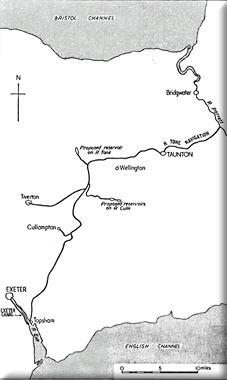
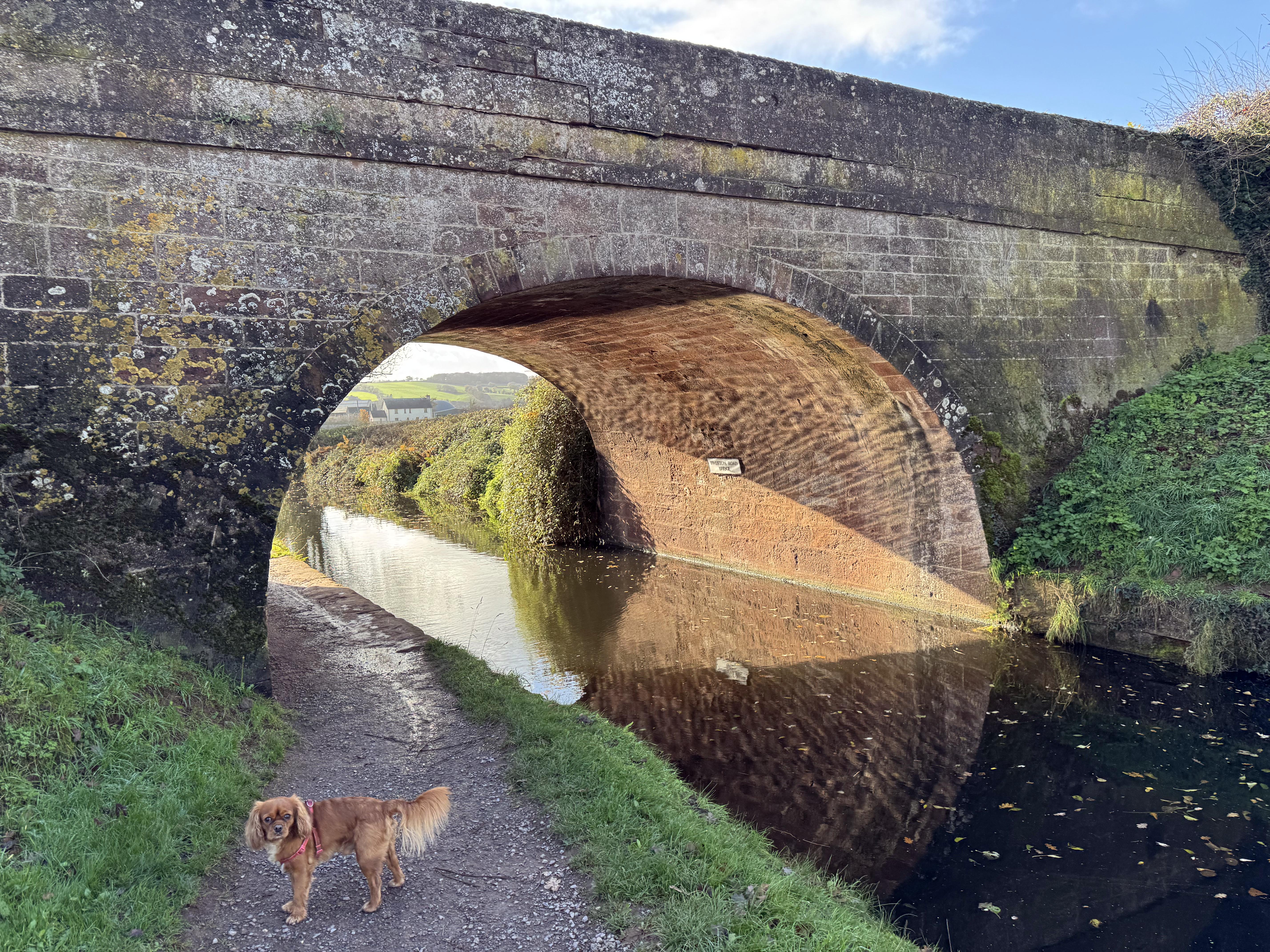
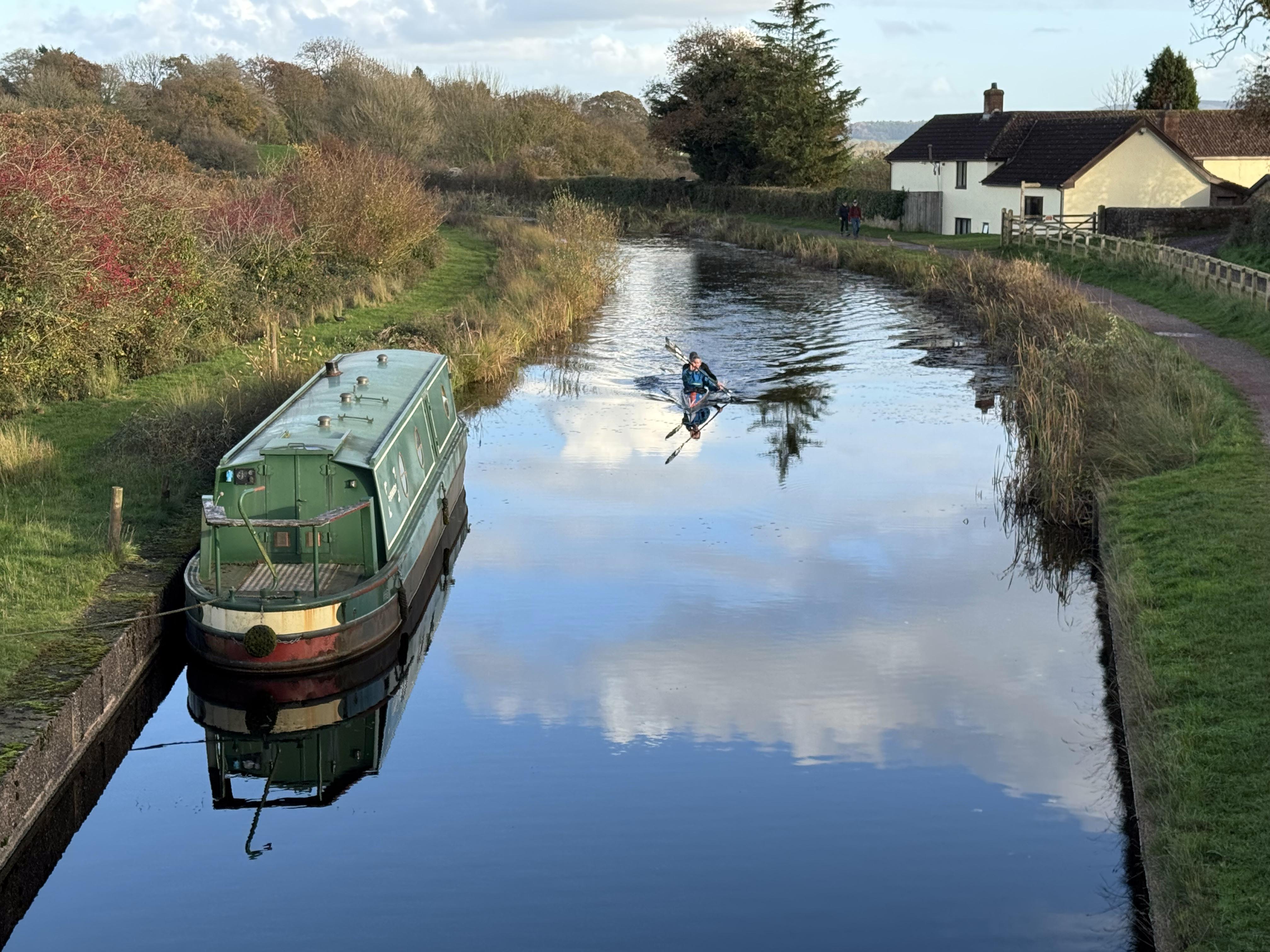
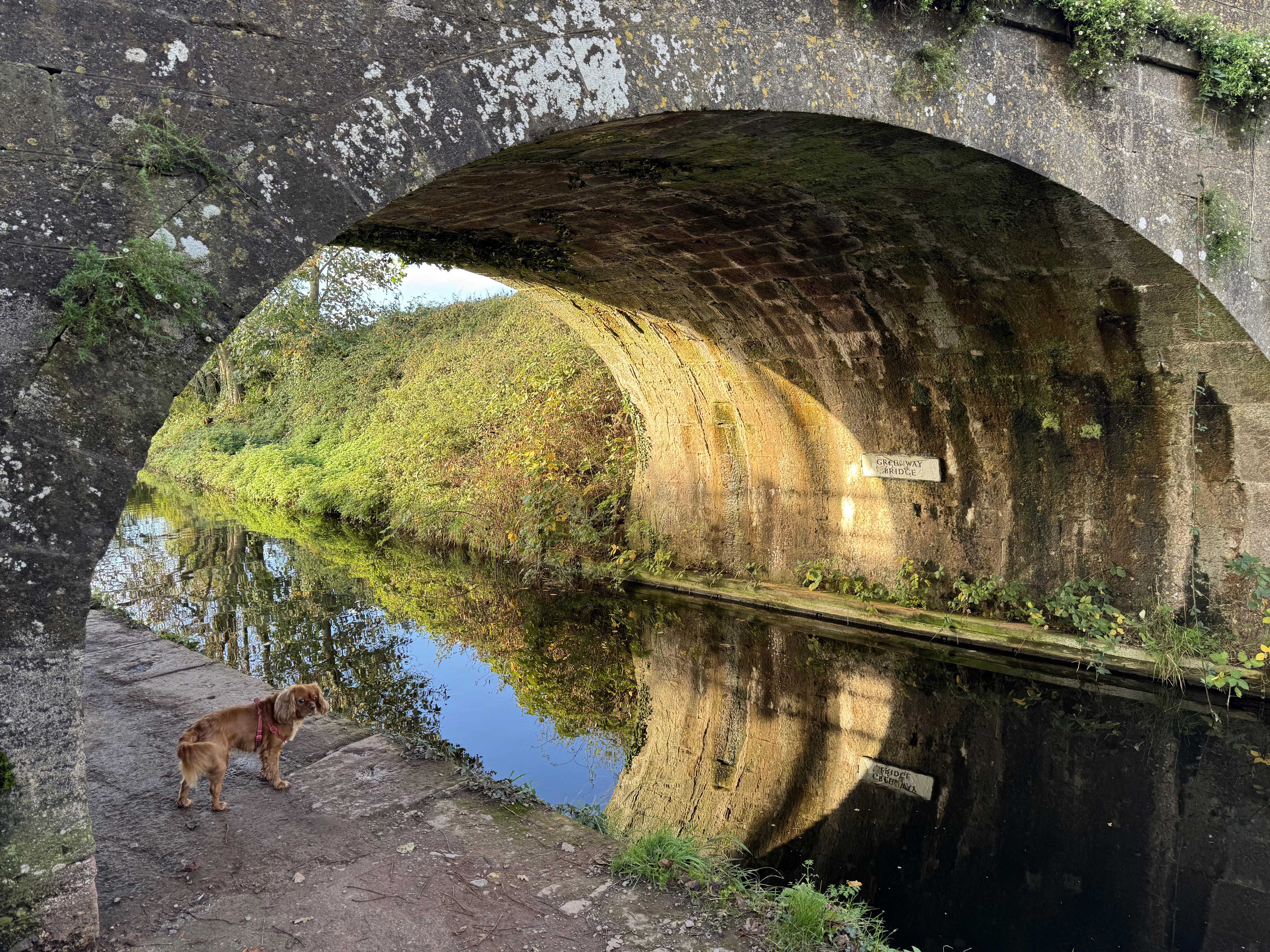
Saturday bequeathed a perfect November day’s weather amidst days of rain and cloud. Keen to make the most of it, Rupert and I headed towards the Cullompton area in East Devon. Rupert and I were heading to nearby Halberton, parking up near Greenway Bridge in order to do a circular walk following the Grand Western Canal Towpath. This was actually a hugely ambitious civil engineering project conceived at the height of canal mania towards the end of the 18th century. Its purpose was to link the two ports of Topsham near Exeter and Bristol – with a view to allowing ships to avoid having to undertake the perilous voyage around Cornwall and Land’s End. It also would pass through the rich farming areas of Devon and Somerset. Now, as anyone who knows the geography of Devon can tell you, it is pretty hilly down here – so this was never going to be the easiest of engineering projects to undertake, especially not with the technology available at the time – although an enormous amount of experience and expertise had been built up by this time. What made the project more ambitious was that they were going to try and build it without locks, which meant that it would have to travel further to avoid gradients and also would require huge earth banks to keep the water in the canals – all costing extra money of course. Work didn’t start on the project in earnest until 1810 when they built the section between Tiverton and Lowdwells (which includes the bit around Halberton) – if somewhat slightly bizarre to start work in the middle! But Lowdwells had important limestone quarries which provided the company with a customer to start off with. This section opened in 1814.
 |
|
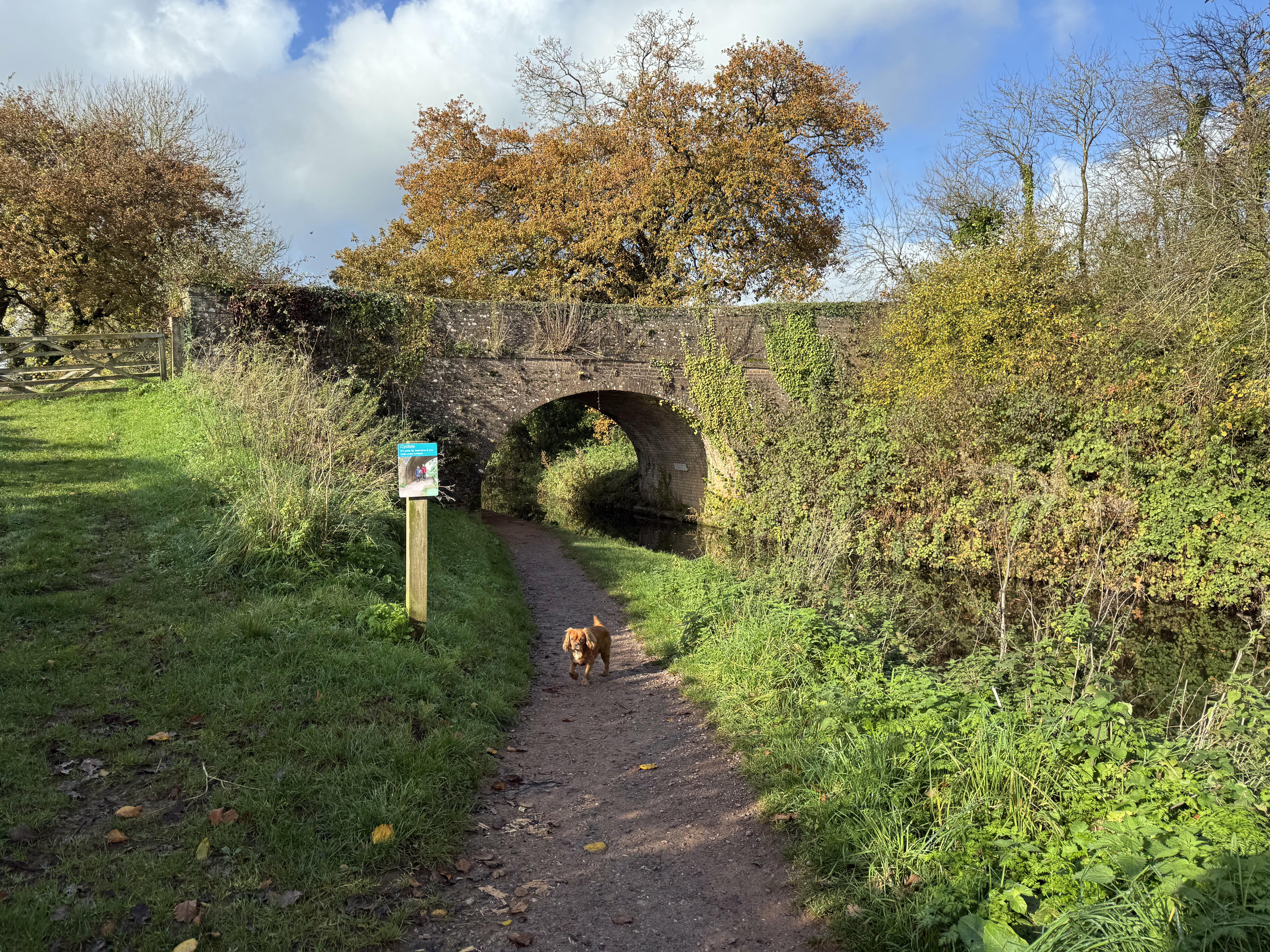
| However, it was always massively over budget and soon train lines would be built to challenge the Grand Western Canal Company. They did build another section around Taunton, but it was clear the original idea of an Exeter to Bristol canal would never materialise. The limestone quarries kept a modicum of economic viability until after the First World War, when even that evaporated. It was left to rot and ruin until the 1960s when locals rallied against various development plans to fill in sections of the canal and encouraged Devon County Council to take ownership of the land and declare it as a Country Park, which it still is to this day. And what a beautiful park it is. You can still see some of the old tub boats that used to be used on the canal – these could be filled and were pulled by horses (or steam tugs later). They were smaller than the barges we think of these days but were very flexible and could be connected into long lines, and a single horse might draw up to 10 of these tub boats lashed together. There are some swing bridges, but otherwise this is a perfectly flat walk through some gorgeous East Devon agricultural land.
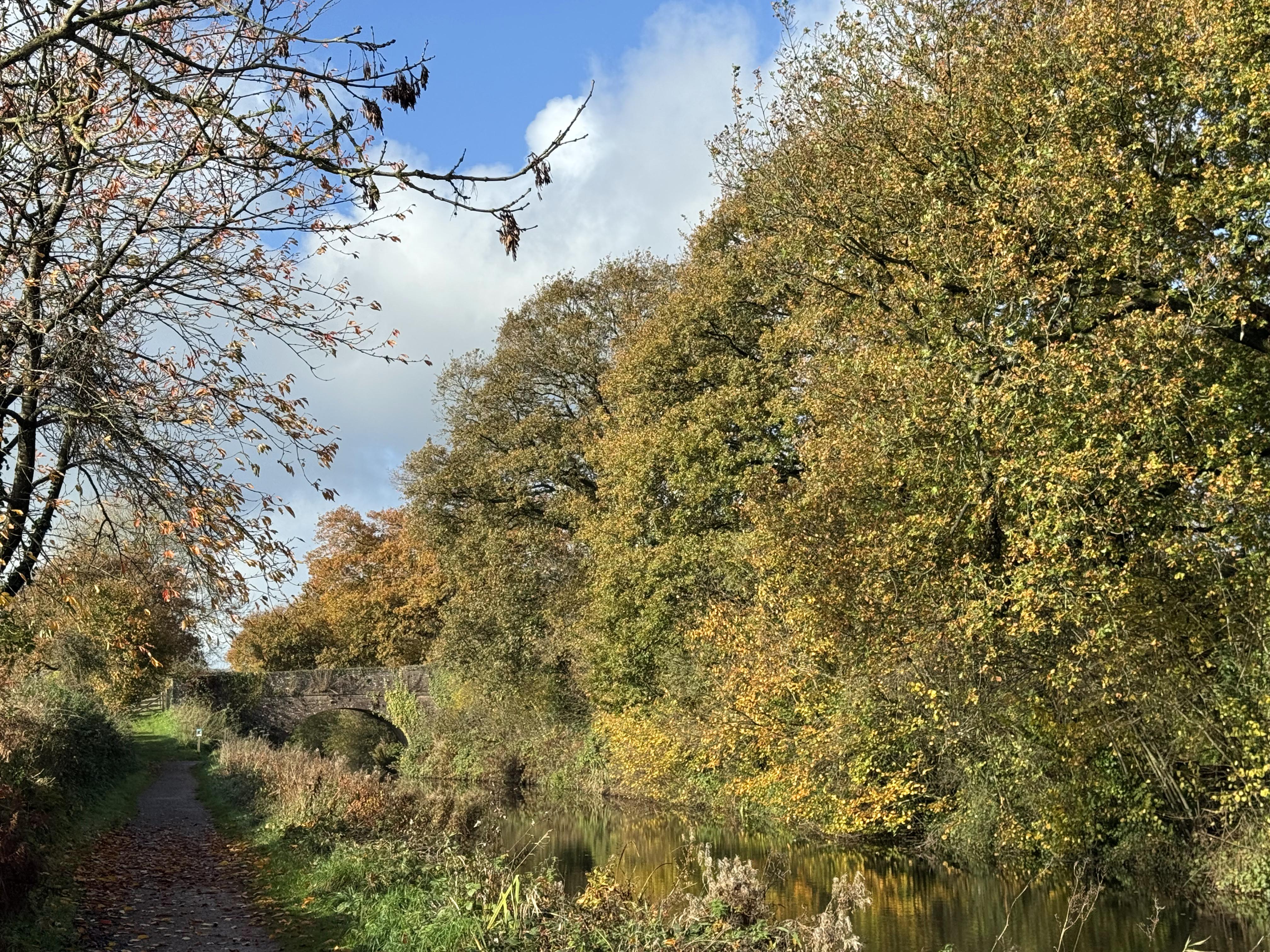
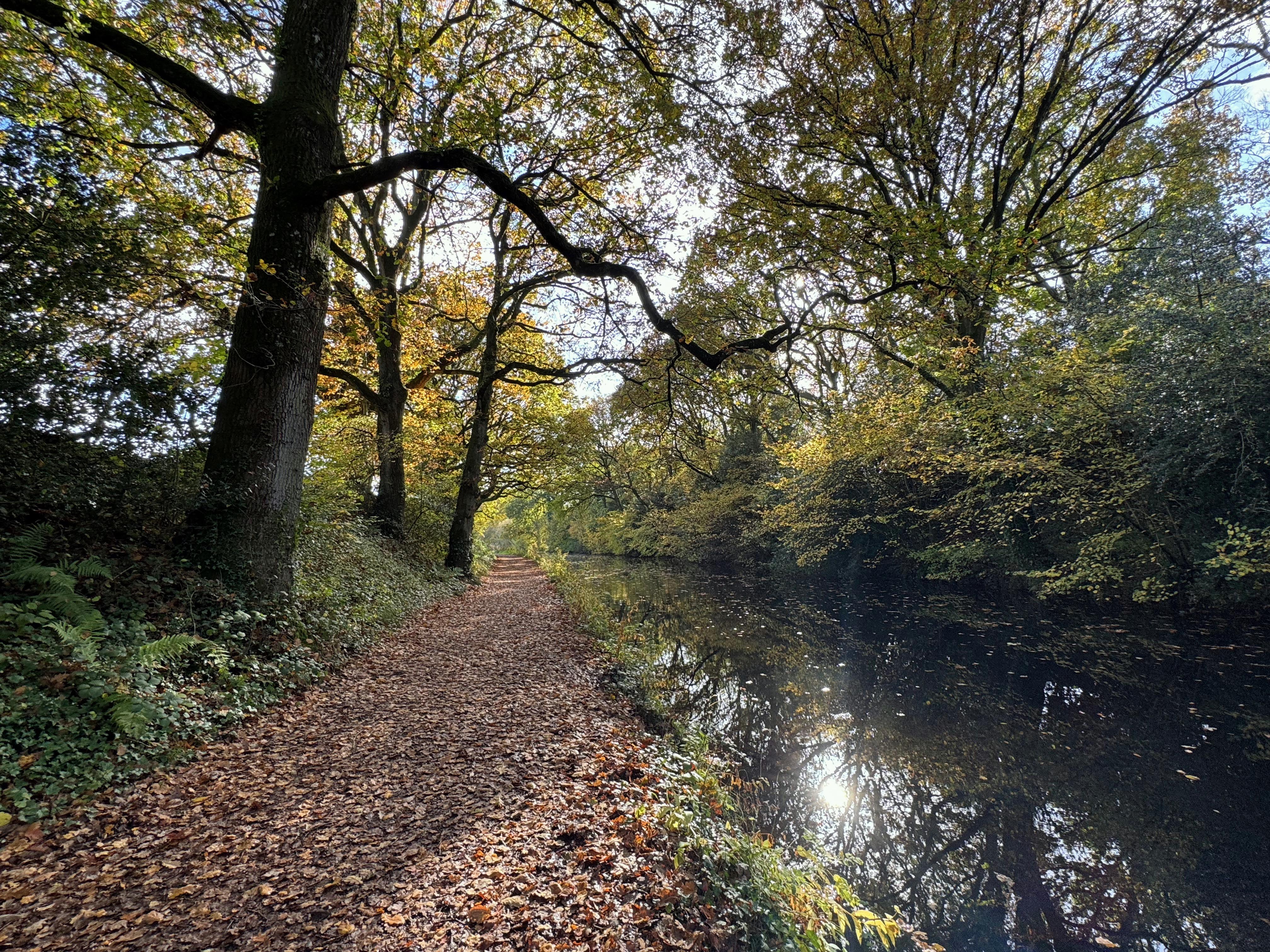
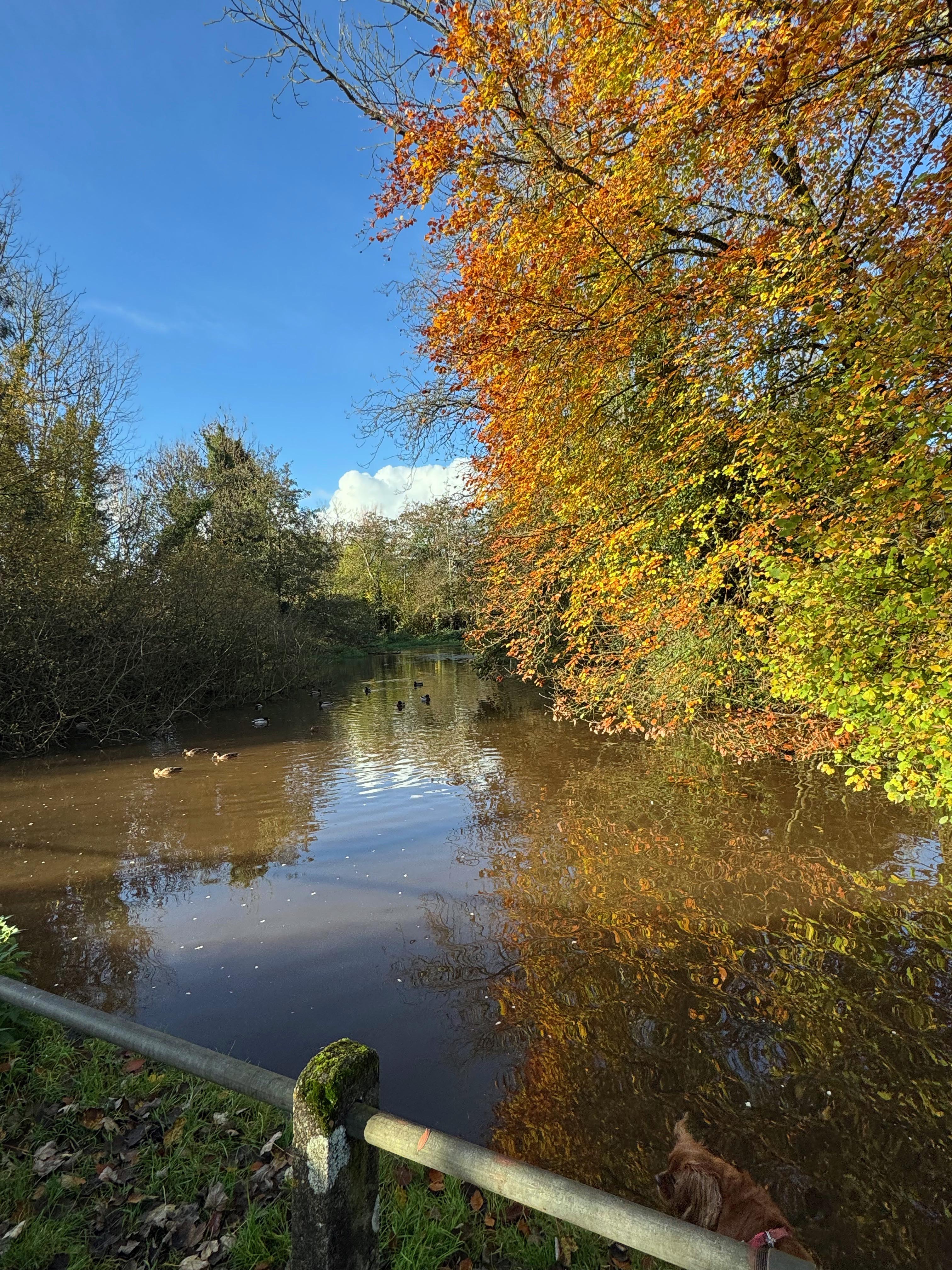
I have to emphasise just how beautiful the weather was, how still the water was, and how beautiful the autumn leaves looked whether on the trees or on the water! And the perfectly still water was obviously perfect conditions for kingfishers! We had been tipped off in the car park that kingfishers were present in the area by some happy photographer and so kept a beady eye and were well rewarded for our efforts – obviously not quick enough for me to photograph it, but the flash of blue is quite unforgettable when you see it. And not only did I see it fly, but I saw it dive into the water and catch a fish – the speed was just phenomenal – in and out in a fraction of a second. But what a treat! It was a surprisingly busy stretch of canal with many people drawn by the good weather and rumours of kingfishers, no doubt!
 |
|
|
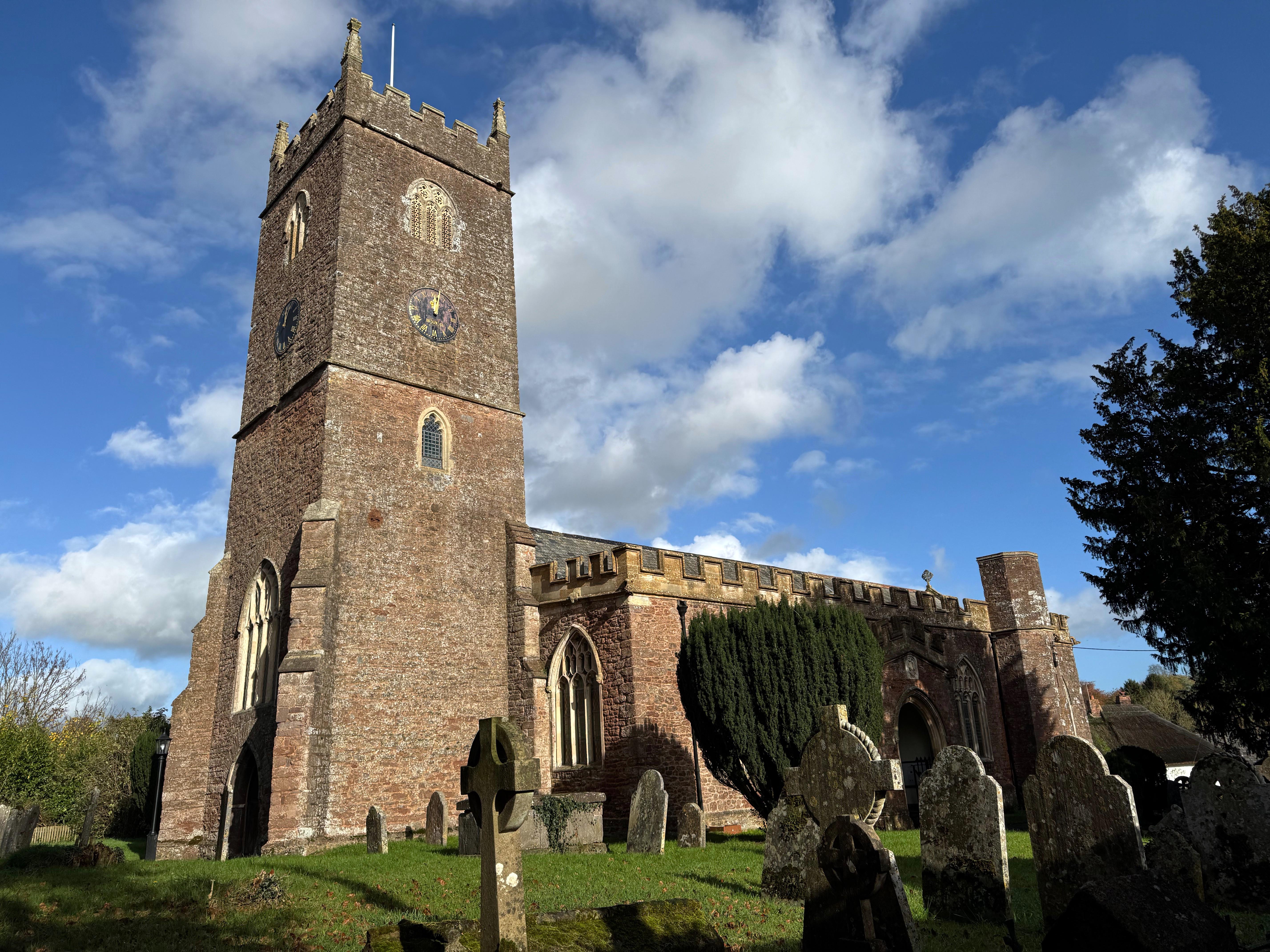
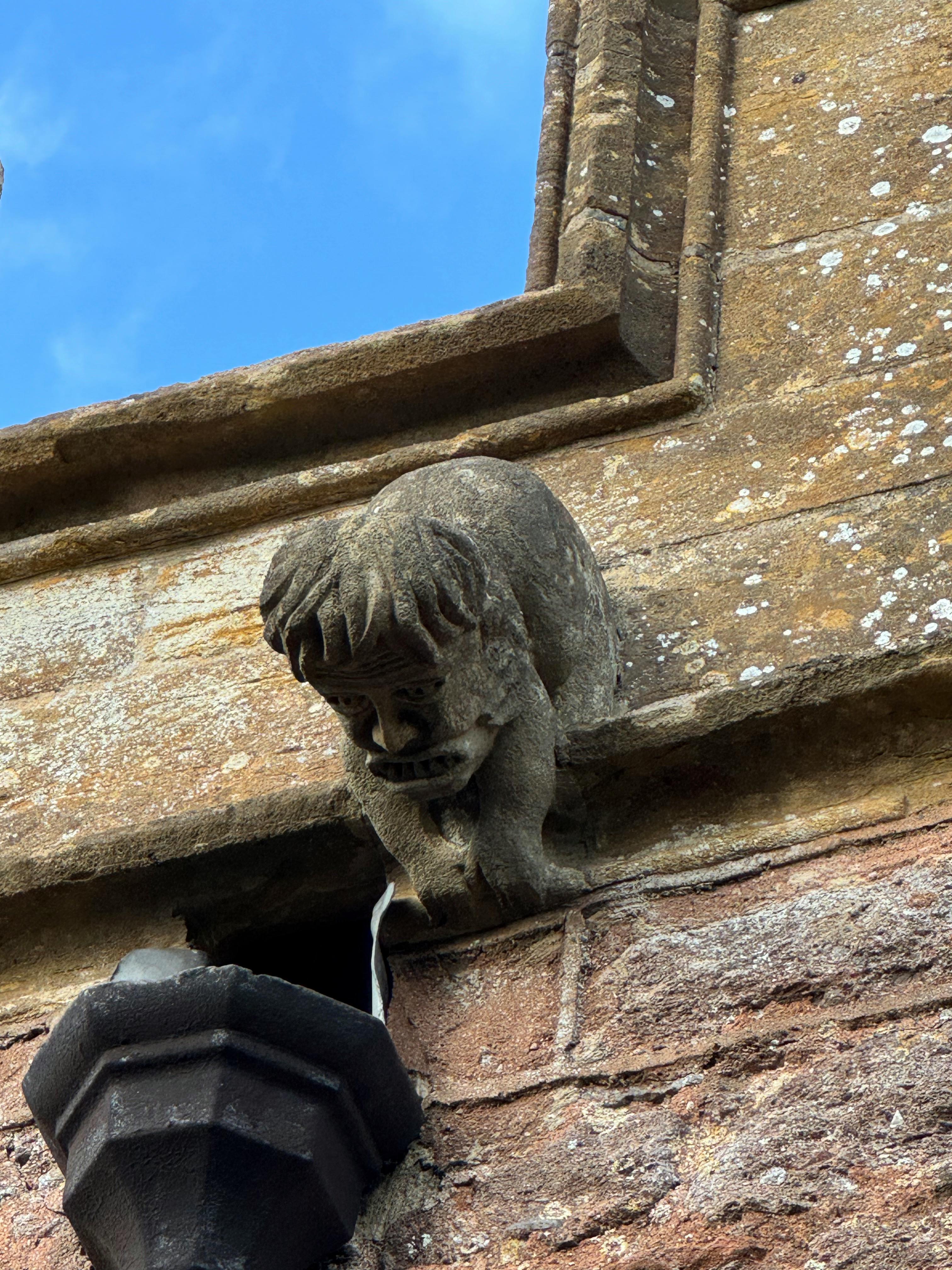
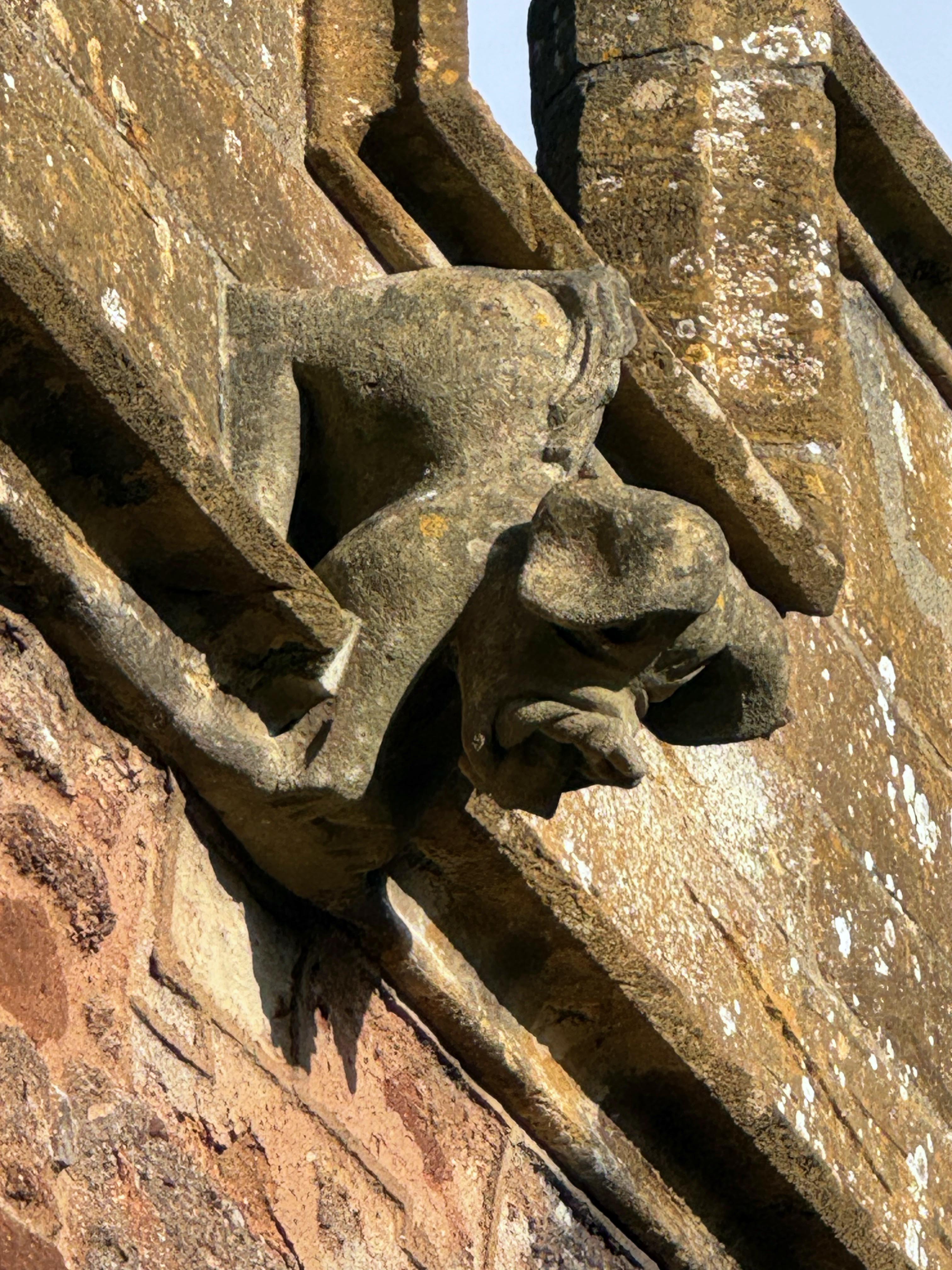
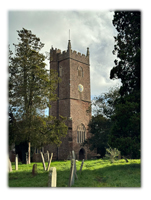
We followed the big loop around Halberton and then turned back to head to St Andrew’s Church in Halberton itself. This 15th-century church has some of the best preserved and interesting gargoyles I’ve seen in a while – some of which are definitely medieval. These stonemasons really let their imaginations run wild with these almost cartoon-monster-like gargoyles! Strangely, this church has strong ties to Bristol, as you keep seeing in some of the memorials. In 1160 the Earl of Gloucester dedicated the church and its lands to the Abbey of St Augustine in Bristol. Even after the dissolution of the monasteries, the church was passed to Bristol Cathedral, who appointed the vicars until as late as 1988!
 |
|
|
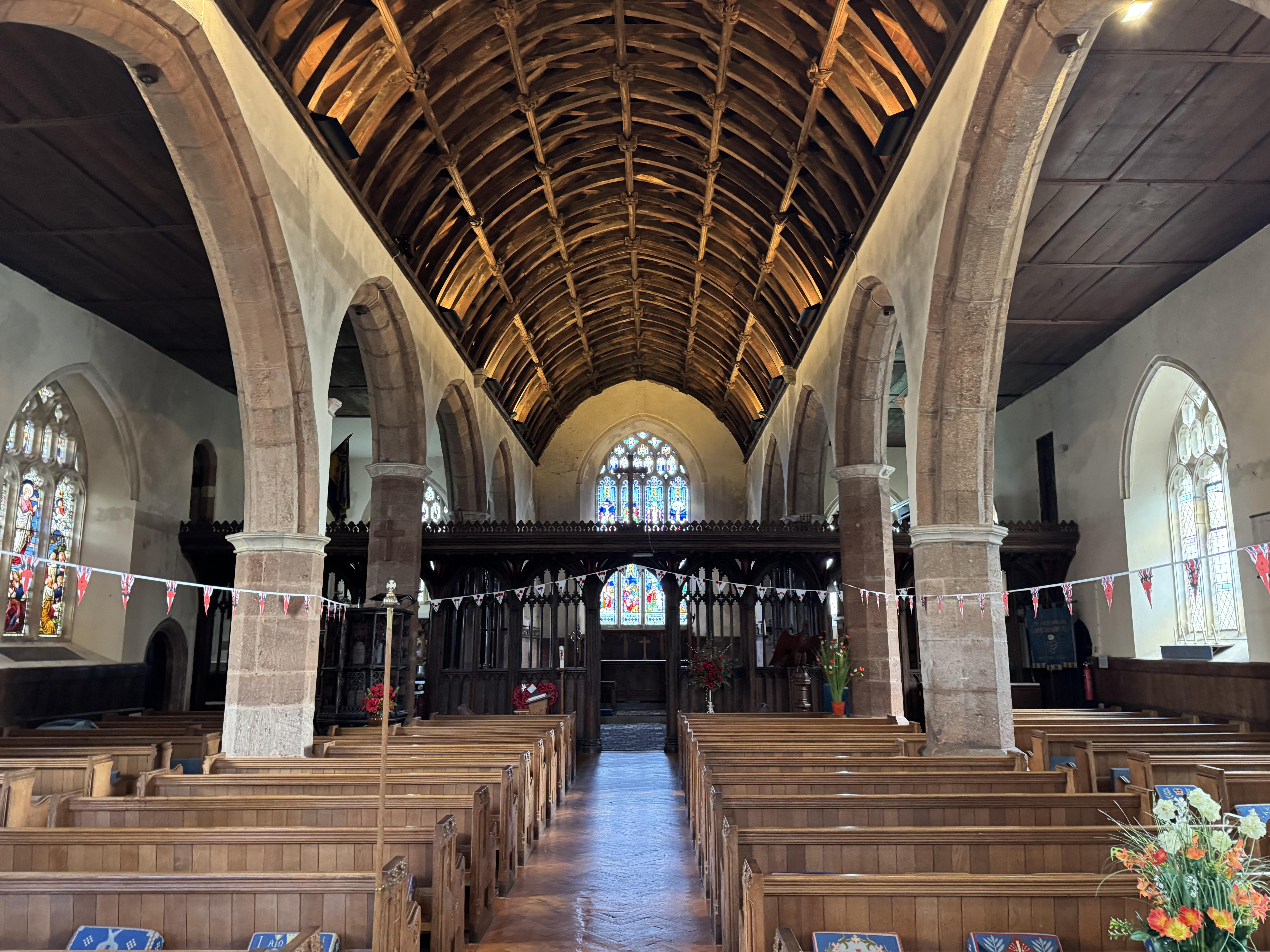
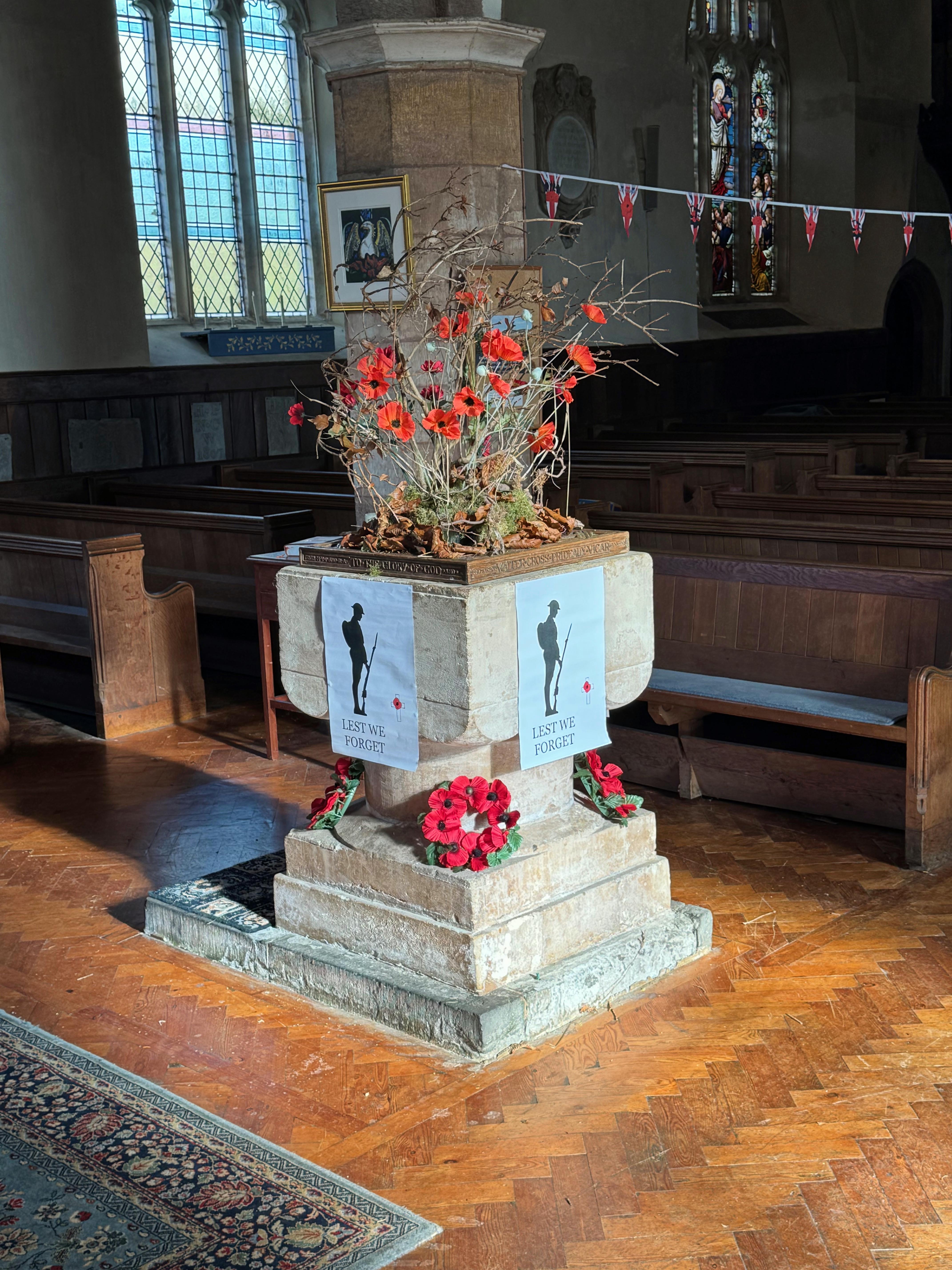
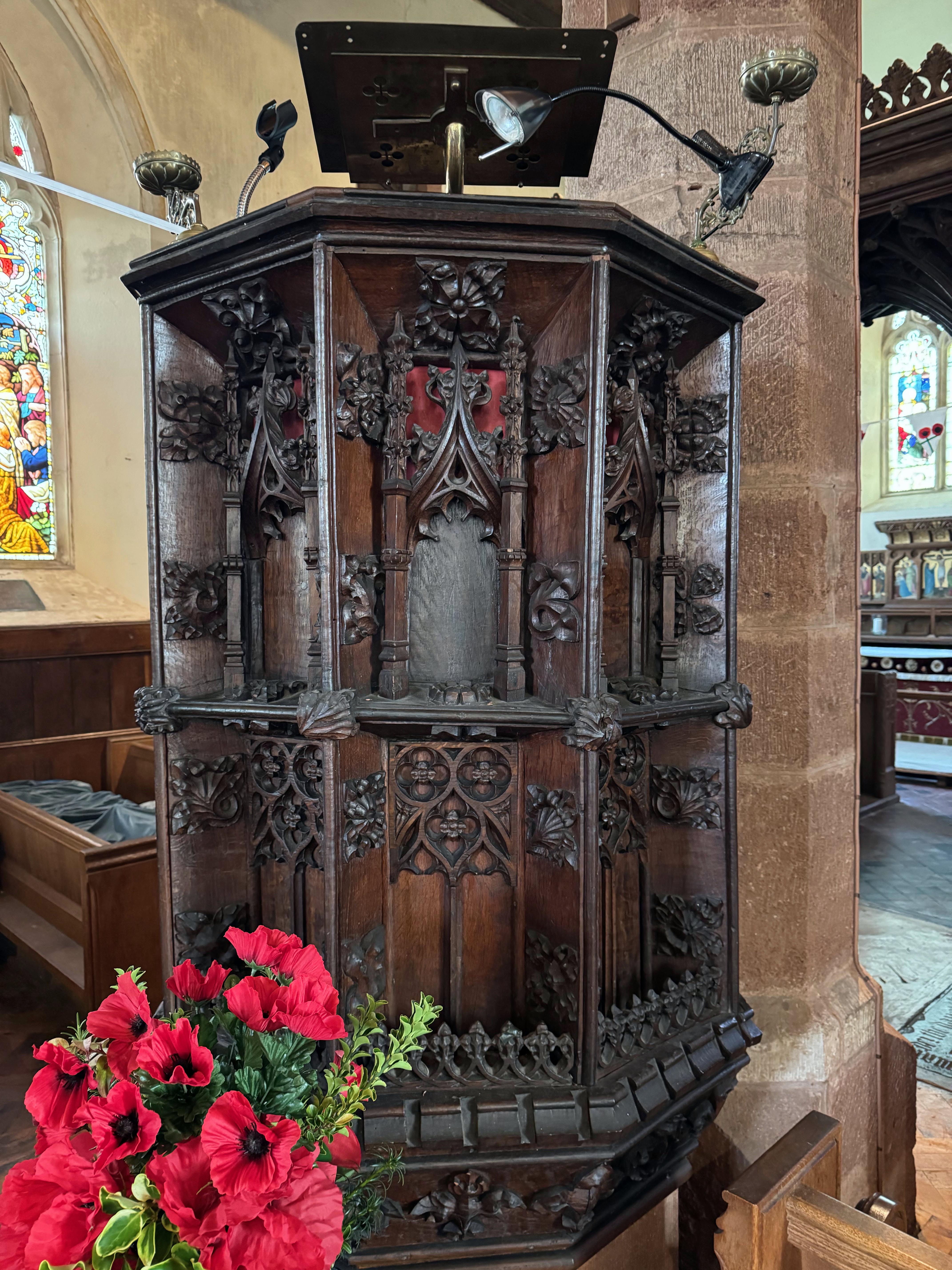
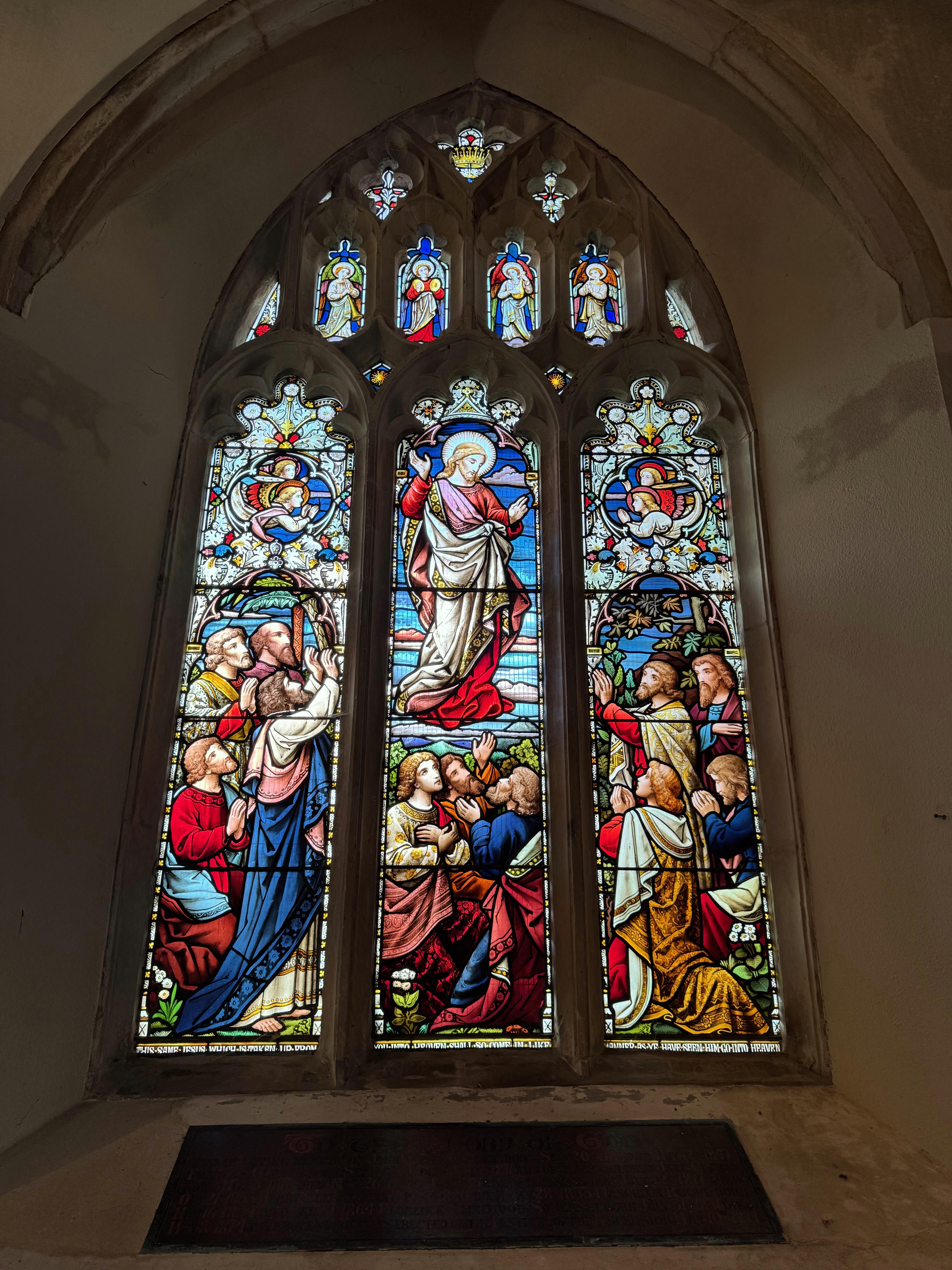
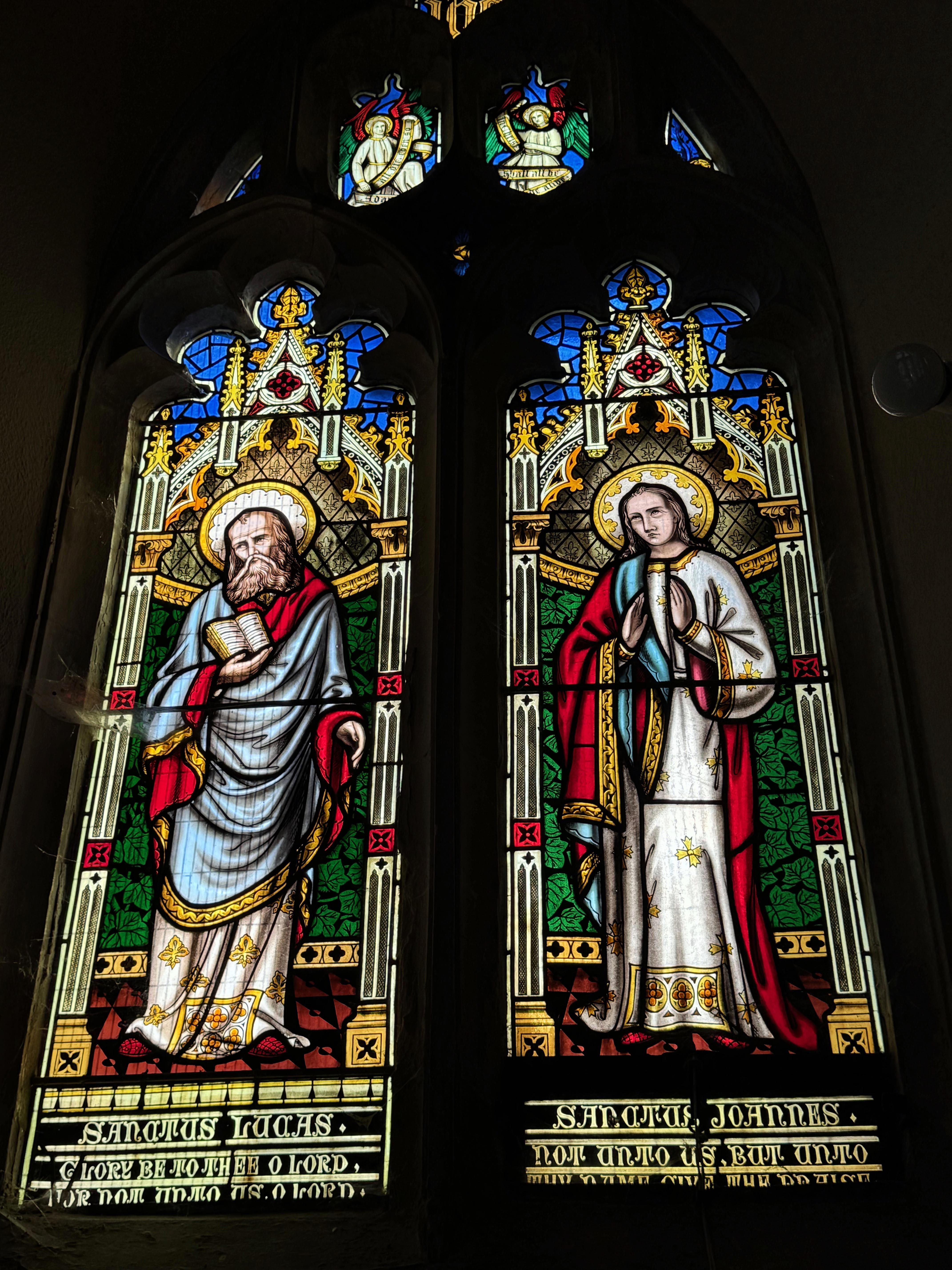
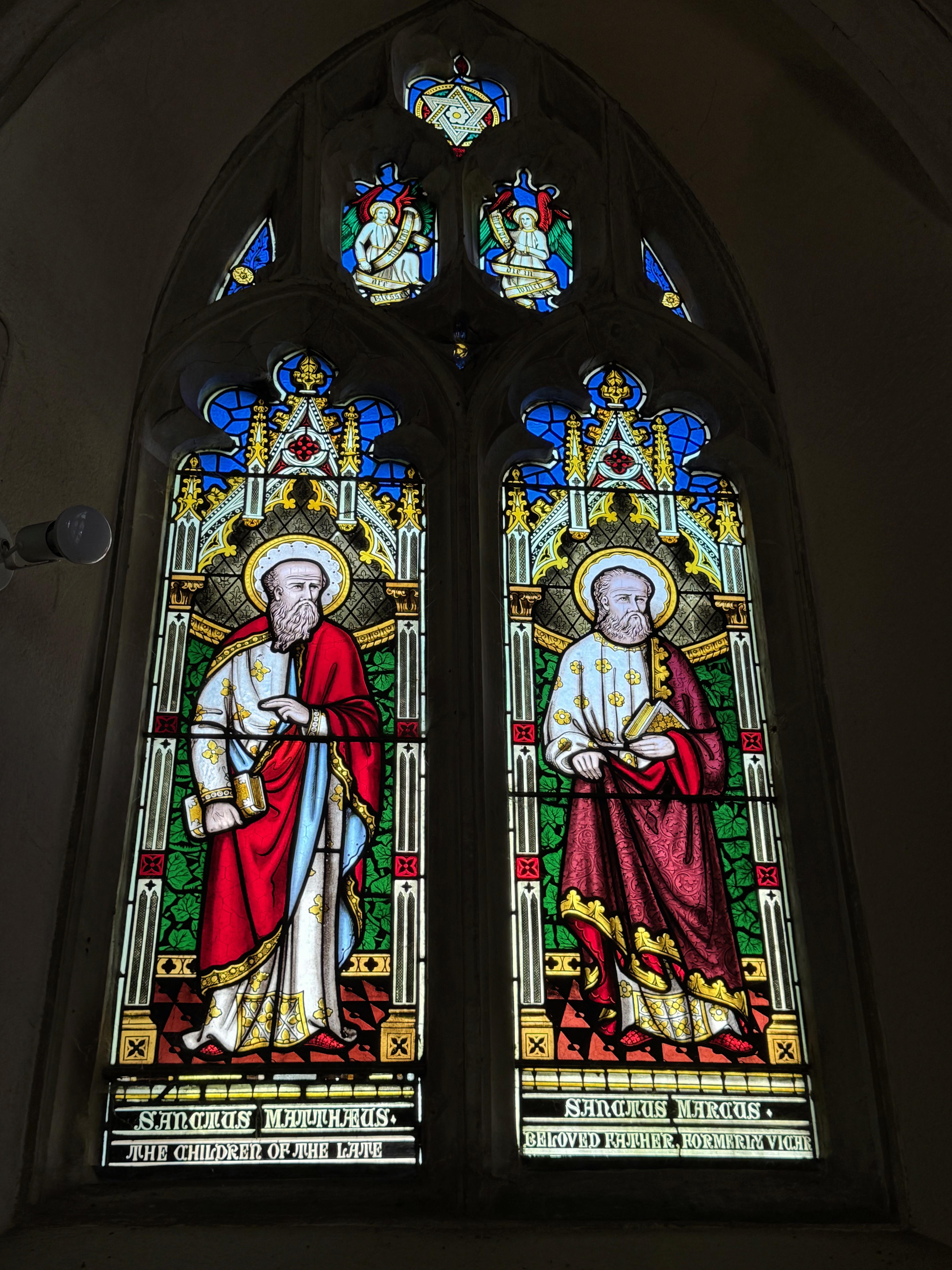
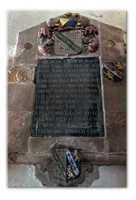
Inside, it has an unusual 12th-century Norman square font. As it was Remembrance Weekend, the church was nicely decorated with poppies and wreaths, and the font especially so. There is a very dark 15th-century (probably from 1420) rood screen (without its paintings – which of course is more normal despite what our recent discoveries in Devon churches might lead you to believe). It also has a similarly aged and equally rare 15th-century pulpit. There are some beautiful stained glass windows – mostly Victorian, although early Victorian. Tucked away behind the rood screen and next to the organ is a remarkable monument to Humphrey Were, who lived at Court Place, which was right next to the church. He died in 1625, but it mentions his only son – John Were – who would go on to become a very interesting and active colonel in the English Civil War. Unusually for rural Devon, he was to serve on the side of Parliament. His career nearly came undone, though, as the Royalists achieved their greatest victory of the war in 1644 at Lostwithiel. John Were (sometimes spelt Weare) was accused of having betrayed his post near to Castle Dore (which we visited not that long ago ourselves). The desertion of his troops saw the entire Parliamentarian line collapse and the Earl of Essex escaping by boat – abandoning their guns and ammunition at Castle Dore and along the entire estuary! This catastrophic defeat at Lostwithiel would actually help the Parliamentarians to restructure their entire command system and implement the self-denying ordinances to remove command from nobles like the Earl of Essex. In defence for his own failures the Earl of Essex almost entirely laid the blame for the disaster on John Were rather than himself. John Were was arrested and imprisoned in the Tower of London. Undaunted and sure of his own role he managed to defend the accusations against himself vigorously through a detailed tract that he published entitled Apologie.
 |
|
| The New Model Army would be born out of this debacle. John Were later took part in the campaign in and around Exeter trying to stop the Earl of Devon from Powderham (which we visited the week prior to this walk) from capturing the important stronghold. Eventually John was given command of the garrison at Exeter. John died in 1658 and is buried in the churchyard here in Halberton. There are also two other English Civil War veterans buried in the churchyard, and we know that during the various campaigns soldiers camped in the churchyard itself whilst on campaign.
 |
|
|
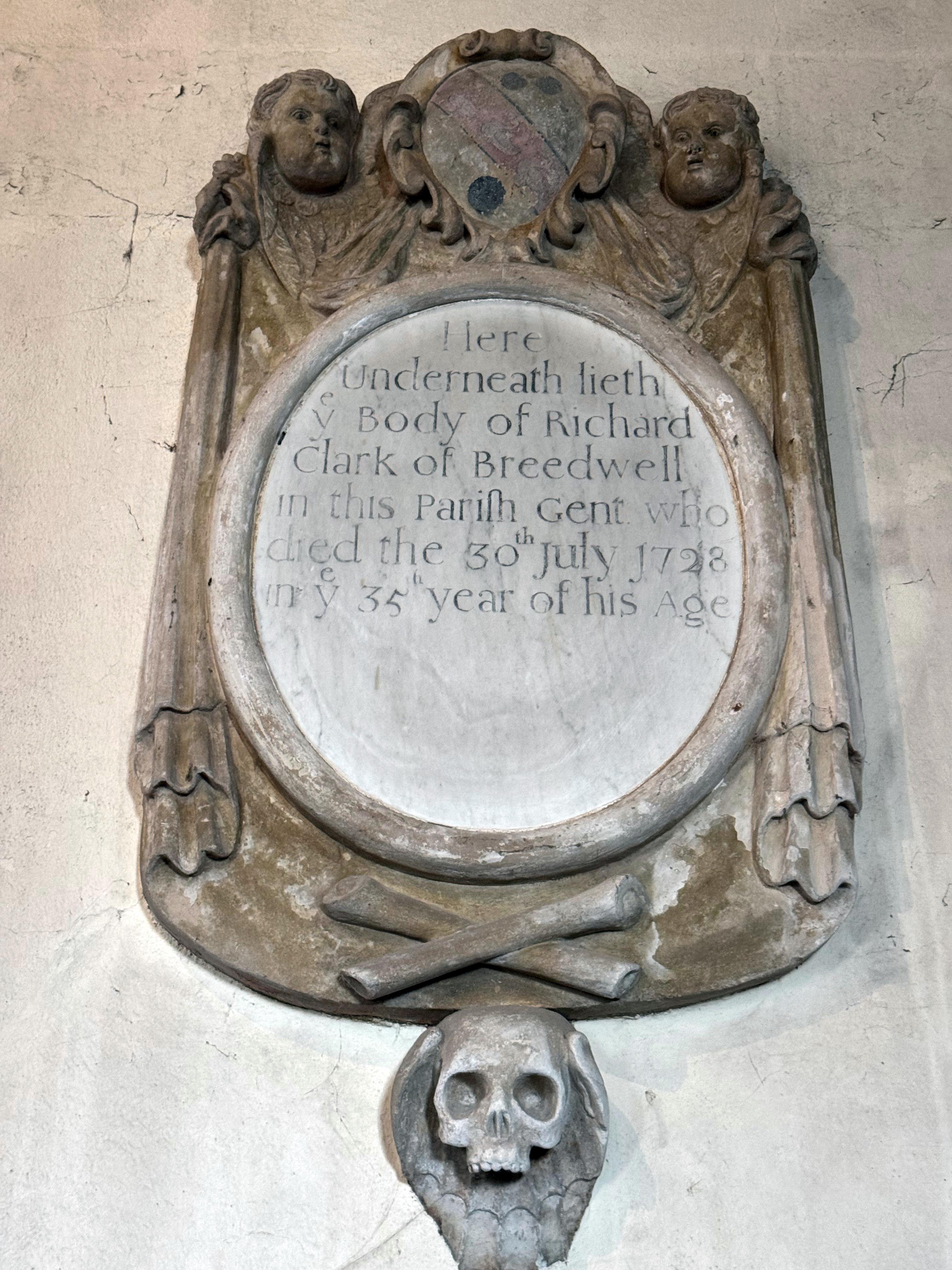
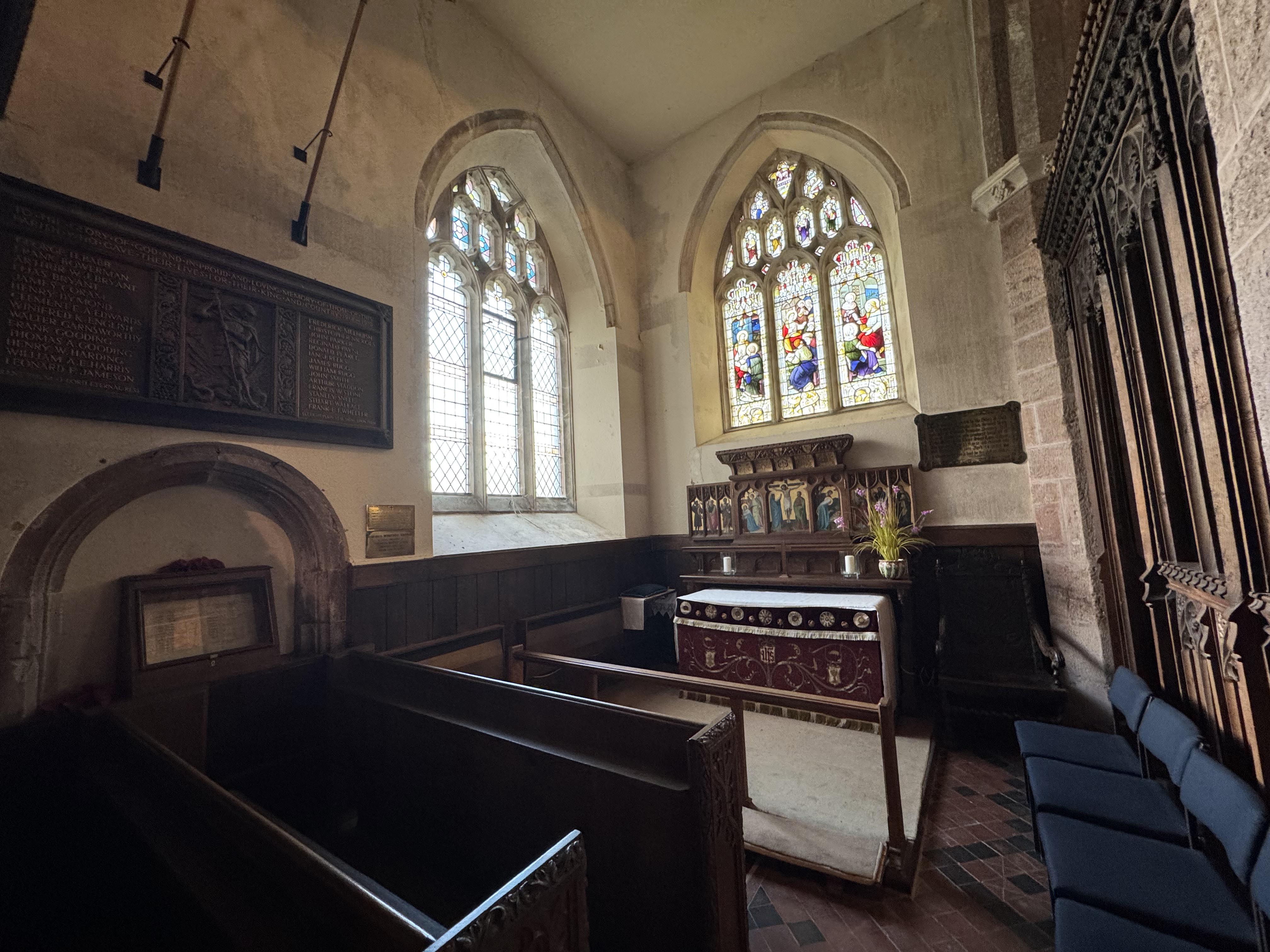
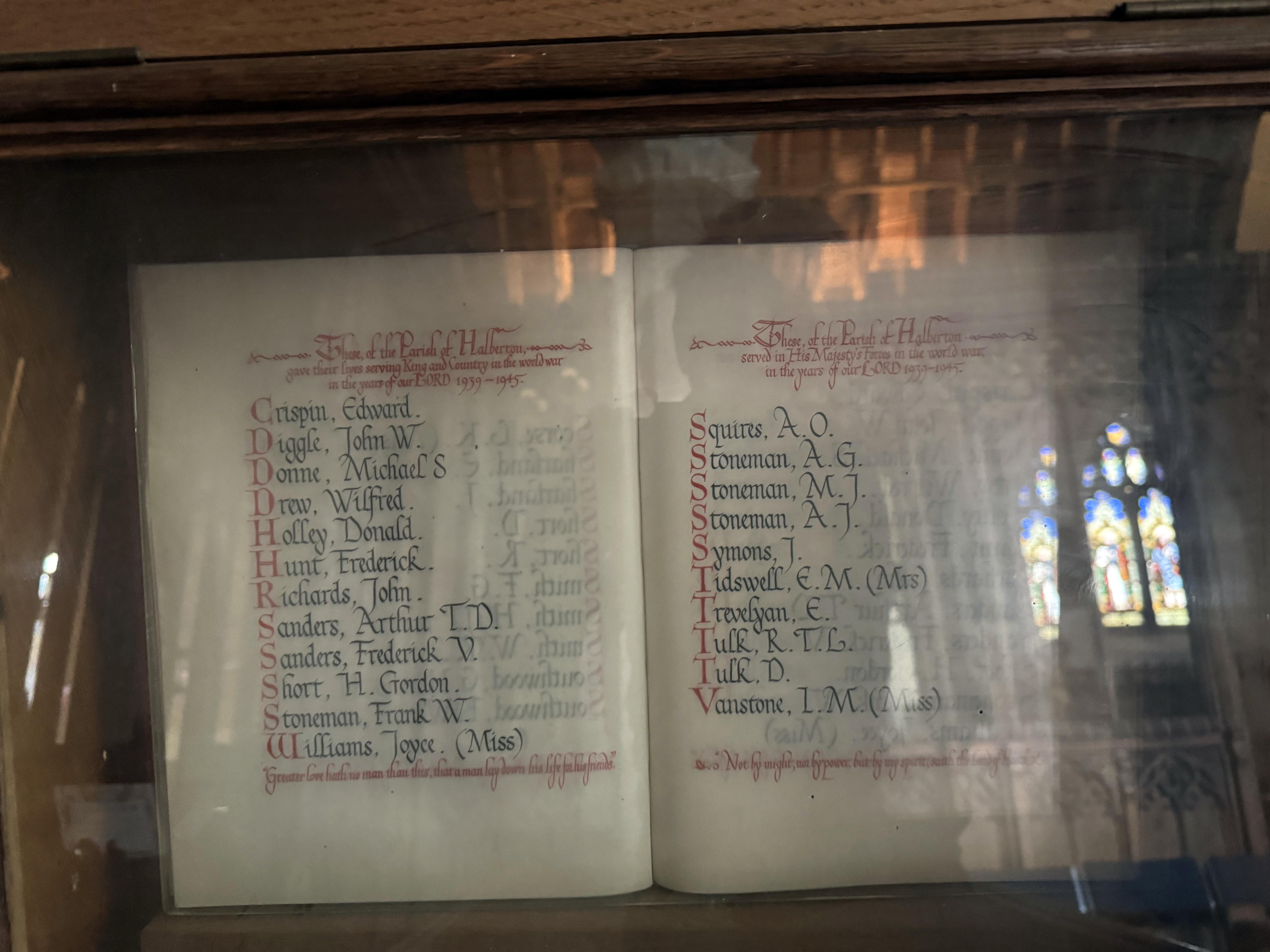
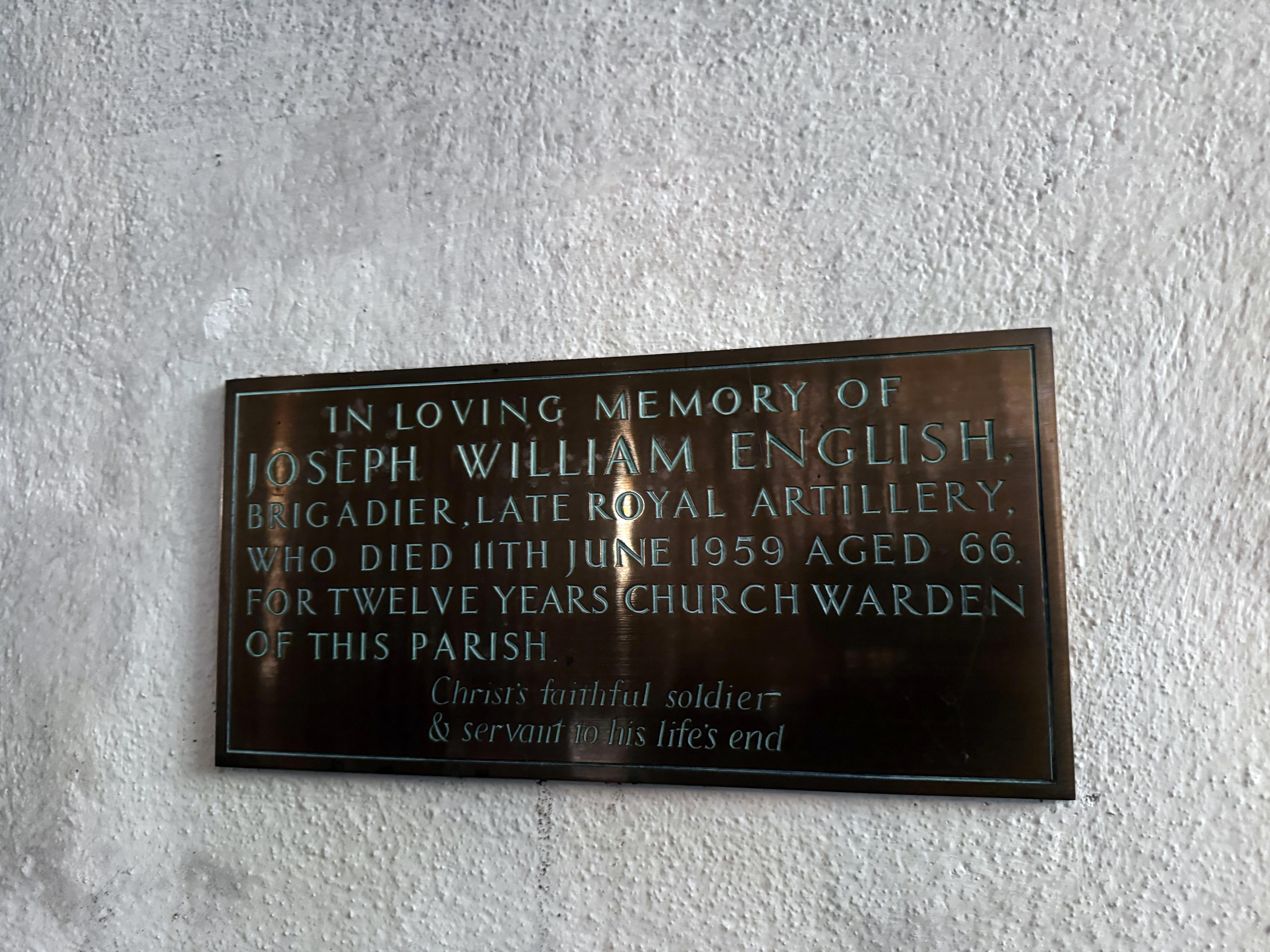
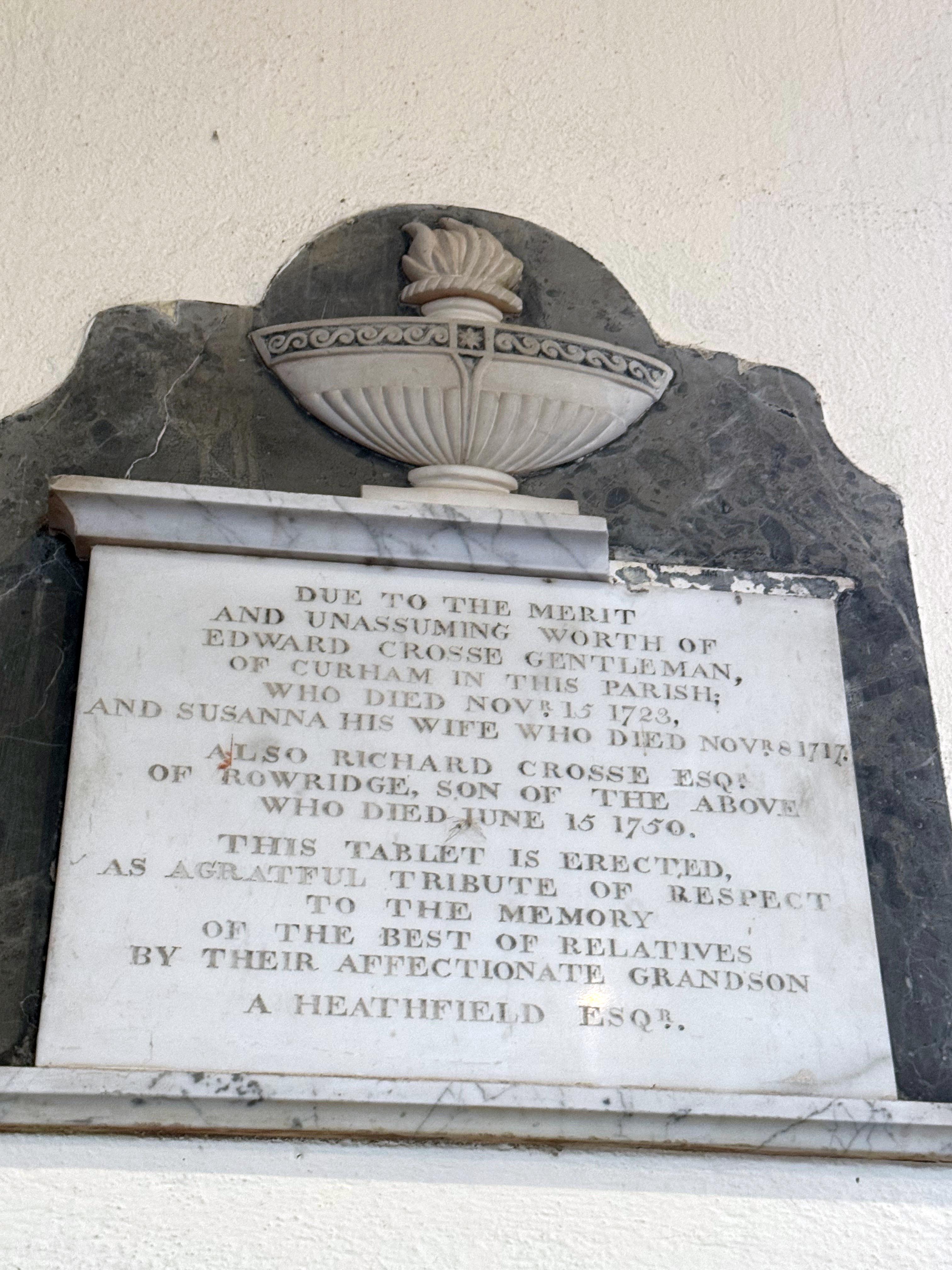
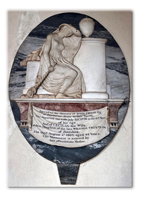
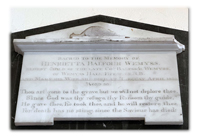
There are always interesting memorials in these churches – usually to the great and the good. I did notice one without much information to a Marcella Lugard and wondered if she had a connection to Lord Lugard of Nigerian fame. I can’t find a connection but did come across this interesting account of a Marcella Lugard who was alive within the dates but at a different church not too far away in Exeter. It said of her: “One of the most extraordinary characters in those days was Mrs Marcella Lugard. The widow of a Royal Artillery colonel, she lived in Velwell Road and came to church every Sunday in a limousine taxi. She always arrived just as the service was starting, walking up the south aisle to her accustomed place, wearing a long-skirted coat, boa and a toque. Later on I realised that she still dressed in the fashion of the 1910s, forty years before. She spoke to no-one, and left as she had arrived, in her limousine as soon as the service ended.” There cannot be too many Marcella Lugards around…. Oh, and another fascinating connection to World War One and Exeter was in a dedication to Winifred English, daughter of Major J.O. English, Royal Artillery, and Florence English. It says that she died while on duty at the Red Cross Hospital in Exeter on February 24th, 1915. She was a member of the Voluntary Aid Detachment created by the Red Cross and the Order of St John to provide nursing services to soldiers all over the world, actually, but including those repatriated to Britain. Originally she had been helping at the Military Hospital on Topsham Road in Exeter when an influenza epidemic broke out at Topsham Barracks (where the Devon Regiment was trained). The military hospital at Higher Barracks was so full that some 200 men were being cared for in draughty huts. In haste, an old building was re-commissioned and VAD nurses supplied to staff it. One of these was to be Winifred English. Tragically, within only five days of arrival she was taken ill herself and died three weeks later of pneumonia, at the early age of 25. Rather scandalously, to my mind, she is not recorded in the official Commonwealth War Graves database. I agree with her parents that she died on duty. There is actually a second dedication to a Royal Artillery officer called Brigadier Joseph William English (I’d guess the son of Major English and perhaps brother of Winifred). He served in the Second World War fighting the Japanese out in India and Burma. He was to survive and died in 1959 at the age of 66. Of course, there is a war memorial with St Michael slaying the devil, with another 28 names of soldiers who all sacrificed themselves during the First World War alone. And a rather beautiful book of remembrance showing even more names from the Second World War.
 |
|
|
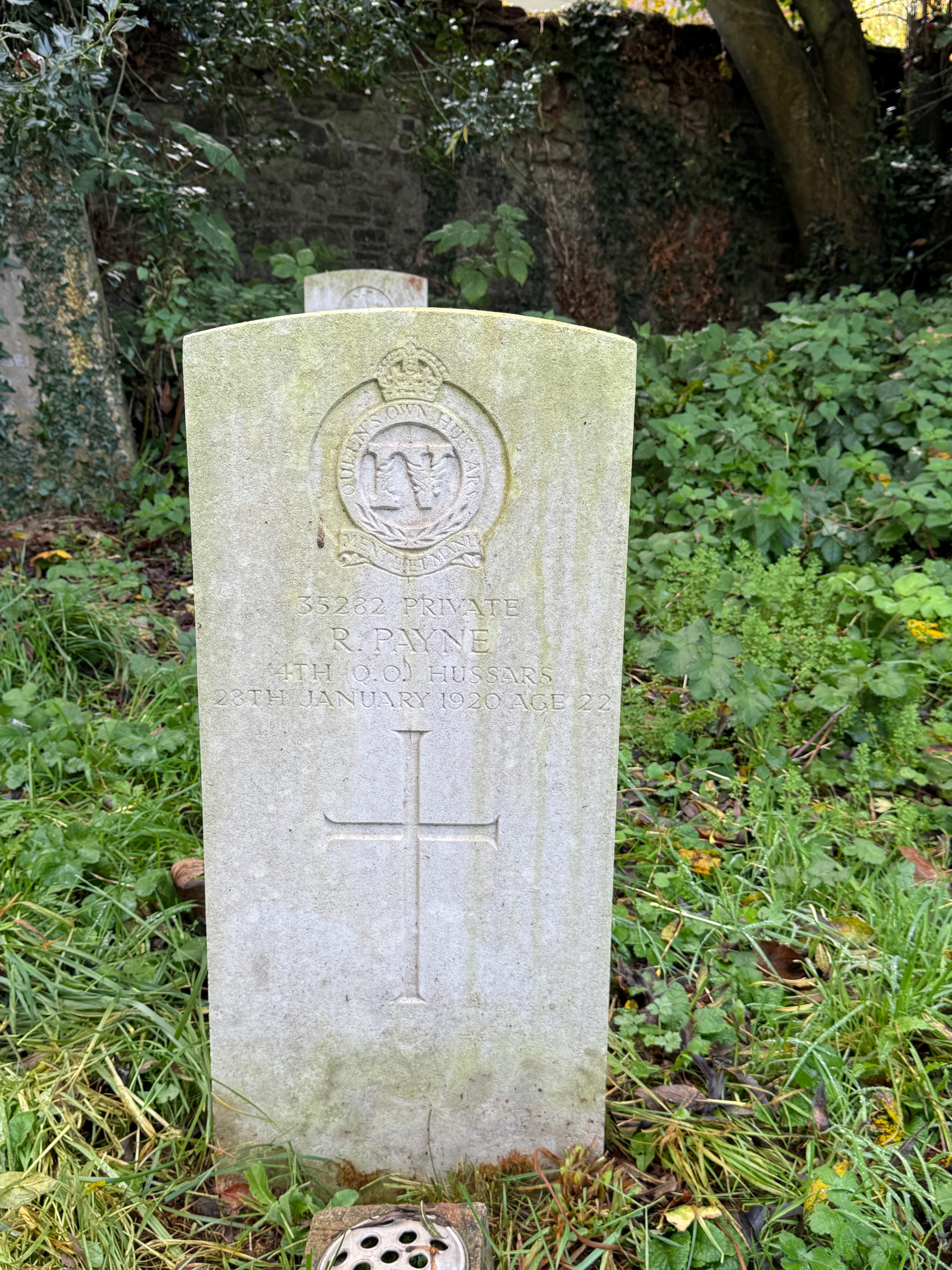
Indeed, being Remembrance Sunday, we took a look for some of the Commonwealth War Graves and memorials to the fallen in the church graveyard outside. From the two world wars, six are buried here and at least one more is commemorated on a headstone. These included a very sad one to Private Babb of the Warwickshires, who died as an 18-year-old just three days before the end of the war – although of influenza, the manner of his death would have brought little relief to his family. There is a similar sad tale for Clement Edwards, a 2nd Lieutenant in the Worcestershire Regiment, who died on December 5th, 1918, a full year after the war ended. Sadly, it says that he died “Not On The Battlefield – Yet None The Less – He Died For England.” He had joined his father’s old regiment but was also to die of influenza in Newcastle. Indeed, there may well be a third victim of the influenza epidemic, this time Sapper Harris, who was an engineer injured in the fighting in Arras in September 1917. He returned to England in 1918, but it says that he died aged 22 in Kempston Military Hospital after a brief illness. It does not specify the illness, but it could well have been influenza too. We don’t always appreciate the virulence of the influenza epidemic, which killed many more than the war itself! Another soldier who died out of the conflict was Private Payne of the 4th Queen’s Own Hussars. His death was as a result of operations for appendicitis undergone whilst serving with his unit in Egypt that seem to have gone wrong. He underwent multiple operations before eventually dying in Devonport in 1920.
 |
|
|
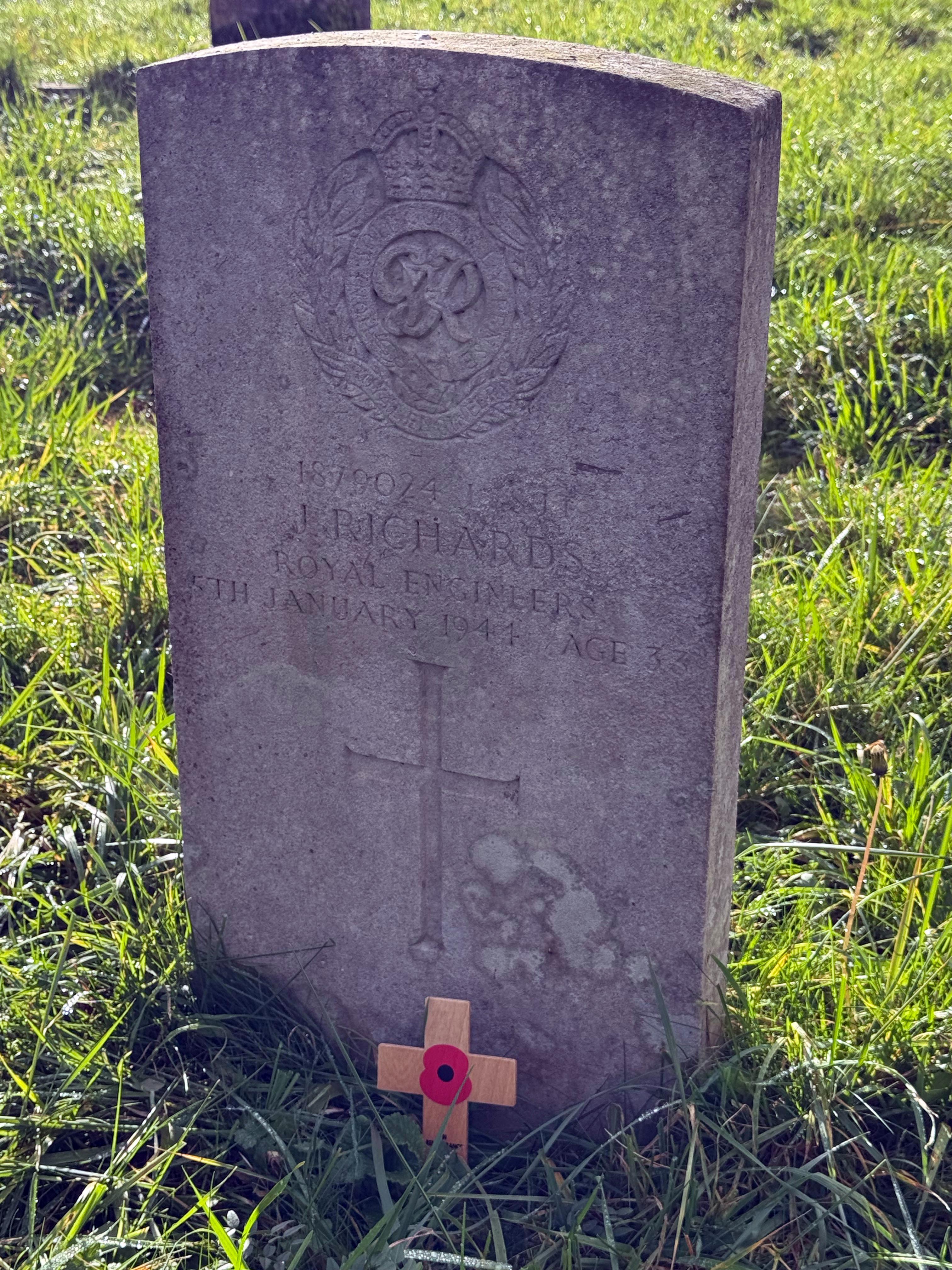
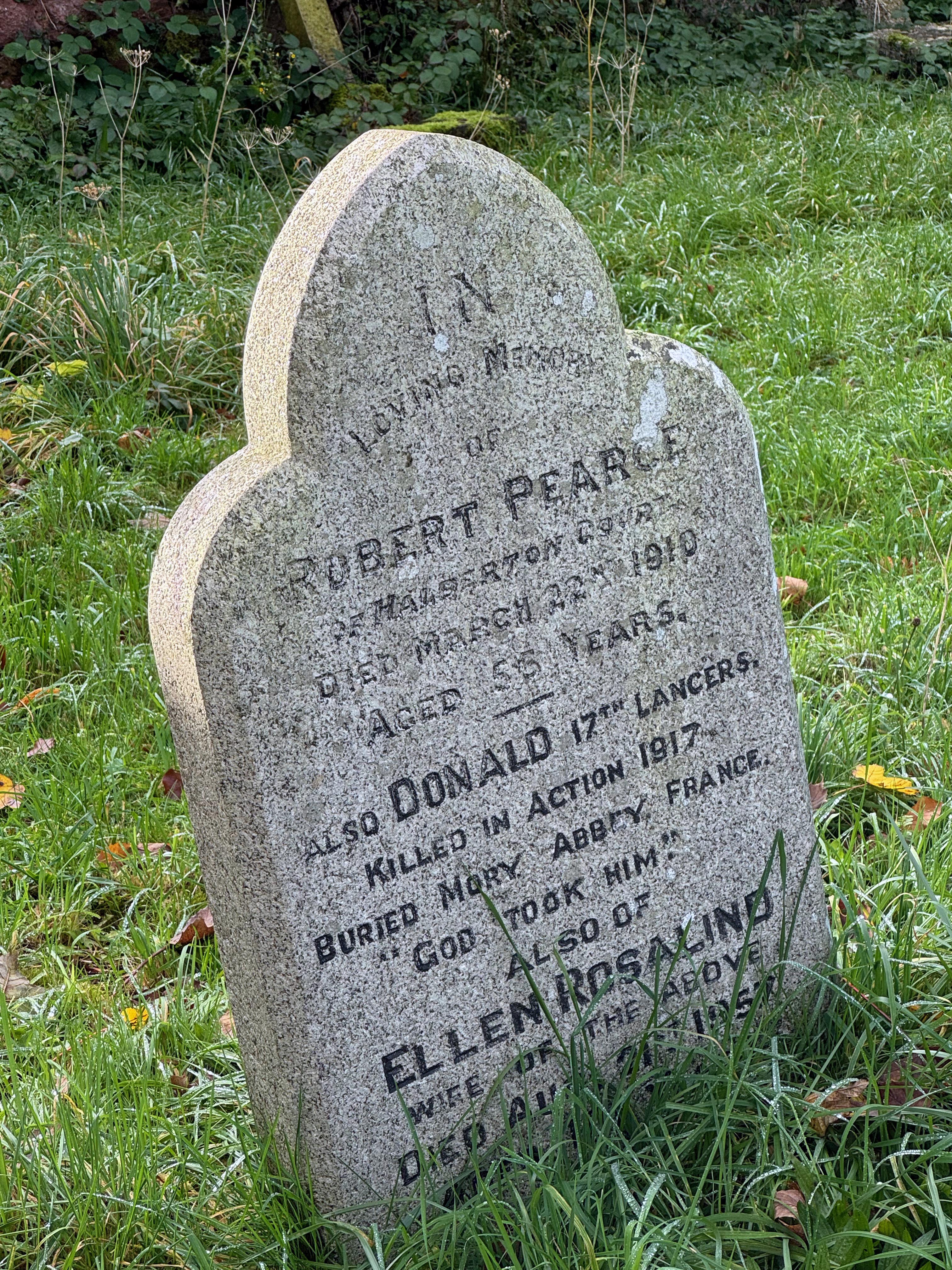
For those who were killed in action (only three of the seven): one is a memorial to Donald Pearce of the 17th Lancers, who was killed in action in 1917 in France (where he is buried). Interestingly, he also lived in Halberton Court, just as John Were had done – several centuries separating these warriors from one another. Another grave commemorates Henry Dymond of the King’s Royal Rifle Corps, who was killed at Hooge Crater in Belgium in 1915. Hooge Crater was when the British dug a mine under the German lines and packed it with explosives. The initial attack caught the Germans by surprise, creating a massive crater 120 feet wide and 20 feet deep. The Germans were to launch a furious counterattack on the 20th of July (the date that Henry Dymond died), and the fighting here was as intense and desperate as any throughout the war. The crater itself became one of those key objectives that both sides felt they had to possess at all costs. This particular battle also saw, for the first time, the use by Germans of the flamethrower, just to add to the hellish nature of the battle. The British clung on for another week or so of intense fighting before evacuating under intense artillery bombardment. And lastly, from the Second World War, there is a grave to Lance-Sergeant J. Richards of the Royal Engineers, who was killed on bomb disposal work whilst trying to clear a minefield in Great Yarmouth, Norfolk, alongside two other sappers. Ironically, these were mines laid by the British to deter a German invasion in 1940. Remarkably, 26 people were killed trying to clear these mines in total.
There was also one interesting grave that caught my eye – nothing to do with the war – but that of Mary Were Clarke, eldest daughter of John Were Clarke of Bridwell (obviously married into the Were Civil War family at Court Place). What was interesting to me is that it says she was born at Burrington in the Tything of Pennycross in 1812 and died in 1890. Now, by an amazing coincidence, I live in Pennycross myself, and Burrington House would have been very close indeed. Sadly, it no longer exists, but it bequeathed its name to a school here in Plymouth for many years (now it is called All Saints’ Academy). Now I live 60 miles away from Halberton – but it goes to show how the great and the good would form marriages between families over surprisingly large distances.
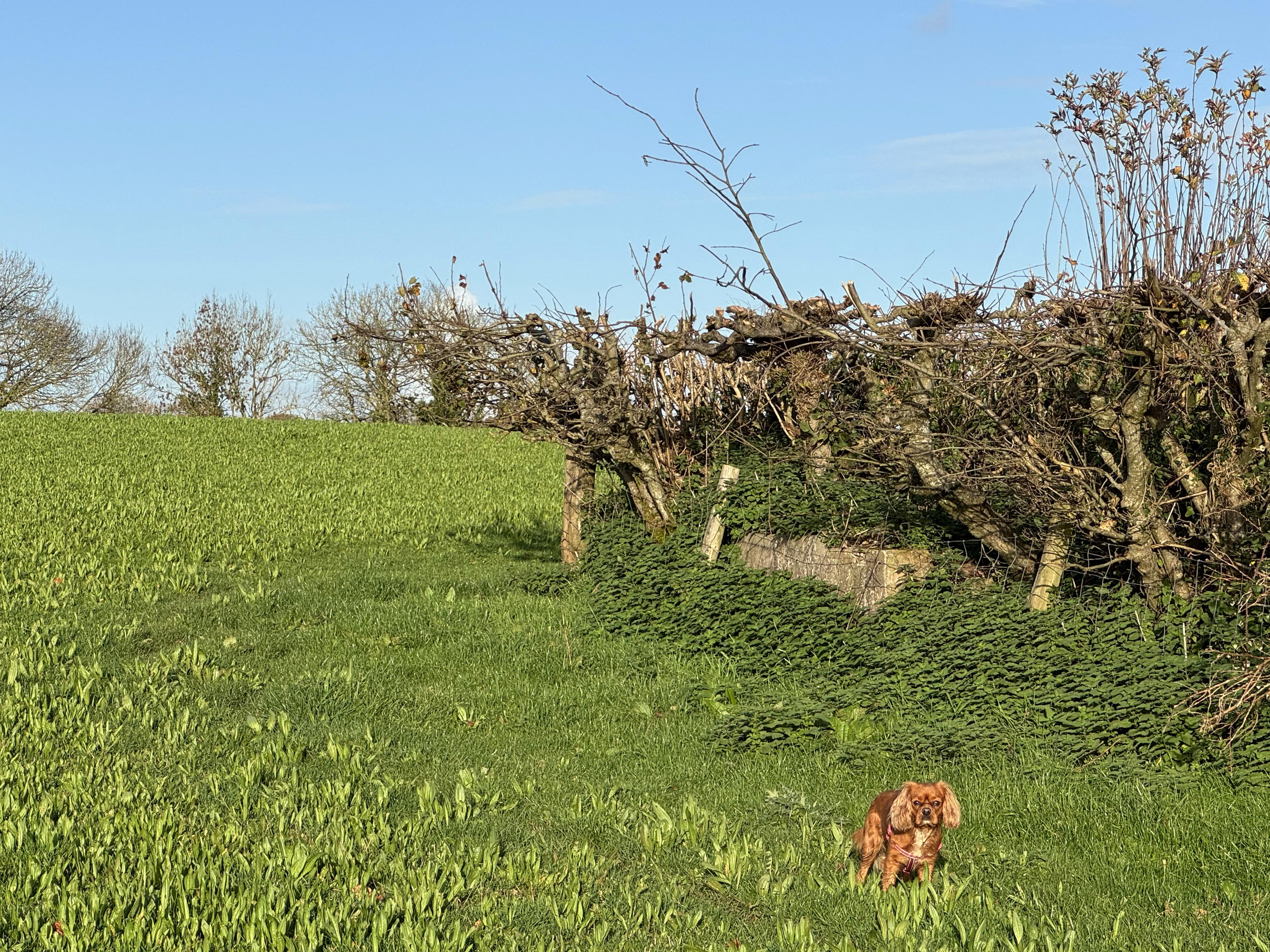
From the church, we were to walk through the village, full of interesting old houses, some with thatched roofs – many with an agricultural bent and harking back to the days of horse transport. We then walked up through some fields back to the canal and walked back to Greenway Bridge, with the conditions still perfect, if a lower setting sun in the sky casting long shadows. This curious canal that links nowhere to nowhere is a reminder of the ambition of our forefathers, but even they found that economics and technological change (in this case in the form of the steam train) could usurp their hopes and aspirations. But what they built is still a phenomenal engineering achievement, and although it is no longer economically functional, it does allow us to enjoy a spectacularly rich environment which sustains a fascinating ecosystem of its own. We should be thankful for their industry and vision. It didn’t always pan out, but we can still benefit from their hard work.
|