|
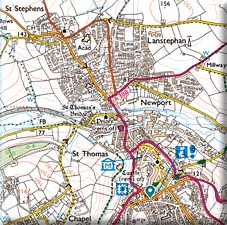
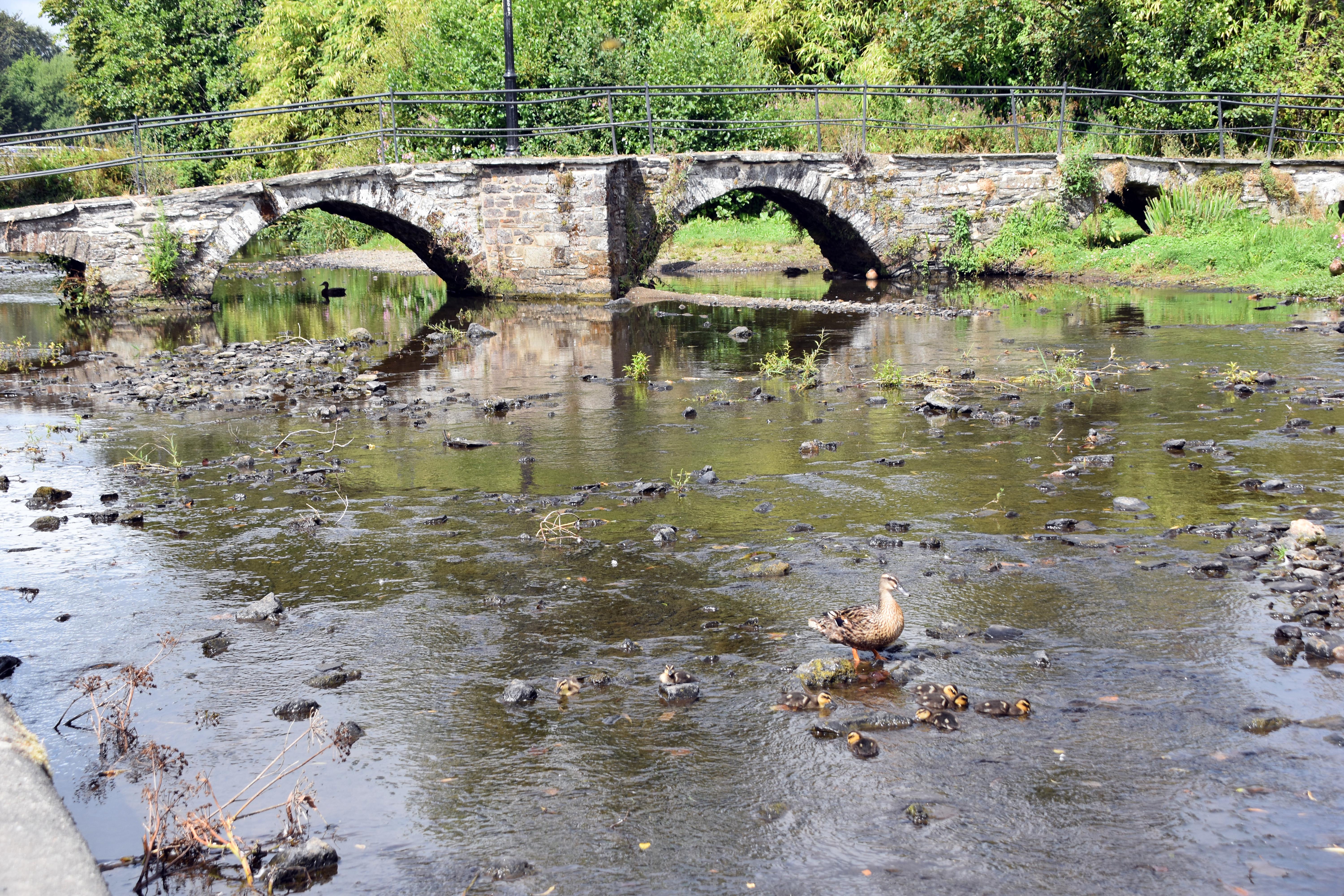
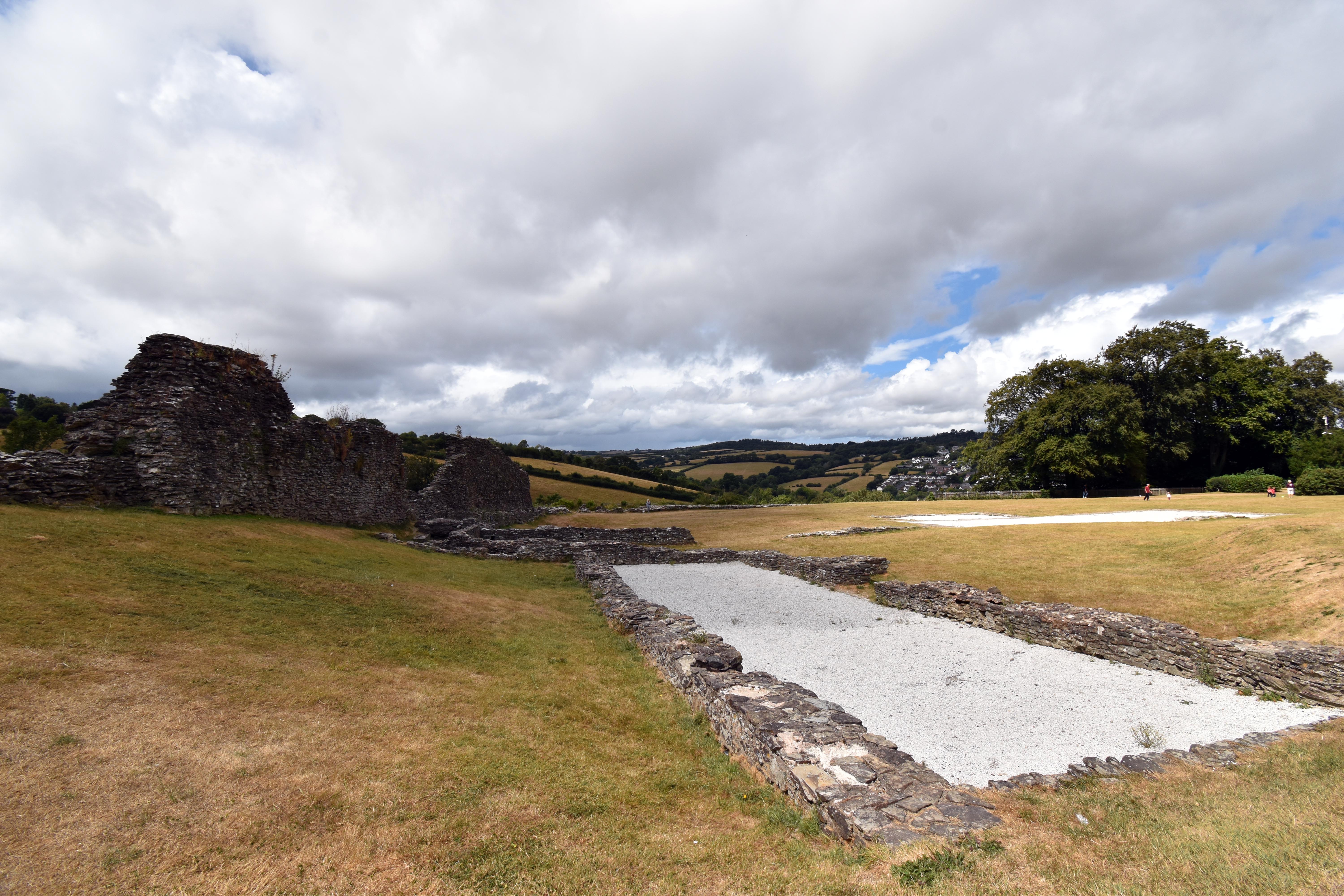
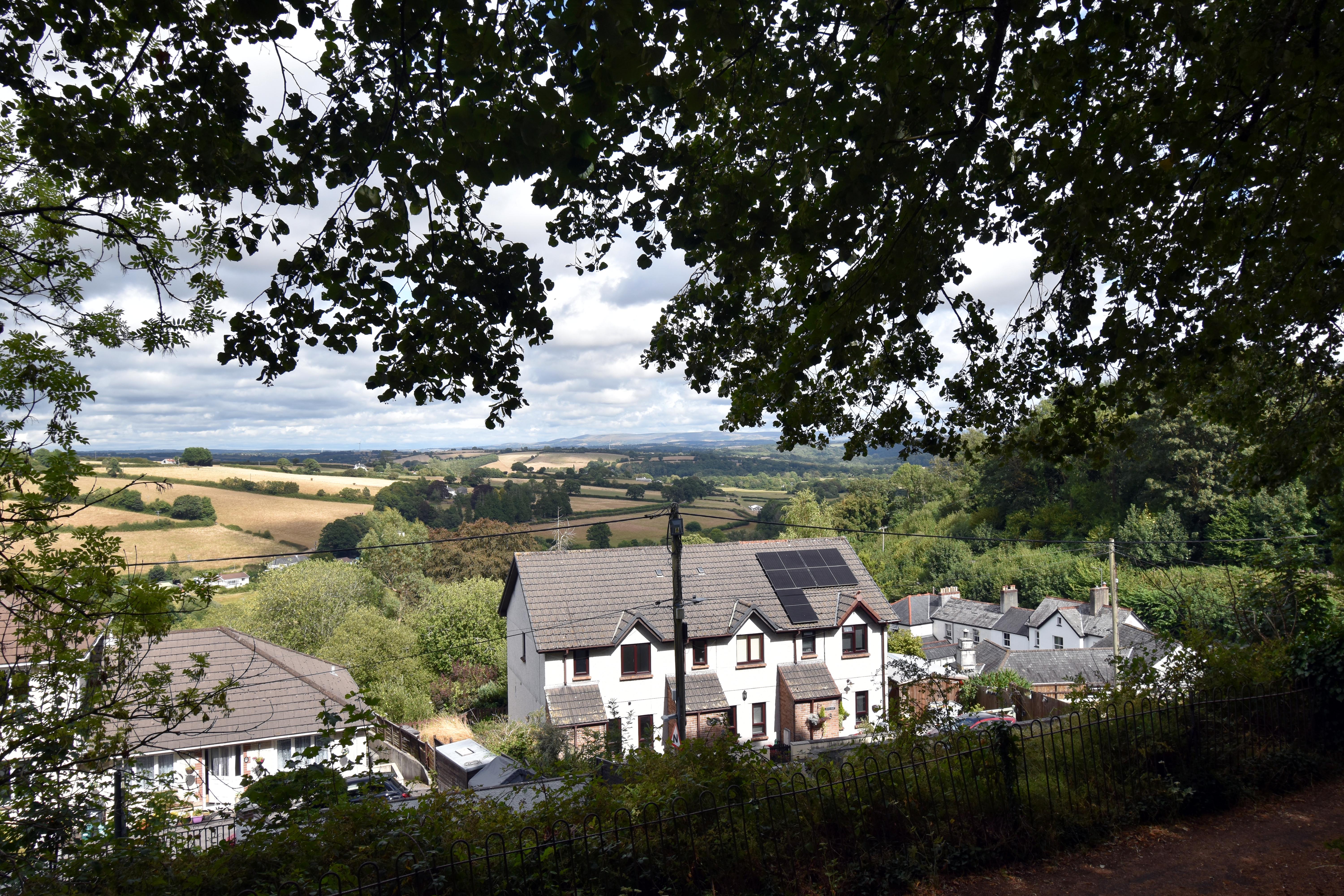
After a long hot summer with countless days of blazing sunshine, we had an unusual grey day with forecasts of showers. We therefore decided to head for an urban walk where we might find a few more venues to duck into if the showers were to be as heavy as some were predicted to be. We parked next to the beautiful St Thomas’ Medieval Clapper Bridge on the north side of Launceston’s towering hill where its castle famously sits. Few castles have dominated their local landscape as effectively as Launceston’s. In a county famed for its steep‑sided valleys and undulating hillsides, Launceston Castle still manages to rise up with commanding views all the way over to Dartmoor in one direction and Bodmin Moor in the other. Its Norman builders quickly recognised that this hill could dominate the approaches in and out of Cornwall as the Tamar became narrower and tame enough that it could be bridged even with medieval engineering techniques and materials.
Just to our north again was the even older Saxon settlement of St Stephens, which had its own monastery and even Cornwall’s first mint, established under Athelstan, arguably England’s first true king. But in the aftermath of Gytha of Wessex fleeing to the Westcountry to try and coordinate resistance to the advancing Norman conquest culminating in the Exeter rebellion of 1068, which brought William himself to the Westcountry, it was recognised that strongpoints needed to be constructed in critical strategic positions. It is telling that the person given the responsibility for building a castle here was Brian of Brittany. Cornwall, with its distinctive Celtic culture and identity, had strong links with the Bretons, who shared similar Celtic roots, and both also shared a closely related language. The Norman invaders appreciated that they might be able to develop a more collaborative relationship with the Cornish if they encouraged these long‑standing connections with the Bretons. This connection to Brittany nearly became a liability in 1075 during the Revolt of the Earls against William the Conqueror. These were his own earls who were resentful of his centralising power and attempted to coordinate a coup with Danish help. One of the leading rebels was Ralph de Gael, the Earl of East Anglia, who was originally of Breton lineage and was actually the brother‑in‑law of Brian of Brittany. The rebellion failed, but Brian was caught up in the aftermath and returned to Brittany to shore up his political and social standing, handing over many of his lands to William’s half‑brother, the Count of Mortain. This in itself demonstrates the importance William gave to the strategic position of Cornwall, with its connections to Brittany, which itself lay next door to his dukedom of Normandy.

|
|
|
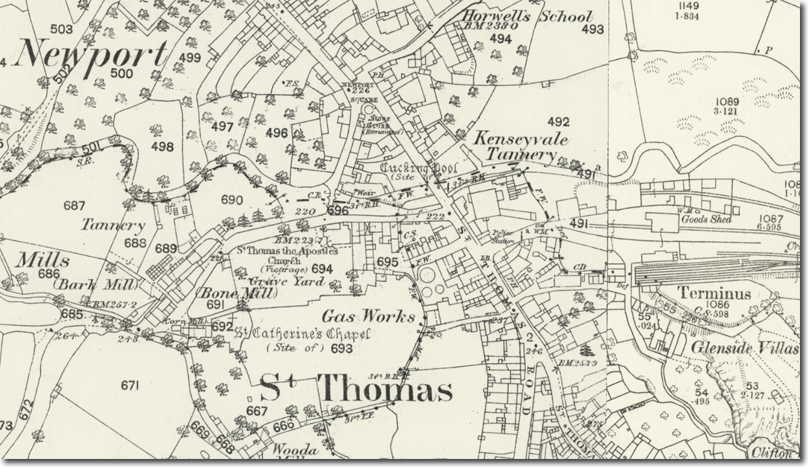
The castle would come to define the local area and turned this part of Cornwall into a major strategically important military and administrative centre. The old Saxon settlement at St Stephens would largely migrate to the castle surrounds and later additional walls were built to enclose this Norman administrative hub and add another level of defence to the castle dominating the skyline. But down here in St Thomas another arm of the Norman state took hold in the early 12th century when Augustinian Canons were given permission to form a Priory here. It must be remembered that the Catholic Church gave vital legitimacy to the Norman state and in return were granted extensive privileges, expanding those already held under the Anglo‑Saxon kings, to build their churches and cathedrals in central locations and to own extensive lands which were exempt from normal taxation and duties towards the state.

|
|
|
This priory lay by the River Kensey, which itself runs into the Tamar. It would grow to be the wealthiest and largest religious house in all of Cornwall, owning lands stretching from the north coast to the south coast of eastern Cornwall and even into Devon. The priory itself would have been enormous and its influence would have been felt across the region as a major ecclesiastical presence and actor, especially in the era before any kind of social state. The Augustinians here were known as Black Canons as they wore black robes but were also ordained canons who served the world, unlike some other orders of monks who retreated from the secular world. The Augustinians would run hospitals, dispensaries, provide pastoral services to their local communities and would be seen regularly travelling the surrounding areas. They would have been an integral part of the medieval state and their presence had the blessing of the Norman rulers (most of the time, that is). Money and land were often left to priories like this one to conduct chantry prayers for the dead and to gain favour in the afterlife.
Over time, the Priory with its privileged legal status grew and grew in wealth and power. Until of course this wealth and power was noticed by Henry VIII, who decided that he wanted their lands and property for himself and his supporters and began the upheaval of the Dissolution of the Monasteries, which also brought the fate of Launceston Priory to come crashing down as this once great pillar of the community was ransacked, emptied and its shell of a building sold off to a King’s supporter, Gawen Carew, to use as stables, bakehouses and piggeries. The buildings slowly decayed and their much‑prized masonry was sold off or recycled into surrounding buildings. Within a few generations there was little sign of this once enormous religious complex and the memory of its existence faded altogether.
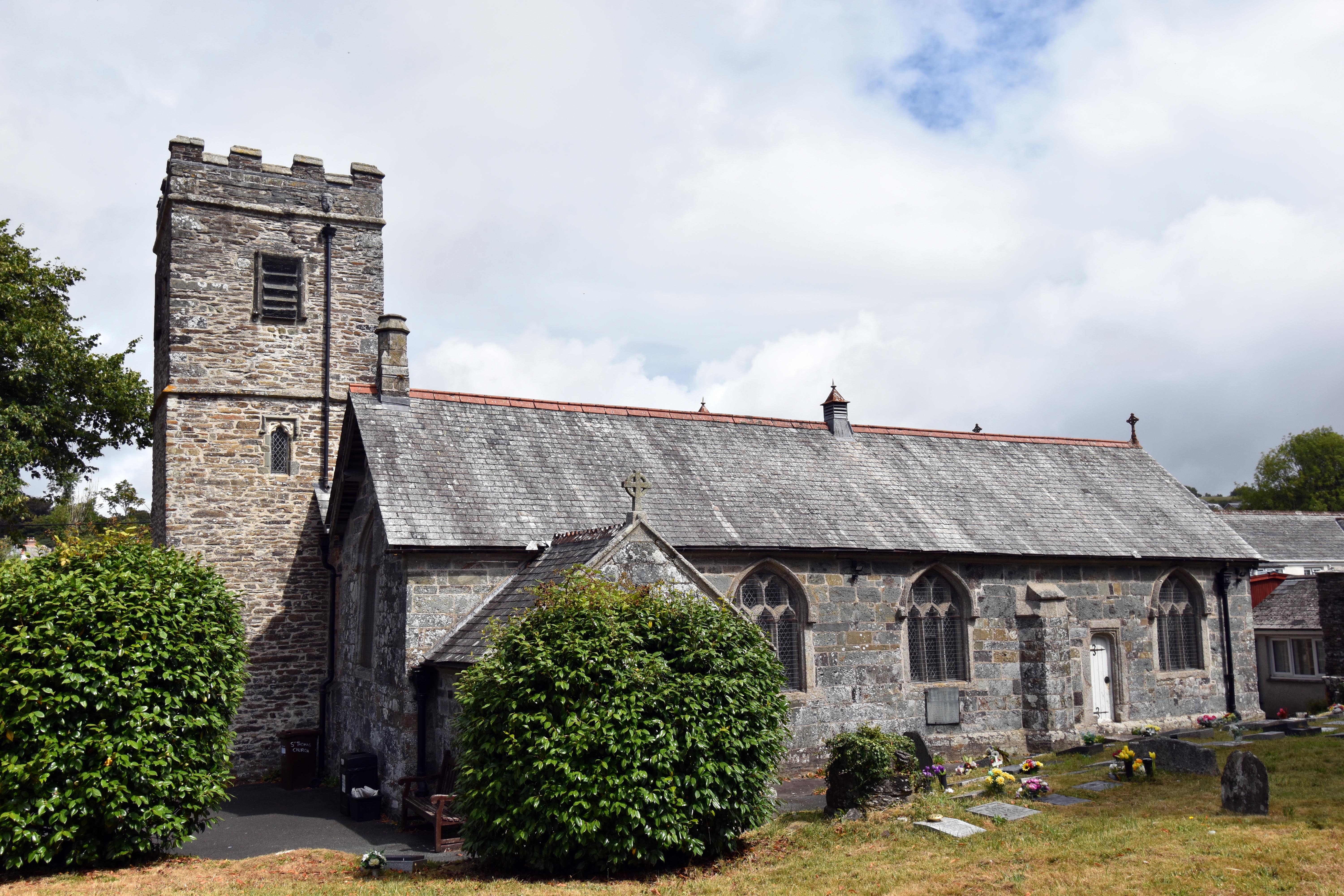
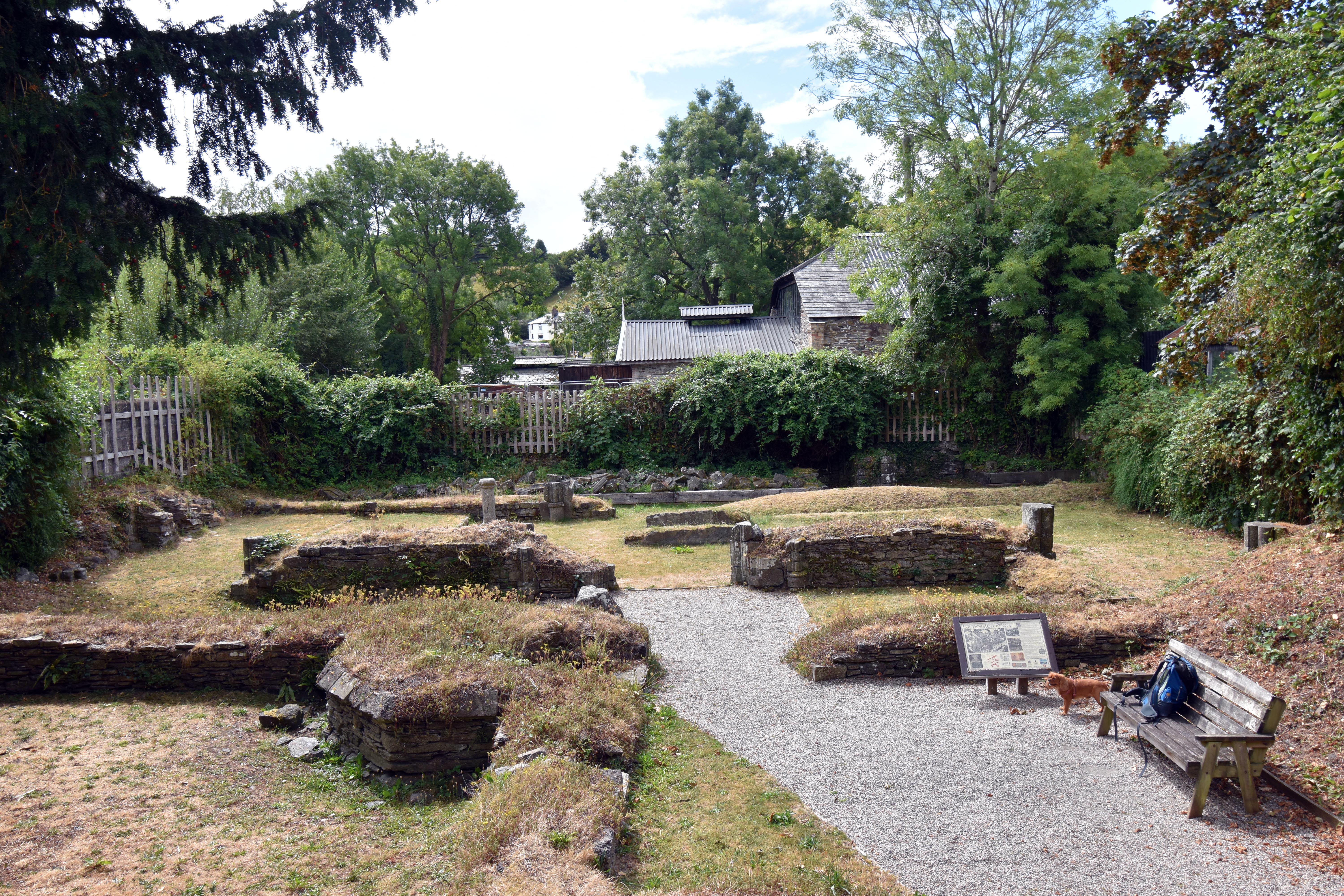
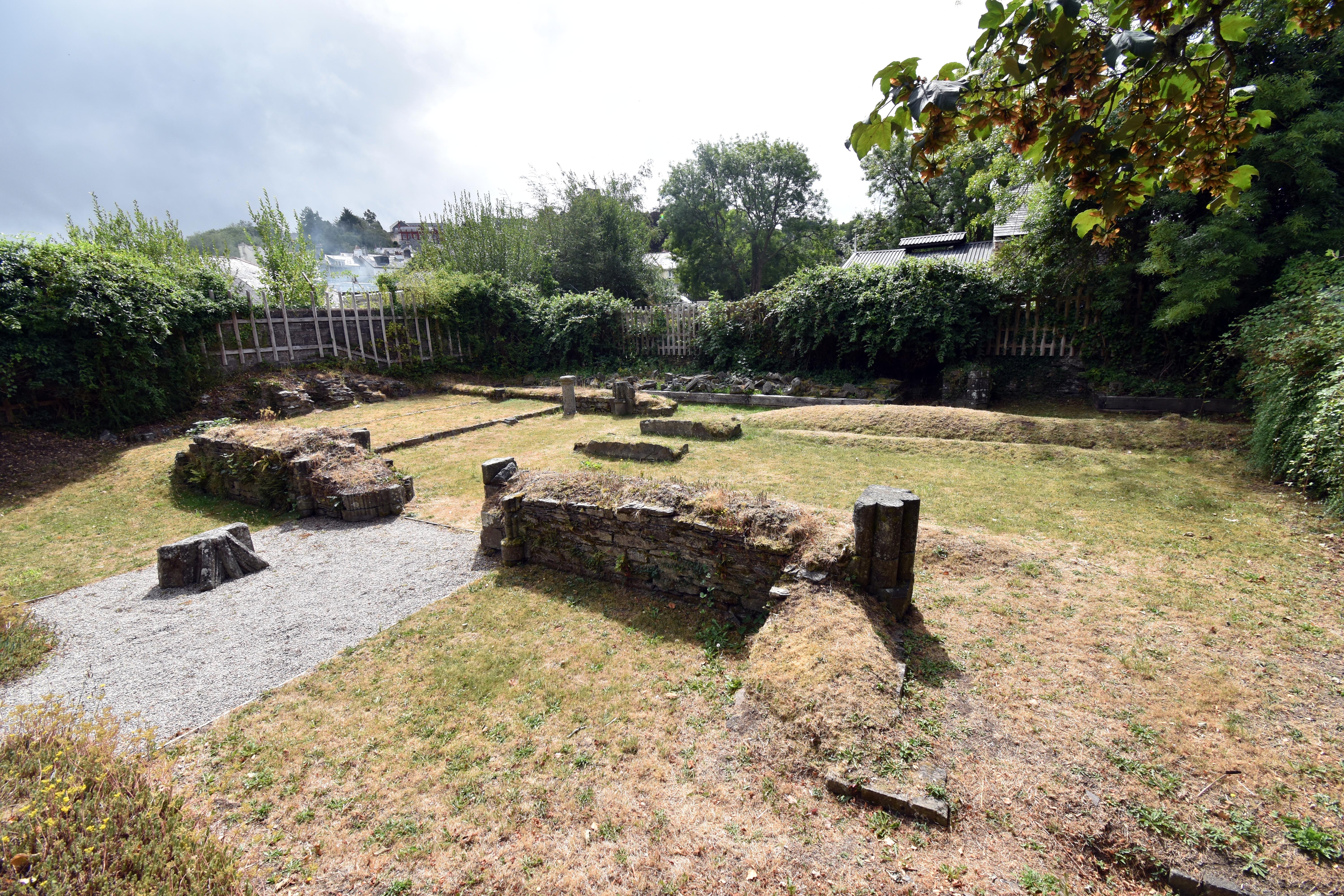
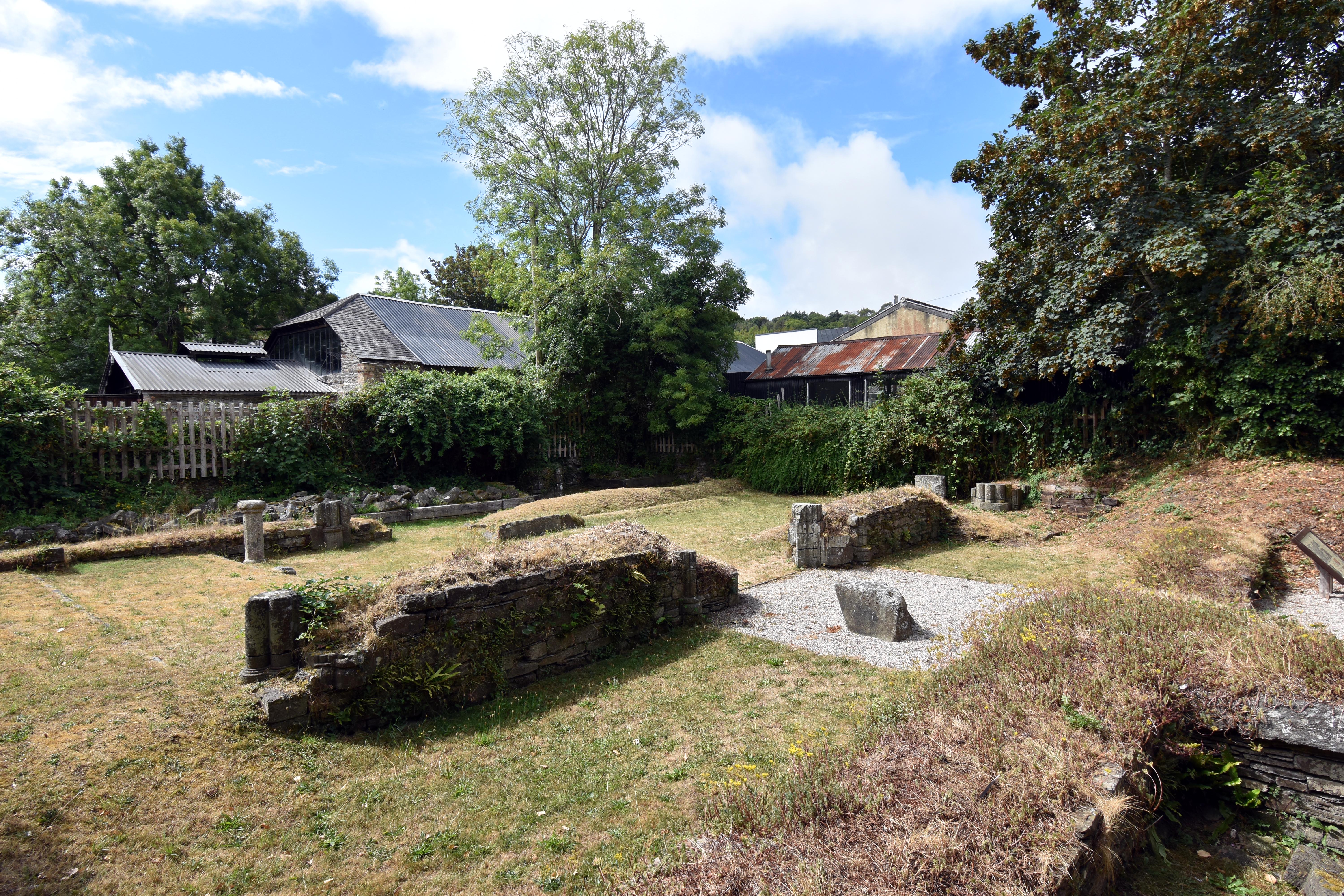
It was not until the late 19th century when works began on the London and South Western Railway and other building works that the constructors came across the base and foundations of this enormous complex. Curious as to their discoveries, they actually were distracted from their original building project to uncover and excavate the site. You can see one small aspect of these excavations next to St Thomas Church, effectively just the foundations of the choir section of the chancel. It is only a fragment of a beautiful building that was lost forever thanks to the greed and avarice of Henry Tudor, but these ruins are a stark reminder that even some of the biggest institutions’ fortunes can come crashing down and disappear into the dust. It is a melancholy reminder of a former age.
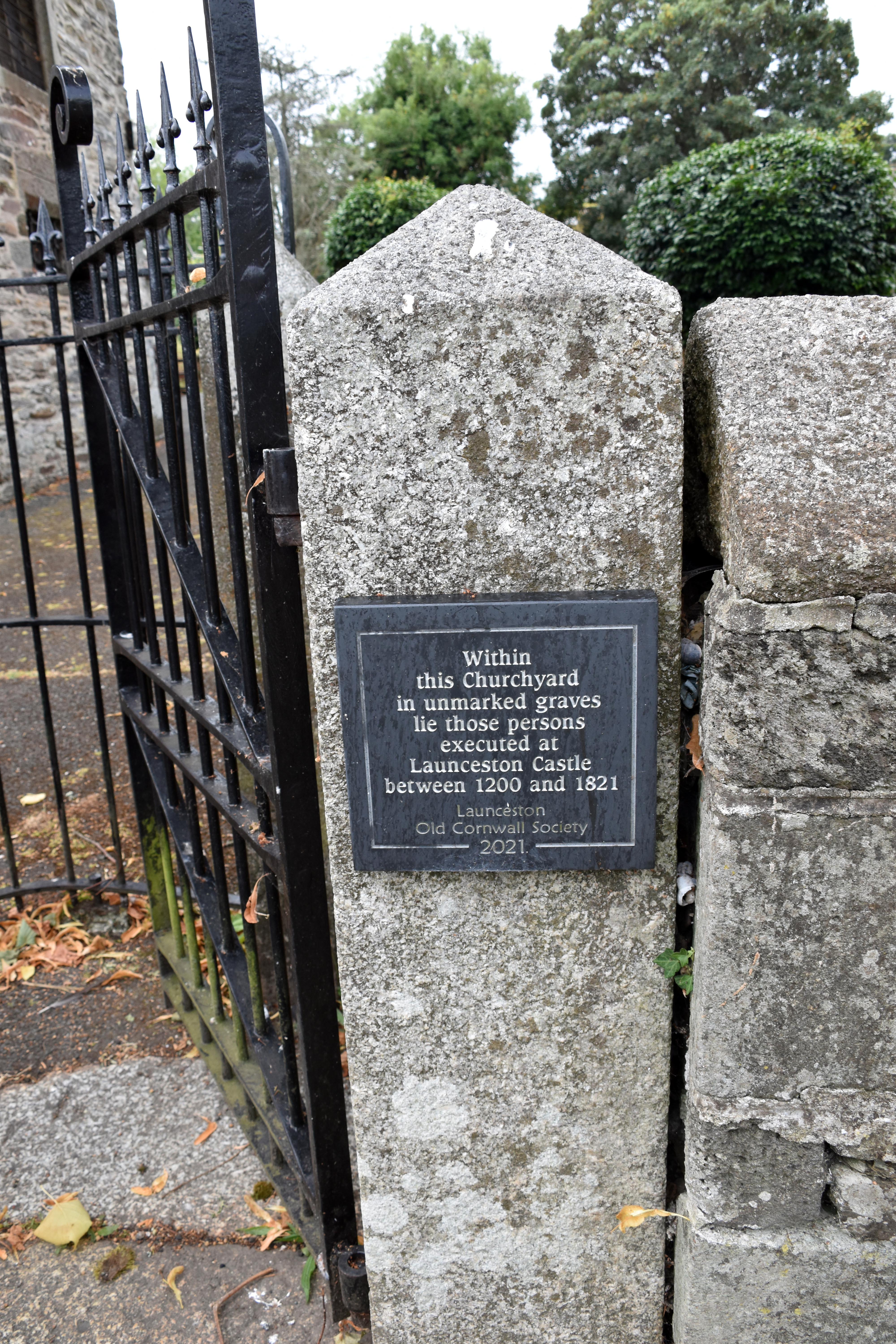
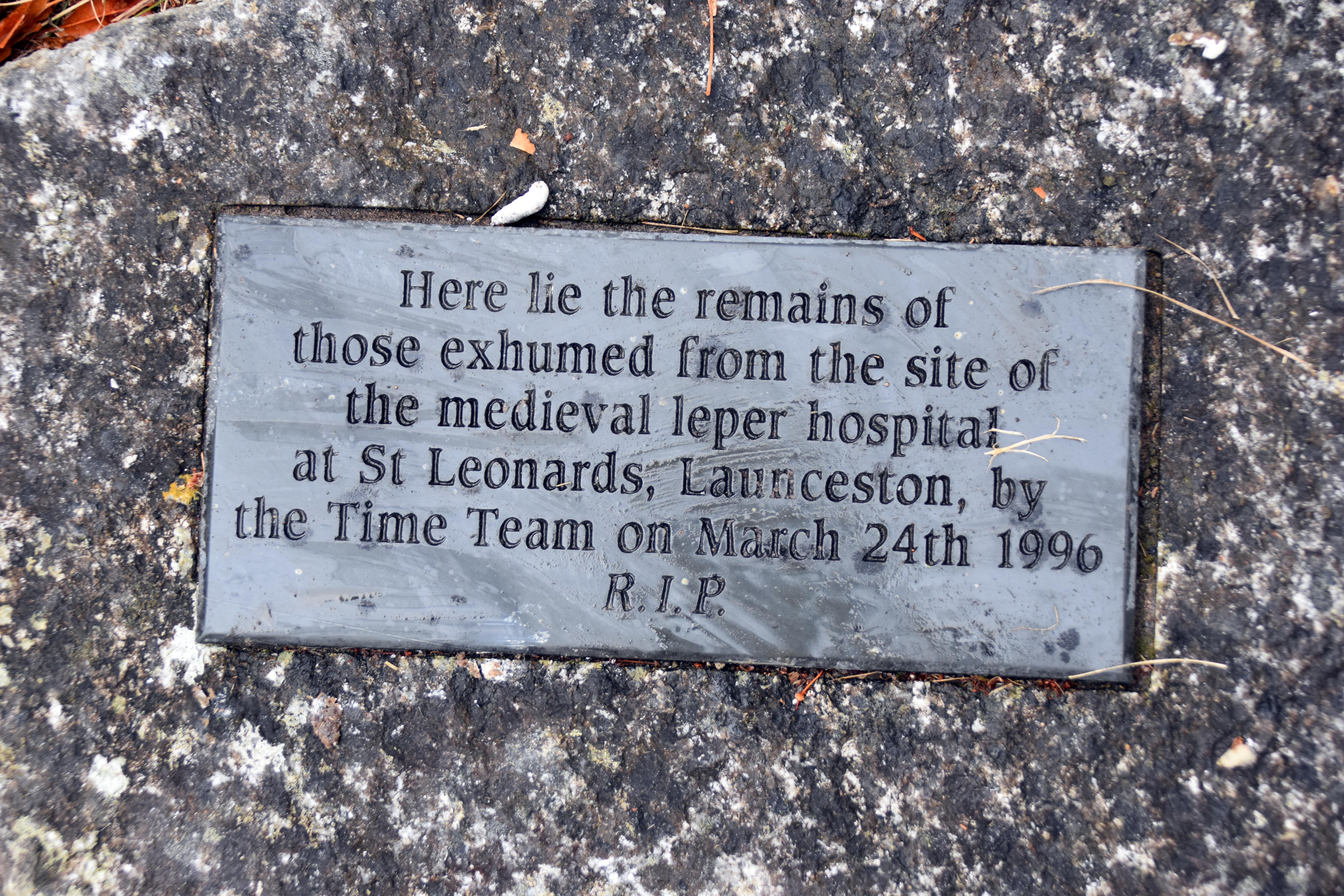
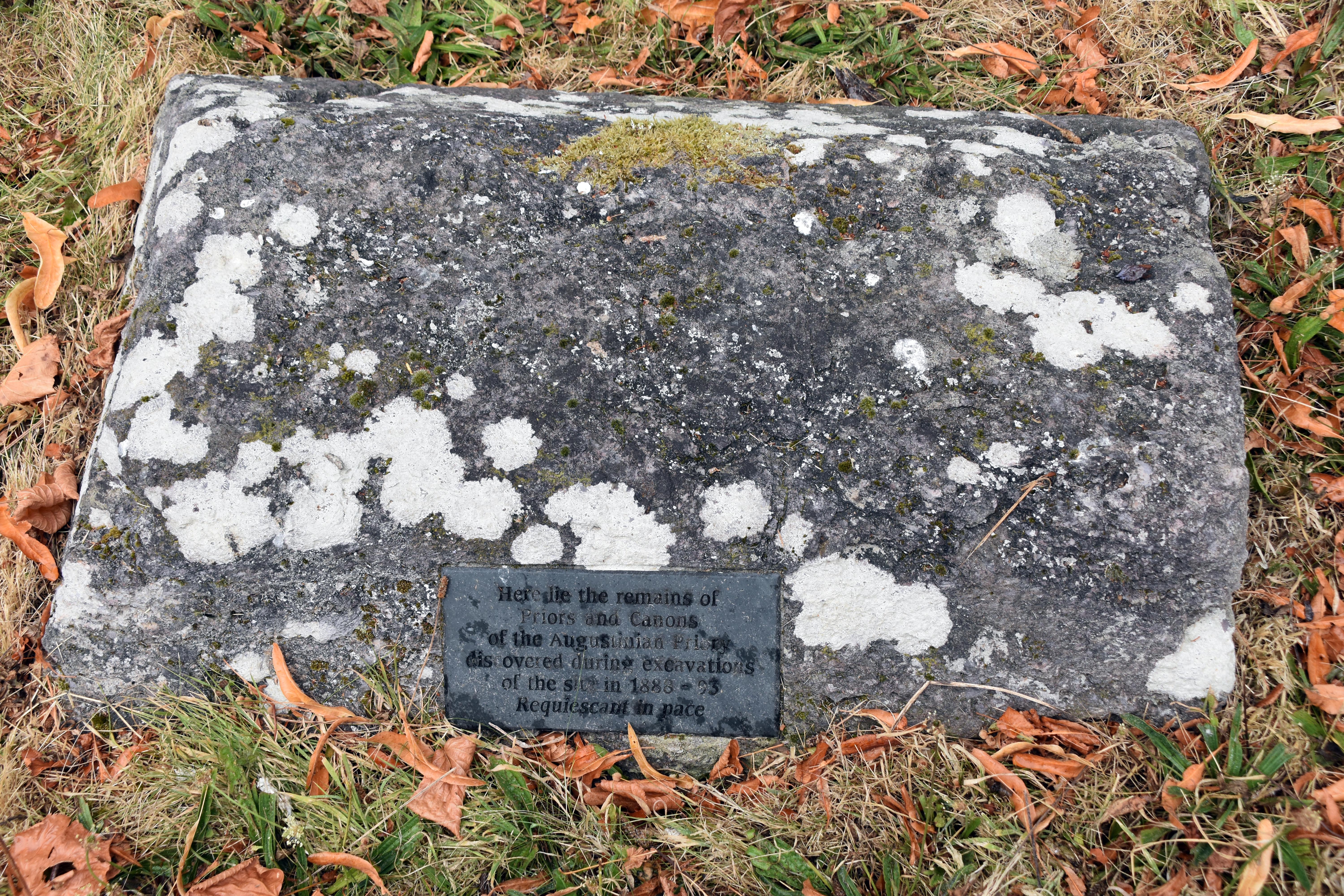
Sadly St Thomas’ Church was not open to the public. I have said too many times how sad it makes me feel to find so many of our urban churches locked up. I shall try and endeavour to contact someone to get inside, but the graveyard had some very interesting graves and memorials. One of which was a marker explaining where the 1886 to 1893 excavators had reinterred the bodies of Priors and Canons whose graves they had discovered whilst uncovering the Priory remains. Next to that is a fascinating grave marker relating to a 1996 Time Team episode when they were excavating in local fields and in a sewage works where the River Kensey meets the Tamar just downstream from the Priory and St Thomas Church. They discovered a leper hospital which had been built in the 13th century at the absolute limits of the borough boundaries as they sought to keep lepers at arm’s length whilst not completely jettisoning their Christian duties to these sadly afflicted people. It was built as a church‑run hospital and may have been provided with personnel from the Priory itself. In the process they discovered the remains of lepers who had been buried away from the normal cemeteries of the era. In a nice gesture they were moved to the consecrated ground of St Thomas’ Church and lay next to the Priors and Canons who may well have done the tending to them or at least organised it. Then on the gate into the graveyard is a reminder memorial put up in 2021 that the unmarked graves of those who were executed at Launceston Castle between 1200 and 1821, when it was the centre of local justice, were buried in unmarked graves in this churchyard.

|
|
|
Just opposite the church is that delightful packhorse bridge, which was probably built by the canons of the Priory themselves to allow them to travel to and from the north of their Priory with ease. These days it is a remarkably idyllic spot with weeping willows, picnic benches and ducks with their ducklings all preening and feeding in the Kensey River. There is also a memorial to Launceston poet Charles Causley, who took inspiration from this beautiful scene and indeed lived just a little bit further up the road where a blue plaque marks where he lived. One of his poems was The Ballad of Charlotte Dymond, a notorious nearby murder case involving an alleged love triangle and possible miscarriage of justice which provided a Gothic story that fascinated Victorian sensibilities. He would also write many poems about Launceston and its surroundings.

|
|
|
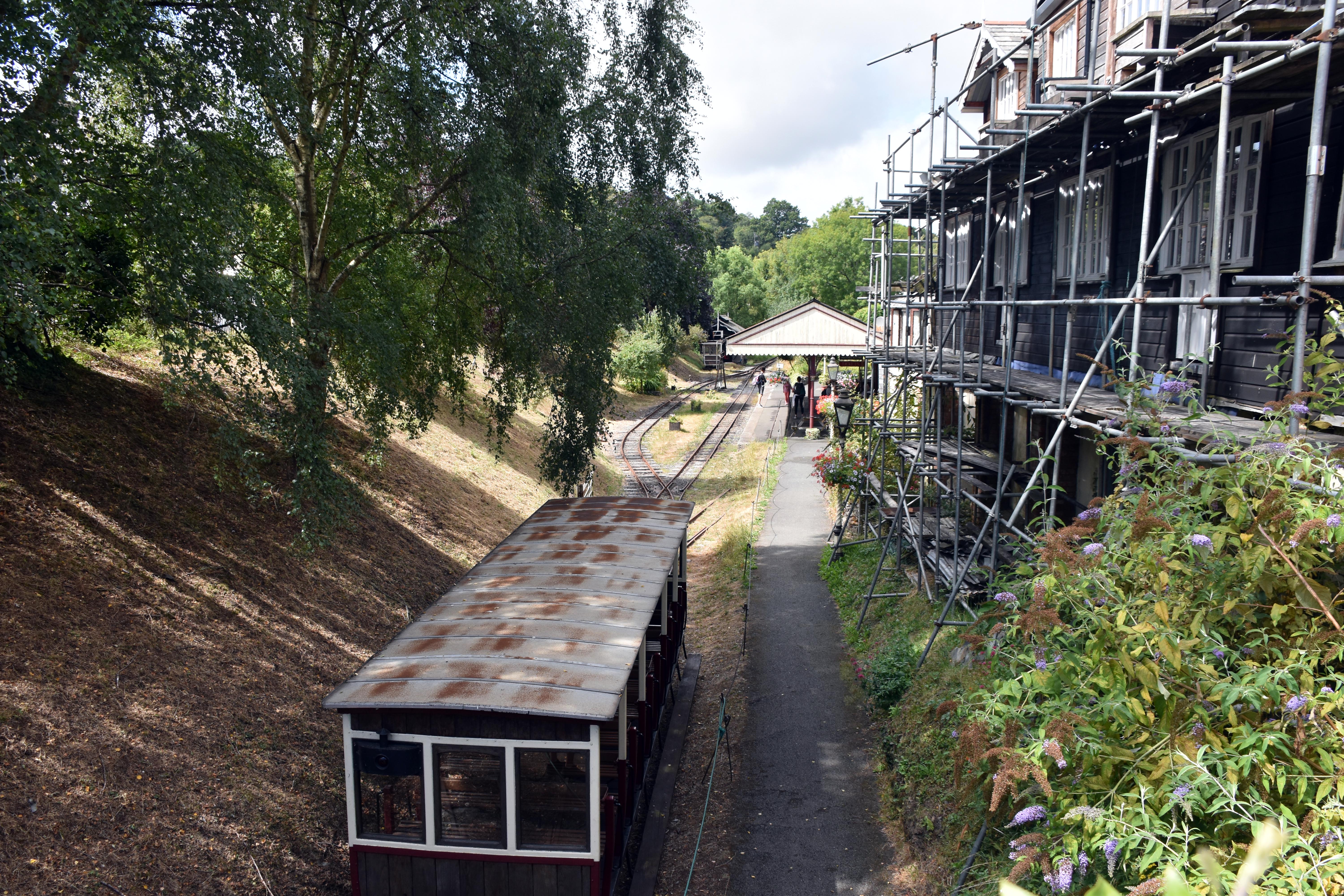
We walked to the main road and followed it towards the town centre and castle. Just as it begins its rise you can look over a bridge to see the remnants of the old London and South Western Railway line that once competed with the Great Western Railway to carry customers and goods in and out of the Westcountry. Today it is a heritage line running steam trains two and a half miles out of Launceston to Newmills Station. Once it was a major national communications asset but sadly little of its Westcountry routes survived Beeching in 1963, and worse yet they were sold off for a pittance and with little thought to their strategic utility.
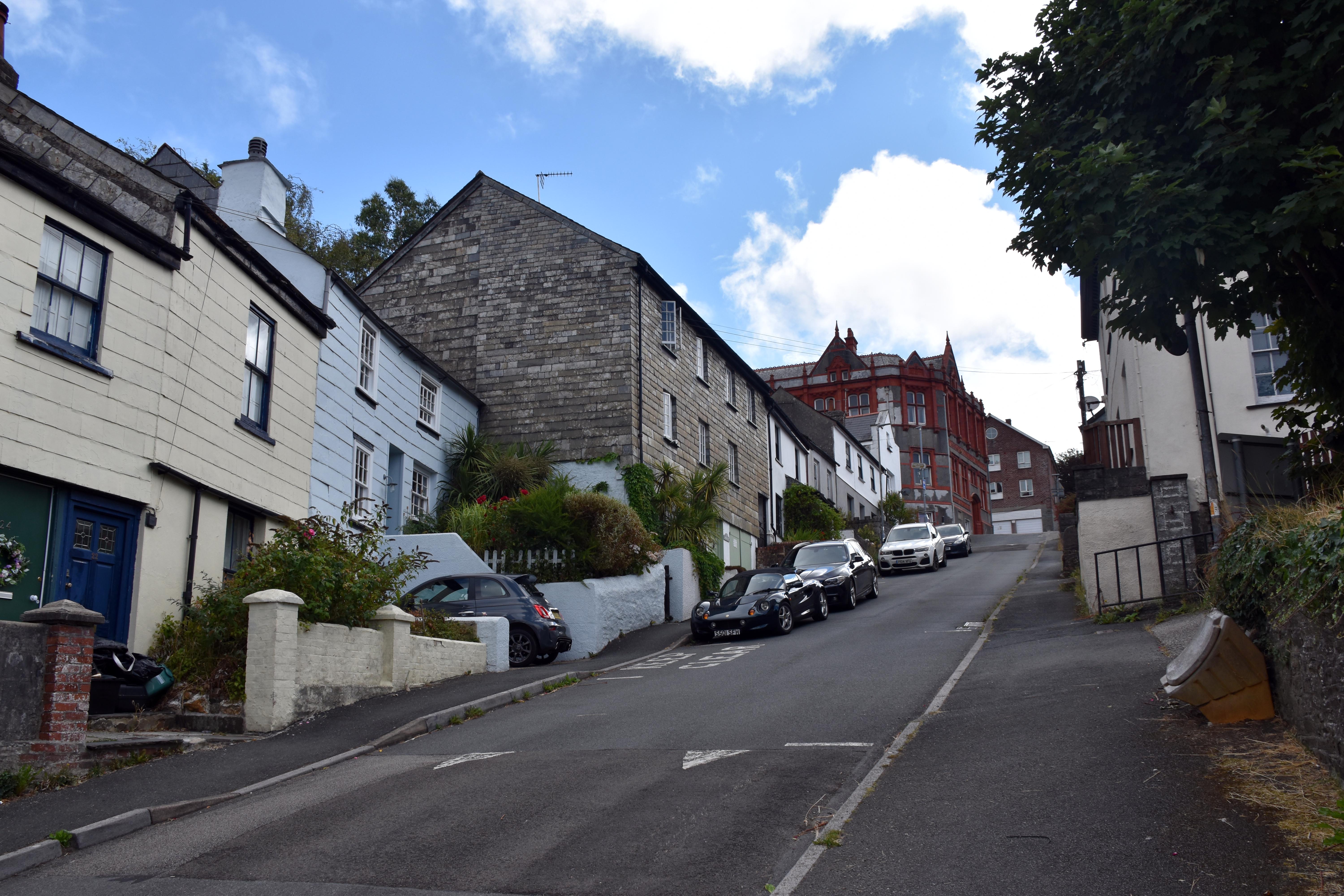
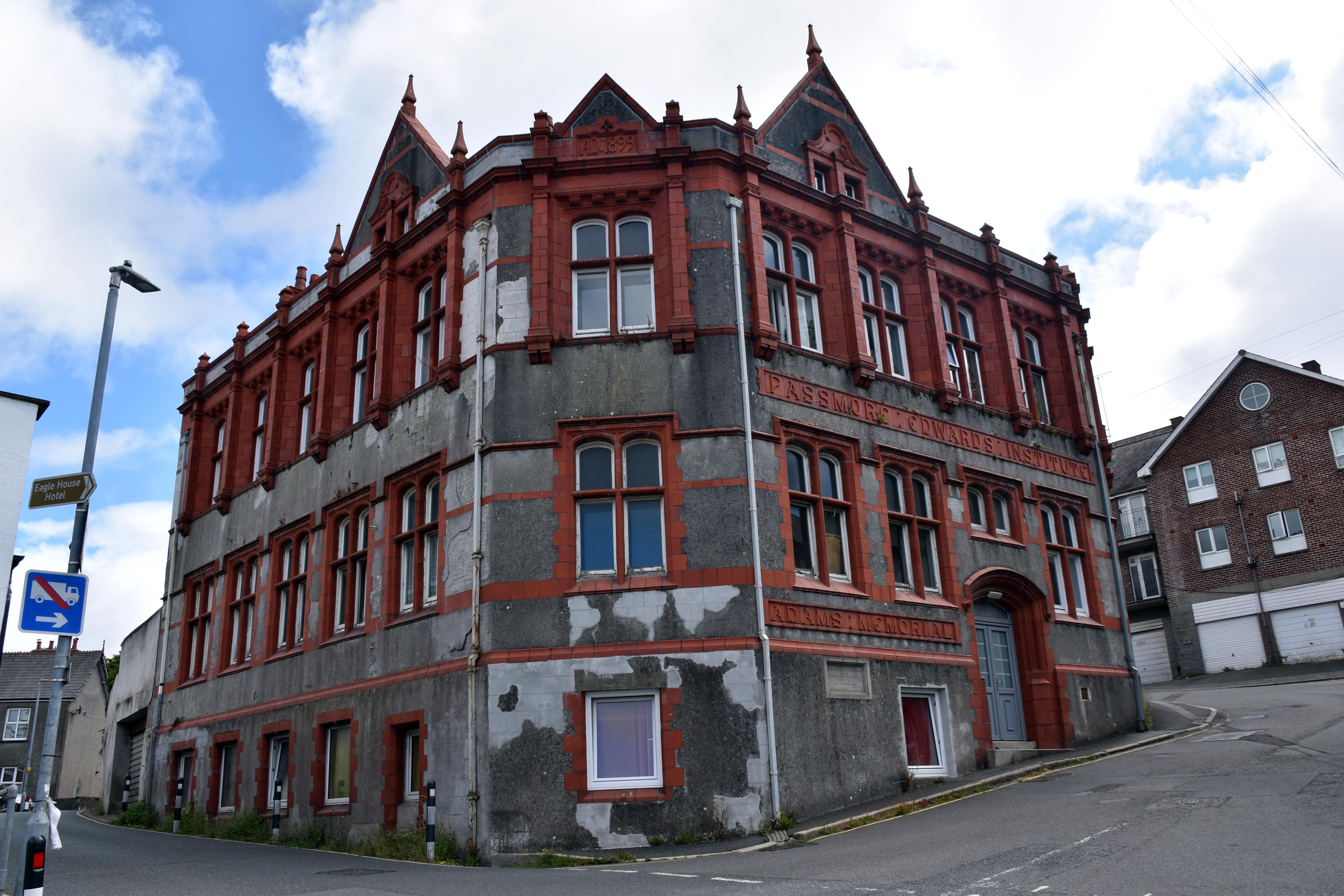
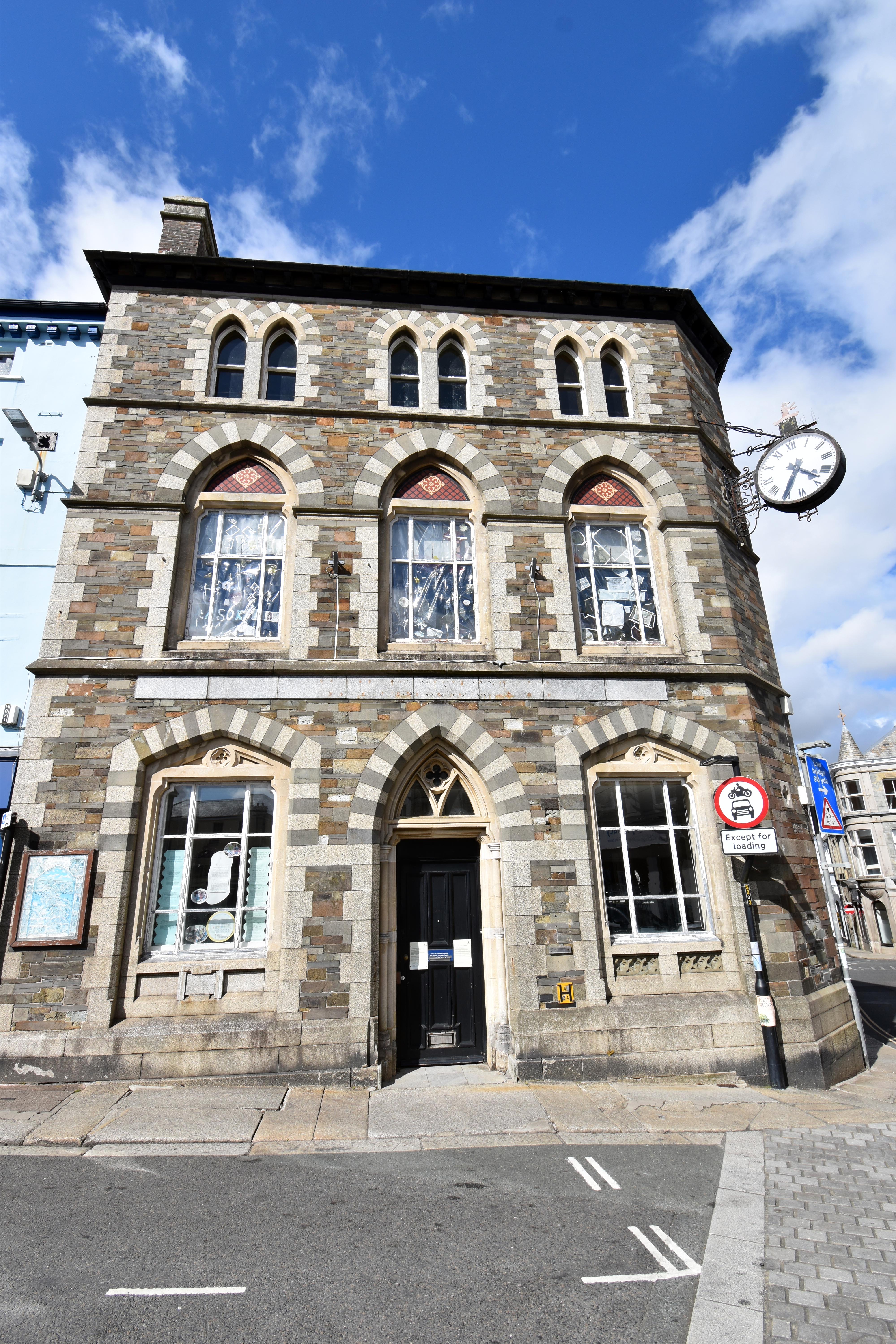
We then deviated up the far quieter St Thomas Hill, which rises steeply up towards the town centre. The people who live here must have seriously powerful thighs and you definitely would need to trust your handbrake on your cars parked along here. About halfway up you come across the lovely late Victorian Passmore Edwards Institute. He was a journalist who made a fortune through ownership of a series of newspaper titles as their circulation surged in the late Victorian era thanks partly to those trains able to move newspapers ever further and also thanks to rising literacy rates largely due to the success of Sunday Schools and Anglican National Schools. Perhaps appropriately this Cornishman used his fortune (much like Andrew Carnegie would) to encourage yet more literacy through providing what was once this purpose‑built library and reading rooms. In the 20th century Cornwall County Council took over library provision and these privately funded libraries withered or mutated into community buildings. Sadly this one seems to have been converted into housing but the building is delightful. I say this especially when I cast my eyes on the more modern 1960s Launceston Library, which no doubt is far more practical but is ugly beyond belief and does absolutely nothing to blend in with the otherwise elegant buildings around it. Whoever gave it planning consent should hang their heads in shame. The vast majority of Launceston is beautiful but every now and then you see ugly modern carbuncles like the library and your heart sinks. It is a classic example that progress is not always in an upward direction.

|
|
|
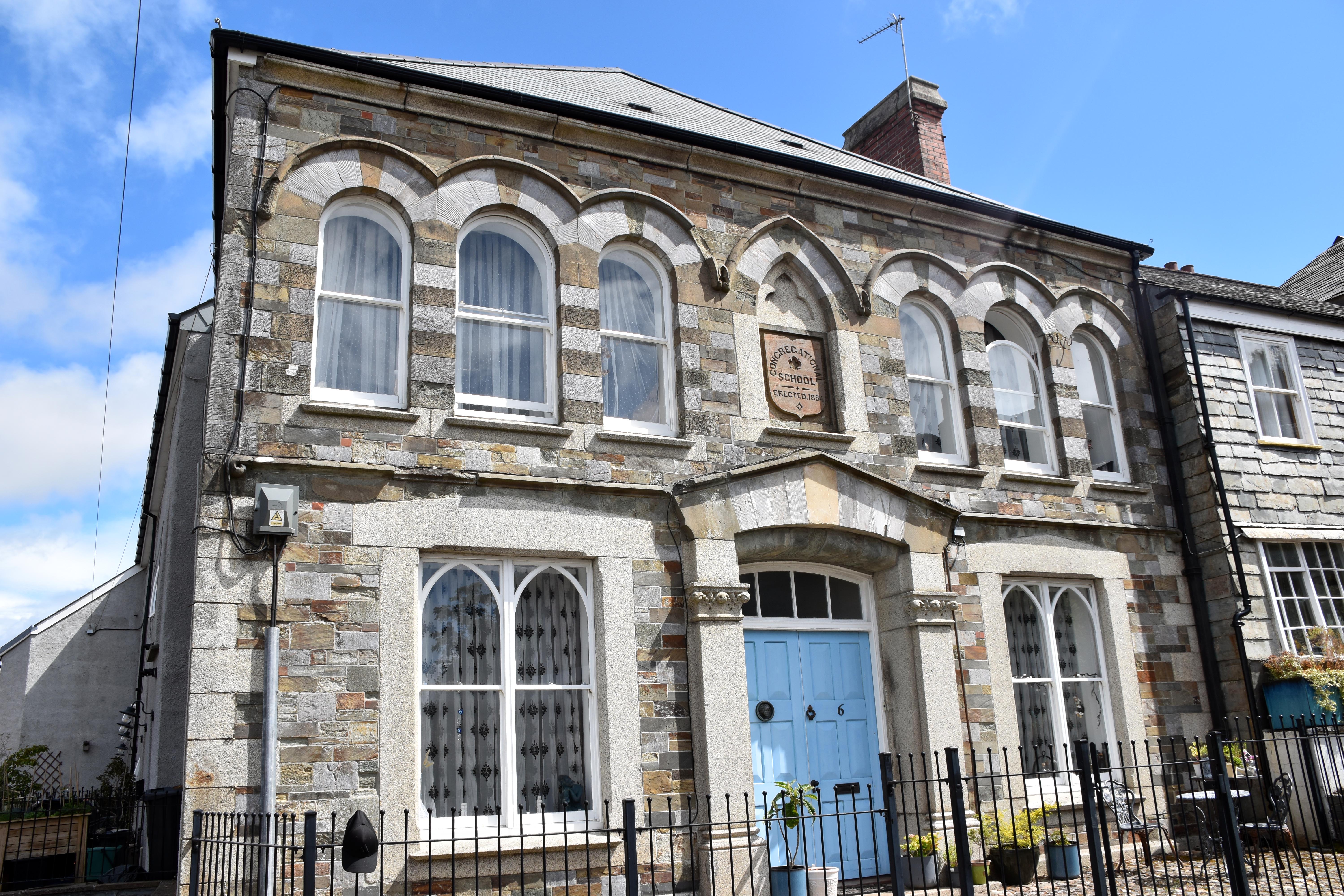
Soon after seeing the Passmore Edwards Institute we saw what is now a house that was once a Congregational School. This was one of those buildings that explains the rise in literacy that helped John Passmore Edwards make his fortune. It was a privately funded Congregational day and Sunday School from the late Victorian period for the children of those who attended the nearby Congregational church. Non‑Conformism was very popular in Cornwall and they placed a great store on literacy so that the Bible could be read and understood. It would later become redundant when the state began to take control of education away from private and religious organisations. But it is a reminder that the state came surprisingly late into taking on the responsibility for teaching reading and writing to our young.
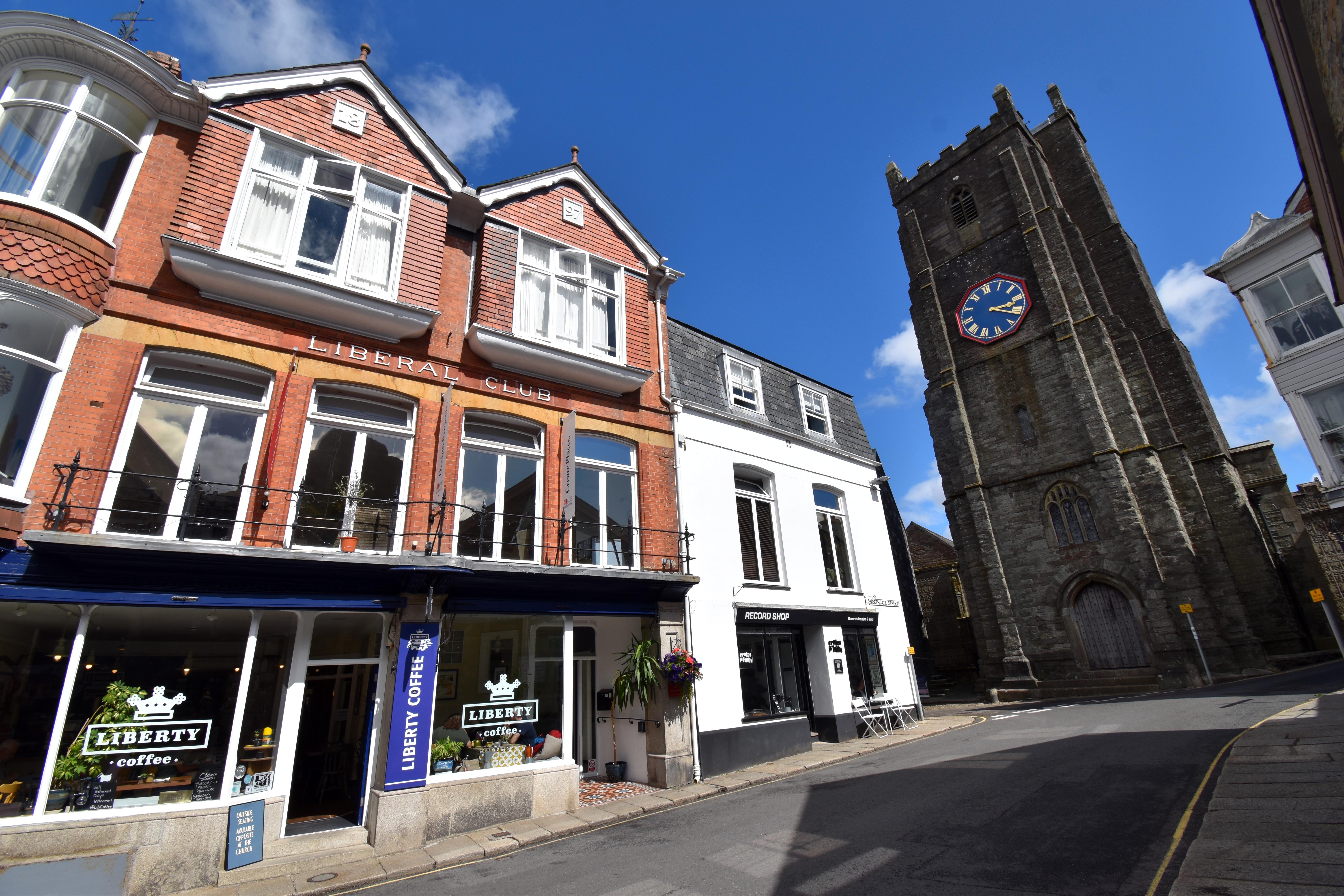
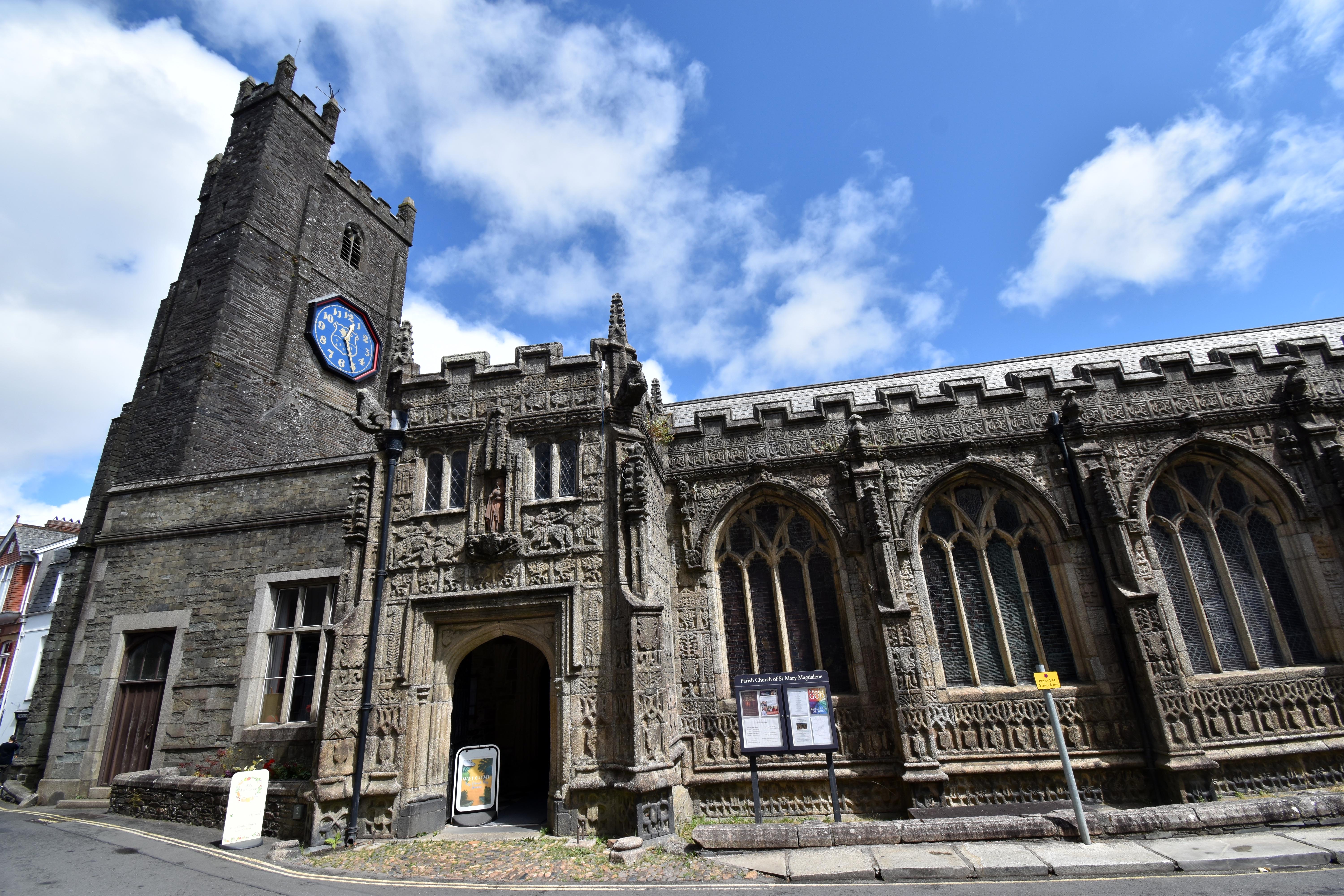
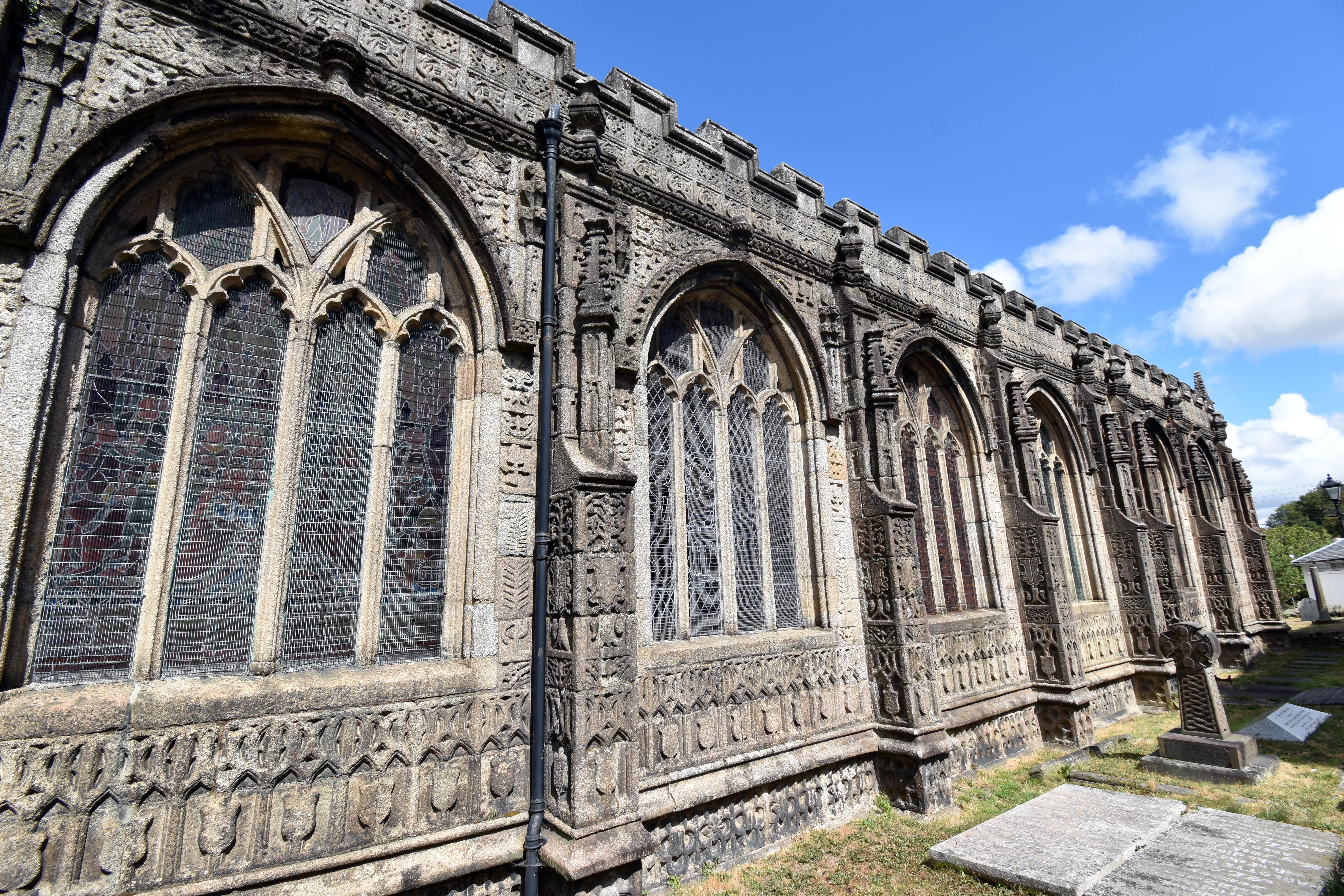
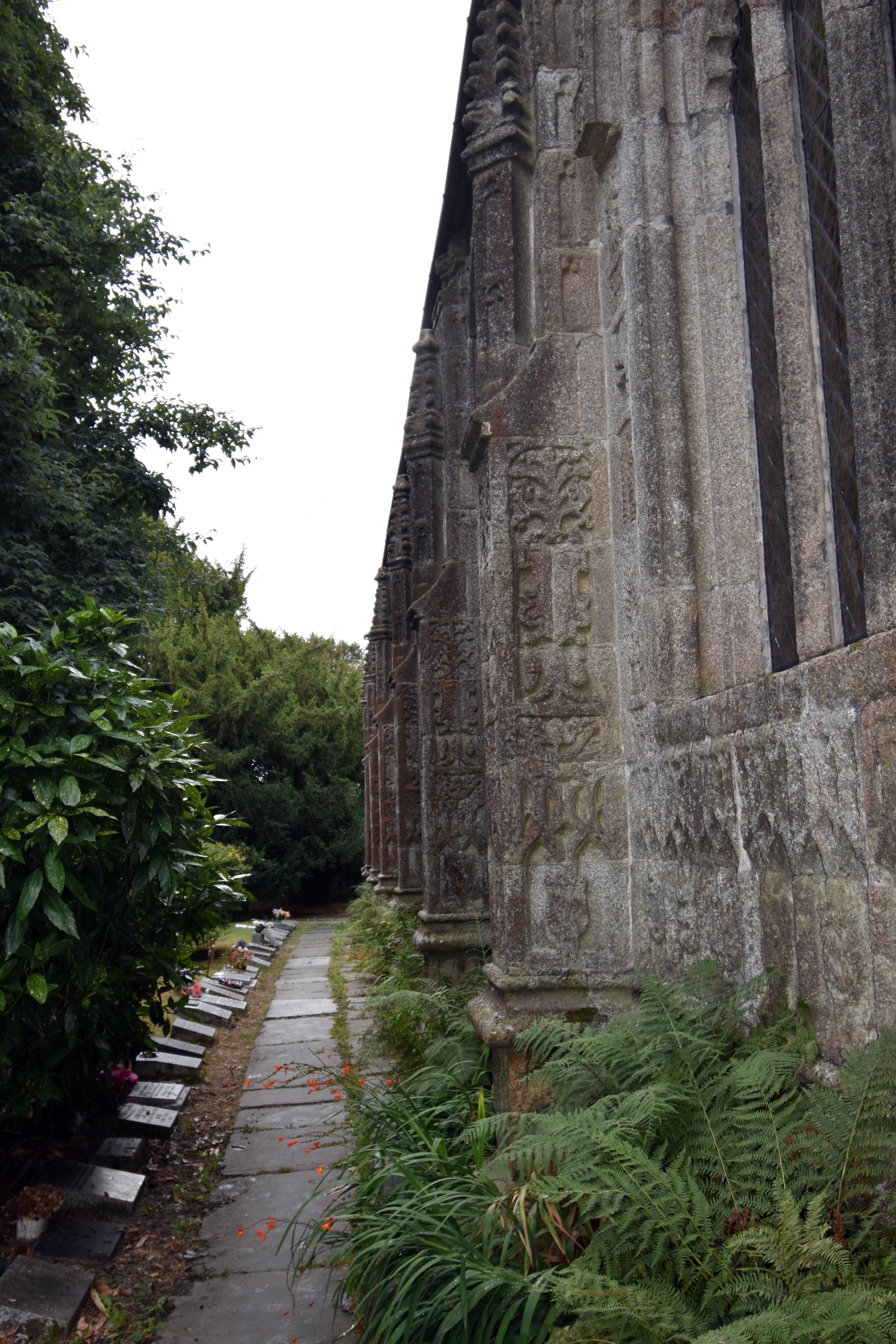
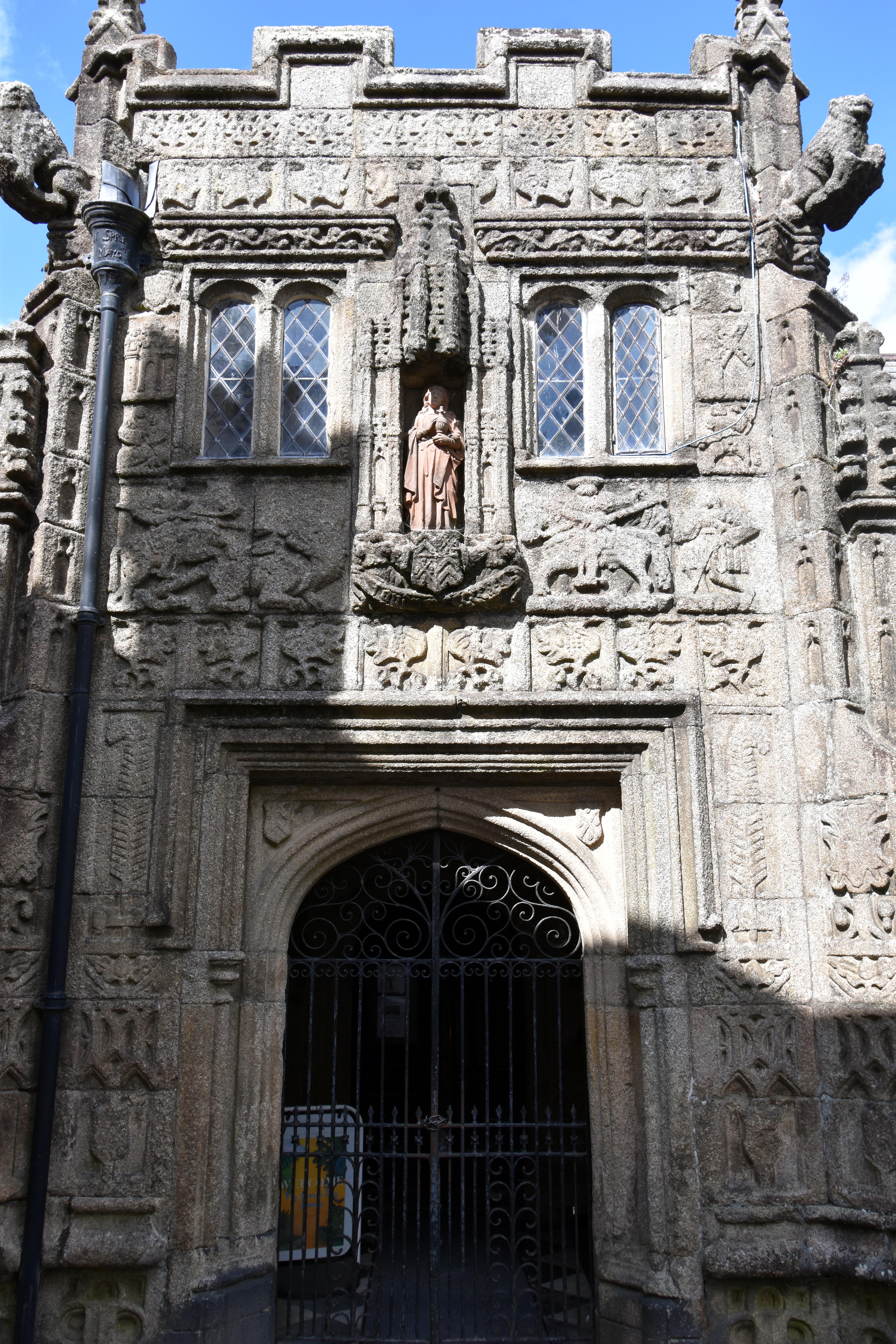
Soon we emerged into the town centre which sits near the summit of the hill as once upon a time it lay within the castle walls. There are many elegant Georgian and Victorian buildings here and the wonderful St Mary Magdalene Church with its fascinating exterior façade. This exterior is very unusual and dates to the reign of Henry VIII – although started just before the Reformation that he would soon unleash. It is clad in carved granite which is notoriously difficult for stonemasons to work with. But its results are eye‑catching in complexity and longevity. Half a millennia later and the stone decorations still pop out at you, reminding you more of the intricate designs on Islamic mosques than a Christian church. Annoyingly the church was open when we got there but we were hungry and wanted some food; by the time we had returned the church was closed. We shall have to return again to have a look at its interior monuments.
|
|
|
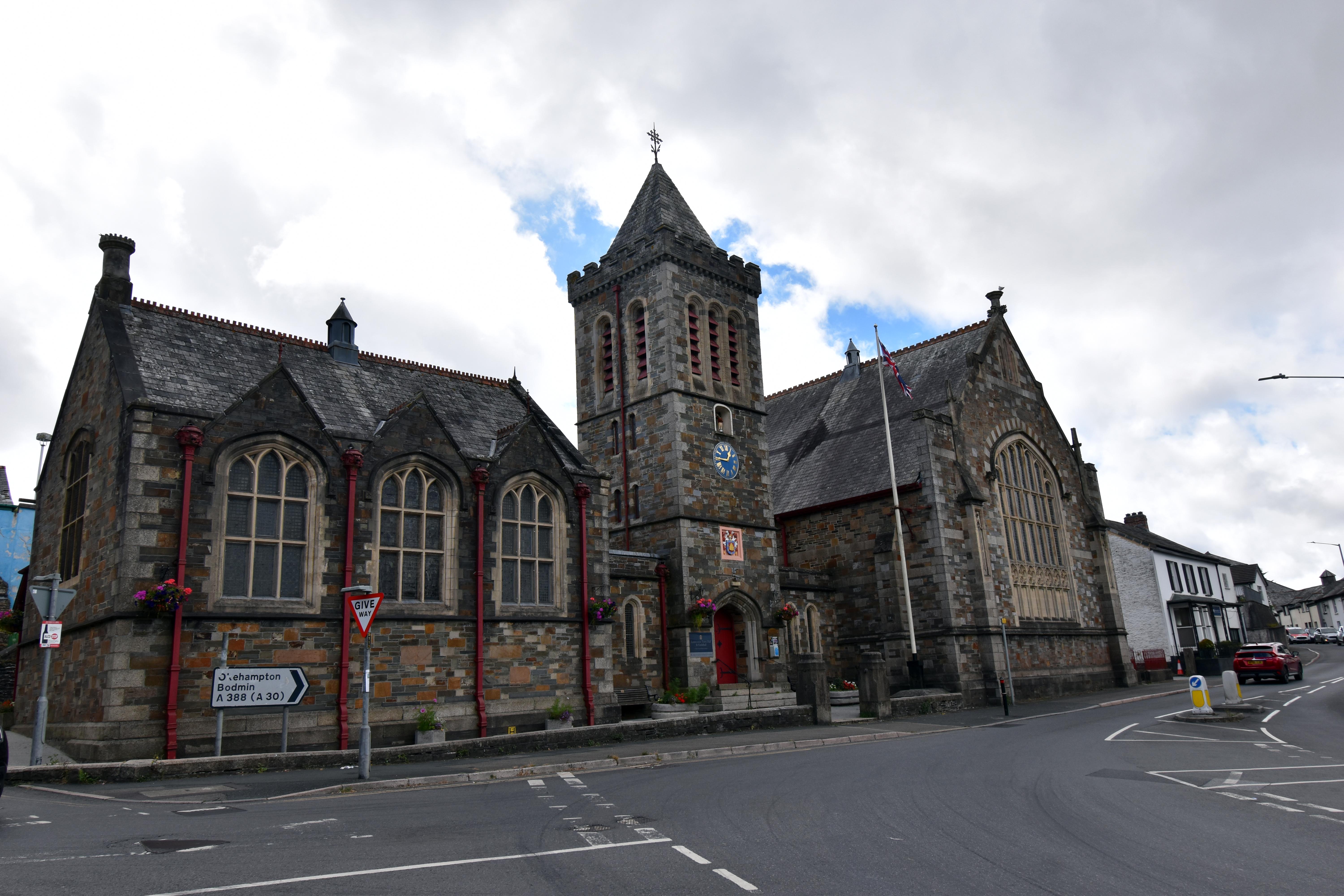
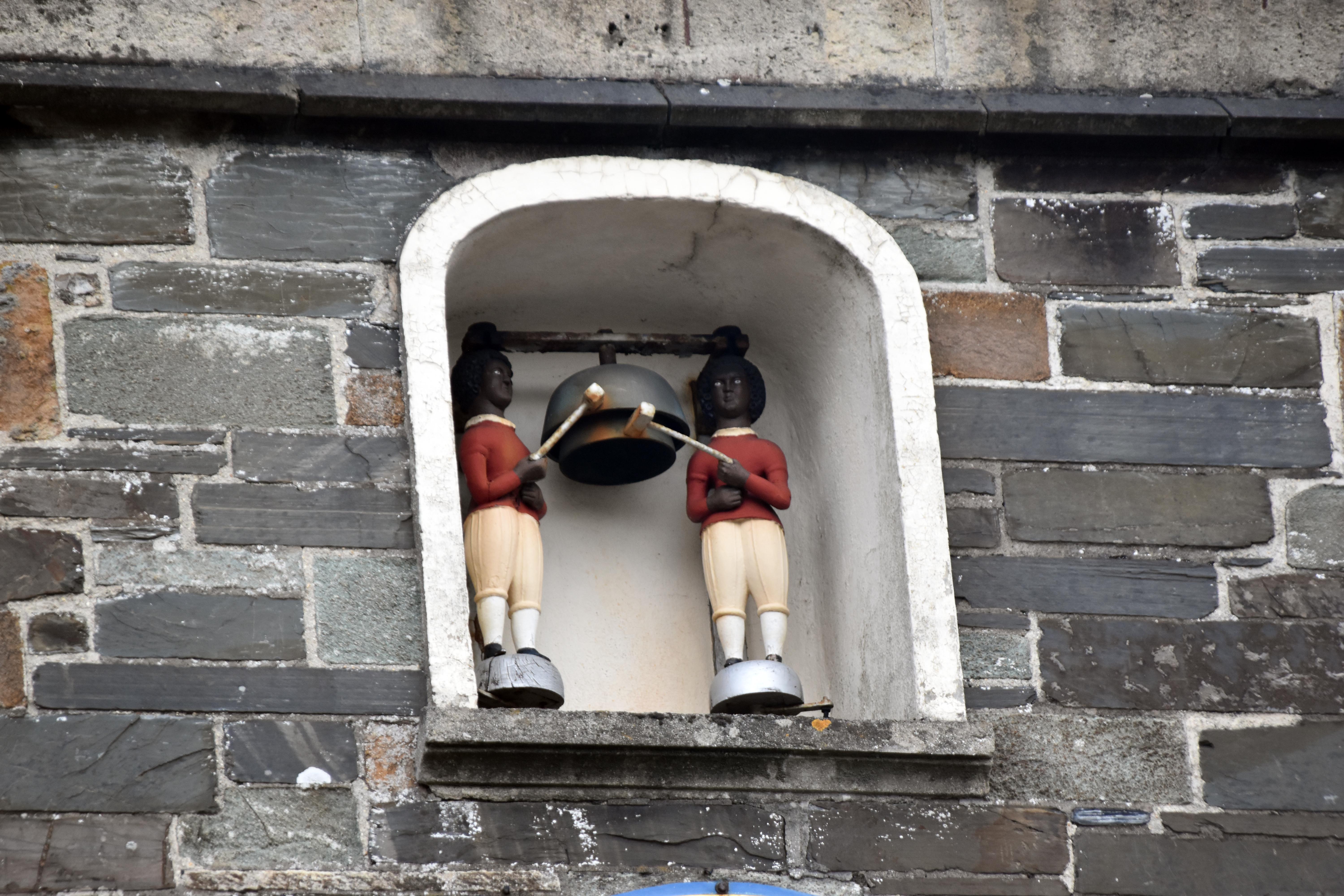
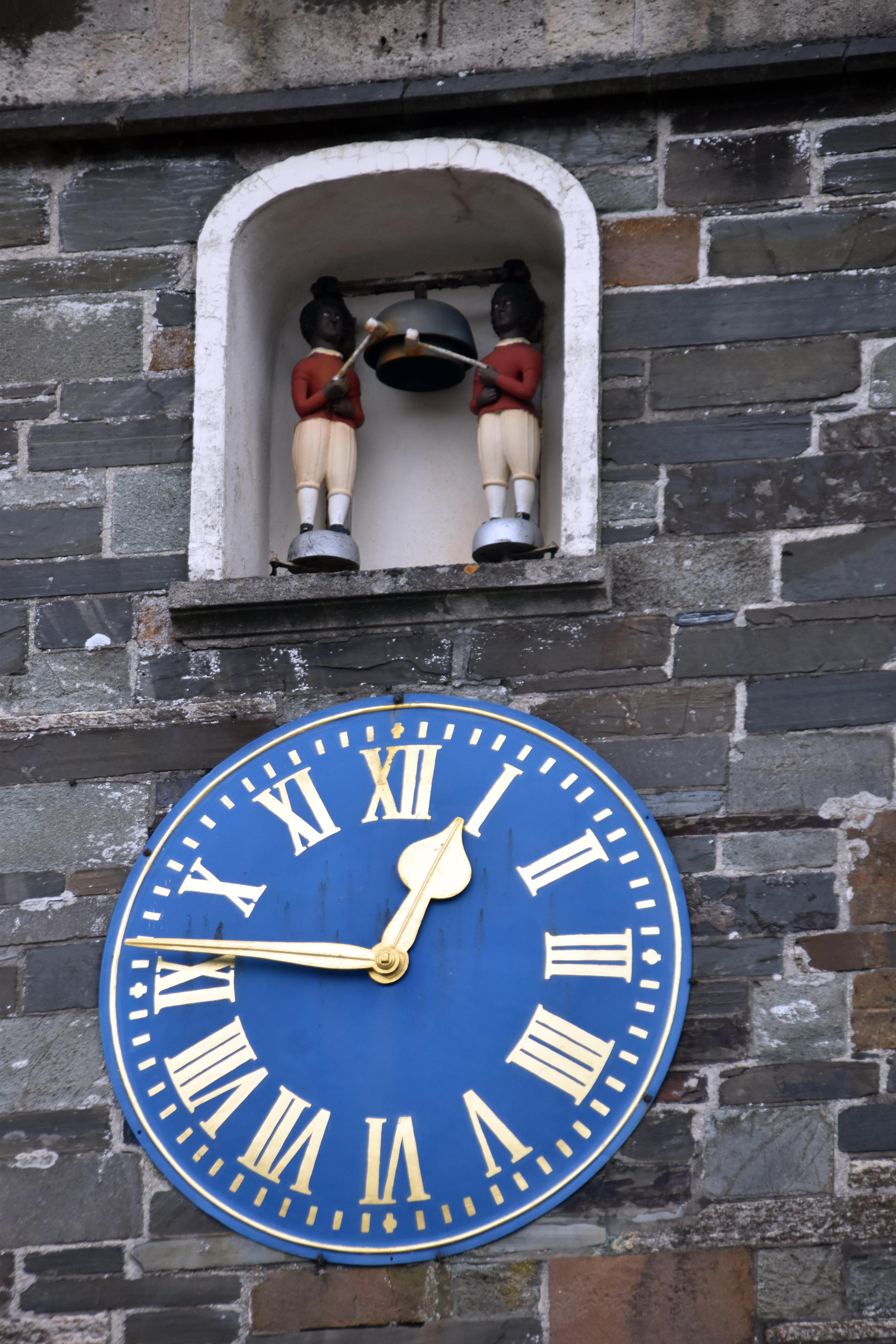
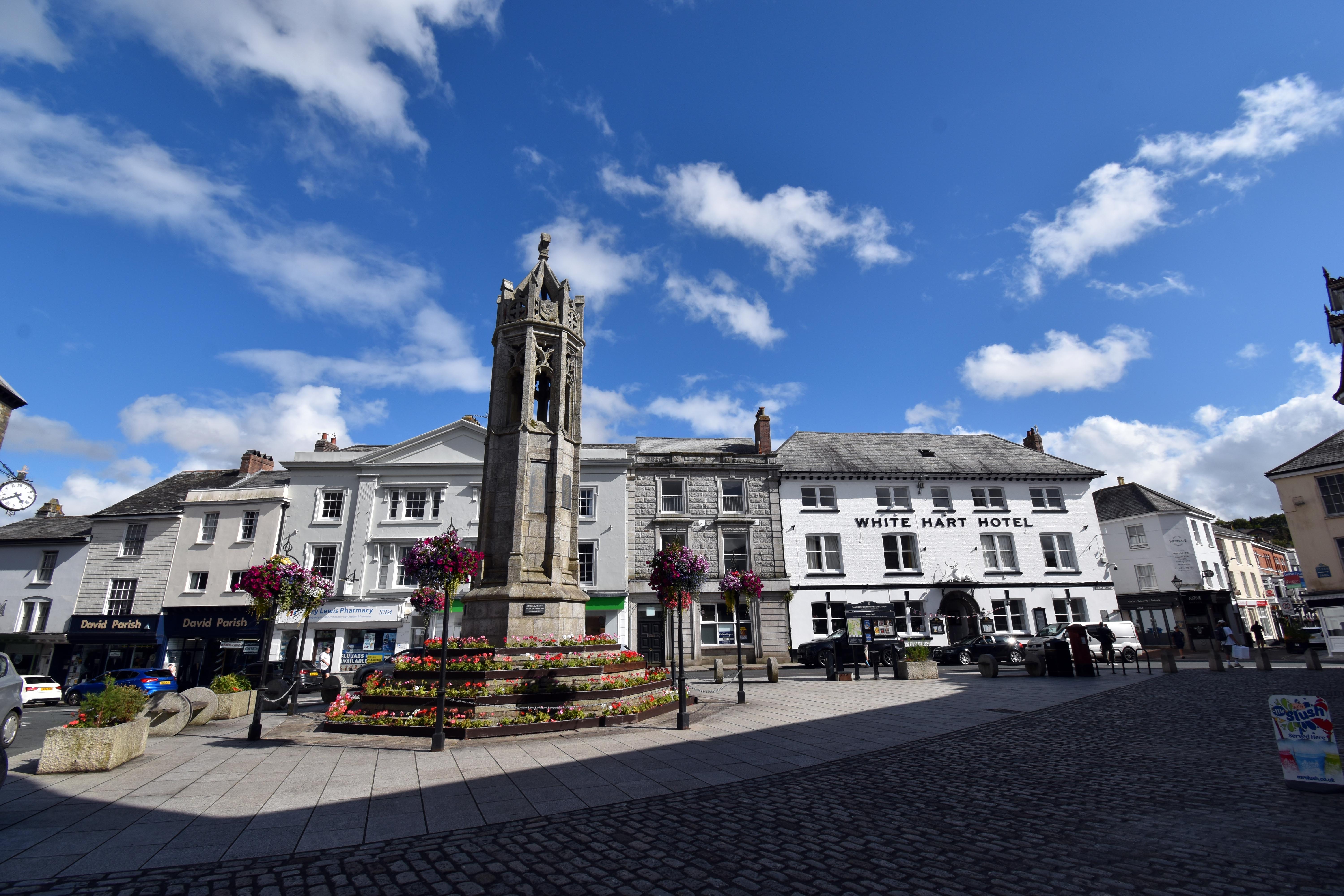
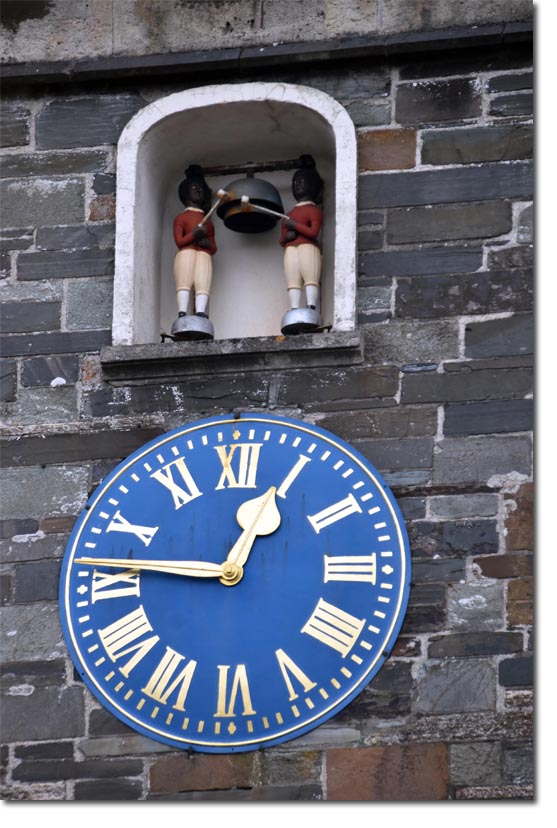
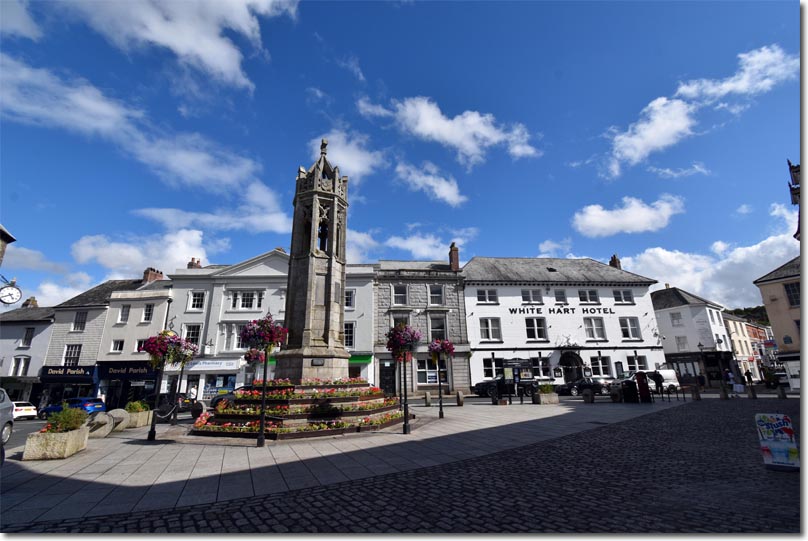
Launceston really is an attractive town which of course unlike many of the major cities and towns of the Westcountry avoided being bombed by the Luftwaffe. Hence it largely retains its historical charm other than the occasional atrocity committed by modern town planners (see note on library above). The war memorial is particularly finely placed as a centre point for the community with all too many names carved on it. As we walked through it, we came across the delightful Guildhall, which was seriously remodelled in 1881 in Victorian civic style as the then powerful boroughs sought to show off their wealth through civic pride. One aspect of the Guildhall though dates from the middle of the seventeenth century and is a curious reminder of a much older tradition of civic pride. These are the two black quarterjacks who strike the bells upon the quarter hour. Funnily enough the clocks and bells have been changed several times but the quarterjacks are still performing their prime function four centuries later. The blackness is almost certainly nothing to do with race, although black servants in England were not unknown at the time (Prince Rupert had several for instance). It was more to do with visibility and durability. The black would contrast more easily and people could see them from far down below, and also they would require less maintenance and upkeep over the years. This has clearly worked as they are still going strong.
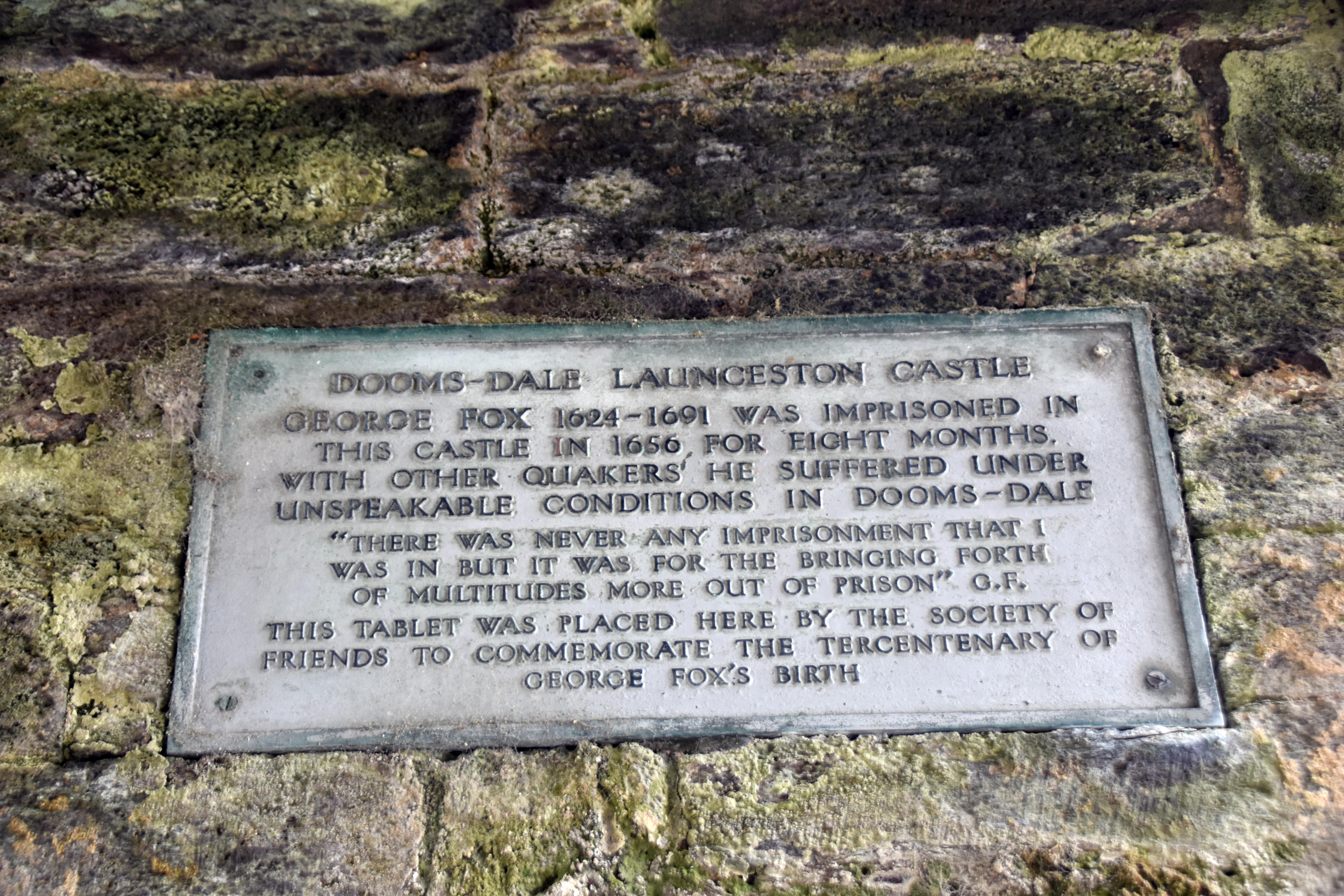
From here we had intended to visit Launceston Castle just over the road from the Guildhall but bizarrely, despite being a Summer holiday, it was closed on Mondays and Tuesdays. Why Tuesdays? Never heard of Tuesdays being a day to close down tourist attractions. Bamboozled, we could still enjoy views of the keep area below the castle and walked through the North Keep Gate, which once held the notorious County Gaol for Cornwall. It really was a dreadful place full of urine and faeces; prisoners had to pay for their own food and the gaolers could be cruel and corrupt. As if the main prison was not harsh enough, there was an even more sinister oubliette or deep pit‑cell which was used for more hardened and dangerous criminals, where they were kept below ground in a dark and airless hole. The prison was used for general criminals and those awaiting the Assizes, but it was also used during the English Civil War to hold Parliamentarian supporters. It was later used to house nonconformist preachers including George Fox, who was imprisoned here by Oliver Cromwell’s Commonwealth government for refusing to take an oath of allegiance acknowledging Cromwell’s status as Lord Protector. He was to remain here for eight months. Quakers believed that all oaths were forbidden by Christ’s instruction in the Sermon on the Mount to “Swear not at all.” He was released when it was demonstrated that he had broken no law in refusing to give an oath. His suffering did much to publicise the cause of the Quakers and significantly strengthened their popularity in the Westcountry.
|
|
|
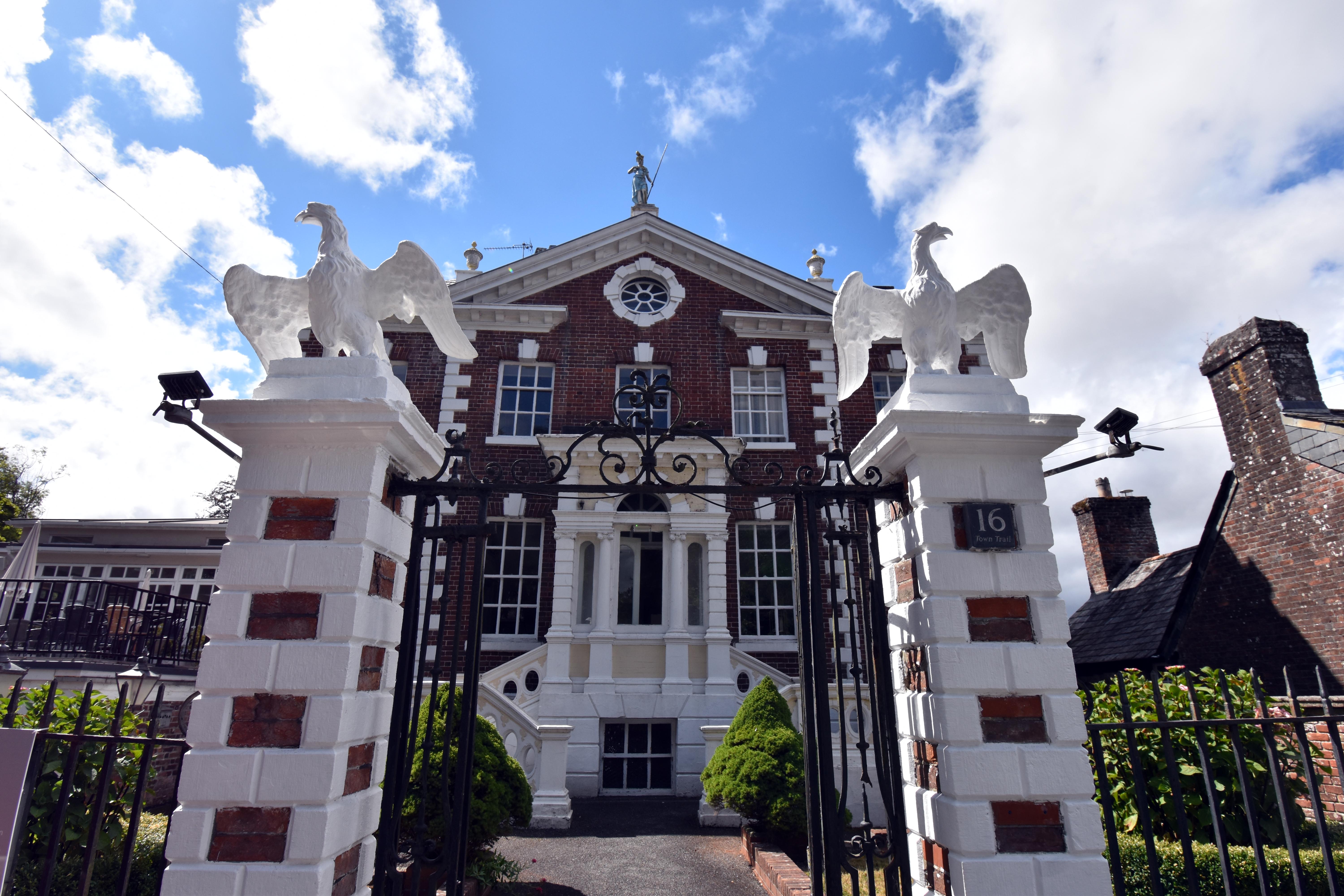
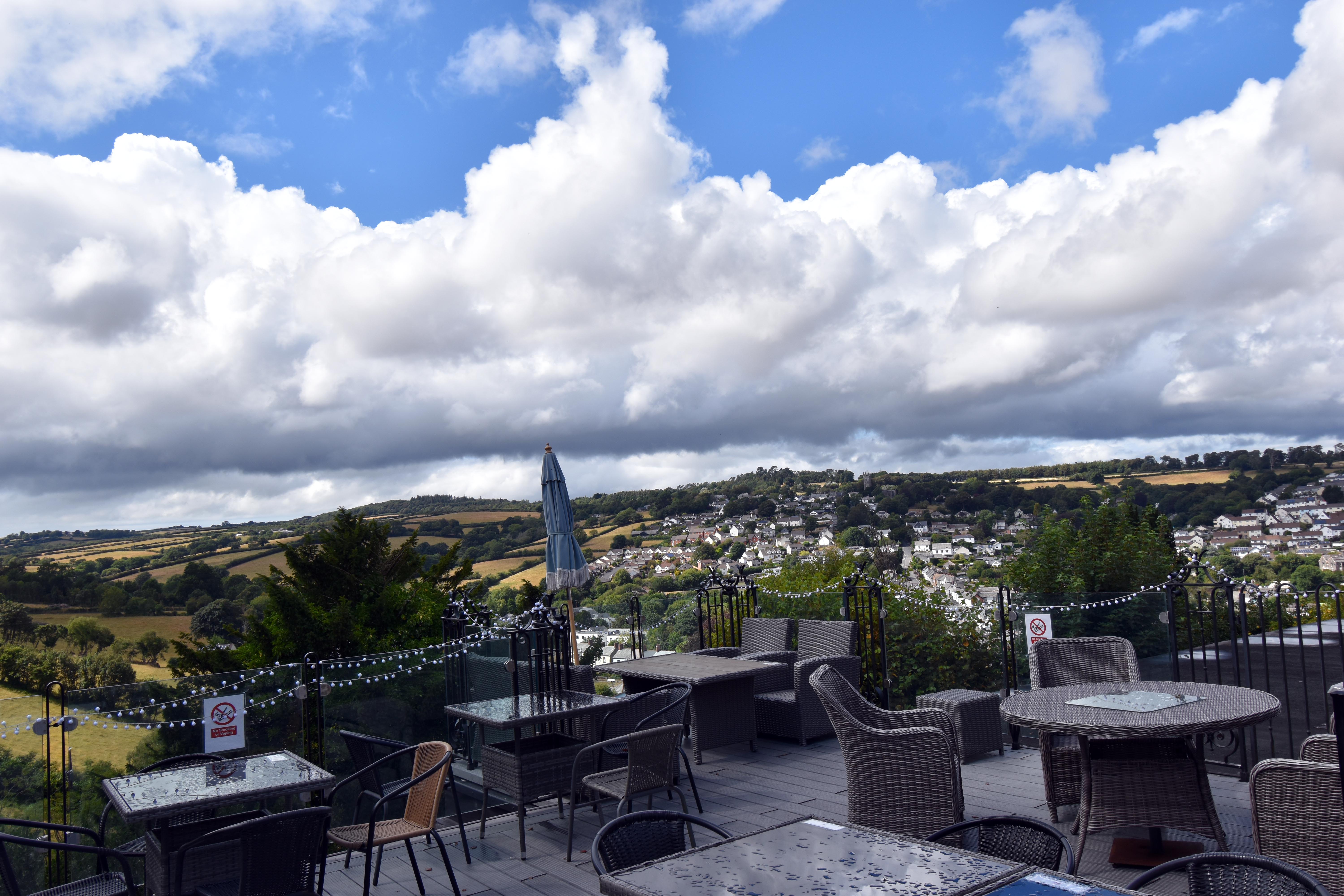
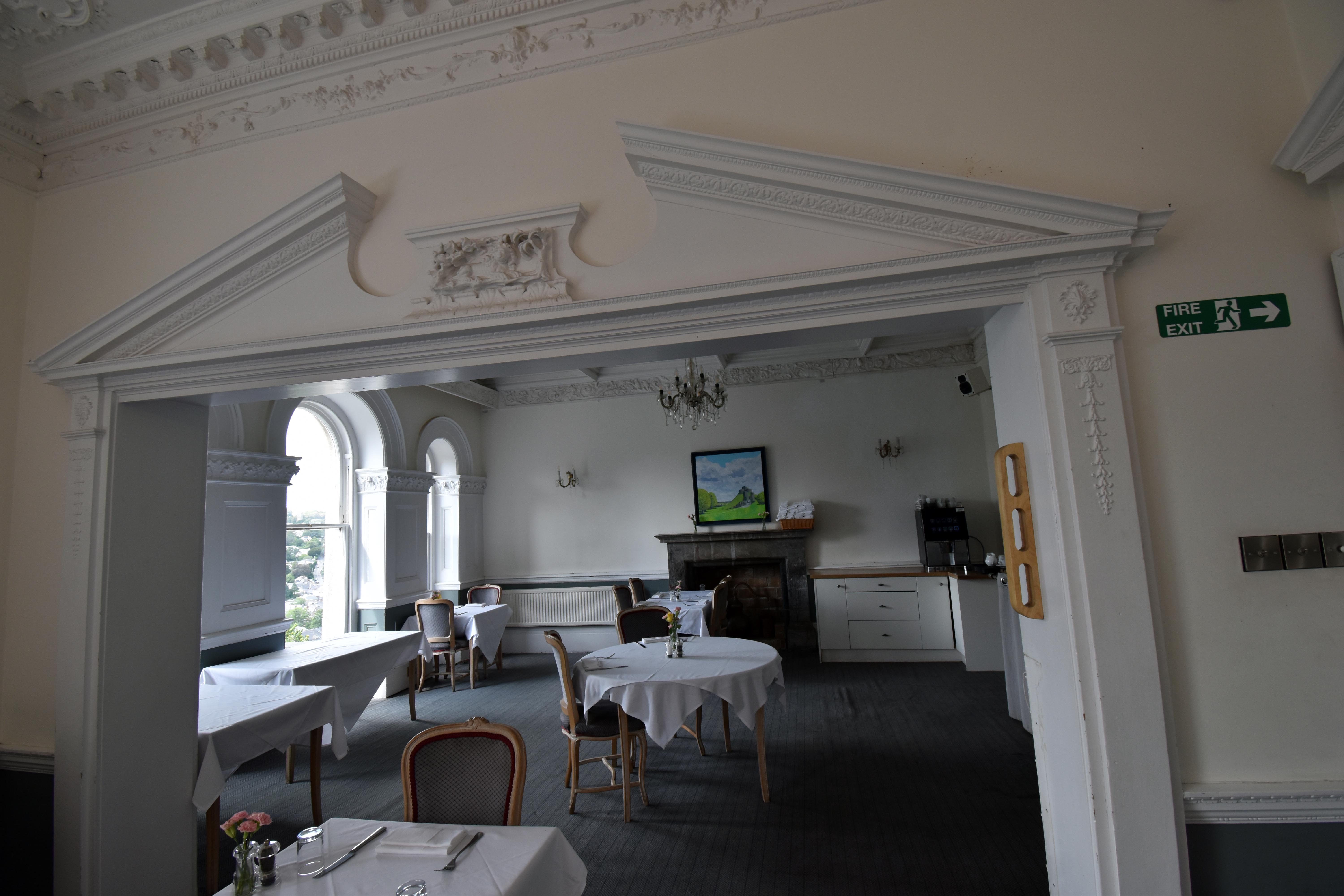
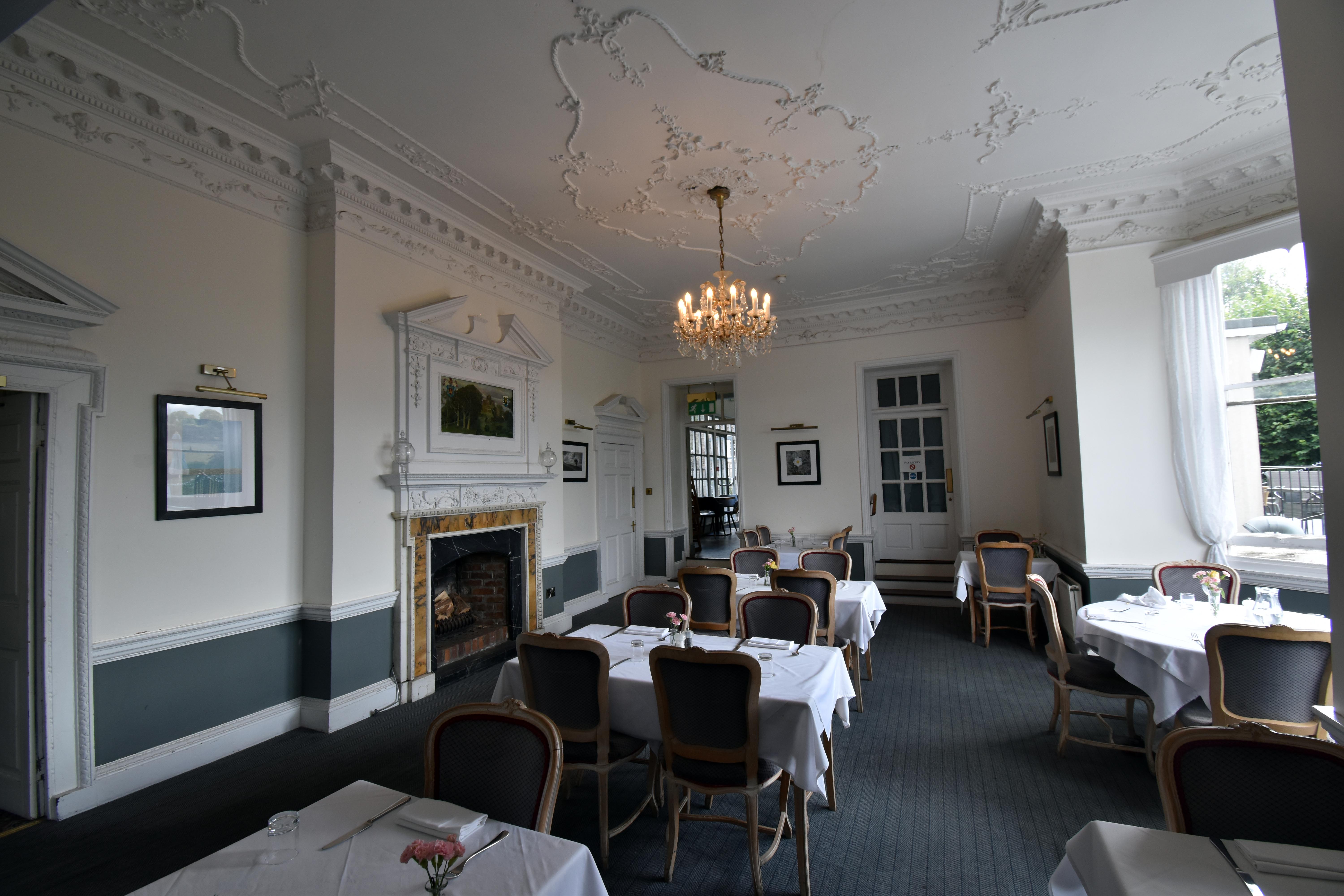
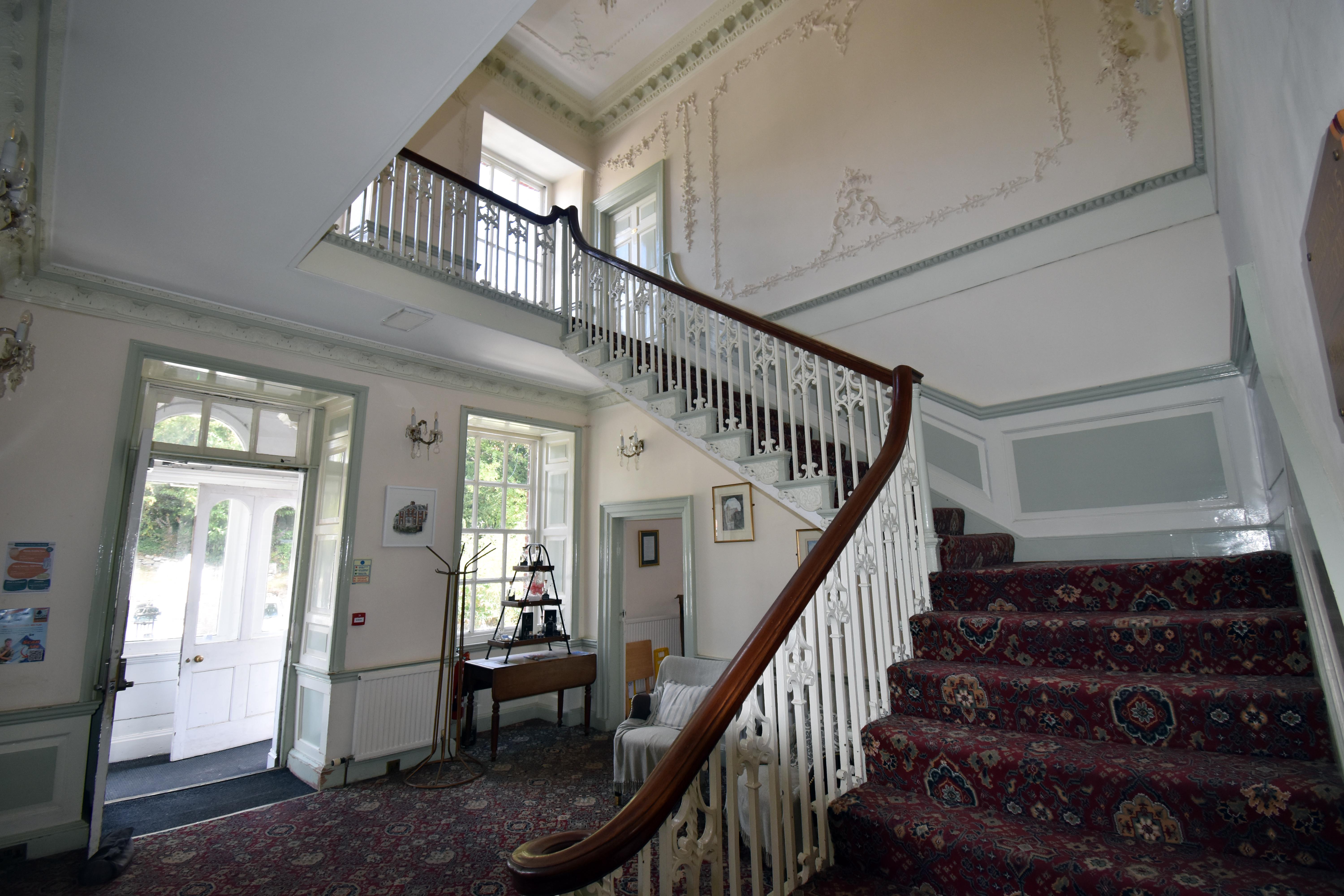
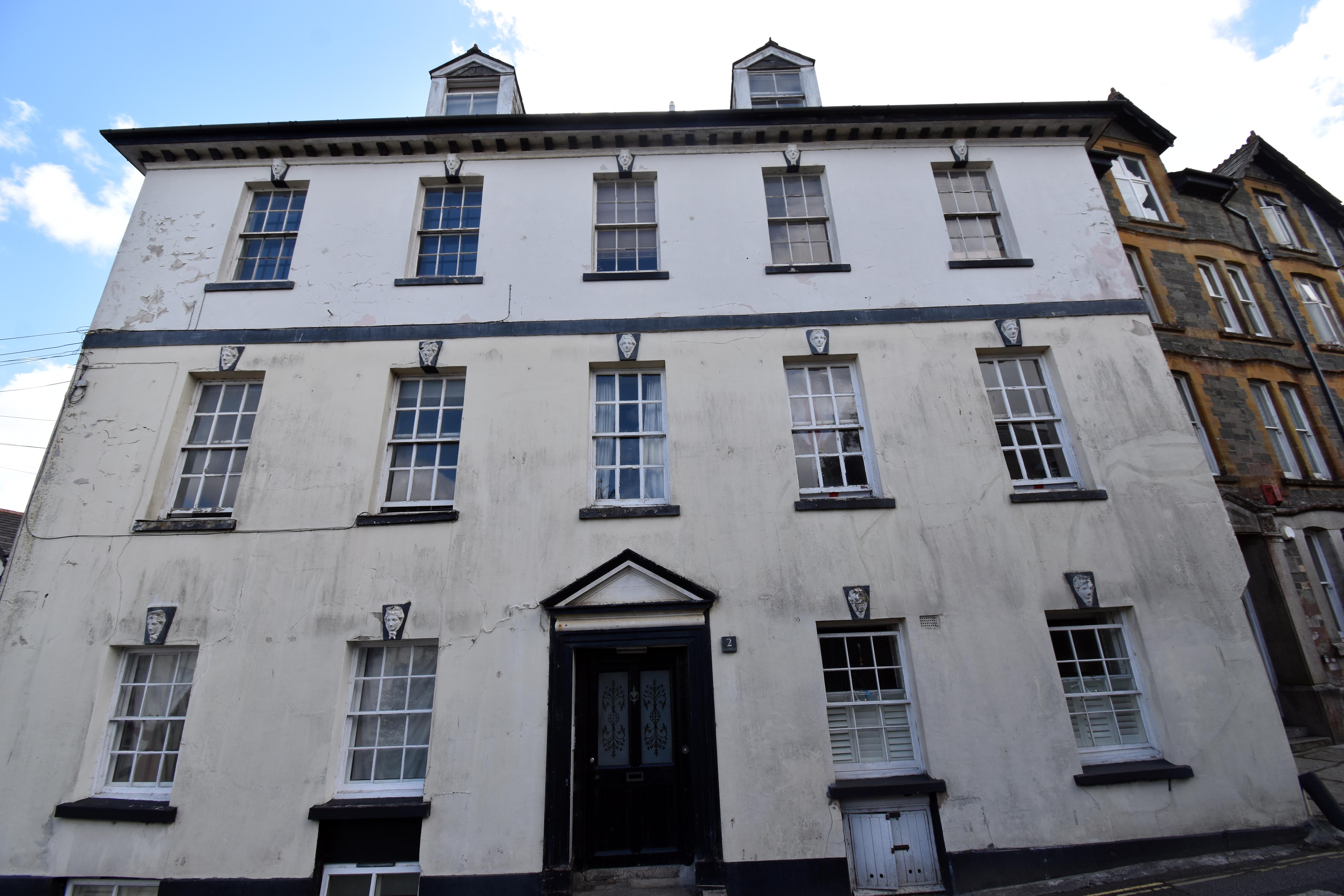
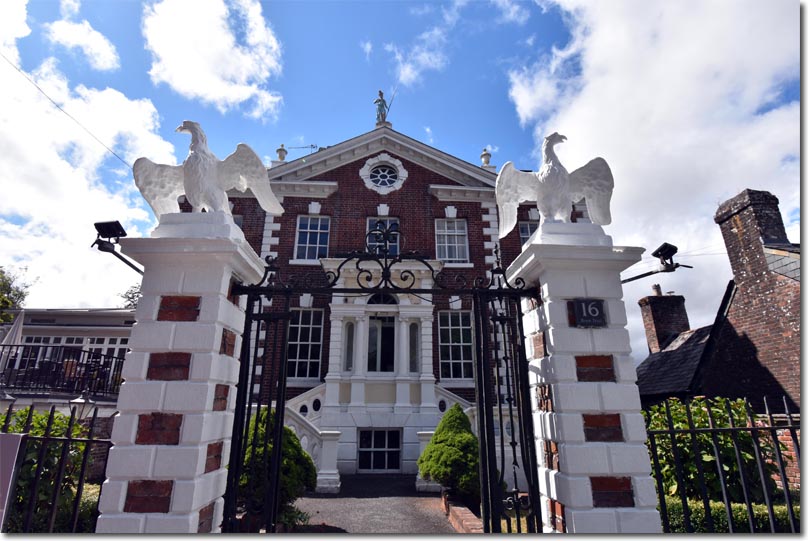
As we walked out of the North Keep Gateway, we spotted the imposing eagles at the entrance of the Eagle House Hotel. It was lunchtime and I noted that the hotel said that it served lunches and was dog friendly. But being weighed down by rucksack and wearing hiking gear I wasn’t sure I was dressed appropriately for such a nice‑looking venue. But as I edged away the long‑threatened rain decided to make an appearance with determination. It felt that the Gods were nudging me inside the hotel and so we dutifully walked up the steps and enquired if we could eat there. We were welcomed most warmly and I was glad that I did as I learned the history of this fascinating building with stunning views to the north and over to Dartmoor and some truly beautiful plasterwork on the walls and ceilings. This Georgian building could afford to have such fine features as it was built as the result of a lottery win. Coryndon Carpenter won the then enormous sum of £10,000 in a government‑run lottery. Now it should be said that in the era before income taxes, government lotteries were seen as an effective way of raising money without compulsion. Basically you elected to buy the lottery tickets and just as in Premium Bonds, some lucky people would earn prizes but of a total value less than what was received in lottery ticket sales. Most accounts of Georgian manor houses will show regular and not inconsiderable purchases of government lottery tickets almost as a way of backing the government’s need to raise money without giving them an excuse to impose a compulsory taxation system. It was only when the Napoleonic Wars broke out that the government felt compelled to introduce a temporary ‘income tax’ which over two centuries later is still in place.
Now how did Eagle House get its name? Apparently this was from those same Napoleonic Wars when various French officers were captured during the conflict. The enlisted men were invariably housed in the harsh conditions of Dartmoor Prison or on prison hulks in various Westcountry ports. But the officers were permitted parole if they gave up their swords and promised upon their honour not to escape. If they wandered too far from their assigned parole towns they would join their men at Dartmoor Prison. It appears that up to forty French officers were granted parole in Launceston and quite a few of them were accommodated in this building. The French eagles mimic the standards used by the French Napoleonic Army and pay homage to these well‑to‑do prisoners. Quite a few of these French prisoners obviously took full advantage of their freedoms to mingle with the local population and it is claimed that ten of them ended up married to Launceston ladies. It would be interesting to know if they remained in Cornwall or if they returned to France upon the war’s conclusion.
As if this was not fascinating enough, I was to discover that in the 1830s the house was bought for Charlotte Augusta Chambers, who was the daughter of the then famous Anglo‑Swedish architect Sir William Chambers, who amongst other projects was responsible for Somerset House in London, the Pagoda at Kew Gardens, and most curiously of all the Gold State Coach used by royalty for their coronations. Charlotte married Charles Hayward and their only child married Edward Archer, who lived at Trelaske Manor just outside Lewannick that we had visited just the week before. Their son was also called Edward Archer and inherited Trelaske House, marrying Sarah Lydia Radcliffe from Warleigh House just outside Plymouth. I always love it when we can piece together the movements of people and families across the parishes and manor houses of the Westcountry. The Archers would help pay for the rebuilding of St Martin’s Church in Lewannick after it burnt down in 1890.
|
|
|
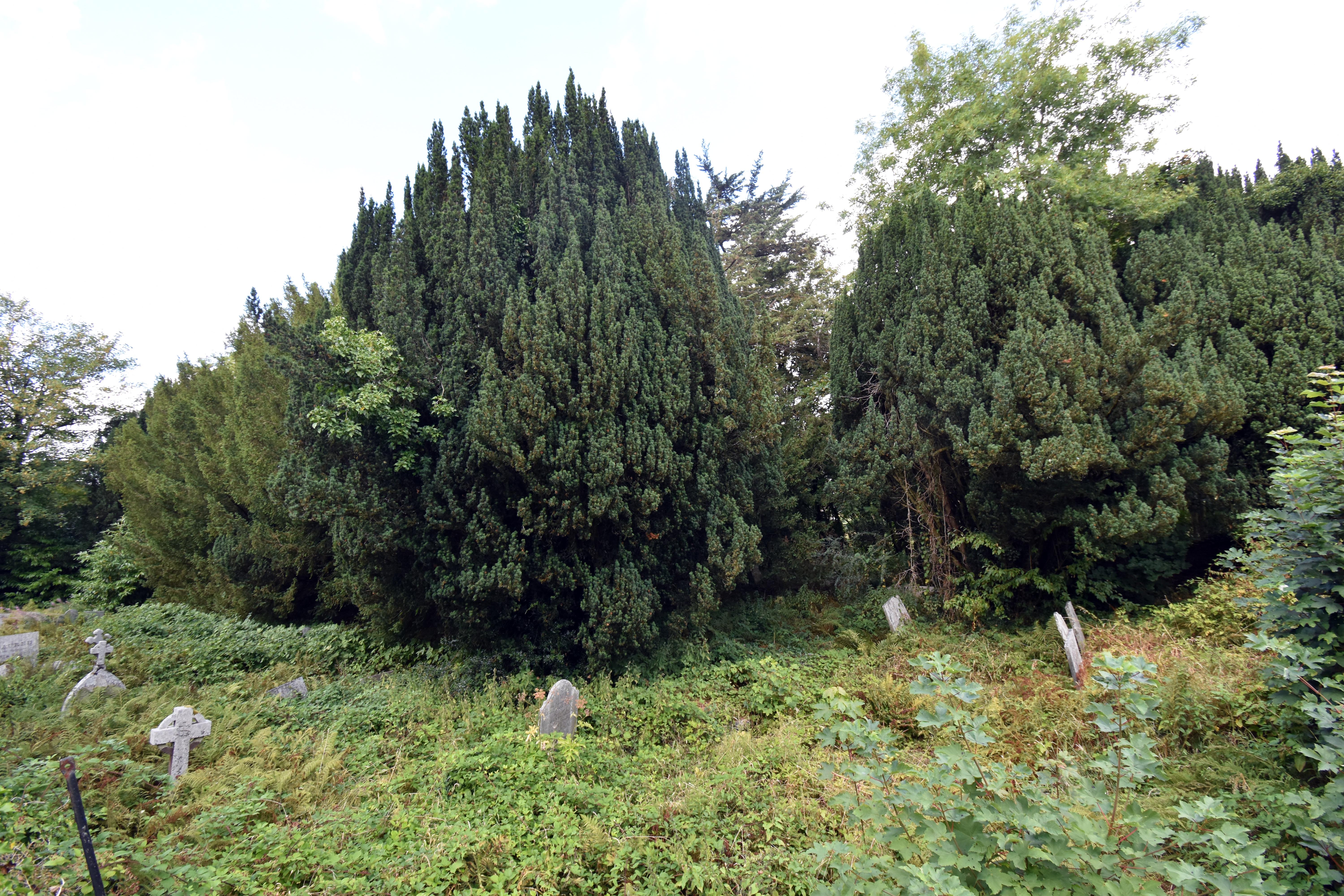
By the time we had finished a delicious lunch the rain had stopped and we could resume our exploration of Launceston Town Centre. Outside the now closed St Mary Magdalene Church we were to get into a conversation with a man of considerable years but who was still sprightly and eager to share his knowledge of local history. He showed us the old cemetery down below the church which is sadly very overgrown and fenced off now. These cemeteries are little capsules of communal memory and it is sad when they are no longer accessible. If nothing else, they can provide wonderful green spaces for local people to enjoy which, given the slopes and densely packed nature of this hill, are definitely required.
It was nice to see a town which still had a lot of independent traders and some nice shopping arcades with niche businesses. The town was clean although it was a bit annoying to find that their museum, Lawrence House (which had also housed French paroled officers in the Napoleonic Wars) was undergoing a renovation and its spin‑off pop‑up museum in the town centre was shut — probably because it was a Tuesday; must be a Launceston thing not to open things on Tuesdays.
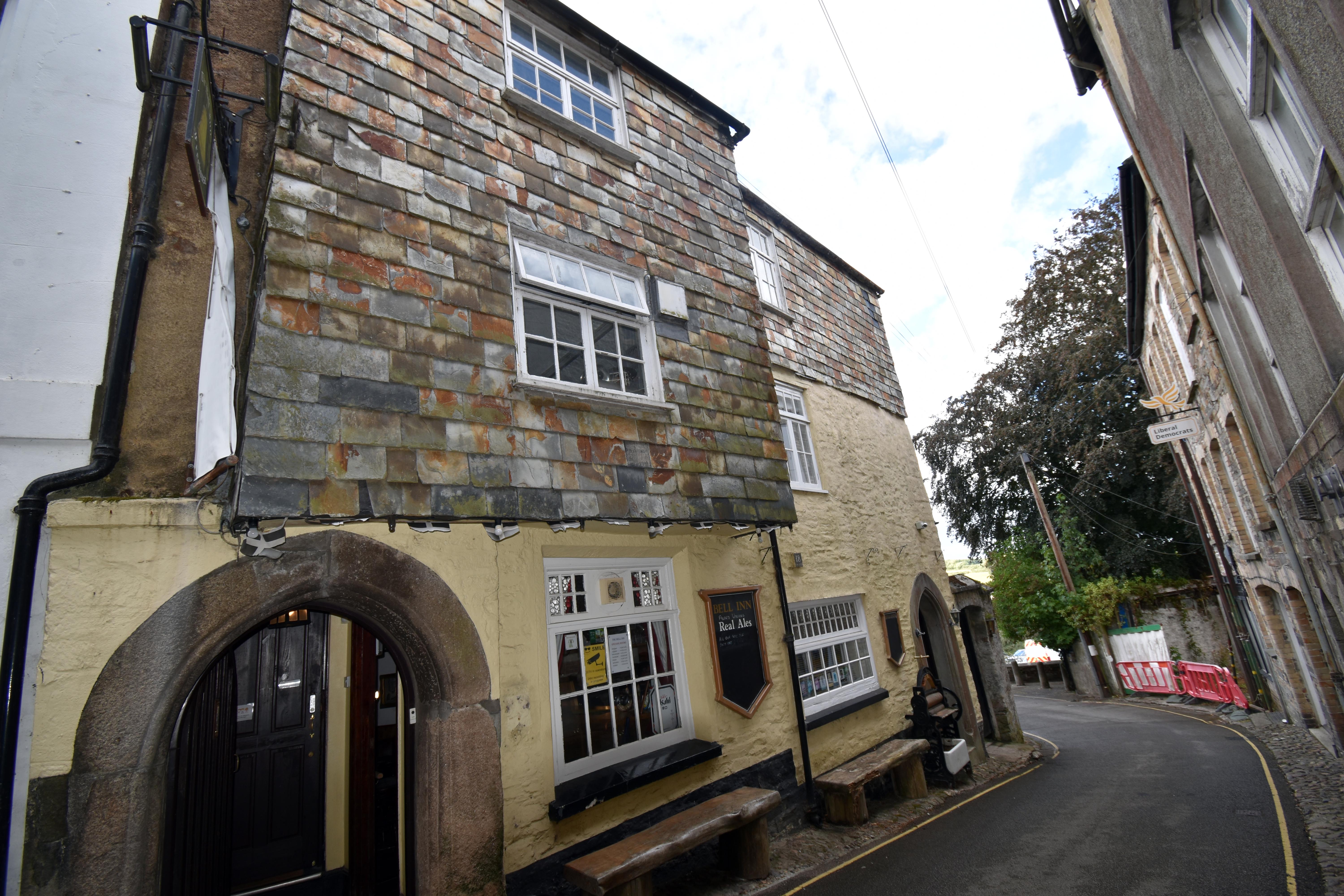
Notwithstanding those inconveniences, it was hard not to love the idiosyncratic Launceston with its curious layout constrained by castle walls and steep sides to create this curiously laid‑out town. We returned down the northern side to St Thomas and once again found the tranquillity of the St Thomas Bridge with its ducks, ducklings and willow trees before setting off home but with a determination to return in the not too distant future to fill in some of the gaps of this town’s fascinating history. We had discovered a lot, but knew that there was so much more to discover.
|