

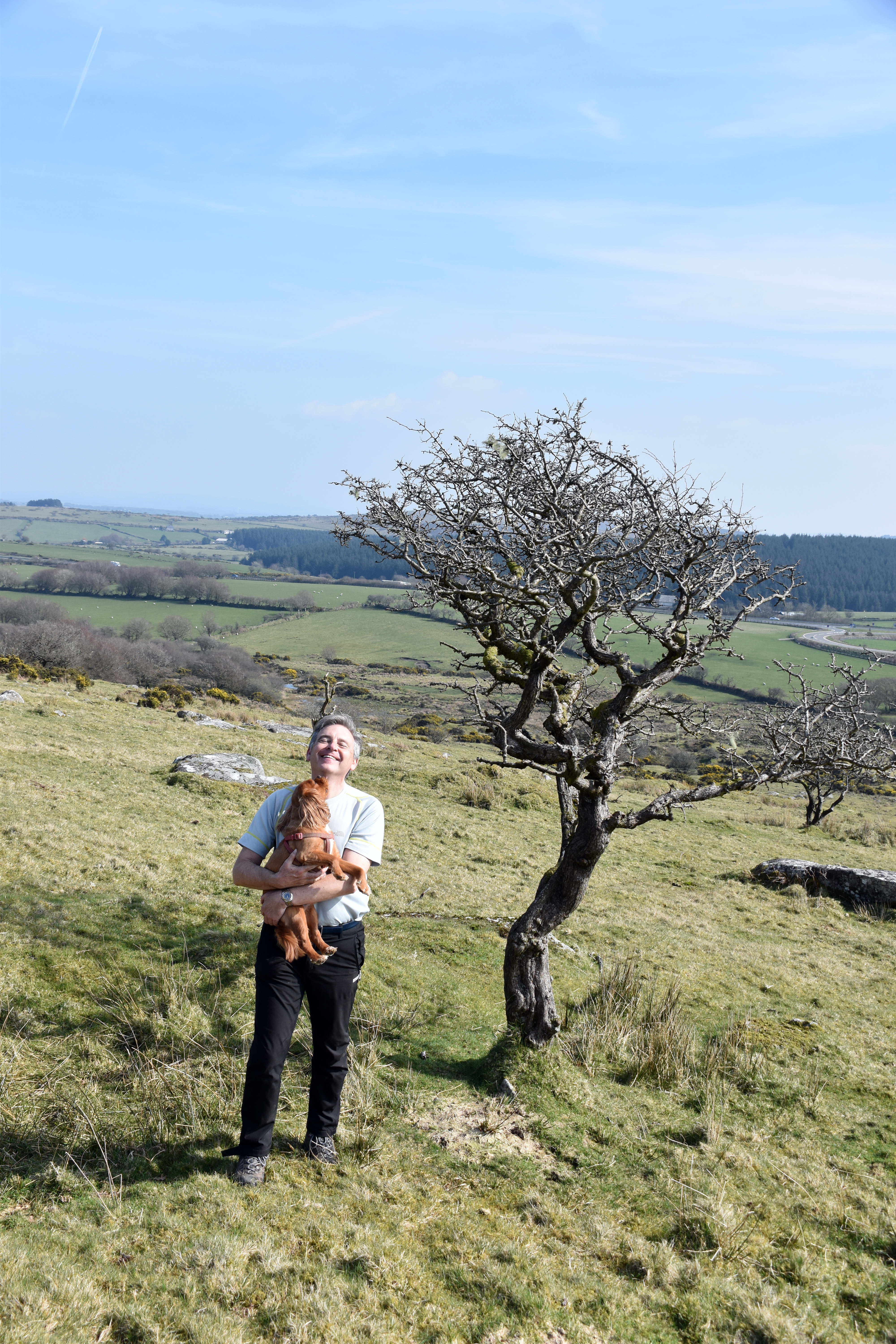
Stephen Luscombe is a passionate historian who has taught history both in the UK and overseas in Japan, France, and the Middle East. He specialises in Imperial History and is the author of www.britishempire.co.uk. Born and raised in Plymouth, he developed a love of hiking on Dartmoor and the South West Coast Path from an early age. He brings these interests together through www.westcountrywalker.uk, where he explores some of the lesser‑known corners of the Westcountry (and occasionally beyond) and researches the stories behind them, sharing his findings online and on social media. He gives regular talks (see below) to local groups, leads guided walks, and is always open to suggestions for new places to explore and research: westcountrywalker@britishempire.co.uk. He is more than happy to undertake research for a lecture or a guided walk on a tailor made topic, especially where there is a Westcountry or Imperial angle.
|
The Plym Valley Transportation Nexus and the Growth of Laira
This talk examines how communications developed over and along the lower reaches of the River Plym and how transport links transformed this route in and out of Plymouth. It also explains the land‑reclamation work undertaken by local landowners that enabled Laira to grow into a substantial community, one that depended heavily on those transport connections for its economic life. It is a story of a unique process of transformation and urban development. |
|
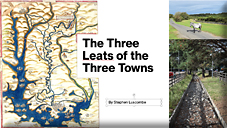
The Three Leats of the Three Towns
This walk and/or talk outlines the three very different approaches the three towns took to supply fresh water. Plymouth Corporation led with one of the earliest and most ambitious public works schemes in the country, bringing water seventeen miles from the moor. The Manor of Stonehouse followed with a modest three‑mile leat fed by nearby springs. Plymouth Dock (Devonport) did not exist when those systems were built, but within a century of its founding a private company created the most ambitious scheme of all, carrying water twenty‑seven miles from deep on the moor to its growing population. |
|
It's all about EVE: Britain’s Unusual History of Strong Female Monarchs?
This talk considers how and why Britain is so unusual in sustaining a long tradition of female leaders with real political authority. It begins in the Celtic era, moves through the Dark Ages and the succession disputes of the Medieval period, and then examines the Queens Regnant from the Tudors to the 21st century. Its central focus is the longevity and influence of three of the most consequential monarchs in British history — Elizabeth I, Victoria and Elizabeth II — who all, notably, were women. |
|
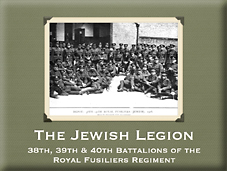
Jewish Legion: 38th, 39th & 40th Battalions of the Royal Fusiliers Regiment
This talk explores the story of the Jewish Legion, raised and trained in Plymouth from 1917 under the charismatic Lieutenant‑Colonel John Henry Patterson, whose own career was remarkable in its own right. Based at Crownhill Barracks, the Legion trained men who would become central to the Zionist movement and the early State of Israel, including David Ben‑Gurion, Vladimir Jabotinsky and Yitzhak Ben‑Zvi. The unit went on to see active service in Palestine in the final stages of the war. |
|
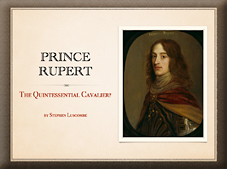
Prince Rupert: The Quintessential Cavalier?
This talk explains Prince Rupert's upbringing and the series of events that would see him rise to become one of King Charles' most important and effective generals in the Civil War. He would appointed General of the Horse at the age of just 23 and would later command the King's entire Army at the tender age of just 24! |

|
Prince Rupert's Post-Civil War Career: Mercenary, General-At-Sea & Enlightenment Man
This lecture follows Prince Rupert’s lesser‑known post‑Civil War career, tracing his service with the French army, his command of the Royalist fleet during the Commonwealth years, his campaigns with the Imperial forces, his role as adviser to Charles II, his elevation to Lord High Admiral after the Duke of York’s resignation in 1673, his work as a colonial administrator, and his emergence as a fully fledged Enlightenment figure. |
|
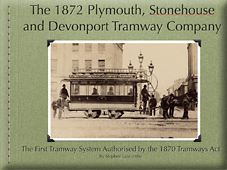
The 1872 Plymouth, Stonehouse and Devonport Tramway Company
This walk and/or talk traces the story of one of the earliest tram systems in Britain — and the very first to be authorised under Gladstone’s groundbreaking 1870 Tramways Act. It follows the route built by the Plymouth, Stonehouse and Devonport Tramway Company in 1872, linking the three towns by connecting their principal centres from Derry’s Cross along Union Street to Fore Street. |

|
A Civil War Within a Civil War: The Bonville - Courtenay Feud
This talk explores the bitter feud between the Bonville and Courtenay families, a conflict that erupted in the Westcountry during the Wars of the Roses and became, in effect, a civil war within a civil war. It shows how rival claims to power and loyalty drew towns, estates and retainers into a struggle that ran from council chamber to battlefield. It also outlines the consequences — the seizure of Exeter, the clashes at Powderham and Clyst, and the wider political forces that shaped its course — revealing how national turmoil magnified local rivalries. |
|
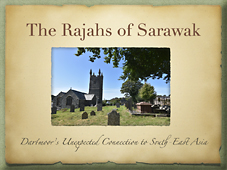
The Rajahs of Sarawak: Dartmoor’s Unexpected Connection to South-East Asia
This very personal lecture tells the story of the remarkable Brooke family and how they came to rule over their own dynastic rajahdom in Sarawak. It also explains how an unexpected relationship was forged with Burrator and why members of the family were laid to rest at St Leonard’s Church in Sheepstor. The subject is personal to me, as my own family also hails from Sheepstor and are buried within yards of the Rajahs. |
|
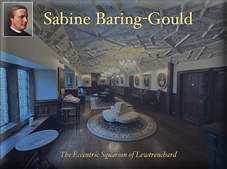
Sabine Baring-Gould: The Eccentric Squarson of Lewtrenchard
This talk gives an overview of the fascinating character of Sabine Baring‑Gould, who became both Squire and Parson of Lewtrenchard — hence his own term for himself as Squarson. He took a leading role in uncovering the antiquities, folk stories and histories of the Westcountry, and extended his interests to Sarawak, where one of his sons worked for the Brooke family. A prolific author and indefatigable collector, he led a most unusual and wide‑ranging life. |

Rupert, his ruby Cavalier King Charles spaniel, accompanies him on all of the explorations and expeditions and considers himself the true brains of the operation. His interests include inspecting every stile in Devon, conducting rigorous quality‑control checks on picnic spots, and ensuring that no walk proceeds without at least one entirely unnecessary detour. He has an unerring instinct for locating streams, mud, and anything faintly edible, and regards all historical research as secondary to the far more serious business of being admired by passers‑by. Rupert maintains that he is available for public appearances, provided biscuits are involved. He can be contacted at rupert@britishempire.co.uk.

