

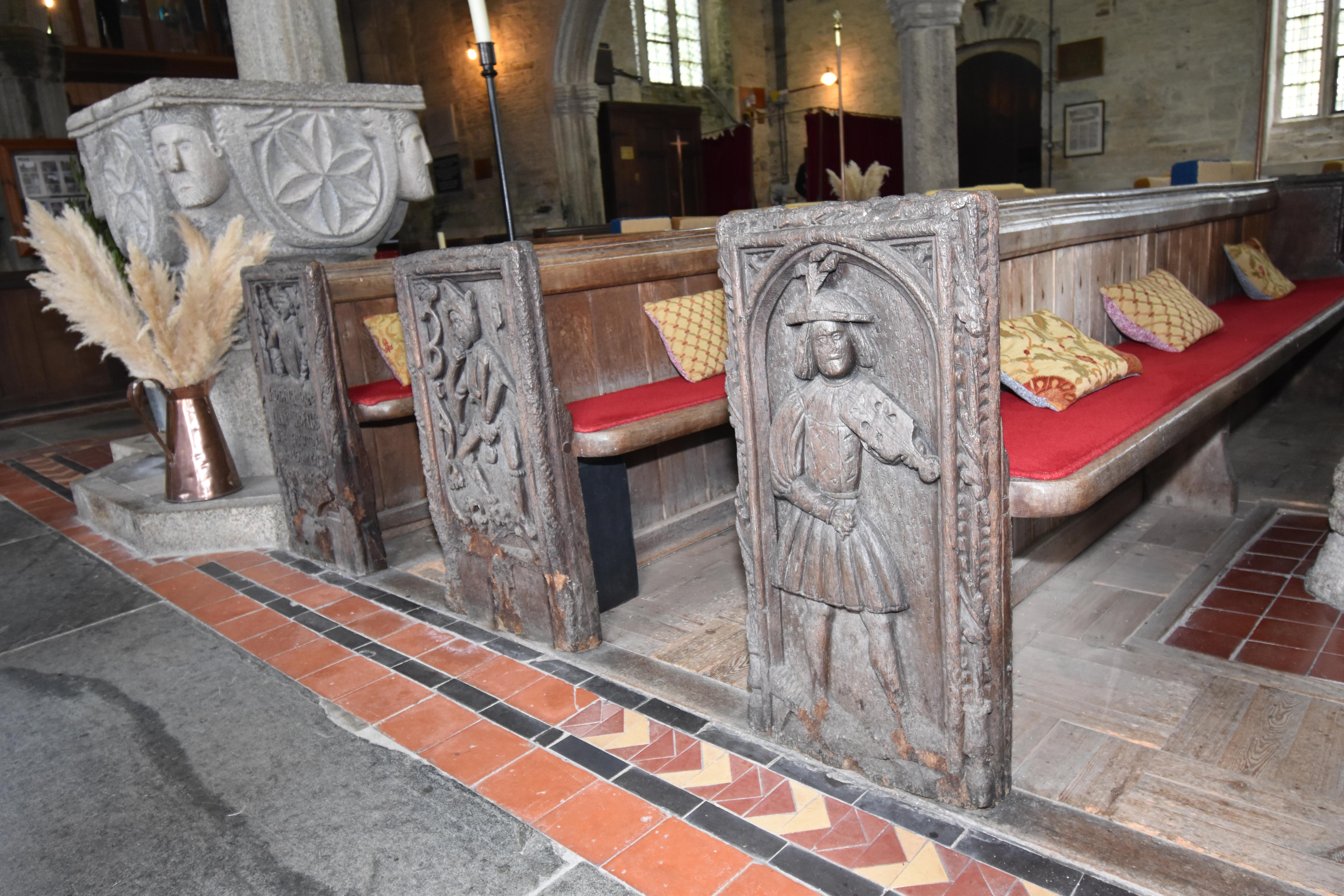
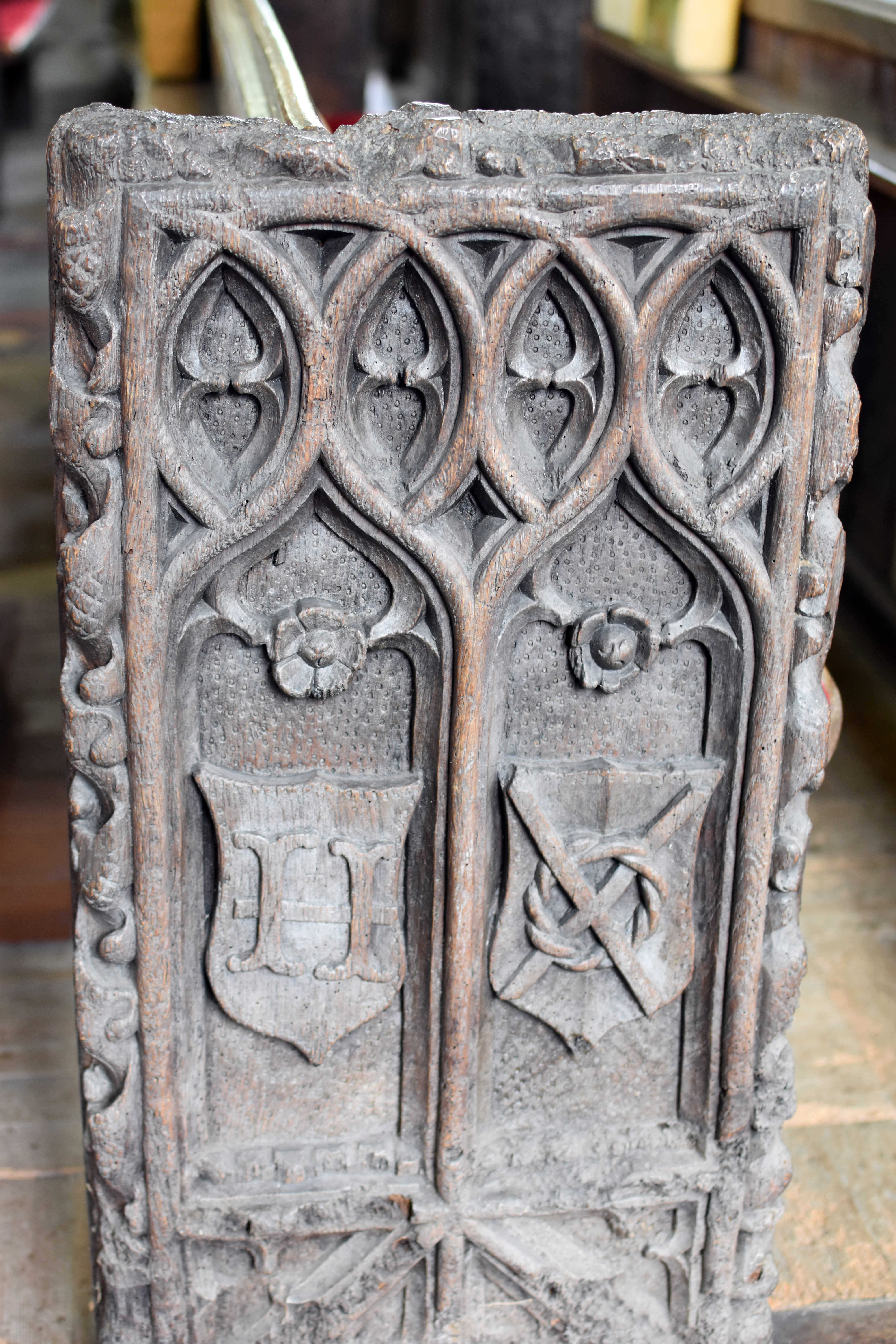
The seventy‑nine surviving bench ends at St Nonna’s, Altarnun, form one of the most complete and important collections of early‑Tudor parish woodcarving in England. They were carved in the years immediately before the English Reformation, at a time when parish life, popular festivity and religious practice were still intertwined. Their survival in such numbers is exceptional. Many Cornish churches lost their medieval and Tudor seating during nineteenth‑century restorations, but Altarnun retained its benches, leaving a coherent body of work that still lines the nave and aisles today.
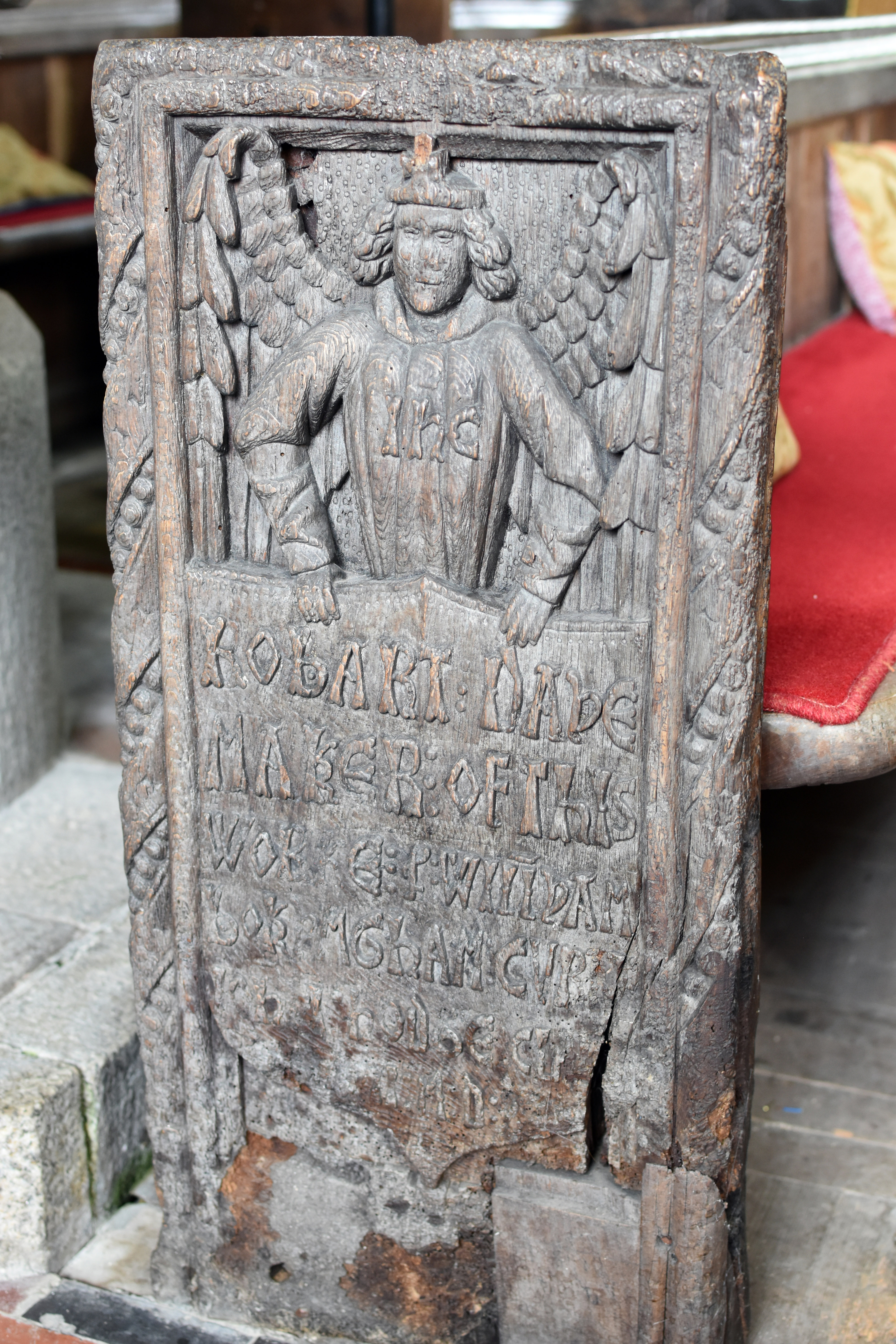
The bench ends are the work of a single craftsman, Robart Daye, who carved his name on one of the panels along with those of the curate, Willyam Bokkingham, and the parish clerk, John Hodge. This naming of maker, curate and clerk is extremely rare. Most bench ends in England are anonymous; Altarnun’s are signed, dated in part, and tied to identifiable individuals in the parish records. They represent a complete parish commission, created by and for the community, and they preserve a vivid record of early‑Tudor village life.
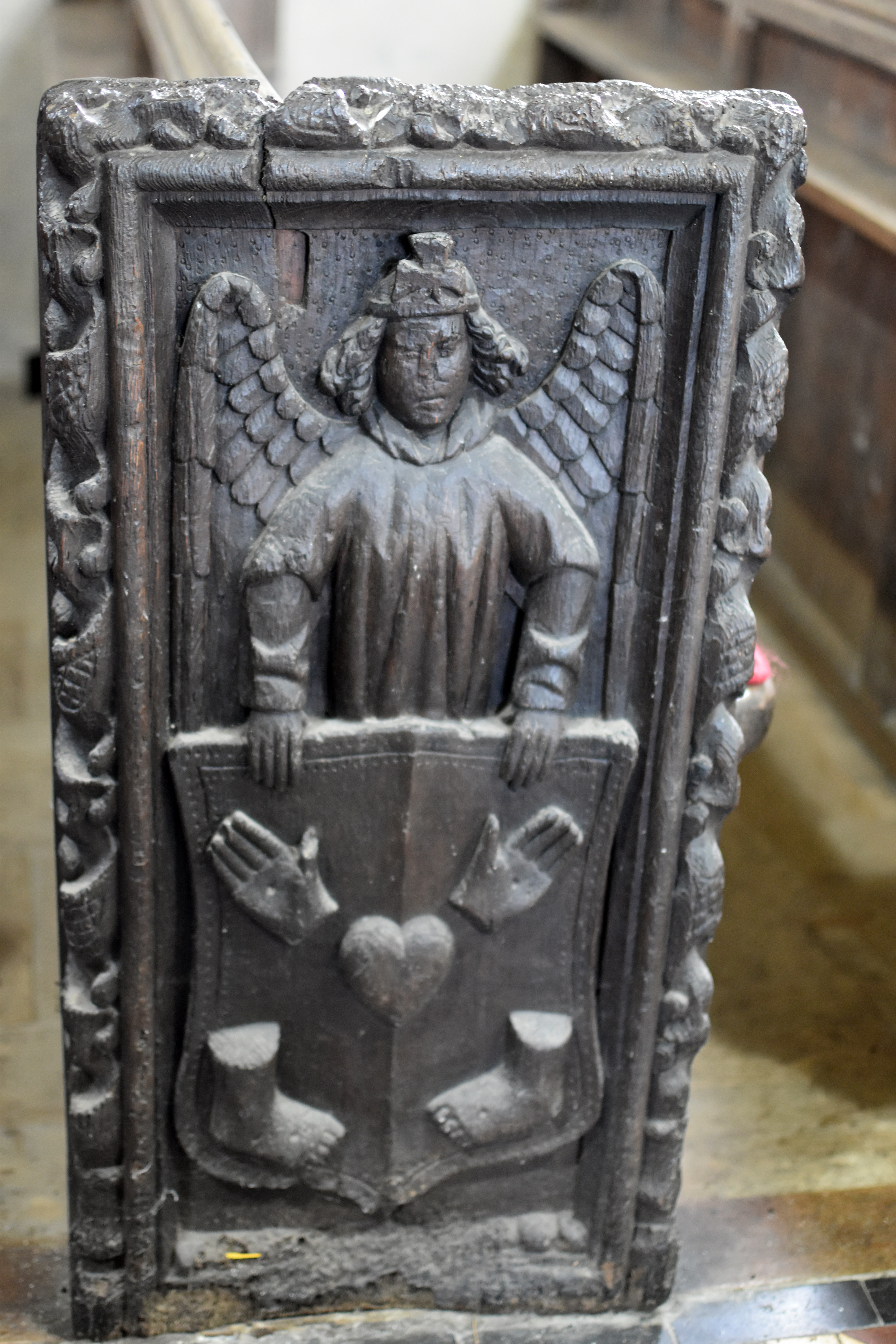
The dating of the bench ends is unusually secure. A partially eroded Roman numeral date survives on one panel, reading MDX with the faint outline of a second X. This restricts the date to the 1520s or early 1530s, as longer dates such as MDXXXVIII could not fit the available space. An angel on another panel carries the arms of the Diocese of Exeter in the form adopted after the death of Bishop Hugh Oldham in 1519, providing a terminus post quem. Documentary evidence shows that in 1521 the curate was Hatton, and by 1540 the curate was John Dun. The Henderson manuscripts record Bokkingham as curate in 1534 and 1537. Taken together, the bench ends can be securely dated to between 1521 and 1540, and probably to the years 1521–1532 or 1535.
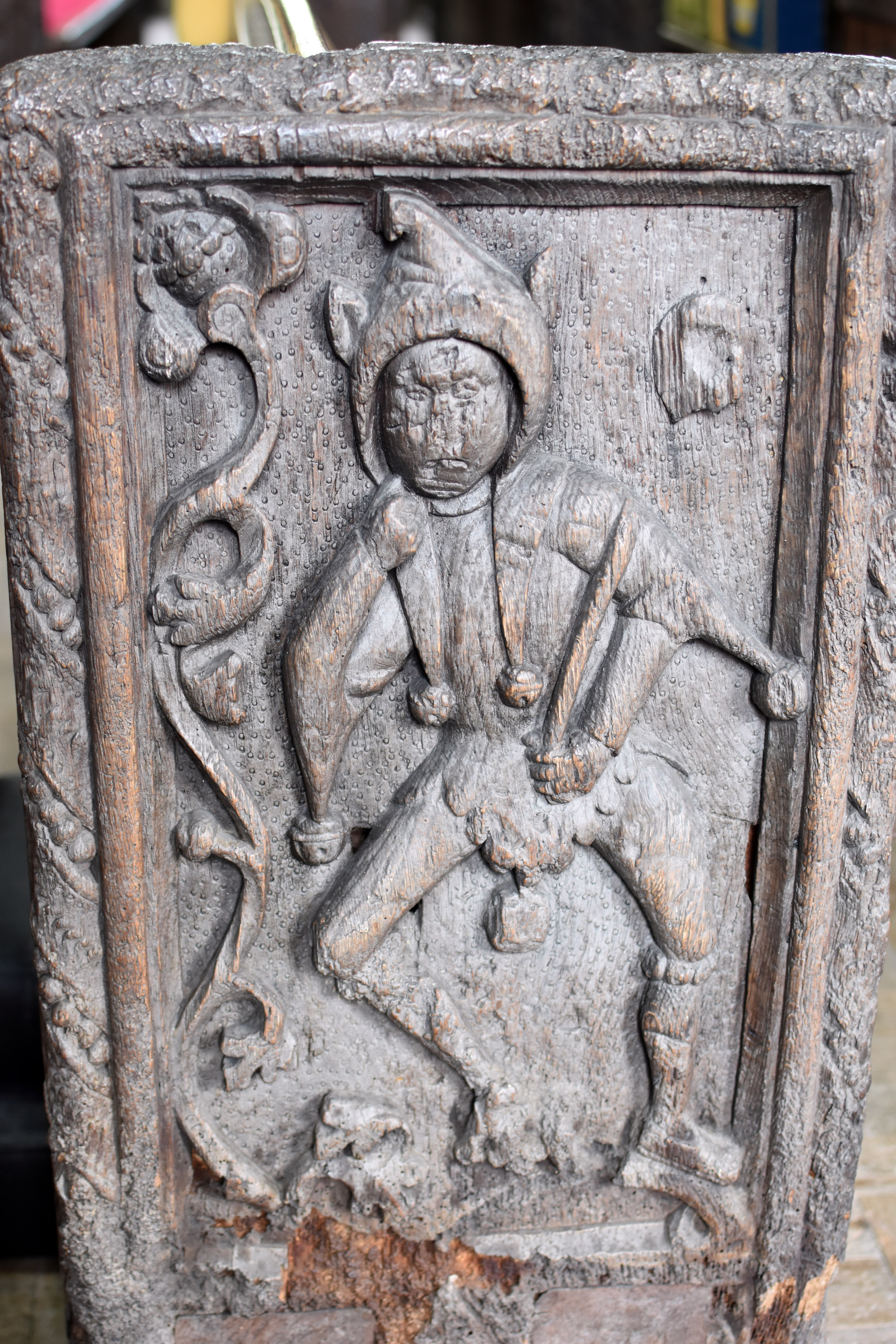
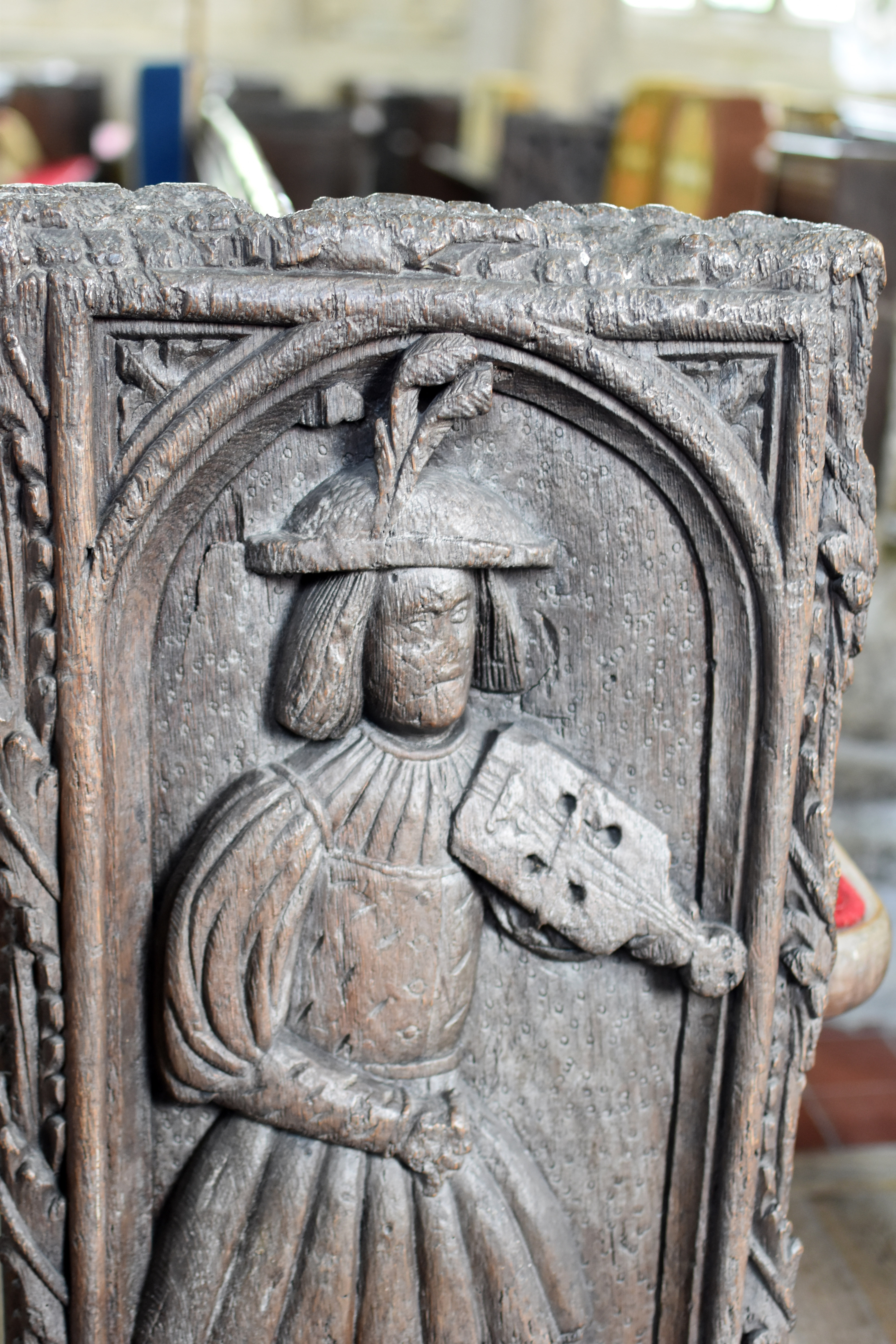
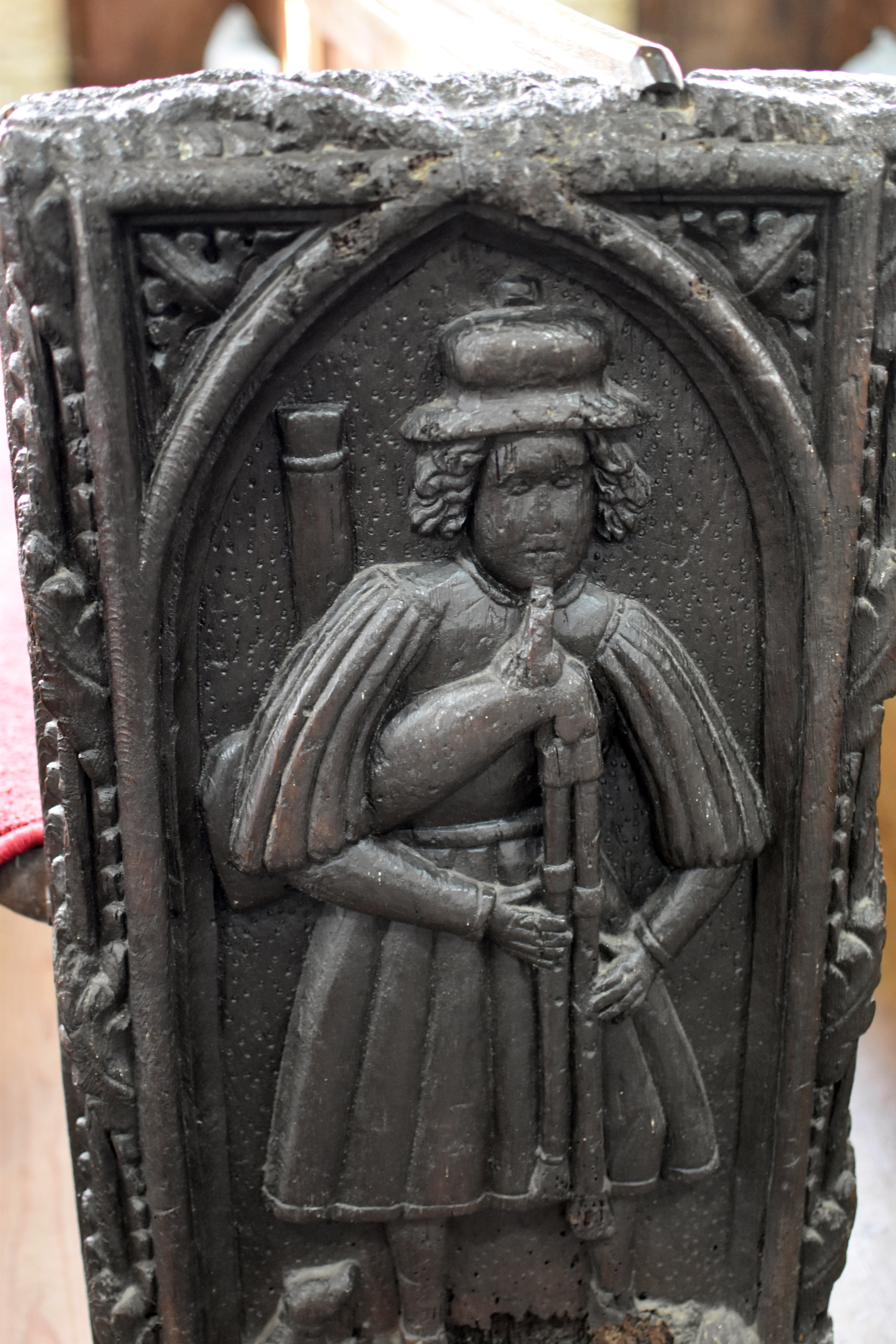
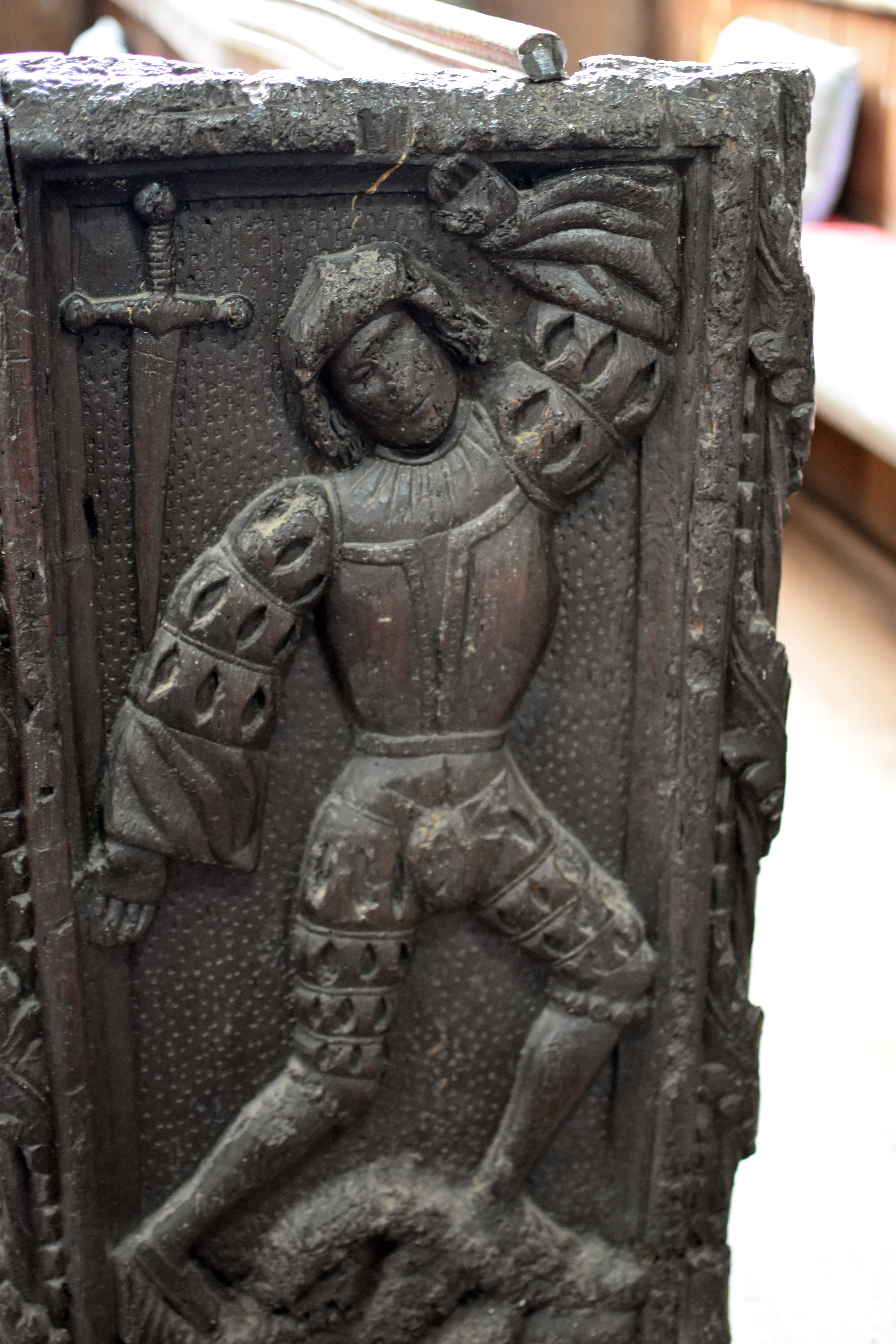
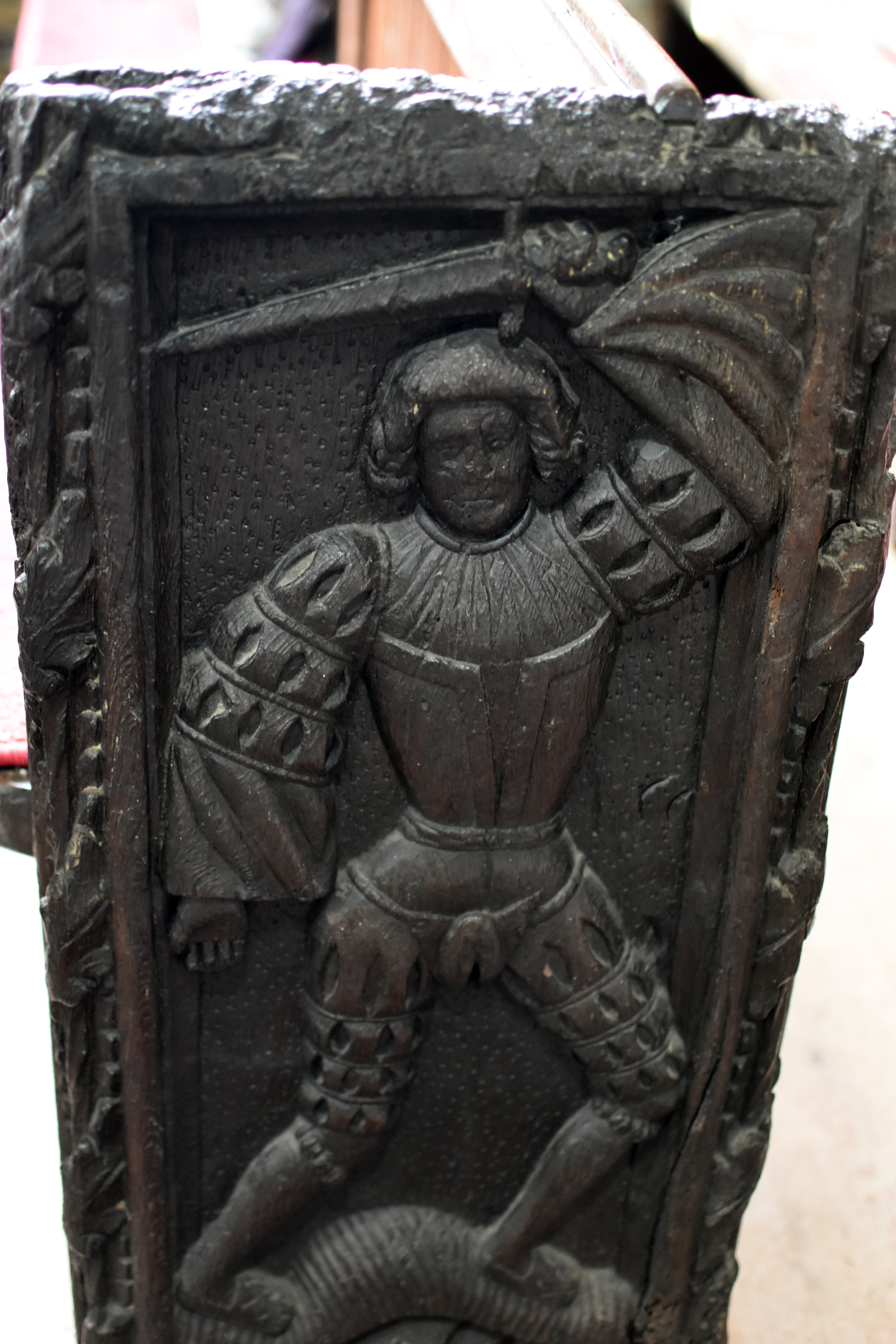
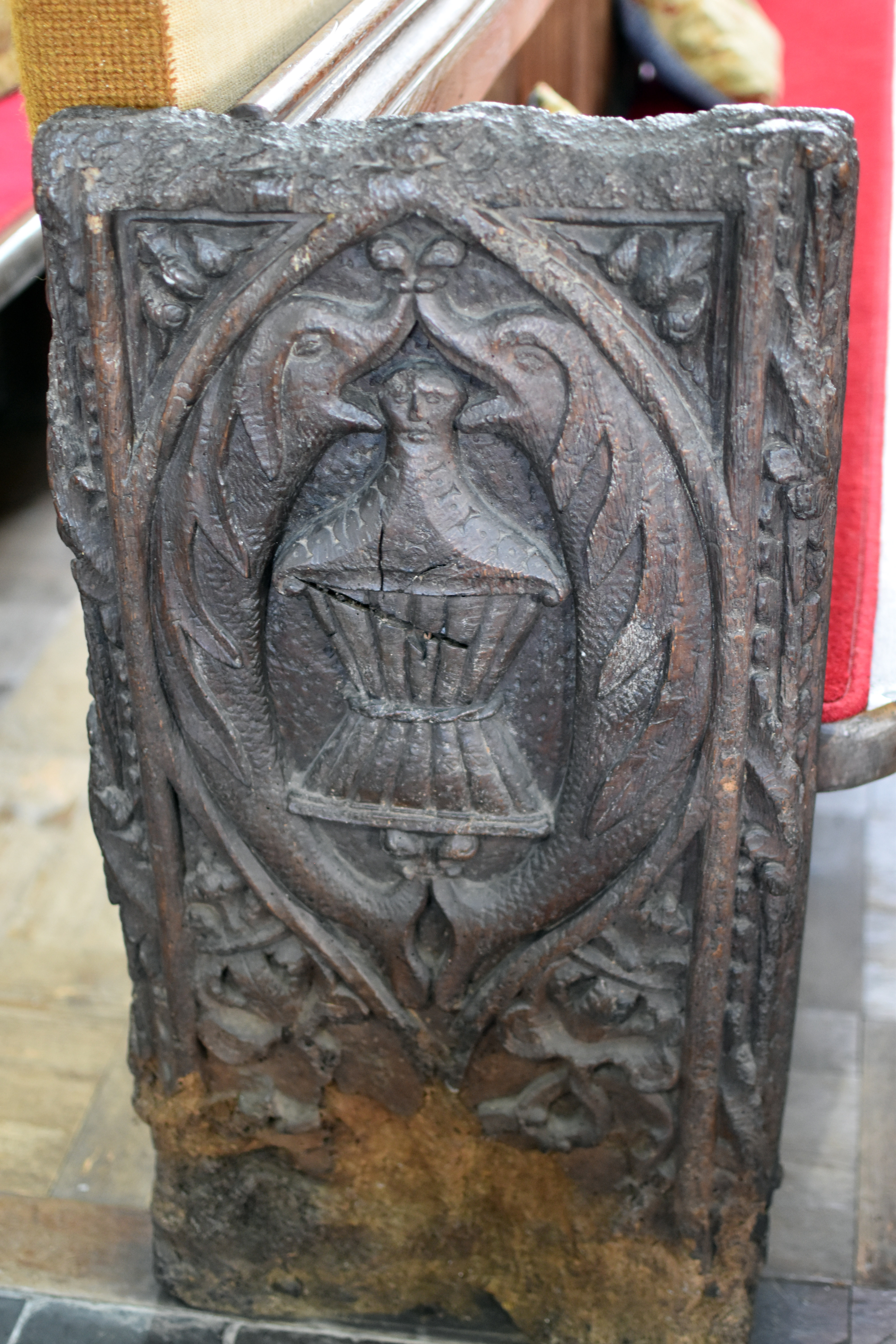
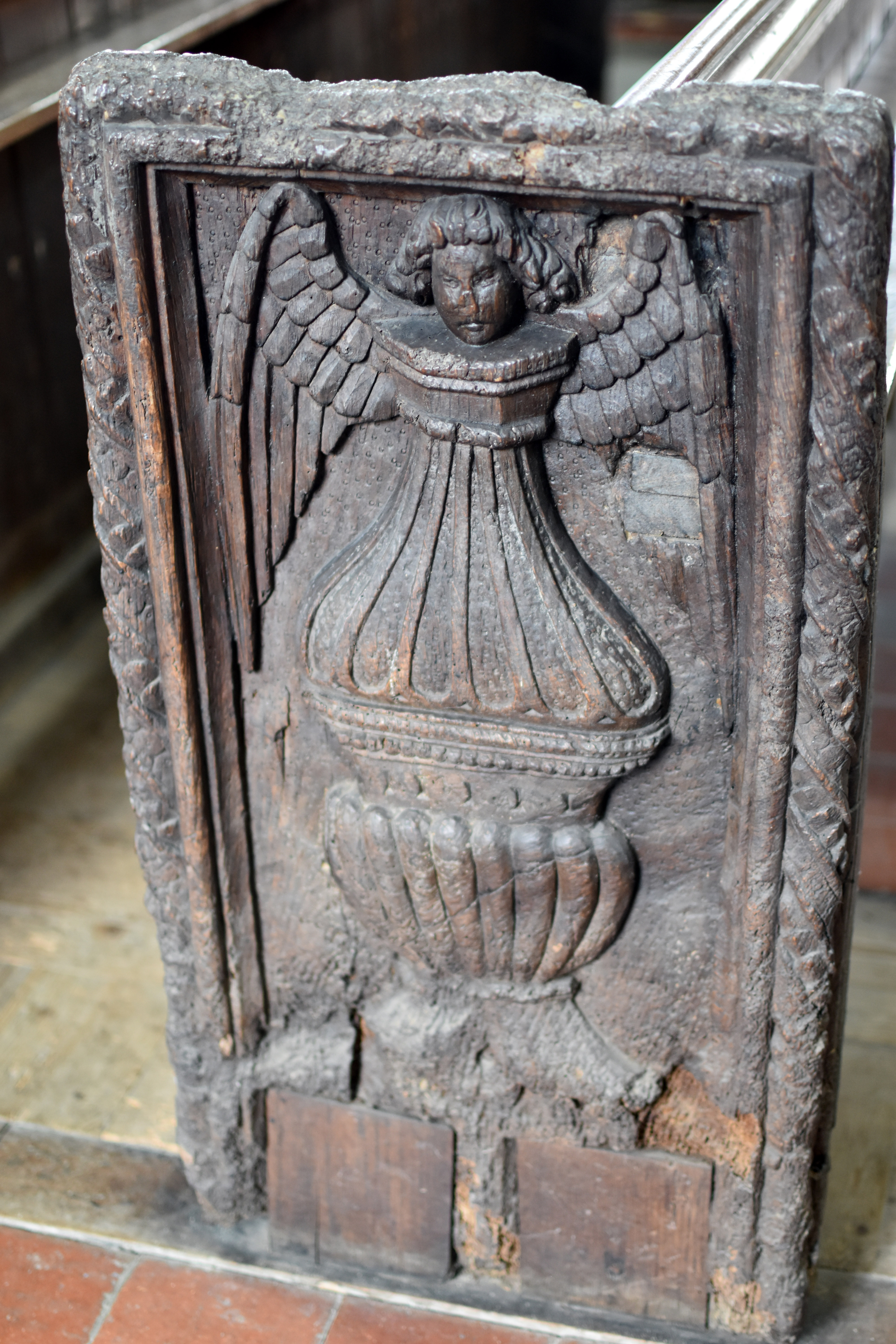
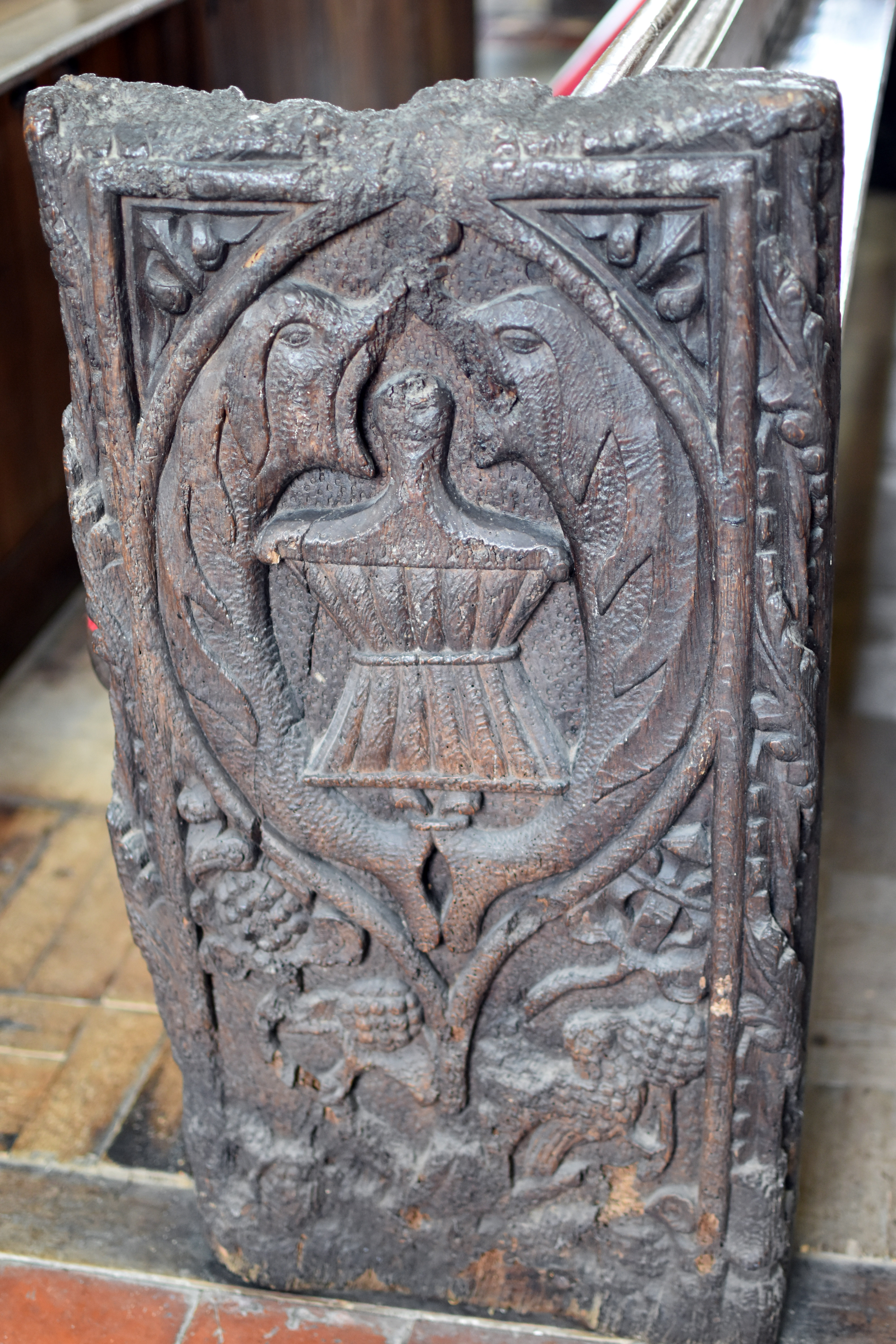
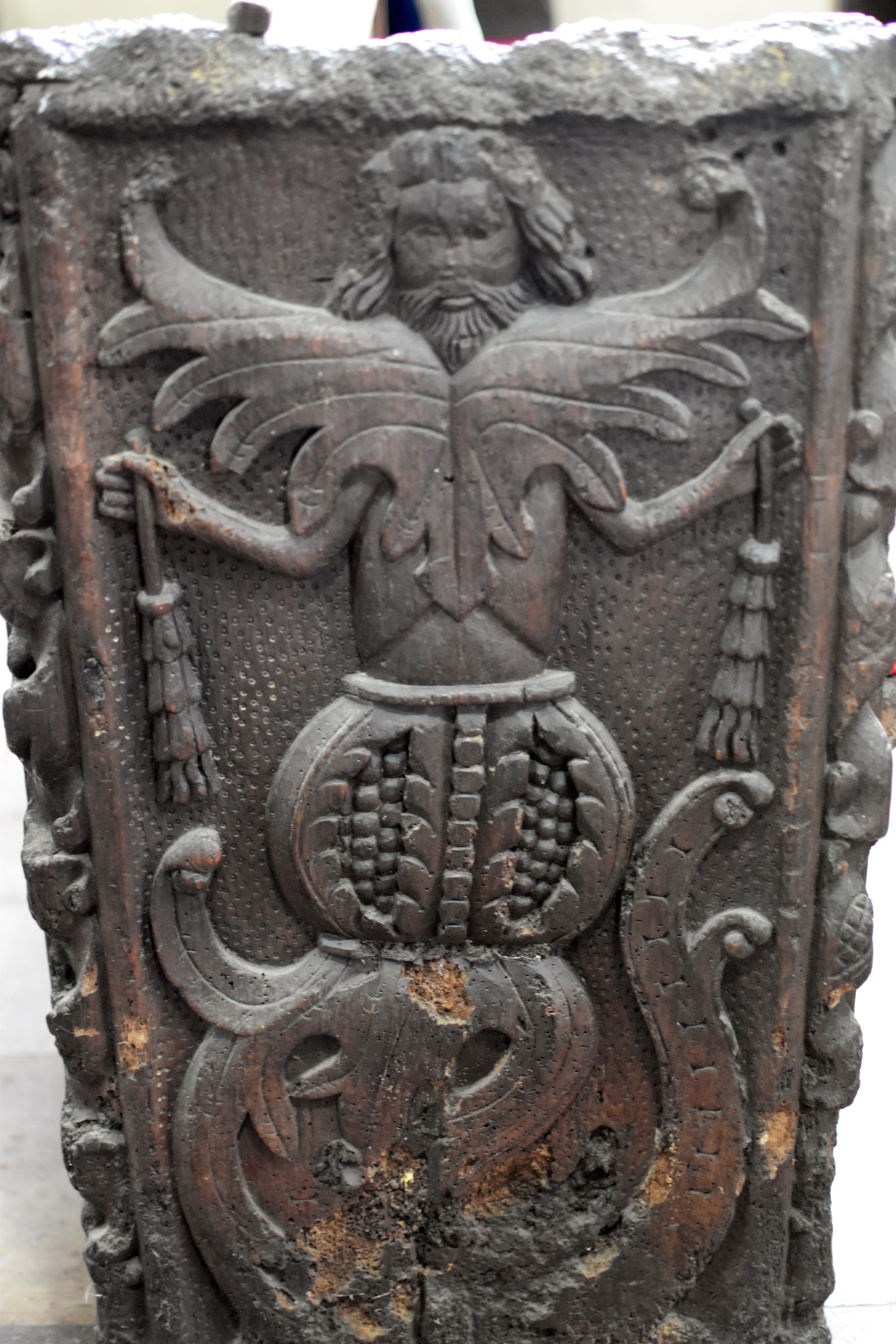
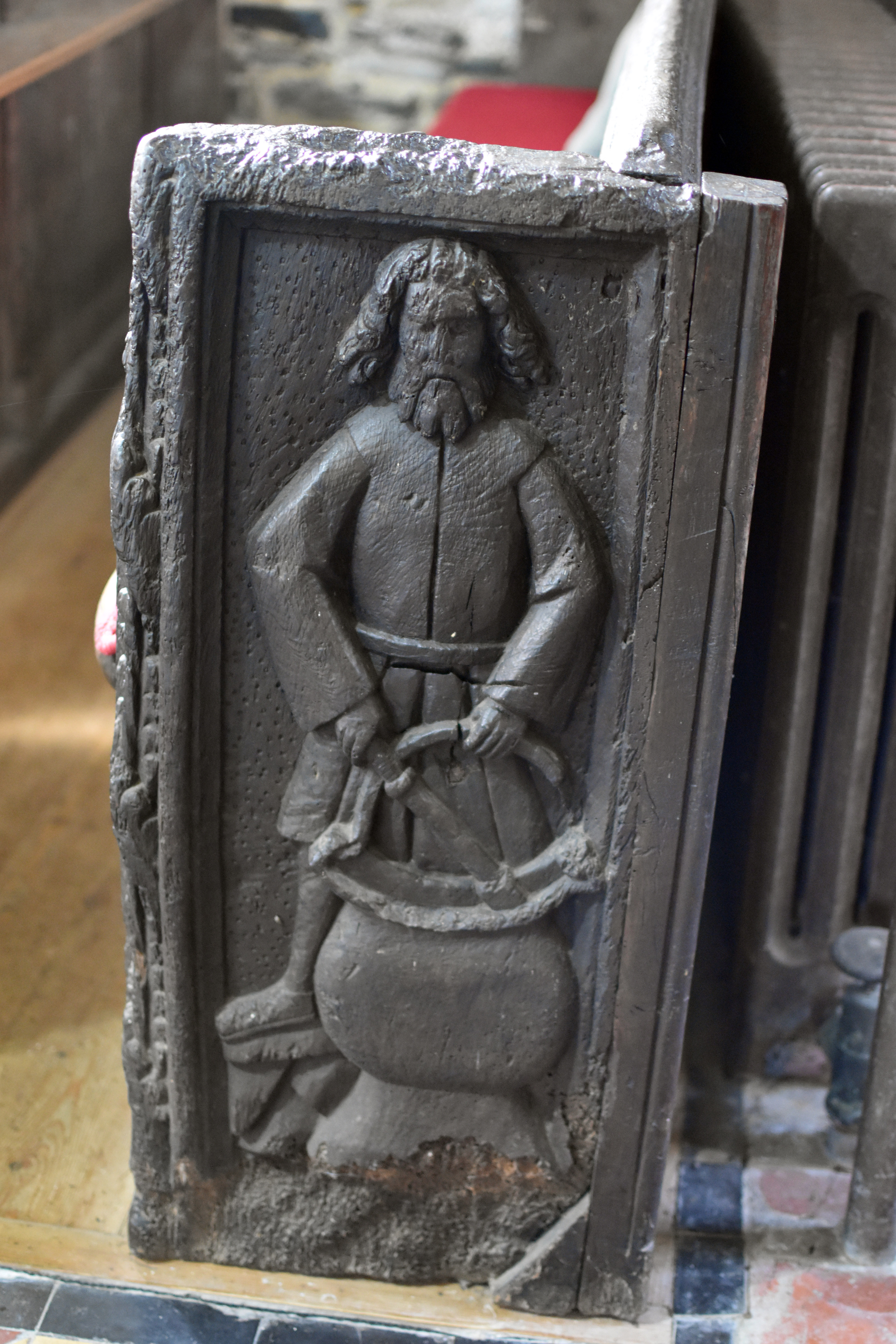
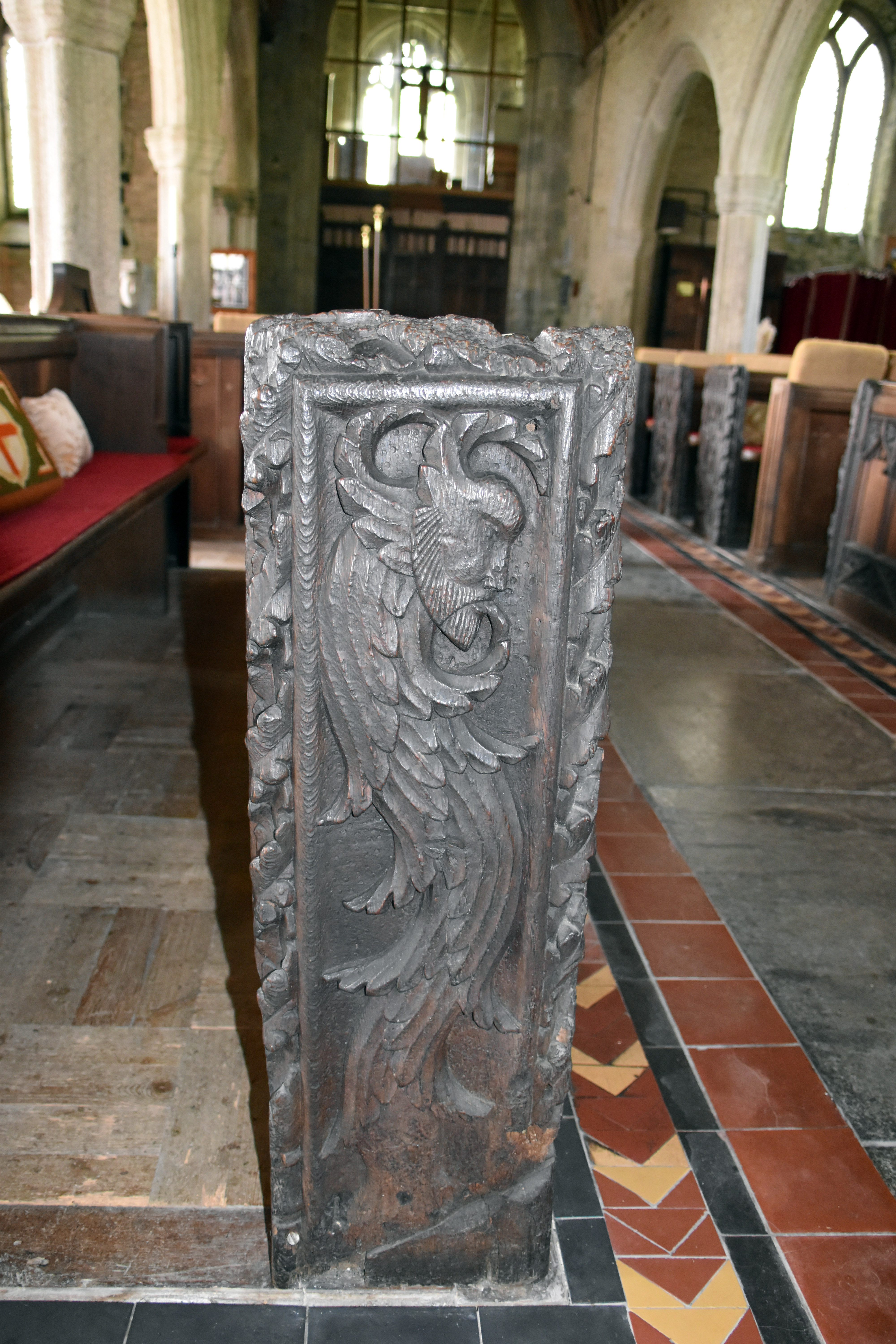
The iconography of the Altarnun bench ends is unusually rich. There are angels, tracery, foliage, sheep, heraldry and domestic animals, but also a remarkable group of human figures: a fiddler, a bagpiper with his dog, a fool with ass’s ears and a bladder on a stick, a man with a cauldron who may represent the parish clerk asperging holy water, and two men in elaborate clothing brandishing swords. These last two have sometimes been identified as St Michael, but the evidence does not support this. There is no dragon, no wings, no armour and no halo, and there are two of them. Saints are almost always depicted singly. What they do have, however, are bells around their knees, ribbons on their clothing, musicians nearby and a fool among their company. These features identify them as morris dancers.
The presence of morris dancers in a church may seem surprising, but in the early sixteenth century morris was closely tied to parish life. Church ales, feast days and fund‑raising events were organised by the parish, and morris sides were often paid from churchwardens’ accounts. The Altarnun dancers belong to this world: a communal, festive, pre‑Reformation culture in which the church was the centre of village life. Because the Altarnun bench ends predate the earliest possible date of the Betley Court window and the uncertain date of the Lancaster Castle panel, they are the earliest surviving English depictions of morris dancers.
The musicians are equally important. The fiddler is one of the clearest Tudor depictions of the instrument in parish art, and the bagpiper with his dog is a rare survival of a common medieval motif. The dog appears in several medieval illustrations of pipers and may represent a real animal, a symbol of rustic entertainment or simply a familiar detail from everyday life. The fool, with his pointed hood and bladder, is a standard morris character and confirms the secular nature of the imagery.
The style of the carving reflects the transitional moment of the 1520s and 1530s. Gothic tracery appears alongside early Renaissance motifs. The figures are carved in high relief with bold outlines and strong silhouettes, designed to be legible from a distance in a dimly lit church. They are not portraits but types: the musician, the fool, the dancer, the angel. The panels were intended to be seen by a congregation, not studied at close range, and their clarity reflects that purpose.
Altarnun’s bench ends can be compared with other West Country sets, such as those at Poughill, Launcells, Morwenstow, St Neot and North Petherwin. Each has its own character, but Altarnun stands out for the number and variety of its human figures. Few other Cornish churches preserve such a complete and coherent set. The bench ends at Altarnun are therefore more than decorative woodwork. They are a documentary record of a parish, a signed work by a named Tudor craftsman, a mixture of sacred and secular imagery, and a window into early‑Tudor village life at the moment just before the Reformation took hold.
The survival of all seventy‑nine panels is remarkable. Many churches lost their bench ends during Victorian restorations, when box pews were removed and open seating installed. Others were destroyed by woodworm or removed during later liturgical reforms. Altarnun’s set survived largely intact because the nineteenth‑century restorers chose to retain them. Their decision has left the parish with one of the finest and most important collections of bench ends in the West Country, and one of the most revealing.
|
|
|

|
|

|
|
|
|
|
|
|
|
|
|
|

