|
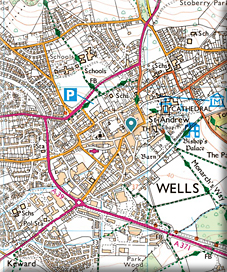
Yesterday Rupert and I were back in Somerset, and imagine our joy when we discovered that Wells Cathedral allowed dogs inside. Rupert said that he had never been in a cathedral before — he’s been in plenty of churches, but never a cathedral. We parked up on Ash Lane to the North of the Cathedral but it is very hard not to find such an large building. You walk past the impressive Wells Cathedral School which is one of the oldest schools in the world and whose history is inseparable from that of the Cathedral itself. Founded around 909 to educate the boy choristers who sang the daily offices, it has continued in unbroken tradition for over eleven centuries. The choristers are still taught there today. Over the centuries the school has grown into a thriving community, now welcoming pupils from across the country and beyond, but its heart remains bound to the Cathedral and provides the perfect avenue along which to approach it from.
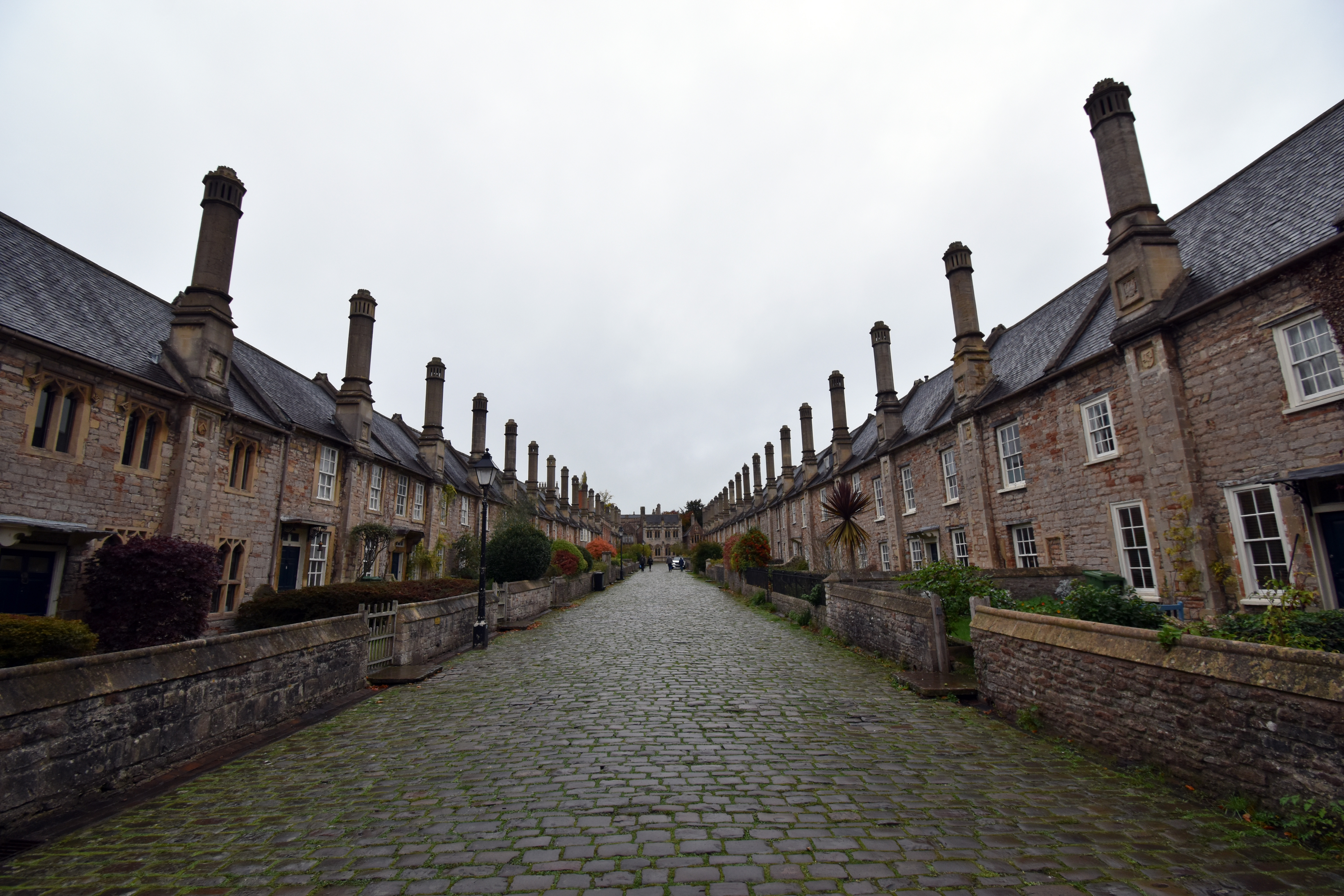
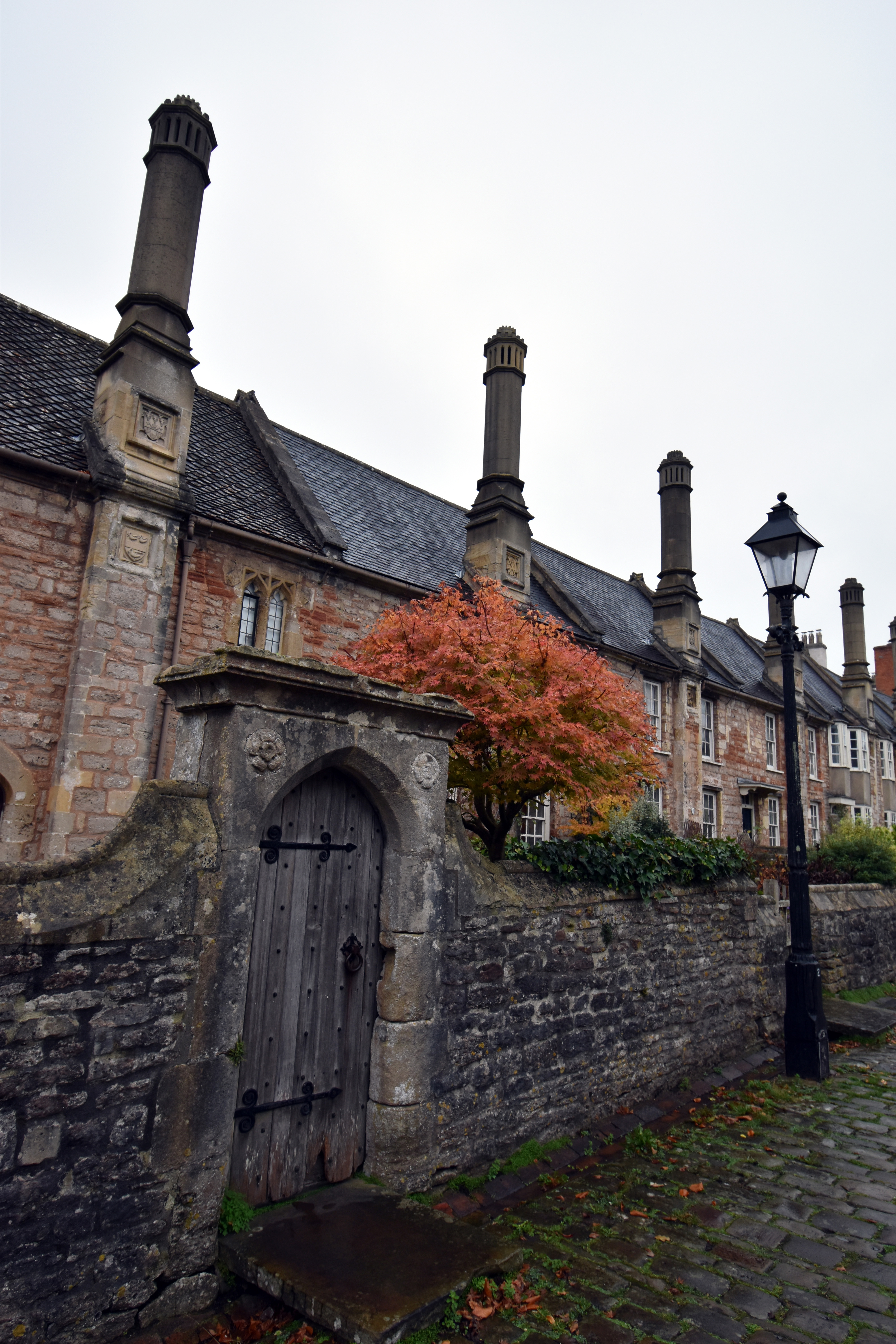
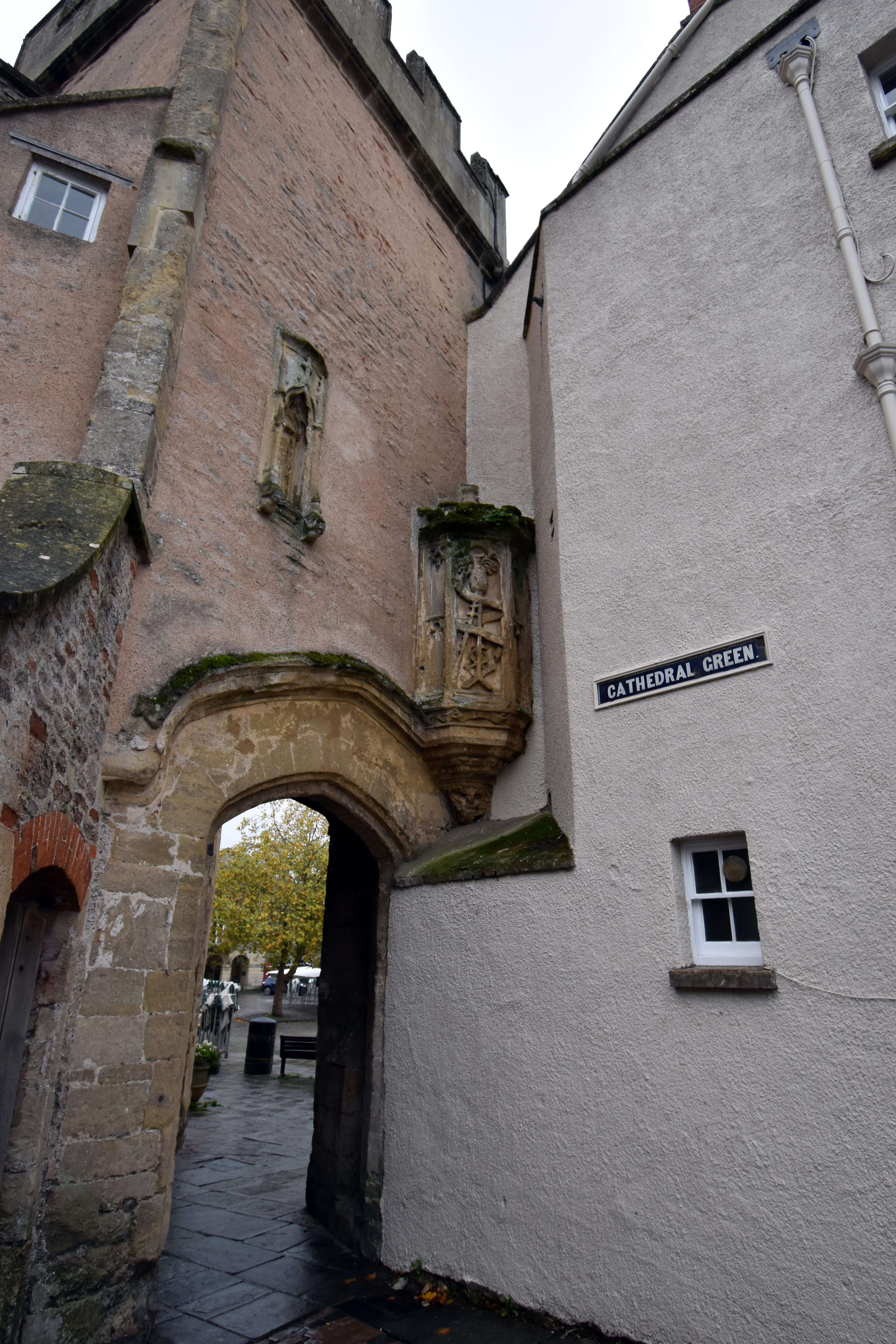
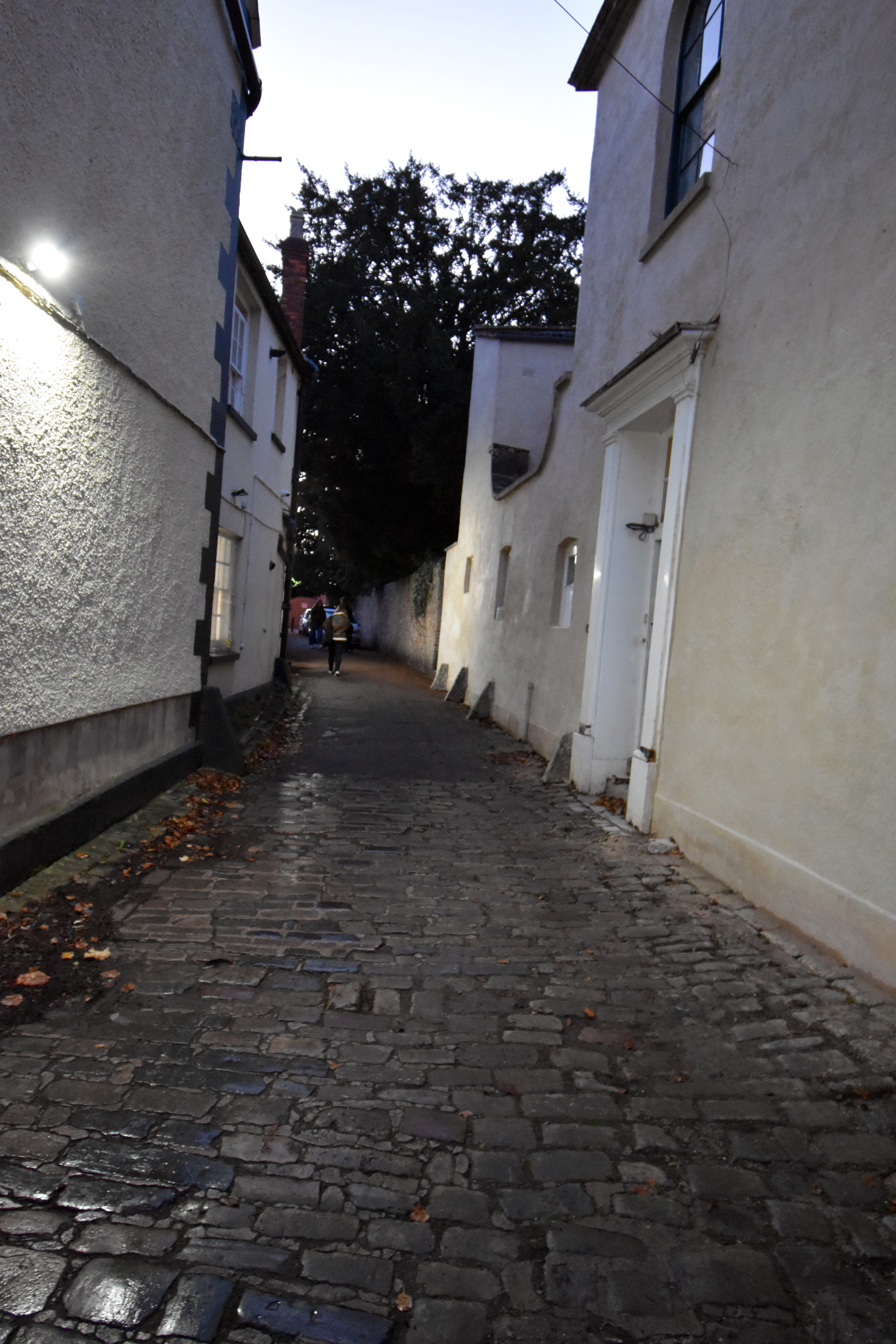
Before we entered the Cathedral we detoured towards Vicars’ Close, often described as the oldest complete residential street in Europe still lived in by its original community purpose. Built in the mid‑14th century under Bishop Ralph of Shrewsbury, it was designed to house the Vicars Choral who sang the daily services in the Cathedral. Originally there were forty‑two houses, one for each vicar, along with a chapel, library, and dining hall. After the Reformation, when vicars were allowed to marry, some houses were combined, leaving twenty‑seven residences today. The cobbled street, lined with uniform stone cottages and tall chimneys, stretches northwards to the Vicars’ Chapel and Library, while at the south end the covered Chain Gate Bridge links directly into the Cathedral precinct. Walking down Vicars’ Close feels like stepping back into the 14th century: the chimneys give the street its distinctive silhouette, the paving stones are worn by centuries of footsteps, and the sense of continuity is extraordinary - although a parked car looked a little incongruous in such a setting. Still inhabited and Grade I listed, it remains one of Wells’s most photographed and atmospheric corners — Rupert, of course, insisted on exploring every inch of it. Appropriately we could hear choristers and musicians practice through the windows. It was lovely seeing and hearing it used for its original purpose all these centuries later.
 |
|
|
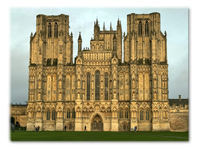
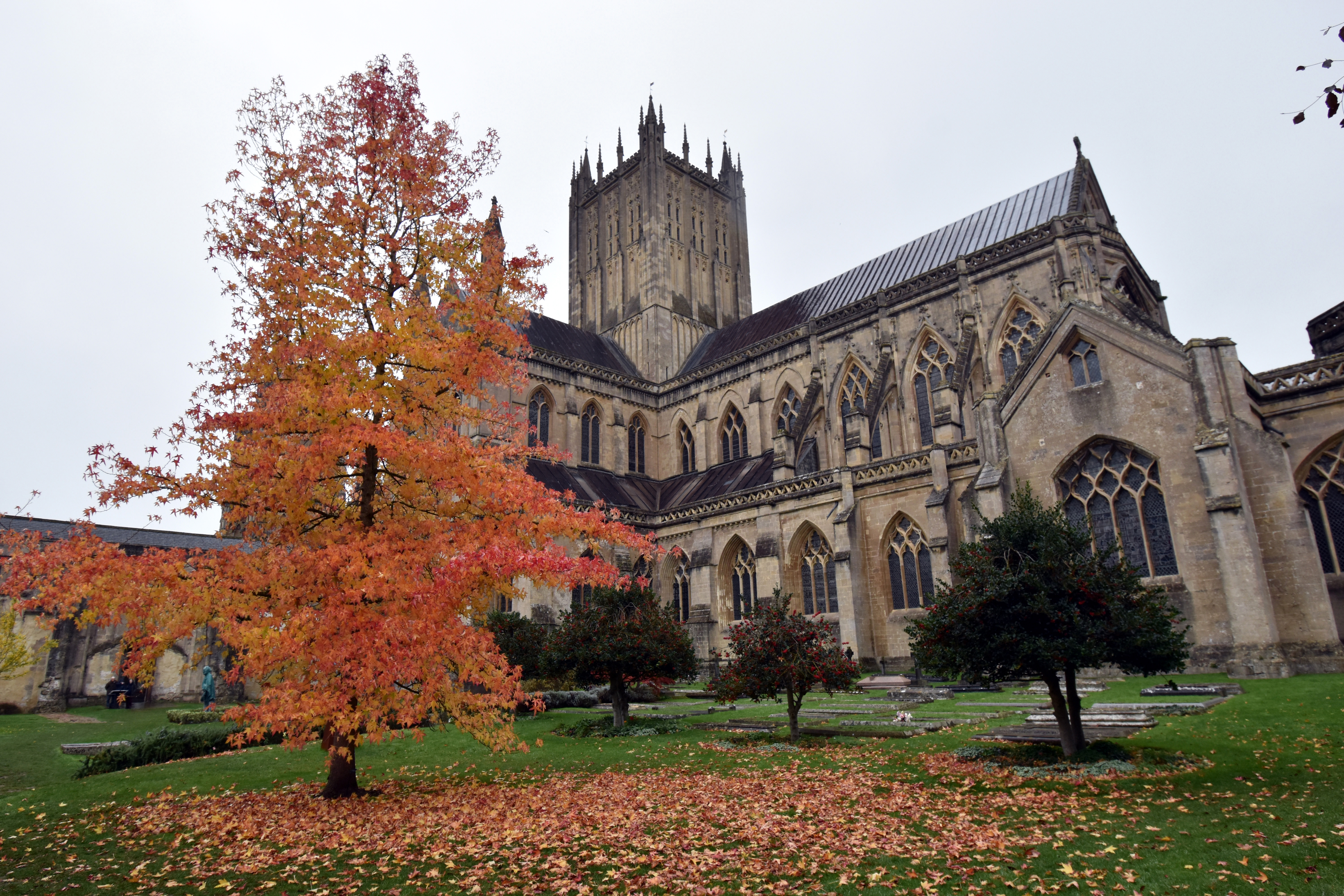
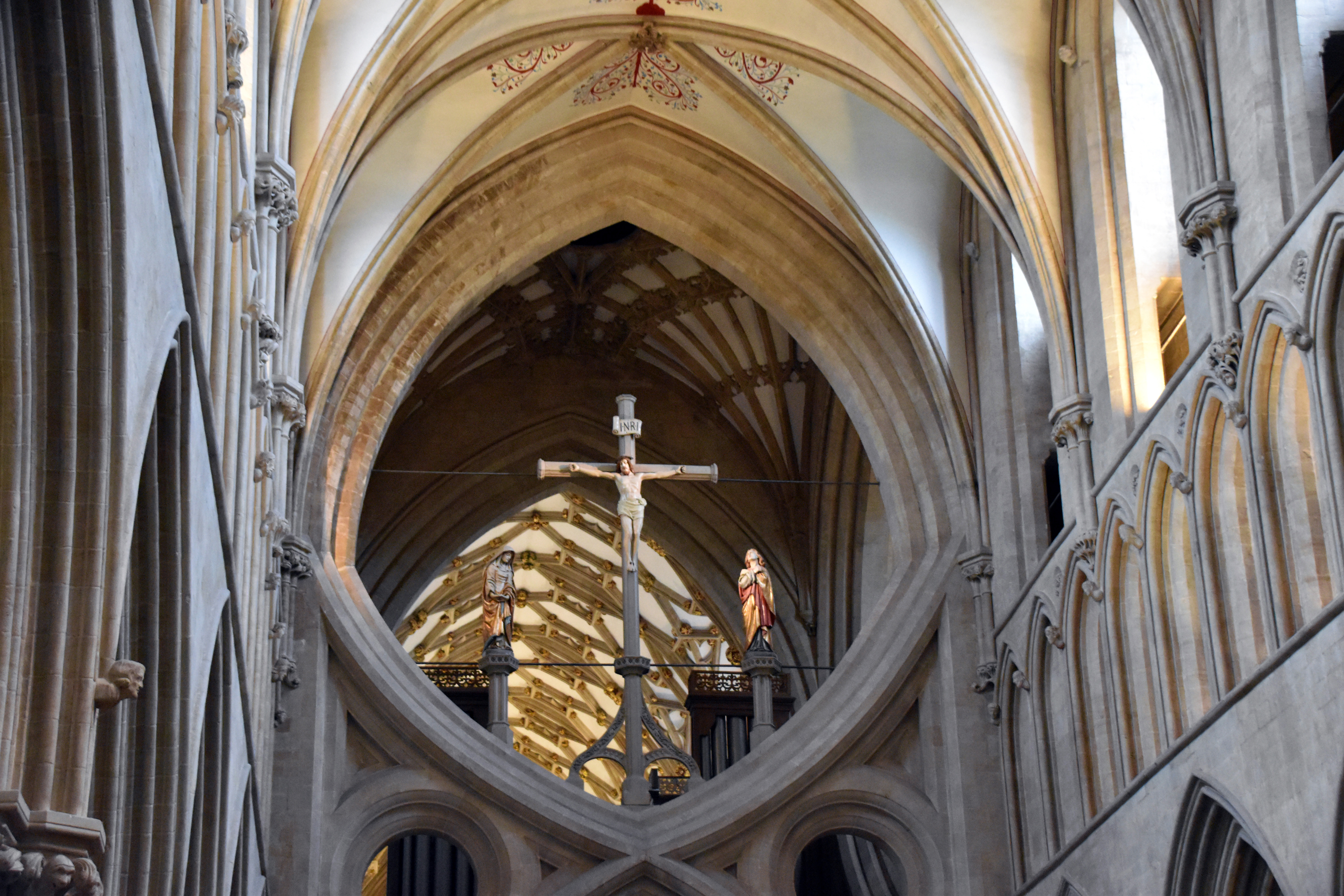
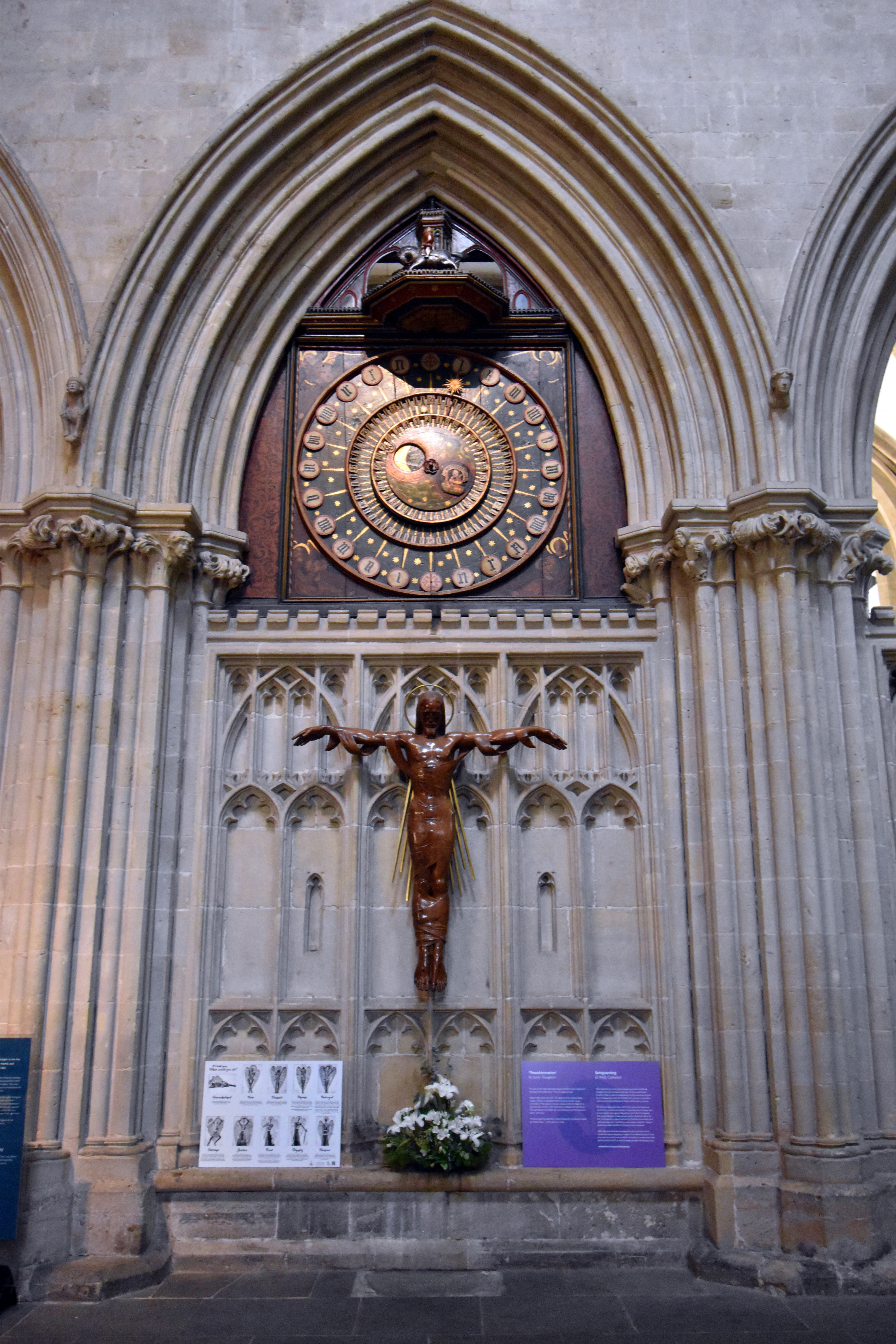
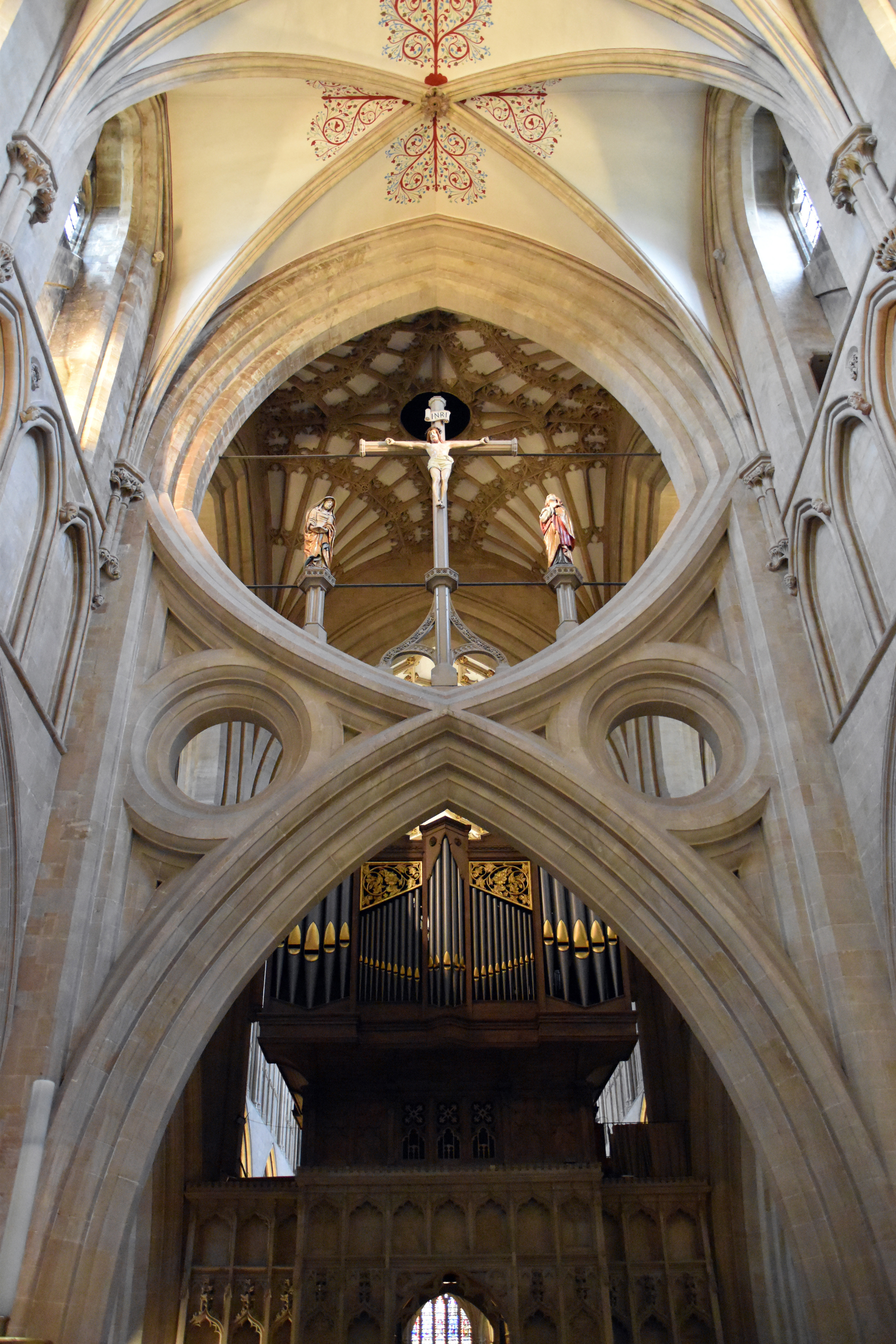
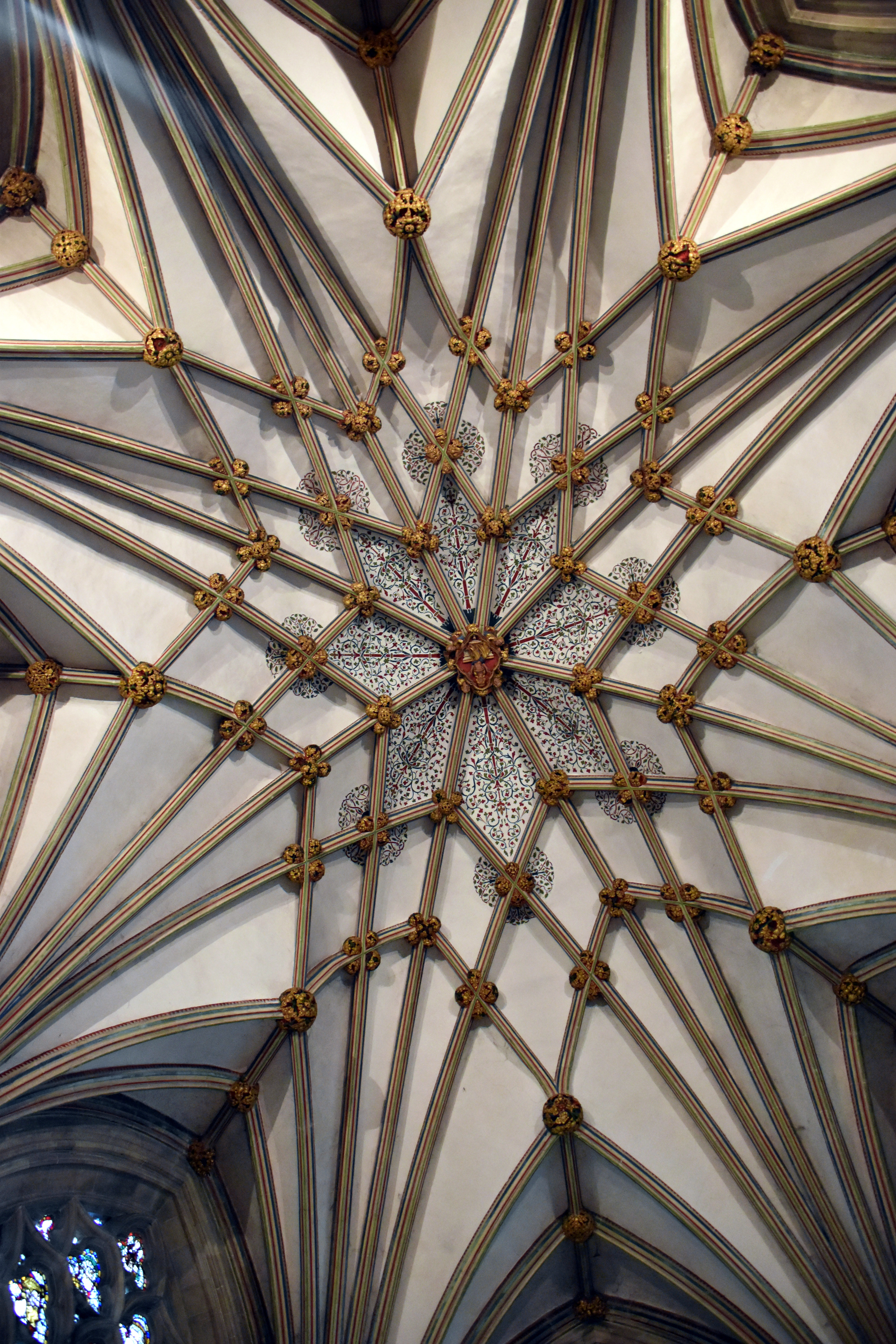
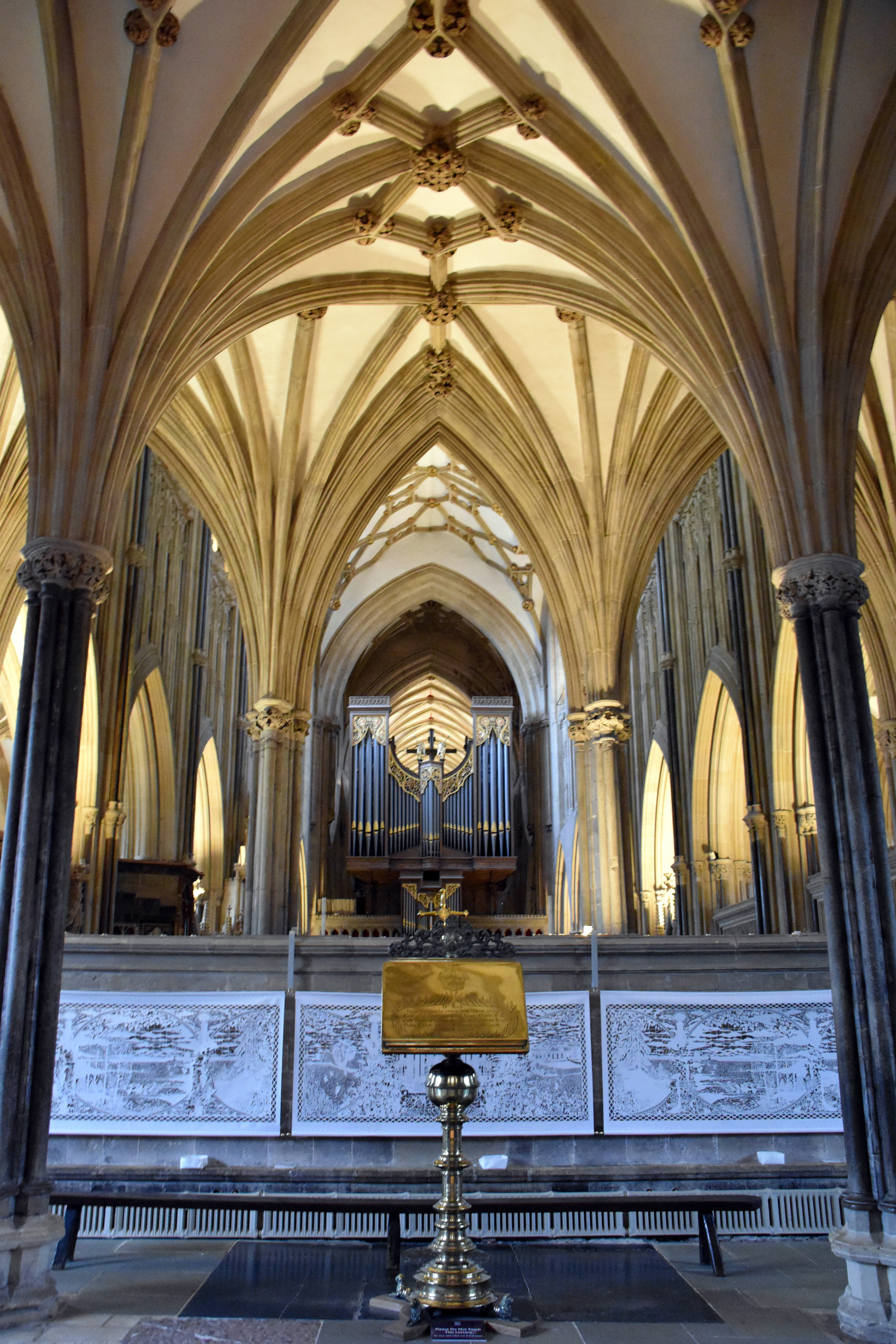
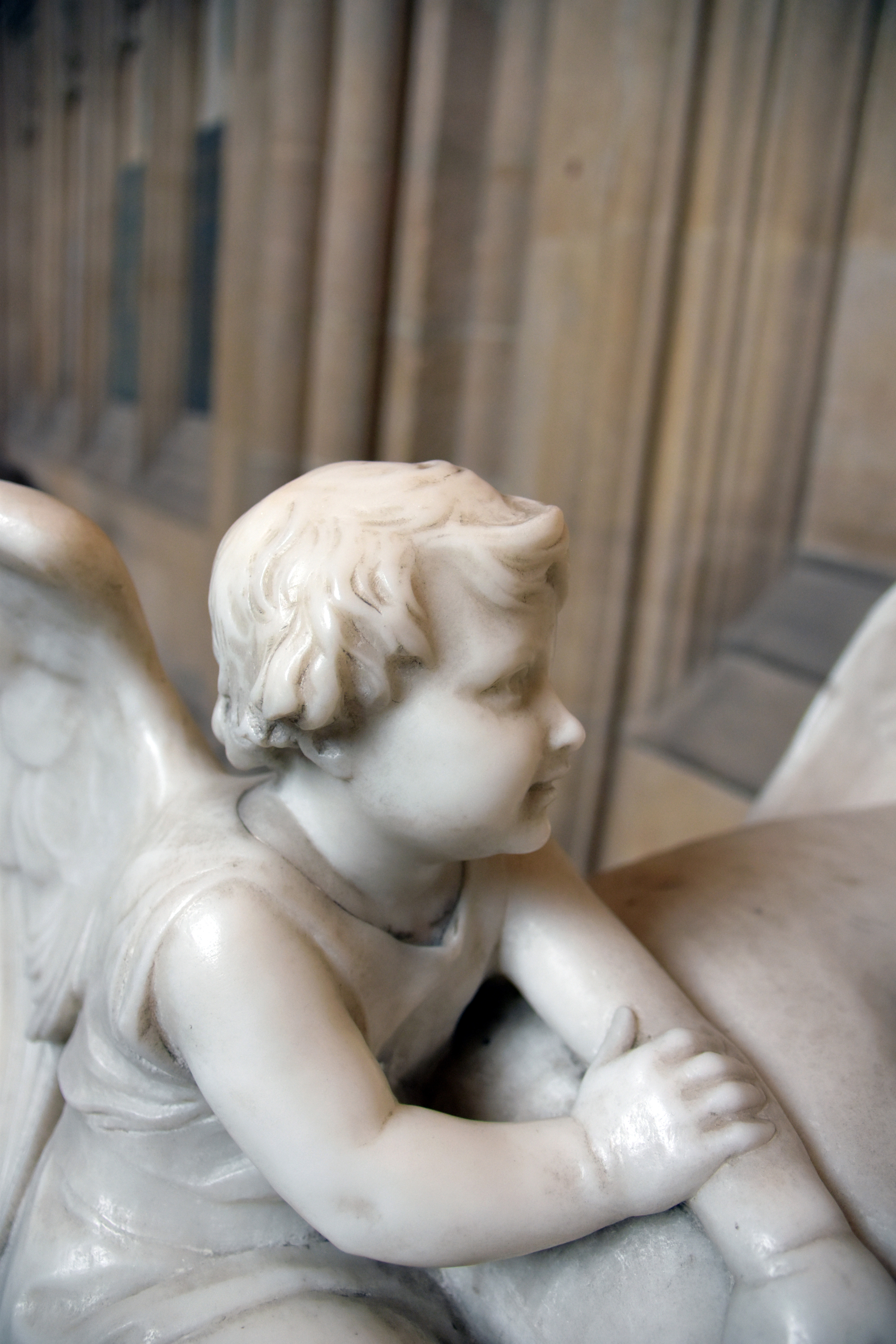
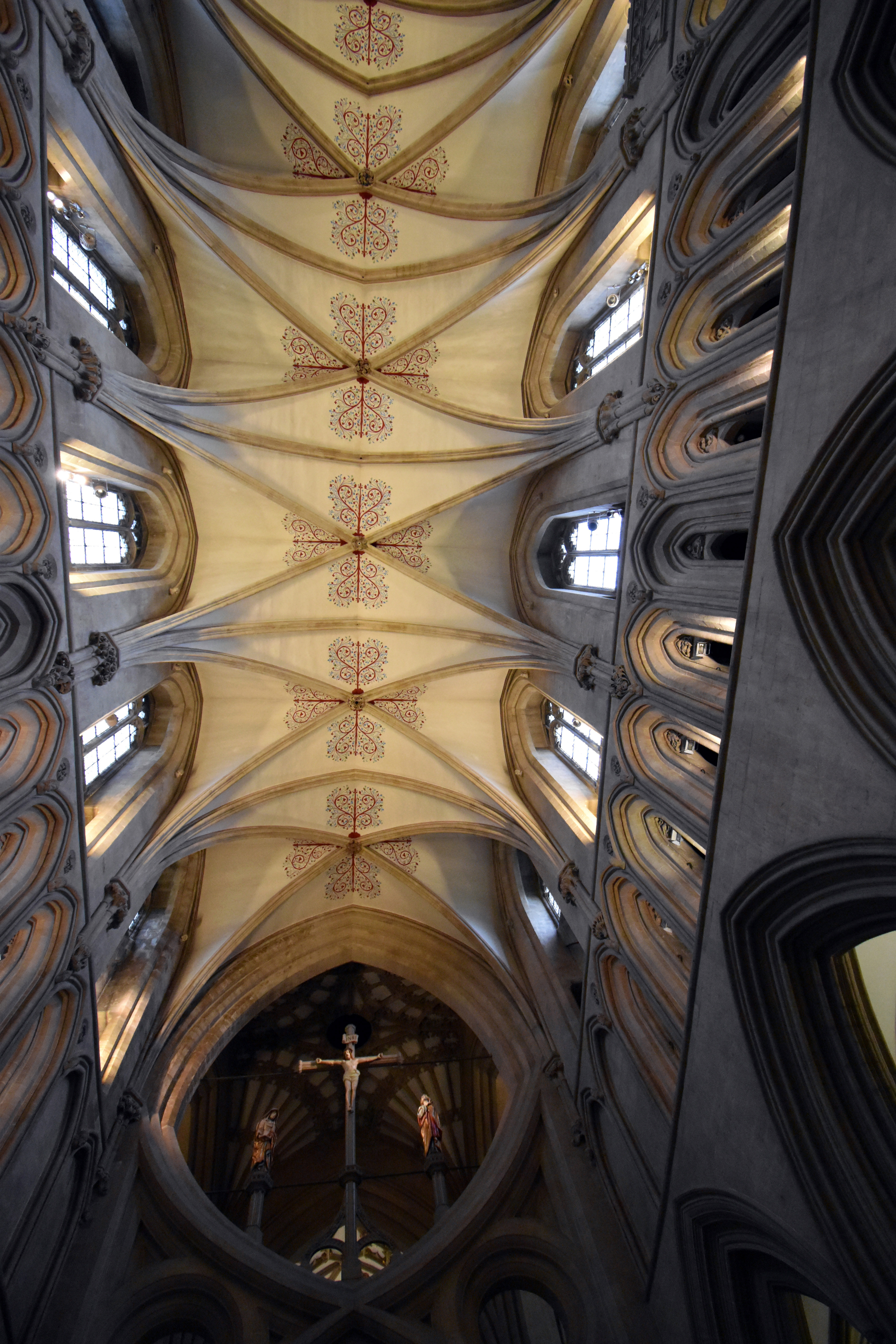
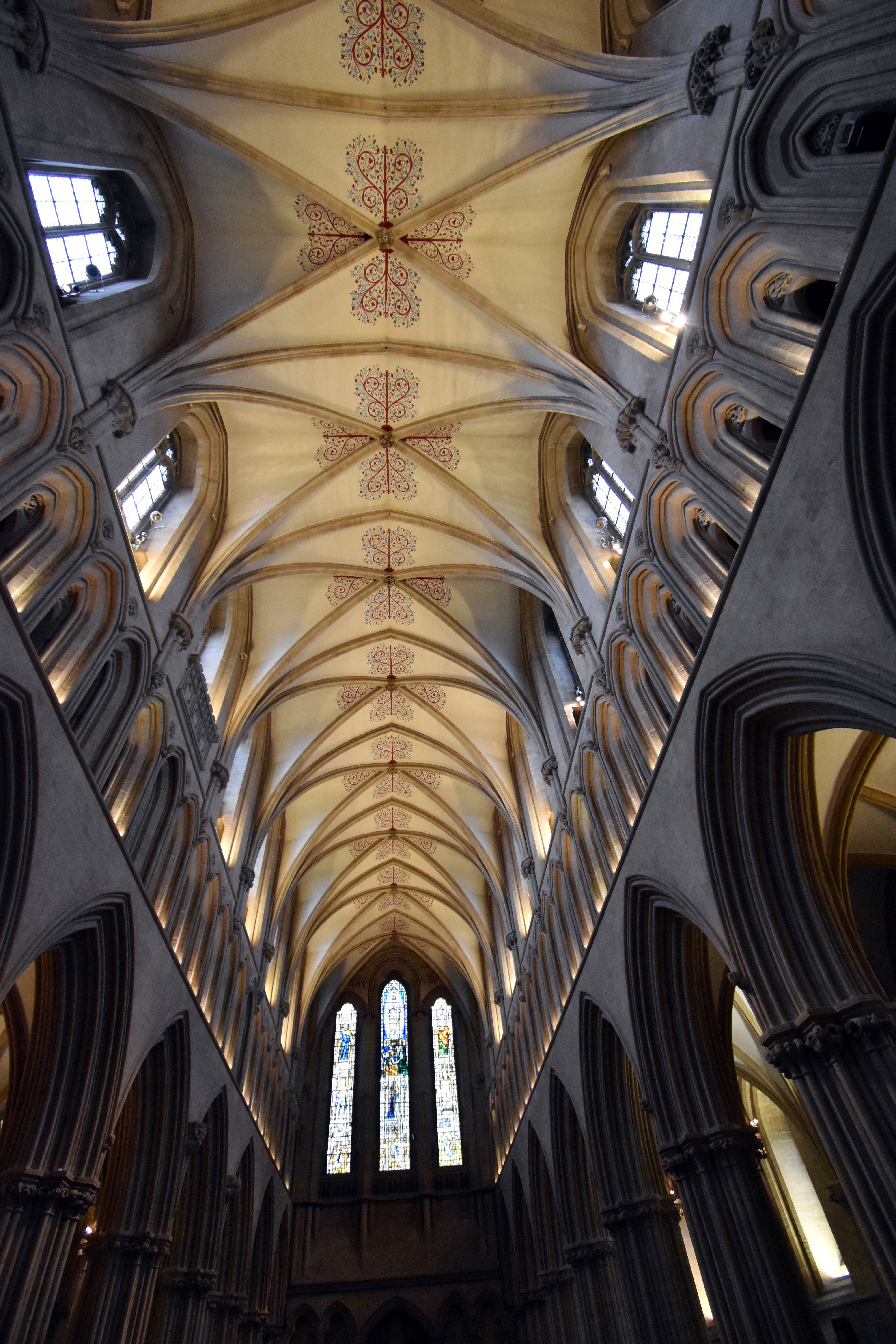
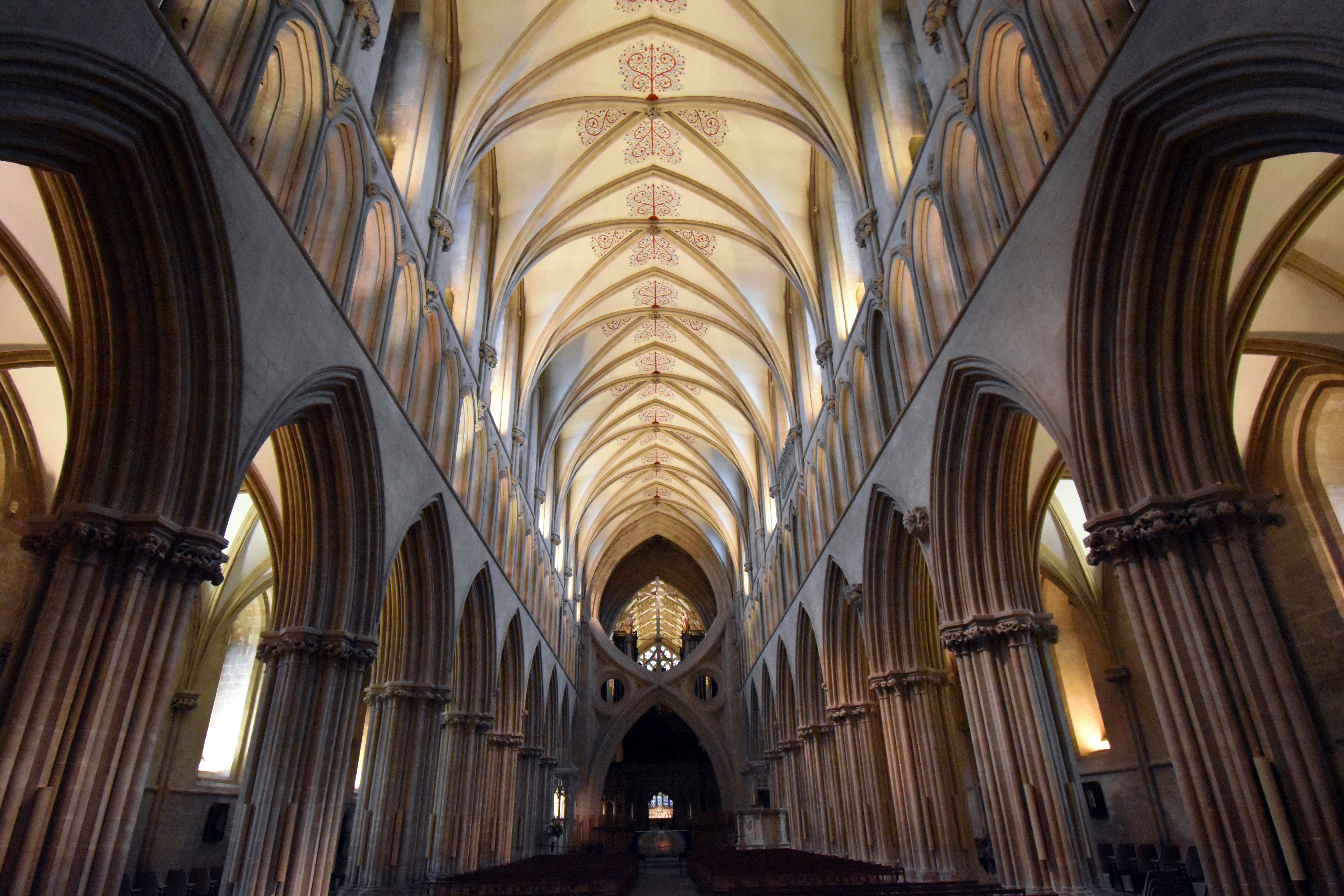
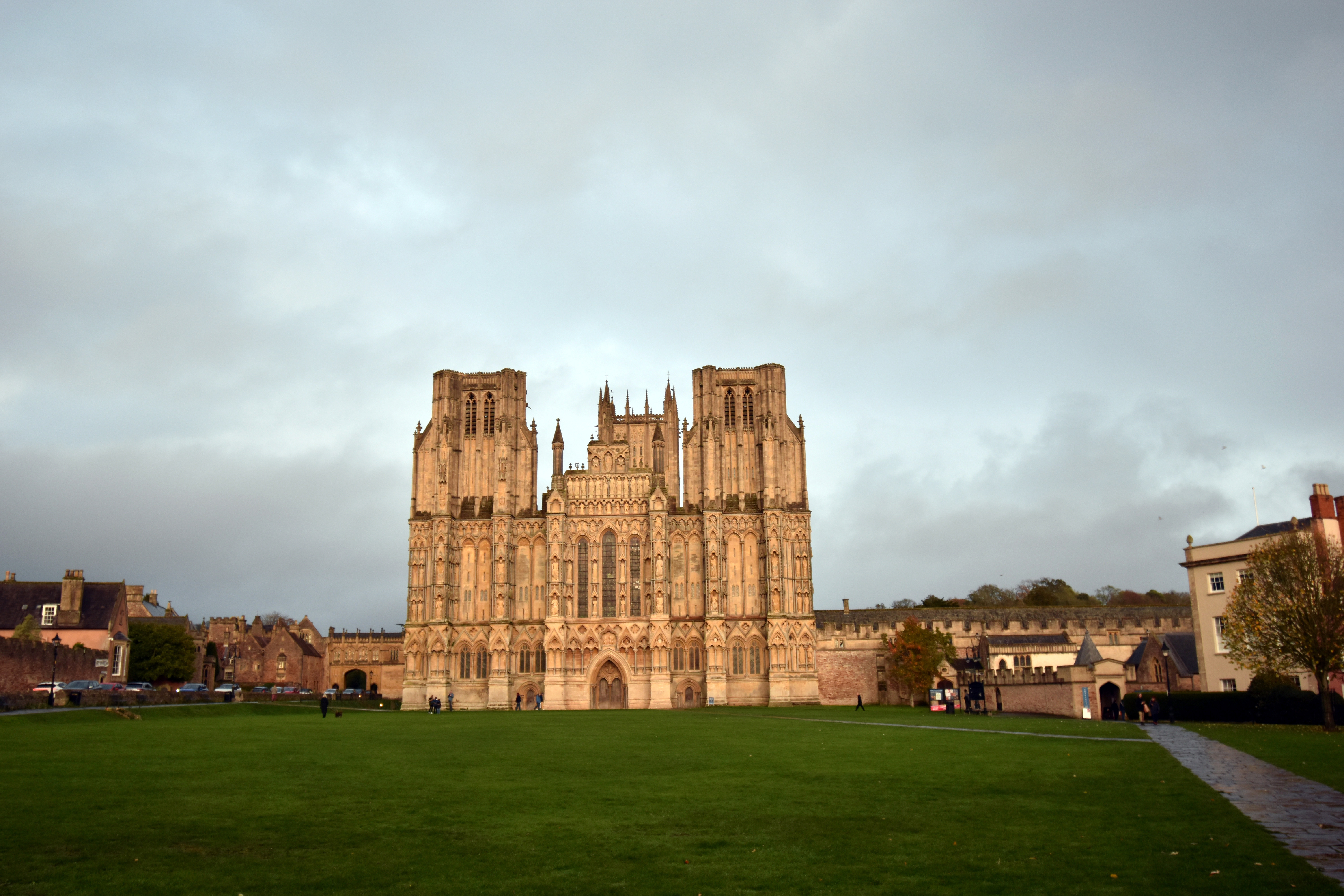
But our next stop was the Cathedral itself. It is believed that once upon a time it had the most statues of any building on Europe adorning its outside - a fair few did not survive the wrath of the Puritans and Protestants but more than enough were too high and too inconvenient to access. Of course originally they would have been painted in stunning bright colours whereas now they are bare in the same stone as the building itself offering a pleasing harmony of its own. But whether from the outside or the inside what a stunning building Wells Cathedral is. In fact, it was England’s first-ever Gothic cathedral, begun in the 12th century, and it inspired later generations of English cathedrals. It was something of an experiment, and you can even see evidence of the craftsmen improving their styles as the cathedral expanded. Most impressive of all, though, has got to be the three scissor arches, which look as though they were built in the last century and not the 14th, when they were hurriedly added after the tower began subsiding on one side (beneath this side was shale rather than rock, and the problem was compounding). Fourteenth-century engineers were more than up to the job: they added these three remarkable scissor arches to help distribute the weight, buttresses for extra support, and even removed a few windows to strengthen the structure. Seven centuries later it is still standing, a testament to their skill and dedication to their endeavour.
 |
|
|
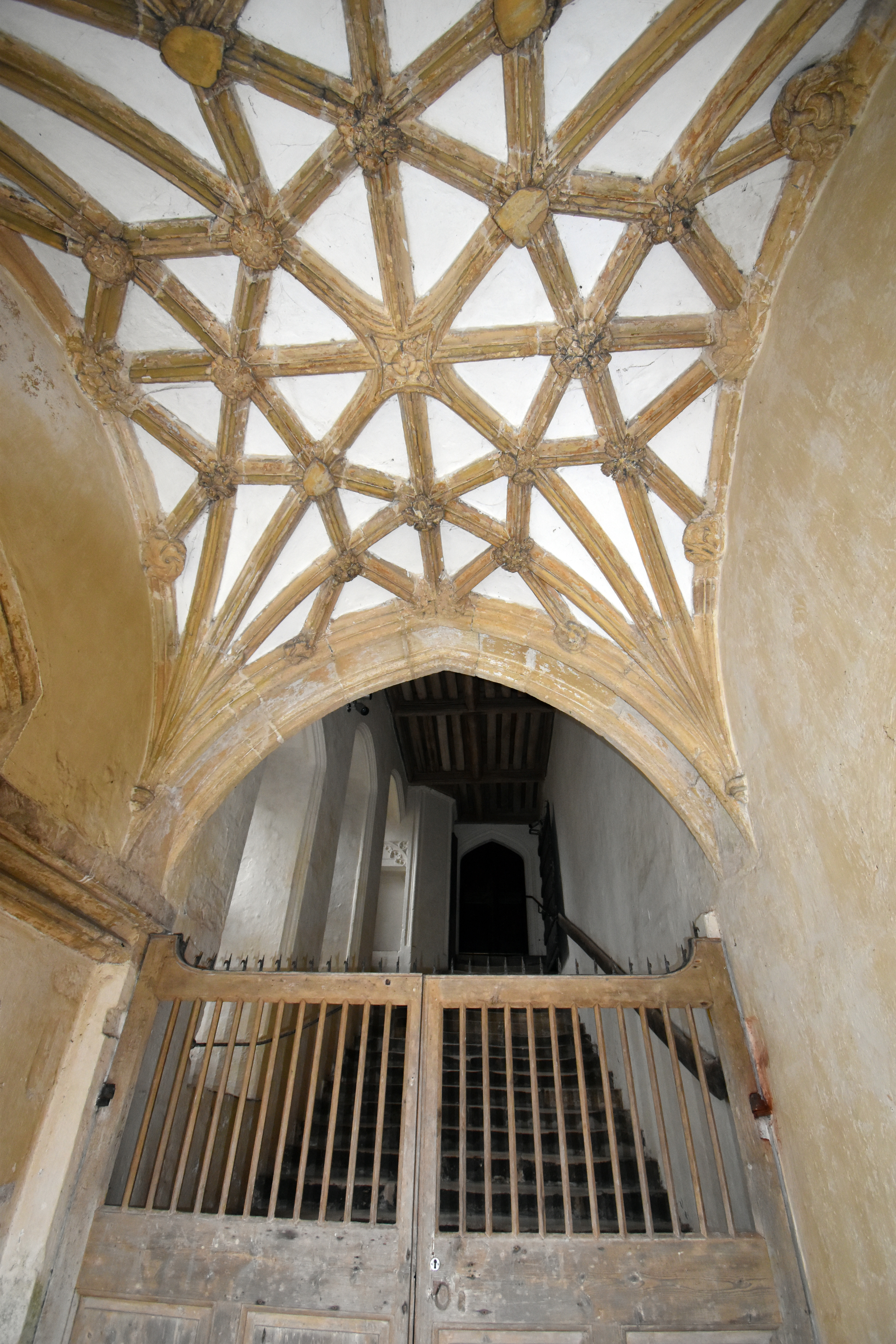
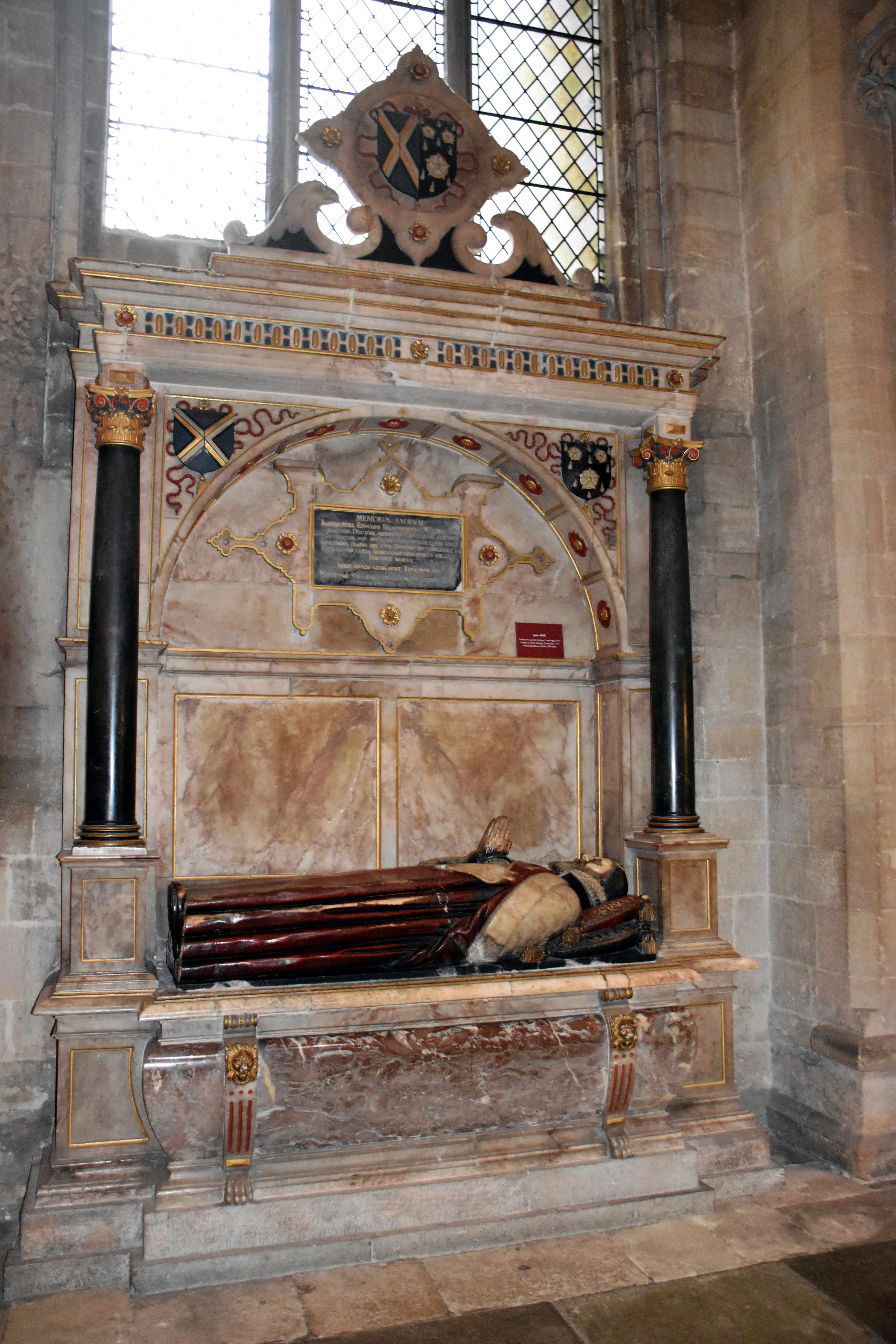
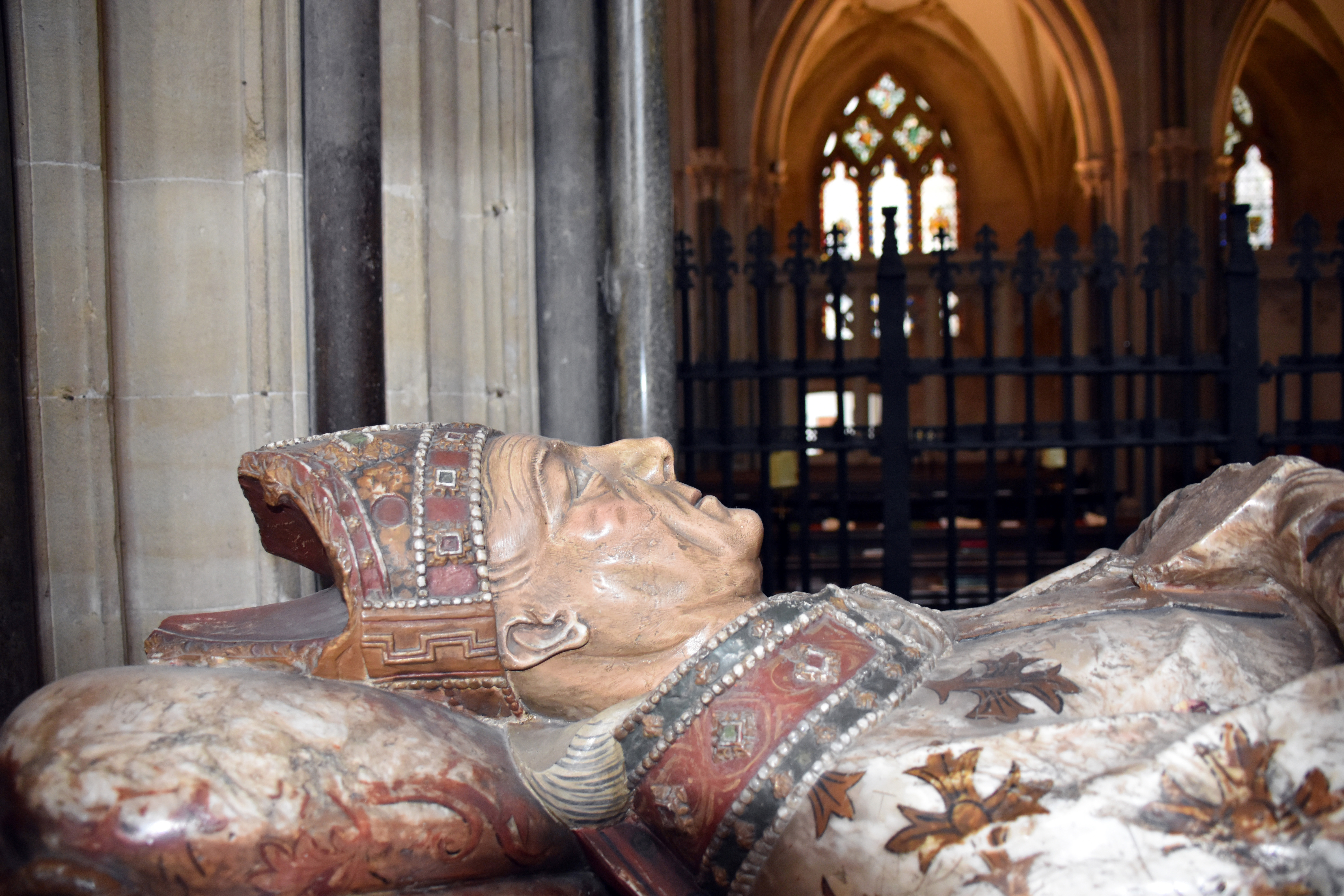
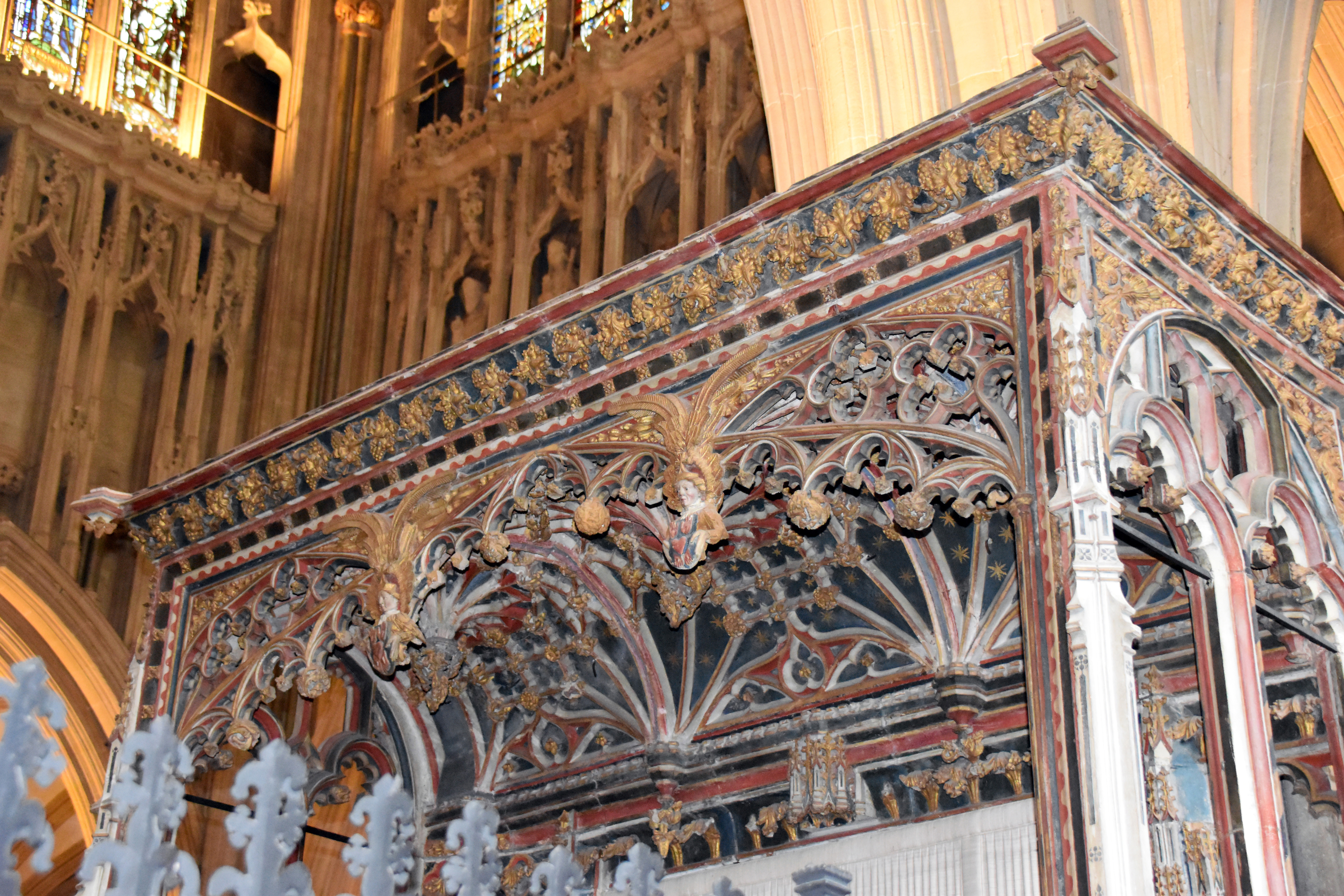
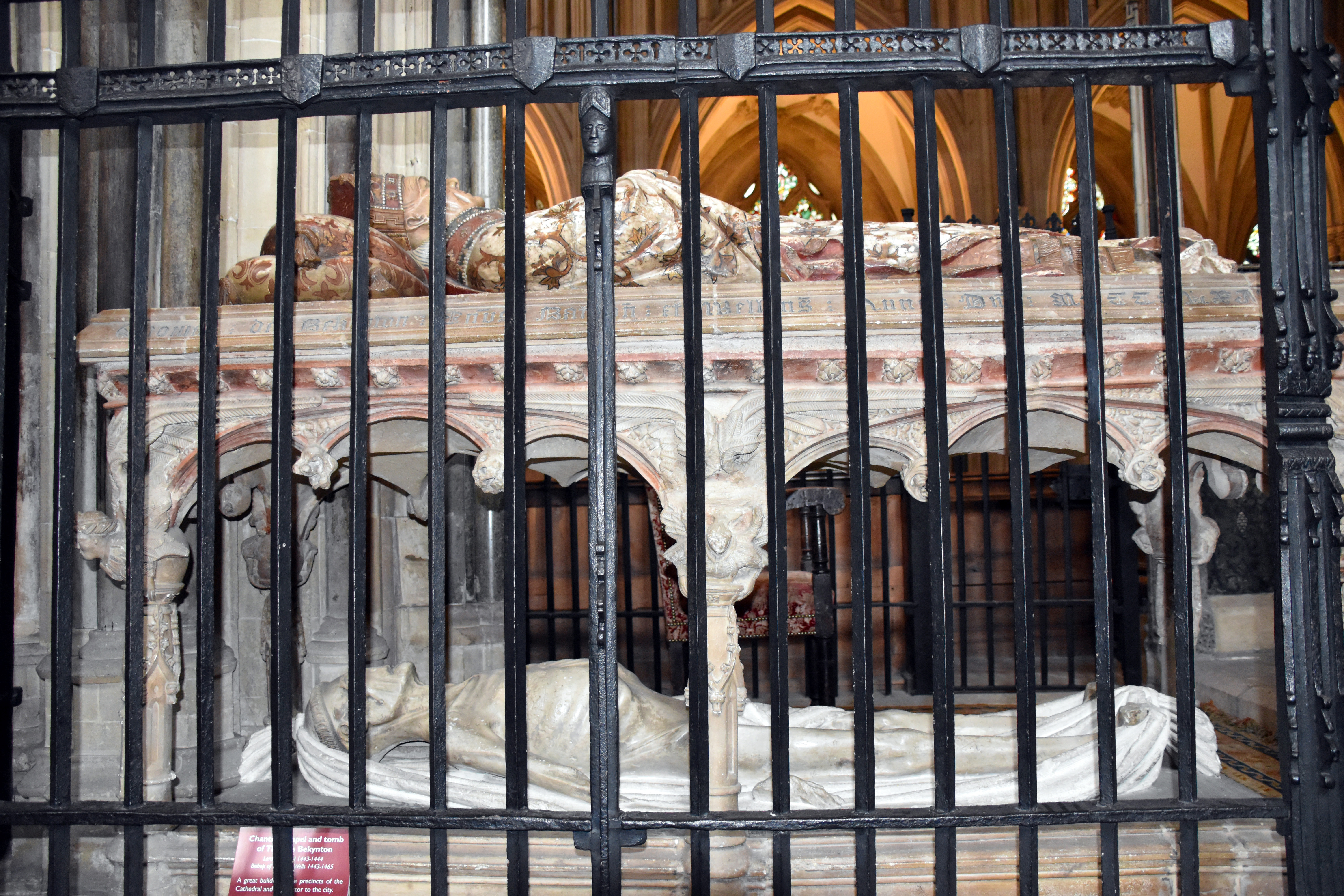
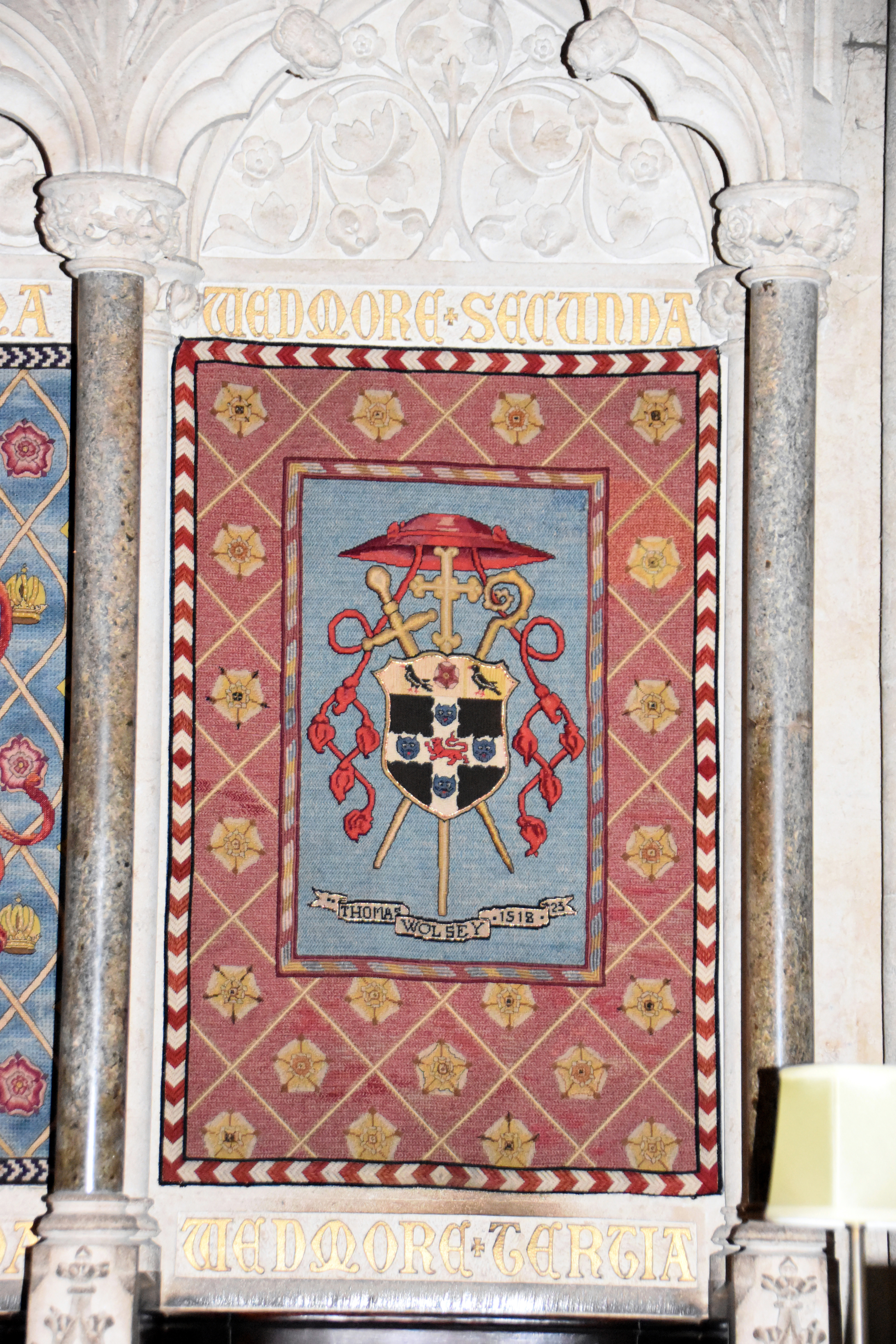
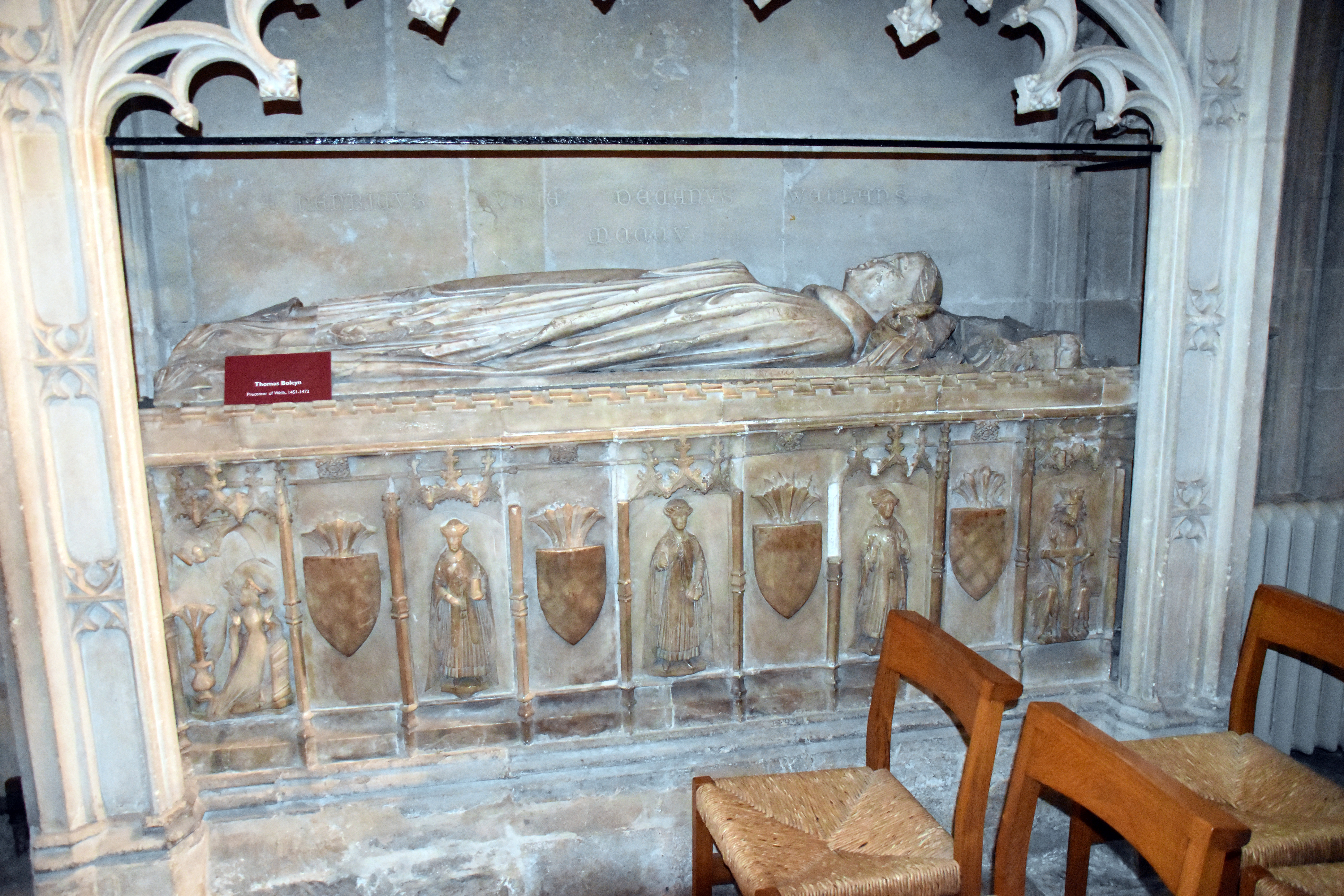
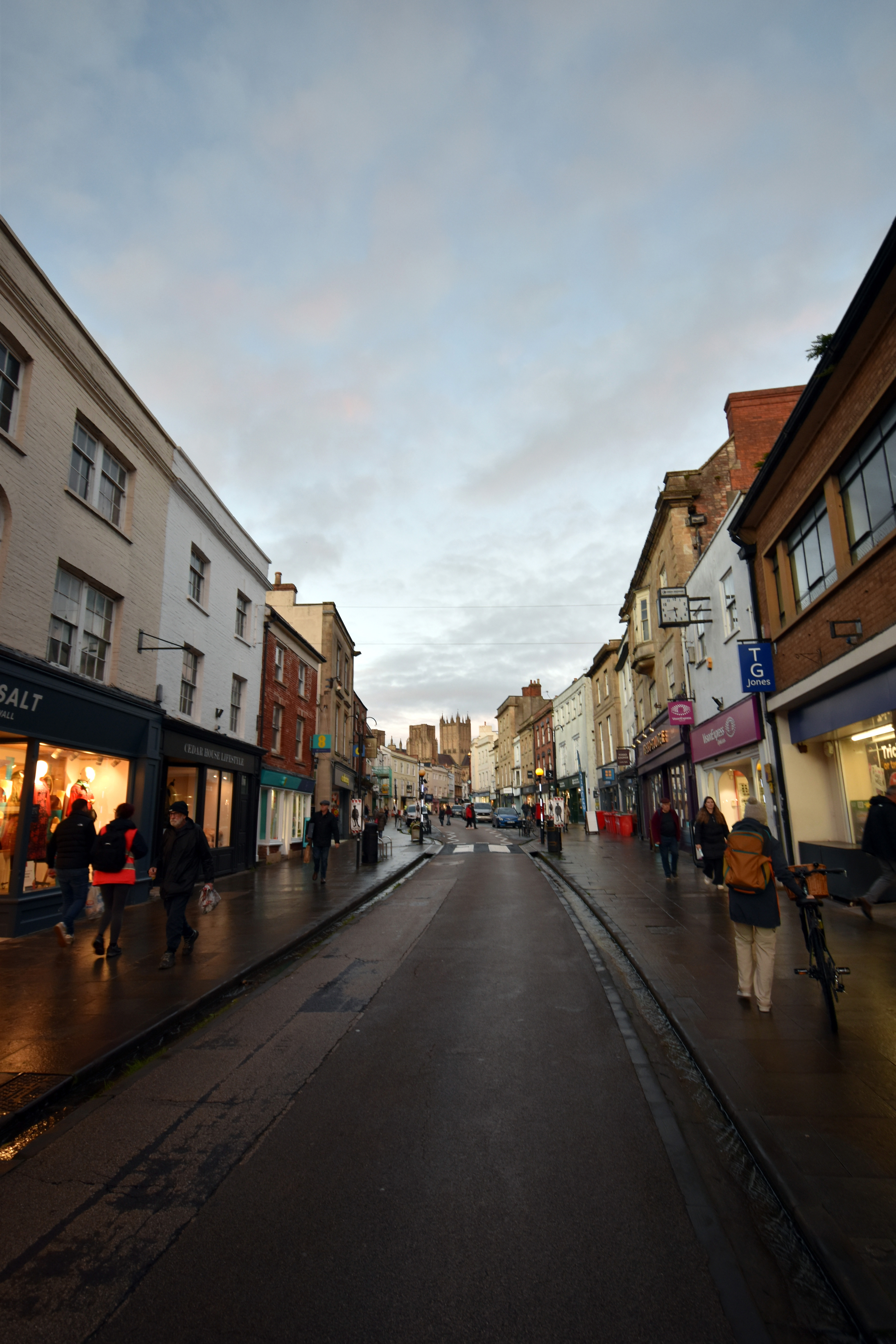
Wells Cathedral was (and indeed still is) something of an administrative centre for the church, built almost directly on the site of a Saxon minster. Originally it was a church for the clergy, not for lay people, and there were no pews or seats. A massive procession of religious office holders would march into the main door and process down the magnificent nave to trumpeters, while the Bishop of Bath and Wells would take his place in his cathedra seat (hence the name “cathedral”) in the quire. They also held more prosaic meetings in the nearby Chapter House, which has some seriously well-worn stairs leading up to it. Interestingly, Cardinal Wolsey was an administrator at Bath and Wells from 1518 to 1523 and is commemorated inside. Locally, the most important bishop was Thomas Bekynton (Beckington). He has an intriguing, if morbid, cadaver tomb and chantry inside the cathedral. He had an effigy of himself in life carved some 15 years before he died — talk about preparing for your death, and how strange it must have been to walk past half your grave every day on the way to work. Below, they added an emaciated corpse wrapped in a shroud to show that mortality is inevitable for everyone, from the highest to the lowest. The whole was enclosed within iron railings to deter the devil from invading his resting place — although why the devil would be in the cathedral was anybody’s guess (I’ve seen The Omen — I know how that works!). For belt and braces, Bekynton also left money in his estate for teams of priests to chant his name in the chantry he had built next to his tomb. This man was determined to go out in style. Yet it should be said that he wasn’t just concerned with spiritual matters. Bekynton significantly improved the civil facilities around the cathedral — especially important as the Black Death was still in living memory. The most important of these was a fresh water supply originating from the wells from which the town got its name. Amazingly, you can still see these waterways coursing down the sides of the streets to this day. The church was often criticised for being insular, but Bekynton could prove that their wealth and power could be put to the benefit of the local community — although undoubtedly a healthy town also helped keep the priests and clergy healthy in the cathedral complex, so it wasn’t entirely altruistic.
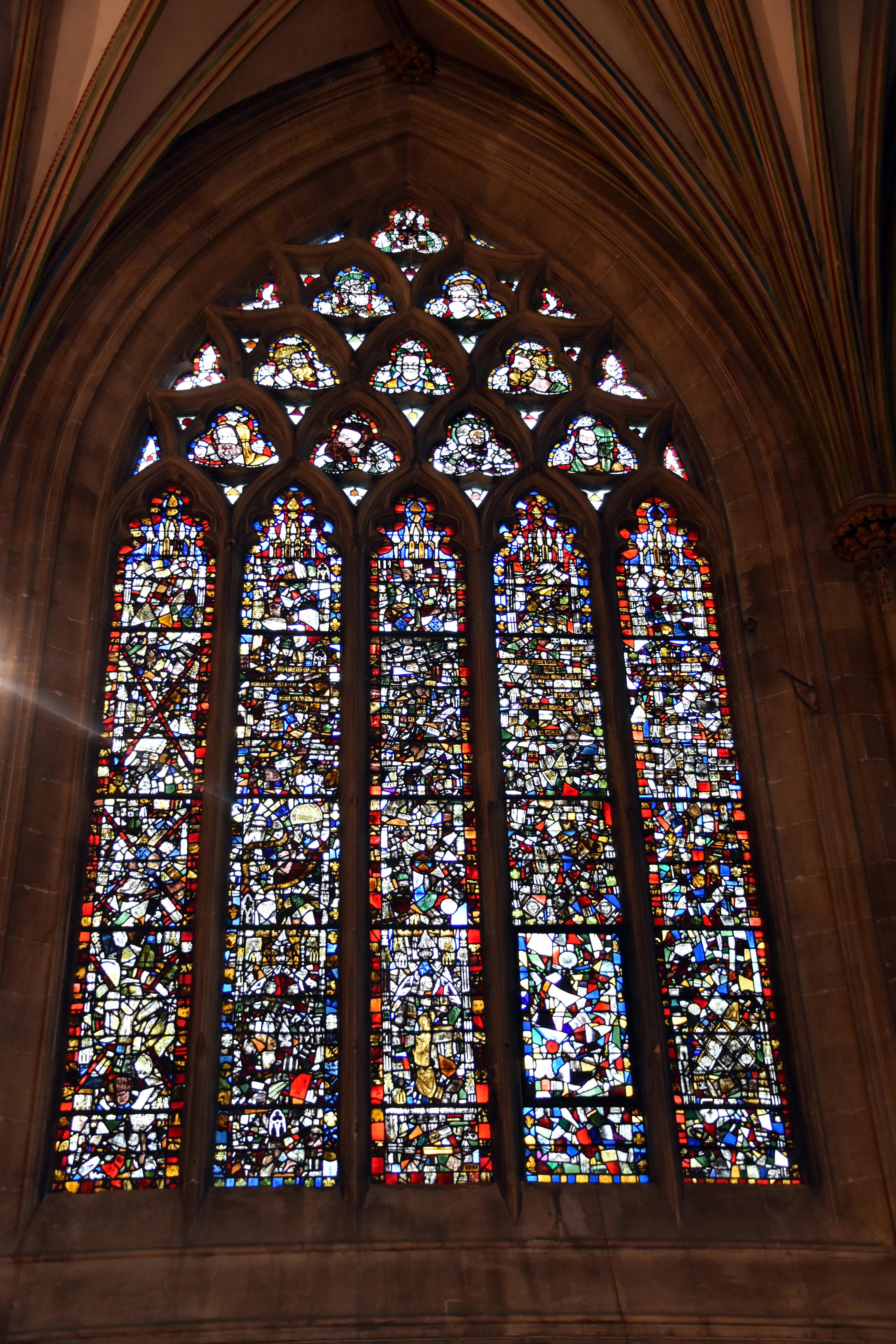
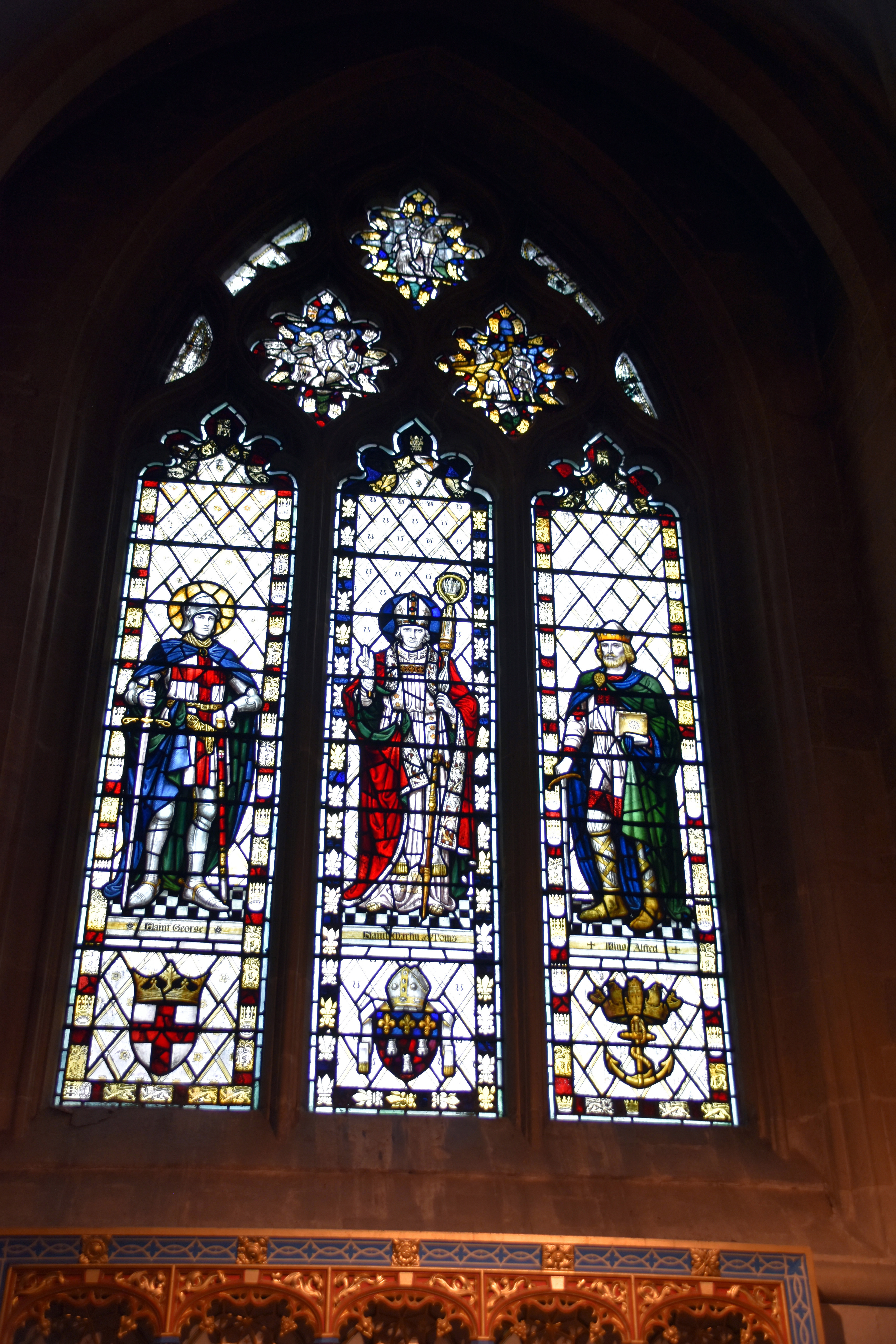
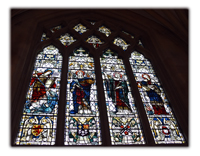
Another famous name connected to the cathedral is Dr Robert Creighton, who had been chaplain to the young King Charles II and even volunteered to go into exile with him, becoming a key member of his court. In recognition of his loyalty and sacrifice, the King appointed him first Dean of Wells and later Bishop of Bath and Wells. Creighton did much to help the cathedral recover from its desecration and neglect during the Commonwealth period. Many of the stained glass windows had been smashed, and you can still see where they were later repaired as best they could — not always in the right order, but creating a beautiful coloured effect nonetheless. There is also a lectern which proudly announces his appointment as Dean by the King for his 15 years in exile.
 |
|
|
One window did survive the wrath of the Puritans: the Jesse Window in the Lady Chapel. Perhaps due to its height, or the appreciation of the local population, it was spared. It is one of the best-preserved medieval stained glass windows in Europe, let alone Britain. It is known as the Jesse Window because it shows Christ’s lineage from the line of David and his father Jesse.
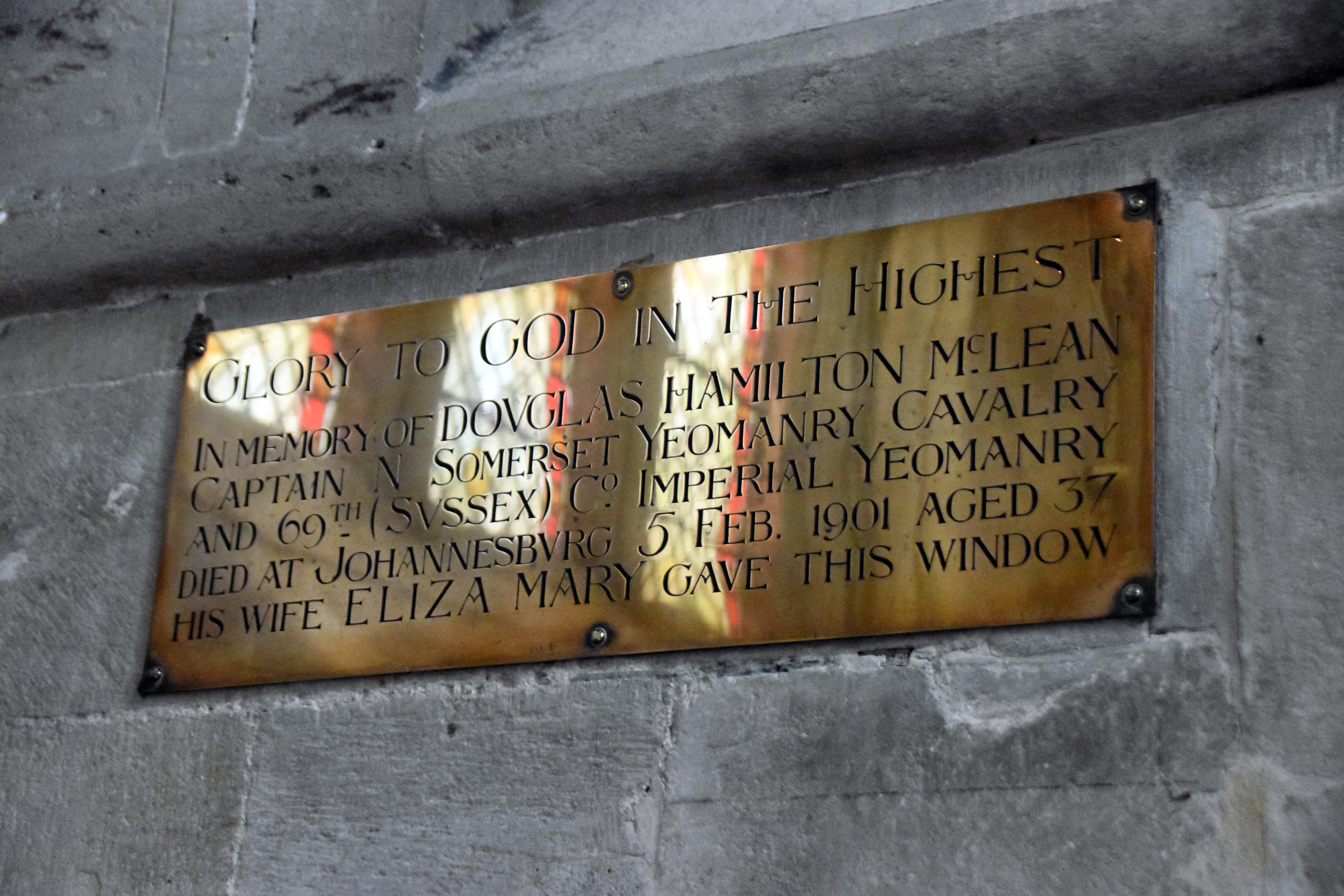
I was also very impressed by the memorial to the Somerset Light Infantry, which is highly distinctive. It not only records their deaths in the two world wars but also, alongside the Somerset Yeomanry, commemorates a remarkable number of Somerset men who died in the Boer War. I was also interested to see a Somerset man from the Devon Regiment commemorated among other non-Somerset regimental casualties. The Somerset Light Infantry carry the Jellalabad battle honour in pride of place for being one of the few units that survived the disastrous First Afghan War, and indeed they received the solitary survivor of the Kabul garrison, Dr Brydon, at Jellalabad.
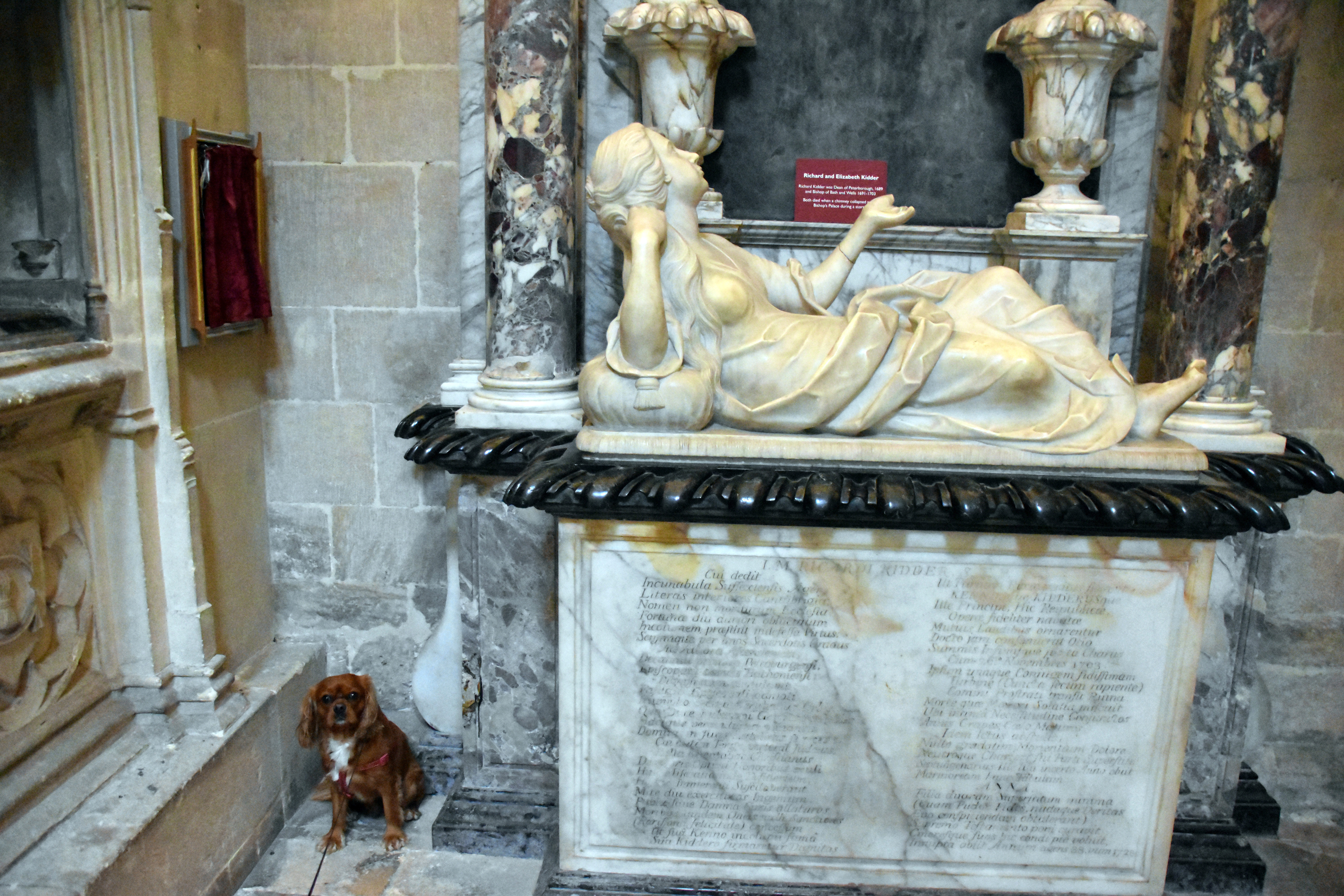
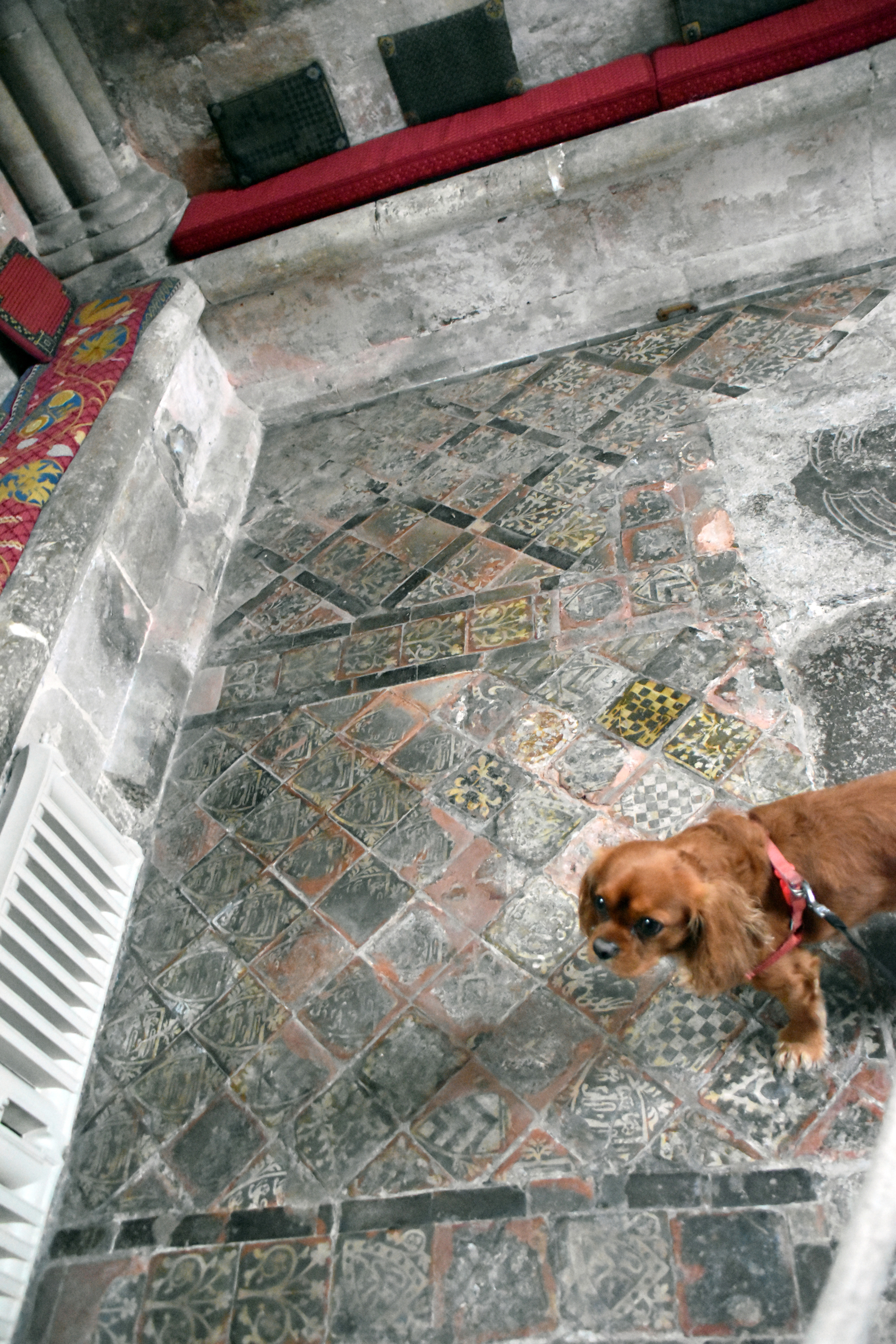
There are so many beautiful photographs of this cathedral and so much more I could say about it, but it is the kind of place you really do have to see for yourself. Photographs cannot do justice to the beauty of this, our first Gothic cathedral in the country. Rupert was thrilled that they let him inside and he had the run of the building. He was very well behaved and did his bit to advocate for dogs being allowed in our public spaces!
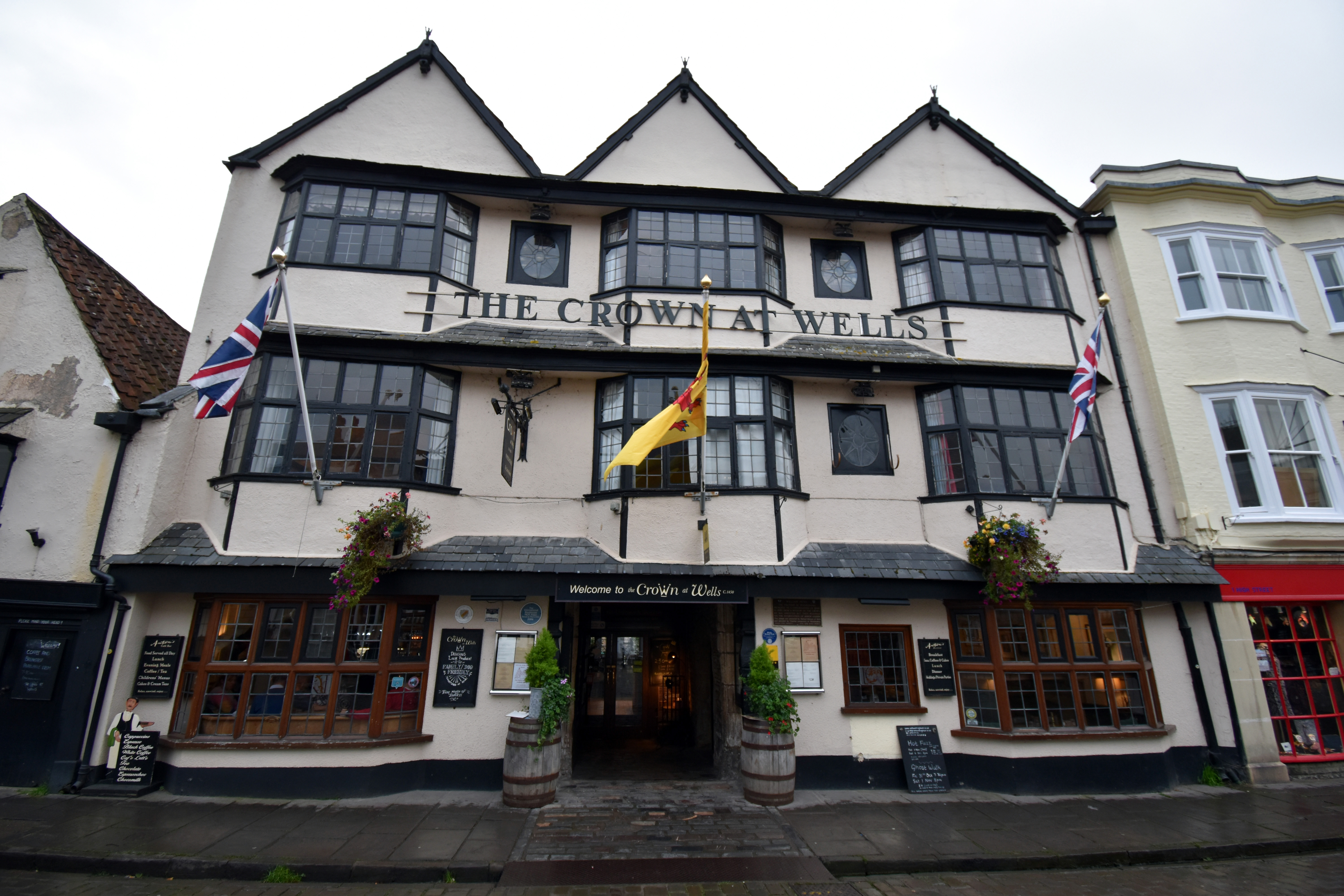
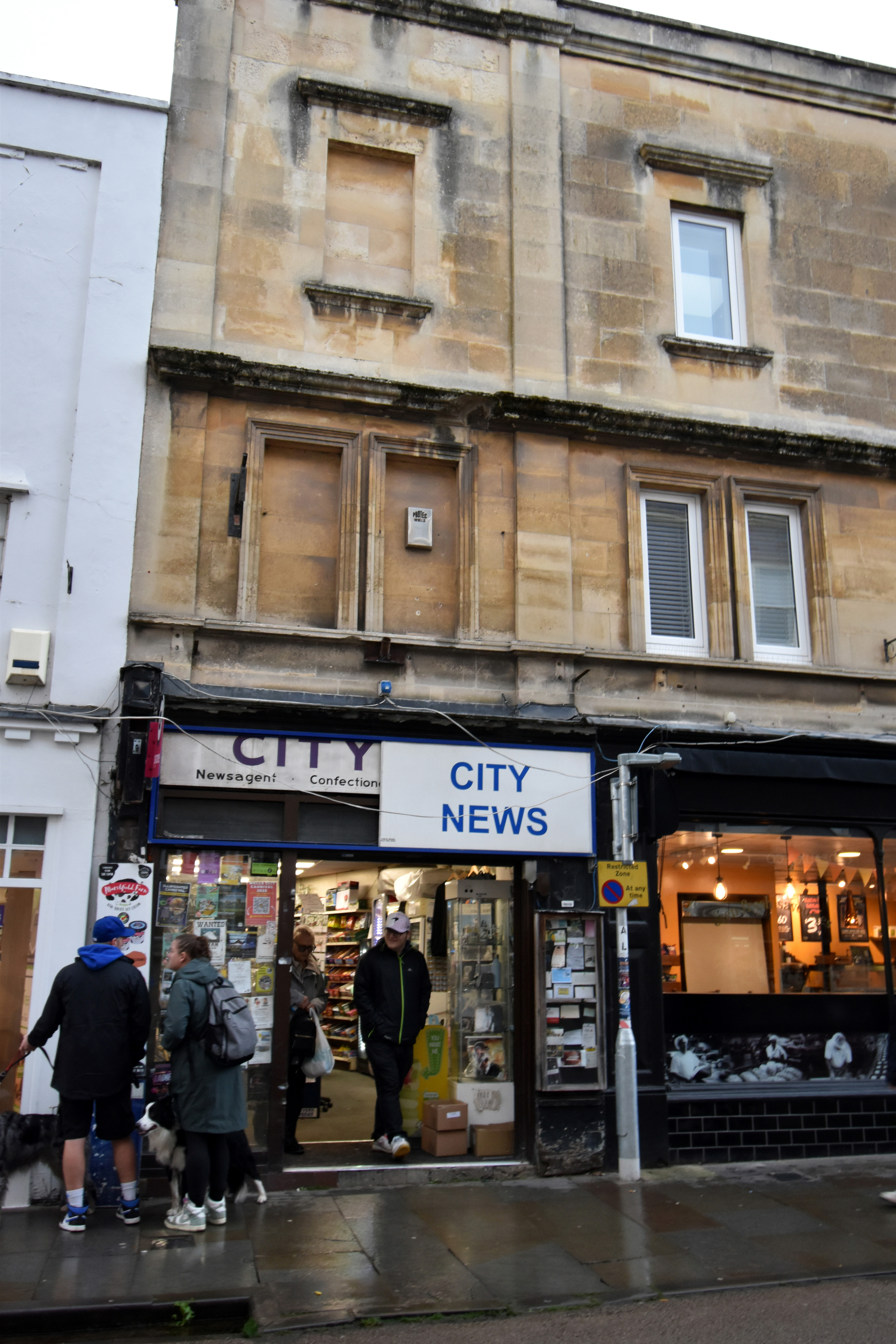
We also had some time to walk around the town centre, which admittedly is dominated by its cathedral heritage. But its other claim to fame is being the setting for the 2007 comedy-action film Hot Fuzz. Rupert and I used the filming locations as an excuse to wander around Wells and get a feel for the place. If you haven’t seen the film, it is very funny and definitely makes for good research before you go to Wells to visit the beautiful town. It was so fortunate that Wells escaped the wrath of the Luftwaffe in the Second World War. This was a real blessing, allowing not only the cathedral but also the city around it to survive intact, preserving the story of how religious communities and secular settlements developed side by side. Rupert certainly recommends Wells as an ideal location for dogs and their owners!
|