|
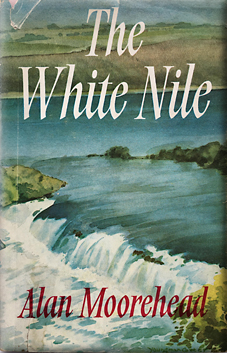
This classic book on the discovery of the origins of the River Nile and its exploration is still a must read three quarters of a century after it was written. Few writers have been quite so eloquent in telling such an informed account of how Victorian Explorers finally solved the mystery of where the White Nile originated. This was no straightforward task by any means and it required the efforts of many different explorers in some of the most hostile terrain on the planet often paying for their exploits with their health or in some cases with their lives. This is a remarkable tale from start to finish and pulls together the competing interests of Egypt from the North, Zanzibar from the East, the three rival African kingdoms around the Great Lakes, Arab slavers, the Mahdi and of course European colonial powers all vying with one another. Despite concentrating on the Victorian explorers, the author does take the story all the way back to the Ancient World and their theories on the origins of the Nile especially as these early theories such as the Mountains of the Moon still held sway to the Victorians. The book though also takes us in the other direction to the tail end of Colonial control. It is something of a coincidence that this book was published in 1960 the same year as Harold MacMillan's famous Wind of Change speech that would usher in a period of rapid decolonisation. But the key thing here is that the author was visiting many of the places he was writing about in East and Central Africa whilst they were still largely under European colonial control and had the access and perspective of a world that knew of the exploits of the Victorian explorers intimately. This Australian journalist knew the area incredibly well and had written his account of the Desert War which raged in many of the same places described in this particular book. His The Desert War Trilogy would become a classic of the war genre in its own right, much as this book and its sister book; The Blue Nile, would become classics in the genre of exploration books. He also wrote a wonderful account of the Gallipoli campaign.
I really enjoy history books written by journalists who craft their words so carefully and lay out an organisation that weaves multiple stories in a way that creates a holistic overview of what is otherwise a huge area in geographical terms and which is equally spread out through time - over decades and indeed centuries. Reading this book really helps you understand how this quarter of North and East Africa developed the borders that they did and how and why certain European powers became involved in this part of the world during a vital period immediately preceding and then becoming intimately party of what became known as The Scramble for Africa. It also must be made clear that the explorers had their own motives that did not always coincide with their respective national governments and indeed the author makes it very clear that in the case of Britain in particular the government was often reluctant to become involved in formal control of areas but that events often propelled them to do so whether they wished to or not.
After a brief explanation of the Ancient World's attempts to explain the origins of the Nile, the book begins in Zanzibar in 1856 with two of the most important explorers, Burton and Speke, preparing for what was in many ways the most remarkable and significant journey of all - although this would only be with the benefit of hindsight and requiring many more subsequent journeys to confirm. The author paints a beautifully evocative picture of the exotic island of Zanzibar. It is far more cosmopolitan and far more plugged in to the world's trade routes than you might have expected. It is fascinating to read not only of the Arab and Indian dhows plowing the Indian Ocean trade but also ships from France, America and even Hamburg. It was intriguing to learn that it was the Americans who were the first to set up a consulate on the island in 1839 and were the main traders years before the British became involved in the area in earnest.
Of course slavery permeated the entire island as it had done so for generations. This was despite the export of slaves being technically 'outlawed' in 1845 and British and French naval vessels patrolling East Africa to intercept Arab dhows conveying their pitiful human cargoes. It was still part of the local culture and the Arab ruling families on the island had made themselves totally dependant on the institution of slavery. It was also easy for the small and nimble dhows to carry slaves the short distance from Africa to the island or even on to the Middle East evading the patrolling ships. In fact, it could have been argued that the European ships searching for the slavers made the slaves' conditions even worse as they were hidden from view in even tighter inhumane conditions.
The author explains the horrors of the existence of these slaves but also its stultifying effect on the economy and the culture of the island: "Slaves and masters alike were caught in a web of mutual distrust and even hatred." The institutionalisation of violence meant that nobody walked unarmed around the island and every door and shutter was barred tightly at night. There was no trust on the island. Fear was the only weapon the authorities could rely upon to maintain order. Despite the Arabs owning and relying on slaves, the author makes it clear that Richard Burton was very much an Arabophile who spoke their language and appreciated their religion and what he regarded as their more sophisticated culture than that of the local Africans he encountered. He had far more time for the Arabs than the poor Africans of whom he was often suspicious of or pitying at best. It should be said that his co-explorer Speke was very much in the opposite camp feeling far more sympathy with the Africans than the Arabs.
The book conveys the size of these expeditions. In Burton and Speke's case, they set off with a caravan of 170 walking through harsh, disease ravaged lands. The two protagonists were very much like chalk and cheese although they complemented one another better than they realised. Burton was the erudite Romantic Arabist who was fascinated by what he encountered. Speke was the younger, fitter, more focussed and practical hunter who had a fascination for Natural History and collected specimens for a Natural History Museum he intended opening at his Father's House in Somerset. They had previously explored together in Aden where they had barely escaped with their lives after being attacked by hostile local tribesmen. It was due to this debacle that Burton felt obliged to invite Speke to join him on a new escapade.
The expedition would see both men ravaged by disease and health issues and one or both of them were almost constantly sick with something or other. In February 1858 they had their first breakthrough with the discovery of Lake Tanganyika which seemed large enough to be a possible source of the Nile. Burton wished to stay to recuperate, resupply and write up his observations around the Lake. Speke on the other hand was intrigued by reports from Arabs of an even larger lake to the North. Burton willingly allowed him to go to give himself to organise and chart what he was witnessing but this separation would accidentally sow the seeds for lasting controversy and disagreement between the two explorers. In August Speke set his eyes on the enormous body of water that he would later christen as Lake Victoria. In a flash of inspiration Speke felt that he had set eyes on the origin of the Nile but given its immensity he could not hope to have traversed its circumference to ascertain any inflows or outflows of rivers to confirm or deny this theory of his. When he returned to Burton, he found his fellow explorer less than receptive to his discovery. Burton required evidence and believed that Speke was making a broad assertion. This disagreement would haunt them for the rest of their lives. Matters were made even worse by the fact that Speke made it back to England three weeks before Burton who had to recuperate from yet more sickness in Aden before arriving back home. In the meantime Speke had let slip his theory and discoveries to the Royal Geographical Society much to the chagrin of Burton. The RGS had agreed to fund a further expedition by Speke even before Burton was able to put his own theories of a network of lakes being the source of the Nile before their sponsors.
The 1860 Grant and Speke expedition certainly added more understanding of Central Africa and introduced Europeans to the three fascinating African Kingdoms of Buganda, Bunyoro and Karagwe for the first time. The author explains the clash of cultures as the European explorers collided with the suspicious rulers of the kingdoms who were vying with one another and were wholly unused to the technology and knowledge of the interloping Europeans. The interactions of the respective Africans and Europeans help explain just how vast was the cultural gap between the two civilisations that had been unaware of one another's existence. The African leaders do come across as capricious and tyrannical but in this violent world that may have been the only viable survival strategy with so many rivals and threats to their position. The key discovery though was to be that of what was named 'Ripon Falls' as the outflow of Lake Victoria which seemed to confirm Speke's theory of Lake Victoria being the source of the Nile. But still they had not completed a full circuit around the Lake so could not confirm the existence of any other inflows and outflows and crucially given the warring state of the three African nations, they could not follow the entire course of the river flowing out of the Ripon Falls. At this point the Egyptians join the story as they were moving their own influence Southwards through the Sudan. We are also introduced to the fascinating character of Samuel Baker and his even more fascinating ex-slave wife who joined him on all his own endeavours. Speke and Grant met Mr and Mrs Baker in Gondokoro nearly two and a half years after having set out from Zanzibar and would hand the baton of exploring this area over to the Bakers in due course.
Sadly the very real achievements of the Grant and Speke expedition were still not compelling enough for the well connected Burton to concede to Speke's thesis. There now occurred one of the most remarkably poignant events that if penned in a work of fiction would have seemed somehow pushing the bounds of believability. There was to be a big debate in Bath overseen by David Livingstone himself to test Speke's and Burton's theories against one another. Literally as Burton was speaking news arrived that Speke had been killed the evening before. Some assumed suicide although officially it was a hunting accident. I have to agree that an accident does seem the more plausible suggestion but the timing of the death could not help but invite speculation as to its nature. Sadly this death did not resolve the conflict and it would take many more expeditions over the next two decades before Speke's accurate claims could eventually be confirmed. It is sad to say that Speke never really achieved the accolade that he truly deserved.
The next significant expedition was by Speke's friend Samuel Baker and his larger than life wife Florence Baker. To say they undergo trials and tribulations as they headed up the Nile Valley through the formidable barrier of the Sudd Swamps is something of a massive understatement. I loved Samuel Baker's description that his wife "was not a screamer" despite all the difficulties they faced together. You feel that these two people should have a film made about their exploits. They undergo mutinies, hippopotamuses upturning their boats, attacks by poison arrows, being misled by slavers and deceitful guides, losing their food supplies and dealing with disease and wildlife dangers throughout. The Bakers' main success was to confirm that the river coming out of Lake Victoria flowed into the smaller Lake Albert and that there was an outflow to the North which he assumed fed in to the Nile but once again hostile locals and slave traders did not permit him to follow it the full route to confirm. So there were still possibilities that there were other sources of the Nile that could still be added and indeed the most famous African explorer of all, David Livingstone, was convinced there was another source still and he would lead an expedition himself to discover it.
Livingstone was already a larger than life character with a magnetic charisma that seemed to inspire so many who met him. His Christian beliefs gave him an inner strength that had already been put to the test further South in Nyasaland. The author describes his 'sublime obstinacy' that combined with his inquisitiveness to make him such a compelling explorer despite him often barking completely up the wrong tree. His 7 year long expedition has gone down in history as one of the great feats of human exploration. Several times he was 'lost' to everyone including himself but was famously 'found' by Henry Stanley and indeed he would inspire Stanley to return to Africa and finally put the final pieces of the jigsaw puzzle started by Burton and Speke together. He also inspired his African porters and followers who undoubtedly served him with more conviction and loyalty than most Africans served their European explorers. It was Livingstone who did more than anyone else to explain the true horrors of the East African slave trade to the wider world and would almost accidentally encourage well meaning and largely Christian lobby in Britain to get their government to become more increasingly involved in the suppression of the slave trade and eventually to become involved in the governance of large tracts of Africa at a later date. He also inspired a generation of well meaning missionaries to make the journey to Africa and spread the gospel and become remarkably successful at supplanting Islam and local pagan religions over time. Sadly his geographical work was to prove less consequential as he convinced himself that the Congo was the Nile. He did at least (with Stanley's aid) prove that Burton was wrong on the the River Rusizi flowing out of Lake Tanganyika and thus being a potential source of the Nile. The book also recounts the fascinating and often overlooked journey by Livingstone's servants to bring his body out of the bush travelling over 1000 miles by themselves - such was their loyalty to the man. Livingstone was to be buried in Westminster Abbey as one of the towering heroes of Victorian Britain.
The most methodical and most successful of all the explorers was to be Henry Stanley himself - although he was also a far more ruthless and single minded individual who could be impatient and self-serving. But his organisational skills professionalised the exploration business more than most. Starting off as a journalist he realised that he could become the story and perhaps no man did more to open up Central Africa to outside powers than Stanley. In 1874 he set himself the task of fulfilling Livingstone's legacy and discovering the source of the Nile once and for all by circumnavigating Lake Victoria and also fo Lake Tanganyika and then follow the Lualaba downstream to establish whether it was the Nile or some other river (he would prove that it was indeed the Congo when he emerged on the West Coast of Africa). To achieve this he had a mammoth expedition of 356 men and a 40 foot boat. His 999 day expedition would indeed prove Speke correct beyond all doubt - 17 years after Speke's flash of inspiration! Only 114 of Stanley's men survived the ordeal.
It is interesting that Stanley's confirmation of the source of the Nile comes only a third of the way through the book. The next two thirds of the book charts the consequences of that discovery with the rivalries of Egypt and Zanzibar colliding with the African inhabitants. He explains how the region becomes exponentially more important with the opening of the Suez Canal in 1869 and how the internal politics of Egypt led to the implosion of the rule of Khedive and drawing British involvement into Egyptian politics. There are still yet more remarkable individuals explained like Charles Gordon who lures British involvement in the politics of the region against their instincts. And there is one of his subordinates the German Emin who converts to Islam and who ruled over an isolated Egyptian Province severed by the Mahdi's uprising in Sudan and the slaughter of Gordon in Khartoum. Stanley returns once more to try and rescue this Emin who much like Gordon didn't really want rescuing at all. We learn about the increasing German interest in Tanganyika and the sidelining of the Sultans of Zanzibar by the British and the Germans despite their outlawing of slavery and seeking European protection. Finally we see the individual explorers replaced by government officials who travel in teams and with the resources of powerful states behind them. These are organisers less interested in the peoples than the explorers often were and more interested in resources and strategic realities. The era of the Victorian gentleman (and gentlewoman) explorer gave way to European colonial control. But the journeys of these explorers often set the parameters and reasons behind where the colonial boundaries were drawn. Many of these colonial boundaries were then bequeathed to successor nation states. The map of Africa today owes much - rightfully or wrongfully - to the exploits of these Victorian explorers and the people who followed in their wake.
This is a wonderful book despite its age. The author knows the area intimately and conveys a real empathy for the explorers but also the people and landscape that they were trying to understand better. He does not sugar coat the harsher realities of the Victorian world view and rightfully points out their often condescending views or heartless and ruthless actions in some cases. There were often humanitarian impulses behind their interventions but often their alien culture which would come to influence North East Africa in many ways both benign and malign. These explorers were undoubtedly brave and were the superstars of their era. Their exploits were followed religiously in the papers, parlours, pubs and even parliaments! Their quest for knowledge and understanding often had the purest of motives but nevertheless had serious consequences for the region and the peoples who lived there. The quest to suppress slavery was more than just an excuse to become involved in local affairs - it was sincerely prosecuted - but the involvement in the region would usher in colonial involvement that would last for decades to come - indeed pretty much until the time that the author put down his pen to complete this book in 1960. He could hardly have timed this book better.
|