

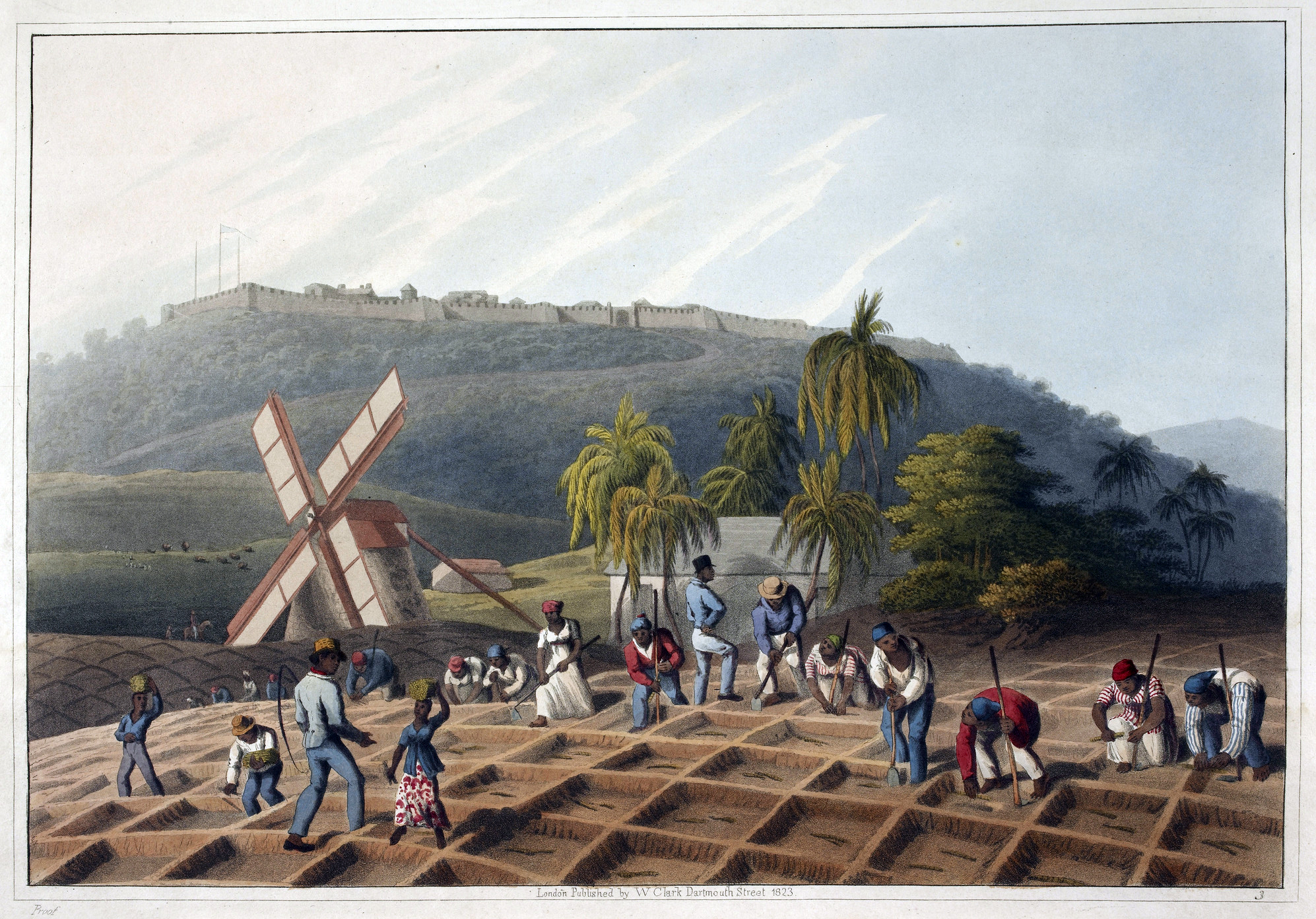
A slave plantation in Antigua in the early 19th century. The image depicts enslaved labourers engaged in sugarcane cultivation, a labour-intensive process that formed the backbone of Caribbean plantation economies. Windmills, prominently featured in the background, were used to crush harvested cane and extract juice for boiling and crystallisation—a key stage in sugar production. These mills, often powered by wind or animals, were central to the mechanisation of the estate. The layout, with fields radiating from a central processing area and overseers monitoring work, reflects the structured organisation typical of large-scale sugar plantations. Antigua’s topography and climate made it well-suited to cane agriculture, and estates like this were integrated into transatlantic trade networks that supplied European markets with refined sugar. The plantation system in the British West Indies was marked by its reliance on monoculture, seasonal rhythms, and logistical infrastructure that linked field labour, milling, and export.

