|
Voyage to Portugal, March 1810
The 13th Light dragoons received the order to embark for foreign service in early February 1810. Col Bolton was promoted to Major-General so command fell to Lieut-Col Michael Head. They set sail from Portsmouth, after a few false starts, on 14th March and reached Lisbon on 28th March. The men had been on board since 5th March and had lost 17 horses, and it took 5 days to disembark.
Skirmish near Ladeora, 22nd Aug 1810
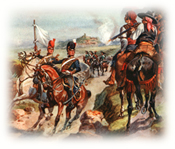
They had their first experience of bivouacing in July and crossed the Tagus in August, at Villa Valhe. On 22nd Aug they had their first contact with the French. A Troop of enemy cavalry was sighted by Captain White's Troop and they attacked them, but the enemy retired and were pursued for about 6 miles. Eventually the French decided to turn and face their foe on the other side of a stream. White and his men charged and cut through them so that the French were quickly overcome. All of them were captured except the French captain and the farrier. The prisoners numbered 62, and 58 horses. Portuguese reinforcements were called for but they arrived late and were not needed . The 13th suffered no casualties and they treated their prisoners kindly, their wounded being well cared for. Captain William White was rewarded with a staff post but was later killed at Salamanca.
Sickness at Escalos de Cima, Sep 1810
In September they were camped near Escalos de Cima, an unhealthy place with little water. Many of the men, and the horses, contracted sickness so that as they marched off to Barca de Codas there were constant cart-loads sent to the hospital at Castello Branco.
Busaco, 27th Sep 1810
The 13th were held in reserve at the battle of Busaco but did not actually take part. They had suffered a tiring 40 mile march north. On the 25th Sep they halted a few miles from the French cavalry hoping to draw them out but nothing happened. They moved on to St Martindo and on 26th heard firing near where Wellington was positioned. The battle started the next day, and the 13th with the Portuguese cavalry, all commanded by Maj-General Fane, were placed in front of the Alva River with instructions to 'observe and check the movements of the enemy's cavalry on the Mondego.'
Withdrawing to Lisbon
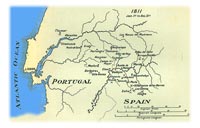
Thoughout October the British/Portuguese troops marched south towards Lisbon, drawing the army of Marshal Massena on to the defensive lines of Torres Vedras that Wellington had so carefully prepared. It was here that the French were expected to starve because the land had been stripped bare of supplies. But Massena moved north to Santarem and fortified his position. The 13th marched further north to Chamusca and stayed there for the winter from 21st Nov 1810 to 10th Mar 1811.
Campo Mayor, 25th March 1811
The battle of Campo Mayor near Badajoz was a fine example of the bravery of the 13th Light Dragoons during the Peninsula War, but instead of being showered with honour and glory they found themselves taking the blame for the failings of Field Marshal Sir William Carr Beresford, Brigadier Long and the obstinate Wellington.
Campo Mayor is a fortified town in Portugal 20km northwest of Badajoz which is just over the border, in Spain. It was under siege by the French and Beresford's force was detached to relieve it. As his allied force advanced they were unaware that Campo Mayor had surrendered and was in French hands. The plan was to position the British/Portuguese force between Campo Mayor and Badajoz but the French anticipated this and were in the process of abandoning Campo Mayor to consolidate their force at Badajoz. Brigadier Long, in command of the cavalry, was ordered to detain the French cavalry until the infantry arrived, and engage them if the circumstances permitted.
The 13th were brigaded with the 1st and 7th Portuguese Cavalry Regiments and were ordered to proceed towards Campo Major over stony ground until they came in sight of the town 1,200 yards away. On the plain in front of the town was the French cavalry made up of the 26th Dragoons (150 men) plus some hussars and others. The two and half squadrons of the 13th LD (220 men) were with 5 small squadrons of Portuguese cavalry. Also present were the 8 squadrons of British heavy cavalry; 3rd Dragoon Guards and 4th Dragoons. Throughout the action these two regiments were ordered by Long to sit and wait.
The 13th formed into line facing the enemy with the Portuguese on their left, ordered to stay in support. The contribution made by the Portuguese was patchy; mostly they proved unreliable. The infantry were at a distance from their right flank. Lt-Col Head commanded the 13th and Long told him, "Colonel Head, there's your enemy. Attack him." adding "And now, Colonel, the heavy brigade are coming up on your rear, and if you have an opportunity give a good account of these fellows." Head replied, "By gad sir I will."
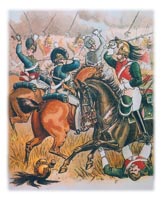
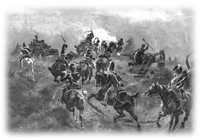
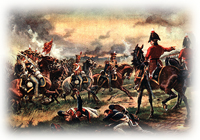
The majority of the French Hussars were occupied covering the progress of their infantry to Badajoz so the main focus of attack was the 26th French Dragoons. The two lines of cavalry charged towards each other, going through and wheeling round to charge again. The French infantry took the opportunity to open fire on the 13th causing some casualties. The commander of the French Dragoons was Colonel Count Chamorin. He saw one of his men killed by Corporal Logan and engaged him in combat but Logan was skillful and cut at the colonel's face, knocking his helmet off and finishing him with a downward cut to cleave his skull. Much later, after the battle, the Count's brother found the dead body, stripped bare by local peasants and with mutilated head. He threw himself on the corpse and sobbed uncontrollably. Logan sold the helmet to his regimental paymaster and the Count's sword was presented to Colonel Head.
The French Dragoons were put to flight and the 13th chased then for 10 miles towards Badajoz. Many of the dragoons threw down their swords and surrendered. There were also wagon-loads of stores and ammunition and 16 artillery pieces which were captured and had to be guarded. Col Head expected to see the British heavies coming up behind to help with bringing back the prisoners and booty but they never came. Unfortunately, Brigadier Long thought that the 13th had been defeated and either killed or captured. He was reluctant to lose his heavy cavalry as well, so he held them back. Had he sent in the cavalry and infantry at that point he could have secured a total victory because the French Cavalry had given up and were preparing to surrender.
As the 13th had by this time come within range of the enemy guns in Badajoz, they returned to Campo Mayor, losing some men to the firing from the city. They brought their captured men and supplies along the road but were met by a messenger who informed Col Head that they were about to confront the French infantry and hussars who had been proceeding towards Badajoz. He at first could not believe the news, but a second trooper came with the same message so the astounded Colonel Head came to the realisation that no back-up was forthcoming and he had no alternative but to release his prisoners and abandon the captured guns and wagons. They took a detour to reach Beresford's force but were pursued by French hussars who harried them but would not be drawn into open battle. They finally arrived at the British lines at 6.30pm having been in action since 1.30pm. The casualties were 12 men and 7 horses killed. Three officers, 1 WO and a sergeant wounded along with 24 rank and file. One sergeant and 19 rank and file missing.
Beresford and Long both knew they had made a serious mistake in not sending back-up to the 13th so Beresford sent a misleading report to Wellington blaming the regiment for the blunder. Upon receipt of Beresford's report Wellington issued a stunning rebuke to the 13th threatening to take away their horses. He accused them of impetuosity and lack of discipline. It must be said that Wellington was always prejudiced against cavalry and especially hated them being used for the charge. Brigadier Long however refused to allow the message to be entered into the Orderly Book and said, "I cannot find words to express my admiration of your gallantry on that occasion, your discipline was most conspicuous; in short gentlemen the 13th Dragoons have gained such a laurel on that day as will never fade."
The debate over the conduct of the 13th carried on for many years and Wellington was made aware of his error in issuing such a damning rebuke. But he simply said, "It had been issued, it must remain." He refused to retract it.
Attack Near Olivenza, 7th April 1811
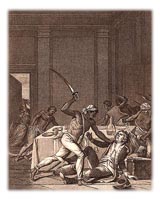
Berseford's allied force crossed the River Guadiana on 6th April but had sent two squadrons of the 13th LD ahead the previous day for reconnaissance, under the command of Major Redmond Morres. This recce party were relieved of their advance guard duties by a Portugusese squadron and ordered to pull back and bivouac in a small wood with a hut. Morres assumed that the place was safe enough for the men to light fires and eat a meal which they had not had for two days. But that night, as the men slept they were attacked by French cavalry. They were at first shown no mercy by the French who thought they were attacking a Portuguese camp, however they were less ferocious when they realised their mistake. They took Major Morres prisoner along with Lieut John Moss and 50 men, as well as their horses. They were taken to Olivenza which was occupied by the French.
Los Santos, 16th April 1811
The 13th were in action again when they saw 3 columns of squadrons formed up near the town of Los Santos. They were ordered to charge which they did with a cheer, and the French commander was killed by Private Beard. The rest of them fled but many were caught or cut down. Then enemy skirmishers began firing on the allies and the 13th were required to attack them. They charged and carried on into the main body of the French. This precipitated a general retirement and all of Beresford's cavalry joined in the pursuit. The losses to the regiment were slight, only a few men and horses wounded. They had captured 107 prisoners and many horses, including some of those lost near Olivenza on the 7th April.
Albuhera, 16th May 1811
The battle of Albuhera is well known for it's high number of casualties, particularly in the 3rd Buffs and the 57th Foot. The 13th LD were split in two; 2 squadrons under Lt-Col Muter were ordered to defend a bridge and managed to prevent cavalry from crossing the river. The other 2 squadrons under Colonel Head were placed to keep in check a large body of cavalry. They were exposed to infantry musket fire and artillery for the duration of the battle.
Usagre, 23rd May 1811
After the battle they were used in the pursuit of the French, and skirmishing. There was another battle at Usagre on 23rd May where they were in support of the heavy cavalry in their successful charge against four regiments of French cavalry. Beresford's army retired to Robiera where the 13th suffered a fortnight of skirmishing and heavy outpost duty. But they were relieved by the 11th Light Dragoons and were ordered to rest at Barbuera.
Arroyo dos Molinos, 28th Oct 1811
Captain James Gubbins
The weather had been very wet the night before and the regiment had marched through the night. The cavalry in Rowland Hill's force consisted of the 2nd Hussars (King's German Legion), the 9th and 13th Light Dragoons, commanded again by Long. The plan was to trap the French in the village by cutting off their access to the roads out, leaving only the steep mountains as a means of escape. The 2nd hussars and the 9th LD did most of the cavalry work but a squadron of the 13th under Capt Bowers were ordered by Hill to charge the enemy artillery which they did successfully and captured 3 guns. His squadron also captured some enemy cavalry in wood amounting to one captain and 33 men. Captain Gubbins' Troop captured the horse and baggage of the Colonel of the 4th Regiment.
La Nava, 29th Dec 1811
On Christmas Day the brigade was ordered to march to Avronches and then on to Albuquerque. On 29th they found the enemy infantry at La Nava who retreated and were charged by the 2nd Hussars KGL and the 13th but the charge was rebuffed by musket fire. They continued to attack the close formation of infantry but it was unfavourable ground for cavalry. The French reached Merida and the 13th counted the cost of the action which was 11 men and 22 horses wounded. Lt-Col Muter and four officers were included in the wounded. The enemy lost 3 men killed and 13 wounded.
1812
The records of the 13th tell of the difficulties of campaigning in the Peninsula in this year. They were brigaded with the 2nd hussars KGL, the 9th LD and Portuguese cavalry, and moved around the same ground covered in 1811. They spent much of their time either in the saddle or with saddled horses ready to mount up. There were several occasions when they were drawn up facing the French forces with a view to fighting a battle but it usually ended with a stand-off and withdrawal. The storming of Ciudad Rodrigo and Badajoz took place in this year but did not involve the 13th.
Robeira, 25th July 1812
While the brigade was at Villafranca there came a report that 7 squadrons of French cavalry were advancing from Robeira. General Long ordered his brigade forward and they forced the enemy to take up a position around Robeira. The Horse Artillery caused the enemy considerable trouble and a Troop of the 13th drove back their skirmishers. The French retreated and were pursued by the brigade for six miles with the loss of only one man and two horses wounded.
Runaway Horses, 26th Oct 1812
In a field a few miles from Aranjuez the 13th allowed their horses to feed with their bridles removed and slung from the saddles, along with the men's accoutrements. On that day the 2nd hussars KGL (King's German Legion) were ordered to leave the brigade and join Wellington. As they marched out the 13th lined up to see off their friends who had campaigned with them for the last few years. They gave a loud cheer which frightened the horses of four of their own Troops. These horses galloped off and bridles, belts and weapons were tossed in all directions. The remaining mounted squadrons plus men of the 9th Light Dragoons went off to find the runaways and lost equipment. By the evening there were still 27 horses missing but they were retrieved over the next few days and all the equipment, apart from 1 bridle, 2 swords and 1 pistol, was found.
March back to Portugal
Madrid was entered by Wellington's Army on 12th Aug 1812 after the battle of Salamanca in July. The 13th were in the general advance to Madrid and bivouaced at Arevena at the end of October. The withdrawal to Portugal began in November and the brigade marched to Alba de Tormes which is 15 km southeast of Salamanca. There General Howard's British infantry brigade (50th, 71st and 92nd)was manning the defences. On 10th Nov the French attacked the town but the 13th were in the nearby village of Terredelos. The British had to concede defeat by the 14th Nov and the cavalry covered the infantry retreat. The most serious problem for the regiment at this time was starvation. By 16th Nov the men had had no food for 3 days and a mule train loaded with supplies had been captured or dispersed by the enemy. At one stage 12 bullocks were caught and herded into the camp but the adjutant botched the killing of one of the animals and they all stampeded. Attempts were made to capture the bullocks but they failed, however, as the down-hearted men were returning to the camp they found a flock of sheep which were brought in and immediately slaughtered. The cavalry horses were in an even worse state than the men because although there was plenty of rain and mud, there was nothing for them to eat. The long march back to Portugal saw many of the animals drop by the wayside and they had to be shot. At the end of November they crossed the Sierra Gata and a supply of chestnuts was found to feed the horses. On 19th Dec 1812 the regiment reached Crato to go into winter quarters. For the campaign of 1812, from 12th May to that date they had marched 1,746 miles.
1813
The regiment was reinforced with men and horses in December 1812 and when the 9th Light Dragoons returned to England in February 1813 their horses were given to the 13th and 14th LD. In April the men of the 13th were inspected by General Long and they wore, for the first time the new light dragoon uniform. The regiment was declared to be in good order and was now effectively commanded by Lt-Col P Doherty due to Colonel Head's illness. On 28th April the 13th began its march for the campaign of 1813, but, the day before, the horses again stampeded, this time scared by a terrific thunderstorm. It took the men all day and night to retrieve them. They marched from Monteforte and reached Calzadilla de Mondiger on 24th May, a distance of 207 miles.
Recapture of Alba de Tormes, 26th May 1813
On 26th May the advance guard of the regiment made contact with enemy cavalry which they attacked and routed. They were near Alba de Tormes which had been in French hands since it was captured after a 4 day battle in November. The regiment were ordered to take the town with the aid of Spanish infantry and artillery. The 13th managed to cross the River Tormes by means of a ford and entered the town on one side while the Spanish came in from the other. The French were driven out in a very quick action and the place was once again in Spanish hands while the 13th scoured the high ground outside the town to ensure that the enemy had quit the area.
Vittoria, 21st June 1813
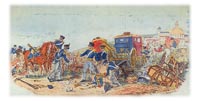
The 13th had another long march, of 333 miles northeast to Vittoria where the famous battle took place between King Joseph Bonaparte's (and Marshal Jourdan's) French army of 62,000, and Wellington's British/Portuguese army of 80,000. The city contained a large amount of booty and money for payment to the French troops. The battle took place in the Zadora valley west of the city and the 13th were ordered to take up a position on high ground to the right of the great road outside the city. After the horse artillery had created gaps in the French line, the 13th started to charge but were hampered by concealed ravines crossing their path. The battle was being fought furiously, but the French had to pull back, at first in an organised way and then as a rout. The 13th managed to capture Joseph's baggage train which contained many wonderful items of treasure and furniture. The captain of the guard escorting the baggage was killed by Private Michael Sullivan. The battle was not yet over because they were fired upon by enemy skirmishers who had to be dealt with. But it was a complete victory for the allied army, and King Joseph and Marshal Jourdan had to flee on horseback, leaving their possessions behind for the victors.
|