

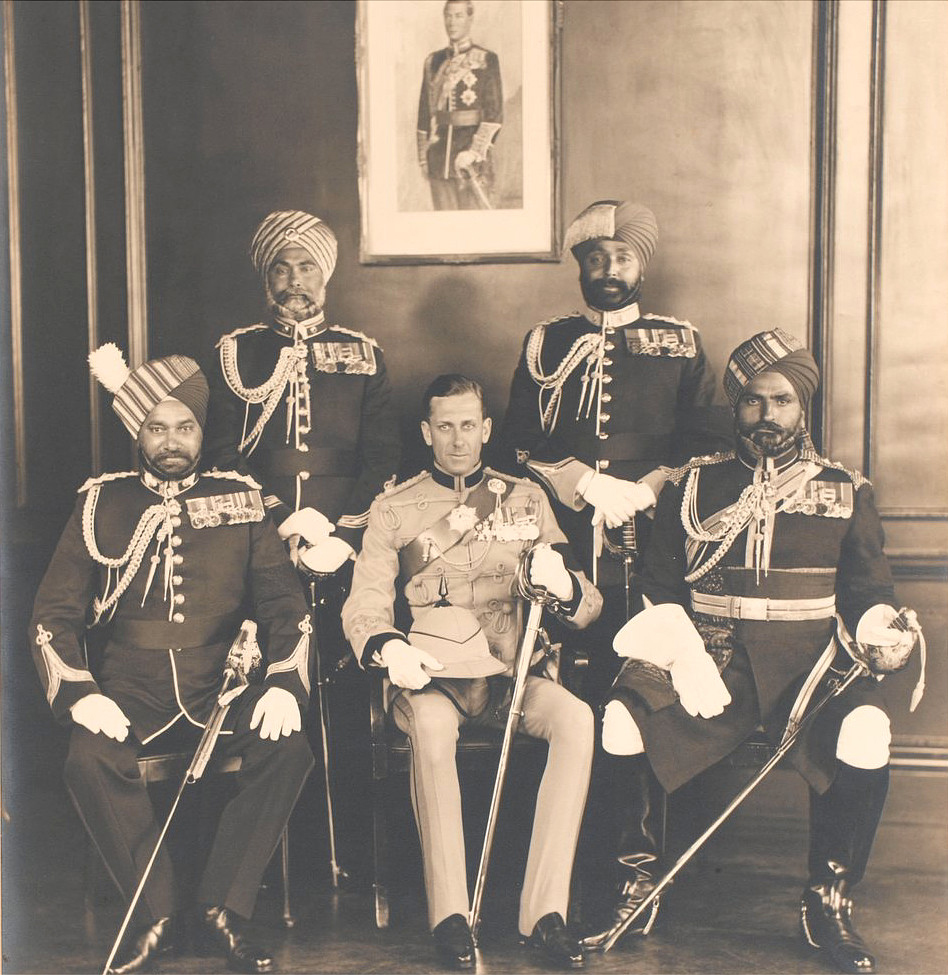
The 1936 King’s Indian Orderlies were all Sikhs. Three of them held the rank of Honorary Lieutenant, and the most junior of the group was the renowned Ishar Singh VC. Their commanding officer, Major Eric Norman Goddard, was a distinguished soldier who served with great credit in both World Wars and in the turbulent years between. It was a memorable and unusual year in British history: the year of three Kings. King George V died on 20 January, and his son, Edward, Prince of Wales, succeeded as King Edward VIII. His portrait can be seen on the wall behind the group. However, Edward abdicated on 11 December, and his brother Albert ascended the throne as King George VI. All five officers wear black mourning armbands on their left upper arm.
Seated left: Subadar-Major & Honorary Lieutenant Bhagat Singh, Sardar Bahadur OBI IDSM, 1st Battalion Royal Fusiliers (City of London Regiment). The year 1936 marked the first time an Indian officer served within a British regiment. The Royal Fusiliers had spent many years stationed in India between the two World Wars, and during the Second World War the 1st Battalion formed part of the 17th Indian Infantry Brigade within the 8th Indian Infantry Division. Lieutenant Bhagat Singh wears the dress uniform of the Royal Fusiliers: a scarlet tunic with blue facings and silver embroidered bomb badges on his gold-laced collar. His Sikh turban features the unusual addition of a white fusilier plume.
Seated centre: Major Eric Norman Goddard MVO OBE MC, 3rd Battalion 12th Frontier Force Regiment. This prestigious regiment encompassed the QVO Corps of Guides Infantry and the 51st, 52nd, 53rd and 54th Sikhs. Goddard was commissioned in 1915 and served in the 107th and 128th Pioneers. He was awarded the Military Cross in 1918, twice mentioned in despatches, and appointed OBE. After the Great War he joined the 3/12th Frontier Force and earned a bar to his MC. Following his London duties with the King’s Indian Orderlies in 1936, he was given command of the 4th Battalion 5th Punjab Regiment and saw action against the Afridis on the Northwest Frontier. He later served with great distinction in Burma during the Second World War, ultimately reaching the rank of Lieutenant-General. He died in 1992 at the age of 94. The photo shows him in the uniform of the 12th Frontier Force Regiment: drab with red facings and drab lace and cords, without the gold aiguillette cords worn by the Sikh officers.
Seated right: Risaldar-Major & Honorary Lieutenant Narain Singh, Sardar Bahadur, IOM IDSM, 6th Duke of Connaught’s Own Lancers (Watson’s Horse). In 1922 the 6th DoC Lancers were formed from the amalgamation of the 13th Duke of Connaught’s Own Lancers (Watson’s Horse) and the 16th Cavalry. Narain Singh was a Ressaidar in the 13th DoC Lancers when he earned the Indian Distinguished Service Medal in Mesopotamia, where the regiment took part in the relief of Kut. Lieutenant Narain Singh wears a blue cavalry kurta with red facings and a red kummerband. His belts are laced with gold lace and a central red stripe.
Standing left: Subadar-Major & Honorary Lieutenant Harditt Singh, Bahadur OBI, 2nd Royal Battalion 11th Sikh Regiment (Ludhiana Sikhs). The 15th Ludhiana Sikhs became the 2nd Battalion of the 11th Sikh Regiment in 1922. They had a distinguished record, serving in France and Egypt during the First World War. The uniform of the 11th Sikh Regiment was a scarlet tunic with yellow facings, and the distinctive Ludhiana Sikh turban was red and yellow striped. He wears a simple silver quoit as the regimental badge.
Standing right: Subadar Ishar Singh VC, 4th Battalion 15th Punjab Regiment. Formerly the 28th Punjabis, the regiment served in India, Ceylon, Mesopotamia and Egypt during the First World War. After the war the 28th saw action in Waziristan, where Sepoy Ishar Singh displayed exceptional courage, becoming the first Sikh to be awarded the Victoria Cross. His VC was notable as a ‘peacetime’ award. He wears a scarlet tunic with buff facings and gold lace.
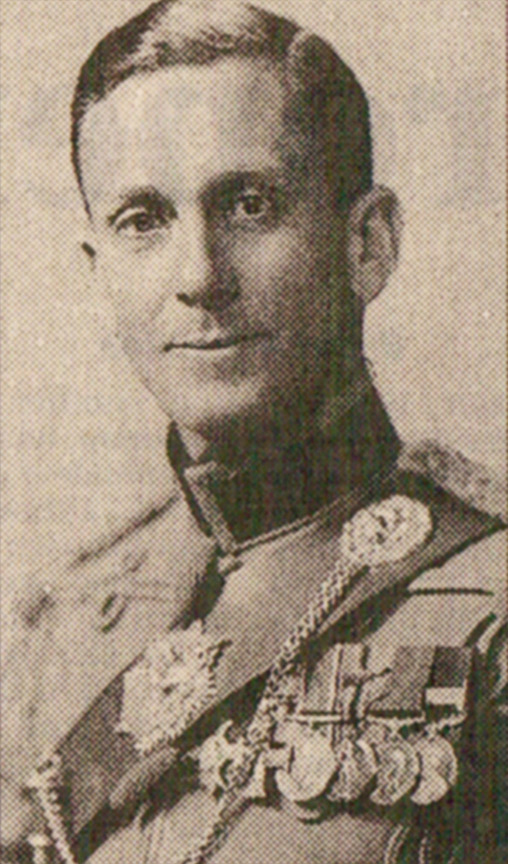
This photo accompanied Lieutenant-General Goddard’s obituary published in the Daily Telegraph on 16 June 1992. The writer commented that “Goddard acquired a reputation as a brilliant staff officer, although he tended to austerity in the Mess and did not stand for any poodle-faking.”
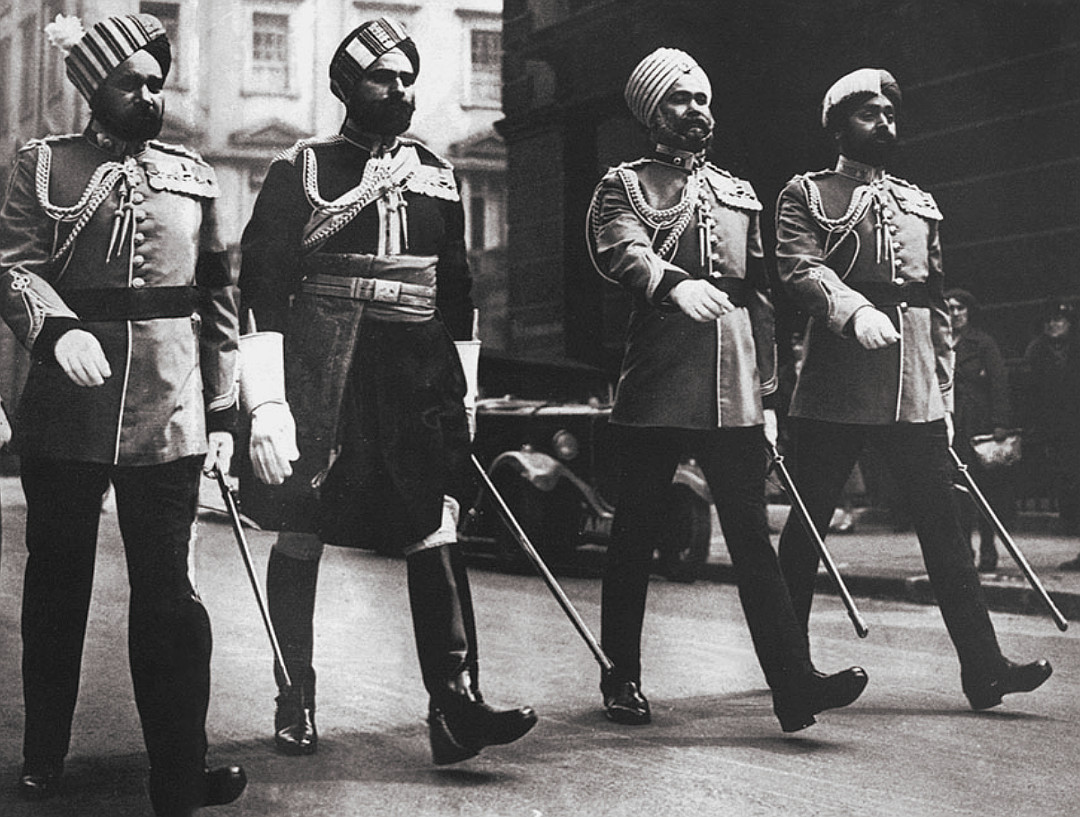
The King’s Indian Orderly Officers were photographed marching along a London street in full dress during the summer court season of 1936.
Left: Subadar-Major & Honorary Lieutenant Bhagat Singh, Royal Fusiliers
Second left: Risaldar-Major & Honorary Lieutenant Narain Singh, 6th Duke of Connaught’s Own Lancers
Third left: Subadar-Major & Honorary Lieutenant Harditt Singh, 11th Sikh Regiment
Right: Subadar Ishar Singh VC, 15th Punjab Regiment

