

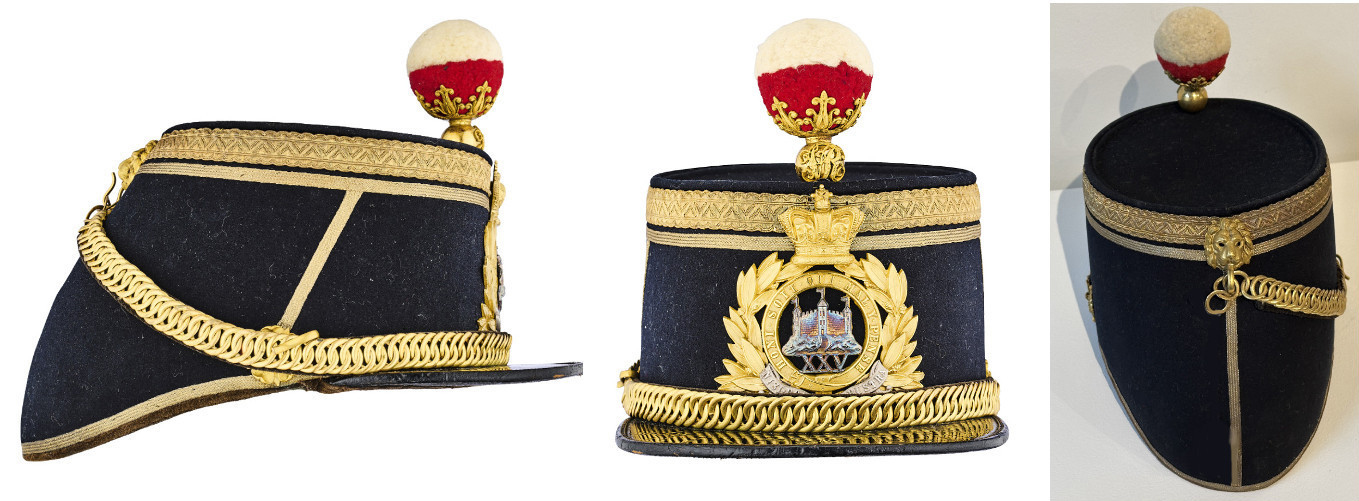
The 1869 shako was based on a cork frame and covered with blue cloth. It measured four inches high at the front and 6.5 inches at the back. Subalterns and captains had two slim lines of gold braid around the top, while majors had one slim line (a quarter inch) and a half‑inch line of gold lace. Lieutenant‑colonels and colonels wore two lines of half‑inch lace. The side ornaments were gilt roses for the chin‑chain, which had a black velvet backing. The chin‑chain was often worn hooked up to a lion’s head at the back, as seen in the surviving examples.
The gilt and silver plate on the front of the 25th’s officers’ shako displayed Edinburgh Castle and the Roman numeral XXV inside a Royal Garter. Queen Victoria’s crown surmounted the badge, and the Edinburgh motto NISI DOMINUS FRUSTRA appeared on a silver scroll beneath the Garter. The white‑over‑red ball tuft sometimes seen on examples is incorrect, as the 25th King’s Own Borderers was a Royal regiment and therefore required to have an all‑red tuft. Other ranks wore a similar shaped shako but with red lines instead of gold.
In 1878 the 1869 pattern shako was discontinued and replaced by the infantry blue helmet, bringing an end to this distinctive form of headgear in the regiment.

