Raising of the Regiment 18 Mar 1689
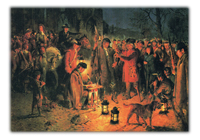
Following the Glorious Revolution of 1688, the country was in turmoil as Protestants and Catholics confronted each other in their support either for the new King William III or the deposed King James II. In early 1689, Edinburgh Castle was in the possession of the Duke of Gordon, a supporter of King James. The Jacobites, as they came to be called, were being rallied by Graham of Claverhouse, Viscount Dundee, mostly among the Highland clans.
The Convention of Estates agreed to accept William of Orange and the Protestant succession. A proclamation was issued to secure the defence of their decision:
‘The meeting of the Estates of the kingdome of Scotland doe order and warrand the Earl of Leven to cause, beat drums and call together all persones who will assist him and joine with the train bands to secure that no men be put into the Castle of Edinburgh and no persone be suffered to sallie forth thereof and to dissipat any persones who may be together in armes without warrand of the Estates and to secure the peace of the Toune.’
David Leslie, 3rd Earl of Leven, supported the Protestant King William and raised a regiment to defend Edinburgh. During the first days of their service, the men of the regiment set about digging trenches in several parts of the city. In the end, the Duke of Gordon was forced to capitulate and evacuate the castle, allowing Leven’s men to move into Fife and on to Killiecrankie.
Battle of Killiecrankie 27 July 1689
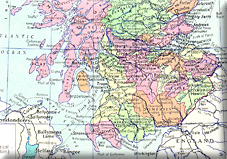
The valley of Killiecrankie is in the centre of Scotland, just south of the Cairngorms, on the River Garry, midway between Pitlochry and Blair Atholl. Leven’s regiment would have had a march of more than 150 kilometres (almost 100 miles) from Edinburgh via Stirling, and from Perth it was almost due north into the battleground where Hugh Mackay’s Williamite army met Viscount Dundee’s Jacobite army of fierce Highlanders.
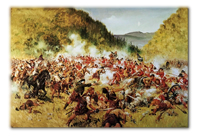
Mackay’s army outnumbered the Jacobites two to one, but he formed his infantry into line, three deep with their backs to the river, and no reserves apart from his dragoons. Leven’s regiment was near the centre with Hastings’ regiment (later the 13th LI) on their right. Mackay had put his more experienced continental troops on the left of the line and his recently recruited soldiers on the right. The Highlanders had the advantage of being on the high ground to help them in their traditional tactic of the Highland charge. This involved firing their muskets at a range of 50 yards or so, then running at the enemy with blood‑curdling shouts and, having dropped their firearms, using swords and spiked shields to leap among the terrified ranks of redcoats.
Most of the day was spent in manoeuvring and sniping before the charge. The Highlanders hoped that their fierce posturing and yelling would lower the Royalist morale. It was not until 8 pm on that July light evening that the battle began. The scare tactics had been effective, since the troops from the continent, Dutch and English, had not experienced Highland tactics, and the recruits were not disciplined enough to hold their fire until the Scotsmen were close enough. Leven’s and Hastings’ regiments were the most resilient and held their position longer than the others, who fled the field. Mackay ordered the dragoons to go to their help, but they only added to the confusion and had the effect of breaking up the thin red line and causing the two regiments to retreat. Their withdrawal was reputedly carried out in better order than the others, enhancing their reputation.
As well as broadswords, the Highlanders used the claymore, a large two‑handed sword that had devastating cutting power. The Jacobite clan chief, Lochiel, wrote that the Highlanders:
‘fell in pell‑mell among the thickest of them with their broadswords…the noise seemed hushed; and the fire ceasing on both sides, nothing was heard but the sullen and hollow clashes of broadswords, with the dismal groans and cries of dying and wounded men. Seeing their comrades falling all around, those of Mackay’s men who were able, in a very short time all did run….The enemy lay in heaps almost in the order they were posted; but so disfigured with wounds, and so hashed and mangled, that even the victors could not look upon the amazing proofs of their own agility and strength without surprise and horror.’
It was a victory for the Jacobites, but the Highlanders had lost 700 men, around 35 percent of their army. The Williamite army had lost 2,000 and had been routed. However, Dundee died in the battle so, without an effective leader, the Jacobites had won the battle but were in danger of losing the war.
|