

George Henry Lennox was born on 29 November 1737, the second son of Charles Lennox, 2nd Duke of Richmond, and Lady Sarah Cadogan, daughter of the Earl of Cadogan. Through his father he was a descendant of King Charles II. He was one of twelve children, four of whom died in infancy. His elder brother Charles became the 3rd Duke of Richmond, while his surviving sisters were well‑known figures in eighteenth‑century society.
In 1751 Lennox was commissioned into the 2nd Foot Guards. From 1756 to 1758 he served as an officer in the 25th Regiment, but was appointed commanding officer of the 1st Battalion, 33rd Regiment during the expedition against St Malo in May 1758. Later that year he led the battalion in the attack on Cherbourg. He served throughout the Seven Years’ War and was subsequently appointed Chargé d’Affaires in France.
On 29 December 1762 he was appointed Colonel of the 25th Regiment, a position he held for the remainder of his life. Lennox took an active interest in the regiment, serving with them in Minorca and spending considerable sums on uniforms and equipment for his Scottish troops. His stubbornness is recorded in the Memoirs of Sir James Campbell of Ardkinglas (1832), which recounts a court‑martial on Minorca arising from a dispute between Lennox and the Governor, General John Mostyn, over the price of soldiers’ wine at the small fort of Furnelles. Mostyn accused Lennox of insubordination and ordered him to be tried.
The court consisted of thirteen field officers, including James Campbell. Lennox was found to be in the wrong and sentenced to apologise to the Governor, but the verdict required the King’s approval. Until this arrived, Lennox was confined to his quarters. At the time he and Lady Louisa Lennox were living in a simple hut, and although in poor health he refused to leave it for exercise. Campbell described Lennox as a determined character whose obstinacy could not be overcome when he believed himself to be in the right:
‘On calling one day at the miserable shed in which they were lodged, which indeed was little better than those of the Spanish villagers in general, her ladyship walked out, and desired me to attend her. As soon as we were alone she expressed to me her great concern at Lord George’s perseverance in his resolution of remaining within doors, and begged of me to renew my efforts to induce him to go out, which I readily agreed to do. But the truth is, that Lord George, although the best-natured man in the world, had some peculiarities of temper, which, when he thought himself in the right, it was impossible to overcome. He was naturally what is called a determined character; and as is natural with persons of that turn of thinking, he was very liable to mistake a sort of dogged obstinacy for manly firmness and resolution.’
Lennox remained indoors for three months until the King’s sanction arrived. The King confirmed the sentence and added a reprimand for the conduct that had led to the court‑martial. The court was reconvened, and the awkward requirement for Lennox to apologise was avoided by reading out the sentence and requiring him only to say, “All this I do.”
He served with the 25th Regiment during the defence of Gibraltar from 1782 to 1793. Lennox later held the post of Governor of Plymouth and, in 1784, was appointed Constable of the Tower of London and made a member of the Privy Council. He sat in Parliament as MP for Chichester from 1761 to 1767 and for Sussex from 1767 to 1790. In 1772 he was elected Mayor of Chichester. In 1782 the 25th Regiment was encamped near Goodwood, West Sussex, when infantry regiments were allocated territorial titles. Lennox’s brother, the Duke of Richmond, then Master‑General of the Ordnance, designated the regiment the 25th Sussex Regiment, to Lennox’s annoyance, as he objected to the loss of Scottish distinctions such as drum‑beats and other regimental customs.
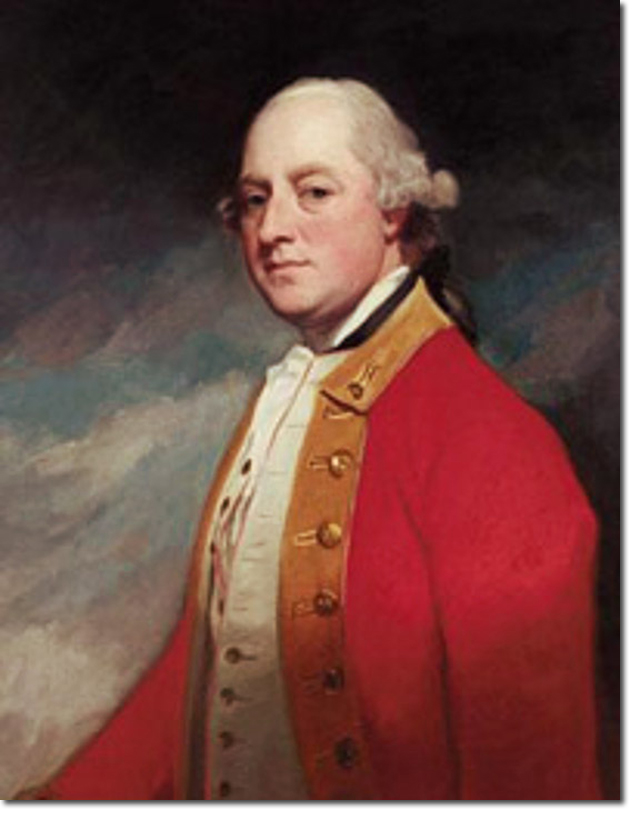
Lord George Lennox married Lady Louisa Kerr, daughter of General William Henry Kerr, 4th Marquess of Lothian. They lived at West Stoke, Sussex, and had four children: three daughters and a son who later became the 4th Duke of Richmond. Lord George Lennox died on 25 March 1805. The portrait reproduced here is by George Romney and shows Lennox wearing the uniform of the 25th Regiment.

