The Battle of Gafulford is one of the more obscure engagements recorded in the early ninth century, known only from a brief entry in the Anglo‑Saxon Chronicle. Under the annal for the early 820s (the exact year varies between manuscript versions) the chronicler notes simply that there was a battle at Gafulford between the Wealas and the Defnas, that is, between the Britons of Cornwall and the men of Devon. No outcome is given, no leaders are named and no further detail is supplied. The notice nevertheless marks a moment in the long process by which West Saxon authority was extended westwards into what had been British territory.
The wider context is the reign of King Ecgberht (Egbert) of Wessex, whose campaigns in the 810s and 820s consolidated West Saxon power in the south‑west. By this period Devon was effectively under West Saxon control, while Cornwall retained a degree of independence under its own British rulers. The Chronicle’s reference to a battle between “Wealas” and “Defnas” suggests a localised conflict along the frontier between these communities rather than a major royal campaign. It is possible that the engagement formed part of a series of pressures by which Cornish autonomy was reduced, but the sources do not allow firm conclusions.
The location of Gafulford has been debated. The traditional identification is with Camelford in north Cornwall, based largely on the similarity of the names and the town’s position on an important east–west route. An alternative proposal places Gafulford at or near Galford, above the River Lew between Lewtrenchard and the Lyd valley in West Devon. This site lies close to the line of communication between Exeter and Launceston and near what would have been a practical frontier zone between Devon and Cornwall in the early medieval period. The toponymic resemblance between “Gafulford” and “Galford” has encouraged this identification, though it remains unproven.
If Galford is accepted as the site, the battle would have taken place on or near the ridge between the Lew and the Lyd, overlooking the routes that later carried the turnpike and the A30. The landscape here, with its river crossings and narrow valleys, would have offered natural positions for a defensive stand or an ambush. The later parish of Lewtrenchard, with its Domesday manor of Lew and its later association with the Lewdown road, would then lie close to the scene of an early ninth‑century clash between British and West Saxon forces. The evidence, however, is circumstantial and rests on place‑name interpretation rather than archaeology or detailed narrative.
The Chronicle’s silence on the result of the battle has also prompted discussion. Some historians infer a West Saxon success, on the grounds that Cornwall appears increasingly subordinate to Wessex later in the century, with Cornish bishops attending West Saxon councils and West Saxon kings exercising authority in the region. Others caution that a single brief entry cannot bear such weight and that the outcome may have been indecisive or simply regarded as unimportant by the chronicler. What can be said is that the battle belongs to a period of intermittent conflict along a shifting frontier, rather than to a single decisive conquest.
Later tradition has sometimes confused Gafulford with other battles, including legendary accounts of a great slaughter at Camelford and even with stories of King Arthur’s last battle. These associations are much later than the ninth‑century annal and reflect medieval and modern attempts to attach famous names to otherwise obscure events. For the historian, the value of the Gafulford entry lies not in romance but in its brief confirmation that, in the early ninth century, armed clashes still occurred between the Britons of Cornwall and the West Saxon settlers and landholders of Devon.
In the absence of detailed records, the Battle of Gafulford remains a small, enigmatic entry in the documentary record of the south‑west. Its probable location somewhere along the Devon–Cornwall frontier, perhaps near Galford above the River Lew, gives it a particular interest for the study of West Devon and the Lewtrenchard area. It stands as a reminder that the quiet rural landscape of later centuries was once a contested borderland between two cultures and two political communities.
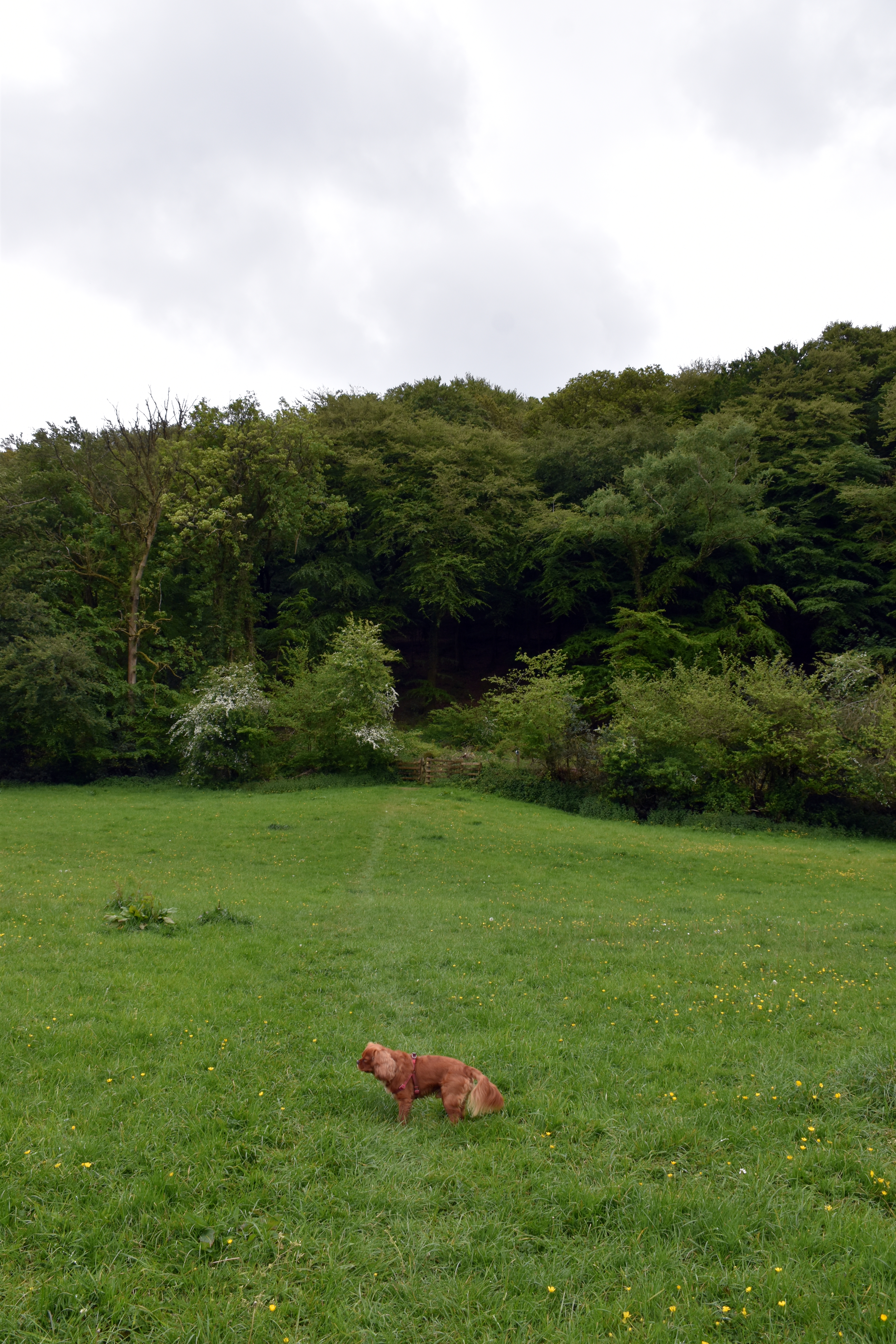
The image above is of a miniature of King Ecgbert whose forces were triumphant at the battle of Gafulford. Below shows Rupert looking up the Lew Valley trying to imagine a battle between the West Saxons and Cornish around this area.