|
On Saturday Rupert and I were on the hunt for an eccentric vicar considered the inspiration for Pygmalion, the site of an important battlefield between the West Saxons and the Cornish, a spectacular rood screen in one church and a beautifully delicate church tucked away in a Devon valley after a beautiful woodland walk. Along the way, as always, we found so much more including a surveyor of India, someone who worked for the Rajahs of Sarawak and a soldier who was killed in the infamous First Afghan War – amongst many other fascinating stories.
We parked just outside St Peter’s Church at Lewtrenchard. We were a bit perturbed to discover that the church was locked but decided to go on our other explorations and hope that it was open by the time we returned to it.

|
|
|
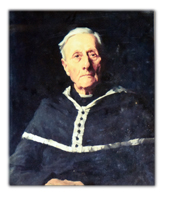
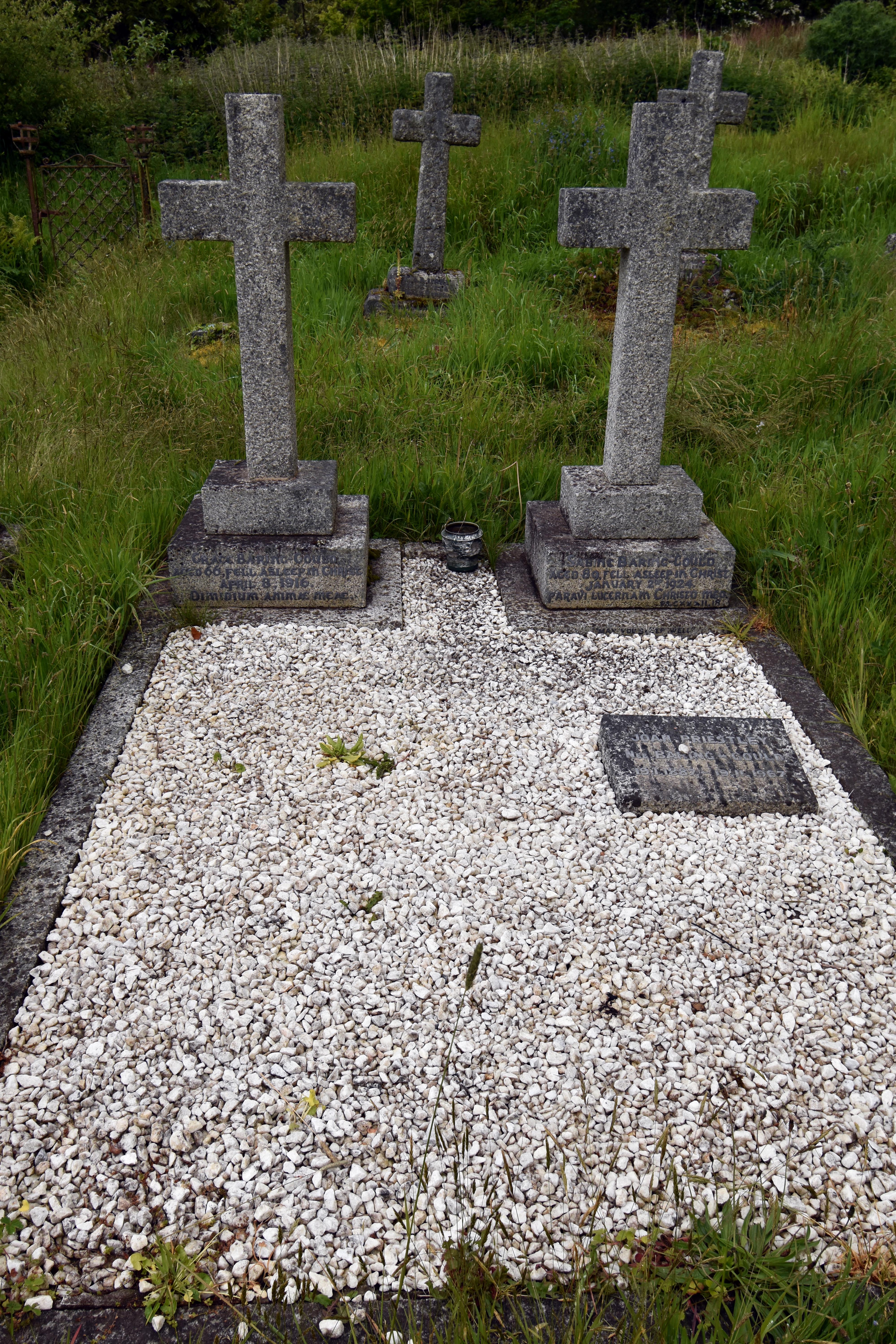
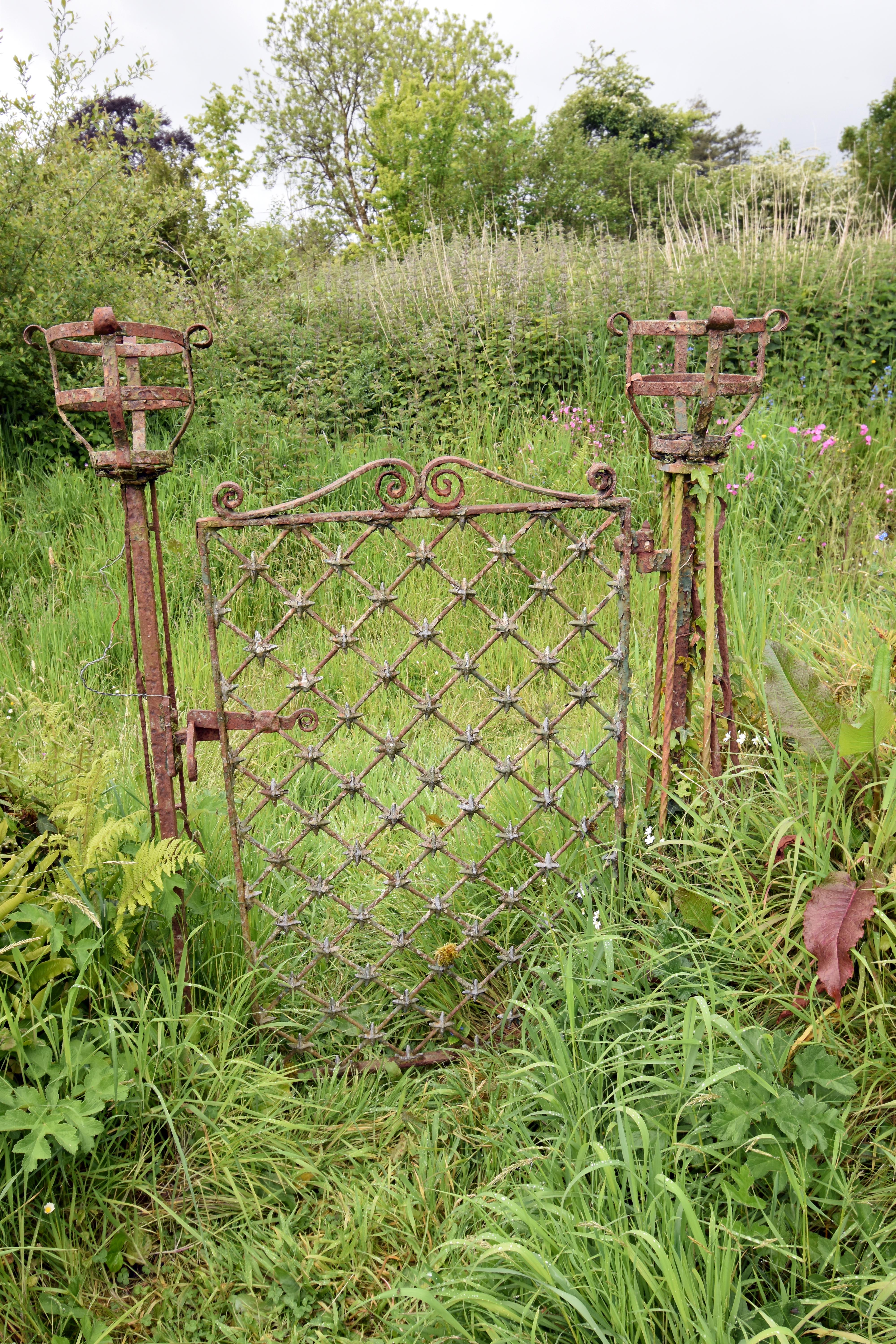
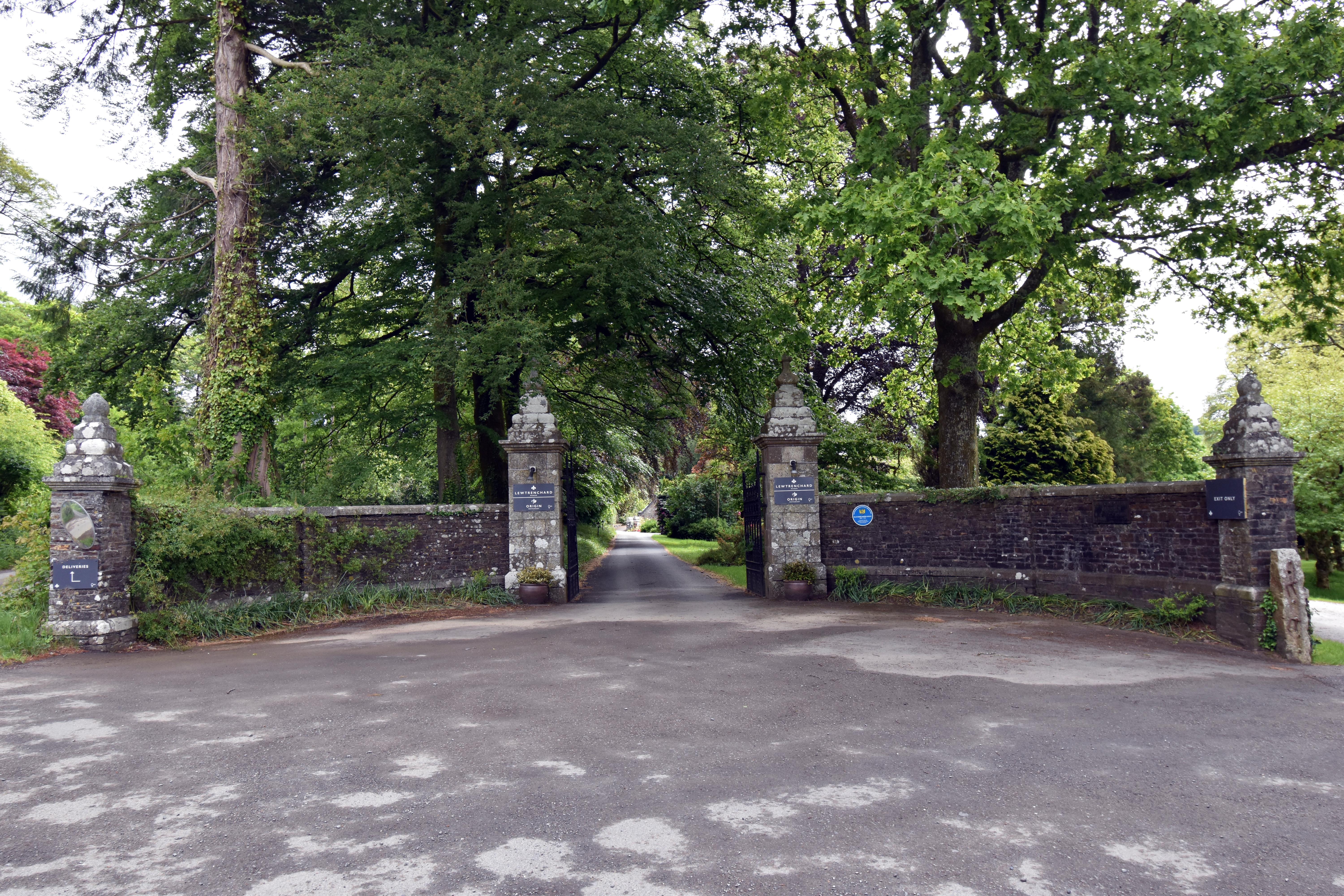
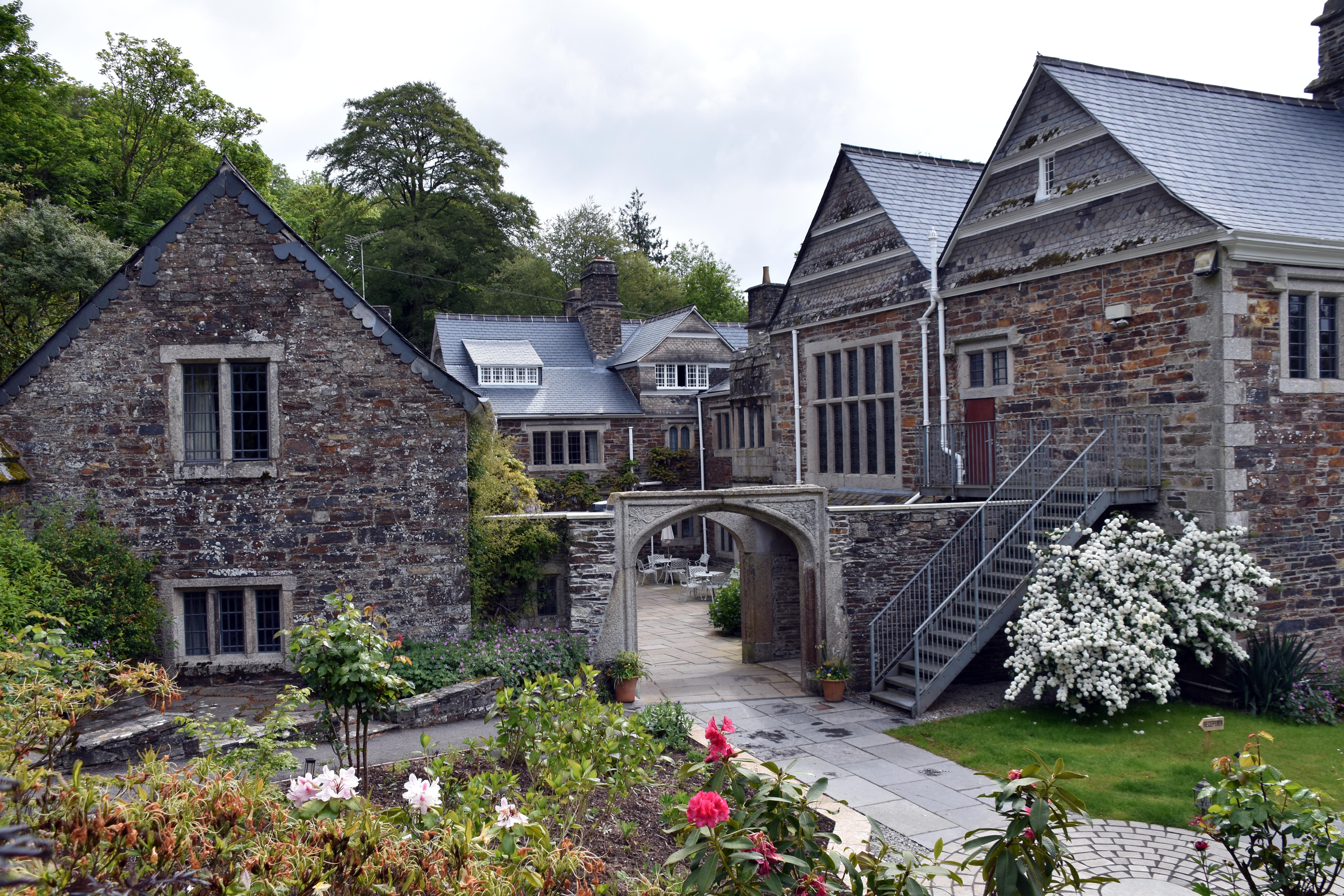
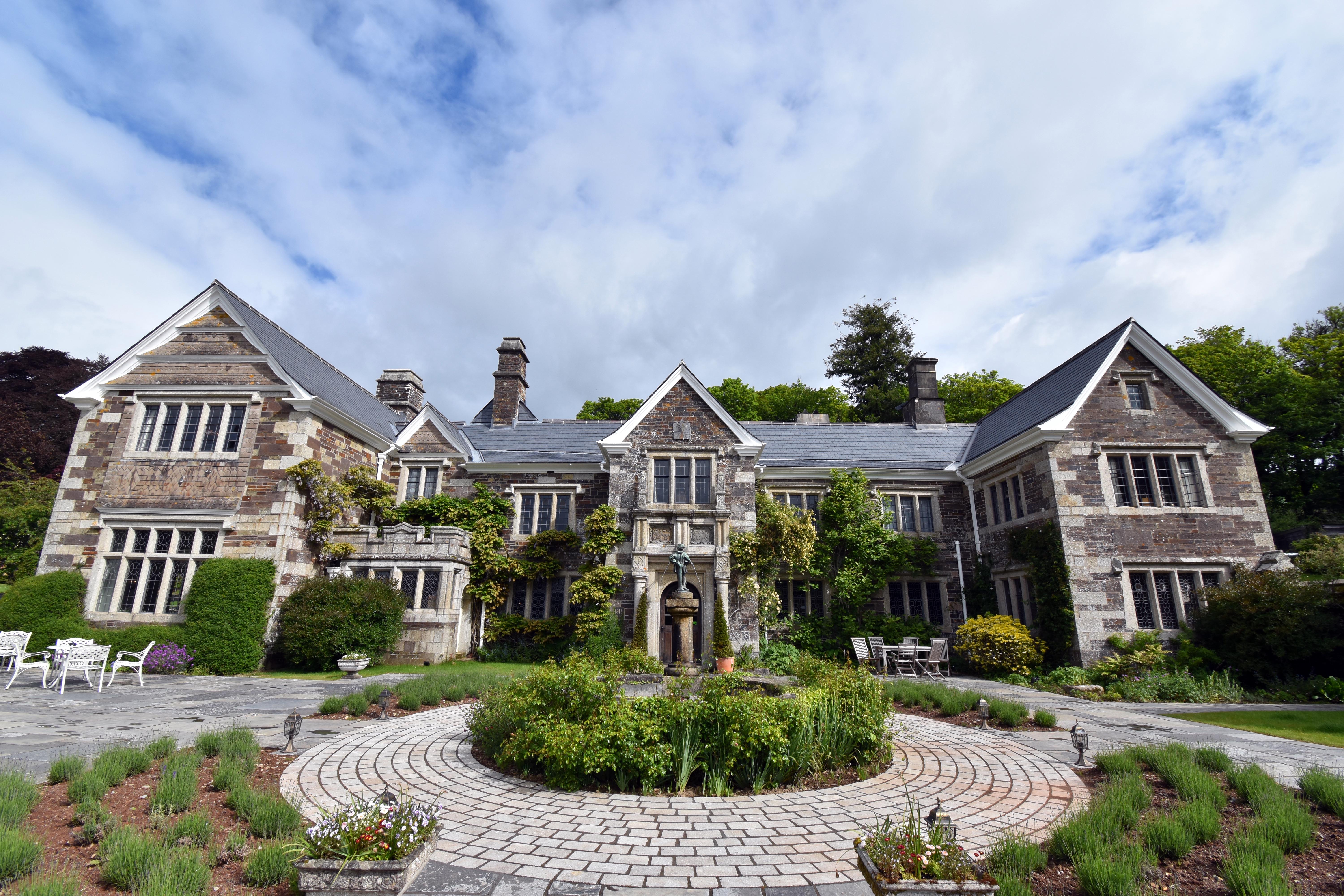
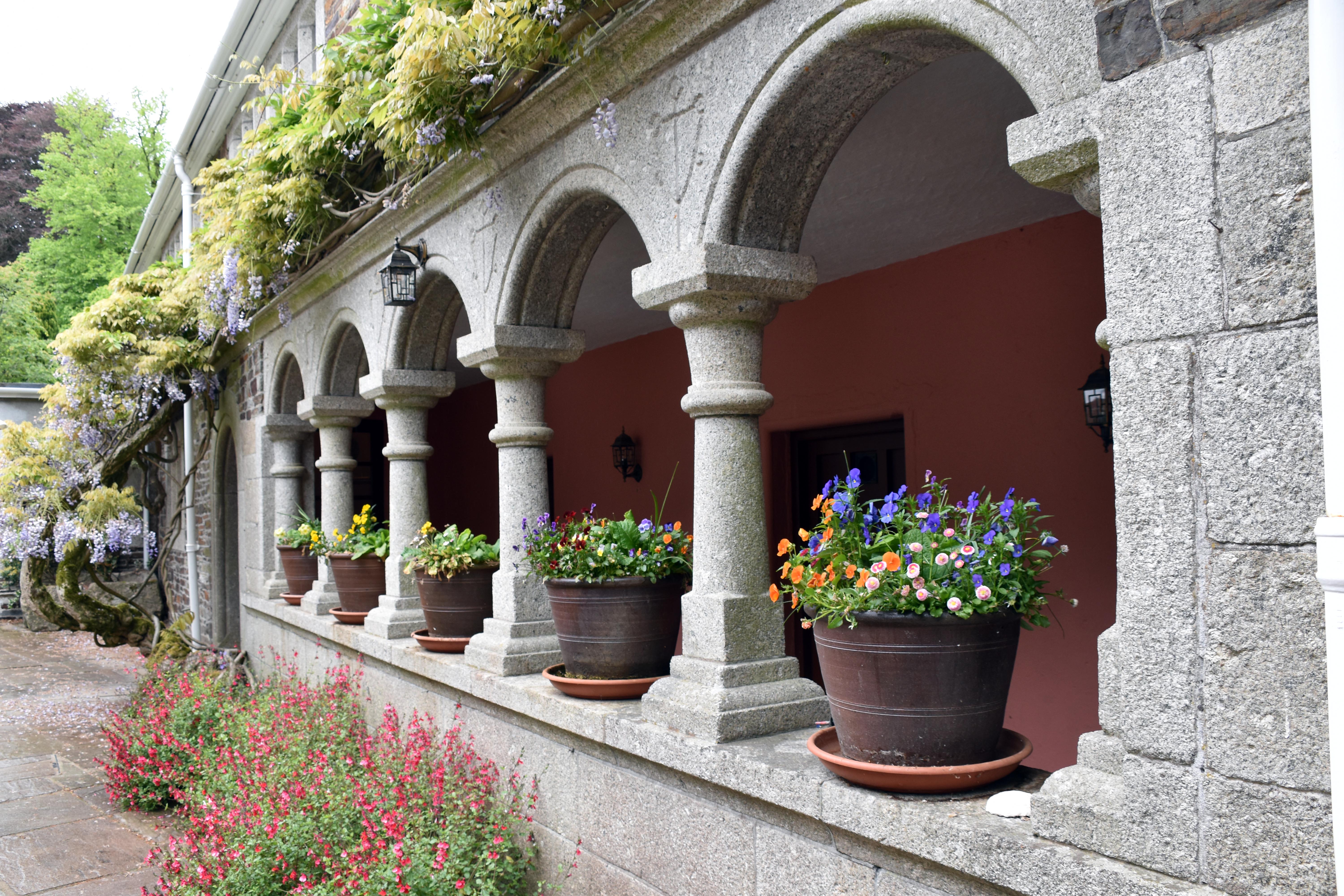
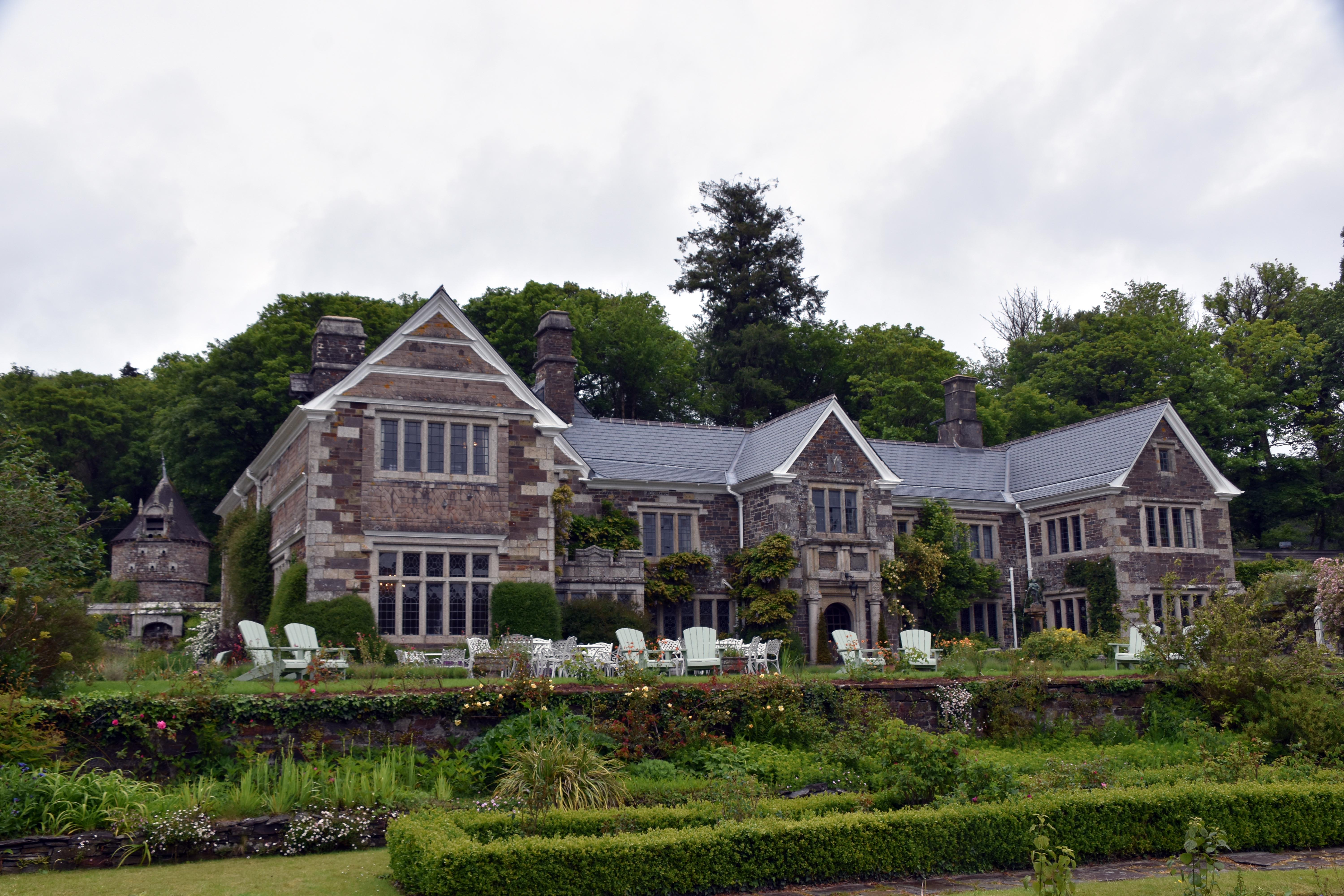
Just over the road is Lewtrenchard Manor which has had a long and fascinating history since it was first name in the Domesday book of 1086, but the blue plaque on its entrance hints at its most famous occupant, that Victorian eccentric vicar by the name of Sabine Baring‑Gould. His eccentricities included teaching with a pet bat on his shoulder, he was an early collector of local folk songs and fairy tales, and was fascinated with the Bronze Age remains he came across on Dartmoor and was one of the first people to seriously chart their locations and examine them in detail. He wrote over 60 hymns, the most famous of which was Onward Christian Soldiers. But most intriguing of all is how he inspired his good friend George Bernard Shaw to write Pygmalion (and also inspired the director of My Fair Lady too). Sabine took Holy Orders in 1864 and was appointed curate at Horbury Bridge, just south‑west of Wakefield in Yorkshire. It was while he was there that he met and fell in love with Grace Taylor, a 14‑year‑old illiterate daughter of a mill hand. Sabine paid for this beautiful young girl to be educated and married her when she turned 18. They went on to have 15 children together (14 of whom survived childhood) and were married for 48 years. They now lie side by side in St Peter’s churchyard for eternity.
Originally Lewtrenchard Manor had been a royal manor under the control of the Sheriffs of Devon, the de Moles, close to an important ford over the River Lew. In the 14th century the Trenchard family took over the manor, giving their name to the house and to the surrounding village. In the reign of Elizabeth I the Monk family bought the estate. This is the same Monk family from Potheridge whose famous son George Monk (often spelt Monck) was the Commander of the Coldstream Guards who was responsible for the Restoration of King Charles II in 1660, for which he was rewarded with the title of Duke of Albemarle. All this though was after his father, Sir Thomas Monk, had been declared bankrupt in the 1620s, forcing the family to sell the estate in 1626 to the Gould family. This humiliating bankruptcy was to have a profound effect on young George. After witnessing his father’s arrest, his intense anger drove him to stab the Under-Sheriff of Devon. To escape prosecution, he fled to the European continent and launched a lifelong career as a professional soldier returning to play important roles in the Civil War, Commonwealth and the Restoration.
As you walk up the drive it is reputed that you might come into contact with a ghost of one of the daughters of the Gould family. Susannah Gould married someone of whom her father disapproved. On her wedding day, as she drove back the short distance from the church to the manor, she dropped dead from heart failure. Funnily enough we could see that the building, which is now a very swish hotel, was preparing for a wedding – we wondered if the bride knew that a bridal ghost might be participating in the events of the day?
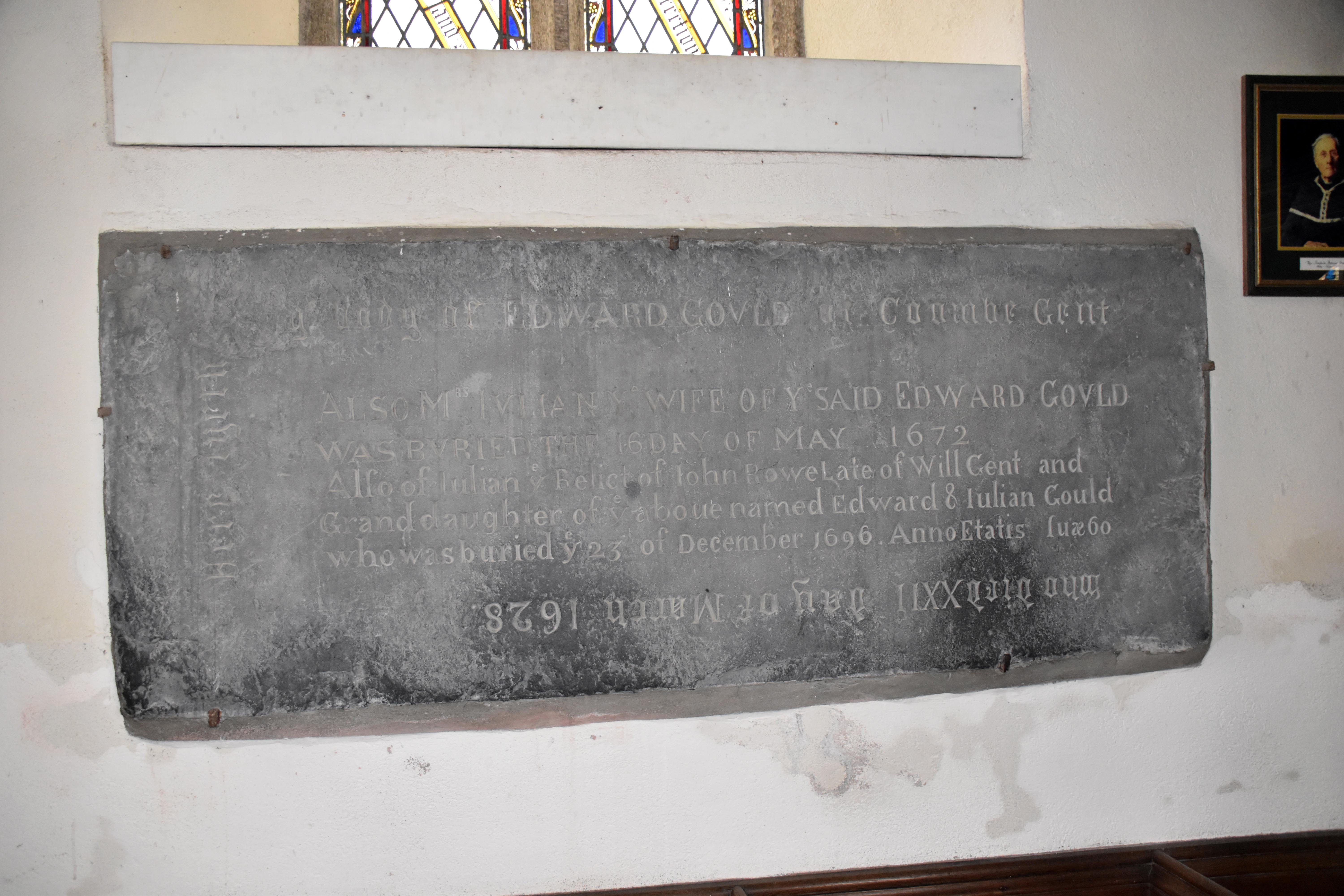
There is another fascinating Gould character. Captain Edward Gould inherited the house in the 18th century but was an inveterate gambler and drinker. On one occasion he apparently lost a lot of money in a card game, but when his guest left, he dressed himself up as a highwayman and stole the money back… unfortunately for him his victim recognised him as they had just spent the evening together. A sharp lawyer discarded the sole witness when he claimed to see Edward in the moonlight. The lawyer brought out an almanac proving there was no moon that night. The case collapsed but it cost poor Edward a lot of money and his reputation. His mother restored the house’s finances as best she could, but when she died the house passed to her daughter’s family who had married into the Baring banking dynasty, but only on condition that they took on the Gould name, hence the double‑barrelled Baring‑Goulds taking over. William Baring‑Gould was the first owner of the house before it passed on to his more famous son, the Reverend Sabine Baring‑Gould. He became vicar of next‑door St Peter’s and significantly upgraded the manor whilst being a prolific writer.

|
|
|
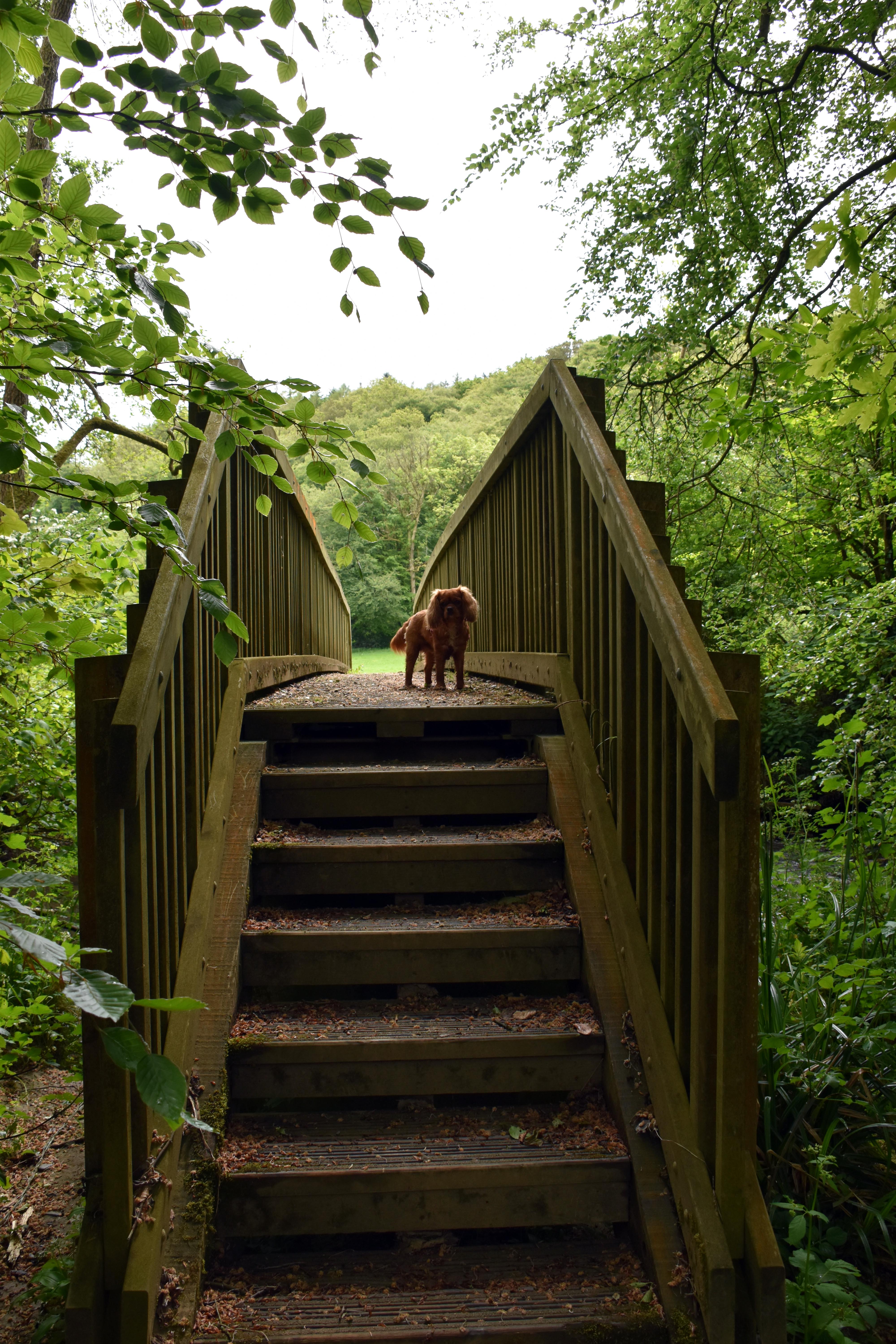
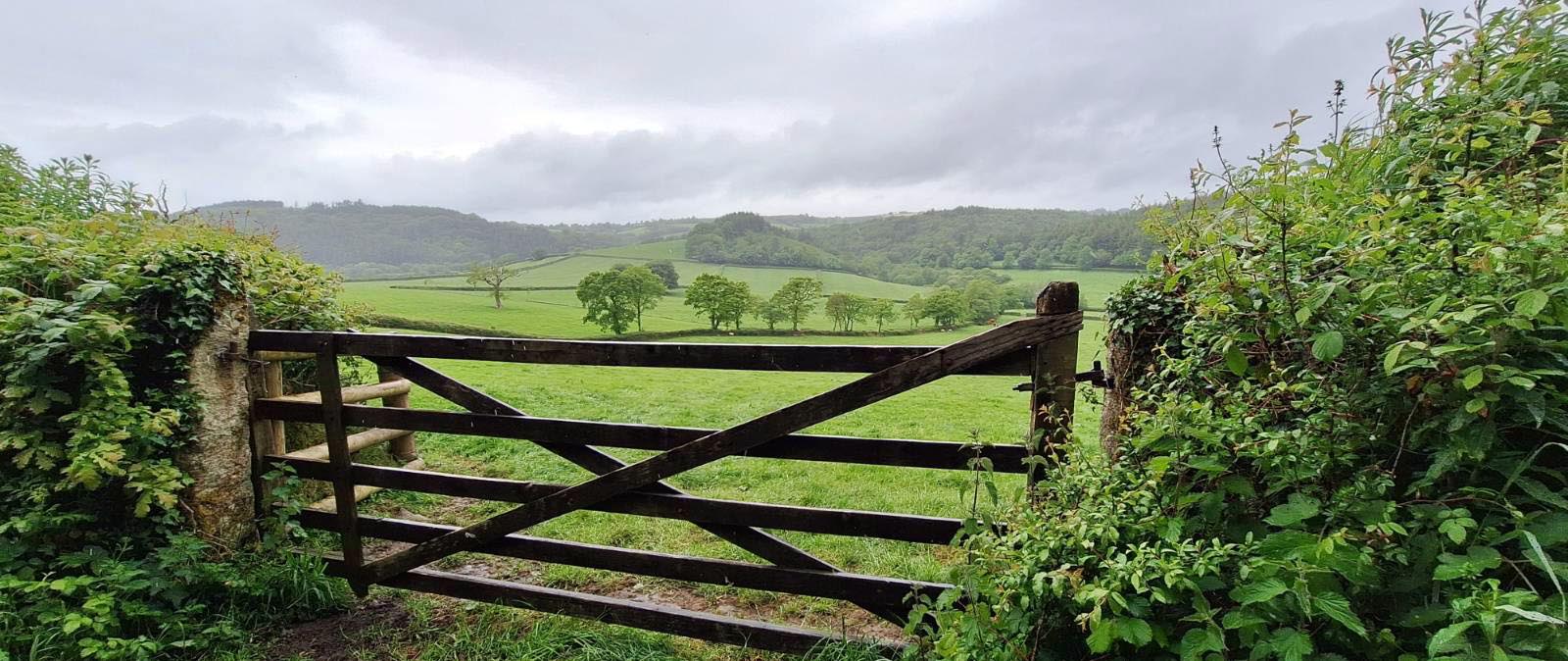
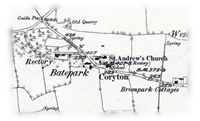
We headed south though to cross the River Lew and head to an even smaller village called Coryton with its own beautiful church, which, given that it started raining, we prayed was open for us to have some lunch inside it. We walked through some old quarries towards a footbridge over the River Lew. From here, as you glanced upstream, you may have been witness to a large battle between the West Saxons and the Cornish in the 820s during the reign of King Egbert. This Battle of Gafulford is mentioned in the Anglo‑Saxon Chronicles and although its precise location is not known for sure, the consensus seems to be that it could have been at the crossing between Galford and Lew Mill. King Egbert was probably not present at this battle as he was preparing to go to war with the Mercians at this time, but he was present a decade later at the Battle of Hingston Down in 838 AD where he fought the Cornish and the Vikings who had allied with them. (Once again we are not entirely sure where this battle was fought) but it may have been fought near to Kit Hill (although there are three Hingston Downs in Devon and Cornwall!). These two battles represent the rising power of the Saxons at the expense of the Cornish Celtic peoples (the Cornovii part of the Dumnonii). The last Cornish King was to be King Doniert in 875, defeated by King Alfred, reputedly in retribution for once more helping the Vikings fight the Saxons, this time outside Exeter. Gaful means a tax or tribute and it is likely that this would have been exacted at a ford along a river where the two kingdoms met. It is easy to see how a dispute over payments or lack thereof could have spilled into a wider battle. Not too far away the Saxons were to build their most westerly defensive burgh at Lydford, again suggesting this area as something of a boundary between two suspicious kingdoms.
|
|
|
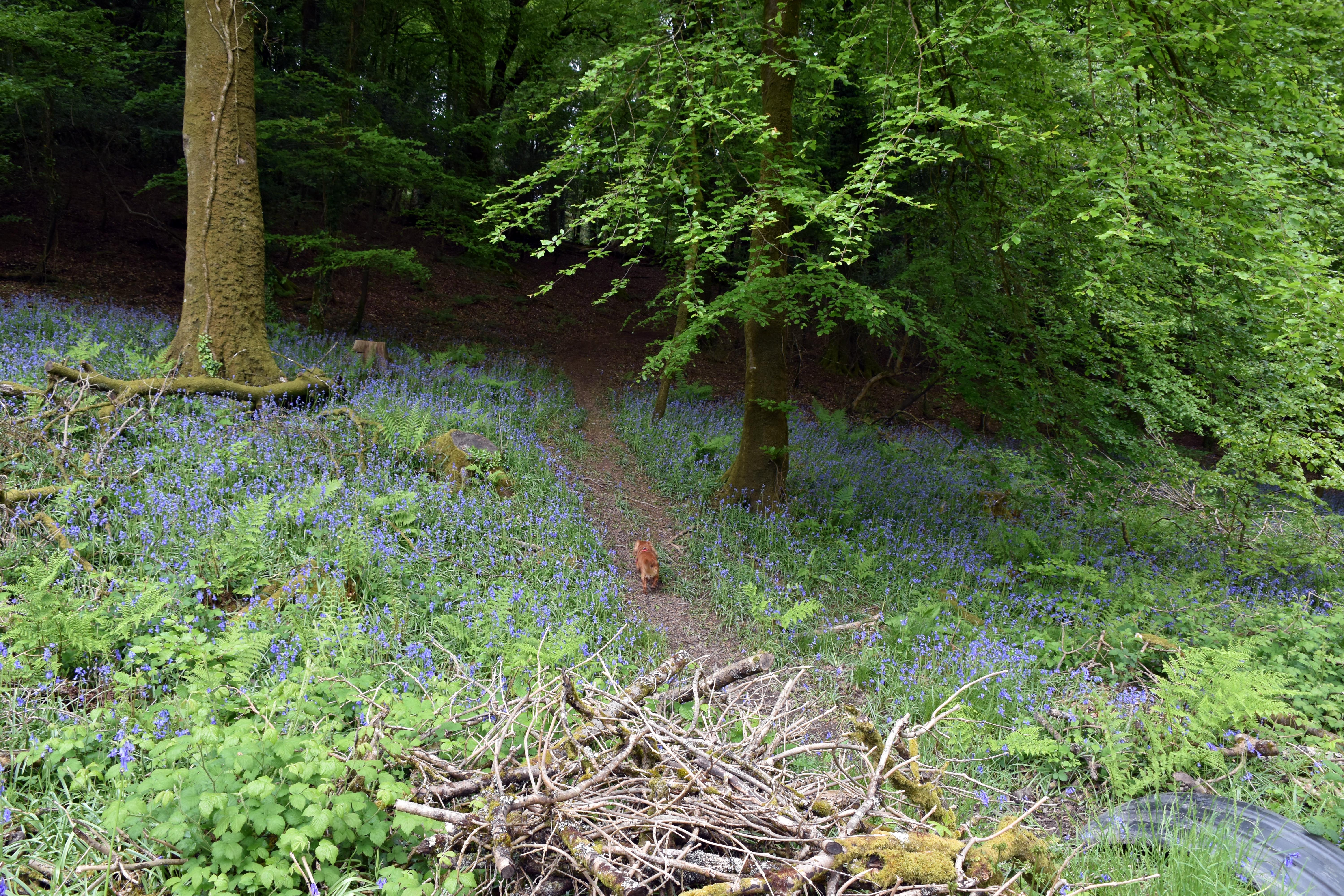
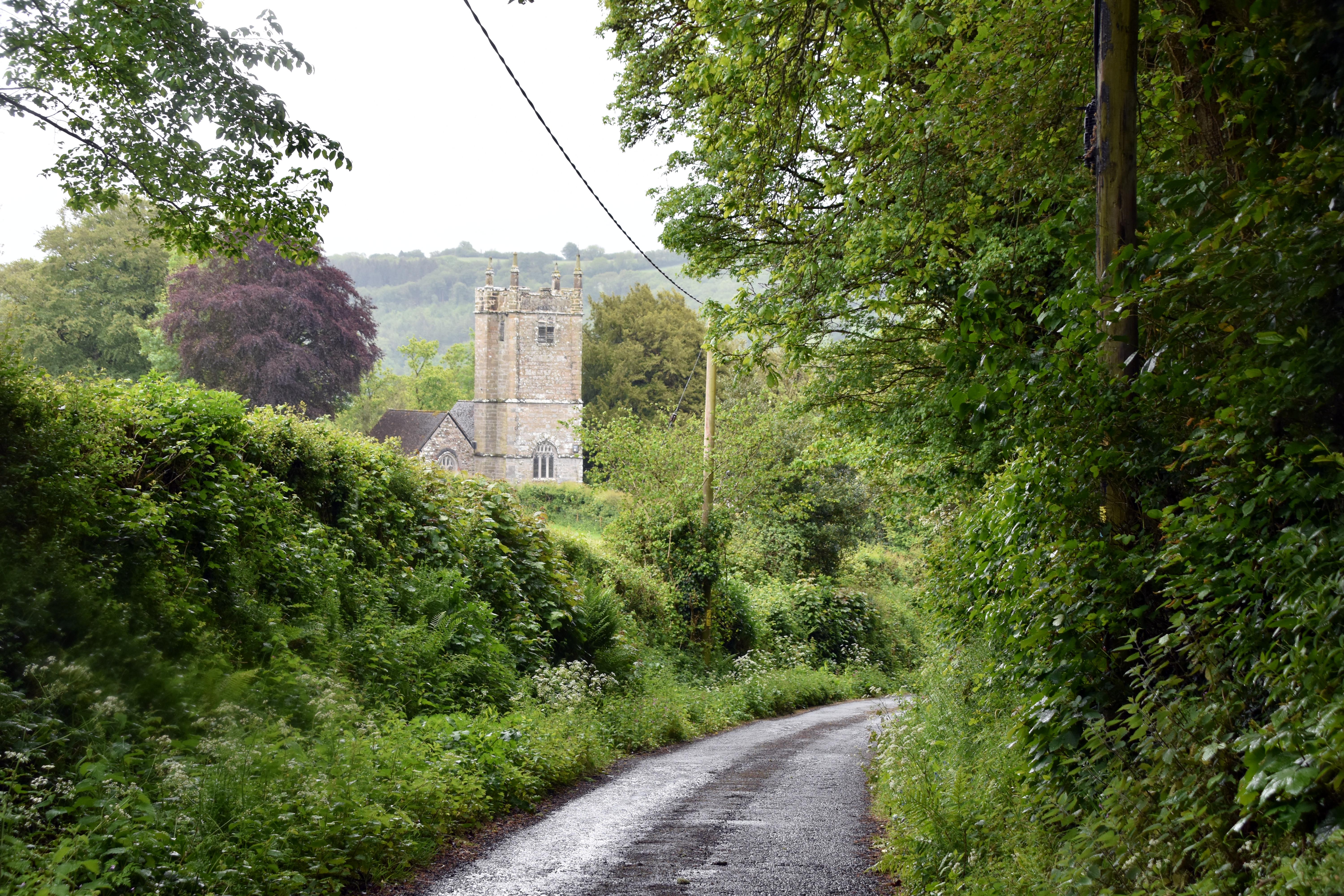
We then entered Lew Wood and were greeted with some vibrant bluebells before following the lovely woodland trails. We passed the 17th‑century farm of Coryton Barton before ascending through the inappropriately named Lower Town (which had a working public phone box!) in the village of about six houses! By this time the rain had started in earnest but soon we descended back down towards Coryton with a big buzzard taking off as we stopped to take in the view of St Andrew’s Church nestled in the valley.
Once upon a time the Coryton family hailed from this tiny place. They would go on to marry into the Ferrers family who were descended from one of King William’s knights – and begetters of many place names in Devon and Cornwall ending in Ferrers such as Churston Ferrers, Bere Ferrers or Newton Ferrers (of which there are two, one in Cornwall and one in Devon). The Coryton family lives on after several interesting (and dark) turns as the present owners of Pentillie Castle on the River Tamar.

|
|
|
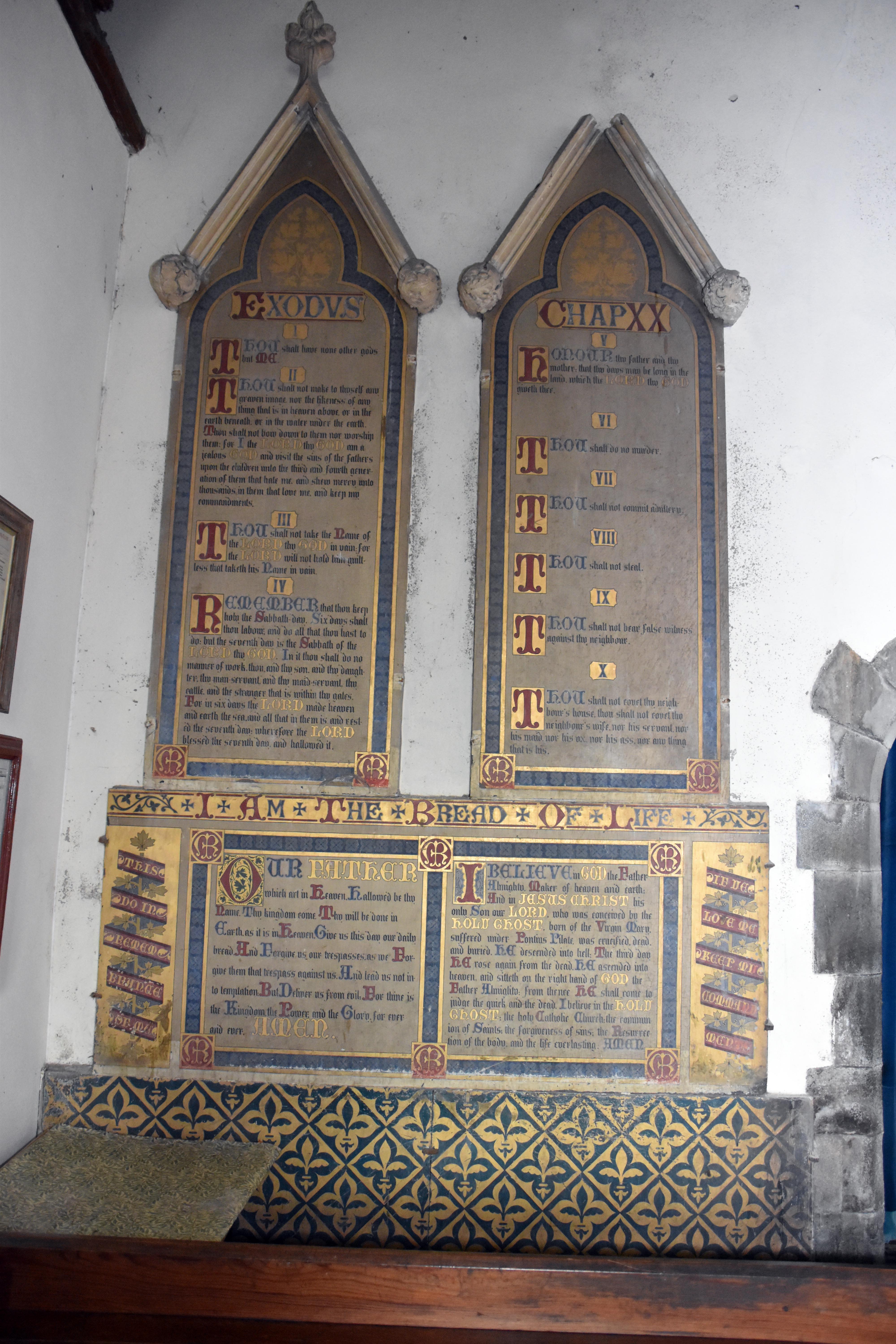
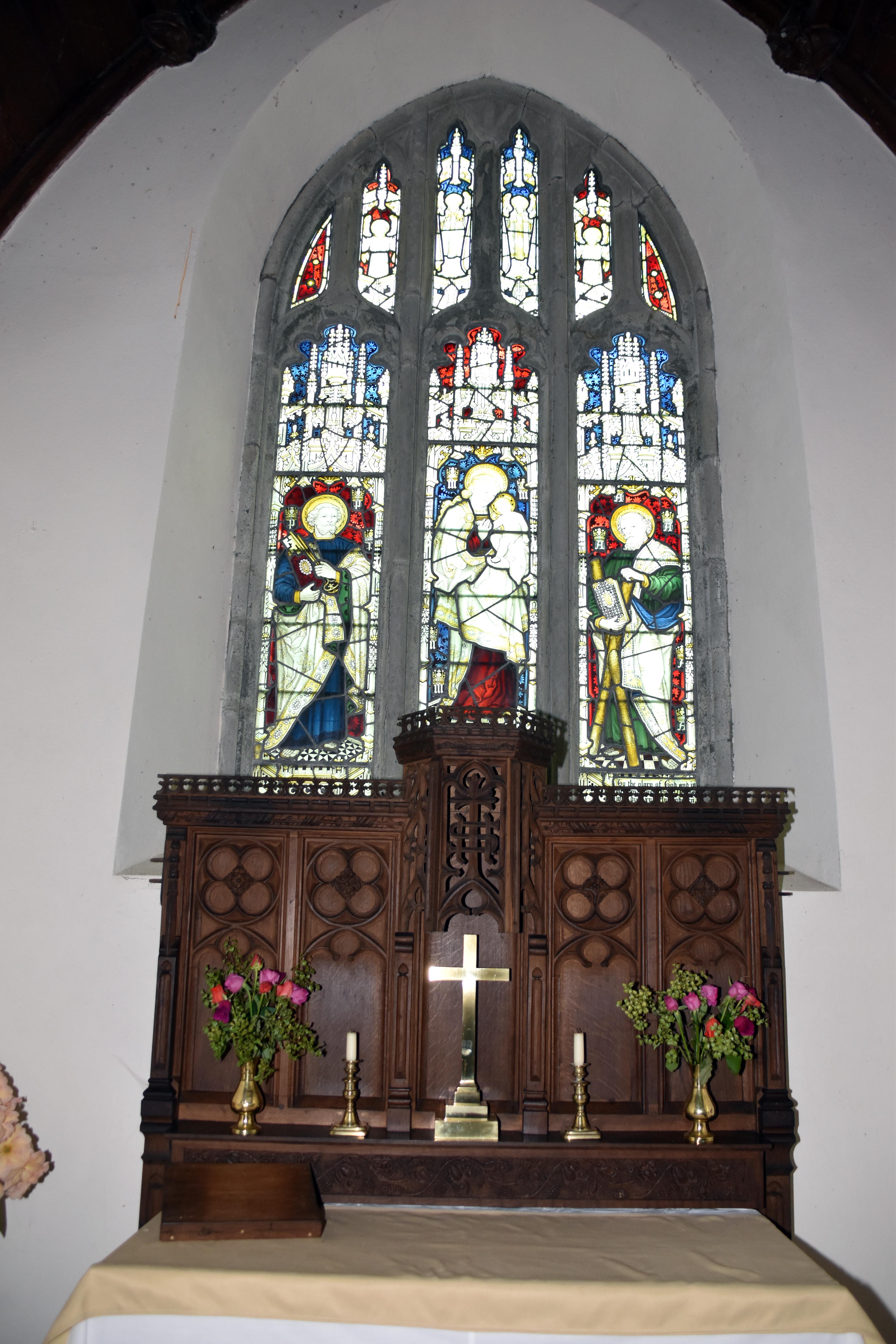
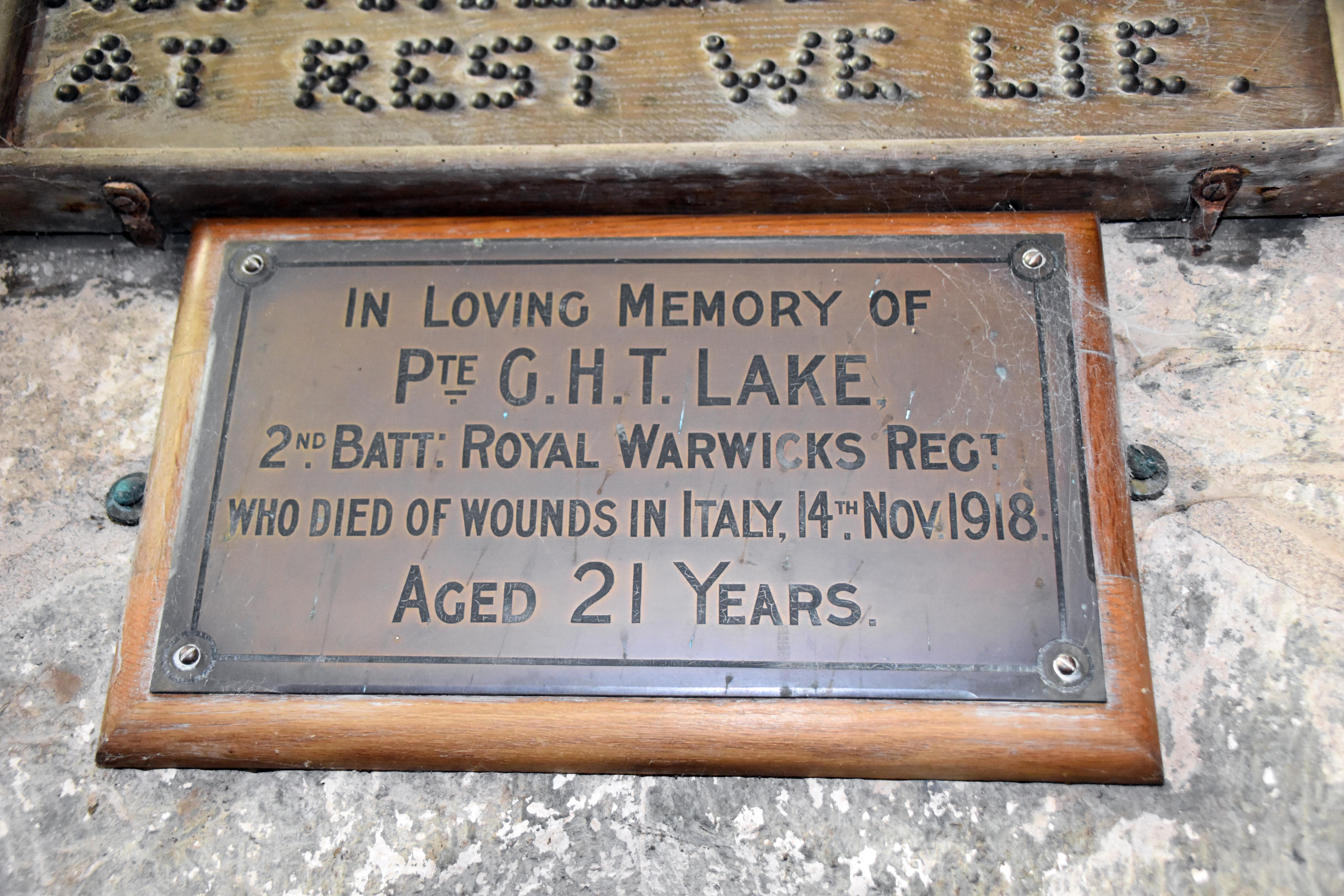
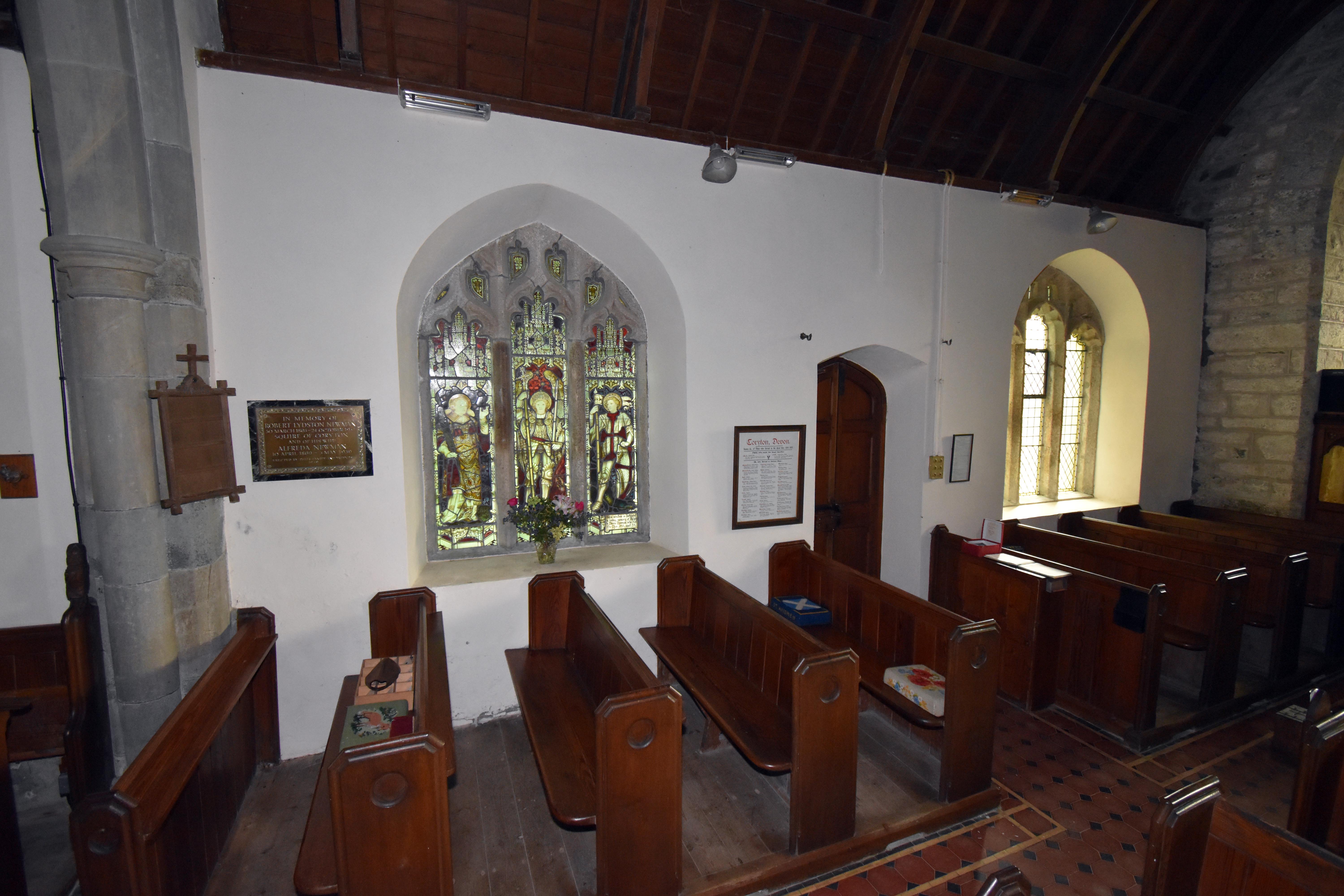
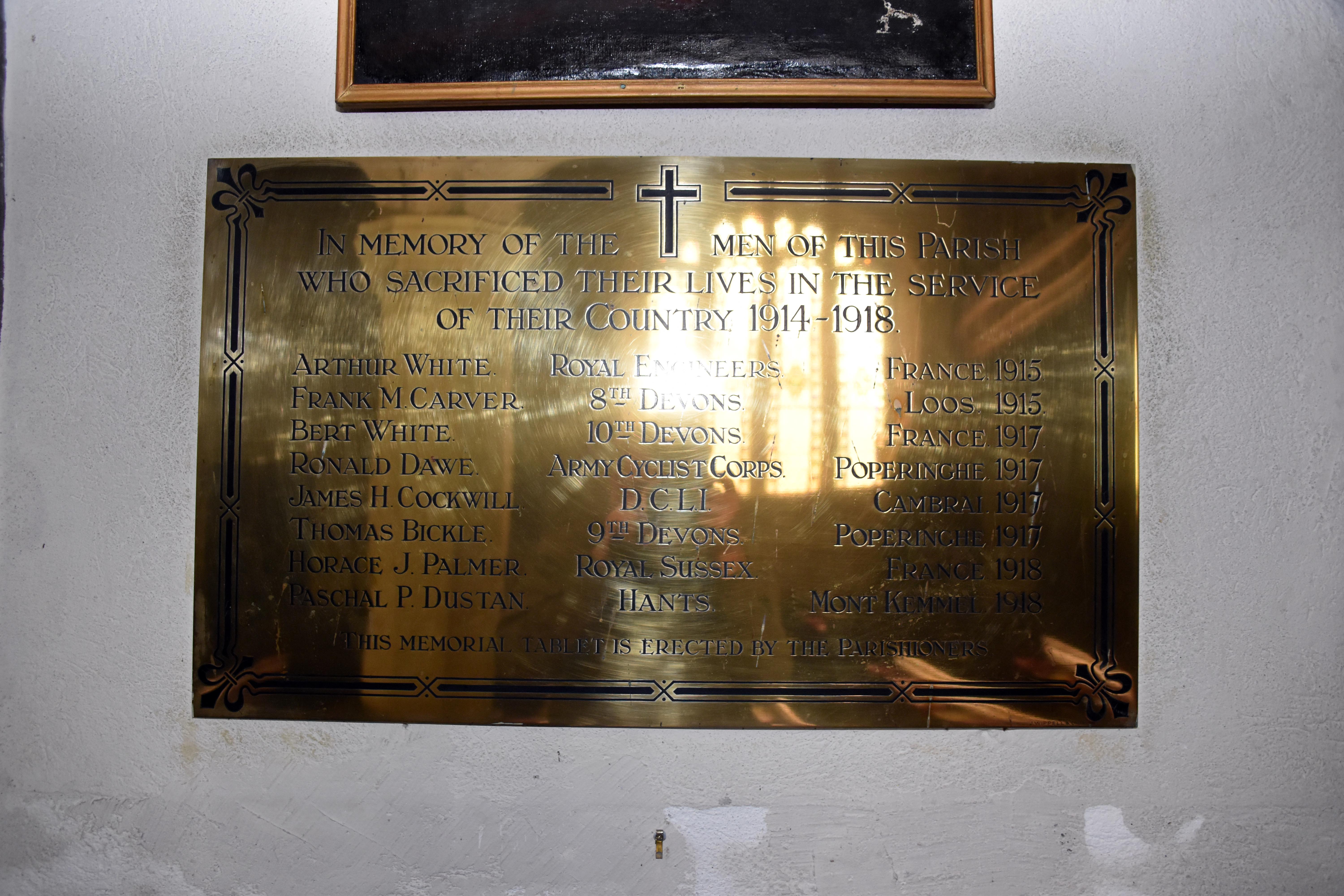
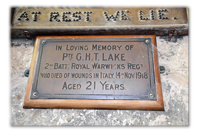
The Newman family purchased the Coryton estate in 1809 and they were responsible for a serious renovation of the interior of the church. Newman names crop up all over the place in the beautiful stained‑glass windows, dedications and coats of arms. It is a charming little church which made a lovely venue for our lunch as the rain fell outside. I do like it when churches not only tell us who was killed from the parish in the world wars but who served from the parish and lived to tell the tale. One soldier and one sailor died in the First World War but about 30 served with connections to the parish, and what an eclectic range of arms they fought in. It is instructive to see parishes where there are plenty of survivors, but of course they would bring their own experiences of the war back home with them, and the short descriptions remind us that many of these were wounded, suffered from diseases, were prisoners of war, were gassed or suffered from shell shock. For example, Harry Mounce of the 8th Devons was wounded nine times, was also gassed and was consequently lame for life!
|
|
|
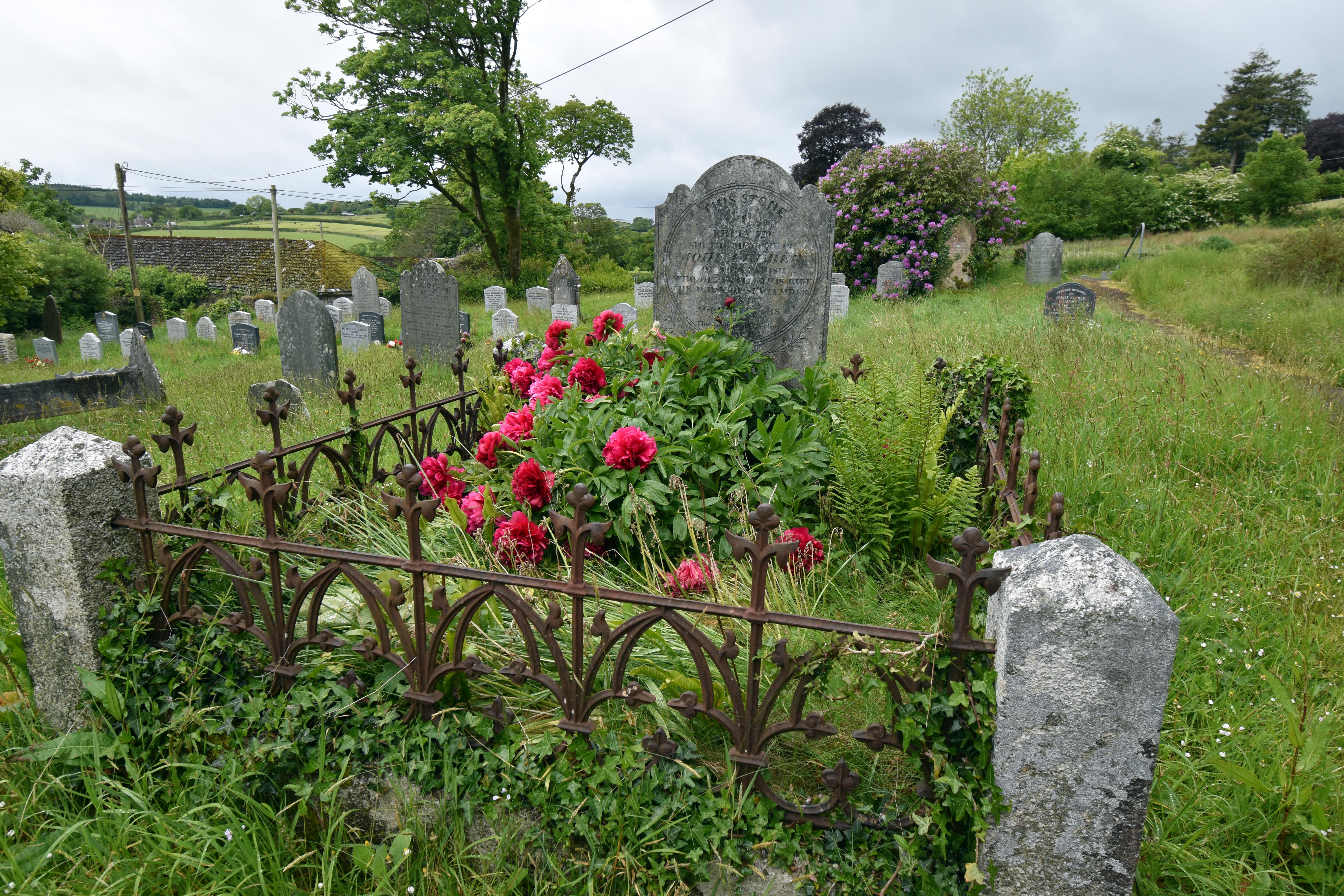
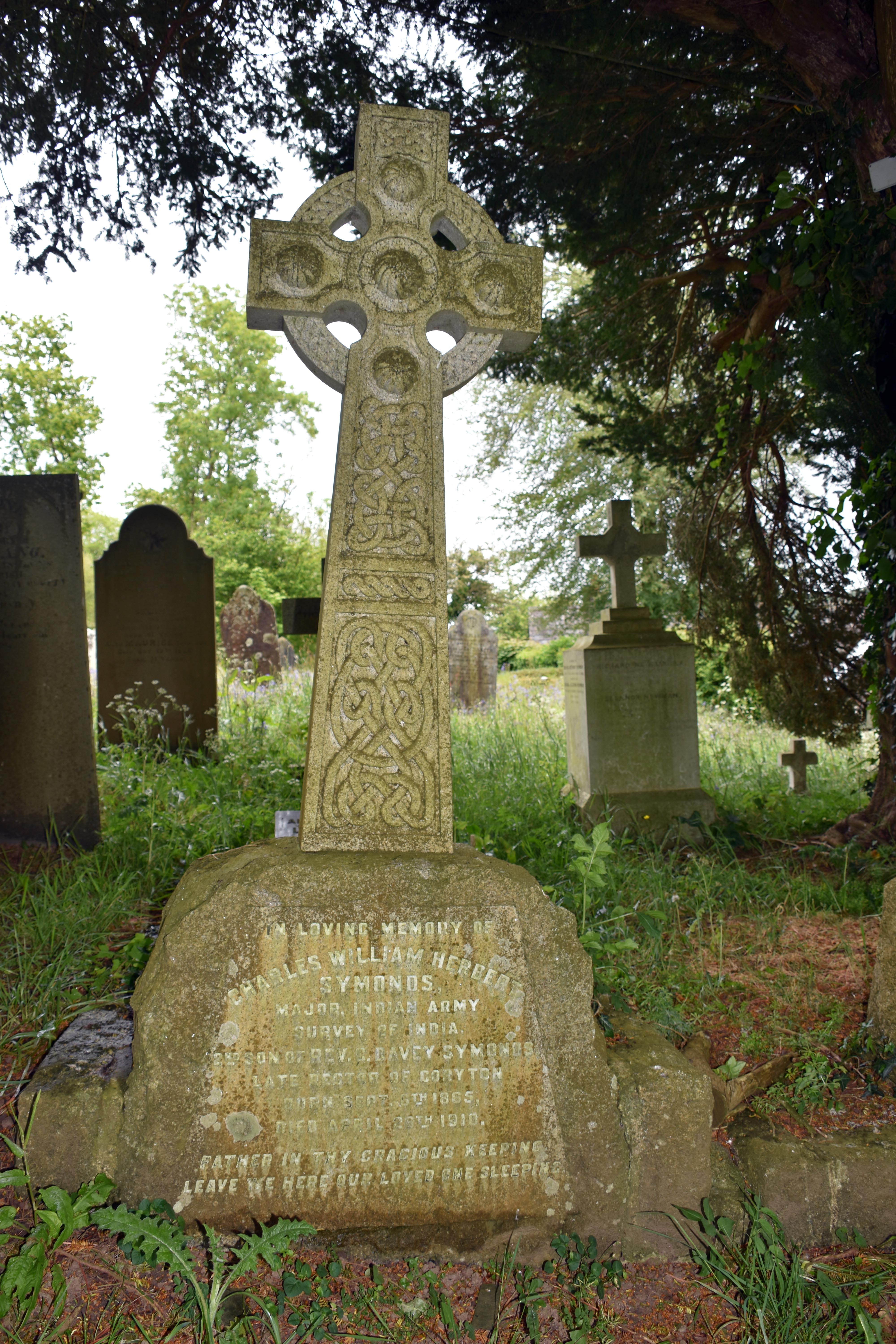
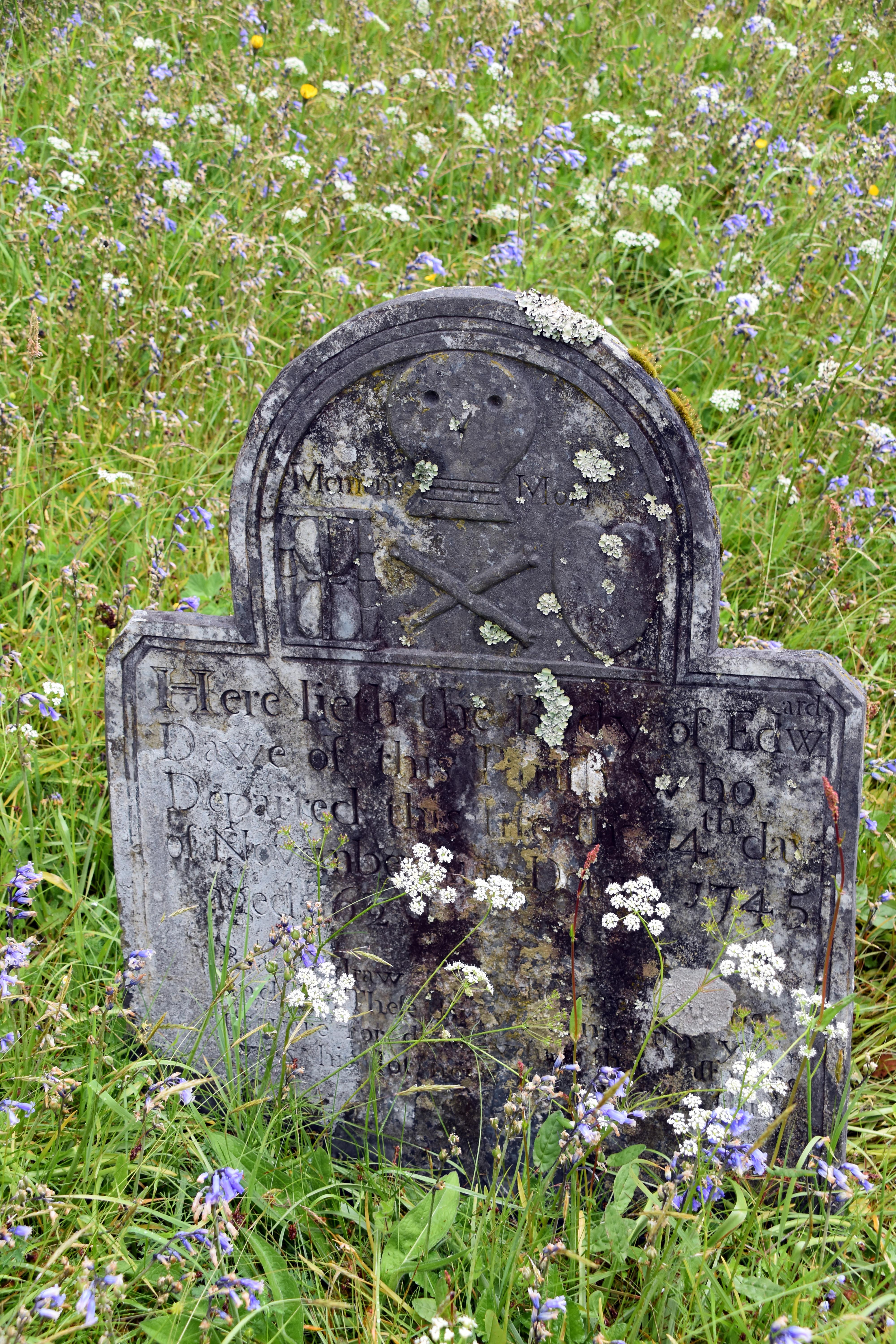
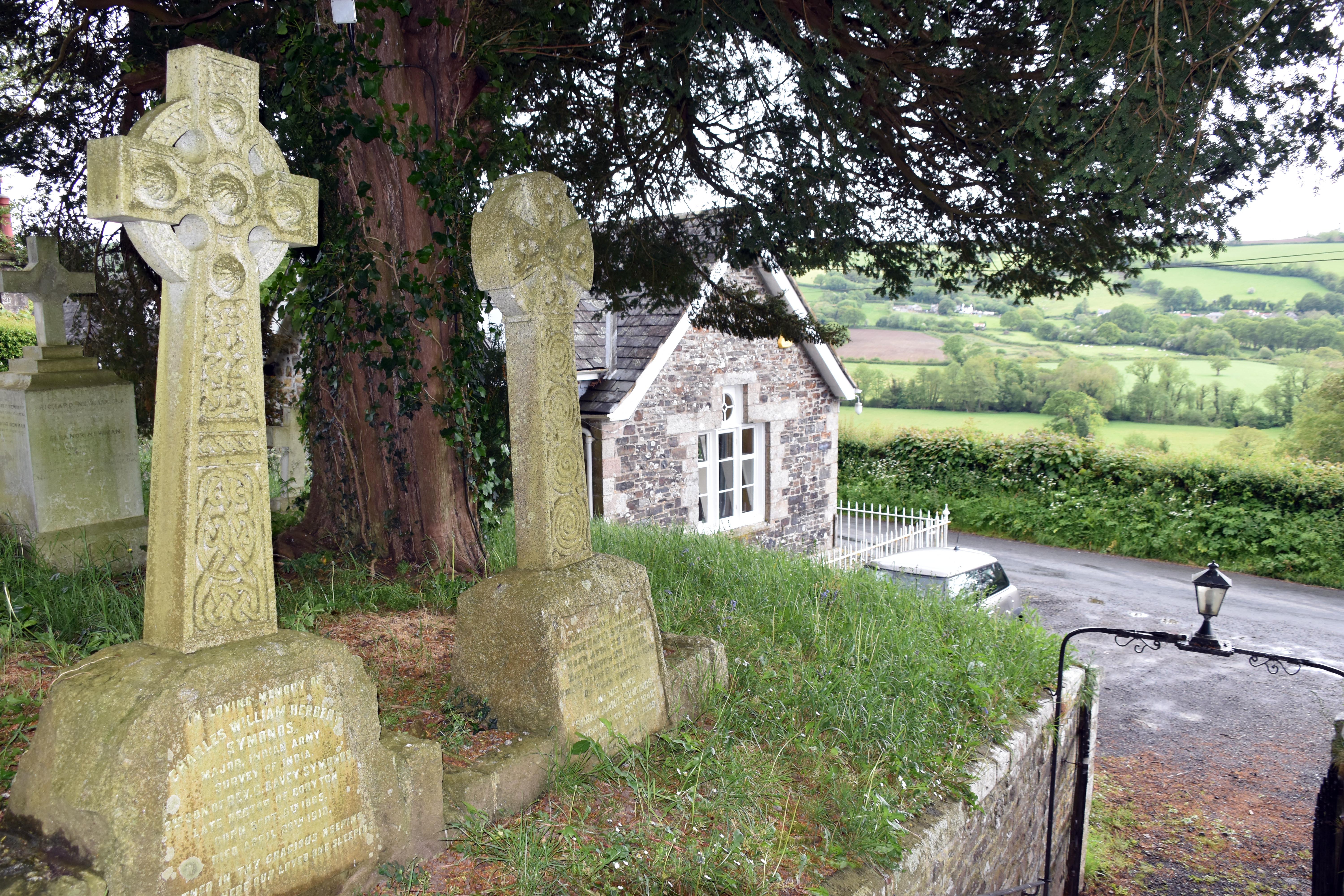
Out in the graveyard after the rain had moved away we found lots of interesting graves but two in particular stood out. One was to Edward Dawe who died in 1745 with a very impressive memento mori headstone with full skull and crossbones just to remind everyone he was dead! The other was Major Charles William Herbert Symonds of the Indian Army and the Survey of India and the son of the Rector of Coryton, hence his burial here with a beautiful Celtic Cross next to his father’s similarly gorgeous Celtic Cross gravestone. A few weeks ago we came across the grave of Colonel Clarence Preston Gunter in the church at Powderham. His grave also proudly told us he had served in the Survey of India. Given that he started this post in 1899 there is a chance that his path crossed with Major Symonds. Obviously the Symonds family had long Indian connections as the Major was born there in 1865; perhaps their parents were missionaries or working in the church there in some capacity. All three of their children were to be born in India, but he appears to have been invalided home and sadly died in London in 1910.
|
|
|
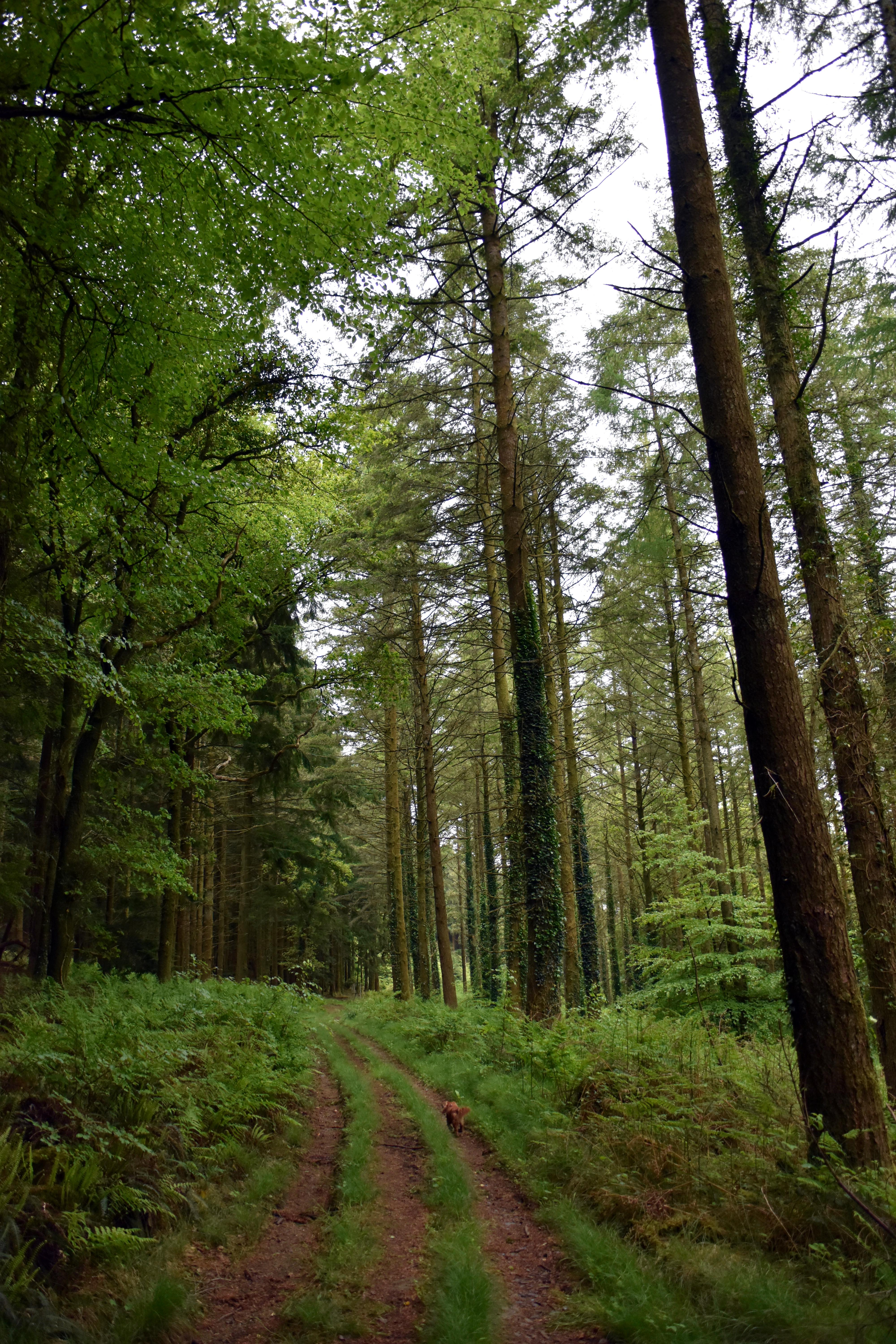
We then headed down towards Coryton Mill which lies on the River Lyd but turned back up the hill along a very peculiar sunken country lane indeed. It helpfully told us that it was not suitable for motor vehicles and we quickly concurred. It was barely suitable for two legs. Rupert had less of a problem. Horses I am sure would have struggled. I don’t know if man or nature carved this curious route but it was very dark, very deep but also had some interesting ruts along the sides. We carried on northwards and retraced our steps back through the wood, keen to return to Lewtrenchard to try and catch St Peter’s Church during daylight hours.
|
|
|
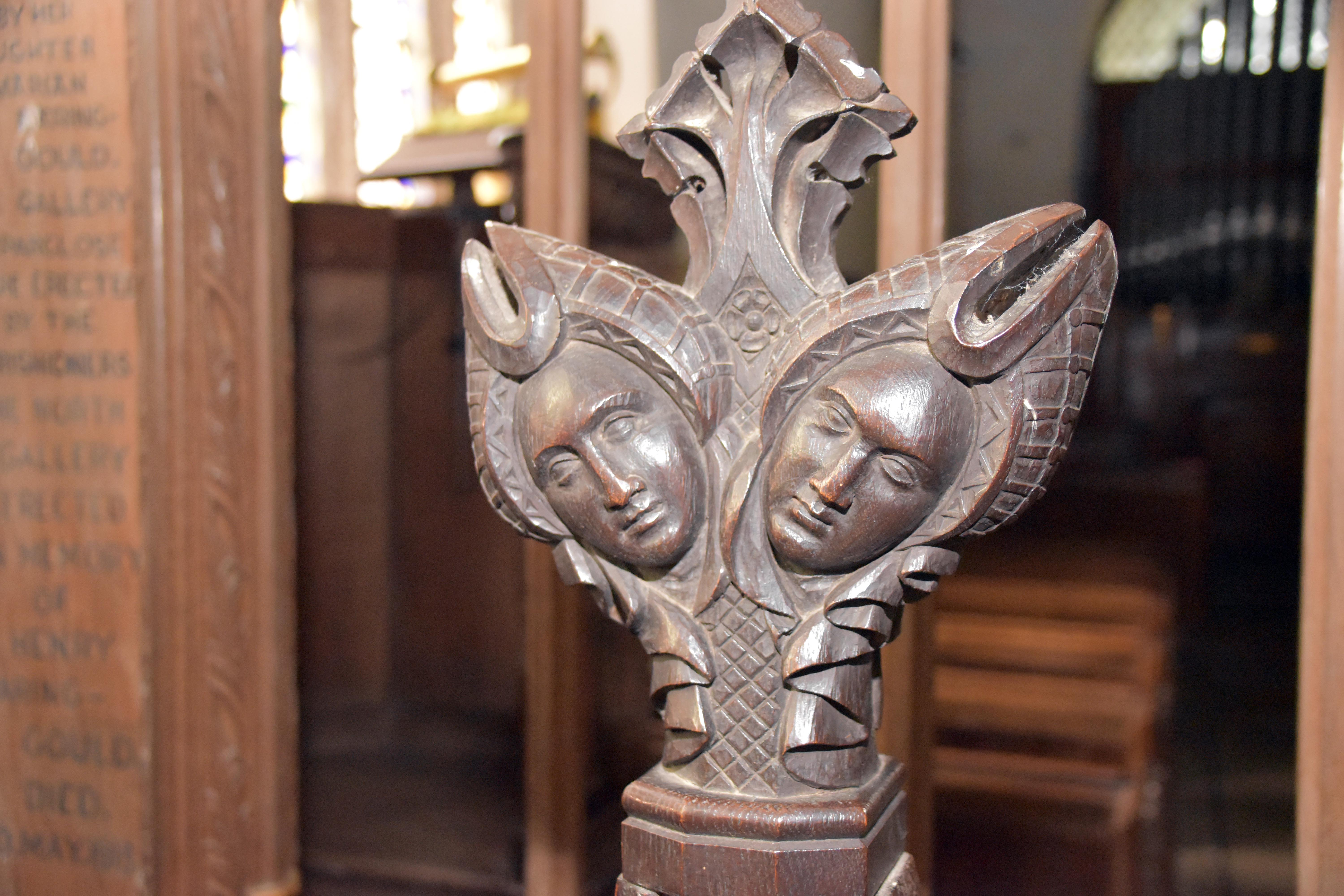
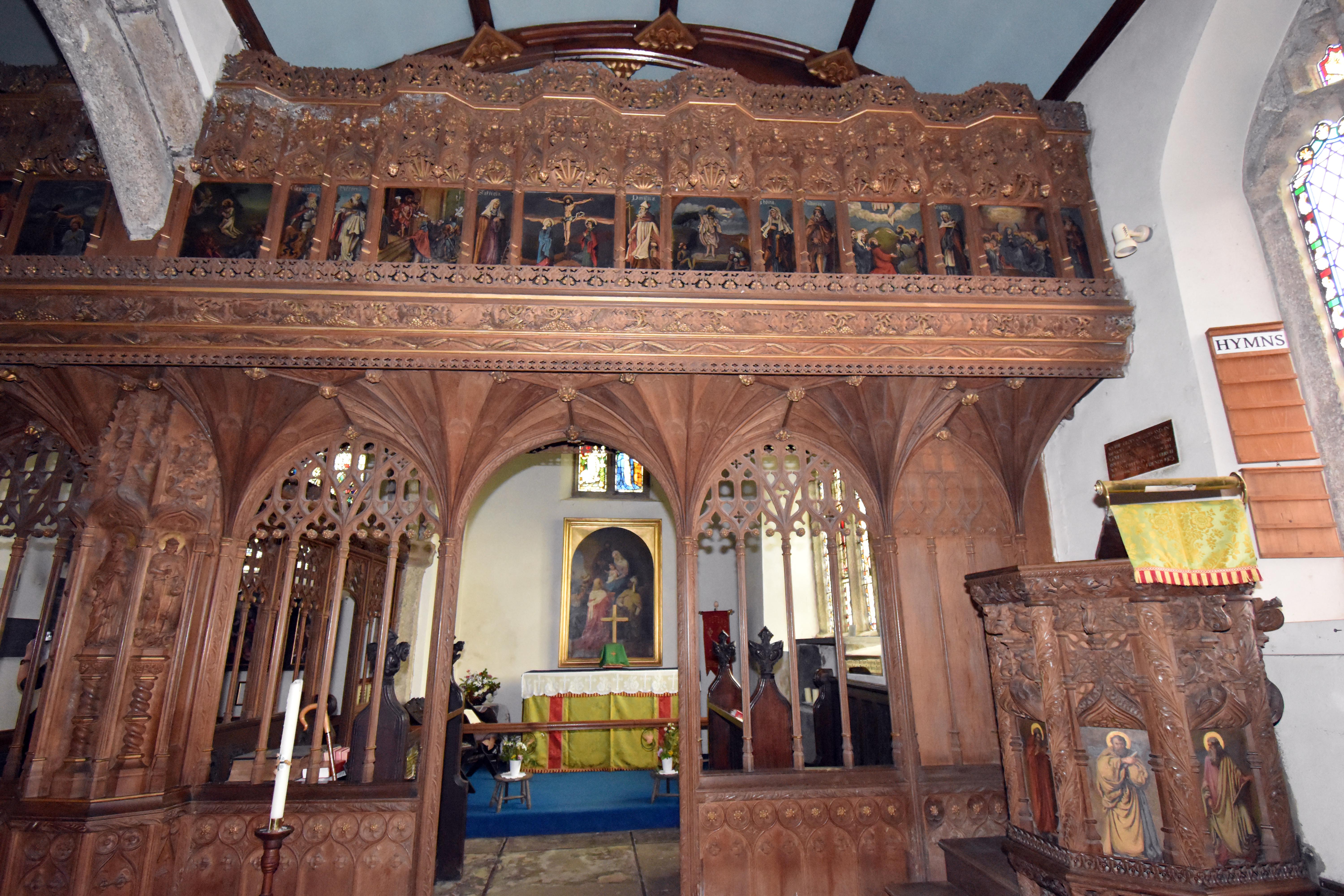
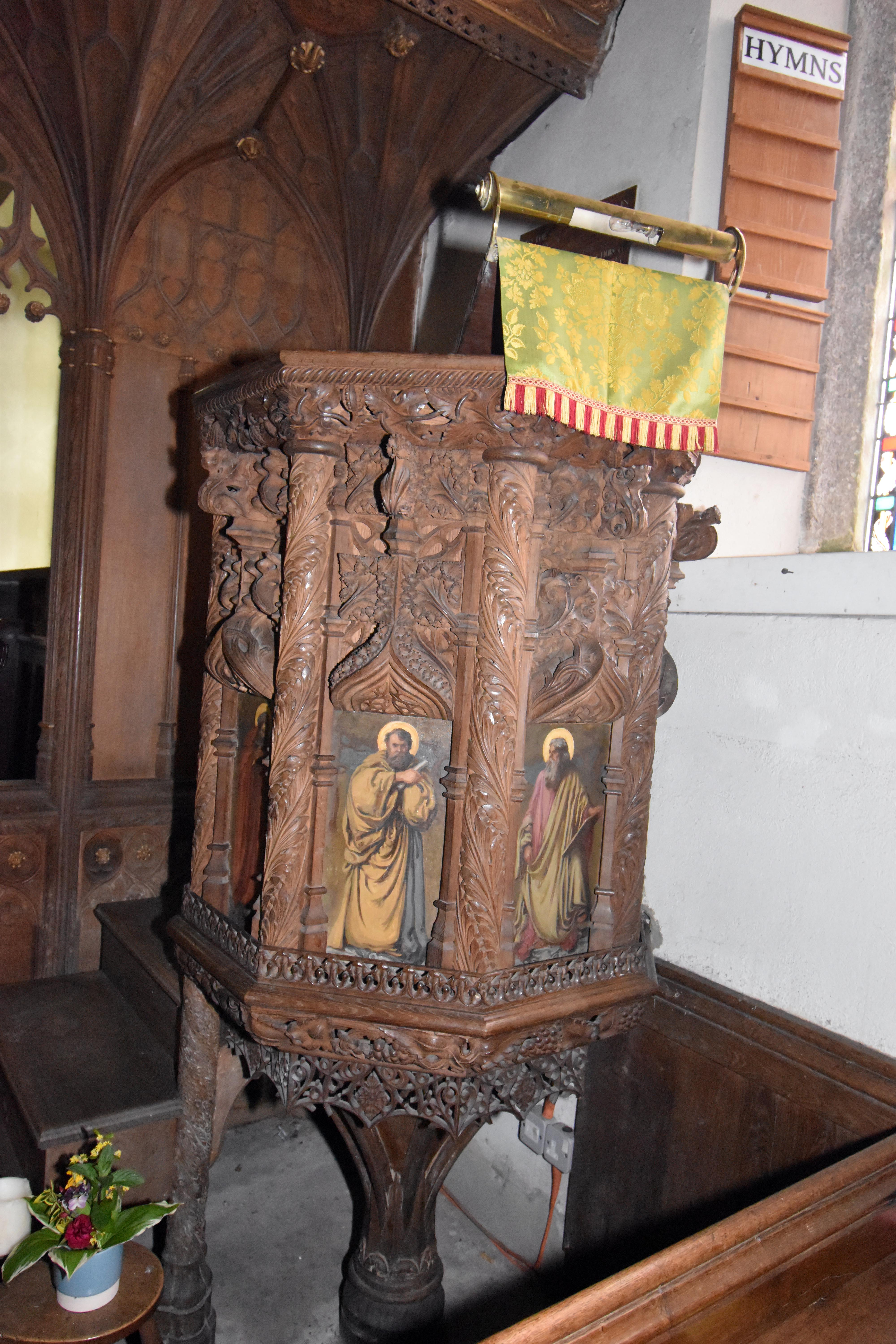
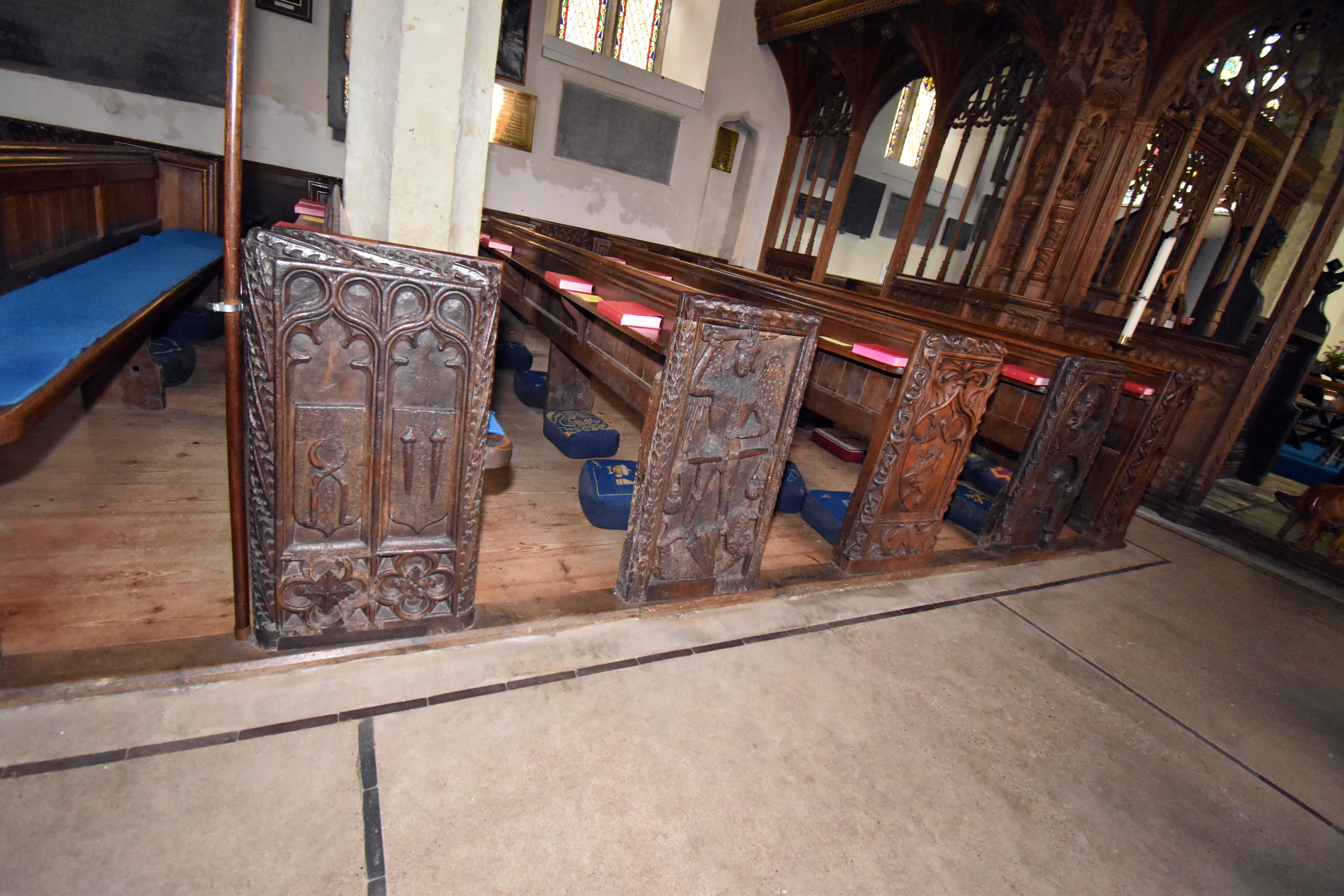
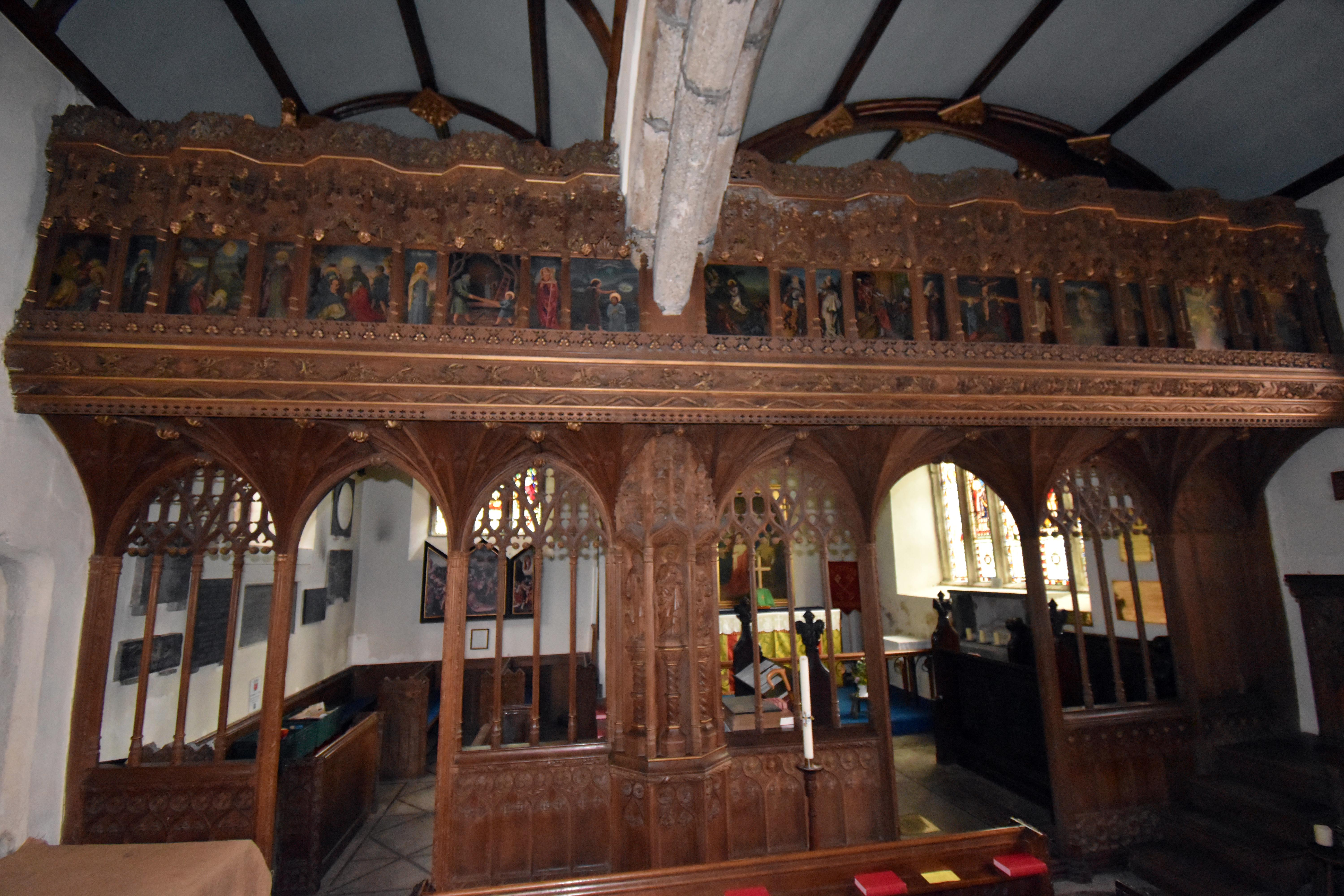
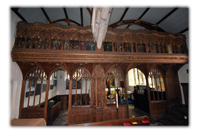
We nervously walked up the pathway of the church and could see that the doorway did indeed look different as we approached it. The outer door had been opened and an inner door pushed open easily. What we saw inside took our breath away as we turned towards the chancel… not just a stunningly beautiful rood screen but with a fully painted and restored Rood loft too. Sadly this is not a surviving rood screen from before the Reformation although it can claim some heritage. Our eccentric vicar friend Sabine Baring‑Gould found fragments of the original rood screen in the church tower and hired the Pinwill Sisters to use it as the basis of a freshly carved screen which dominates the church space. This really conveys the separation of the sacred space from the congregation like few other English churches can convey. The colour and the freshness of the religious paintings on the screen and on the pulpit also transport you back to the era of a largely illiterate congregation being awed by such a spectacle.
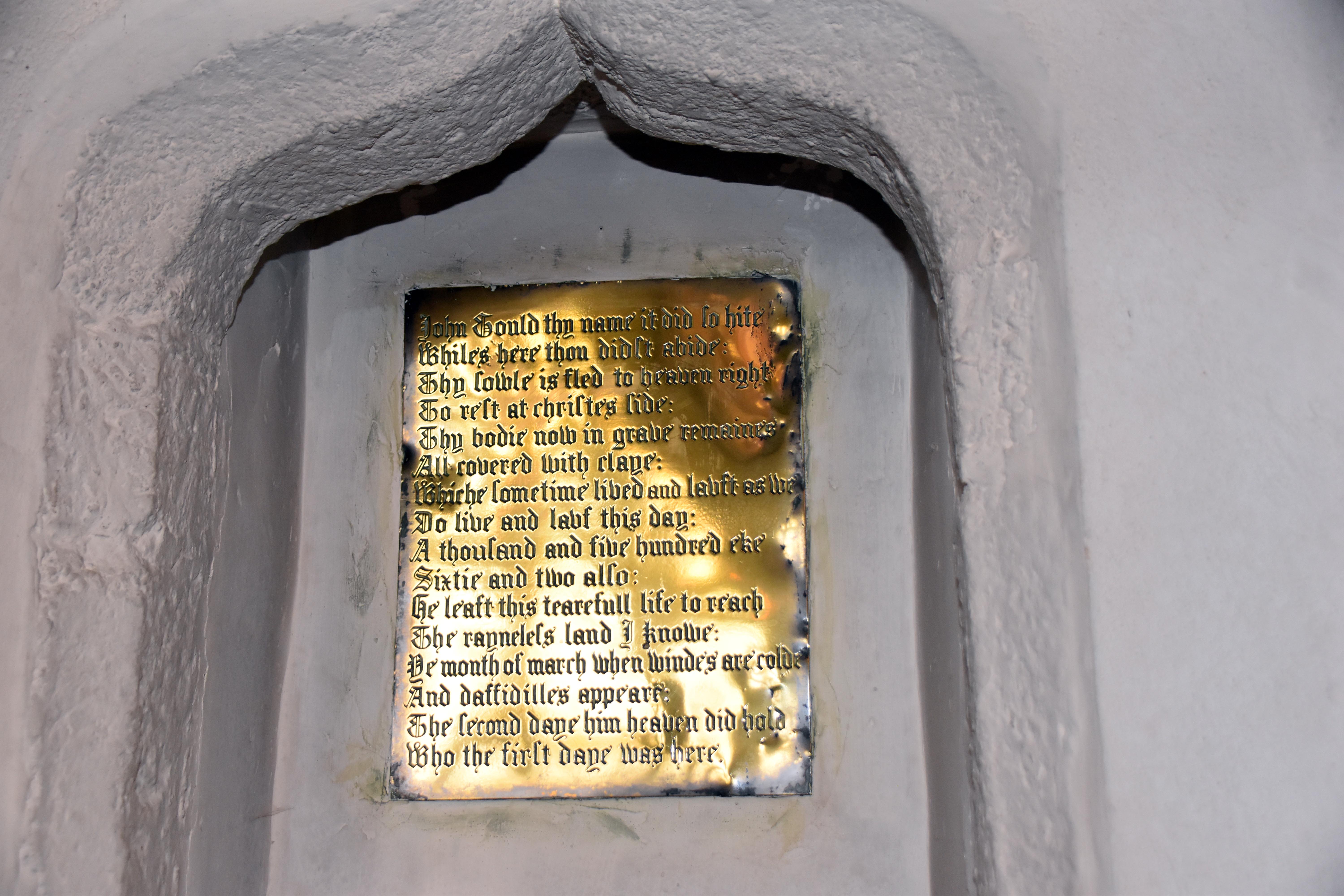
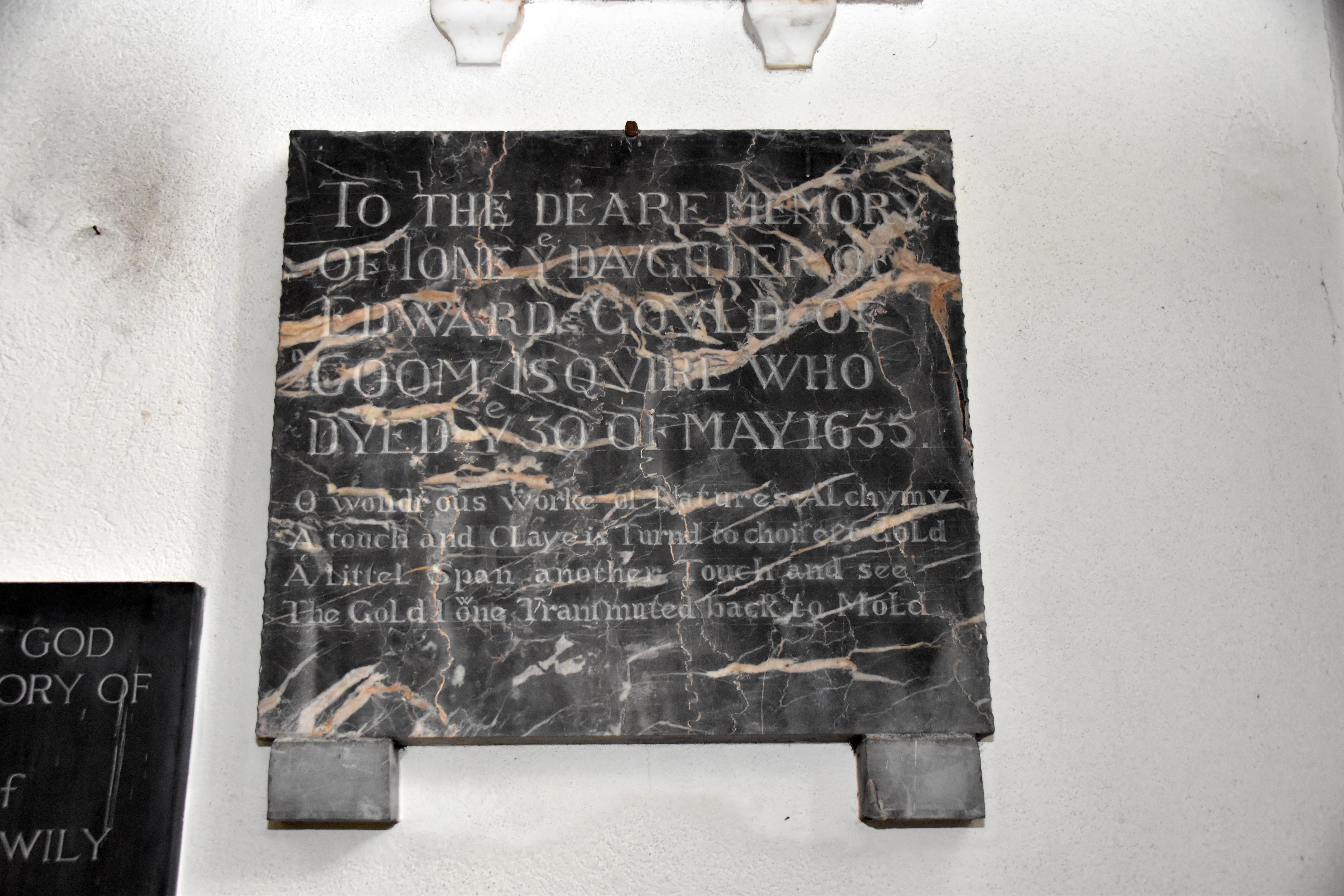
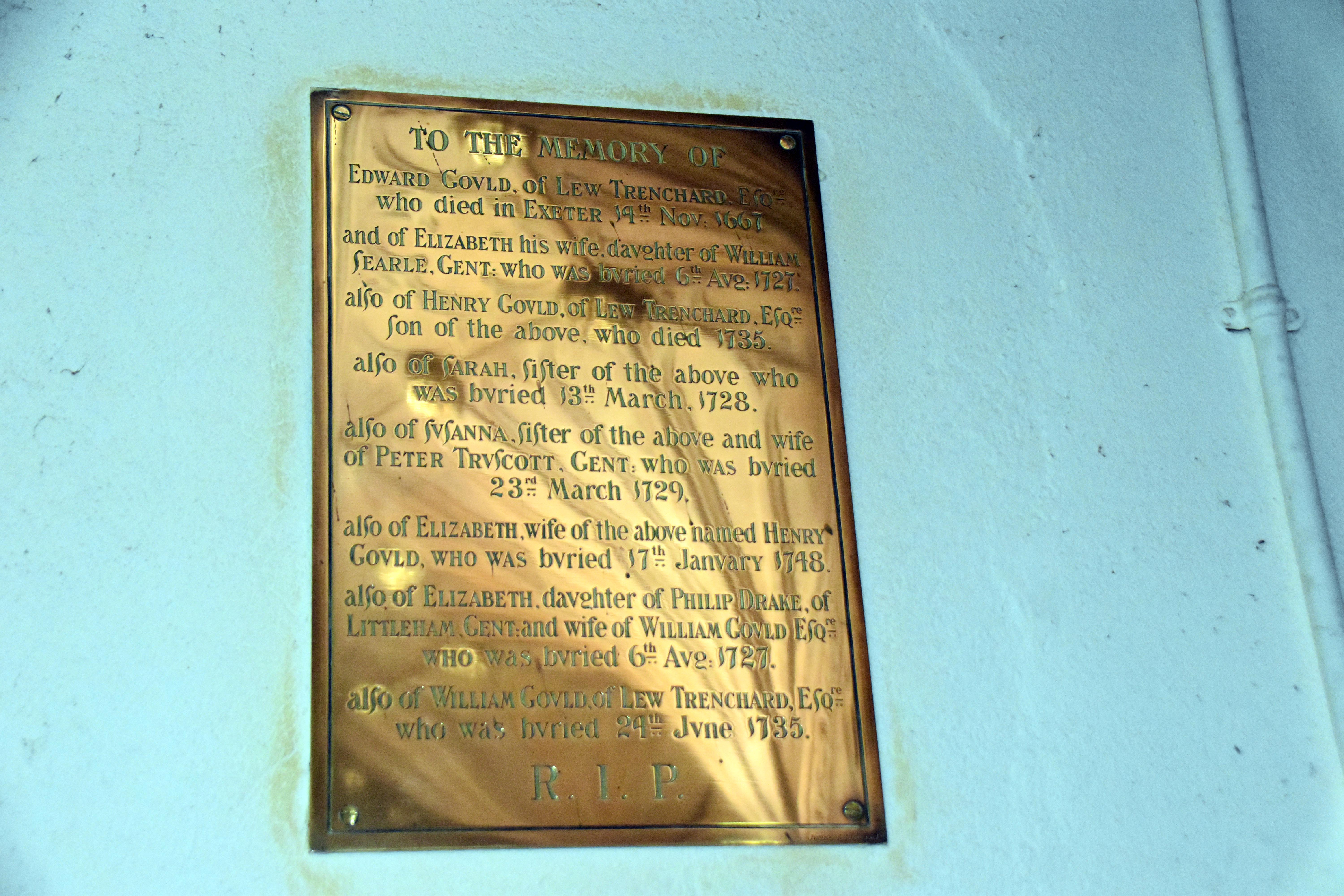
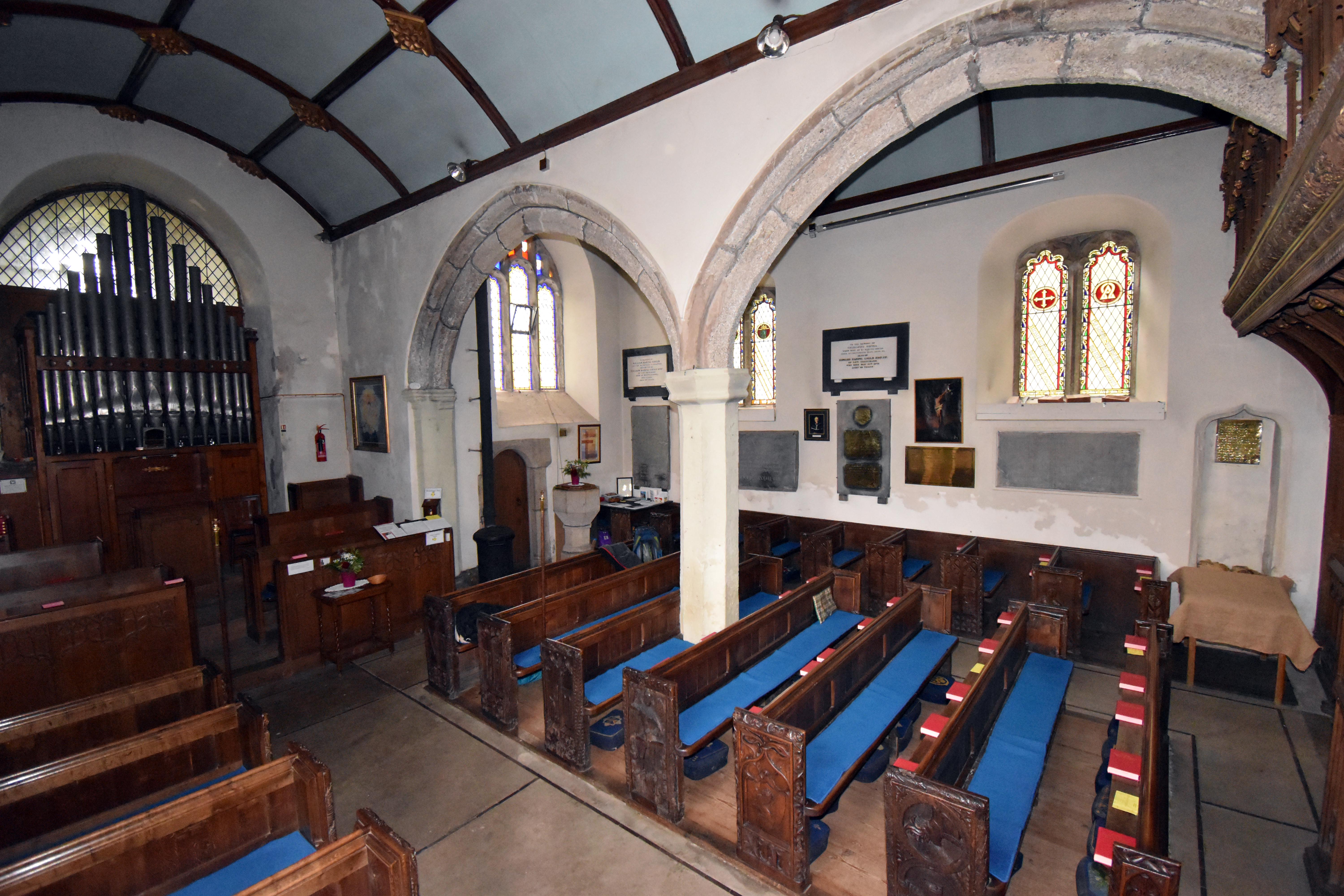
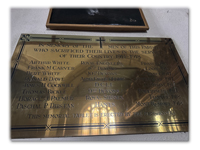
There are an unusually large number of memorials in this church, many of them to the Goulds or to the Baring‑Goulds. Two of these latter ones show the imperial reach of these well‑connected families. One was to Captain William Baring Gould of the 42nd Bengal Native Infantry who, it says, died at Quetta, Cabool on 6 September 1839 - Cabool was often used at this time to describe the entire Afghanistan region. The East India Company invaded Afghanistan in 1839 as part of the Great Game that they assumed they were playing with the Russians, who they felt were exerting pressure from the north. The British supported the Sikhs in a dispute with Afghanistan which prompted the leader of Afghanistan to invite the Russians to Kabul after all. The British then tried to engineer a palace coup and replace the old leader with a compliant one. It appears that poor Captain William Baring Gould died in these early stages of placing their pliant leader, Shah Shujah, into Kabul, which was accomplished on 6 August 1839. Just one month later William was dead but at Quetta which was an important base of operation for the British. But whether he died from battle or disease is not clear. Either way, had he not died at this point he would very likely have been killed when virtually the entire Kabul garrison was wiped out to a man after their compliant Shah Shujah was murdered and the British retreated through the mountain passes back to India only to be picked off by hostile Afghans and the harsh elements. Famously only a single survivor reached Jellalabad, Dr Brydon. This was Britain’s first experience of the harsh realities of dealing with Afghanistan. It was not to be the last. Captain William Baring Gould was the uncle of Reverend Sabine.
|
|
|
The Reverend’s son, Julian Baring‑Gould, was not put off by his great‑uncle’s demise when it came to serving in exotic climes. He was to become a civil servant of the fascinating Brooke family, the Rajahs of Sarawak. He did not serve under the first and most famous James Brooke but did so under James’s nephew Charles Brooke. Sarawak was not a British colony despite its leaders. It really was a private colony under the direct control of the Brooke family. It was remarkably successful considering the resources available to this not particularly wealthy family. Even more interesting is that all the Rajahs of Sarawak are buried in Devon… indeed they are buried in the same churchyard as my own ancestors in St Leonard’s in Sheepstor. I even discovered that James Brooke and my own great‑great‑great‑grandfather died in the same week and are buried virtually next to each other. Obviously the whole Brooke story tickled the interest of the Reverend Sabine who wrote a comprehensive History of Sarawak under its Two White Rajahs in 1909. Sadly the plaque makes it clear that his three sons died far too young. One died in infancy, presumably in Sarawak. The other two were killed in the Second World War, both in the same year of 1941, one in the RAF and the other in the Royal Tank Regiment killed at Sidi Omar. Sarawak itself would become a victim of the Japanese invasion. Many of their officers were captured and suffered terrible privations in prisoner‑of‑war camps or working on Japanese railways. The Japanese did so much destruction to the colony that the Brooke family could not hope to rebuild the economy in the aftermath. It briefly became a British colony before it was transferred to Malaysia. But memorials like this remind us that the families of these manor houses did have a sense of noblesse oblige and gladly served in the armed forces or, in the case of Julian, served as a civil servant to the people of Sarawak.
So another brief walk around a corner of Devon transports us to some of the most beautiful church artisanal work that you can see anywhere in the country, to a 900‑year‑old home with so many stories and occupants including the fascinating if eccentric Sabine Baring‑Gould and his enormous family and his young wife of course, to the site of a pivotal battle in the fortunes of Cornwall and of the West Saxons, and of soldiers and imperial servants who worked, lived and died all over the world, all whilst set in the beautiful rolling hills of Devon. This short walk packed an incredible amount of history within such a short space – but then we seem to find that most weeks we go out to explore the Westcountry!
|