

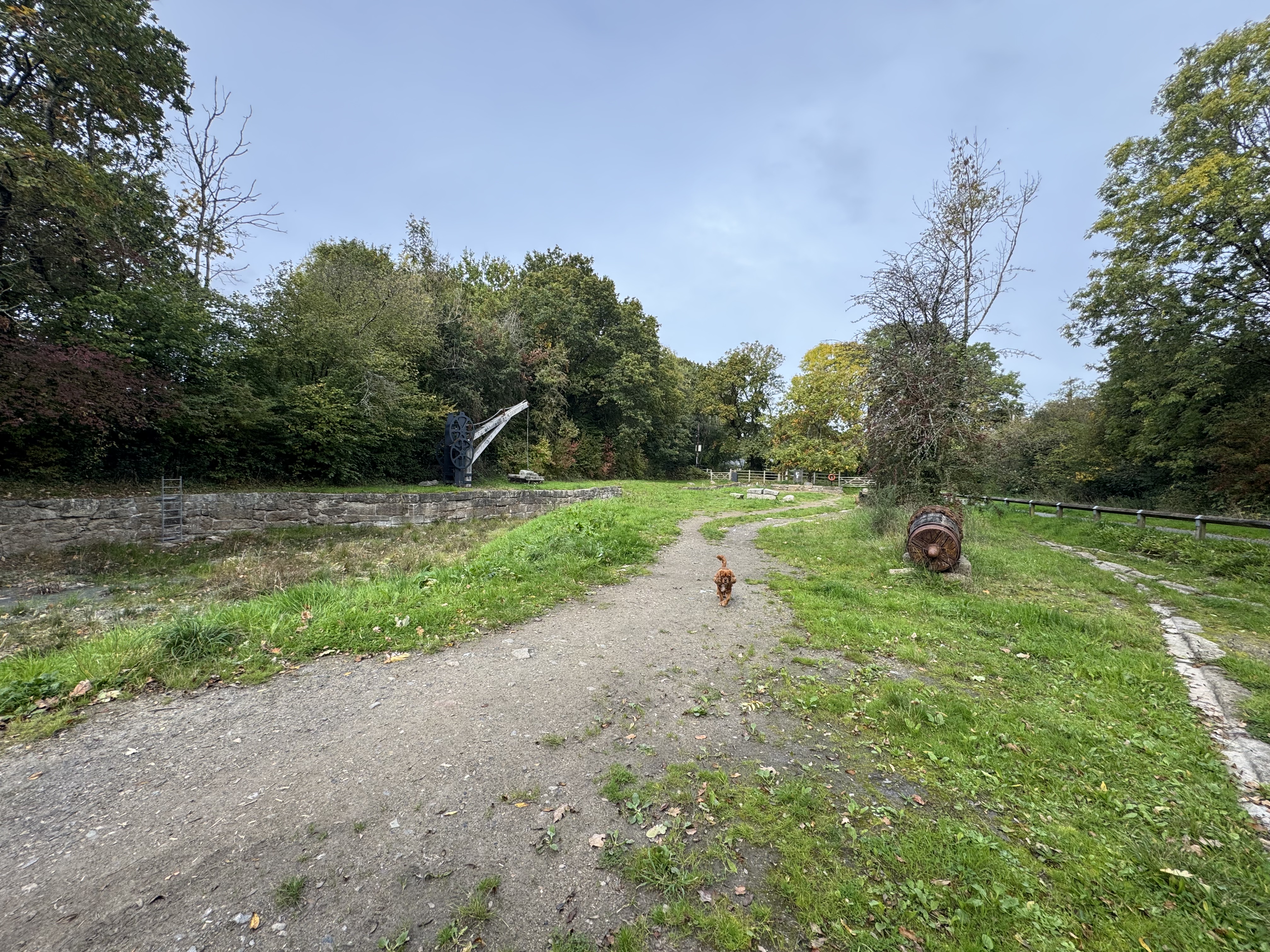
This photograph, taken at Stover, commemorates the wartime presence of the Canadian Forestry Corps—a specialised unit of the Canadian Army tasked with timber production during the First World War. The equipment and setting reflect the kind of work undertaken by these military lumberjacks, whose labour supported the Allied war effort far from the front lines.
The Canadian Forestry Corps (French: Corps forestier canadien) was established on 14 November 1916 in response to the enormous demand for timber on the Western Front. Duckboards, trench supports, crates, and aerodrome structures all required vast quantities of wood. Initially, the plan was to ship timber from Canada, but limited cargo space led to a new strategy: deploying Canadian troops to harvest timber directly in Britain and France.
Stover, with its woodland resources and canal access, became one of the sites where Canadian Forestry Corps units operated. Several regiments originally intended for combat were reassigned to forestry duties. Wearing cap badges featuring a beaver atop crossed axes and a maple leaf crowned at the centre, these troops earned the nickname “Sawdust Fusiliers.” Their work involved felling trees, sawing timber, and transporting materials—often under harsh conditions and with heavy machinery.
Altogether, some 35,000 Canadians served in the Forestry Corps during the First World War. While most operated behind the lines, some were called forward to assist with logistics, build infrastructure, or even fight when manpower was short. Portuguese also joined the endeavour. The Corps also attracted volunteers who saw forestry service as a way to contribute without facing direct combat. Nonetheless, the work was dangerous: accidents involving saws, transport, and heavy equipment claimed lives, even far from the battlefield.
The Canadian Forestry Corps was disbanded in 1920, reformed in 1940 for the Second World War, and disbanded again in 1945. Their legacy at sites like Stover reflects a unique chapter in military history—where forestry, engineering, and service converged in support of a global conflict. The image stands as a quiet testament to their labour and sacrifice amid the Devon woods.


