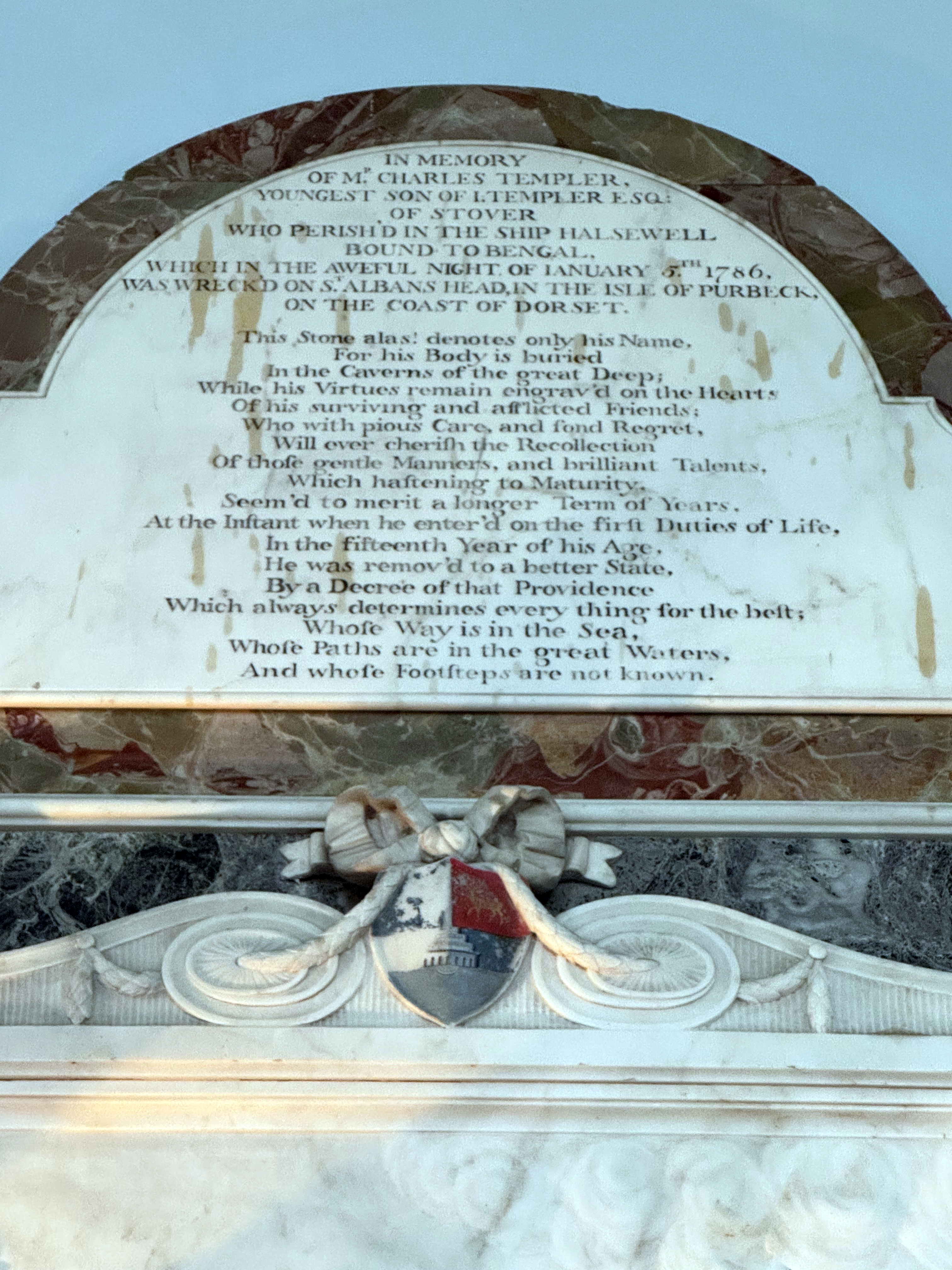
In the early days of January 1786, Charles Beckford Templer, aged fifteen, boarded the East Indiaman Halsewell for his first voyage to Bengal. The youngest son of James Templer of Stover Lodge in Devon, Charles had recently left Westminster School and was en route to begin a career with the East India Company. His uncle George Templer, a seasoned Company man who had returned from Calcutta the previous year, likely provided letters of introduction and encouragement. Charles’s inclusion among the five supernumeraries—young boys apprenticing for future service—reflected both family ambition and the Company’s appetite for grooming its next generation of administrators.
The Halsewell was a grand vessel of 777 tons, well regarded for its condition and crew. Under the command of Captain Richard Pierce, one of the Company’s most senior officers, it departed the Downs on 1 January 1786 for what Pierce intended to be his final voyage before retirement. On board were eight passengers, including Pierce’s own daughters and nieces, and a contingent of soldiers bound for East India garrisons. The ship made swift progress down the Channel, but worsening weather soon turned the voyage into a struggle for survival. By 4 January, the vessel had sprung a leak and was rolling dangerously. Masts were cut away to lighten the ship, and jury rigs were hastily assembled in hopes of reaching Portsmouth.
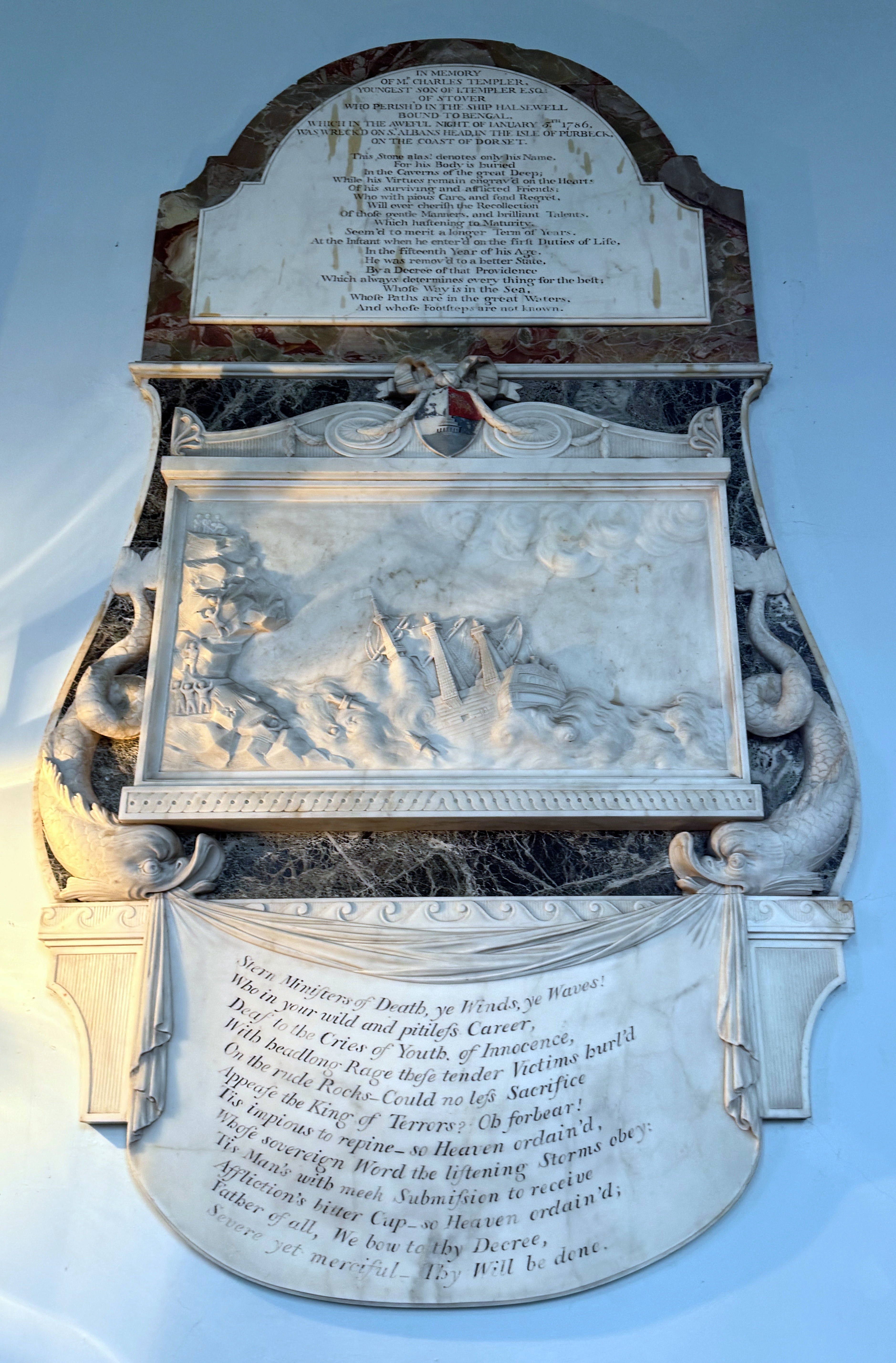
As the storm intensified, the Halsewell was driven toward the Dorset coast. At 2 a.m. on 6 January, she struck the rocks near Seacombe, below the cliffs of Winspit. The impact was catastrophic. Passengers in the cuddy were thrown violently against the deck above, and the ship began to break apart in the mouth of a cavern carved into the cliff face. Survivors scrambled onto the rocks and into the cave, but many were swept away by the sea or succumbed to cold and exhaustion. Quarrymen from a nearby site later hauled survivors to safety using ropes, but the death toll was immense—estimated at 386 lives lost.
Among the dead were Captain Pierce, his daughters Eliza and Mary Anne, his nieces Amy and Mary Paul, and young Charles Beckford Templer. The loss of so many young lives, particularly the seven young women, prompted public outcry and scrutiny of East India Company practices. Charles’s death was memorialised inside the Templer family church of St Peter and St Paul at Teigngrace, where a plaque records his age and the circumstances of the wreck. His story, though brief, is emblematic of the risks and expectations placed upon boys of his class and background—launched into imperial service before adulthood, with futures shaped by distant trade winds and family ambition.
The wreck of the Halsewell left a lasting cultural imprint. It was depicted by artists such as Thomas Stothard, whose painting captured the emotional gravity of the scene, and it inspired literary responses from contemporaries and later writers including Charles Dickens who wrote The Long Voyage. based on this tragedy. The East India Company estimated its financial loss at £50,000, but the human cost was incalculable. An hourglass from the wreck, its green glass intact, now resides in the Dorset County Museum—a quiet relic of a voyage that ended in tragedy. For Charles Templer, the journey to Bengal was never completed, but his name endures in stone, in print, and in the long memory of Devon’s maritime past.