

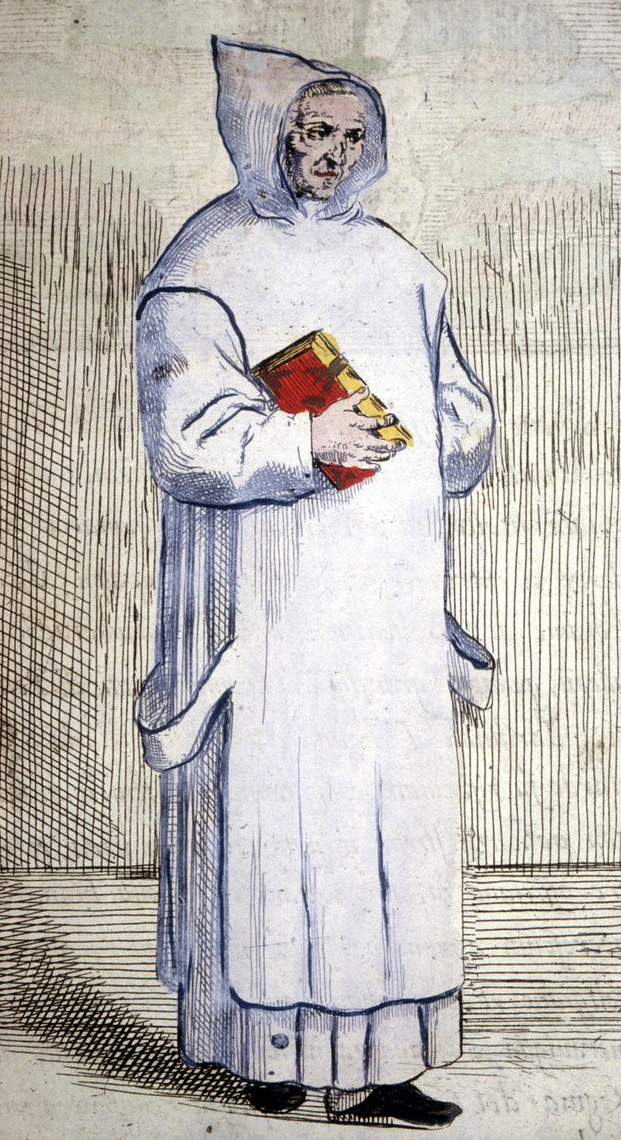
Charterhouse on the Mendip Hills is best known today for its mining remains, but in the twelfth century it was the site of the first Carthusian monastery in England. Founded by Henry II in 1178–79 as part of his penance for the murder of Thomas Becket, the house was established for a small community of monks following the strict Carthusian rule of silence, solitude and manual labour. The site was divided into two parts: an Upper House for the choir monks and a Lower House for the lay brothers. The present parish church at Witham Friary preserves the footprint of the lay brothers’ church.
The Carthusians lived in individual cells arranged around a cloister, each with its own garden. Their life was based on prayer, copying texts, and strict enclosure. They rarely met except for the night office and Sunday mass. The order was noted for its austerity, and the Charterhouse community maintained close links with the wider Carthusian network in France. St Hugh of Avalon, later Bishop of Lincoln, served as prior here before his elevation in 1186 and continued to return annually for retreat.
The monastery remained small and poor compared with other religious houses, but it held a respected place in the English church. Its lands on the Mendip plateau were limited, and the monks relied on rents and small-scale agriculture. The surrounding mining activity was not operated by the monks themselves, although the proximity of lead workings shaped the wider landscape.
The Carthusians became particularly vulnerable during the reign of Henry VIII. Their strict adherence to papal authority placed them in direct conflict with the king’s reformation policies. The London Charterhouse suffered the most severe reprisals: its prior, John Houghton, and several monks were executed in 1535 for refusing to accept the royal supremacy. Their deaths marked some of the earliest and most publicised monastic persecutions of the period.
Although the Mendip house at Witham did not experience the same level of violence, it was dissolved in 1539 along with the rest of the order’s English foundations. The monastic buildings were dismantled, and the site passed into private hands. Later farmsteads incorporated masonry from the original structures, and only earthworks and fragments of walling now indicate the position of the medieval cloister and cells.
Today the area around Charterhouse retains traces of both its monastic and industrial past. While the mining remains dominate the visible landscape, the Carthusian foundation represents an earlier and significant phase in the history of the Mendip Hills, marking the arrival of one of Europe’s most austere religious orders in England and their eventual suppression during the upheavals of the sixteenth century.

