|
|
|
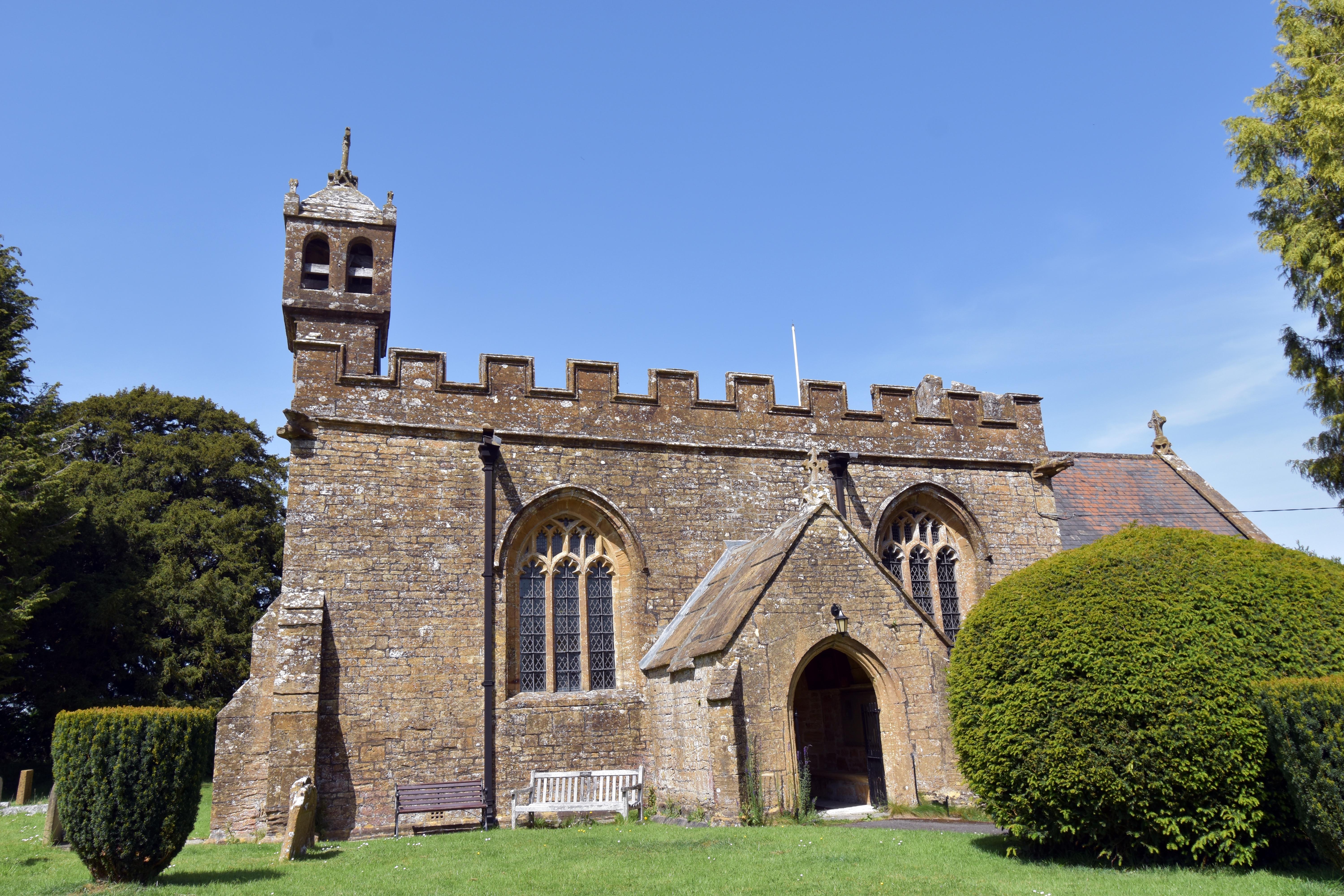
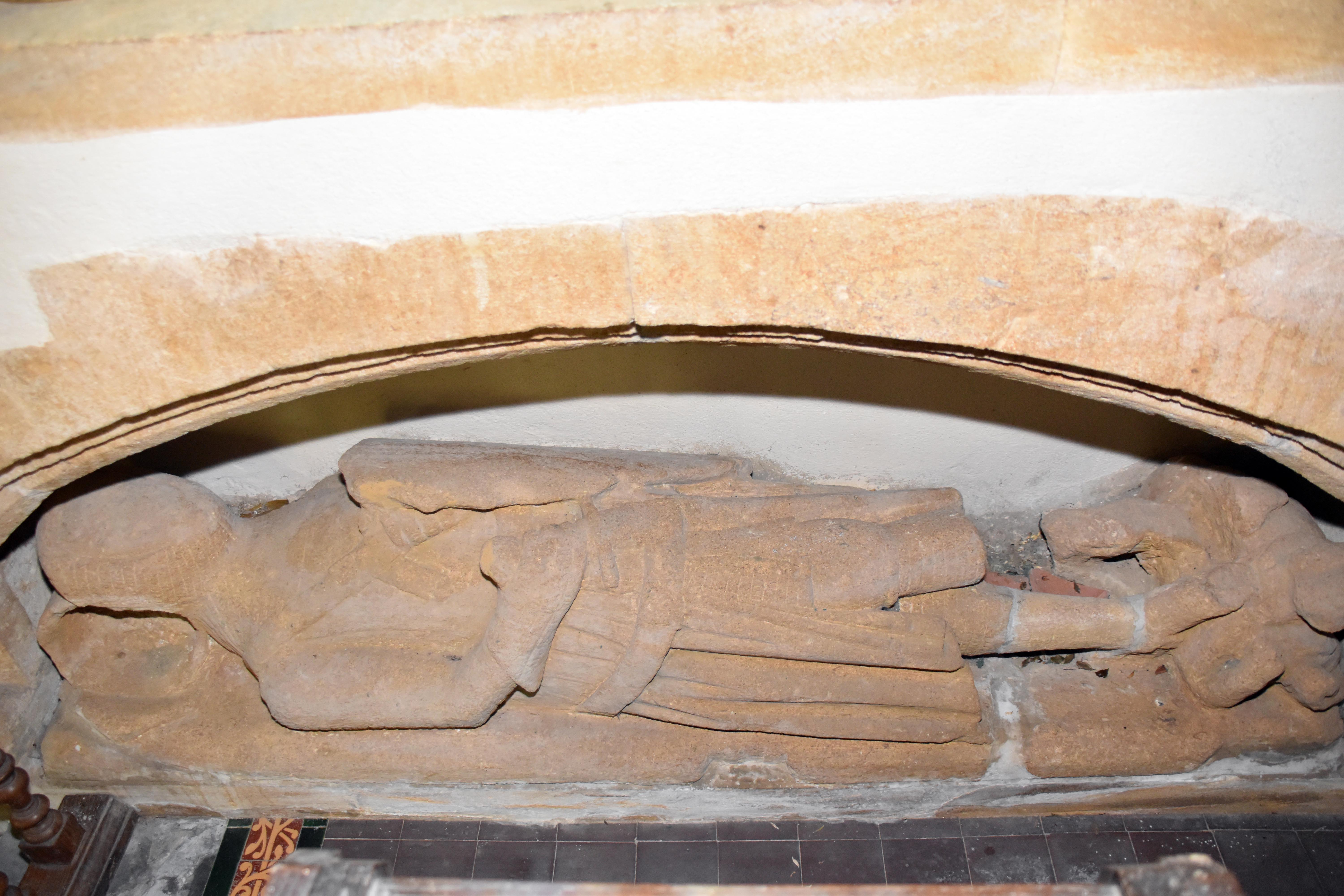
On Friday Rupert and I were roaming wide and stopped off in the delightful village of Chilthorne Domer in Somerset to break up a return journey from Bristol. In particular we wanted to see St. Mary's church which has a fascinating connection to Devon's ecclesiastical history. The unusual name is another one of those hybrid names in this case it combines a Celtic name for high hill (Cilterne) with the name of a Norman knight of the manor. These dual names allowed the existing population to still continue to use their existing place names but the Norman aspect also assigned ownership and reinforced the idea that there were no leaders and rulers in the area. Interestingly in the case of Chilthorne Manor, one of the Domer family lies in effigy in the church itself next to the altar in the chancel reminding the local population who their betters were long after he had died. Now though these recumbent figures remind us of a turbulent past that has long since passed and now become a part of the decoration of our churches with more awe than fear at the armoured knights in their full battle regalia.

|
|
|
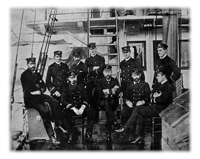
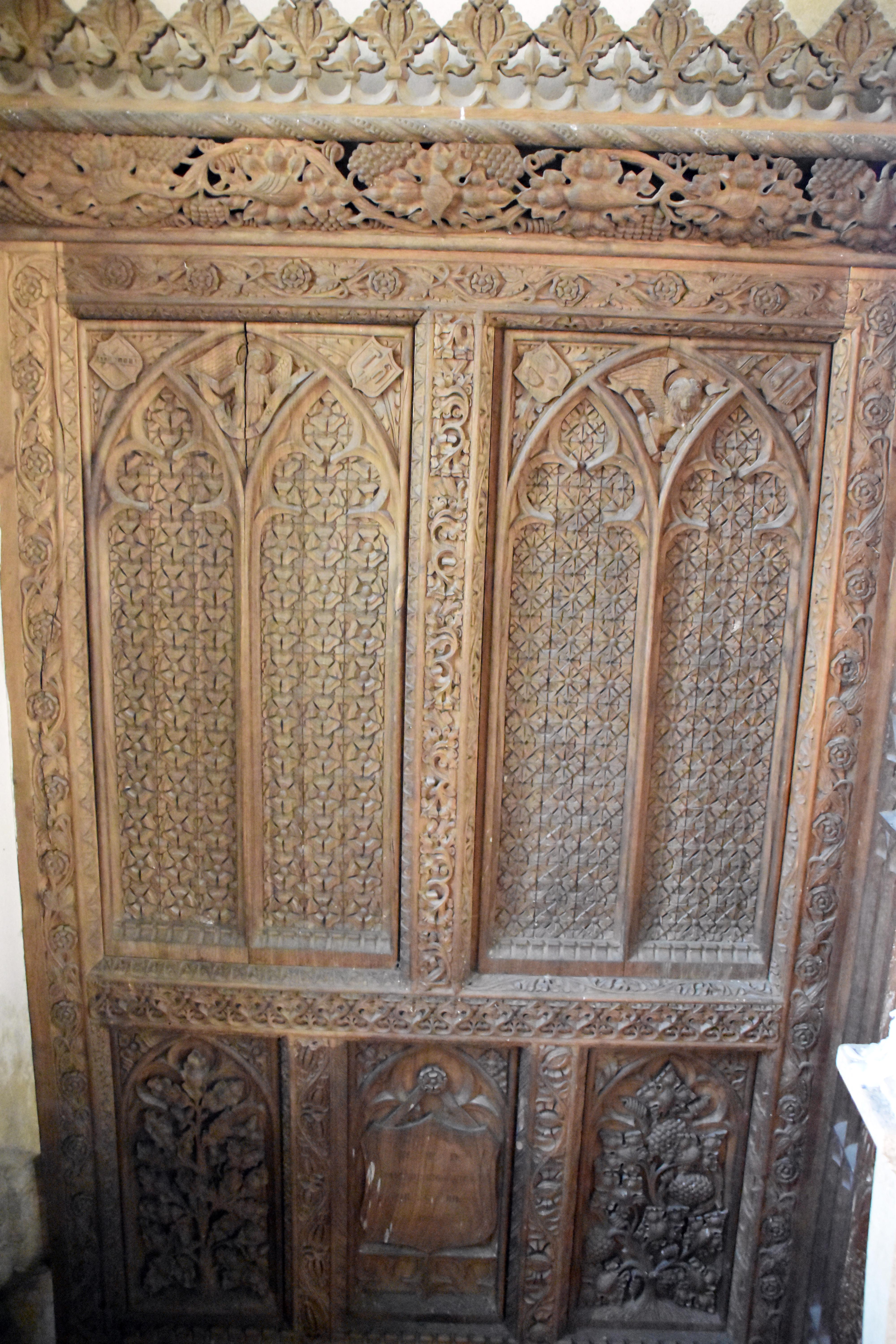
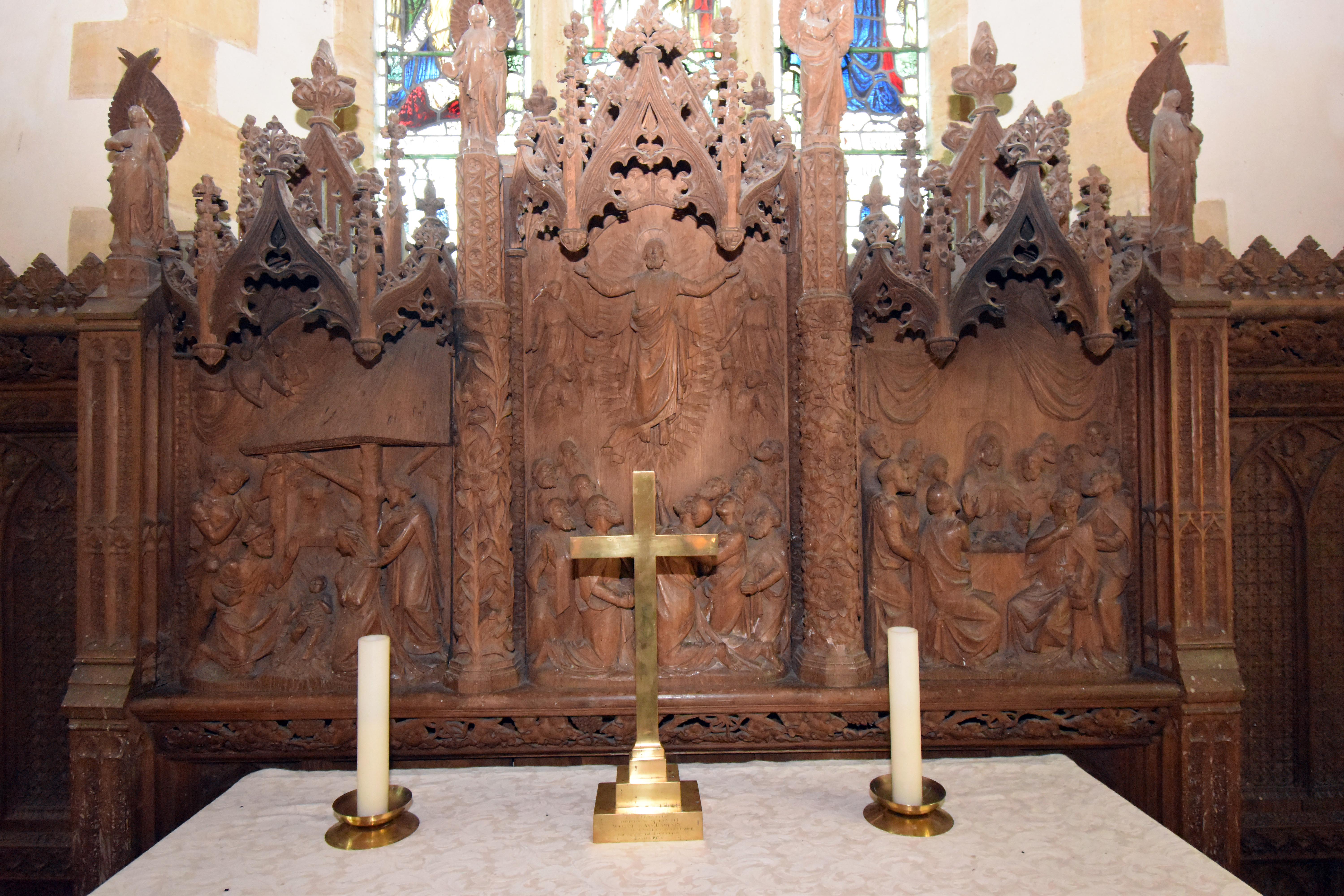
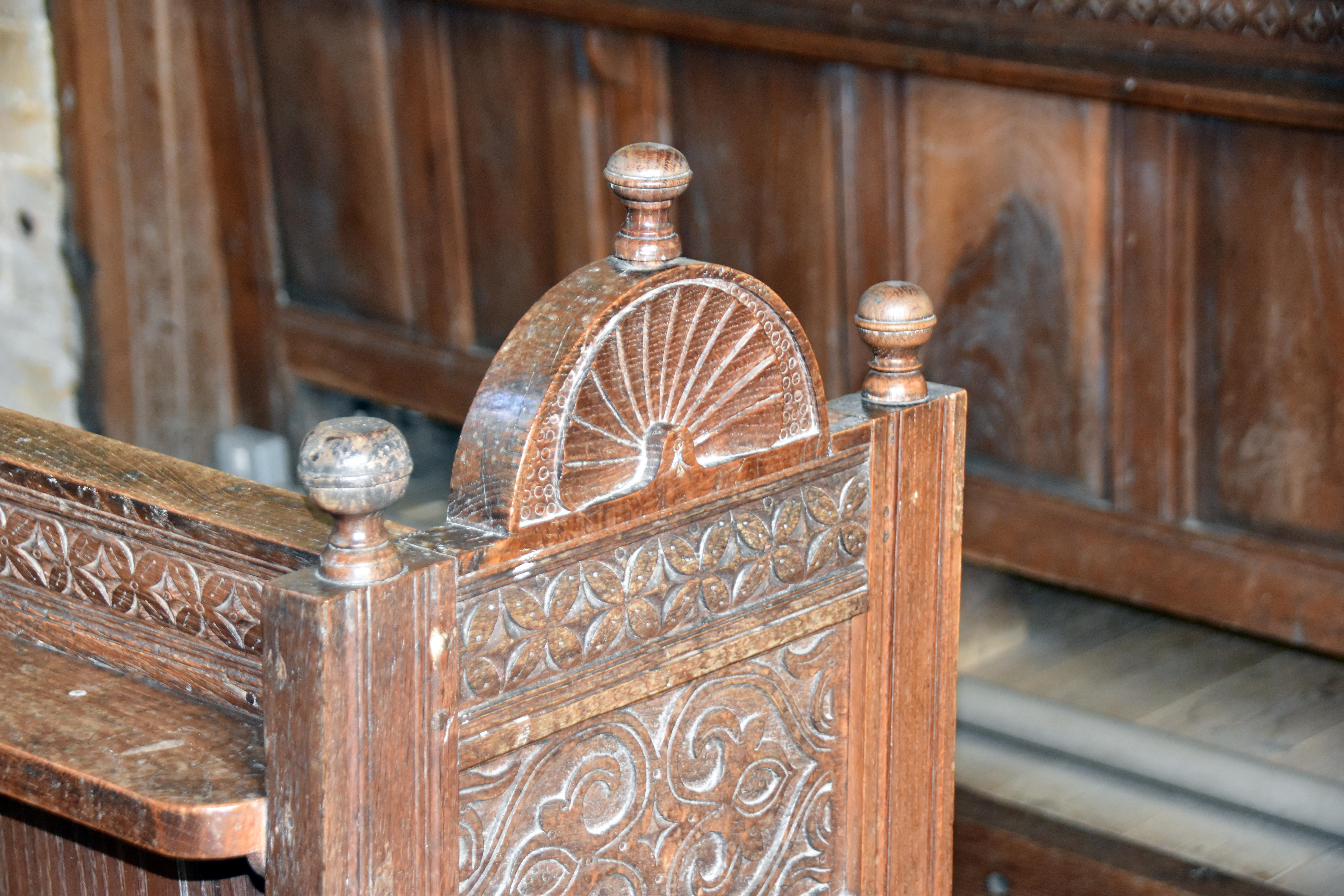
The other reason we stopped off at this beautiful church was to see the very first commission of the famous Pinwill Sisters from Ermington in Devon where their father was a vicar. These are the same Pinwills who carved the magnificent rood screen in Lewtrenchard that we mentioned last week. These sisters really challenge our preconceptions of what Victorian women could achieve and from such a young age too. Reverend Edmund Pinwill had seven daughters but no sons. In the 1880s their church in Ermington was being renovated and 3 of the older daughters, Mary, Ethel and Violet were captivated by the process and begged their parents to let them learn the skills from the artisans and architects working in their father’s church. To say they were fast learners is something of an understatement. This Chilthorne Domer reredo is phenomenal in quality and especially so when you consider that Mary was only 18, Ethel 17 and Violet (who would go on to be the most famous of them all) was only 15. The photograph of them demonstrating their work in Plymouth before the panels were taken to this church in Somerset reveals their youth all too clearly. It should be said that they were still receiving training and guidance but still, the quality and intricacy for teenage girls is phenomenal. The Pinwills would soon join the pantheon of great church ecclesiastical artisans and especially in those specialising in the more ornate Anglo-Catholic style and Violet would continue her work until as late as 1957. Their work can be seen in over 180 churches throughout the Westcountry, but the very first one was here in Chilthorne Domer!
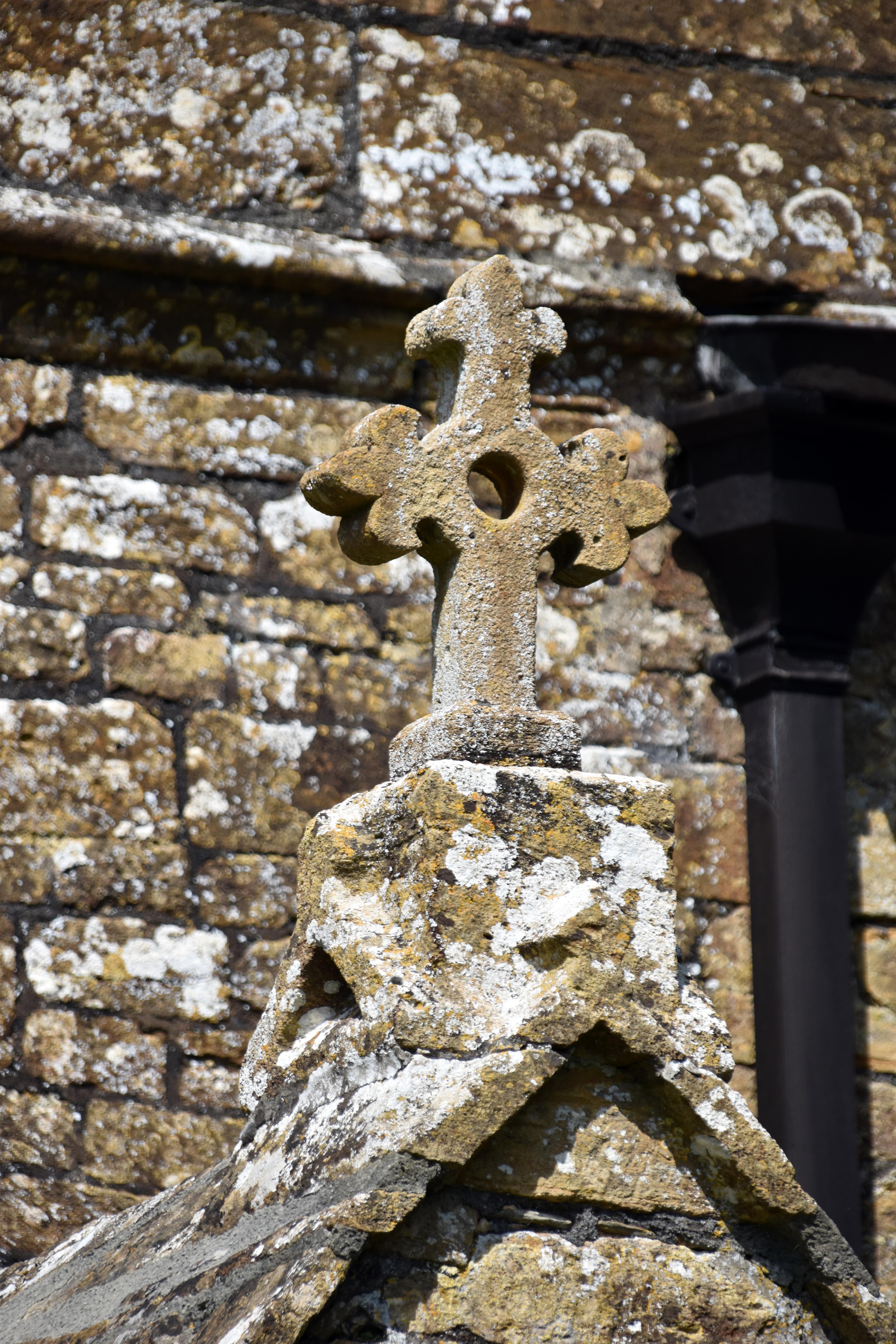
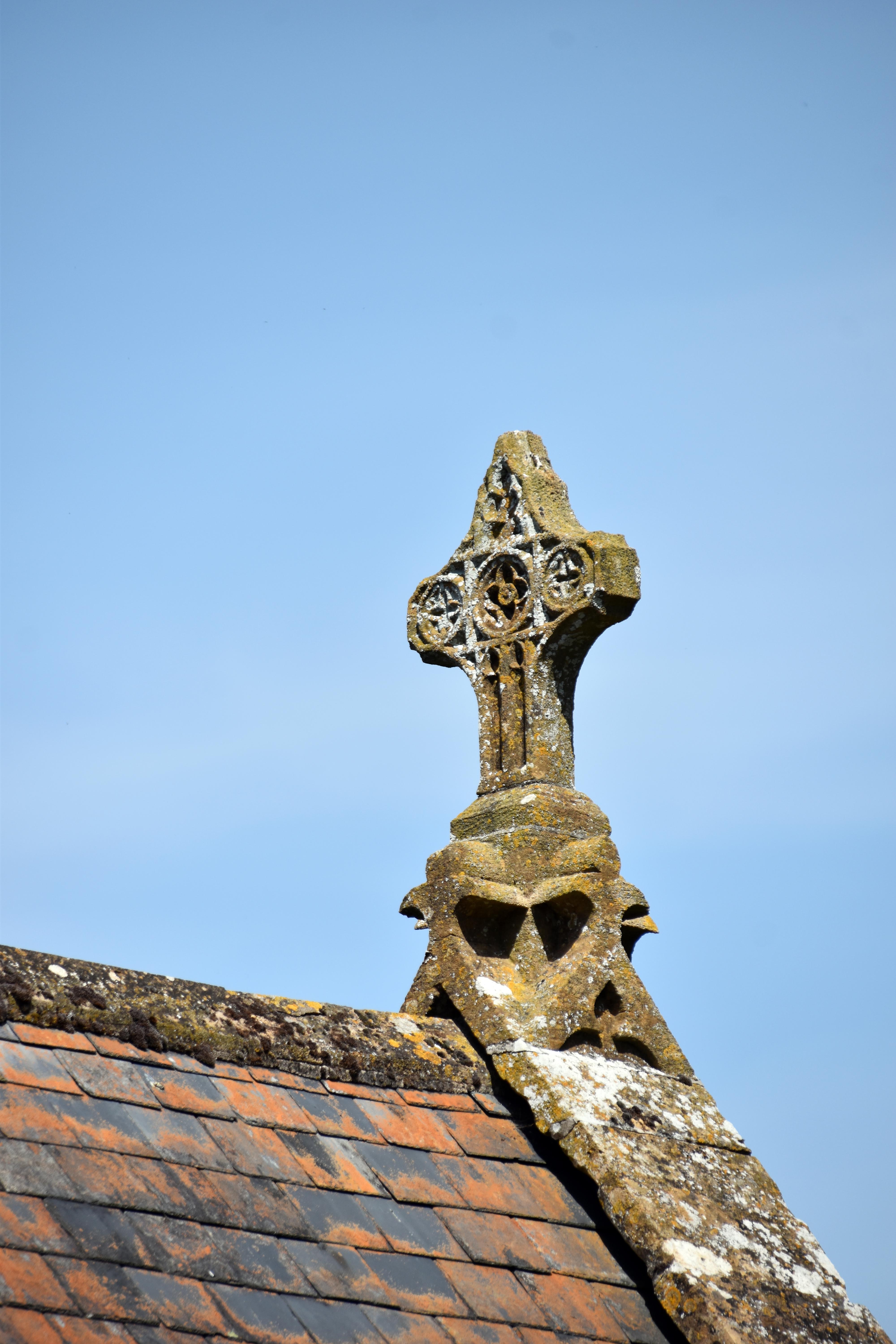
The church is constructed out of the local Hamstone which looks so vibrant in the sun. It does tend to weather a little faster than other building materials so our Domer knight looks far older than many contemporary knights carved out of more durable materials, but still, it has an elegance all of its own and probably much easier for the stonemasons to work with.
The Domer effigy shows a knight if all chain mail with gauntlets and a flowing surcoat. A helmet provides his pillow whilst his right hand grasps his sword handle. For a long time it was assumed that the effigy was a 14th Century effigy of Sir William Domer but now the consensus is that it is probably older than that, potentially a 13th ancestor of his. The decaying Hamstone has not helped the dating process.
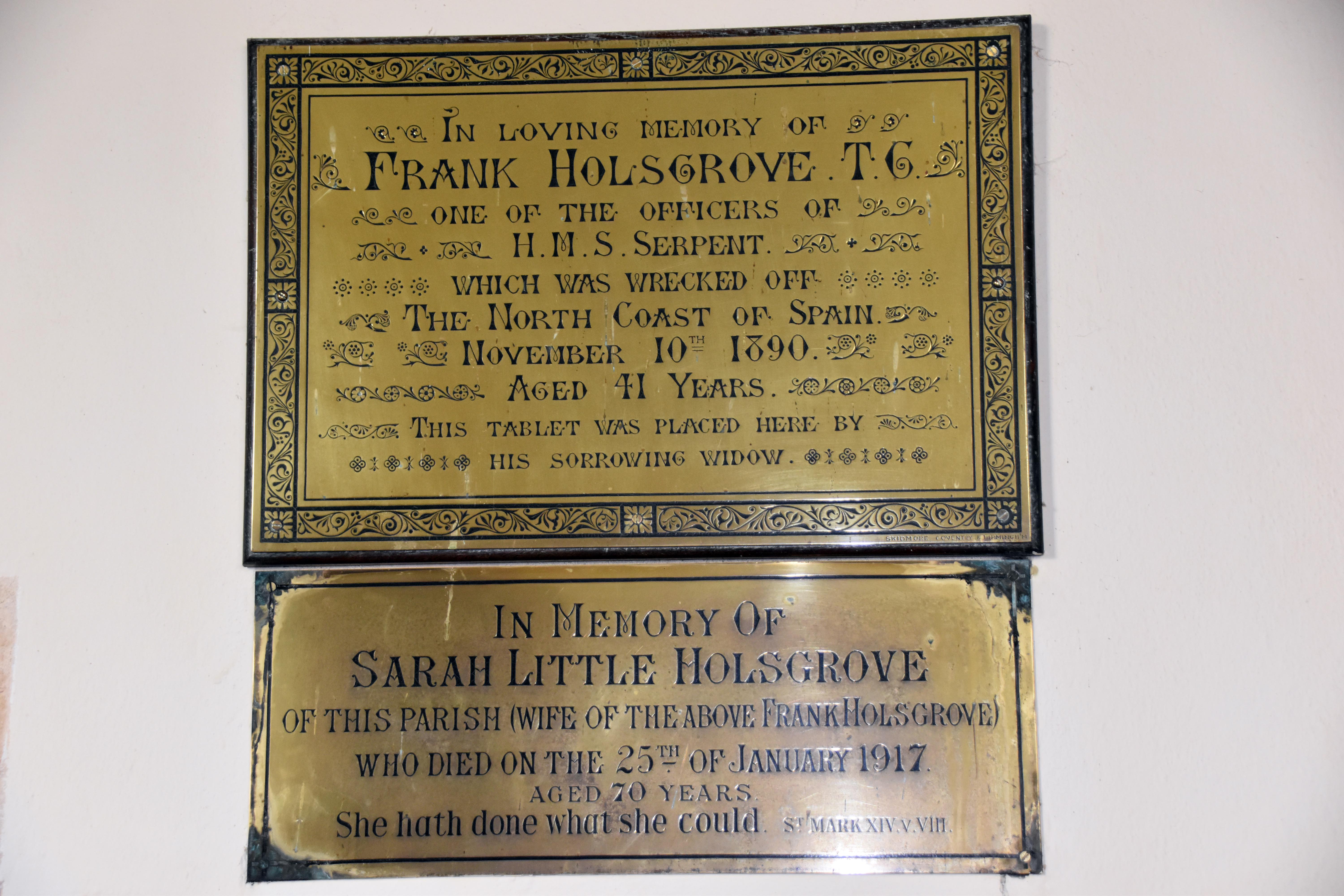
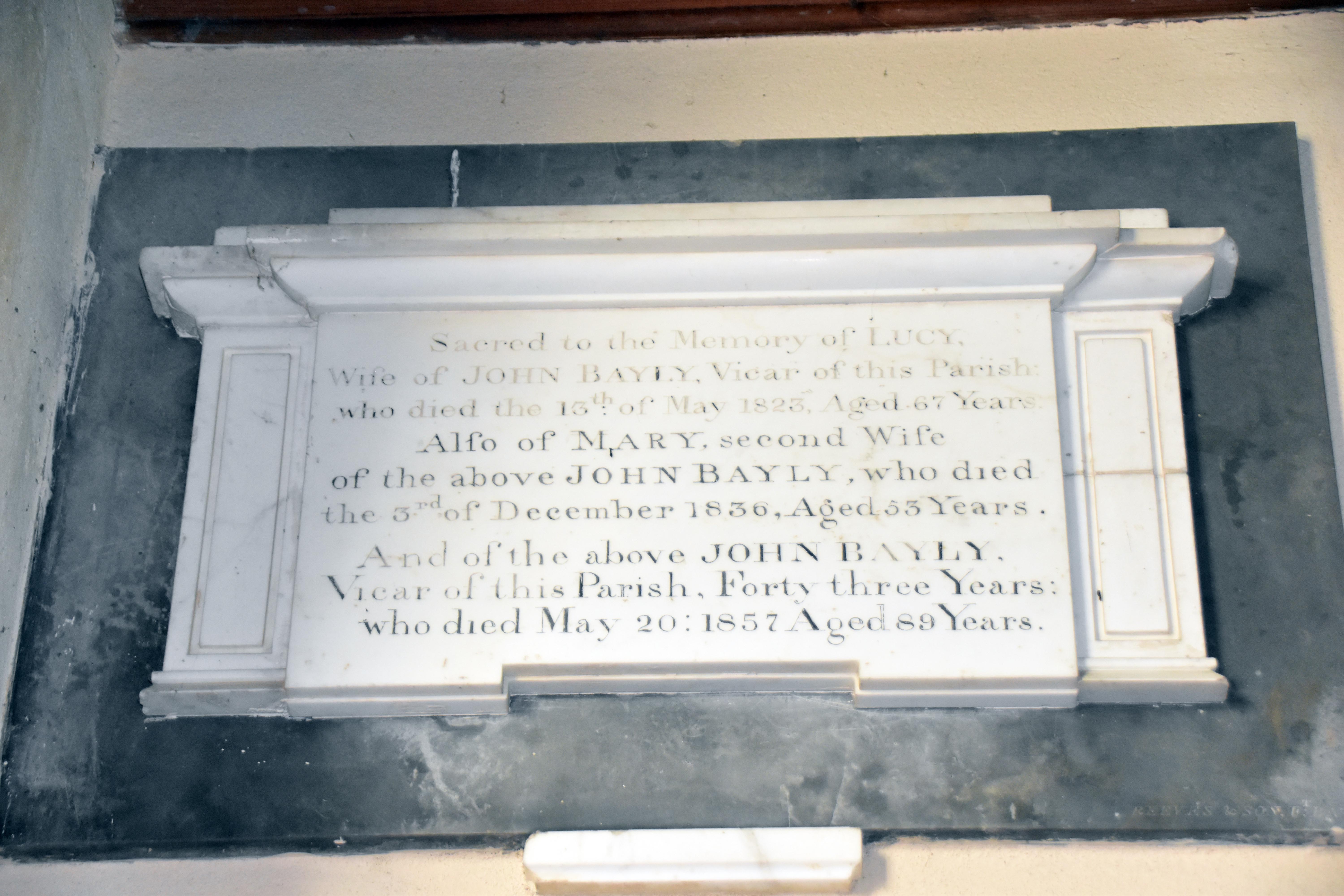
As always there are some remarkable memorials in the church. One was to Frank Holsgrove it explains was one of the officers of HMS Serpent which was wrecked off the north coast of Spain in 1890. She was effectively a brand new ship having been constructed in Devonport dockyards in 1888. She was en route to the Africa Station when she was caught in an enormous storm in the Bay of Biscay and ran aground off the Galician coast possibly due to navigational error in the diabolical conditions. Only 3 of the 179 crew survived the ordeal. Sadly Frank Holsgrove was not one of those three.
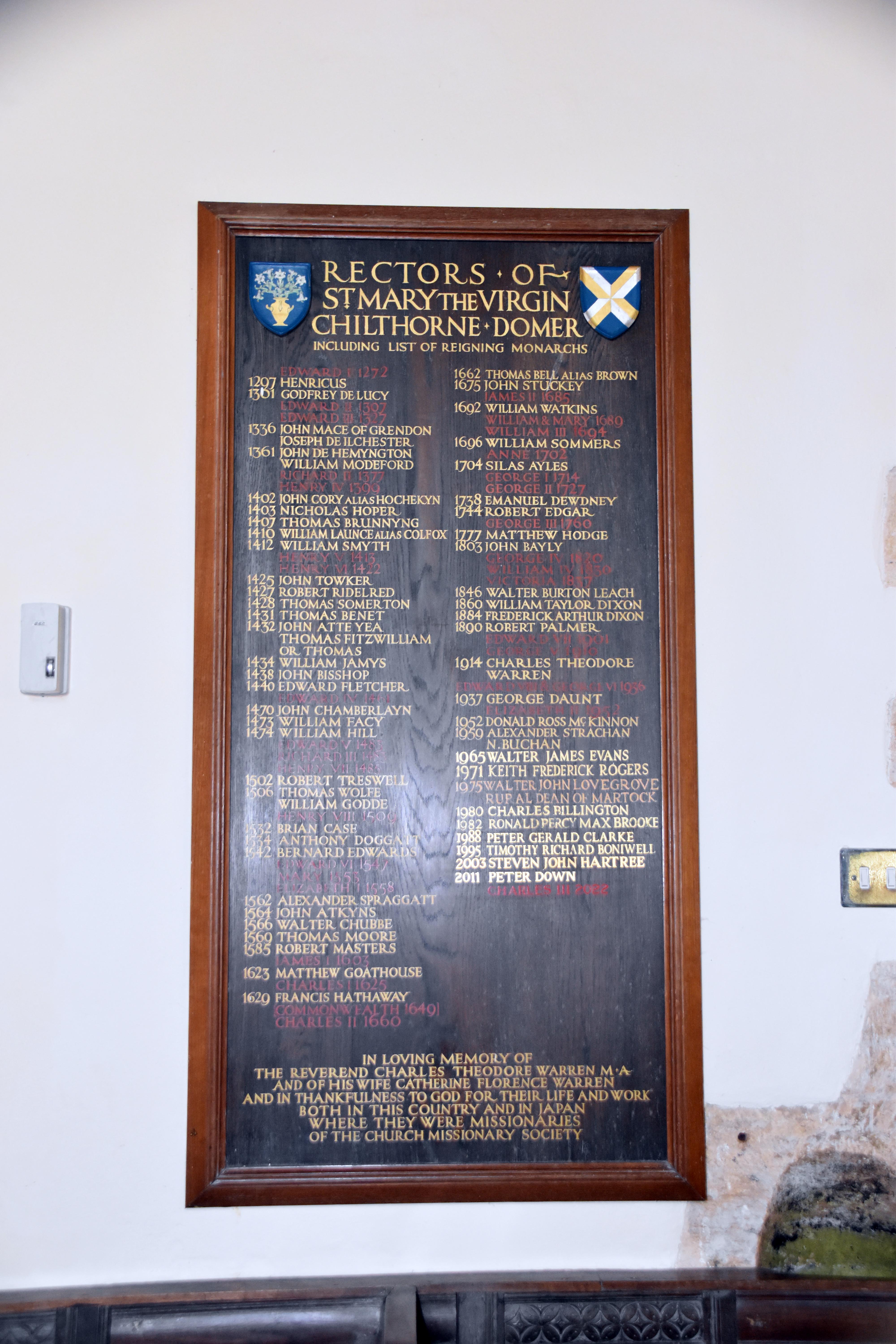
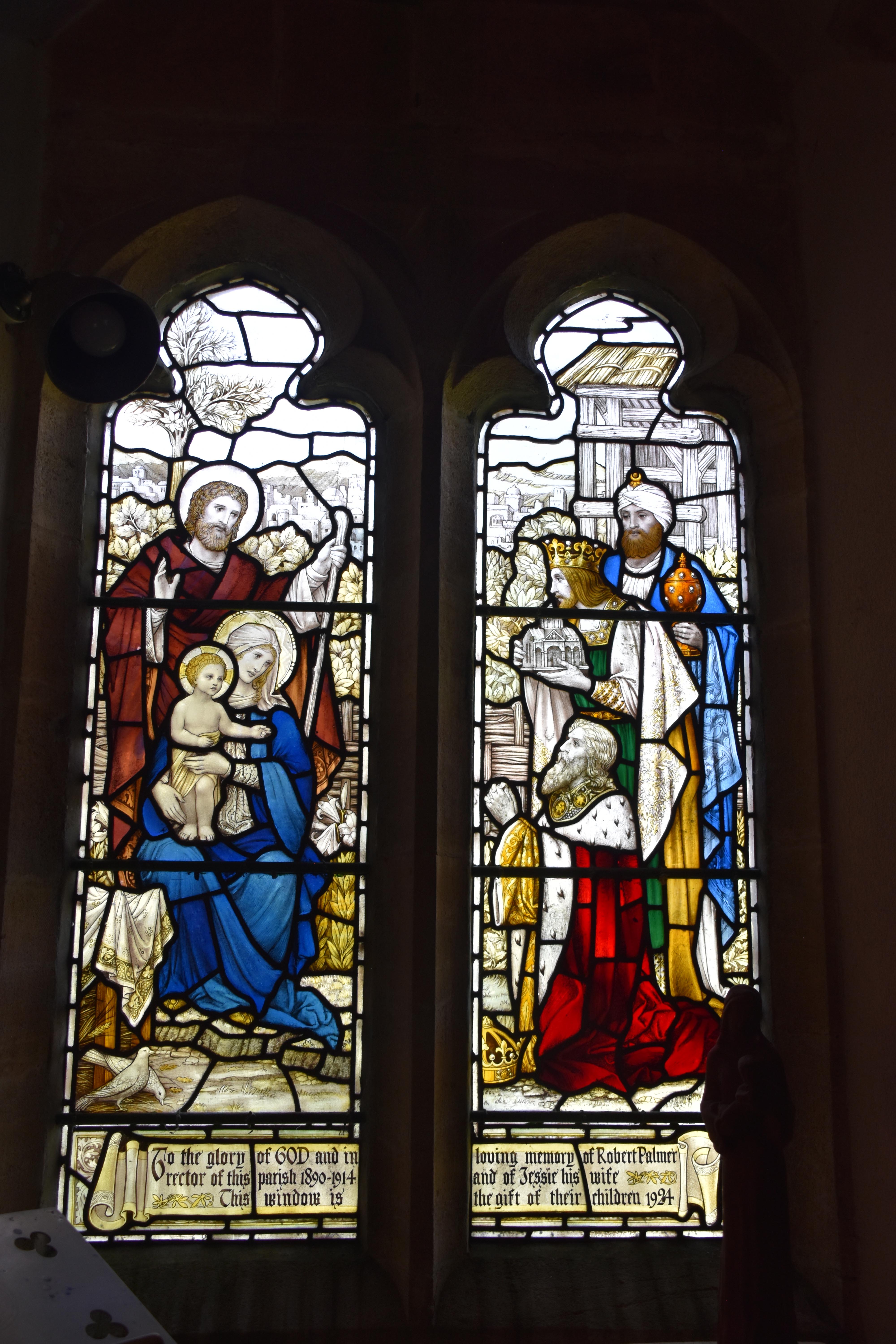
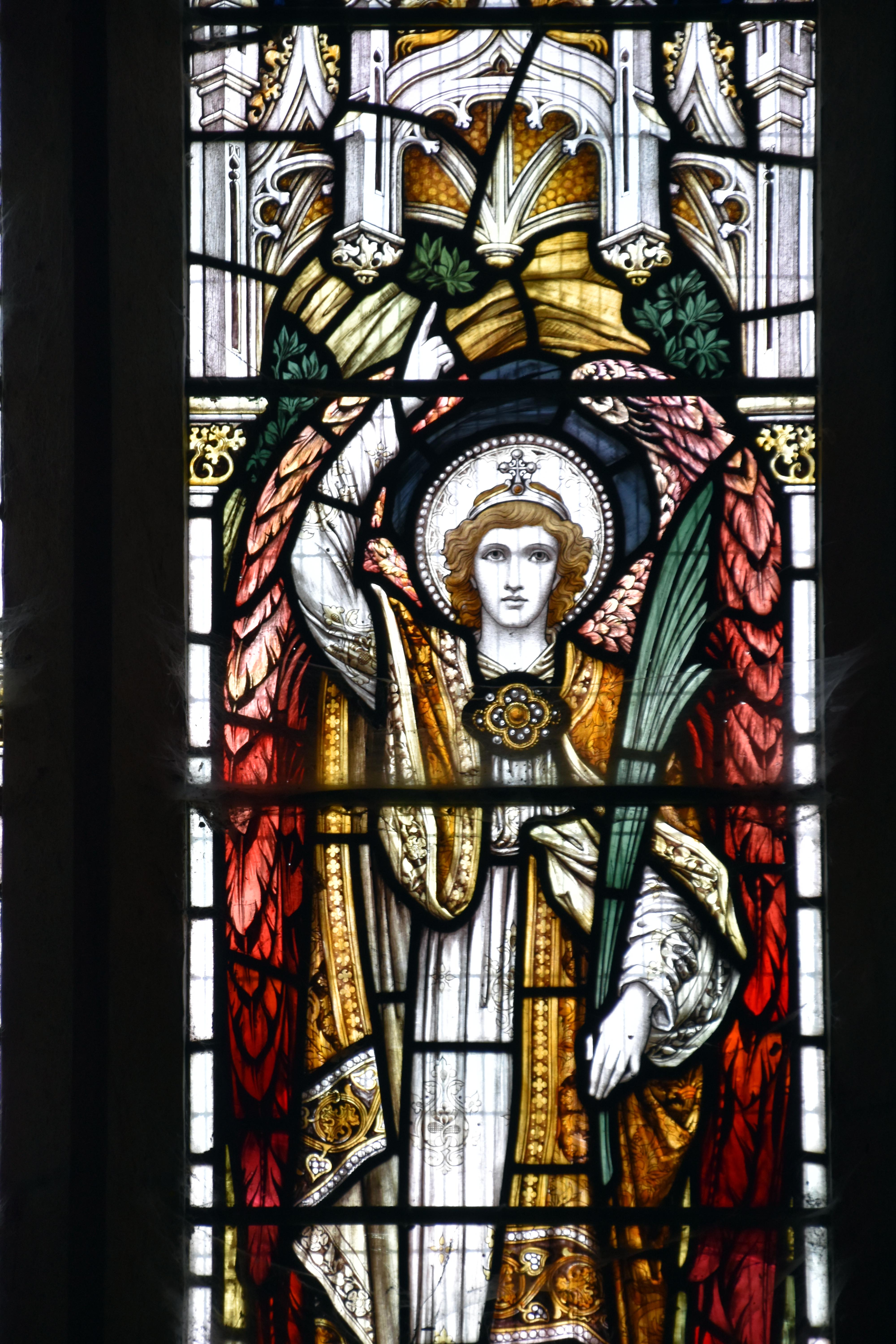
Another memorial remembers Reverend Robert Palmer who not only had been vicar of Chilthorne Domer for 24 years but had previously been a missionary in China in the 1870s for the Church Missionary Society in Ningpo and Shaoxing in the Northern Zhejiang province. Ningpo had been one of the Treaty ports ceded to Britain after the first Opium War and consequently was a major target during the Taiping rebellions of the 1850s and 1860s which are commonly regarded as the most vicious and costly wars in history. The Taiping rebels killed nearly all the foreigners in the territory during their brief period of control. Going to Zhejiang in the aftermath of this brutal war would have been an extremely brave endeavour indeed. There is also a beautiful stained glass window dedicated to him too.
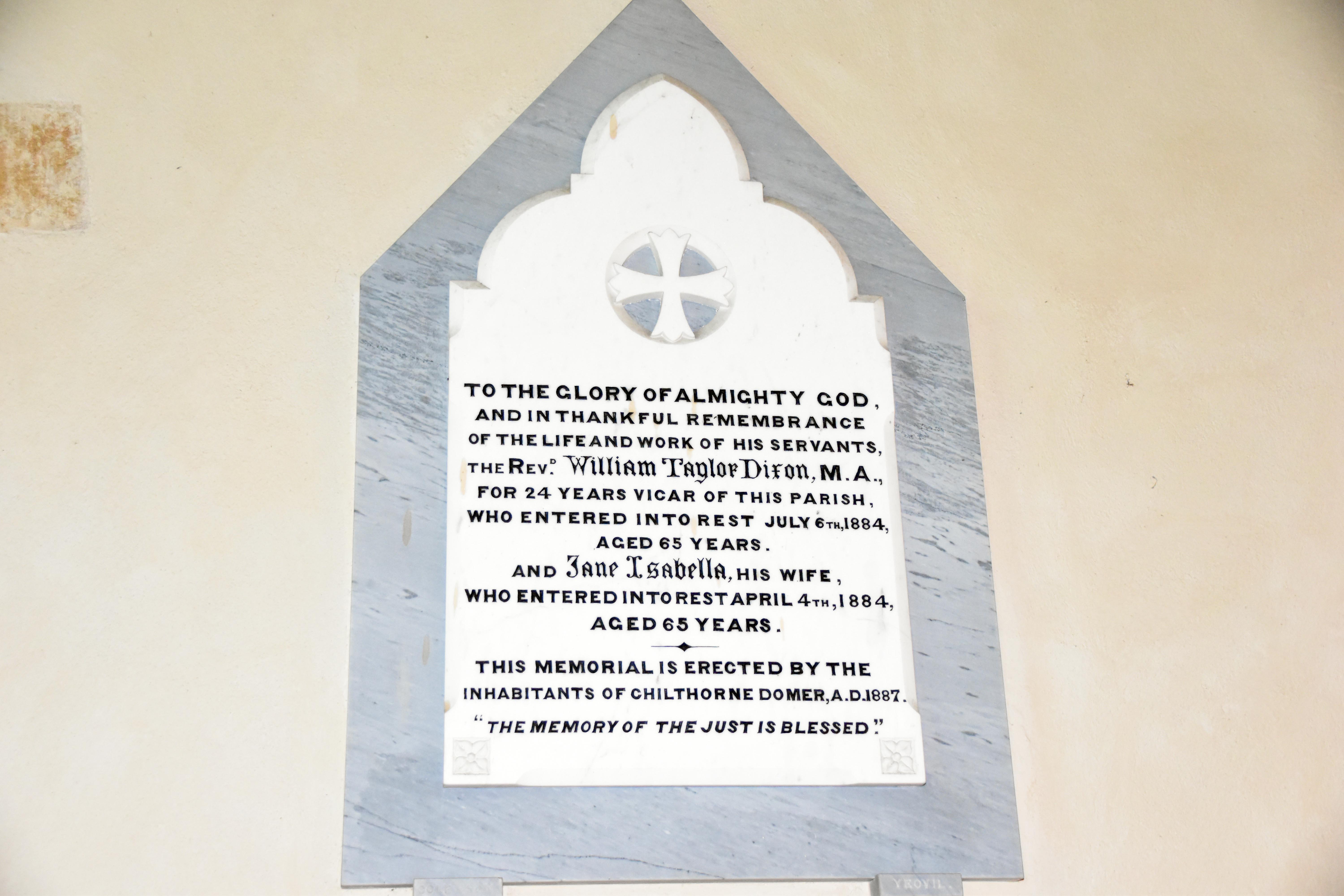
We also can see the memorial to the Reverend William Taylor Dixon and his wife Jane who both died within weeks of each other in 1884. It was this death that prompted their children to renovate the church and commission the Pinwill sisters in their parents honour. There is also a beautiful stained glass window dedicated to them too.
Then there is the sad First World War memorial to Theodore Stewart Wolton Warren 2nd Lieutenant of the 17th Durham Light Infantry and the son of the Reverend Charles Theodore Warren vicar of the church at the time. Lieutenant Warren was killed on the Somme on July 17th aged 20 years near Pozieres. Fascinatingly, he is also commemorated on a war memorial in Japan in the foreigners’ cemetery in Motomachi in Yokohama. I believe this may be related to the fact that the Durham Lights Infantry served alongside the Japanese army funnily enough evicting the Germans from one of their Treaty Ports in China at Tsingtao. We often think of British and Japanese soldiers fighting against one another in the second world war but forget that they were very firm allies in the First World War.
|
|
|
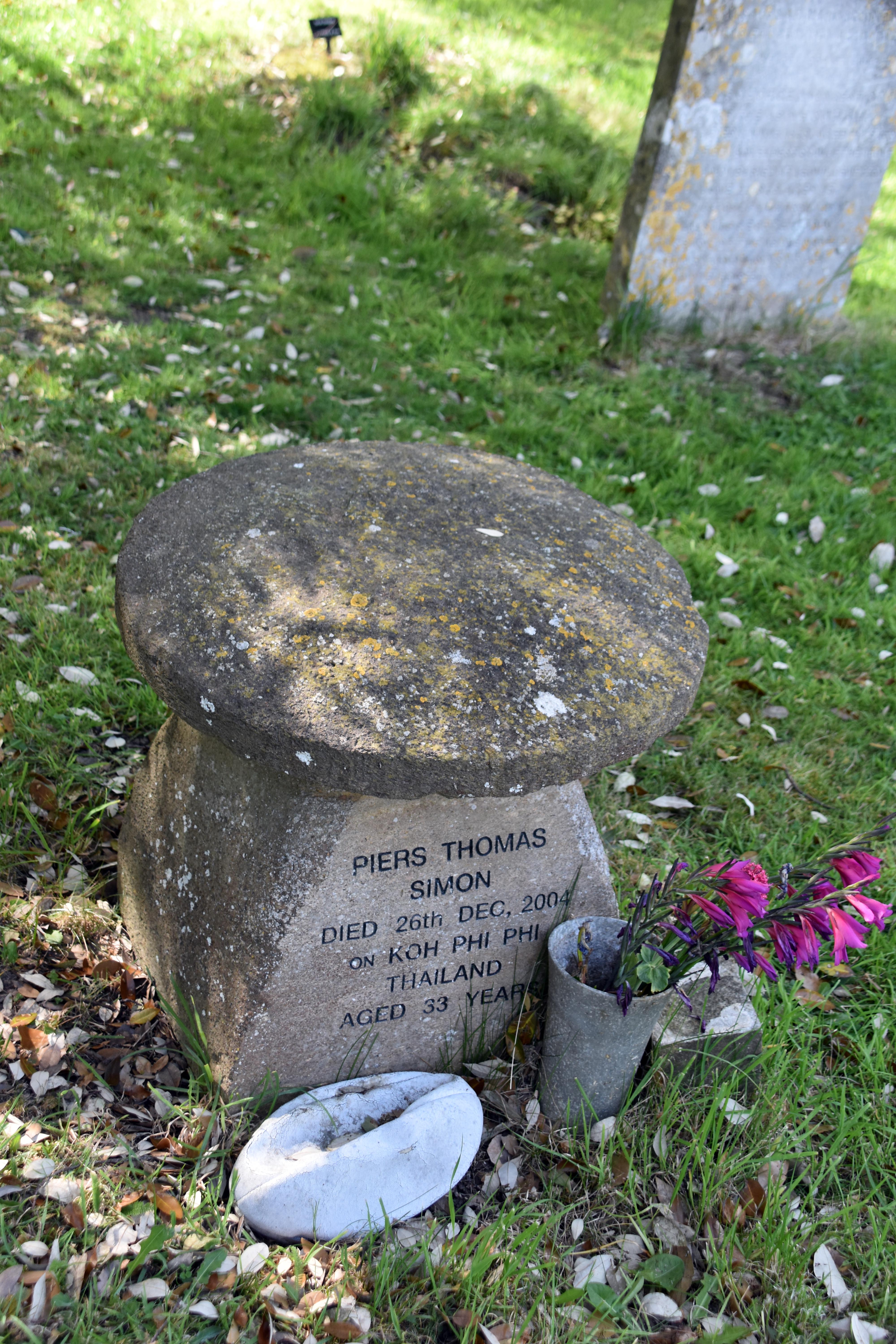
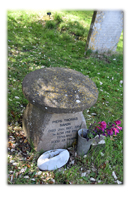
There are two interesting graves outside which again have international connotations. The first is actually a recent one from Boxing Day 2004. You might remember that date as the day when the Tsunami killed thousands of people across the Pacific rim. One of those was Piers Thomas Simon who was killed whilst on holiday at Koh Phi Phi in Thailand aged 33 years. He was celebrating Christmas with his brother and girlfriend waiting for a boat on the beach when the tsunami came smashing in. In the chaos and debris Piers saved the girlfriend’s life who freed her from being pinned by rubble but did so at the cost of his own life. But out of this tragedy the surviving brother and Piers’ parents set up a School in a Bag charity to help those affected by the disaster initially by providing everything that a child might need to restart their education. The charity is still ongoing and has distributed over 150,000 rucksacks of school supplies since - all in characteristic red rucksacks in remembrance of the red t-shirt Piers was wearing when he was washed away.
|
|
|
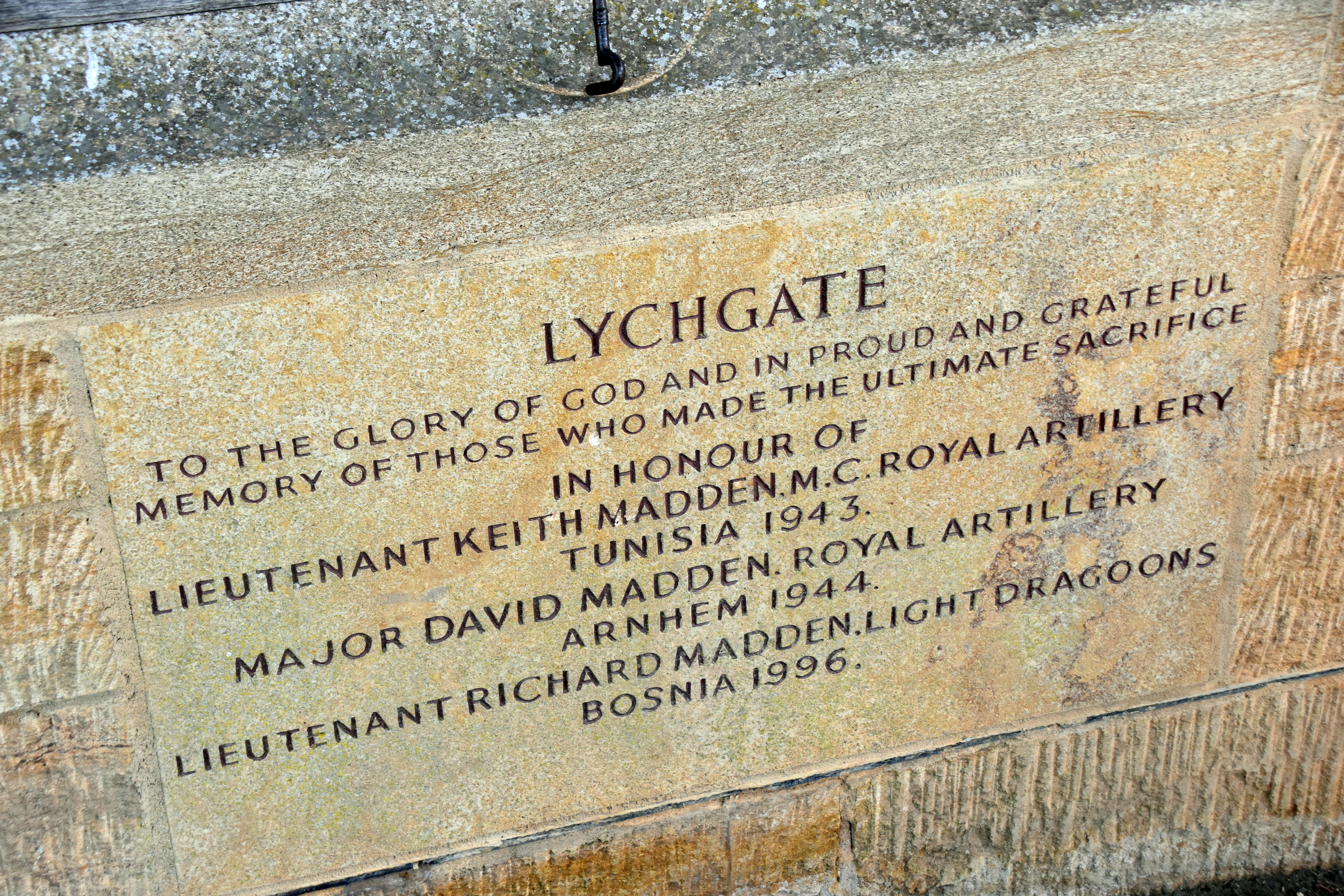
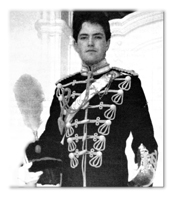
The other grave is also surpassingly contemporary. It is that of Richard Wyndham Madden of the Light Dragoons. The grave looks like a Commonwealth War Grave Commission Grave but is subtly different. This is an MOD grave for a Light Dragoon Lieutenant who was killed in Bosnia in 1996. He had only been with the peace keeping force for a fortnight when his Spartan armoured troop carrier ran over a landmine killing him and two others. The fact that the Madden family have sacrificed so much for this country was also revealed in the Lych gate where his name joins two other Maddens from an earlier generation. Lieutenant Keith Madden who was decorated with the Military Cross was killed in Tunisia in 1943 with the Royal Artillery. And Major David Madden was killed in Arnhem in 1944 also with the Royal Artillery. The latter had done parachute training and landed with the 1st Airborne Division to provide local fire support. He is buried at Oosterbeek.
We did explore the village of Chilthorne Domer after but we had spent far too long in the church to do it justice. But I love the fact that you can find so many interesting stories in pretty much every church in the land, although always with an incredible diversity of fascinating backstories and connections. The real reason was to see the Pinwill’s first commission and when you realise their youth and inexperience you are in awe at what they are capable of producing. But once you are inside these time capsules of our history there is so much more to see too.
|