Frank Holsgrove served as an Ordinary Seaman in the Royal Navy and was among the 173 men lost when HMS Serpent was wrecked off the coast of Galicia on 10 November 1890. He belonged to the younger group of short‑service ratings typical of the late Victorian Navy, drawn from coastal communities and trained for general duties aboard small cruisers and gunboats.
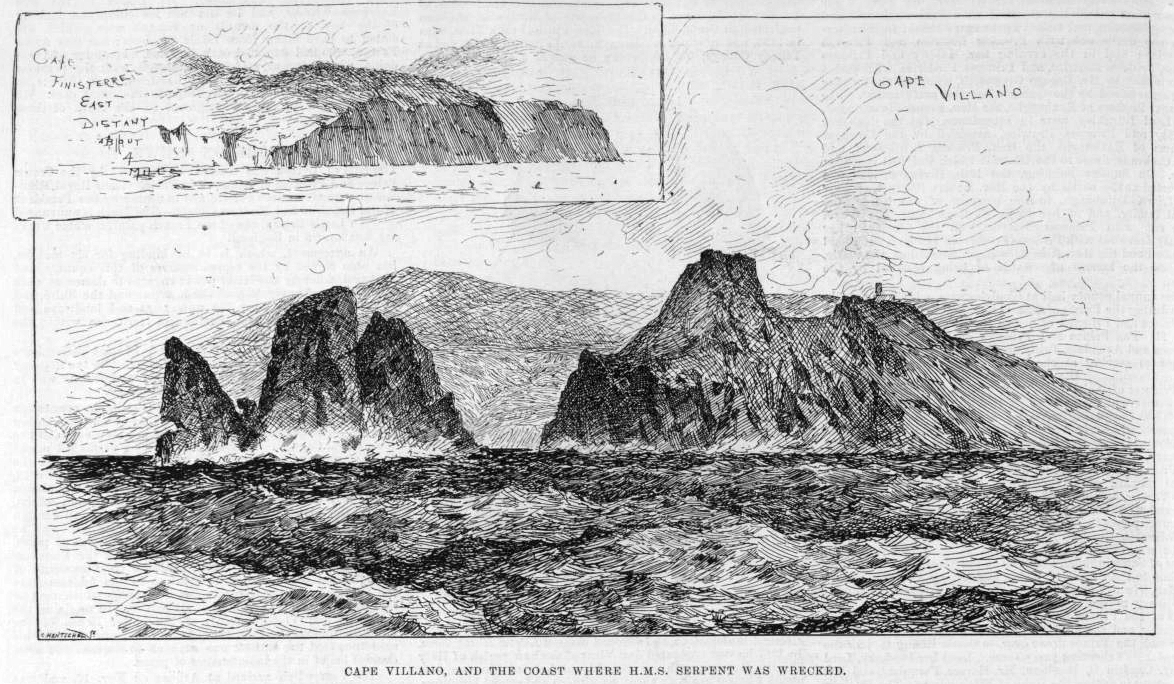
HMS Serpent was an Archer‑class torpedo gunboat launched in 1887. The class was intended for patrol and anti‑torpedo‑boat work, with limited endurance and modest armament. Serpent was on passage from Devonport to Sierra Leone when she encountered deteriorating weather off the Spanish coast. Navigational error brought the ship inside the line of coastal hazards near Punta Buey, and she struck the rocks at night. The hull opened rapidly and the ship capsized within minutes, leaving almost no time to launch boats or organise escape.
Only three men survived. They reached the shore by swimming and climbing the cliffs in darkness. Their accounts indicated that the ship had been maintaining a course believed to be safe but was in fact too close inshore. Spanish reports noted that the area was well known locally for its dangers, but poor visibility, heavy seas and inaccurate dead‑reckoning left the ship vulnerable. The Admiralty inquiry concluded that the loss resulted from navigational misjudgement compounded by the weather, rather than structural failure or mechanical defect.
Holsgrove’s body was recovered and buried at Camariñas, where the local authorities created a cemetery for the dead of the Serpent. The site became known as the English Cemetery and was maintained by the community, with periodic visits from Royal Navy ships. The graves and memorial cross remain a record of one of the most significant peacetime losses of the Victorian Navy.
The loss of Serpent highlighted the limitations of coastal navigation in poor conditions, even with modern steel ships and improved charts. It reinforced Admiralty concerns about training, watchkeeping and the need for more reliable position‑fixing methods. For the families of the crew, including Holsgrove’s, the event was a sudden and complete loss with little information available until official lists were published. His name appears on naval memorials to those lost at sea and remains associated with the wider history of late nineteenth‑century naval operations.