

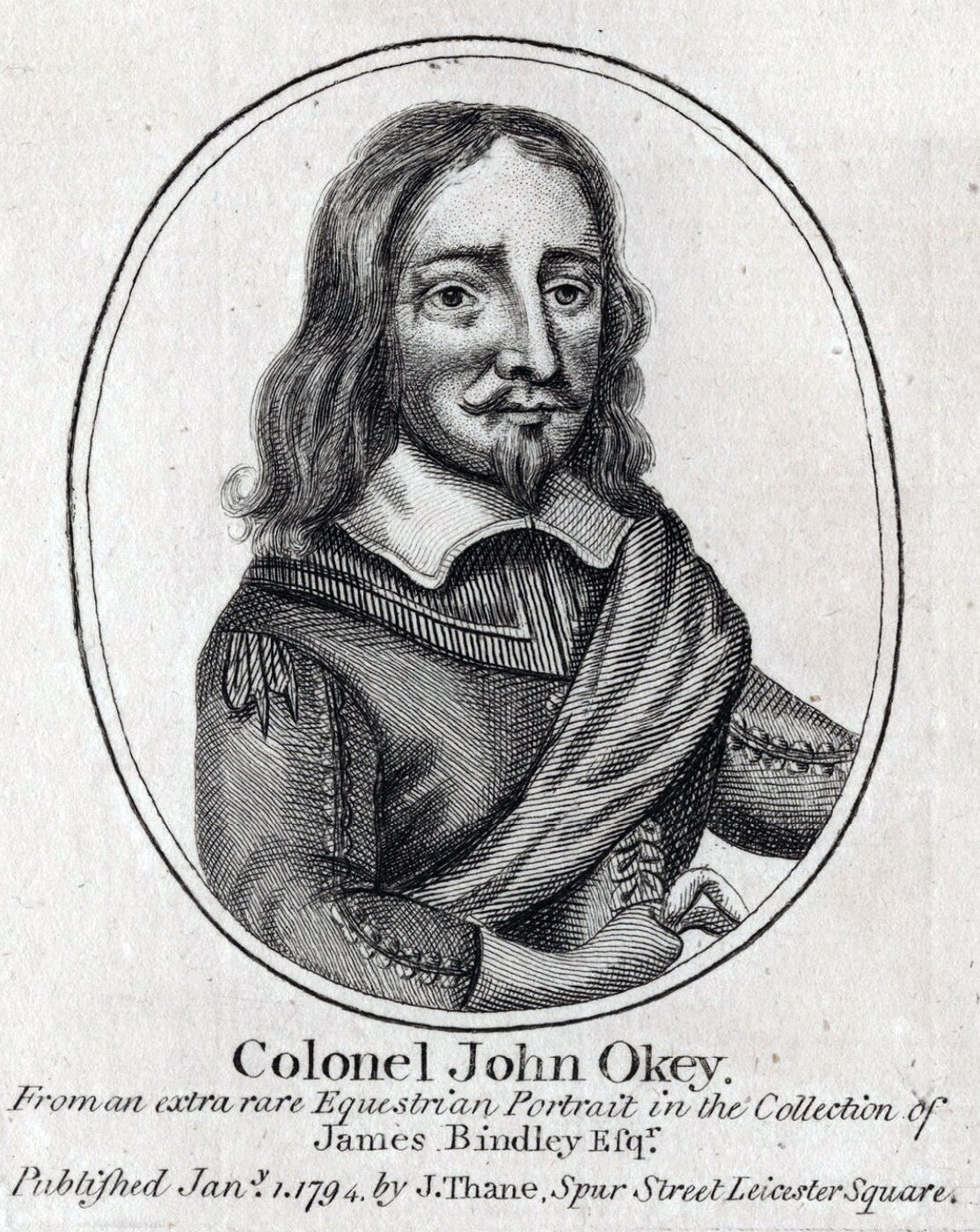
Colonel John Okey rose from modest origins as a London chandler to become one of Parliament’s more effective dragoon commanders during the English Civil War. His reputation was made at the First Battle of Newbury in 1643, where his regiment of dragoons was deployed in broken ground to disrupt Royalist movements. Okey’s men fought dismounted from cover, then remounted to strike at exposed Royalist units, helping to blunt the King’s attacks and contributing materially to the Parliamentarian success at Newbury.
By 1645 Okey was operating in Devon as Parliament advanced into the remaining Royalist strongholds of the West Country. His dragoons were used for rapid assaults, raids and the clearing of fortified houses. During the Civil War Lord Chichester allowed his house at Eggesford to become a garrison for Royalist troops under the command of Lord Goring, whose headquarters were at Tiverton. It was stormed on 18 December 1645 by Colonel Okey with a regiment of dragoons, as part of the final push by the parliamentary forces northwards from Exeter towards their eventual victory at the Battle of Torrington in February 1646. About twelve prisoners were captured and taken back to Okey’s base at Fulford House near Dunsford. The later discovery of numerous musket balls around the site confirms the intensity of the skirmish.
Okey continued to serve in the New Model Army and later became involved in the political settlement that followed the war. He was one of the officers who signed the death warrant of Charles I in 1649, a decision that would determine his fate after the Restoration. When Charles II returned to England in 1660, an Act of Indemnity pardoned most Parliamentarian soldiers but specifically excluded the regicides. Okey fled to the Netherlands, but in 1662 he was arrested at Delft, extradited to England and brought to trial. He was executed later that year, one of several regicides put to death as the restored monarchy asserted its authority.
Okey’s career illustrates the rapid rise that military skill could bring during the Civil War and the severe consequences faced by those who took part in the execution of the King. His brief but forceful appearance in Eggesford in 1645 remains one of the most striking local episodes of the conflict, linking the parish directly to the wider national struggle.

