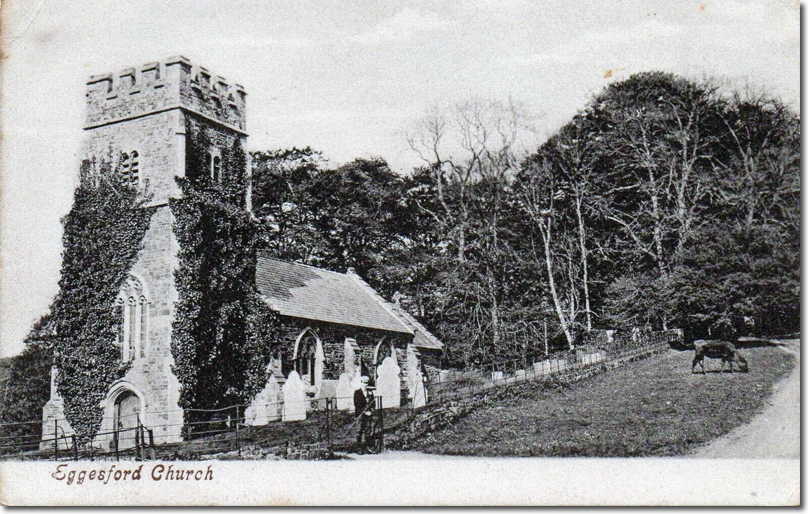
One Sunday in September the minuscule Mid-Devon village of Eggesford hosted a Heritage History day, giving access to a beautiful church, an old Barton complex and a Victorian walled garden which was undergoing renovation. There were plenty of local historians, a very busy metal detectorist and various volunteers to guide the visitors around the various attractions. However, it quickly became apparent that the organisers had not anticipated just how popular a day this was to prove to be. Fortunately, Rupert and I were the very first to arrive but soon we witnessed traffic chaos as visitors struggled to find places to park on the narrow country lanes and gridlock duly kicked in. This had been advertised on the national Heritage Open Days website which is where I stumbled across it and people travelled from near and far. It should also be said that the weather was spectacularly good with a lovely late September Indian Summer feel to it. And the location is stunning, and the history of the area is fascinating, so it is actually heartwarming to see so many people wish to take advantage of this unusual opportunity. It should be added that the organisers very quickly reacted to the unexpected surge in visitors, and opened up alternative car parks and started directing traffic to impose a modicum of order on the proceedings.
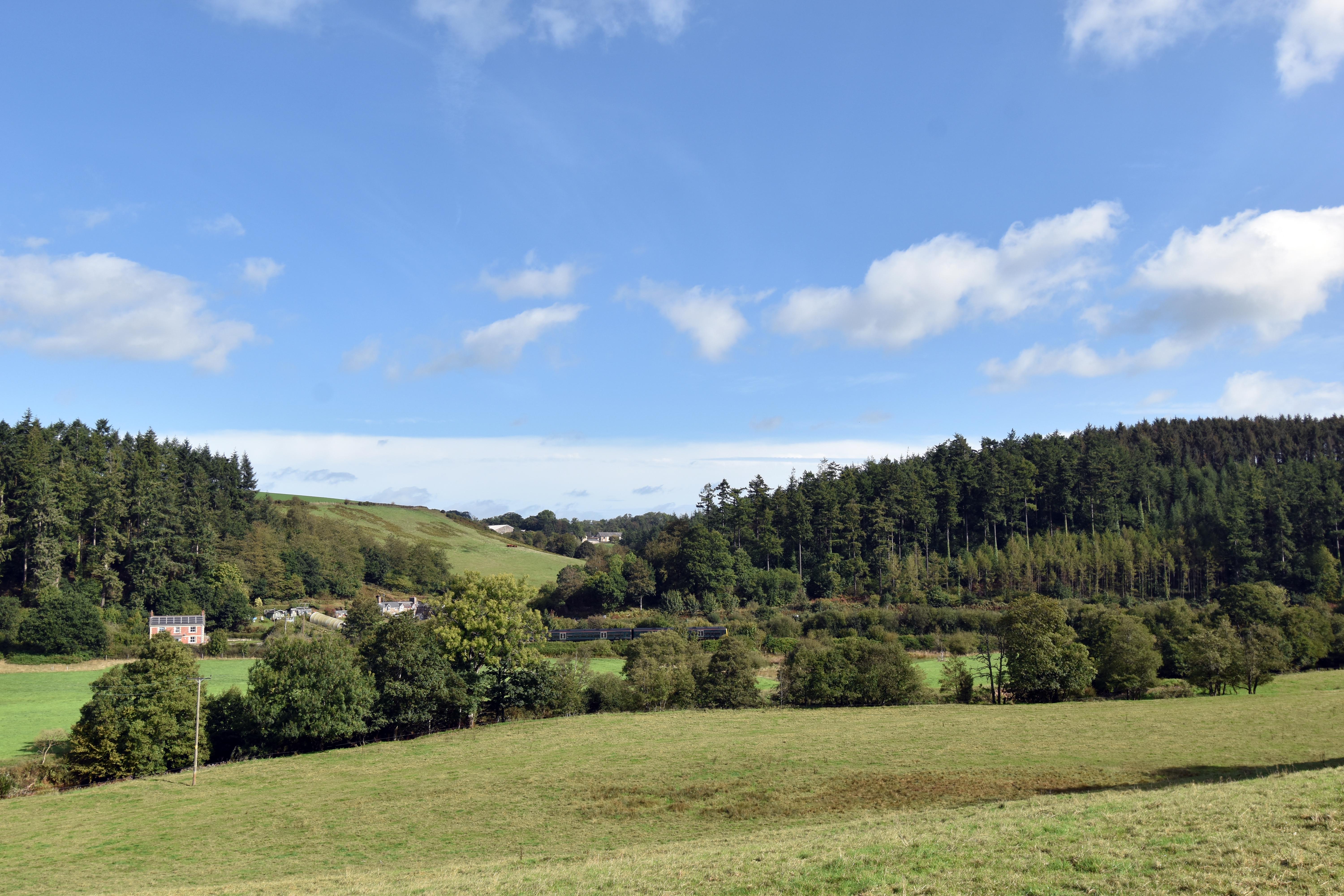
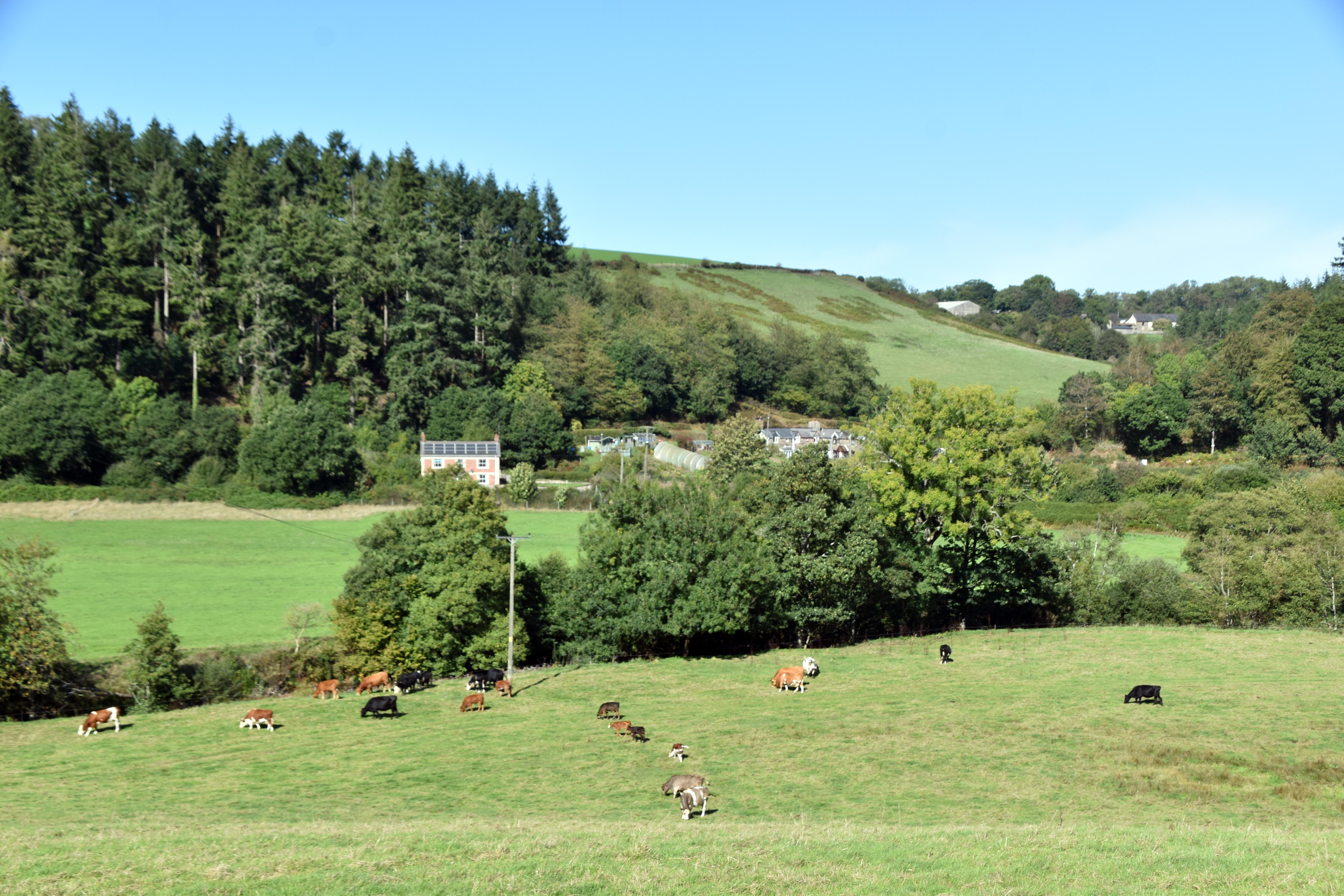
Eggesford is one of those locations that seem to be in the middle of nowhere and yet history has had a habit of passing by it or through it with alarming regularity. The name and location of Eggesford tries to hint at these historical forces. Ecga was probably a Saxon landowner who lived close to an important ford across the River Taw (later replaced by a bridge) would see various armies, traders and important people pass through the area on the east-west access. And today the Exeter to Barnstaple railway line and the A377 follows the valley floor providing a north-south nexus. Modern day adventurers might appreciate the fact that the Tarka Trail winds its way through this valley and another lovely long distance trail the Ridge and Valley Walk passes by on the opposite side of the River Taw.
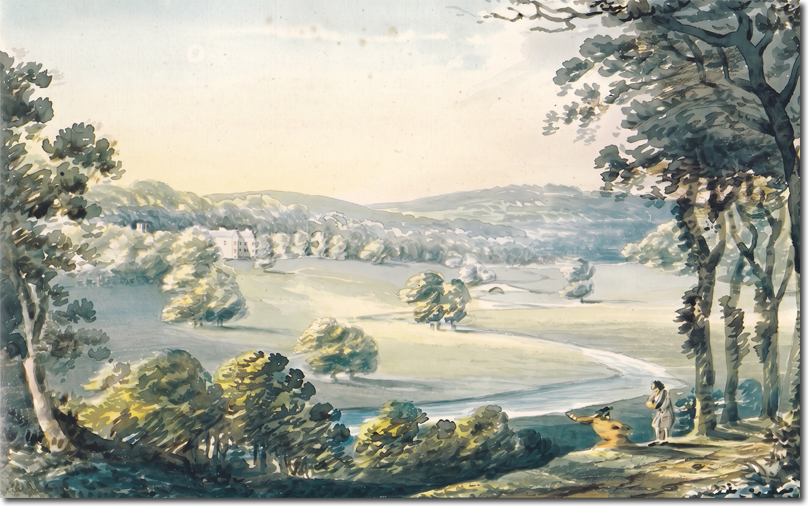
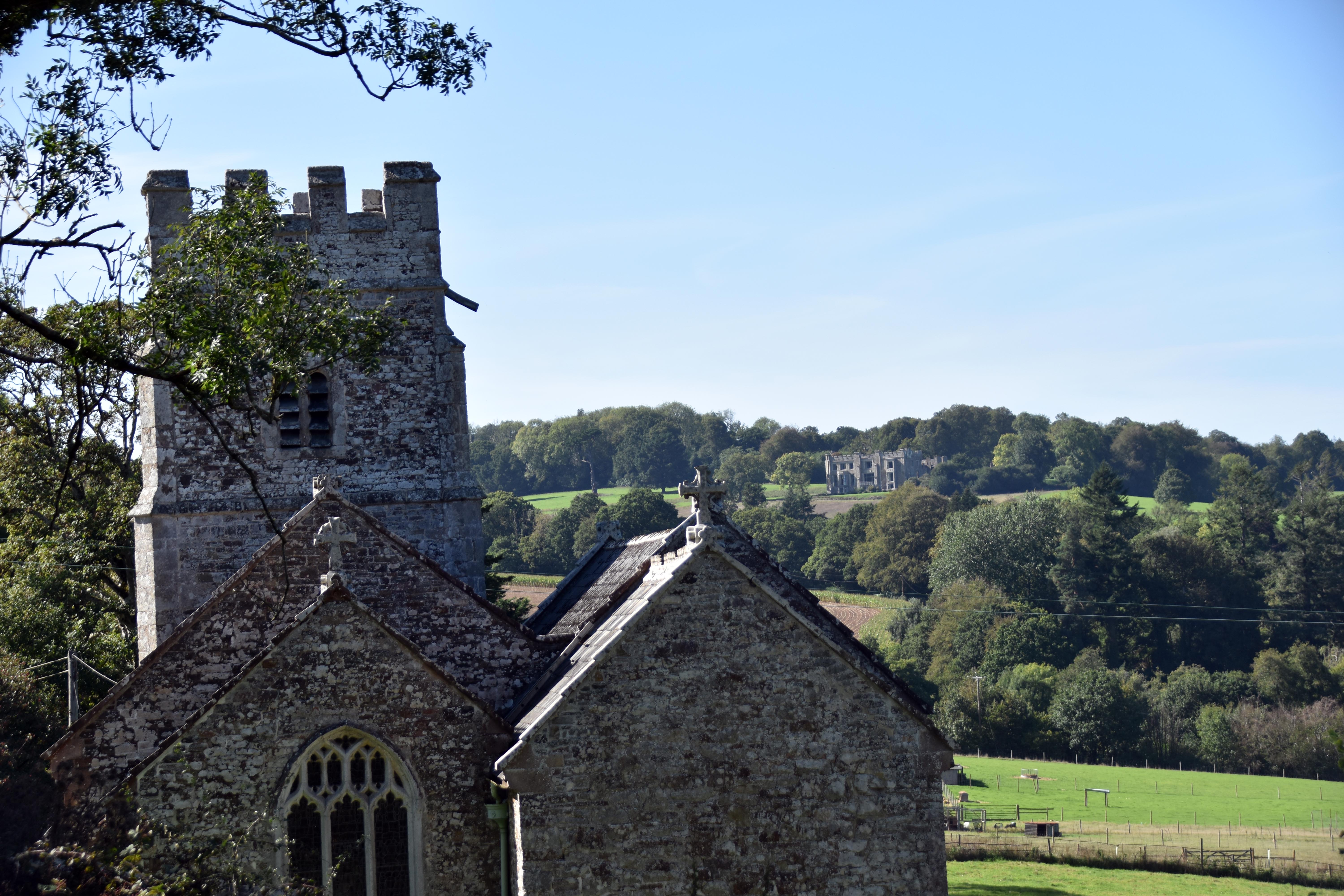
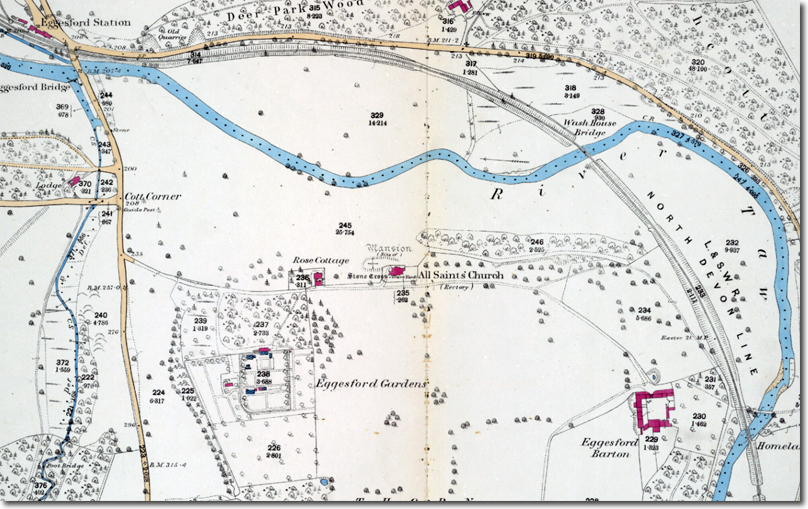
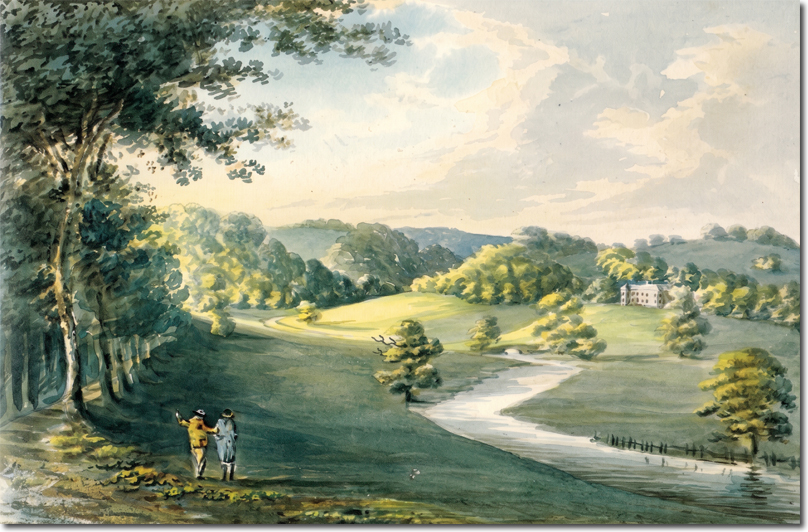
One of the advantages of coming on an organised day was that local historians and the metal detectorist displayed all their research and finding for us to make connections and learn about the local area in a far more efficient manner than is usually the case. I was aware of this area’s connection to the Earls of Portsmouth but it was fascinating to have information laid out explaining the far older landed families whose memorials were impressively displayed in the church. They were also able to point out where previous iterations of the manor house had been sited right next door to the church before the Earls of Portsmouth finally pulled down the last one in 1824 and moved their principal residence to a much grander building further up the valley but still overlooking All Saints church. This new Eggesford House was clearly built for the country pursuits of the landed aristocracy. Sadly it is a mere shell of what it once would have looked like as the Earls of Portsmouth attempted to sell off the estate in 1913 as recently introduced Inheritance and estate duties saw many of these beautiful buildings become economic liabilities. The building itself was not sold until 1923 with its roof and interior features being stripped in 1927 leaving the beautiful building to decay into a ruin. Fortunately in 1992 the ruins were bought by an architect couple who have started the process of making at least parts of the complex habitable. But what you can see from the church is more of ghostly echo of what was once there, although of course that is far more than what we can see of the original manor house next to the church which is literally just an empty field now.

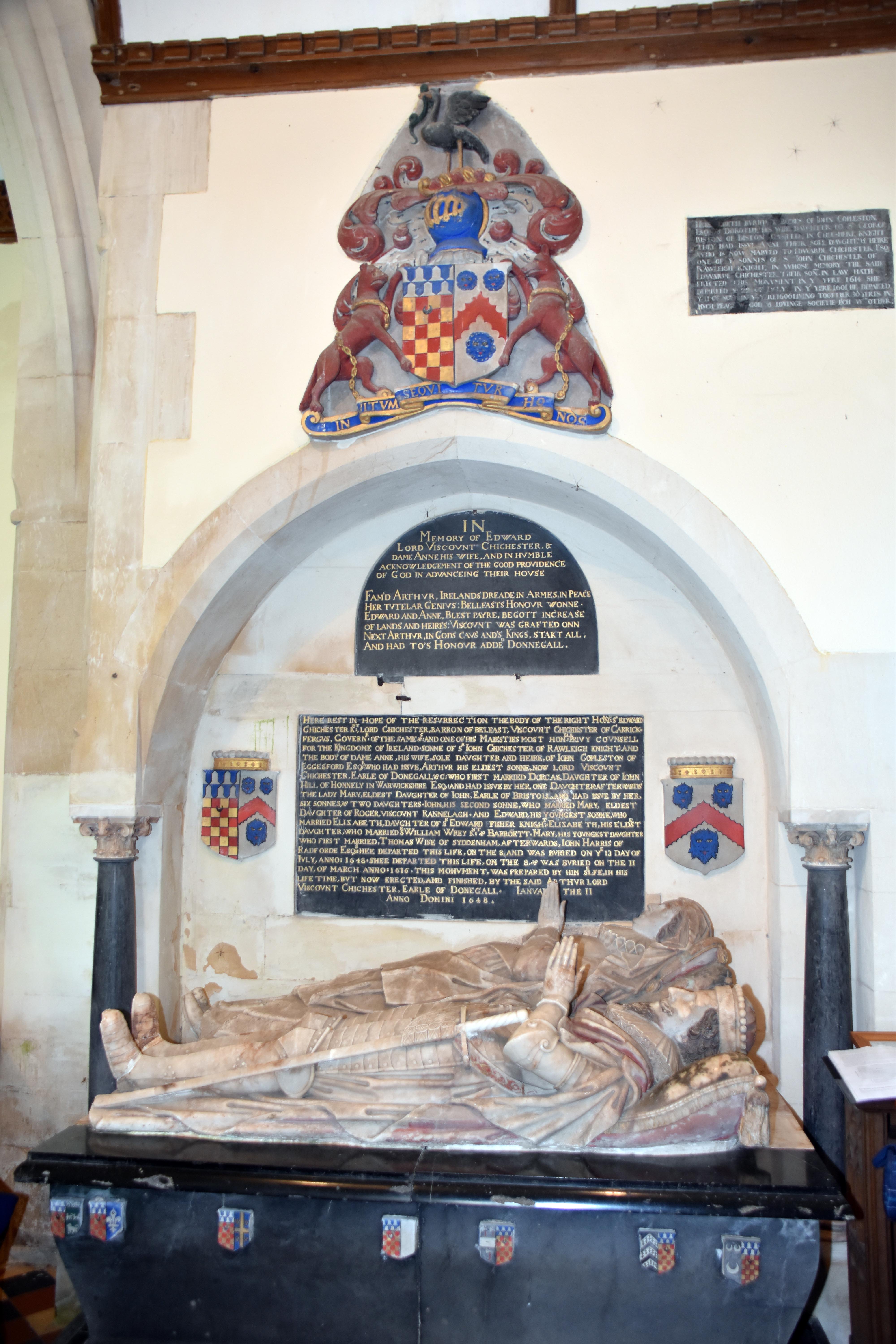
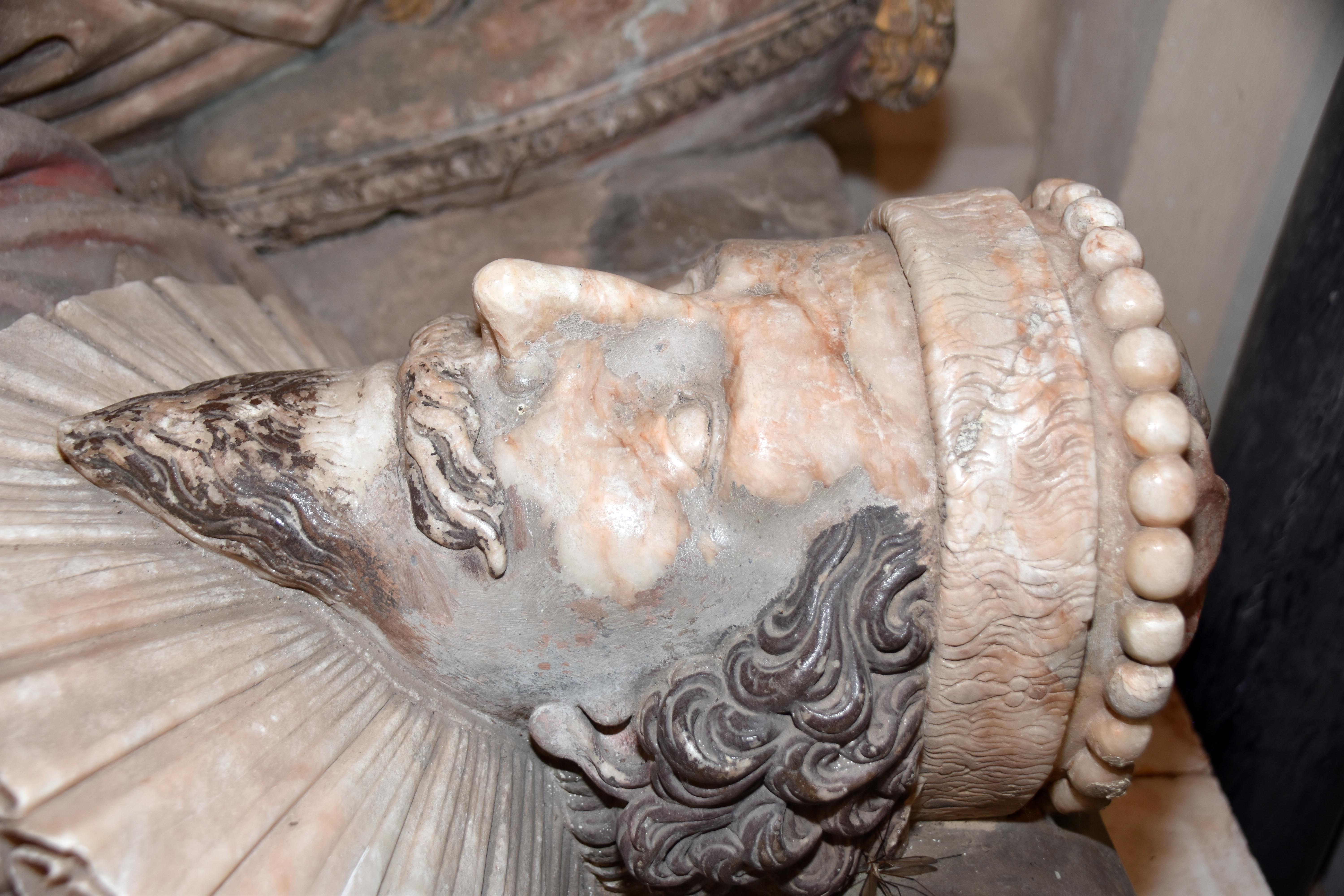
It is a shame that the original manor house no longer exists as it was once the site of a substantial skirmish in the English Civil War led by the famous Colonel Okey (of the battle of Newbury fame) with his dragoons in the service of General Fairfax. At the time the house was owned by the Royalist sympathising Chichester family and was used as a garrison by Royalist soldiers. Colonel Okey’s men snuck up and assaulted the Chichester house in December 1645 as the Parliamentarian army was making its last push into Royalist Devon and Cornwall which would culminate at the Battle of Torrington in February 1646. The metal detectorist had found scores of musket balls all diligently marked out, providing a fascinating insight into the extent and location of the fighting. It is hard to believe that such a tranquil location could be disturbed by such conflict. It should be said that the Chichesters have some very impressive monuments indeed in what was then the neighbouring church, the most impressive being to Aruther Chichester and his first two wives. It is no surprise that the Chichesters supported the King quite so vehemently as Arthur Chichester had married Mary Digby the daughter of John Digby the 1st Earl of Bristol who lived in Sherborne Castle. John Digby had been the diplomat behind the ill-fated and abortive marriage proposal of Charles I to the Infanta of Spain. His eldest son and Mary’s brother George Digby would rise to prominence as one of Charles I’s most important advisers during the Civil War. It should be said though that George’s advice was often thought to have been counterproductive and divisive although he would maintain the confidence and ear of Charles I and his son Charles II in exile. Sadly for the Chichesters their backing of the King’s side would see their Eggesford estates seized and effectively broken up by Oliver Cromwell’s Commonwealth. The Restoration would see some restitution of their lands and titles but sadly for them this did not include Eggesford. His vanquisher though, Colonel Okey, was to suffer an even more cataclysmic end though in 1662. He had been one of the regicides who had signed Charles I’s death warrant and so when Charles II issued an amnesty for all Parliamentarian soldiers it specifically excluded those who had signed that warrant. Colonel Okey was extradited from the Netherlands where he had fled to and was executed in a gruesome manner. Civil wars seem to be particularly nasty in outcomes.

It is also worth pointing out that the Chichesters also had very strong connections to Ireland through service in Elizabeth’s interminable Irish Wars in the later years of her reign. One of their ancestors was Arthur Chichester who had risen to the role of Lord Deputy of Ireland from 1605 to 1616 at a critical time for the development of Ulster. Indeed he was instrumental in developing and expanding the settlement of Belfast which would eventually become the Province’s capital. Arthur’s brother was Edward Chichester who has a beautiful bust of him and his wife in the church. He was ennobled after his brother’s death as Baron Chichester of Belfast and Viscount Chichester of Carrickfergus and sat in the Irish House of Lords. It was he who had married Anne Copleston the only heir of John Copleston of Eggesford Manor and so the name of Chichester replaced that of Copleston as the local lords of the manor. Arthur’s eldest son, confusingly also called Arthur was a key soldier and politician in Ireland helping to put down the infamous 1641 rebellion which so animated Protestant feelings in England. He was made Earl of Donegall on the advice of James Butler, the Duke of Ormonde. He had returned to Britain to fight with his brothers for the King. He was the one married to Lady Mary Digby who sadly died in childbirth. After the civil war and after having lost his lands around Eggesford he returned to Ireland and was buried in Belfast in 1675.
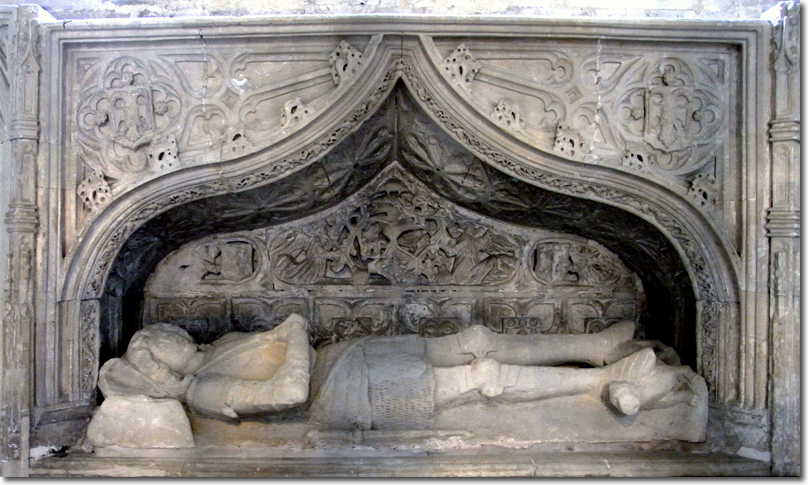
I love it when we find connections to other places we have visited in the Westcountry and so was delighted to find that the Speke family had a connection to the neighbouring manor of Wembworthy and Brushford. There is a place called Speke’s Cross – although curiously the cross itself was moved into the wood just northeast of where Eggesford House would be built in the 19th Century. Interestingly the Portsmouths built their new house on the site of the old Speke home which was named Heywood House. They later recycled this name into a nearby cottage for a son of theirs called Heyswood House which you can still see on the map. Rupert and I had visited the later Somerset branch of the Spekes’ land and house in Westonzoyland last summer and of course their most famous son of all was John Hanning Speke whose tomb we visited in St Andrew’s church in Dowlish Wake. The Spekes had originally held lands in this part of Devon from the 12th Century. The Spekes were at the forefront of the revolutionary new weapon of the Longbow which would help transform England’s fortunes in wars against the Welsh and the French. In the Agincourt campaign, a William Speke guarded Harfleur from French recapture. The Spekes served powerful patrons like the Beauforts and later the Earls of Arundel becoming a part of the latter’s retinue. As their stock rose so did their marriage prospects including a marriage of one John Speke to Alice Beauchamp the wealthy heiress of Westonzoyland. The Spekes had also given lands to the church including the land for Hartland Abbey. One John Speke was knighted by Henry VII and when he died in 1518 established a chantry in Exeter Cathedral which still stands there today with his effigy awaiting the prayers which he had paid the Dean and Canons to sing for him by leaving them the manor of Langford Fivehead near to Taunton. The Reformation less than two decades later would see such chantries abandoned and redundant in the new Protestant England to come. Later Spekes would hitch their allegiance to the Crown in the Civil War and just like the Chichesters would pay dearly for that loyalty. George Speke handed over £2000 to Prince Rupert in gold coin as a loan to the Royalist cause that would never be repaid. Worse was to follow in the Commonwealth era as they had lands confiscated and forced to pay fines even higher than he had paid to the King. This forced the family to consolidate their lands to Somerset and sell off their lands around Wembworthy. The Speke family would live on as a Westcountry family but now as a Somerset one rather than a Devon one.
But the name that has lived locally the longest is that of the Fellowes family who acquired the estate in 1718. It was bought by William Fellowes who was a Chancery lawyer from Lincoln’s Inn. He knocked down the old Chichester house and built a more substantial building next to the church. This he bequeathed to his son Coulson Fellowes who married the unusually named Urania Herbert. So perhaps this explains why they gave their daughter that name of Urania also. It was this second Urania who married into the Earl of Portsmouth’s family - John Wallop the 2nd Earl in 1763 (and relatives of Sir Isaac Newton - hence the proliferation of Newton names in the Earls of Portsmouth family). At this point the Earls of Portsmouth could very well have disappeared out of Eggesford’s story with the surname of Wallop and relying on their lands elsewhere. However the person to inherit the manor was her older brother Henry Arthur Fellowes who died without heirs. Urania had plenty of sons although sadly her eldest son, and the one who legally took the title of the 3rd Earl of Portsmouth, had severe mental health issues and was declared insane and quietly sent to another of their family seats at Hurstbourne Park in Hampshire. Urania’s older brother Newton Fellowes had inherited the Eggesford estate but had no children of his own. Bearing in mind the mental incapacity of his closest kin, his will passed it on to Urania’s second child, Newton Wallop but on the condition that he change his surname from Wallop to Fellowes. This would have the consequence of eventually bringing both the title and the surname of Fellowes to Eggesford Manor although only after John Charles died in 1853 without issue. Newton Fellowes was only the Earl of Portsmouth for barely a year, but he would have children who would inherit his title into future generations.
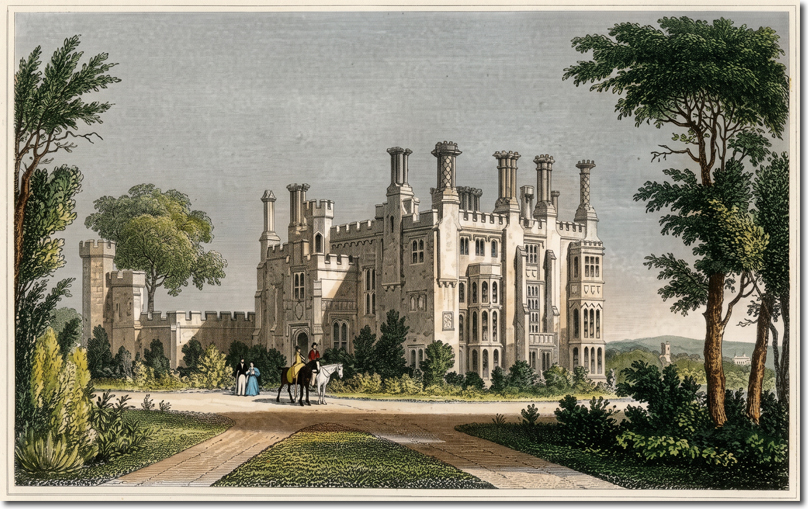
The 5th and 6th Earls would play the country gentlemen and serve as Liberal Politicians as Earls in the House of Lords of course. Although the 6th did also serve as an MP before his father died and he inherited his seat in the House of Lords. The 5th Earl was Isaac Newton Wallop and towards the end of his life suffered a traumatic even when their Hampshire home of Hurstbourne Park burnt down in 1891. He died shortly after forcing the 6th Earl, named Newton Wallop, to spend a lot of the family’s wealth rebuilding a house there which they moved into in 1896 relegating Eggesford as little more than a holiday retreat for the family. In the following decade the 6th Earl actually was to play a very important role in the rearmament of Britain in the run up to the First World War as Sir Henry Campbell-Bannerman’s Under-Secretary of State for War under Richard Haldane.

Somewhat ironically for a family who had served the Liberal cause with such diligence for so many years, it was the Liberal Government’s own Finance Act of 1894 that would see so many of the great estates such as those owned by the Earls of Portsmouth to go into death throes with the introduction of the first modern Estate Duties on the death of the owner. In anticipation of avoiding the worst excesses of these death duties and to also shore up the family’s finances he would start selling off the Eggesford Estate just before the First World War, although the house itself did not sell for another decade and even then just to someone to strip it bare of its valuable materials and lead roofing. The 6th Earl died in 1917 although his widow lived until 1935. The title passed on to his brother John Fellowes Wallop and even more intriguingly after that the 8th Earl title passed to his even younger brother Oliver Henry Wallop who had emigrated to Wyoming as a rancher not expecting to inherit the title or anything else for that matter. But after the 6th the direct connection of the title to Eggesford had been broken forever.
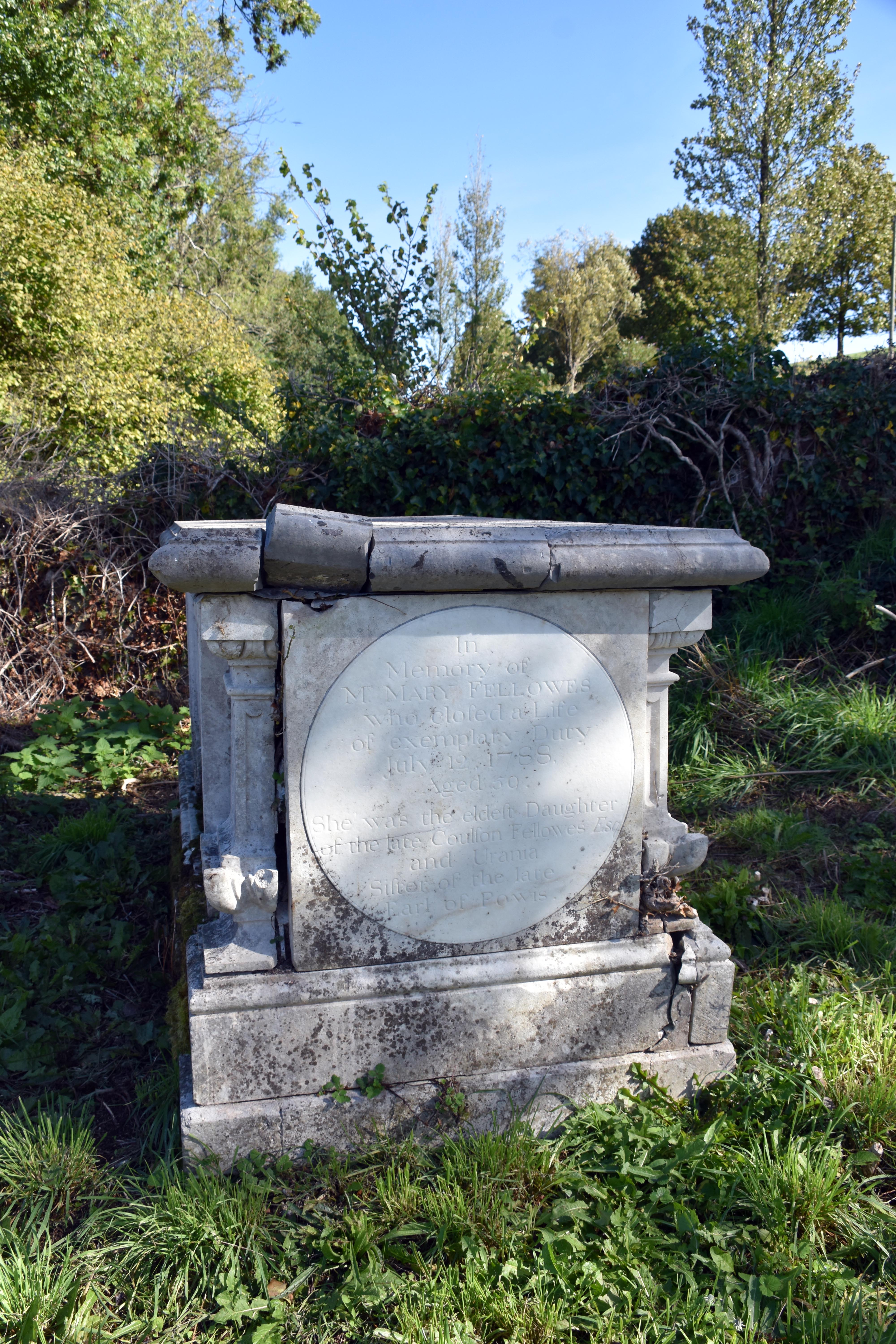
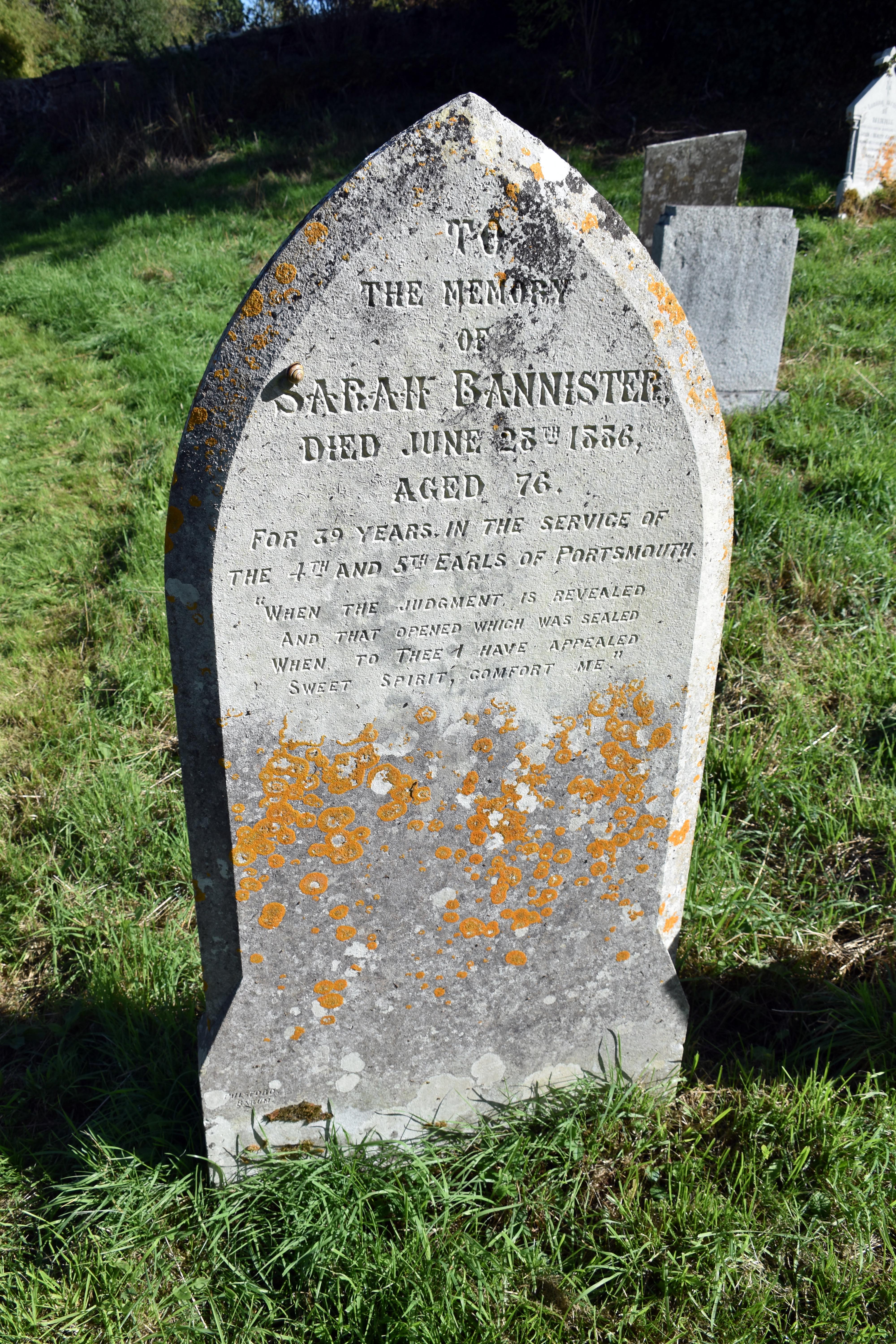
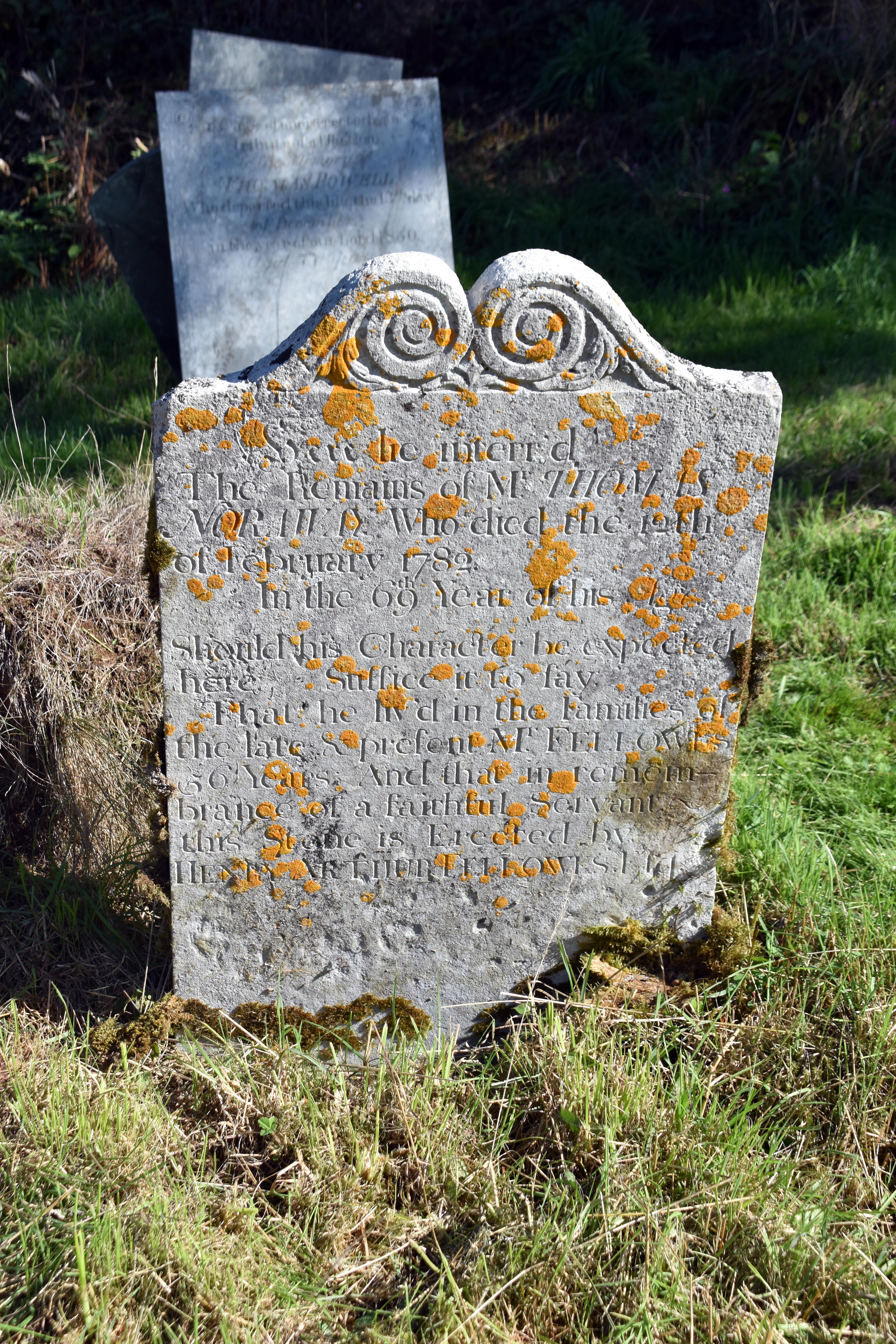
In the graveyard surrounding the church it was interesting to find a number of graves dedicated to people who had worked in service for the Earls of Portsmouth. Indeed they were buried very close to some of the Fellowes family such as Mary Fellowes the eldest daughter of Coulson and Urania Fellowes. There is also the sad war grave of Lance-Sergeant Russell Lewis Stephenson who was the son of Hamilton Russell and Isie Madelaine (née Fellowes) who sadly died as a soldier of the Devonshire Regiment in 1940 in what it explains as “drowned on active service.” By the way Isie Madelaine is also the great aunt of Julian Fellowes who of course famously wrote Downton Abbey (and Gosford Park) which evokes very much the world of a place like Eggesford. Apparently Isie was the inspiration for the characters played by Maggie Smith in both Downton Abbey and Gosford Park! Even more intriguingly, Lance-Sergeant Russell Lewis Stephenson’s wife was Karien Freiin von Malortie from an aristocratic Hanoverian family. Indeed her grandfather had been a very high profile Hanoverian soldier and diplomat fighting with the Tsar against the Turks in the 1820s and later representing the German city state at St. Petersburg. Of course this was when the Hanoverians were still very strongly linked to the English throne too.
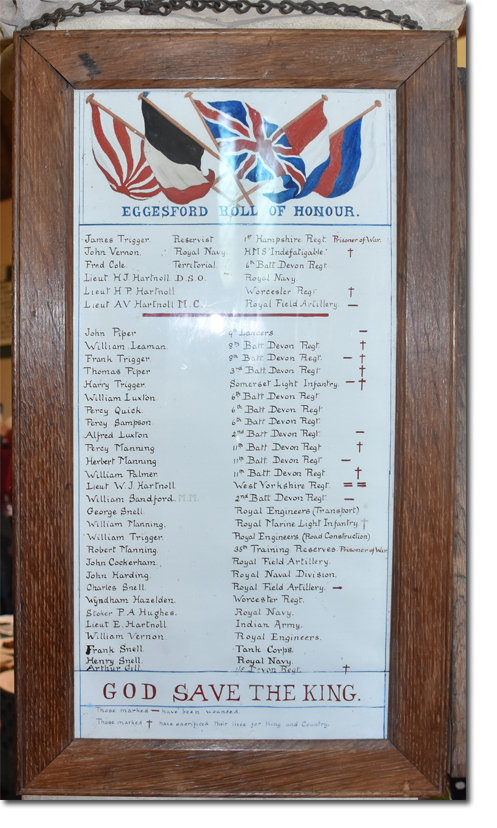
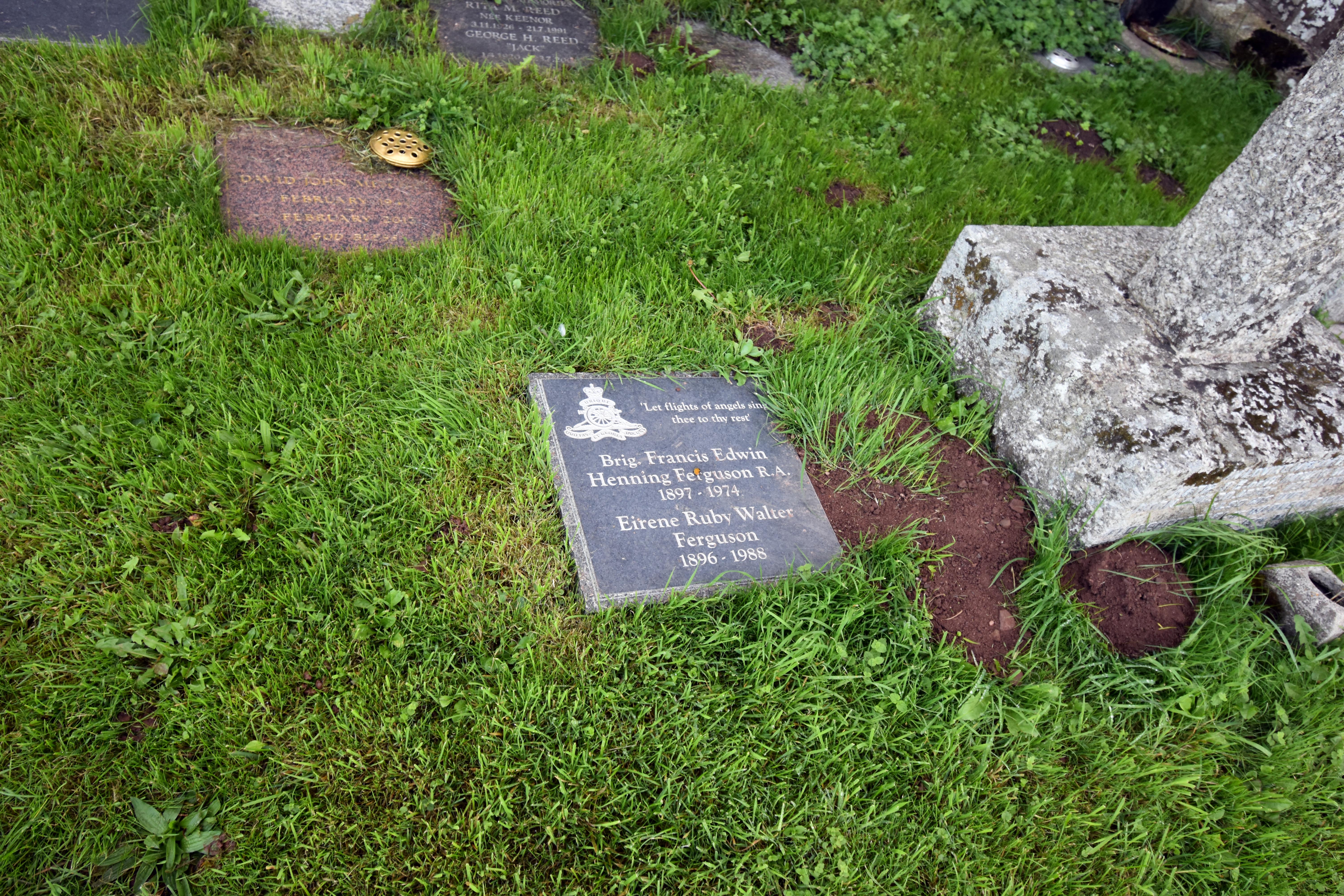
There were other fascinating graves in the cemetery including that of a naval aviator who had fought in the Battle of Britain flying Fulmars defending the dockyards of Wick. He went on to shoot down several Italian planes from HMS Ark Royal in the Mediterranean but also had to ditch on one occasion when he ran out of fuel. Fortunately he was spotted and rescued by a Sunderland Flying Boat. Sadly but perhaps fittingly he died in a flying accident in 1978. Another intriguing grave was that of Brigadier Francis Edwin Henning Ferguson of the Royal Artillery. Inside the church it was explained that he was highly decorated, had been wounded in Egypt in 1916 but had also served alongside Henry Williamson of Tarka the Otter fame (hence the Tarka Trail nearby). And it was almost certainly this friendship that saw Brigadier Ferguson retire to this part of Devon although he was to see further active service in the Second World War and served once more in North Africa before being made responsible for overseeing the work and care for the Axis Prisoners of War throughout Cornwall.
And one more grave caught our eye. That of Victor George Matthews C.M.G. and O.B.E. and formerly of the Indian Civil Service. I was to discover that he was to apply to the Indian Civil Service in 1929 as a consequence of the Wall Street Crash and a need for a well paying job. He explained in his memoirs that this explanation did not go down terribly well with his interviewers but fortunately for him his performance in the written examinations was such that he received a post anyway. It is nice when you can imagine a twinkle in the eye of the person buried in front of you. He evidently did well at his job to receive the various awards mentioned on his headstone.
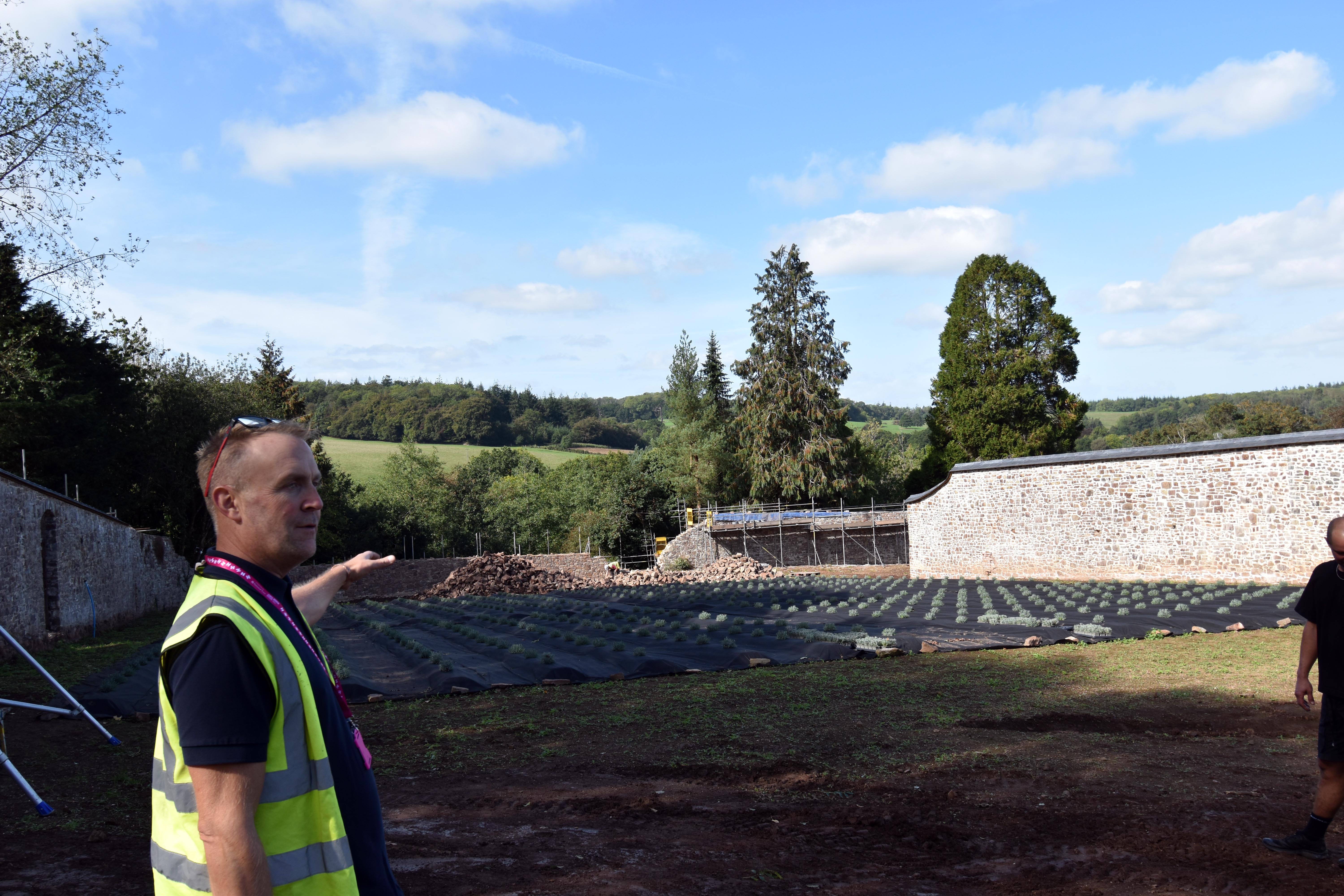
Rupert and I were treated to a tour of what had been the old Victorian kitchen gardens of the Earls of Portsmouth. Until 2018 it had been a garden centre but had lain abandoned and decaying until a new family took over it. I didn’t realise it at first, but when I arrived I had a pleasant conversation mainly about my car in the car park with what I later figured out was the new owner of the old Victorian gardens. We were shown how they were using Victorian building techniques including the use of quicklime and sand for mortar to rebuild the substantial Victorian walls. The idea is to restart the gardens and create a restaurant with views over to the old Earls of Portsmouth’s home over on the hill behind. It was a very considerable undertaking, and the man-hours required to rebuild these walls can only be imagined but it will be nice to have a reminder of what a Victorian kitchen garden once looked like. And the popularity of the tours and chatting with the other visitors hinted that many of the locals were keen to have a community asset restored to their area.
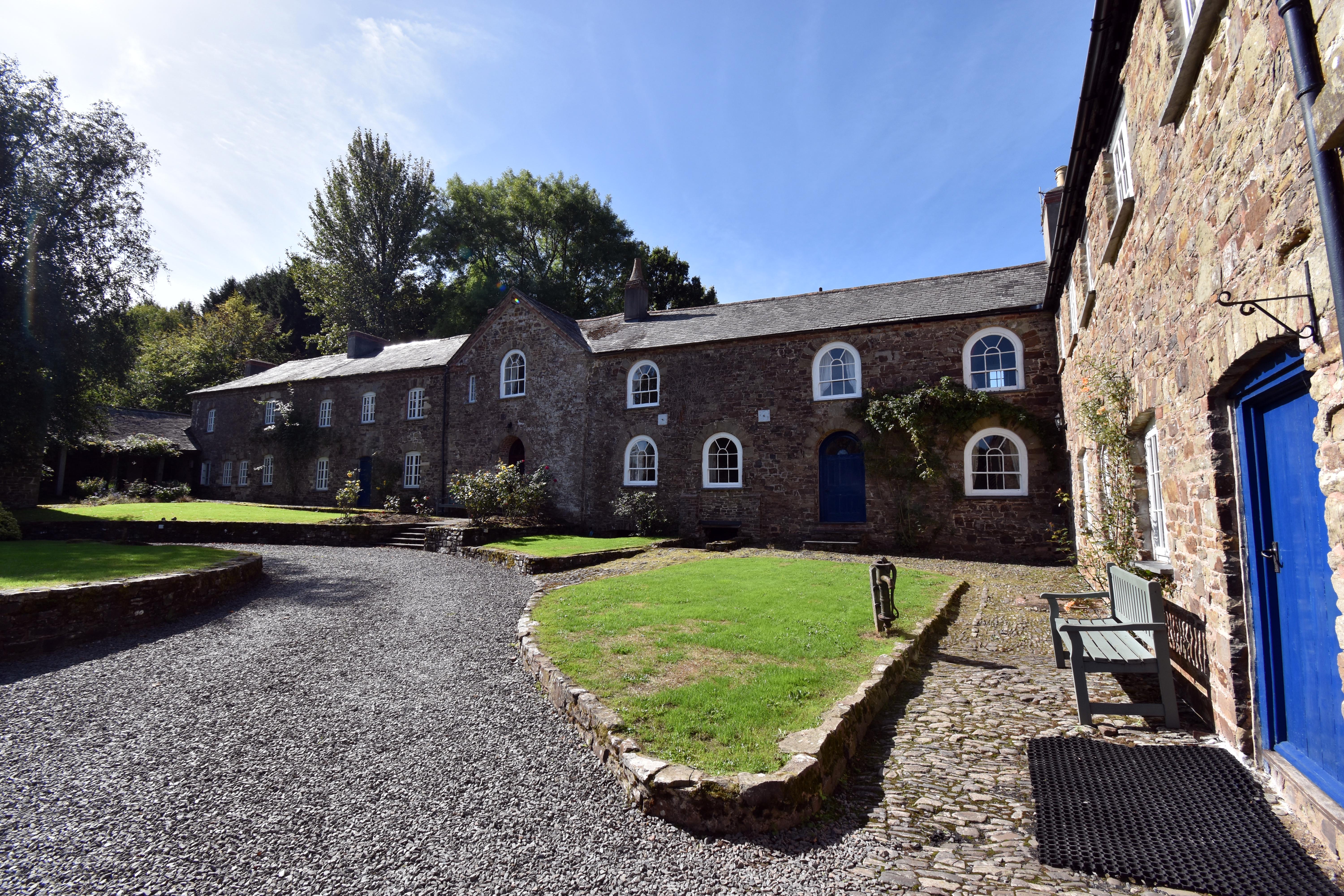
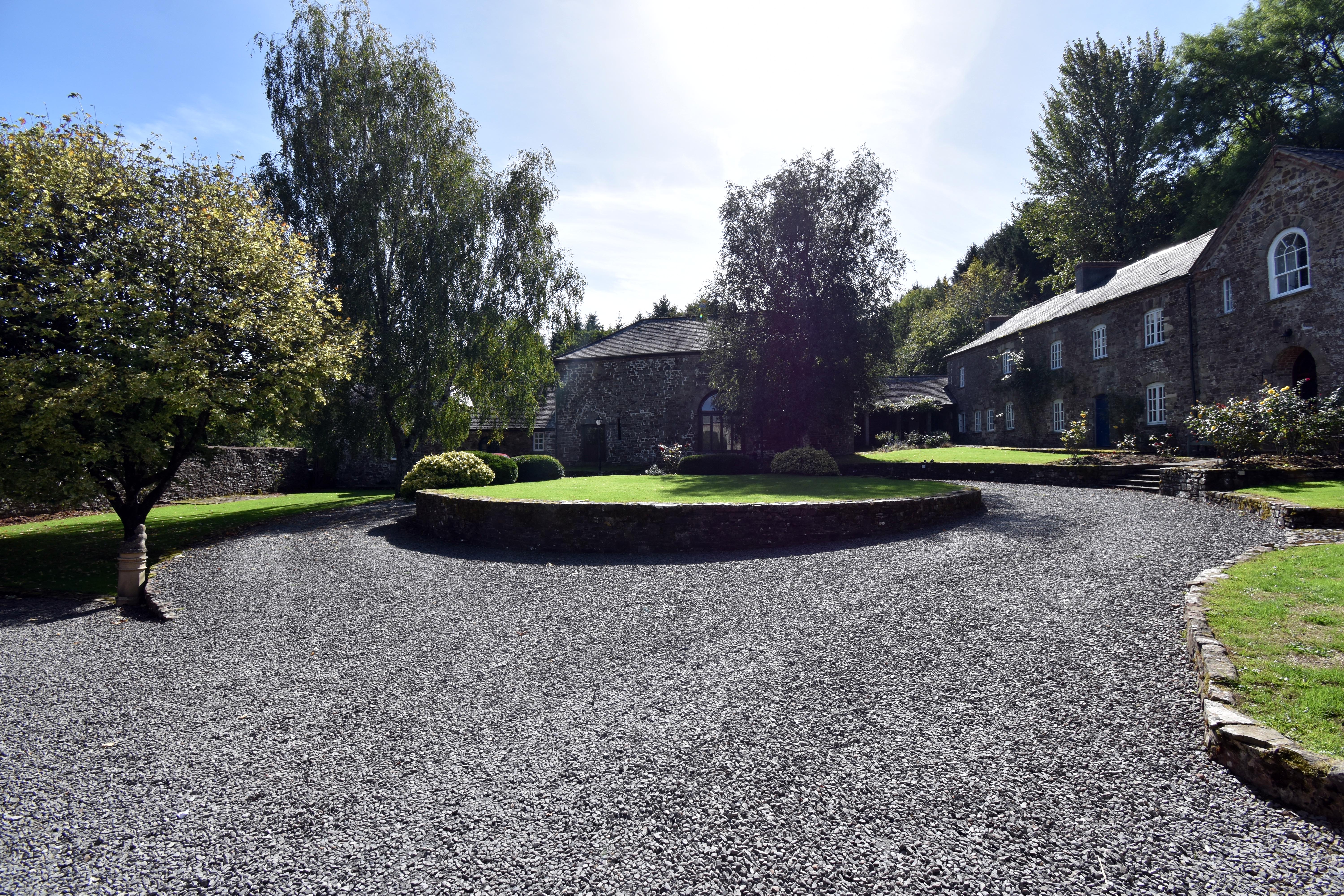
We then were awarded with another treat not normally on the tourist trail: that of a tour of the Eggesford Barton, which would have been the estate farm complex for many years perhaps back to the Middle Ages although most of what you see now dates from the 18th or early 19th Centuries. It may well have been the site of an even older medieval manor house belonging to the de Reigny family, who were the original Norman lords of the manor – of course there were almost certainly Saxon lords before that as the name Ecga implies. And indeed this barton location would have overlooked one of the likely candidates for a viable ford in the area. Barton is often translated as a farm complex but in reality it would have been a far more integrated manor house and farm complex in its earliest guises. By the way it was the de Reignys who married into the Coplestones who married into the Chichesters. So they were all related one way or another.
Now the Barton that you see has been converted into a home and rather impressive holiday accommodation that sleeps up to 30 guests in one go. The owner kindly showed us around and pointed out the various parts of what had been a working farm as late as the 1970s. Interestingly there is a lintel inscribed with 1626 over one of the doors but this almost certainly relates to the Chichester 1626 house by the church that was later knocked down and perhaps this part was rescued to be reused in this Georgian rebuilding. Estates even of the well‑to‑do aristocracy were working farms expected to produce goods, crops and livestock for sale. They were not merely playgrounds of the wealthy; they were the engines of much of the economic activity of the country at least until the Industrial Revolution and international trade disrupted these core economic realities. This barton and the Victorian kitchen garden were reminders of that largely vanished world of the landed gentry growing the food needed by the rest of the country. Owning the land had also traditionally given them political power in the form of rural constituencies and of course seats in the House of Lords. The 19th Century would see this economic and political power begin to shift from the countryside to the growing urban areas. The demise of estates like Eggesford immediately before the First World War was a consequence of these fundamental shifts taking place. The era of the landowners was coming to an end but you can still find the echoes of their former importance in the churches, ruins and buildings of places like Eggesford. Rupert and I were very fortunate that these places were made available this weekend for us to see for ourselves the forces of history shape the valleys of even the most remote and beautiful parts of central Devon.