|
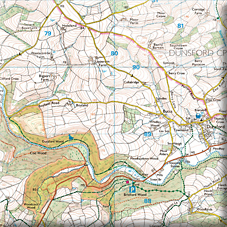
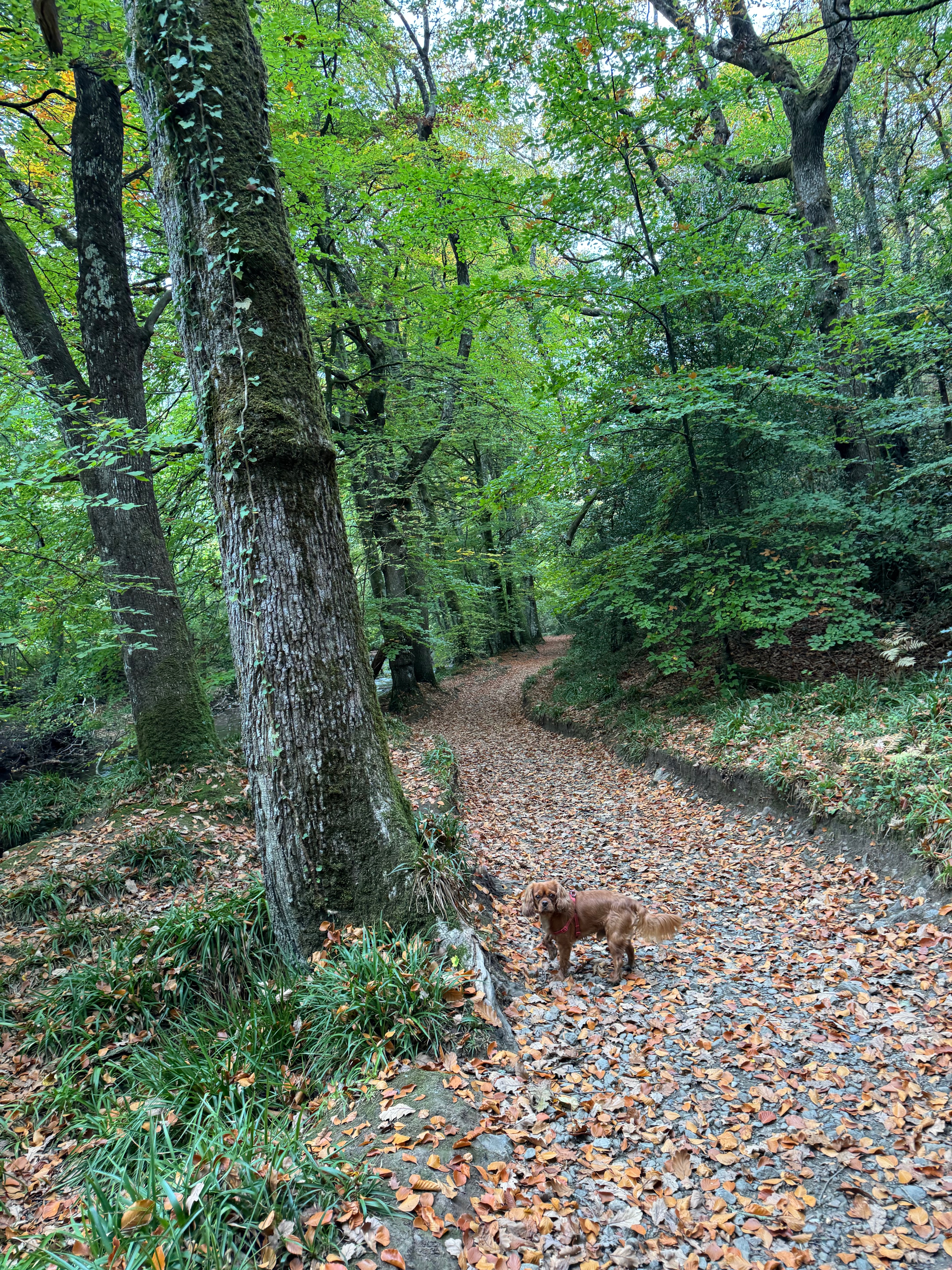
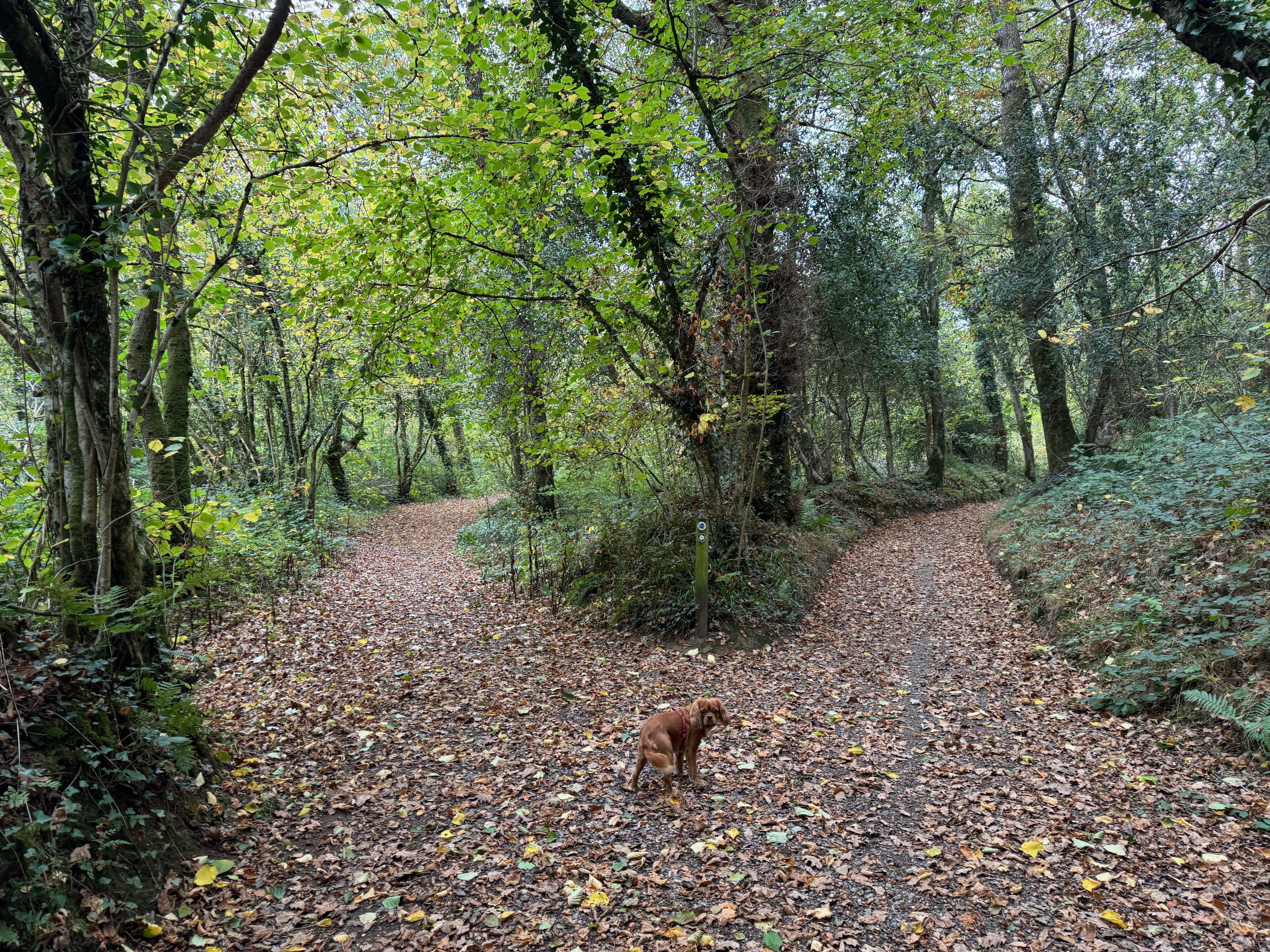
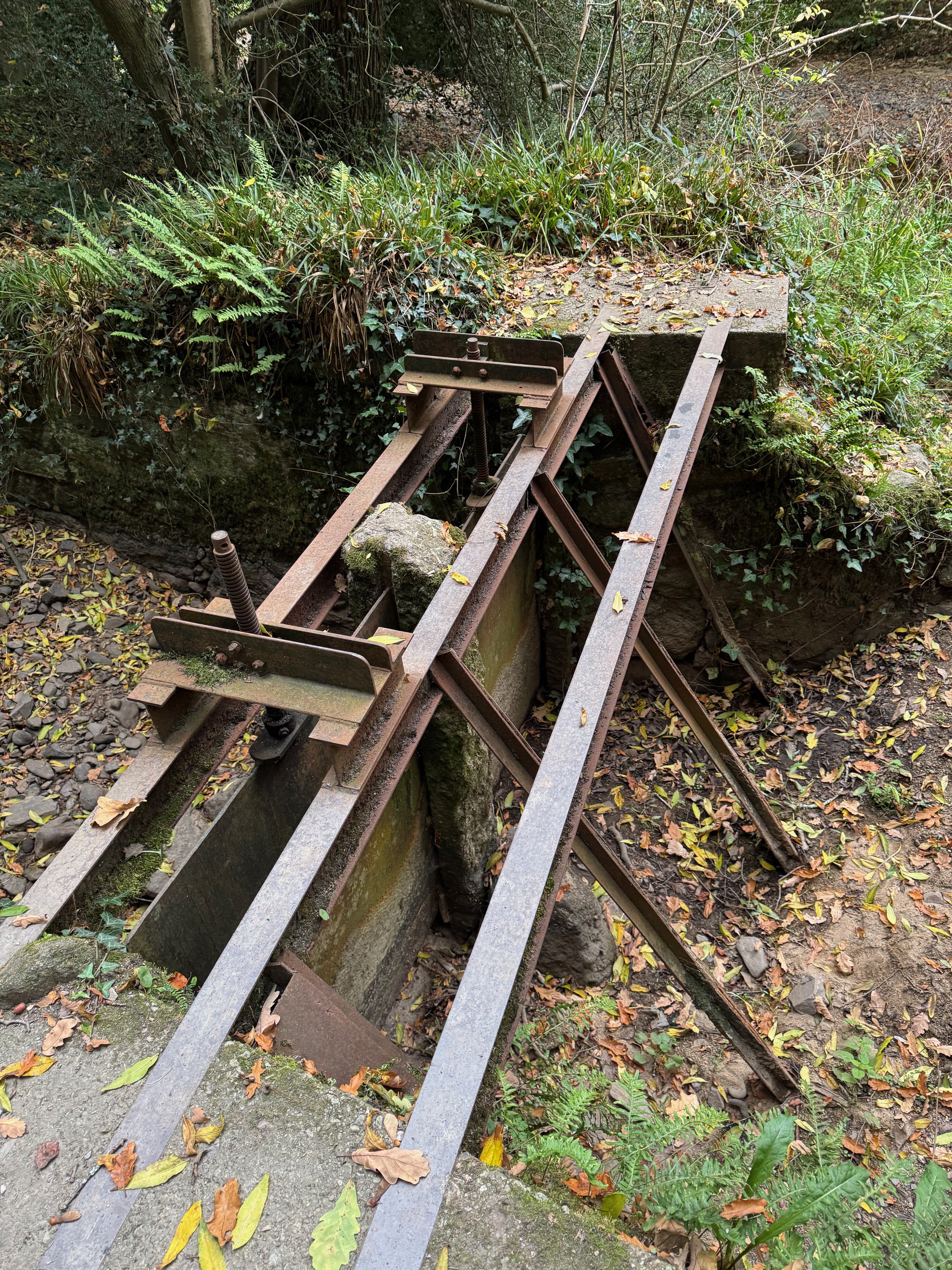
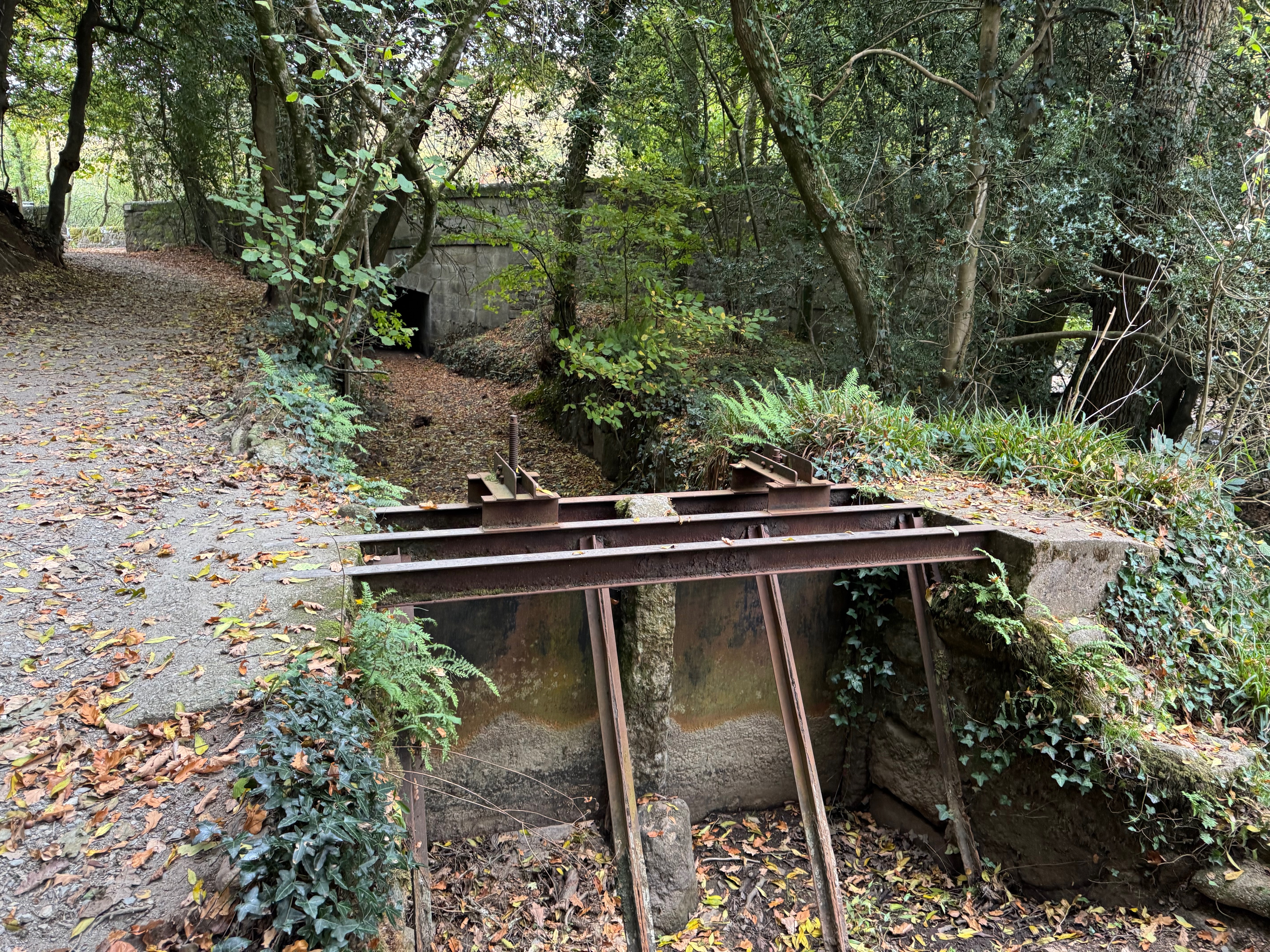
Even when the seasons have moved decisively from summer to autumn, you can still appreciate magnificent walks here in Devon. On Saturday, Rupert returned to the Teign Valley yet again to complete The Eden Way Pilgrimage route—although, characteristically, we created our own path, and what a beautiful path it was too. We parked in Bridford Wood near Steps Bridge. From here, we crossed that bridge and turned left into Dunsford Wood—taking a rather indirect route towards Dunsford Village, with its St Mary’s Church as our main goal.
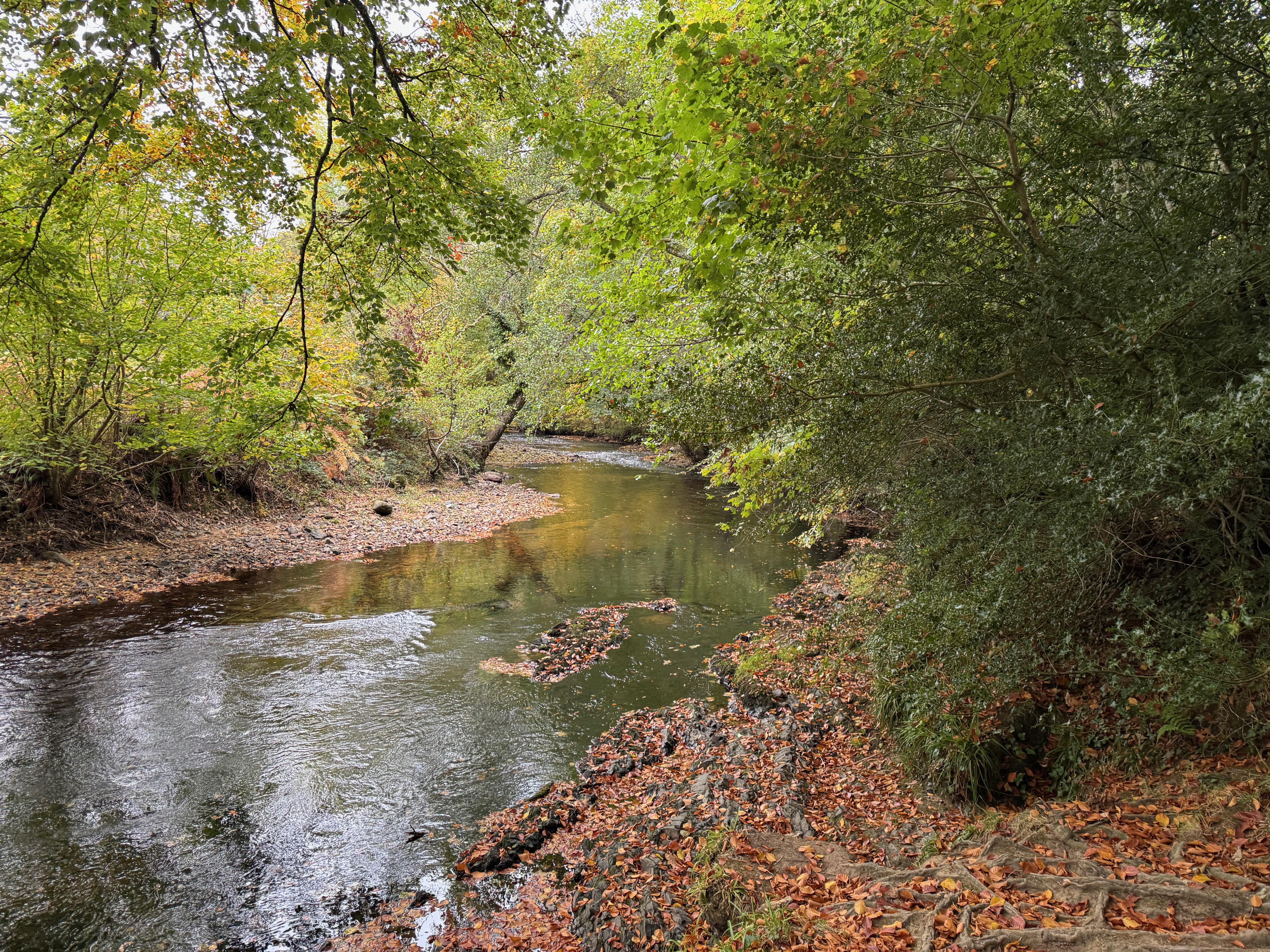
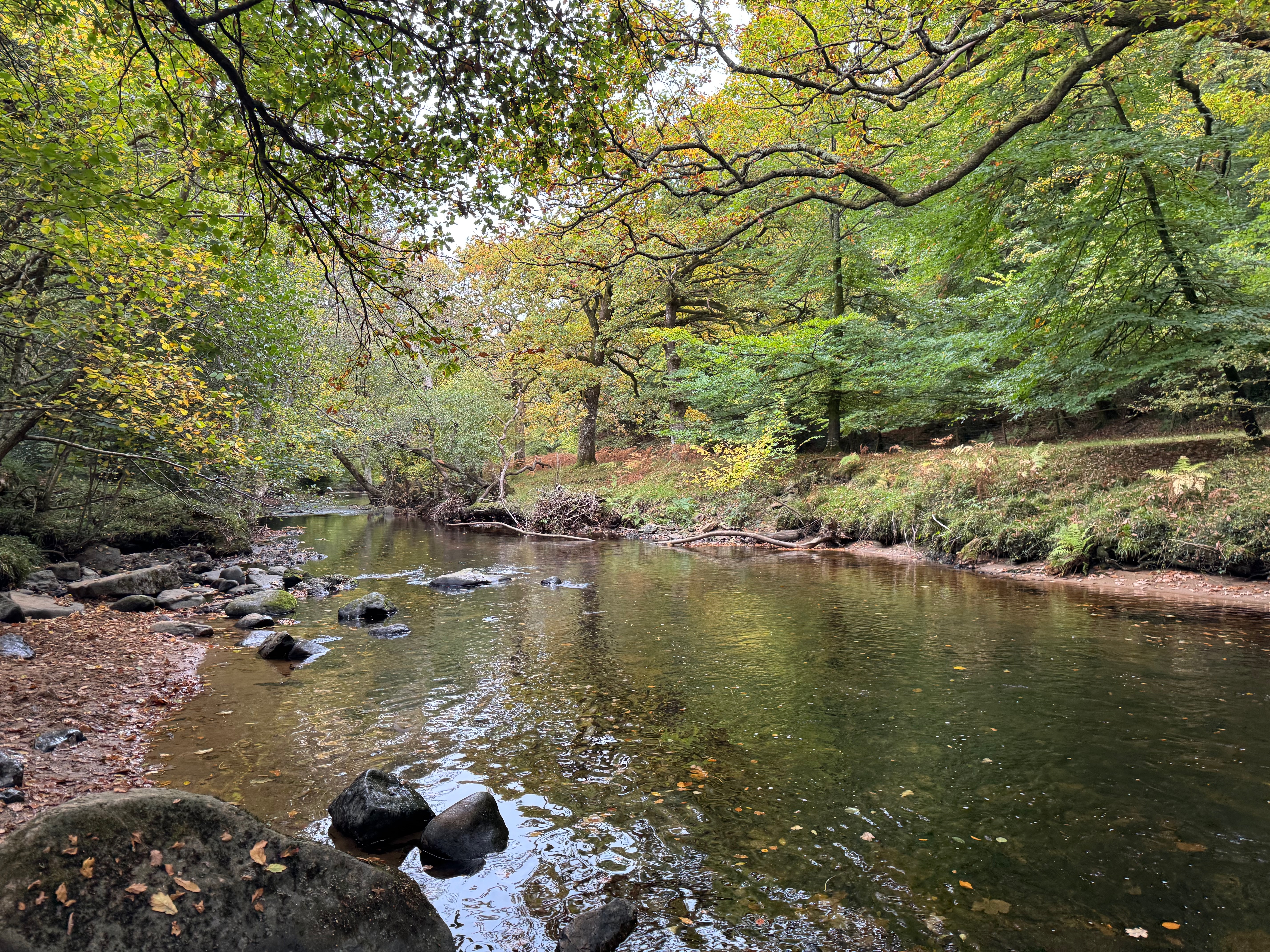
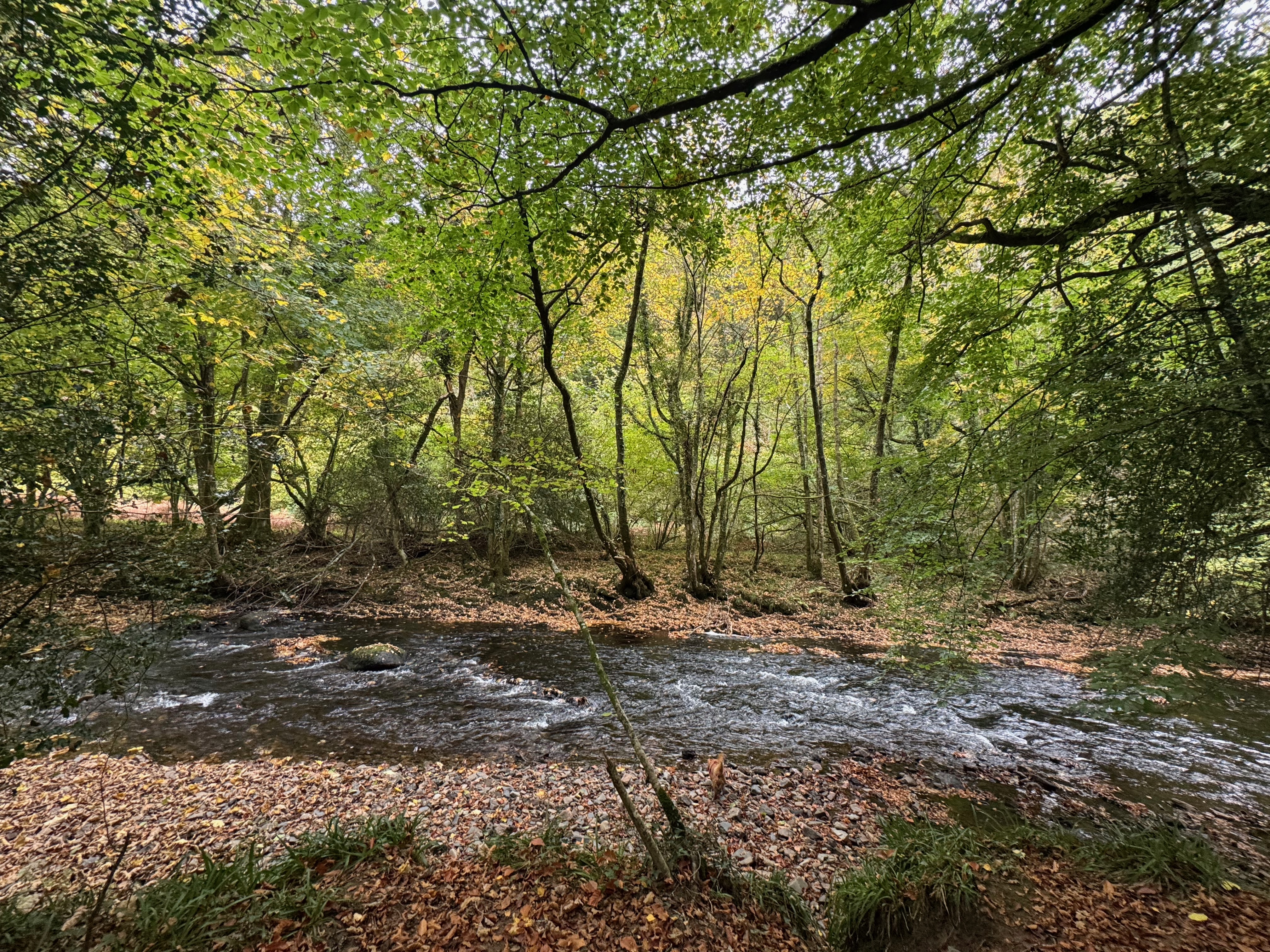
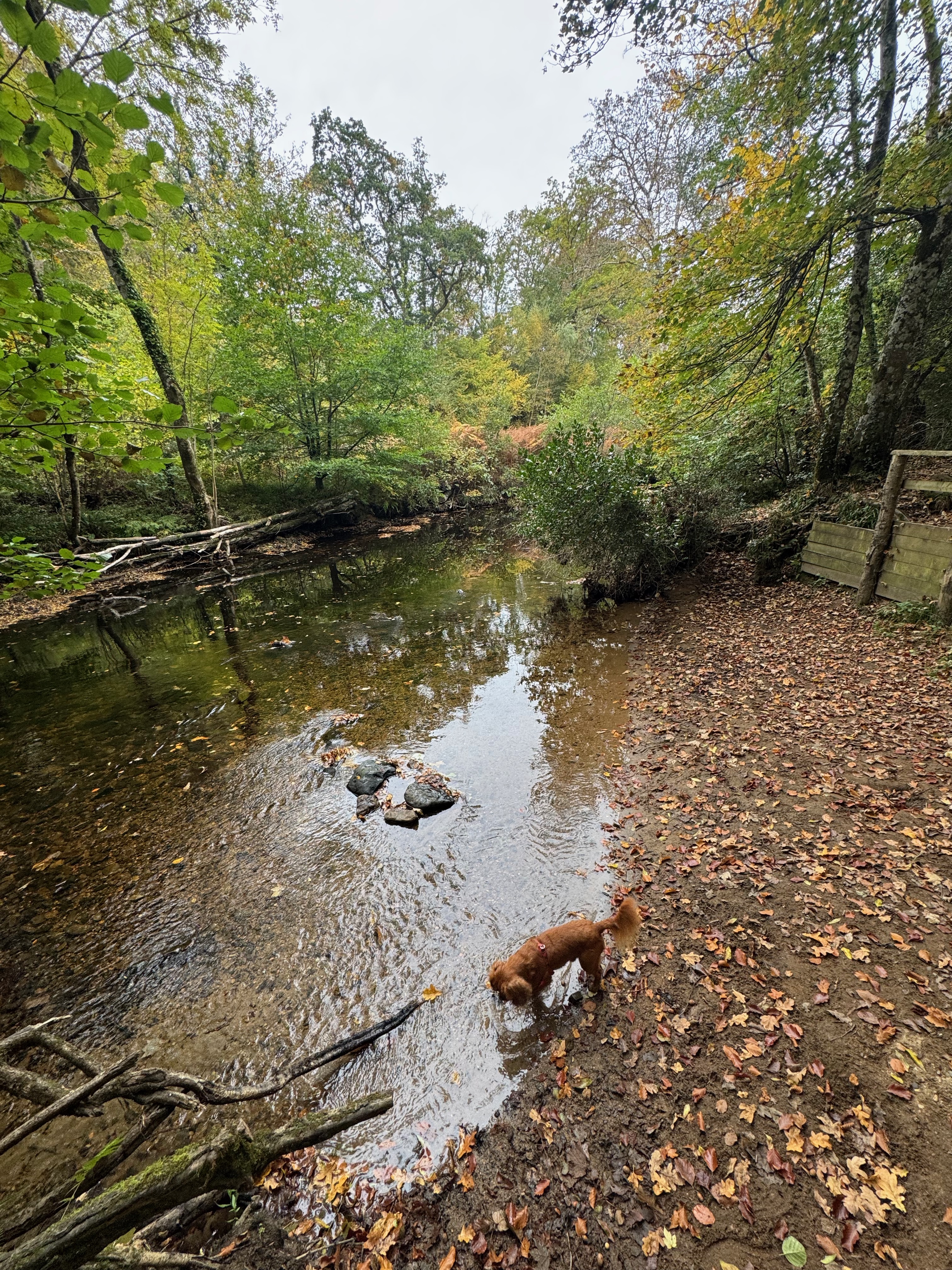
But what a diversion it was, as the trees were in their full autumn garb, gently releasing their leaves and creating a riot of beautiful browns, reds, and yellows. Many fluttered into the River Teign, which added its delightful soundtrack to the gentle wind in the trees. Being in a valley, we were quite sheltered, but there was just enough wind every now and then to nudge more leaves downwards towards us. Ducks followed us up the river, and we kept stopping to gaze at the leaves flowing down the river and collecting in eddies and pools. We definitely chose the right day to do this walk—as I write this on Sunday, there is a veritable gale, with wind and rain lashing down. We got peak autumn weather yesterday!
 |
|
|
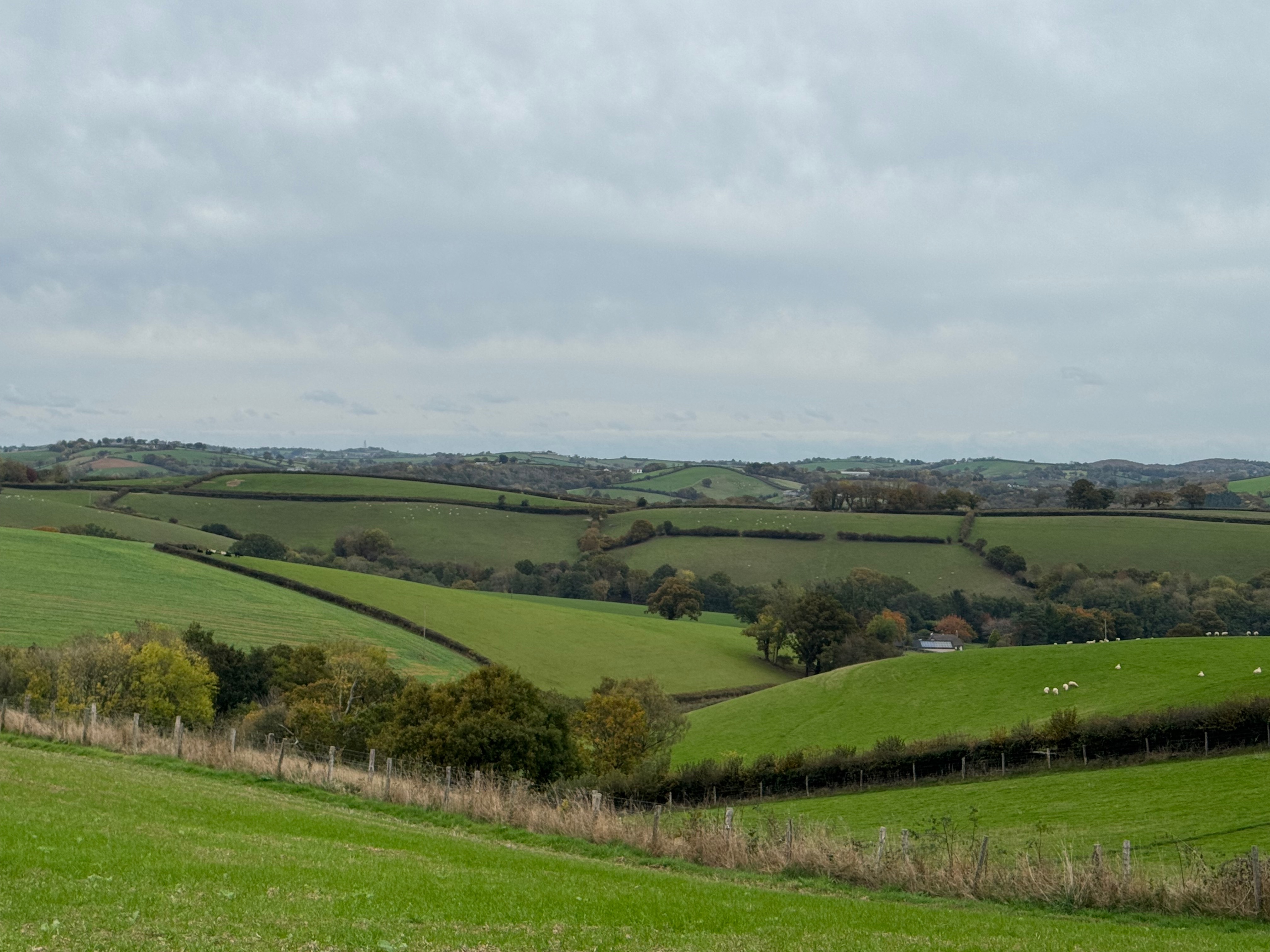
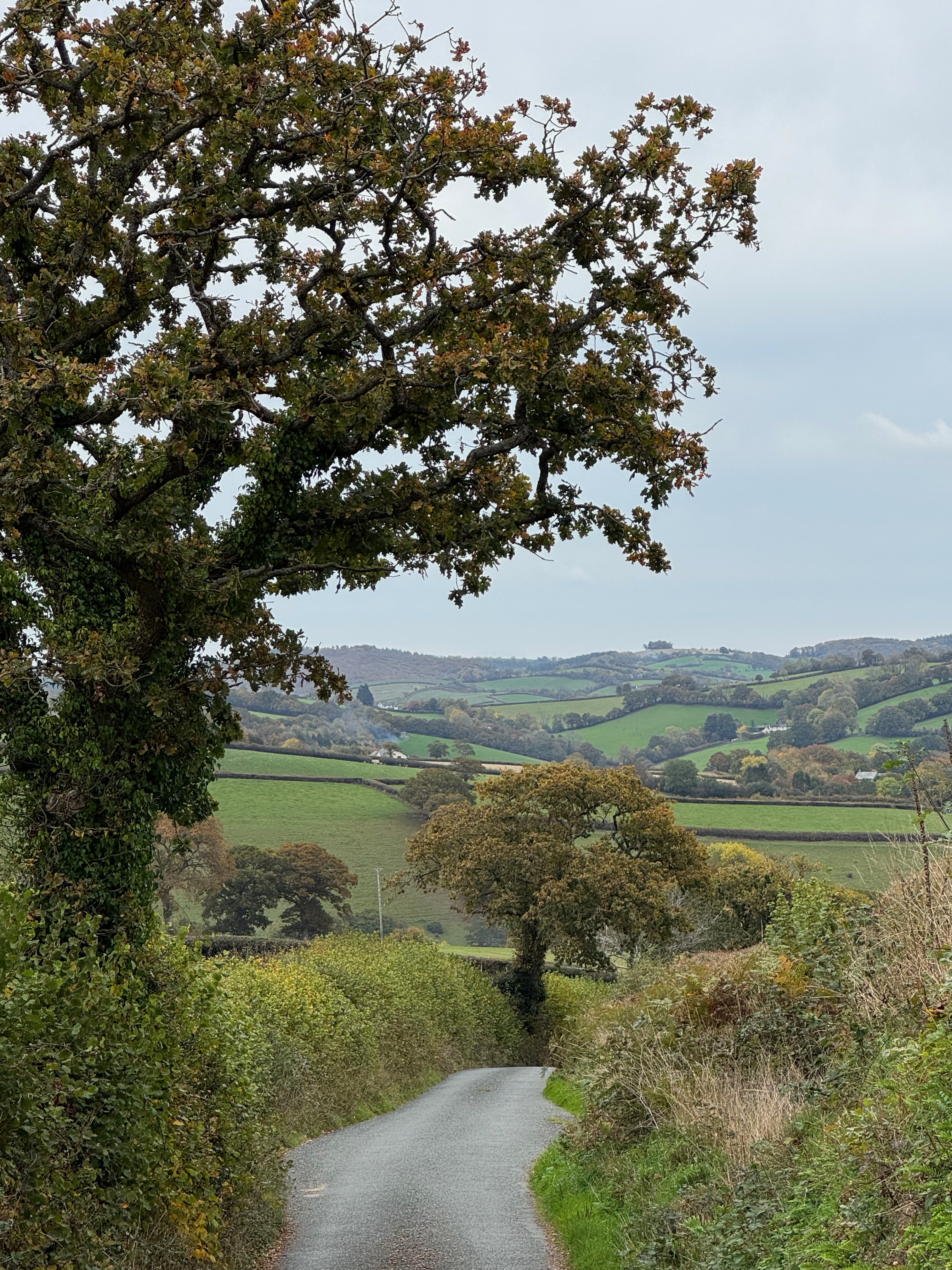
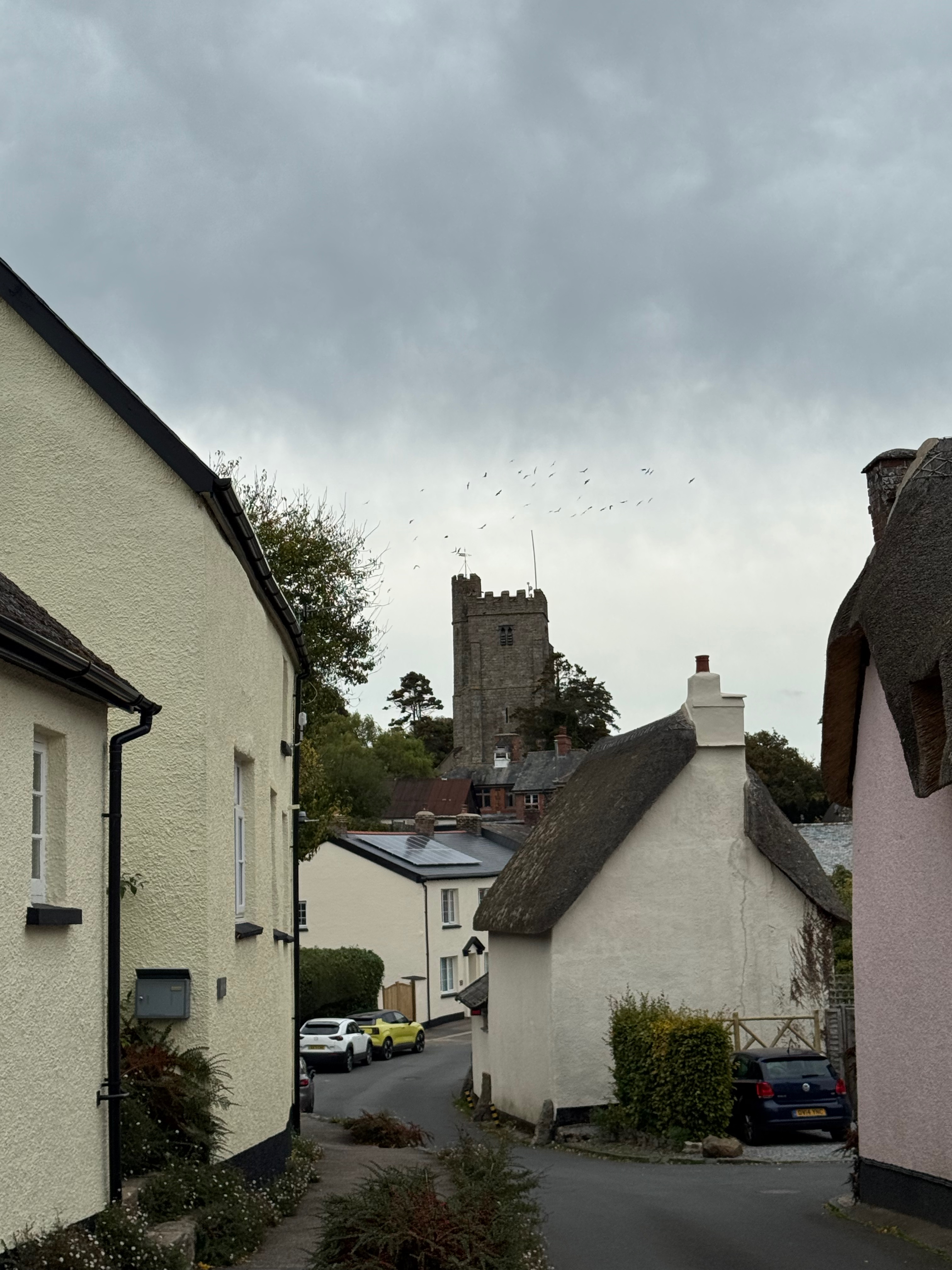
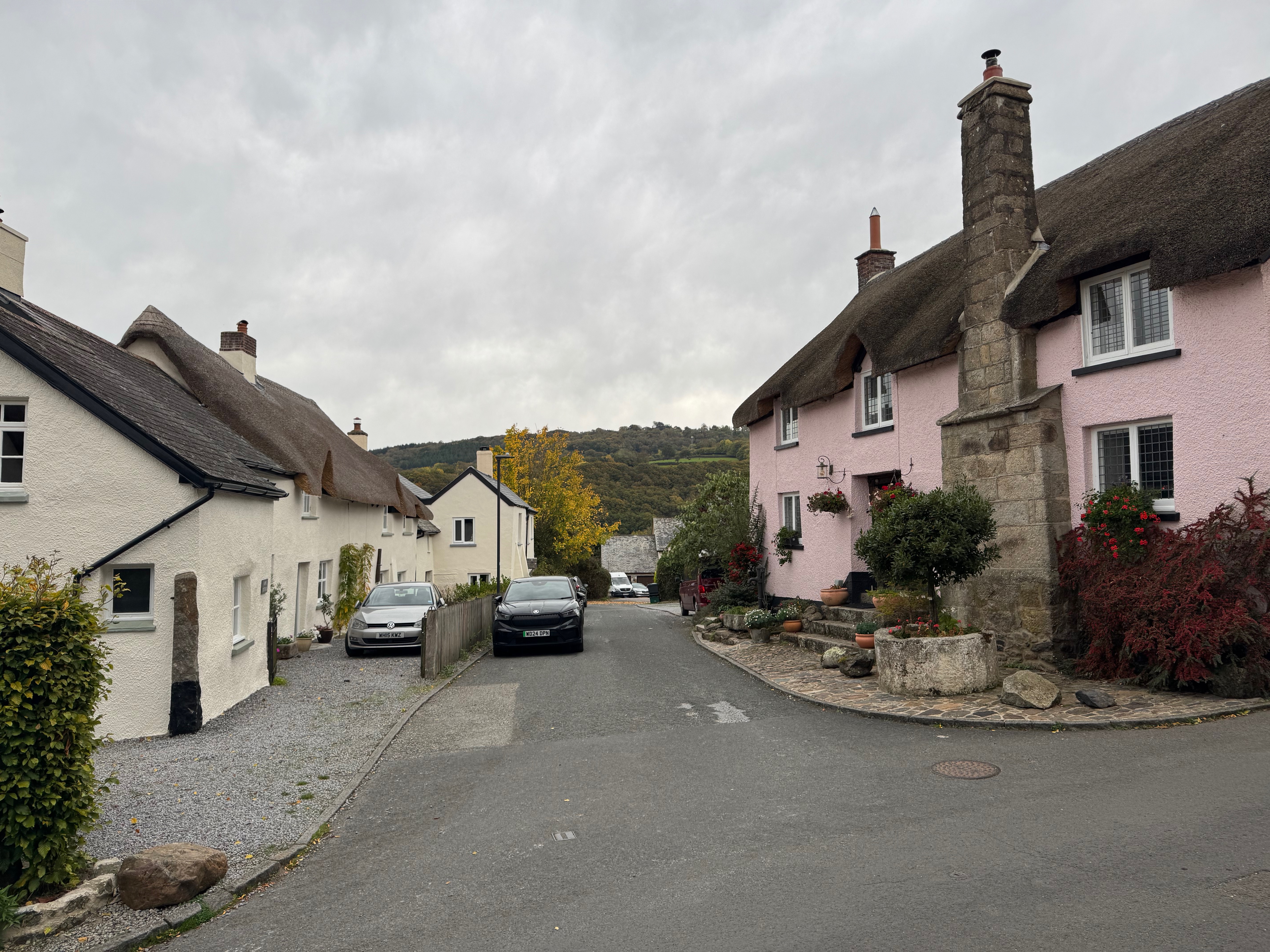
We kept on going through Dunsford Wood until it spilled out onto Boyland Road, and then took an abrupt right turn and followed the road up the hill, allowing it to give us lovely views back towards the woods but also forwards over rolling Devon fields and farmland. At one point, we felt like Lilliputians as we passed Boyland Farm with some of the biggest rhubarb leaves we have ever seen! Absolutely ginormous—sadly, these are decorative rhubarb and, in fact, toxic to eat! We could even see the Lawrence Belvedere in Haldon, which we visited a few weeks back, and eventually we saw the Church of St Mary in the picture-postcard village of Dunsford. So many beautiful old cottages with thatched roofs. There was a beer and cider festival going on in the village hall as we passed—lots of locals enjoying themselves.
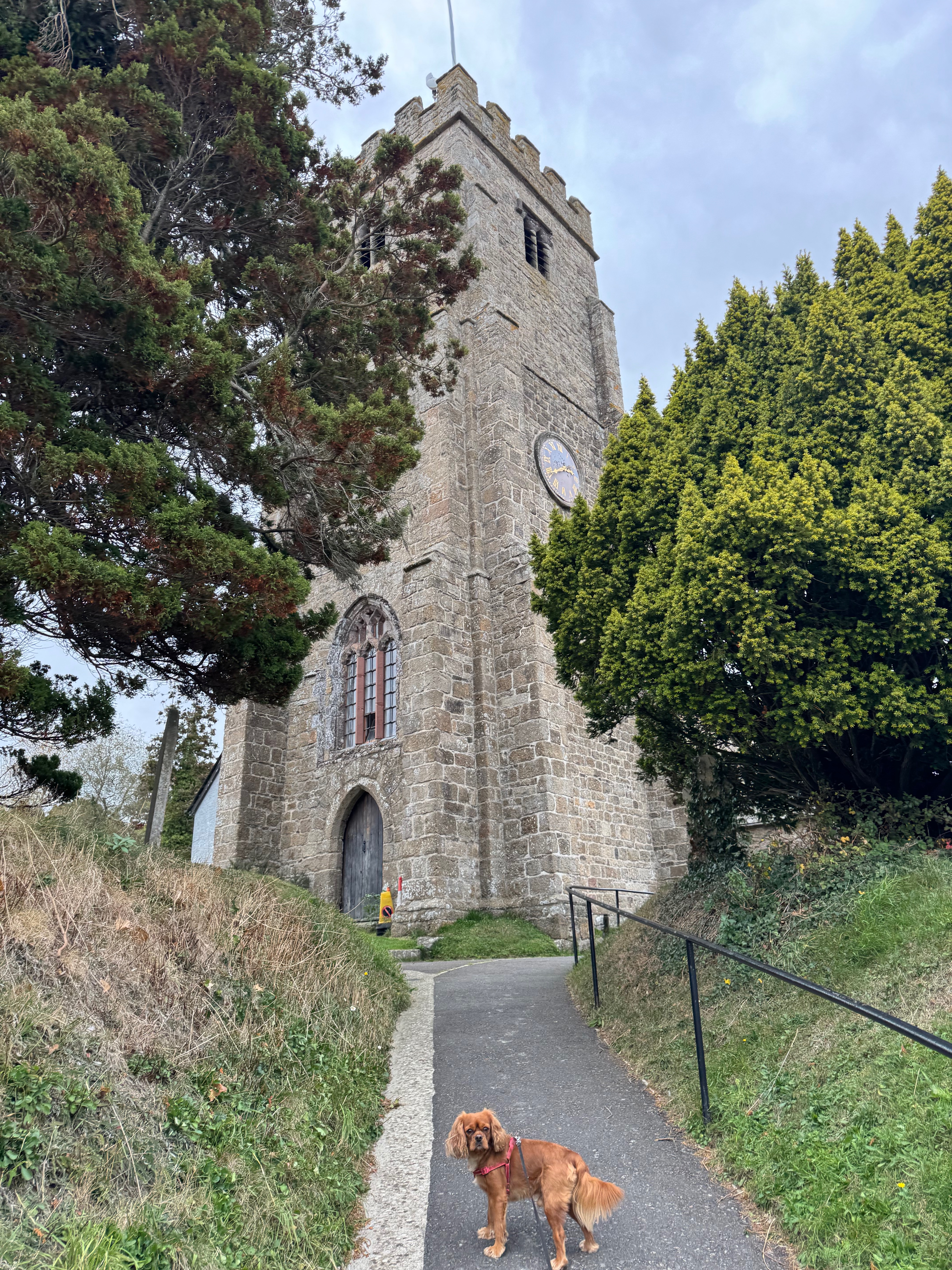
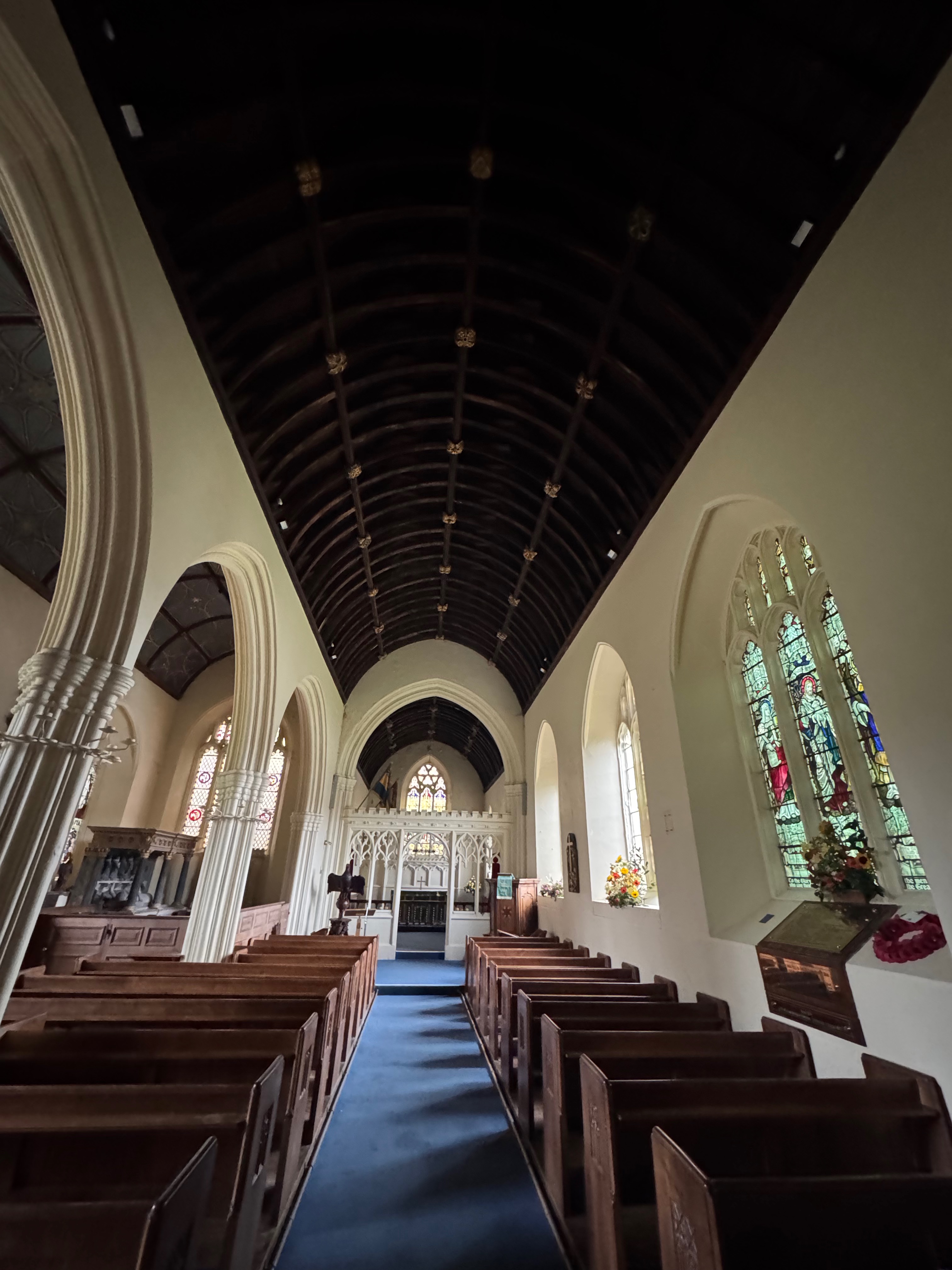
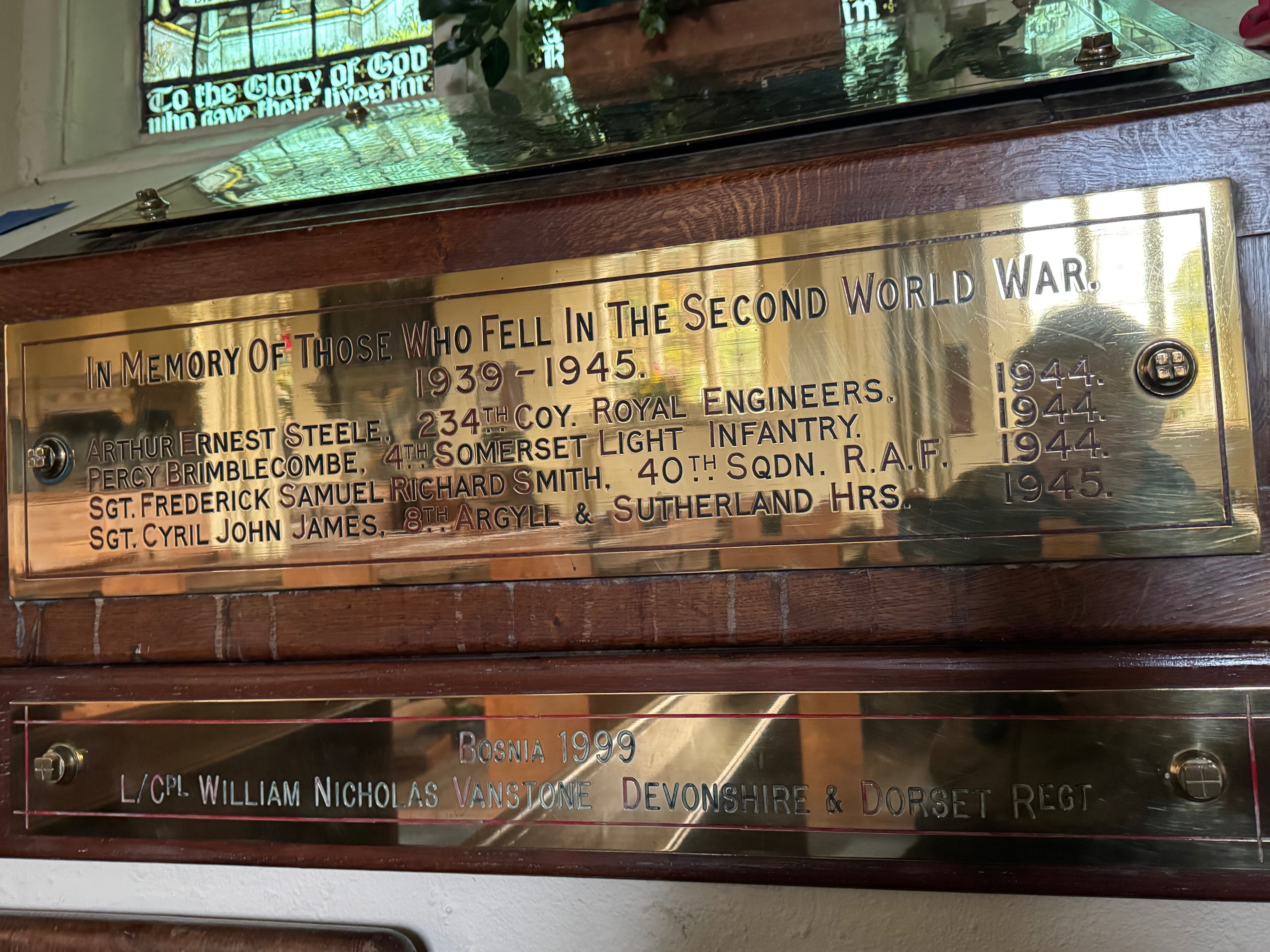
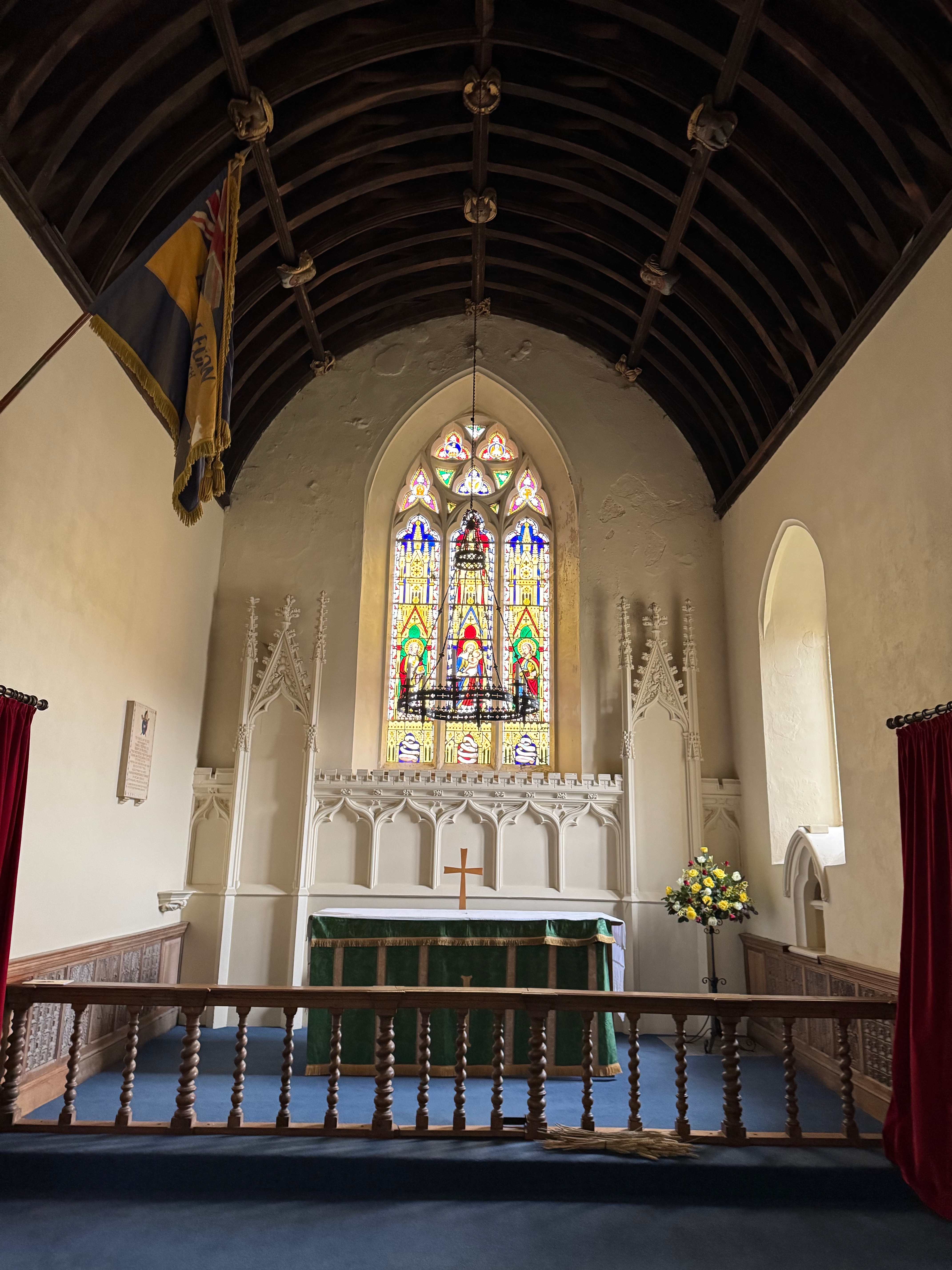
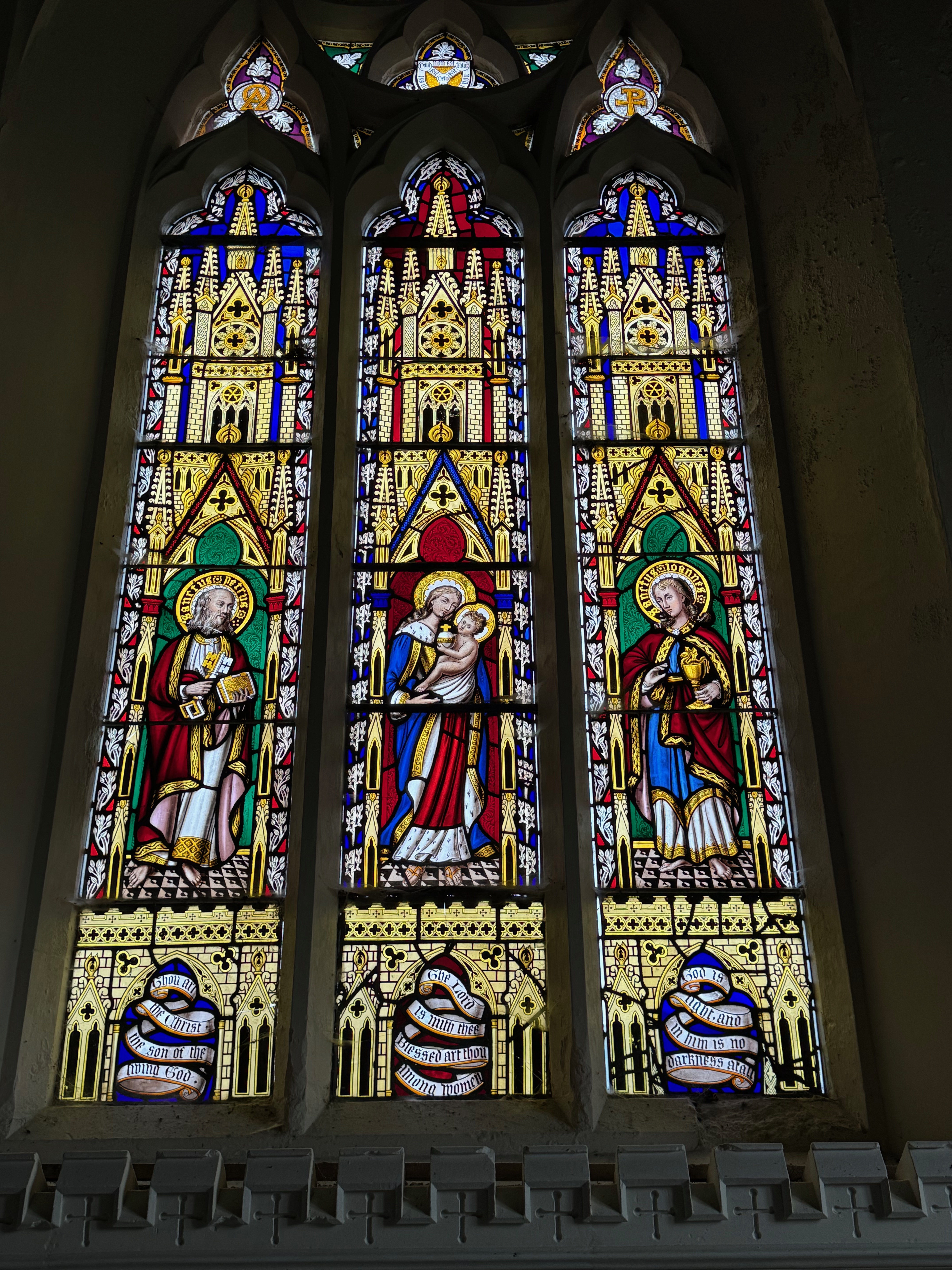
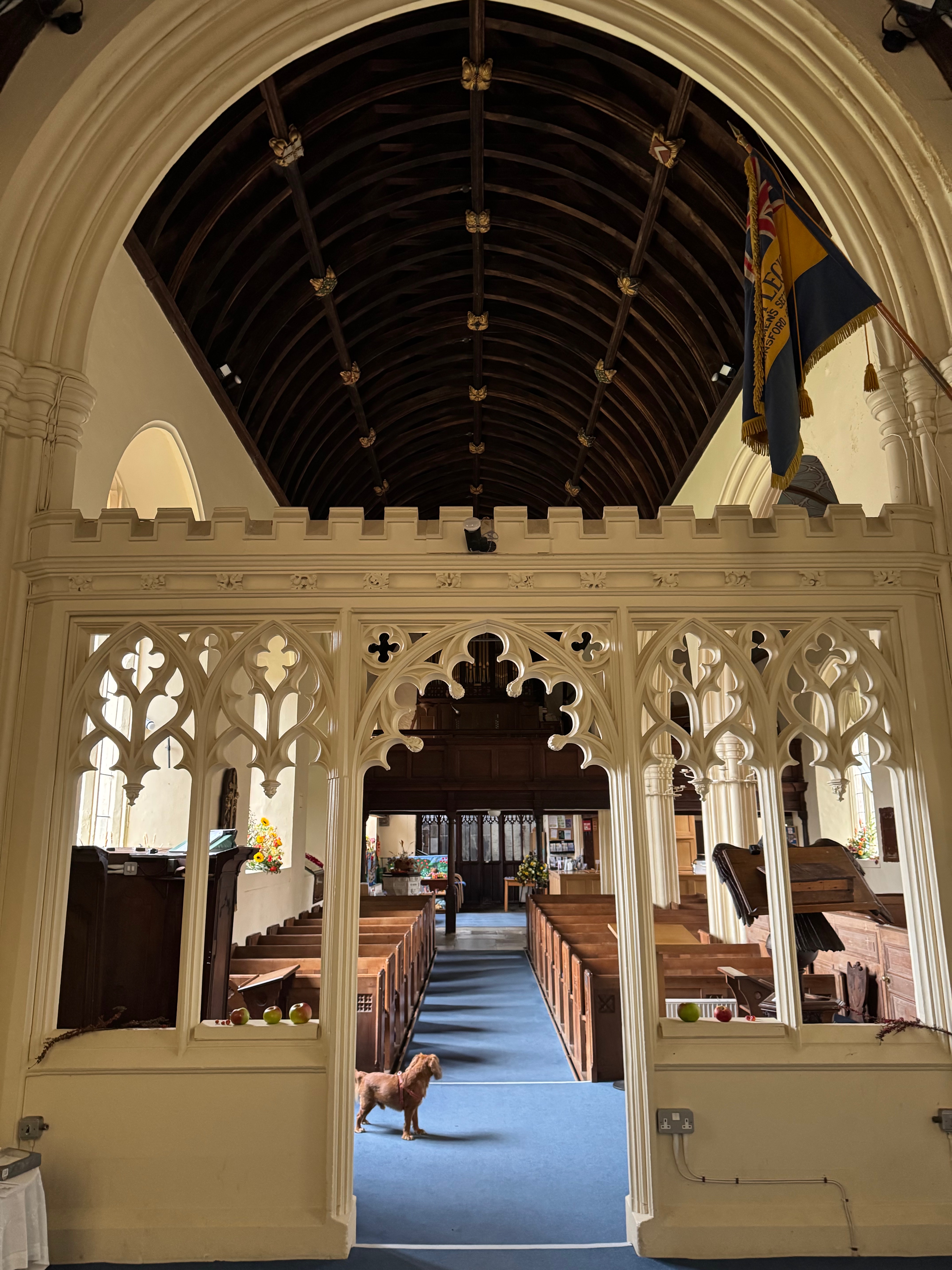
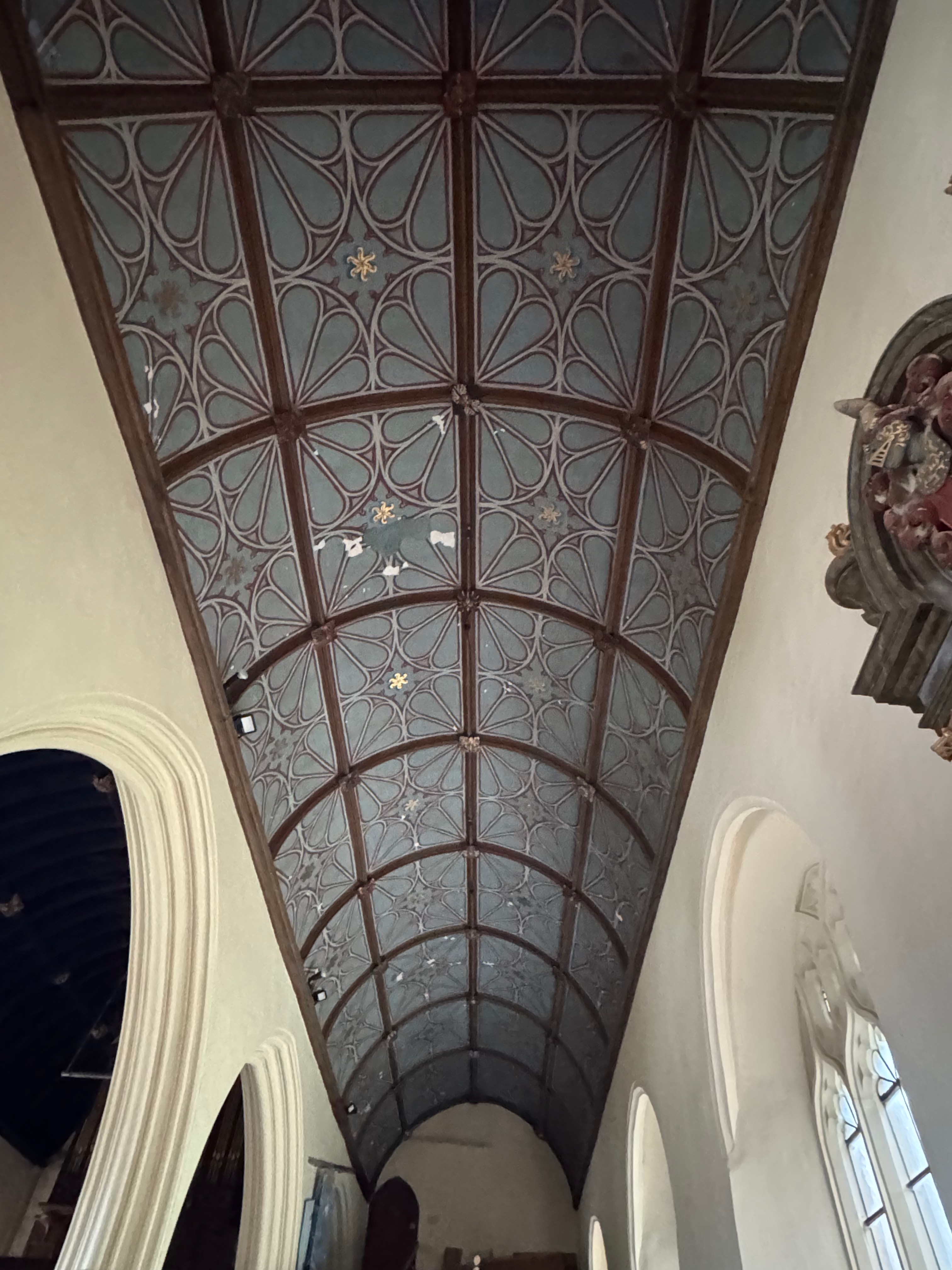
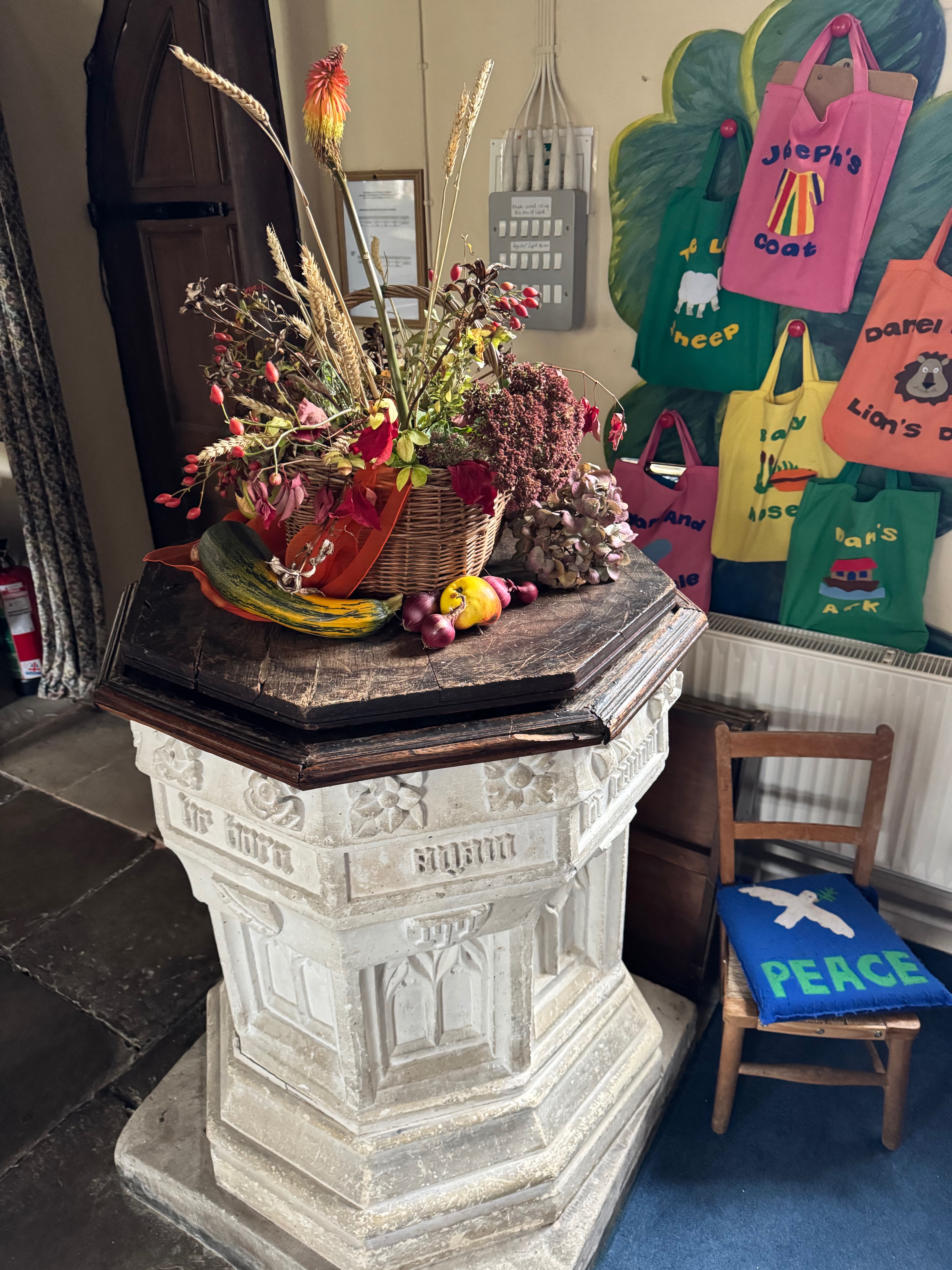
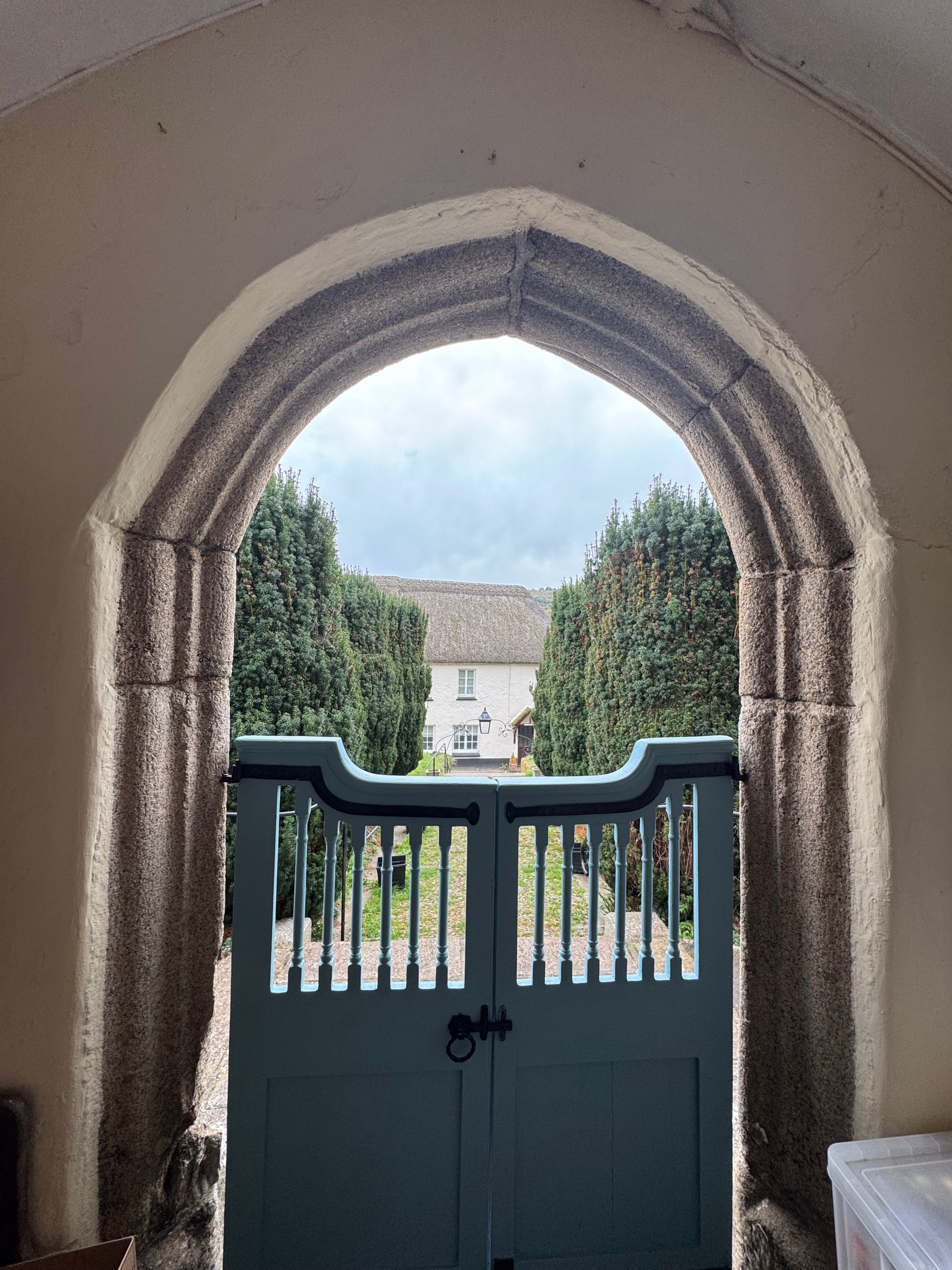
We were heading to the Church of St Mary though. This is a beautiful and uncharacteristically vibrant church which has modernised itself whilst keeping its history and its Victorian upgrades all within the confines of its charming 15th-century body (although there has been a church here at least as far back as the 13th century). It was beautifully adorned with fruit and vegetables in the aftermath of harvest festivities. Yet again, this huge church for such a small village hints at the wealth of Devon at the apogee of the sheep and wool heyday. It has an unusual upstairs organ at the back.
 |
|
|
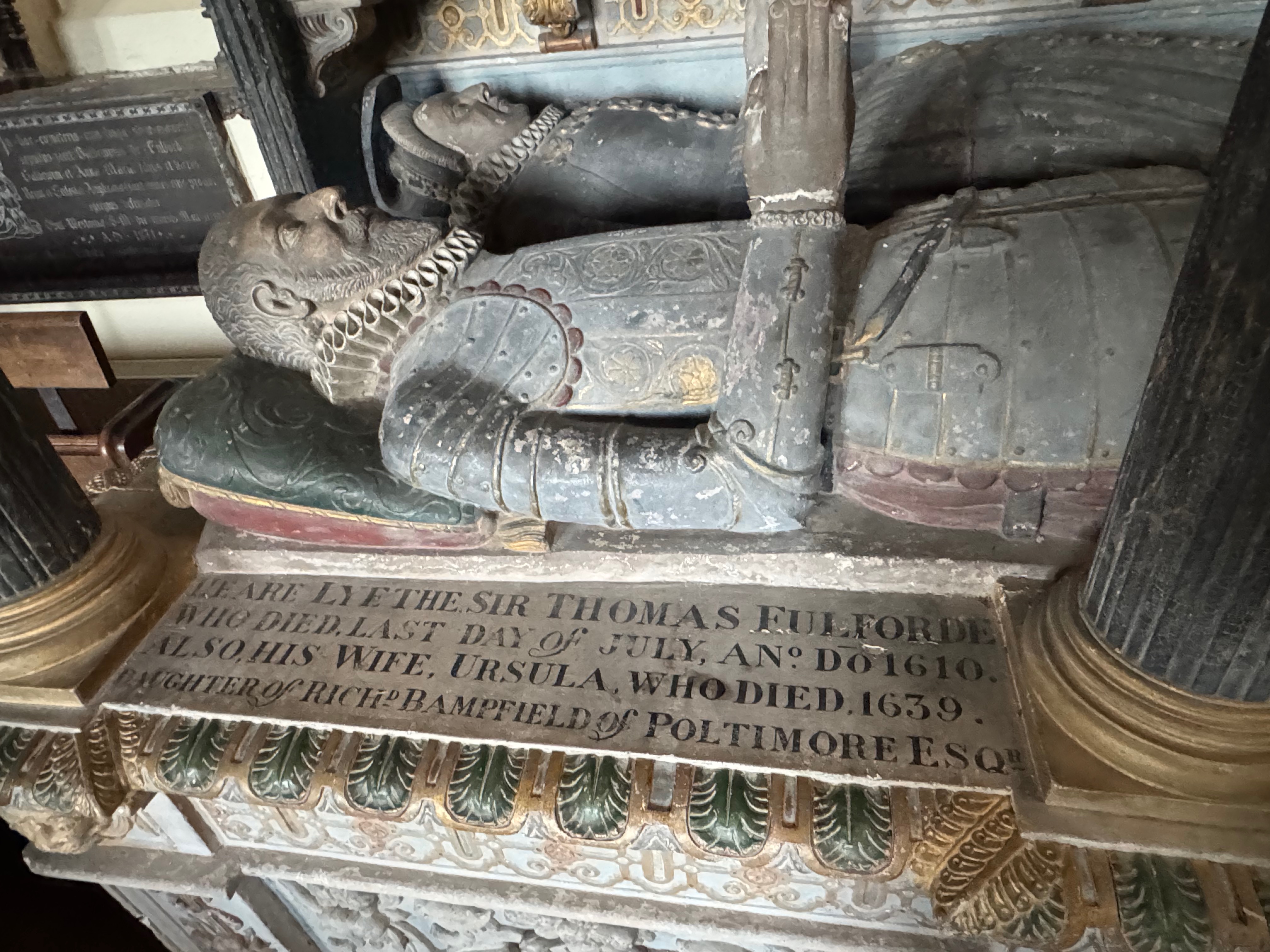
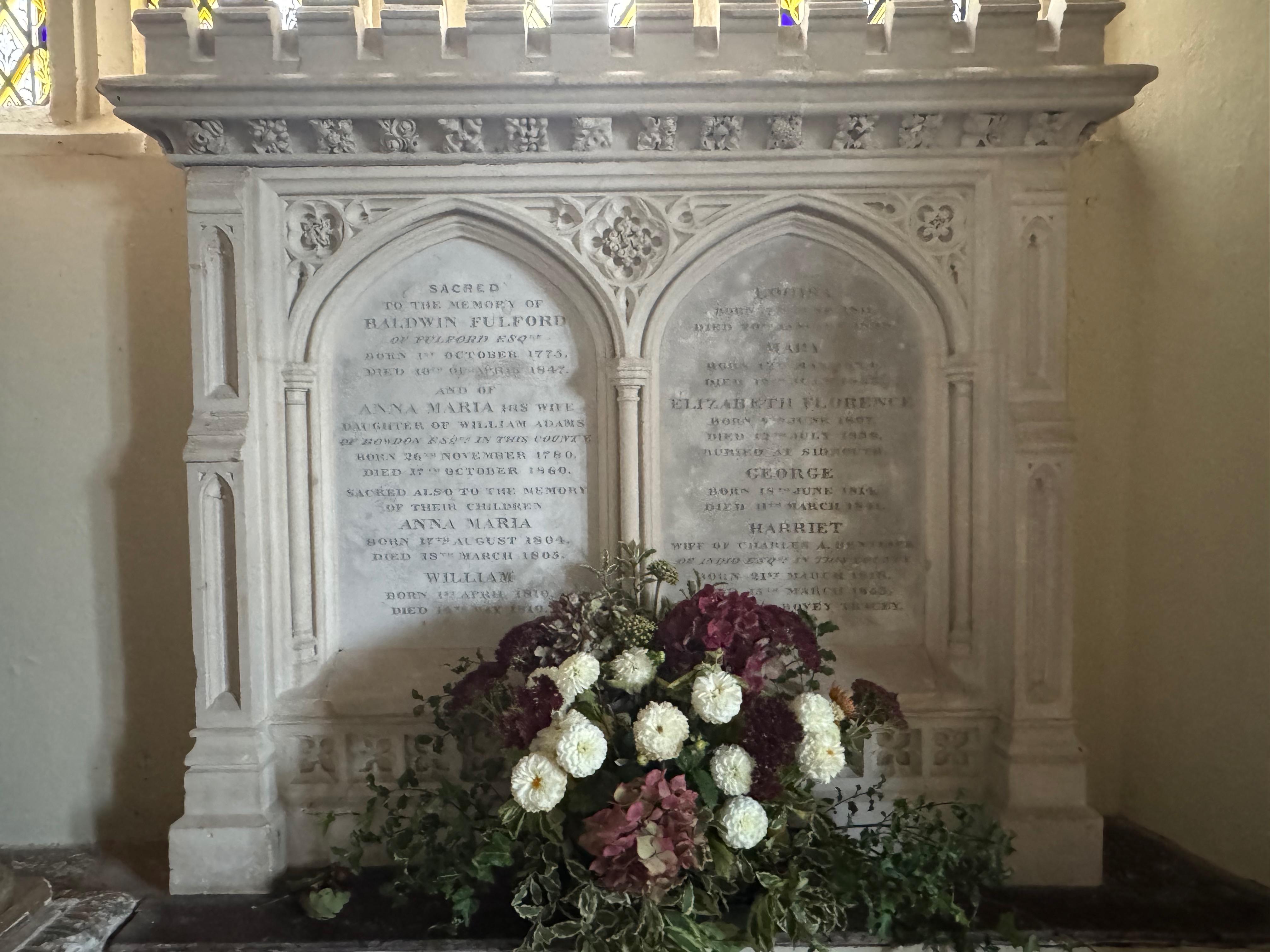
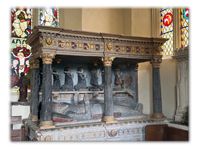
The Fulfords are particularly well represented in this church, as their manor house was just two miles north of the church. Indeed, the house itself was caught up in the English Civil War, as the Fulfords were strong Royalists before their home was besieged for ten days. Eventually, Thomas Fulford (junior) surrendered to Sir Thomas Fairfax himself—the commander of the Parliamentary armies. Oh, and he was also related to Elizabeth Sydenham through his grandfather. She had married Sir Francis Drake in 1585 as his second wife. To say that their family vault is amazing is something of an understatement. You can see the effigies of Sir Thomas Fulford and his wife Ursula Bampfield, and behind them are all their children neatly carved with the Fulford Coat of Arms impaling the Bampfield Coat of Arms. One of those children, the fourth child Mary, was to marry Sir Fernando Gorges who became the military governor of Plymouth in the aftermath of the Spanish Armada and was at the forefront of colonisation attempts in North America.
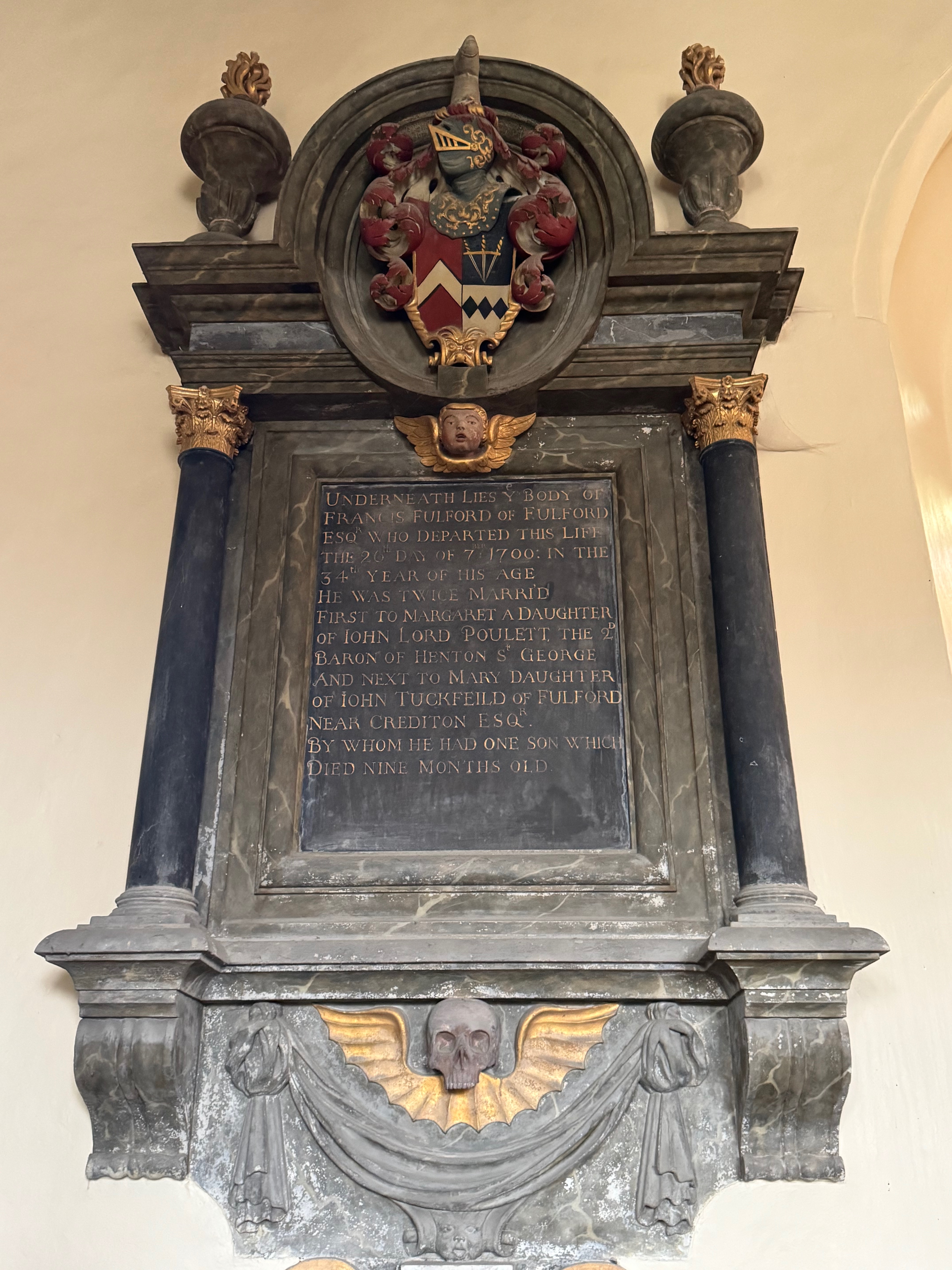
Nearby is a memorial to the next generation of Fulfords, who married into another illustrious family—the Pouletts—another family with strong connections to the Royalist cause. Although, intriguingly, Margaret’s father John Poulett married Katherine Vere. Now, her father was the fascinating Horace Vere. Vere led the English contingent to help the Palatines reclaim their Electorate in the Thirty Years’ War, and Vere was a passionate supporter of King Charles’ sister Elizabeth, who was the mother of Prince Rupert no less! (Rupert was impressed.) Even more fascinatingly, Katherine’s sister Anne married Sir Thomas Fairfax—the commander of the Parliamentarian forces and the one who had received the surrender of the Fulfords at their home. How interesting their family get-togethers must have been!
 |
|
|
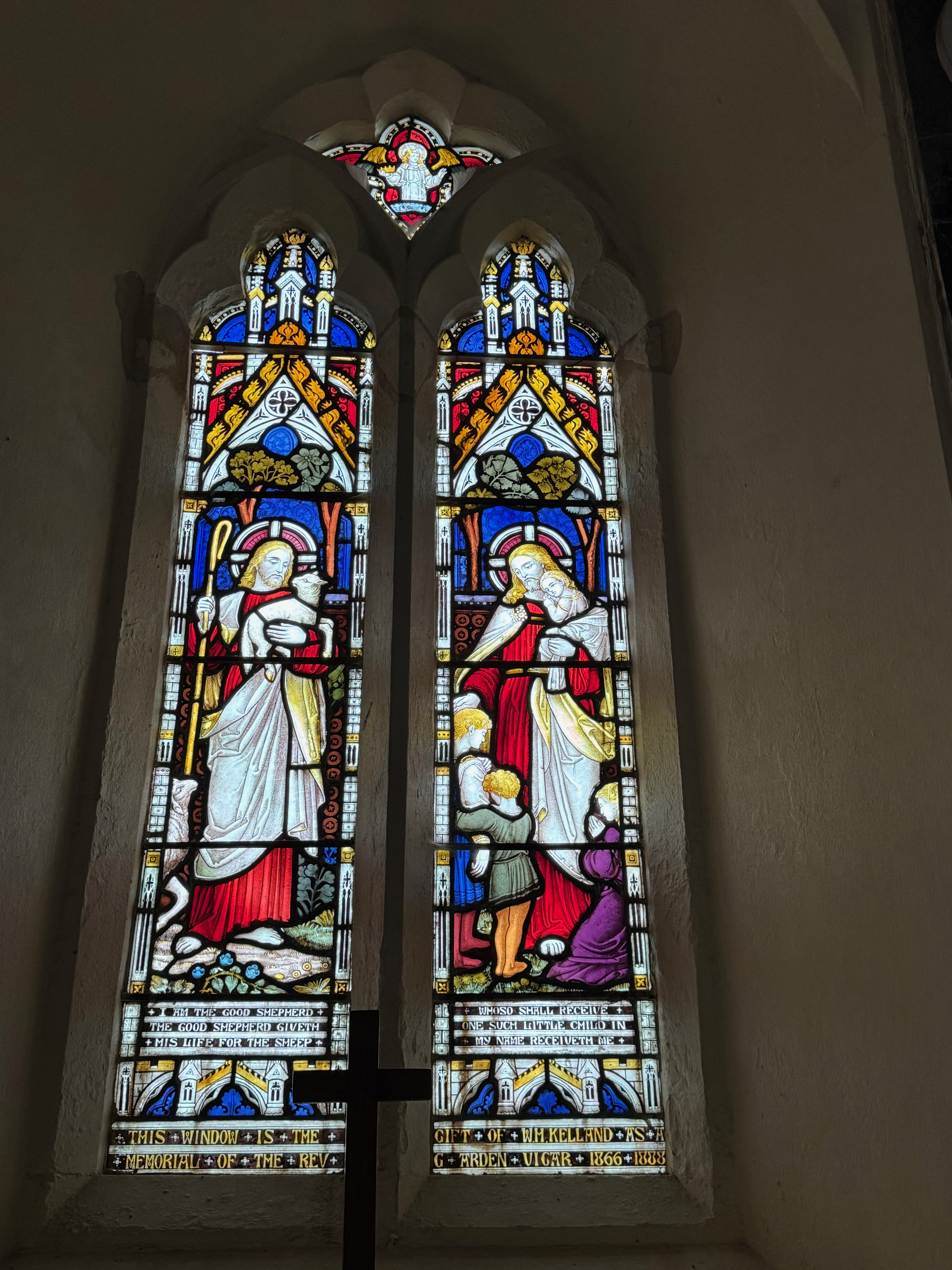
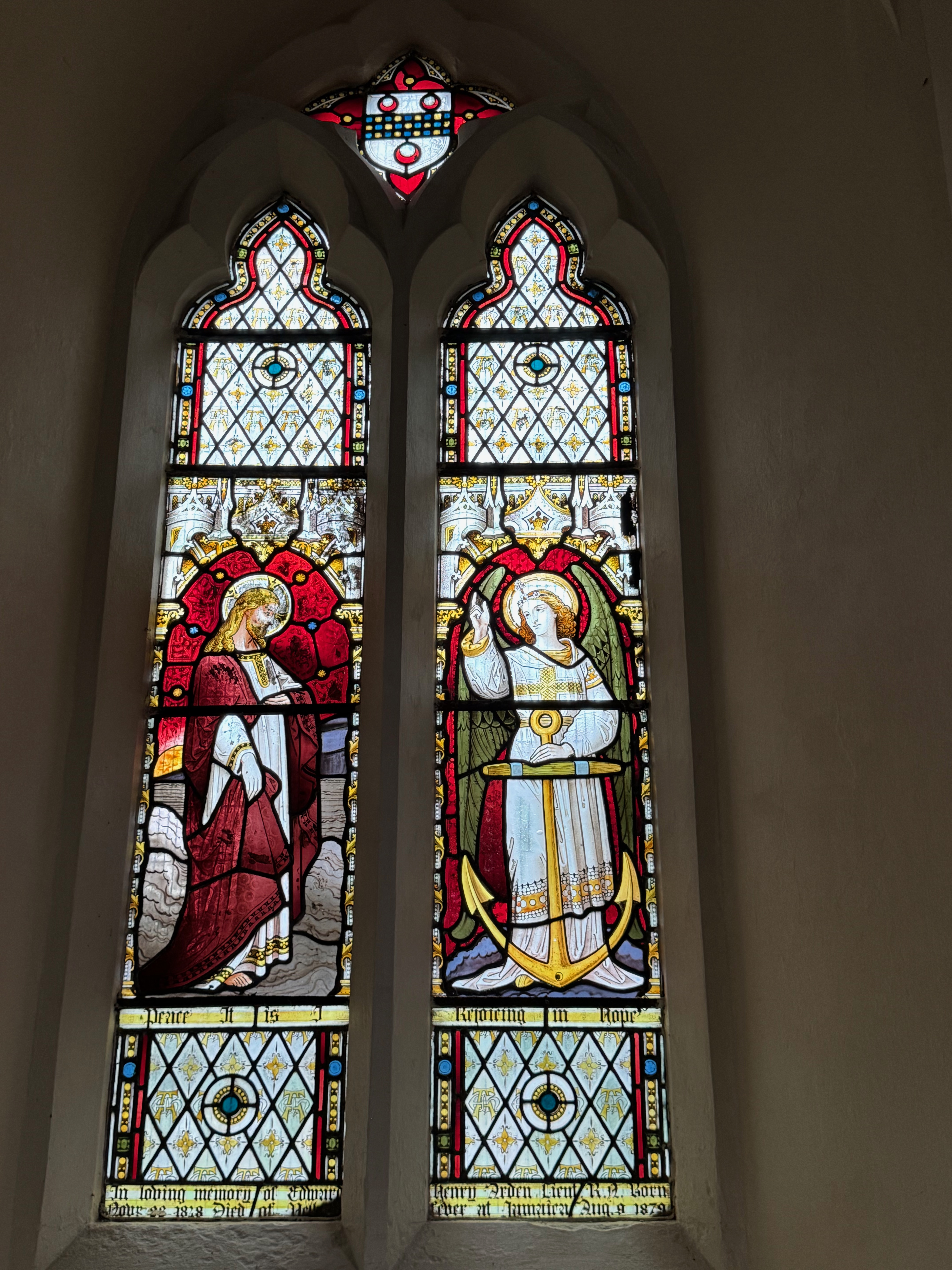
With regards to imperial connections there is a lovely dedication to a Bishop of Montreal, and tucked away is a beautiful stained glass window connecting to yet more imperial history with the death of Lieutenant Henry Arden of the Royal Artillery, who, it says, died of yellow fever at Jamaica in 1879. Opposite, we found a stained glass window dedicated to Reverend G Arden, the vicar of this church, so it seems likely that Henry was a son or brother of the vicar. Jamaica was a notoriously disease ridden posting for soldiers especially in the days of such basic medical understanding of their transmission.
 |
|
|
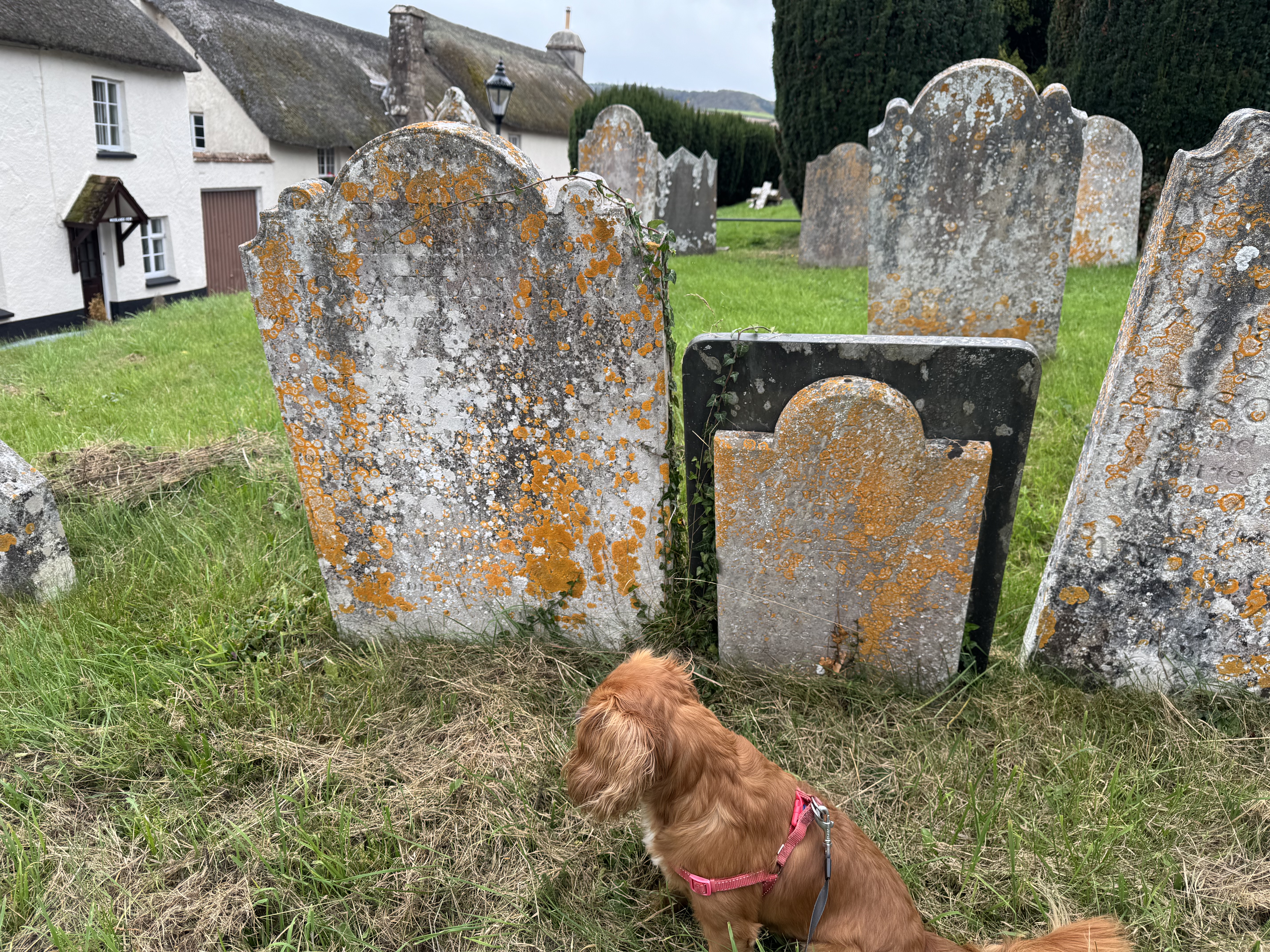
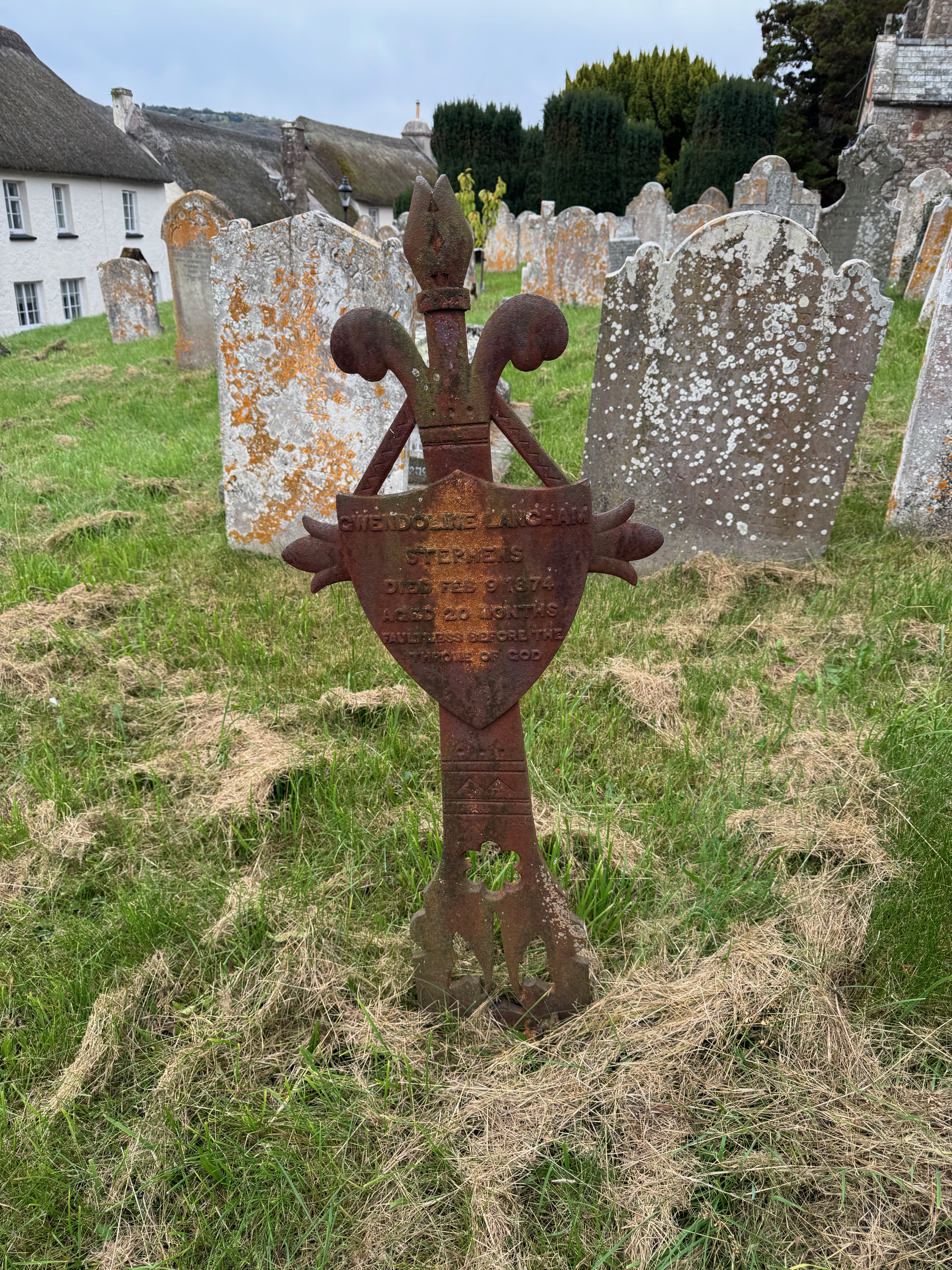
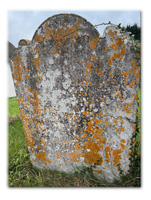
Outside the church is an intriguing, if not very clear, headstone to Jonathan May, and it says on the headstone that he was murdered as he was returning from Moreton Fair in 1835, aged 45 years. There was something of a sensational trial, where two people were convicted—one was condemned to hang, and the other to be transported to Australia for life. However, on the gallows, the guilty man confessed but said that the other man transported had no part in the death. And yet it took 44 years of legal wrangling to get this conviction overturned—by which time Edmund Galley had taken root in Australia and, although permitted to return home, decided to stay in Australia.
As we made our way back to the car, we gazed in awe at the autumn colours all along the valley. The walk had offered not only a feast for the senses but also a deep connection to Devon’s layered past—from medieval churches and Civil War sieges to imperial legacies and local lore. It’s remarkable how a single day’s journey can weave together centuries of history with the quiet beauty of falling leaves and flowing rivers. Devon never fails to surprise, and this walk was a vivid reminder of how much there is still to discover.
|