

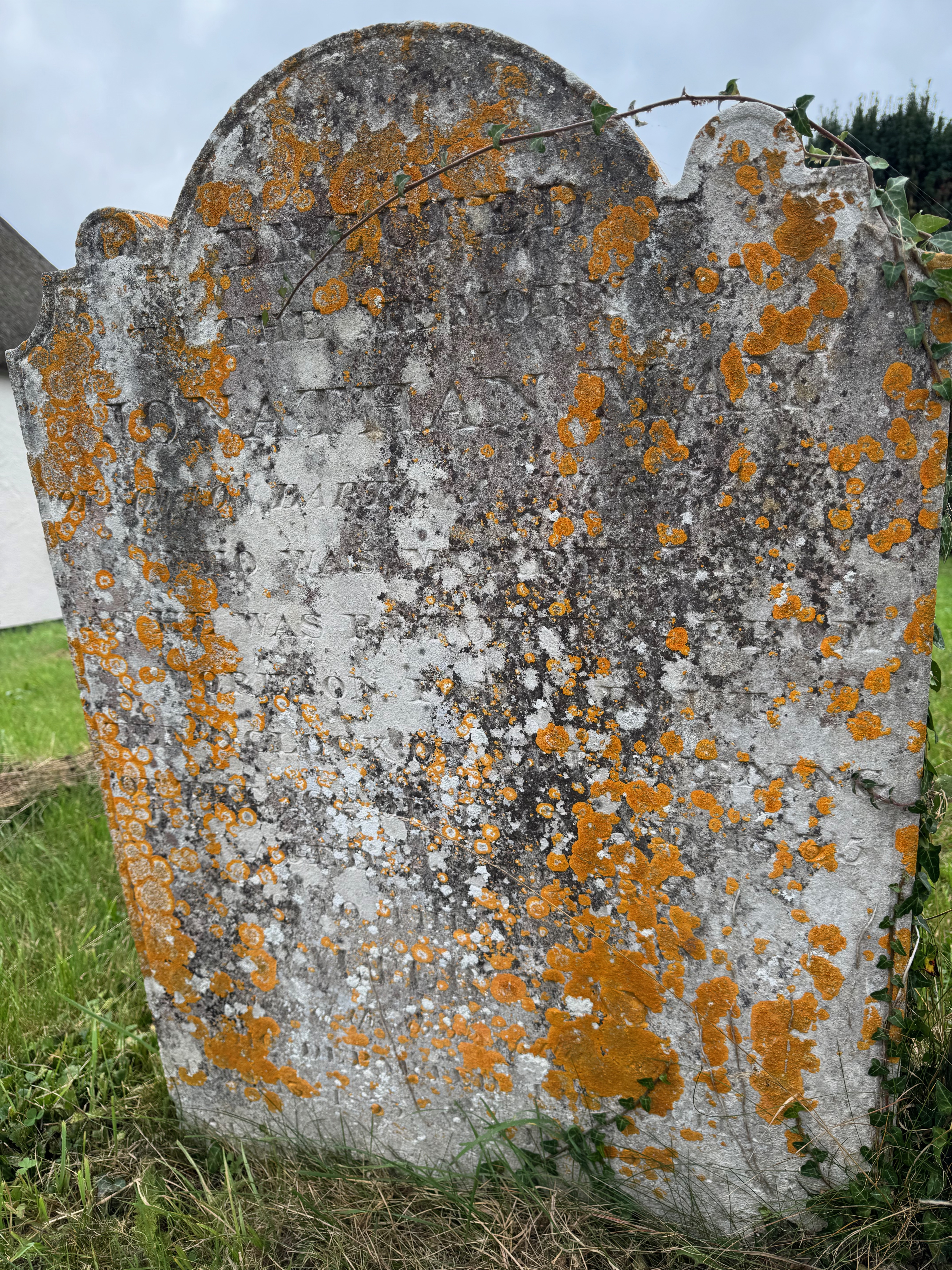
It is hard to read but this is a fascinating gravestone in the graveyard of the Church of St. Mary. It reads: "JONATHAN MAY OF SOWTON BARTON IN THIS PARISH WHO WAS MURDERED AS HE WAS RETURNING FROM MORETON FAIR ABOUT TEN O’CLOCK ON THE EVENING OF THE 16TH OF JULY AD 1835 AGED 48 YEARS." This stark wording is unusual for the period: most gravestones avoided direct mention of violent death. Here, the community clearly wanted the circumstances remembered, fixing the following tragedy into the parish’s collective memory:
On the evening of 16 July 1835, Jonathan May, a respected farmer from Sowton Barton near Dunsford, set out from Moretonhampstead after a long day at the Great Summer Fair. The fair was the highlight of the season: three days of livestock sales, wrestling matches, side-shows, and entertainment that drew crowds from across Devon. It also attracted less savoury characters – pickpockets and petty criminals who followed the fair circuit in search of easy prey. May had sold cattle, collected payment for oak bark from Thomas White the tanner, settled a shoemaker’s bill with George Norrish, and enjoyed refreshment at the White Hart, where he had stabled his horse. Around 10 p.m. he left the inn, passed through the toll-gate near Folly Cottage where James Norsworthy spoke with him, and began the ride home. He would never arrive.
Near midnight, Nicholas and Grace Taverner, walking home with family, found May’s horse loose in a hedge on the road near Jacob’s Well. Alarmed, Nicholas rode back up the road and discovered May lying unconscious, his head battered, his pockets rifled. He hurried to rouse Dr Alfred Puddicombe in Cross Street, then fetched a cart to carry the injured man back to the White Hart. Dr Ponsford, May’s own physician, joined him, but despite their efforts Jonathan May died the following evening. A bloodied stick was found near the scene, and later his pocketbook was discovered rotting in a brook near Chudleigh. His watch and money were gone.
The investigation quickly focused on two men with criminal reputations: Joseph “Buckingham Joe” Oliver and Edmund “Turpin” Galley. At the Exeter Assizes in July 1836, the court heard testimony from townsfolk who had seen May that night, and from Elizabeth Harris, a travelling woman with a record of theft. She claimed she had seen Oliver and Galley ambush May, strike him with a heavy stick, and rob him. Other witnesses placed the men in the area, though their accounts conflicted. Doctors testified that May’s injuries could not have been caused by a fall from his horse, but only by deliberate blows. The jury convicted both men. Oliver was hanged, though even on the scaffold he insisted Galley was innocent and named another man – “the Kentish Youth” – as his true accomplice. Galley was transported to Australia, where he continued to protest his innocence.
The case became notorious. A detailed map of Moretonhampstead, showing the inns and houses connected with the story, was produced at the trial and still hangs in the White Hart today. Locals like Woolland Harvey, an attorney and friend of May, pressed for further investigation, convinced that justice had miscarried. For decades, influential supporters in England campaigned on Galley’s behalf. Successive Home Secretaries resisted, but the doubts would not go away. Finally, in 1879, more than forty years after the crime, the House of Commons debated the case and Galley was granted a free pardon.
For Dunsford, the tragedy had a special poignancy. Jonathan May was brought back to his home parish for burial, and his grave in St Mary’s churchyard remains a quiet reminder of the violence that cut short his life. While the trial and its controversies played out on a national stage, the loss was felt most deeply in the Teign Valley, where May had farmed and worshipped. His story links the bustling fairground of Moretonhampstead with the peaceful lanes of Dunsford, and his resting place ensures that the memory of the crime is not only a matter of legal history but also part of the village’s own heritage.
The murder of Jonathan May was more than a local tragedy. It exposed the dangers of rural travel in the 1830s, the lawlessness that fairs could attract, and the uncertainties of justice in an age when trials were swift and evidence often shaky. It also became a landmark in legal history, remembered for the extraordinary persistence of those who fought to clear Galley’s name. For Moretonhampstead and Dunsford alike, the story remains woven into the fabric of place: a tale of violence, injustice, and memory that still echoes across the Teign Valley.

