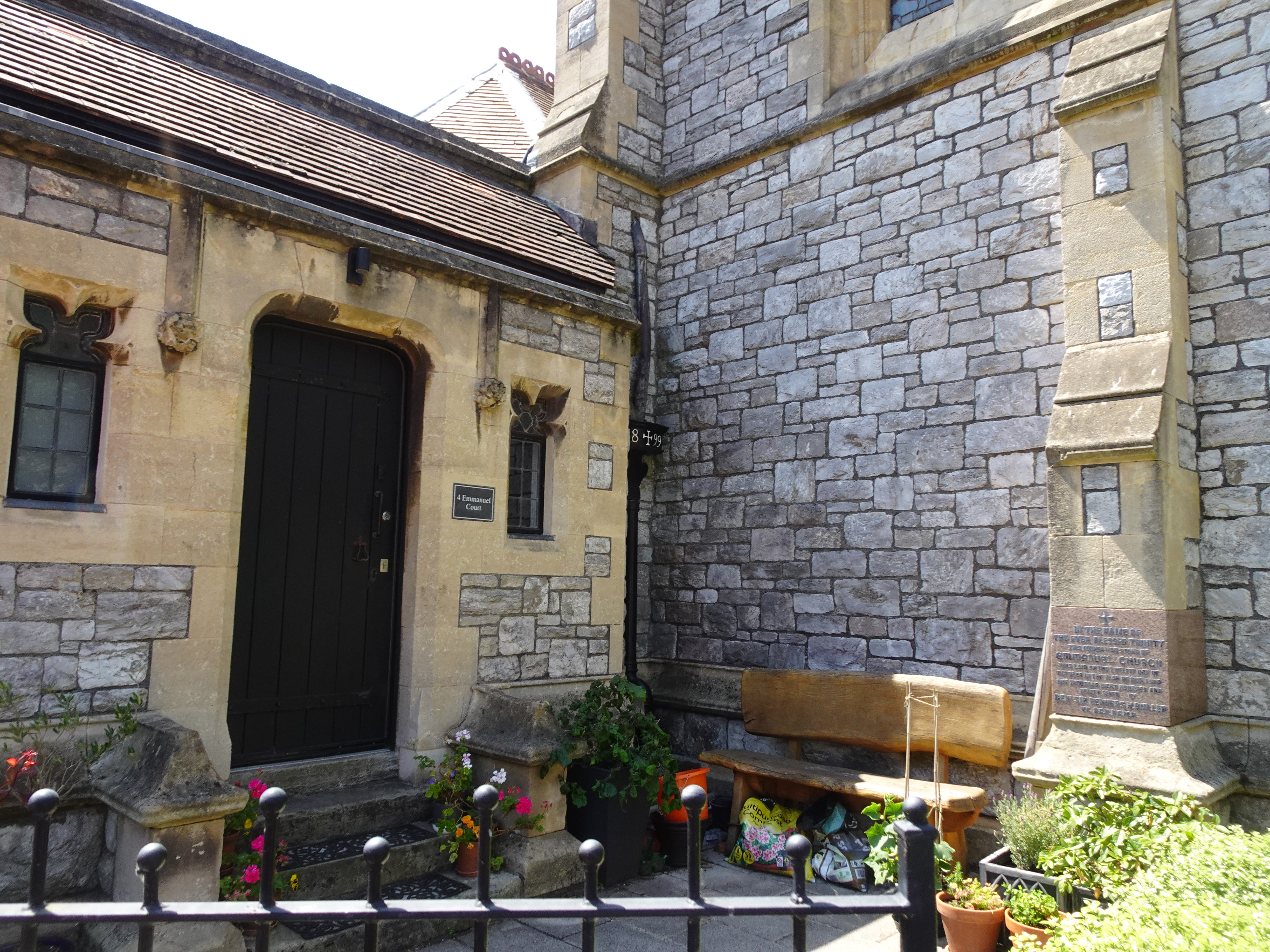
Emmanuel Church was a late Victorian addition to St Thomas parish, built to address the shortage of seating. The first Emmanuel was an iron structure erected in 1887 for £279 10s. St Thomas parish had 6,600 inhabitants and only 600 seats, so a district was defined between Cowick Street, Buddle Lane, Exwick Road and the Exwick boundary, with an estimated population of 2,500. The iron church stood on land donated by Sir Redvers Buller at the corner of Okehampton Road and the path to Exwick, west of the railway line. It was the third church west of the river, after St Thomas and St Andrew’s.
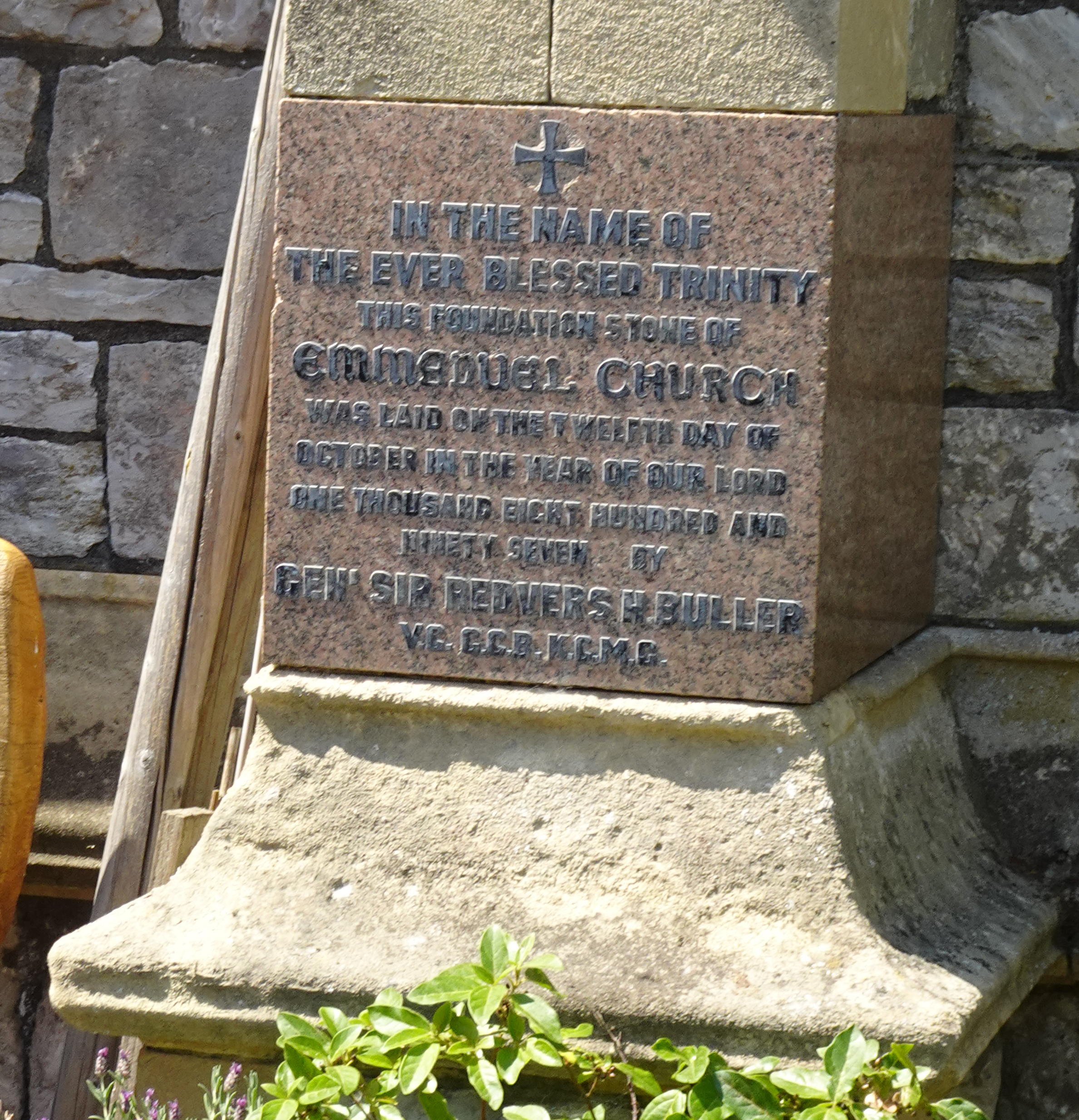
By 1892 the iron building was inadequate. A committee was formed to plan a permanent replacement, and a nationwide design competition was advertised. One hundred and nineteen designs were submitted. Harold Brakespear, A.R.I.B.A., of Corsham, Wiltshire, was selected. Messrs N. Pratt & Son of Clyst St Mary built the church for £7,088. On 12 October 1897 General Sir Redvers Buller laid the foundation stone, beneath which newspapers and coins were placed.
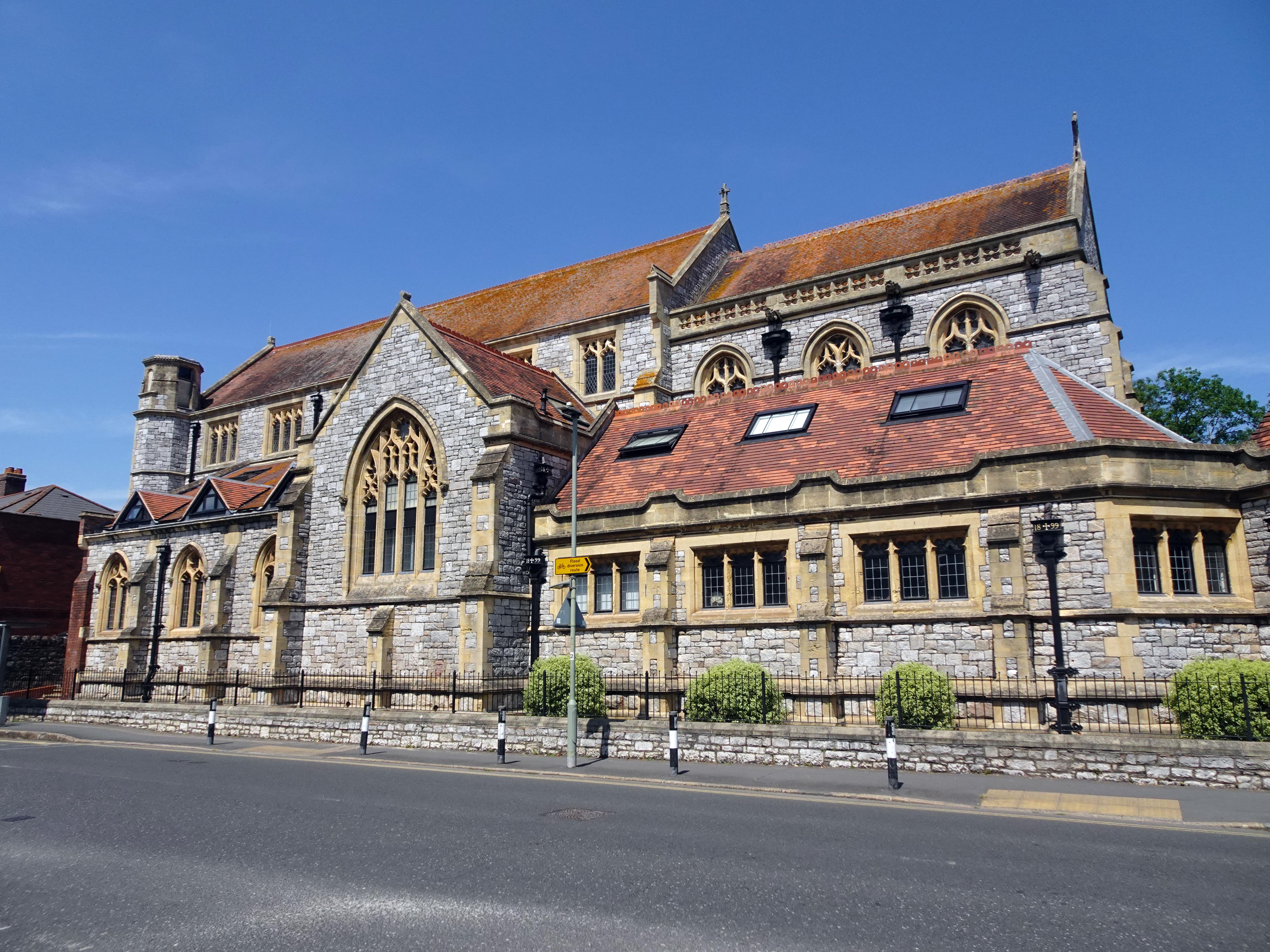
The new church was early Perpendicular in style, built of grey Babbacombe limestone with a tiled roof. Inside, the walls were lined with red stone. Freestone pillars with carved capitals divided the four nave bays. Windows were in Bath stone. The plan comprised nave, north and south aisles, north and south transepts, chancel and seating for six hundred. The nave had clerestory windows and a wagon roof. Entry was via a south door. The font was octagonal, of freestone and red marble. The pulpit was carved oak. The transepts were separated from the nave by arches, and the chancel arch was narrow. Chancel aisles existed on both sides; the south aisle served as an additional chapel with a second altar. Painted figures of saints and prophets in this chapel, and seraphim behind the main altar, were by the same hand. The sanctuary floor was tiled, with a credence on the north side and sedilia on the south. Gas lighting was replaced by electricity in May 1929.
The church opened on St Andrew’s Day, 30 November 1899, at a service attended by the Mayor and Corporation. The Bishop of Exeter performed the dedication. A separate consecration service was held on 2 October 1900, with the Archbishop of Canterbury preaching. Emmanuel became a parish church on 29 April 1910, with the Rev. C. H. Williams as first vicar.
In 1924 a memorial window to Captain R. F. Scott was unveiled by Captain Edward Evans RN. It was damaged by a bomb in 1942 and restored in 1948. The same bomb damaged the roof, and the church remained unusable until repairs were completed in March 1943.
Flooding in October and December 1960 caused extensive damage to the flooring and furnishings. Two boys, Dave Bucknell and Terry Roberts, were trapped inside and were rescued by police who reached them by climbing along the backs of buildings and tying ropes to downspouts. BBC footage taken after the flood showed parquet blocks lifted from the floor and stacked in the aisles, with pews displaced. Seventy‑five percent of the floor required replacement.
By the early twenty‑first century all three churches in St Thomas parish faced major repair costs. St Thomas Church alone required £3 million of essential work. The parish was over‑provided with buildings, and Emmanuel was closed in October 2014. Rector Nick Edwards stated that maintaining Emmanuel was no longer viable. Discussions were held with the Riverside Church of Okehampton Street, but by 2016 the building remained unused.
The associated church hall followed a separate trajectory. The first hall, King’s Hall in Okehampton Street, was sold in 1922. A replacement was built in Emmanuel Road and became a local social venue, one of the few halls suitable for dances. During the Second World War Borough Polytechnic from London was evacuated to Exeter and used the hall. It closed in 1976 and was sold to the Northcott Theatre as a rehearsal and performance space. Later financial difficulties at the Northcott left the hall empty.