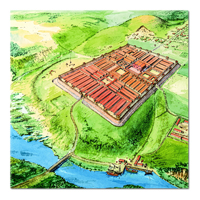
Despite being a Devonian I really do not know Exeter well at all. With my son moving to Exeter that is all now beginning to be corrected. He is moving close to the Quay and yesterday I went up to help sort out his broadband setup. After that was all done Rupert and I could take a little wander. Exeter has a history stretching back to the Romans whose Fosse Way terminated at the river where they had built a fort and settlement. Now the Celtic word for a wide flowing river with plenty of fish was isca. This was not the name of this particular river as far as the Celts were concerned but obviously the Romans seemed happy to use the word presumably after asking the locals “What do you call this?” “What, you mean the flowing river?” “Oh you call it isca, do you?” (Insert Celtic facepalm.) Anyway the Latin for fort was castrum. Once the Romans had left the early Saxons would refer to all old Roman fortified settlements with the suffix ceaster (or caster or chester). The word 'isca' produced a whole family of river‑names; the Esk, the Usk, the Axe, the Ask, the Ouse and of course the Exe - all from the same ancient root, though no doubt helped along by Roman ears mishearing it. There was a similar confusion over Avon but that is for another story. Hence suffice it to say that where the river Exe met the old Roman fort here would become Exe‑ceaster, which probably didn’t take long to morph into the far simpler Exeter.
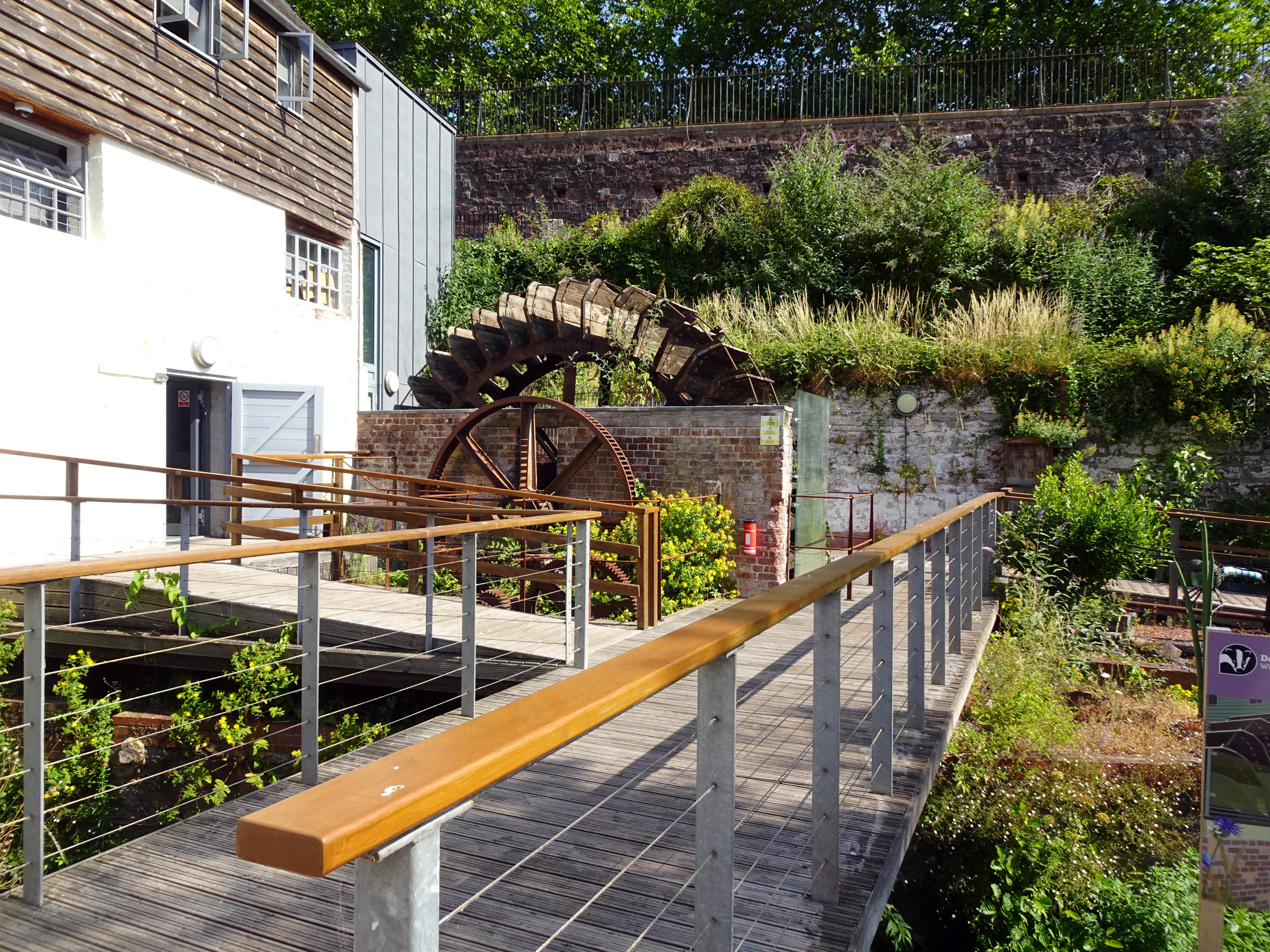
Almost straightaway I stumbled across the delightful Devon Wildlife Trust Cricklepit Mill Wildlife Garden. It is actually the organisation’s headquarters these days, but its real significance is in reminding us of the era when water was one of the main sources of power available to our pre‑industrial forefathers. As far back as the thirteenth century, channels from the river Exe diverted water to this mill to allow its owners to finish woollen cloth for the all‑important Devon wool industry. I keep mentioning how fundamental the wool trade was to Devon’s prosperity and how it helps explain why the county has so many magnificent churches in virtually every village and valley. But it also explains why Exeter grew into such an important urban centre, receiving much of the surrounding countryside’s wool and preparing it for sale. Then, with the river and later the ship canal, it could export that wool with relative ease to the rest of the country or further afield. So when you glance upon Cricklepit Mill, you are not just looking at a pretty waterwheel in a lovely setting; you are looking at one of the engines of economic growth that helped bring so much wealth to both Exeter and Devon.
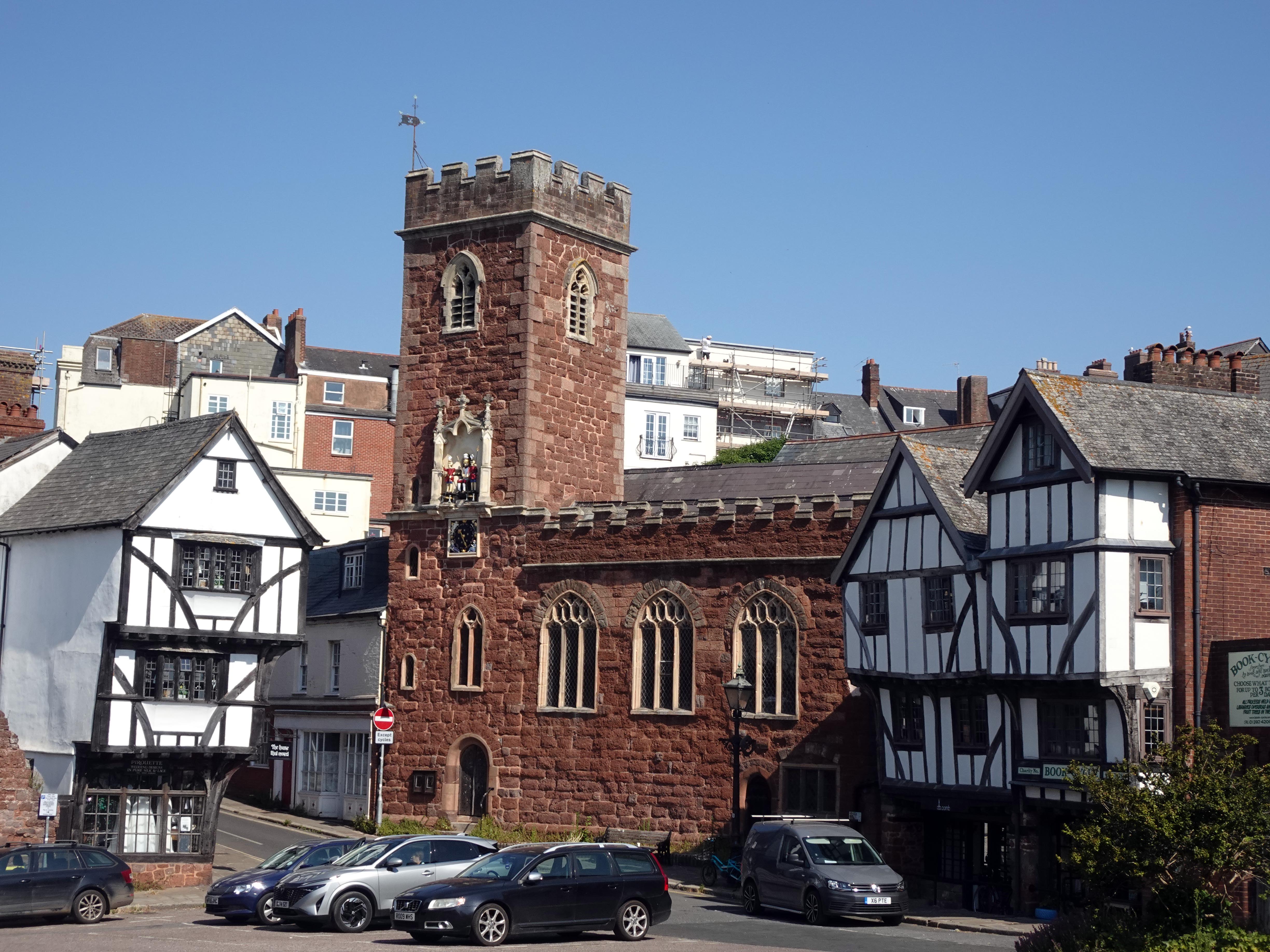
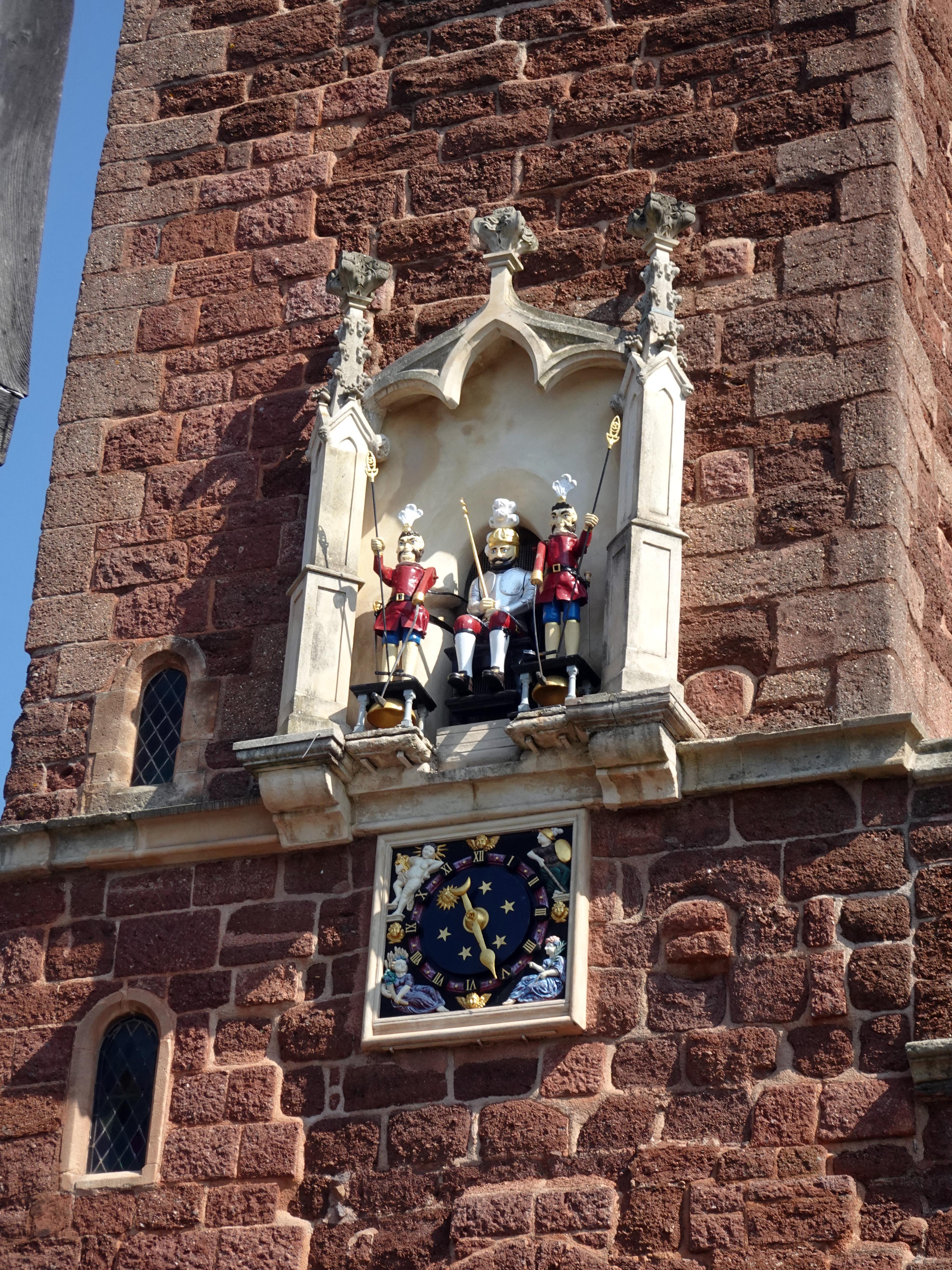
From there we climbed up towards the very busy Western Way but almost immediately caught sight of one of the beautiful twelfth‑century St Mary Steps church. It is surrounded by some beautiful medieval buildings - some of the few to survive the Blitz (and the urban planners afterwards) although at least one of them was moved here to help cluster an effect and remind people what much of Exeter once looked like. This is another name that has mutated in history. Once it was known as St Mary Minor as there is another St Mary known as St Mary Major in the Cathedral Yard. The fact that this one has some steep steps to get into it and that it is next to Stepcote Hill with its own steps to help climb into Exeter meant that over time locals referred to it as St Mary’s by the steps or St Mary’s Steps. Sadly the church was closed today - urban churches do tend to be far more disappointing than rural ones for access. My heart always sinks when the doors of a church are closed. Although you could not enter it, the “Matthew the Miller” clock on the outside is truly enchanting. It dates from the early seventeenth century but supposedly depicts Henry VIII with two guards from the century before. Made by Matthew Hoppin, it was supposedly named after a local miller known for his punctiliousness who lived and worked precisely to the tick of a clock. And of course as Cricklepit Mill tells us, any miller is likely to have lived nearby along the river to power his machinery.
This area happens to be very close to what was once the West Gate entrance into the walled city of Exeter. There is a sign that marks its presence. The Romans first built a gate here in the second century and probably had a wooden bridge extending over the river from this point. If you glance westwards, you can see the remains of the medieval bridge that played a similar role many centuries later. The Saxons reused the city walls and gates, especially when the Viking threat reared its head, although it was the Vikings themselves who managed to get inside and fortify the city against King Alfred in 876, surviving a winter under siege. We don’t know if the West Gate played a role in that action, but we do know that it played a very prominent role in the Prayer Book Rebellion of 1549. The Cornish and Devon rebels used St Thomas’s Church as their headquarters whilst they invested Exeter. With a large quantity of miners among them, the rebels attempted to tunnel under the foundations of West Gate and place gunpowder within it. But the defenders had mining expertise too, and when they realised that mining was taking place they asked all the residents living on the steep hill above West Gate, including those on Stepcote Hill, to place large tubs of water outside their front doors. The defenders sank a shaft into the tunnel and then gave a signal for all the tubs to be overturned simultaneously, creating a rush of water down the hill, into the shaft, ruining the gunpowder and rendering the mine useless.
A century later, in the Civil War, nearly a thousand Parliamentarian defenders of Exeter rode out of this gate in 1643 to attack Royalist positions at Hayes Barton, forcing the Royalists to abandon the position and destroying the manor. The city actually changed hands twice through the course of the war, testing its defences to the limit. But in 1688, although King James might have hoped that Exeter would offer resistance once more to a foreign invading army - in this case the Dutch army of William of Orange - the city was more hesitant. Despite finding the doors closed, the gatekeeper was threatened with death if he did not open them. William landed in Devon precisely because he knew that this part of the country was most opposed to the Catholicism of King James, and sure enough, when the gates were opened, the people of Exeter treated the invaders as heroes, cheering and hollering as they rode into the city. William stayed here for twelve days as he gauged the mood of the rest of the country and especially what his army might do. Once convinced that the country wanted a return to Protestant values, he resumed his march to London, eventually being crowned alongside his wife - and James’s daughter - Mary II. But this was the last opportunity for the gate to have been used in a military capacity. Fittingly, it was knocked down in 1815 after nearly twenty years of warfare, but not once had Exeter been threatened by Britain’s enemies.
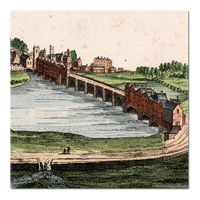
From here we walked down to the medieval bridge in the centre of the roundabout. I have to say that our timing was perfect: council workers were cleaning the area. The last time I was here it was full of rubbish, needles, cans and bottles and various tents, so it was great to see this historic site looking as it should. Considering that work started on this bridge in the twelfth century, the engineering and ambition are remarkable for the era. Eventually it ended up with eighteen arches as the river kept meandering around the floodplain. It was also packed with houses, businesses and, remarkably, not one but two churches on it - and even a chantry chapel. You can never have enough churches on a bridge, obviously. The lump that we see now is the remains of one of those churches, that of St Edmund’s. The other church, St Thomas’s, which was located at the western end of the bridge, was actually moved after it kept flooding and of course still stands, but much further back from the river now. Eventually the medieval bridge fell into disrepair, and in the eighteenth century a new bridge was placed across the river on a slightly different alignment - hence New Bridge Street, which funnily enough now has no bridge where it leads, as later in the 1960s two bridges were built on what is now a large roundabout. It was actually whilst working on these two bridges that they rediscovered that eight arches of the original bridge were still in pretty good condition and revealed them as a centrepiece in the roundabout. Some history is better than no history, but you do have to think that the local council could do so much more with this wonderful relic of medieval engineering expertise. It would make a wonderful venue for an engineering centre and museum, much like the one on the Tamar Bridge between Plymouth and Saltash.
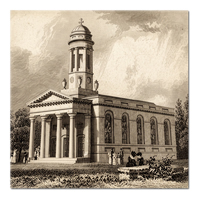
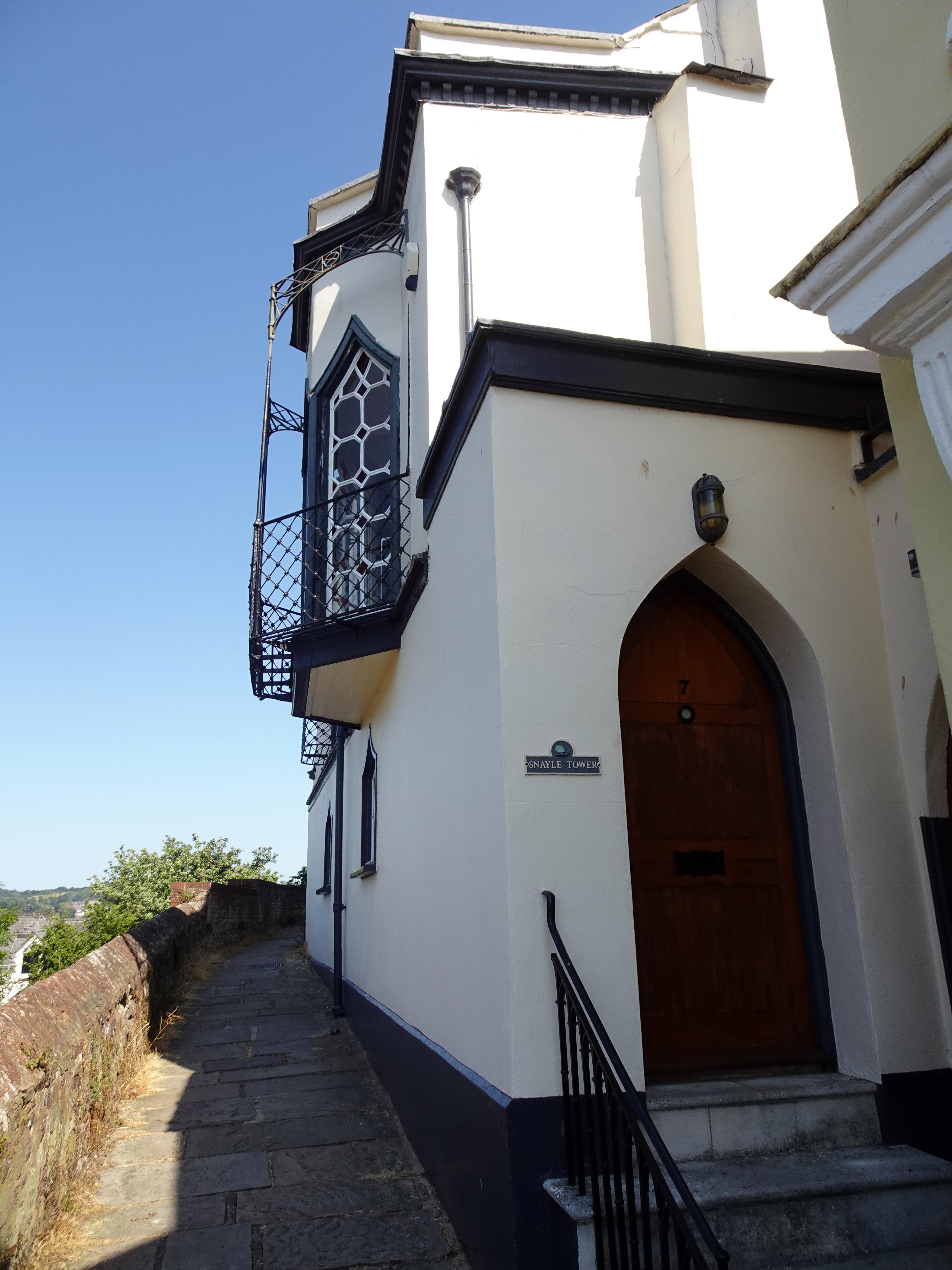
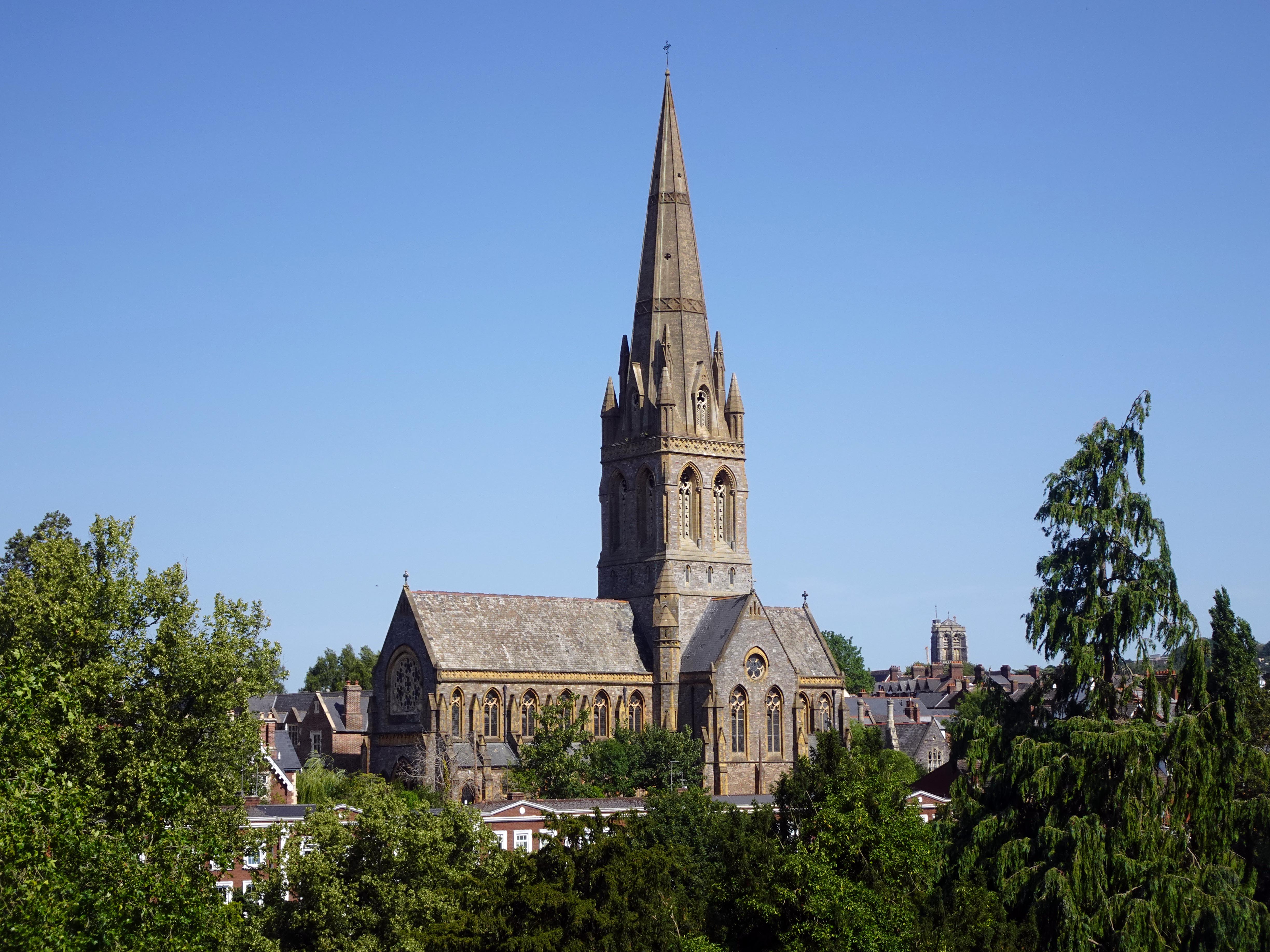
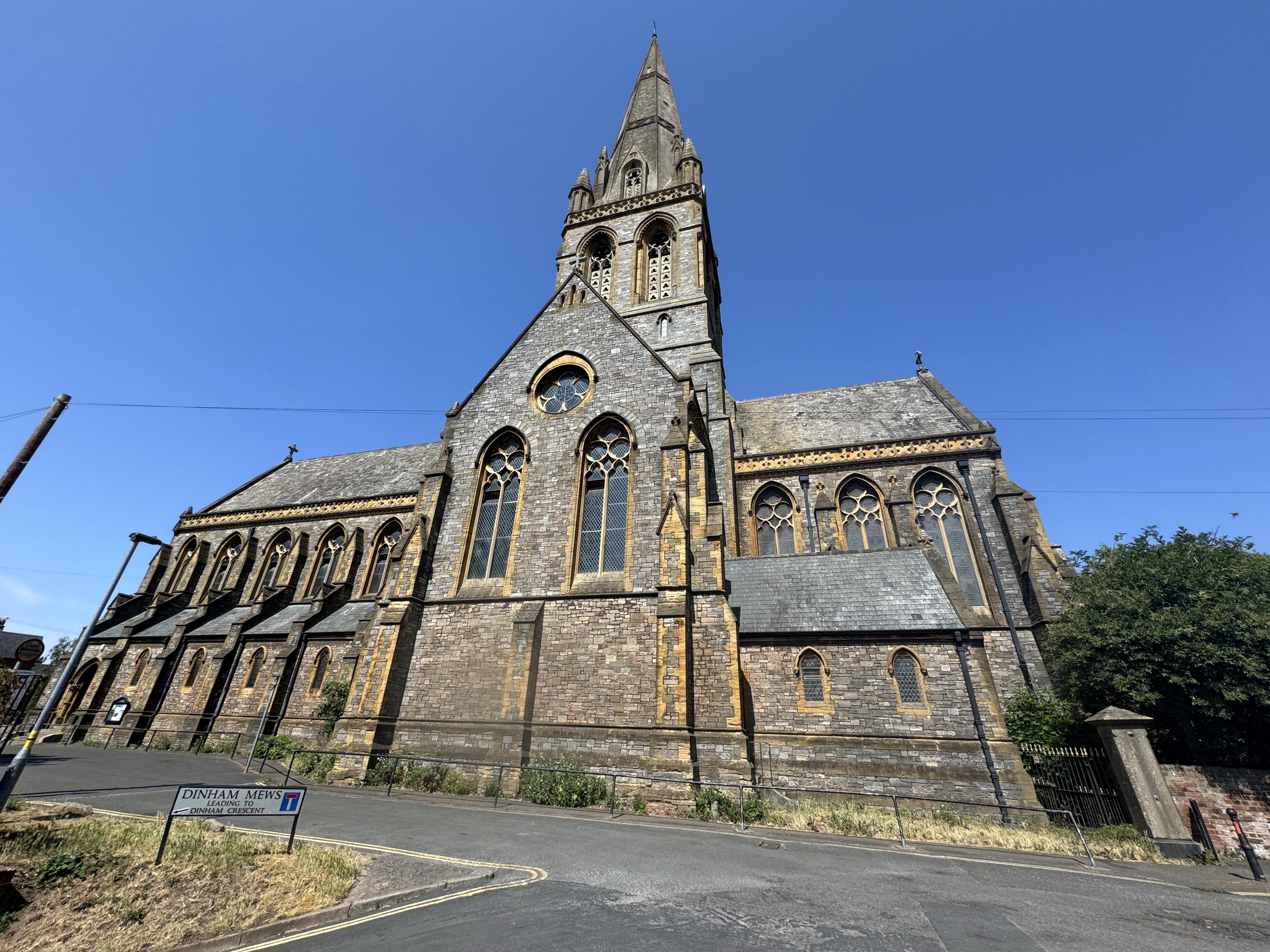
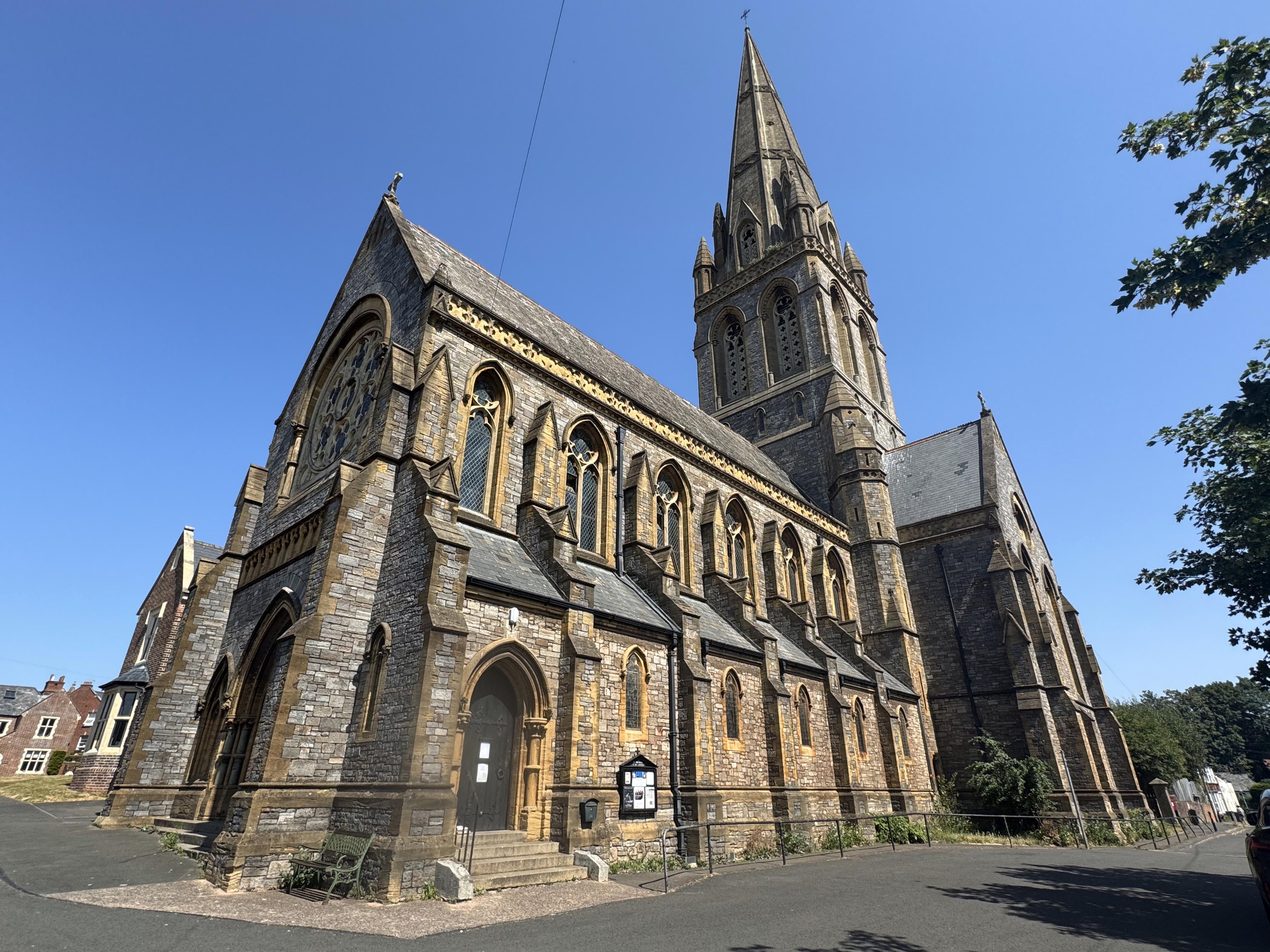
From here we followed the old New Bridge Street up to Bartholomew Street West and started to follow the line of the old city walls. We saw the impressive Greek‑revival 1817 Westgate Christian Centre, built as a Baptist church in the heyday of Hellenic appreciation. Greek revival buildings were all the rage in the aftermath of the Napoleonic Wars and with Greeks fighting for their independence from the Turks. Its simplicity and elegance appealed to the sensitivities of aristocrats seeking to avoid obvious ostentation in the aftermath of political revolutions. As you continue along here you realise just how high you have climbed from the old bridge, with increasingly lovely views towards the west. When you reach the corner of the old city wall, once upon a time you would have found Snayle’s Tower here, giving a view not just out to the enemy but also down along the walls themselves, allowing defenders to pour arrows or musket‑fire on anyone attempting to assault this section. We then followed the wall route northeastwards with new vistas to enjoy. But really it is the sight of the Church of St Michael and All Angels on Mount Dinham that takes your breath away. It is such an elegant church in a perfect location, perched high for all to see, with its enormous spire reaching for the heavens. Throughout much of the rest of the walk this church kept demanding our attention - no mean feat in a city with as beautiful a cathedral as Exeter’s. We were headed that way, but whilst talking to a local lady in the park about Exeter’s history she mentioned the unusually narrow Parliament Street, so Rupert and I made a little detour to include it in our tour. We had no itinerary as such; we went where the history took us.
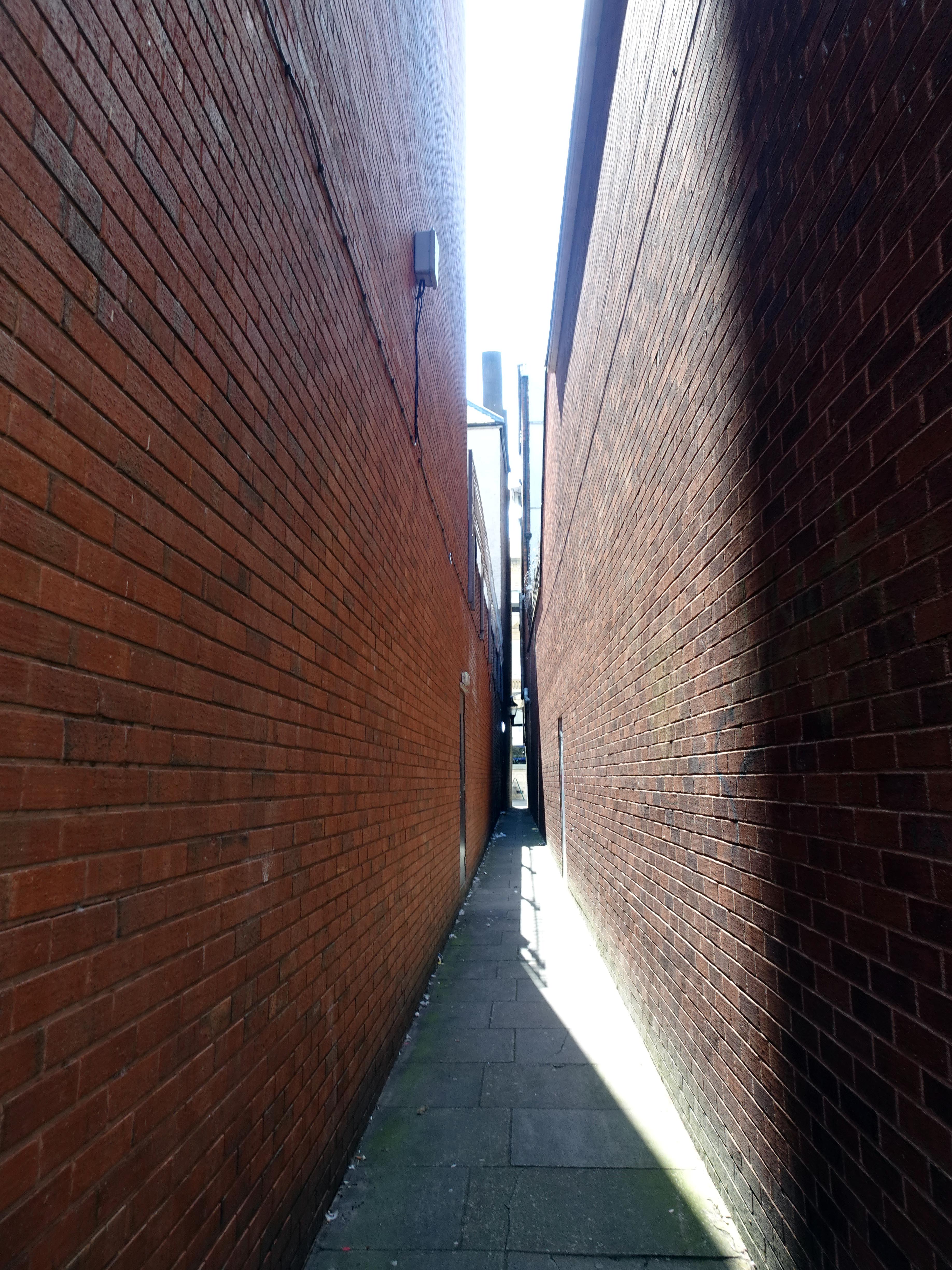
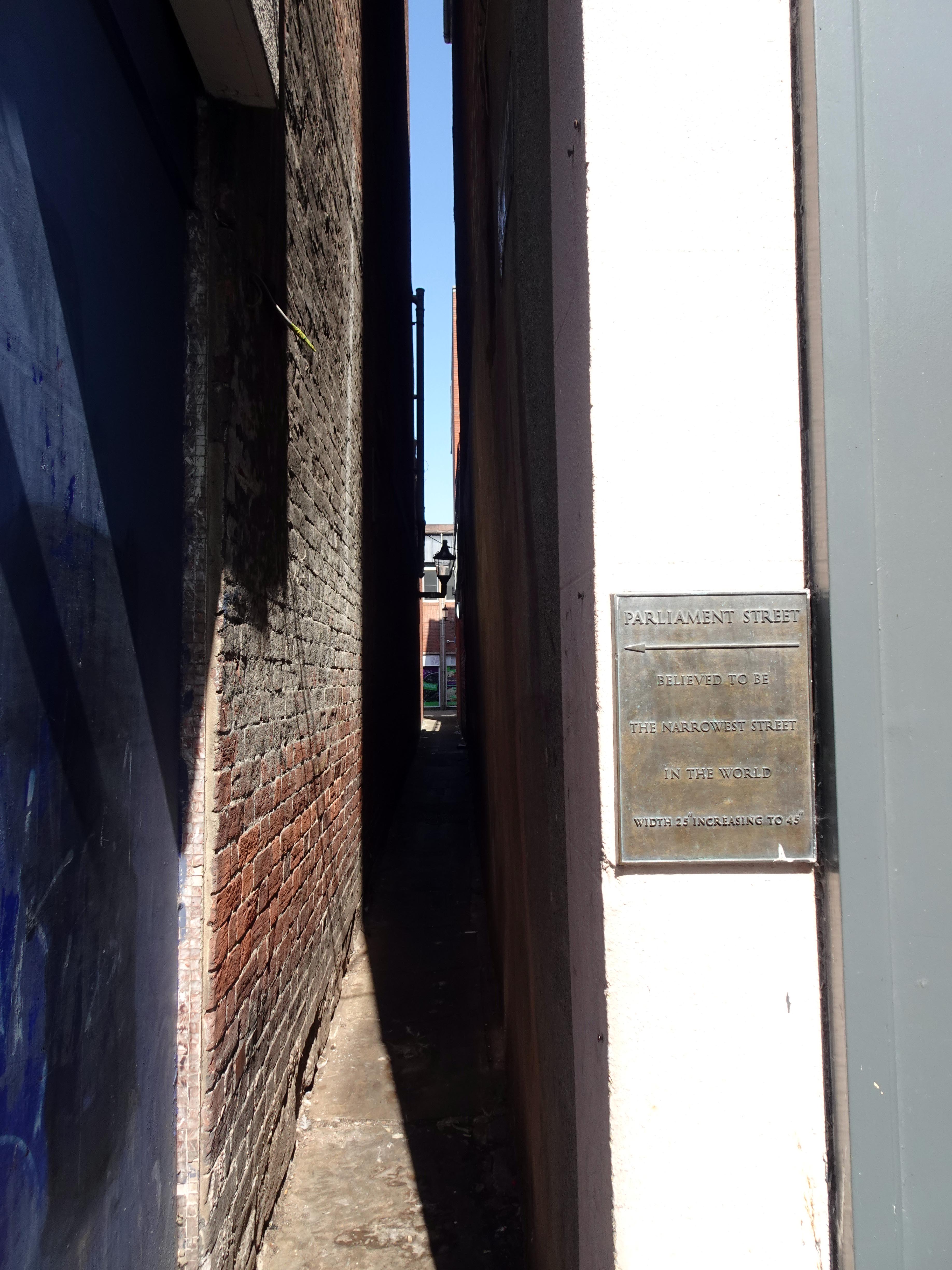
Once known as Small Lane, it dates from the fourteenth century. As to when its name was changed to Parliament Street, there appear to be two main theories. One is that it dates from the era of the late Commonwealth or early Restoration, when Parliamentary rule had fallen into disrepute and ridicule. The second is that it may have been as late as 1831, as a joke about Parliament being small‑minded and failing to pass the Great Reform Act. Either way, it is impressively diminutive. We started at the wide end, where you enjoy a full forty‑five inches of width, and then slowly - like parallel tracks drawing the walls ever closer - you emerge at the narrowest end with a mere twenty‑five inches available. Cat‑swinging opportunities are severely curtailed. There is a plaque that claims it is the world’s narrowest street, and you’d need particularly rubbish town planners to beat this record.
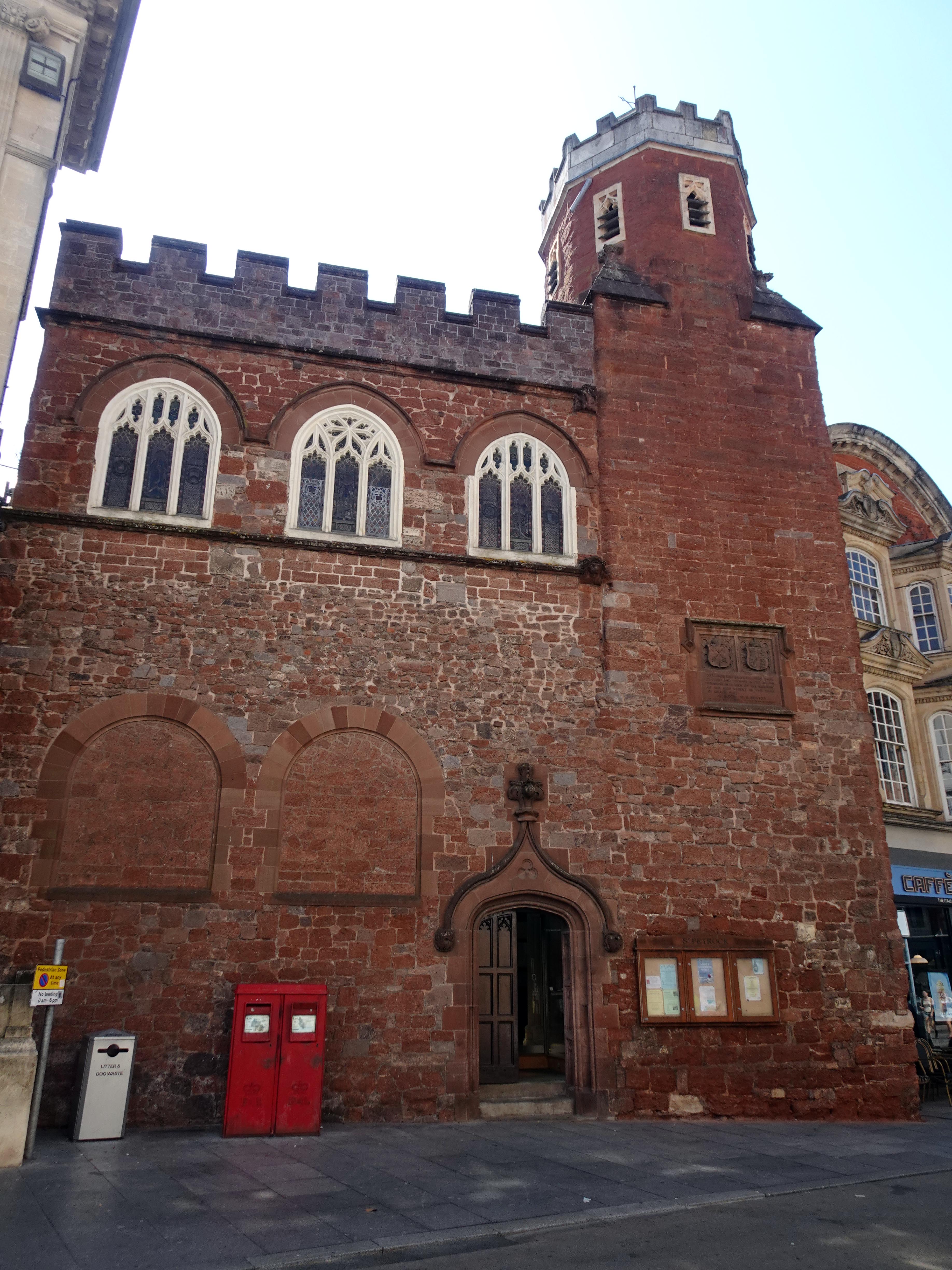
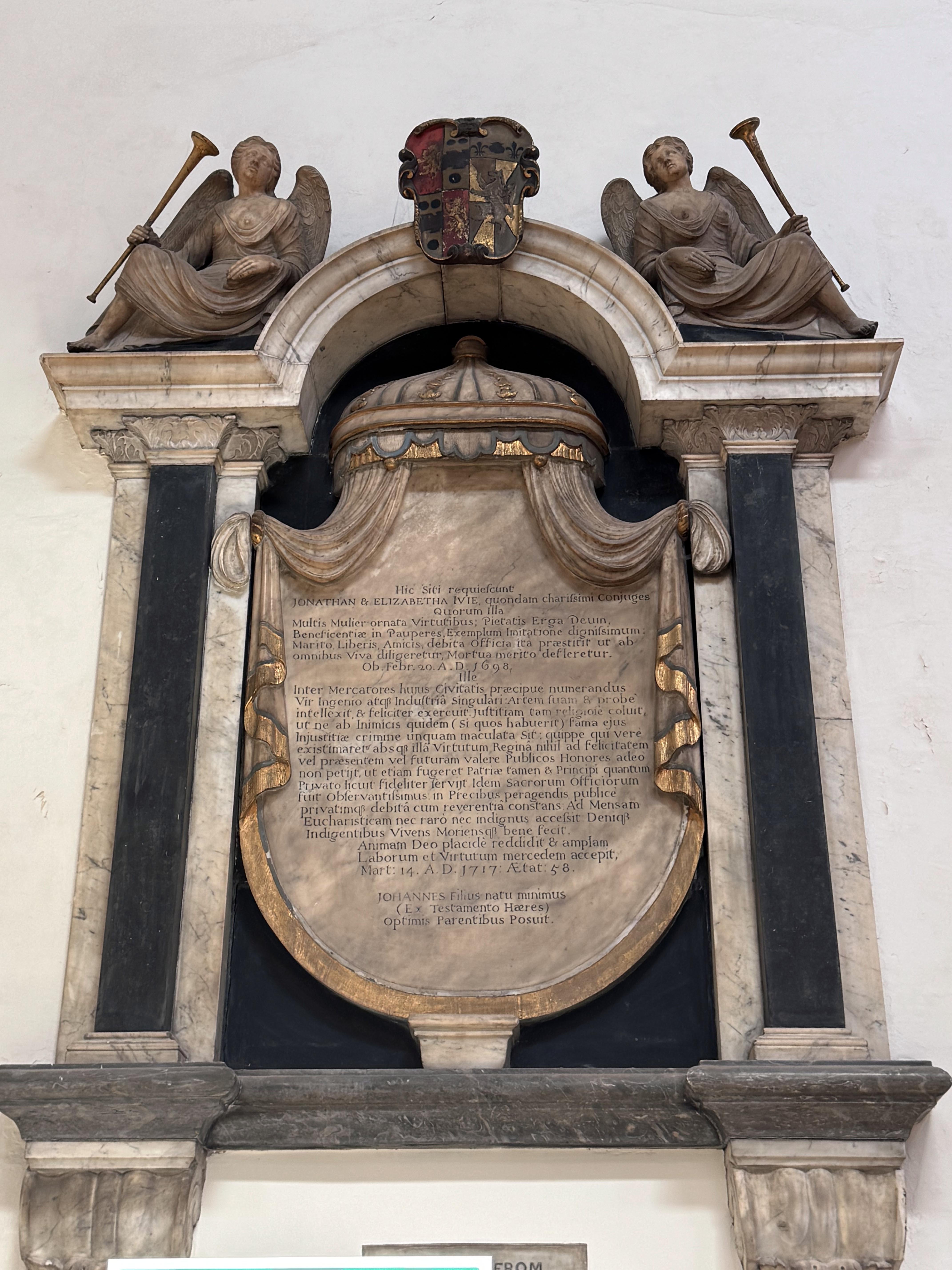
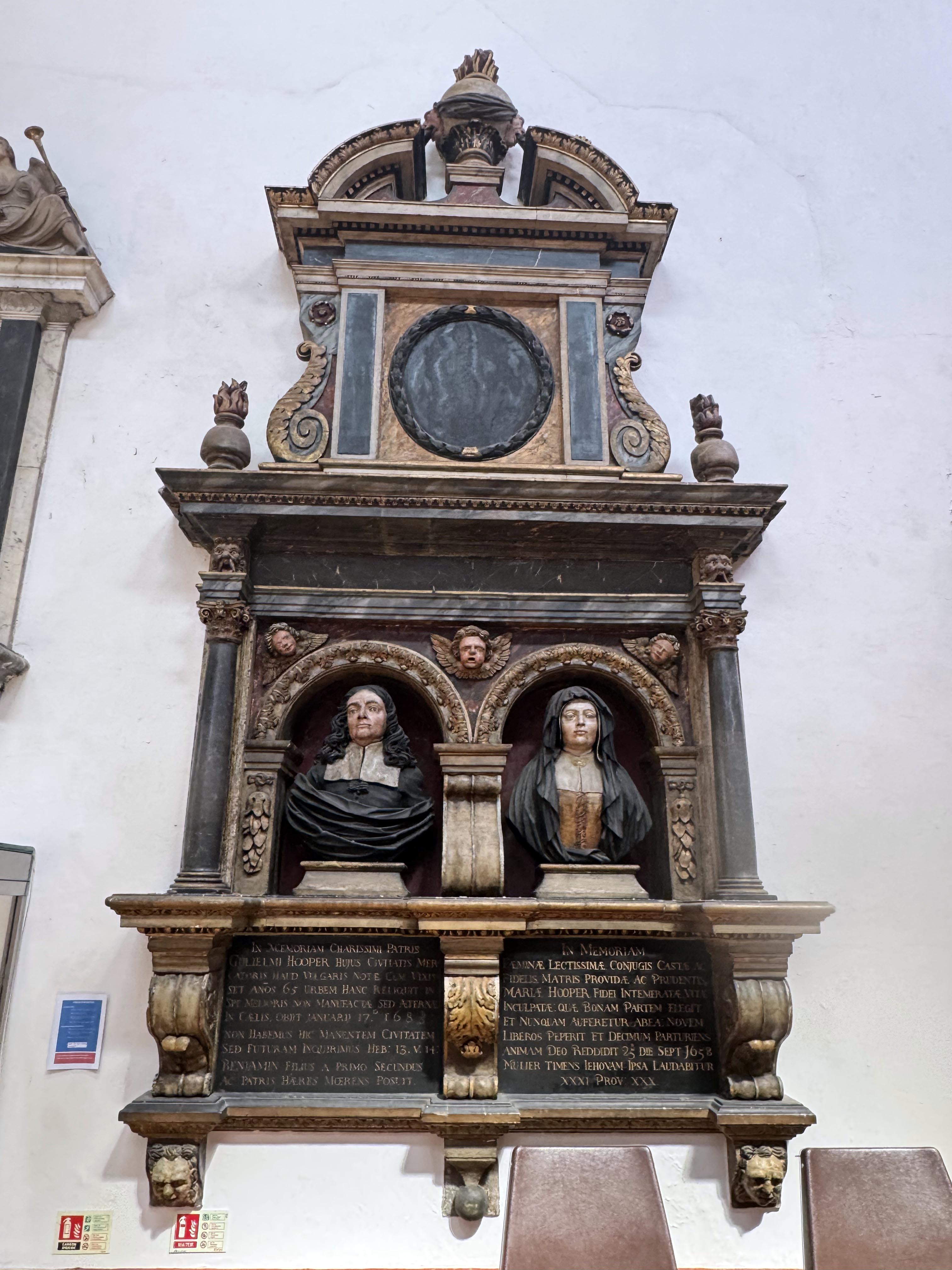
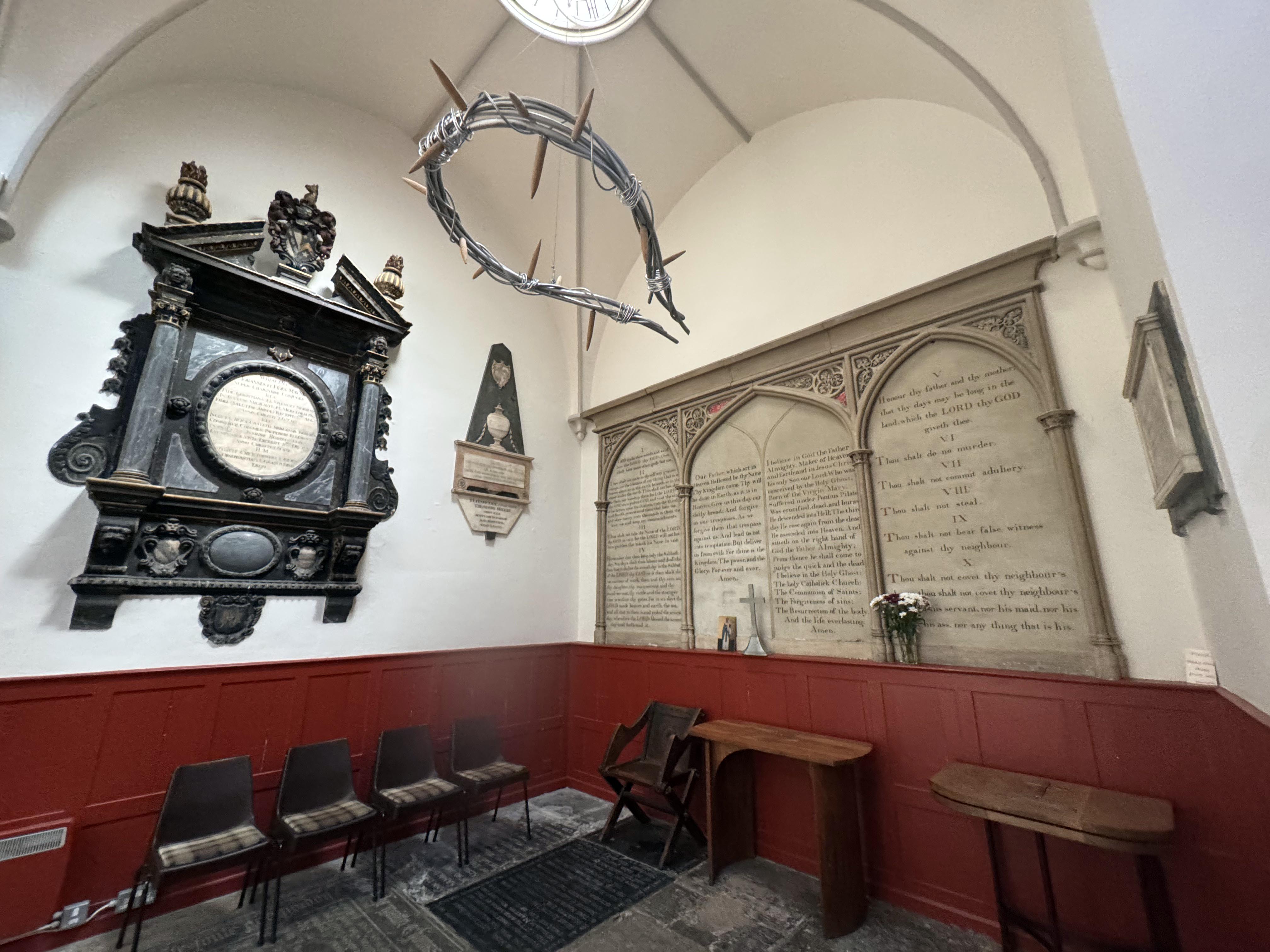
By going this way we were able to drop into St Petrock’s just over the road. Sadly this is no longer a fully functioning church, although it does still hold irregular services and has found modern relevancy as a training hub for bell‑ringers. But what is left of the church is much smaller than it once was, as much of the nave was taken over by a homelessness charity. The chancel has been turned into an oddly non‑religious looking space, with the memorials and remnants from centuries ago looking forlornly out of place in a utilitarian room almost bereft of chairs and any religious paraphernalia. But despite that, at least they are available to visit and, best of all, it is actually open to the public, so beggars cannot be choosers. The standout memorial is undoubtedly that of William and Mary Hooper from the seventeenth century, wearing what you might call Puritan‑chic. They were a well‑to‑do merchant‑adventurer family whose deaths straddled the turmoil of the era. She died in the latter years of the Commonwealth while delivering her tenth child. He did not die until 1682, in the latter days of King Charles II. Hence he has a curious mix of Puritan clothing with Restoration hairstyle, whilst she looks entirely at home in the era of Oliver Cromwell. Few church memorials look quite as realistic as this one, and the painted effect makes it appear as though they could be animated and join a conversation with you. Another arresting monument is the Last Judgment from the early eighteenth century, created by John Weston. Two skulls almost seem to have a thought‑bubble of what it must be like at the end of the world: whether the angels will escort you to heaven or leave you to the fires of hell.
Leaving here we headed back north along the suitably named North Street through what would have been the North Gate of the city’s walls. This one wasn’t as big as the other gates, but perhaps because of this, in 1497 the imposter Perkin Warbeck - pretending to be one of the murdered Princes in the Tower - raised a small force in disgruntled Cornwall and marched on Exeter. He attacked this gate and set it alight. Sadly for him it did little good, as the residents responded by adding fuel to the flames to make it impassable. He tried again to enter the city and did successfully force his way in via the East Gate, only to be beaten back once more. They dejectedly carried on their journey to Taunton, where his whole rebellion fizzled out. Warbeck was found hiding, arrested, and imprisoned in the Tower of London. He attempted escape once too often, and Henry VII’s patience finally ran out: he had him executed at Tyburn.
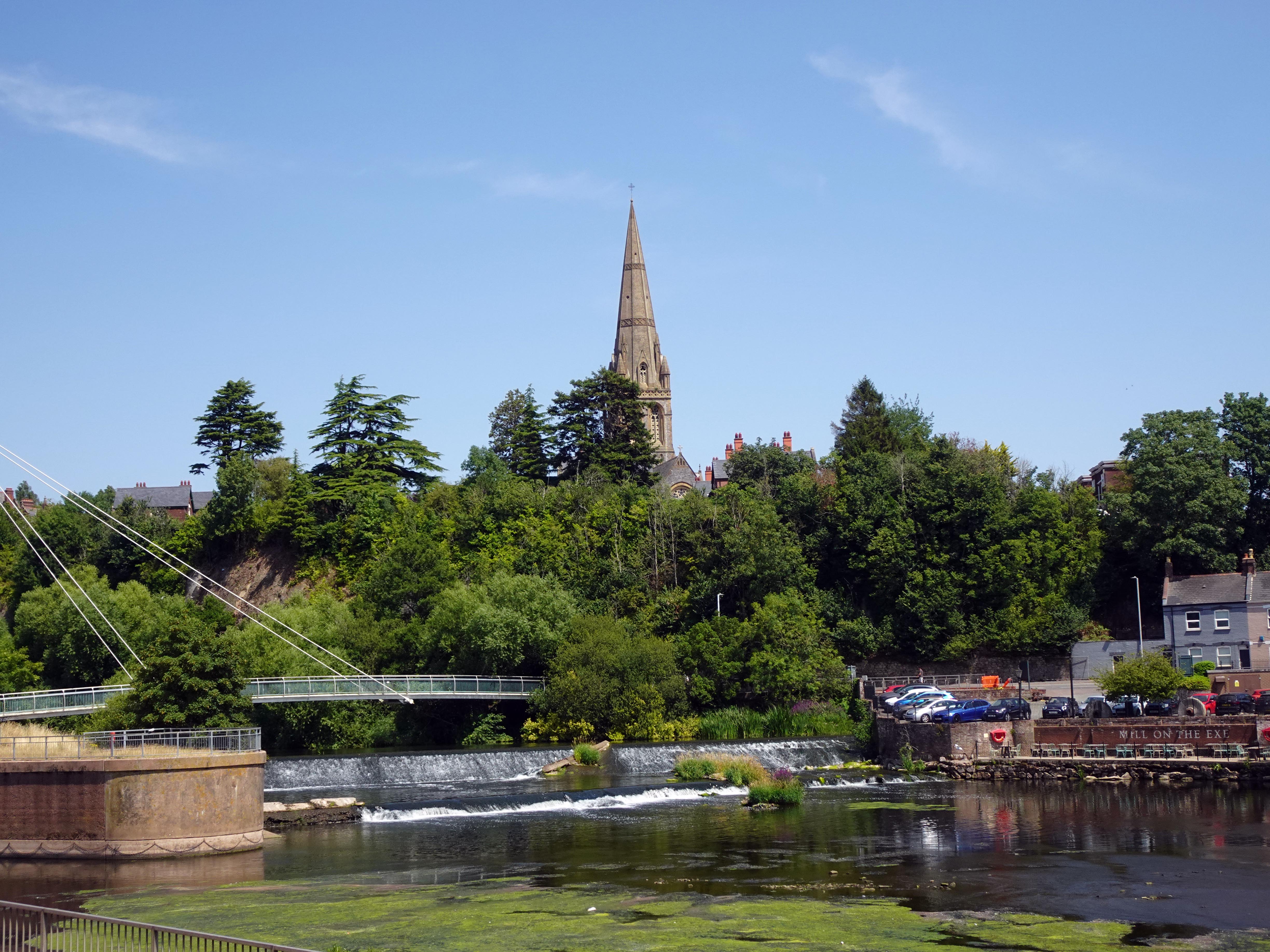
We carried on over the old Iron Bridge, which seemed to be undergoing some maintenance and traffic‑reduction work. From this bridge we once again caught a glimpse of St Michael and All Angels to our left, beckoning us to have a look around it. I knew that it was not open to the public, but I could not resist approaching such a magnificent building. We forlornly tried the handles just in case, but had to content ourselves with admiring it from the outside only. I like to say that this church is made out of bird‑poo. This is because the money for this stunning Victorian Anglo‑Catholic church came from William Gibbs, who revolutionised crop yields by importing guano from South America as fertiliser. Bird‑poo made him an absolute fortune - in fact, it made him one of the richest men in England. His timing was impeccable, as guano was the best fertiliser on the planet from the 1840s to the 1860s. But it was finite and being used extensively. Prices actually rose in the 1870s because smaller amounts were being processed. William Gibbs died in 1875, still the Guano King. But chemists were working on synthetic ways of delivering the kinds of soil nutrients that guano provided. The first breakthrough was the introduction of superphosphate in the 1870s, which slowly began to replace increasingly costly guano. It was not until the discovery of the Haber–Bosch process for making nitrogen fertilisers at the turn of the century that guano became redundant. Artificial fertilisers were far cheaper and far more reliable than guano. So Gibbs’s wealth was tied to a very specific moment in history. At least, as a pious man, he used his wealth for charitable and religious purposes - funding almshouses, churches, and also Keble College at Oxford. He was a major backer of the Anglo‑Catholic tradition and worked with John Dinham (a local name that keeps cropping up in our travels) in building not only this church but also the surrounding almshouses. It should be said that John Dinham’s rise, although less stratospheric, was equally impressive: from a fourteen‑year‑old apprentice to a grocer and later a silversmith. He went into the tea business at a time when tea was beginning to fuel the Industrial Revolution (alongside the all‑important energy‑giving product of sugar). Tea breaks in larger and larger factories allowed John to make his fortune too. As a similarly devout Christian, he used his wealth to fund schools and local charities and formed a friendship with William Gibbs, resulting in this magnificent church.
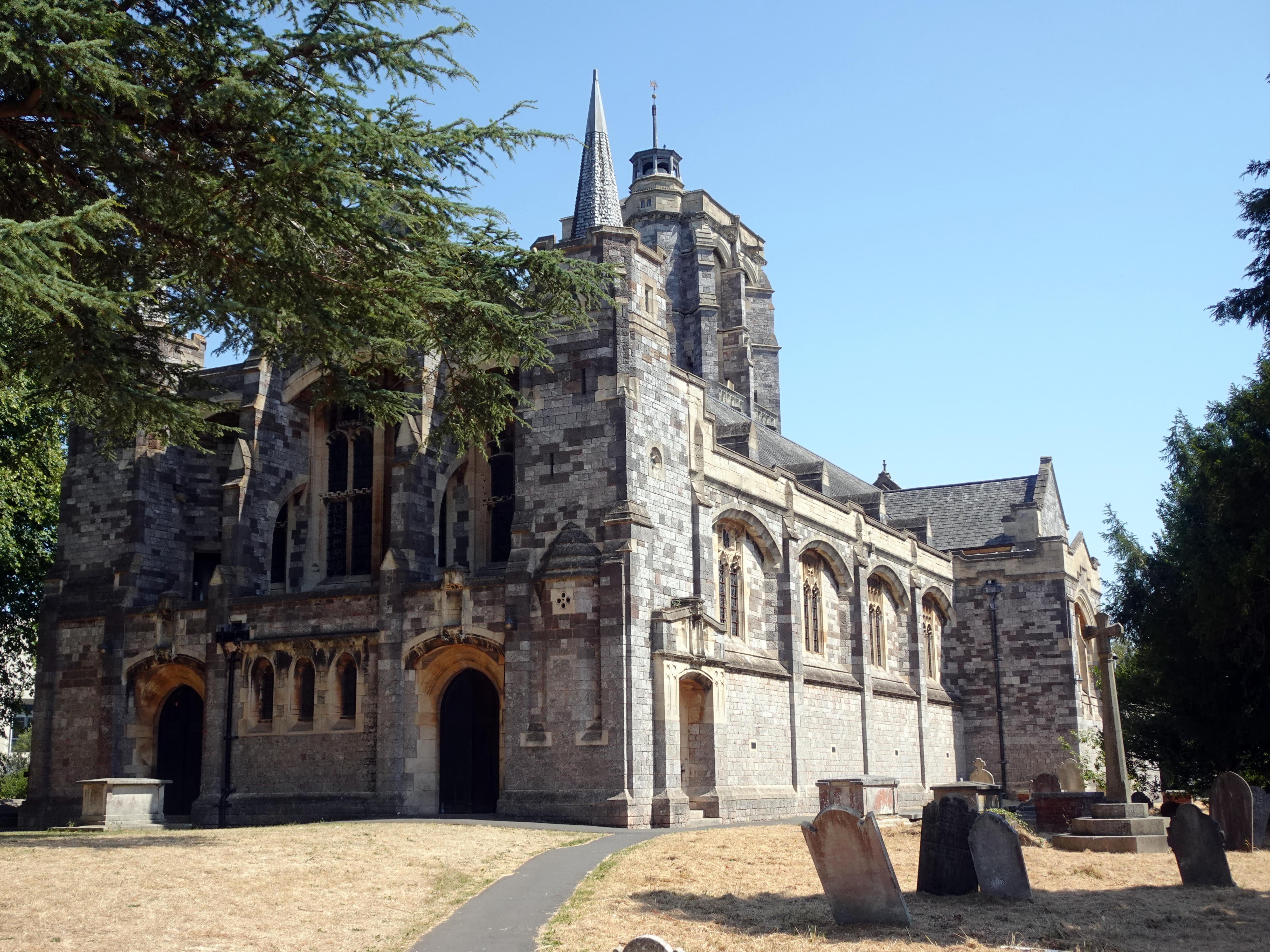
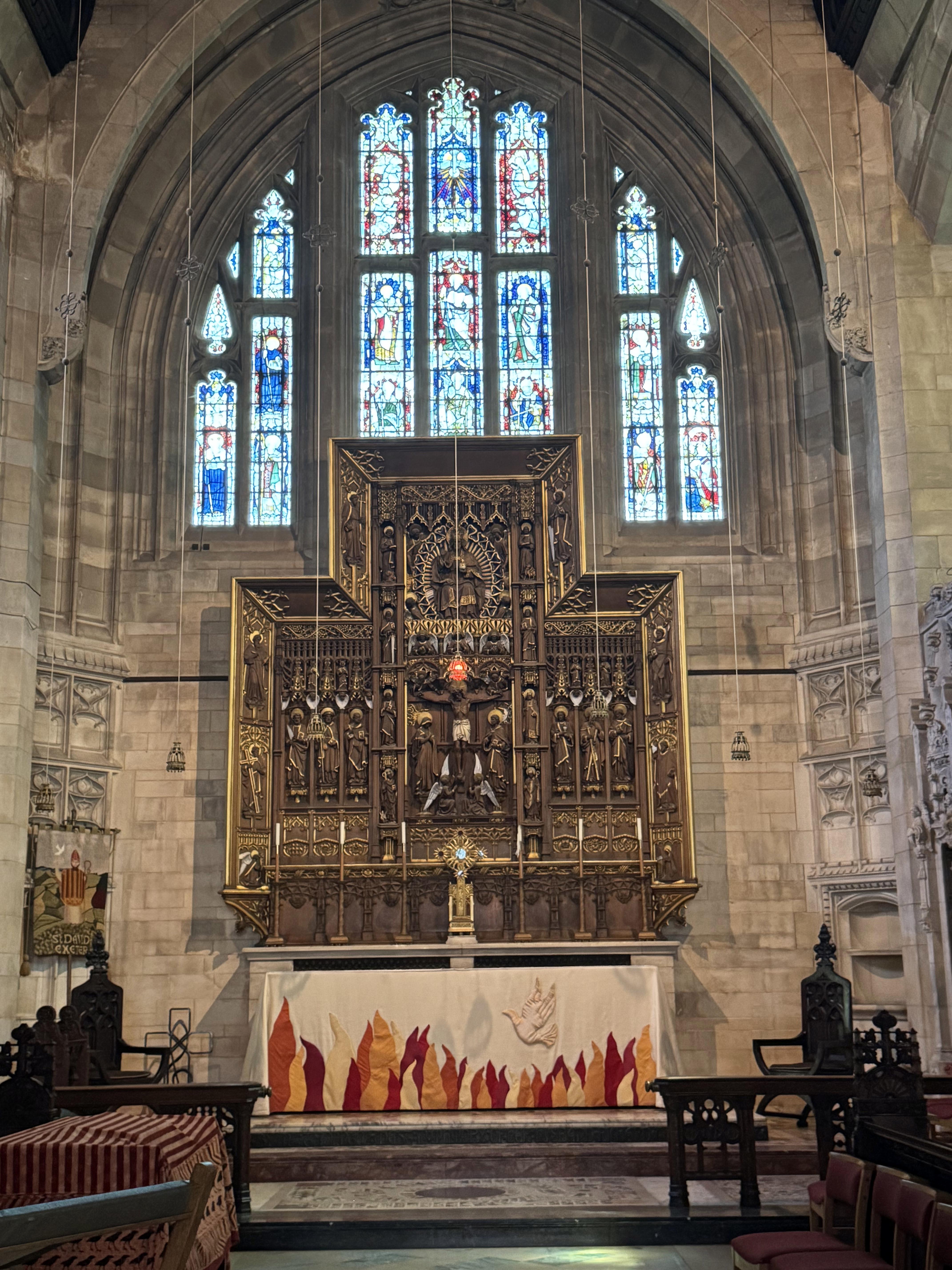
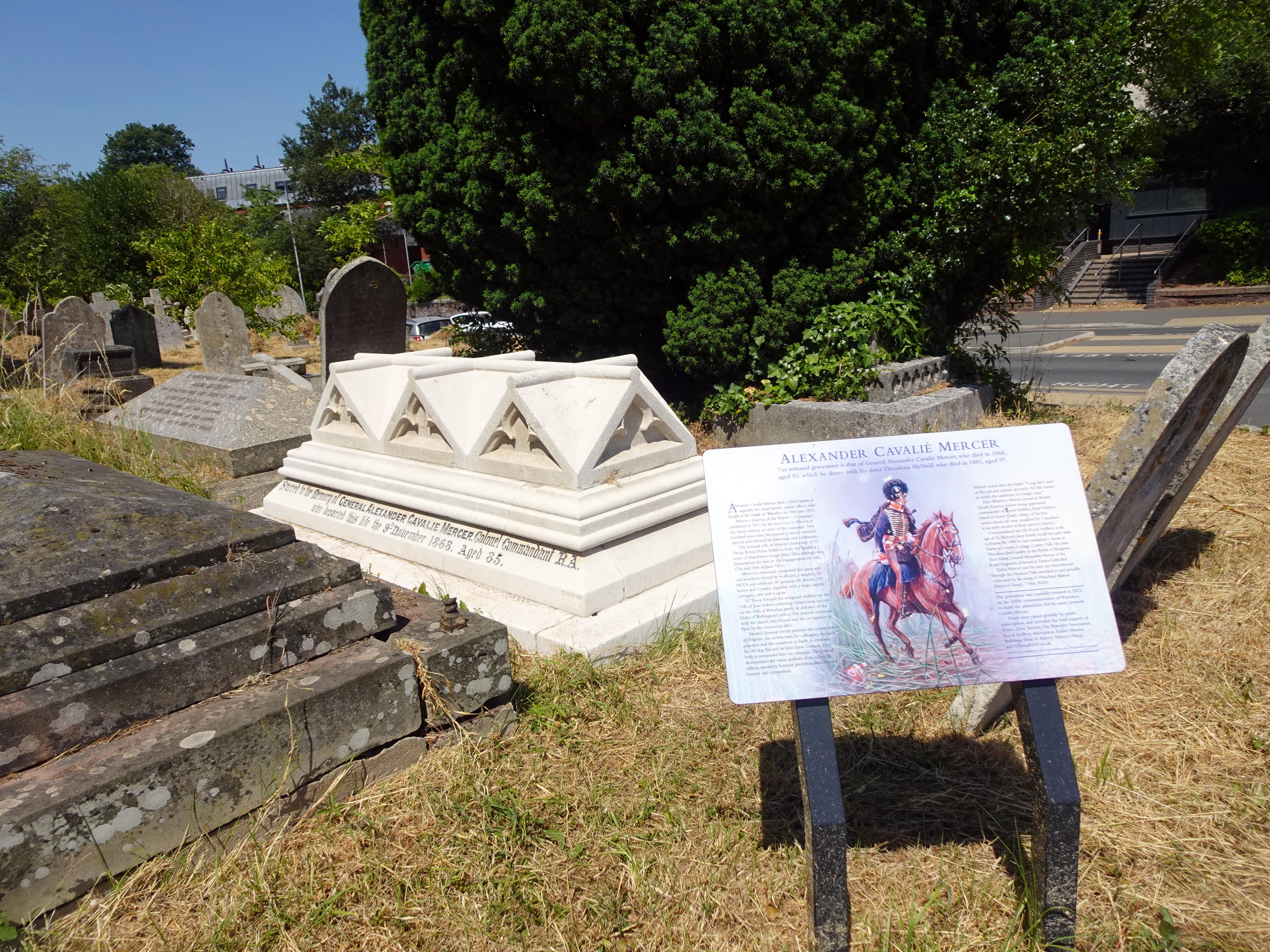
As we could not get in, we carried on down the road to St David’s Church. Now we were excited to see the church door open on what was a hot day. We poked our heads in and were happy to find that we were welcomed inside - and indeed were even plied with tea and cake, a sure way of making a great impression on visitors. Despite its looks, this church is younger even than St Michael and All Angels just up the road. There had been a church on this location since the twelfth century, but it was replaced by a Greek‑revival church in 1817 for the same reasons as the Baptist church mentioned above. That building was too small and too badly constructed, and had to be replaced by the end of the century, resulting in this lovely Caroe‑designed Victorian church surrounded by far older graves than the church itself. One of the more interesting graves was recently cleaned up and highlighted due to the historical significance of its occupant. It is that of General Alexander Cavalié Mercer, whose journals of the Waterloo Campaign give us some of the very best insights and understanding of that hugely important battle.
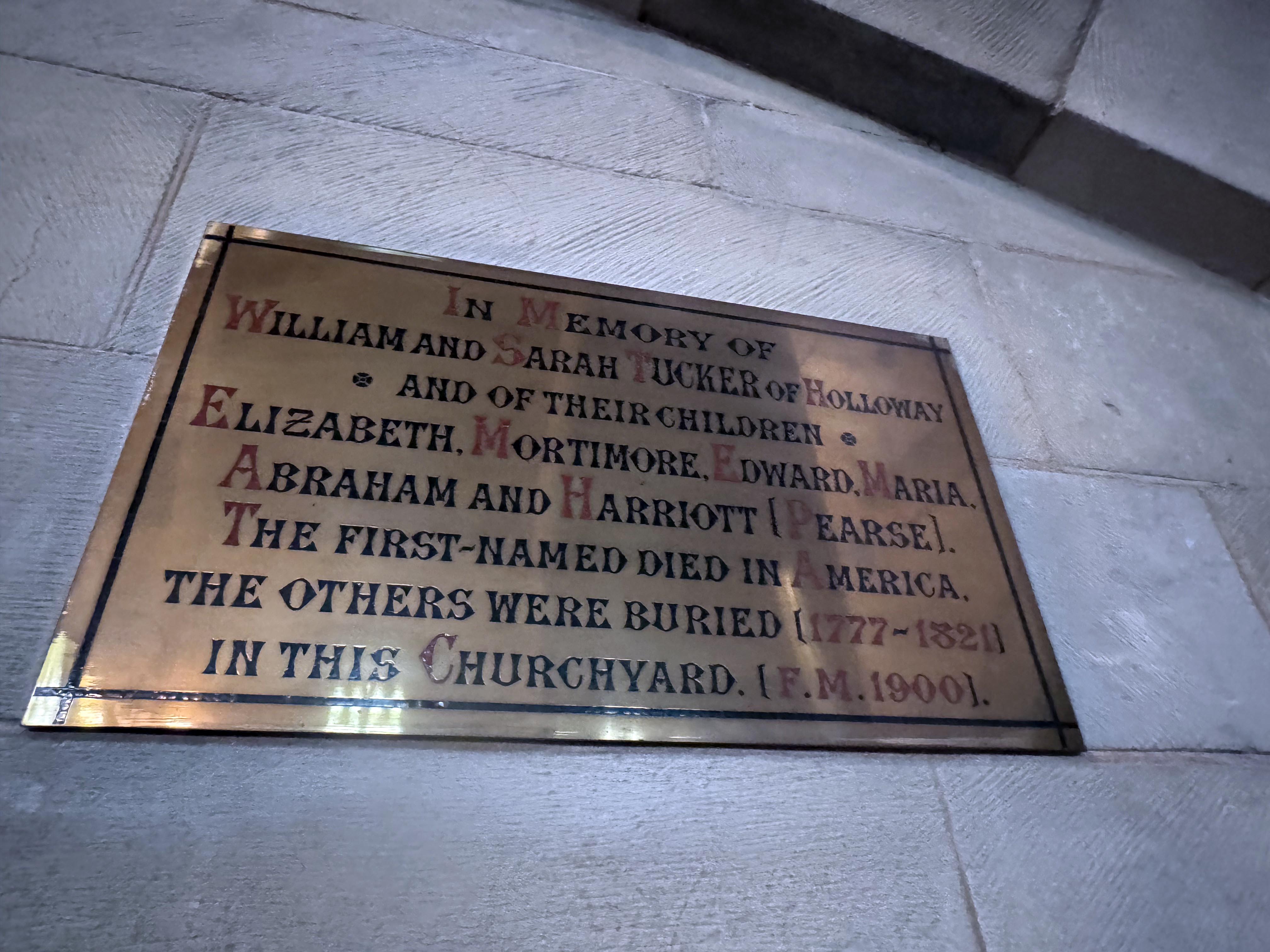
This church has a large number of fascinating memorials. One that quickly seized my attention was that of William and Sarah - of Holloway and their children. What interested me was that it said the first named had died in America, and that the others were buried in this churchyard from the years 1777–1821. This meant that perhaps they had been swept up in the events of the American Revolution. Were they Tories who fled America when the war broke out? I am not even sure if “the first named” refers to the father William or the first‑named child Elizabeth. If the former, might he have been caught up in the fighting and died as a result? All very intriguing, and I simply do not know the answer - but those dates hint at a fascinating back‑story.
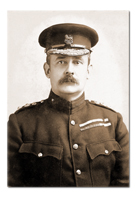
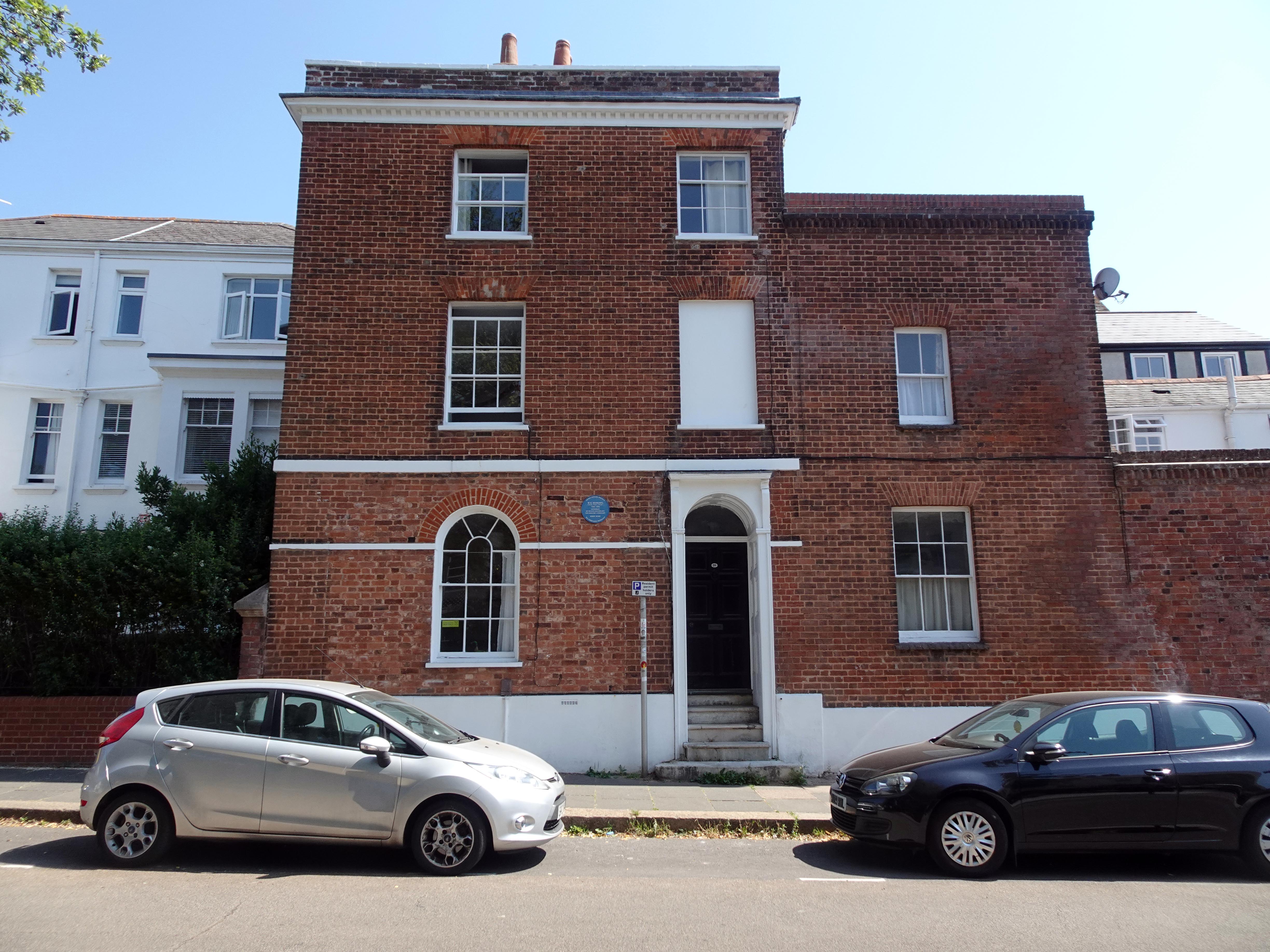
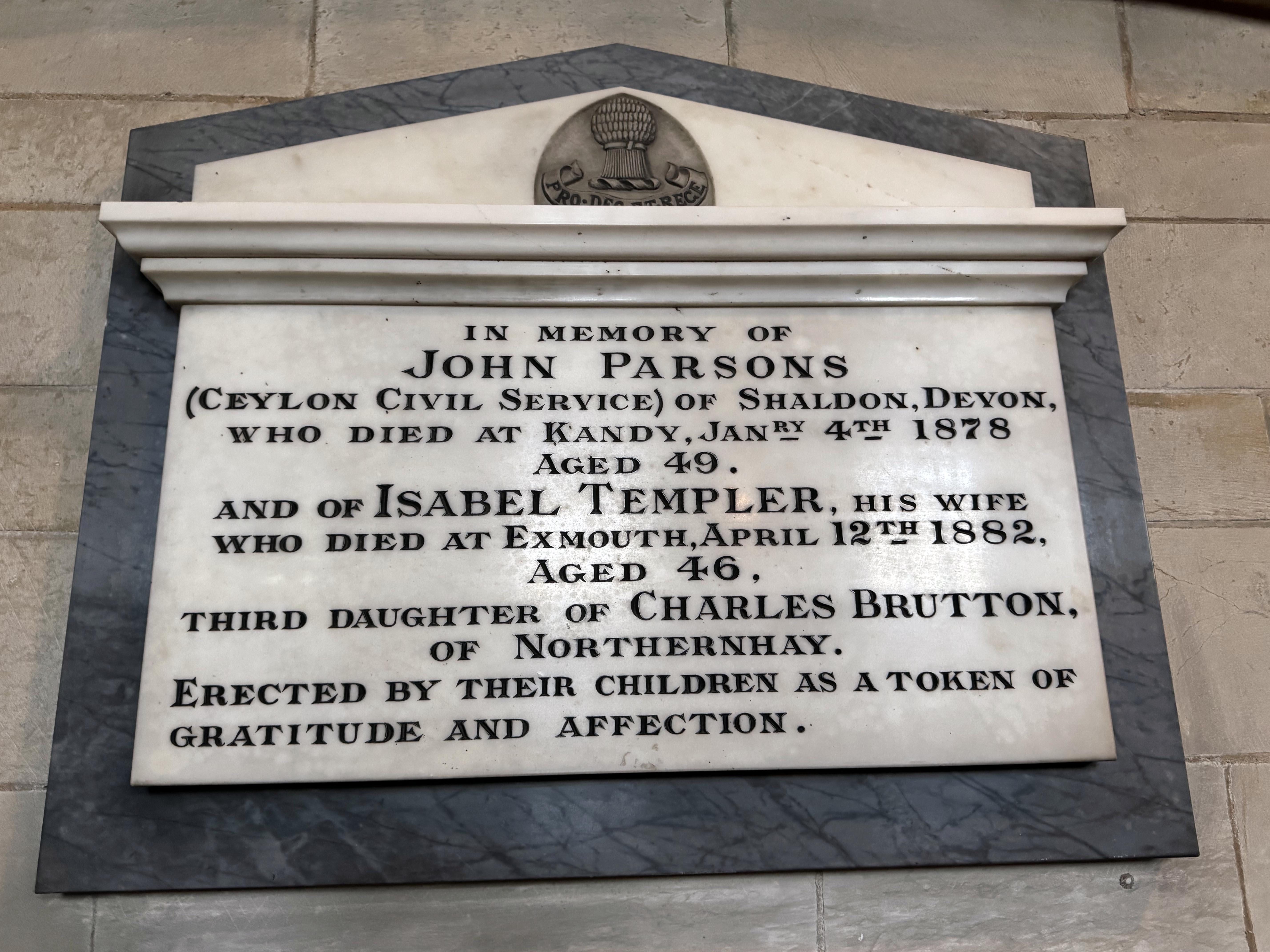
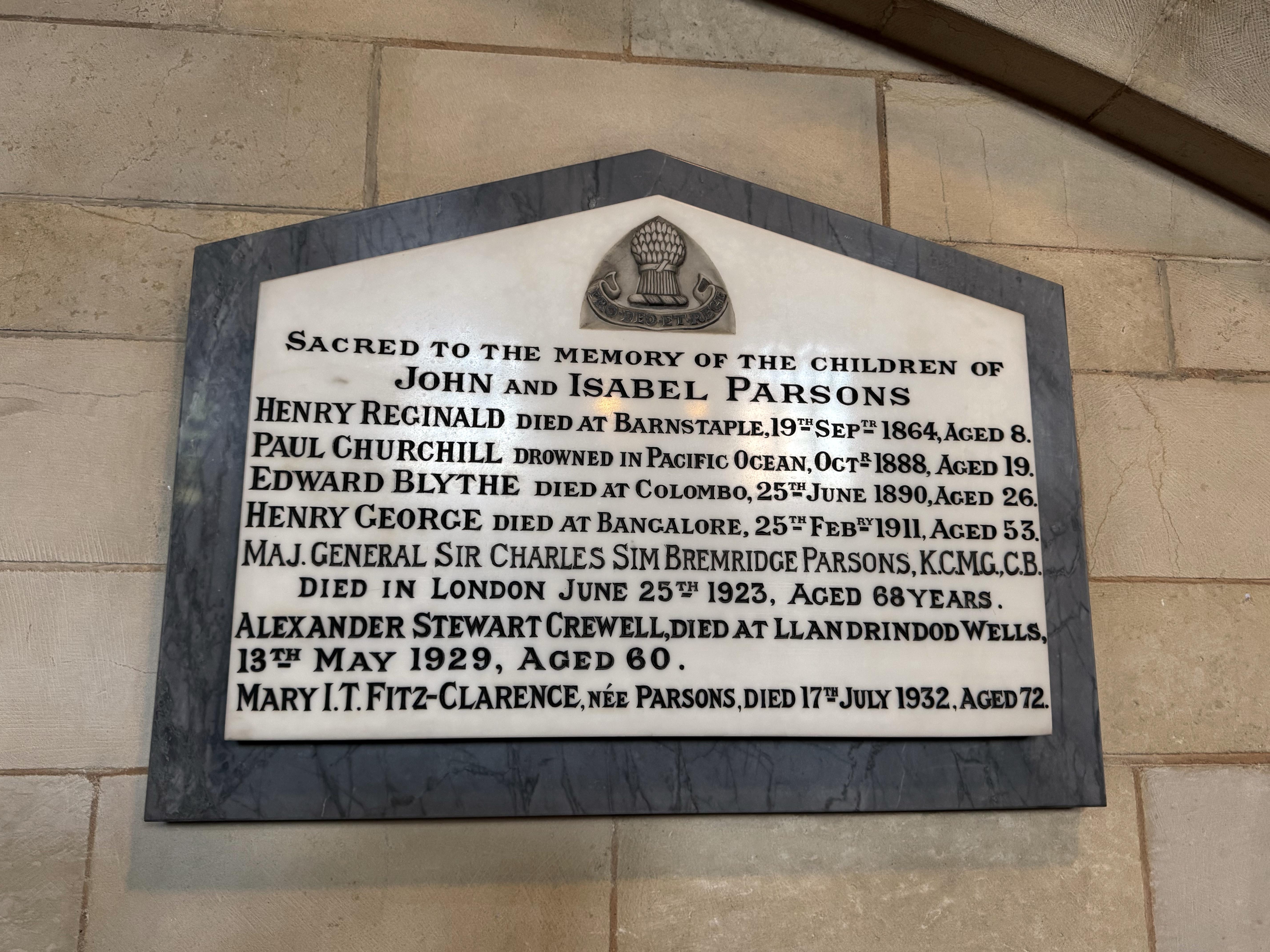
Another collection of three memorials to the Parsons family is similarly fascinating, but in this case we can build up a much more confident story because the inscriptions provide so much information. They all relate to John and Isabel Parsons, who were very much a Victorian colonial family. The memorial explains that John Parsons was a Government Agent in the Ceylon Civil Service, and that he died at Kandy in Ceylon (modern‑day Sri Lanka) at the relatively young age of forty‑nine in 1878. Life in the Empire, whatever your rank, could be very dangerous to your health, especially in the tropics. His wife Isabel died at the even younger age of forty‑six, a couple of years later in 1882. One wonders whether her strength and constitution had been undermined by a life spent in tropical conditions. The second memorial details the fates of their seven children, and what a strange mix of destinies they had. Henry Reginald sadly died as an eight‑year‑old in Barnstaple. Paul Churchill drowned in the Pacific Ocean in 1888 aged just nineteen. Edward Blythe died at Colombo in Ceylon aged twenty‑six. Henry George died at Bangalore in India aged fifty‑three. Major General Sir Charles lived to sixty‑eight and has his own memorial, which I will mention in a moment. Alexander Steward Crewell died in Llandrindod Wells aged sixty, and Mary died without a place given - presumably here in Exeter - at the grand old age of seventy‑two. What an eclectic life these children of Empire appear to have had. This is amplified when you look at the third Parsons‑related memorial, to Major General Sir Charles Sim Brembridge Parsons, who had a military career that spanned the globe. It records his service in one of the Kaffir Bush campaigns fought in South Africa, the Zulu War - stating that he was present at both the defeat at Isandhlwana and the victory at Ulundi - the First Boer War, the Egyptian Campaign including the decisive battle of Tel el Kebir, the Dongola Campaign in Sudan, Kitchener’s Sudan Campaign of 1898, the entirety of the Second Boer War, and then his appointment as General Officer Commanding of the British Army in Canada. In fact he was the last British officer to hold this position in Canada as when he left it in 1906 the Canadians took over full responsibility for their own armed forces. He later became the Commissioner in charge of the Chelsea Pensioners’ Hospital. What a career: to be at any one of those battles or campaigns would be remarkable enough, but to be involved in so many and live to tell the tale was some achievement, given the terrain and inhospitable conditions. I love it when these memorials tell us a story from a vanished age and furnish so much that allows us to glimpse a world that has now disappeared.
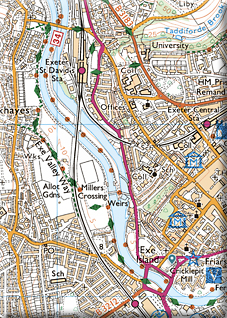
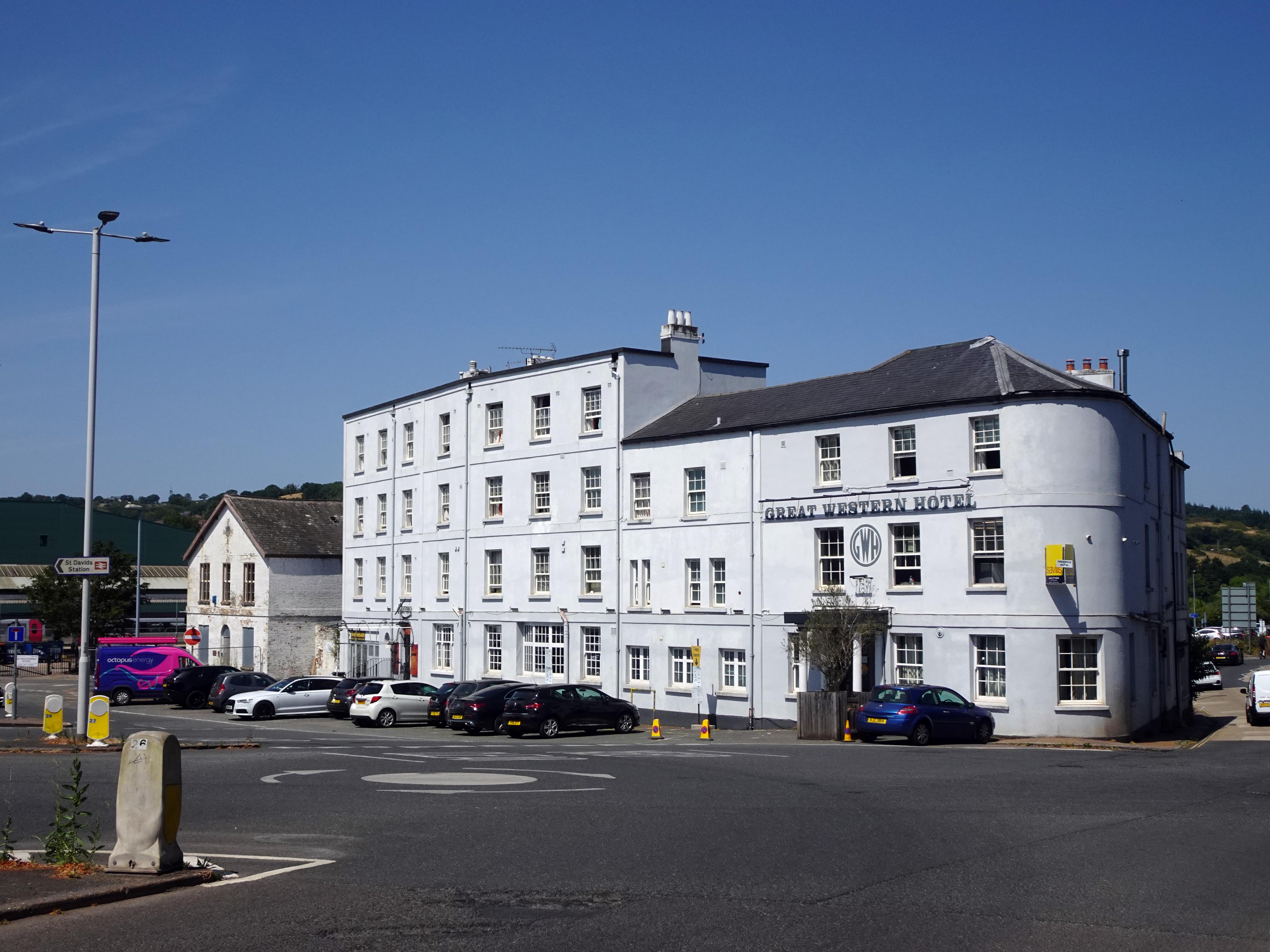
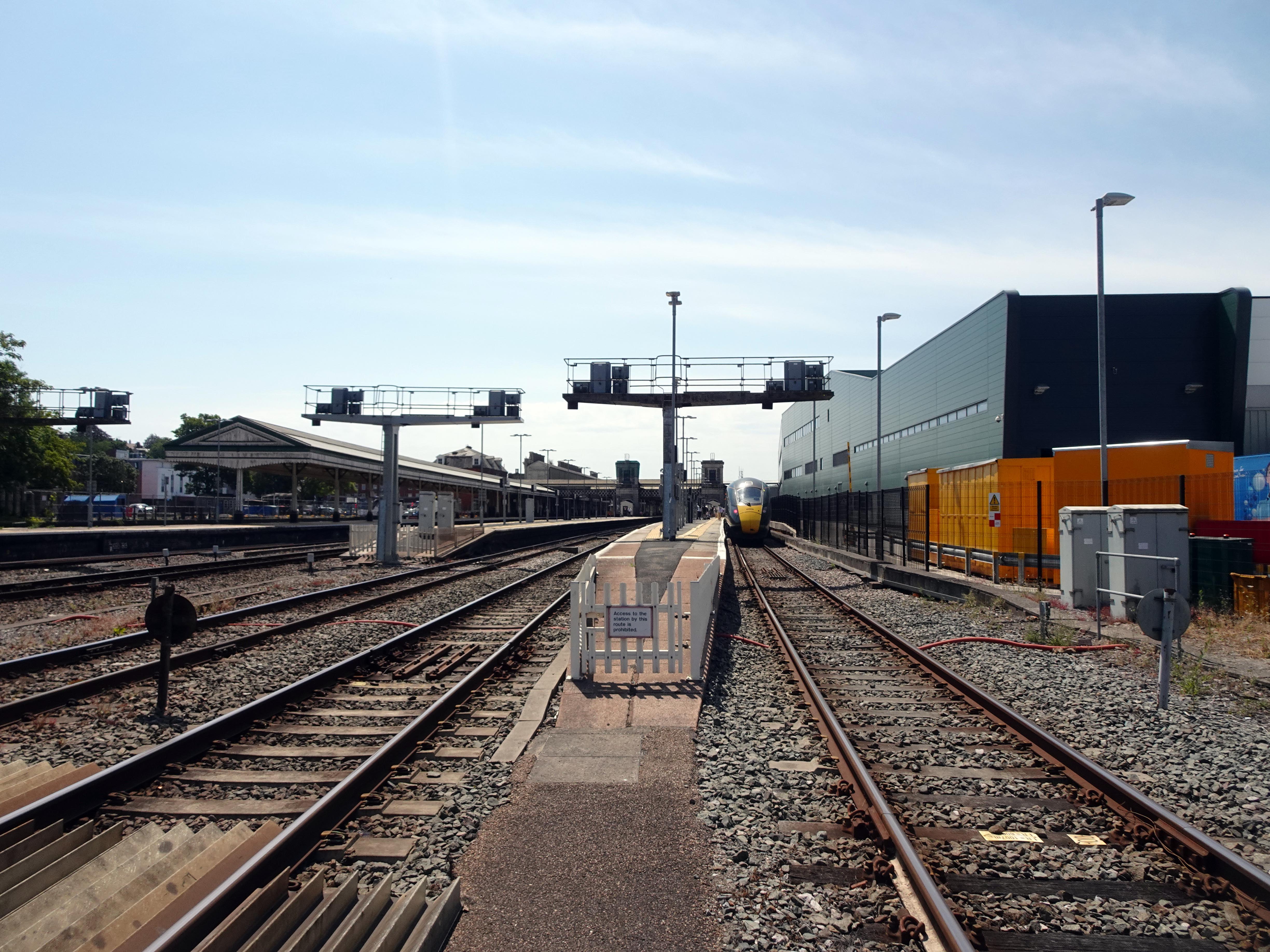
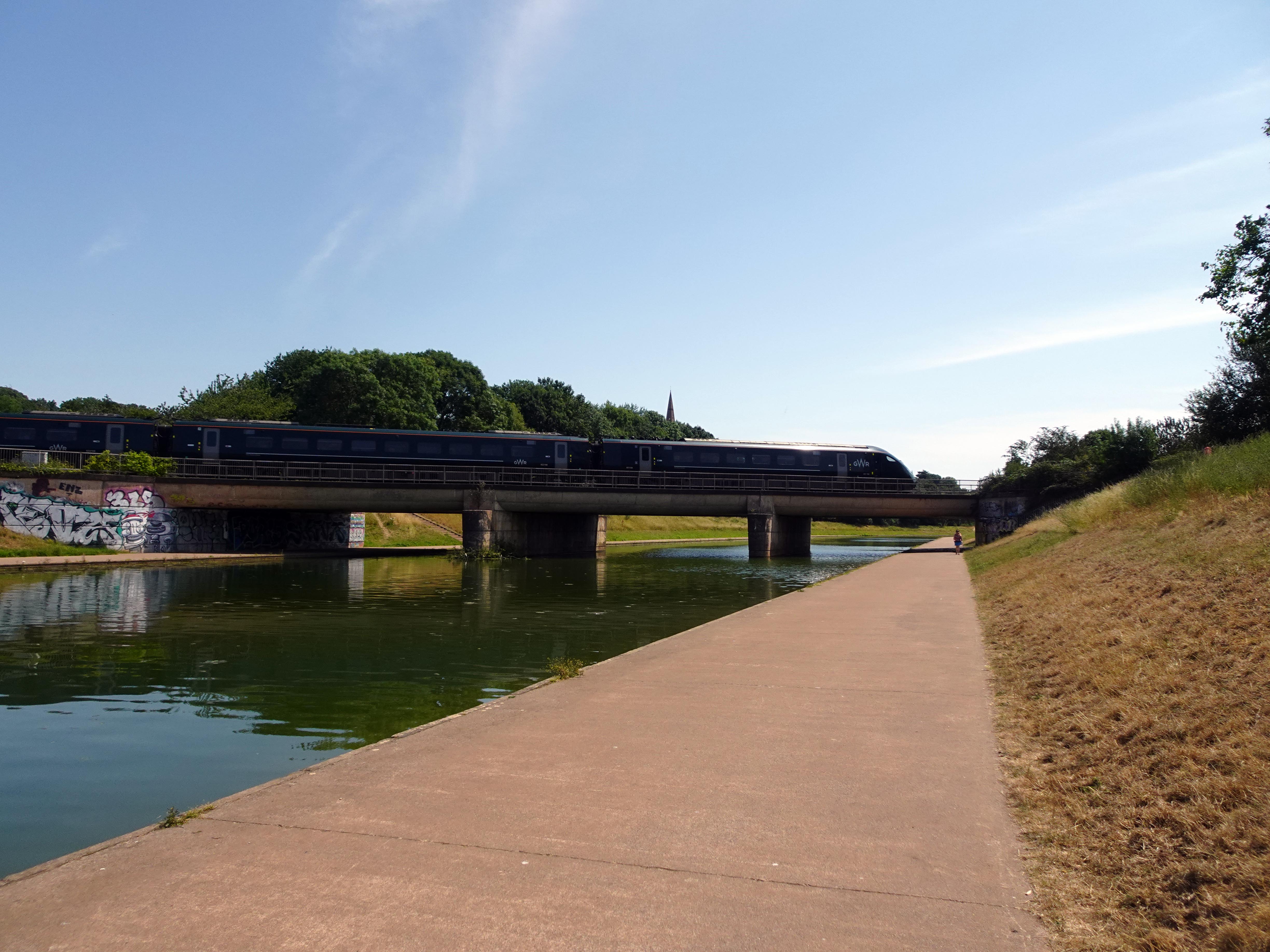
Satiated with tea and cake, we left and travelled down St David’s Hill towards the train station, with the old Great Western Railway hotel reminding us of who actually built the original railway infrastructure. We crossed the busy tracks, watching the station spring to life. Isambard Kingdom Brunel designed this station, and its arrival in 1844 transformed the communications of the city once more. Soon, travel from Exeter to London took a mere five hours - a speed that would have been undreamt of just a few years earlier. In the seventeenth century it might take eight days to travel between the two cities. In the eighteenth century this improved to two days with turnpikes and fresh teams of horses, but to arrive in five hours, and to carry incredibly large loads while doing so, transformed commercial and travel opportunities. Coincidentally this was also the train station where Allen Lane hit upon the idea of publishing books that could fit in your pocket. He had been visiting Agatha Christie at her Greenways and was changing trains here. He was annoyed that he could not find a high quality novel at a good price that he could carry easily. The Penguin books publishing sensation was subsequently born!
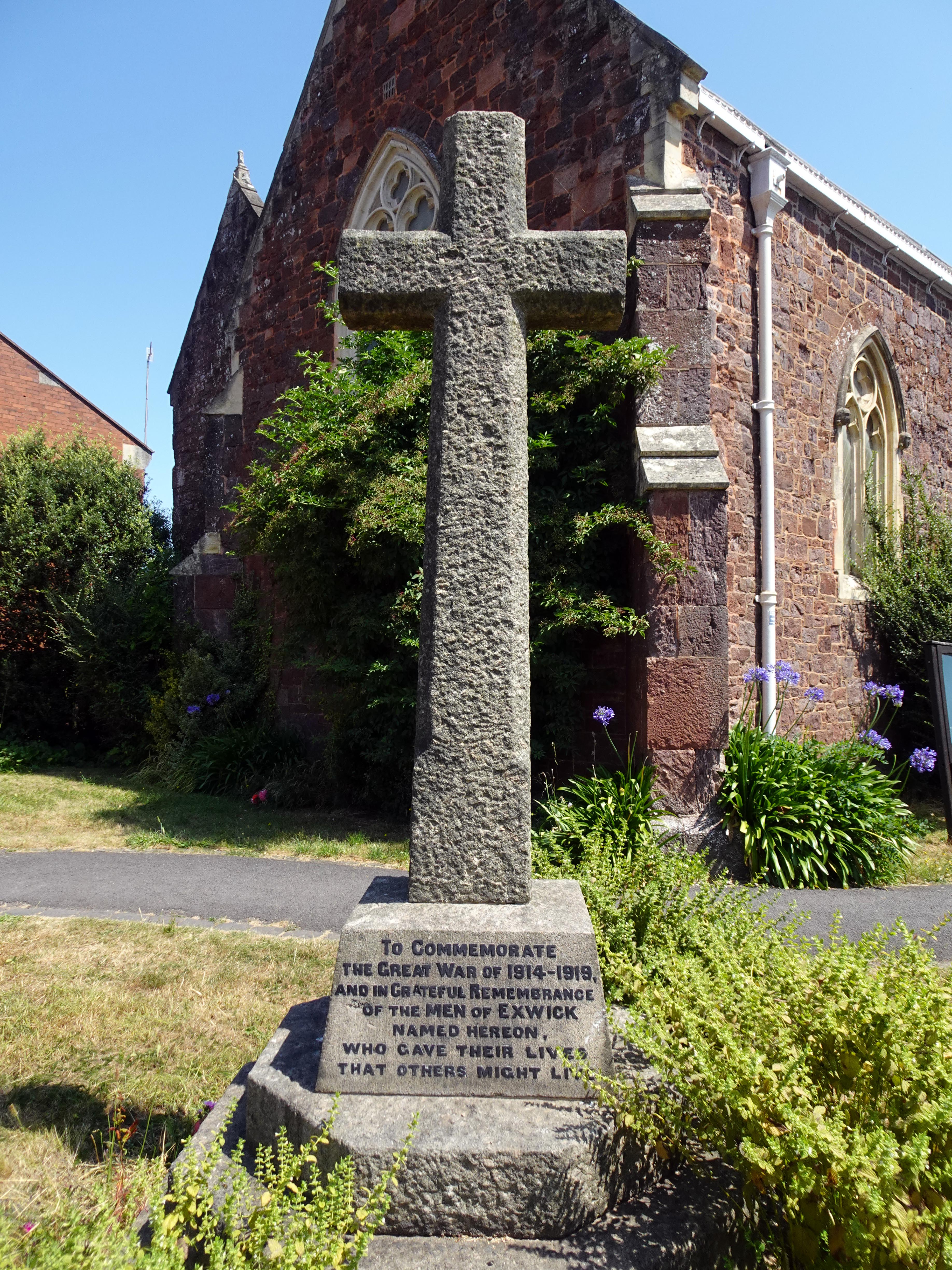
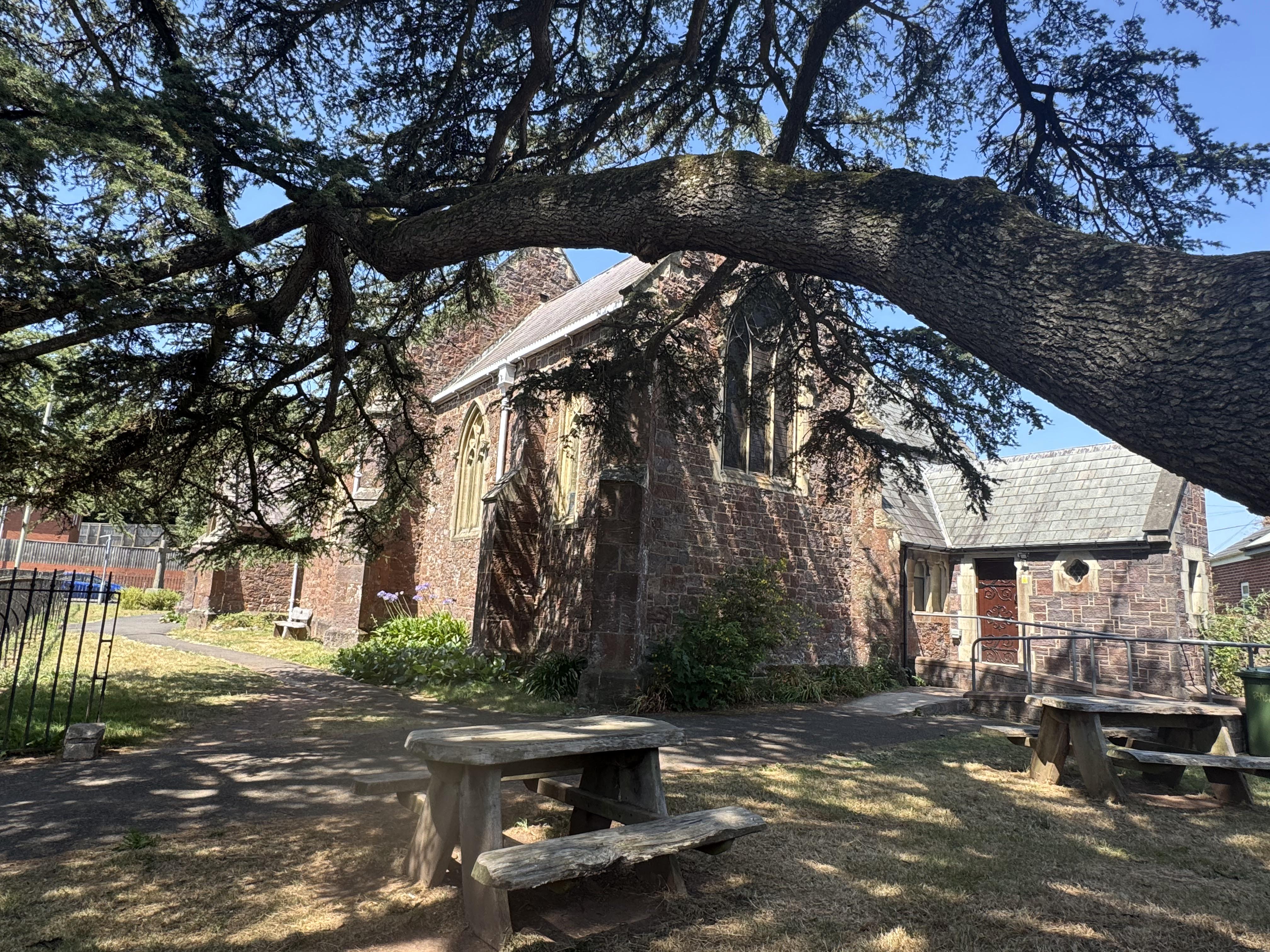
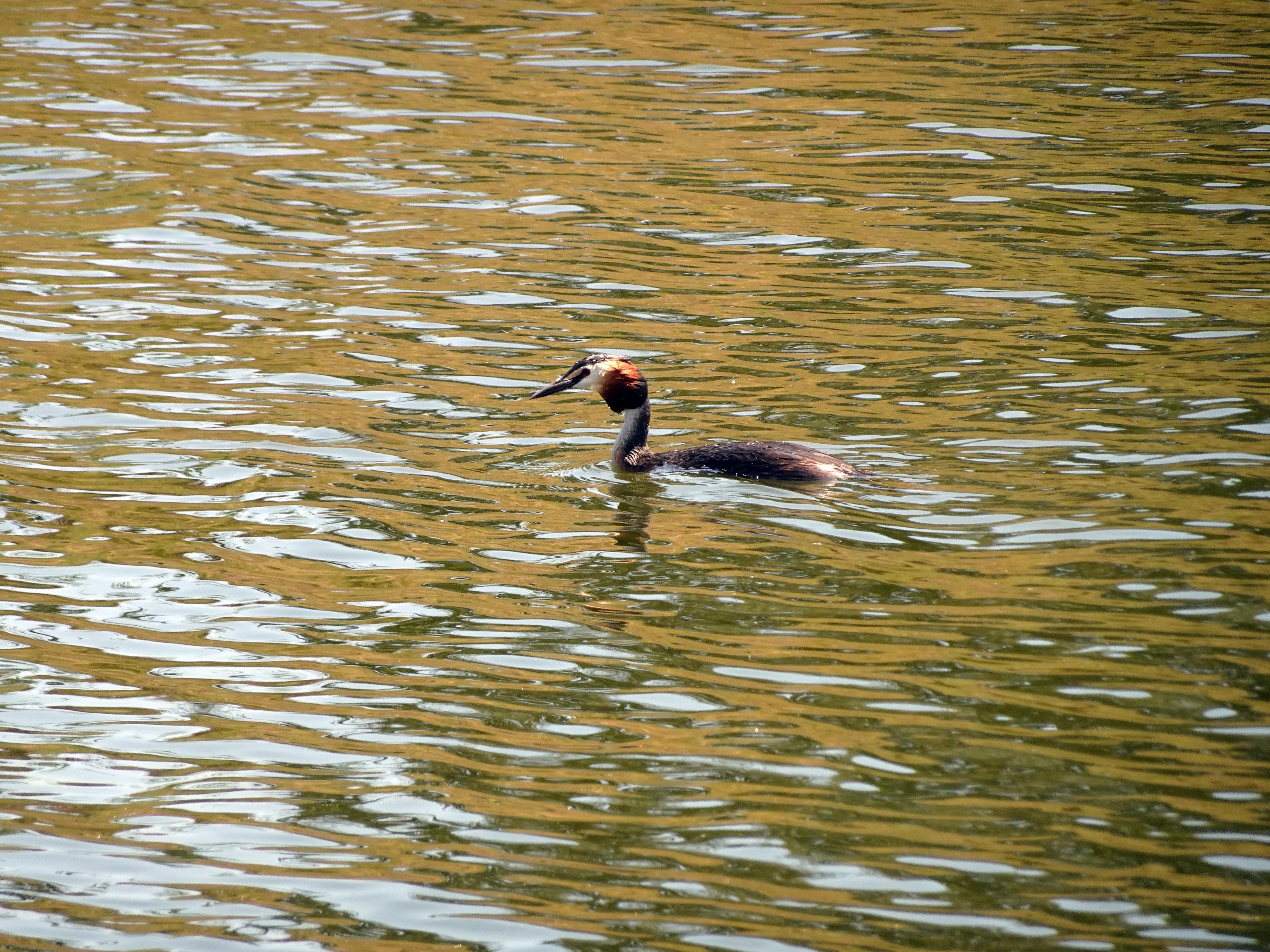
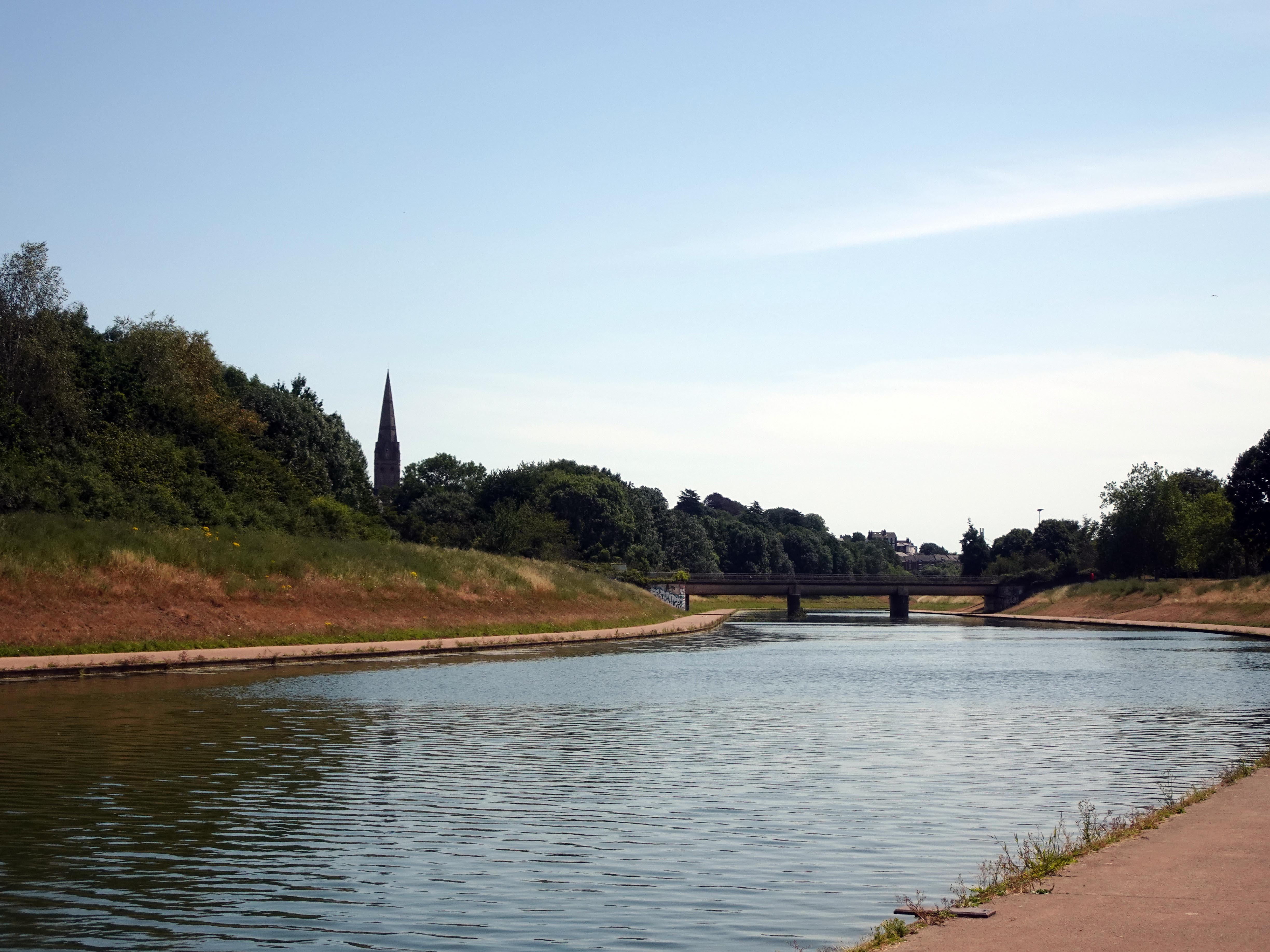
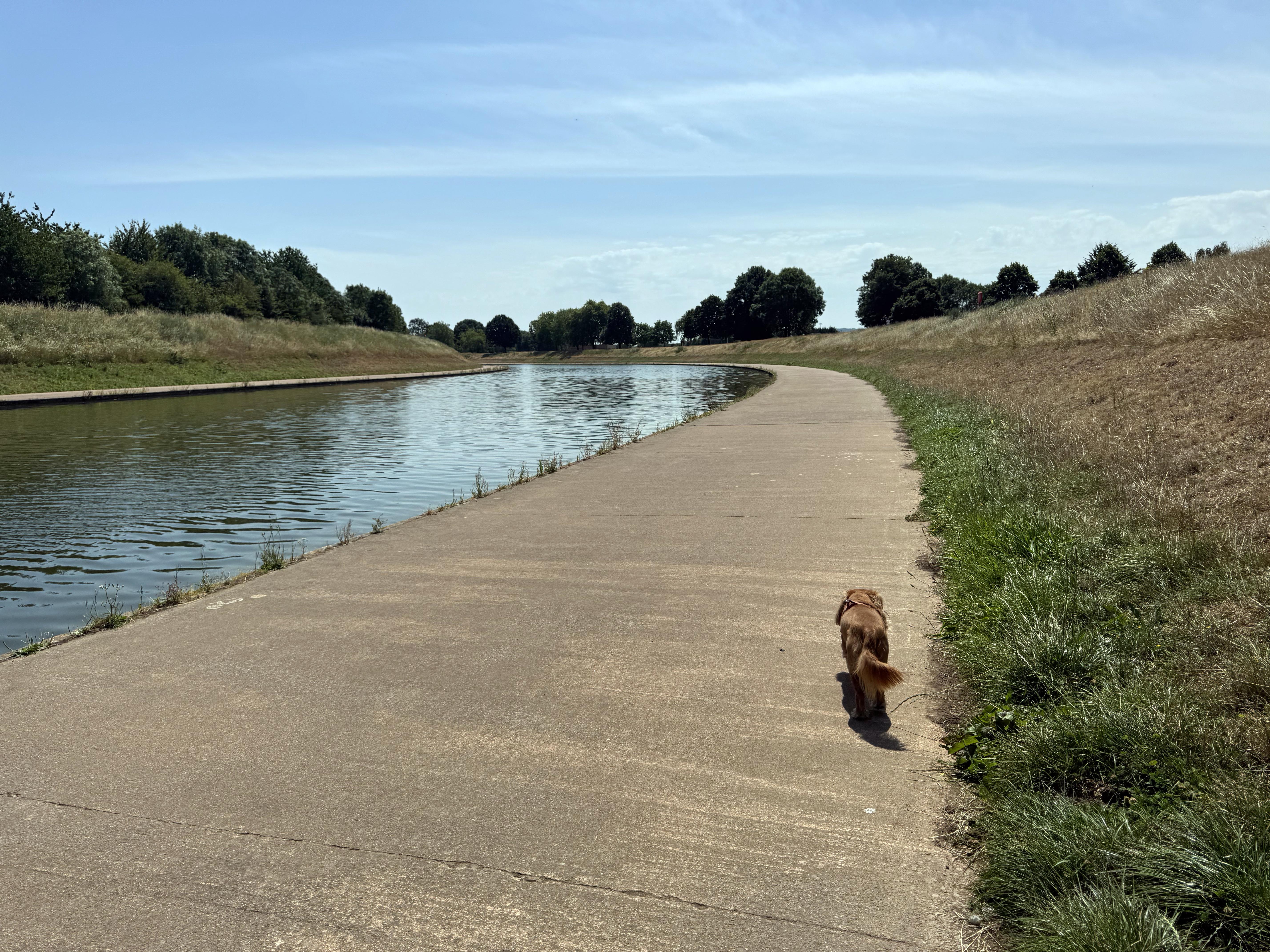
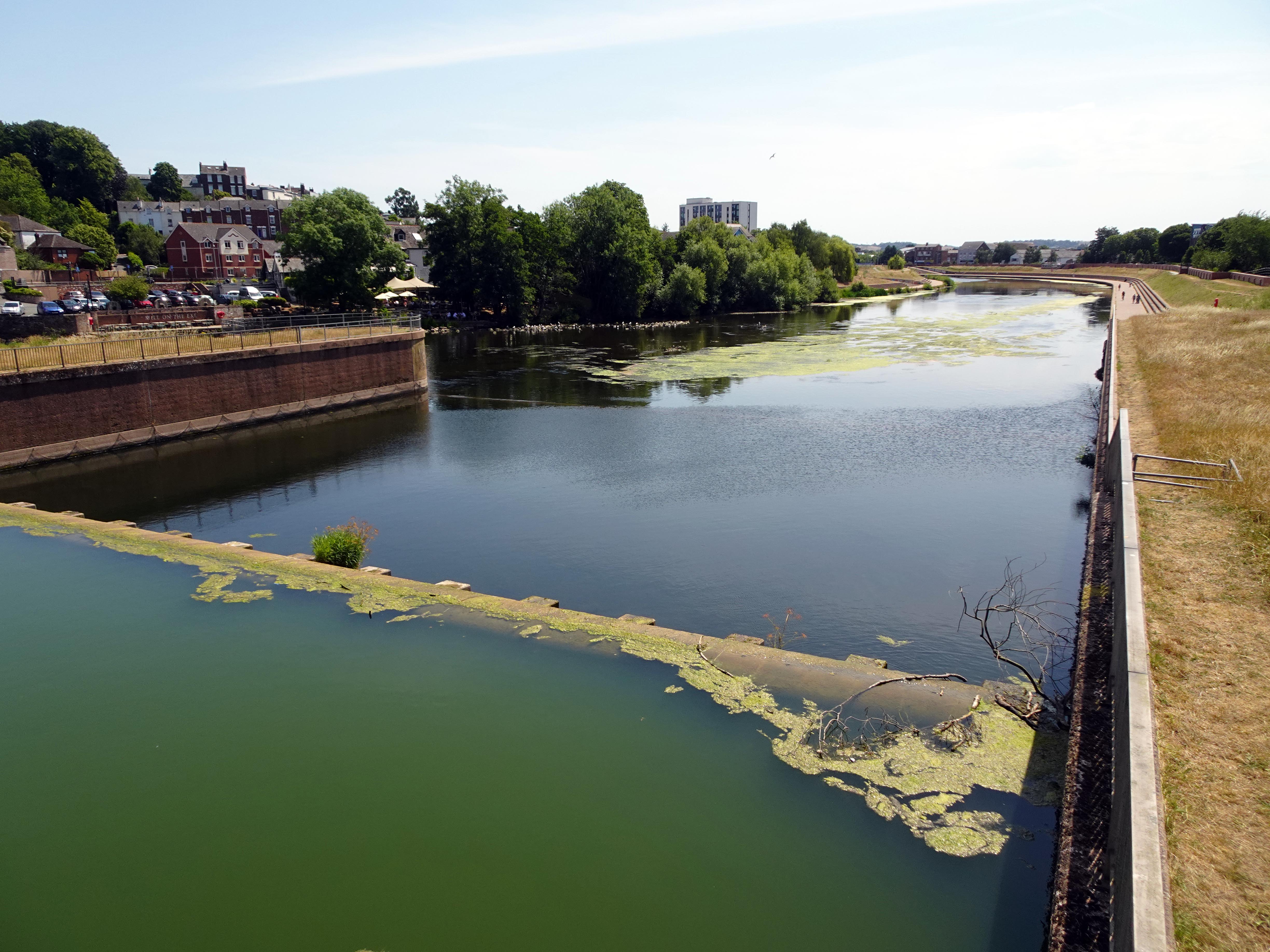
We then crossed over the river Exe to Exwick. We tried to pop into St Andrew’s Church there, but alas it was closed. It did, however, have some lovely picnic tables outside in the shade, and so Rupert and I had a pleasant lunch beside the attractive church. We decided to head back towards St Thomas by following the river down on this western side. It is an easy walk, and once again the impressive St Michael and All Angels hovered above us. There were some interesting birds seeking food and coolness in the water, including some contented‑looking Great Crested Grebes.
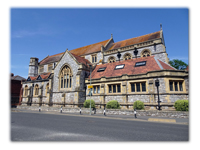
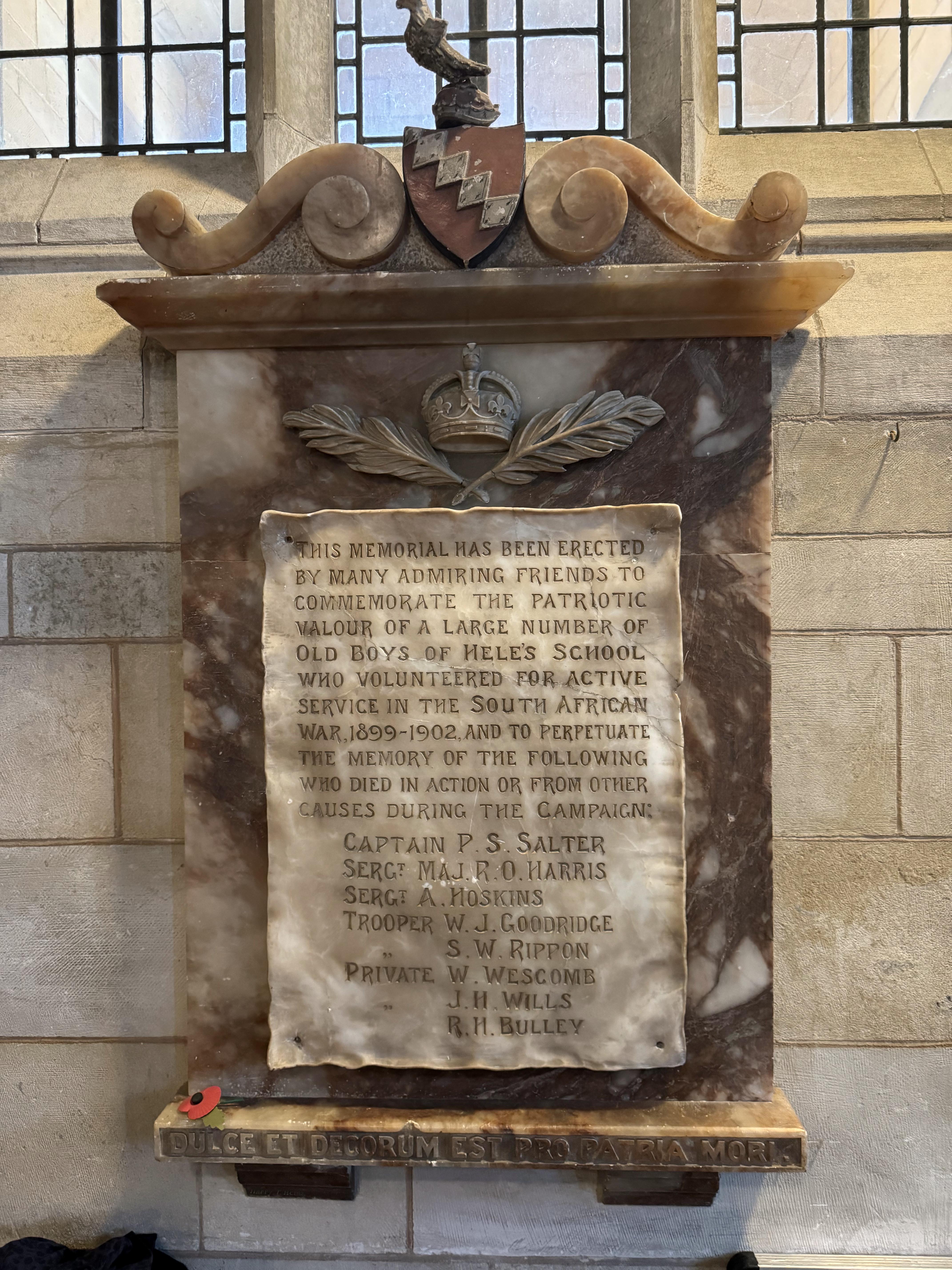
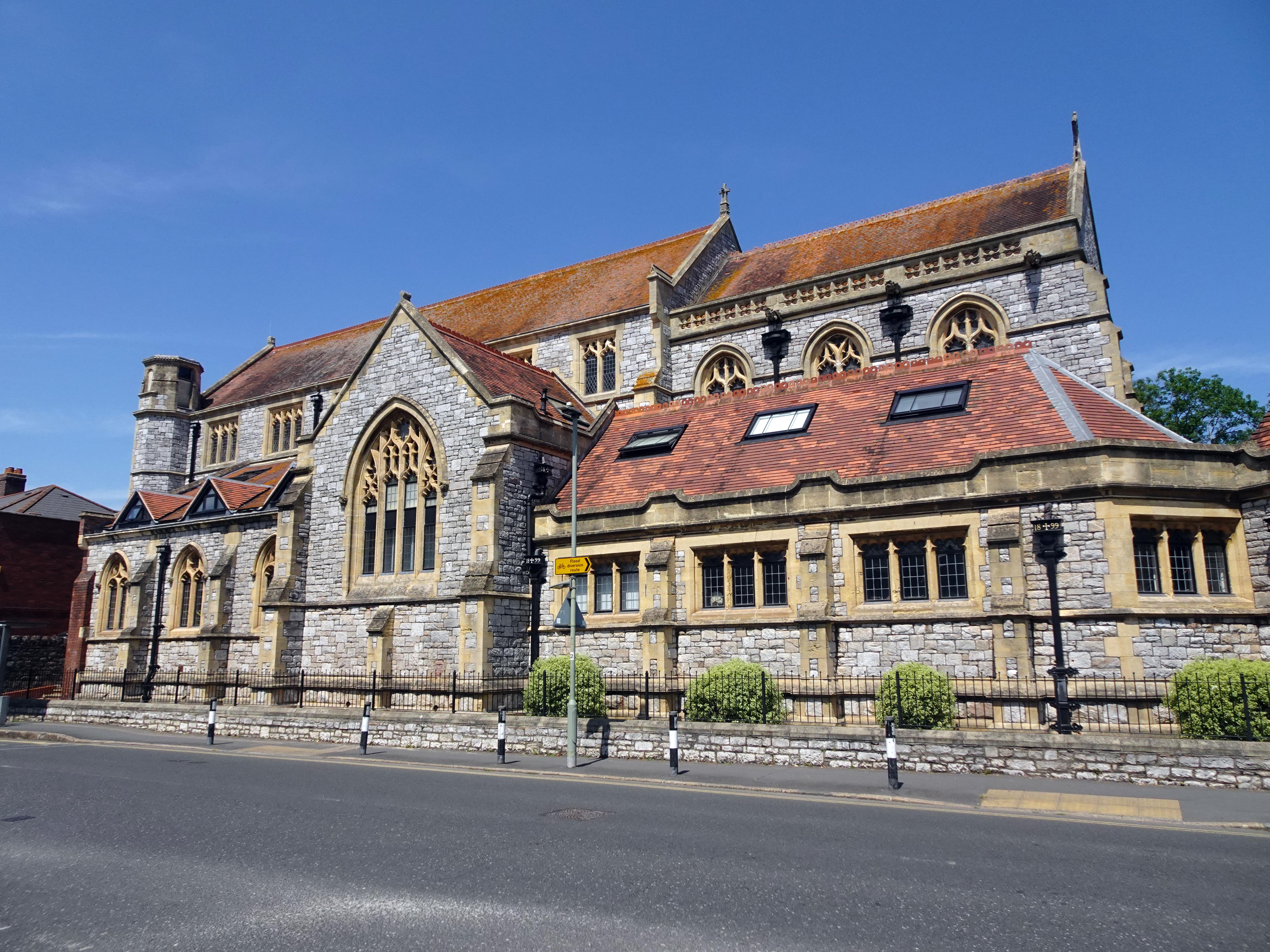
When we reached Flowerpots Park, we left the riverbank and cut through some streets to where the car was parked. Unexpectedly, we found ourselves following a line of ghost churches - buildings that are no longer churches. This always makes me sad, but the very first one was particularly bittersweet. Once upon a time this was Emmanuel Church, whose foundation stone explains that it was laid by Sir Redvers Buller himself in 1897. The Bullers were a very important local family. Sir Redvers Buller won a Victoria Cross in the Zulu War and was a great favourite of Queen Victoria. His reputation was severely dented by a series of three defeats by the Boers in the opening stages of the Second Boer War in 1899. Of course, this was yet to occur when work began on this church, and he was at the height of his fame and influence. It was built in anticipation of the growth of the community on this side of the river. Housing had recently been built to the south of the church but there was little to the west and the north when the church opened in 1899. The church also has an interesting 1924 stained glass window dedicated to Sir Robert Falcon Scott who perished in the Antarctic. Sadly for us, though not for the occupants, this beautiful building has been converted into apartments.
Every time we lose a church, I feel that we lose a part of our history. They are more than merely places of worship. They were the centre point of communities and commemorated the lives and deaths of their inhabitants, and those who went away to fight in our wars and those who died in the service of the nation. They were also houses of public art and artisanship, where anyone could gaze upon beautiful sculptures, windows, and carvings any Sunday free of charge. They were places of camaraderie and community. I do not believe you have to be religious to appreciate these remarkable capsules of our heritage. The fact that this church lasted little more than a century before being turned into housing is a tragedy for us now and for all future generations. It is sad that nobody except those who live there will get to enjoy this Victorian building again.
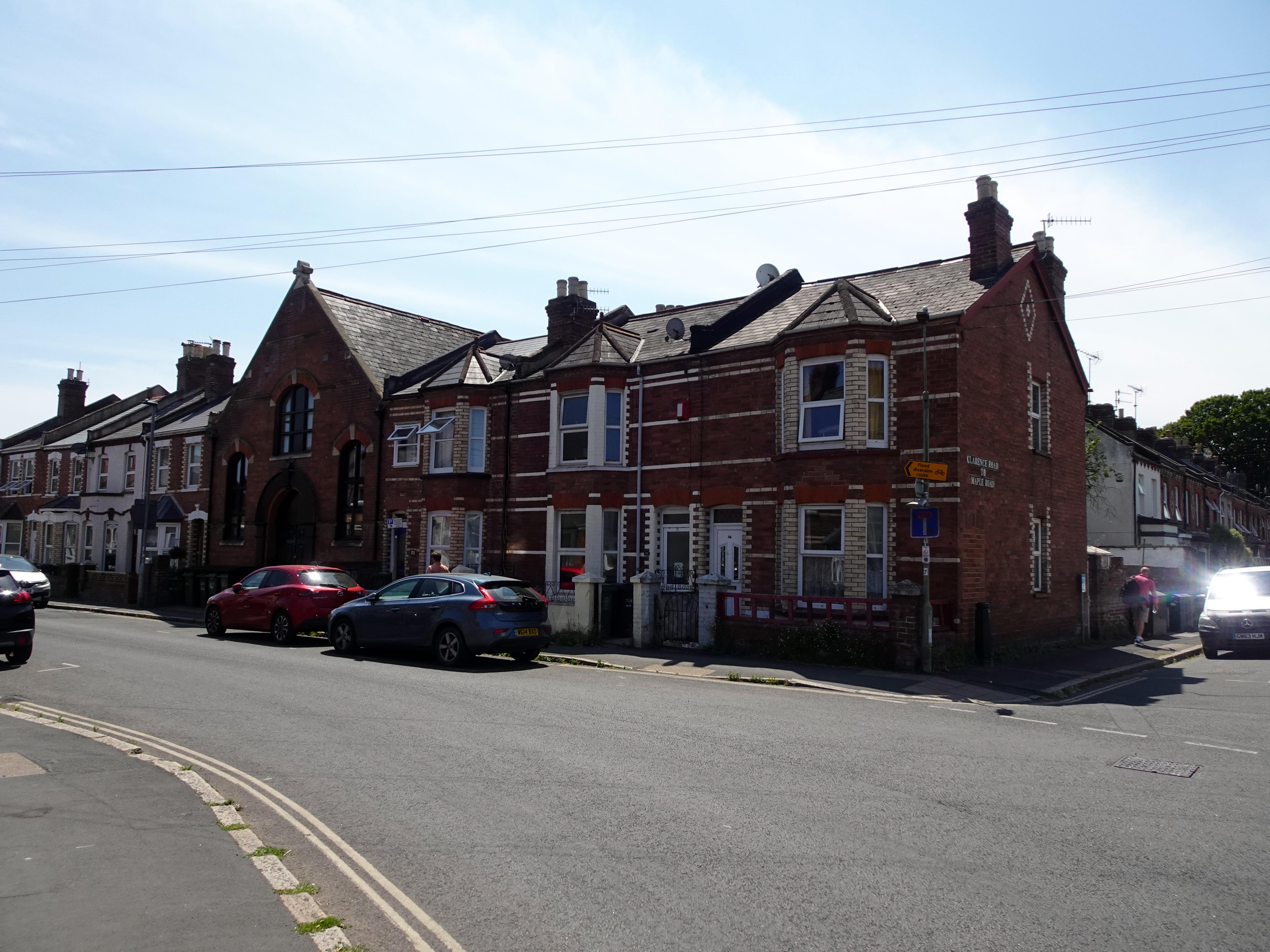
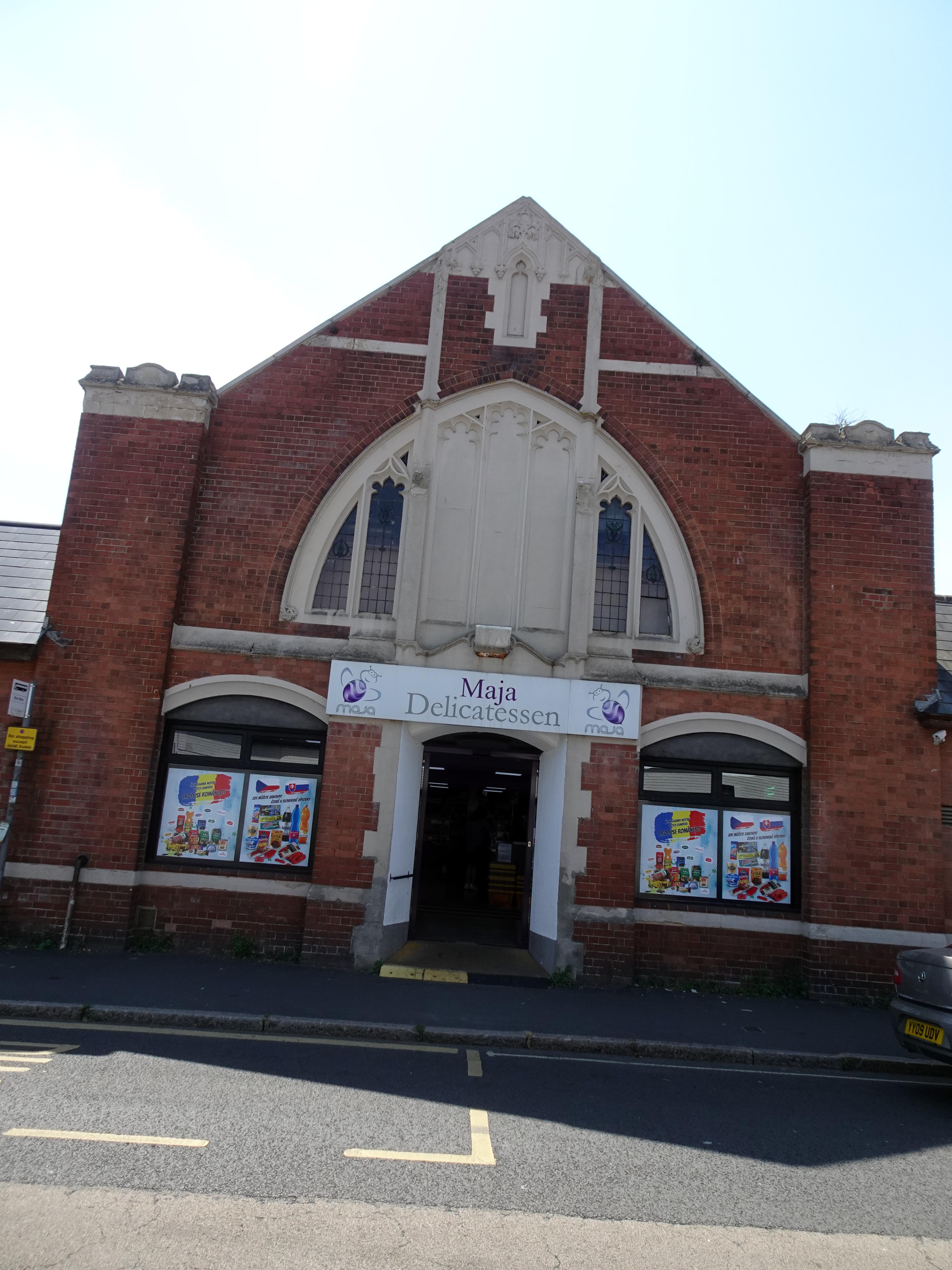
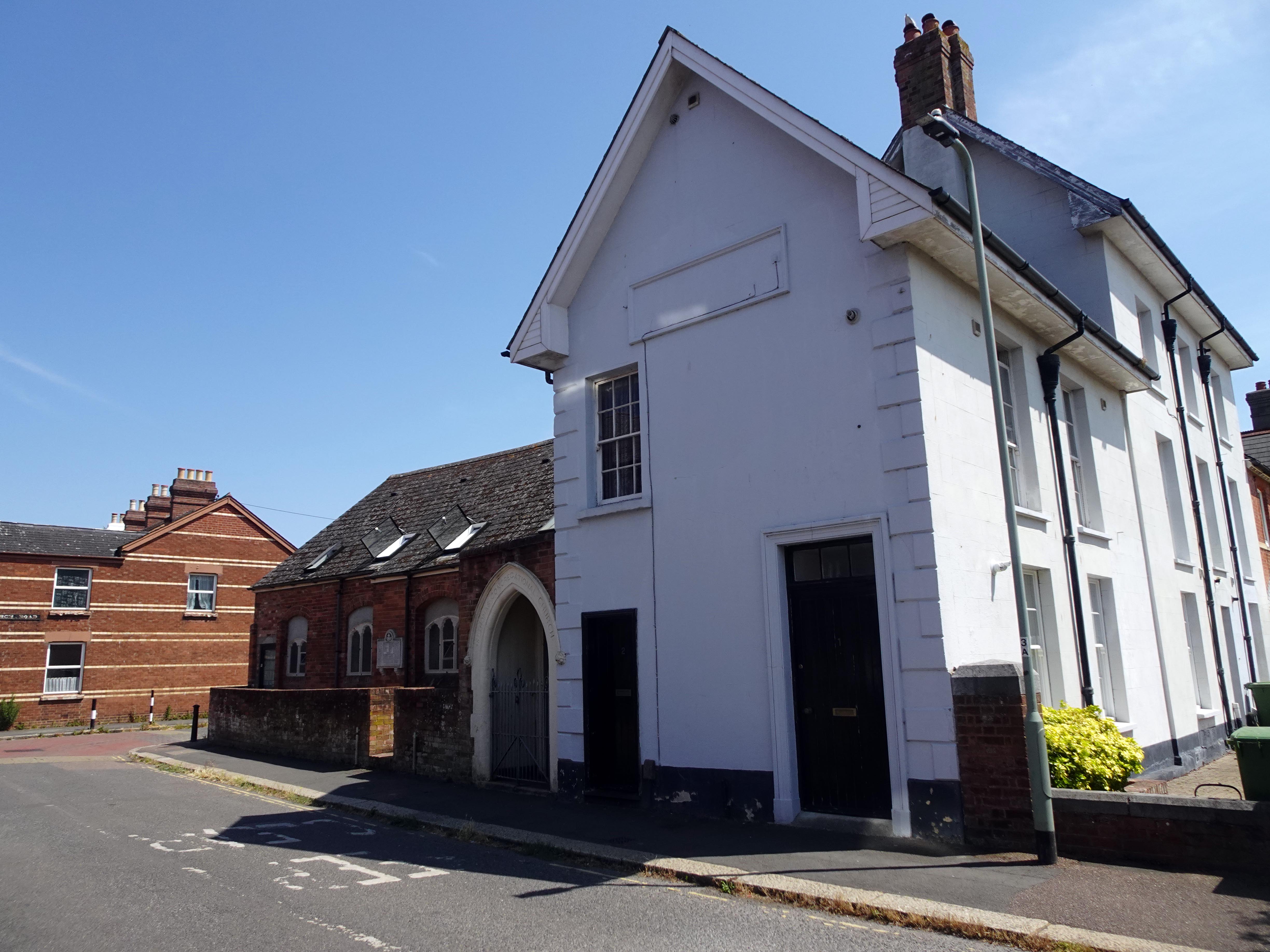
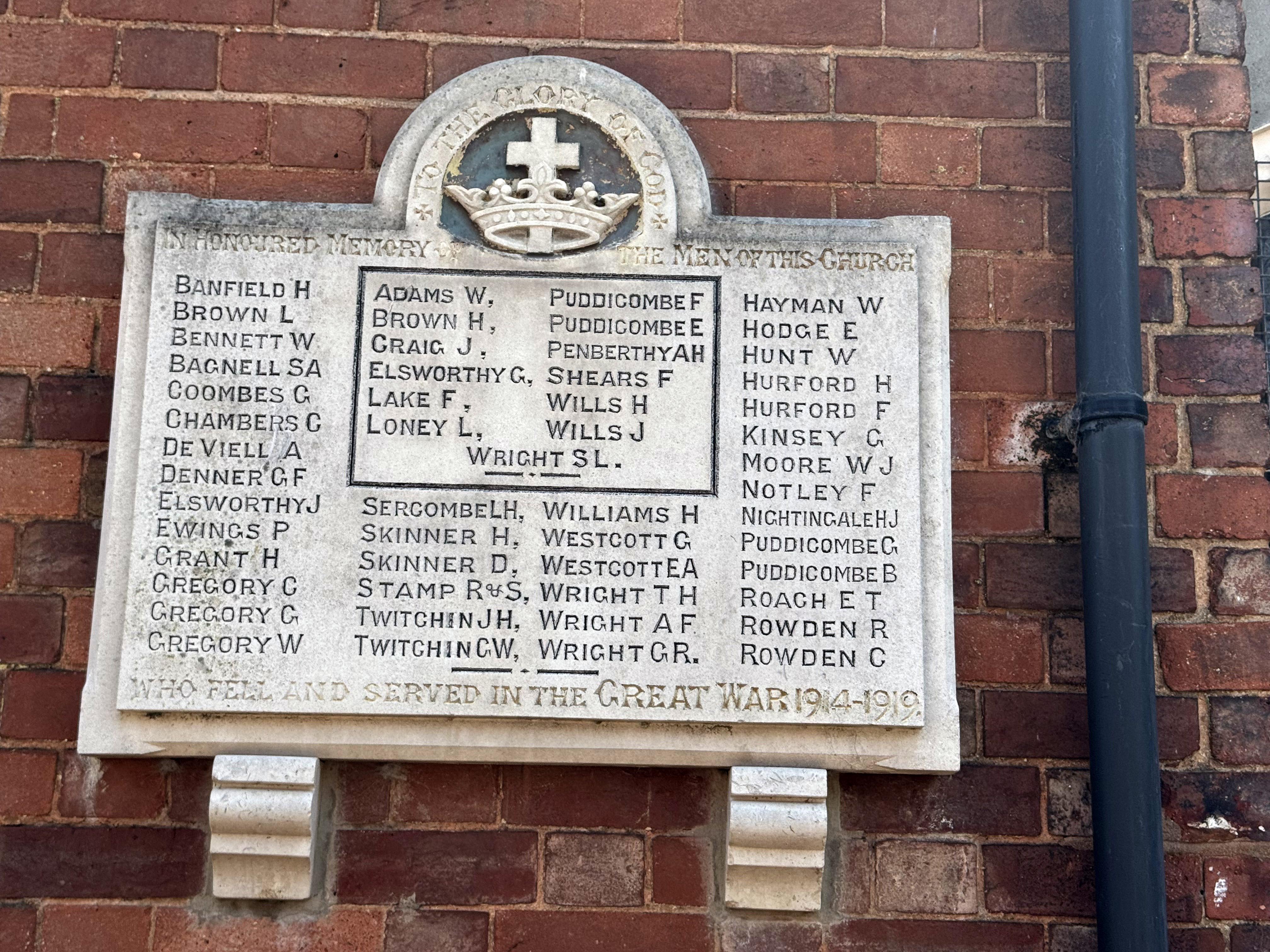
A little further on I saw an old Gospel Hall on the suitably named Buller Road, which also had been converted into a house. I walked a little further along the road and came across Maja Delicatessen, which had clearly been a Wesleyan Methodist church at one point. This location has had a fascinating history, having once been a debtor’s prison before becoming barracks for the Devon Military, then being turned into tenements known as “Artisans’ Dwellings”. It was part of the original prison that was later converted into the Wesleyan Chapel. Then, over the road within a hundred yards, I came across St Thomas Congregational Church, with a war memorial proudly displayed on its side showing the members of its congregation who “fell and served” in the Great War. This too is sadly no longer a place of worship, having been converted into a house.
Notwithstanding this slightly disappointing run of four places of worship being no more, we had enjoyed a wonderful walk around this part of Exeter. I fear I have written too much and yet there is so much more I could have added. There is something uplifting about seeing so much history in such a short walk. We could have made any number of turnings and I am sure have found equally fascinating history in most directions. There is something nice about coming to a place with no preconceptions, no plans, but just wandering the streets and letting them take you to where they want you to go. They revealed their stories on a beautiful summer’s day. I can’t wait to go back and discover yet more of Exeter’s fascinating history.