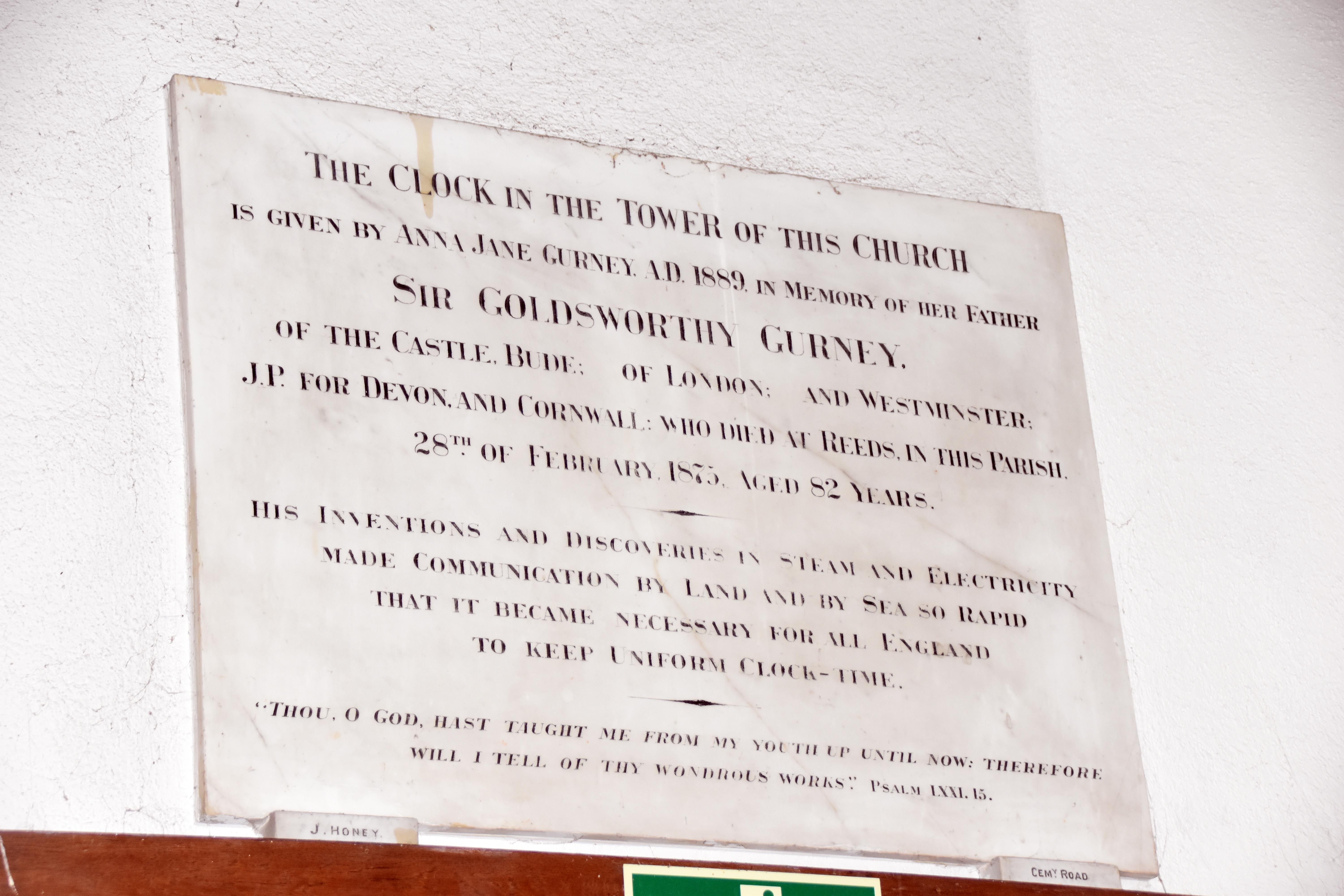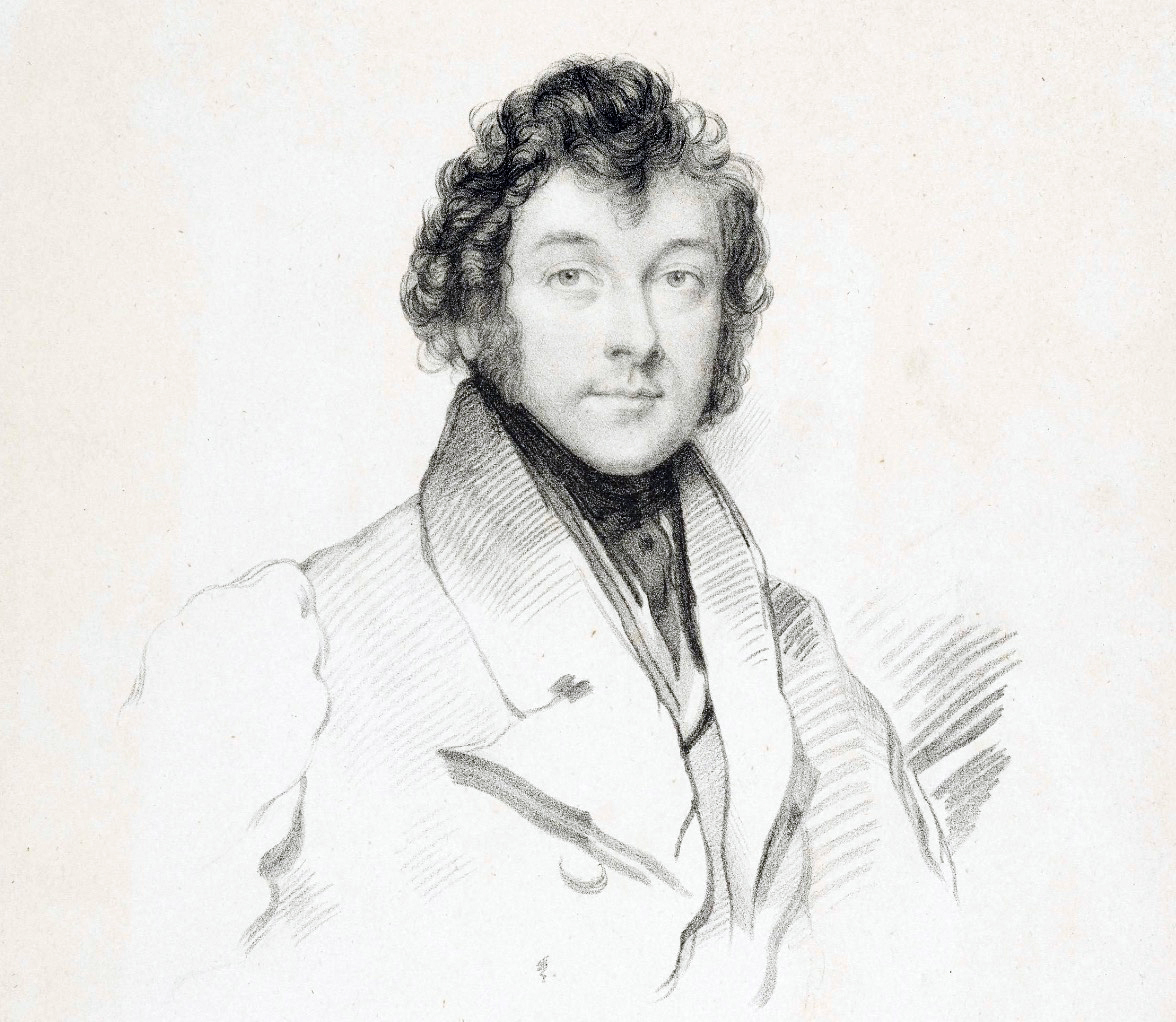
Sir Goldsworthy Gurney (1793–1875) was one of the most versatile engineers of the nineteenth century: surgeon, chemist, inventor, steam‑carriage pioneer, lighting engineer and architect of the Bude Light. Although born at Treator, near Padstow, his most enduring legacy is tied to Bude and Poughill, where he lived for decades and where many of his experiments were carried out. His work connected Cornwall to national debates on transport, illumination and industrial design, and his influence extended far beyond the county.
Gurney trained originally as a medical doctor, practising in Wadebridge before moving to London in 1820. There he entered the circle of scientific and industrial experimenters who were reshaping early Victorian engineering. His interests ranged across chemistry, heat, ventilation and mechanical design. He became known for his steam‑carriage experiments of the 1820s and 1830s, which attempted to create a practical road‑going steam vehicle. Although the project ultimately failed commercially, it placed him among the early pioneers of mechanised road transport.
His most successful and lasting contribution was in the field of illumination. The “Bude Light”, developed in the 1830s and 1840s, used an oxygen‑enriched flame to produce a bright, steady and efficient light. It was adopted in the Houses of Parliament and other public buildings, and for a time represented one of the most advanced lighting systems available. Gurney also worked on ventilation systems for the Palace of Westminster, applying his understanding of heat and airflow to the problem of clearing smoke and fumes from the debating chambers.
Gurney’s connection to Bude and Poughill began in the 1830s when he purchased the site that became The Castle, Bude. He rebuilt it as a combined residence, workshop and demonstration space, using it to test lighting, heating and ventilation systems. The building became a local landmark and a centre of his experimental work. His presence in Bude brought national attention to the town, and his engineering demonstrations were widely reported. The Castle remains one of the most distinctive buildings in the district and stands as a physical reminder of his long residence.
His links extended beyond Bude itself. Gurney had connections with the Hanning family of Dillington House in Somerset, a relationship noted in contemporary accounts and mentioned in your own page on the subject. The Hannings were part of the network of landowners, engineers and reform‑minded families who supported or observed Gurney’s work. A reference to this connection can be found here: Dillington House. The association illustrates the breadth of Gurney’s contacts and the way his ideas circulated among provincial and metropolitan circles alike.
Gurney’s later life was spent largely in Bude and Poughill. He continued to experiment, write and advise on engineering matters, and he became a well‑known figure in the district. His knighthood in 1863 recognised his contributions to public lighting and ventilation. Although some of his inventions were overtaken by later technologies, his work on illumination and airflow remained influential. The Bude Light, in particular, was widely admired for its brightness and stability, and examples of the design survive in museums and public collections.
His death in 1875 ended a career that had spanned medicine, chemistry, engineering and architecture. Gurney’s legacy in Bude is visible not only in The Castle but also in the local memory of his experiments and demonstrations. His work connected the town to national scientific developments and placed a Cornish inventor at the centre of nineteenth‑century debates on technology and public improvement. In Poughill and Bude he remains a figure of local significance, and his name is closely associated with the district’s nineteenth‑century history.
Sir Goldsworthy Gurney’s life illustrates the breadth of Victorian engineering and the role of provincial innovators in shaping national developments. His work in Bude and Poughill, his connections to families such as the Hannings of Dillington House, and his contributions to lighting and ventilation place him among the most distinctive scientific figures associated with Cornwall.