

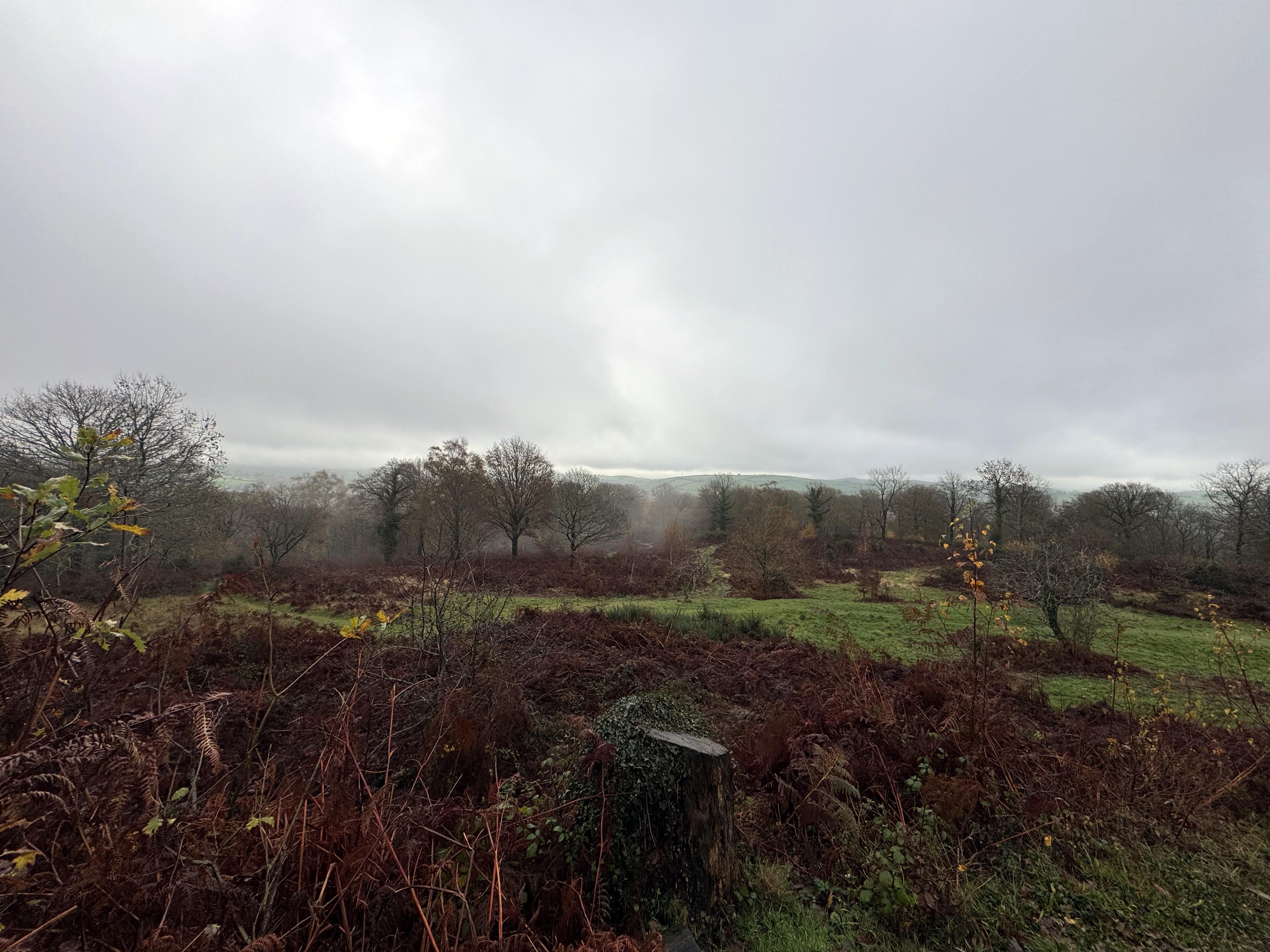
Hembury Hill is one of those places that quietly layers history without shouting about it. Tucked above the River Dart on the edge of Dartmoor, it’s easy to miss unless you know what you’re looking for. But once you’re up there, you realise it’s not just a hill — it’s a story told in earthworks. What makes it special is that it’s both an Iron Age hillfort and a Norman motte-and-bailey castle, one built inside the other. Two very different worlds, one shared location.
The older part is the hillfort, probably built between 800 and 500 BC. It’s what archaeologists call a “slight univallate” hillfort — meaning it’s got a single line of defences, not huge ramparts like some others. It was likely used for storing livestock, gathering supplies, and sheltering people when needed. The rampart, ditch, and outer bank still shape the hilltop, and surveys suggest there were timber roundhouses inside, maybe five or more, along with fences and pits. No one’s dug it properly, so most of what we know comes from comparing it to similar sites nearby.
Then, about a thousand years later, the Normans arrived and reused the hillfort to build their own castle. They didn’t start from scratch — they built a motte (a mound) with a timber tower on top, and used the old Iron Age defences as part of their outer bailey. The motte is still there, about 30 metres across and six metres high, with a dip in the middle where the tower once stood. There’s also a small platform nearby that might have been the inner bailey. It’s clever, really — they saved effort by using what was already there, and made a strong statement by building on top of something ancient.
Why here? Well, it’s a good spot. From Hembury you can see across the Dart valley and control movement through the area. It’s also close to upland resources on the moor. Both the Iron Age builders and the Normans probably chose it for similar reasons — defence, visibility, and control. And maybe the Normans liked the idea of building on something old and respected, to show they were in charge now.
There’s a bit of folklore too. One story says the castle was once defended by women who welcomed their enemies in and then killed them overnight. Whether that’s true or not, it adds to the atmosphere. The site appears on Donn’s map from 1765, and it’s been a quiet presence in the landscape ever since. No flashy signs, no big car parks — just a wooded hill with a lot of history underfoot.
Walking there is part of the charm. You start in Holne Woods, climb gently through trees, and eventually reach the earthworks. I like to walk the perimeter first, tracing the old ditch, before heading up to the motte. It’s peaceful, especially in the early morning with birds calling and mist hanging low. You feel the layers of time without needing a guidebook.
Hembury hasn’t been excavated, so we’re left with educated guesses. But that’s part of its appeal. It’s not polished or packaged — it’s a place where history lingers quietly. And for a small hill on Dartmoor, it’s held a lot of meaning for a very long time.

