|
|
|
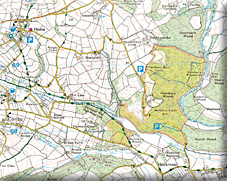
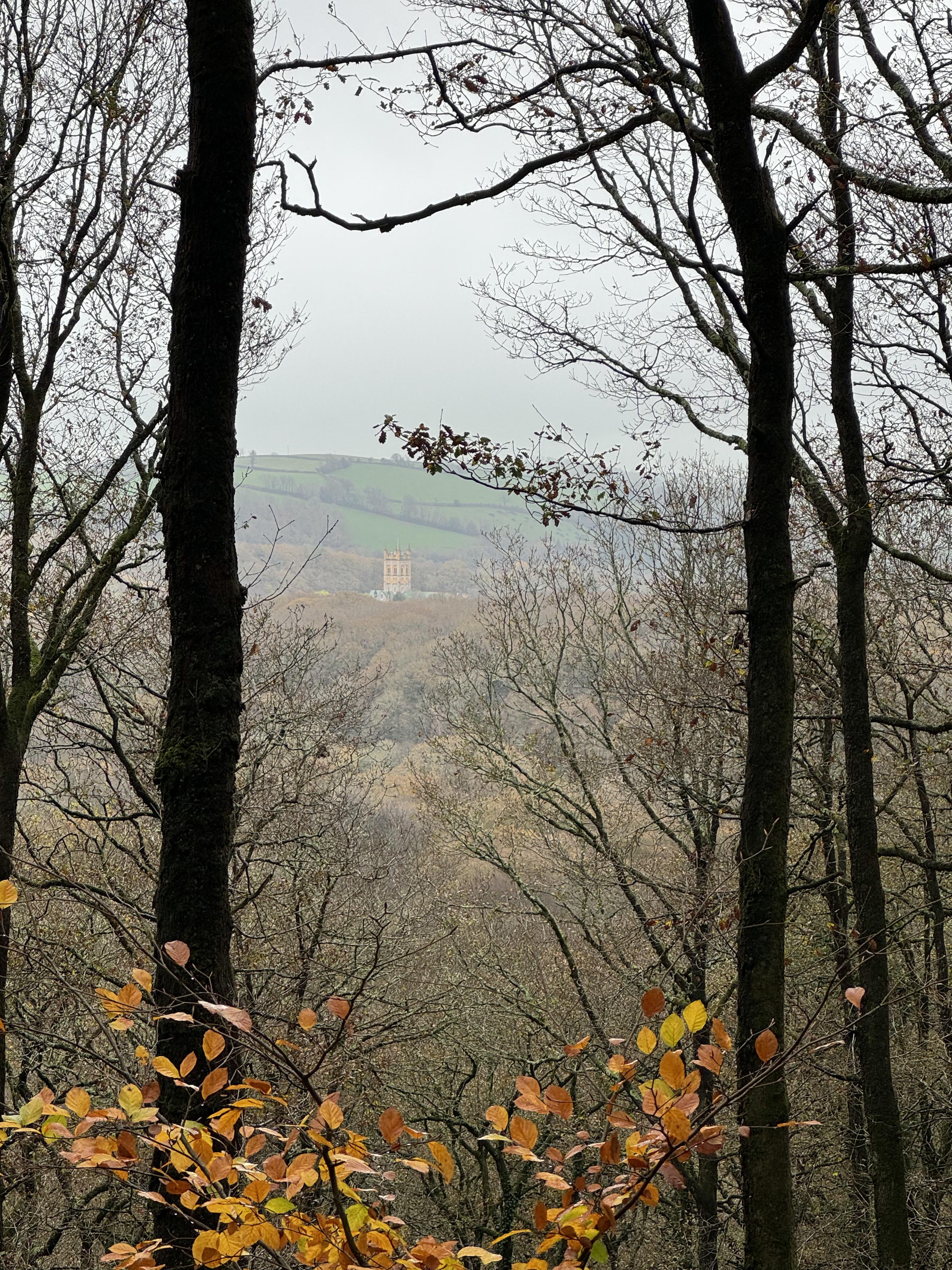
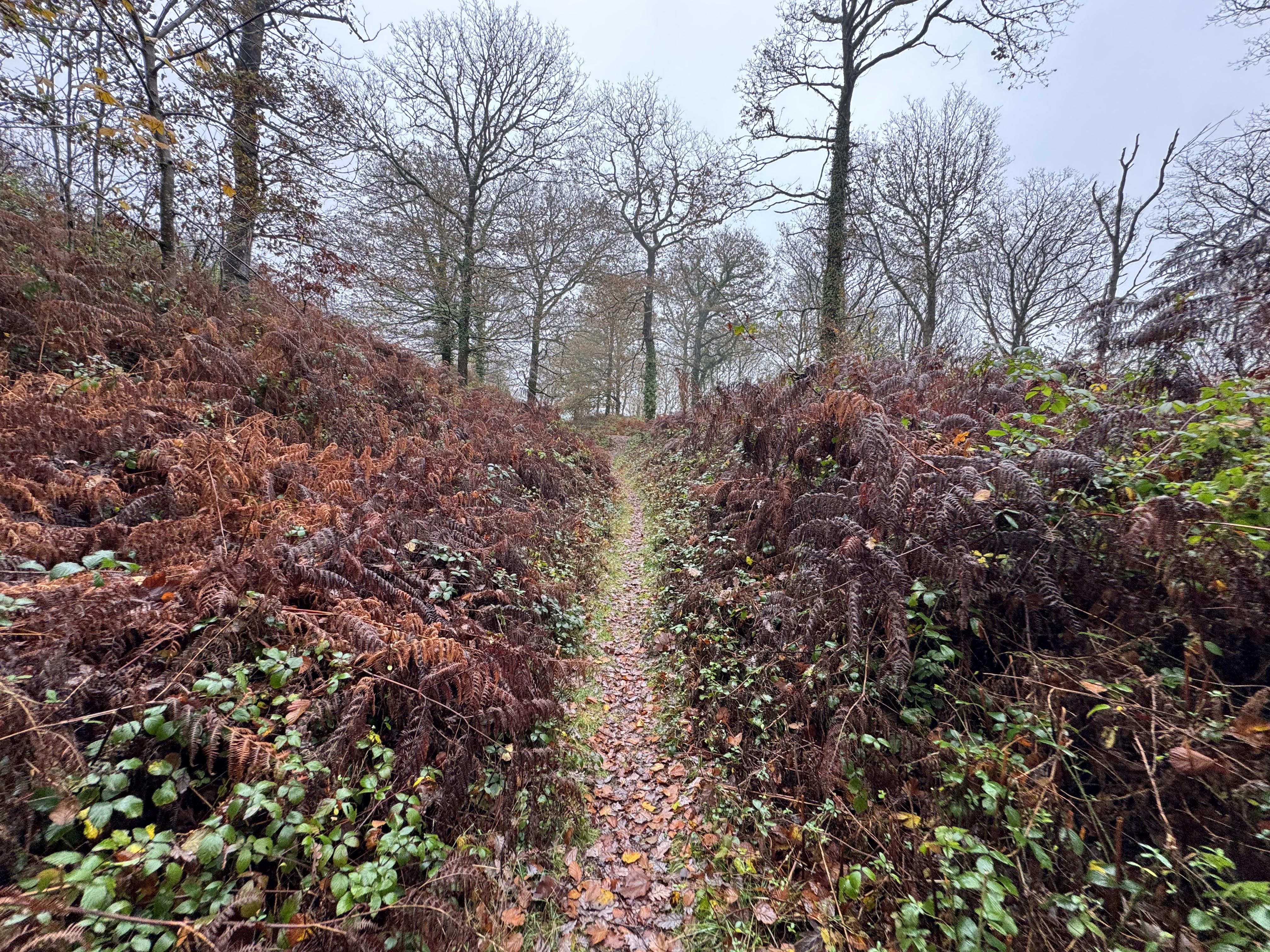
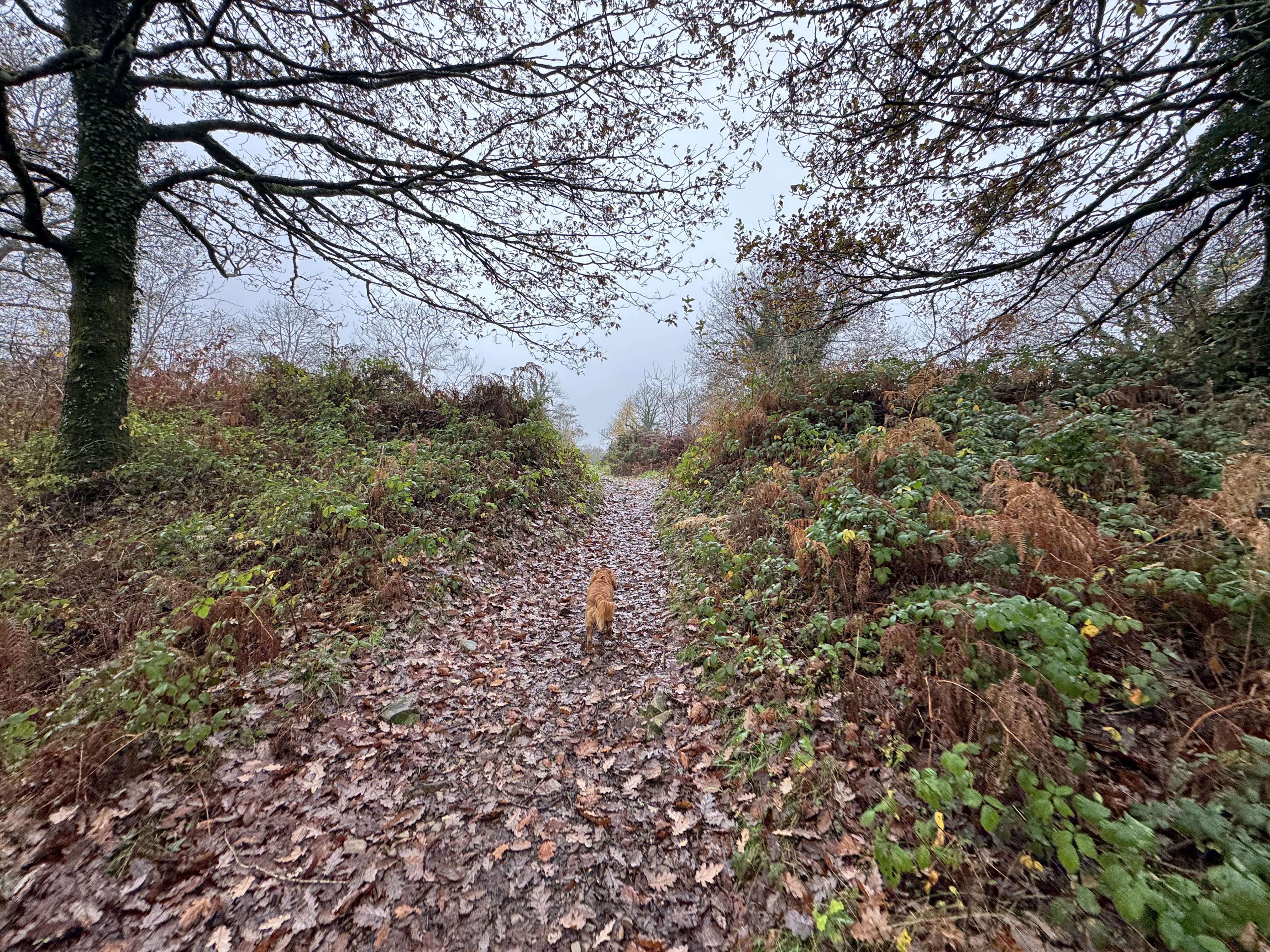
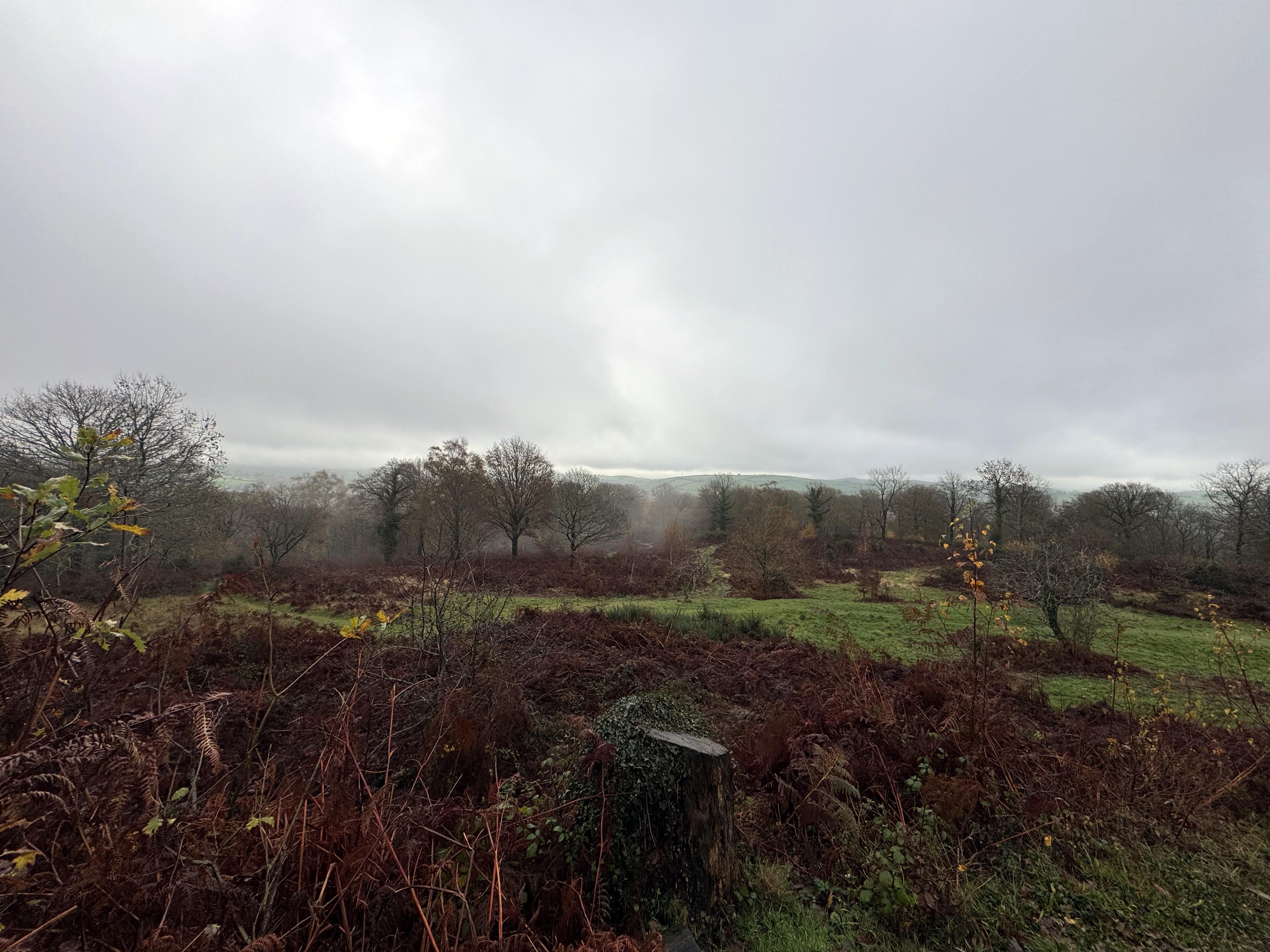
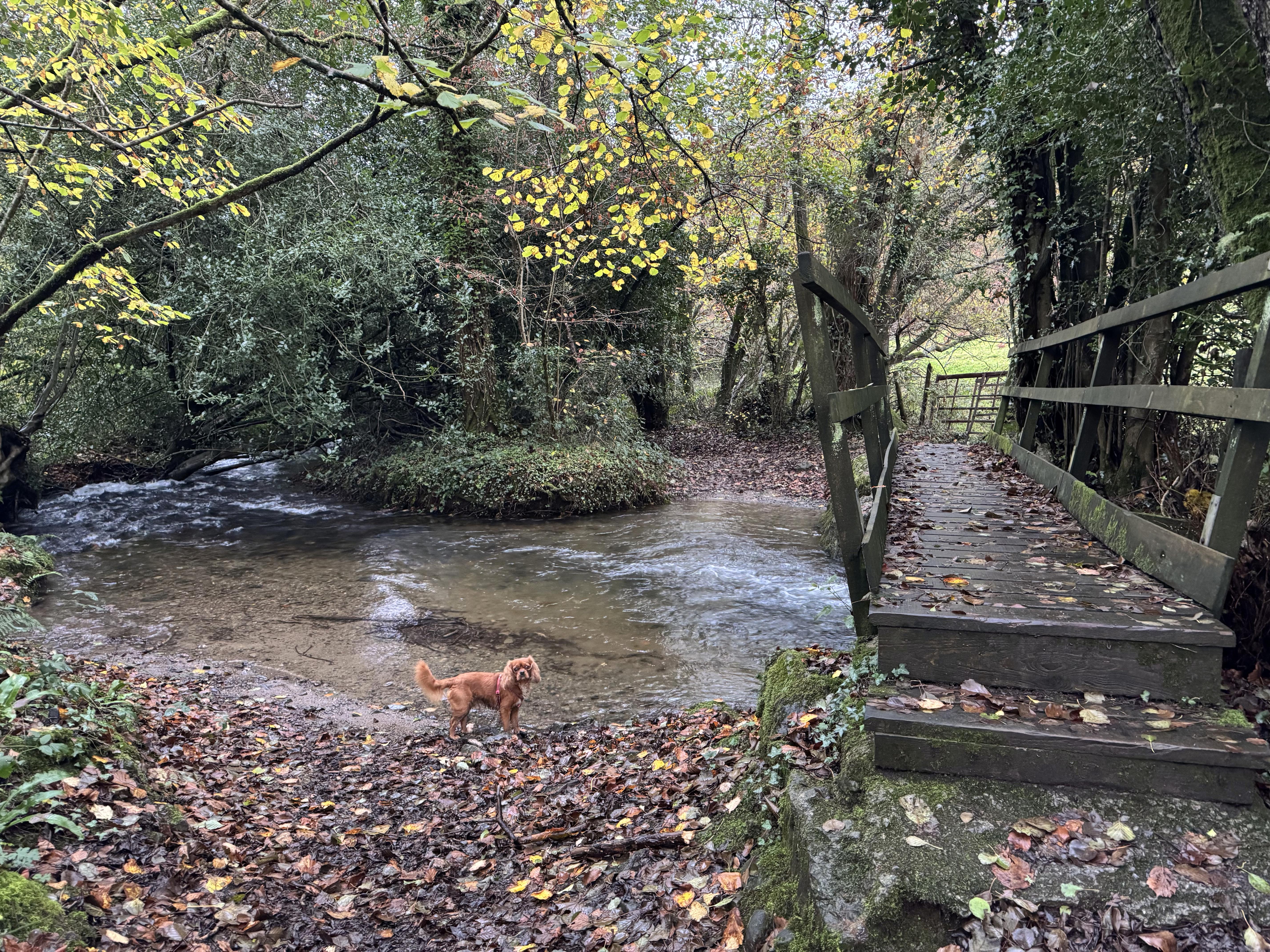
Saturday saw Rupert and I drive to Hembury Wood just up from Buckfastleigh. There is plenty of parking and Hembury Woods is a beautiful area alongside the River Dart, with an old copper mine which was known poetically as “Queen of the Dart” on the opposite side of what was a very fast-flowing river after so much rain recently. There is also an abandoned Victorian barn slowly decaying deep in the woods. But the real star of Hembury Woods is Hembury ‘Castle’—or should that be ‘Fort’? In fact, the answer is both, as this particular location has a late Bronze Age/Early Iron Age hill fort with a Norman motte and bailey castle built within it—so you get two for the price of one if you visit here. Of course, the Celts loved building up high for defensive purposes, so why not reuse what was then a thousand-year-old defensive system as the basis of your new castle? I should also say that for some reason the same names keep reoccurring in naming Celtic settlements, and indeed Hembury isn’t the only Iron Age hill fort located in Devon—if you recall, we visited another Hembury Hill Fort not that long ago near Honiton. On our visit it felt suitably moody, with a low cloud base and mist swirling around as we climbed out of the valley up to the summit of the motte and bailey castle.
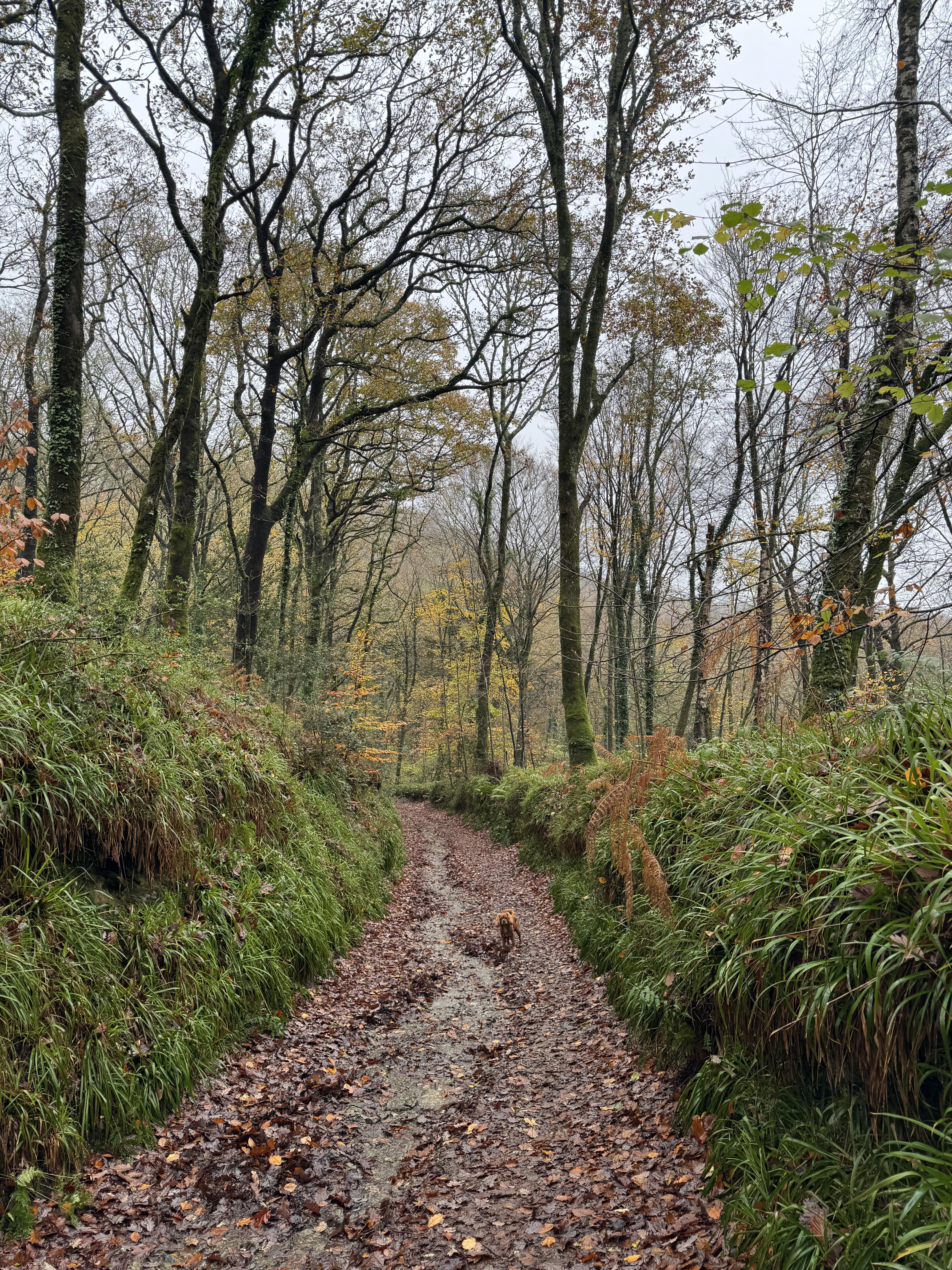
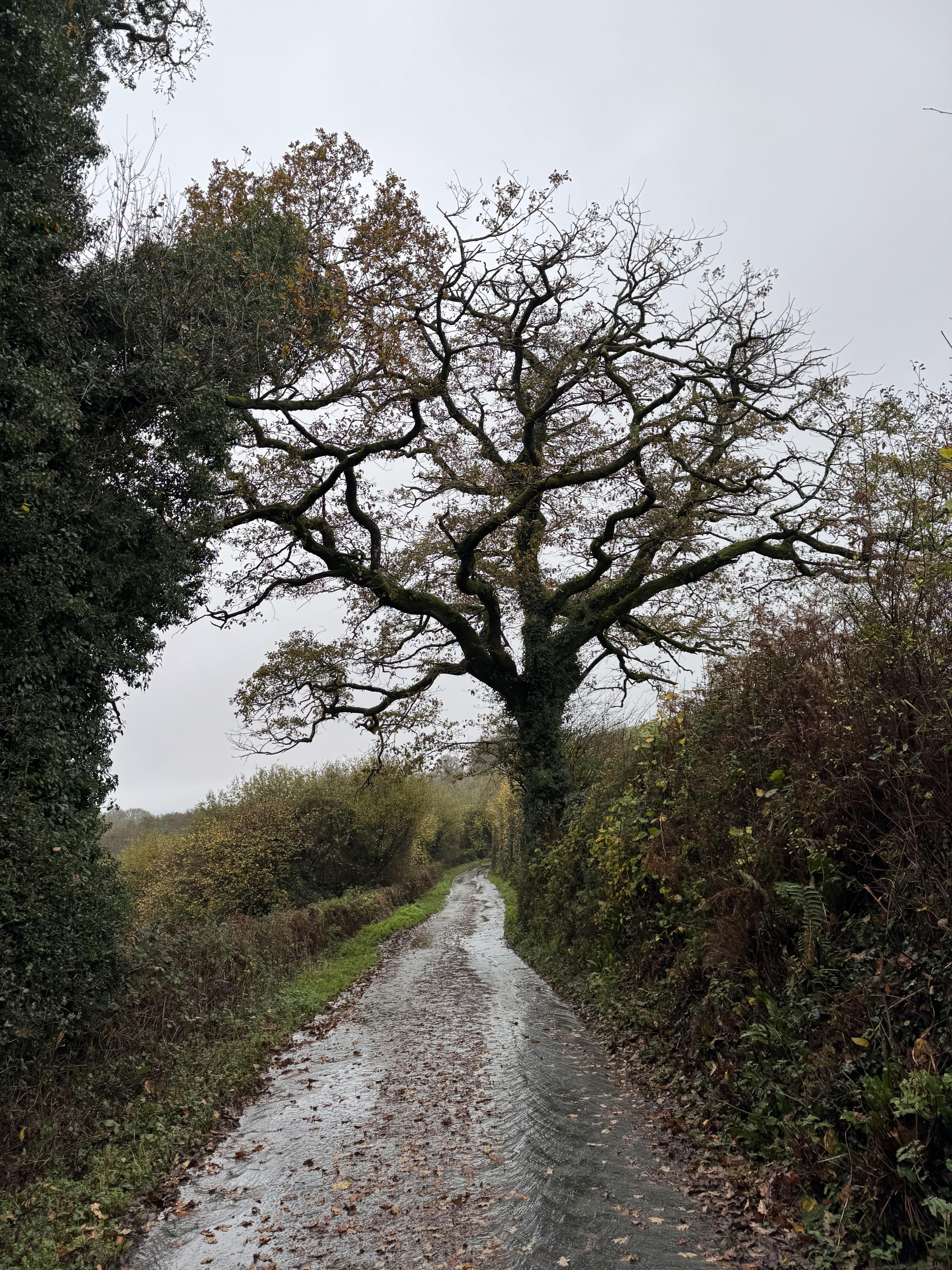
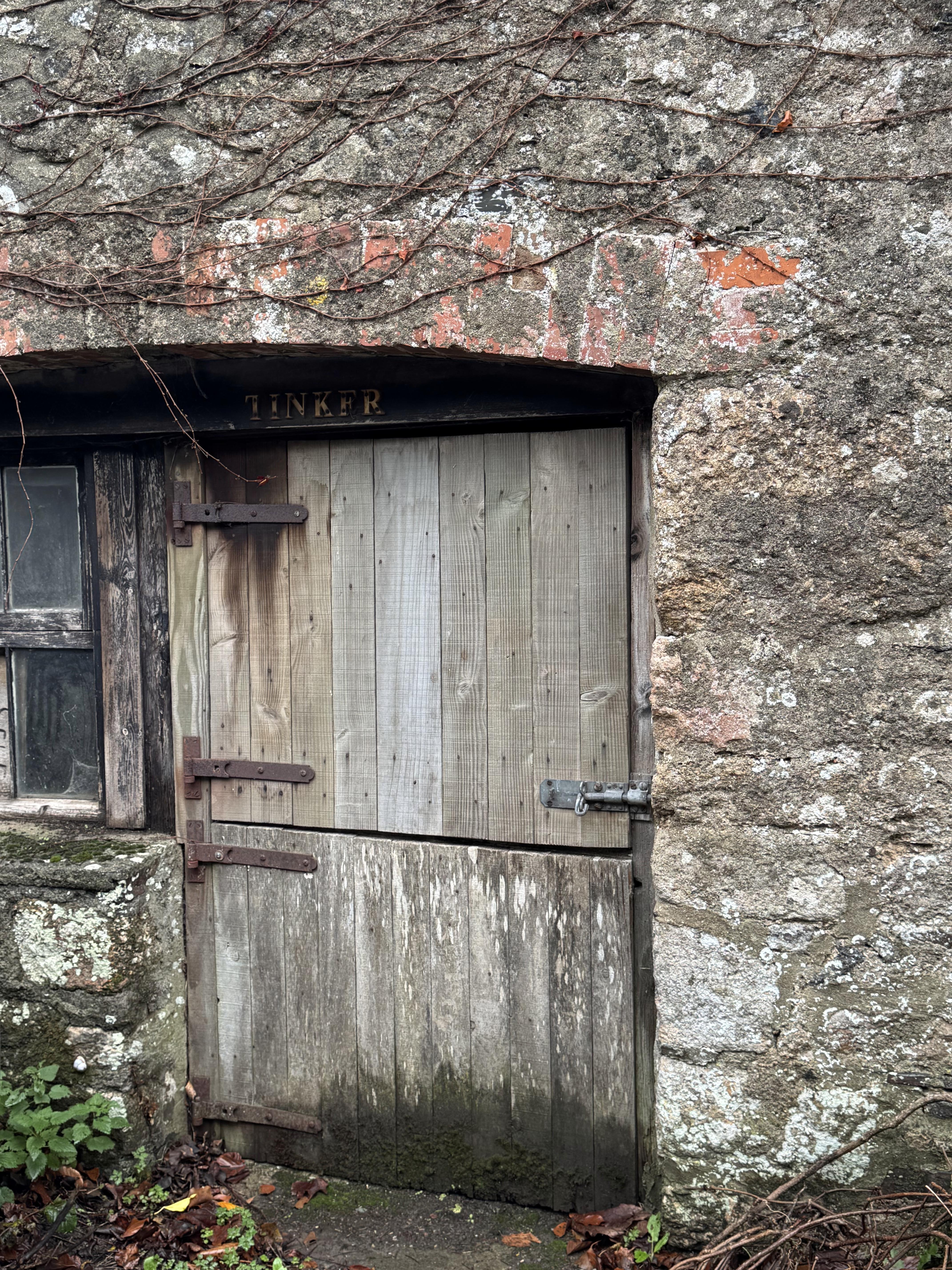
From Hembury Fort we headed north to Humphrey’s Cross before turning down and walking through an idyllic Devon valley with steep sides, animals happily grazing, and gorgeous tree silhouettes as the last of their leaves fall to the ground. We walked through Shuttaford and then up towards Holne. As we entered Holne, we saw a fascinating sign above a building saying “Tinker” above what may well have been a metal—and especially a tin—worker’s workshop to provide and repair metal goods for local families and farmers. It definitely transported you back to a rural lifestyle in this very interesting little Dartmoor village, with all sorts of unusually shaped and constructed houses, especially their roofing materials. There is a thousand years at least of building experimentation here.
 |
|
|
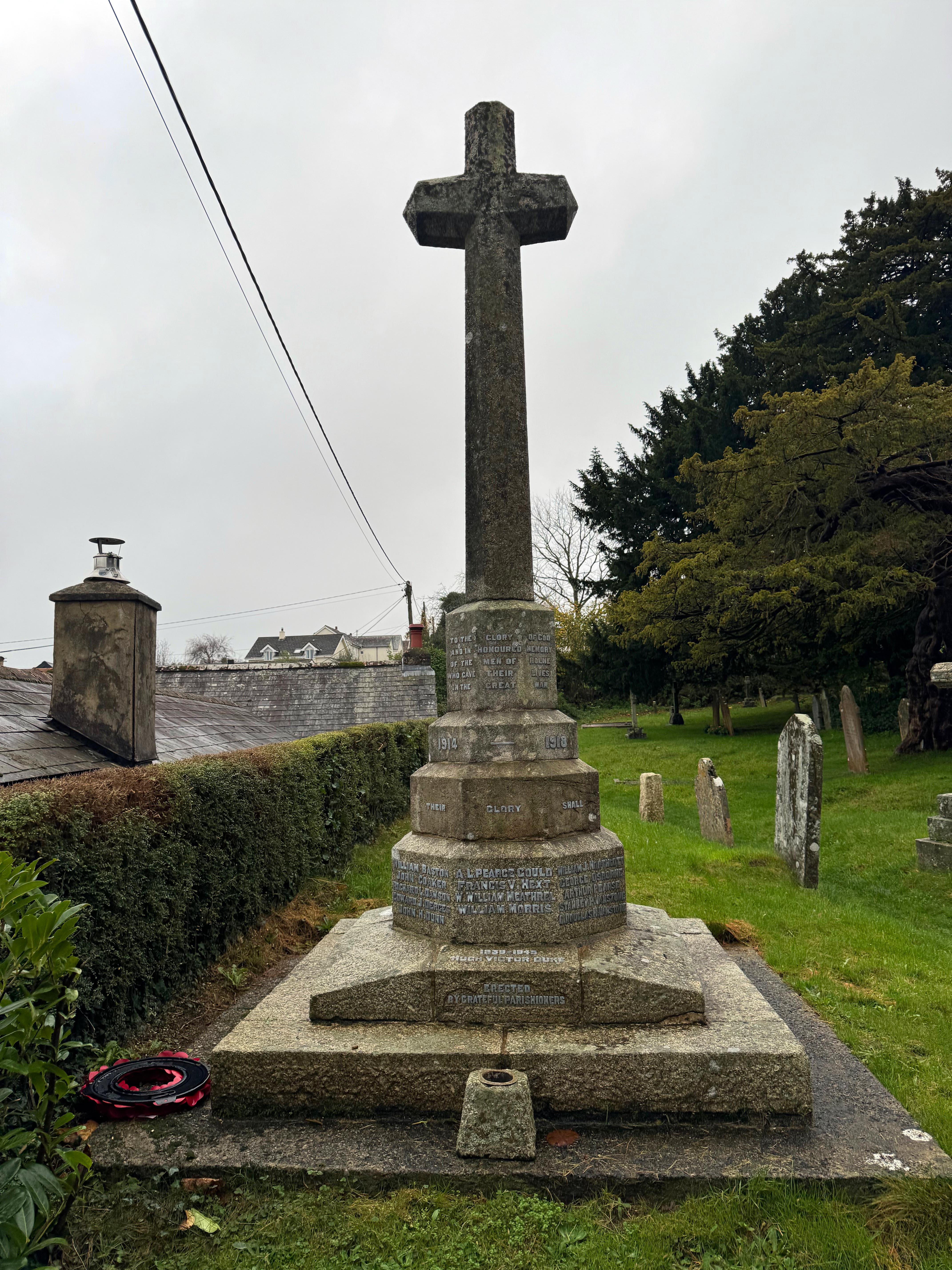
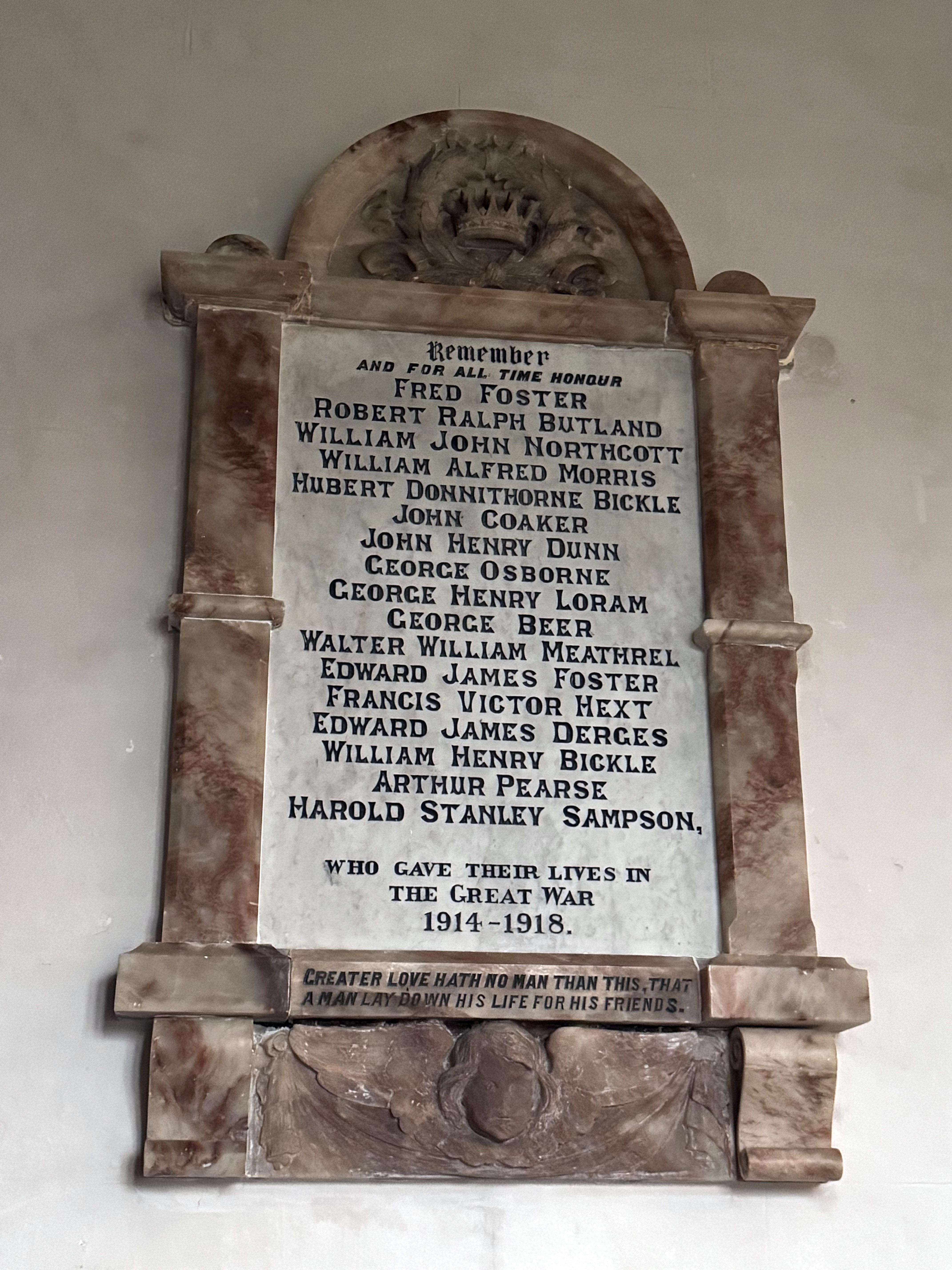
There is a pub in Holne known as the Church House where it is rumoured that Oliver Cromwell once spent a night here but he would have had no luck when we arrived as the owners had taken a week’s holiday. There was another food option with the very busy and quaint community shop and tea room, where you can get some lovely farm food and a nice cup of tea. But it was to St Mary’s Church that we were headed. The outside definitely looks underwhelming, with some concrete covering that was intended to help protect the building from Dartmoor’s harsh weather but does little for its appearance. And yet, the graveyard and even the doorway hint that this is a very special church indeed. On the way to the door you are reminded of the sacrifice of these small villages with the number of names on the war memorial from the First World War: I counted Seventeen. Interesting to compare it to just one life lost in World War Two—that fact is nothing to do with the lethality of the two respective wars but illustrates just how many young men used to work on the land before mechanisation and the internal-combustion engine transformed rural life in the interwar years in particular. Conversely, urban war memorials would often travel in the opposite direction, with more people dying in the Second World War than the First. I noticed this myself as I was called on to read out the names of those who died in both world wars in my own St Mary’s Church in Laira, Plymouth last weekend on Remembrance Day. In that case, the population exploded between the wars as Plymouth enveloped it and incorporated it into the city limits.
 |
|
|
Back in St Mary’s Church in Holne, and outside its doorway, there is a quaint slate memorial to Andrew Wright who died in 1757 and his wife Joan who died in 1776, carved onto slate with some really fascinating stone carvings of angels on it. The front door has some lovely decorative wrought iron strap hinges to welcome you into what is a c1300 church building.
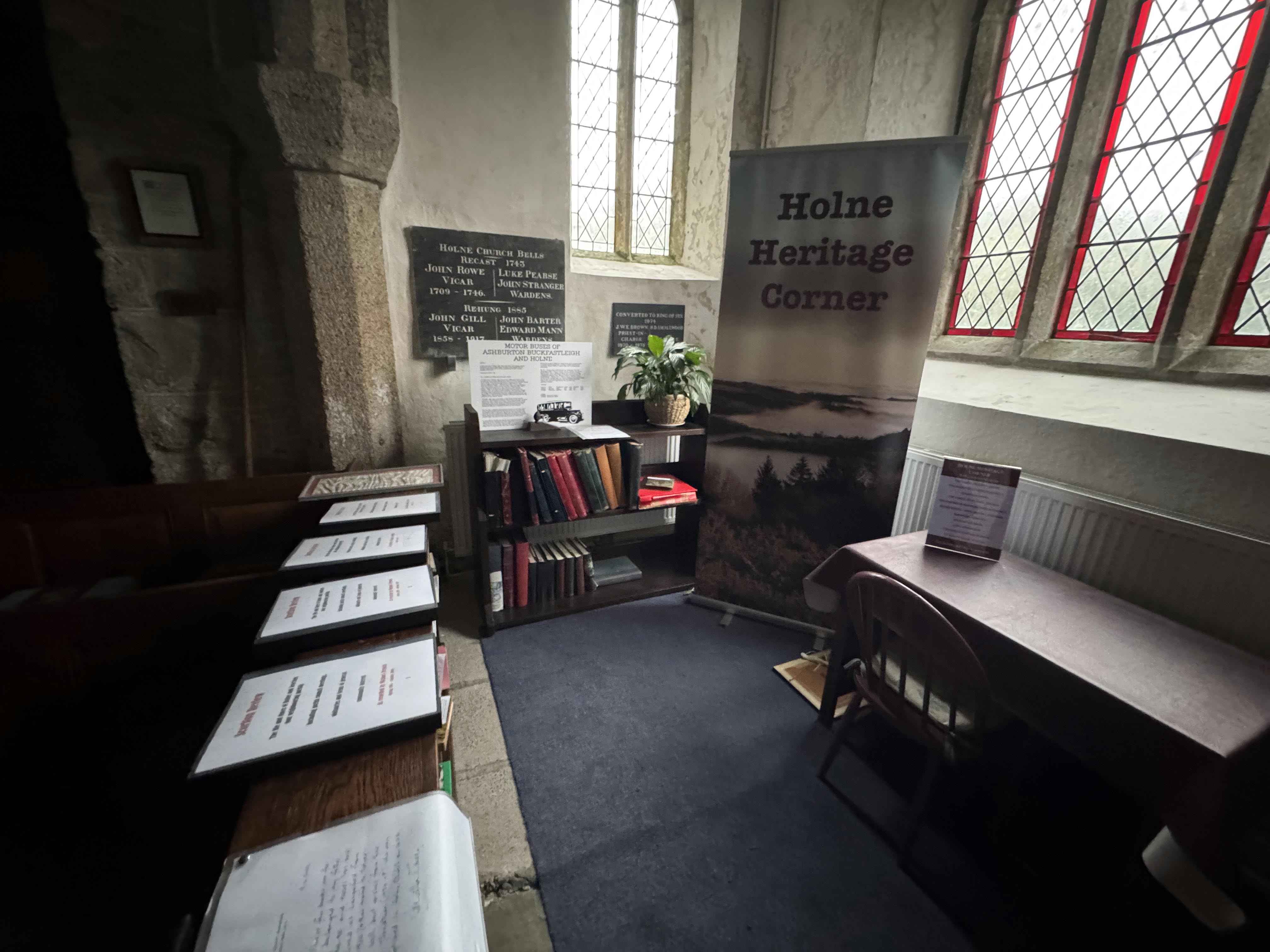
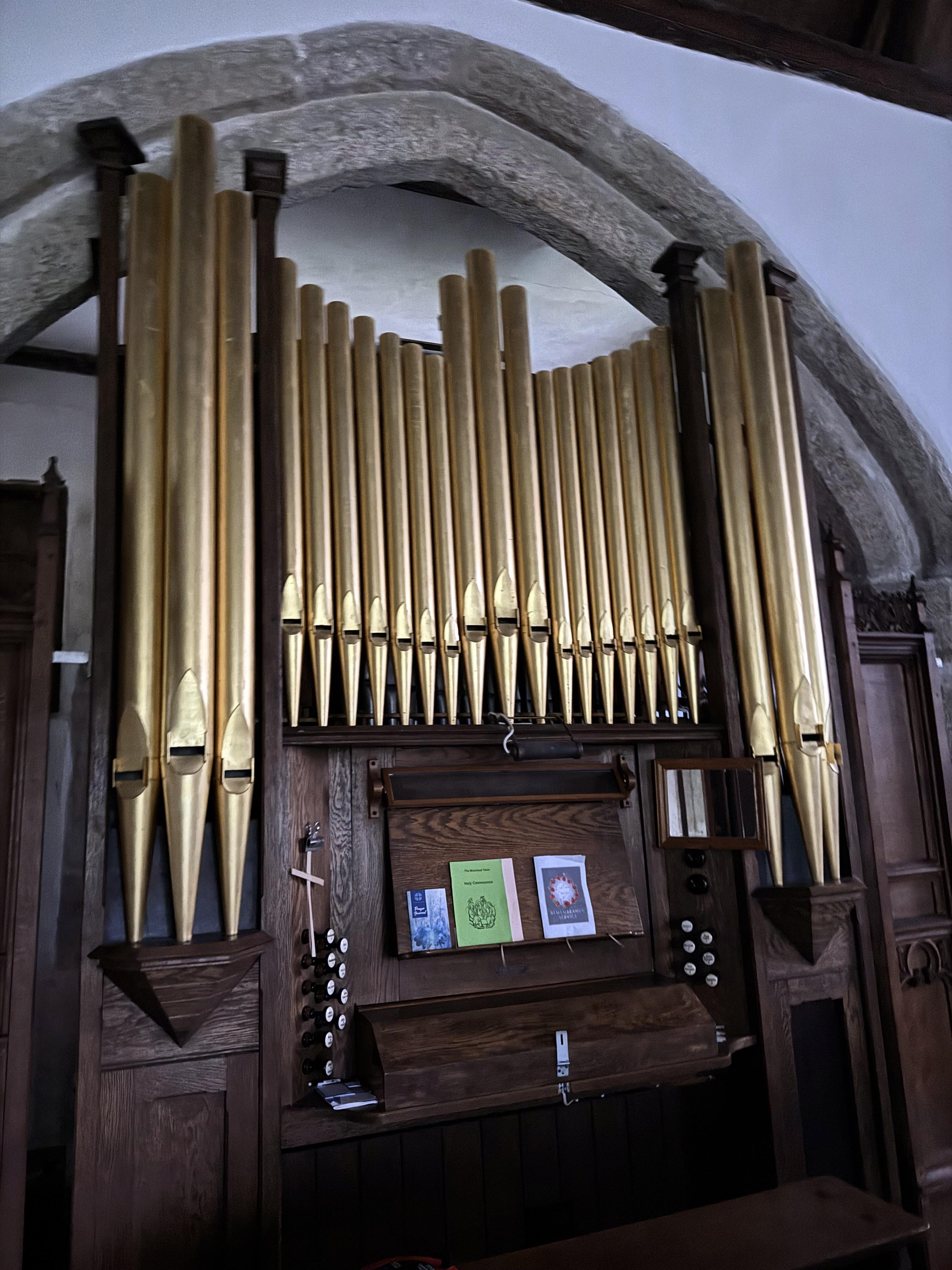
Inside was a bit dark and gloomy given that low cloud outside, and I could not find a light switch for love nor money—must be locked away somewhere. So I had to use some head torch and flash at times to get some pictures of the interior. I was also so impressed to see that they had a Holne Heritage Corner at the back with loads of old history books of the area and, even more fascinatingly, some old photograph albums showing Devon’s rural heritage in all its glory. The oldest album I saw was from 1907, which really was a delight to flick through. I love that the community can find a use for these treasured family heirlooms and that these photographs can live on and illustrate the history of this community and how it has evolved and changed.
 |
|
|
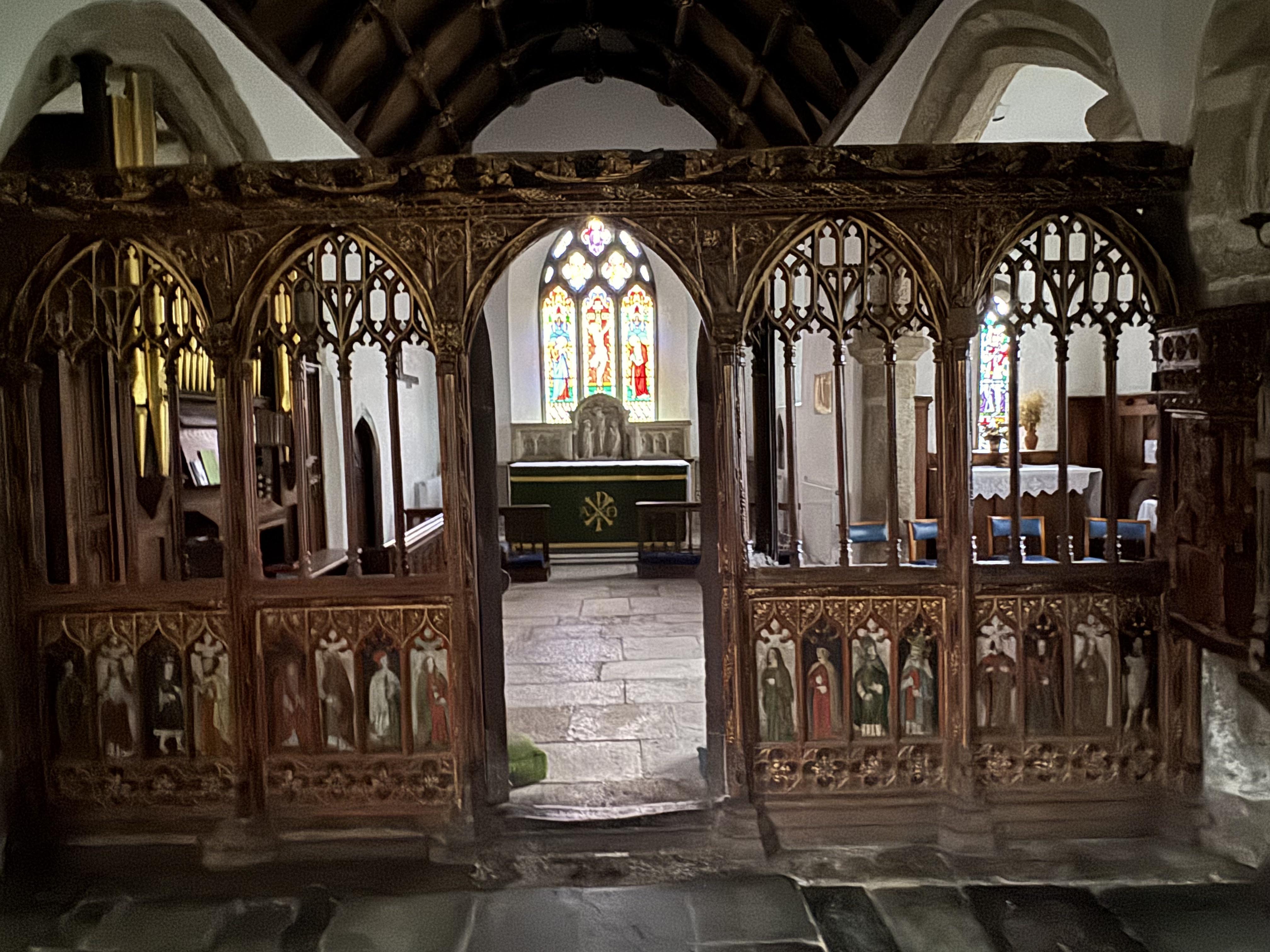
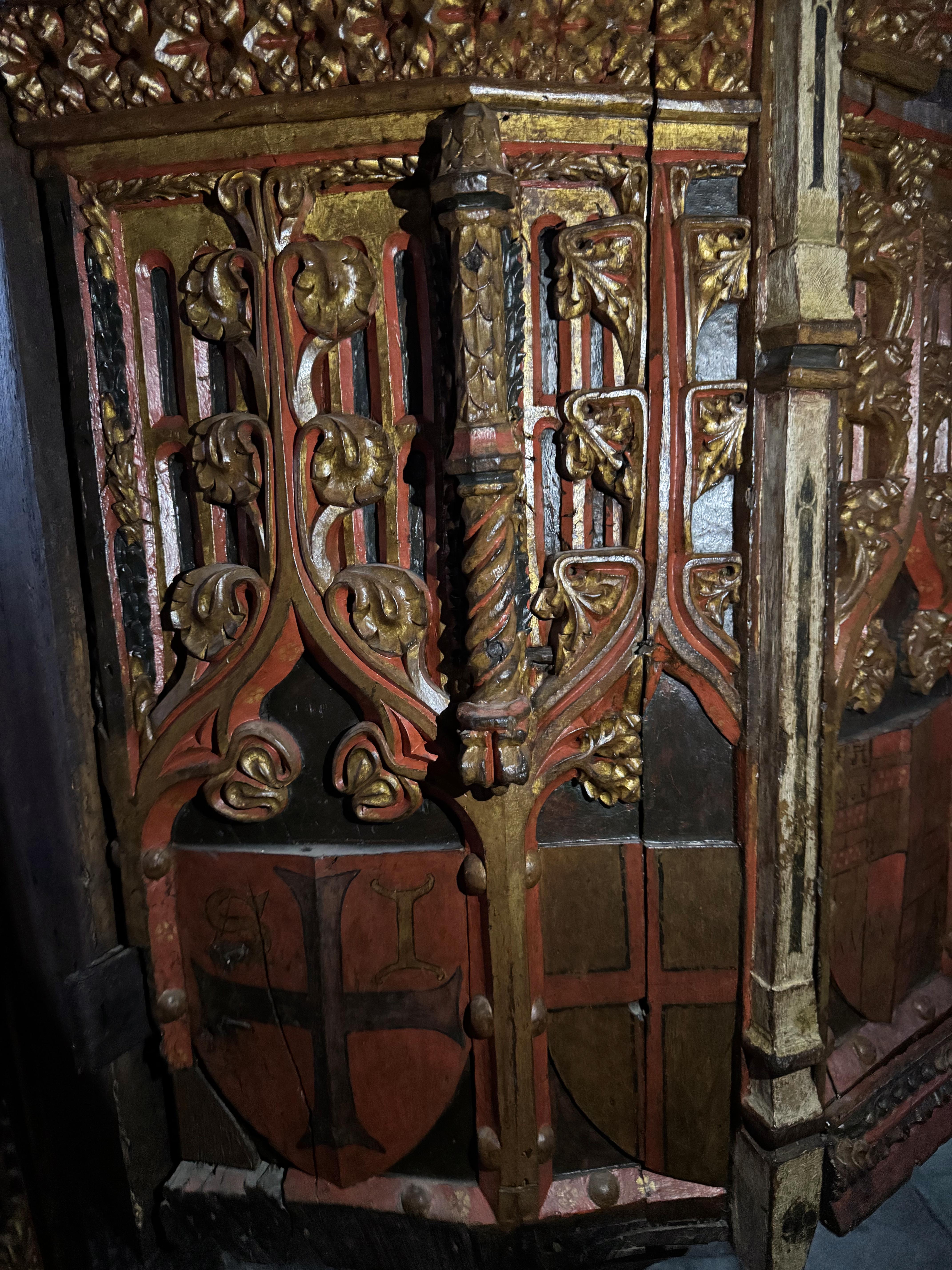
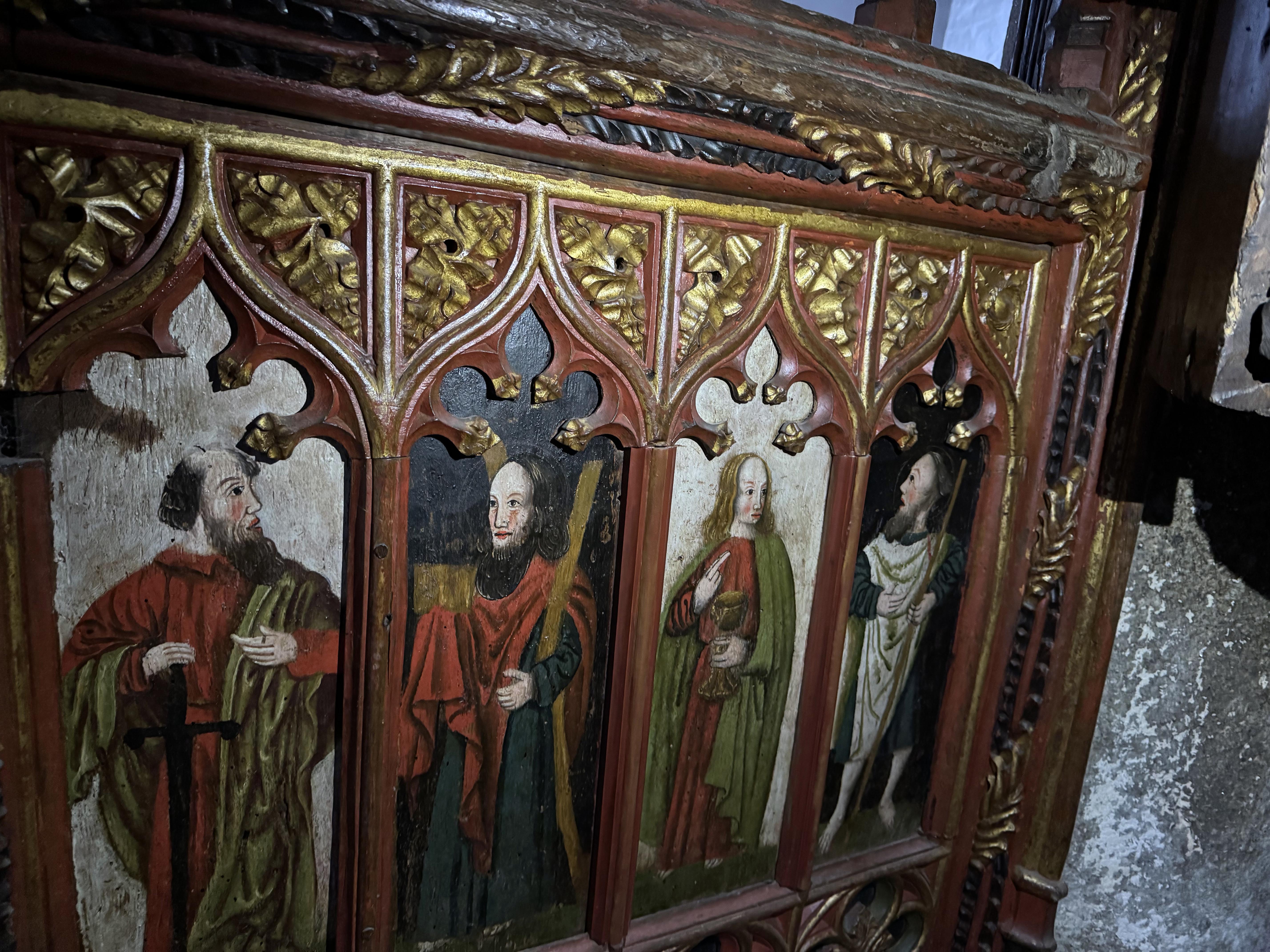
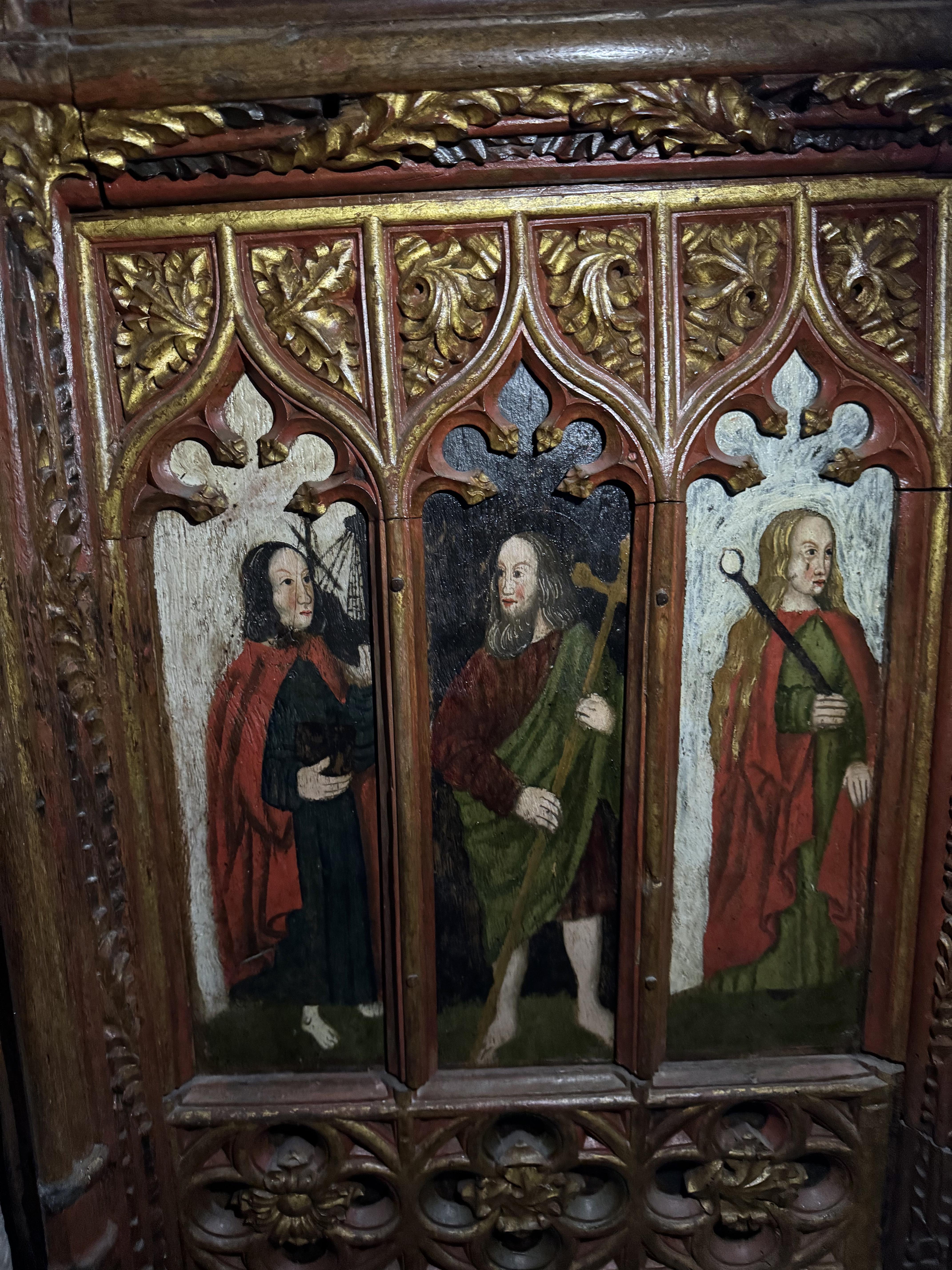
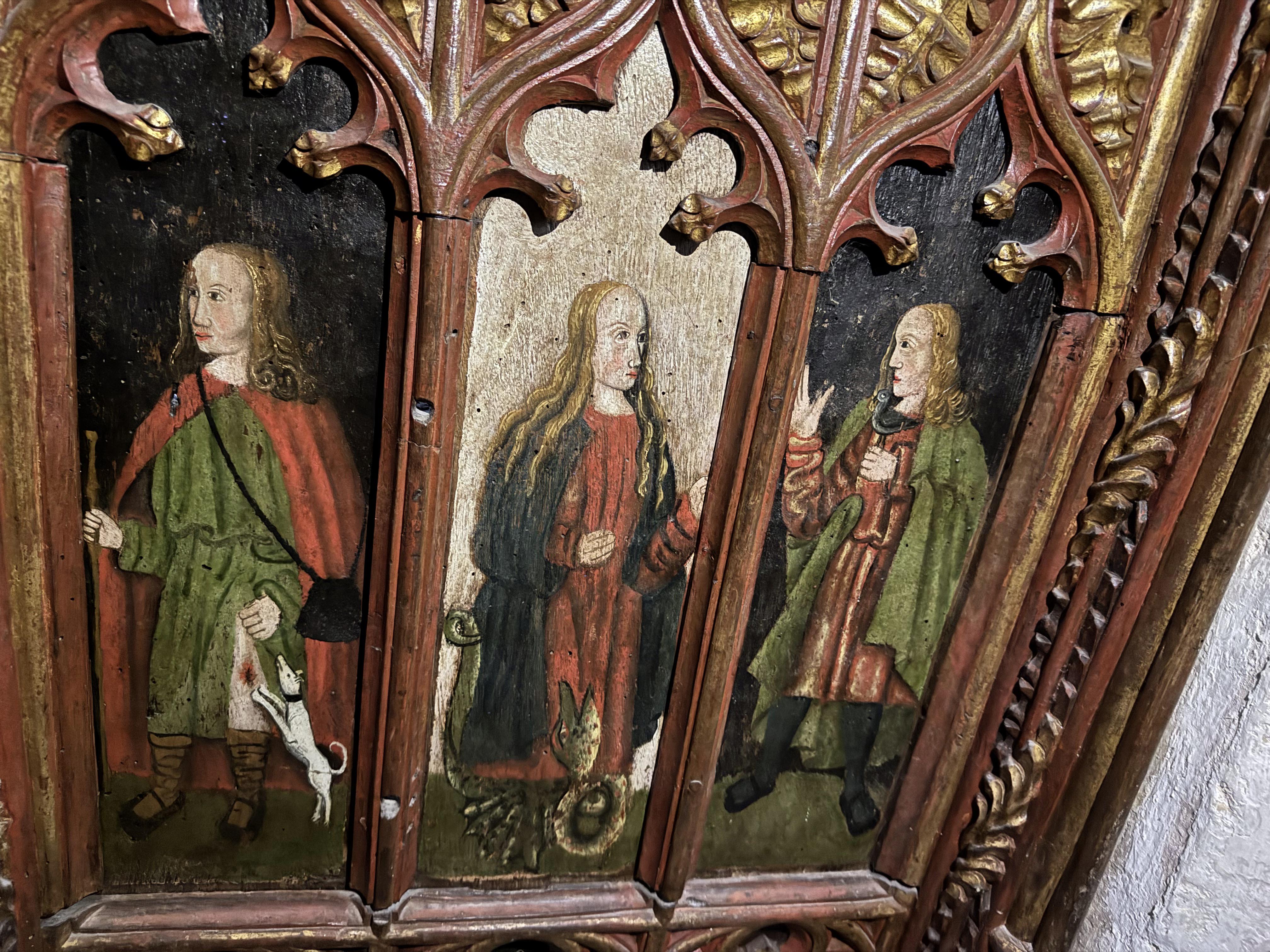
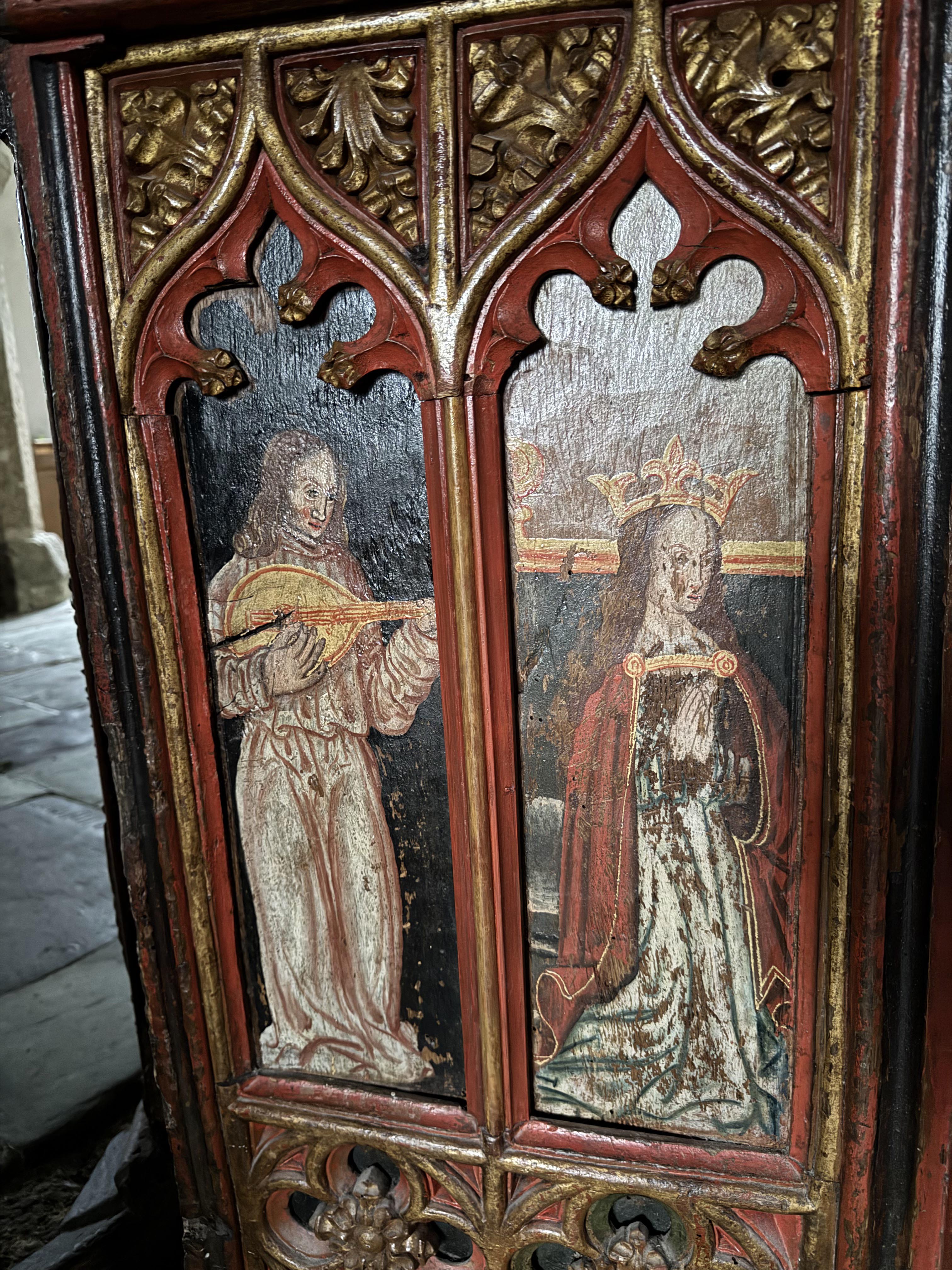
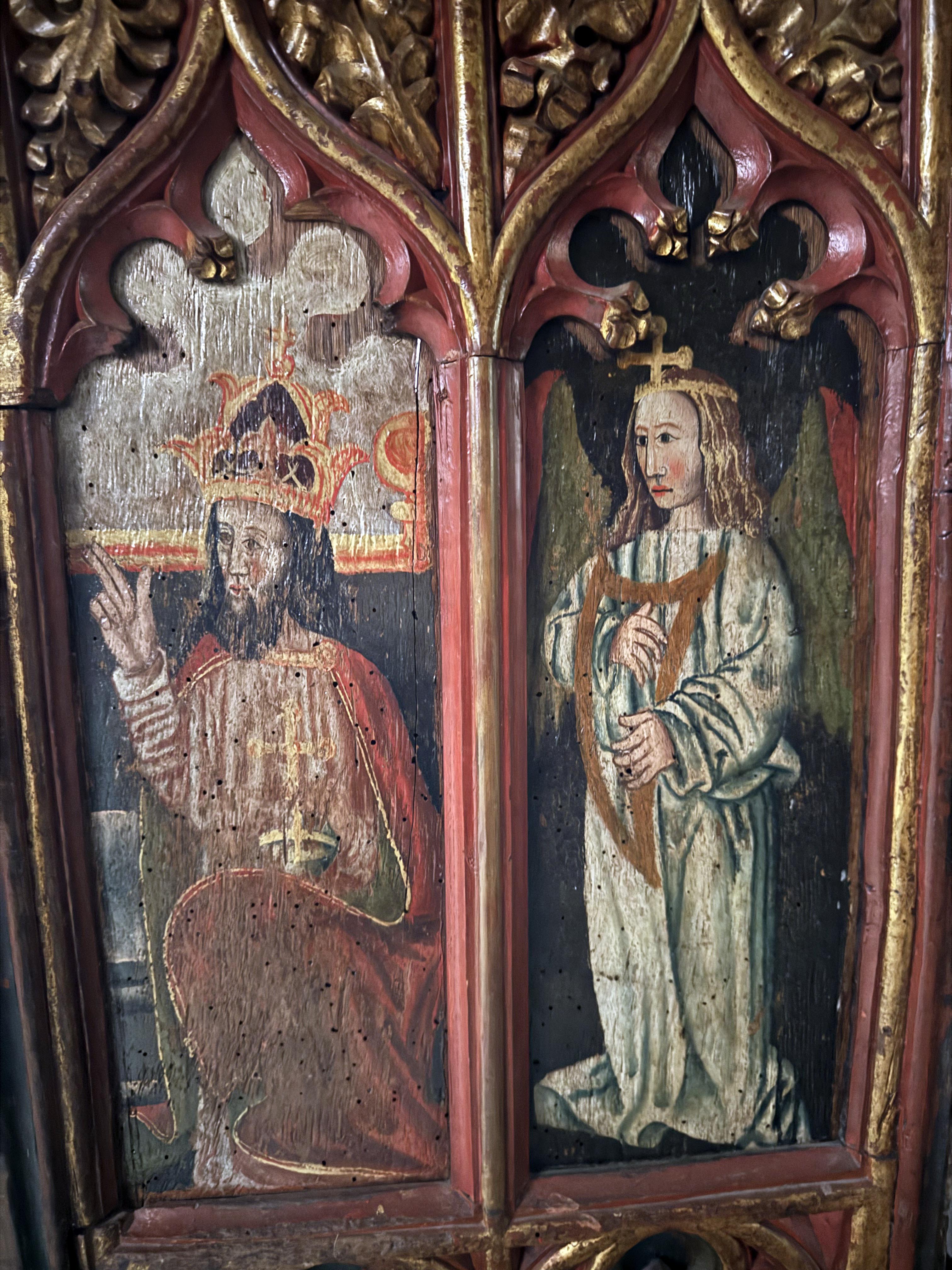
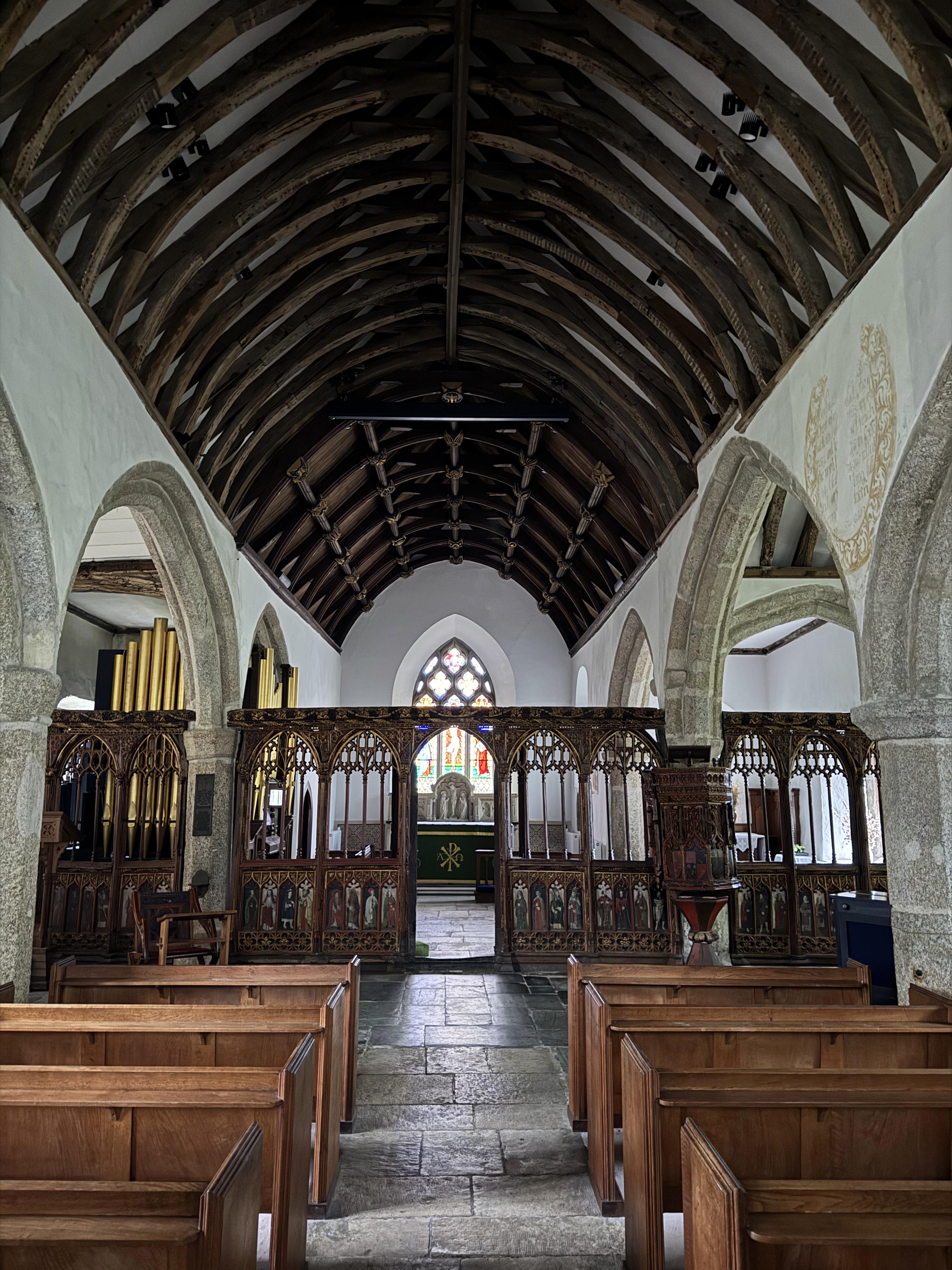
The church also has a preserved rood screen with 40 beautiful paintings, the vast majority not having had their eyes scratched out (the exception was St Gregory the Great - who dressed in church robes would have offended the Protestants more than the saints). These look particularly good as they were cleaned and restored only a few years ago, so they look as fresh as if they were newly painted but for the occasional scratch. Next to the rood screen is a wonderful c1500 ten-sided goblet-stemmed pulpit showing armorial bearings of various religious and local manorial dignitaries. They are hoping to restore this in the same manner as the rood screen, which should really bring the colours alive. The standard of the carving is just amazing.
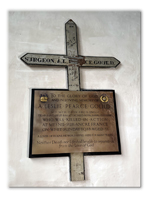
There are several poignant memorials to the war dead in this church. The most striking is that of Surgeon-Lieutenant Alfred Leslie Pearce-Gould of the Royal Naval Division. Not only is there a memorial, but built into it is his temporary grave that had been constructed for him near to where he died on the Western Front in May 1918. He had volunteered to fight back in 1914 but had returned to Plymouth after catching enteric fever in the Middle East. He then spent a few years at the Royal Naval Hospital in Stonehouse until he requested to rejoin the Division on the Western Front in light of the German breakthroughs. He got his wish, but whilst standing outside of a sick bay whilst working on the wounded, a 77mm shell exploded nearby, killing him instantly. It is quite visceral to see his grave with the original markings and scratches from 1918 there on the wall in Holne.
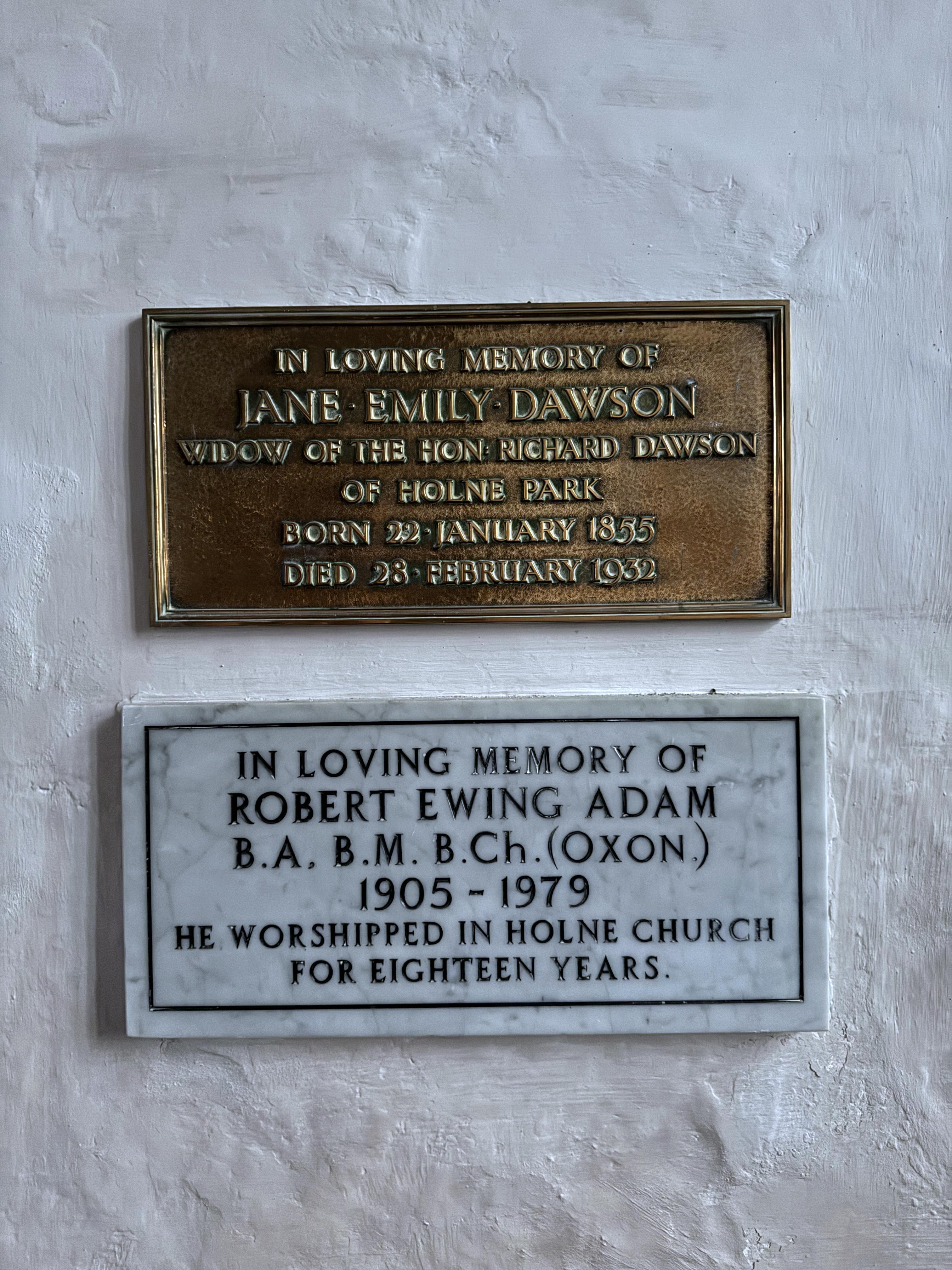
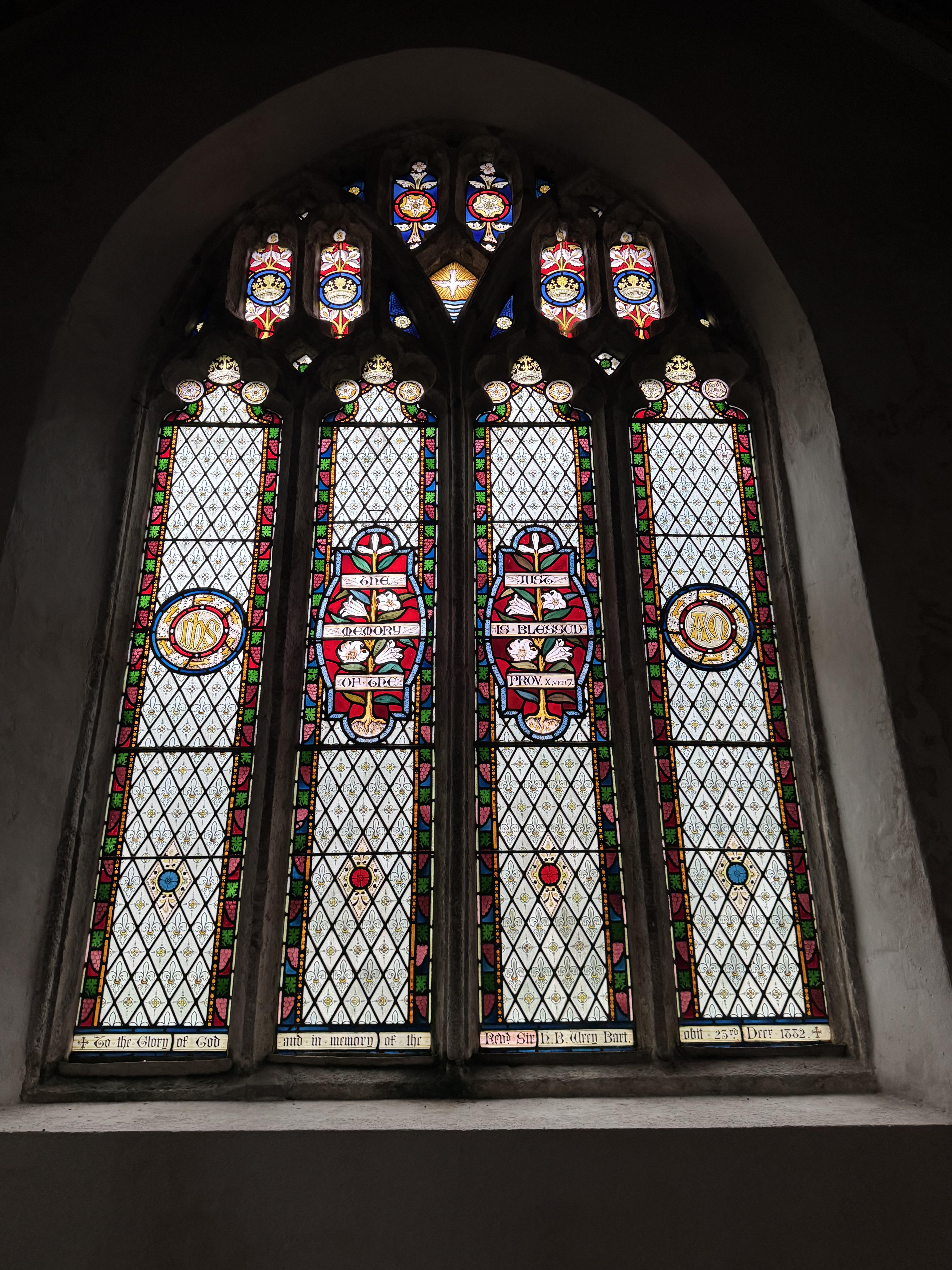
Another striking memorial is an elaborate three-tiered stained glass window dedicated to Captain Richard Long Dawson of the Coldstream Guards, who died in the early stages of the war in November 1914 at Zillebeke in Belgium. He was the son of Richard Maitland Westenra Dawson and lived in the local manor of Holne Park (now the River Dart Country Park House). Sadly, he died in a similar manner to Pearce-Gould in that a shell landed nearby, killing him and, in this case, three others and wounding ten more. Artillery was the vicious queen of the battlefield—as it still is. This window and memorial is another example of how officers really did endanger themselves and fought side by side with their men, despite what some authors and commentators claimed subsequently. He was 35 at his death and could have led a life of luxury had he wanted to do so.
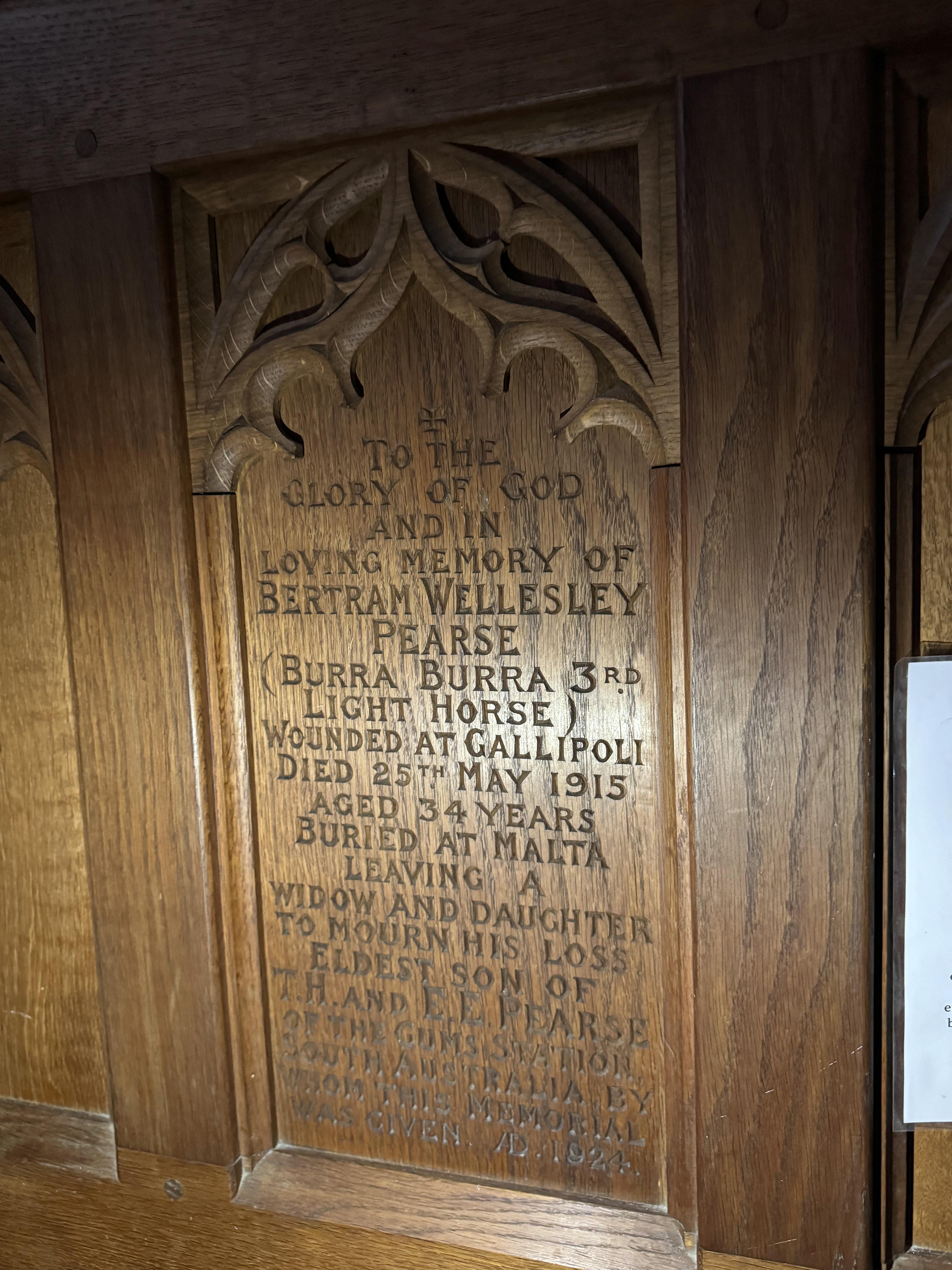
There is a third intriguing war memorial to Bertram Wellesley Pearse of the Australian Burra Burra Third Light Horse. He was wounded in Gallipoli and died in Malta of his wounds. The fact that he was fighting for an Australian unit tells a wider story of rural English Devonians seeking new opportunities in the wider Empire, often in the face of the collapse of agricultural prices in the late 19th century. There is an amusing aside concerning Bertram’s uncle, who was the blacksmith in Holne, called Alfred. Alfred did not emigrate to Australia like his brother—and why should he, when the father of Captain Dawson above, also called Richard Dawson, built him a house? But there was a reason for building this house: it was to try and stop Alfred from drinking too much beer. The Church House Inn lay between Alfred’s home and his workplace. The canny Richard Dawson built the house next to the forge to help assuage any temptation for the demon drink.
 |
|
|
But again, this memorial paid for by the Australian brother shows the links that still held between families even when they split and moved thousands of miles away from one another.
The only Second World War memorial in the church (remember there is only a solitary victim from Holne on the war memorial outside) is to Major Hugh Victor Duke, who held the Military Cross and Bar from the 2nd Battalion of the Devonshire Regiment. He had served through the entire Siege of Malta, where he was mentioned in despatches, and then landed on Sicily where he earned his Military Cross and subsequently an additional bar. Sadly, he was to be one of the first casualties of D-Day, dying on the 6th of June itself. After being landed on the beach, he attempted to conduct a reconnaissance in preparation for leading an attack on their first objective when he was spotted and shot by an enemy sniper. He was the son of the vicar of the church.
 |
|
|
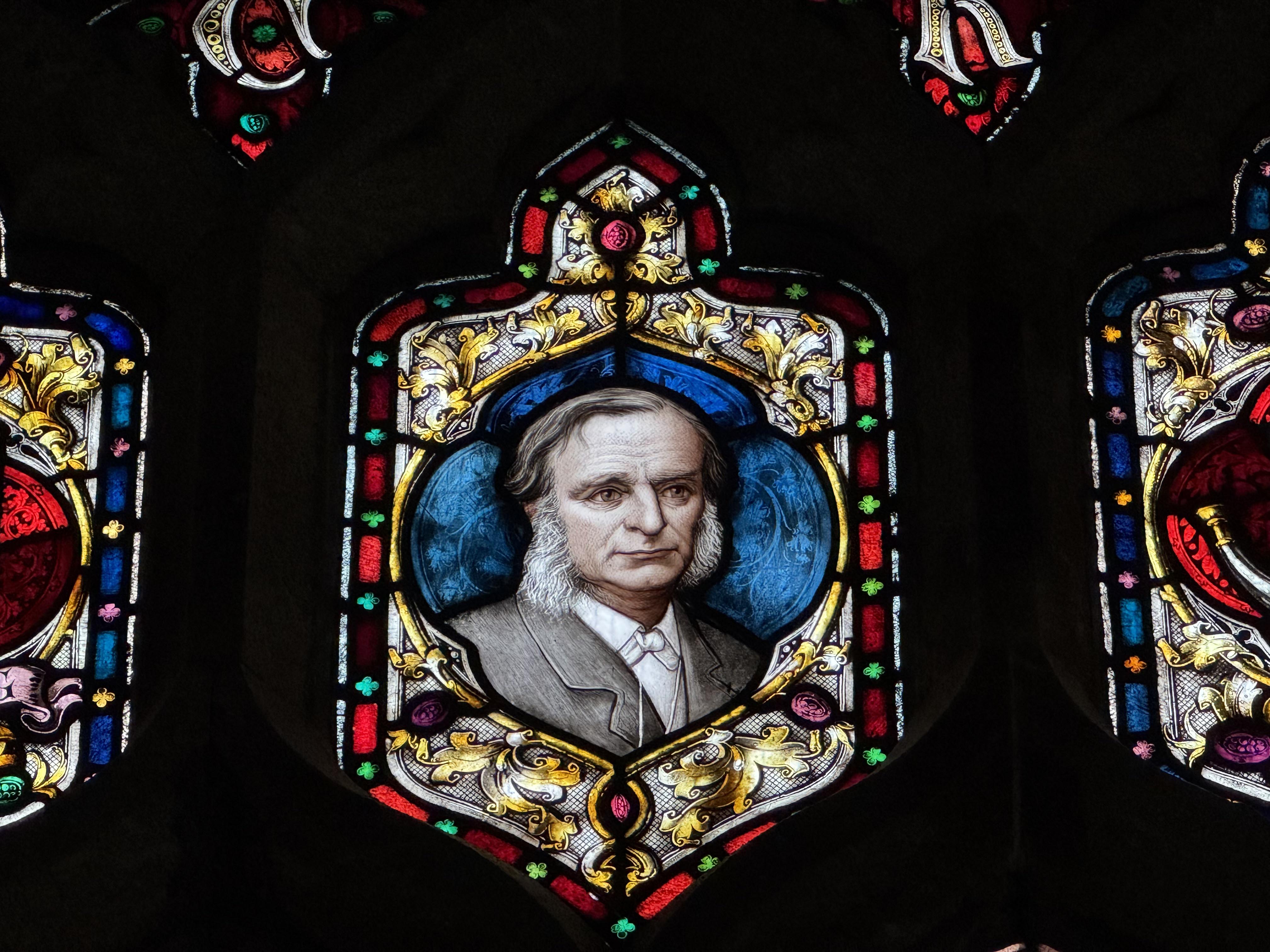
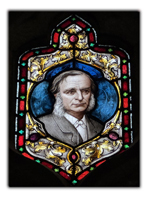
Not a war memorial, but there is another fascinating stained glass memorial which was installed as a tribute to the author and priest Charles Kingsley—most famous for his book The Water Babies. He himself had been born in the village, in the same vicarage perhaps as Major Hugh Victor Duke above, as he also was the son of an earlier vicar of this church. Charles Kingsley would become one of the giants of the Victorian era, even becoming the chaplain to Queen Victoria herself and private tutor to the Prince of Wales (the future Edward VII). He was an advocate of Christian Socialism and one of Charles Darwin’s earliest defenders and good friends—which, coming from a religious perspective, held particular value to Darwin.
Kingsley was part of the Edward Eyre Defence Committee alongside Thomas Carlyle, John Ruskin, Charles Dickens, and Alfred Tennyson, hinting at the grandees involved. Edward Eyre had been the somewhat notorious governor of Jamaica who had suppressed a rebellion at Morant Bay in 1865. Eyre would eventually retire to the edge of Dartmoor himself, and I have talked about him in another walk. Intriguingly, this pitted Kingsley against his good friend Darwin, who supported the opposite Jamaica Committee calling for Eyre to be tried and punished for the use of excessive force. It was a gigantic clash of the great and the good on both sides of the argument and dominated the newspapers and magazines for months. The Edward Eyre Defence Committee was crucial to allowing Eyre to escape censure.
 |
|
|
As an author, Kingsley wrote historical novels and popularised the retelling of Ancient Greek myths in a way that would appeal to young readers—in many ways, he was the father of the popularisation of Greek myths, as opposed to the public school rarified and rather dull translations from Ancient Greek. I should say that it is a beautiful stained glass window with a striking portrait of Kingsley himself.
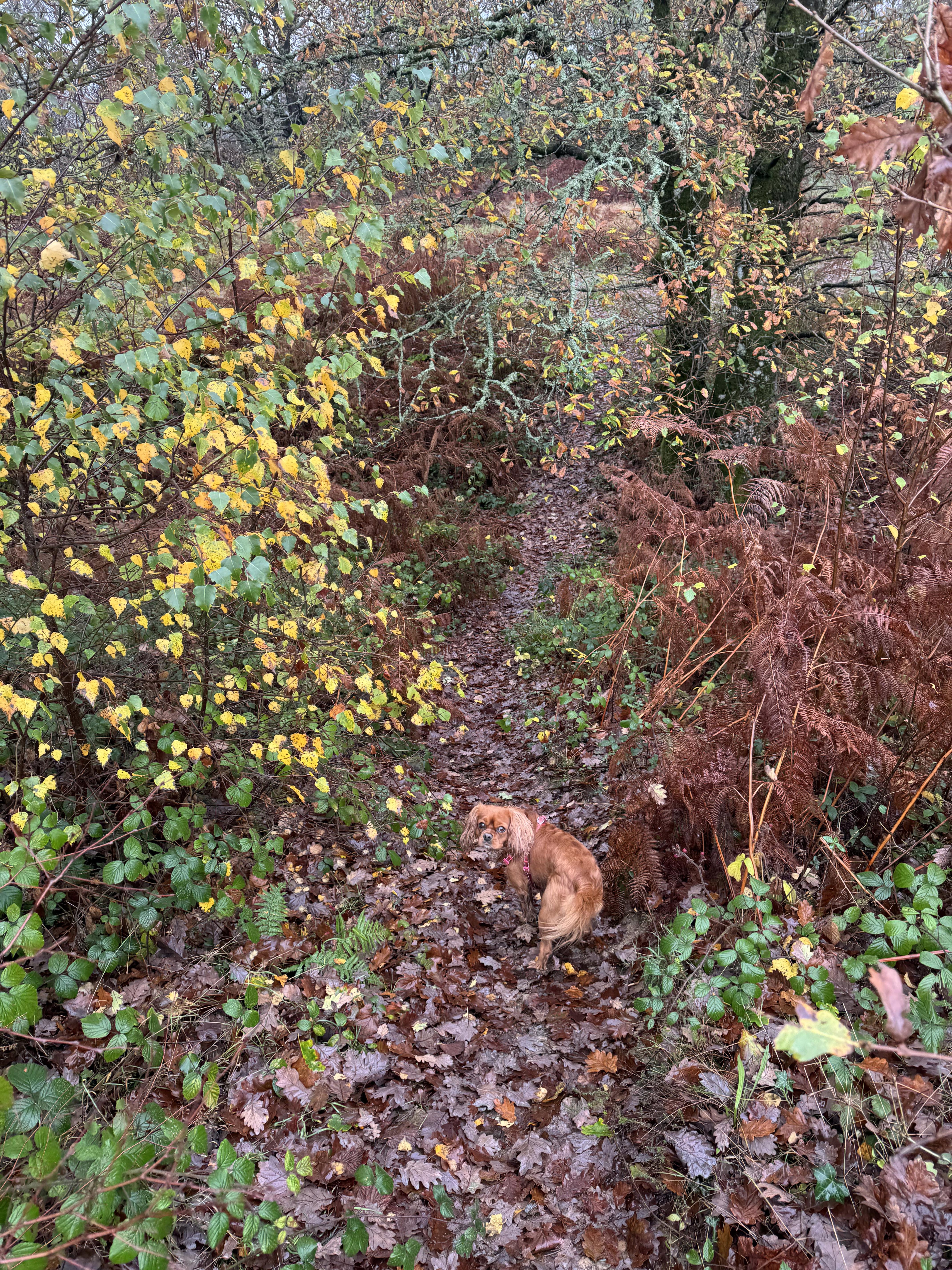
For such a small church there was an astonishing wealth of history to uncover, and I shall return again—perhaps on a brighter day with more sun and light to illuminate its treasures. Leaving Holne, we followed the Dartmoor Way south along an ancient track towards Langaford, then turned beside the Holy Brook. Recent rains had transformed the path into a flooded ribbon, more river than track, and my boots chose that moment to fail spectacularly—one sole peeling at the back, the other at the front—making for a comical gait. Yet even with damp feet, fallen trees to crawl beneath, and slippery stiles to negotiate, Rupert trotted on unconcerned, and I found myself smiling at the challenge.
We persevered and eventually returned to Hembury Wood car park, tired but exhilarated. The day had offered a rare blend of landscape, memory, and endurance: Bronze Age fort and Norman castle, village craft and Victorian heritage, war memorials and stained glass, all set against the elemental trials of Dartmoor itself. Even the inconveniences became part of the story, deepening the sense of connection to place. All in all, it was a beautiful walk, full of history and rural culture, and I can wholeheartedly recommend this corner of Dartmoor to any explorer.
|