

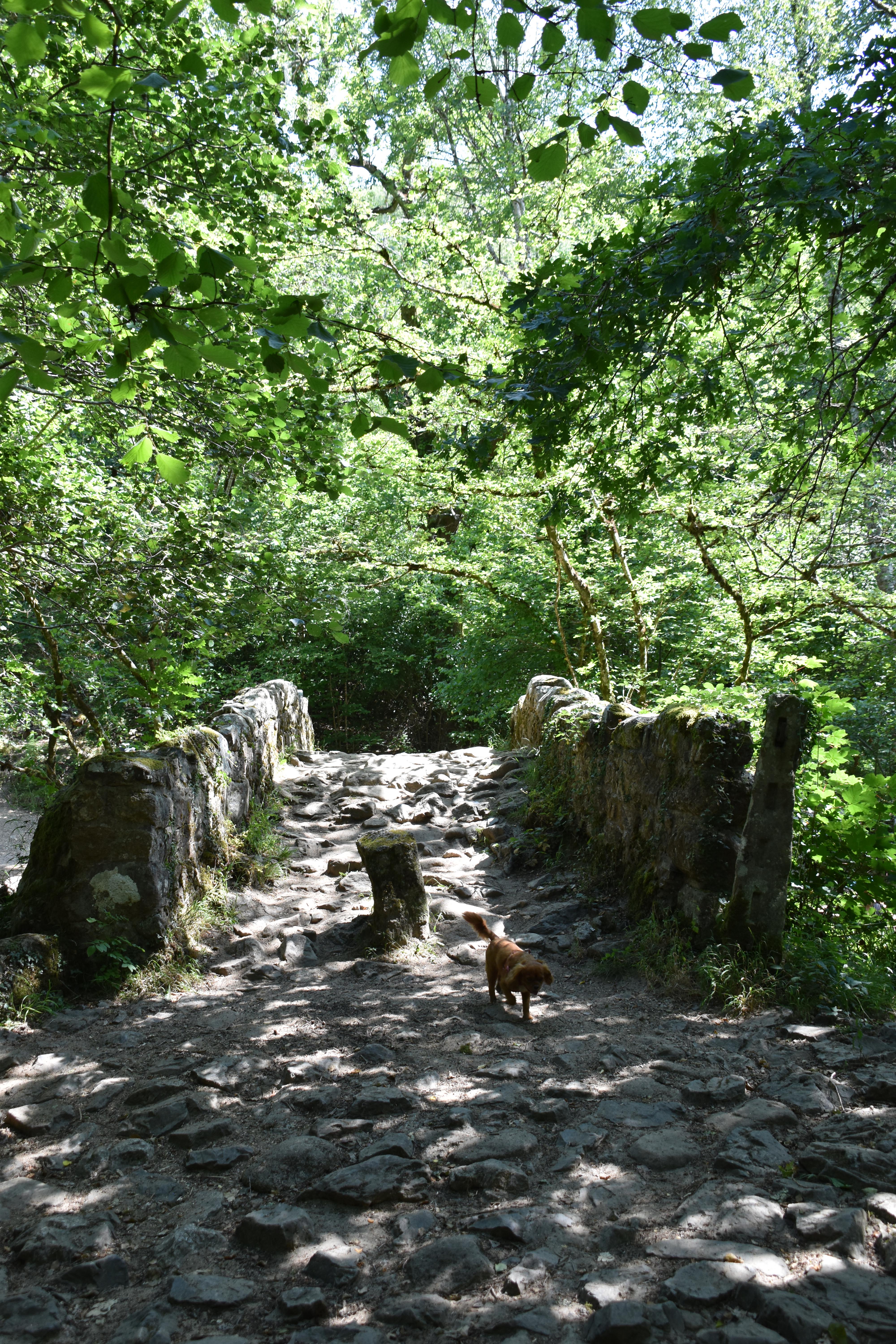
Hisley Bridge spans the River Bovey between Lustleigh and Manaton and is commonly described as a “packhorse bridge”. In practice it would have carried packhorse trains, pedestrians, horse riders and livestock drovers. On the upstream side of the bridge is an old ford, used in times of low river flow, with the bridge itself providing the crossing when the water was high.
The parapets are noticeably low. One explanation is that they were built this way to allow for crooks and packsaddles hanging low on the horses. Another, more prosaic, is that low parapets reduced construction costs. The bridge is built of uncoursed rubble moorstone with a single, slightly irregular arch. It has a span of 5.18 metres and a width of 2.13 metres between the parapets. On stylistic and documentary grounds it is dated between the seventeenth and mid nineteenth centuries, which removes the supposed “medieval” status often attached to it.
On the west side of the bridge is a slotted gatepost indicating that the crossing was once gated, with spars fitting into the recesses. A surviving rusty hinge suggests that the arrangement was later modernised with a hanging gate. Taken together, the ford, bridge, gatepost and hinge show a working rural crossing adapted over time to changing traffic and local needs.

