

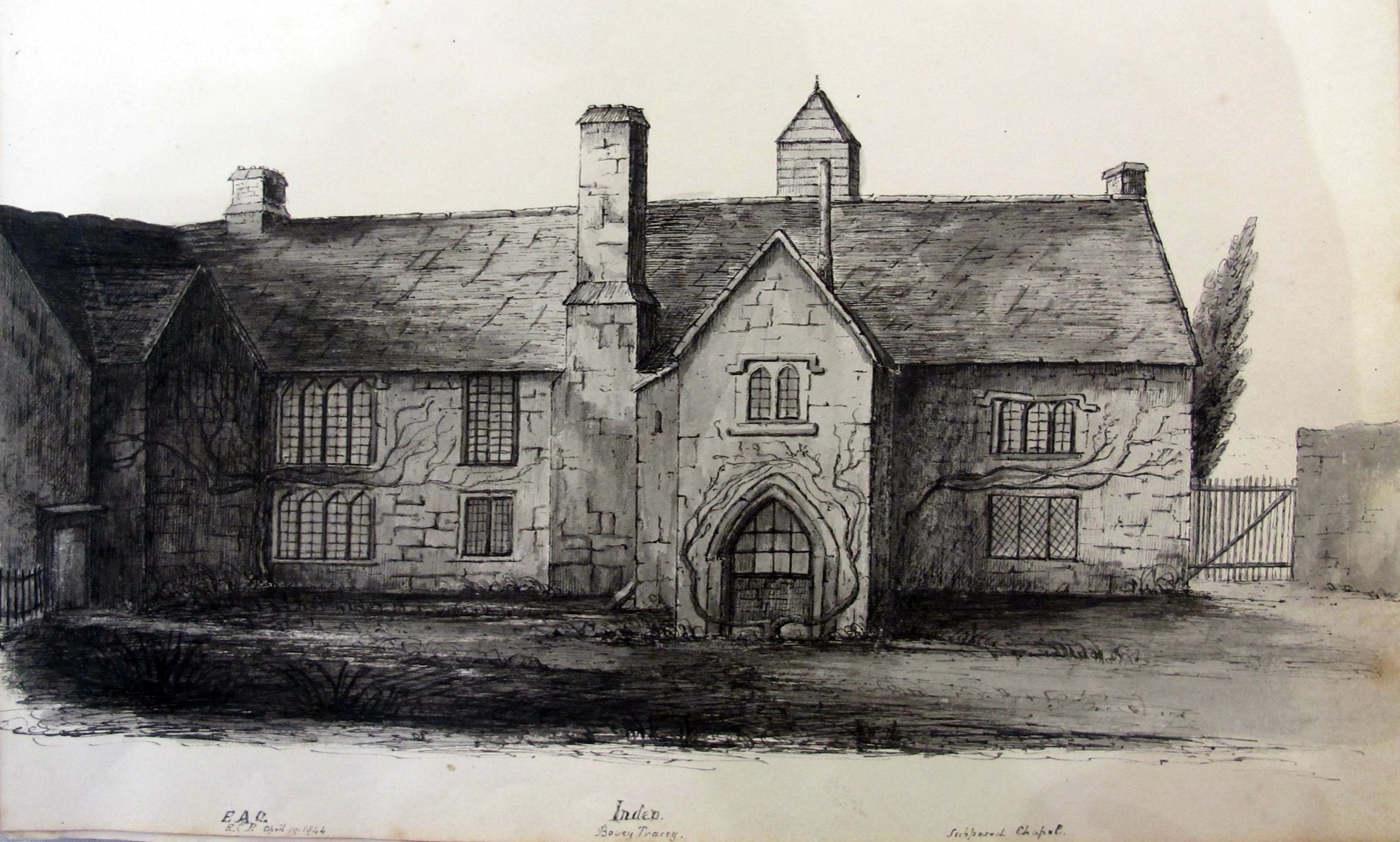
The quiet approach to Indio, just east of Bovey Tracey, gives little hint that this was once the seat of a family whose origins lay in the courts of Europe. Yet the story of the Bentincks of Indio House begins not in Devon but in the world of Dutch politics and the English Crown. Their rise was founded on the remarkable career of Hans Willem Bentinck, the trusted companion of William of Orange, later King William III. From this powerful figure descended a junior branch whose fortunes would, over the course of two centuries, carry them from The Hague and the Baltic to the orchards and meadows of Bovey Tracey.
The first of this line to shape the family’s destiny was Willem Bentinck, later Count Bentinck, who inherited much of his father’s Dutch property and a modest English estate at Terrington St Clement in Norfolk. His marriage to a German countess brought prestige but little happiness, and after their separation his younger son, Johann Albrecht, who anglicised his name to John Albert, inherited the English lands. John Albert joined the Royal Navy at fourteen and rose swiftly, helped by family influence but sustained by genuine mechanical talent. His improvements to rigging and pumps were widely adopted, and his brief parliamentary career reflected the expectations placed upon a man of his lineage. Though he never lived at Terrington, he invested heavily in land reclamation there, creating new farms whose names echoed the family’s Dutch and English heritage.
His early death in 1775 left his eldest son, Vice-Admiral William Bentinck, to inherit both the estate and the family’s tradition of naval service. William’s life reads like a chapter from a European diplomatic novel: early promotion, years spent travelling in the Baltic and Russia, and a final mission in 1812 to negotiate peace between Britain, Sweden and Russia at the height of the Napoleonic Wars. He succeeded, but died of typhus in St Petersburg before he could return home. His widow brought their children back to England, and it was the youngest son, Charles Aldenburgh Bentinck, who would eventually anchor the family in Devon.
Charles inherited a share of the family’s continental property and, after the sale of the Dutch estates, had the means to purchase the Indio estate in the 1840s. At that time Indio was a Tudor house of some antiquity, long associated with the Southcott family and later with a pottery enterprise that had enjoyed mixed fortunes. The house was picturesque but outdated, and although later tradition claimed it burned down shortly after Charles acquired it, the evidence suggests a more deliberate act: he chose to demolish the old structure and build anew. The result, completed in 1851 to designs by the Exeter architect David Mackintosh, was a confident Tudor revival house of limestone rubble and granite dressings, its mullioned windows and gabled wings echoing the style of its predecessor.
The new Indio House was a gentleman’s residence of some ambition. Its E-shaped entrance front, ribbed and coved staircase hall, and reused beams from the earlier house gave it both presence and a sense of continuity. In the early twentieth century the gardens were developed into a horticultural showpiece, with orchid houses, vineries and ornamental water features. Though none of these survive today, the estate’s former scale can still be glimpsed in the surviving walls and outbuildings scattered around the modern housing that now occupies the grounds.
Charles’s only surviving son, Henry Aldenburgh Bentinck, inherited Indio in 1891. A barrister, magistrate and High Sheriff of Devon, Henry lived the life of a country gentleman, maintaining the estate but leaving no heirs. After his death in 1938, his widow sold Indio House and its lands. During the Second World War the house sheltered refugees and later American troops, before passing through several hands and eventually being divided into private apartments. The estate buildings and walled garden were sold off in the 1950s, and a later attempt to convert the house into a tourist attraction was refused, returning Indio to private occupation.
Today, little remains to suggest that Indio was once the seat of a family whose story stretched from the courts of William III to the battlefields of the Baltic and the political intrigues of Parliament. Yet their presence lingers in Bovey Tracey: in the memorial tablets within the parish church, in the name of Indio itself, and in the quiet dignity of the rebuilt house that still stands behind its trees. The Bentincks brought to this corner of Devon a thread of European history, woven into the local landscape with the same mixture of ambition, tradition and quiet endurance that characterises so much of the town’s past.
Indio in 1844, drawn by Elizabeth Croker. Demolished and re-built in 1850. drawing by Elizabeth Croker, 1844. Image: Devon Archives & Local Studies 2160A add 7PZ4.


