

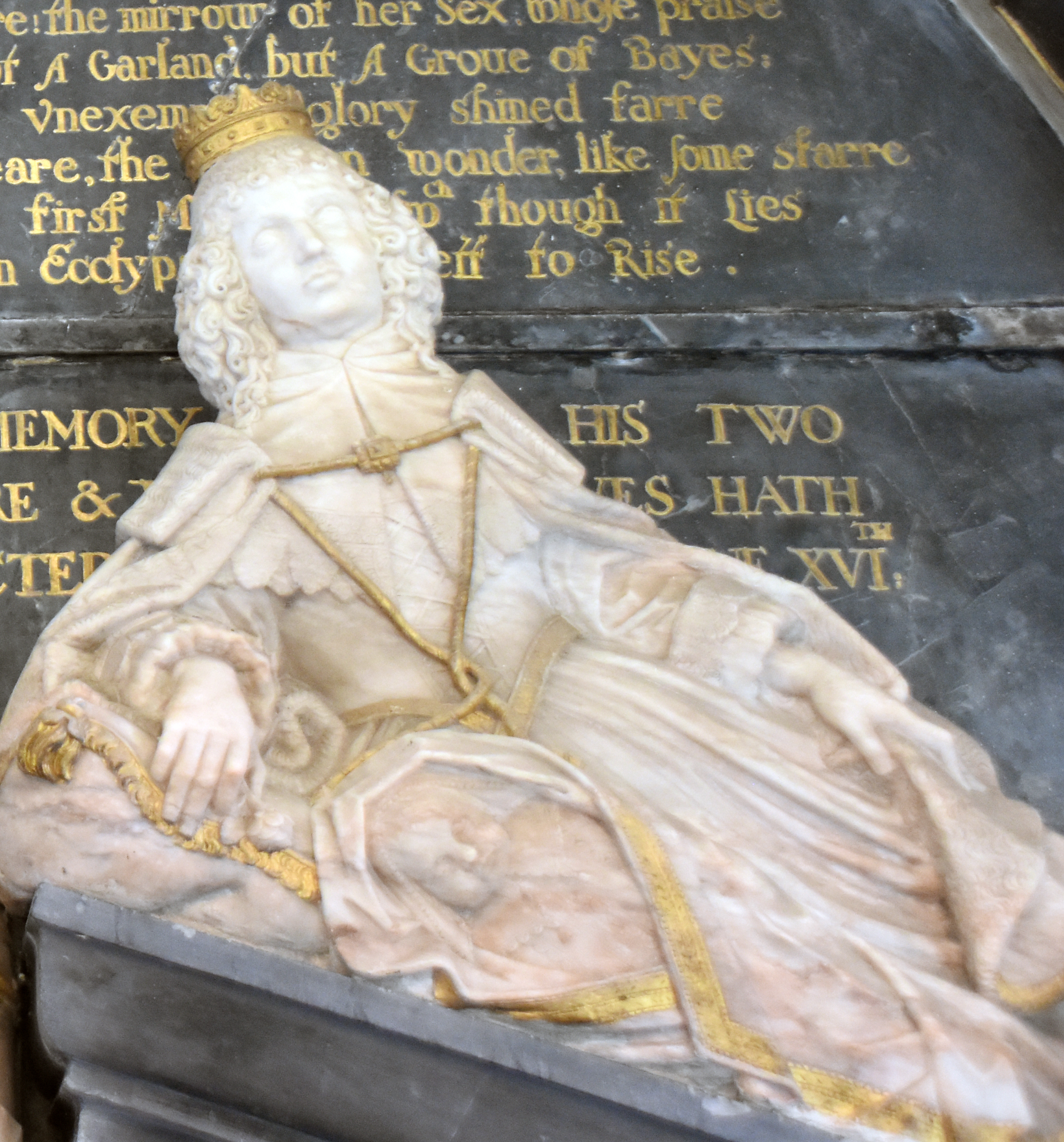
Lady Mary Digby belonged to one of the most politically active families of the early seventeenth century. She was the daughter of John Digby, 1st Earl of Bristol, a career diplomat whose work placed him at the centre of national affairs. Bristol served as ambassador to Spain, negotiated the proposed Spanish Match, and later became one of the most vocal opponents of the Duke of Buckingham. His impeachment attempt against Buckingham in 1626 led to his own imprisonment in the Tower and a prolonged political struggle with Charles I. Bristol’s career was defined by direct involvement in foreign policy, court politics and parliamentary conflict, and his family carried the weight of that reputation.
Mary’s brother, George Digby, succeeded as 2nd Earl of Bristol and became one of the most controversial Royalist figures of the Civil War. He was intelligent, ambitious and widely distrusted. Digby served as Secretary of State to Charles I, advised the King during the breakdown of relations with Parliament, and played a role in several failed Royalist strategies, including the attempt to seize the Five Members in 1642. He was involved in the King’s flight from Oxford, the negotiations with the Scots, and the later Royalist efforts in Ireland. His political manoeuvring was marked by inconsistency and factionalism, and even Royalists regarded him as unreliable. His actions shaped the Digby family’s standing during the conflict and influenced the loyalties of those connected to them.
Mary Digby’s marriage to Arthur Chichester linked Eggesford to this wider political world. The Chichesters were already established in Devon, but the Digby connection tied them to a family whose decisions were made at the highest levels of national politics. The Chichesters supported the King during the Civil War, consistent with the Digby tradition. Their house at Eggesford became a Royalist garrison under Lord Goring, whose headquarters were at Tiverton. On 18 December 1645 the house was stormed by Colonel John Okey and his regiment of dragoons as part of Parliament’s final push northwards from Exeter. About twelve prisoners were taken and marched back to Okey’s base at Fulford House near Dunsford. The incident placed Eggesford directly within the military operations shaped by the political loyalties of families such as the Digbys.
Mary Digby died young, and her monument at All Saints Church is one of the few surviving records of her life. It stands beside that of Dorcas Hill, Arthur Chichester’s first wife, marking the point where the Digby and Chichester families intersected. Her father’s diplomacy, her brother’s political manoeuvring and her husband’s position in the Chichester line all contributed to the estate’s role during the Civil War. The Digby connection explains both the Chichesters’ Royalism and Eggesford’s involvement in the conflict.

