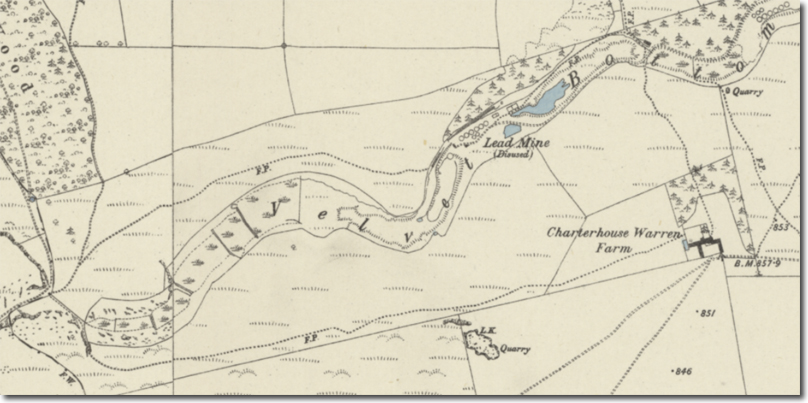
Velvet Bottom lies in the Charterhouse mining area on the Mendip Hills, where lead ore and waste from earlier workings were re‑used in the nineteenth century. The Mendip Hills Mining Company took over this ground in the 1840s and tried to revive lead production on a much larger scale, using both deep shafts and extensive dressing floors and smelting plant.
In 1844 the company began work at Charterhouse. Cornish miners with experience of deep tin mines were brought in to sink new shafts and reach ore that previous miners had not been able to work. Four deep shafts were sunk, up to 108 metres in depth. One of these, Stainsby’s Shaft, is the fenced shaft near the point where the Cheddar to Charterhouse road crosses the valley. The deep mining programme did not succeed and showed that most of the rich ore lay close to the surface and had already been worked.
To recover costs, the company turned to the lead‑rich slag and slimes left by earlier operations. These waste deposits still contained up to 25% lead. Dressing floors to process the slag and a smelter with boiler and flues were built in Velvet Bottom, about 900 metres down‑valley from the road. Water was brought from Long Wood by a system of wooden launders about 1,800 metres long and fed into buddles where the ore was washed and separated. A tramroad about 600 metres long linked the slag tips to the dressing floors, and a second dressing floor was built 200 metres further down the valley.
This reworking of waste proved successful. In 1849 a larger area of slag‑rich ground was leased in the upper part of the valley around Blackmoor and Ubley Warren, close to the present car park. Some of the slimes here yielded up to 57% lead. Three dressing floors and another smelter were built in this upper area to handle the material.
At the same time the large reservoir at the upper end of Blackmoor was constructed to provide a reliable water supply for the dressing and smelting works. By 1853 more than 300 people were employed on the site and tens of tons of lead were being produced each month. Despite this output, the company was in financial difficulty. Heavy expenditure on works, embezzlement, and the cost of buying a local farm whose land had been poisoned by lead‑rich fumes from the smelter forced the shareholders to bail the company out.
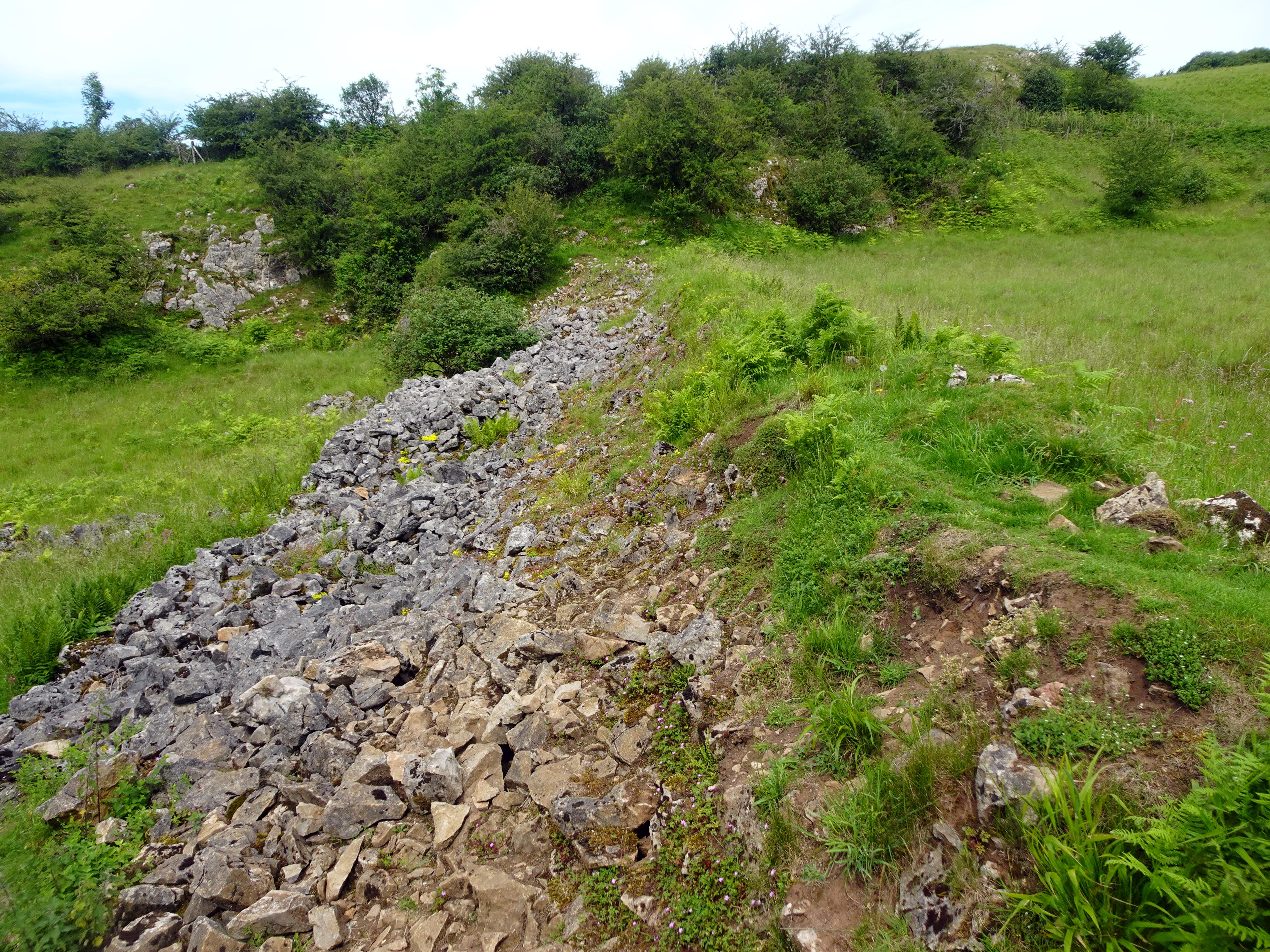
A few prosperous years followed, but by 1878 a fall in the price of lead made smelting uneconomic and smelting ceased. The works were finally abandoned in 1885. The remains of shafts, dressing floors, tramroads, flues and reservoirs along Velvet Bottom and around Charterhouse mark this last major phase of lead mining on the Mendip Hills and can still be traced in the present landscape.