

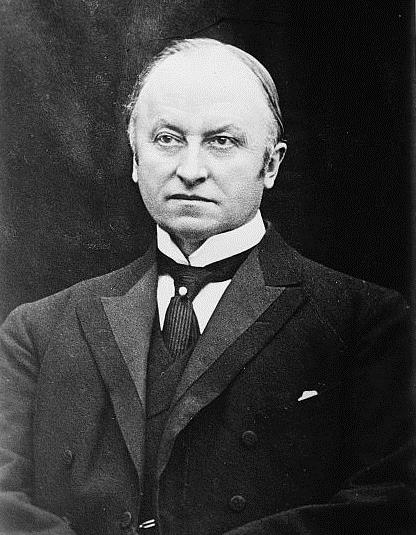
Montacute House entered the twentieth century with its structure intact but its long-term future uncertain. The Phelips family, who had built and occupied the house since the late sixteenth century, no longer lived there permanently, and the estate had slipped into a pattern of partial use and deferred maintenance. Into this situation stepped George Nathaniel Curzon, former Viceroy of India, who leased Montacute from 1915. His tenancy did not transform the architecture, but it stabilised the house at a moment when it could easily have declined beyond recovery.
Curzon chose Montacute not for its convenience but for its pedigree. The house was one of the best-preserved Elizabethan prodigy houses in England, and its formal courts, long galleries and axial gardens suited his taste for ordered, hierarchical landscapes. He used the property as a working country base during his years as Foreign Secretary, and several of his major political decisions were taken while resident there. Montacute therefore functioned as a backdrop to national affairs even though it remained architecturally unchanged.
The practical impact of Curzon’s tenancy lay in the repairs he funded. Montacute’s Hamstone façades, mullioned windows and slate roofs required steady attention after decades of underinvestment. Curzon paid for essential work to keep the building weather-tight and structurally sound. He did not attempt to redesign the East Court, the North Garden or the west approach; these remained as they had been shaped by the Phelips family and their nineteenth-century gardener, Mr Pridham. Curzon’s role was custodial rather than creative, but it was precisely the intervention the house needed.
Montacute also became the setting for one of the more unusual episodes in Curzon’s political career. In 1923, while staying at the house over Whitsun, he expected to be summoned to form a government following the resignation of Prime Minister Bonar Law. Montacute had no telephone, and Curzon remained unaware that Stanley Baldwin was manoeuvring in London. A telegram eventually reached the house, and Curzon travelled to the capital assuming he would be appointed Prime Minister. Instead he was informed that Baldwin had been chosen. The absence of a telephone at Montacute has since become part of the folklore surrounding the estate.
Curzon’s private life also intersected with Montacute’s history. For part of his tenancy he lived with the novelist Elinor Glyn, whose presence attracted attention in London society. Their relationship ended abruptly when Curzon became engaged to Grace Duggan, and Glyn left the house. The episode left no physical trace on Montacute, but it added another layer to the house’s long record of occupants whose lives were shaped by events far beyond Somerset.
Curzon left Montacute shortly before his death in 1925. The estate was put up for sale and was eventually purchased in 1931 by E. E. Cook, who transferred it to the National Trust. Curzon’s decade at Montacute forms a distinct chapter in the house’s story: a period in which an Elizabethan mansion served as the operational base of a major imperial statesman, and in which essential repairs ensured that the building survived intact for its later conservation.

