Peter Amyatt was a senior servant of the East India Company in Bengal during the turbulent years of conflict with Nawab Mir Qasim. He served on the Council at Calcutta and was involved in the Company’s expanding administrative and judicial work as it moved from commercial activity towards territorial control. His position made him one of the most prominent Europeans in Bihar at a time of rising tension between the Company and the Nawab.
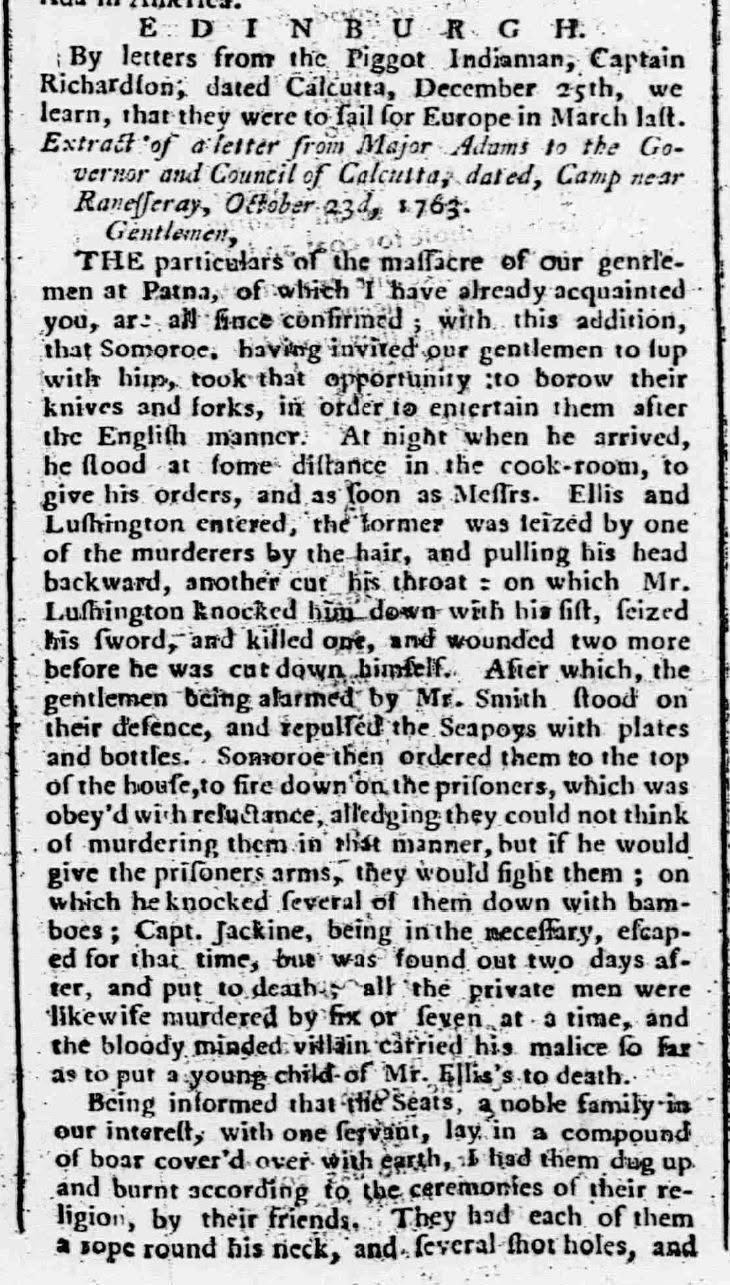
In 1763 Mir Qasim, angered by Company interference in revenue collection and trade privileges, launched a campaign against British positions in Bihar. Patna, a major administrative centre, fell to his forces. Amyatt, along with other Company officials, soldiers, and civilians, was captured. The prisoners were held under increasingly harsh conditions as Mir Qasim’s conflict with the Company escalated.
On 5–6 October 1763 Mir Qasim ordered the execution of the prisoners. Contemporary accounts state that Amyatt was one of the first killed. He reportedly refused to prostrate himself before the Nawab’s officers, and was cut down immediately. Around fifty Europeans were murdered and their bodies thrown into a well. The incident became known as the Patna Massacre.
The killings caused outrage in Calcutta and London. Coming only seven years after the Black Hole of Calcutta, the Patna Massacre reinforced the Company’s view that decisive military action was required to secure its position in Bengal and Bihar. The event became one of the principal justifications for the Company’s campaign against Mir Qasim and his allies.
The following year the Company defeated Mir Qasim and the combined forces of the Nawab of Oudh and the Mughal Emperor at the Battle of Buxar (1764). This victory led directly to the grant of the Diwani in 1765, giving the Company the right to collect revenue in Bengal, Bihar, and Orissa. Amyatt’s death therefore formed part of the chain of events that transformed the Company from a trading organisation into the governing power of eastern India.
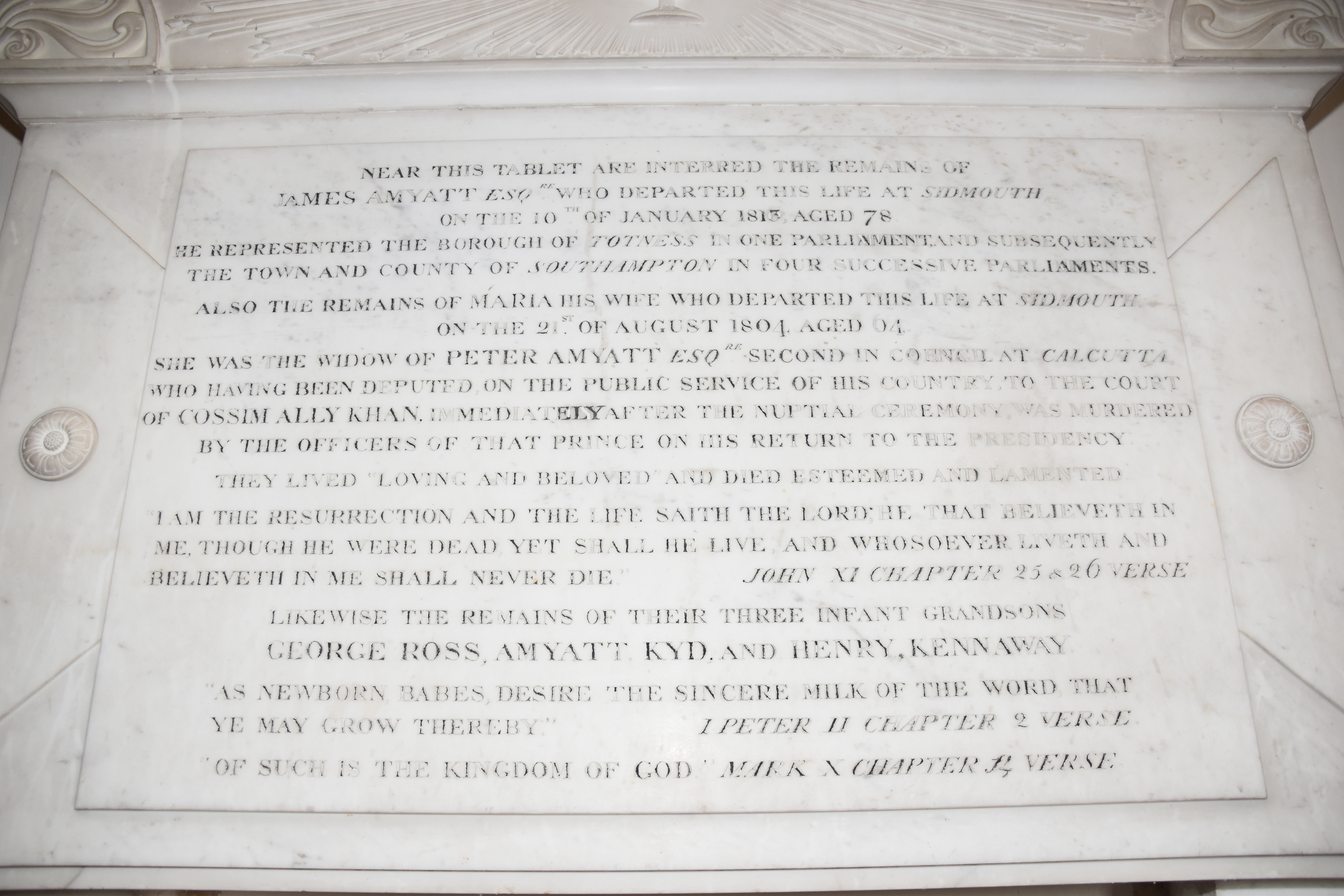
Amyatt’s family connections extended back to England. His brother, James Amyatt, later became Member of Parliament for Southampton. Through marriage, the Amyatts were linked to the Kennaway family, and the memorial at St James the Great, Talaton, records the death of Peter Amyatt “on the public service of his country” at the hands of “Cossim Ally Khan,” the contemporary spelling of Mir Qasim.
The murder of Peter Amyatt remains one of the defining episodes of the Company’s early territorial expansion. It illustrates the volatility of mid‑eighteenth‑century Bengal, the dangers faced by Company servants, and the political consequences that followed acts of violence during the struggle for control of eastern India.