

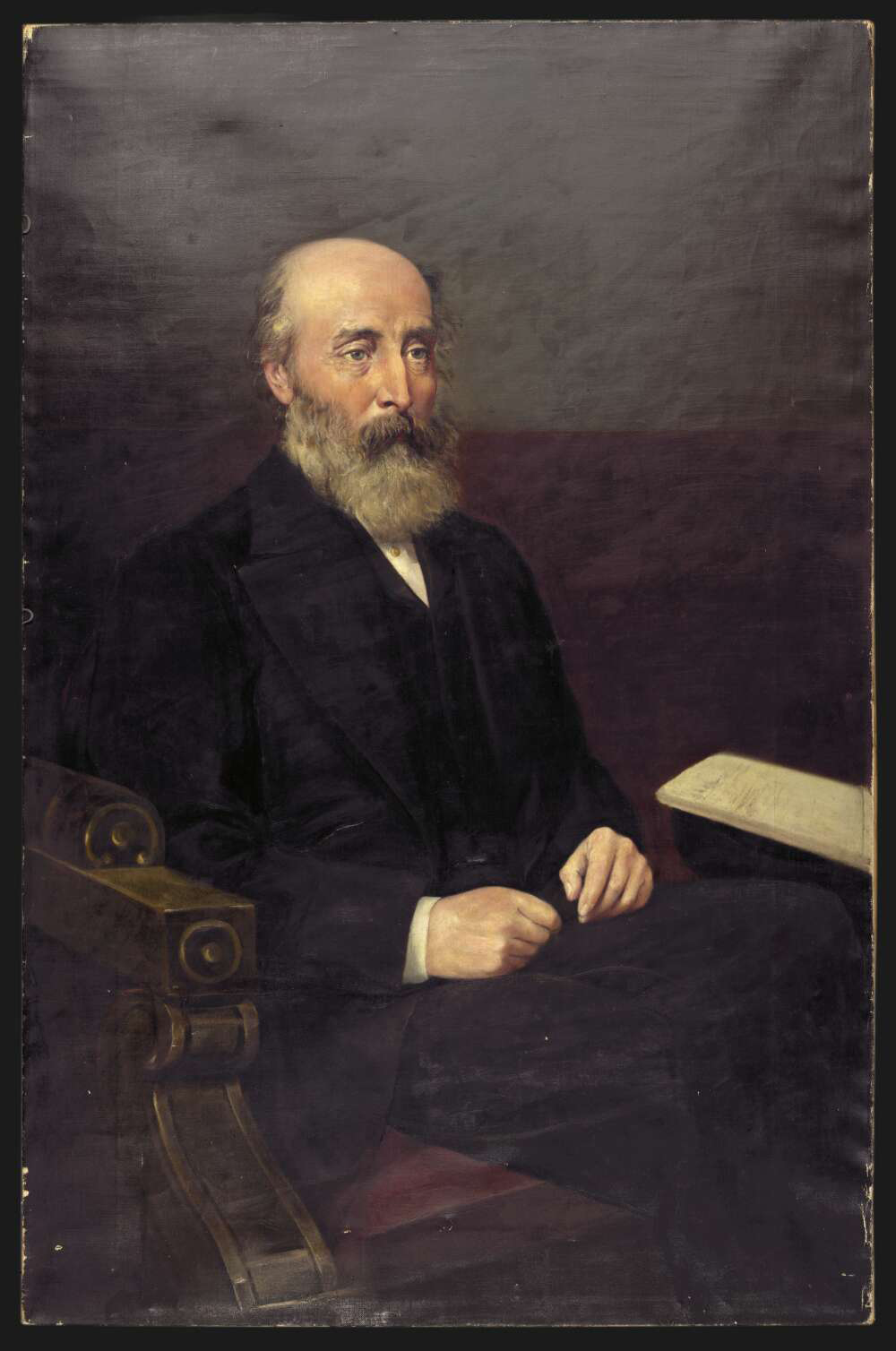
One of the more unexpected figures to find in a quiet Dartmoor churchyard is Sir Robert Richard Torrens, a man whose name is woven deeply into the legal fabric of South Australia. His grave lies just outside Leusdon Church, a long way from the colonial offices and political chambers where he spent much of his working life. Torrens was born in Cork in 1814, the son of a well‑connected military family, and after an education at Trinity College Dublin he began his career in the rather prosaic role of a landing waiter in the Port of London. It was marriage, opportunity and a timely family connection that carried him much further afield. In 1840 he and his wife Barbara sailed for South Australia, where he was appointed collector of customs, almost certainly helped by his father’s position on the colonisation commission. He lived well, accumulated property quickly, and just as quickly acquired a reputation for doing things in his own way.
Torrens’s early years in Adelaide were marked by a steady stream of disputes, reprimands and official frowns. He reduced wharfage rates without permission, vanished from his post when he was meant to be on duty, and clashed repeatedly with Governor George Grey. He also had a knack for becoming embroiled in dramatic incidents: at one point he pursued a French vessel in an almost theatrical attempt to prevent it leaving port, and although the ship was ultimately forfeited to the Crown, the affair did little to calm his reputation for unorthodoxy. Court cases followed — some involving accusations of false imprisonment, others arising from quarrels that spilled into the streets — yet somehow Torrens always managed to remain in office, moving steadily upwards through the colonial administration.
By the 1850s he had become colonial treasurer and registrar‑general, and it was in these roles that he turned his attention to the state of land ownership in South Australia. Titles were a muddle of deeds, private agreements and uncertain claims, and Torrens became convinced that the whole system needed to be rebuilt from the ground up. He was not the only person thinking along these lines, but he was certainly the most energetic. He drafted bills, rewrote them, published them in the newspapers, and campaigned relentlessly for reform. When he stood for the new House of Assembly in 1857, he topped the poll almost entirely on the strength of his land‑titles crusade.
The result was the Real Property Act of 1858, the foundation of what became known as the Torrens system. Its principles were simple but revolutionary: ownership would be determined not by bundles of deeds but by a single public register; once registered, a person’s title would be secure unless obtained by fraud; and anyone who lost out through no fault of their own would be compensated. Torrens promoted the system with almost missionary zeal, travelling to other colonies, lecturing across Britain and Ireland, and publishing explanations of how the new method worked. Although he liked to present himself as the sole architect of the reform, many others contributed ideas and support, but it was Torrens’s persistence that pushed the legislation through.
His later years were spent largely in England. He made two unsuccessful attempts to enter Parliament for Cambridge before finally winning the seat in 1868, hoping to persuade Britain to adopt the system he had championed overseas. It was not to be; English land law was a different beast entirely, and the political appetite for reform was limited. After losing his seat in 1874 he withdrew from public life, settling at Hannaford near Ashburton, where he lived quietly while continuing to serve as a company director. He was knighted for his services to land‑title reform and later elevated to G.C.M.G., a rare honour for someone whose career had been so turbulent.
Torrens died of pneumonia in Falmouth in 1884 and was brought here to Leusdon for burial, far from the colony whose legal system he had helped to reshape. His wife lies beside him. Standing by the grave, with the Dart valley opening out below, it is hard not to reflect on the contrast between the man’s stormy public life and the peaceful setting in which he now rests. Whatever his faults — and his contemporaries listed them freely — his determination to reform land ownership left a legacy that spread far beyond South Australia. It is one of those curious Dartmoor discoveries: a global story tucked quietly into a hillside churchyard.

