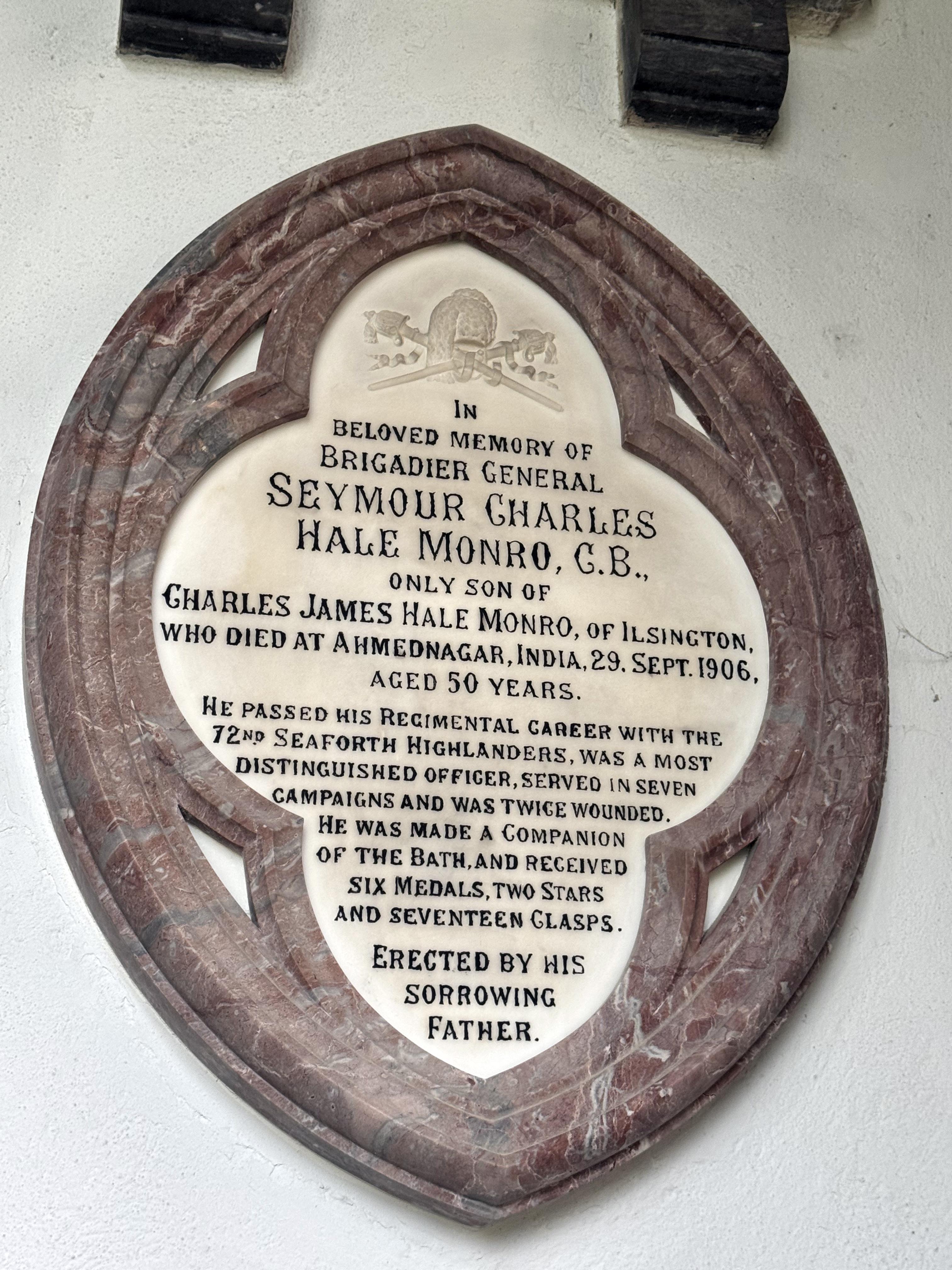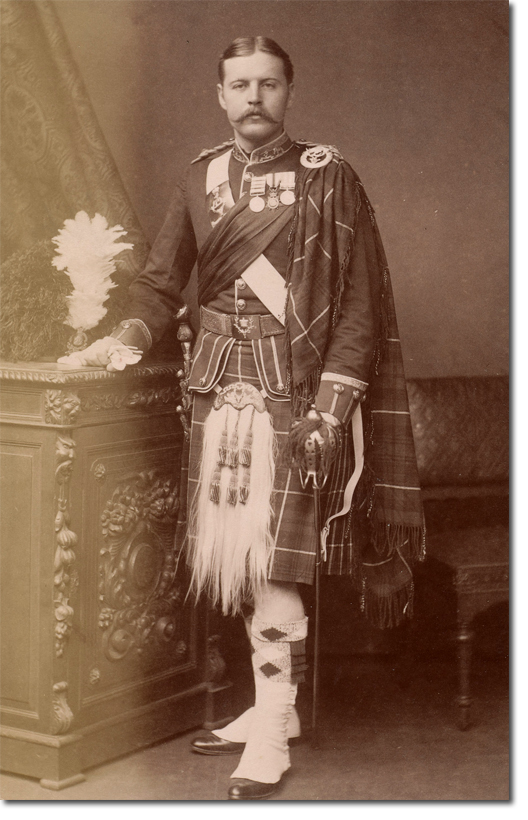
Seymour Charles Hale Monro was born on 22 July 1856, the son of C. J. Hale Monro of Ingsdon Manor, South Devon. The family seat sits above the Bovey valley, and the Monros appear regularly in local directories and parish records. His later military career took him far from Devon, but Ingsdon remained the family address and is the one most often attached to his name in county histories.
He entered the Army in 1876 and moved steadily through the ranks: Captain in 1888, Major the same year, Brevet Lieutenant‑Colonel in 1898 and full Colonel in 1900. His service record reads like a catalogue of late Victorian imperial campaigning. He served in the Afghan War of 1878–80, including the March to Candahar, earning the medal and bronze star. He was in Egypt in 1882, again receiving medal and bronze star. South Africa followed in 1884. He then served in Hazara in 1891 (clasp), the Chitral Relief Force in 1895 (clasp), and the North‑West Frontier operations of 1897–98 (clasp).
His second period in South Africa, from 1899 to 1908, was the longest. He was mentioned in despatches, received the Queen’s medal with six clasps and the King’s medal with two clasps, and was given the brevet rank of Colonel. The cumulative effect of these campaigns earned him the C.B. (Companion of the Bath). His address during much of this period was Ahmednagar, India, and he belonged to the Naval and Military Club, which was typical for officers of his generation and background.
In 1886 he married Lady Ida Constance Vaughan, daughter of the 5th Earl of Lisburne. The marriage linked the Monros of Ingsdon with a long‑established aristocratic family, and the couple appear in the usual peerage entries of the period. His career continued until ill‑health forced retirement. He died on 29 September 1906.
Locally, his name survives mainly through memorial inscriptions and the association with Ingsdon Manor. The house itself has changed hands and uses over the years, but the Monro connection is still noted in parish histories. His military record is typical of the professional imperial officer of the late nineteenth century: long service, multiple campaigns, and a steady rise through the ranks without any single dramatic episode to overshadow the rest. What remains is the list of theatres in which he served and the fact that a man who spent most of his life on distant frontiers still carried the address of a South Devon manor house.
Image courtesy of Royal Collection Trust