|
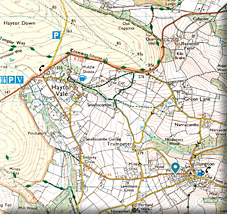
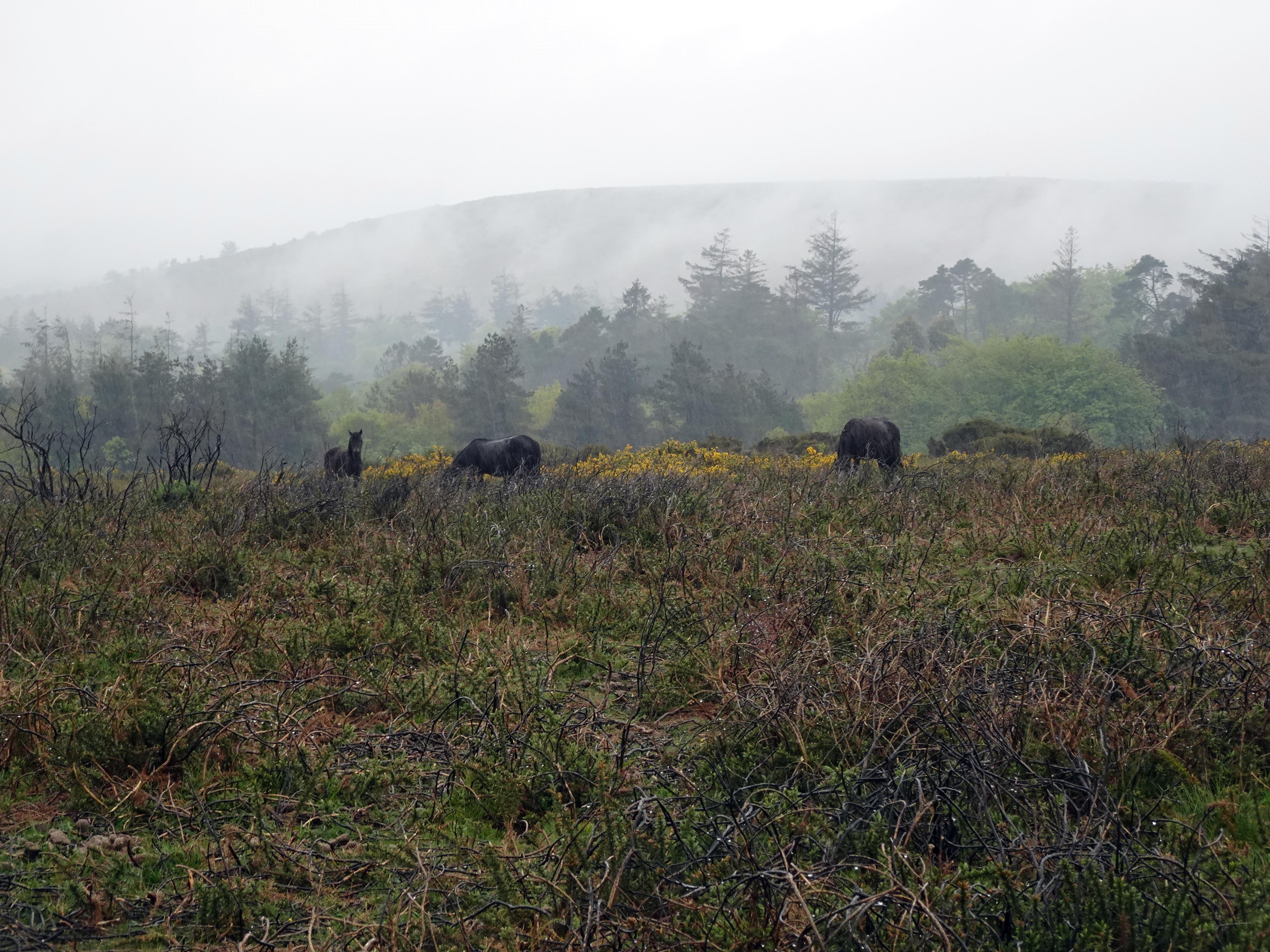
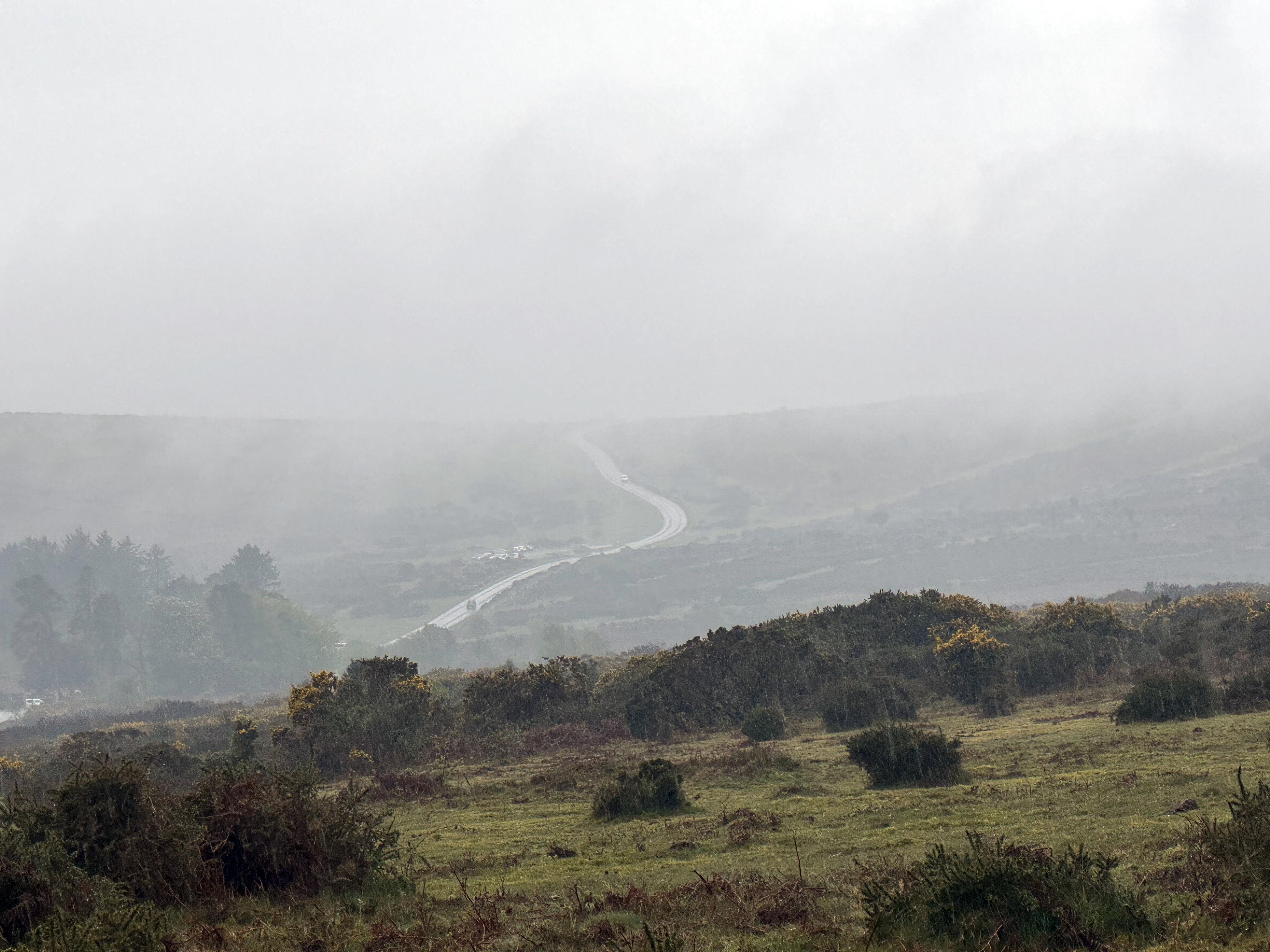
On an early May morning Rupert and I parked on Haytor Down with ominous and moody weather beckoning. Originally we had intended to head northwest to Hound Tor and the bluebells on Holwell lawn. But given the weather forecast and gloomy skies we turned to plan B and headed to Ilsington with its medieval church - which had the benefit of a roof to shelter us. This was to prove to be a propitious move and not just because of the weather.
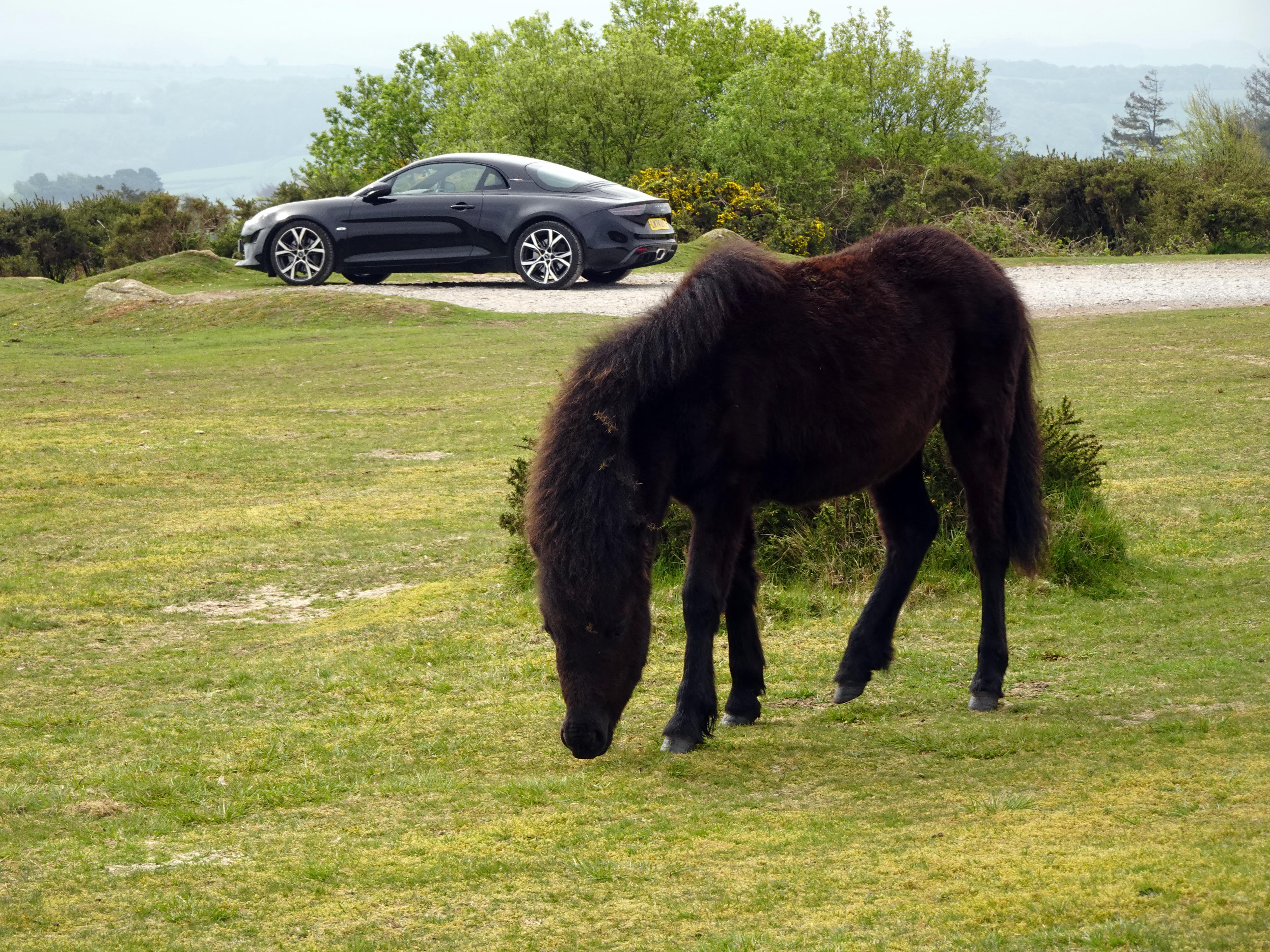
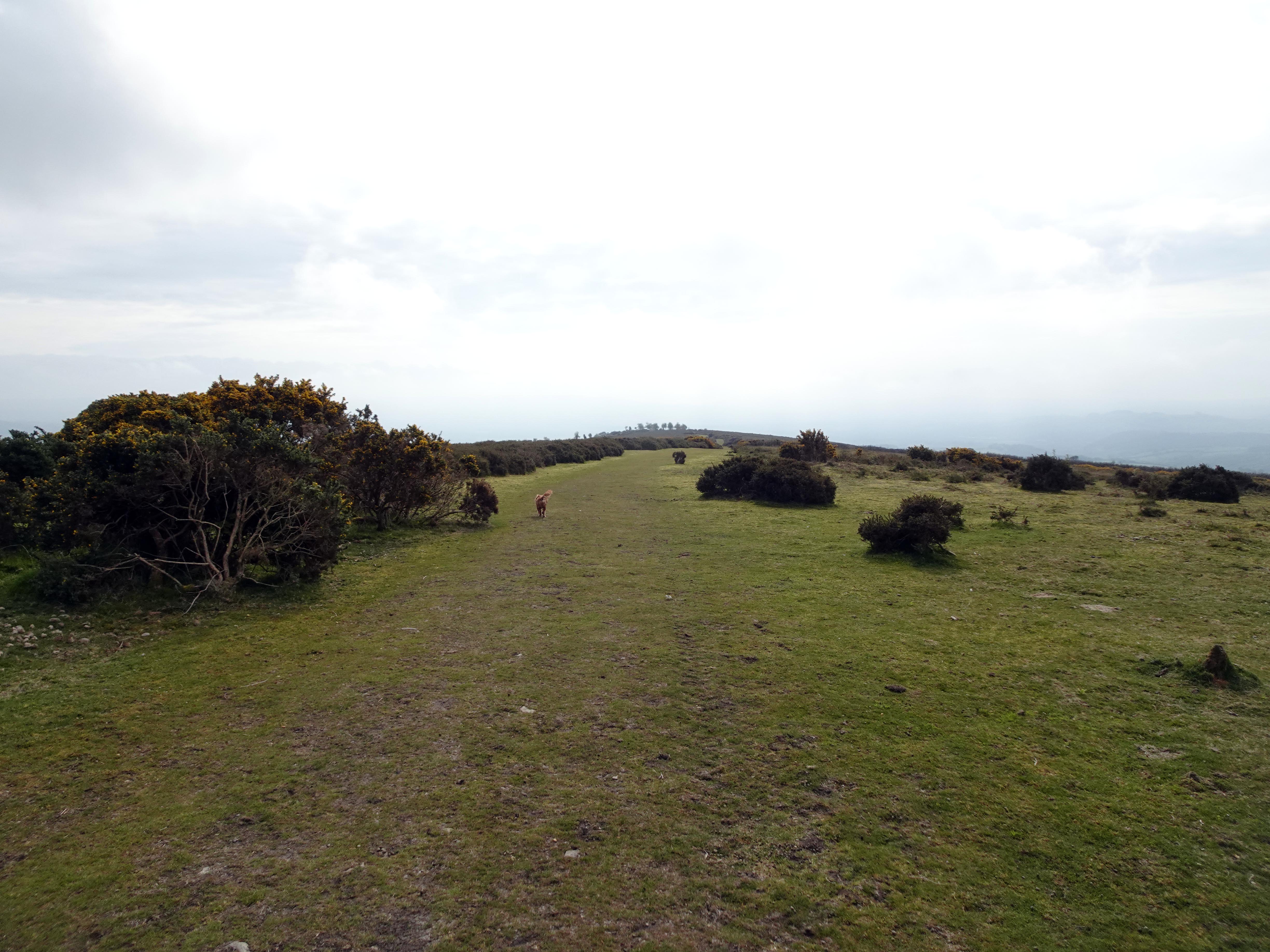
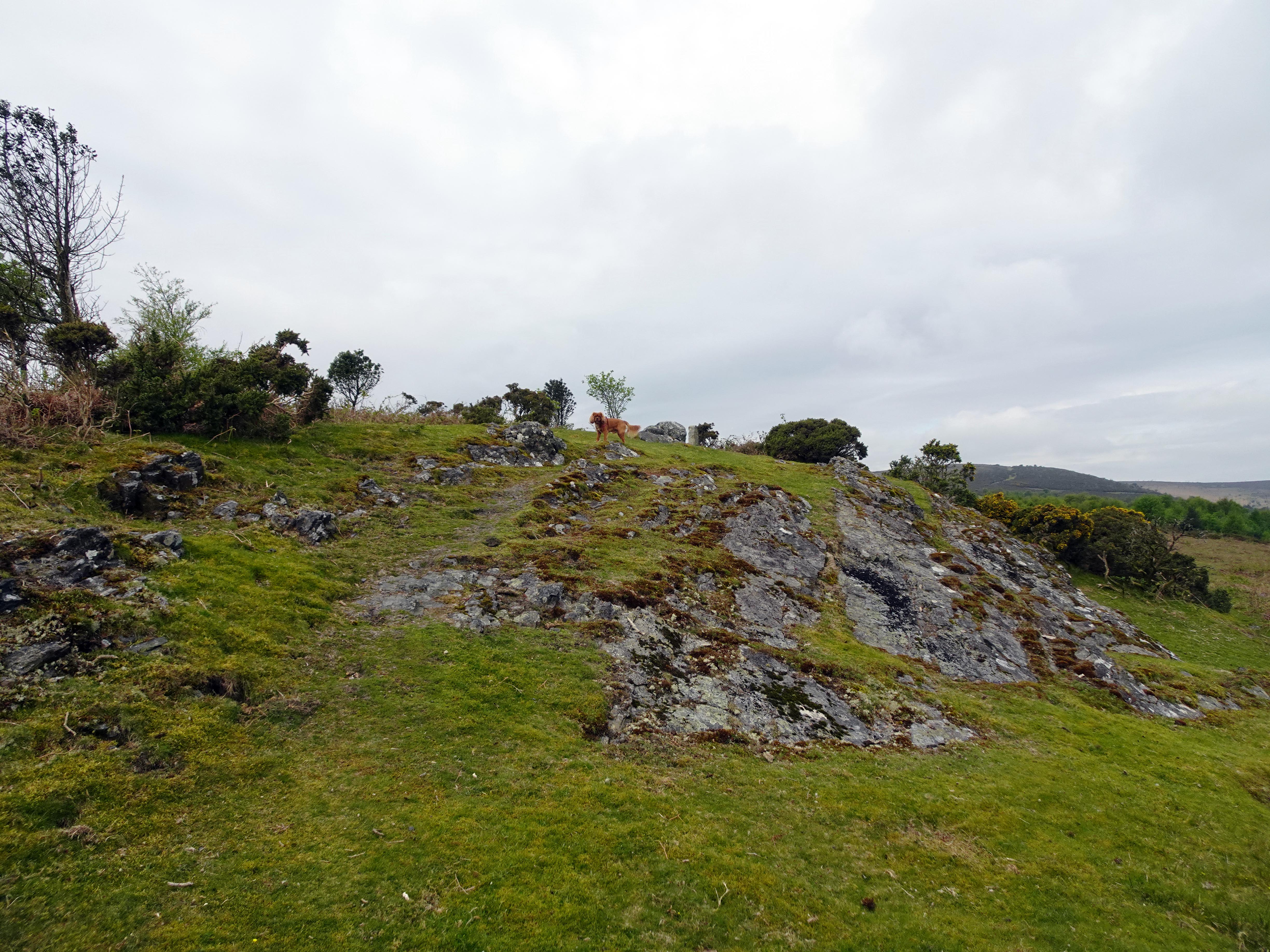
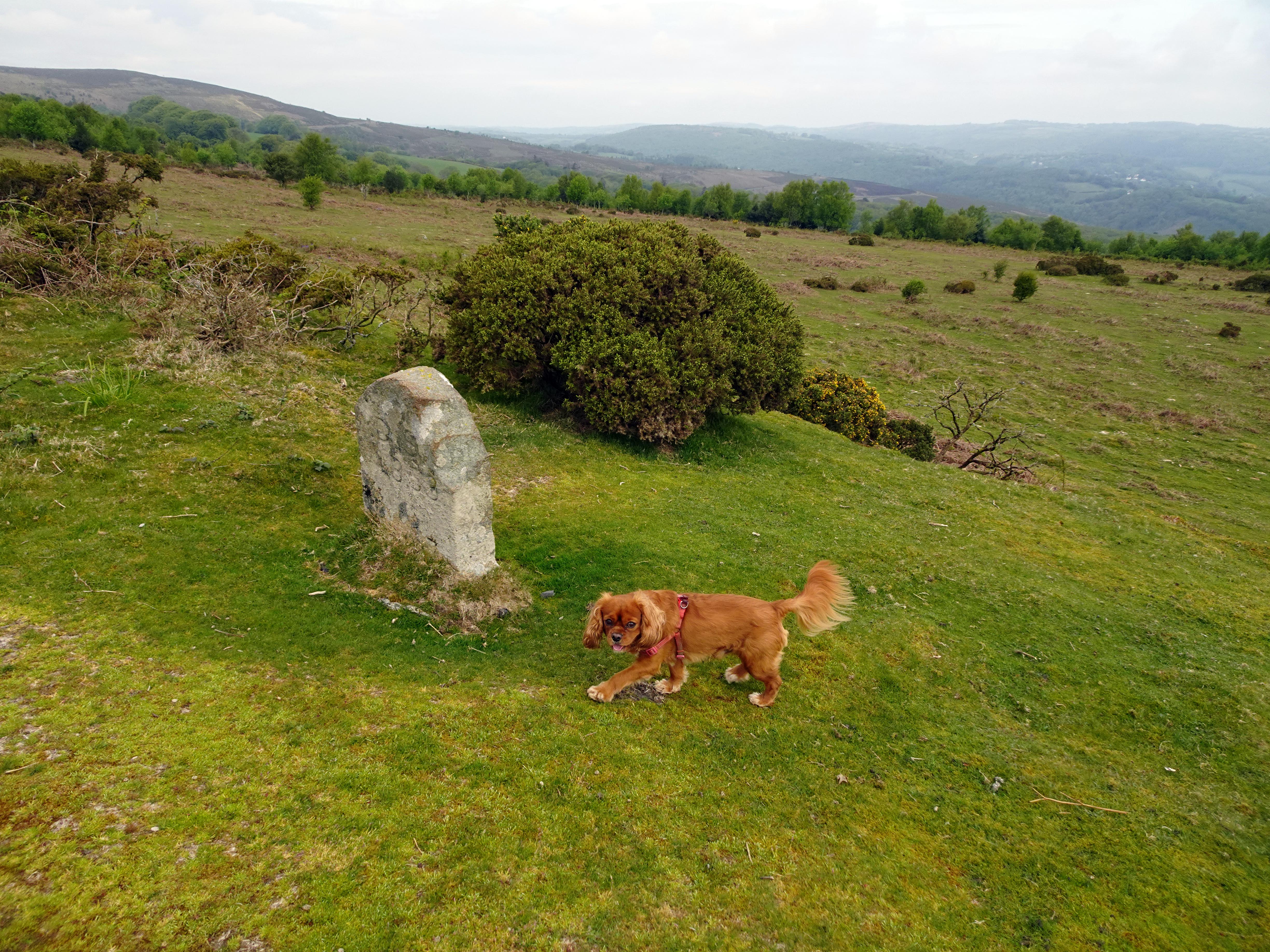
The views from Haytor Down are stunning. You are on the edge of the moors and so have glorious views south all the way to the English Channel but also to the rolling hills to the east. Even on a day with low cloud base, you were still treated to magnificent scenery and the swirling mist and low cloud only added to the atmosphere.
|
|
|
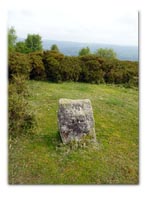
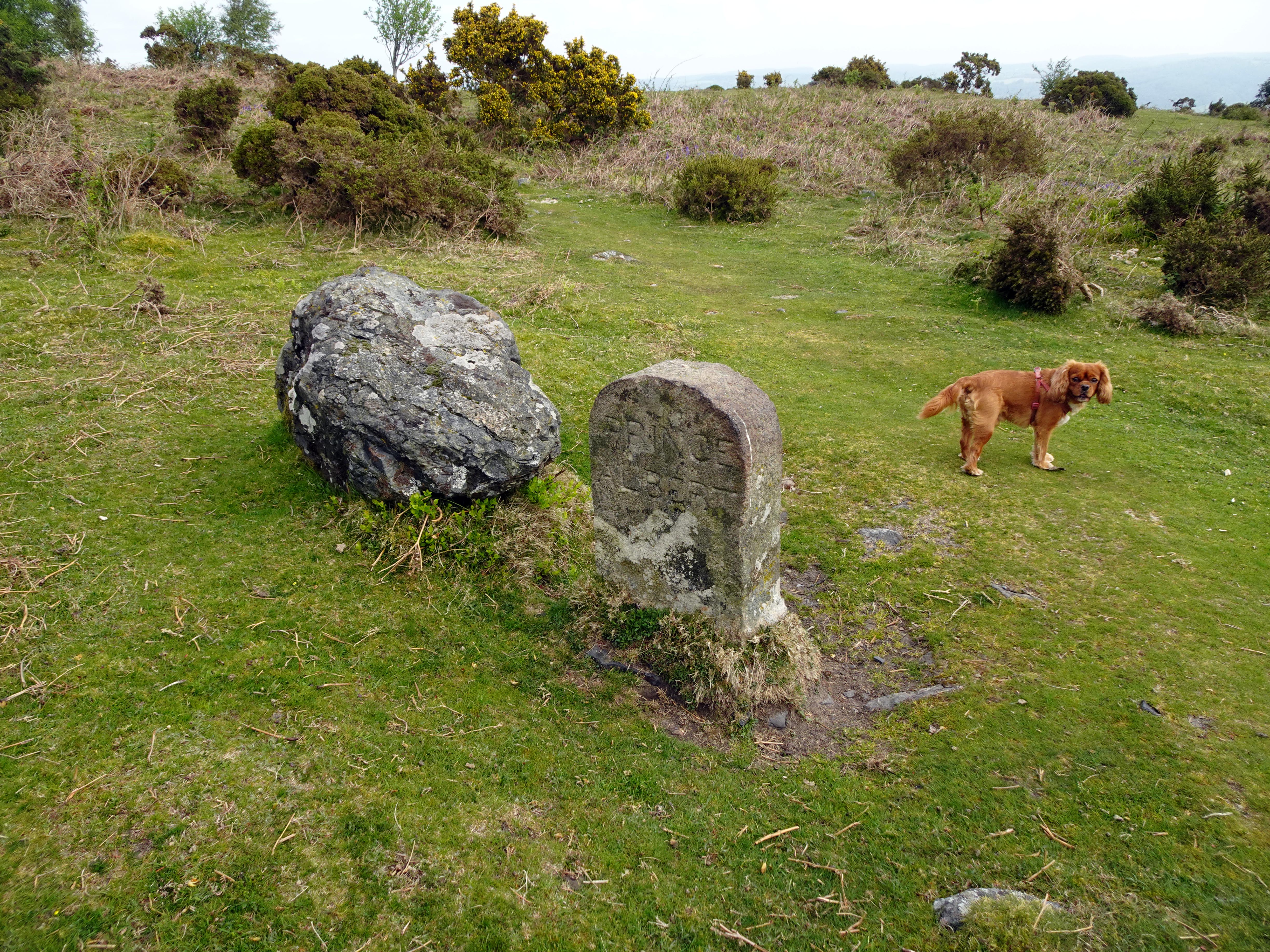
There is a very clear path all the way down from the car park but if you were to deviate just 200 yards or so to the north you come across the old parish boundaries between Ilsington parish and Bovey Tracey parish. Once upon a time everybody knew their parish boundaries as these were the practical local government boundaries as well as ecclesiastical divisions as parishes were responsible for looking after the poor and recording all births, marriages and deaths amongst other responsibilities. This stopped in 1834 with the introduction of the Poor Law Amendment Act which was the harbinger of workhouses and central government taking more control over the care of the poor and needy. Beating the bounds dates back to the Middle Ages when parishioners would walk around their parish boundaries with willow or birch branches to strike obvious geographical features like prominent stones, trees or waterways. Now heathland caused a problem in this tradition as it was unclear where one parish stopped and another started. So boundstones were often erected in more derelict areas to give parishioners something to strike! The boundstones between Bovey Tracey and Ilsington are more interesting than most. They were erected in 1853 by Edward St Maur better known as the Duke of Somerset and they record various names as you go along them. They all bear his initials on one side and the date 1853. On the other side is an eclectic collection of names of the royal family such as Victoria and Prince Albert, geographical names like Owlacombe Burrow and two curious ones relating to even older boundary stones marked on old maps as the William Stone and the Jack Stone. Who these last two are is anyone’s guess. Perhaps the stonemasons who made them. Perhaps the William stone is from an older WS that may well have been an older boundary from Saxon times: Writelan Stan. In 1829 he had bought the nearby estate of Stover from the Templer family and made it is principal residence. This purchase also included the Stover canal and the Haytor granite tramway and the quarries nearby. His son confusingly also called Edward was the MP for Totnes before the 11th Duke of Somerset passed away in 1855. He then ascended to the House of Lords as the 12th Duke and was appointed First Lord of the Admiralty, with a seat in Lord Palmerston’s Liberal cabinet. Notwithstanding his seniority, there was to be something of a roller coaster in the affairs of the Stover Dukes of Somerset in the coming years. The 12th Duke had two sons one of whom died after being mauled by a bear in India at the age of just 24! The other son called Ferdinand was a soldier and diplomat who had fought in Persia, participated in the Relief of Lucknow in the Indian Mutiny and volunteered to fight with Garibaldi for Italian independence amongst other exploits. Whilst there, he got into trouble by accusing another soldier of embezzling funds designed to recruit international soldiers for the Italian cause. The person he accused challenged him to a duel which his commander refused permission for Seymour to participate. So instead of fighting a duel, Seymour horse whipped the man. After a protracted legal case he had to pay damages to the man he beat. But this wasn’t his real scandal. That was to come just a few years later when he started a relationship with a 17 year old servant with whom he had two children. Sadly Ferdinand died in a botched operation in 1869. With both sons dead, in his will the 12th Duke left the Stover estate to the illegitimate male child of his Ferdinand in 1885. This was scandal indeed in the Victorian age although the title was not permitted to be conferred upon an illegitimate child and so it went to the 12th’s brother Archibald Seymour. The illegitimate grandson who inherited Stover went on to fight in the Boer War and the First World War but died in Kenya in 1927. There is a monument to him in the church at Teigngrace. The association of the Duke of Somersets and this part of Devon was severed with the death of the 12th Duke but these boundary stones remind us that they were once a very important local family indeed.
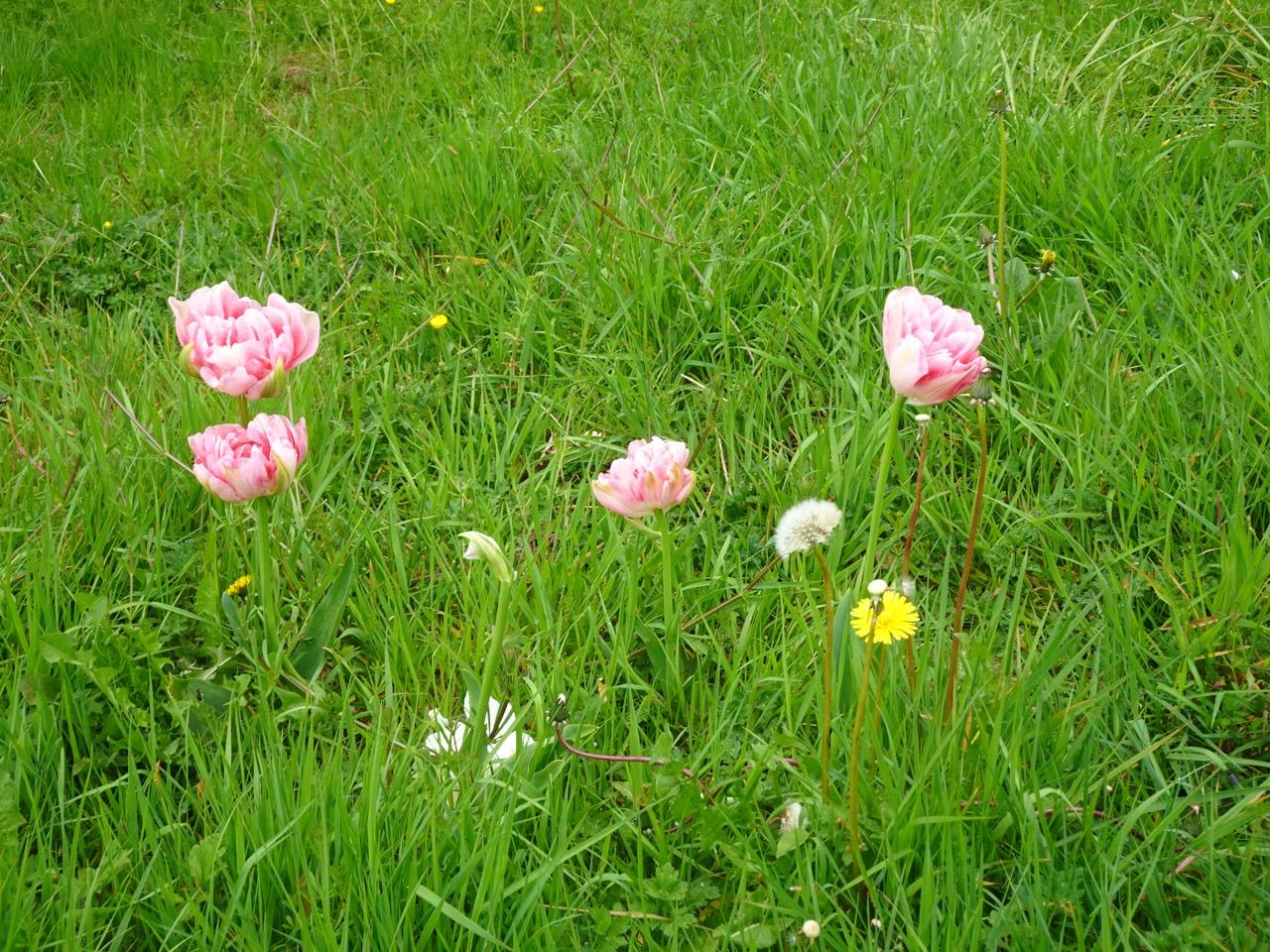
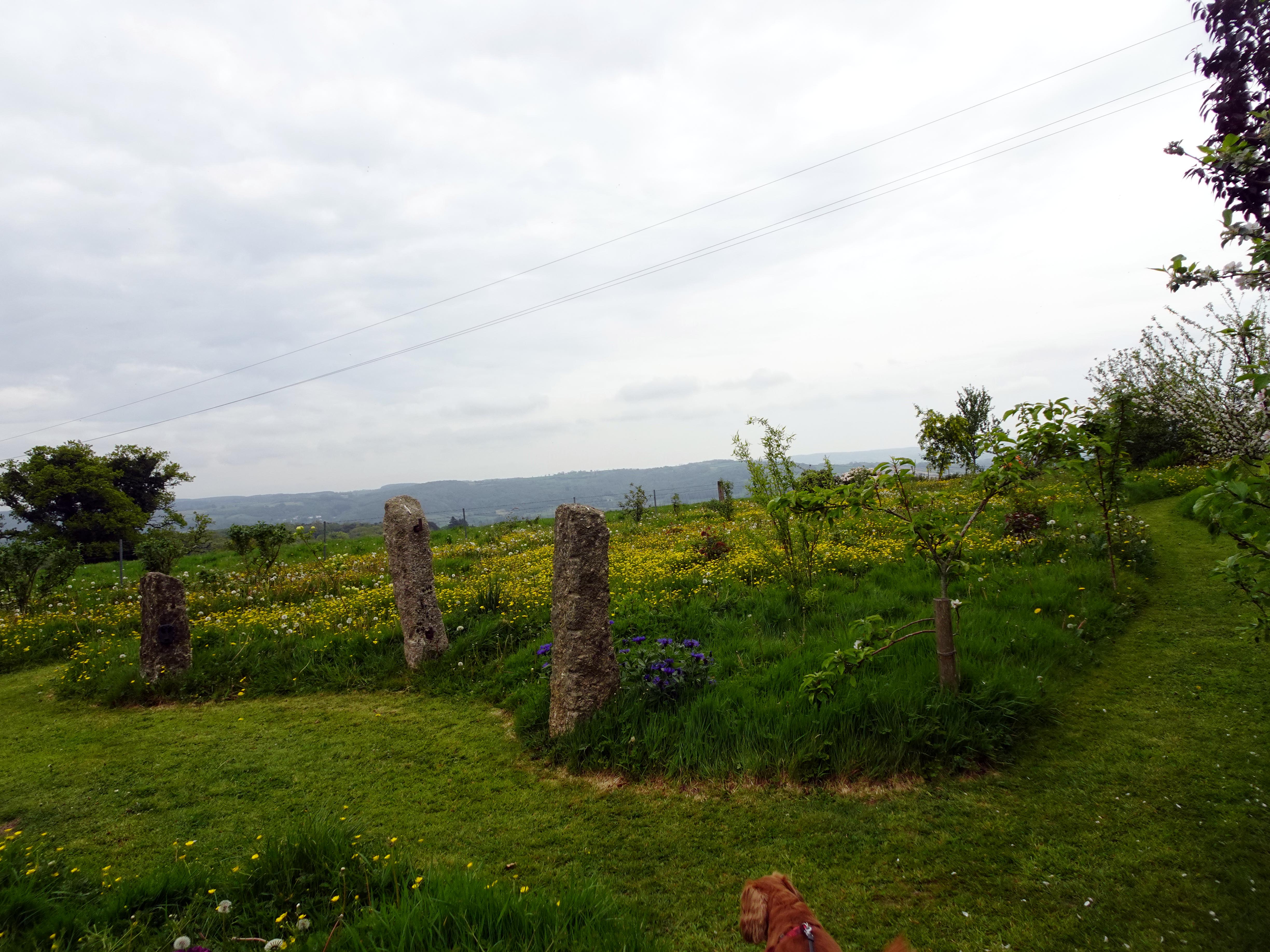
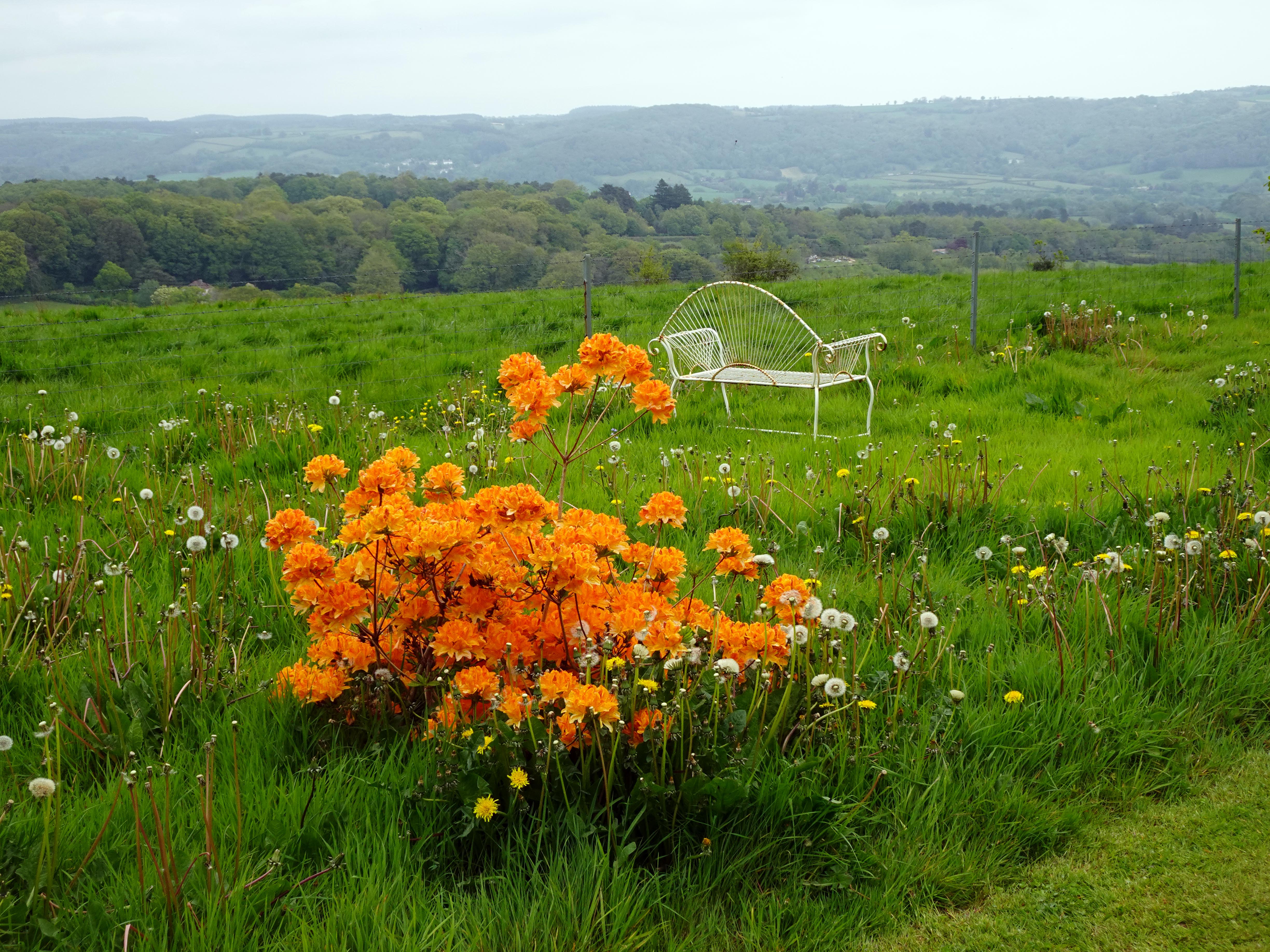
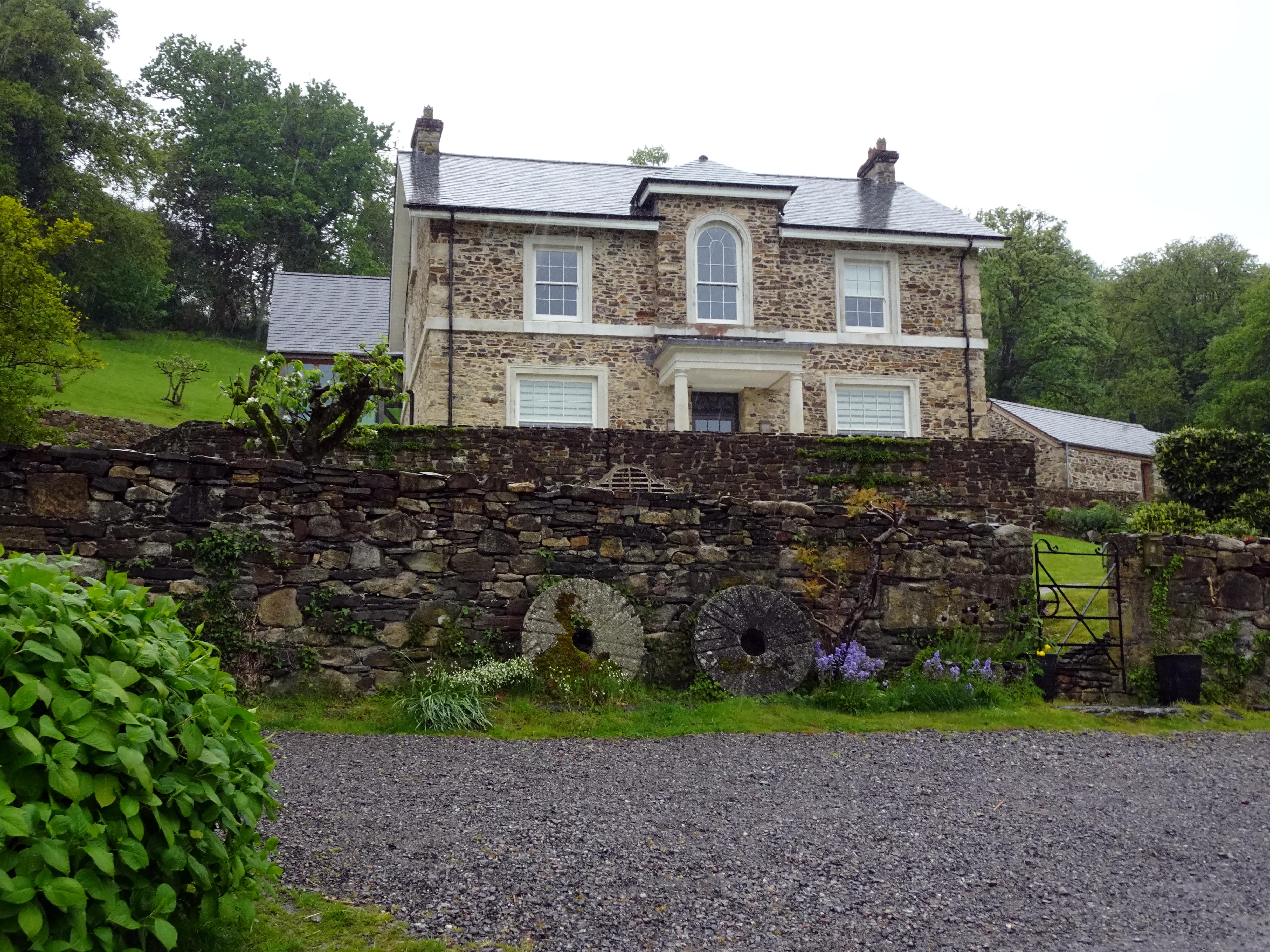
We though proceeded our descent towards Ilsington church which we could see from the Down off in the distance. We crossed over the tramway which the Dukes of Somerset had purchased when they took over Stover House and headed to Green Lane. There we stumbled across an Open Garden and Wildlife photography event. It was all in aid of Macmillan Nurses National Garden Scheme. We had a look around their beautiful Journey's End Garden with an eclectic mix of meadow plants and trees. But the owners are also professional wildlife photographers and turned their entire house into a wildlife photography exhibition with pretty much every room hanging beautiful photographs - yes even the bathroom! I did enquire if the various tigers, lions and elephants had all been photographed in their garden but they assured me that they were from further afield. It was a beautiful house with stunning views in all directions. Rupert was most welcome too and we had tea and cake there. This was a serendipitous find indeed and convinced us that heading to Ilsington had been a good idea after all.
|
|
|
As we left their house, the long threatening rain finally began to fall. Just down the road we saw a restored lime kiln. These were once such a feature of so many agricultural areas in the Westcountry. Most people understand their role in creating lime for cement for construction purposes but they were also used extensively to neutralise soil acidity with quicklime. Nitrogen and artificial fertilisers would ultimately see the decline of quicklime made in local lime kilns like the one we found here but it is an important part of our agricultural heritage to good to see one not only preserved but restored.
|
|
|
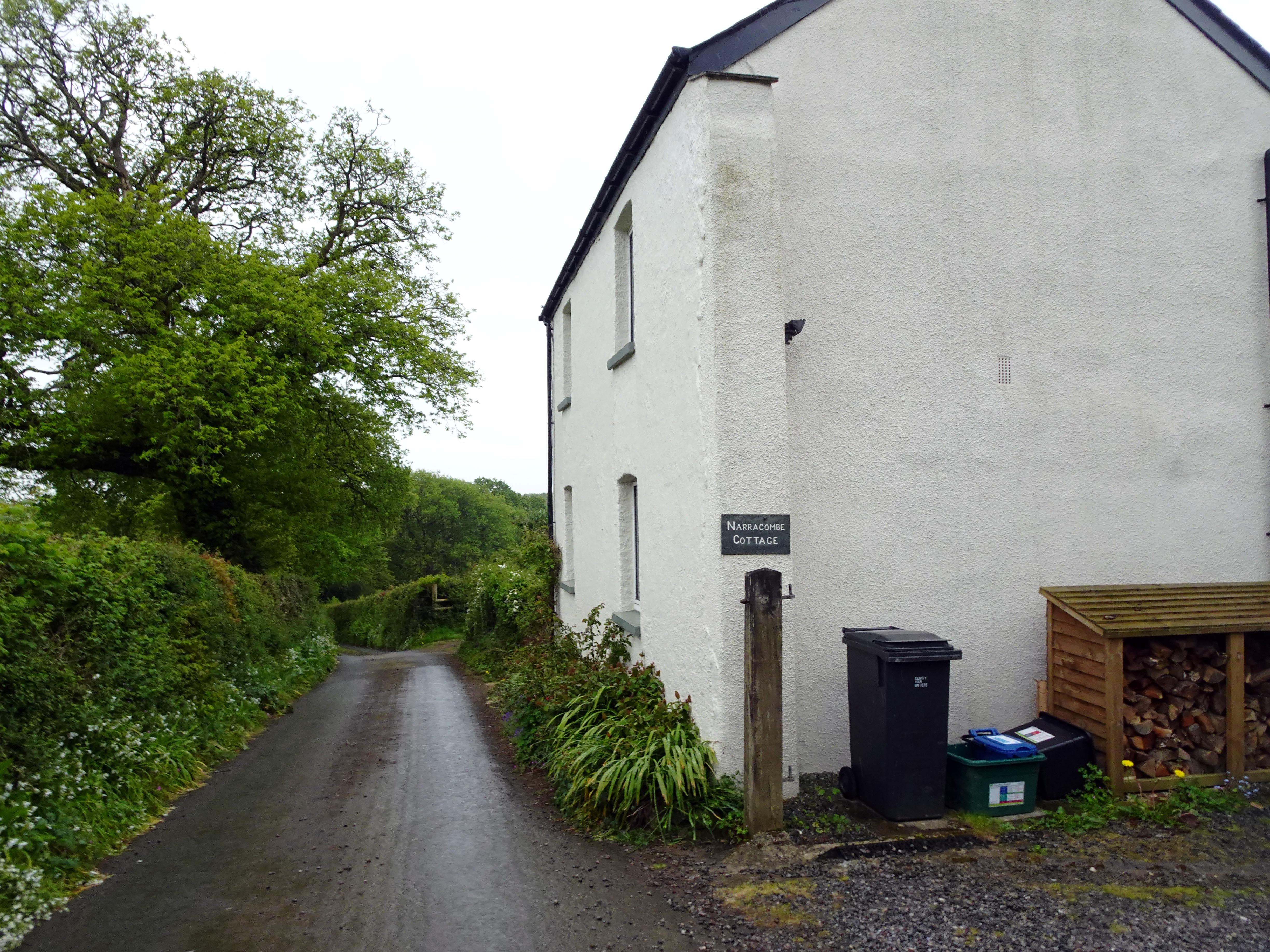
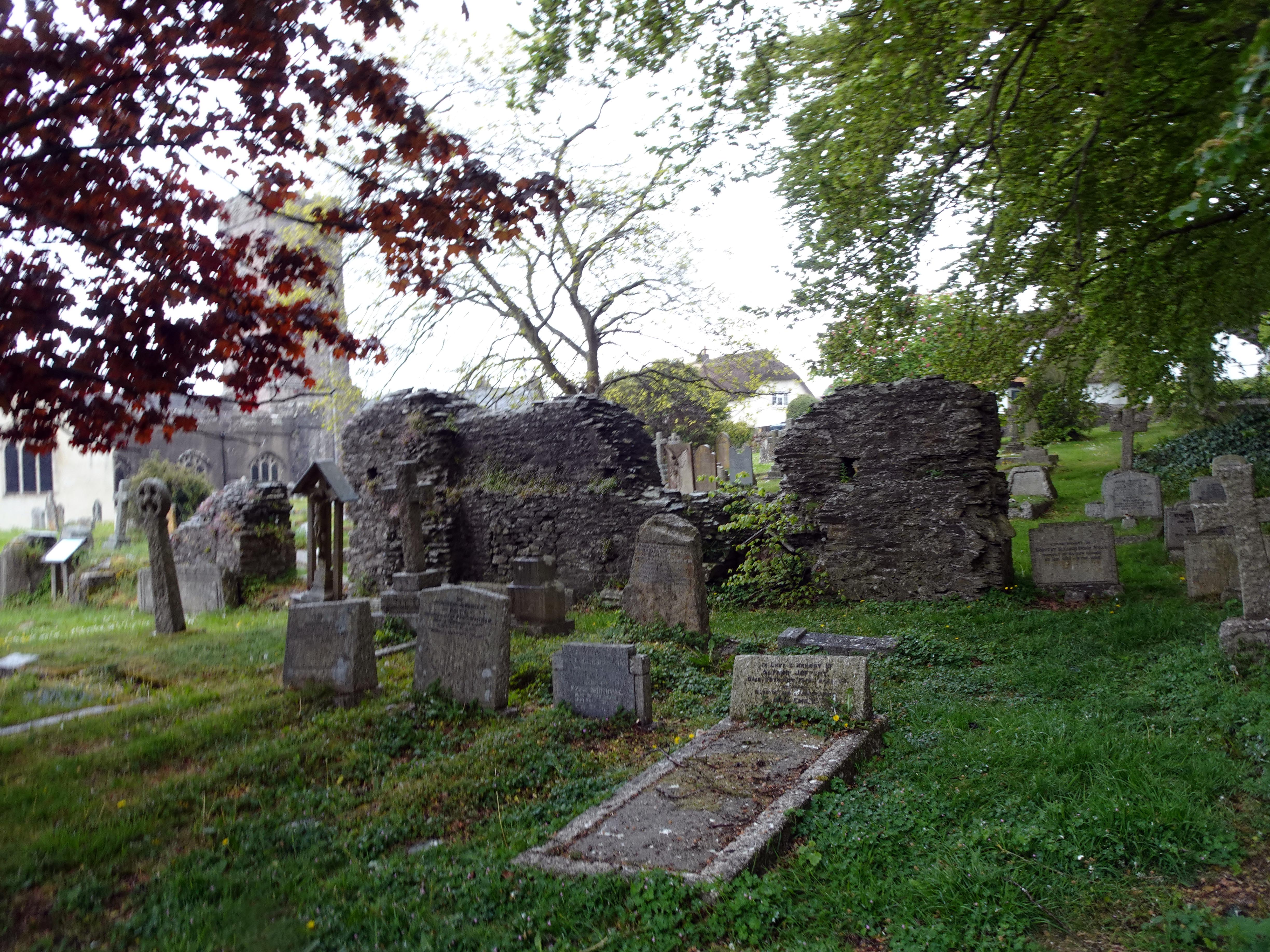
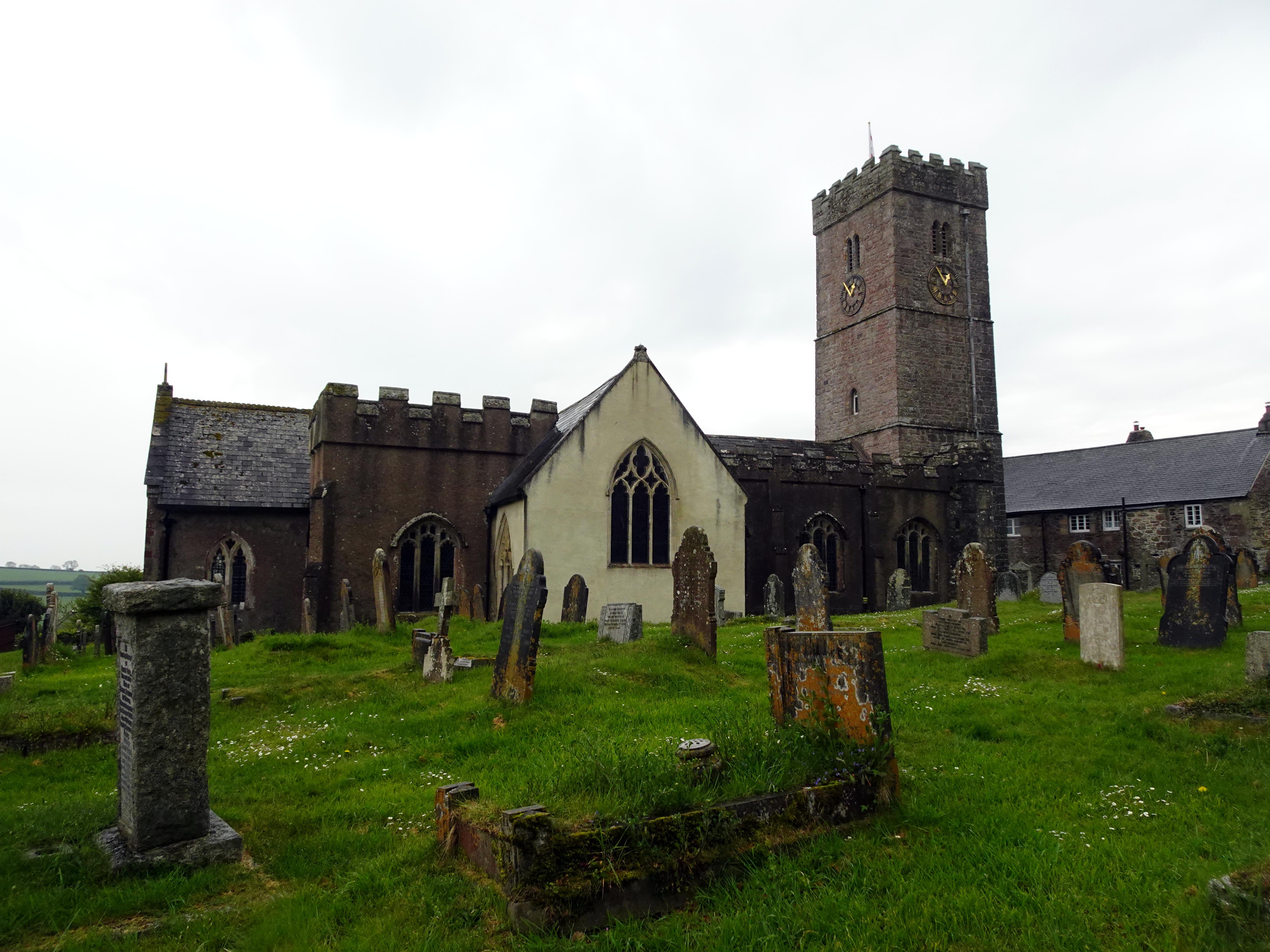
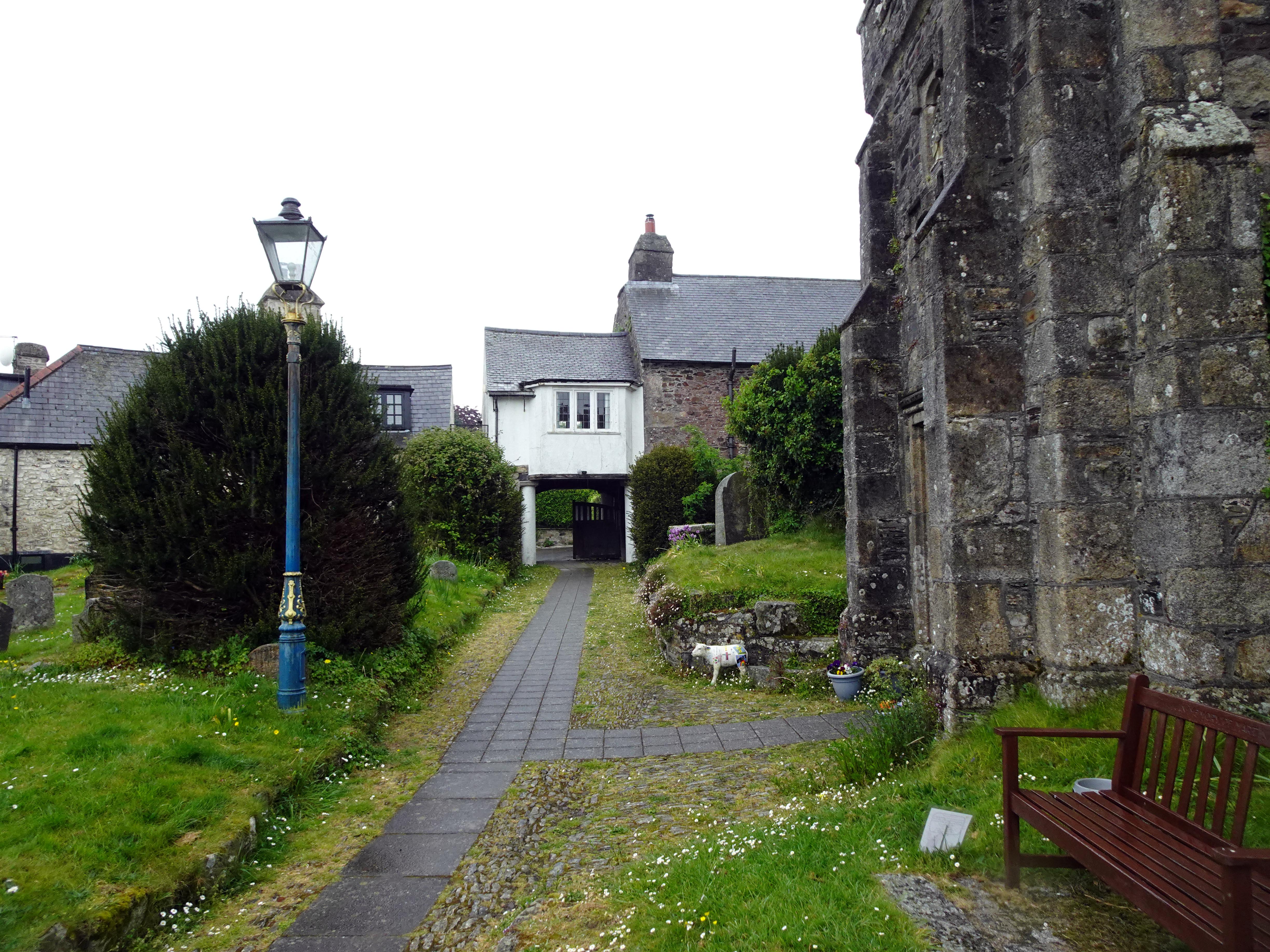
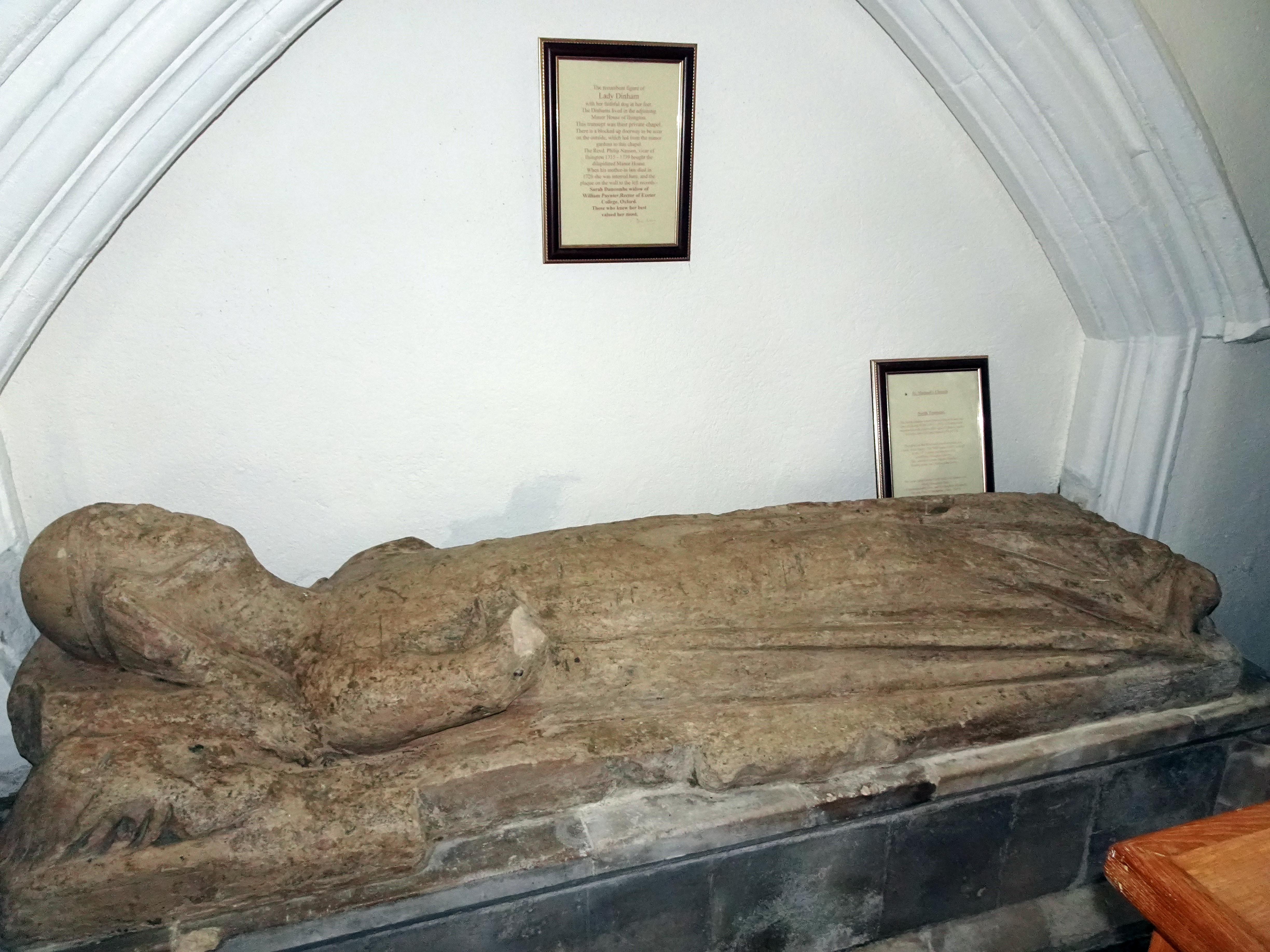
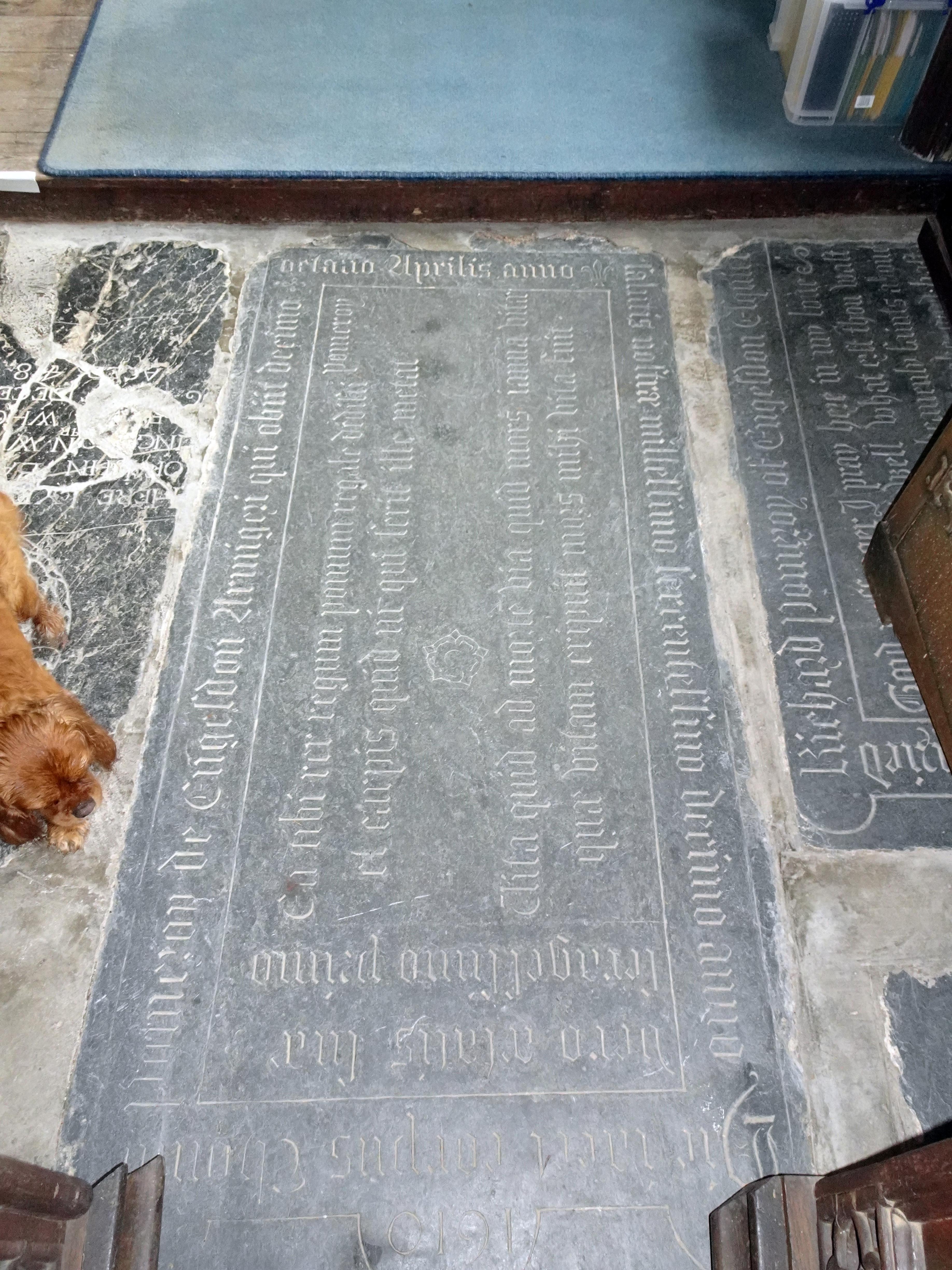
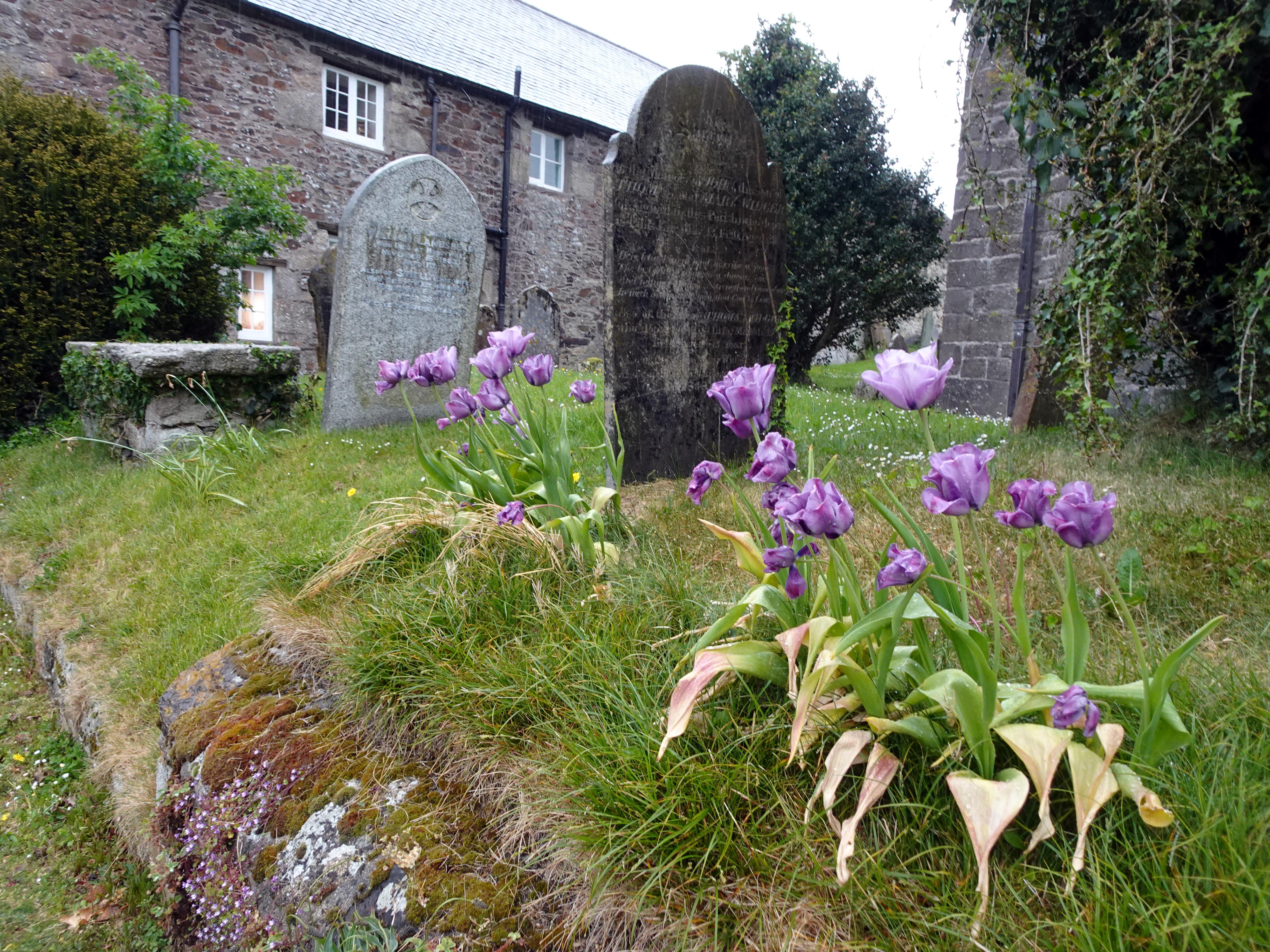
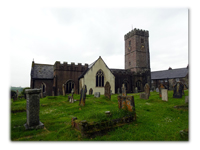
We then carried on down the deep valley into Narracombe wood before climbing back up towards Ilsington and head for St Michael’s Church there. Once again this is an enormous church in a tiny village. But as we have already pointed out once upon a time Ilsington parish was huge and its rural population was far larger than it is today. In the graveyard, this church actually has the remains of the original Manor House that used to stand beside the church. The Normans were keen on projecting power and castles, manor houses and churches often or a combination thereof often lay close to one another. There is no castle here but the Manor House and Church were once even connected directly and there is a door on the North side of the church which once allowed the lords to pass in and out of the church to their own private chapel without having to mix with the hoi-polloi. In this case it was the Dynham family held this manor from the Earls of Devon until 1501. There is effigy of a Lady Dinham lying recumbent in the church itself. The Manor House was later split into 4 and then eventually fell into disrepair or used to build the village school in the Victorian era. Apparently many of the manor house’s dressed stones were used in all sorts of building projects around the village.
|
|
|
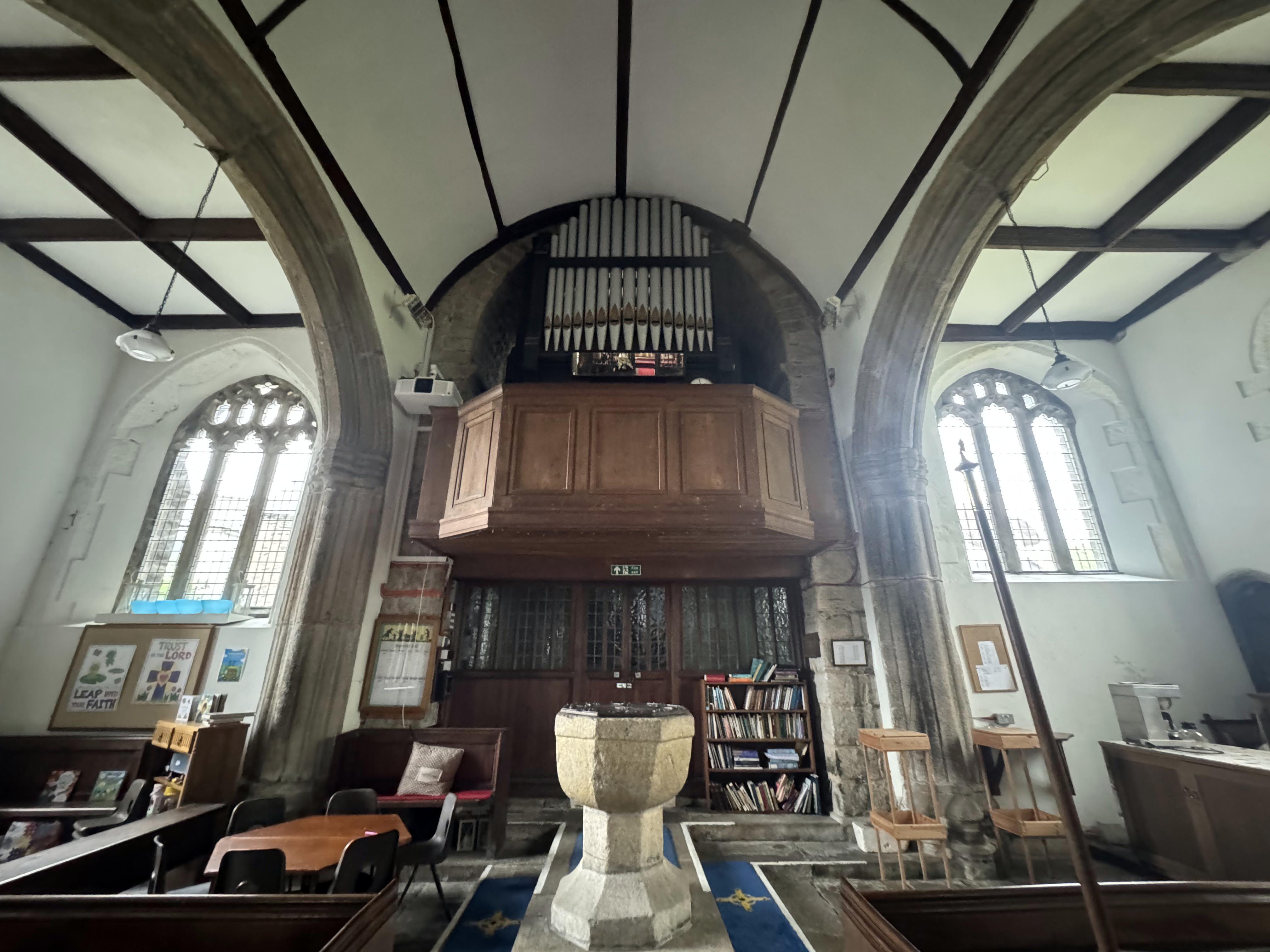
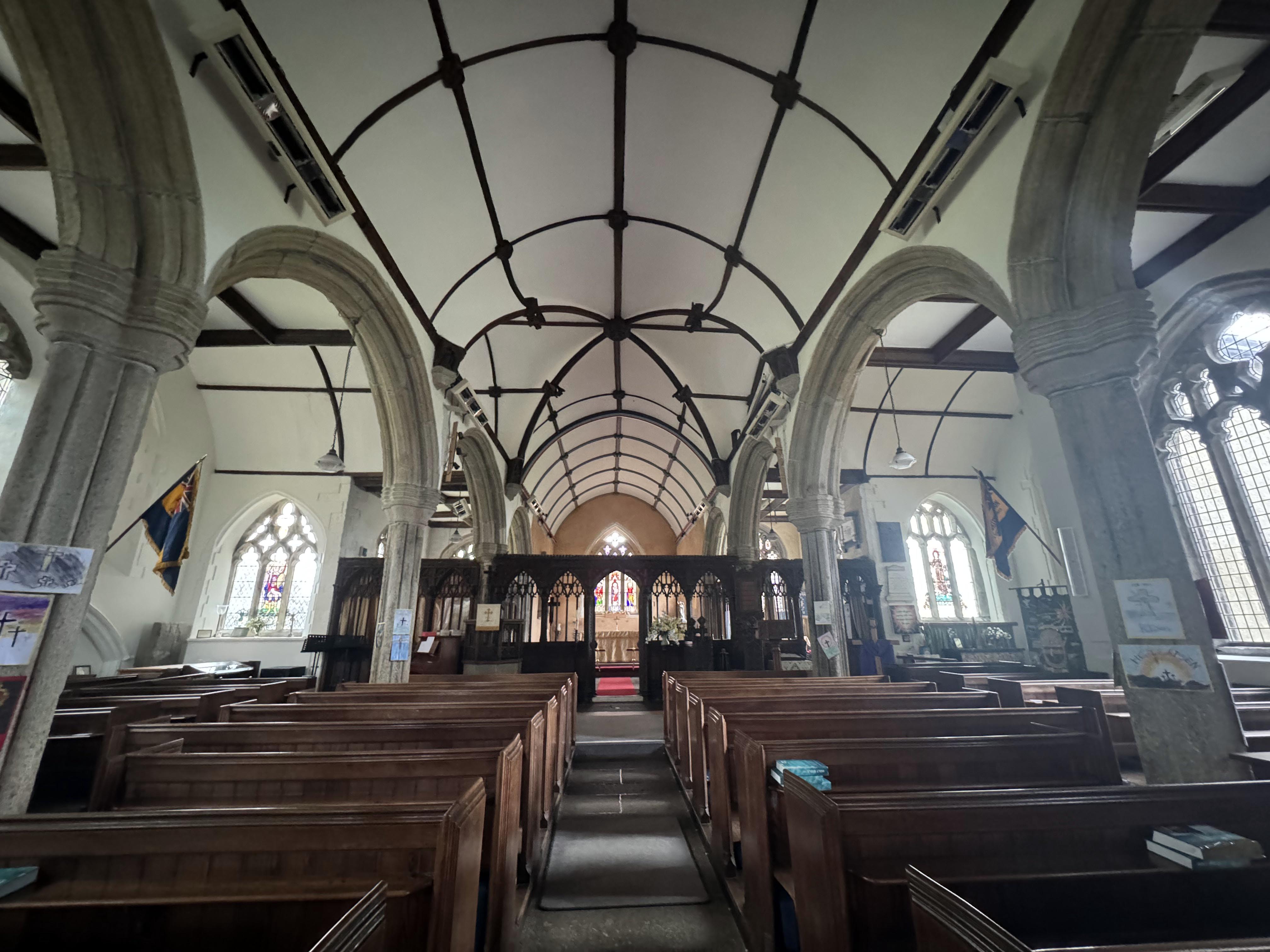
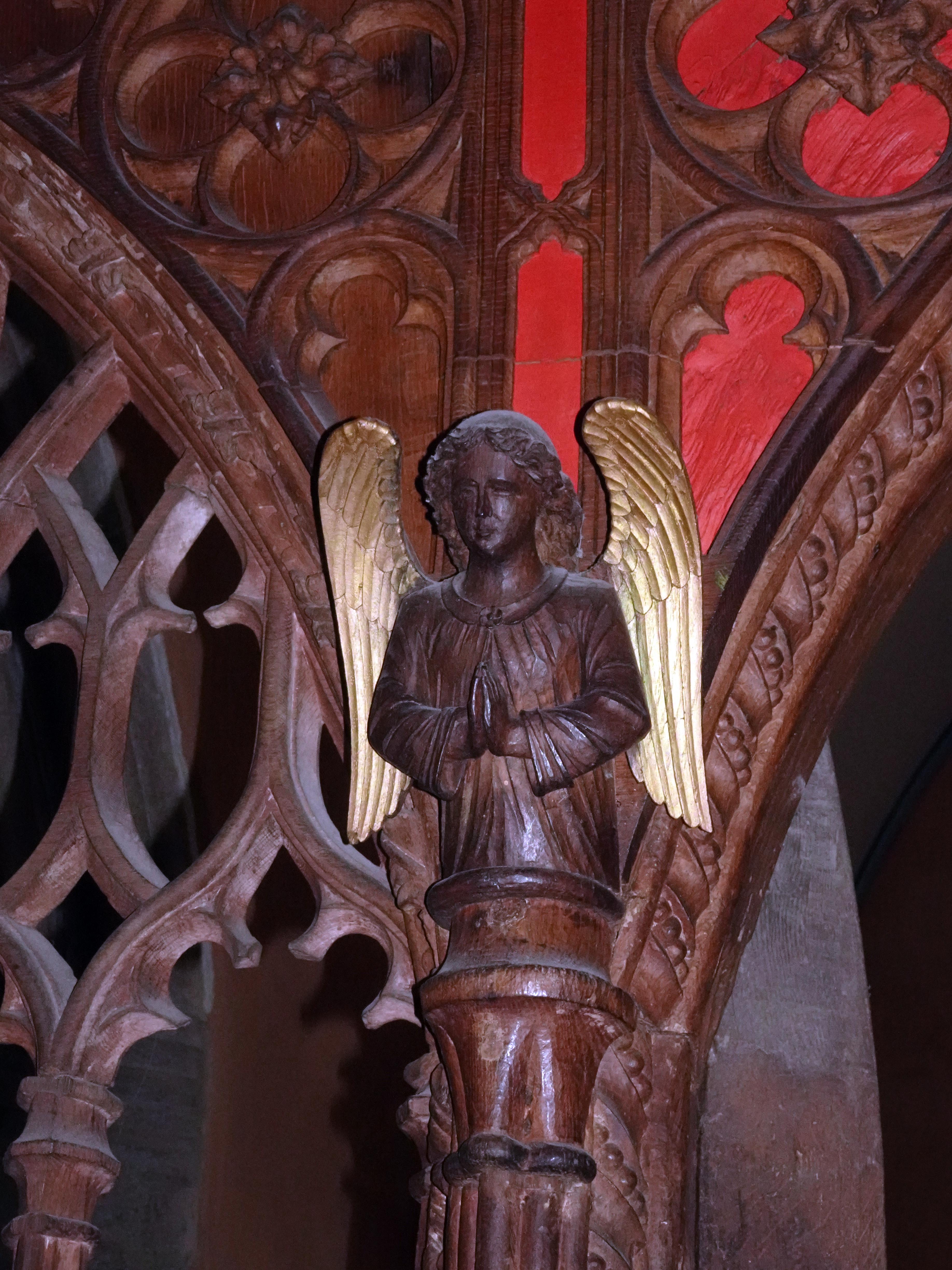
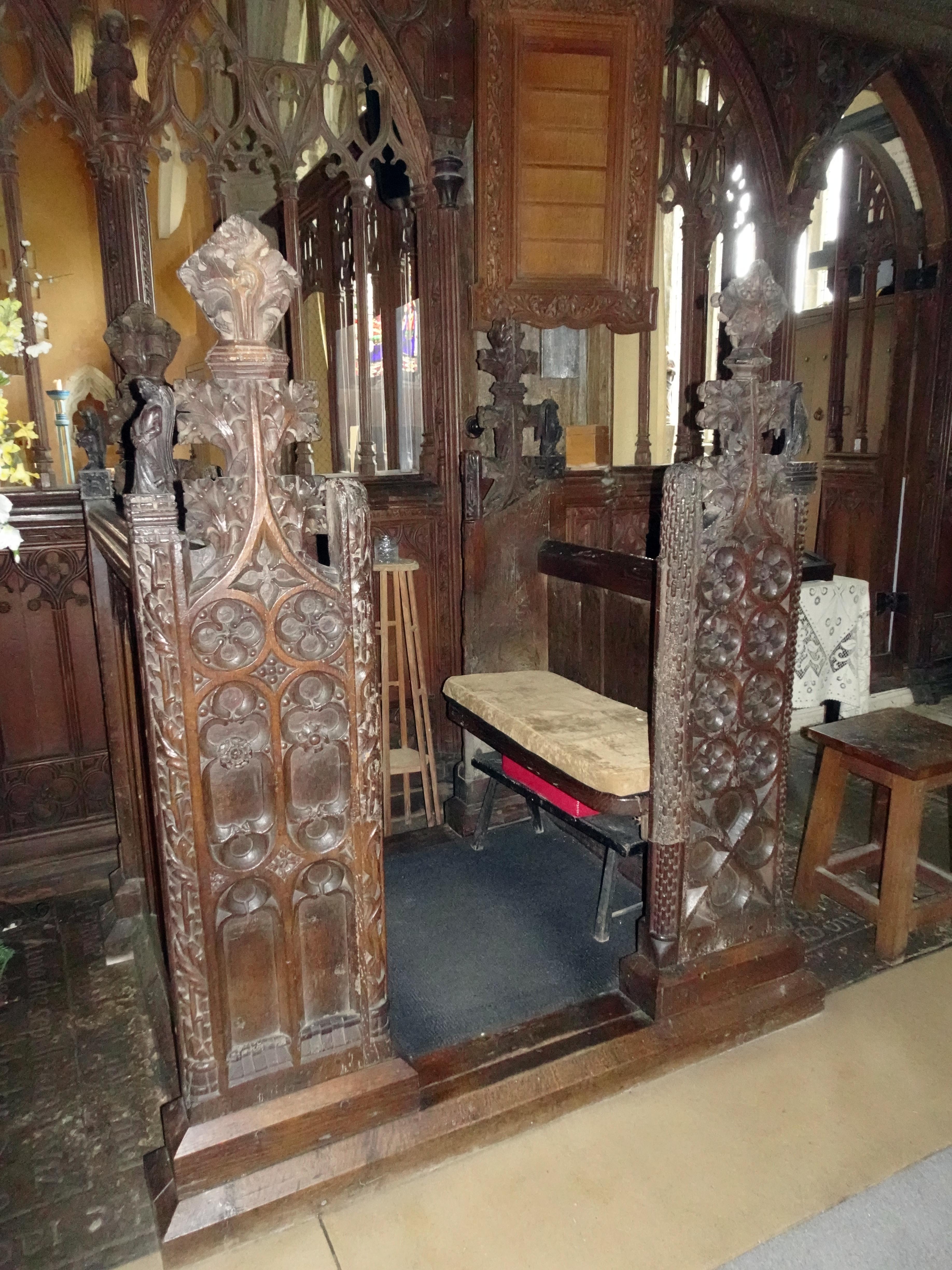
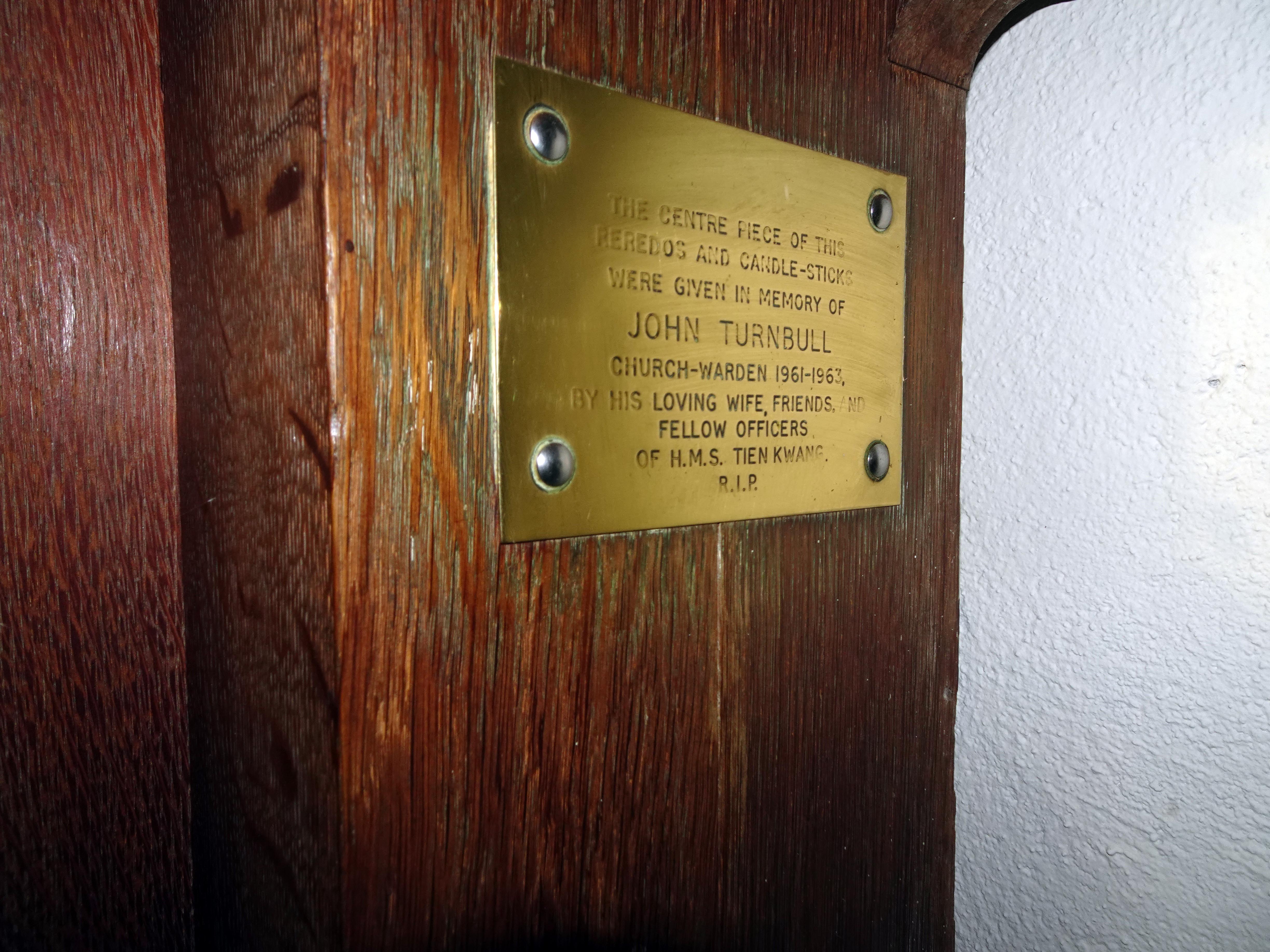
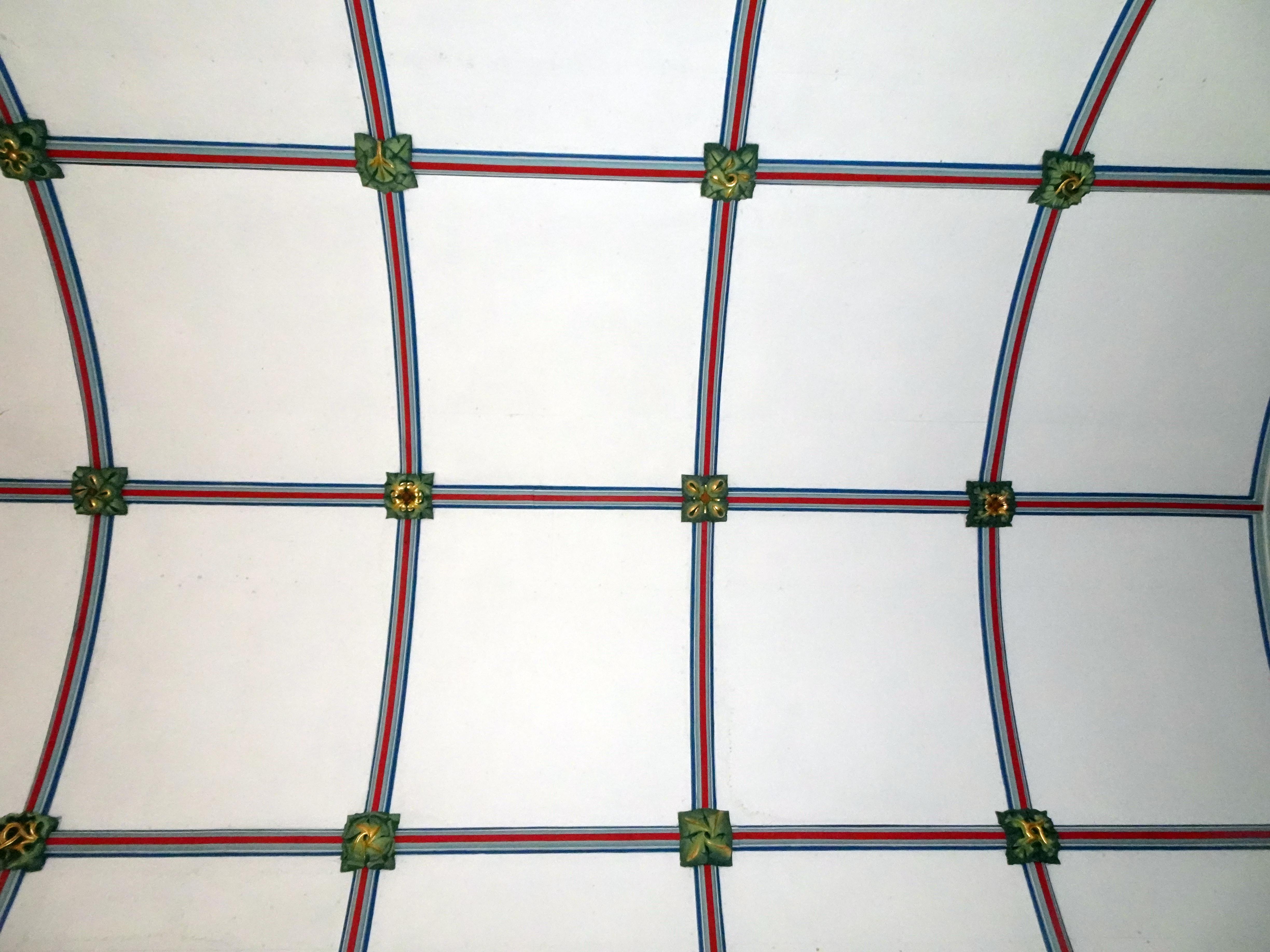
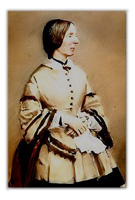
St. Michael’s was expanded as the wool trade increased in importance to Devon but also due to tin mining and eventually quarrying which took place in the area. It is mainly a 15th century structure and still retains its 15th century rood screen and a few examples of the original pews and woodwork. There is a newer reredo which now lies in the Lady Chapel after the chancel was renovated in 2001. It had a fascinatingly varied histor. It was erected in 1902 in remembrance of Caroline Lyon who had married Canon Percy Wise of Adelaide Cathedral in Australia. Sadly she died in Manila whilst travelling between Britain and Australia. Her architect brother designed this reredo for her. This is not the end of its fascinating story. Originally a Last Supper carving was supposed to fill the centre panel but was not completed and at temporary Christ Bound to the Pillar carving was used instead. But in 1963 this temporary centrepiece was was replaced by a carving incorporating the Altar Crucifix to commemorate John Turnbull. John and his wife had been living and working in Malaya in 1941 when it was captured by the Japanese and both were interred in brutal conditions for the entirety of the war. On their return to England after the war they settled in nearby Liverton and dedicated their energies to St. Michael’s church for the rest of their lives. I love the fact that even recent additions to the church architecture can have such interesting stories behind them.
|
|
|
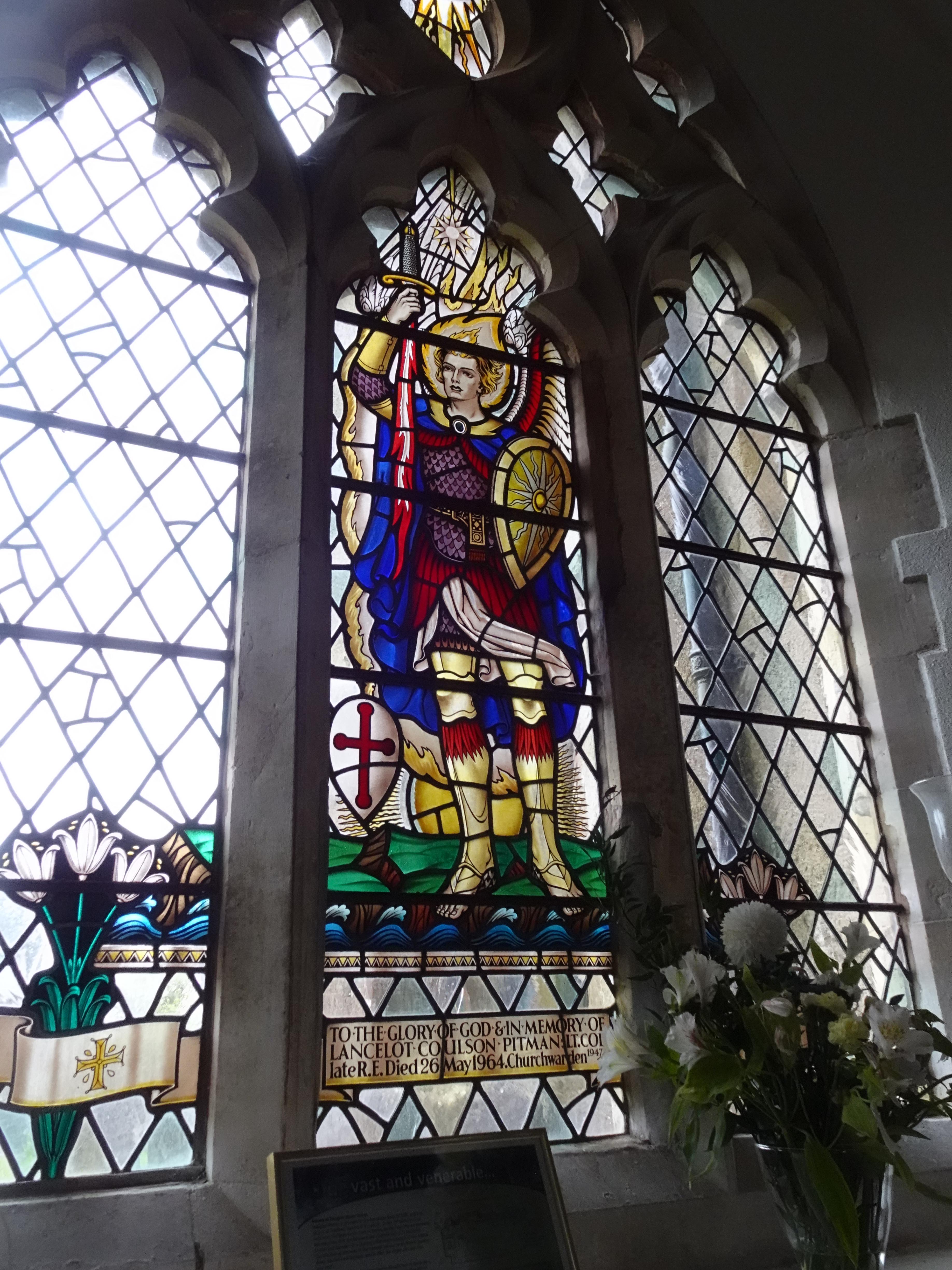
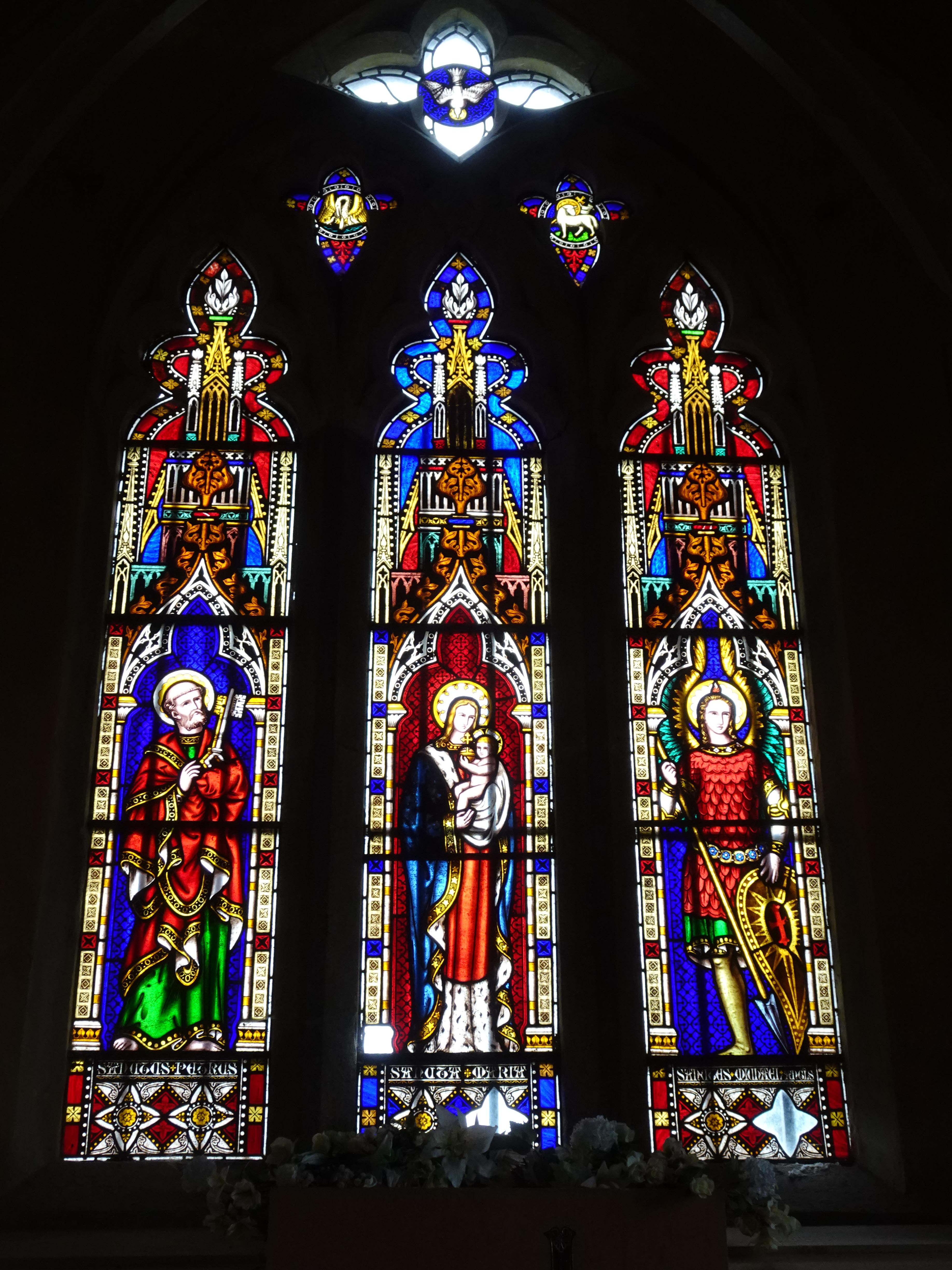
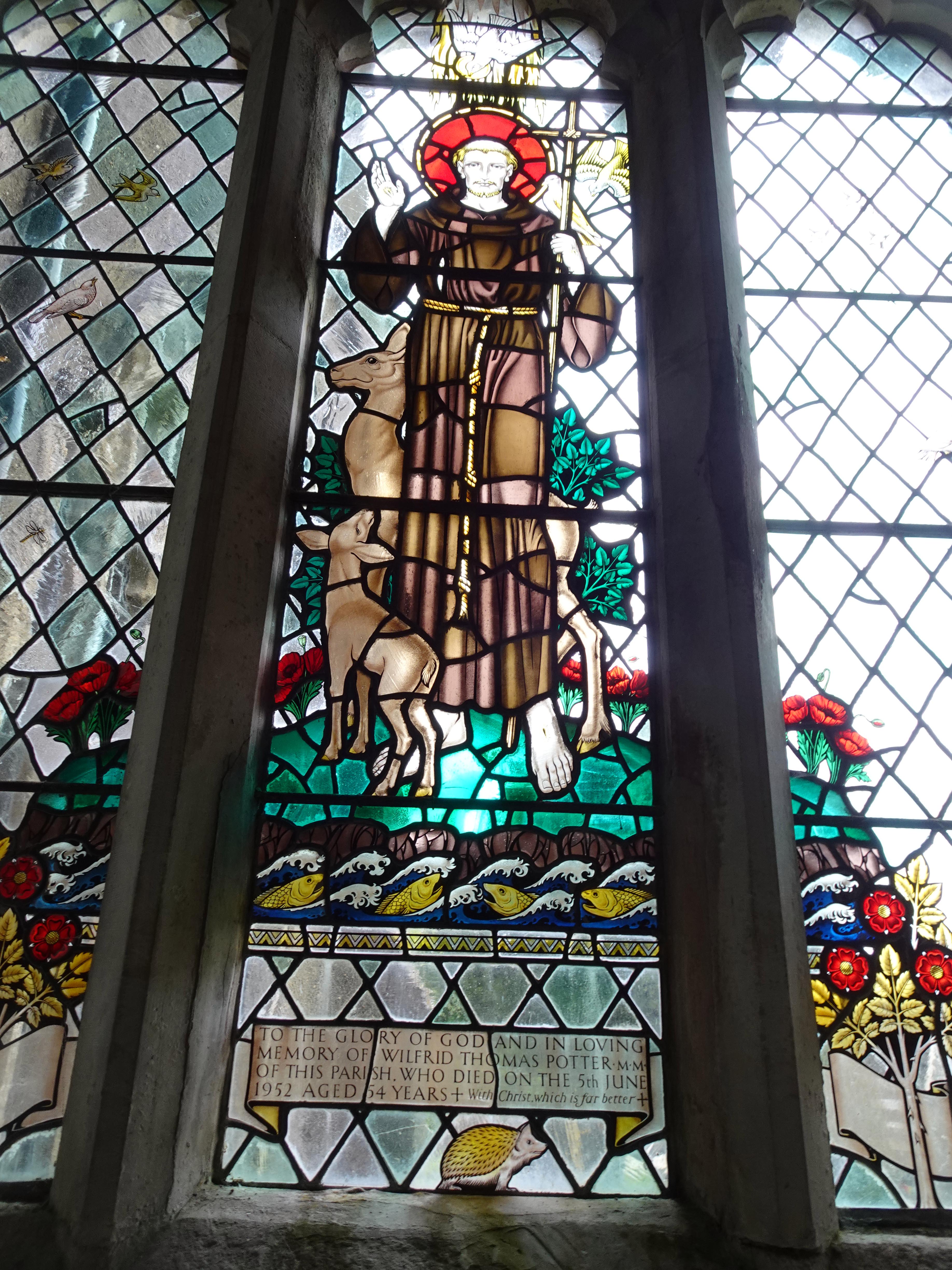
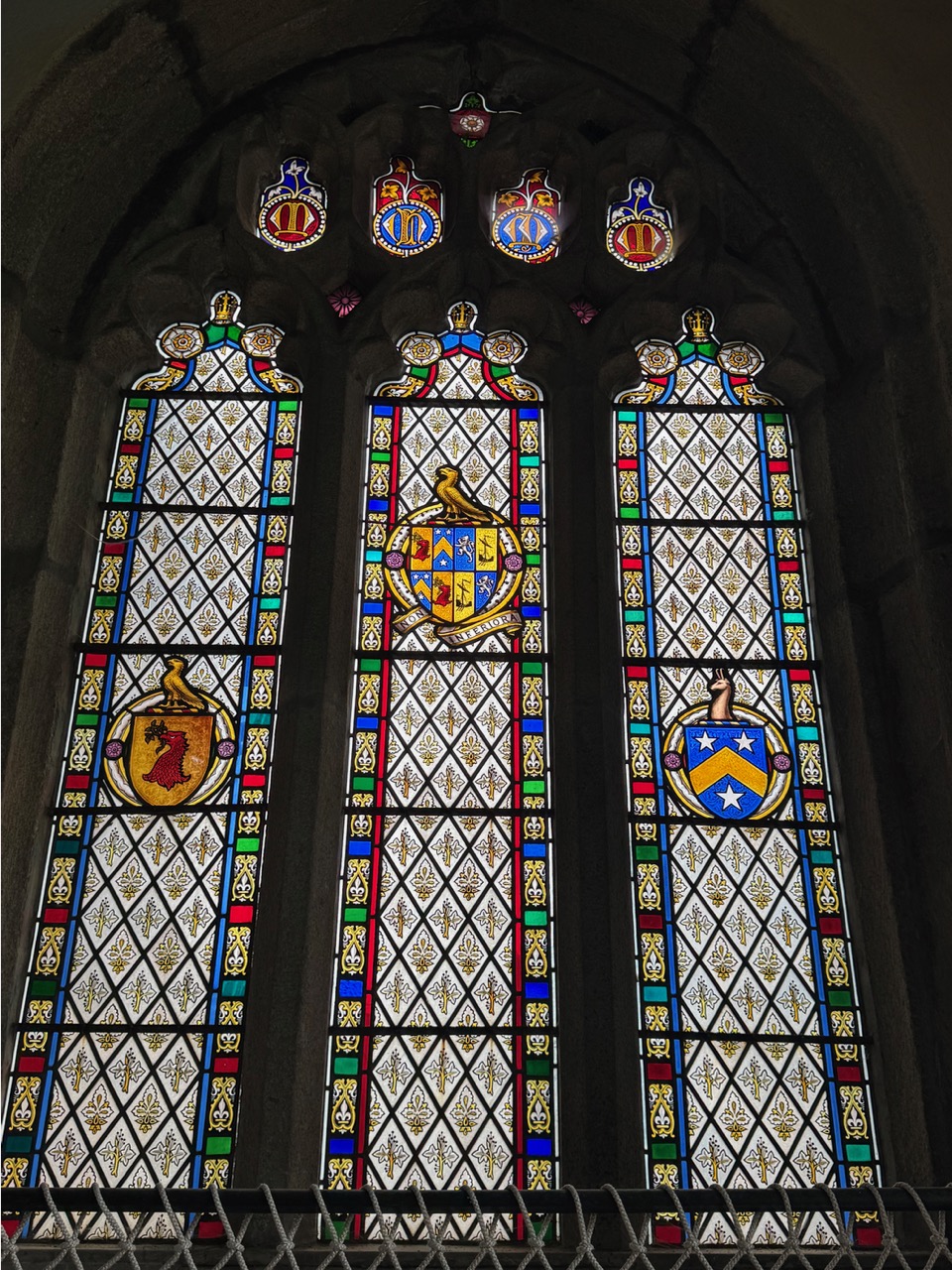
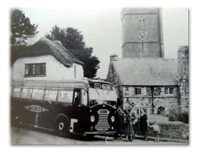
There is a beautiful stained glass window on the south wall dedicated to the parents of Elizabeth Divett who lived in Colsworthy in Liverton. The East Window has a newer stained glass window from the benefactor of Wilfred Potter of Haytor. He had actually been the founder of a local bus company called the Tor Bus Company which diversified from delivering coal to carrying passengers - using the same trucks but after having cleaned out the soot as best they could and inserted some wooden benches down the sides. They ran buses until 1963 and became something of a local institution.
|
|
|
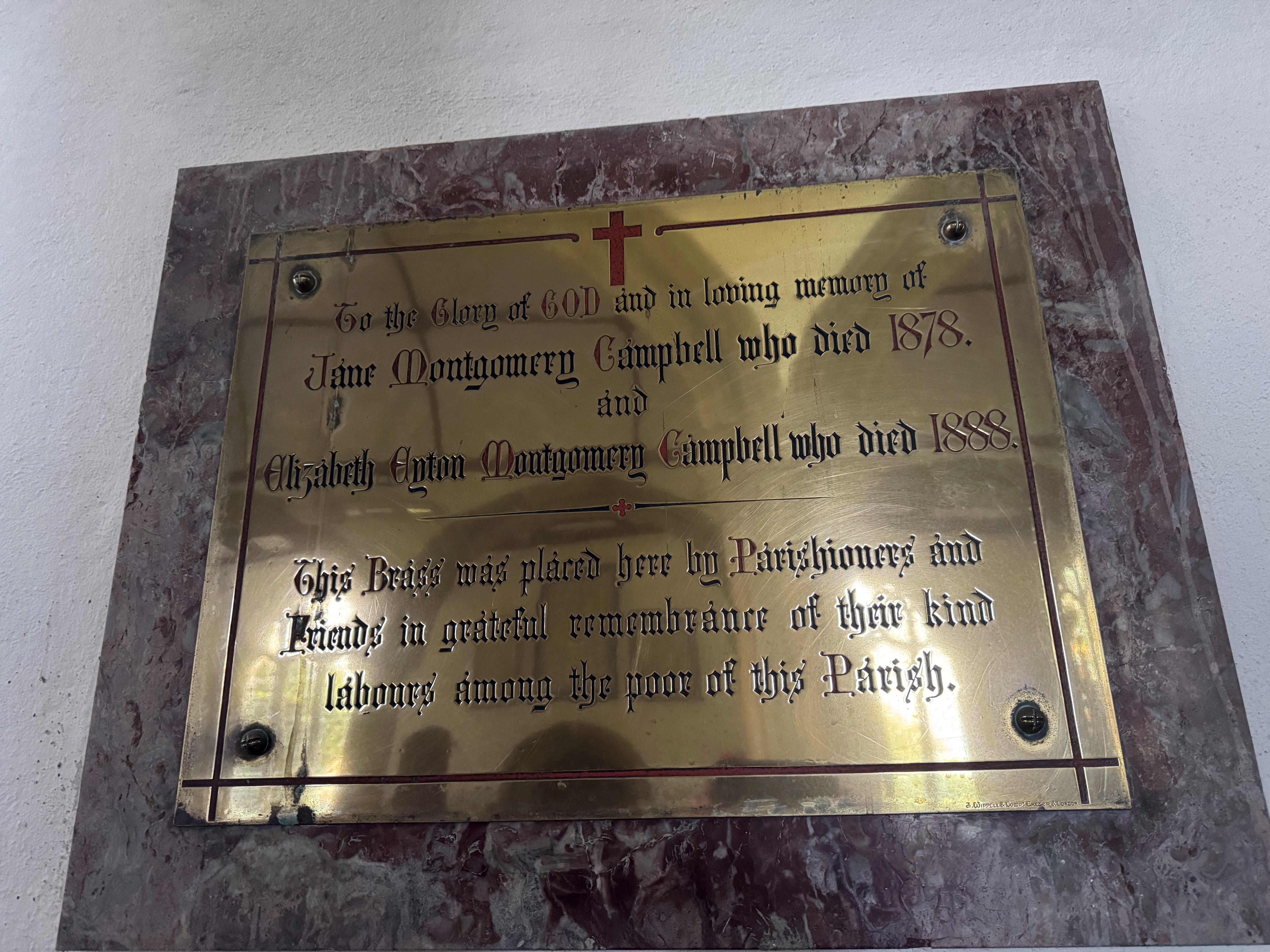
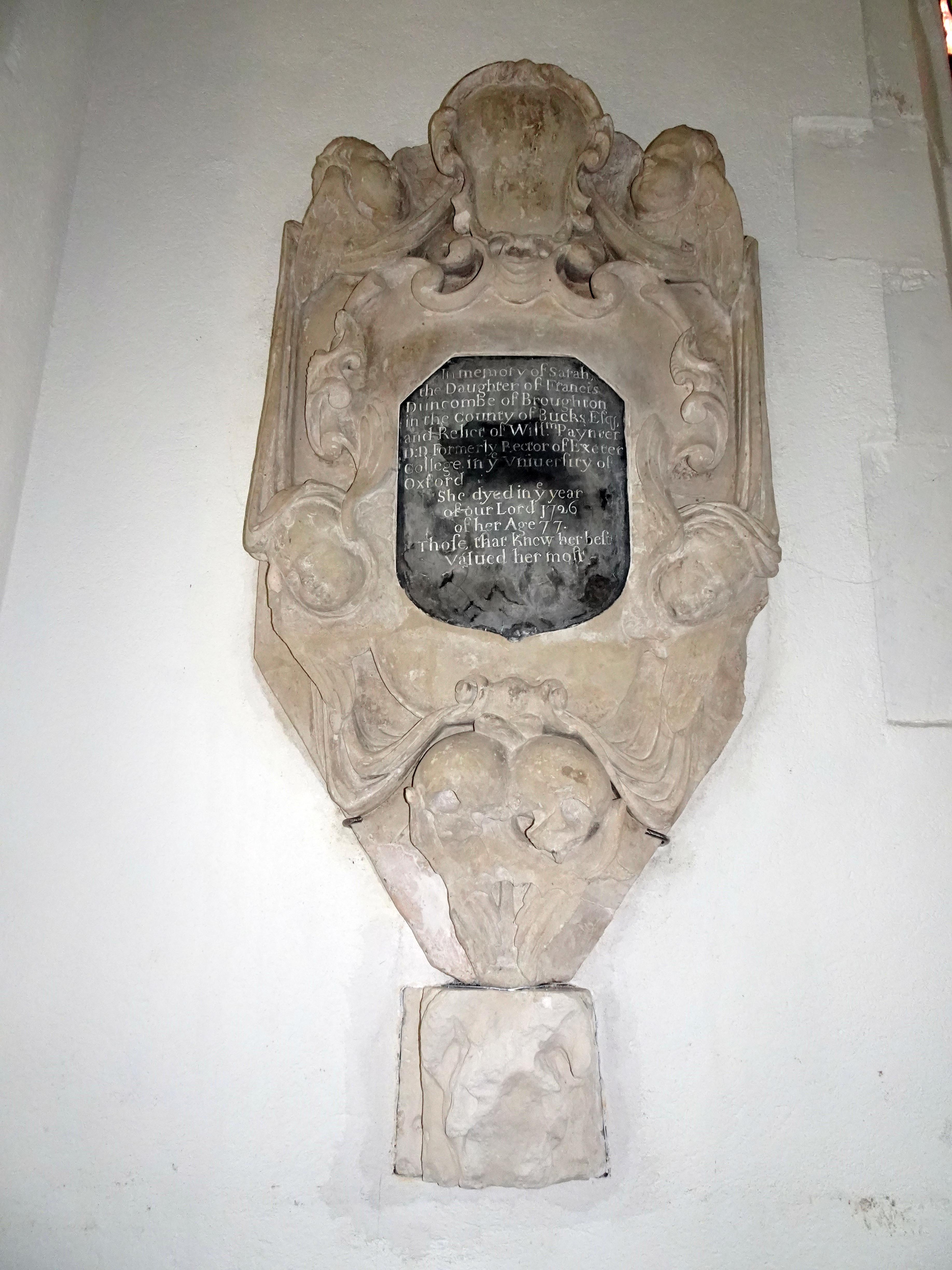
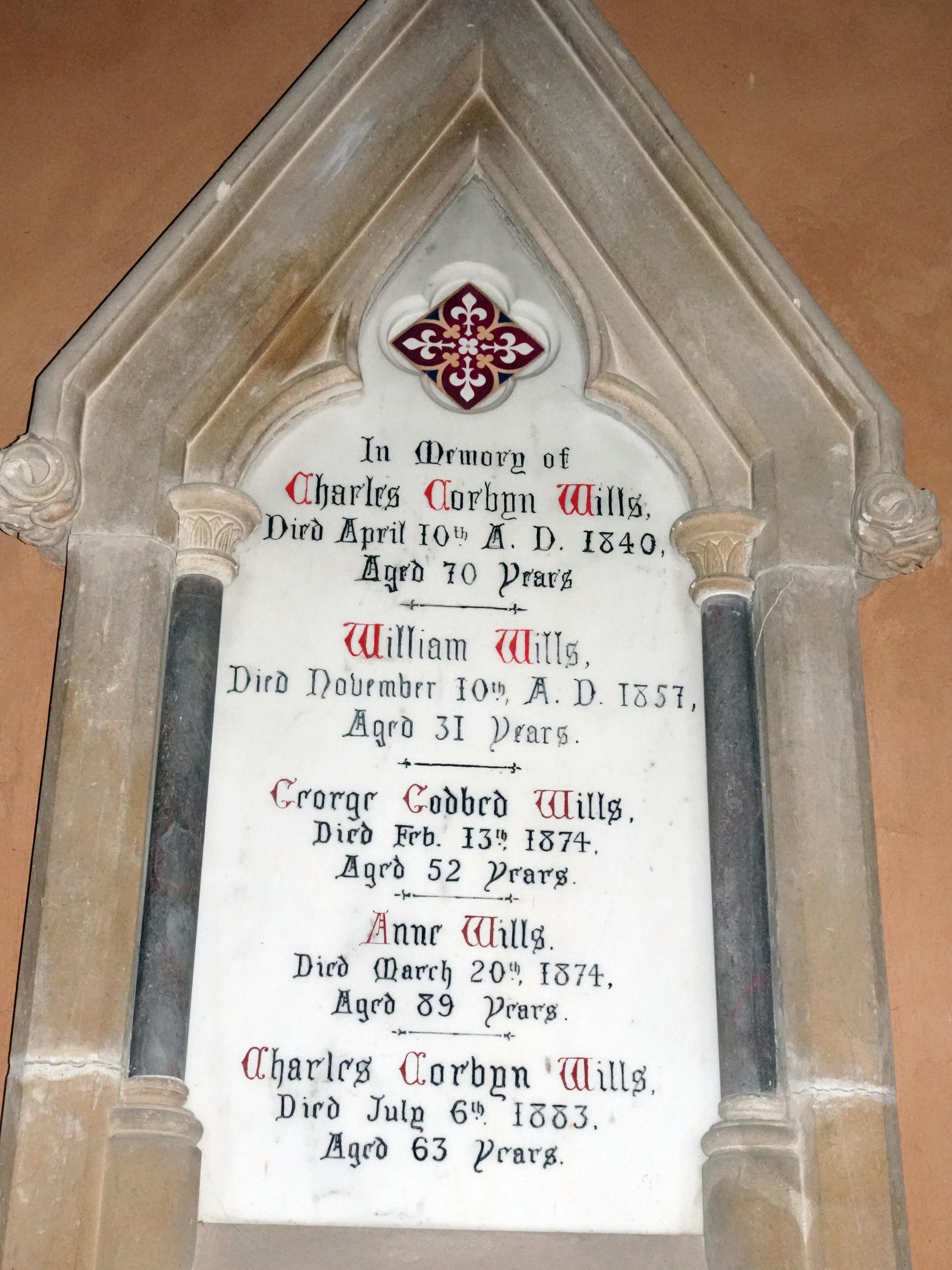
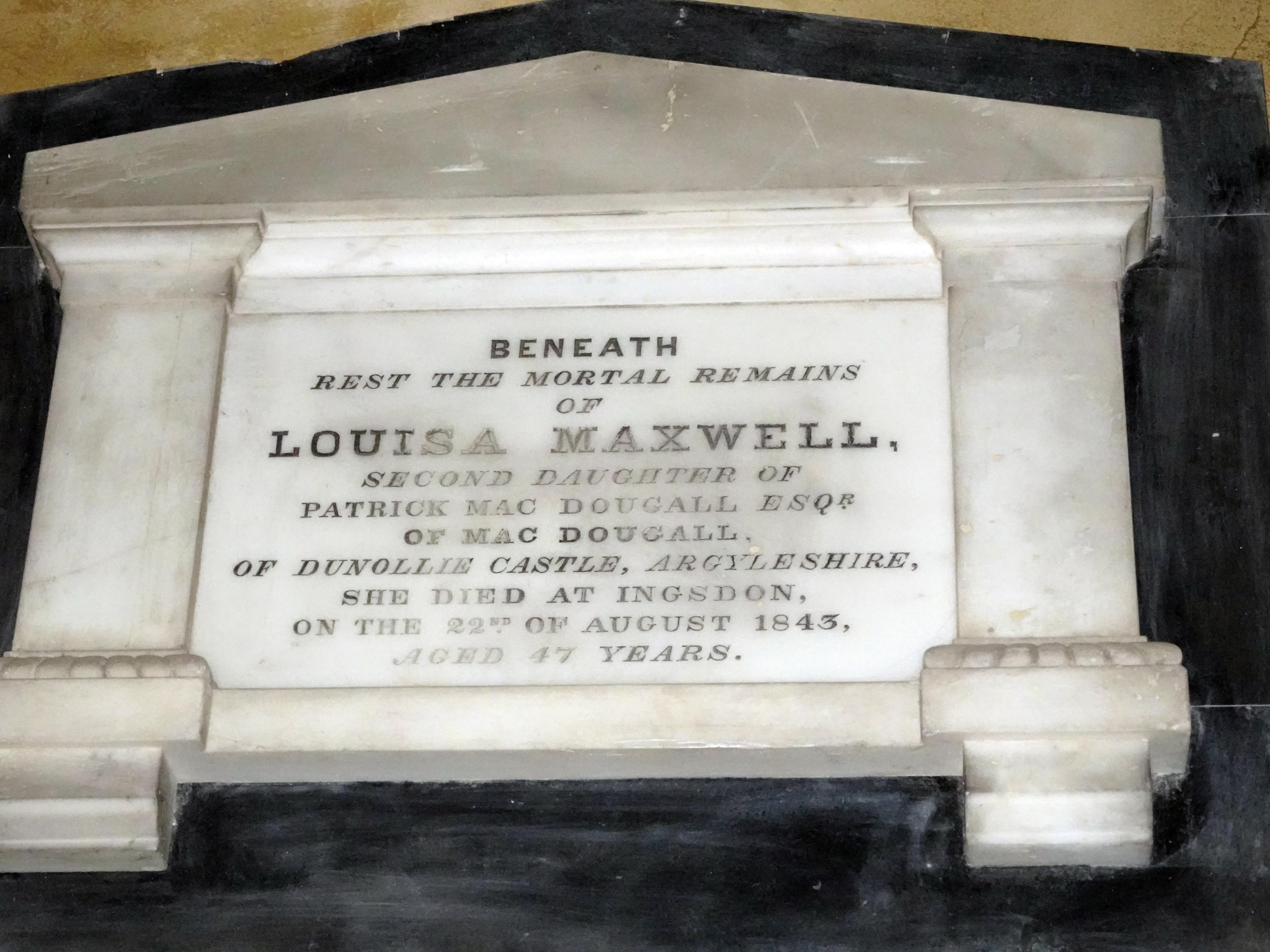
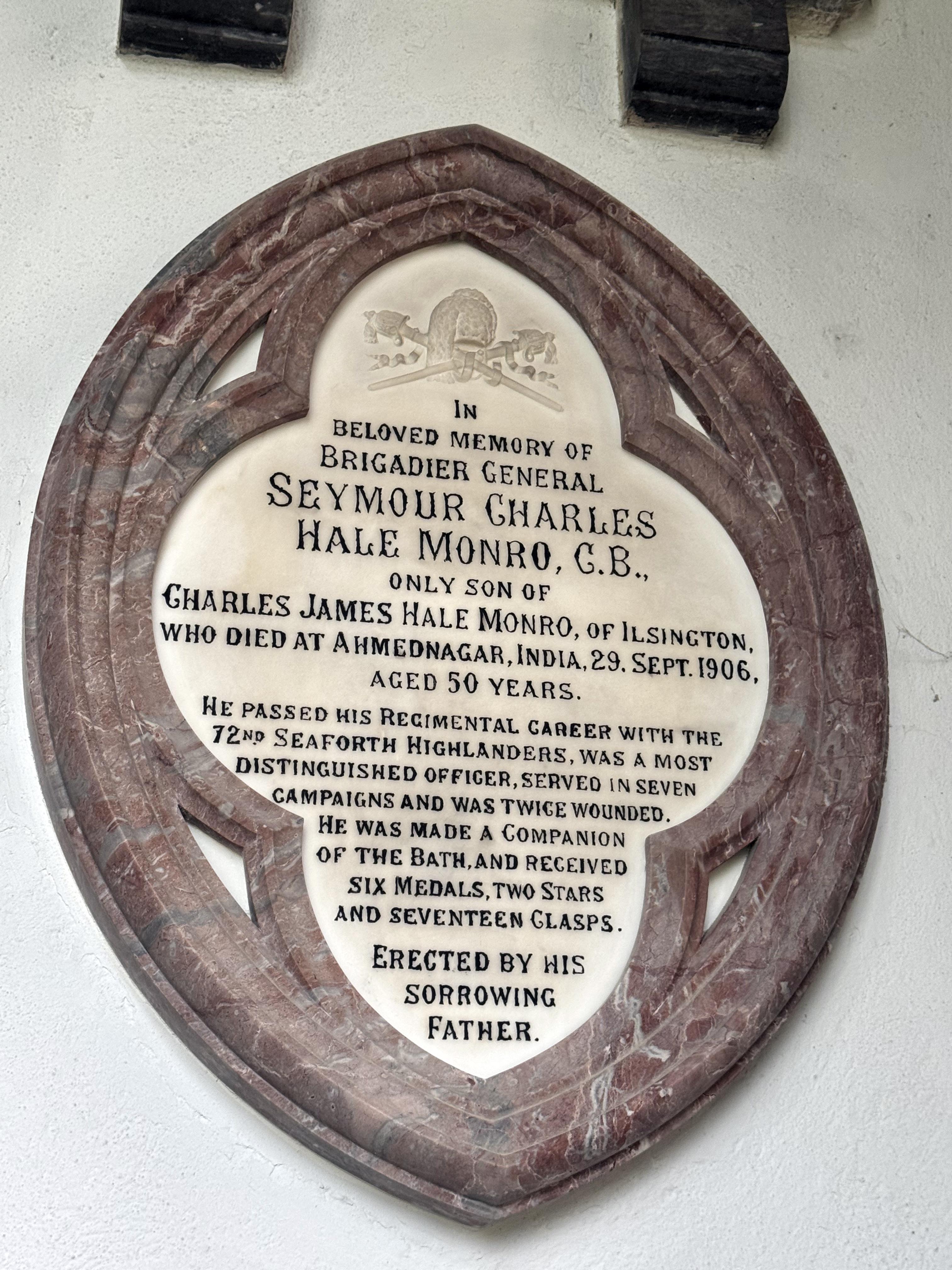
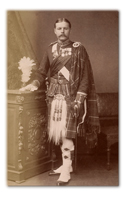
I was fascinated to find a strong link from Scotland to this remote Devon village. Perhaps the high moorland of Devon appealed to the Scots who seemed to settle here. One commemorated is Louisa Maxwell whose inscription says she as the second daughter of Patrick MacDougall Esquire of MacDougall, of Dunollie Castle, Argyleshire. She died at Ingsdon House in 1843 aged 47. She was the sister of Mary Jane Macdougall who married Charles Hale Monro. One of Charles’ sons is remembered as Seymour Vassall Hale Monro of the 78th Regiment of Highlanders who died in Poonah in 1853 at the age of just 21 He was the son of Charles Hale Monro. His nephew, son of Charles James Hale Monro, would go on to have a much longer military career which also though ended in India. Brigadier General Seymour Charles Hale Monro passed his regimental career with the 72nd Highlanders. He had a very busy military life indeed in the various North West Frontier campaigns of the late Victorian era and the Boer War. He died at Ahmednagar at the age of 50. It is interesting that these were both born and brought up in Devon and yet their Scottish identity and ancestry would see their professional army careers be dedicated to Highland regiments.
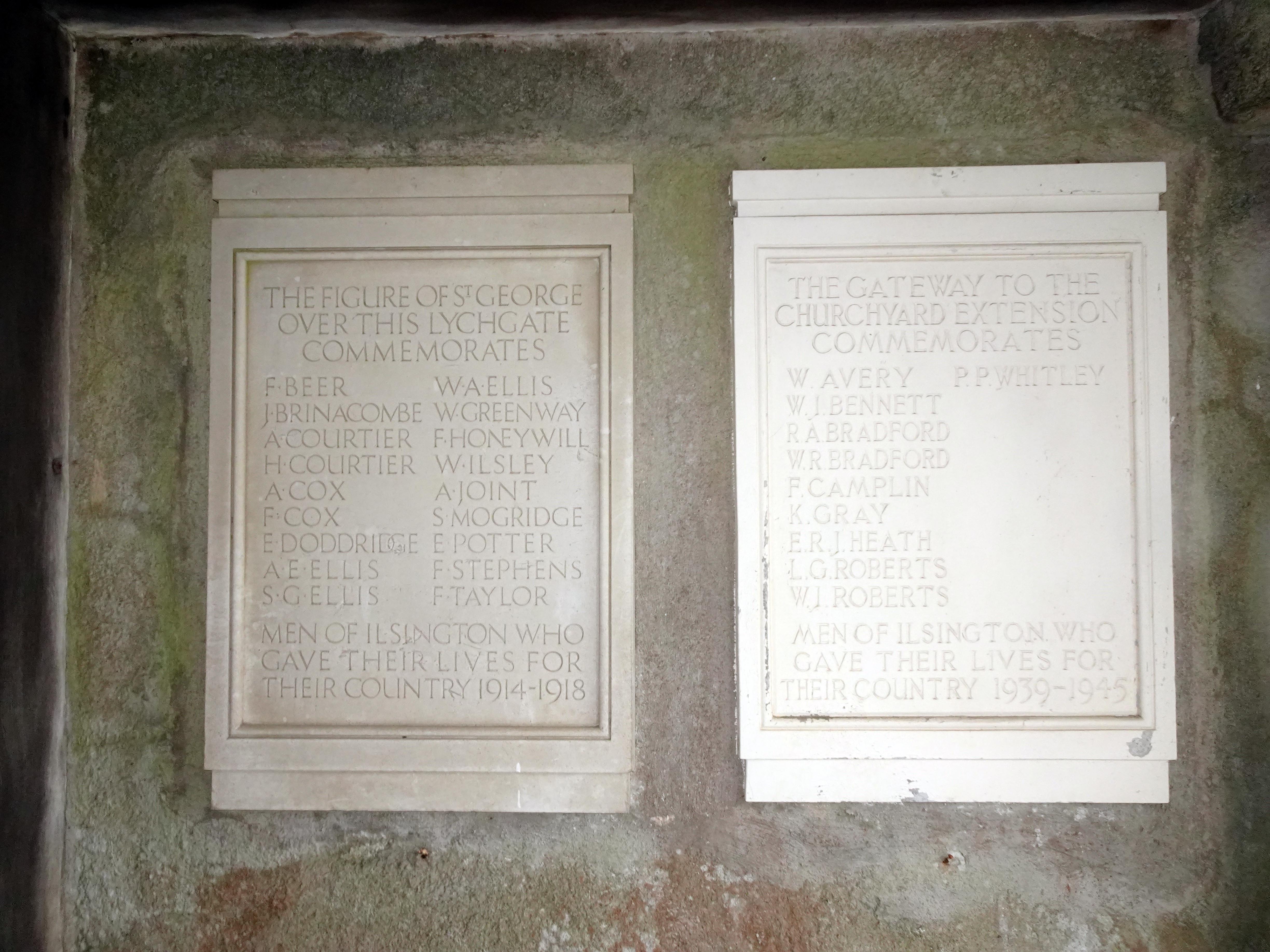
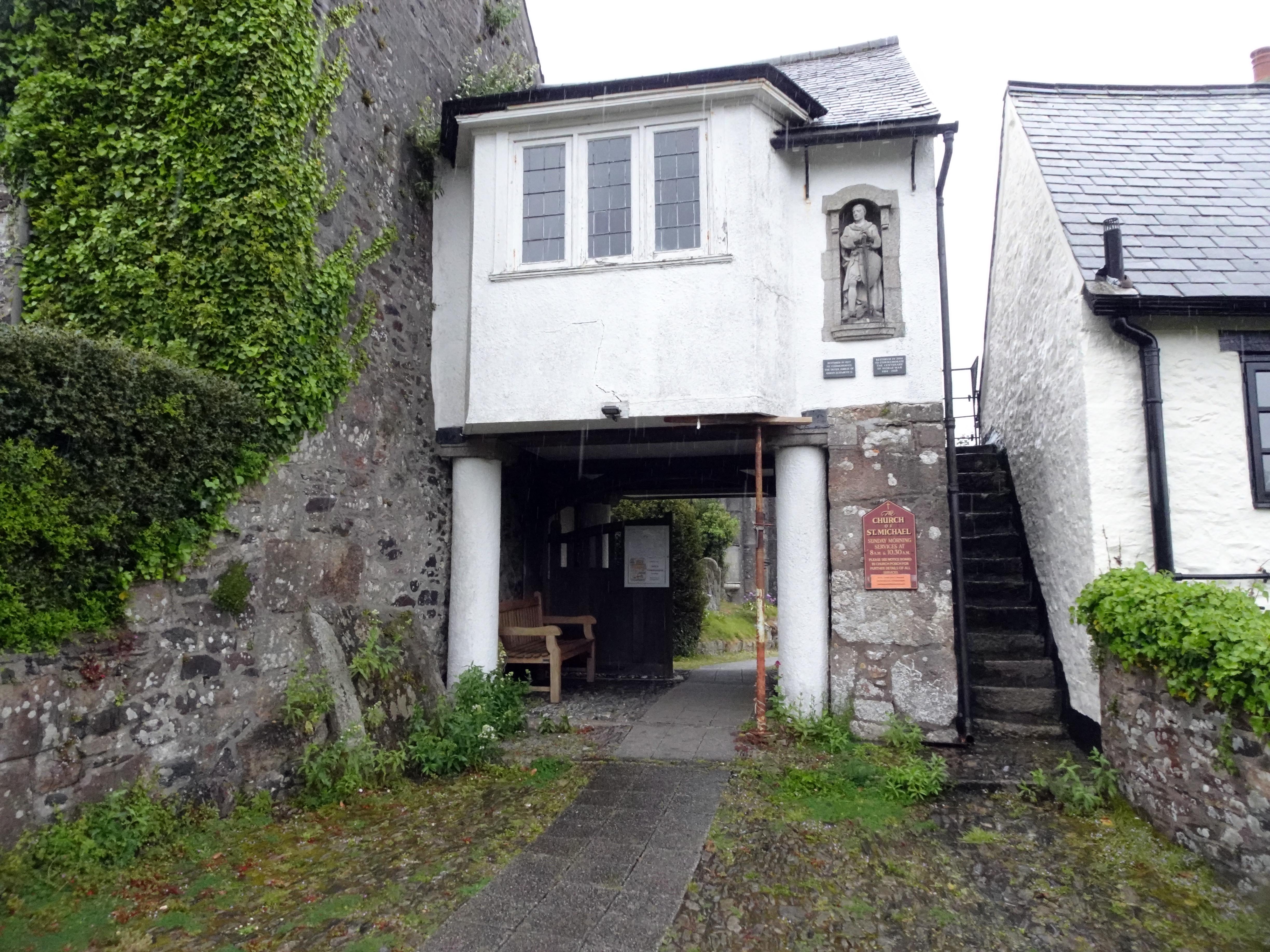
The rain had really set in by the time we left. But we could get a little cover from the old school building lych gate which also serves as one of the more interesting war memorials I’ve come across. St Michael is very much the warrior’s saint and there is a statue of him on the outside of this building. But the little room perched above the lychgate has had a more dramatic past than its mild appearance suggests. In the 1630s it served as the parish schoolroom, where Hannibal Corbyn attempted to educate thirty local boys in a space that was clearly held together more by optimism than masonry. On a wet September morning in 1639, with seventeen boys present and the class preparing to break for dinner, a woman passed through the gate below and let it slam in the wind. That single bang was enough to finish the job the weather had started. The entire structure gave up the ghost in one theatrical movement: walls outwards, roof straight down, nothing left standing where it ought to have been. The boys were flung in all directions. One ran headlong into the only surviving chimney; another found himself pinned under the fallen roof; and a third - young Humphrey Degon - vanished entirely. After a frantic count and a search through the rubble, Humphrey was discovered apparently lifeless, only to revive suddenly and sprint home to Smallacombe farm, shaken but intact. Remarkably, no one was seriously hurt.
We passed Smallacombe Farm on the climb back towards Haytor Down and allowed ourselves a brief smile for the boy who once staggered out of that collapsed schoolroom and ran home across these same fields to his home here. From the farm the path rose sharply, and we worked our way up to the old horse‑drawn tramway before turning back towards the car, the rain settling in for the afternoon. Even so, the weather never managed to blunt the day. The moor in its wet, restless mood had a character entirely its own, the sort of landscape that seems to remake itself with every change in the sky. Two days later we would return and find it transformed again - so completely altered in light and atmosphere that it might as well have been another place altogether.
|