The pulpit at the Parish Church of St Peter, St Paul & St Thomas of Canterbury is one of the finest medieval furnishings in any Devon church, and tradition firmly associates it with Lady Margaret Beaufort, mother of Henry VII. Her patronage in the region was extensive — she held manorial interests in parts of Devon and supported a number of parish churches through gifts of liturgical furniture. At Bovey Tracey, she is said to have given not only the pulpit but also the font and the medieval screen, a trio of late‑15th‑century works that still define the character of the interior. Whatever the precise circumstances of the gift, the pulpit’s quality and date fit comfortably within her known pattern of religious patronage.
Carved around 1450, the pulpit is a spectacular survivor: stone‑built, painted and gilded, and later recoloured in a way that respects the medieval spirit without attempting to recreate it artificially. It was not the first pulpit in the church — preaching platforms existed in some parishes from early days — but it is certainly one of the best. Five‑sided and richly decorated, it rises from its base like a small architectural object in its own right. The carving is remarkable: soft, organic foliage glides across the stone, curling and unfurling with a natural ease that seems almost to move in the light. It is the kind of carving that feels alive, as if the foliage were gently entwining itself around the priest’s words and settling on the congregation in a quiet shimmer of meaning.
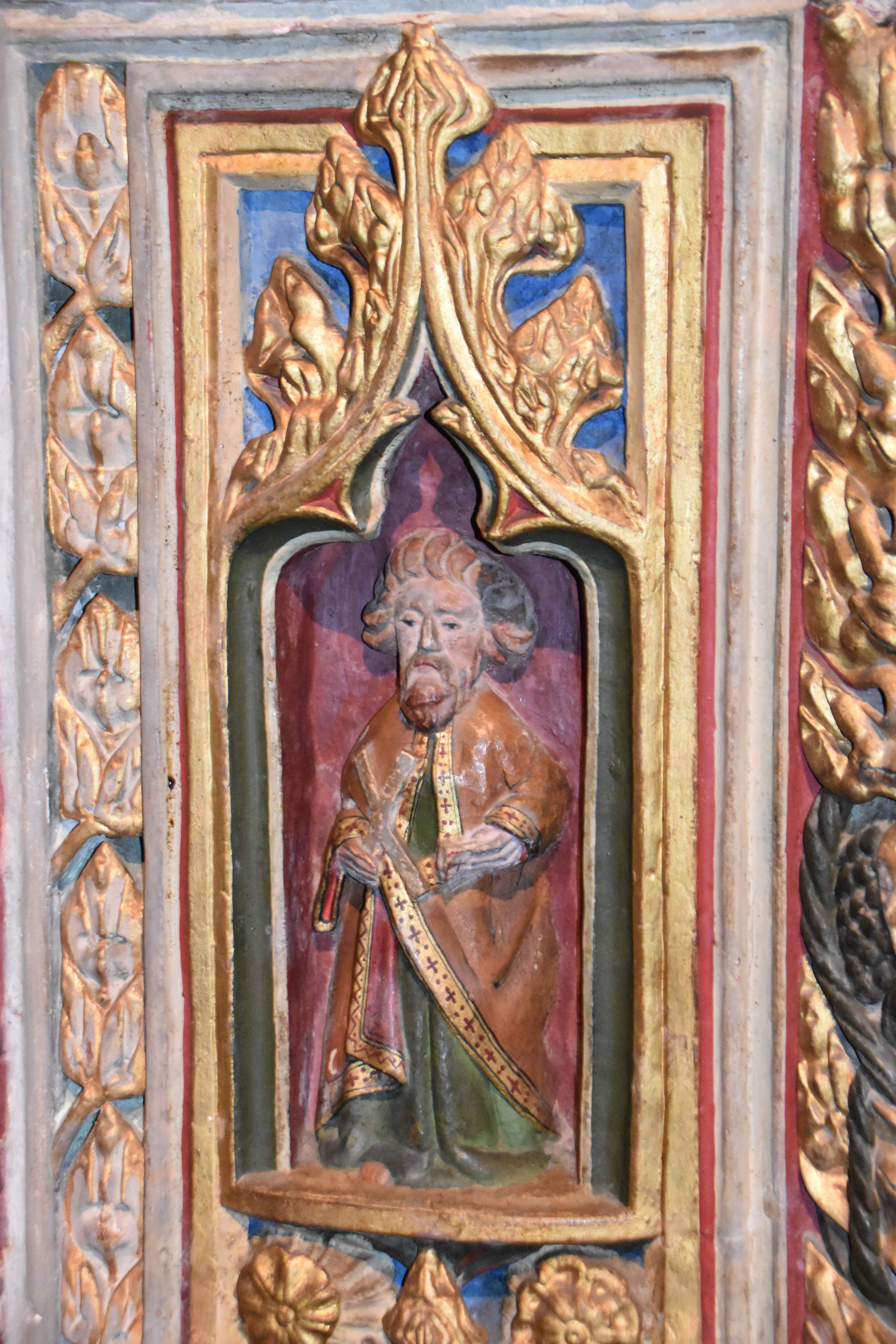
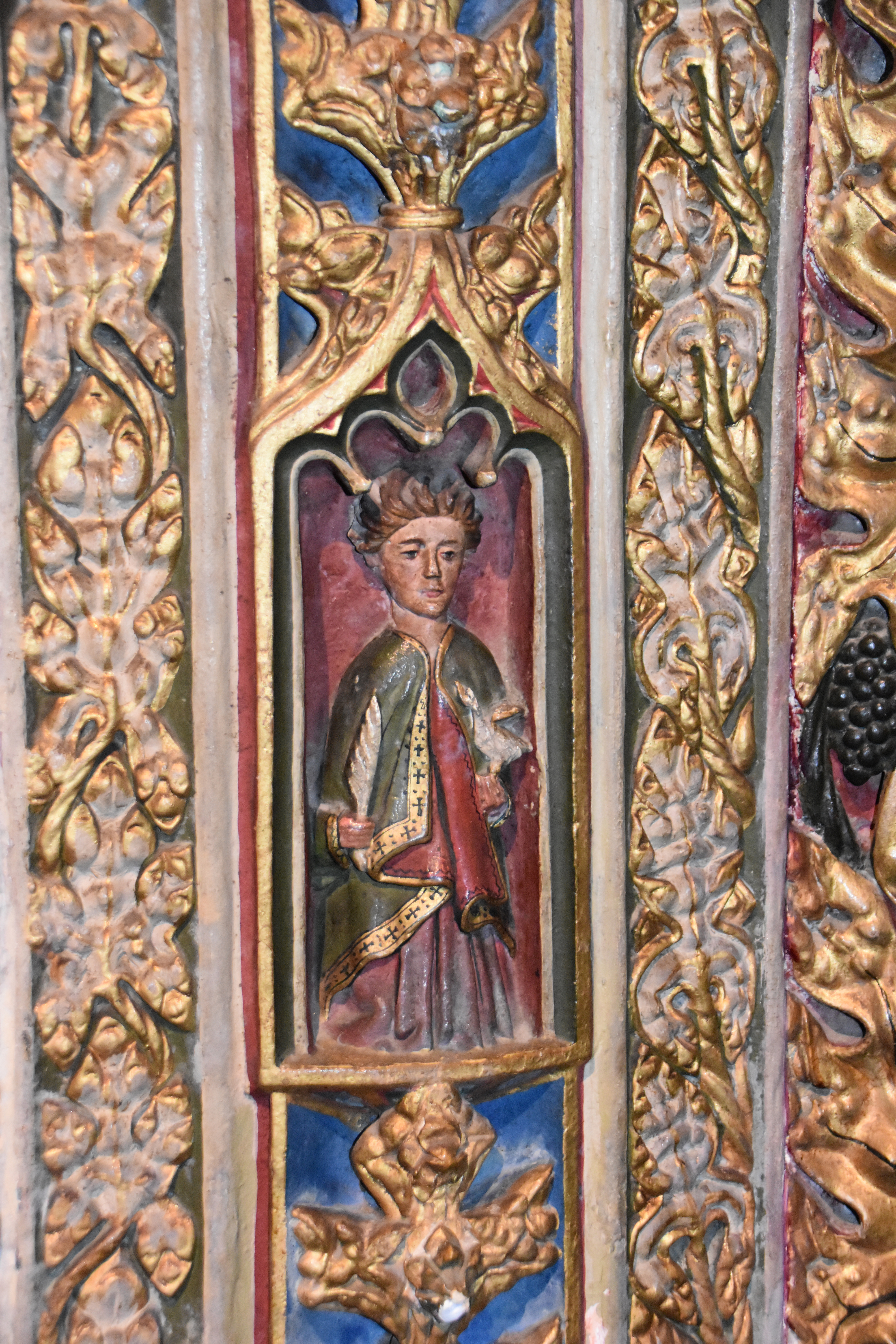
The niches between the foliage once held painted figures, and several still contain small statuettes. Two of the Evangelists survive: St John with his eagle — which, as one amused observer has noted, looks rather more like a duck — and St Matthew accompanied by a wonderfully tubby little angel. These touches of humanity and humour are typical of late‑medieval carving, where the sacred and the everyday sit comfortably side by side. Above them, the “naked vaulting” of the pulpit canopy — its ribs exposed without later panelling — adds a sense of architectural delicacy, as though the pulpit were a miniature chapel in stone.
The pulpit’s survival through the Reformation and the Civil War is itself a story. Many churches lost their medieval pulpits during the 16th and 17th centuries, either through iconoclasm or neglect. Bovey Tracey’s endured, perhaps protected by the same parishioners who hid the brass eagle lectern and preserved the royal arms during the Commonwealth. By the time Victorian restorers arrived in the 19th century, the pulpit was already regarded as a treasured medieval feature, and it was carefully retained and sympathetically recoloured.
Its significance is not only artistic but liturgical. From this pulpit, rectors continued the tradition of preaching in English — a practice that had taken root in the late Middle Ages and became central to Anglican worship after the Reformation. Sermons delivered from this carved stone platform would have shaped the religious understanding of generations of parishioners, offering teaching, explanation and encouragement in a form accessible to all. In that sense, the pulpit is not just a decorative object but a witness to the long continuity of pastoral care in the parish.
Lady Margaret Beaufort’s connection gives the pulpit an additional layer of meaning. As a major landholder and one of the most influential women of her age, she used her wealth to support churches, colleges and charitable foundations across England. Her gifts were often practical — fonts, pulpits, screens — objects that shaped the everyday life of worship. At Bovey Tracey, her legacy is still visible in the stonework, the tracery and the quiet dignity of the pulpit she is said to have given. It stands today not only as a work of craftsmanship but as a reminder of the parish’s link to the wider story of late‑medieval devotion and the early Tudor world.