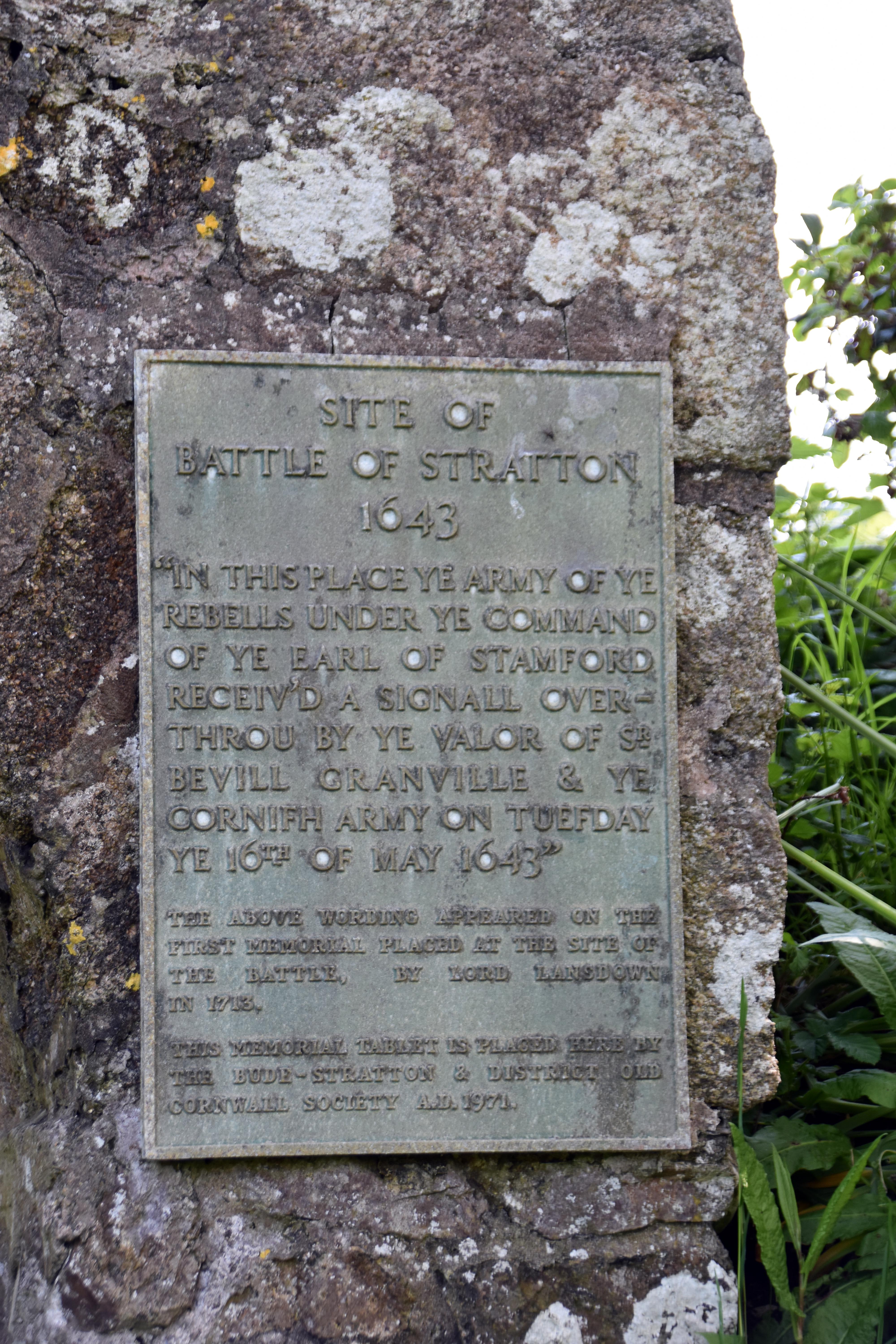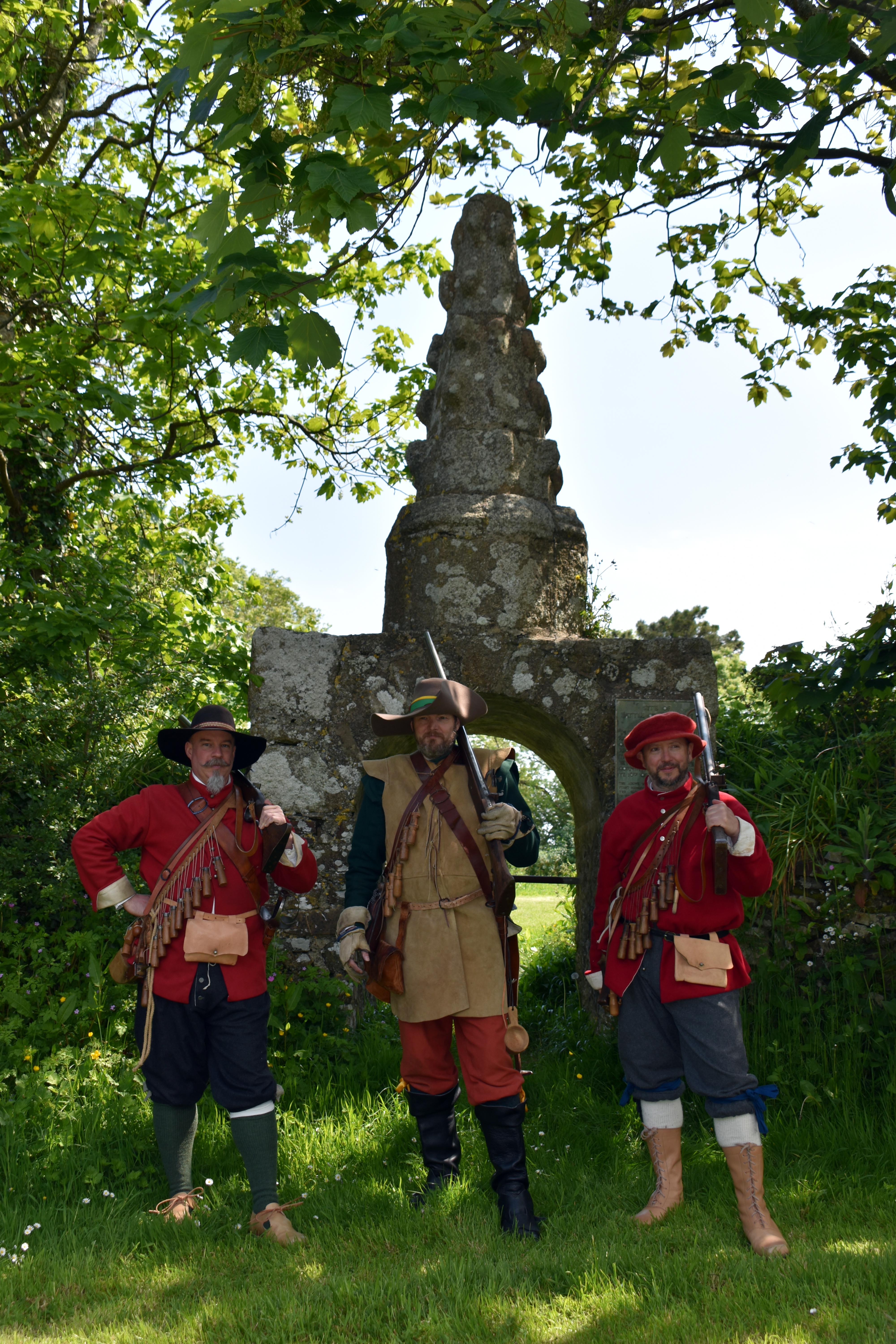
The Stratton Memorial stands on the ridge of Stamford Hill, marking the site of the Royalist victory of 16 May 1643. It was erected in 1713 by Lord Lansdown, the grandson of Sir Bevil Grenville, as a deliberate act of family commemoration and political statement. The monument was intended to fix the Grenville name to the landscape and to record the role of Sir Bevil and the Cornish infantry in the battle. Its construction seventy years after the event makes it one of the earliest purpose‑built war memorials in England, predating the widespread Victorian habit of battlefield commemoration by more than a century.
The memorial is a tall ashlar obelisk set on a square base, positioned close to the ground where the Royalist columns converged during the final phase of the battle. Lord Lansdown’s inscription records the date of the action and identifies Sir Bevil Grenville as the central figure in the Royalist assault. The choice of site and the wording of the inscription were both intentional. The Grenville family wished to emphasise the disciplined advance of the Cornish foot, the collapse of the Parliamentary line and the moment when the Royalist commanders met near the summit. The monument therefore serves as a fixed point in the landscape, anchoring the family’s version of the battle to the physical ground.
The Stratton Memorial is closely linked to another early battlefield monument raised by the same family: the Lansdown Hill memorial near Bath, erected in 1720 to mark the spot where Sir Bevil Grenville was killed on 5 July 1643. Taken together, the Stratton and Lansdown monuments form one of the earliest pairs of battlefield memorials in the country, both built long before the idea of national war memorials became common. They represent a rare early example of deliberate battlefield marking, created not by the state but by a family intent on preserving its role in the Civil War.
The 1713 Stratton monument also reflects the political climate of the early eighteenth century. The Grenvilles were prominent Tory figures, and the memorial served to underline their loyalty to the Stuart cause and their long‑standing regional influence. By placing a permanent structure on Stamford Hill, Lord Lansdown ensured that the Royalist victory and the Grenville name would remain visible in a landscape that had otherwise returned to agricultural use. The monument’s survival into the present day provides one of the clearest physical links to the battle and to the early development of battlefield commemoration in Britain.
Today the Stratton Memorial remains a prominent feature on the ridge, standing above the fields where the Royalist columns advanced. Its date of construction makes it one of the oldest surviving war memorials in England, and its connection to the Lansdown Hill monument places it within a small group of early eighteenth‑century structures that record specific actions of the Civil War. It continues to mark the ground of the 1643 battle and preserves the Grenville family’s account of the events that took place on Stamford Hill.