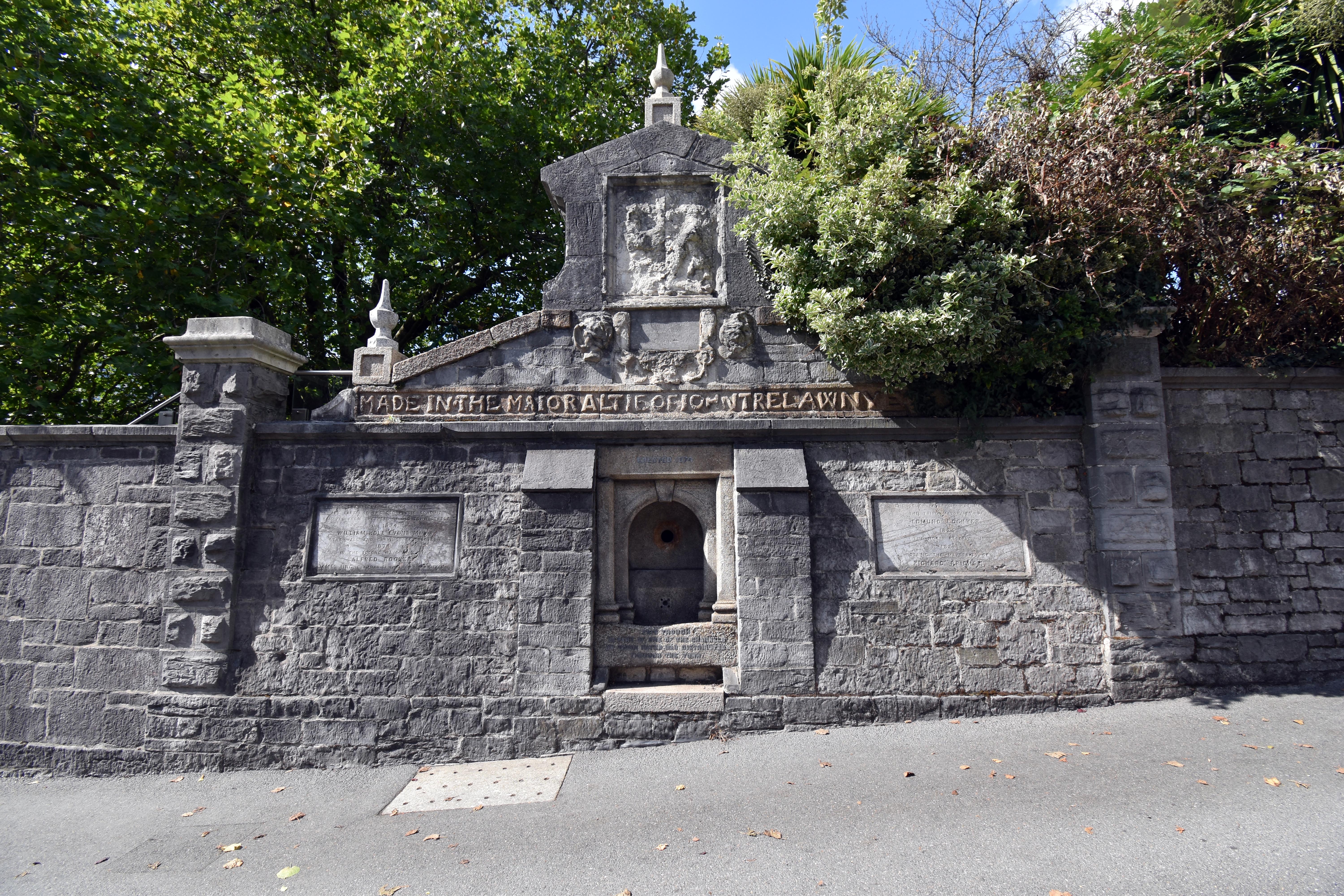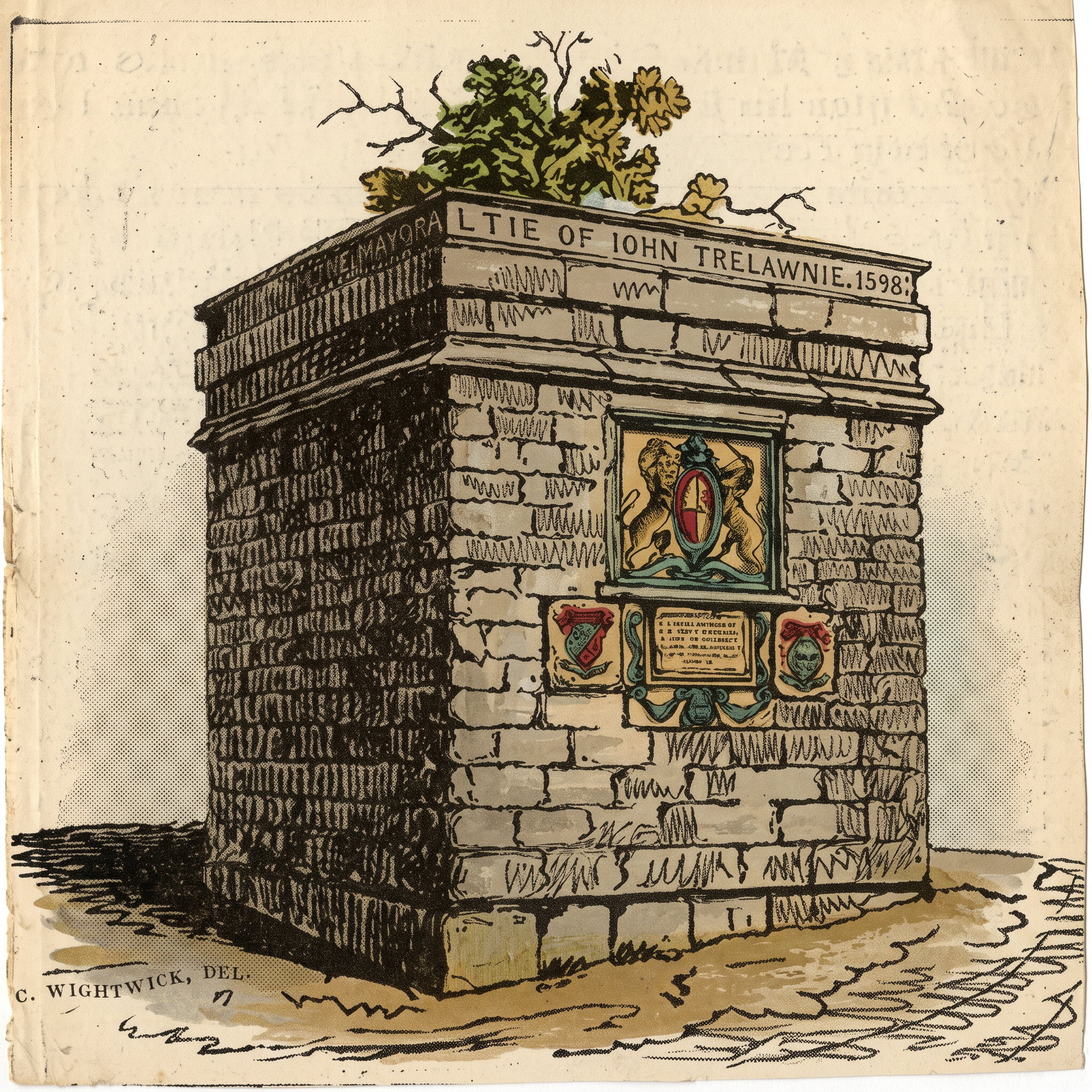
The Trelawnie Conduit takes its name from the inscription “Made in the Maioraltie of John Trelawnye 1598”. It originally stood near Old Town Gate and distributed water to the inhabitants of Plymouth.
A conduit was a public water outlet. Water from a leat, spring or stream was carried to a pipe from which people filled buckets and other containers. It was then carried home for drinking, cooking, washing and cleaning. Conduits remained necessary because the water supplied to Plymouth was not initially piped into individual properties.
A conduit had existed near Old Town Gate before the completion of Plymouth Leat. It was supplied by a stream flowing from the area around Glanville Street. After water from the River Meavy reached Plymouth, the leat supplemented this local supply.
Work was undertaken on the conduit during the mayoralty of John Trelawnye in 1598. Its appearance at that date is unknown. The inscription recording Trelawnye’s mayoralty was later incorporated into a rebuilt conduit, but it is not known whether the stones came from an earlier version of the same structure or from elsewhere.
The conduit was completely rebuilt in 1671. The new structure was approximately eight feet square and eight feet high, constructed from limestone and left open at the roof. A doorway provided access to the water pipe inside, which was later fitted with a tap.
The rebuilt conduit displayed the arms of Plymouth and Sir Francis Drake. An inscription recorded that Drake had first brought the water into Plymouth and that the conduit had been rebuilt during the mayoralty of William Cotton in 1671. The stones bearing the earlier Trelawnye inscription were placed around the upper part of the building.
Water could be collected from the conduit without charge. Its operation depended upon the maintenance of Plymouth Leat and the channels and pipes carrying water through the town. Any interruption to the leat reduced the amount available at its public outlets.
The conduit ceased operating in 1827 following the construction of Drake’s Place Reservoir and the introduction of iron pipes. It was dismantled during the 1830s, but objections to its destruction led to the preservation of its decorated frontage and inscriptions.
The surviving masonry was incorporated into the wall of Drake’s Place Reservoir. In 1874 it was adapted as a fountain supplying water to people and horses travelling up North Hill. The Trelawnye inscription remains there, although the conduit itself originally stood near Old Town Gate.