Most visitors associate Tintagel primarily with King Arthur, yet during the Middle Ages it was arguably even more closely connected with the legend of Tristan and Isolde. The relationship between the castle and the famous lovers was not accidental. Much of what survives at Tintagel today reflects a deliberate attempt by Richard, Earl of Cornwall, to associate himself with some of the most celebrated Celtic legends of his age.
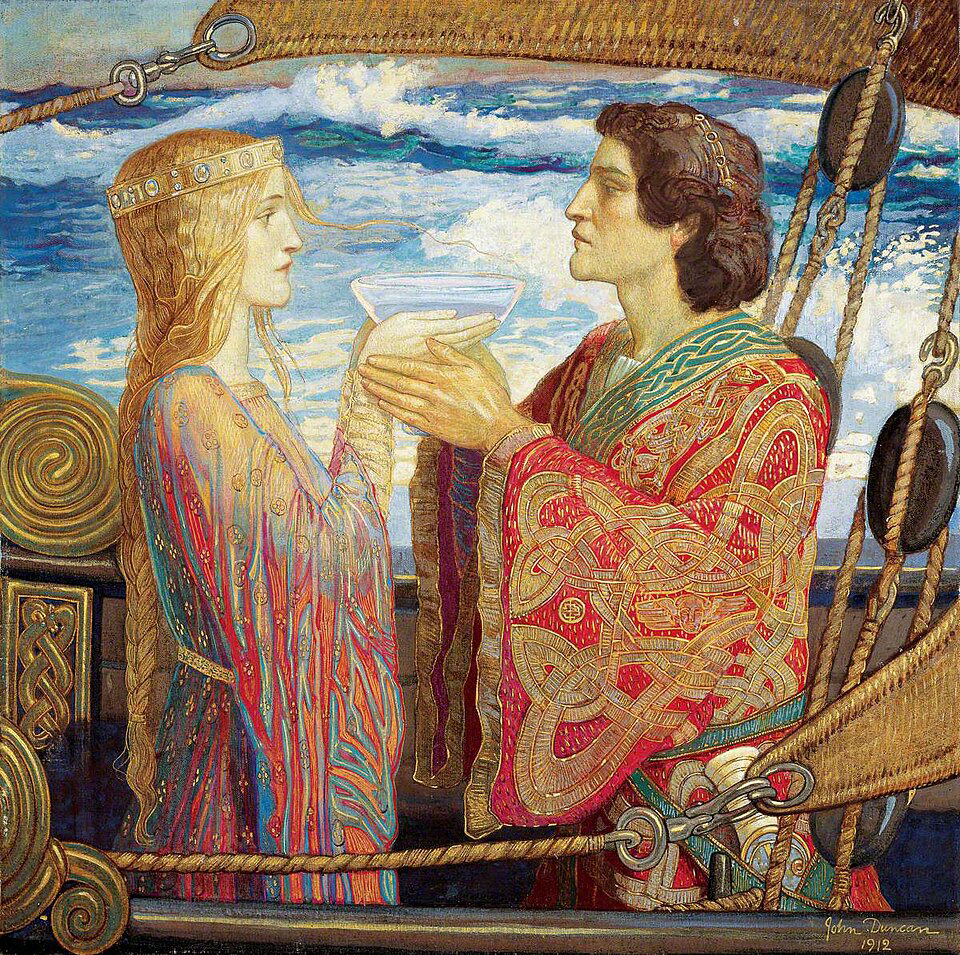
The story of Tristan and Isolde emerged from Celtic traditions circulating around Cornwall, Wales, Brittany and Ireland before being transformed into one of the great literary romances of medieval Europe. The basic narrative is straightforward. King Mark of Cornwall sends his nephew Tristan to Ireland to escort the princess Isolde back to Cornwall for their marriage. During the voyage, Tristan and Isolde accidentally drink a love potion intended for Isolde and King Mark. As a consequence they fall hopelessly in love, despite Isolde being destined to become Mark’s queen. The rest of the story concerns their attempts to conceal the affair, the suspicions of King Mark, periods of exile and eventual tragedy.
The legend became enormously popular during the twelfth century through the poems of Béroul and Thomas of Britain, although many variations subsequently appeared across Europe. Medieval audiences knew the story well, and its setting in Cornwall gave it particular importance for those who wished to celebrate or exploit Cornwall’s distinctive identity and traditions.
Tintagel occupied a prominent place within this literary geography. In many versions of the legend it was regarded as one of the principal strongholds of King Mark. Other locations in Cornwall, including Castle Dore near Fowey, were also connected with the story, but Tintagel's dramatic position above the Atlantic gave it a special resonance. Long before tourists arrived searching for King Arthur, readers and listeners were already associating Tintagel with Tristan and Isolde.
The crucial figure in cementing this association was Richard of Cornwall, brother of King Henry III. Between approximately 1233 and 1240, Richard constructed the castle whose ruins dominate the site today. Militarily, the location made little sense by contemporary standards. The castle occupied an exposed and difficult headland, was remote from major centres of power, and lacked many of the advantages expected of a major defensive fortress.
Instead, the castle appears to have been conceived as a statement. Richard was Earl of Cornwall and one of the wealthiest and most powerful men in Europe. He had every reason to emphasise his connection to Cornwall and its traditions. By building his residence at Tintagel, a place already associated with both King Mark and the Arthurian legends, he was embedding himself within a heroic Celtic past.
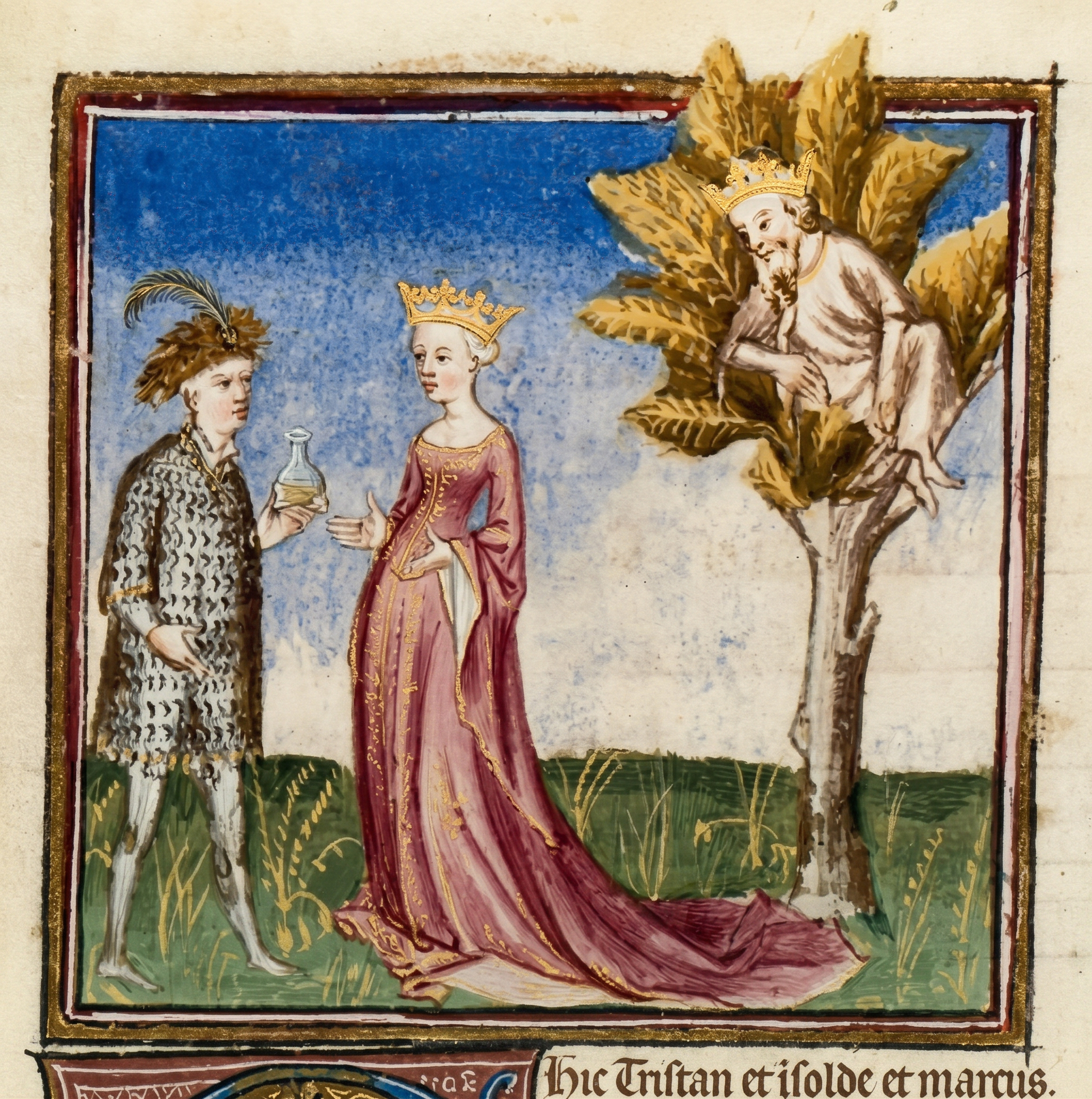
Several features of the castle seem designed to reinforce these literary associations. Within the complex was a walled garden. In the Tristan legend, one of the most famous episodes concerns a secret meeting between the lovers in a garden. King Mark, warned that they intend to meet, hides in a tree overlooking the scene. Tristan notices the king's reflection in a spring and alerts Isolde, allowing them to conduct an apparently innocent conversation that dispels Mark's suspicions. The existence of a prominent garden at Tintagel made it possible to associate a physical location with a famous episode familiar to medieval audiences.
Another notable feature is the rock-cut tunnel that passes through part of the island. Although its origin is unclear it may well be tied to the lovers' cave, where Tristan and Isolde hide during their exile from King Mark. Whether the identification was ever intended literally is less important than the fact that visitors could be encouraged to view the landscape through the lens of the romance.
The castle chapel may also have had literary significance. One episode in the legend describes Tristan seeking refuge in a chapel before making a dramatic escape through a window overlooking the sea cliffs. At Tintagel, visitors could see an actual cliffside chapel and imagine the events unfolding before them. Richard's guests were not simply visiting a castle; they were encountering the physical stage upon which famous stories might have occurred.
This was a powerful idea in the thirteenth century. Medieval rulers frequently sought legitimacy by connecting themselves with celebrated historical or legendary figures. Richard's castle effectively transformed Tintagel into a monument to Cornwall's heroic past. The architecture itself was less important than the stories attached to it.
Arthurian legend eventually eclipsed Tristan and Isolde in popular memory. Geoffrey of Monmouth's account of King Arthur's conception at Tintagel ensured that the site became firmly associated with Britain's most famous legendary king. Later generations, especially during the Romantic movement of the eighteenth and nineteenth centuries, increasingly focused upon Arthur rather than King Mark and his ill-fated nephew.
Yet traces of the older association remain. Modern visitors crossing the bridge onto the island often search for Arthur, but many of the features they encounter derive equally from the world of Tristan and Isolde. The garden, the tunnel and the chapel all reflect a period when Richard of Cornwall deliberately linked Tintagel to one of the most renowned romances of medieval Europe.
The relationship between Tintagel and Tristan and Isolde therefore runs deeper than a simple literary reference. The legend helped shape how the site was understood during the Middle Ages, while Richard of Cornwall consciously reinforced those connections through his castle. In doing so he created one of the earliest examples of a historical landscape being interpreted through myth and literature. Tintagel became not merely a place associated with famous stories but a place where those stories could be experienced, retold and reimagined. The fact that visitors still arrive looking for legendary Cornwall eight centuries later suggests that Richard's experiment was remarkably successful.