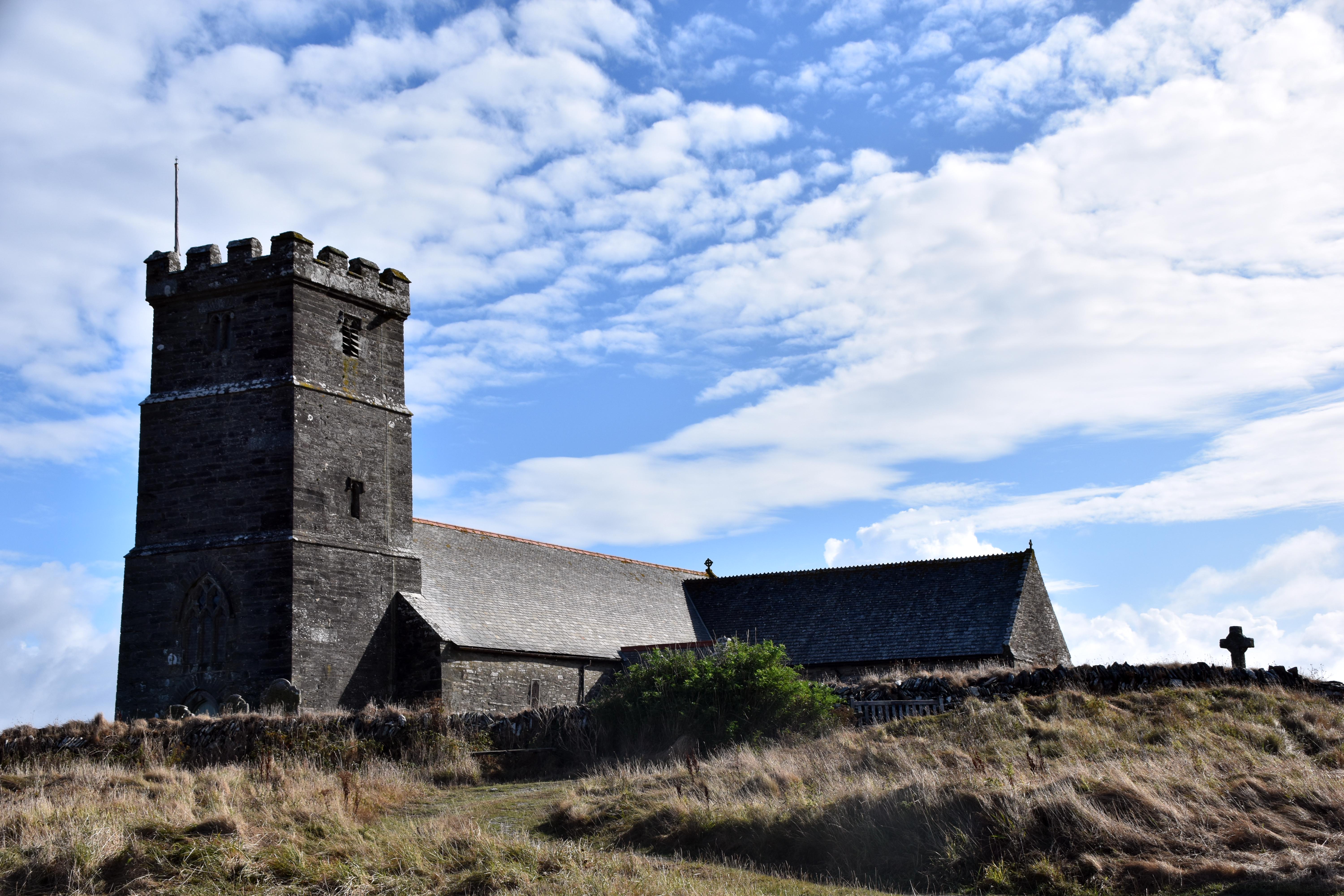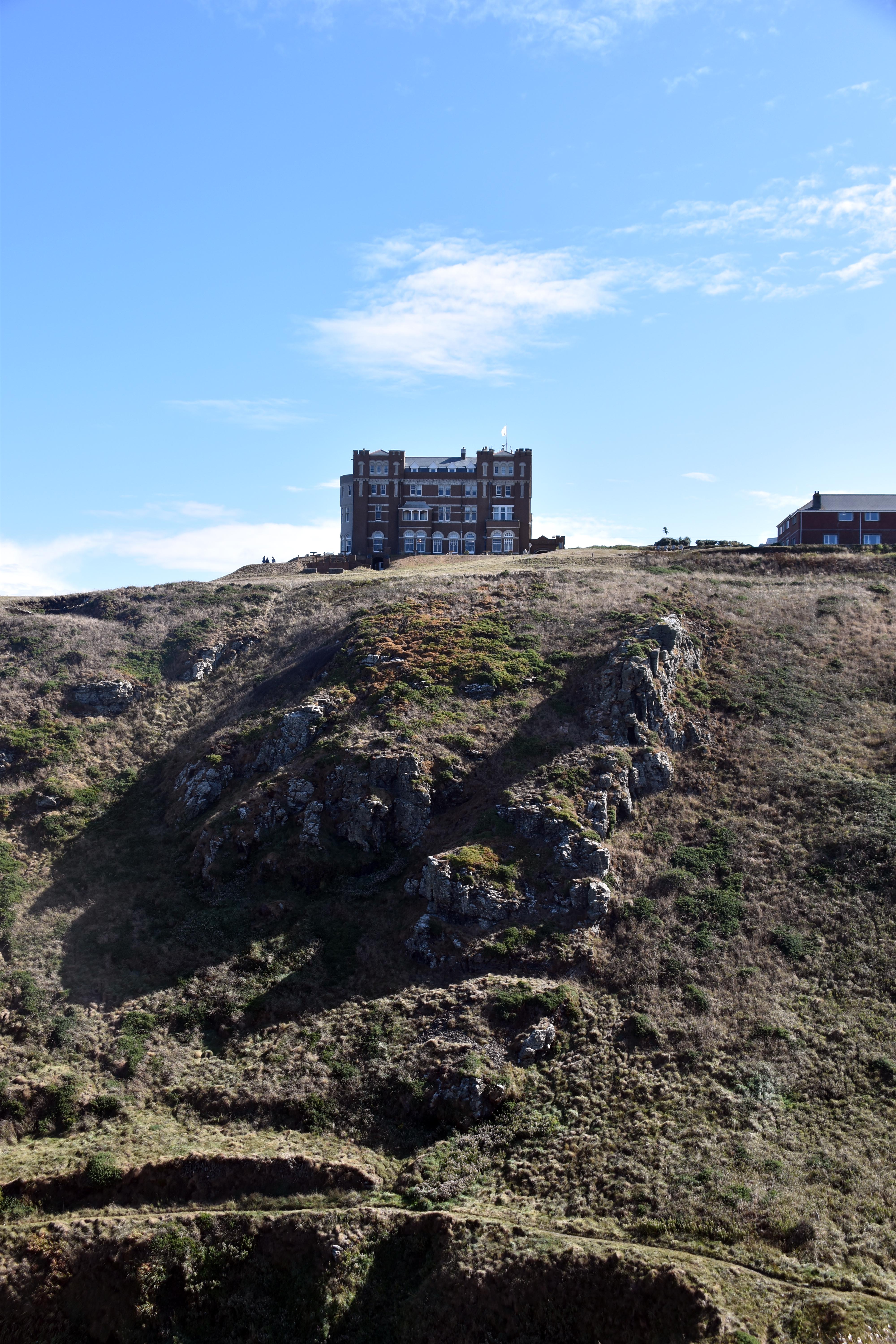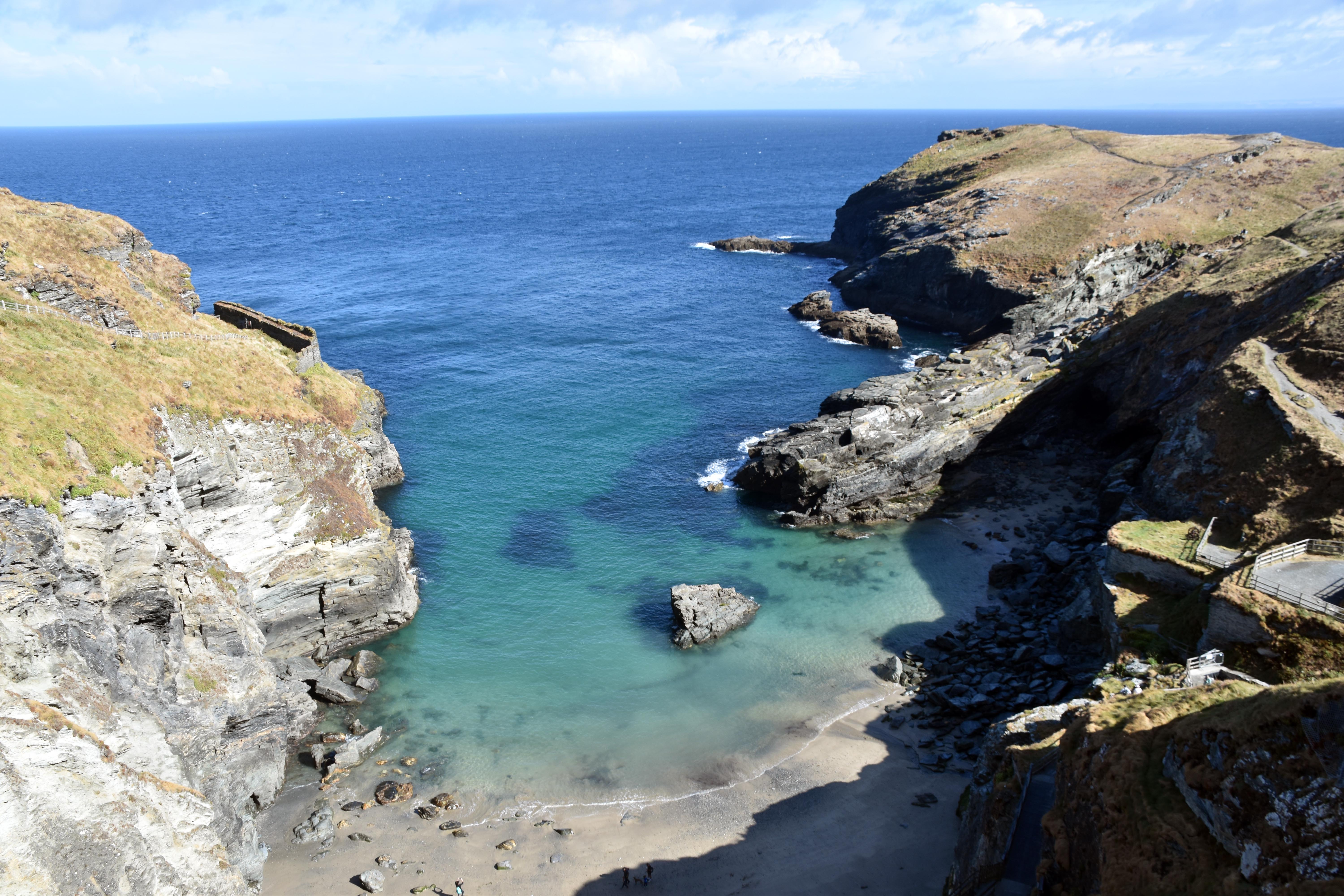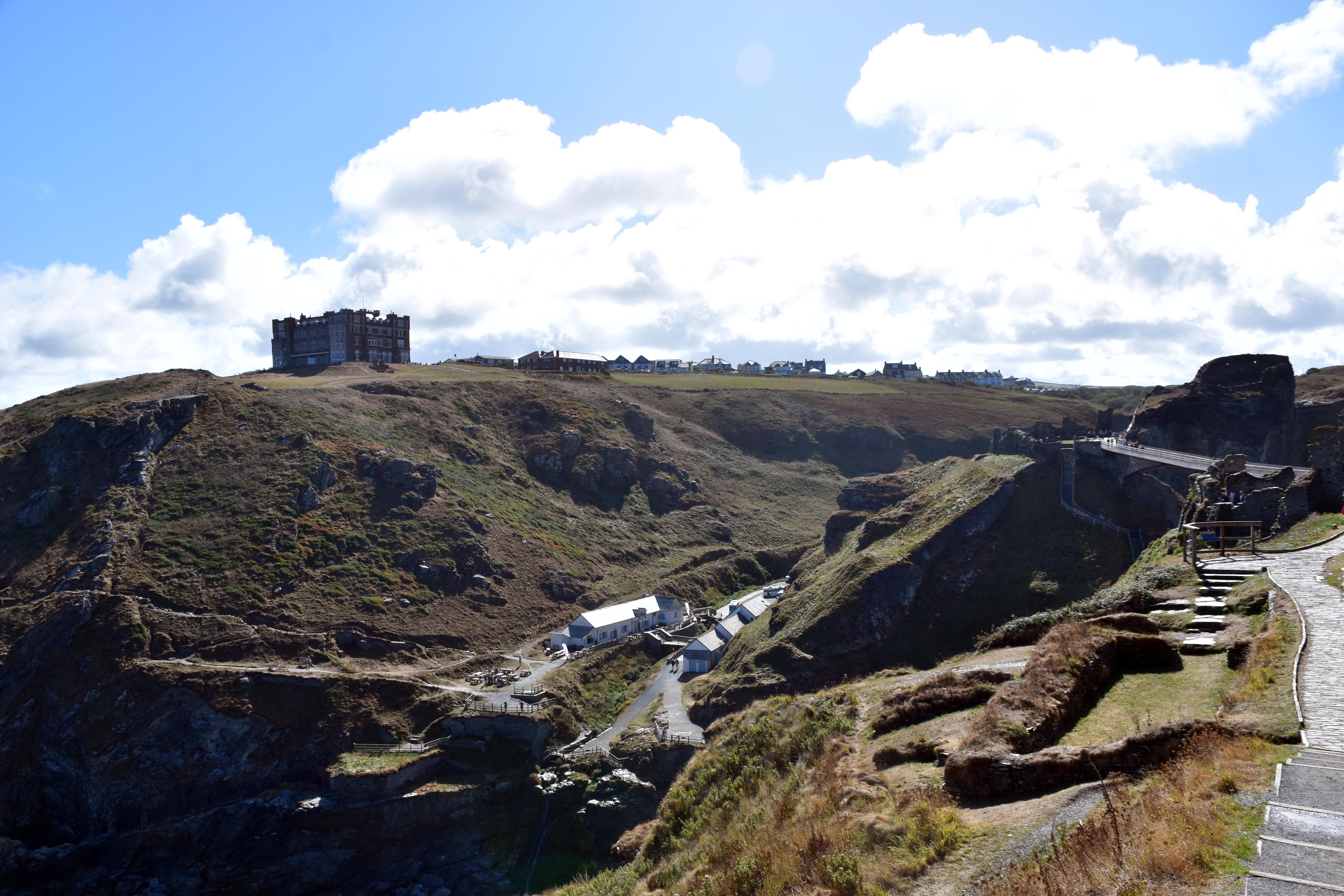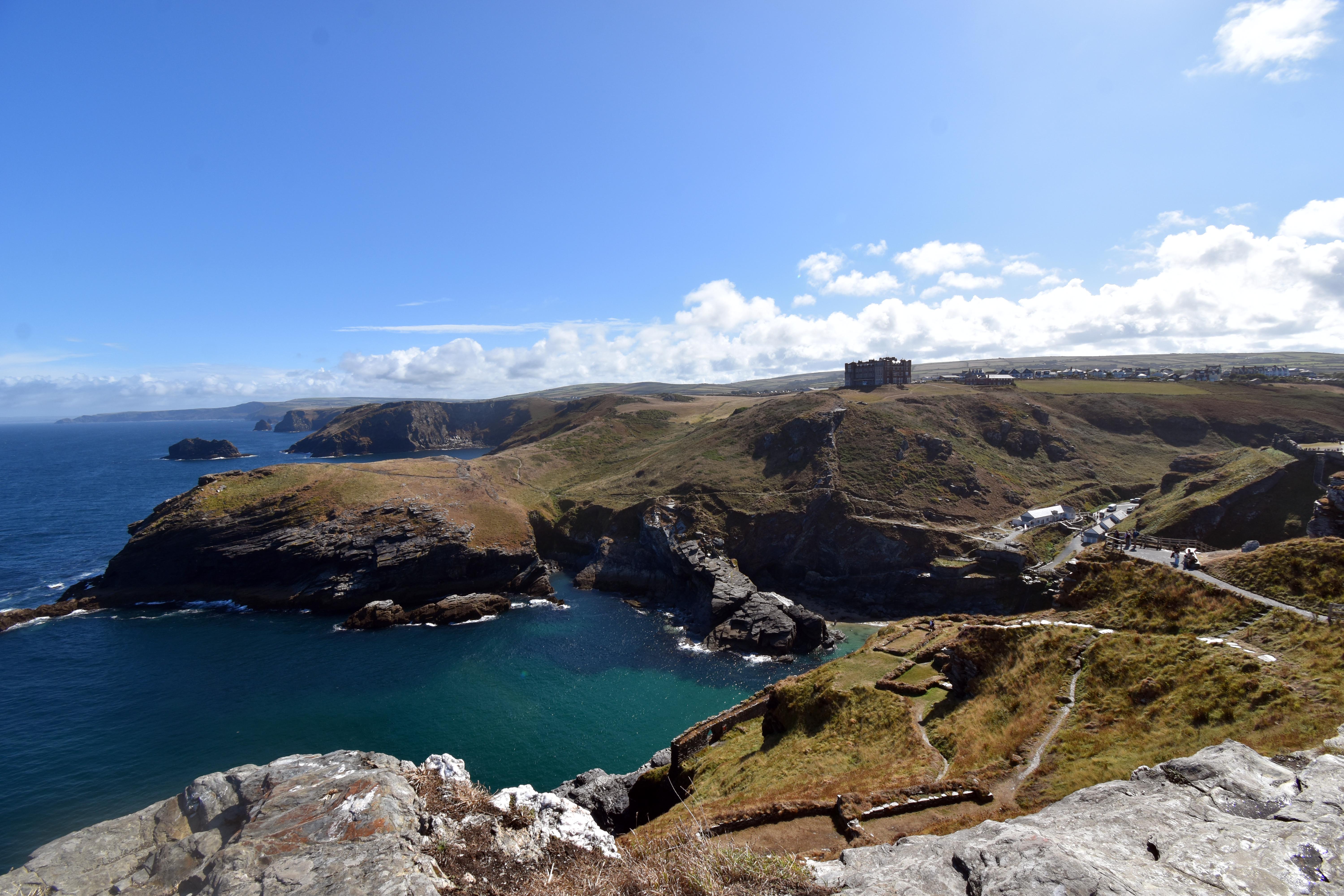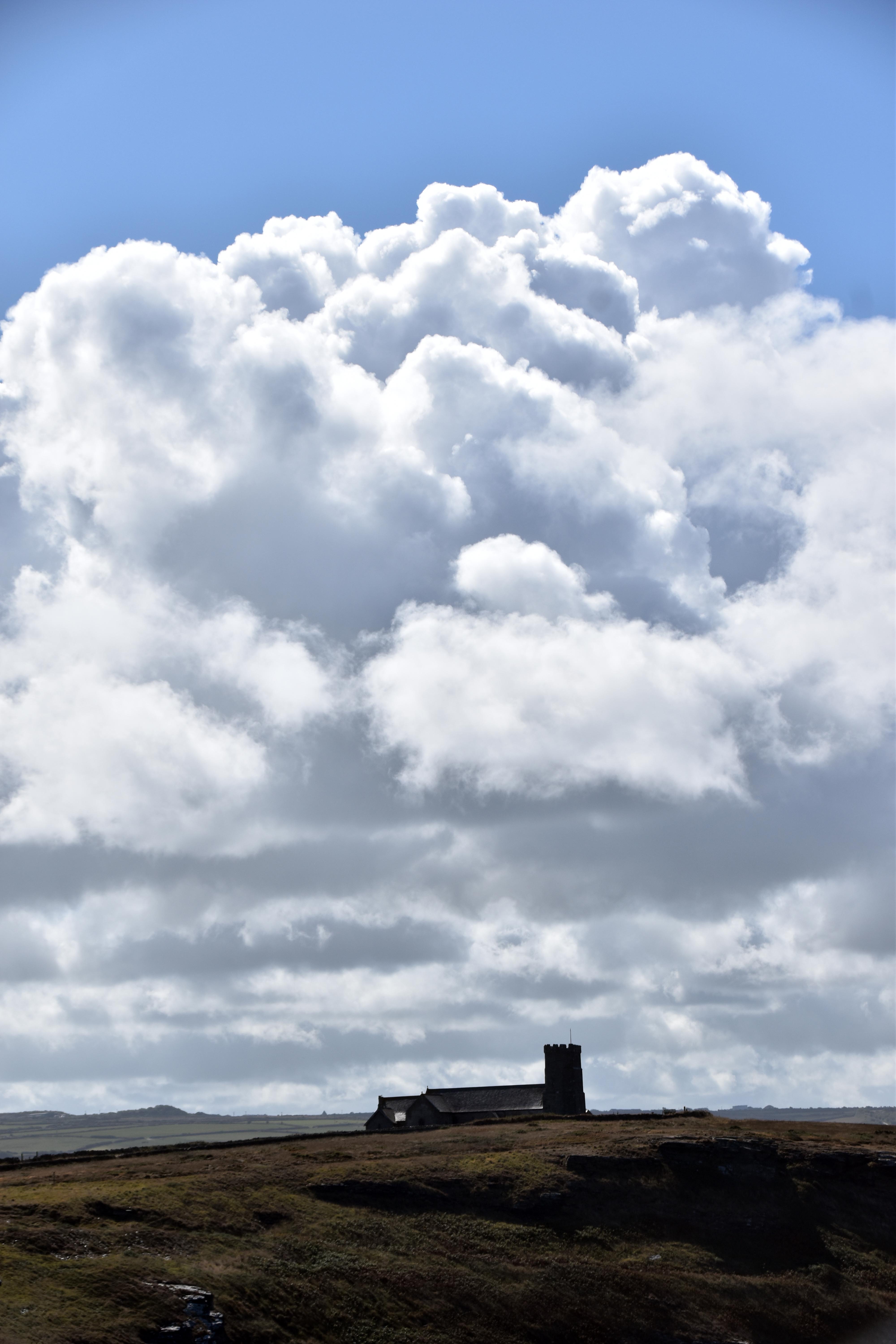
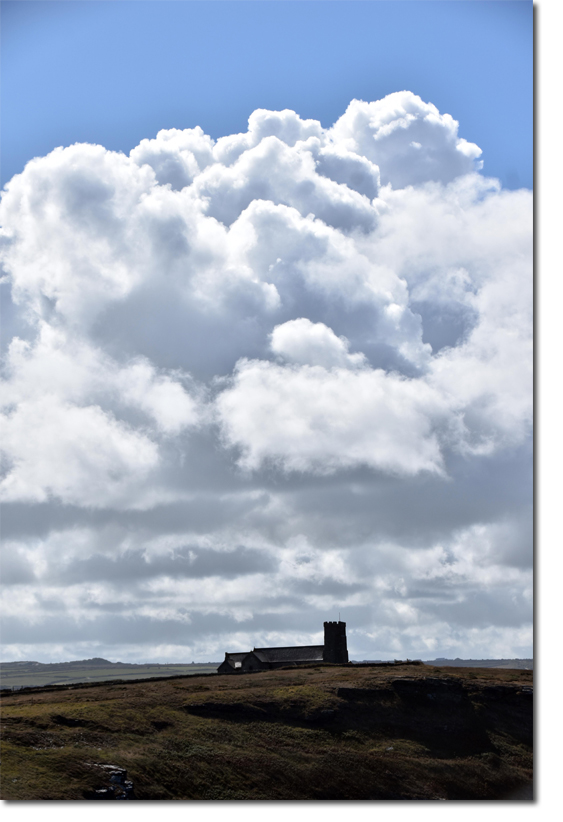
Few places anywhere in England, let alone in Cornwall, are as beautiful as Tintagel Castle and the surrounding coastline. And few places have as much depth of myth, legend and genuine history. Most of the tourists head straight for the village of Tintagel and thence to the English Heritage site which controls the island where the castle lies. Rupert and I, on the other hand, are just as fascinated by the isolated church overlooking the castle from the mainland. St Materiana's has to be one of the most stunning locations for any church in the country. To say the cliffs nearby are breathtaking, undersells their beauty. From the church tower, you can see where the legend of King Arthur was born immediately to the North and the beautiful coastline of Cornwall stretching for mile upon mile.
On this particular day, the weather was forecast to be a day of contrasts. It was to be clear and sunny in the morning, but after lunch clouds and rain would roll in from the Atlantic. This made our choice for us to follow the coastal path to the castle in the morning sunshine. We did explore a field to the north of St Materiana's Church, which is marked ‘Earthwork’ on the OS map. This earthwork dates as far back as the 6th century and was found to contain a very early Christian churchyard, a font and the remains of an even older church than that of St. Materiana’s. There were also some unusual graves which provided the inspiration for one of my favourite books: J.L. Carr’s A Month in the Country which we could come back to later in the day.

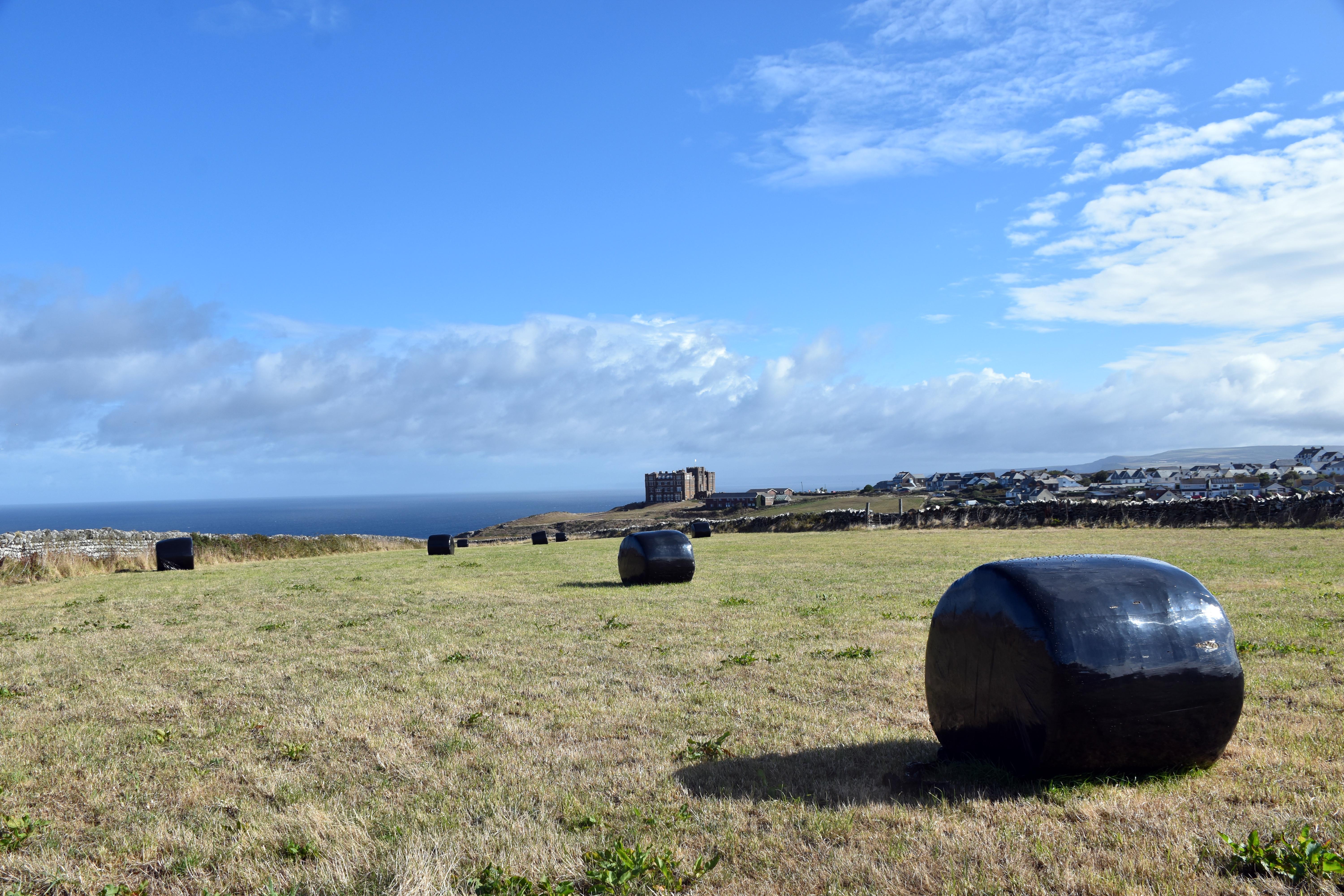
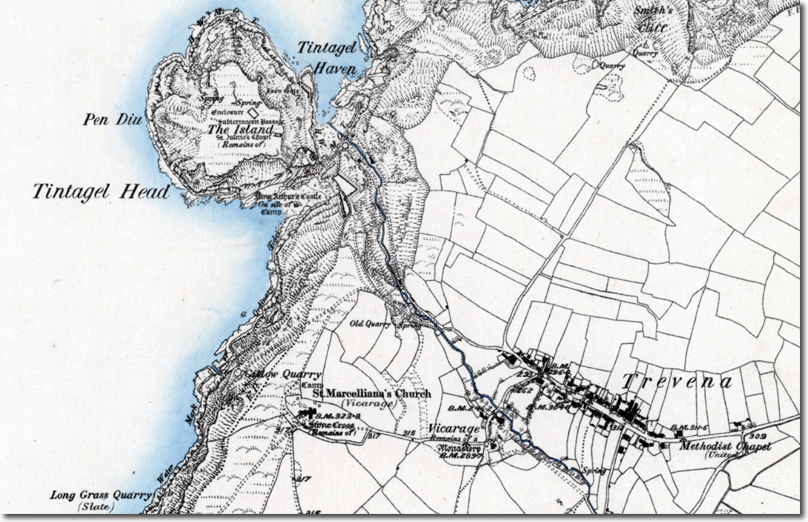
We, though, kept a nervous lookout to the Atlantic to see if we could see the weather front moving in. We continued along the coastal path stopping frequently to admire the views over to the castle and over to the village of Tintagel. Interestingly, the name for the village is actually surprisingly recent. For most of its history it was known as Trevena. It was not until the Romantic era of the 19th century with their love of all things Gothic that well-heeled visitors started to visit the castle due to its associations with the legend of King Arthur and with Tristan and Isolde. These early tourists would use the new-fangled postal stamps to tell their family and friends about Tintagel. The senders invariably put the postal address as Tintagel, assuming village and castle were one and the same. It did not take long for the Post Office to adopt Tintagel as the official postal address for Trevena.
Even without the myths and legends associated with Tintagel, it has a fascinating history in its own right. Archaeologists have discovered a significant Dumnonian settlement. It was a site of some importance perhaps with royal connections. Even more intriguingly they have discovered trade items from that early Dark Ages period stretching all the way to the Mediterranean suggesting that the Fall of Rome did not sever all local relationships with the wider world. The earthwork just over the headland, that we had examined, may well have been the religious centre and burial ground for this community. Dumnonia was to be an early recipient of Irish and Welsh Christian missionaries and allow a distinctively Celtic variety of Christianity to flourish here and also to act as a gateway to other continental recipients such as Brittany. After the 7th century, though, the settlement appears to have become abandoned although it is not entirely clear why.
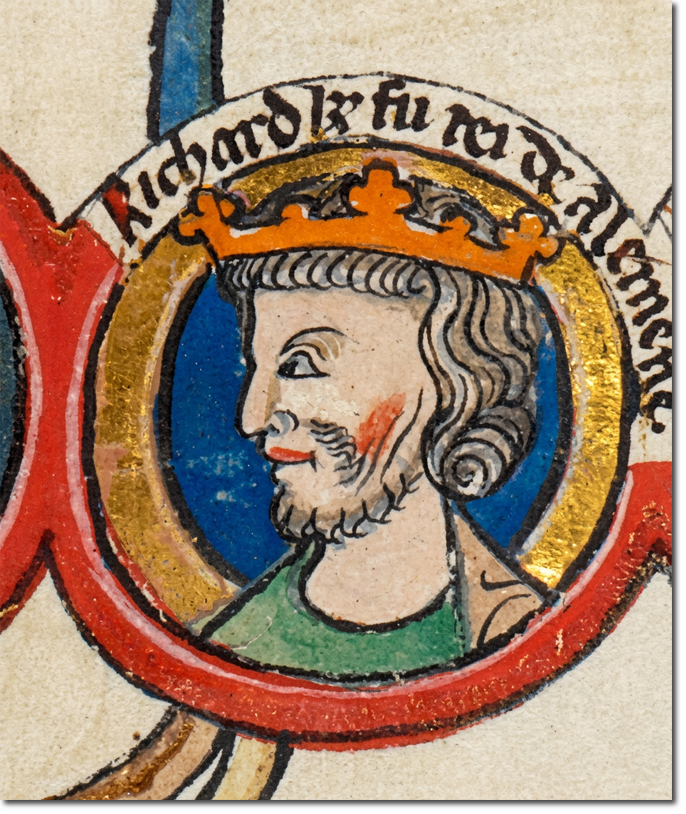
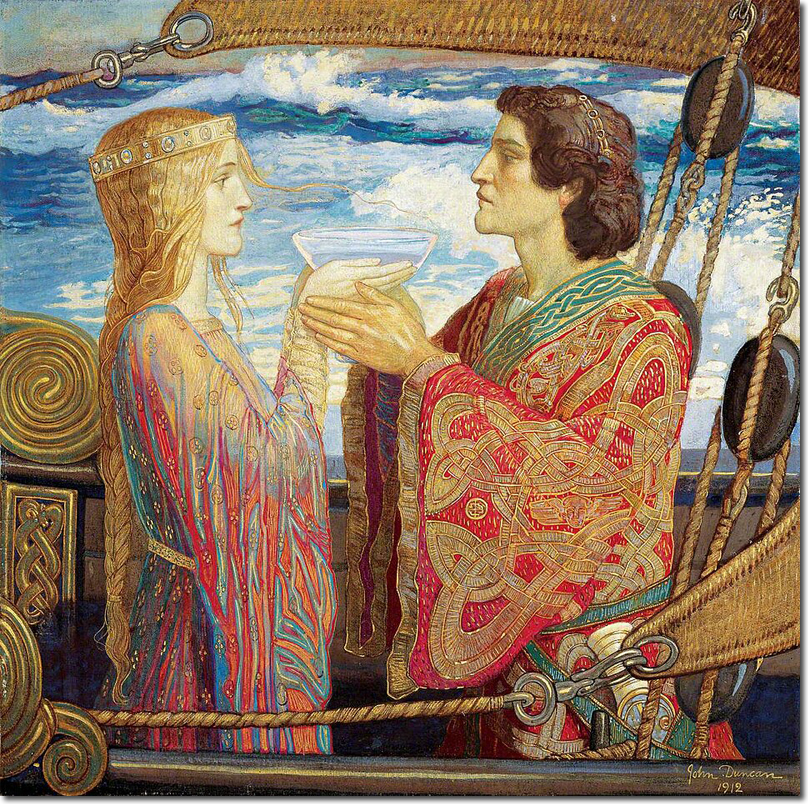
This Dumnonian-Irish connection would later be picked up with the romantic story of Tristan and Isolde being tied to Tintagel. It is interesting that although we now largely connect this castle to the legend of King Arthur, in the Medieval Period, the connection of Tristan and Isolde to Tintagel was far better known. Tintagel was regarded as one of the royal castles of King Mark - another one being Castle Dore which we visited last year. The crux of the story is that King Mark sent his young nephew to Ireland to escort a beautiful Irish princess back to Cornwall to marry the King. Worried that the young princess might not find her older husband-to-be attractive Isolde’s mother furnished her with a love potion. Isolde and Tristan drink the potion by mistake on the boat from Ireland and fall head over heels with one another. This story became well known from the 12th century onwards as two poets, Béroul and Thomas of Britain, set down differing poems about the legend. Their story takes many twists and turns but interestingly some of these were to be represented on Tintagel itself almost certainly at the instigation of Henry III’s brother Richard of Cornwall who was the inspiration for the 13th century Castle. It suited him to associate his title of Earl of Cornwall with these popular Celtic legends. His castle was always more symbolic than defensive.
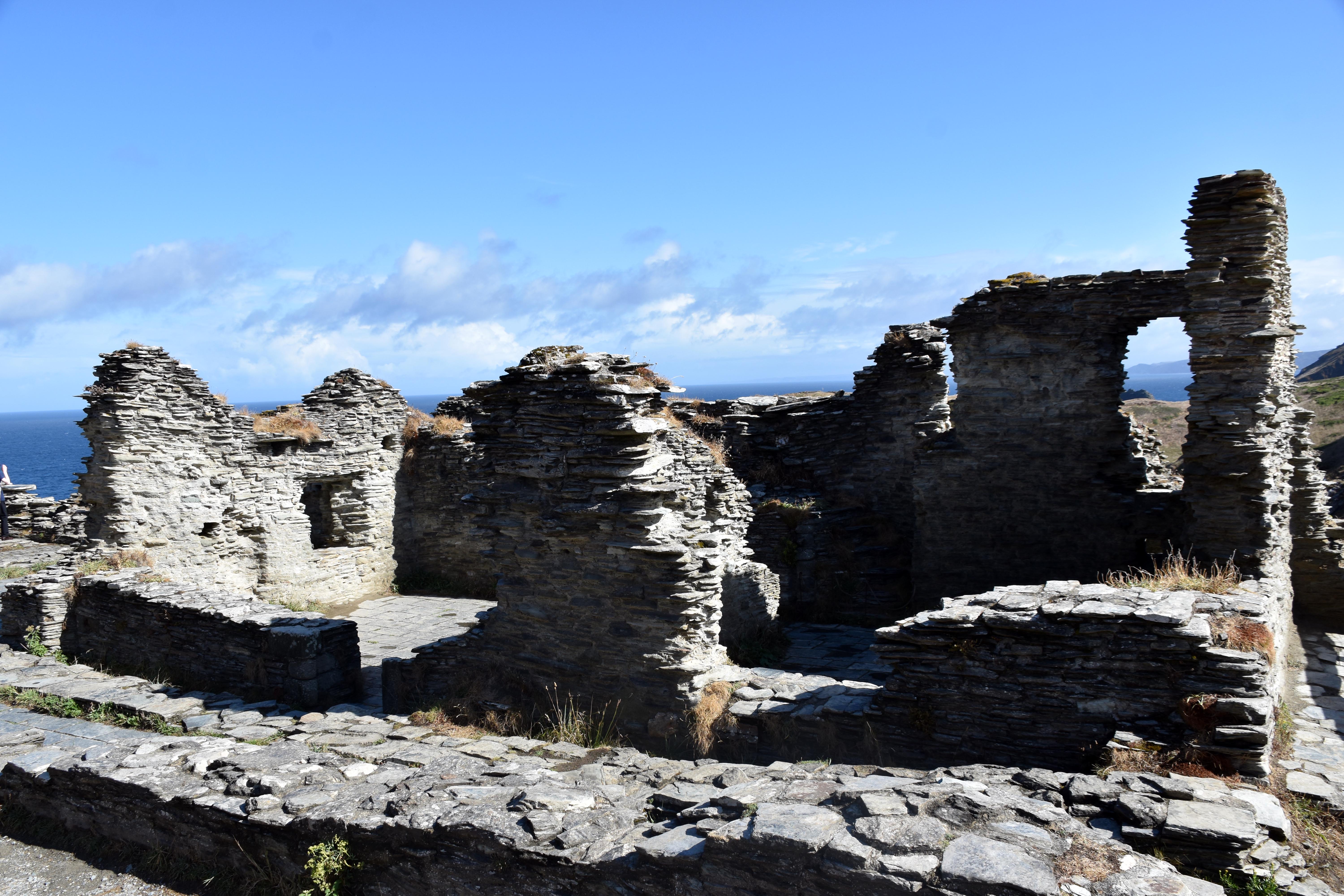
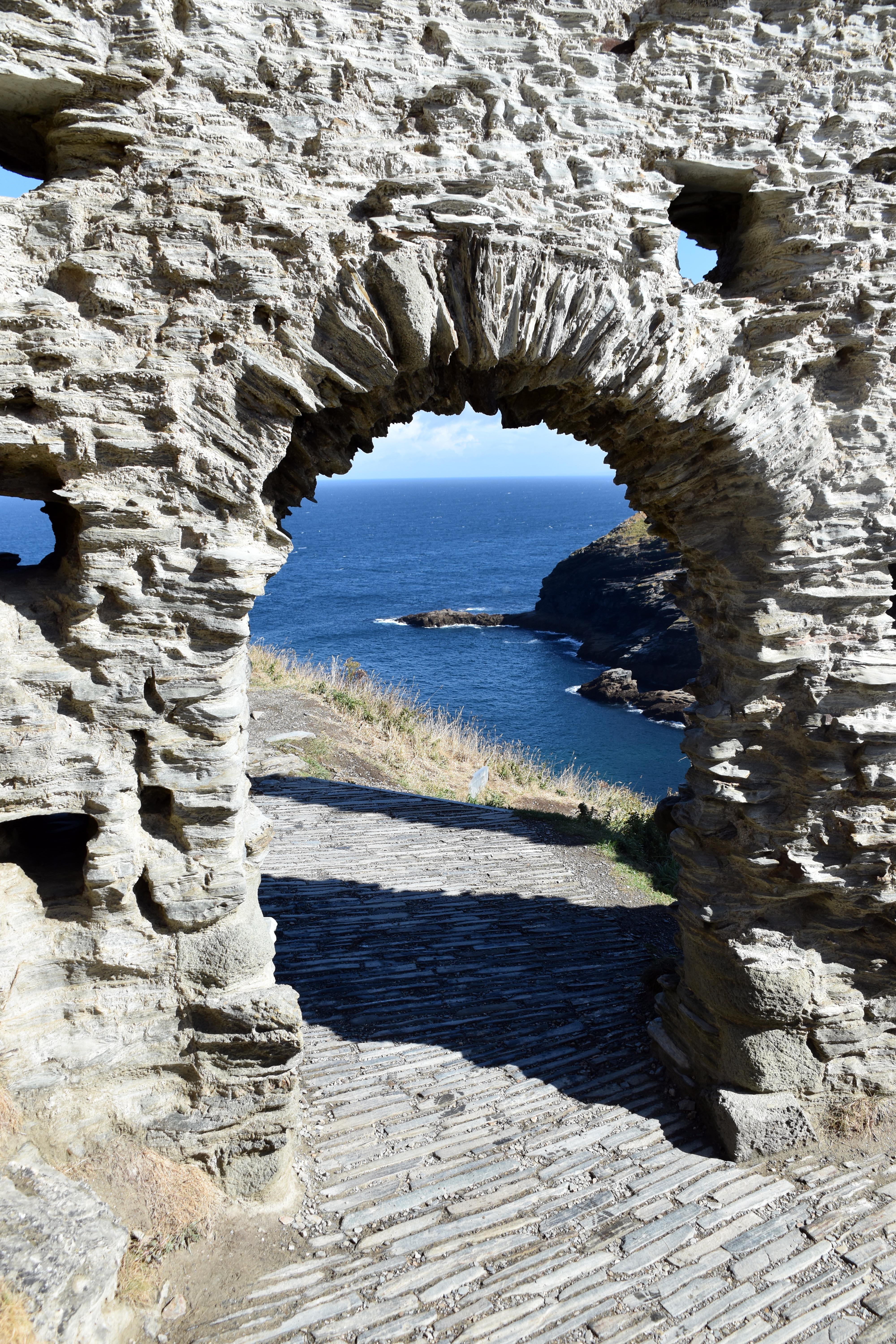
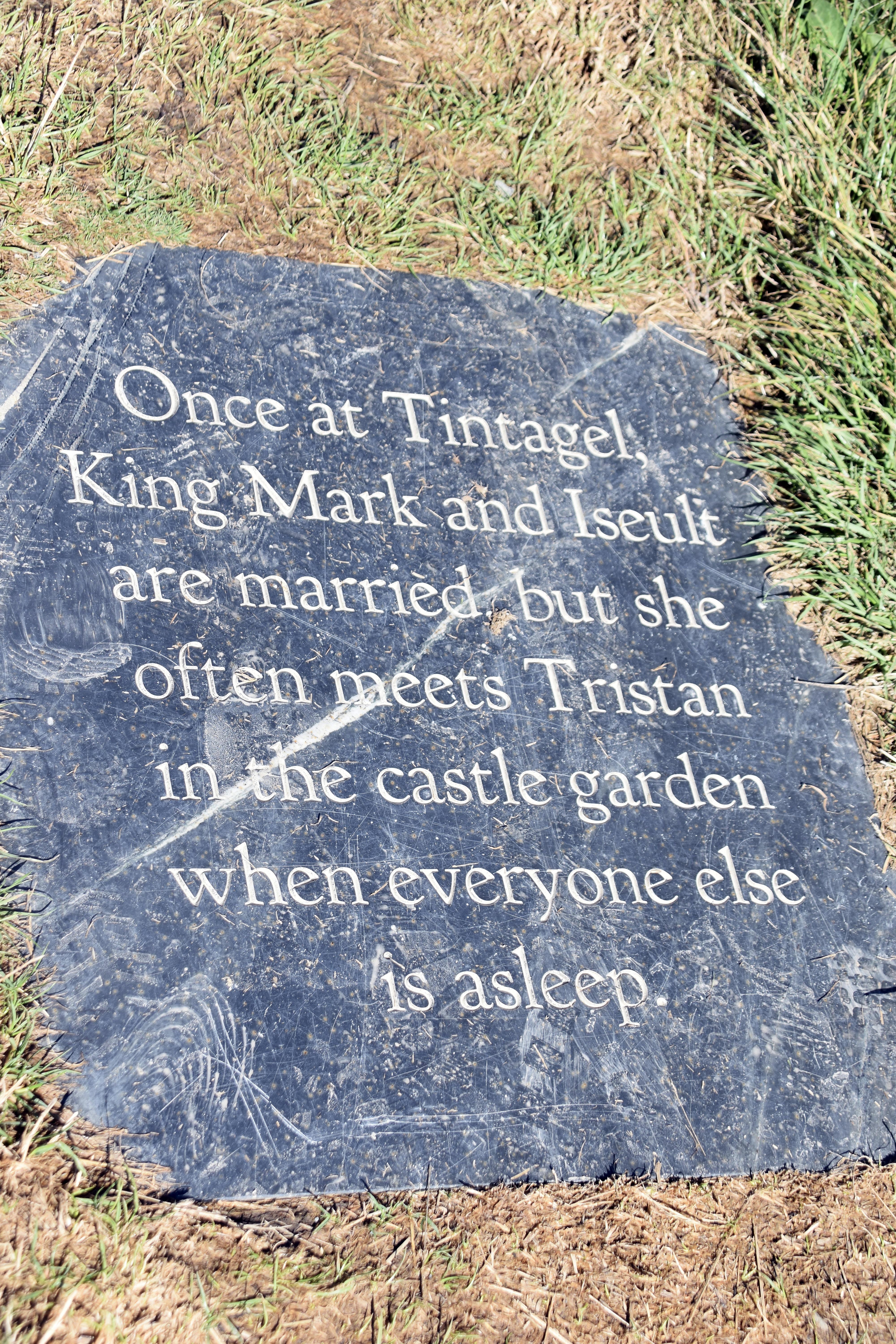
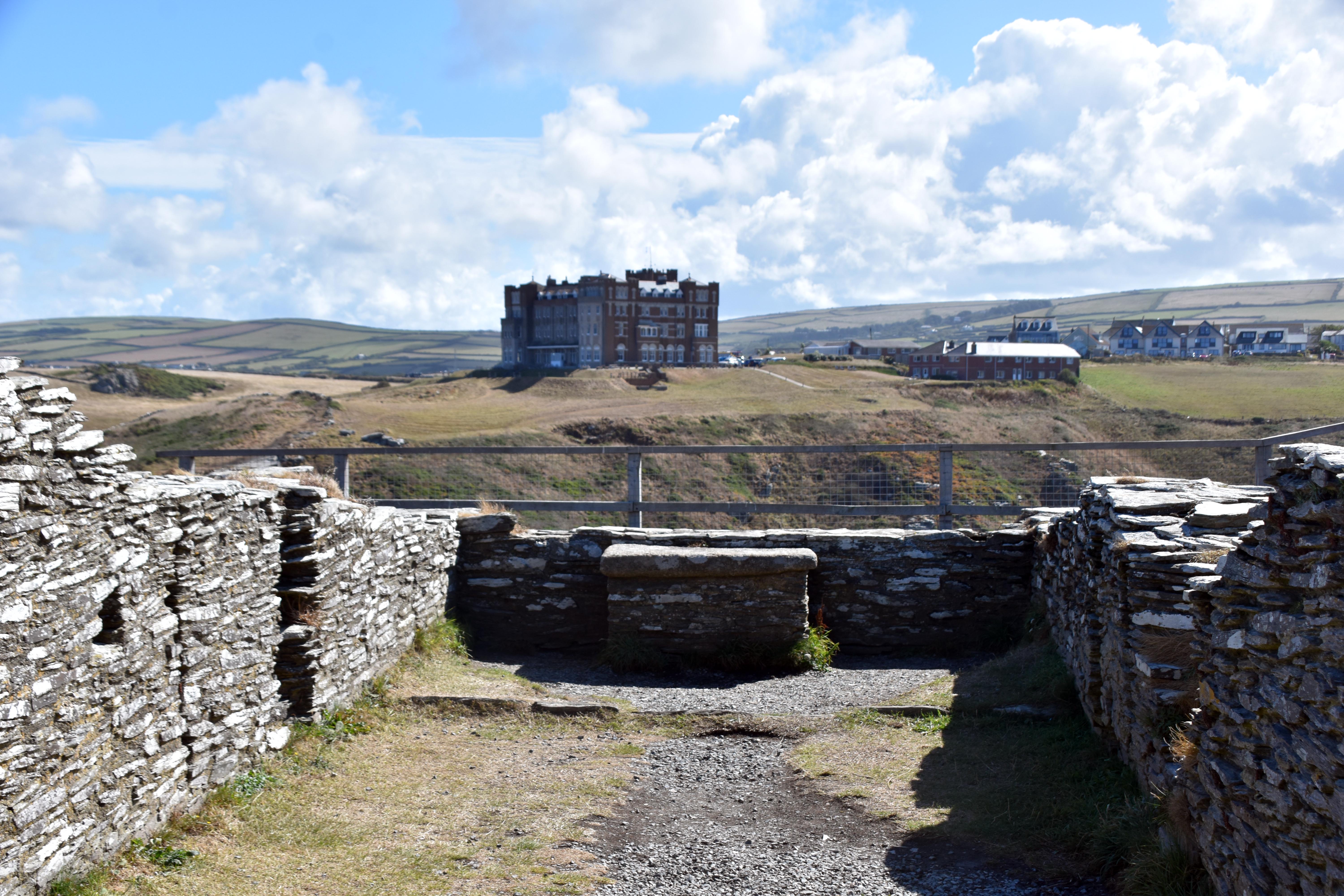
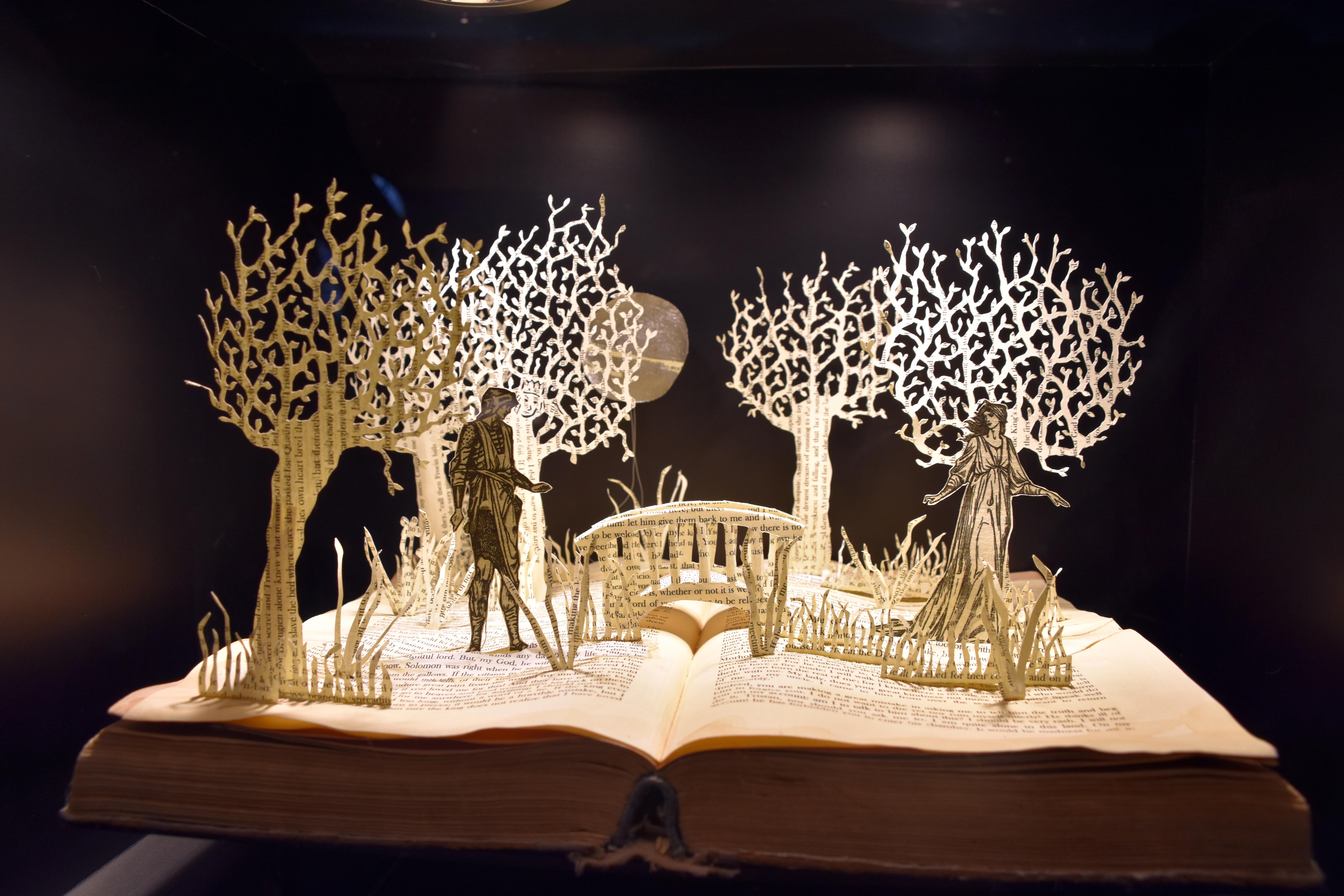
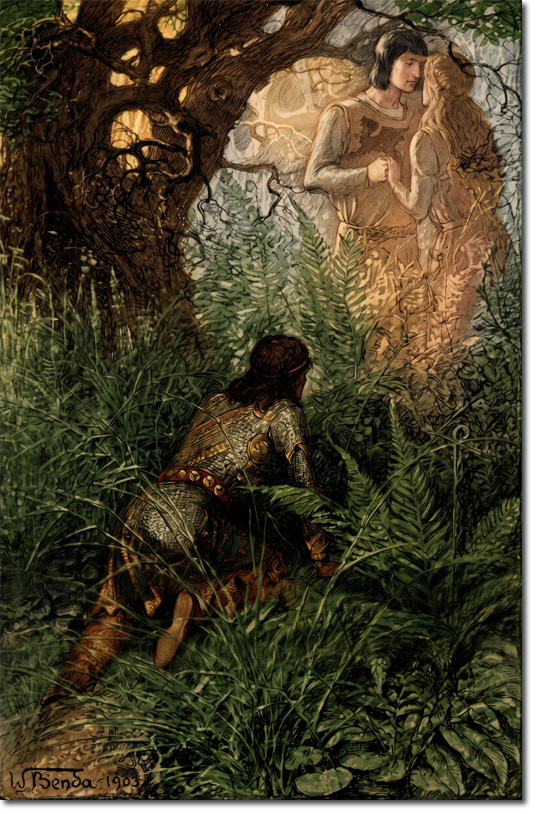
Within the castle complex there was a walled garden - which still exists and has now been decorated with inscribed paving slabs telling one of the better known verses of Tristan and Isolde’s travails. In this part of the poem, King Mark is tipped off by an evil dwarf that the two lovers are to meet in that garden. King Mark hides in a tree but Tristan sees his reflection in a spring and warns Isolde so that they have an innocent conversation where she professes her respect for her husband satisfying King Mark of her fidelity. Similarly there is a rock-cut tunnel which may well refer to the ‘Cave of Lovers’ where the two hid after fleeing from King Mark. A church was also built and you can still see its remains and its stone altar still in place. This was connected to the verse where Tristan is captured and begs to pray in a cliffside chapel which only has the one door so that he cannot possibly escape. Of course he leaps out of the far window and down the cliff. It was also claimed that Tristan was actually conceived on Tintagel with powerful connections of course to Tintagel being the birthplace of King Arthur also. In the King Arthur story, it is the gatehouse that is important where Uther Pendragon entered the castle by deception to lay with the beautiful Igraine the wife of Gorlois the Duke of Cornwall. The fact that the castle actually had these places meant that Richard of Cornwall could show these famous places to his guests or to recreate theatrical tellings of the stories and further associate himself with Cornwall’s most famous legends. As Rupert and I wandered through these ruins, we found ourselves picturing Richard of Cornwall eagerly showing off the garden, the tunnel and the chapel to his visiting dignitaries.
The Normans particularly liked the idea of King Arthur and especially Geoffrey of Monmouth’s version of it. The legend suited their own view of themselves as coming from overseas to overthrow a tyrannical usurper and reclaim what they felt was rightfully theirs. This is not to say that they were accurate but that this rightful King returning to the rescue of the British Isles suited the Norman story perfectly. And this was doubly so for Richard of Cornwall trying to legitimise his own Cornwall connections.
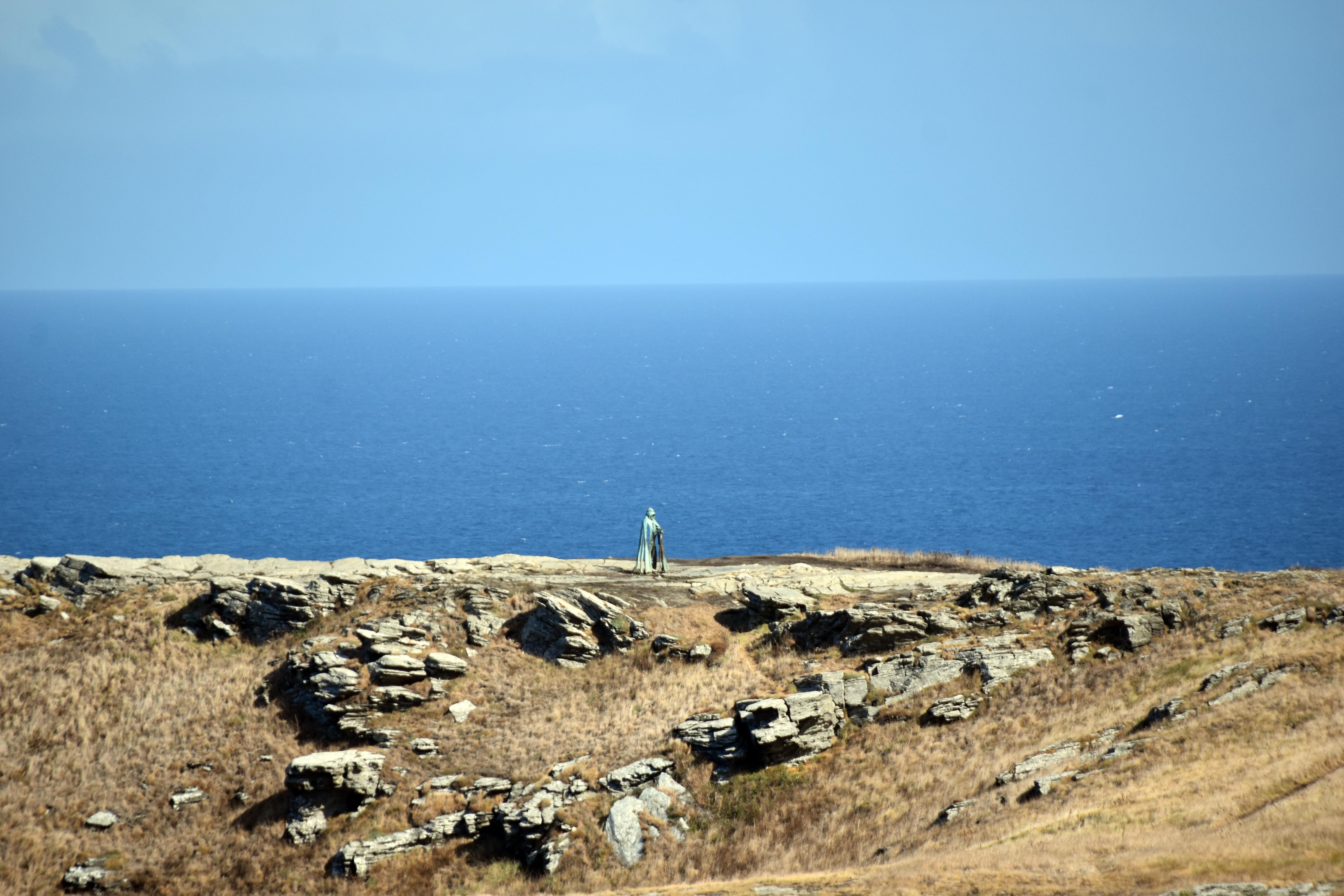
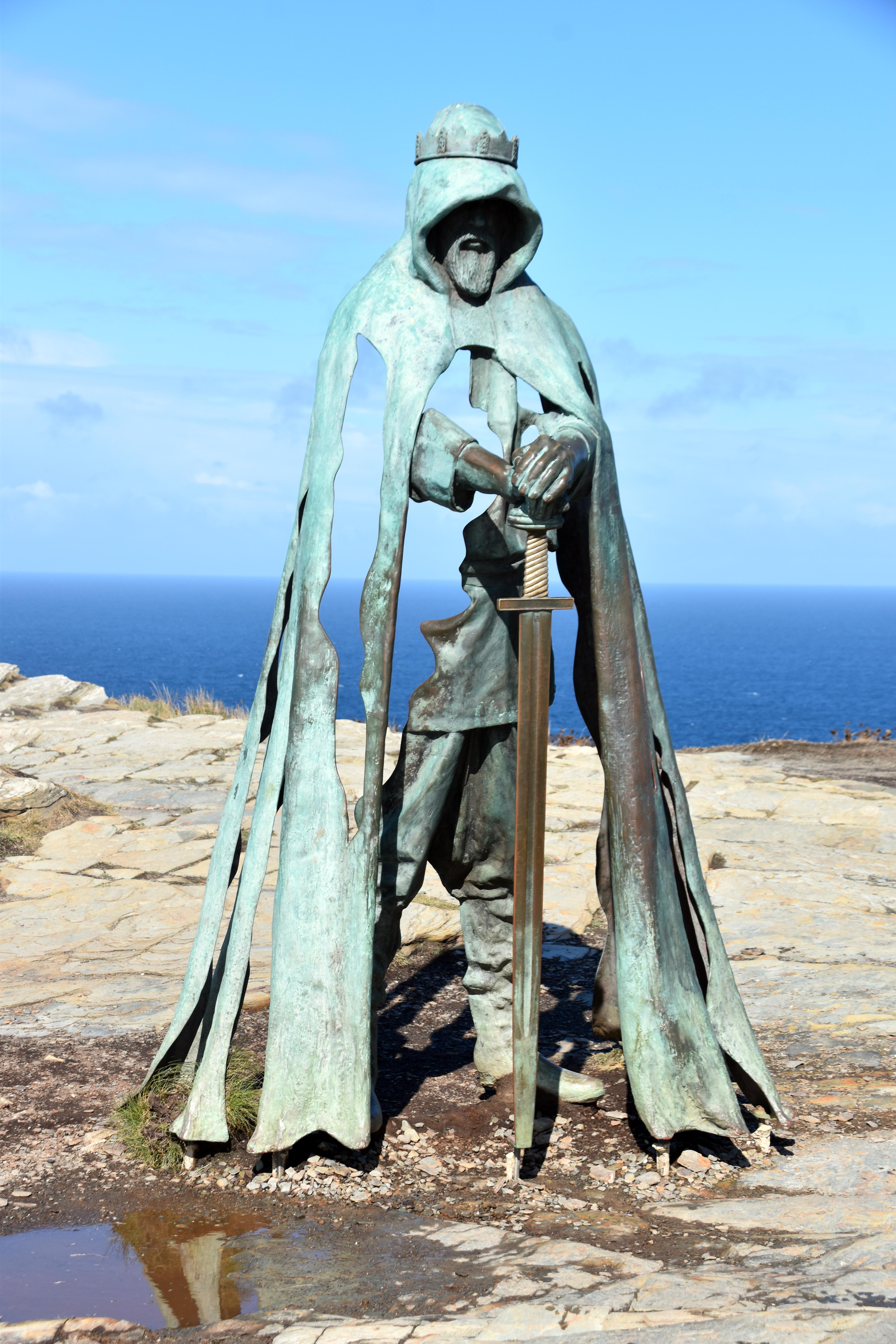
In a strange way, English Heritage are mimicking Richard of Cornwall’s idea of associating Tintagel with its legend through the 2016 siting of Rubin Eynon’s 8 foot statue called ‘Gallos’ at the northern tip of the island. Technically it does not represent King Arthur specifically but more of a Dark Ages warrior king giving a nod to a potential Dumnonian connection but most people assume that it is indeed King Arthur.

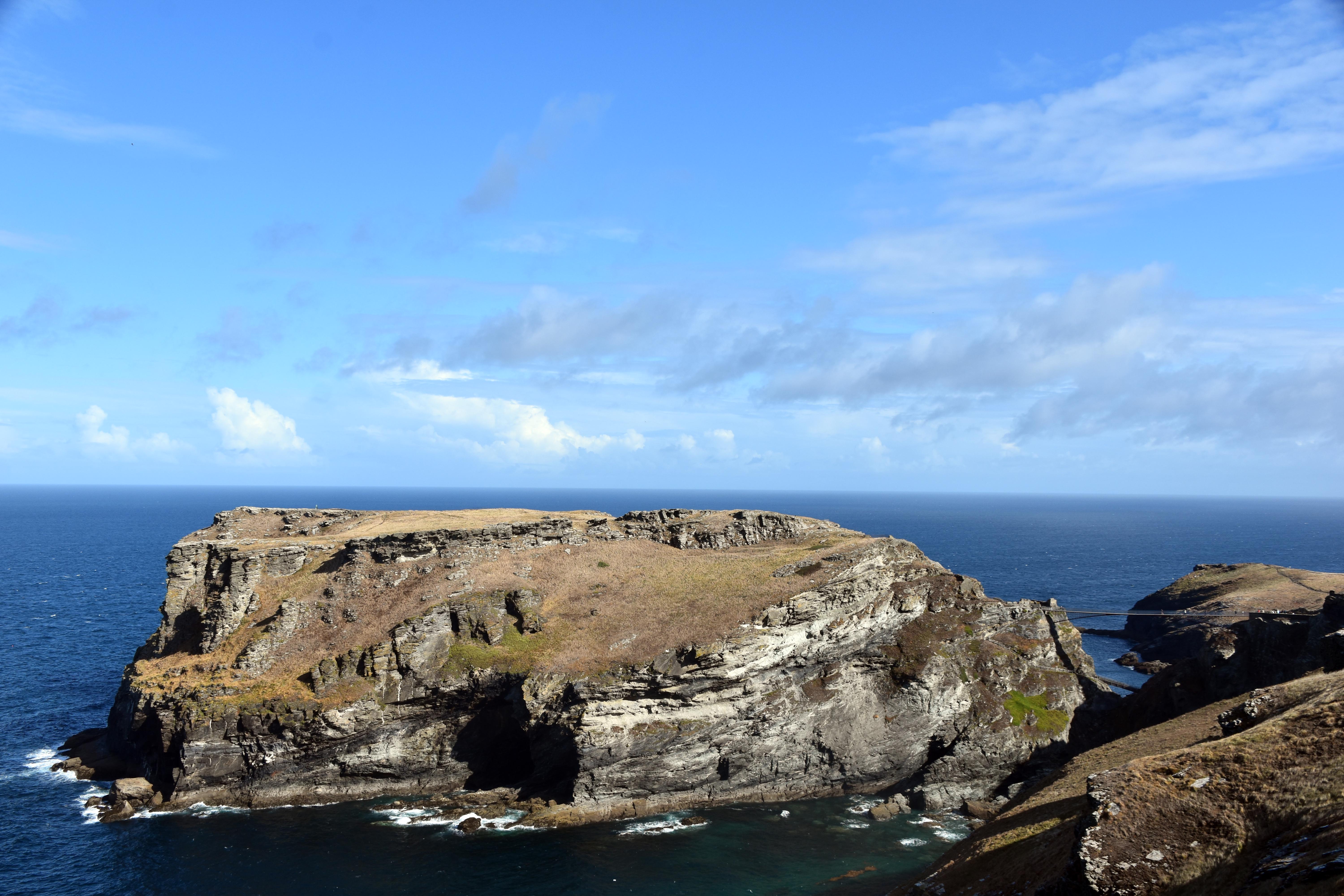
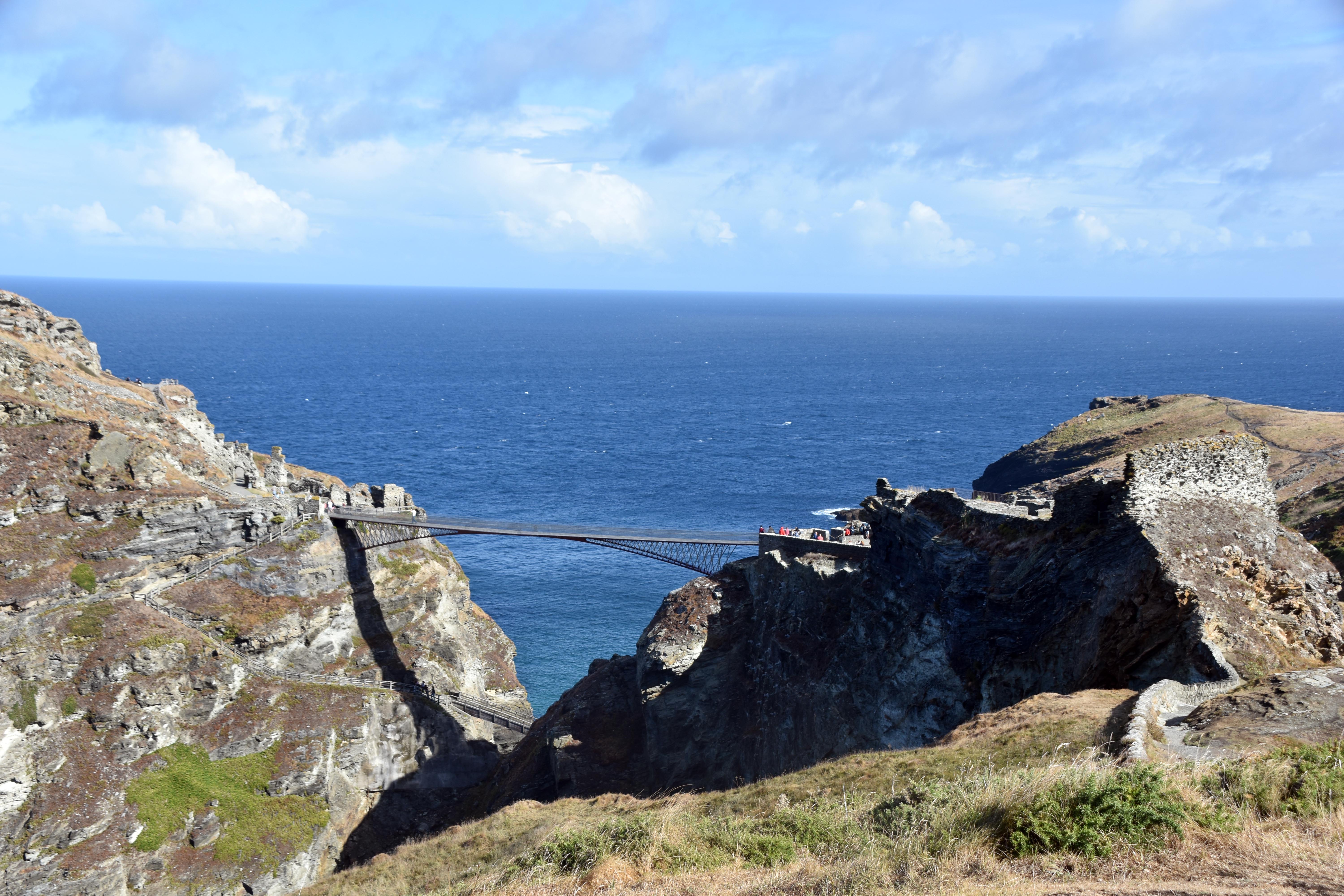
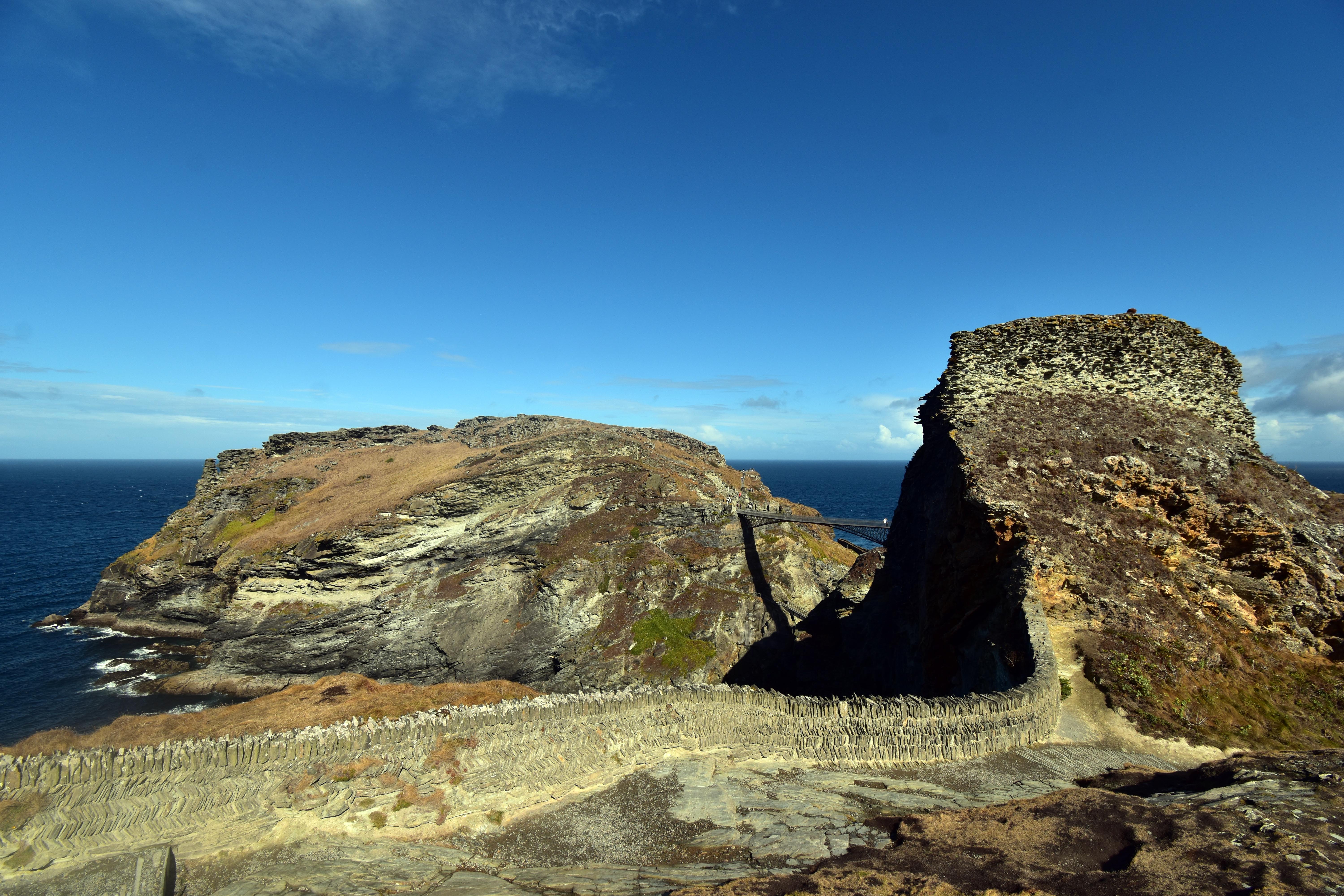
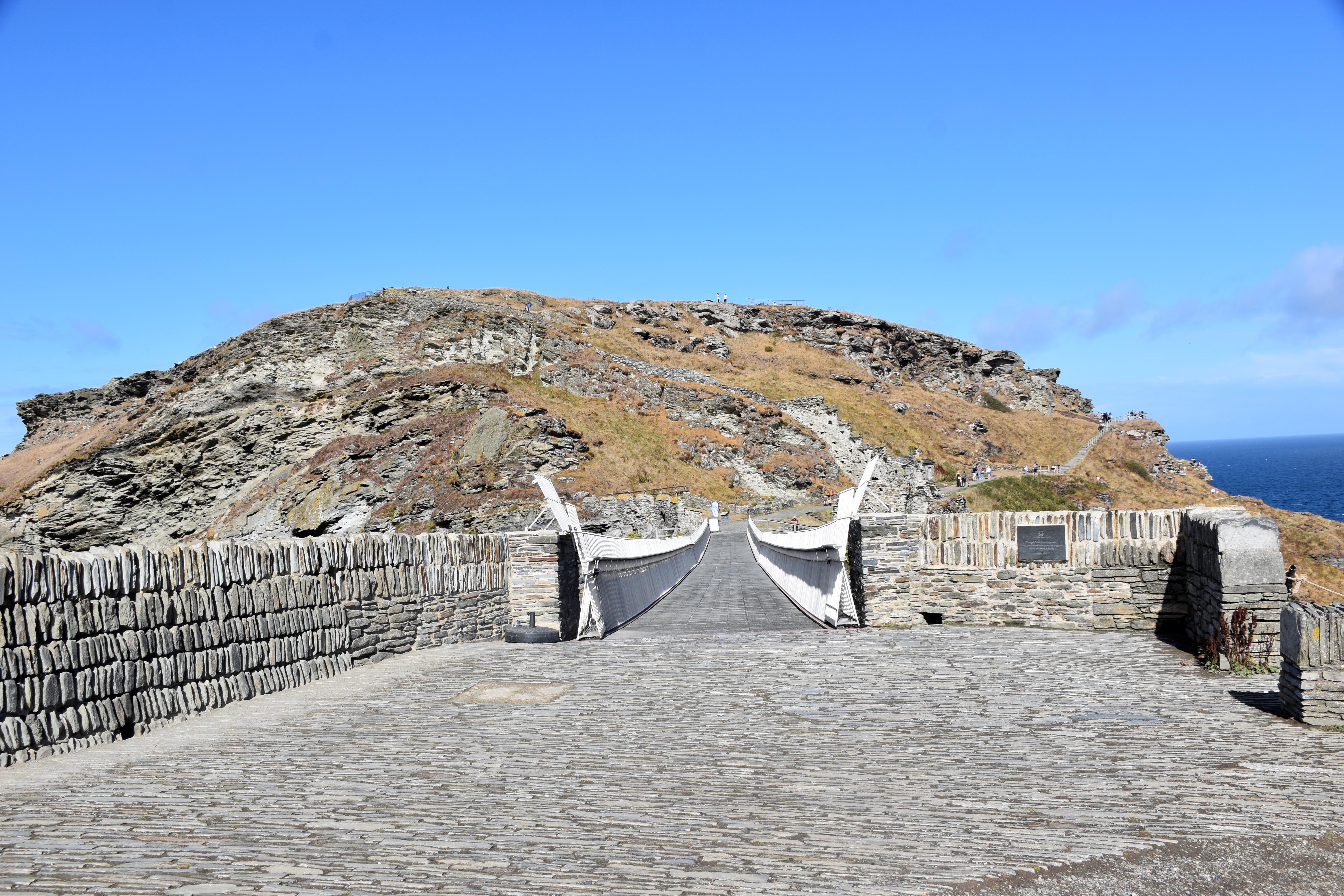
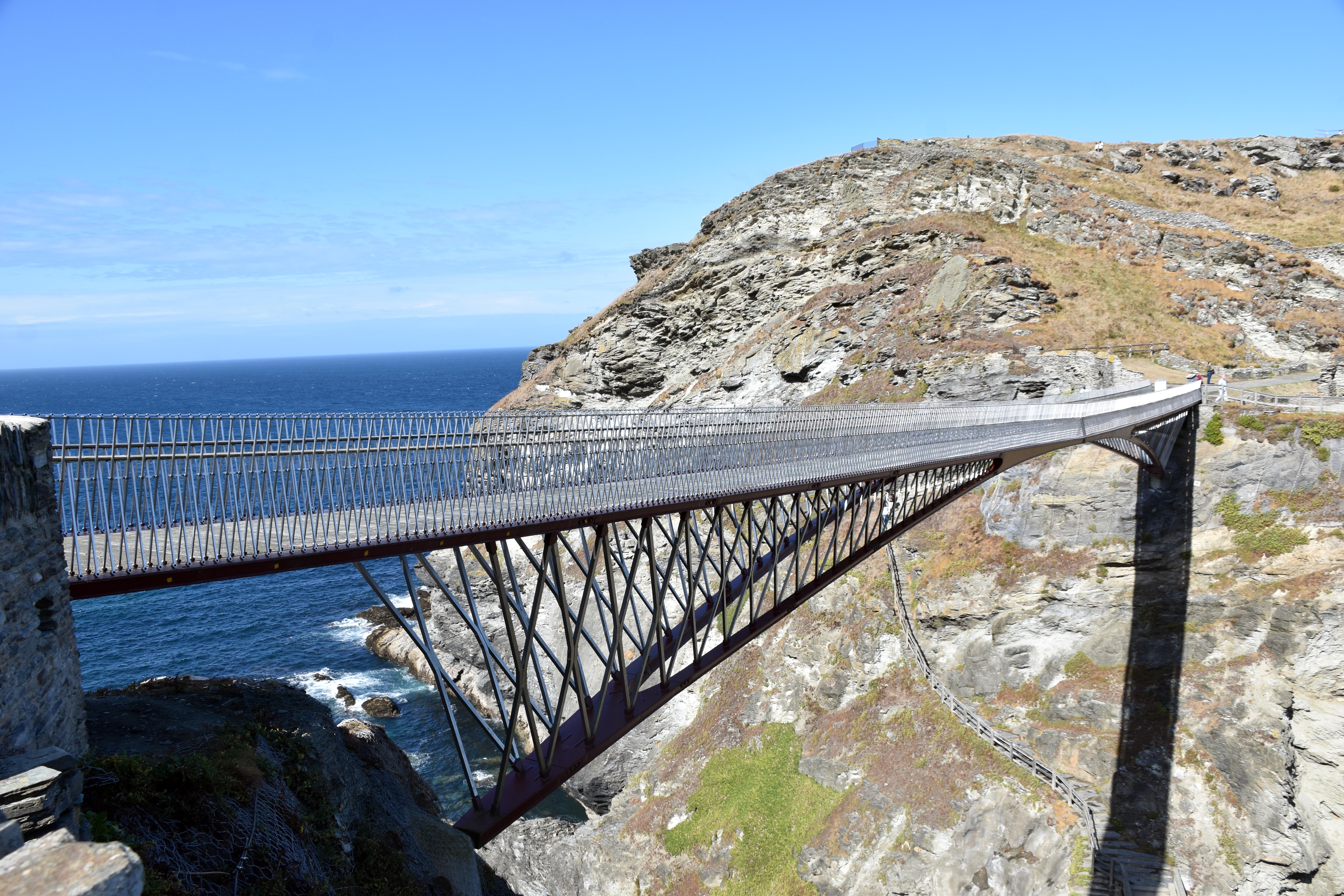
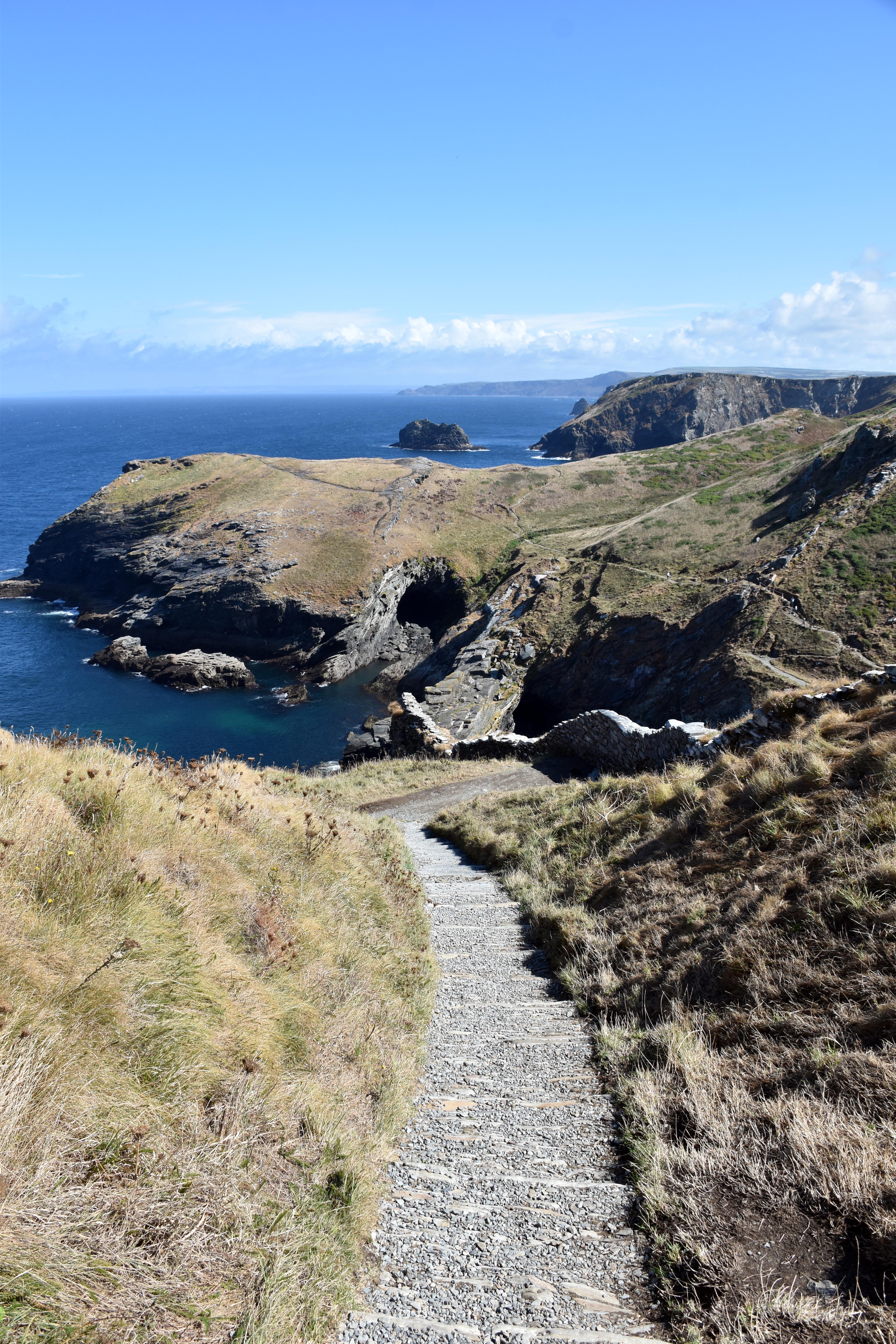
When Richard built his castle, Tintagel was still a headland connected to the cliffs not unlike Barras Nose to its East now. Over time storms and waves undermined the remaining connection causing it to become an island probably in the 15th or 16th century. When I was young getting to the castle was quite the ordeal with quite a substantial hike up some steep and uneven stairs. This also meant that only relatively fit and able people could really visit the place. In 2019 a new bridge was built connecting the mainland to the island much as the old land bridge would have done once. This bridge though is quite an engineering feat itself and actually adds to the view rather than detracts. It also allows buggies, wheelchairs and pretty much anyone access to at least part of Tintagel. If you want to get up top there are still more stairs and climbing to do. Of course this has also made it far more popular. We were some of the earliest to arrive but it soon got very busy with people coming from all over the world. As I mentioned they mostly came from Tintagel village where there is also a small shuttle bus service to the visitor centre below. One curious anomaly was that there are no toilets on the island. The only loos were down at the visitor centre much further down on the mainland. So make sure you don’t need to go when setting off to the castle itself.
Rupert and I had a look around the visitor centre and shops but were conscious of the time. Stepping outside we could feel the wind pick up and see grey clouds building in the distance. So we started our climb back up the coastal path in earnest heading back to St. Materiana’s. By the time we got there the wind was already strong enough that sitting outside to have lunch would have been unpleasant. A few spots of rain also started to fall. So we had our lunch in the porch of the 11th century church.
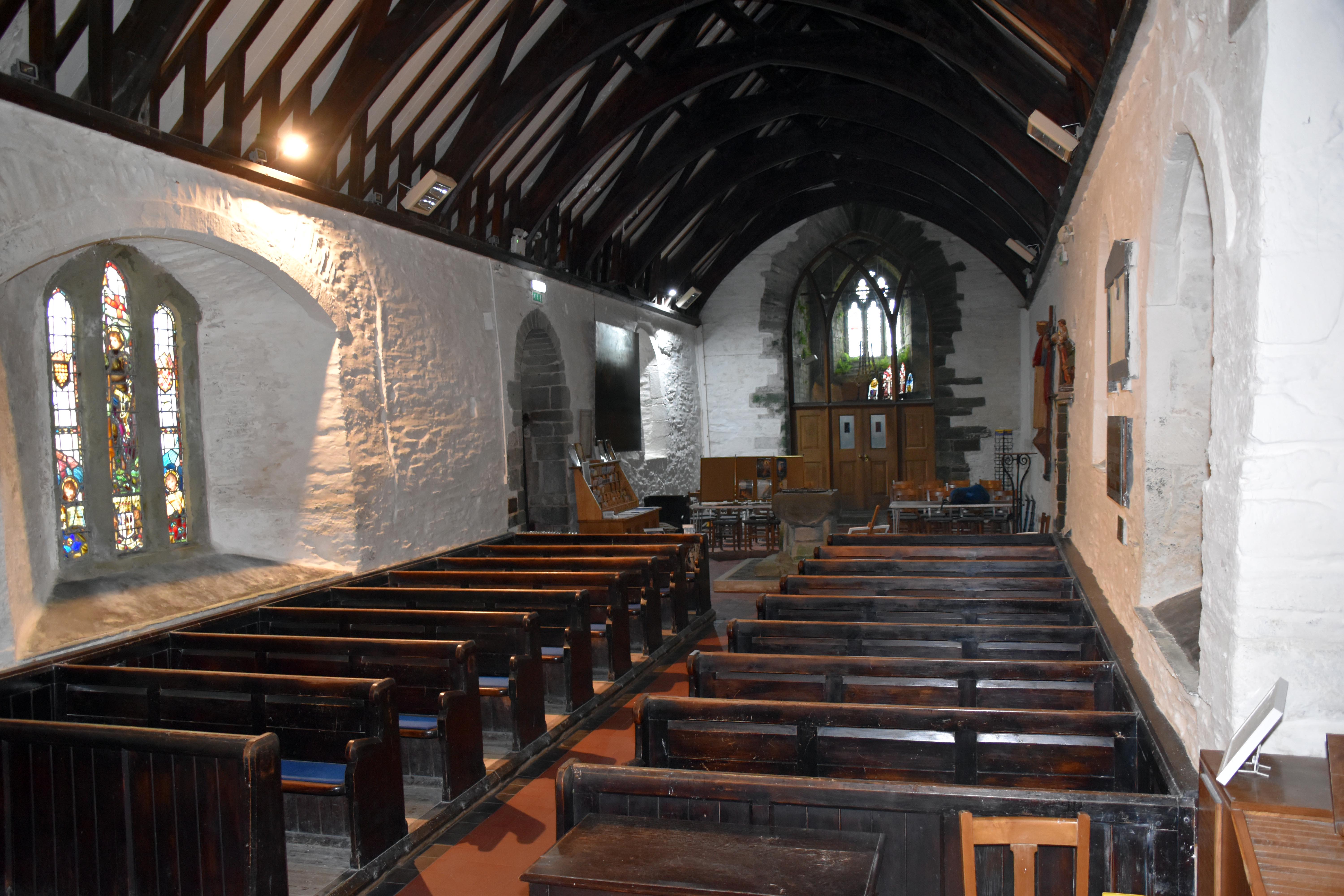
St Materiana’s is such an unusual church full of fascinating objects and memorials. Its very name gives away its Celtic connection to a Welsh saint who was reputed to be the eldest daughter of the 5th century King Vortimer who fought against the Saxons as they encroached on the lands of the Britons. After his death she became ruler over Gwent with her husband just to the North-East of Cornwall by sea.
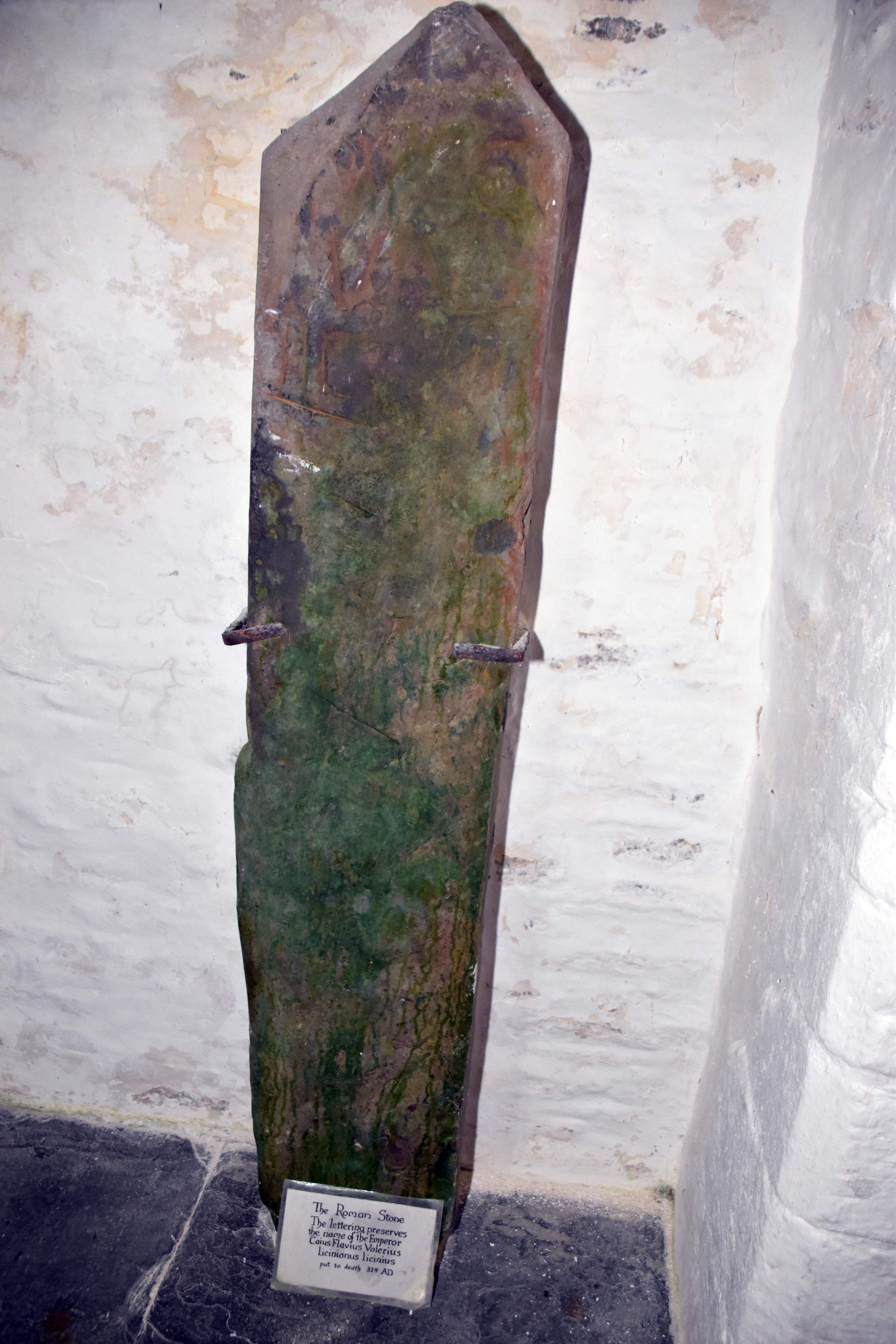
I have already mentioned that this site is built very close to an even older 6th century Christian site. But within the church is an even older artefact from the 4th century. This is a Roman stone inscribed in Latin bearing the name Emperor Licinius which allows us to mark with certainty that it is a 4th century artefact as that Emperor died in 325. This is further evidence that Roman individuals or at least Roman culture were far more integral to the Cornish landscape than we used to accept.
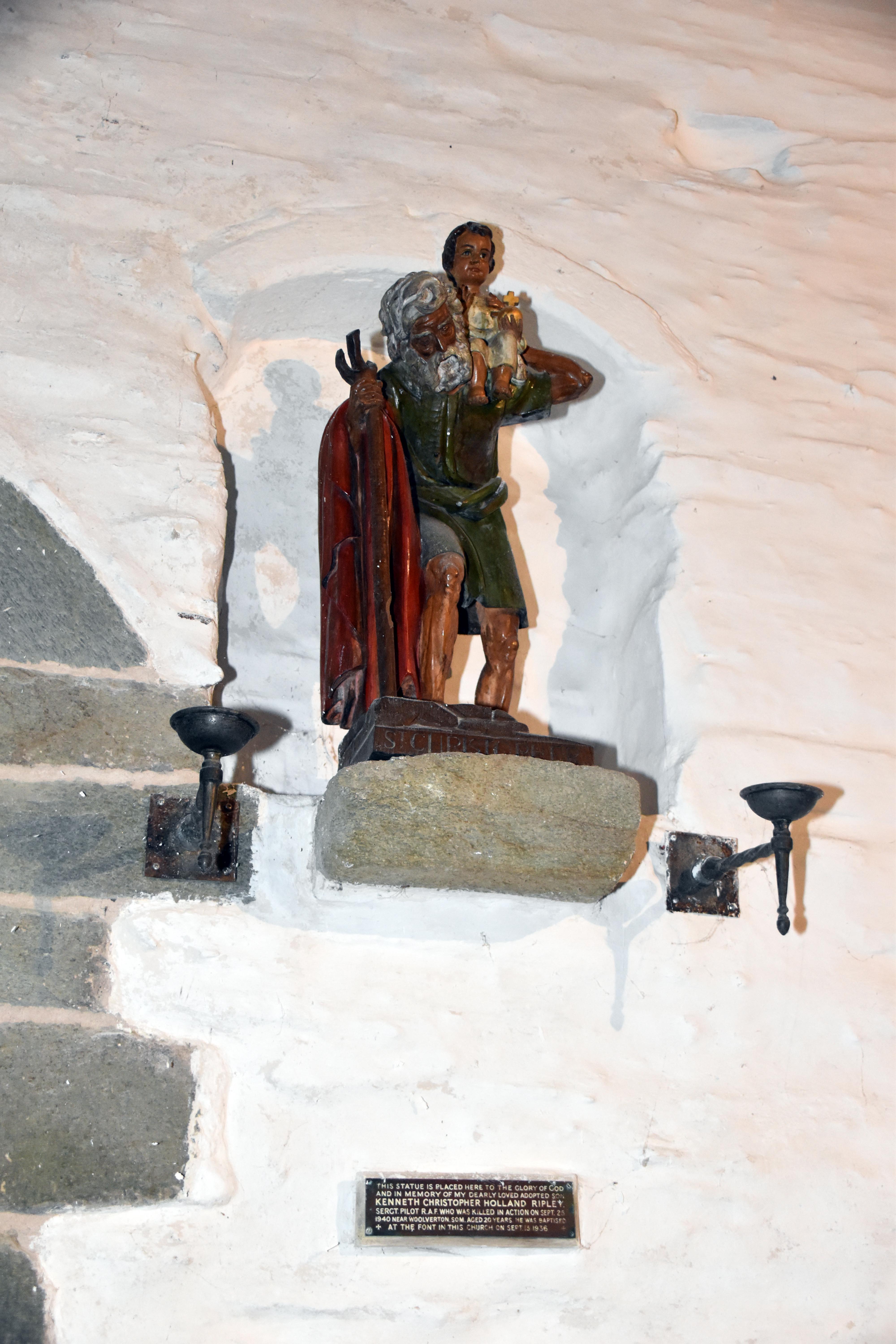
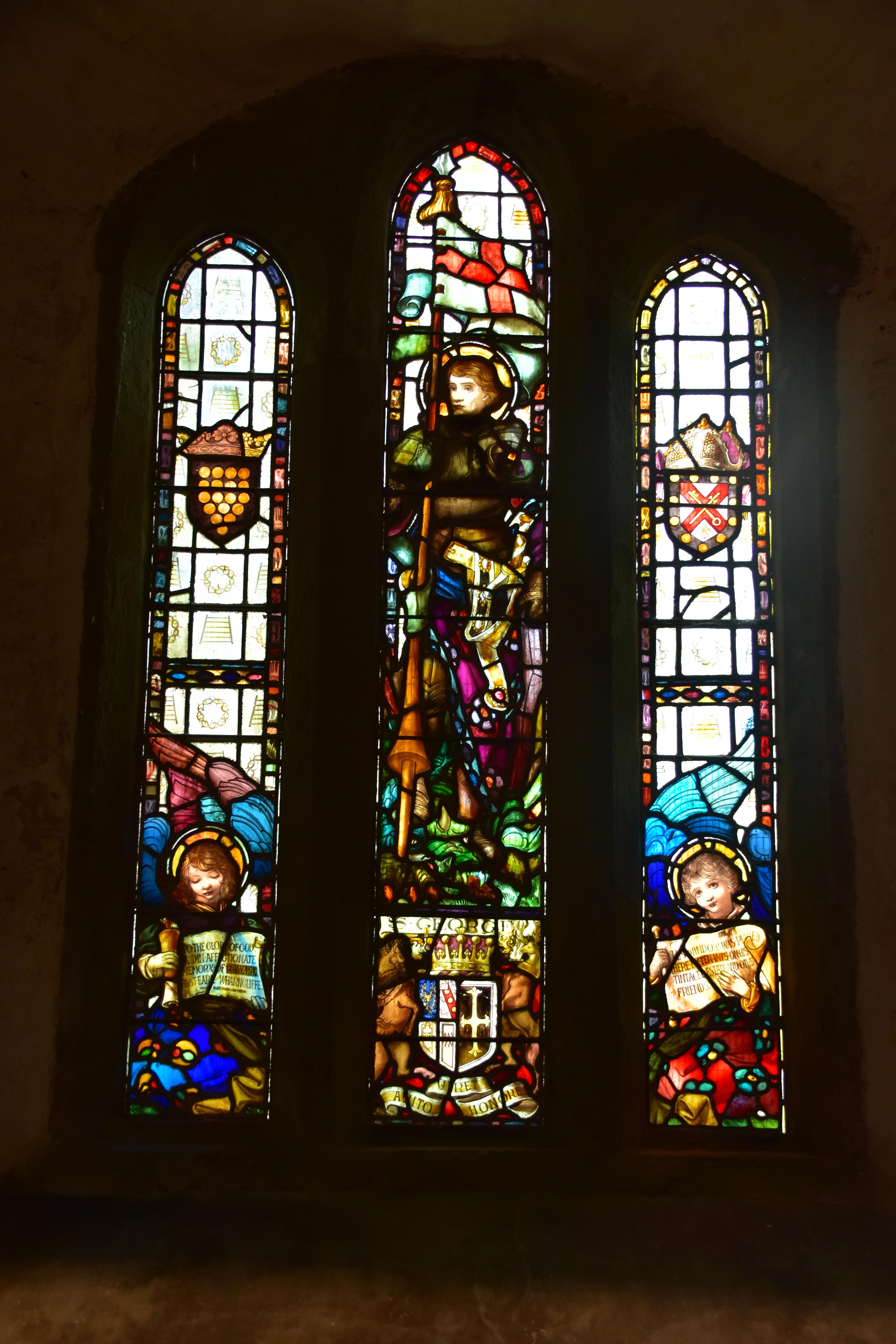
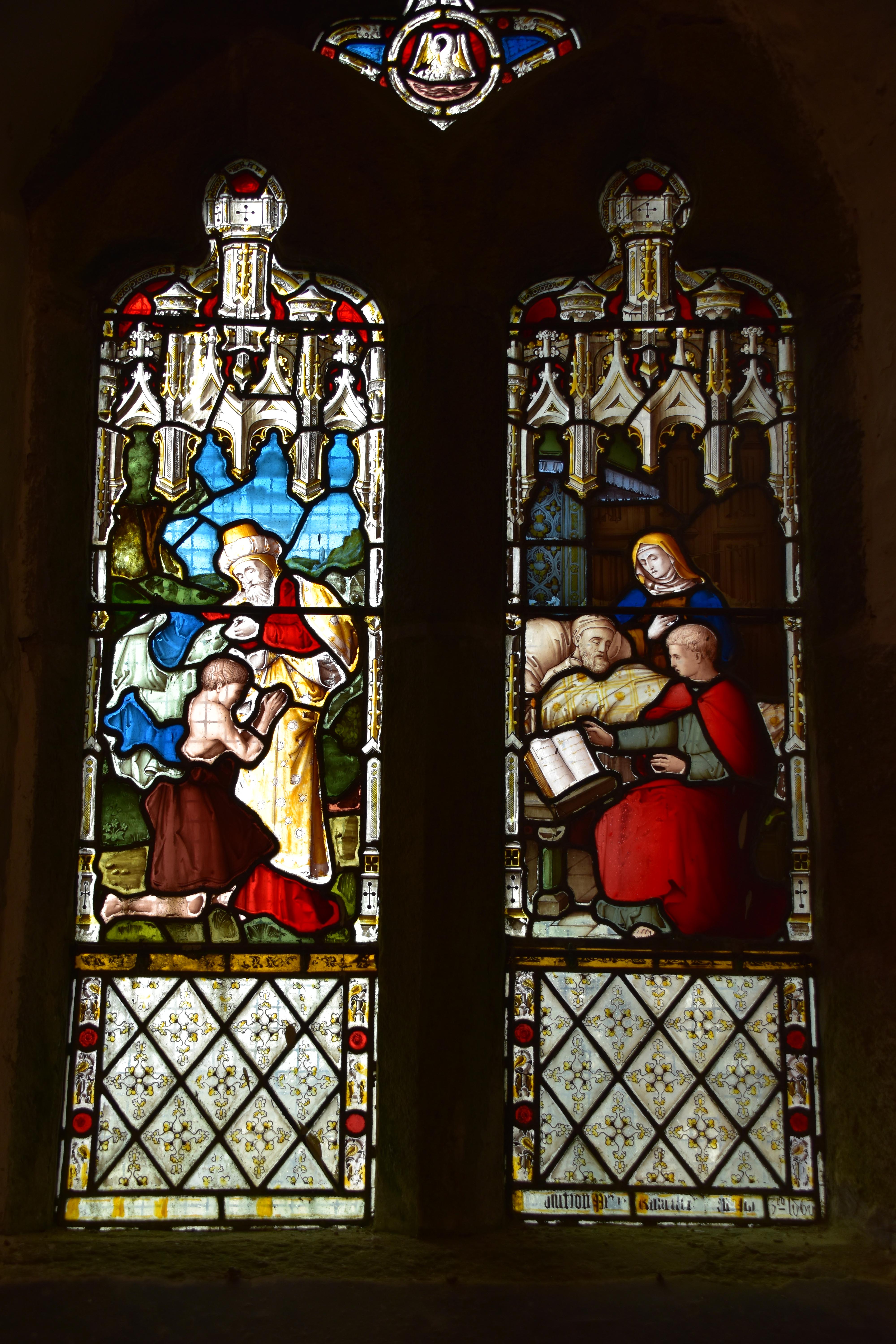
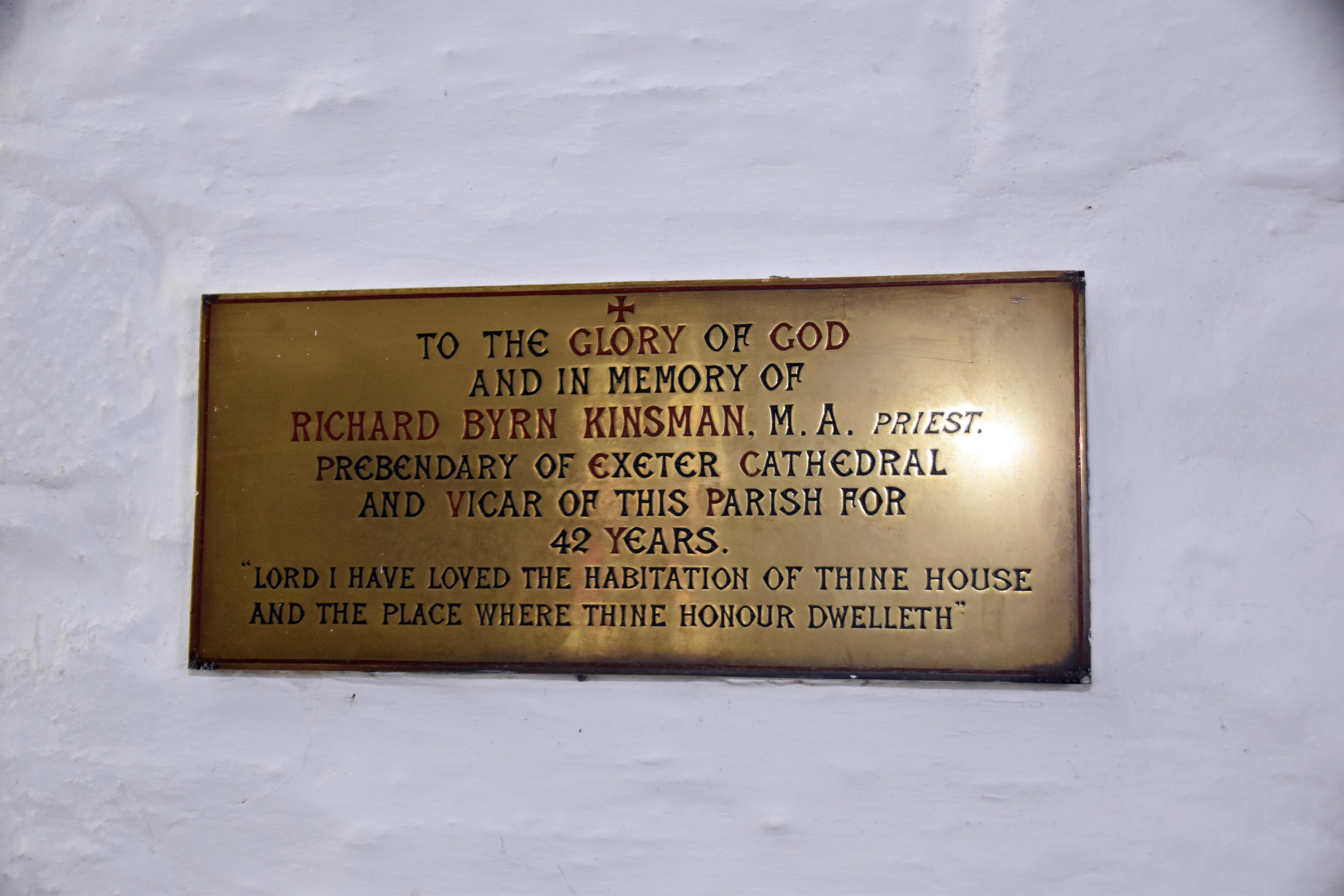
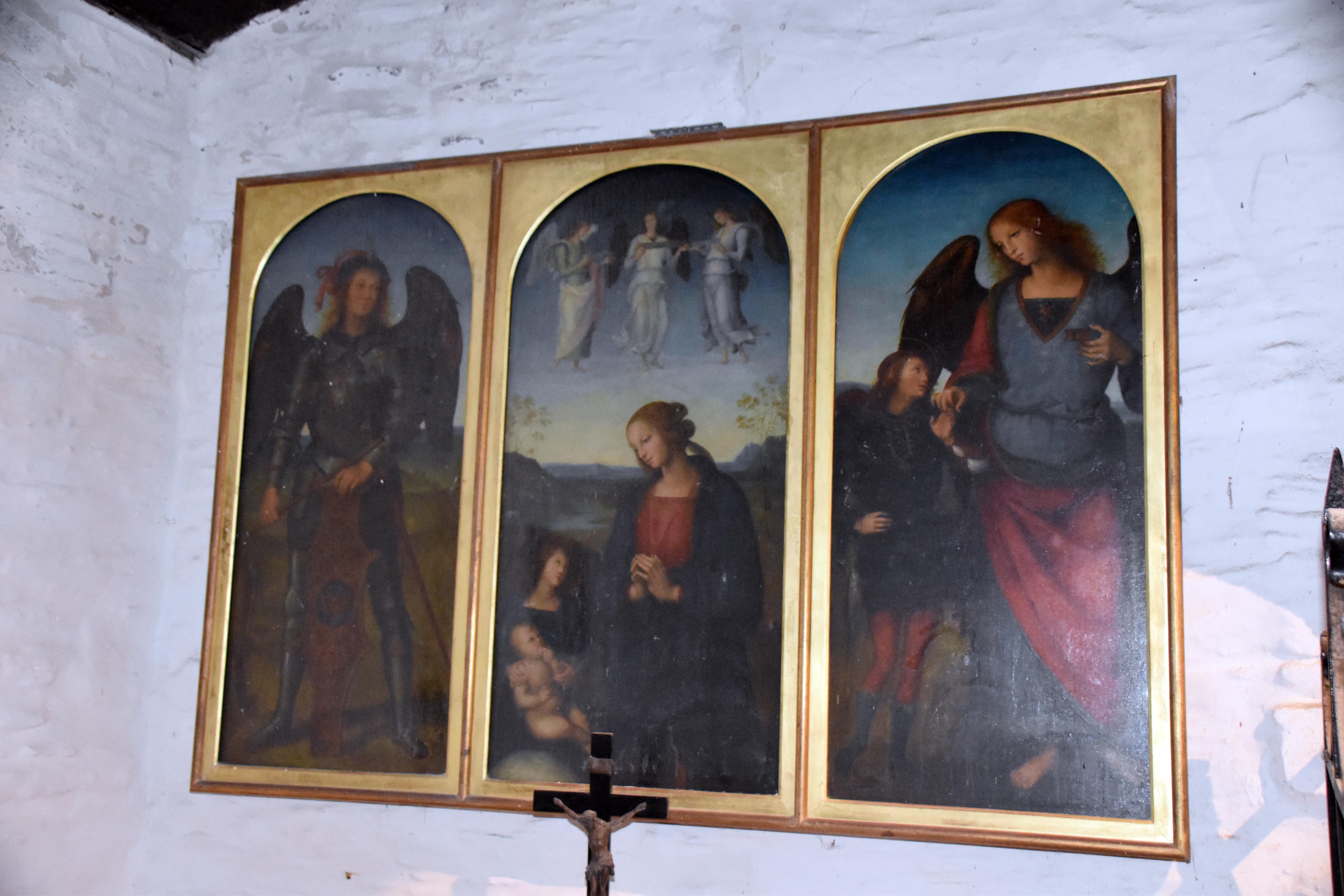
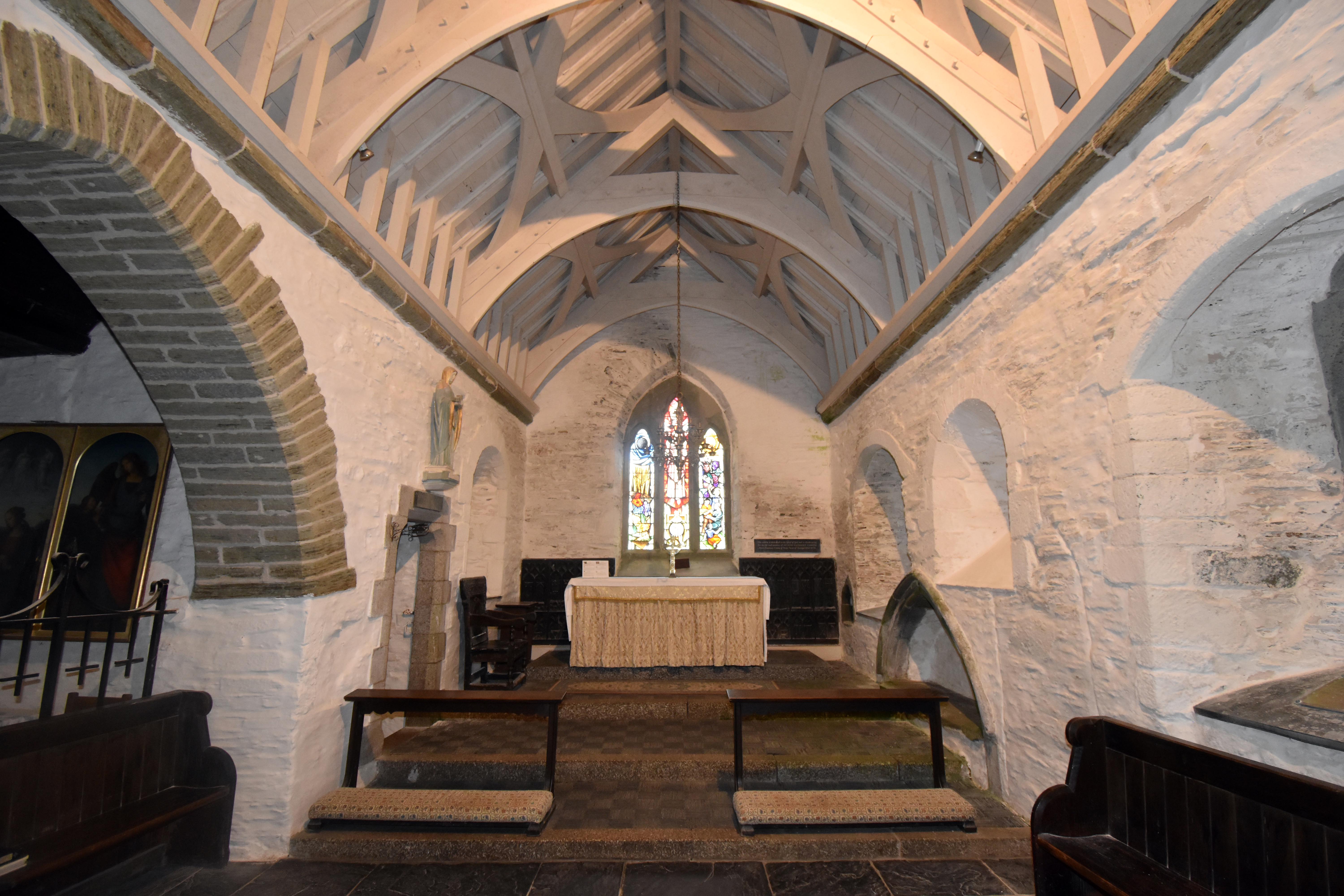
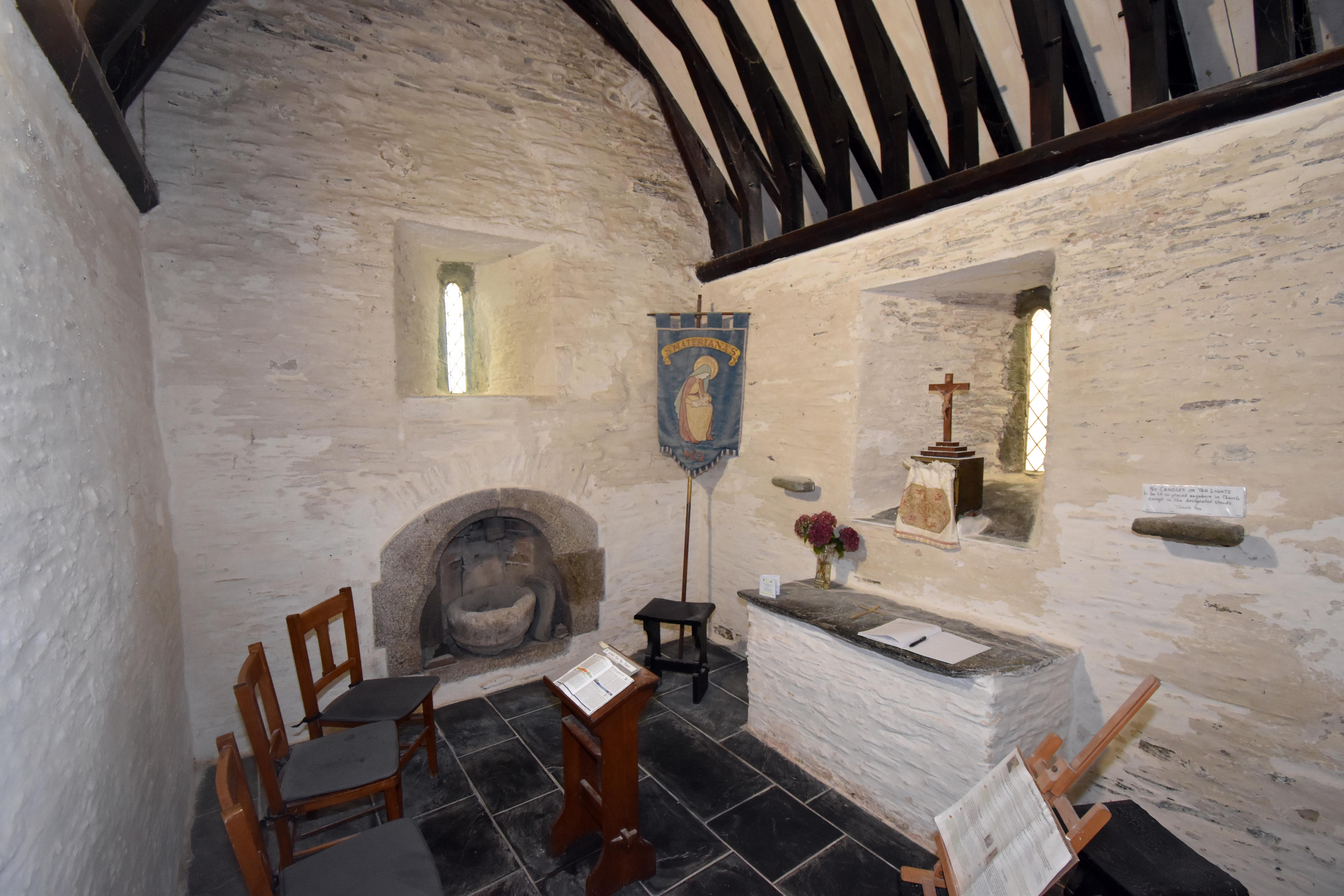
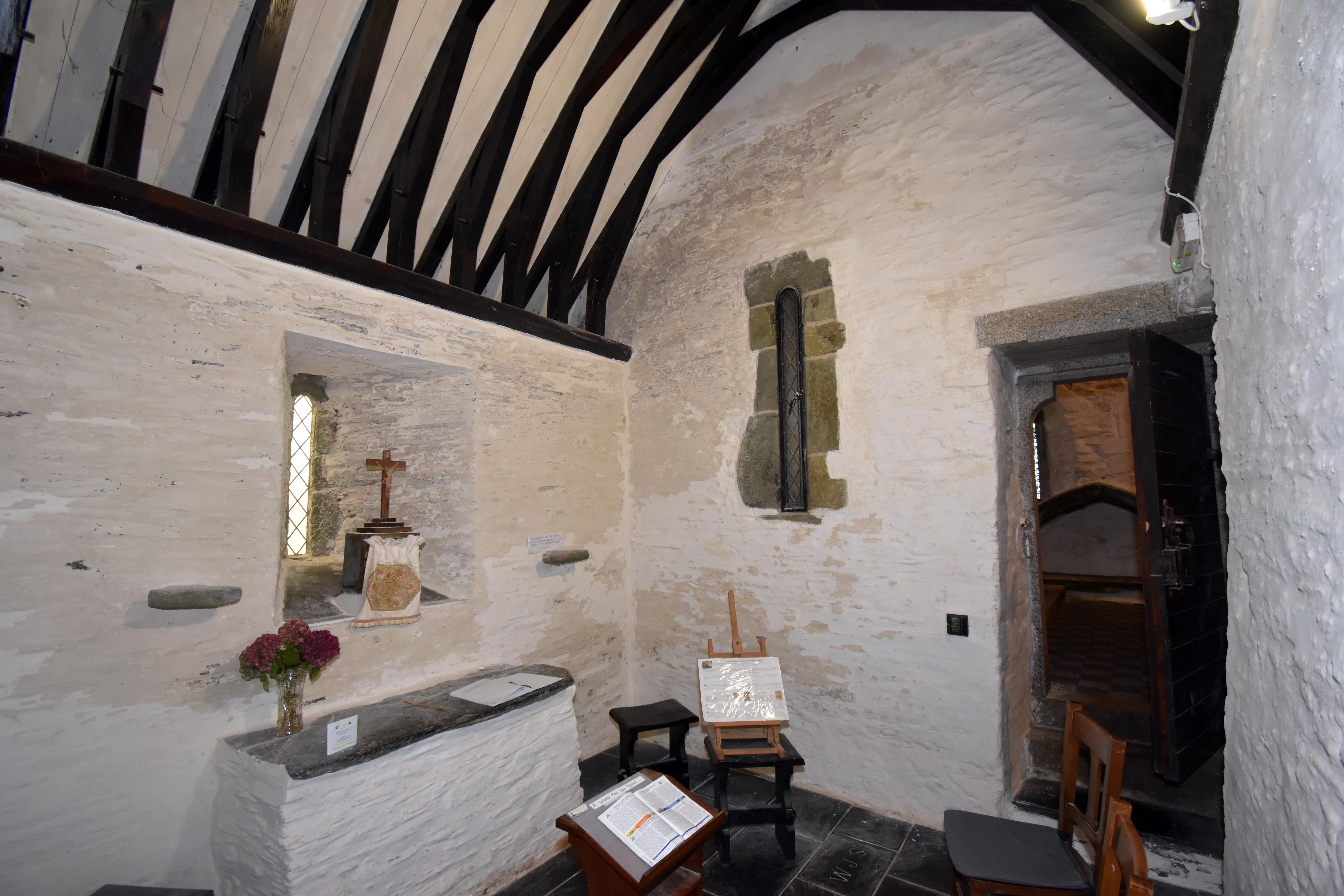
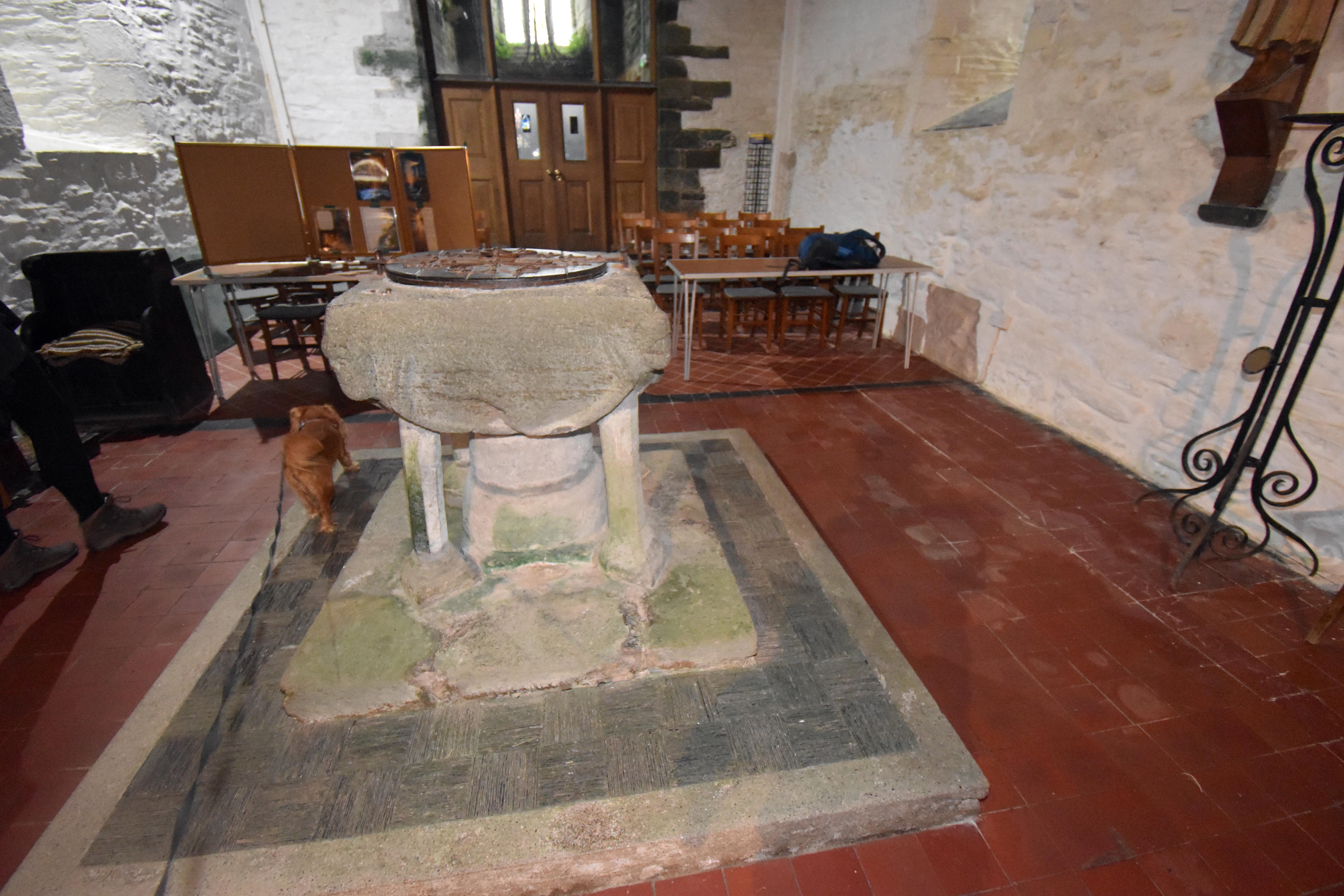
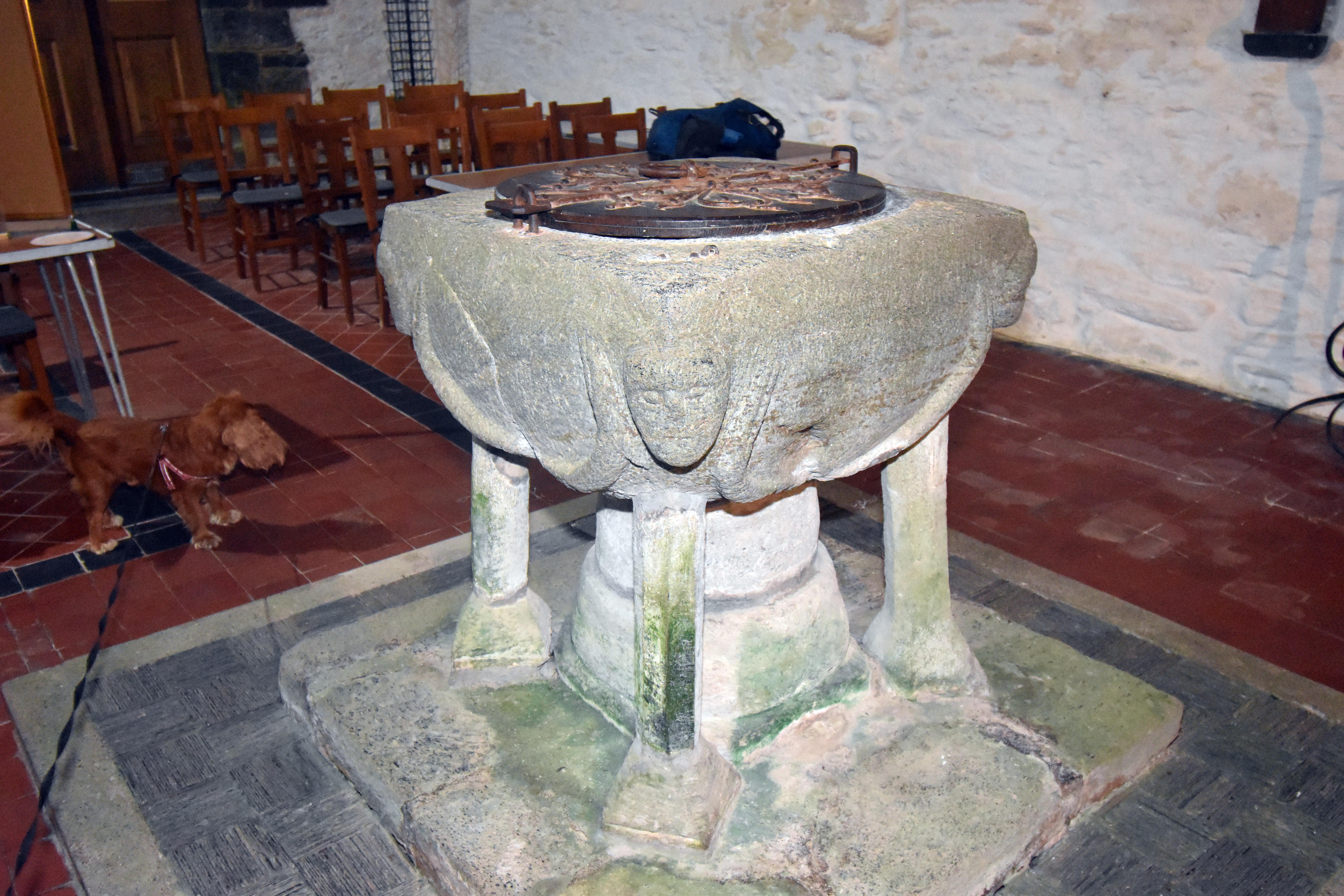
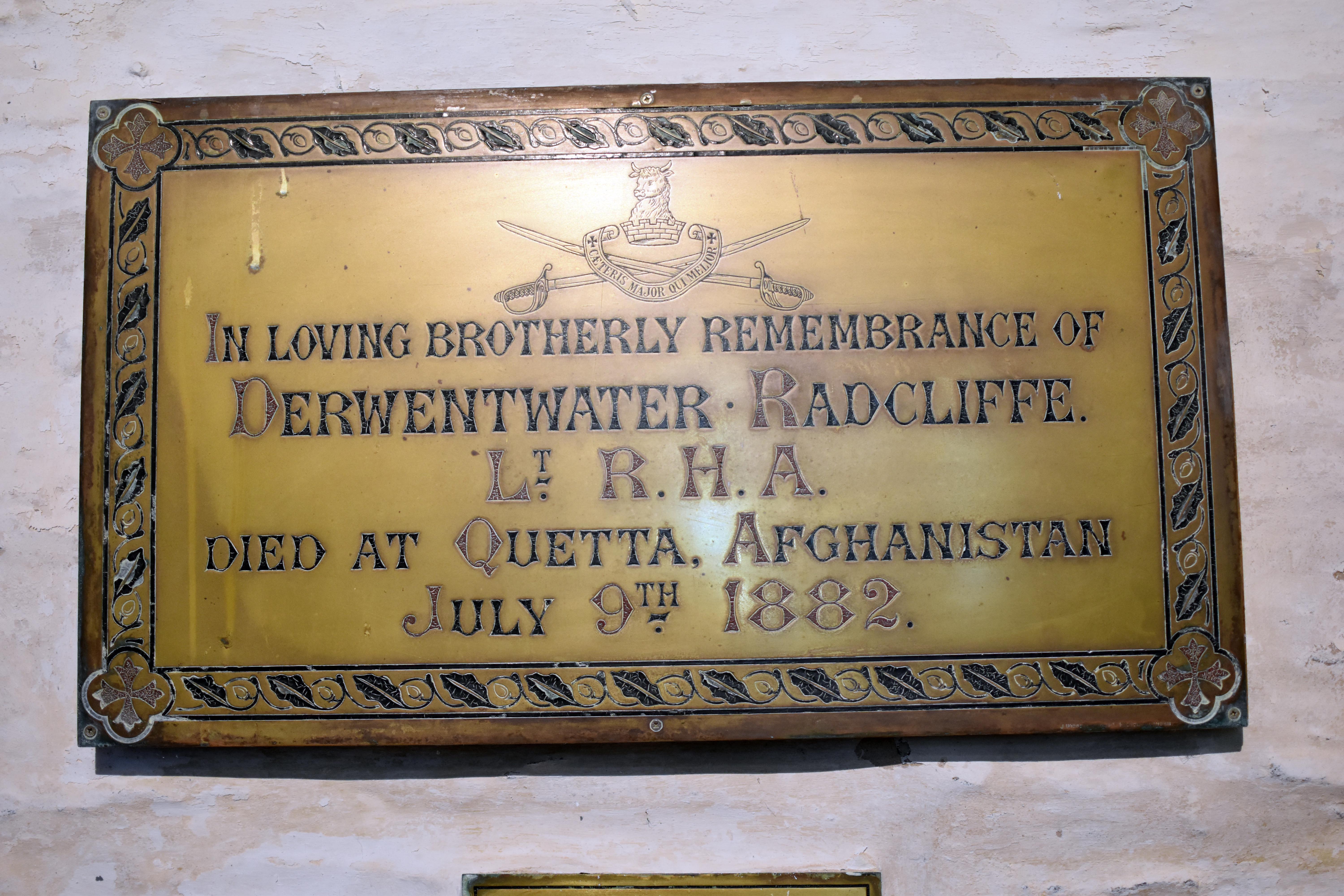
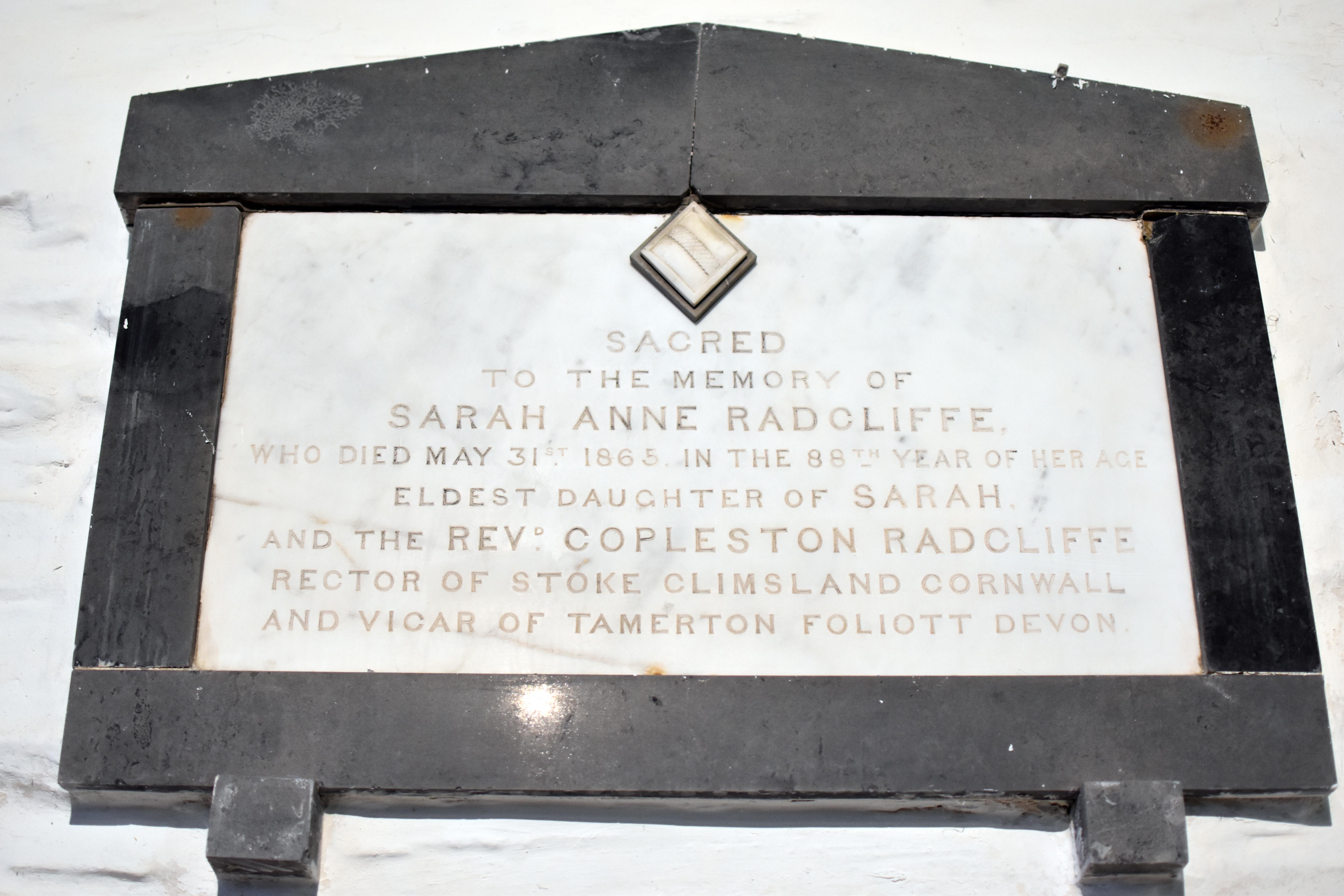
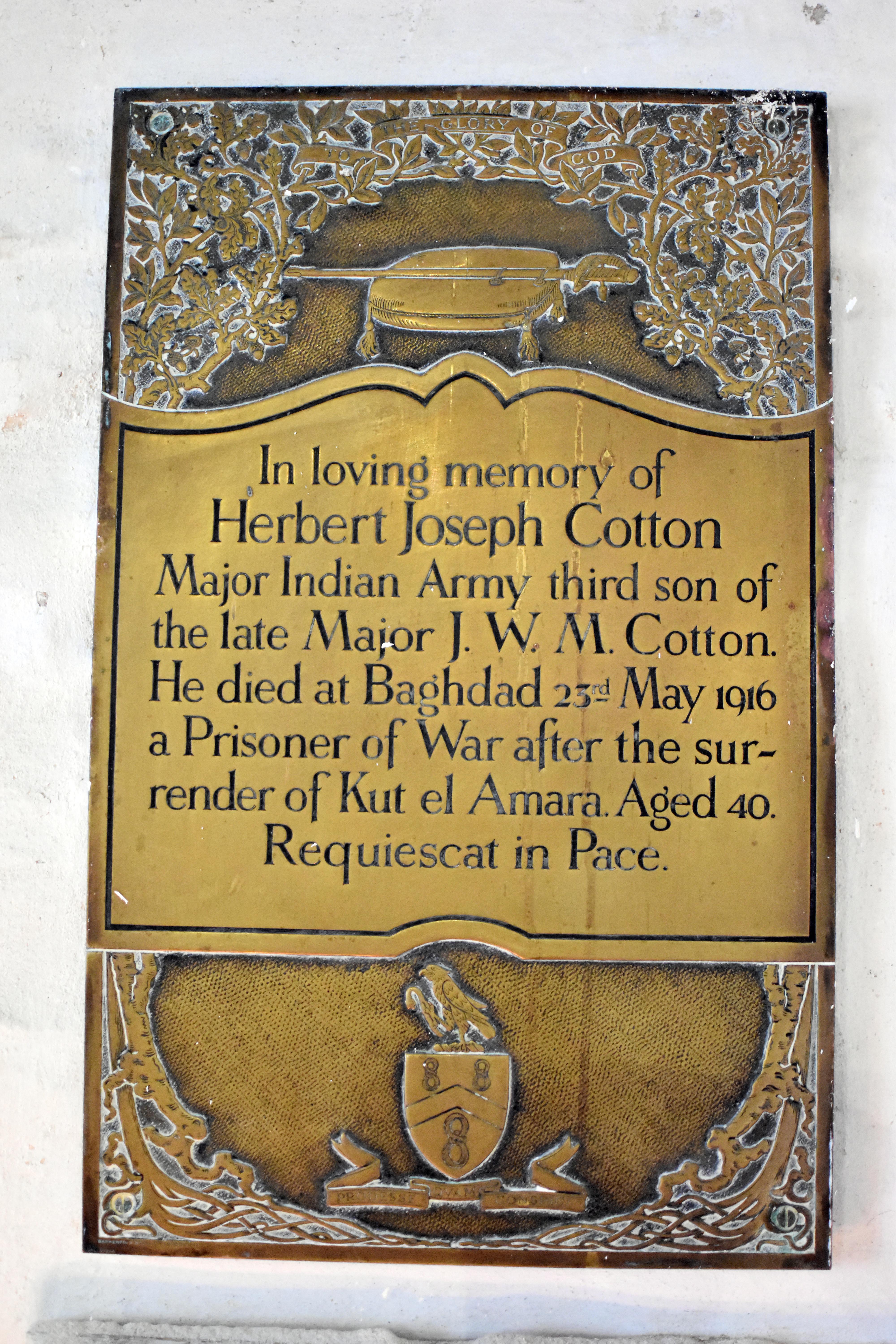
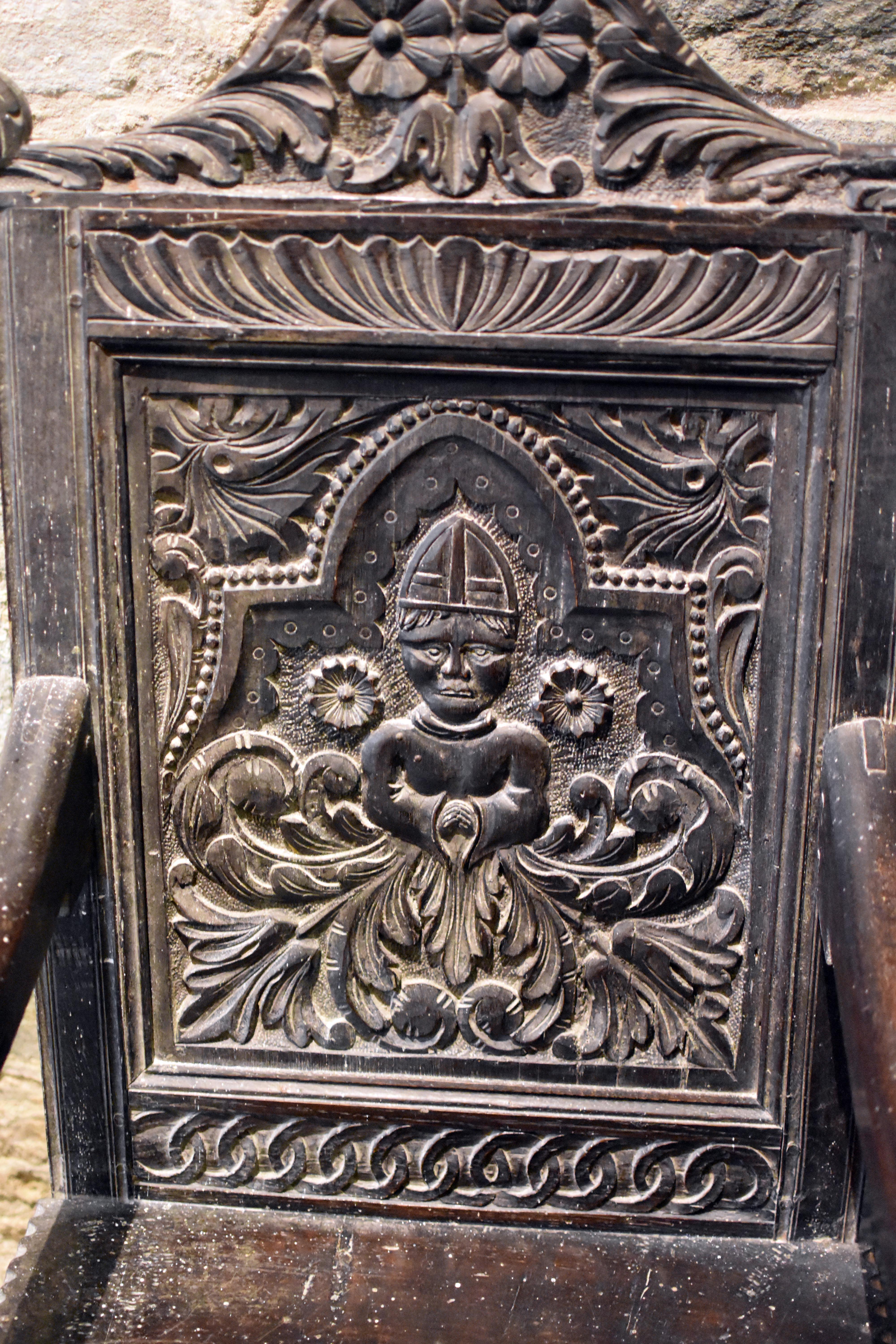
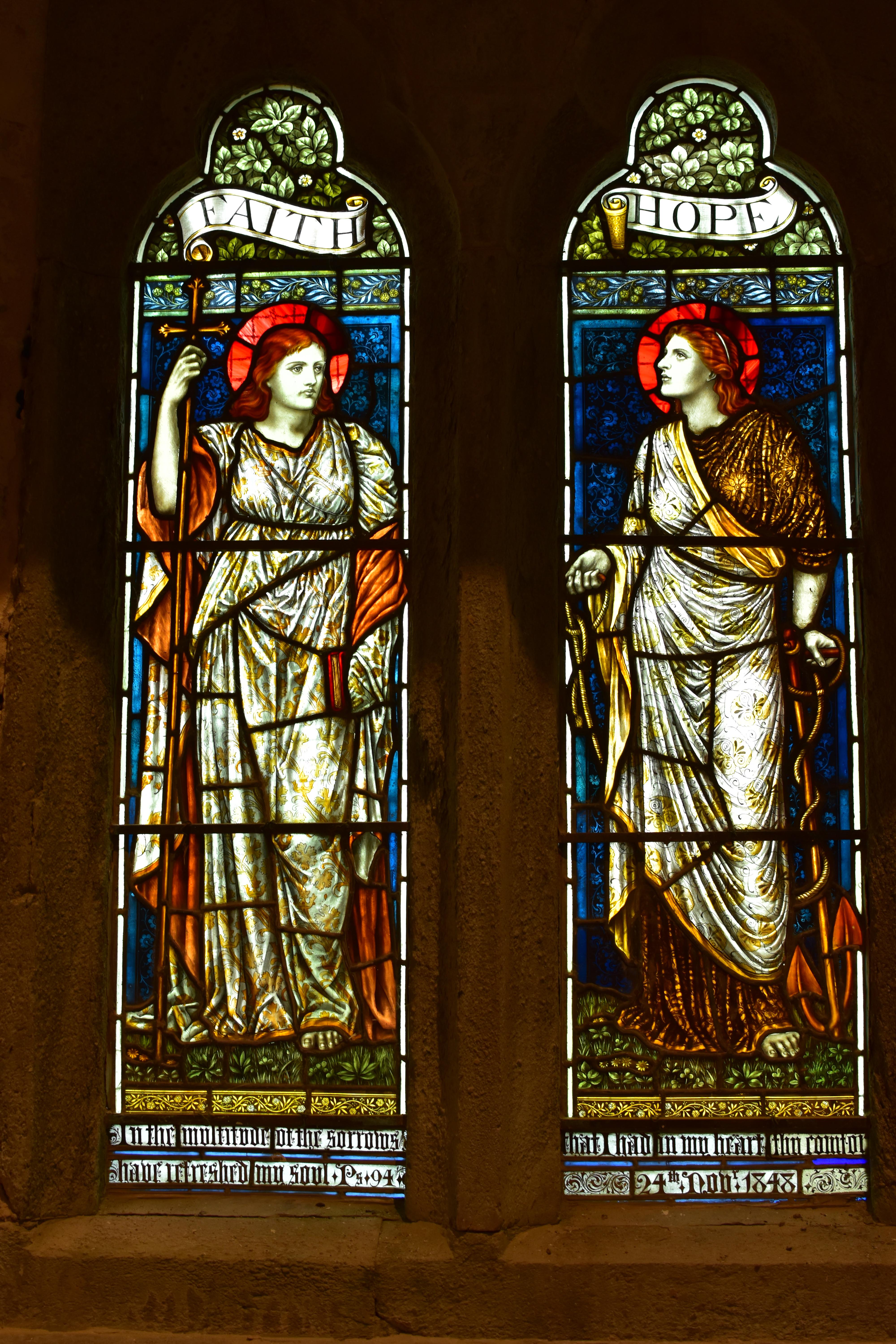
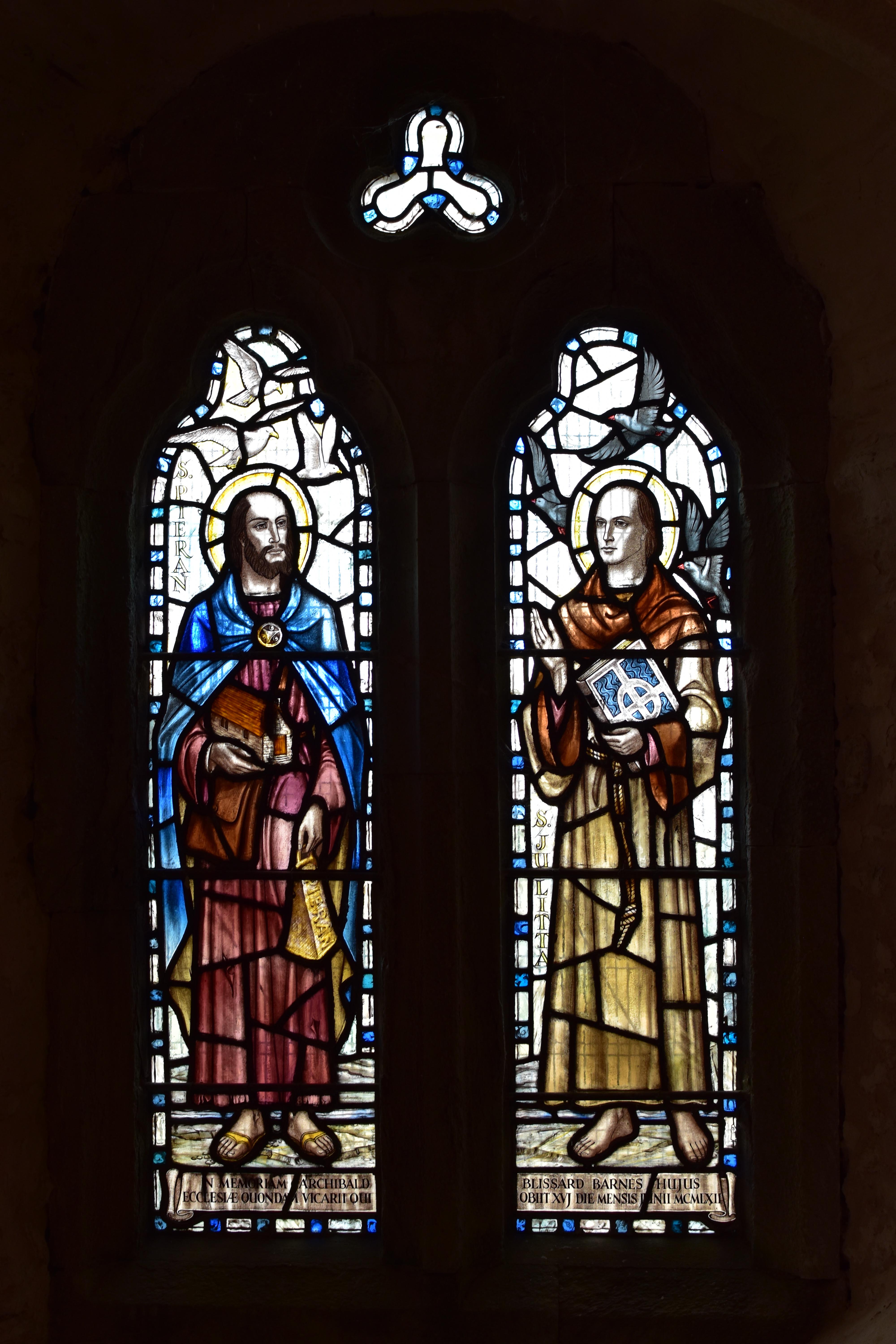
The church has some beautiful stained glass windows and a very early Norman font. I’m always interested when you see some of the dedications in the church - four stood out to me here: One was to someone killed in Afghanistan in 1882 in Quetta on the troublesome North West Frontier not long after the Second Afghan War. Whether he died of disease or sniping of some kind it does not say. The second was an officer of the Indian Army who died in captivity of the Turks during the First World War after the surrender of Kut El Amara in 1916. This was a particularly low point in the Allied war effort and their treatment was something of a scandal not unlike say the treatment of Allied soldiers who surrendered to the Japanese in WW2 - and very well known to those generations who remembered the First World War (and before it was obscured by new atrocities in the Second World War). The third was a lovely statue of an old man carrying a child which was dedicated to an RAF Spitfire pilot who was killed during the Battle of Britain after shooting down four He111s but sadly the last one’s rear gunner got his revenge on his way to crash land (the rear gunner survived the crash and wrote a moving letter to the parents of the pilot from his prisoner of war camp). The inscription says he was baptised in the Norman font which the statue now overlooks. And the fourth was to a young 14 year old Italian deck boy whose ship was wrecked below the church. An epic rescue bid saw local men climb down the rocks and they were able to save all the Italian crew except alas the poor 14 year old. He was buried in the churchyard with an oak cross and one of the ship’s lifebuoys as a memorial. It still stands today and is tended lovingly by the local community some 130+ years later. The church also has some icons and artwork which are quite unusual in an Anglican church. There is an unusual little chapel to the side of the church which may well have been an anchorite’s cell (although no definitive proof). An anchorite’s cell was where a holy person lived close to the church in isolation in theory praying for the souls of the local community and their ancestors. Remarkably, it still retains one of the very few pre-Reformation stone altars within it.

The wind was sounding like a gale outside by this time and various coastal path walkers were coming in wearing waterproofs and soaked to the skin. Rupert and I had been exploring the church oblivious to the deterioration of the conditions outside but it soon became obvious that it might not be the best time to leave the church at the present time. Fortunately we had brought J. L. Carr’s A Month in the Country in homage to this church being at least part of the inspiration of this wonderful story. In the 1950s, the graves in that earthwork were first discovered and at the time there was considerable debate as to whose graves they might be and from when. In Carr’s book, one of the main characters is engaged in a similar archaeological discovery just outside the graveyard in that story. In fact, the very first edition of the book featured a photograph of St Materiana's Church. The book was later turned into a 1987 film starring a very young (and almost unrecognisable) Colin Firth in his first leading role and an equally young (but much more recognisable) Kenneth Branagh in what was his first ever film!
As the storm raged outside, Rupert and I decided to read the book in the anchorite cell which actually was fairly sheltered from the worst winds rolling off the Atlantic as it lay on the North-East of the church whilst the winds raged from the South-West. It was still a very atmospheric place to read the book although we could have done without the automatic light turning off if we did not move sufficiently frequently.
It is a sublime book full of wistful nostalgia as the narrator (Tom Birkin - played by Colin Firth in the film) recalls a healing summer in 1920 when he got his first job to help uncover a Medieval painting from beneath a coat of whitewash applied during the Reformation. He is obviously suffering from PTSD in the aftermath of the First World War where he sustained physical as well as mental injuries not helped by having an unfaithful wife who left him in the latter stages of the war. He finds a kindred spirit in the equally damaged archaeologist played by Kenneth Branagh who has his own First World War travails that he is trying to put out of his mind. A tender friendship grows between them and towards various members of the local community. There are some emotional complications via a young and beautiful vicar’s wife but essentially this is a book about a much cherished period in somebody’s life and about temporary friendships that last long beyond the time spent together. Purpose and community help these damaged veterans regain some of their confidence and appreciation of life. I wouldn’t want to give too much away in case you want to read the book or watch the film. J.L Carr is a superb wordsmith. There are barely a hundred pages but he reveals so much about the characters, the location and the events in an almost flawless example of how to write efficiently and yet say so much more than the words themselves spell out. He conjures up a moment lost in time - one that the narrator reflects on from afar but with great affection in a subsequent life that was full of difficulties and disappointments. If you want a book to help you heal for whatever reason you could do a lot worse than read this delightful tome. We read it from cover to cover within yards of the dig that at least partially inspired the story.
The worst of the storm had passed by the time we finished the book. It was hard to think of a day with sharper weather contrasts, from crystal clear skies in the morning to the howling gale and horizontal rain of the afternoon. It sums up the changeable Atlantic weather. It also might explain why Richard of Cornwall’s project of creating a castle connecting himself to the Cornish myths and legends never really survived into subsequent generations who increasingly no longer felt the need to make these associations so blatantly. The rather exposed position on the North Cornish coastline makes for a stunning location in summer, but in winter it would have been an ordeal indeed to have lived and survived, let alone to invite and entertain guests. Eventually, Atlantic storms and waves helped turn the headland into an island, and a more difficult place to visit, until the 2019 bridge restored the link.
In a strange way Richard of Cornwall did do a service of helping to physically connect legends to an actual place. The fact that it crumbled and decayed would enhance the romantic view of the castle as a possible location for these heroic myths. Artists and romantics alike would return to this site in the 18th and 19th centuries and reimagine those mythic stories and connections. Furthermore, archaeologists and historians would discover genuine historical roots of Dumnonian warriors and early Christians, which are every bit as fascinating as the myths and legends. And these early inhabitants may well have provided the inspiration for these legends through their own stories, songs and poems. Fantasy and reality collide at Tintagel in a wonderful way and in such a magnificent setting.